26.5 C
Lagos
Monday, February 2, 2026
Home Blog

Stranded at midnight: How recurrent gridlocks on Lokoja-Abuja highway are putting lives at risk

0

In the early hours of January 19, 2026, at about 1:16 a.m., Mrs. Mmseoma was travelling with her pregnant daughter-in-law and two grandchildren when their bus ran into a long standstill on the Lokoja-Abuja highway.

After enduring long hours in the gridlock, the travellers finally felt a brief sense of relief as traffic began to clear slowly. However, that relief soon gave way to unease when they encountered groups of cattle accompanied by herders crossing the road in the dead of night, a sight that stirred deep fear amid widespread concerns about insecurity and highway kidnappings in Nigeria.
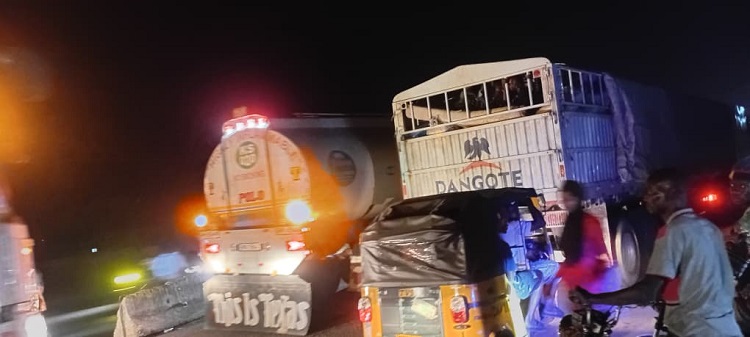
Gridlock on Lokoja-Abuja highway

“Because of the kidnapping stories we watch and hear about in Nigeria, I thought we were about to be kidnapped,” she recalled. “It was midnight. I was with children and a pregnant woman, so fear gripped me.”

Passengers and the driver later assured her that the cattle belonged to migrating herders moving their livestock due to seasonal changes. As the bus drove past without incident, her fear eased.

That calm, however, did not last.

Soon after, the vehicle ran into another gridlock, this time lasting several hours. By then, it was past 2 a.m., and passengers were asked to disembark. Soldiers and other visibly exhausted men, some of them fellow travellers who had removed their shirts because of the heat, worked through the night to manage the congestion, directing vehicles through narrow gaps to create space for movement. At various points, passengers sat or lay on the bare ground to rest while waiting for traffic to clear.

“My grandchildren needed to relieve themselves. One young woman was crying because she was menstruating and had no convenient place to change. My pregnant daughter-in-law also had to come down,” Mrs. Mmseoma said. “It was a very bad experience, and we didn’t even know what caused the gridlock.”

“If I had money, I would advise people to fly,” she added. “Nigerian roads are not safe for long-distance travel.”

Sleeping in Reception Areas

For another traveller, Jidex, the journey turned into an overnight ordeal weeks earlier, on December 22, 2025.

After leaving Abuja early in the morning, his vehicle reached Lokoja by 10 a.m. and then remained stuck under the scorching sun and heat until late evening. By nightfall, the driver advised passengers to stop at Kabba, warning that the next stretch of road would be dangerous after midnight.

“I didn’t have money for a hotel room, and everywhere was already full,” Jidex said. “I begged the hotel manager to allow me to sleep in the receptionist’s area because nobody wanted to inconvenience their room space further.”

He described the experience as humiliating and exhausting, one he never expected from a major federal highway.

Why the Gridlocks Keep Happening

Residents and youth leaders in Lokoja say the recurring gridlocks are not mysterious.

Abdulkadir Hamisu, a Lokoja resident, explained that the highway is meant to be a dual carriageway, but construction on one lane remains incomplete.

“Most times, tankers and trucks carrying coal have accidents on the road,” he said. “When that happens, they completely block one lane. Since the other lane is still under construction, movement becomes very difficult.”

According to him, during the December festive period, a fallen tanker blocked the road for several days.

“People had to abandon their vehicles and use motorcycles to pass through Lokoja to their destinations,” Hamisu said. “The gridlock lasted about eight days because the tanker was not removed on time.”

Another resident, Yahaya Muktar, identified poor road conditions around First NNPC, Felele, Nataco, and New Market as major contributors.

“Lokoja is a gateway to many states, so during Christmas, New Year, and Sallah, traffic volume becomes extremely high,” he said. “With bad roads and frequent accidents, the situation quickly turns into gridlock.”

Market days also worsen congestion, as heavy trucks dominate the highway, leaving little room for smaller vehicles and pedestrians.

Muktar further explained that protests sometimes erupt after accidents, further delaying traffic for hours.

Efforts to speak with relevant government and road management officials proved futile as of the time of filing in this report.

Environmental and Safety Costs

Beyond inconvenience, residents say the gridlocks carry environmental and public-health consequences.

Hours-long idling by trucks and vehicles increases air pollution, especially in densely populated parts of Lokoja. The dominance of fuel tankers and coal trucks also raises concerns about spills, fire risks, and harmful emissions along the corridor.

Women, children, the elderly, and pregnant travellers are often the most affected, forced to spend long hours outdoors without access to toilets, shelter, or clean water.

Known Solutions but Slow Action

Residents interviewed agree that solutions are not far-fetched.

They include completing the second lane of the highway, creating alternative routes for heavy-duty trucks, restricting tanker movement to specific hours, enforcing speed limits to reduce accidents, and improving emergency response time for clearing fallen vehicles.

“The problem is not that we don’t know what to do,” Hamisu said. “The problem is that it is not done on time.”

Travellers like Mrs. Mmseoma say every journey along the Lokoja-Abuja highway remains a gamble, one that exposes families not only to traffic delays, but to fear, environmental stress, and physical risk.

By Oyeyemi Abolade
Abia validates climate policy, prioritises disability inclusion

0

The Abia State Government has validated its climate change policy, emphasising disability inclusion, during a stakeholders’ engagement organised by the Ministry of Environment.

The final review, held on Saturday, January 31, 2026, involved MDAs, local government climate desk officers, chambers of commerce, disability clusters, farmers, women groups and other stakeholders.

The draft policy was presented by a technical team from the Partnership for Agile Governance and Climate Engagements.

Alex Otti
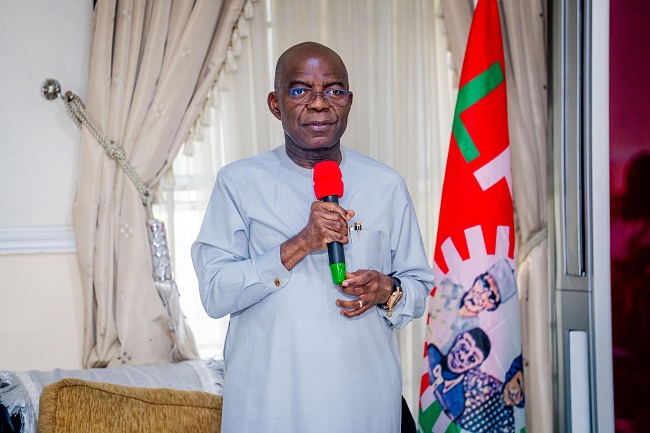
Gov. Alex Otti of Abia State

The Commissioner for Environment, Mr. Philemon Ogbonna, said consultations since 2024 aimed to produce a climate policy meeting international standard.

Represented by Permanent Secretary, Mr. Ikechukwu Oriuwa, Ogbonna said the policy aligned with Gov. Alex Otti’s commitment to sustainable environmental initiatives.

The Commissioner for Budget and Planning, Mr. Kingsley Anosike, said a strong climate policy was essential for driving effective climate action implementation.

“Our budget is green, with climate-related activities captured across sectors.

“Our new buildings are climate-friendly, and over 9,000 street lights installed so far run on solar energy.

“There is much we can do to slow ozone depletion, even if we cannot completely stop it,” Anosike said.

The Chairman, Abia Disability Commission, Mr. David Anyaele, said participation aimed to ensure disability inclusion in the final policy.

“People with disabilities are among the most vulnerable during flooding, erosion and heat waves.

“We want the final document to reflect the governor’s directive that all policies must be disability-inclusive,” he said.

The Acting Executive Director of CCD, Mr. Godwin Unumeri, commended the ministry for developing an inclusive policy reflecting stakeholders’ concerns.

Unumeri said CCD began related research in 2024 on disability-inclusive climate adaptation and mitigation strategies in Abia.

“The policy development started around the same time as our research.

“We have consistently made inputs, and the ministry has shown willingness to capture all groups’ needs,” he said.

On PwDs’ participation, Unumeri said: “We needed them present to listen and advise us on inputs to forward to the ministry.”

By Leonard Okachie

Mixed reactions trail govt directive on free prepaid electricity meters

Experts, power sector operators and electricity Distribution Companies (DisCos) have expressed divergent views on the Federal Government’s directive mandating the rollout of free prepaid meters to electricity consumers nationwide.

They said this with reacting to the directive in an interview on Sunday, February 1, 2026, in Lagos.

The Minister of Power, Mr. Adebayo Adelabu, on Jan. 26 directed all electricity DisCos to provide prepaid meters free of charge to customers across all tariff bands.

Adebayo Adelabu
Minister of Power, Mr. Adebayo Adelabu

An energy expert, Dr Olukayode Akinrolabu, said the initiative was a critical step toward transparency, fairness and trust in the electricity sector.

Akinrolabu, who chairs the Customer Consultative Forum for Festac and Satellite Town, urged DisCos to move beyond delays and excuses.

Accoding to him, they can integrate all postpaid customers into the Federal Government’s metering rollout without hesitation and the process must be deliberate, comprehensive and timely.

He said funding for the rollout was anchored on the N28 billion Meter Acquisition Fund (MAF), complemented by private sector participation through the Meter Asset Provider (MAP) model.

Akinrolabu, however, cautioned that given the operational and financial challenges confronting DisCos, the implementation timeline appeared ambitious.

This, stressed, would require significant capacity building, logistics support and strategic partnerships.

“To guarantee accountability, regulators have introduced milestone-based disbursements, system integration requirements, and penalties for delays,” he said.

He added that the Nigerian Electricity Regulatory Commission (NERC) had mandated DisCos to integrate their systems with the fund manager’s IT infrastructure and complete Know-Your-Customer (KYC) procedures.

Akinrolabu further emphasised that sanctions should be imposed on DisCos for installation delays arising from poor network readiness or inaccurate customer data.

He identified inaccurate customer demographic information, often linked to energy theft and collusion with some DisCo staff, as a major impediment to effective implementation.

According to him, the N28 billion allocated under the MAF Tranche B scheme would be disbursed strictly for meter procurement and installation.

Recalling past interventions, Akinrolabu said the Meter Asset Provider (MAP) programme and the National Mass Metering Programme (NMMP) were Federal Government initiatives designed to reduce the financial burden of metering on consumers.

“I am strongly convinced that this initiative is a step in the right direction.

“The structural reforms, particularly in logistics and manpower, are essential for success,” the expert said.

Akinrolabu disclosed that NERC had directed DisCos to appoint credible Meter Asset Providers with ready-to-deploy inventory and at least 30 per cent local content compliances.

He noted that MAPs were also responsible for addressing manpower gaps in meter installation.

Meanwhile, the Ibadan Electricity Distribution Company Plc (IBEDC) has expressed strong support for the Federal Government’s free metering initiatives.

Mrs. Angela Olanrewaju, Coordinating Head, Corporate Services, IBEDC, said the company aligned with all efforts aimed at expanding meter access and reducing its nearly 40 per cent metering gap.

According to her, the Federal Government has facilitated several free metering schemes which include the NERC-backed Meter Acquisition Fund and the World Bank-supported Distribution Sector Recovery Programme (DISREP).

“For both schemes, the meters and installation are completely free,” Olanrewaju said.

She added that IBEDC consistently sensitises customers not to pay installers or company staff, as the process incurs no cost to beneficiaries.

Olanrewaju noted that customers on Bands C to E, who were unwilling to wait for the free schemes, could opt for the MAP programme.

Under the programme, She noted that customers would have to pay upfront and would be refunded through energy credits over time.

She reiterated that increased metering across all bands was essential for service improvement, accurate billing and a more efficient electricity market.

Olanrewaju disclosed that since April 2025, about 102,000 smart meters had been allocated to IBEDC under the MAF and DISREP schemes and were currently being deployed.

She clarified that customers do not need to apply or register for the schemes, as deployment is carried out systematically.

However, some DisCo officials, who spoke anonymously, expressed reservations about the minister’s directive mandating free meters for all customer categories.

They argued that the policy did not adequately consider the concerns of installers and meter providers.

The officials added that the so-called “free” meters would still be paid for by DisCos over a period of up to 10 years.

“Someone must pay for installation.

“If DisCos are required to fund capital expenditure, it must be recognised as allowable capex and factored into tariffs.

“Otherwise, it could cripple their balance sheets,” one official said.

Another operator described the directive as a populist move.

“If the government can pay installers, there will be no issue. Otherwise, it remains unclear who will shoulder that responsibility,” another official added.

By Yunus Yusuf

Shell begins turnaround maintenance at Bonga to extend asset life

0

Shell Nigeria Exploration and Production Company Limited (SNEPCo) has commenced a turnaround maintenance activity at the Bonga Floating Production Storage and Offloading (FPSO) vessel. The exercise is a statutory and integrity assurance programme aimed at extending the life of the facility.

“The schedule maintenance activity is designed to ensure the FPSO continues to operate safely and efficiently for the next 15 years, while reducing unplanned deferments and strengthening the asset’s overall resilience,” said SNEPCo Managing Director, Ronald Adams. “We expect to resume operations in March following the completion of the turnaround.”

Bonga FPSO
Bonga Floating Production Storage and Offloading (FPSO)

The scope of work includes statutory inspections, certification and regulatory compliance checks, major asset -integrity upgrades as well as engineering modifications to improve long-term operations and subsea assurance activities.

The FPSO located approximately 120 km offshore in water depths exceeding 1,000 meters, has the capacity to produce 225,000 barrels of oil and 150 million standard cubic feet of gas per day. Maintaining the integrity of this critical national asset is essential to supporting stable production and Nigeria’s wider energy, security and revenue objectives.

This year’s turnaround comes at a strategic moment for SNEPCo and its co‑venture partners. In 2024, the partners took Final Investment Decision on Bonga North, a subsea tie‑back development that will depend on the reliability and enhanced capacity of the Bonga FPSO. A successful turnaround maintenance is therefore essential to preparing the facility for the additional volumes and operational demands associated with the new development.

The last turnaround maintenance activity on the FPSO took place in October 2022. On February 1 the following year, the asset delivered its 1 billionth barrel of oil since production commenced in 2005.

SNEPCo operates the Bonga field in partnership with Esso Exploration and Production Nigeria (Deepwater) Limited and Nigerian Agip Exploration Limited, under a Production Sharing Contract with the Nigerian National Petroleum Company Limited (NNPC Ltd).

AfDB approves $3.9m to help nations turn energy compacts into power connections

The Board of Directors of the African Development Bank (AfDB) has approved a new $3.9 million, two-year technical assistance project to support African countries in implementing their National Energy Compacts under Mission 300, the AfDB-World Bank initiative aimed at connecting 300 million Africans to electricity by 2030.

The project, known as AESTAP Mission 300 Phase II, is designed to help countries move from policy commitments to tangible electricity connections for households, schools, hospitals and businesses.

Energy Compacts are national plans through which governments outline how they will expand electricity access, strengthen power sector performance and attract private investment.

Wale Shonibare
Wale Shonibare, AfDB Director of Energy Financial Solutions, Policy and Regulation

Over the past year, dozens of African countries have launched such compacts, backed by high-level political commitments and pledges from development partners.

Under Phase II, direct technical support will be provided to 13 Mission 300 countries over the next 24 months.

These are Chad, Gabon, Tanzania, Mauritania, the Democratic Republic of Congo, Kenya, Nigeria, Madagascar, Ethiopia, Malawi, Lesotho, Namibia and Uganda.

In practical terms, the project will help governments improve electricity regulations, planning frameworks, and tariff systems to unlock investment; strengthen power utilities to reduce losses and improve reliability; and enhance data, research and knowledge-sharing across countries through tools such as the Electricity Regulatory Index and regional energy forums.

The programme will also embed expert advisers within national Compact Delivery and Monitoring Units (CDMUs) to support coordination of reforms across government and to track implementation progress.

Wale Shonibare, AfDB Director of Energy Financial Solutions, Policy and Regulation, said countries had made “bold commitments” through their Energy Compacts.

“Now, through AESTAP Mission 300 Phase II, we are helping them implement those commitments so that more households, entrepreneurs and communities actually get electricity,” he said.

The approval follows AESTAP Mission 300 Phase I, endorsed in December 2025, which allocated about $1 million to help countries establish and operationalise their CDMUs.

Phase I focused on building delivery capacity by training staff, setting up monitoring systems and supporting implementation planning.

Phase II builds on this foundation by providing deeper technical assistance to drive reforms and deliver results on the ground.

The AfDB said the project will be implemented in close coordination with other Mission 300 partners, including the World Bank, national governments and development organisations, to ensure a coherent and aligned approach.

Mission 300 is seen as one of Africa’s most ambitious efforts to close the continent’s electricity access gap, where more than 600 million people still lack reliable power.

By Winston Mwale, AfricaBrief

SERAP sues NNPC over ‘failure to account for missing N22.3bn, $49.7m, £14.3m, €5.2m oil money’

0

Socio-Economic Rights and Accountability Project (SERAP) has filed a lawsuit against the Nigerian National Petroleum Company (NNPC) Limited over the “failure to account for the alleged missing or diverted N22.3 billion, $49.7 million, £14.3 million and €5.2 million oil money.”

The suit followed the damning allegations documented in the 2022 audited report by the Auditor-General of the Federation, which was published on 9 September 2025.

In the suit number FHC/ABJ/CS/195/2026 filed on Friday, January 30, 2026, at the Federal High Court in Abuja, SERAP is seeking “an order of mandamus to direct and compel the NNPC to account for the alleged missing or diverted N22.3 billion, $49.7 million, £14.3 million, and €5.2 million oil money.”

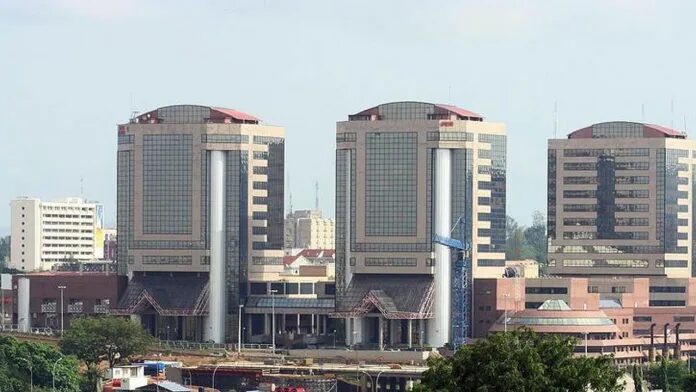
NNPC Towers
NNPC Towers

SERAP is asking the court to “direct and compel the NNPC to disclose the specific financial transactions carried out in respect of the alleged missing or diverted N22.3 billion, $49.7 million, £14.3 million and €5.2 million oil money, including details of disbursement, the contractors, and other individuals who collected the money.”

In the suit, SERAP is arguing that: “The diverted or misappropriated oil revenues reflect a failure of NNPC accountability more generally and are directly linked to the institution’s continuing failure to uphold the principles of transparency and accountability.”

SERAP is also arguing that “granting the reliefs sought would strike a blow against the impunity of those responsible for the missing or diverted oil money and ensure that the money is returned for the sake of NNPCL’s victims – Nigerians.”

SERAP said, “The allegations have also undermined the economic development of the country, trapped the majority of Nigerians in poverty and deprived them of opportunities.”

According to SERAP, “The Auditor-General has for many years documented reports of disappearance of oil money from the NNPC. Nigerians continue to bear the brunt of these missing oil money meant to provide essential public services for Nigerians.”

SERAP is also arguing that, “Combating the corruption epidemic in the oil sector would alleviate poverty, improve access of Nigerians to basic public goods and services, and enhance the ability of the government to meet its human rights and anti-corruption obligations.”

The lawsuit filed on behalf of SERAP by its lawyers, Oluwakemi Agunbiade and Valentina Adegoke, reads in part: “The diverted or misappropriated oil revenues have further damaged the already precarious economy and contributed to very high levels of deficit spending and borrowing by the government.

“Despite the country’s enormous oil wealth, ordinary Nigerians have derived very little benefit from oil money primarily because of the widespread grand corruption including in the NNPC, and the entrenched culture of impunity of perpetrators.

“The grim allegations by the Auditor-General suggest a grave violation of the public trust and the provisions of the Nigerian Constitution, national anticorruption laws, and the country’s international human rights and anticorruption obligations.

“According to the 2022 audited report by the Auditor General of the Federation, published on 9 September 2025, the Nigerian National Petroleum Corporation Limited (NNPC) failed to account for over N22.3 billion, $49.7 million, £14.3 million and €5.2 million oil money.

“The NNPC in 2020 reportedly paid over N292 million (N292,609,972.29]) ‘for a contract to construct an Accident and Emergency Facility along Airport Road, Abuja.’ But ‘the contractor has abandoned the contract, and failed to execute the job, despite collecting the fee’.

“The Auditor-General fears the contract money may have been ‘diverted’. He wants the money ‘recovered from the contractor and remitted to the treasury.’

“The NNPC in 2021 also reportedly spent over £14 million (£14,322,426.59) ‘to repair its London office.’ But ‘there was no evidence to show that the money was actually spent, and no documents of any spending’.

“The NNPCL also ‘irregularly paid’ over $22 million ($22,842,938.28) to a contractor for lifting 9 cargoes of crude oil.’ The NNPC ‘failed to explain why the amount due to it from crude from January to October 2019 was only $4,858,997.22 and why the contractor got over $22 million for crude for the same period.’

“The NNPC in 2021 ‘irregularly paid N2.3 billion (N2,379,488,622.99) as car cash option to 100 staff’ but ‘without the approval of the National Salaries, Incomes and Wages Commission’, and ‘without any document to show that the 100 staff applied for the cash options and any rationale for the payments.’

“The NNPC in 2021 also reportedly ‘failed to deduct statutory taxes of over N247 million (N247,181,597.92) from payments made to contractors and service providers.’ The NNPC also ‘failed to deduct statutory taxes of over $529,000 ($529,863.24) from payments made to contractors and service providers.’

“The NNPC ‘paid over N3 billion (N3,445,022,107.40) for various services’ but ‘without any documents or trace’. The Auditor-General fears ‘the money may have diverted’.

“The NNPC ‘irregularly renewed a contract for over $1 million ($1,801,500.00) for charter hire of coastal vessel.’ The money was paid ‘before the consummation of a formal contract ratification.

“The NNPC also ‘irregularly paid a contractor over N355 million (N355,436,310.42) as consultancy fees for negotiating and securing waiver to avoid demurrage on abandoned cargoes.’

“The NNPC ‘paid over N474 million (N474,462,744.53) to a contractor for the connection of Kaduna Refining and Petrochemical Company Limited to the National Grid.’ The Auditor-General is concerned ‘the money may have been lost’.

“The NNPC ‘paid over $2 million ($2,006,293.20) to a contractor for the rehabilitation and upgrade of system-depot project’, but ‘without any documents’. The NNPC also ‘paid over N478 million (N478,505,300.00) to a contractor for the rehabilitation and upgrade of system-depot project’, but ‘without any documents’.

“The NNPC in 2019 ‘awarded a contract for over $8 million ($8, 211,432.00) ‘for the emergency procurement and installation of custody transfer meters on crude oil and product pipelines at eleven locations.’ The Auditor-General fears that ‘the payments may be for work not executed.’

“The NNPC ‘irregularly paid over €5 million (€5,165,426.26) to a contractor for the operation and maintenance of Atlas Cove Jetty Facility’ but ‘without any documents.’ The Auditor-General fears that ‘the money may have been diverted’.

“The NNPC ‘paid over $1 million ($1,035,132.81) as legacy debt for charter hire of coastal vessels to a company without power of attorney.’ The Auditor-General fears that ‘the money may have been diverted’.

“The NNPC ‘inflated a contract for over $1 million ($1,926,497.38) to hire a Time Charter for Carriage of Petroleum Products.’ The Auditor-General fears that ‘the money may have been diverted’.

“The NNPC ‘paid $156,000.00 to a consultant as outstanding fee for advising on the financing of the rehabilitation of PHRC’, but ‘the payment is doubtful’’.  The Auditor-General fears that ‘the money may have been diverted’.

“The NNPC ‘failed to deduct $8,355.18 as taxes from the payment of outstanding fees to a consultant for advising on the financing of the rehabilitation of PHRC.’

“The NNPC ‘irregularly paid over N82 million (N82,647,151.00) to a consultant for geotechnical/geophysical investigations of the proposed Independent Power Plant Project site.’ But ‘there was no document showing any evidence of payment’. The Auditor-General fears that ‘the money may have been diverted.’

“The NNPC ‘paid over N246 million (N246,196,566.00) for a contract for the purchase and supply of 2400 meters of seamless carbon steel pipe to Warri Refinery Petrochemicals Company Limited.’ But ‘the contract was not never executed, and the items were not supplied.’

“The NNPC ‘failed to deduct over N46 million (N46,244,033.79) as taxes from a consultancy contract in December 2020 and 2021.’ The Auditor-General wants ‘the money recovered and remitted to the treasury.’

“The NNPC ‘irregularly paid N200 million (N200,000,000.00) as settlement for tax renegotiation.’ The Auditor-General fears that ‘the money may have been diverted.’

“The NNPC ‘failed to remit over N12 billion (N12,721,000,000.00) into the general reserve fund its operating surplus for December 2020.’ The Auditor-General fears that ‘the money may have been diverted.’

“The NNPC ‘irregularly paid N152 million (N152,000,000.00) to a company to execute a procurement contract requested from the Office of the Inspector-General of Police’, but ‘without any documents.’

“The NNPC ‘irregularly paid N25,000,000.00 as additional consultancy fee on a contract for accounting support.’ The Auditor-General fears that ‘the money may have been diverted.’ He wants ‘the money recovered and remitted to the treasury.’

“The NNPC ‘paid over $12 million ($12,444,313.22) to a contractor to buy and install new diesel generation set at Mosimi Depot.’ But there is no evidence that the project has been fully executed ‘despite the fact that the contract specified that the project awarded in 2020 should be completed within 15 months.’

“The NNPC ‘irregularly paid over N145 million (N145,933,833.00) for a contract for the operation and maintenance of Electro-Mechanical Facilities in the NNPC Towers. The ‘contract was automatically renewed on yearly basis without creating room for a fresh contract where other consultants would be given an opportunity of being considered’. The Auditor-General wants the money accounted for.

“The NNPC ‘paid 13 contractors over N1 billion (N1,212,192,409.97) for various works between 2020 and 2021’, but ‘there is no evidence of any work done by the contractors as there were no supporting documents’.”

No date has been fixed for the hearing of the suit.

IBM SkillsBuild: YASIF to train 15,000 underprivileged Nigerians with digital skills

Young Advocates for a Sustainable and Inclusive Future (YASIF Nigeria) and its partners have announced plans to equip 15,000 young, underserved Nigerians as part of efforts to improve their participation in the digital and green economy.

The programme, which is part of IBM SkillsBuild Phase 2’s Reskilling Revolution Africa (RRA) initiative, will be carried out in partnership with IBM, the African Union (AU), and the International Association for Volunteer Effort (IAVE) as part of a larger continental effort to increase young people’s access to professional, digital, and sustainability-related skills throughout the nation.

IBM SkillsBuild
Beneficiaries of the IBM SkillsBuild initiative

In a press statement signed by the executive director and founder of YASIF Nigeria, Blessing Ewa, the organisation added that the programme provides structured and labour-market-relevant learning pathways via a digital platform that supports self-paced learning, tracks progress and awards internationally recognised IBM SkillsBuild digital credentials.

She hinted that YASIF Nigeria is implementing the SkillsBuild Phase 2 initiative following the successful completion of the programme’s pilot phase, which demonstrated strong learner uptake, gender inclusion, and measurable skills outcomes in Nigeria.

“Through the SkillsBuild Phase of Reskilling Revolution Africa, YASIF Nigeria is scaling a proven model for youth skills development that is grounded in evidence from the pilot phase and focused on measurable employability outcomes, while contributing to a broader continental effort to prepare young Africans for participation in the digital and green economies,” Ewa said.

The IBM SkillsBuild is currently being delivered across multiple countries, including Nigeria, South Africa, Kenya, and Ethiopia, with implementation adapted to local contexts while maintaining consistent quality standards. To date, the programme has demonstrated strong results, engaging tens of thousands of learners, achieving high female participation, recording tens of thousands of learning hours, and enabling thousands of learners to earn IBM SkillsBuild digital badges, confirming its effectiveness as a scalable, partner-driven model for building job-relevant skills and strengthening employability outcomes.

The RRA pilot phase, launched in October 2024, set out to engage 30,000 young Africans across Nigeria, Ethiopia, and South Africa. Nigeria exceeded its national pilot target by enrolling 12,061 unique learners on the IBM SkillsBuild platform, drawn largely from unemployed and underemployed youth, including students in tertiary and technical institutions. Female participation surpassed the minimum benchmark, contributing to an overall pilot outcome in which nearly 60 percent of learners were women.

Across the three pilot countries, learners collectively recorded almost 93,000 learning hours and earned close to 2,000 internationally recognised IBM SkillsBuild digital credentials, establishing a strong performance baseline for programme scale-up.

Building on these results, the SkillsBuild Phase expands both the scale and structure of programme delivery in Nigeria. Under Phase 2, YASIF Nigeria partnering with Emerging Communities and Little Gifted Hands Matter alongside other implementing partners, will coordinate the enrollment of 15,000 young Nigerians over a 12-month period, with at least 50 percent female participation.

Implementation will span Abuja, Lagos, Kaduna, Katsina, and Niger State, ensuring geographic spread and access for youth from diverse backgrounds. Learners will be onboarded in weekly cohorts through a blended learning model that combines IBM SkillsBuild’s online curriculum with in-person facilitation, coaching, and peer support delivered through trained volunteers and facilitators. This time, YASIF and her partners will be collaborating with various Ministries, Departments and Agencies (MDAs) as well as the private sector to enable successful outcomes.

Learning pathways were informed by a National survey and are aligned with labour-market demand and local context, with focus areas including climate change and green economy, digital marketing, artificial intelligence, web development, project management, entrepreneurship, and sustainability-related skills.

Programme performance is monitored through the SkillsBuild platform, with Nigeria targeting a minimum of 1,500 digital badges earned during Phase 2, representing at least 10 percent of enrolled learners achieving platform-recognised credentials.

In addition to skills training, YASIF Nigeria and its partners are implementing a structured employability and alumni support framework designed to extend programme impact beyond course completion. This includes career guidance services such as Curriculum Vitae (CV) development and interview preparation, partnerships with employment and job-placement organisations, and entrepreneurship training and mentorship for participants pursuing self-employment. A national alumni network will be maintained to support peer learning, collaboration, and continued access to employment and enterprise opportunities.

In her final words, the founder of YASIF Nigeria, submitted that volunteering remains a core component of the SkillsBuild Phase, with participants encouraged to apply newly acquired skills through community-based activities, peer learning support, and volunteer-led initiatives.

This, according to her, is because the integration of skills development and volunteering strengthens practical experience, supports job readiness, and reinforces the programme’s focus on inclusive development and community resilience.

By Etta Michael Bisong, Abuja

Nigeria’s Carbon Market Framework: From aspiration to infrastructure

0

For two decades, African carbon markets operated as extraction mechanisms where these projects were designed locally, credits certified abroad, and value captured elsewhere. Nigeria’s Carbon Market Framework, anchored in the Climate Change Act 2021 and operationalised through the National Council on Climate Change (NCCC), represents a fundamental departure. Not because it promises scale because projections always promise scale but because it introduces something carbon markets desperately need: institutional infrastructure.

Carbon markets fail without trust. Africa’s carbon credibility has been eroded by asymmetric transactions: international buyers purchase credits at discount rates while host communities see minimal revenue. Nigeria’s framework addresses this explicitly by establishing a National Carbon Registry under NCCC oversight, asserting sovereign control over credit issuance, ownership clarity, and benefit distribution.

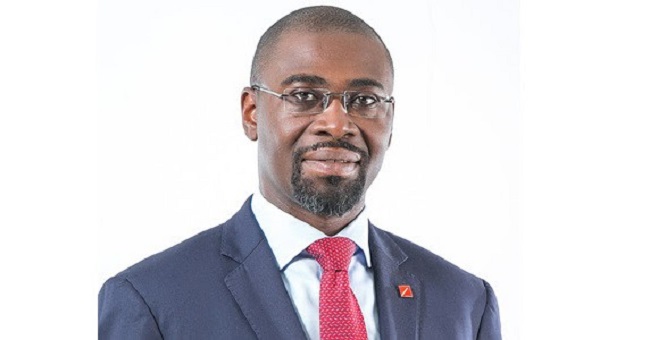
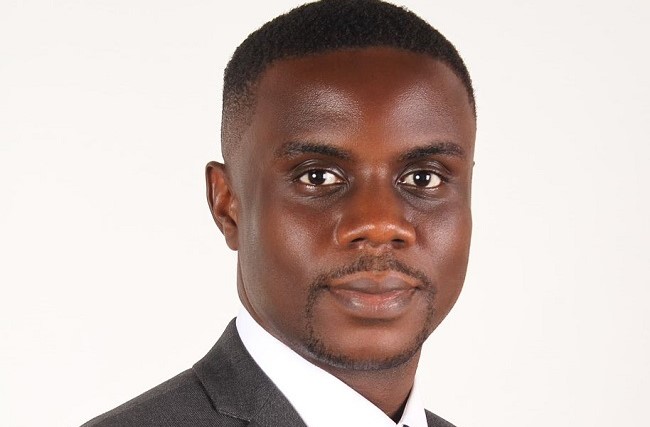
Ayo Ogunlowo
Ayo Ogunlowo

The framework introduces three foundational shifts: legitimacy, participation, and intent.

The first shift is legitimacy through accountability. The framework mandates Free, Prior, and Informed Consent from communities, revenue-sharing agreements, and transparent benefit distribution as pre-conditions for credit issuance. A renewable energy project in Kano cannot bypass community engagement and credits won’t be registered without documented consent and agreed benefit structures. Nigeria doesn’t invent new standards; it aligns with existing international methodologies (Verra, Gold Standard, CDM) while retaining approval rights based on national priorities. Credits must be globally tradable but nationally governed.

The second shift is participation as the market deepens. Until now, carbon markets were export pipelines – credits produced locally, value realised elsewhere. Nigeria’s framework enables domestic participation. When Dangote Cement or Access Bank can purchase Nigerian-issued credits to offset emissions, carbon becomes a domestically tradable commodity, not just an export product.

Three participation forms emerge: voluntary corporate procurement where Nigerian companies pursuing net-zero commitments can source credits domestically, keeping capital within Nigeria while supporting local climate projects; financial sector engagement where banks and pension funds can treat carbon credits as collateralisable assets or integrate them into green finance portfolios; and compliance readiness where companies building carbon credit portfolios position themselves for potential future obligations, whether domestic or linked to export markets like the EU Carbon Border Adjustment Mechanism.

The third shift is intent as systemic integration. The framework embeds carbon trading into Nigeria’s Energy Transition Plan and Long-Term Low Emissions Development Strategy. Projects aren’t evaluated in isolation but as components of broader decarbonisation pathways. A methane capture project in Warri is assessed for alignment with gas flaring targets. A Cross River reforestation initiative contributes to Nigeria’s 30% forest cover commitment.

This systemic integration introduces sectoral pipelines: renewable energy displacement, waste management methane capture, REDD+ projects, industrial emissions optimisation. Developers know which sectors are prioritised. Verification bodies understand acceptable methodologies. Buyers anticipate credit volumes.

With projections of $3 billion annually by 2030, carbon is positioned as foreign exchange diversification. Nigeria flares 7-8 billion cubic meters of gas annually (worth $1-2 billion if captured). Converting waste into carbon credits while monetising gas creates dual revenue streams. Nigeria’s 30+ million households without reliable electricity create massive carbon credit potential if renewable mini-grids scale.

Nigeria has laid the rails. The test is whether the trains actually run. Carbon project development requires technical expertise most Nigerian states lack. Federal capacity-building programs targeting state environmental agencies are essential. Establish regional carbon hubs providing shared project development services.

Carbon markets depend on credible Monitoring, Reporting, and Verification. Nigeria needs investment in remote sensing, IoT sensors, and blockchain-based registries. Technology platforms that automate emissions tracking and provide audit trails transform MRV from manual to systematic.

Nigerian credits must avoid the 30-50% discount African credits face. Pursue bilateral recognition agreements with major carbon markets. Secure endorsement from the Integrity Council for the Voluntary Carbon Market. Quality certification removes buyer hesitation. Without enforcement mechanisms, benefit-sharing becomes performative. Establish escrow mechanisms where credit sale proceeds are held until community benefit distribution is verified. Empower communities to lodge complaints with NCCC.

Climate finance architecture fails Africa because the $100 billion annual pledge arrives as debt, not grants. Carbon markets offer performance-based finance: verified emissions reductions that buyers willingly purchase. Africa provides climate mitigation services with measurable value to global buyers pursuing net-zero commitments.

Nigeria positions carbon as an exportable service comparable to oil or gas. The difference: carbon is climate-aligned revenue, compatible with global decarbonisation trends. As fossil fuel demand declines, carbon credit demand rises.

Nigeria’s framework significance lies in timing and integration. As global carbon markets mature (voluntary markets projected to reach $50+ billion by 2030), Nigeria positions itself as a credible supplier. By embedding carbon trading within national climate policy and economic strategy, Nigeria signals that carbon is infrastructure. Success will be measured by whether, five years from now, Nigerian corporates routinely purchase domestic credits, international buyers trust Nigerian verification, communities report tangible benefits, and carbon revenue appears in federal budgets.

The fundamentals are in place. Now comes execution, enforcement, and earning trust one verified ton at a time.

By Ayo Ogunlowo, Climate Tech Innovator & Founder, CarbonScope360, COO, Atunlo

Ogunlowo is Founder of CarbonScope360, a carbon emissions measurement platform, and Chief Operating Officer of Atunlo, which recycled 75 million plastic bottles and distributed ₦470 million to Nigerian communities in 2024. He has advised Access Bank on digital transformation and co-founded Omora, bridging blockchain and traditional finance

Advocate empowers displaced individuals to increase climate action

0

As part of efforts to encourage action against climate change, especially among Nigeria’s youth, three Internally Displaced Persons (IDPs) refuge camps located within the federal capital area have been empowered on the connection between human health and environmental protection.

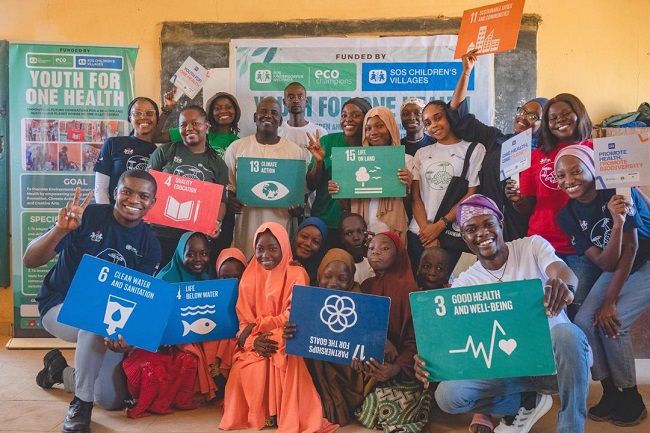
This initiative, which was carried out under the Youth for One Health Project (YOHP) and funded through the SOS Villages Eco Champions Initiative, in partnership with UNODC Nigeria, UNICEF Generation Unlimited 9ja, CASS Educational Foundation, the FCTA Department of Public Health, the UNESCO Nigeria Youth Network, and Theirworld, mobilised 13 volunteers and directly impacted 150 young people (over 60% female) across these IDP refugee camps, namely Kuchingoro, Karamonjigi, and Durumi Area 1, to become eco-champions and public health campaigners.

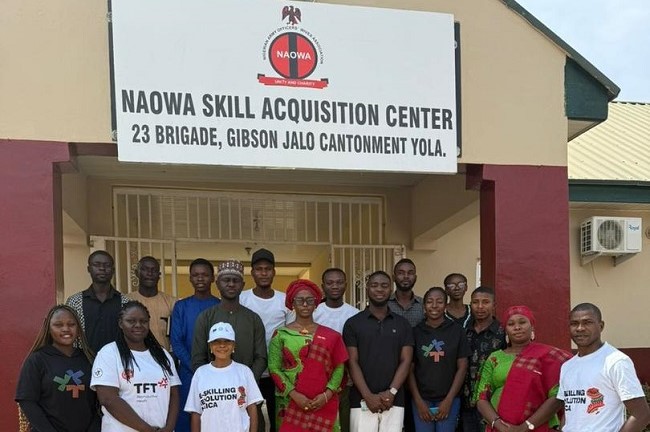
YOHP
Participants at the Youth for One Heal Project (YOHP), which is supported by the SOS Villages Eco Champions Initiative and held in Abuja, the capital of Nigeria

From Friday, December 19, to Sunday, December 21, 2025, participants engaged in eco-literacy and health education workshops, creative arts for Sustainable Development Goals (SDGs), advocacy against wildlife crime, plastic recycling into eco-art, tree planting, and youth leadership development at one refugee camp every day.

Pre- and post-test assessments showed a 45% increase in climate, health, and environmental knowledge among participating youths.  The results were tangible and immediate.  One hundred kilograms of plastic bottles were removed from camp environments and repurposed into biodiversity eco-art illustrating endangered species.

Additionally, 150 climate-action creative art murals were co-painted by the IDPs, giving the youths in the camp permanent learning tools promoting clean water, waste reduction, tree planting, and environmental hope. Nine fruit trees were planted and adopted by youths, contributing to long-term environmental quality and food sustainability, while 13 youth volunteer leaders were trained and mobilised to sustain activities through newly formed eco-clubs in each camp.

“The initiative placed young people at the centre of solutions through creative arts rather than the margins of aid,” Godwin Lasisi, the initiator of YOHP, said in response to the project’s impact on the participants.

“I can now take action to protect my environment and my health because I see the importance” Aisha, one of the participants, said.

Beyond the aforementioned numbers, he explained, lies a deeper impact. The public health specialist and SDGs champion added that displaced young people gained confidence, leadership skills, and a sense of ownership over their environment and health that empowered them to tell their stories, which were produced into a documentary.

According to him, the Youth for One Health Project represents a strategic scale-up of earlier models pioneered through the Interfaith Alliance for SDG Action Plan (IASAP) and the broader YOHP framework used to institutionalize the SDGs in secondary schools across Nigeria impacting over 20,000 young people.

Godwin Lasisi hinted that as Nigeria grapples with climate change, urban displacement, and public health challenges, this programme offers a compelling lesson because when young people are equipped with knowledge, creativity, and leadership opportunities, they become powerful agents of resilience.

“Scaling this model across more schools, IDP refugee camps, and vulnerable communities could mark a decisive step toward healthier environments, empowered youth, and sustainable development that truly leaves no one behind and accelerates the achievement of the SDGs and Africa Agenda 2063,” he stated.

By Etta Michael Bisong, Abuja

UN chief calls for renewed efforts on peace, sustainable development

0

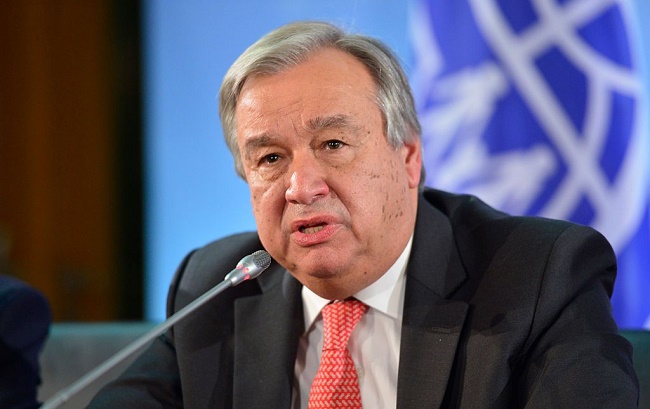
UN Secretary-General, Antonio Guterres, has called for renewed efforts on peace, justice and sustainable development amid global tensions rising and “reckless actions” triggering dangerous consequences.

Guterres made this known while outlining his priorities for 2026 – the final year of his tenure.

“2026 is already shaping up to be a year of constant surprises and chaos,” he told journalists in New York.

António Guterres
UN Secretary-General, António Guterres

Guterres – who trained as a physicist before entering public life – said that during times of profound flux, he returns to fixed principles that explain how forces act.

Among them is Newton’s Third Law of Motion which states that, for every action, there is an equal and opposite reaction.

“As we begin this year, we are determined to choose actions that generate concrete and positive reactions,” he said.

“Reactions of peace, of justice, of responsibility, and of progress in our troubled times.”

Today, impunity is driving conflicts – fueling escalation, widening mistrust, and allowing powerful spoilers to enter from every direction.

“Meanwhile, the slashing of humanitarian aid is generating its own chain reactions of despair, displacement, and death,” as inequalities deepen.

He highlighted climate change – “the most literal and devastating illustration of Newton’s principle” – as actions that heat the planet trigger storms, wildfires, hurricanes, drought and rising seas.

The world is also witnessing “perhaps the greatest transfer of power of our times”, namely from governments to private tech companies.

“When technologies that shape behaviour, elections, markets, and even conflicts operate without guardrails, the reaction is not innovation, it is instability,” he warned.

These challenges are happening as systems for global problem-solving continue to reflect economic and power structures of 80 years ago and this must change.

“Our structures and institutions must reflect the complexity – and the opportunity – of these new times and realities,” he said.

“Global problems will not be solved by one power calling the shots. Nor will they be solved by two powers carving the world into rival spheres of influence.”

He stressed the importance of accelerating multipolarity – “one that is networked, inclusive by design, and capable of creating balance through partnerships” – but it alone does not guarantee stability or peace.

“For multipolarity to generate equilibrium, prosperity and peace, we need strong multilateral institutions where legitimacy is rooted in shared responsibility and shared values,” he said.

Additionally, in the pursuit of reform, “structures may be out of date – but values are not,” he said.

In this regard, the people who wrote the UN Charter “understood that the values enshrined in our founding documents were not lofty abstractions or idealistic hopes” but “the sine qua non of lasting peace and enduring justice.”

He said that “despite all the hurdles, the United Nations is acting to give life to our shared values” and will not give up.

“We are pushing for peace – just and sustainable peace rooted in international law. Peace that addresses root causes. Peace that endures beyond the signing of an agreement.”

The UN is also pressing to reform and strengthen the Security Council – “the one and only body with the Charter-mandated authority to act on peace and security on behalf of every country.”

Stating that there is no lasting peace without development, he highlighted action to speed up progress to achieve the  Sustainable Development Goals(SDGs) and reform the global financial architecture,

“That includes ending the crushing cycle of debt, tripling the lending capacity of multilateral development banks, and ensuring developing countries just participation and real influence in global financial institutions,” he said.

On climate action, he stressed the need for deep emissions cuts this decade along with a just and equitable transition from fossil fuels to renewable energy sources.

“We are demanding far greater support for countries already confronting climate catastrophe, expanded early warning systems, opportunities for nations rich in critical minerals to climb global value chains,” he said.

The UN is also working urgently towards a framework for technology governance, including through global dialogue, capacity support for developing countries and the new International Scientific Panel on Artificial Intelligence (AI).

The names of 40 proposed panel members will be submitted to the General Assembly soon.

Guterres has also called for the creation of a Global Fund on AI Capacity Development for developing countries, with a target of $3 billion.

“As we begin this year, we are determined to choose actions that generate concrete and positive reactions,” he said.

“Reactions of peace, of justice, of responsibility, and of progress in our troubled times.”

By Cecilia Ologunagba

×