The Human and Environmental Development Agenda (HEDA Resource Centre) has petitioned the Economic and Financial Crimes Commission (EFCC) over alleged diversion, misapplication, and criminal breach of trust involving Federal Government intervention funds released to Oyo State Government following the January 2024 Bodija explosion in Ibadan.
In a petition signed by HEDA Chairman, Mr. Olanrewaju Suraju, and addressed to EFCC Chairman, Mr. Olanipekun Olukoyede, the civil society organisation alleged that the Federal Government released ₦30 billion to the Oyo State Government for victims’ compensation, reconstruction, and emergency relief after the deadly explosion that claimed lives and destroyed properties.
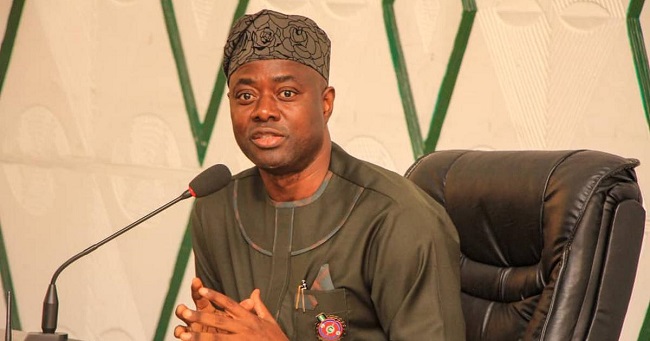
Gov. Seyi Makinde of Oyo State
HEDA noted that the release of the funds was first publicly alleged by former Ekiti State Governor, Mr. Ayodele Fayose, during a national television broadcast, and later reiterated in a statement on 28 December 2025. Fayose subsequently released documents, including a memo from the Office of the Accountant General of the Federation dated 29 August 2024, which he claimed showed evidence of the fund release.
According to the civil group, only about ₦4.5 billion intervention funds was reportedly applied to relief and compensation for victims, while the entire N30b was unaccounted for. The organisation further alleged that the fund was held in a commercial bank at interest for over a year without public disclosure by the Oyo State Government, leaving the utilisation and status of the funds unclear.
“We at HEDA expressed concern that the state government had allegedly failed to provide transparent public disclosure or a comprehensive account of the total intervention funds received, how they were spent, and the status of any unspent balance.”
“These allegations raise serious concerns bordering on corruption, abuse of office, diversion of public funds, criminal breach of trust, and possible money laundering, all of which fall within the statutory mandate of the EFCC.” Suraju added.
While noting that Section 308 of the 1999 Constitution grants immunity from prosecution to a sitting governor, HEDA stressed that such immunity does not prevent investigations, particularly regarding public funds and accountability.
HEDA therefore called on the EFCC to conduct a thorough, impartial, and professional investigation into the receipt, management, and utilisation of all Federal Government intervention funds released to Oyo State in connection with the January 2024 Ibadan explosion.
The organisation said the petition was submitted in good faith and in the overriding public interest, urging the anti-graft agency to act urgently to uphold public confidence and accountability in the management of public resources.
The Abundance of Hope Initiative (AHI), an Abuja-based civil society organisation (CSO), has officially signed a Memorandum of Understanding (MoU) with the Federal College of Forestry, Jos, to strengthen collaboration in tree planting, research, and environmental sustainability. The Federal University, Lafia, Nasarawa State, is the designated thematic area.
The landmark agreement, signed on January 16, 2026, at the Provost’s Office, establishes cooperation in key areas like: Supply of Seedlings, Tree Planting Support Services, Research & Development, and Capacity Building & Technical Support.
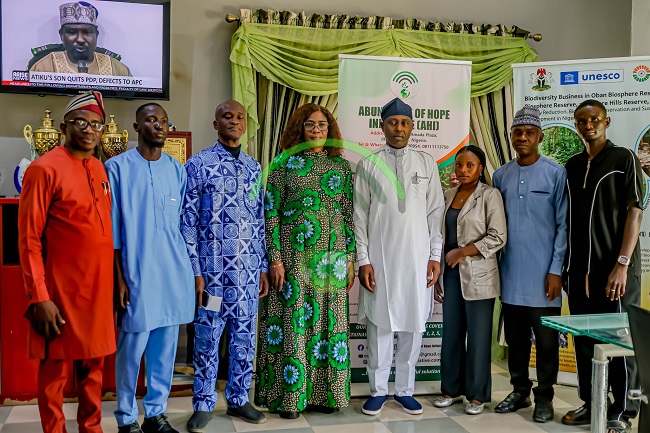
Officials of AHI and the College of Forestry at the signing of the MoU
Led by Amb. Lambo Hosea (Director of Media and Communications) and Miss Sandra Gyang (Team Lead, Training and Research), the AHI team reaffirmed its commitment to restoring degraded lands and advancing climate action across Nigeria.
The agreement provides a framework for joint implementation of tree planting, waste management, environmental education and sustainability programmes aimed at addressing the growing challenges of climate change.
Presenting an overview of the project, Ms. Gyang explained that planting for the climate is a comprehensive action initiative focused on mitigating climate change through large scale tree planting.
According to her, the project targets the planting of 1 million drought-resistant trees, establishment of eco-resource hub, students’ green clubs and the integration of technology to promote innovation.
Dr Mailumo Sambo, Provost, Federal College of Forestry, sees the MoU as a laudable initiative that aligns with the core mandate of the research institute. He assured that the College had the capacity and institutional experience to handle afforestation projects, stressing that tree planting remained the most important scientific response to environmental degradation.
“Together, we’re planting not just trees, but hope for generations to come,” submitted the AHI.
Stakeholders have stepped up efforts to mitigate the effects of climate change through sensitisation and demonstration of clean cooking technologies at a market fair in Abuja.
The Sensitisation and Demonstration of Clean Cooking Technologies was organised by the Nigerian Alliance for Clean Cooking, in collaboration with other stakeholders on Saturday, January 17, 2026.
Country Director, Nigeria Solar Sister, Ms. Chioma Ome, said it was important to eliminate unhealthy cooking habits to safeguard public health and reduce the impact of climate change.
Country Director, Nigeria Solar Sister, Ms. Chioma Ome
She said the use of efficient cooking stoves significantly reduced environmental pollution and greenhouse gas emissions.
“The use of efficient cooking stoves reduces any impact on climate change. Cooking Technologies helps to reduce climate change challenges.
“This efficient cooking stoves use very little amount of charcoal by 70 per cent which makes it an adaptation mechanism,” she said.
She expressed concern that unhealthy cooking practices remained prevalent in both urban and rural areas, with many households still relying on open fires and three-stone cooking stands.
Ome emphasised the need for Nigerians to adopt clean and efficient cooking technologies.
“It is important that we do market fair like this to sensitise the public on the dangers of open-fire cooking, traditional cooking, and expose them to healthier forms of cooking.
“People need to be aware that their mode of cooking is not healthy for them. This clean cooking technologies reduce finances, it is safe, good, and affordable and is even consuming finance from them,” she added.
She added that although the stoves had an upfront cost, they were cheaper in the long run when compared with the health and environmental costs of traditional cooking methods.
Ms. Onyeka Ugwulebor, a representative of Roshan Renewables, described clean cooking technologies as welcome innovations that many Nigerians were eager to adopt.
“We have affordable stoves here and I believe that a lot of people want to rush to get, have such opportunity at this moment and grab them.
“For Roshan stoves, the cheapest is N7,000 and the highest is N25,000. So it is easy to buy and easy to use.
Ugwulebor said that the stoves were smokeless, environmentally friendly and affordable, adding that they consumed fewer charcoal briquettes and were easy to use without posing health risks to users.
Charcoal briquettes are compressed blocks of biomass (like wood waste, palm kernel shells, or sawdust) mixed with a binder (like starch) and pressed into uniform shapes.
This provides a consistent, long-burning and often smokeless fuel for cooking, heating and industrial uses, offering an efficient alternative to firewood or lump charcoal.
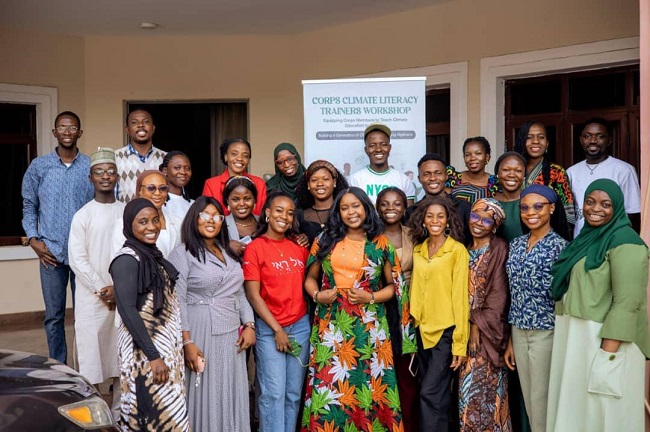
Young climate advocate, Tolulope Gbenro, in partnership with Brain Builders Youth Development Initiative (BBYDI), organised a corp climate literacy train-the-trainers workshop for 14 corp members in Abuja. The initiative is part of the Eco-champions programme supported by SOS Children’s Village Nigeria.
At the event held on Wednesday, December 10, 2025, in Abuja, Ms. Tolulope Gbenro, the founder of the initiative, HONE NYSC, shared insights into the motivation behind the project. According to her, it was inspired by the need to help beneficiaries understand the fundamentals of climate change.
Participants at Tolulope Gbenro’s train-the-trainers climate literacy workshop for National Youth Service Corps (NYSC) members in Abuja, which was organised in collaboration with the Brain Builders Youth Development Initiative (BBYDI).
Drawing on her personal experience during her service year in Ilorin, Kwara State’s capital, the environmental rights campaigner used a variety of analogies, including a covered cooking pot, to explain the negative impact of greenhouse gases and how they cause climate change.
Her session on climate change in Nigeria provided information on the nation’s specific impacts, how they alter harmattan patterns and increase flooding. Additionally, it revealed how these greenhouse gases disrupt agricultural production, which eventually leads to the incessant hike in the prices of food and some health challenges that many people experience but are not aware are caused by these effects.
In the end, her experience equipped the participants with elementary climate literacy skills on how to counter misinformation and apathy in the global climate dialogue.
Mr. David Gabriel, the national programme manager of SOS Children’s Village Nigeria, asked the corp members to be environmental custodians by initiating projects that promote the safety and inclusion of all children, particularly the most vulnerable.
“This underscored the humanitarian core of climate literacy,” he stated.
His presentation at the meeting provided a powerful ethical framing that emphasised the link between environmental degradation and child rights issues. It also drew the participants’ attention to how these issues encourage the displacement of people from their ancestral homes, prevent access to education, and create other forms of vulnerability.
In the same vein, Mr. Chima Okoli, one of the facilitators at the event, tasked the attendees to see themselves as “sparks” who would ignite action in their places of primary assignment, using storytelling and local advocacy to turn awareness into tangible projects like community gardens and waste management systems.
Speaking on the theme “Mobilising Grassroots Action,” he stressed that sustainable change begins with local ownership, referring to climate action as a grassroots movement.
Other presentations at the programme focused on strategic engagements, cultural sensitivity, and power mapping within communities to identify key influencers, as well as methods for co-creating solutions rather than imposing them.
Furthermore, the sessions stressed the need for a step-by-step guide on initiating school-based action, such as forming Eco-clubs, setting up a waste sorting station with labelled bins, planning a safe community clean-up with waivers, and launching an “Adopt-a-Tree” programme.
The career-focused session delivered by Chizoba Nzeakor mapped the landscape of climate careers in policy, technology, finance, and communication. It provided strategic advice on skill specialisation and portfolio building through documentation and professional networking to transition passion into a viable profession.
Some of the beneficiaries who spoke at the end of the training described it as extremely empowering.
According to Michael Onoja, the exercise simplified climate science in a form that improves knowledge and fosters real-life actions.
For Kave Blessing, the engagement was superlatively detailed, and she pledged to leverage the opportunity to accelerate climate action and impact her community.
Finally, the workshop concluded with a comprehensive programme implementation segment, reviewing deliverables, reporting templates, presentation of certificates, BBYDI climate champions flashcards and schedules for follow-up virtual sessions.
The next phase of the project promises to concentrate on how to empower over 400 young Nigerians through the step-down training that will be implemented by the fellows.
The World Food Programme (WFP) says aid cuts have pushed at least 1.2 million people in Northeast Nigeria deeper into hunger.
The warning on Friday, January 16, 2026, cited the Cadre Harmonisé, the regional equivalent of Integrated Food Security Phase Classification (IPC). which rates food insecurity on a scale from one to five.
IPC levels range up to catastrophic famine, helping governments and agencies plan emergency responses.
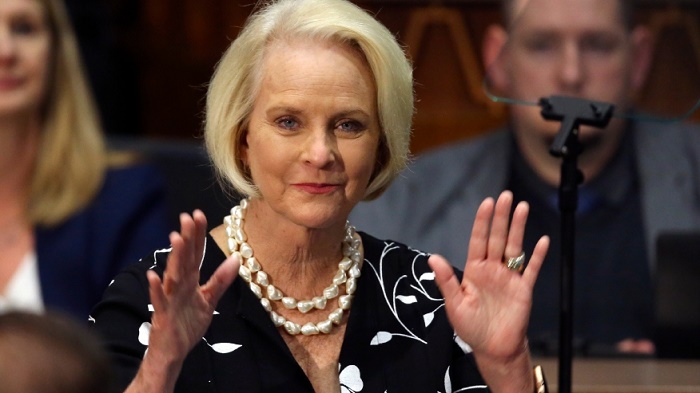
Cindy McCain, Executive Director, World Food Programme (WFP)
“In Nigeria, funding shortfalls last year forced WFP to scale down nutrition programmes, affecting more than 300,000 children.
“Malnutrition levels in several northern states have deteriorated from ‘serious’ to ‘critical,’” the agency said..
The UN agency said it would reach only 72,000 people in February, down from 1.3 million assisted during the 2025 lean season.
Across West and Central Africa, 55 million people are expected to face crisis-level hunger, or worse, during the June to August lean season.
It projects 13 million children will suffer malnutrition this year, while over three million people face emergency food insecurity – more than double the 2020 figure.
WFP regretted that funding cuts continue in spite of rising violence and displacement in the region.
Nigeria, Chad, Cameroon, and Niger account for 77 per cent of regional food insecurity, according to WFP.
The latest figures show 15,000 people in Borno are at risk of catastrophic hunger for the first time in nearly a decade.
Conflict, displacement, and economic turmoil drive hunger, but funding cuts are now pushing communities beyond their coping capacity.
“The reduced funding we saw in 2025 has deepened hunger and malnutrition across the region.
“As needs outpace funding, so too does the risk of young people falling into desperation,” said Sarah Longford, WFP Deputy Regional Director.
WFP urgently requires over $453 million in the next six months to continue humanitarian assistance across the region.
Meanwhile, WFP also warned that more than half a million vulnerable people in Cameroon risk losing assistance in the coming weeks.
In Mali, areas receiving reduced food rations saw a nearly 65 per cent surge in acute hunger, compared with a 34 per cent decrease where full rations were provided.
Continued insecurity disrupts supply lines to major cities, leaving 1.5 million of the country’s most vulnerable at risk of crisis-level hunger.
WFP stressed that adequate funding is vital for operations that improve food security across West and Central Africa.
Teams have helped rehabilitate 300,000 hectares of farmland, supporting over four million people in more than 3,400 villages.
Programmes also include school meals, nutrition, capacity building, seasonal aid, and infrastructure development to stabilise local economies and reduce aid dependency.
“To break the cycle of hunger for future generations, we need a paradigm shift in 2026,” Longford said.
She urged governments and partners to increase investment in preparedness, anticipatory action, and resilience-building to empower local communities.
The Nigeria International Energy Summit (NIES) has announced the confirmation of distinguished African Heads of State for its 2026 edition, reinforcing the Summit’s status as Africa’s most authoritative and impactful platform for energy dialogue, policy coordination, and investment mobilisation.
Among the confirmed leaders are Adama Barrow, President of the Republic of The Gambia, and Teodoro Obiang Nguema Mbasogo, President of the Republic of Equatorial Guinea. The Summit will be hosted by President Bola Ahmed Tinubu, President of the Federal Republic of Nigeria, who will serve as Chief Host.
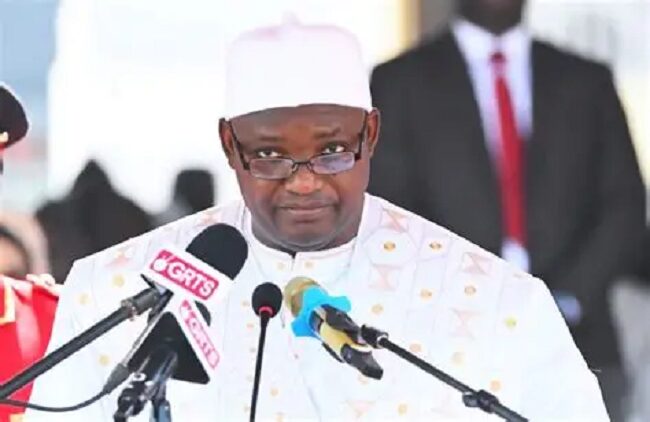
Adama Barrow, President of the Republic of The Gambia
“The confirmation of distinguished African Heads of State for NIES 2026 is a powerful affirmation of the Summit’s credibility, relevance, and growing global influence. NIES continues to serve as a trusted platform where leadership, policy, and investment converge to shape Africa’s energy future,” said Dr. James Shindi, Chief Executive Officer, Brevity Anderson/Project Director, NIES.
Now in its 9th edition, the Nigeria International Energy Summit is the only oil and gas industry event officially endorsed by the Federal Government of Nigeria, a distinction that underscores its strategic national importance and its central role in shaping Nigeria’s and Africa’s energy future.
NIES 2026 will also convene distinguished heads of delegation and senior government officials from Africa, Europe, the Middle East, Asia, and the Americas, alongside leaders of international energy organisations; chief executives of global and indigenous energy companies; development finance institutions; and representatives of host communities. This broad-based participation reflects the Summit’s commitment to inclusive, multi-stakeholder engagement across the global energy value chain.
The Summit further acknowledges the critical role of its strategic partners, including international oil companies, national oil companies, global service providers, financial institutions, and multilateral development partners. Their sustained engagement has been instrumental in positioning NIES as a premier platform for energy policy dialogue, investment facilitation, and cross-border collaboration in Africa.
Scheduled to hold in Abuja from February 2 to 5, 2026, the Summit will convene under the theme “Energy for Peace and Prosperity: Securing Our Shared Future.” NIES 2026 will advance bold ideas, forge strategic partnerships, and deliver practical, investable solutions to strengthen energy security, drive economic growth, and support sustainable development – across Africa and beyond.
“Our objective is clear: to translate ambition into action and ensure that energy remains a driver of stability, opportunity, and shared prosperity for Africa and beyond,” said Kunle Odusola-Stevenson, NIES Conference Producer.
The Nigeria International Energy Summit is an annual, high-level convening platform bringing together policymakers, industry leaders, investors, development partners, and host communities to shape Africa’s energy future through strategic dialogue, collaboration, and actionable outcomes.
The Lagos State Government has commenced on-site assessment of informal spaces across key corridors of the state, beginning with the Lekki–Ajah axis, as part of deliberate efforts to ensure orderly, safe, and sustainable management of such spaces.
The assessment was led recently by the Commissioner for Physical Planning and Urban Development, Dr. Oluyinka Olumide; alongside the Special Adviser to the Governor on Survey Matters, Ayokunnu Adesina; the Permanent Secretary, Office of Physical Planning, Oluwole Sotire; the General Manager, Lagos State Informal Space Management Authority (LASISMA), and the Chief Executive Officer of OCTRAGON, Gbolahan Awonusi.
Lagos State Government officials during the on-site assessment of informal spaces
Speaking during the exercise, Dr. Olumide said that the physical inspection of informal spaces signalled the state government’s determination to turn such spaces around for the better.
According to him, Lagos was deliberately taking charge of its informal spaces to reposition them in line with global best practices and bring them to par with those in other notable cities around the world.
The Commissioner explained that the assessment would inform the development of practical prototypes to be deployed in pilot corridors, adding that OCTRAGON, as a private-sector partner, was collaborating with the Lagos State Government to ensure the orderly and sustainable management of informal spaces across the state.
Dr.Olumide further noted that effective management of informal spaces was critical for mobility, safety, urban aesthetics, and environmental protection, stressing that Lagos must optimise every available space to meet the demands of rapid urbanisation and population growth.
“In Lagos, every square metre of land matters, as we are the smallest State in the country by landmass, yet face intense urban and population pressure,” he said.
The on-site assessment marks another strategic step by the Lagos State Government towards integrated urban development, improved liveability, and the creation of a resilient, well-planned megacity.
Capacity development remains one of the most funded and trusted pathways to strengthen institutions, empower professionals, and accelerate economic growth, especially in Nigeria. From federal ministries to state agencies, NGOs, and agrifood enterprises, hundreds participate each year in training sessions on leadership, digital tools, monitoring and evaluation, agronomy, nutrition, finance, coordination, and more.
Development partners continue to invest heavily in workshops, technical training, leadership programmes, extension support, digital skills, and organisational development. And rightly so, because people are the backbone of every reform, policy, and food system we aim to transform. However, despite the significant investment, a recurring question remains: Why does capacity building sometimes seem slow in producing tangible, visible change?
Grace Omini
The evidence does not indicate a failure in the training itself, but rather a gap in how training interacts with the environment in which people operate. Capacity does not develop in isolation; individuals learn as part of systems, which are shaped by policies, incentives, structures, culture, tools, and politics.
Despite the heavy investment in training, Nigeria still faces massive gaps in talent, knowledge, and institutions. From state planning units to extension services, nutrition desks, research institutions, cooperatives, SMEs, and agribusinesses, capacity development is not optional; it is critical. Evidence from global development practice shows that training alone contributes only one component of long-term capacity development or change, and its impact depends heavily on organisational culture, leadership, and the systems that people return to after the workshop.
To unlock the full value of and/or upgrade capacity development in Nigeria, particularly for agriculture and food systems transformation, we need a broader, more holistic approach: An approach not just centred on building the people, but also on strengthening the organisations and aligning the systems they work within.
What Global Evidence Tells Us
International studies have consistently shown that while training builds knowledge, knowledge alone does not automatically translate into behaviour change or improved performance.
Here are three widely recognised findings:
1. Only a fraction of training is applied without system support
A significant body of research on training transfer indicates that knowledge gained in training does not automatically translate into behaviour change or organisational performance unless workplace conditions support it. 60–90% of knowledge acquired during training is not applied at work when the workplace lacks supporting structures, such as leadership, incentives, tools, and processes. This finding is supported by studies from around the world on workplace learning.
2. Training plus reinforcement outperforms training alone
A global evaluation comparing “training only” versus “training with follow-up support” found that participants with reinforcement activities such as coaching, practice, and application tasks had 2x higher skill uptake, and 48% greater improvement in work performance. This demonstrates that training content becomes more impactful when combined with follow-up structures that support actual application.
3. A World Bank IEG study confirms that training alone is insufficient
The World Bank’s Independent Evaluation Group (IEG) concluded that training must be combined with organisational reforms, institutional incentives and leadership engagement to achieve meaningful development outcomes: “Training on its own is rarely sufficient to build sustainable capacity.”
A Systems Lens for Nigeria’s Capacity Development
Nigeria needs capacity development, especially in agriculture, nutrition, climate resilience, extension systems, and public sector coordination. To unlock the full benefits of investments, capacity programmes must expand beyond the training room to consider three interconnected levels:
1. Individual Capacity
People still require skills in technical, managerial, digital, financial, analytical, gender-responsive, climate-smart, and leadership. However, learning is most effective when linked to real challenges they encounter daily.
2. Organisational Capacity
This is where learning turns into productivity with the right tools, processes, reporting structures, incentives, and decision-making culture. Without this layer, even the best-trained officers cannot perform effectively.
3. Institutional and System Capacity
This is where food systems transformation thrives. Capacity cannot work when policies conflict, coordination platforms are weak, accountability mechanisms are compromised, budgets are diverted, arrive late or don’t come at all, structures underperform or political transitions reset priorities.
When these three levels align, learning becomes performance, and performance leads to transformation.
Why This Matters for Nigeria’s Food Systems Transformation
Nigeria’s food system is complex and interconnected. Farmers depend on extension, extension depends on inputs and data, processors depend on markets, markets depend on policies, and nutrition outcomes depend on behaviour, affordability, and access.
Development partners fund capacity programmes because the sector cannot grow without skilled people and strong institutions. To drive real change, programmes must tackle the key challenges holding the system back, involve leadership to support learning, and combine training with follow-up coaching and practical tasks that encourage better decision-making, data use, coordination, and stakeholder engagement.
Solutions co-designed with participants increase adoption, while updating tools, SOPs, and frameworks helps embed new skills in the organisation. Success should be measured by improvements in coordination, service delivery, decision-making, data quality, farmer outcomes, and responsiveness, not just attendance. Strengthening policies, budgets, incentives, and data systems ensures these gains last.
Training will always matter. But training within a well-designed system is what truly brings lasting changes and capacity development.
The current opportunity is to ensure these investments create more profound, sustainable, and lasting impact. By adopting a systems-thinking approach, capacity development becomes more than just workshops; it transforms into a deliberate, structured pathway for strengthening institutions, energising public service delivery, enhancing agricultural productivity, improving nutrition outcomes, and accelerating food systems transformation.
By Grace Omini, Manager at Sahel Consulting Agriculture & Nutrition Limited
The Centre for Climate Change and Development (CCCD) at Alex Ekwueme Federal University, in partnership with the Institut du Développement Durable et des Relations Internationales (IDDRI) in Paris, under the Ukama Network, in collaboration with Nigeria’s Federal Ministry of Industry, Trade and Investment (FMITI) has successfully hosted a workshop on Trade, Investment and green industrialisation in Nigeria: strengthening relationship with the European Union.
The workshop, which held at Transcorp Hilton Abuja, brought together over 50 high-level stakeholders, including policymakers, private sector leaders, diplomats, and development experts, to advance Nigeria’s green economic agenda and strengthen its position in green industrialisation, with a focus on the relationship with the European Union (EU).
Participants at the Ukama Platform workshop
As Nigeria seeks to diversify its economy from fossil fuels, stakeholders examined existing policies, institutional frameworks, and partnerships towards these goals, and offered recommendations. This intervention is of impeccable timing in light of recent geopolitical shifts, which have impacted several sectors and heralded international market realignments, highlighting the need to forge new international partnerships amidst the urgency to transition from fossil dependence.
Recently, Nigeria’s President Bola Ahmed Tinubu, speaking at the 2026 Abu Dhabi Sustainability Week, outlined Nigeria’s strategic vision of mobilising up to $20-$30 billion annually in climate finance for climate-resilient growth and energy transition. The workshop served as a timely platform to analyse the pathway to operationalising these national priorities through enhanced EU collaboration.
At the policy workshop, participants emphasised green industrialisation as an economic necessity, aligning with Nigeria’s Energy Transition Plan and net-zero goals by 2060, while identifying operationalisation gaps, opportunities, and making practical and actionable recommendations towards strengthening collaboration on sustainable trade and green industrialisation.
In his welcome remarks, Prof. Chukwumerije Okereke, CCCD Director and Ukama Co-Chair, highlighted the workshop’s focus on addressing structural vulnerabilities in Nigeria’s economy, such as over-reliance on oil exports, which accounts for 90% of Nigeria’s earnings, and leveraging global opportunities like the African Continental Free Trade Area (AfCFTA) and EU’s Global Gateway Initiative.
“This dialogue aims to access policy frameworks, identify barriers and opportunities, facilitate collaboration, curate actionable plans, and commitments to reposition Nigeria for sustainable, inclusive growth,” Prof. Okereke stated.
In his remarks, Dr. Sebastien Treyer, IDDRI Executive Director and Ukama Co-Chair, underscored the importance of mutual partnerships.
“We aim to identify factors blocking market access, with a focus on understanding the key issues faced by private players in Africa who want to invest in green industrialisation supply chains, and enhance investment relations between Nigeria and the EU, fostering shared prosperity and climate action,” he said.
Dr. Mrs. Rachel Mandi George, Director of Trade at FMITI, reaffirmed the Ministry’s commitment to policies promoting sustainable industrial development, renewable energy, and value addition.
“The steps taken by the European Union represent a shared commitment to shape a more resilient, inclusive, and sustainable economic future for Nigeria. As Africa’s largest economy and most populous nation, the choices we make today regarding industrial growth, trade, and investment will determine not only our economic prosperity but also our environmental sustainability and social wellbeing. Green industrialisation offers Nigeria a transformative pathway,” she stated.
Mr. Olamide Fagbuji, Senior Special Assistant to the President on Climate Technology and Operations, speaking on Nigeria’s policy landscape, outlined several policies developed by Nigeria to promote climate action.
“Nigeria, through the Climate Change Act, established the National Council on Climate Change to promote and coordinate national climate action. This body has enabled the development of several key policy frameworks, including the Energy Transition Plan (our blueprint for achieving net zero), the Long-Term Low Emission Development Strategy (LT-LED), and, notably, the Nationally Determined Contribution 3.0, published late last year. As a country, we remain focused on mobilising investment to ensure Nigeria meets its climate commitments,” he said.
In his Address, the Head of EU delegation in Nigeria, Ambassador Gautier Mignot, described the EU partnership offer as long-term, and sustainable, quality infrastructure that is beneficial to partner countries without creating new forms of dependency.
“At the regional level across West Africa, we are fostering integration and developing trade corridors while supporting the African Continental Free Trade Area. On industrialisation, our priority is to build the industries of the future, not the industries of the past, and to support companies through that transition. That commitment lies at the heart of our partnership with Nigeria. Specific strategies will reflect each country’s sovereign choices, and we are ready to provide technical assistance to both federal and state governments. Ultimately, our goal is to develop local value chains that deliver real benefits to partner countries,” he said.
Group Managing Director/Chief Executive Officer of Alfa Designs Nigeria Ltd., Mr. Quadri Fatai, says the company plans to invest in electric vehicles (EVs) as a long-term component of Nigeria’s energy transition.
Fatai said this in an interview, noting that while EVs offer near-zero emissions and environmental benefits, current realities in Nigeria make gas a more practical transition fuel in the short to medium term.
He said the company’s move to invest in electric vehicles would, however, depend on the resolution of critical challenges, particularly the availability of stable power supply and the cost of electricity.
Electric buses
“The adoption of EVs must be guided by economic and infrastructural realities, particularly the availability, stability and cost of electricity,” he said.
Fatai explained that the decision to prioritise gas over petrol and diesel in Nigeria was largely driven by affordability and lower environmental impact, adding that the same cost-based logic must apply to EVs.
“When you charge a vehicle with expensive electricity, it no longer becomes economical. Cost is always a major concern for the populace.”
According to him, electric vehicles produce almost zero emissions at the point of use, unlike internal combustion engines and even gas-powered vehicles, which still emit carbon dioxide and, in some cases, soot due to incomplete combustion.
“With EVs, you are almost at zero emission. You don’t have carbon dioxide or soot formation from the vehicle, which makes it very attractive from an environmental standpoint.”
The Alfa Designs CEO said the company views EV investment as a “phase three” objective, to be pursued after Nigeria closes key gaps in power generation, transmission and distribution.
He said widespread and affordable electricity supply was essential before EVs could become commercially viable for most Nigerians.
“First, we need a steady and stable power supply. When we have enough power outlets and electricity becomes cheaper per kilowatt, then EVs will make more economic sense.
“Nigeria’s vast gas resources positioned the country to first use gas to address power deficits and reduce dependence on petrol, before transitioning more aggressively to electric mobility.
“Our company already has partnerships in the electric vehicle space but we deliberately chose not to prioritise large-scale deployment at this stage.
“We have partners working on electric vehicles, but our focus for now is gas. At present, the cost per kilowatt of electricity in Nigeria is still higher than the equivalent cost of gas,” he said.
He expressed optimism that increased domestic gas utilisation would eventually drive down electricity costs, making EV adoption more attractive in the future.
“With increased gas deployment for domestic power generation, electricity will eventually become cheaper. At that point, EVs will naturally become a more viable and competitive option,” Fatai said.
“A phased approach to energy transition will allow Nigeria to balance environmental goals with affordability and economic growth.
“Our approach is based on reality; once electricity becomes cheaper than gas on an energy-equivalent basis, EVs will become a natural next step,” he added.