Radio reports archives The success of a festival is not only measured by the number of people that participated in it and the volume of eating and drinking; but also the arrangements put in place to clean up the venue of the occasion.
This may as well apply to the Christmas and New Year celebrations.
What facilities are put in place by the governments of the respective states and local governments in the country to ensure that the masses do not swim in filth while celebrating the yuletide?
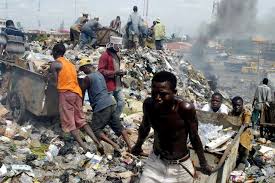
Over to Correspondent Innocent Onoh tries to find answer to the poser in his report on the Challenges of waste disposal in Lagos this Yuletide.
President Barack Obama of the United States on Tuesday, December 20 2016, moved to solidify his environmental legacy by withdrawing hundreds of millions of acres of federally owned land in the Arctic and Atlantic Ocean from new offshore oil and gas drilling.
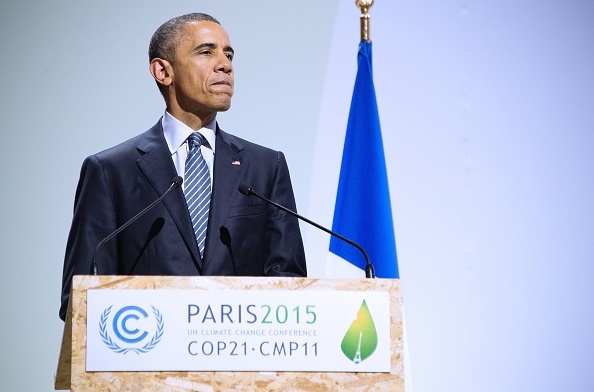
President Barack Obama of the United States addressing leaders at COP21 in Paris, France
Obama used a little-known law called the Outer Continental Shelf Lands Act to protect large portions of the Chukchi and Beaufort seas in the Arctic and a string of canyons in the Atlantic stretching from Massachusetts to Virginia. In addition to a five-year moratorium already in place in the Atlantic, removing the canyons from drilling puts much of the eastern seaboard off limits to oil exploration even if companies develop plans to operate around them.
The announcement by the White House late in the afternoon was coordinated with similar steps being taken by Canadian Prime Minister Justin Trudeau to shield large areas of that nation’s Arctic waters from drilling. Neither measure affects leases already held by oil and gas companies and drilling activity in state waters.
“These actions, and Canada’s parallel actions, protect a sensitive and unique ecosystem that is unlike any other region on earth,” the White House said in a statement. “They reflect the scientific assessment that, even with the high safety standards that both our countries have put in place, the risks of an oil spill in this region are significant and our ability to clean up from a spill in the region’s harsh conditions is limited.
White House officials described their actions to make the areas off limits to future oil and gas exploration and drilling as indefinite. Officials said the withdrawals under Section 12-A of the 1953 act used by presidents dating to Dwight Eisenhower cannot be undone by an incoming president. It is not clear if a Republican-controlled Congress can rescind Obama’s action.
“There is a precedent of more than half a century of this authority being utilized by presidents of both parties,” a White House aide said. “There is no authority for subsequent presidents to un-withdraw. . . . I can’t speak to what a future Congress will do.”
“The U.S. is not acting alone today. Canada is acting to put an indefinite stop to activity in its waters as well,” the aide said. “With Canada, we send a powerful signal and reinforce our commitment to work together.”
David Rivkin, an attorney for the Baker and Hostetler law firm who served on the White House Counsel staffs of Ronald Reagan and George H.W. Bush, disagreed with the assertion that the decision cannot be overturned. “Basically I say the power to withdraw entails the power to un-withdraw,” Rivkin said, “especially if you determine the justification for the original withdrawal is no longer valid.”
A legal fight would likely follow, Rivkin said. But “it’s not clear why Congress would want to give a president tremendous authority operating only one way.”
Sen. Ted Cruz (R-Tex.) responded sharply on Twitter: “Yet another Obama abuse of power. Hopefully, on[e] that will be reversed…exactly one month from today” after Trump’s inauguration. Cruz closed his tweet with a hashtag: “Taking away Obama’s pen and phone.”
U.S. and Canadian officials have negotiated for months to reach a joint understanding on how to manage adjacent areas in the ocean in an effort to make the new protections as sweeping and politically durable as possible. Meanwhile, advocacy groups lobbied Obama to ban oil and gas leasing in the Arctic entirely.
Obama already invoked the Outer Continental Shelf Lands Act to safeguard Alaska’s Bristol Bay in 2014, and again last year to protect part of Alaska’s Arctic coast. The president has protected 125 million acres in the region in the last two years, according to a fact sheet issued by the White House.
The Beaufort and Chukchi seas are habitat for several species listed as endangered and species that are candidates for the endangered species, including the bowhead whale, fin whale, Pacific walrus and polar bear. Concern for the animals has heightened as the Arctic warms faster than anywhere else in the world and sea ice the bears use to hunt continues to melt.
The underwater canyons protected by the president cover nearly 4 million acres across the Atlantic continental shelf break, “running from Heezen Canyon offshore New England to Norfolk Canyon offshore the Chesapeake Bay,” according to a separate fact sheet.
They are widely recognised as major biodiversity hotspots that are critical to fisheries. The canyons provide deep water corals used by a wide array of fish. The area also provides habitat “for . . . deepwater corals, deep diving beaked whales, commercially valuable fishes, and significant numbers of habitat-forming soft and hard corals, sponges, and crabs,” the White House said.
The American Petroleum Institute denounced the decision. “The administration’s decision to remove key Arctic and Atlantic offshore areas from future leasing consideration ignores congressional intent, our national security, and vital, good-paying job opportunities for our shipyards, unions, and businesses of all types across the country,” said Erik Milito, the group’s Upstream director.
“Our national security depends on our ability to produce oil and natural gas here in the United States,” Milito said. “This proposal would take us in the wrong direction just as we have become world leader in production and refining of oil and natural gas and in reduction of carbon emissions.”
Contradicting the White House’s statement, Milito said George W. Bush removed previous 12-A withdrawal areas with a memorandum and made all but marine sanctuaries available for leasing. “We are hopeful the incoming administration will reverse this decision as the nation continues to need a robust strategy for developing offshore and onshore energy,” he said.
But a wide range of conservation groups hailed the decision. League of Conservation Voters President Gene Karpinski called it “an incredible holiday gift,” saying that “an oil spill in these pristine waters would be devastating to the wildlife and people who live in the region.”
Rhea Suh, president of the Natural Resources Defense Council, called it “a historic victory in our fight to save our Arctic and Atlantic waters, marine life, coastal communities and all they support.” Carter Roberts, president and chief executive of the World Wildlife Fund, applauded what he called “a bold decision” that “signals some places are just too important not to protect.”
Oil production in the Arctic represents a tenth of one percent of the nation’s oil production overall, the White House said. The area is so sensitive and so remote that the economics of exploration is costly.
Shell, which said in September 2015 that it would shelve drilling plans after spending $7 billion and not finding significant amounts of oil, still has one remaining lease in the Chukchi Sea where it drilled a well earlier last year. Shell is also part of a joint venture with Italian oil giant ENI and Spanish firm Repsol in the Beaufort Sea that holds 13 leases.
Shell held other leases in the Beaufort Sea, which the company transferred to the Arctic Slope Regional Corp., a company belonging to the Native Americans in the region.
An earlier plan to allow limited drilling off the Atlantic coast was shelved after state governments along the southern Atlantic coasts – including Virginia, North Carolina, South Carolina and Georgia – expressed worries over the effect on their beaches, tourist industry and environmentally sensitive marsh.
The Navy also objected. The Pentagon provided Interior with a map “that identifies locations … areas where the (Defense’s) offshore readiness activities are not compatible, partially compatible or minimally impacted by oil and gas activities,” department spokesman Matthew Allen said. The map included nearly the entire proposed drilling area.
Live training exercises are conducted off the Atlantic coast, “from unit level training to major joint service and fleet exercises,” Allen said in a statement. “These live training events are fundamental to the ability of our airmen, sailors, and marines to attain and sustain the highest levels of military readiness.”
The Obama administration eventually closed the Atlantic to drilling for five years.
President-elect Donald Trump could counter Obama’s plan with his own five-year plan, but even so it would be years before drilling could start.
The president-elect’s authority to undo a permanent prohibition is unclear. But Congress, controlled by Republicans, could move to rescind the withdrawal of federal lands from oil and gas exploration.
The Public Private Partnership (PPP) Pole, of the Steering Committee for the 22nd session of the United Nations Framework Convention on Climate Change (COP22), led by Saïd Mouline, Director of the Moroccan Agency for Energy Efficiency (AMEE), organised and executed several campaigns to raise awareness to the general public on environmental challenges and innovative technologies and solutions in favor of the climate, to find direct and indirect financing necessary for the organisation of COP22 and to promote the role of the private sector and its ability for innovation in the fight against climate change.
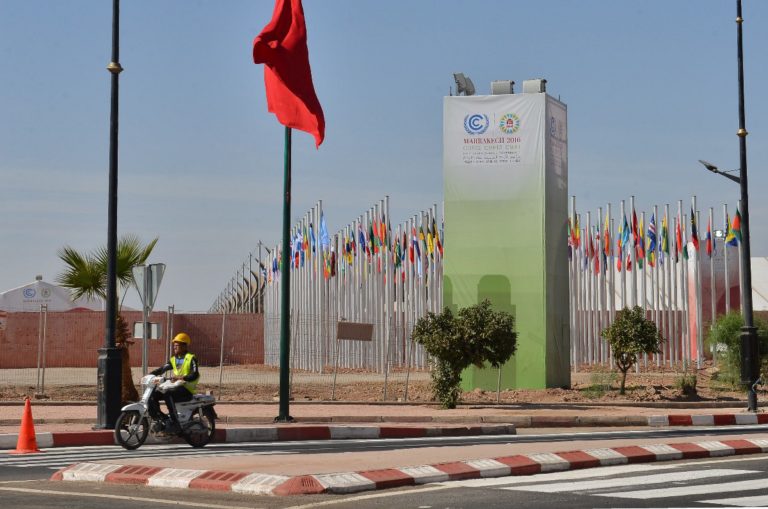
COP 22 venue in Marrakech, Morocco
197 companies exhibited at COP22
In order to allow the public sector and public institutions to exhibit their innovative technologies and initiatives against the effects of global warming, the PPP pole put in place an “Innovation and Solutions” area in the Green Zone of Bab Ighli, the conference site for COP22. Several exhibition themes related to climate change were selected: transportation, water, energy, climate finance, circular economy, building and construction, adaptation and agriculture as well as regions and countries. A total of 197 exhibitors (144 companies/groups of companies, 39 public and 17 financial institutions) were selected and exhibited in a space equaling 15,000 m2. The private sector was represented at the highest level during COP22 with more than 200 CEOs and managing directors.
No fewer that 29 nationalities, across five continents, were represented and nearly 150 conferences were organised in the innovation and solutions space during COP22.
As for financing COP22, the rental of space as well as financial partnerships and in-kind allow for the mobilisation of around 210 million dirhams.
Over 150 projects were labelled
Contributing to the success of COP22, the mobilisation of non-state actors in the fight against climate change was demonstrated by 1,170 label requests with 150 being selected. The labeling process was undertaken with the COP22 Scientific Committee
Highlights:
43 heads of international management signed the “Marrakech Declaration”, on November 16 at the High Level Business Summit on Climate Change, led by the General Confederation of Moroccan Businesses (CGEM), through which they committed to fight against the effects of climate change.
Launch of international initiative on energy efficiency (IEEI) to promote the sharing of best practices in terms of energy efficiency and renewable energy to reach the goals of the Paris Agreement.
Two events held on the margins of COP22 supported by the PPP pole
Cycling for the climate: the Spanish company Iberdrola was behind the initiative for a carbon neutral bicycle trip involving 15 participants from Seville, through Rabat, to Marrakech
Formula E Grand Prix, first time a stage of the world championship in this category took place in Africa
The PPP pole, in collaboration with CGEM and the European Union allowed for 20 startups from Africa to exhibit in the Green Zone, exhibiting the innovation potential from southern countries
In the Kasigau Corridor region of East Kenya, generations of cattle grazed the fields into dust and labourers clear-cut much of the dryland forest for firewood and farmland – because survival was at stake. To reverse deforestation and spur progress there, Wildlife Works, a company that helps local landowners in the developing world monetise their forest and biodiversity assets, created a wildlife sanctuary on 30,000 hectares. Since 1998, when the project began, many species are said to have returned.
The Kasigau Corridor REDD+ project provides income to the community and local landowners for protecting their land
As important as protecting the dryland forest and restoring its original biodiversity is revitalising the community that depends on the forest for its food and livelihoods. The Kasigau Corridor REDD+ (Reducing Emissions from Deforestation and Forest Degradation) project – managed under the United Nations’ climate change mitigation mechanism and implemented by Wildlife Works – is poised to help the people of the region become self-sufficient.
Boosting the effort is the groundbreaking $152 million Forests Bond from the International Finance Corporation (IFC), which is a member of the World Bank Group.
Launched in October, IFC’s Forests Bond will support training and employment for women of the Kasigau Corridor, refurbishment of classrooms at a local school, and the creation of a partnership that will harvest and store rainwater and provide water up to six months a year for a village of more than 10,000. The Kasigau Corridor REDD+ project has the support of regional leaders like Chief Kizaka of Kasigau Location in the Voi District, who represents over 12,000 people.
“Carbon money helps us meet basic needs and improve our lifestyle,” he said.
A “Global First” in Climate Finance
The Forests Bond, designed to protect forests and deepen carbon-credit markets, is an innovation in climate finance. Investors are given the choice between a cash or carbon-credit coupon linked to the Kasigau Corridor project. These credits are generated from avoided deforestation and issued under the Verified Carbon Standard.
A carbon credit is a tradeable certificate or permit representing the right to emit one ton of carbon dioxide or another greenhouse gas. Investors choosing the carbon credit coupon can retire the credits to offset corporate greenhouse-gas emissions or sell them on the carbon market. To pay investors a carbon credit coupon, IFC will buy carbon credits from the Kasigau Corridor REDD+ project.
IFC’s Commitment to Climate
Protecting forests is critical to keeping global warming under 2 degrees Celsius, while protecting vital ecosystems and offering an opportunity to boost rural livelihoods. But each year, 5.5 million hectares of tropical forests are deforested – an area approximately the size of Costa Rica. Investments of $75 billion to $300 billion will be needed in the next decade to reduce deforestation by 50 percent. Much of this has to come from the private sector. IFC’s Forests Bond, it was gathered, demonstrates the power of innovative capital-market mechanisms to unlock private sector funds for forest protection.
The 2017 UN Climate Change Conference – specifically the 23rd Session of the Conference of the Parties (COP23) to the United Nations Framework Convention on Climate Change (UNFCCC) – will take place from 6 to 17 November at the World Conference Centre in Bonn, Germany, the seat of the Climate Change Secretariat. The Conference will be convened under the Presidency of Fiji.
A view of the atrium in the World Conference Centre Bonn (WCCB) in Germany, venue of COP23
The Conference will comprise sessions of:
the Conference of the Parties (COP23);
the Conference of the Parties serving as the meeting of the Parties to the Kyoto Protocol (CMP13);
the Conference of the Parties serving as the meeting of the Parties to the Paris Agreement (CMA1.2);
the Subsidiary Body for Implementation (SBI47);
the Subsidiary Body for Scientific and Technological Advice (SBSTA47);
the Ad Hoc Working Group on the Paris Agreement (APA).
The UNFCCC secretariat, as host of the Conference, says it is working very closely with the Government of Germany, the State of North-Rhine Westphalia and the City of Bonn to make all the necessary arrangements.
Information on the venue, the rental of office space for delegations and space for events, registration for the conference and other services provided will be made available in due course, the UN body adds.
Information on hotel reservations in Bonn and the region will be posted in the coming days once final contact details are established, UNFCCC states further.
For initial information on the conference venue, the City of Bonn and the region, as well as general accommodation options available in and around Bonn, World Conference Centre Bonn and City of Bonn are vital links.
Sara Thomas, Manager, Online Advocacy, World Wildlife Fund (WWF), lists the conservation group’s achievements in 2016, which she tags “a year of action”
In April 2016, the US government announced robust regulations around captive tigers, making it more difficult for captive-bred tigers to filter into and stimulate the illegal wildlife trade that threatens wild tigers. Photo shows the Tiger (Panthera tigris) in the Kanha National Park, India
Powered by our partners’ dedication to conservation and continuous commitment to be the voice for wildlife and wild places, we’ve achieved some big wins. Here’s a look back at some of the incredible things they helped us accomplish this year.
WWF Advocacy by the Numbers
In 2016, our US activist base grew to 4.5 million supporters driven by WWF’s mission to conserve nature and the diversity of life on Earth.
WWF activists spoke up and took action over 2.5 million times this year to help protect wildlife, communities, and spaces they call home.
These conservation wins and the tremendous growth we’ve seen this past year would not be possible without our partners’ dedication. There’s still much more work to be done but, with their support, I know that we can achieve even more results in 2017.
Permanent Protection for America’s Arctic
Thanks in part to over 300,000 WWF supporters who spoke out to oppose drilling, critical parts of America’s Arctic will be permanently protected from offshore oil and gas drilling. With temperatures in the Arctic warming at twice the rate of the rest of the world, activists raised their concerns about the tremendous risk to indigenous communities, wildlife, and the environment.
Improved Regulations around Captive Tigers
In April, the US government announced robust regulations around captive tigers, making it more difficult for captive-bred tigers to filter into and stimulate the illegal wildlife trade that threatens wild tigers. More than 451,000 activists stood up to protect tigers and help make this happen.
Victories in the Fight against Wildlife Crime
This summer, the US finalised new regulations to help shut down commercial elephant ivory trade within its borders and stop wildlife crime overseas. This comes on the heels of an historic WWF petition signed by 1,000,000 supporters last year calling for a shift in US elephant ivory policy and stronger protection for elephants in the wild.
And this October, President Obama signed into law the first comprehensive wildlife crime legislation – the END Wildlife Trafficking Act – after it unanimously passed both houses of Congress. The legislation includes critical pieces of the Wildlife Trafficking Enforcement Act, which WWF supporters helped us advocate for in the Senate.
Belize Suspends Oil Exploration
In October, a day after the Belizean government began seismic surveying for oil exploration near the Belize Barrier Reef, officials suspended these operations after an outcry from citizens, national civil society groups, and international conservation organisations – including WWF – and their supporters. As part of a larger action, over 193,000 US WWF supporters asked Prime Minister Barrow to protect the reef – a World Heritage site – from harmful industrial activities.
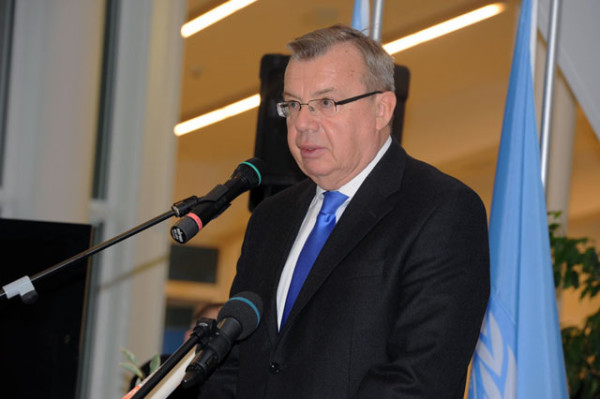
Executive Director the United Nations Office on Drugs (UNODC), Yury Fedotov, has welcomed a resolution passed at the UN Security Council on Tuesday. “The resolution offers a powerful recognition by the international community that persons desperately fleeing armed conflict are especially vulnerable to trafficking in persons and to other forms of exploitation,” said the UNODC Chief.
Yury Fedotov, Executive Director, United Nations Office on Drugs and Crime (UNODC)
Mr. Fedotov was speaking at a high-level Council debate on trafficking in persons in conflict situations held under the Spanish Presidency. Other speakers at the debate included the UN Secretary-General, Ban Ki-Moon; the Special Representative of the Secretary-General on Sexual Violence in Conflict, Zainab Hawa Bangura; UNODC’s Goodwill Ambassador for the Dignity of Survivors of Human Trafficking, Nadia Murad; and Ameena Saeed Hasan, an active civil society member.
The resolution is the culmination of a series of presidential statements, as well as reports of the Secretary-General and outlines recommendations stressing the importance of the Palermo Convention and its protocols on human trafficking and migrant smuggling, analysis of human trafficking financial flows that fund terrorists, victim identification mechanisms and access to victim protection.
Nadia Murad, in her remarks to the Security Council, asked the international community to “support the UN Voluntary Trust Fund for Victims of Trafficking in Persons, Especially Women and Children which provides critical assistance to the victims.” Mr. Fedotov’s speech underlined the need to deploy “the full arsenal of tools that we have to disrupt organised crime networks and terrorist groups, to fight money laundering and counter terrorist financing”.
On Wednesday, 21 December, UNODC launched its 2016 Global Report on Trafficking in Persons analysing the impact of human trafficking. According to the report, 63,251 victims were detected between 2012 and 2014. The report examines the connections between conflict, migration and trafficking and shows that an increasing number of trafficking victims from conflict-affected countries such as Syria, Iraq and Somalia have been detected in Europe, Asia and the Middle East. Due to the work of UNODC and its many partners, 158 countries have criminalised most forms of human trafficking in their domestic laws under the Palermo Convention and its human trafficking protocol.
Confronting human trafficking was given added momentum in September 2015 when it was included as a specific target in the 2030 Agenda for Sustainable Development where it appears in Goals 5, 8, and 16.
From all indications, it is crystal clear that the world is earnestly yearning for best practice in climate governance, thus unfolding global developments have led to a trend of rethinking climate governance with a view to improving or advancing the performance on climate actions to actualise the goals of Paris Agreement and by extension, that of the other related instruments such as 70th United Nations General Assembly resolution tagged “Transforming our world; the 2030 Agenda for Sustainable Development”, in particular its goal 13; the adoption of the Addis Ababa Action Agenda of the Third International Conference on Financing for Development and the adoption of the Sendai Framework for Disaster Risk Reduction.
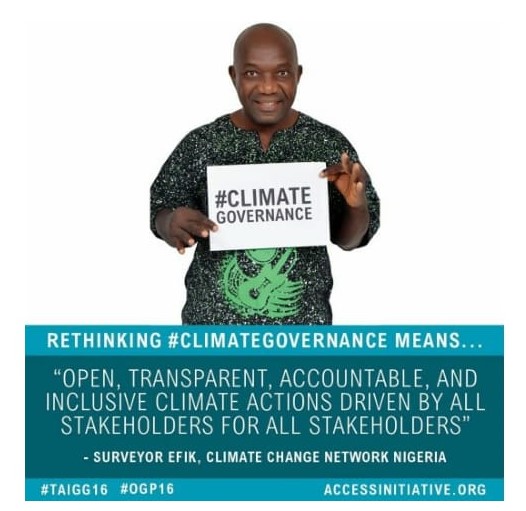
One of the activities at the GG16 was the Social Media Photo Campaign in which every participant sent in his or her photo with respective definition of climate governance
By climate governance it is defined by Prof. Katrien Termeer of the Wageningen University as “the (inter)actions between public and/or private entities ultimately aiming at the realization of collective goals”. This was one of the focus areas of the 2016 Global Gathering on Climate Action (GG16) 5-7 December 2016, which the World Resources Institute (WRI) convened back-to-back with the 2016 Open Government Partnership (OGP16) Summit 7-9 December, both in Paris, France.
A cursory look into Paris Agreement and Marrakesh Partnership for Global Climate Action, including the Marrakesh Action Proclamation for our Climate and Sustainable Development – will reveal not only a generic commitment to an all-inclusive; all-hands-on-deck climate governance but also that which is supported and benefited by all stakeholders (Parties and Non-Parties). This no doubt contributed to setting the trend for rethinking, redefining and reshaping climate governance. Today, there is global wave of rethinking climate governance in order to reshape its meaning to reflect both its democratic and responsive context. The breeding ground for it was Paris through the recently concluded #GG16 and the #OGP16, mentioned above.
One of the factors that further triggered the momentum for rethinking climate governance is the inclusion of climate and sustainable development into the OGP agenda, which has brought about the need to make climate governance not only inclusive and participatory but also open, transparent and accountable in order to eliminate the vicious “anti-development virus” known as corruption and increase the momentum of climate actions vis-à-vis accruable benefits to all stakeholders. This is a new dimension in climate change development that actually gave birth to the term “Rethinking Climate Governance” by WRI, and has actually aroused the thoughts of many climate actors, including mine. The inclusion marked a paradigm shift that has brought about a new dimension of defining climate governance and a new era of related best practices.
In defining climate governance along the rethinking paradigm, the GG16 organised by the WRI and other global partners such as The Access Initiative (TAI), Transparency International (TI), and Pan African Climate Justice Alliance (PACJA) to mention a few, provided the platform for rethinking aloud the redefinition of climate governance. One of the activities at the GG16 was the Social Media Photo Campaign in which every participant sent in his or her photo with respective definition of climate governance. In my aroused thought, I defined it as “An open, transparent, accountable and inclusive climate action driven by all stakeholders, for all stakeholders”. This means an inclusive partnership over an action or decision that will save the climate and be in the interest of all partners.
The practice of this new definition of climate governance is displayed by OGP governance structure, where there is a 22-member Steering Committee that comprises of equal balance of governments and civil society representatives, with two government (France and Georgia) and two civil society(WRI and ODAC) representatives constituting the Co-Chairs. This is a classic example of Party and Non-Party partnership/governance framework that should be replicated at the national level of all OGP-member countries, especially in their project implementation process. Another best practice in climate governance was displayed at this year’s Marrakech Climate Change Summit, in which the Moroccan Government’s partnership with the civil society in Africa and across the world stands out as an exemplary feat of commendation that is worth emulating.
There is yet another outstanding best practice in climate governance, which places priority on climate action that is supported and benefited by the citizens and general public (all stakeholders). It is the French Government’s climate action of declaring all public transport operated by Government free for all citizens and non-citizens in France for one week (5-9 December 2016, the week of the OGP Summit) in order to reduce the observed soot/carbon emissions from vehicles that polluted French the atmosphere. The benefits include; improved air quality, safer streets, and poverty alleviation. According to global statistics, transport records 22% of all greenhouse gas emissions (GHG) worldwide. Thus, I paused here to imagine; if all the countries of the World could take such low-carbon transport measure for one week, indeed, a huge emissions reduction will not only be recorded but also an outburst of multiple environmental, economic and social development benefits to all stakeholders in way that will erupt a global mass action to win the fight against climate change and makes Donald Trump’s apathy towards it pale into insignificance.
Meanwhile, it may be interesting to note that the global wave of OGP initiative is resonating and trickling down to the grassroots. A global gathering of “OGP for Cities” is coming up in Madrid, Spain early 2017, where open, transparent and accountable governance in the area of fiscal openness and open data will be the focus. The URAIA Platform of the UN-Habitat in partnership with the Spanish Federation of Municipalities (FEMP), will be holding an international workshop on “Transparent and accountable cities: innovative solutions for municipal management and finance”, from 8-10 February 2017. This is another global demonstration of top-down development trajectory that will further set the pace for rethinking urban/local government governance, including its climate governance agenda.
In conclusion, the basic elements in the climate governance is in the phrase that I underlined below in the first statement of the Marrakesh Partnership for Global Climate Action of COP22, which states as follows: “The Marrakech call is loud and clear: nothing can stop global climate action. The momentum for the adoption of the Paris Agreement was enabled by Parties and non-Parties stakeholders taking action to address climate change and undertaking to progressively enhance the ambition of this action”. This should be the guiding principle that ought to be reflected in all our climate solution actions at all levels.
Finally, it is worth noting that the unfolding best practices enumerated above are indications of good and sustainable progress which, in reality, re-enforces an audacity of hope in the global pursuit of giving climate change a supine fall in the near future. I crave for governments of all national, sub-national and local levels to emulate it, especially the African nations. The Heads of State/Government of both developed and developing countries should endeavor to incorporate climate governance practice into the implementation process of their respective (United Nations Framework Convention on Climate Change (UNFCCC) obligations and voluntary Nationally Determined Contributions (NDCs) through promoting climate transparency and integrity in line with the OGP framework.
By Surveyor Efik (National Coordinator of Climate Change Network Nigeria)
Twelve civil society organisations (CSOs) have commenced the implementation of community projects in forest dependent communities in Cross River State. The development is coming under the Community Based REDD+ (CBR+) initiative, meant as a catalyst to trigger grassroots capacity and effective engagement in the Nigerian REDD+ process.
Community forest: It became pertinent for Nigeria REDD+ Programme to take steps to create synergies between REDD+ and CBR+. Photo credit: UNDP Cambodia/Chansok Lay/Oddar Meanchey
REDD+ implies reducing emissions from deforestation and forest degradation in developing countries (and the role of conservation, sustainable management of forests, and enhancement of forest carbon stocks in developing countries).
Cross River is benefitting as a pilot State in the Nigeria REDD+ readiness phase (that comes to a close by December 2016) with support from three agencies of the United Nations – United Nations Development Programme (UNDP), United Nations Environment Programme (UNEP) and the Food and Agriculture Organisation (FAO).
As part of the process, local community-level activities recently commenced under the auspices of the Global Environment Facility’s Small Grants Programme (GEF/SGP), which provided grants to the implementing CSOs, some of which are listed to include: Centre for Healthworks, Development and Research (CHEDRES), Green Planet Initiative International, Development Concern (DEVCON), Ekuri Initiative, Waneledon, Conservation Association of Mbe Mountais (CAMM), and African Research Association (managing Development in Nigeria) (ARADIN).
The CHEDRES, for instance, is working at the Esierebum community in Calabar South to increase the area of mangrove forest under sustainable management through raising nurseries and planting of indigenous mangrove seedlings in degraded mangrove sites.
The project also aims to improve the livelihoods of community beneficiaries through fish farming, a traditional livelihoods practice threatened by loss of mangroves, a natural breeding ground for fish. A combination of improved fisheries value chain and community forest management plan are expected to contribute to sustaining the outcomes of the project.
The Green Planet Initiative International’s target communities are Esuk Okon, Edik Idem and Akwa Obutong at Bakasi Local Government Area, where the CSO is working in the mangrove forest area to increase both income and carbon stock through planting of bush mango, while building target beneficiaries’ capacity in entrepreneurship and creating opportunities for income/livelihoods diversification through animal rearing, bee farming and other skills acquisition.
At Edondon community in Obubra Local Government Area, DEVCON’s project is designed to increase the area of tropical rainforest under sustainable management through regeneration and community forest management planning, contribute to poverty reduction by improving cassava value chain and encouraging agro-forestry practices that integrate the cultivation of non-timber forest products with other existing economic trees while ensuring sustainable land and forest management.
At Ekuri in Akamkpa Local Government Area, the Ekuri Initiative is reviewing existing forest management plan to support and strengthen community enforcement mechanisms to protect the largest community forest in Nigeria. It will also garner support to diversify the livelihoods of the rural community.
However, Waneledon’s project site is Ohumoruktet, at the Obubra Local Government Area in Ekuri/Iko REDD+ Pilot Site. The CSO aims to increase the area of community forest under sustainable management through land use planning and tree planting, while improving the livelihoods of target community groups, particularly women and youth.
Both CAMM and ARADIN are working at nine Mbe communities at Boki Local Government Area in Afi/Mbe REDD+ Pilot Site. The communities include: Bamba, Bokalum, Wula 1, Wula 2, Kanyang 1, Kanyang 2, Abo Ogbagante, Abo Obisu, and Abo Mkpang.
According to officials of CAMM, their section of the project supports community-based forest management among the nine communities of Mbe Mountains. They added that CAMM, a community-based organisation (CBO) collectively owned and managed by the nine communities, designed the project to address forest loss, improve the living conditions of community members through environmentally sustainable farming practices and value addition, and improve the protection of the critically endangered Cross River Gorillas. The project will also seek to enhance the value of the Mbe Mountains through ecotourism, they stated.
The ARADIN project, it was gathered, works in two of Mbe’s nine communities – Bamba and Bokalum. ARADIN is said to have designed the project to promote biodiversity conservation and sustainable use and management of natural resources.
“The project intends to build communities’ capcity in land use planning and rule enforcement, and create more opportunities for sustainable livelihoods practices with particular focus on sustainable cocoa farming,” an official disclosed.
Anthony Atah, the Nigeria REDD+ Stakeholder Engagement Specialist, stated that, following an inception meeting with the CSOs and interaction with a few communities, it became pertinent for REDD+ to take steps to create synergies between REDD+ and CBR+ that were otherwise lacking at the early stage and could undermine the investments in these communities.
He said: “Already, clear signs of poor communication, mistrust, and difficult expectations were beginning to emerge between some benefitting communities and CSOs implementing the CBR+ project. The time lapse between project design and implementation also required realigning the projects to current reality, without which success will be minimal.
“These, and the need to appraise and support capacity of CSOs to deliver local REDD+ actions on the ground, while strengthening communities’ participation, required urgent and proactive steps to engage both communities and CSOs in the project locations in in reviewing the CBR+ projects and aligning them in the broader REDD+ context.”
Against the backdrop of the appointment of Mrs Amina Mohammed, Nigeria’s Minister of Environment, as UN Deputy Secretary General, the Abuja-based “Follow The Money”, a civil society organisation (CSO), while congratulating her, lists – in an open letter – a number of concerns that it would wish to be addressed before as well as during her tenure.
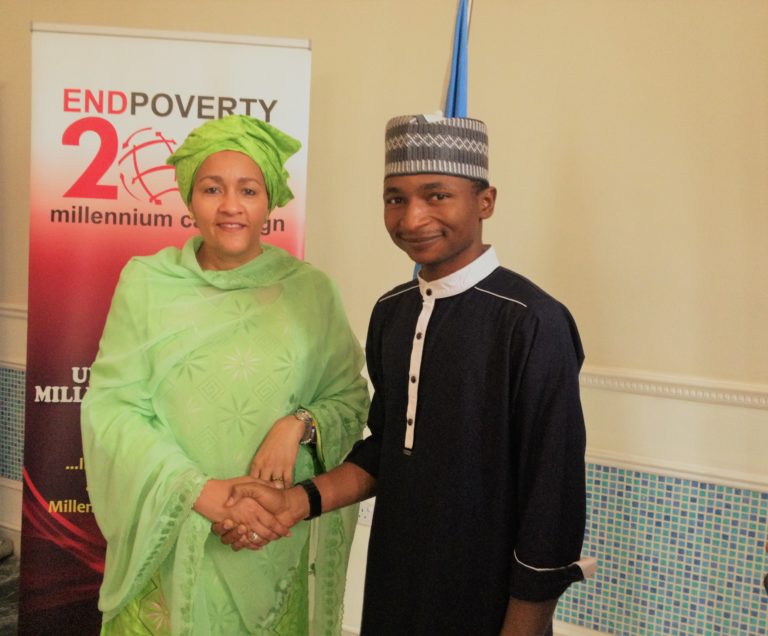
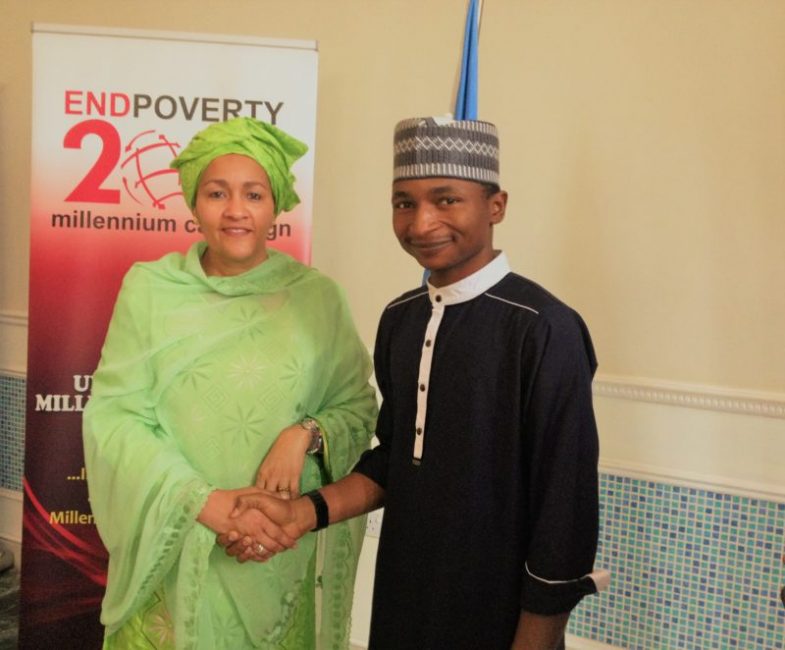
Amina Mohammed (left) with Hamzat Lawal of Follow The Money
The letter reads:
Dear Honourable Minister,
I wish to use this medium to congratulate you on your appointment as the Deputy Secretary-General of the United Nations. It is an honour well-deserved. It is also an elevation that naturally stirs mixed feelings in some of us who are very much aware of what Nigeria stands to miss in your absence.
So far, you have distinguished yourself as not only a dynamic Minister of the Federal Republic, but a hard-working development worker for the people. At a time the nation yearned for deep understanding of its environmental challenges, you brought the insight and hands-on feminine balance that enabled this great country get back on its ecological track in order to retain its pride in the comity of nations.
As an adviser to the Federal Government on Nigeria’s implementation of the Millennium Development Goals (MDGs), the precursor to the Sustainable Development Goals (SDGs), you drove the programme efficiently and attained high points in critical set targets. This of course prepared you for your esteemed role in negotiating the seventeen SDGs under the outgoing UN Secretary-General Ban Ki-moon, and effectively stood you out as an asset to the development world.
Likewise, the passion and patriotism you have displayed in your duties as a minister, have now engraved your name in the annals of history. This is because the commitment you brought to the job is based on your inherent capabilities and ingrained capacity acquired over the years in your service to society.
Your stewardship is now evident. Nigeria has launched the implementation of the Nationally Determined Contributions (NDCs) under the Paris Climate Change Agreement. The Ministry of Environment has also successfully launched the historic Sovereign Green Bonds – first of its kind; flagged off the Ogoni Clean-up Programme; and streamlined the Great Green Wall programme for a focused and sustainable implementation.
Dear Minister, in spite of the pleasure we find in celebrating your value and landmark achievements, we are still perturbed by the nagging fear that your efforts may yet be in vain if the solid foundation you are laying in the sector is not capped with a seamless transition to sustainable pillars of continued progress, as you move on to your new international office.
This is why we also use this opportunity to draw your attention to some real issues that, when properly addressed, would spell the survival lines to this all-important sector, and to the country in general.
Firstly, we are conscious of the fact that your tenure as the Minister of Environment brought a lease of life to the energy efficiency sub-sector, and effectively cleared the foul and dark aura already engendered by the Clean Cookstoves saga. Presently, you have set a fresh course that promises to reignite hope in the achievement of the goals that inspired the project in the first place.
Therefore, we call on you to set a lasting template that would sustain the momentum of the clean cookstoves project, even in your absence. We hope your efforts would help ensure that government delivers on the statutory 15% from the Ecological Fund, while also inspiring the ambition and bureaucratic urgency needed to deliver on the project.
Secondly, we can never forget that your motherly intervention and tireless activism impacted positively on the success of the ongoing Shikira lead poisoning remediation project. However, having assessed the progress of the cleanup, we are convinced that the project has to go beyond just remediation, but also a sustainable structure for ecological management. This is in order to ensure that there is no future outbreak of lead poisoning in Shikira and in other communities involved in artisanal mining.
Thirdly, we are worried that if the proper systemic adjustments are not made in the ministry of environment, we may lose some of the critical milestones achieved under your watch. This is why we call on you to effectively utilise the remaining few months you have to work in Nigeria in strengthening the structures that would ensure that in the absence of a good driver like you that the vehicle does not crash into the bushes. We sincerely pray that things will never deteriorate to “business as usual!”
We wish to see that the ball you have set rolling maintains the momentum, because we are convinced that the environmental sector is the fulcrum of the development sector especially in a developing economy like ours.
For instance, Nigeria’s NDC is an ambitious document, which needs imaginative inter-sectoral engagements for its effective implementation. With the vast opportunities that lie within the NDC and the potential complications that could entangle our bureaucratic infrastructure, we are concerned that, in fact, not just any hands can take over the helms at the ministry of environment. How we wish, you could groom your own successor!
Fourthly, we also cannot forget the fact that two critical regions in Nigeria are directly affected by your present and future offices: the South South and the North East. The Ogoni Clean-up project which you successfully initiated needs a proper and sustained project implementation.
The social dislocation that has erupted as a result of the humanitarian emergency in the North East also waits for your intervention. We humbly call on you to use your esteemed position as the UN Deputy Secretary-General to redirect the eyes of the world to the region. This would not only entail getting the required international support for humanitarian aid, but most importantly in ensuring that transparency and accountability are mainstreamed in their disbursements.
Finally, conscious of the importance of your UN appointment not only to Nigeria but to Africa as a region, we are hopeful that you will utilise the platform to inspire a revived spirit of transparent democratic governance, which we believe is the only effective way to address the region’s development challenges. And, we are glad that your experience in the development of the SDGs will also give you the fillip to inspire a proper mainstreaming of its implementation process in Africa.
Then, ultimately, we hope that you spearhead Nigeria’s bid to becoming a permanent member of the UN Security Council. We are convinced that you have a date with history, and would have stamped your name in gold in the annals of history if you could work with your new boss to reorganise the UN and make it more democratic by increasing the Permanent membership of the Security Council. History will remember you if Nigeria fills Africa’s slot in the new arrangement, in order to reward our great country’s half-a-century old contributions to the UN.