On Friday, January 20th 2017, Pavel Sulyandziga, Chairman of the United Nations (UN) Working Group on the issue of Human Rights, Transnational Corporations and other Business Enterprises and Grand Chief Wilton Littlechild, member of the UN Expert Mechanism on the Rights of Indigenous Peoples were scheduled to arrive in North Dakota, USA at the invitation of Standing Rock Sioux Tribal Chairman, Dave Archambault.
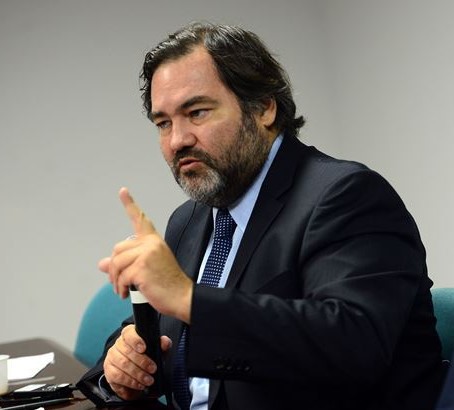
Pavel Sulyandziga, Chairman of the United Nations (UN) Working Group on the issue of Human Rights, Transnational Corporations and other Business Enterprises. Photo credit: Elza Fiúza/Agência Brasil
They will be joined by representatives of the International Indian Treaty Council (IITC) as well as the ACLU Human Rights Programme who will participate in a human rights training workshop on Sunday, January 22nd. A hearing to take testimonies on human rights violations resulting from construction of the Dakota Access Pipeline will be held on Monday, January 23rd.
The UN Working Group on the issue of Human Rights, Transnational Corporations and other Business Enterprises was established by the UN Human Rights Council (HRC) to monitor implementation of the UN Business and Human Rights Principles which were adopted in 2011 by consensus of the HRC, including the United States. The Guiding Principles affirm the responsibility of corporations and businesses to respect human rights as well as the obligation of States (countries) to protect human rights and provide effective remedies for victims of violations which occur as a result of business activities. The Working Group has affirmed Indigenous Peoples’ right to Free Prior and informed Consent regarding business activities that could affect them.
The Standing Rock Sioux Tribe has consistently expressed its opposition to DAPL construction in its current route, including in statements to the United Nations and in meetings with the company itself, citing potential devastating effects on the Missouri River and Lake Oahe, its primary water source, as well as sacred sites and Treaty rights. On December 4th 2016, the US Army Corps of Engineers denied a permit for DAPL to continue drilling under the river pending the completion of detailed Environmental Impact Study and the consideration of alternate routes. On January 18th the Department of the Army published the Notice of Intent to require an Environmental Impact Statement in the Federal Register. However, with the inauguration of a new pro-pipeline US President immanent, along with continuing attempts by DAPL to go around this process including in the courts, concerns remain.
In his invitation to Mr. Sulyandziga to carry out a visit to Standing Rock, Chairman Archambault expressed its importance to the Standing Rock Sioux Tribe: “Your official visit here will provide much needed international oversight regarding the actions of the corporation and the positions of the next US administration in addressing this matter.”
The workshop on January 22nd and the hearing on the 23rd will each take place from 9 AM – 5 PM in the Banquet Room of the Prairie Knights hotel and casino and are open to the community and public. Registration to provide testimonies will take place on site beginning at 8:30 AM on both days.
In what looks like a game changer for elephant conservation, China has announced plans to end domestic ivory trade by the end of 2017. With this decision, the country aims to reduce demand for elephant ivory and help end the global elephant poaching crisis.
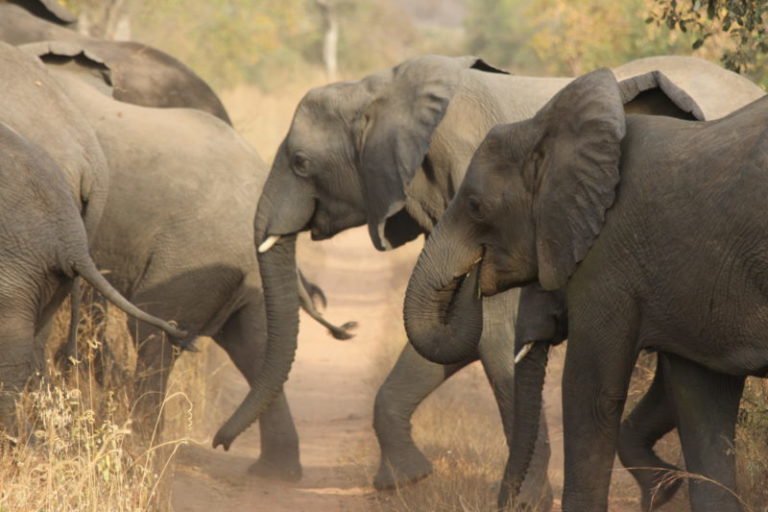
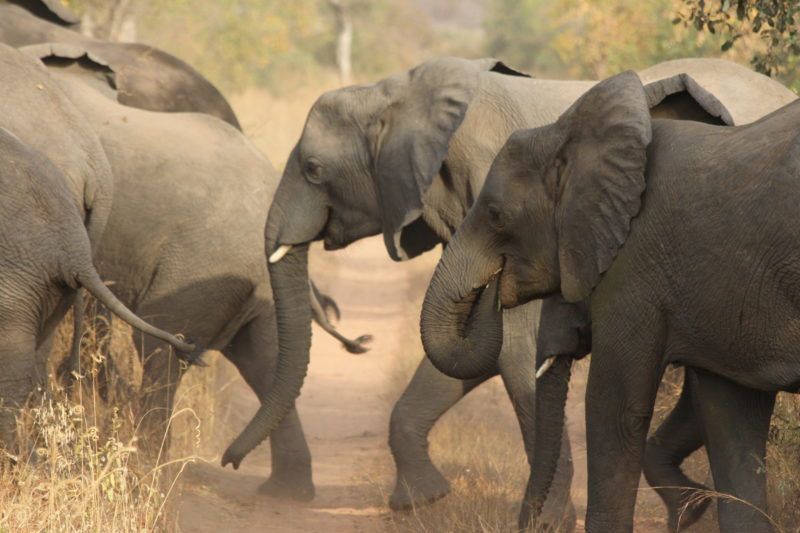
Poaching: Forest elephants are poached for their ivory and threatened with extinction
The international nature conservation community is celebrating what appears to be another big win for elephant conservation with China’s game-changing decision to end domestic ivory trade by 2017. The new regulations come as part of the government’s efforts to reduce demand for elephant ivory and help end the global elephant poaching crisis.
“China’s announcement is a game changer for elephant conservation,” said Carter Roberts, president and CEO of WWF. “The large-scale trade of ivory now faces its twilight years, and the future is brighter for wild elephants. With the US also ending its domestic ivory trade earlier this year, two of the largest ivory markets have taken action that will reverberate around the world.”
Last September, President Barack Obama and China’s President Xi Jinping made a joint commitment to impose near-total elephant ivory bans in their countries. The US finalised new regulations in June that will help shut down commercial elephant ivory trade within its borders and stop wildlife crime overseas.
China and the US are two of the world’s biggest consumer markets for wildlife products. Their historic decision to phase out commercial elephant ivory trade in both countries is a monumental step that few would have predicted a year ago.
The decision helped shape discussions at the world’s most important wildlife trade conference which took place in South Africa this past September. Representatives from 182 Parties to the Convention on International Trade in Endangered Species of Wild Fauna and Flora (CITES) gathered to discuss critical trade issues impacting species under threat, including a proposal to end all commercial domestic elephant ivory markets. In 2013, China and 18 other Asian and African countries were asked to develop and put into effect National Ivory Action Plans to address the poaching crisis.
Poachers kill between 20,000 and 30,000 African elephants each year for their tusks, primarily to satisfy the demand for ivory products in Asia, where China is a key part of this trade. The epidemic threatens Asian elephants as well, but on a smaller scale.
Now that two of the world’s largest domestic ivory markets – the US and China – have shown great leadership in taking significant stands towards elephant conservation, it is WWF’s hope that other consumer markets follow suit.
A recently published study by WWF and TRAFFIC says that an ivory trade ban in China is feasible and could help reduce current threats to African elephants. Creating that ban could set an example for and influence other countries to tackle the illegal ivory trade.
“We’d like to see China continue its efforts to reduce demand for ivory; raise public awareness about wildlife crime; and work with other governments, conservation organisations, the private sector and local communities to help end the illegal ivory trade – and give elephants a future free from poaching,” said Roberts.
Green bond issuance worldwide could cross $200 billion in 2017, doubling the 2016 record, as it continues to be driven by the Paris climate agreement, China’s clean energy campaign, as well as new issuers and structures, rating agency Moody’s said on Thursday, 19 January 2017.
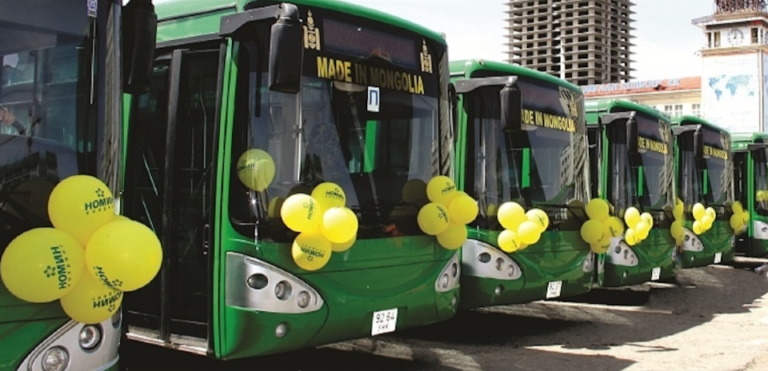
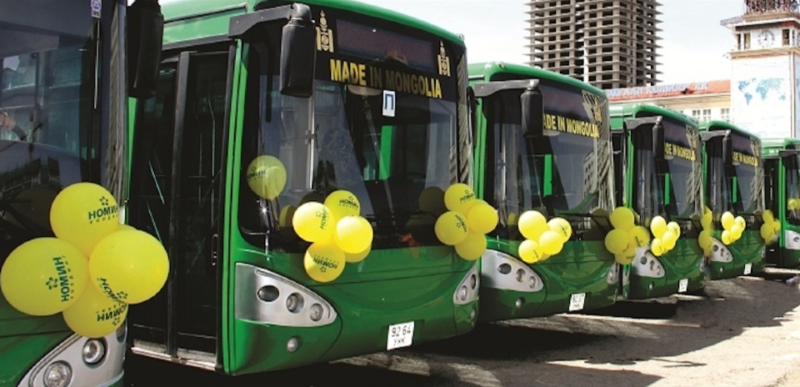
The Mongolian eco-bus service. Green bonds are debt instruments used to raise funds for projects involving renewable energy, energy efficiency, clean transportation or encouraging a low carbon economy
Issuance of green bonds – debt instruments used to raise funds for projects involving renewable energy, energy efficiency, clean transportation or encouraging a low carbon economy – rose 120 percent in 2016 to 93.4 billion.
That surge was on the back of Chinese borrowers rushing to the market. Still, the doubling of volumes will continue in the current year with the tally seen rising to $206 billion.
“With continued momentum attributable to the Paris climate agreement and factors such as issuer and geographic expansion, green bond issuance will likely reach another milestone in 2017,” the report said.
The 2015 Paris Agreement, signed by almost 200 nations, aims to end the fossil fuel era by shifting to renewable energy in the second half of the century.
New instruments, such as green money-market securities in the form of short-term commercial paper, or preferred stock, and a variety of structured as well as securitised transactions, could also drive this expansion, it said.
The ratings agency said that green bond issuance increased every year by an annual average of 163 percent between 2011 and 2015 and set consecutive issuance records during 2013-2015.
China-based issuers were the biggest source of these bonds in 2016 accounting for $32.9 billion – more than a third of the volume issued.
China needs at least 2 trillion yuan ($308.8 billion) of green investment annually over the next five years to promote environmental protection and reduce the effects of pollution from its rapid industrial growth over the past three decades.
At the same time demand for green bonds is growing, with many pension funds and money managers in the West mandated to invest in socially responsible and environmentally friendly assets.
Even at 2016’s record issuance of $93.4 billion, green bonds still represented just 1.4 percent of global capital market debt issuance in 2016, which reached around $6.7 trillion, according to Moody’s.
“While green bonds continue to gain momentum and have been extremely successful in generating attention for climate change and climate solutions, green bond-linked funding and investments continue to fall short of reaching the scale needed to play a significant role in the transition to a low-carbon economy,” Moody’s said in the report.
Moreover, challenges could emerge in the shape of the incoming US administration led by Donald Trump, who has called man-made climate change a hoax and said he would renegotiate the Paris Agreement.
Moody’s said there were barriers to growth.
“The need for a standardised definition and framework, including with reporting and disclosure practices, remains a bottleneck in the growth and development of a robust green bond market,” it said.
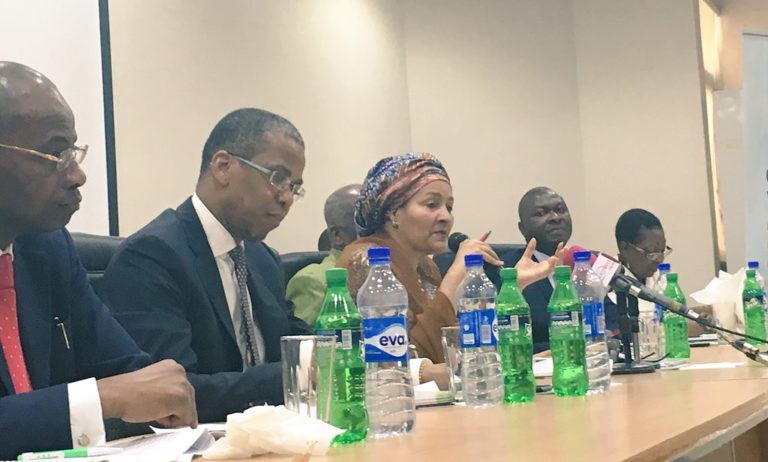
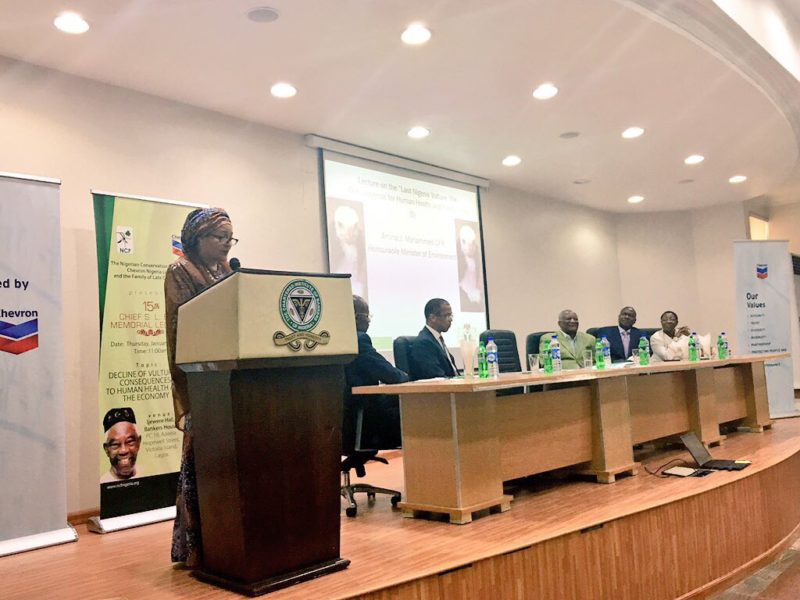
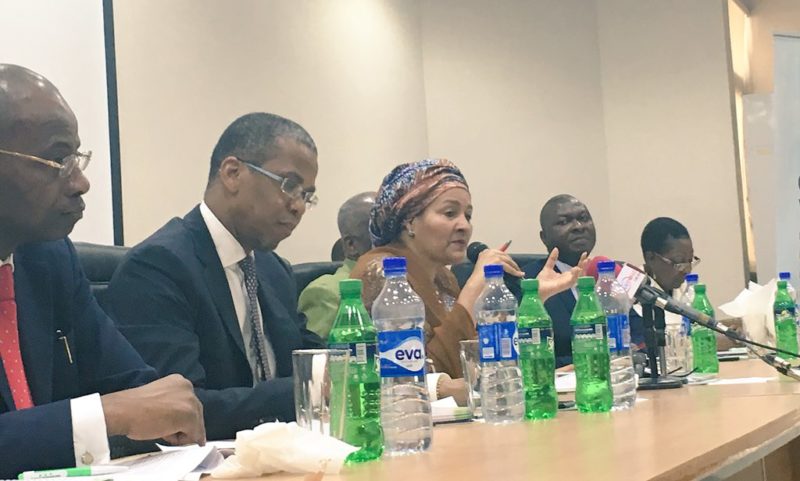
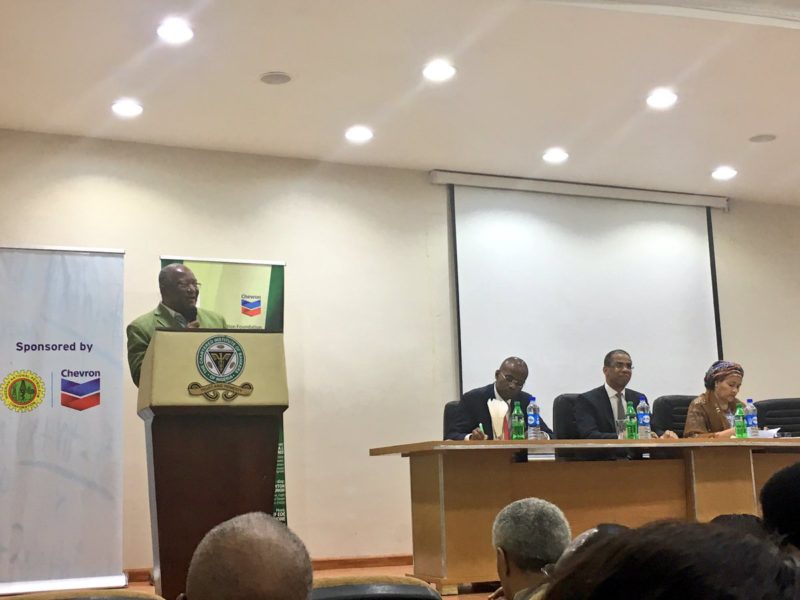
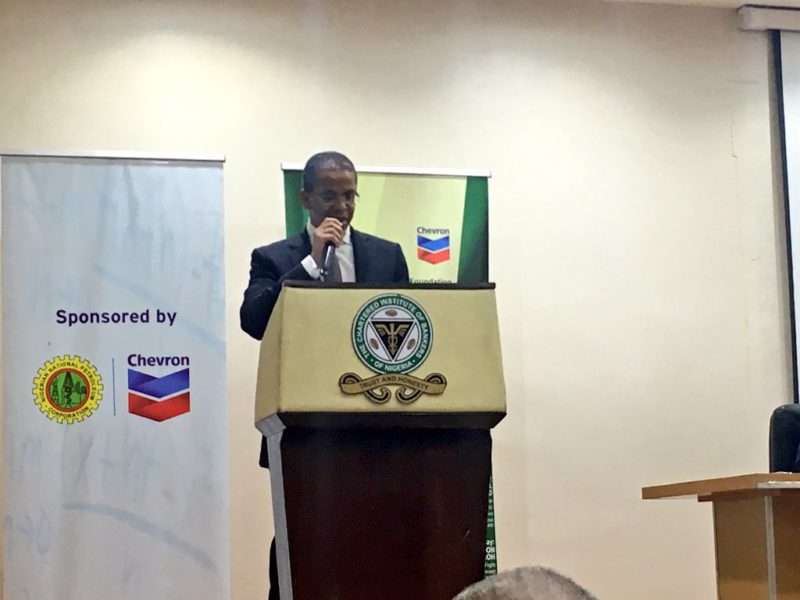
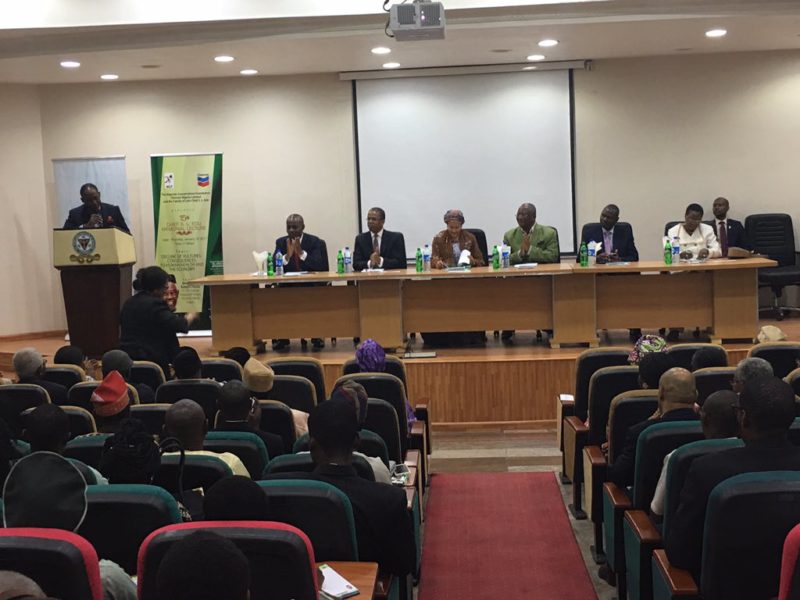
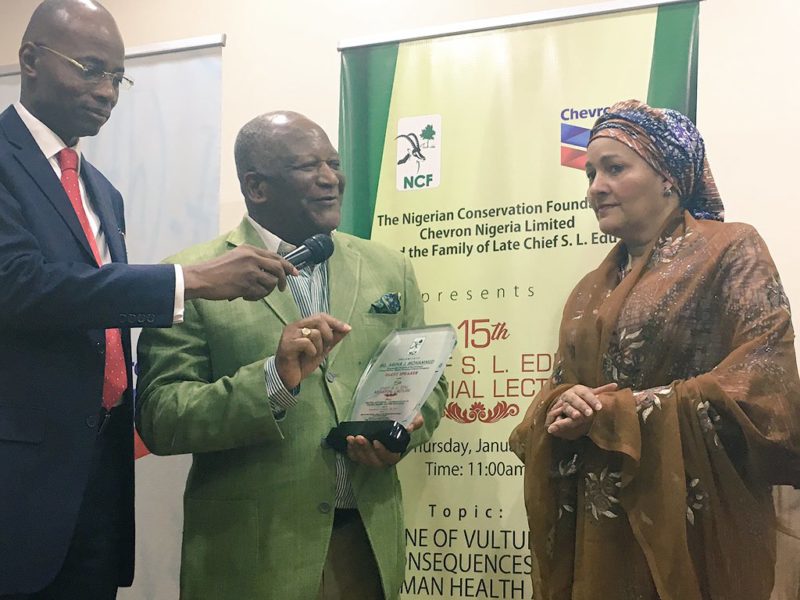
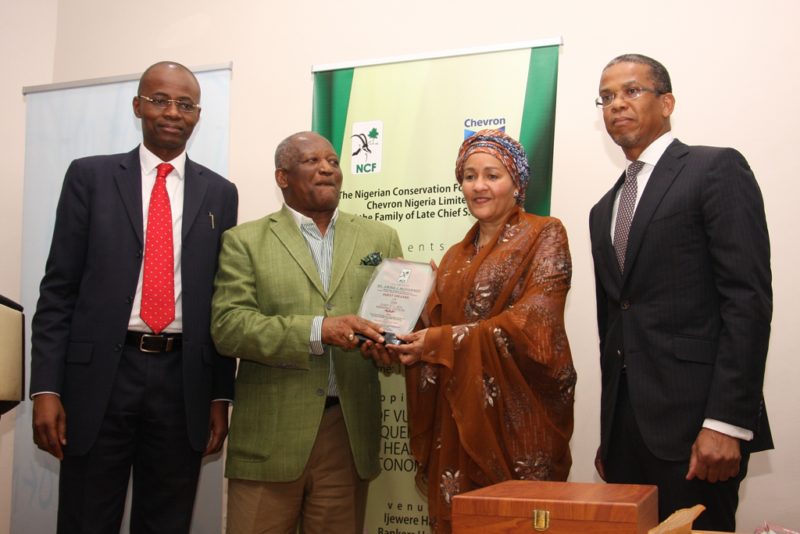
Minister of Environment and United Nations Deputy Secretary-General Designate, Amina Mohammed, on Thursday, 19 January 2017 in Lagos was guest speaker at the 15th Chief S. L. Edu Memorial Lecture, organised by the Nigerian Conservation Foundation (NCF).
Ms. Mohammed spoke on the topic: “Decline of vultures: Consequences to human health and the economy.” Chairman of the Day was Chief Newton Jibunoh, who is Founder, Fight Against Desert Encroachment (FADE); while Chief Ede Dafinone, Chairman, National Executive Council of the NCF, was Host.
Amina Mohammed delivering her lecture on “Decline of vultures: Consequences for human health and economy”.Ede Dafinone (second left) and Amina Mohammed, with other dignitaries on the high table. On the left is Adeniyi Karunwi, Director General of the NCFDr Newton JibunohEde DafinoneAll set for the NCF lecture…On behalf of the NCF, Dr Jibunoh presents a gift to Ms. MohammedMinister of Environment/Guest Speaker, Ms Amina J. Mohammed (2nd right). receiving an award of Honour from Chairman of the Occasion/Founder, Fight against Desert Encroachment,(FADE), Dr.Newton Jibunoh (2nd left), while Chairman of the Council, Nigerian Conservation foundation (NCF), Chief Ede Dafinone (right), and Director General, NCF, Mr. Adeniyi Karunwi (left), looks on during the 15th Chief S.L Edu Memorial Lecture organised by the NCF
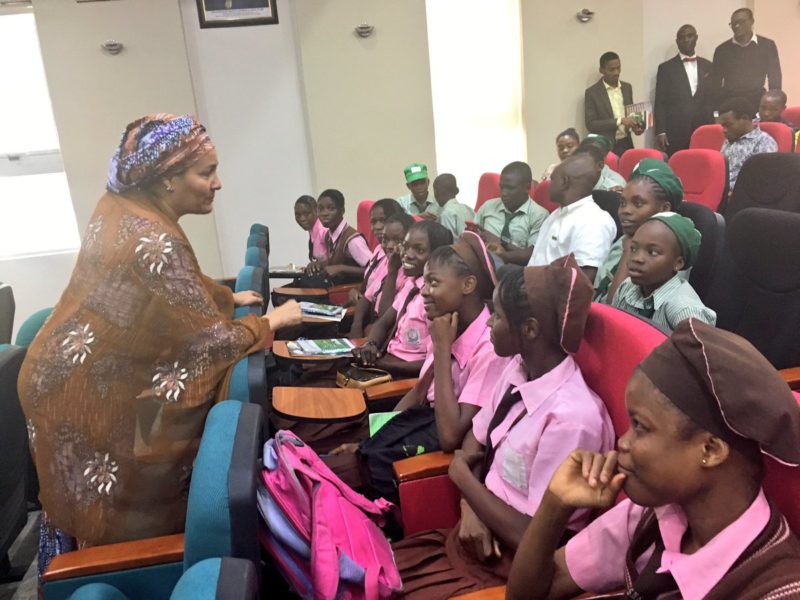
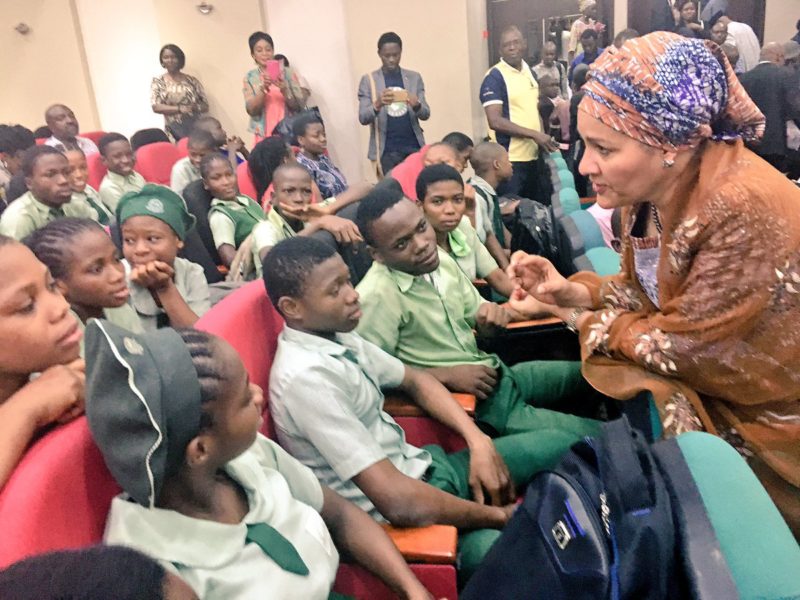
The minister makes out time to address the young ones…The minister stresses a point as she addresses tomorrow’s leaders…
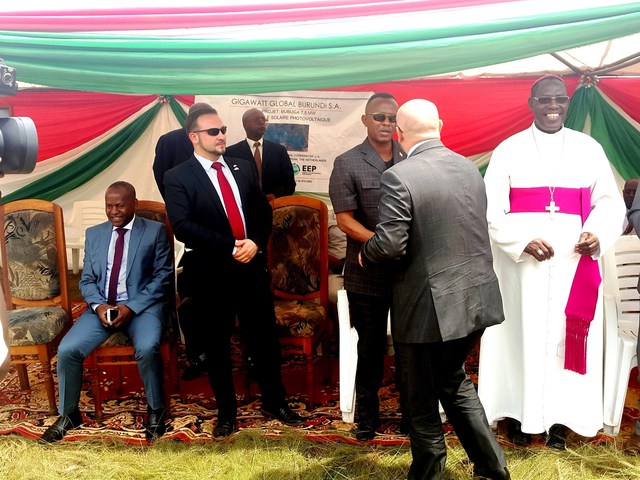
Amid the lush and rolling hills of Mubuga, 100 km outside the Burundian capital of Bujumbura, some 2,500 people on Wednesday, 18 January 2017 celebrated the festive ground-breaking for a 7.5 MW solar field that will add 15% to the East African country’s generation capacity.
Michael Fichtenberg of Gigawatt Global greets Burundian dignitaries and the diplomatic community in a festive groundbreaking ceremony on Wednesday for the company’s second African solar field. Photo credit: Gigawatt Global
In a colorful and drum-accented ceremony attended by government officials, international investors, religious leaders and the diplomatic community, Gigawatt Global, a solar and social development enterprise, announced the $14 million pioneering project in one of the world’s least developed nation.
“Empowering economic and social development is at the heart of our green energy business,” said Michael Fichtenberg, VP for Finance and Business Development of Gigawatt Global. “This high impact development investment supported by leading international financial institutions signals that Burundi is open for development and business.”
According to sources, this will be the largest private international investment in the power sector in Burundi in nearly 30 years, with the power being sold for 25 years to REGIDESO, the national electric company.
“We are very excited at the groundbreaking of the Gigawatt Burundi solar field,” said Come Manirakiza, Burundi’s Minister of Energy and Mines. “After their success in Rwanda, Gigawatt Global has proven it can be relied on to deliver efficient, clean renewable energy at reasonable cost, contributing greatly to our economy and society. We look forward to the speedy completion of this project, and are thankful for the collaboration and cooperation with Gigawatt Global as energy in Burundi is a clear priority.”
Gigawatt Global, an American-owned Dutch developer, is a founding member of the White House Power Africa initiative and financed and developed the first commercial scale solar field in continental sub-Sahara Africa (outside of South Africa) in neighboring Rwanda in 2014.
The project has been supported by a grant from the Energy and Environment Partnership (a Finland, UK, Austrian fund) and the Belgian Investment Company for Developing countries (BIO) to cover the relevant studies. The project is also supported by African-EU Renewable Energy Cooperation Programme (RECP) and the Renewable Energy Performance Platform (REPP), currently engaging in project due diligence.
“This project is a great example of Burundians, Americans and other international partners working together for the economic development of Burundi,” said Anne Casper, U.S. Ambassador to Burundi. “The success of this project will be a positive signal to other potential investors, who are watching Gigawatt Global and the Government of Burundi to see if investing in Burundi is stable, predictable and easy to do. We are working together very hard and very closely with the U.S., Burundi, the Netherlands, and Gigawatt Global to make this project a success, and to enable the whole country to get energy; and this will lead to the country’s economic development.”
U.S. Power Africa Coordinator, Andrew Herscowitz, underlined the importance of Gigawatt Global’s work, saying, “As a founding Power Africa partner, Gigawatt Global continues to demonstrate its industry leadership with this investment in Burundi.”
Hendrikes Verwein, the Dutch Ambassador to Burundi, said, “The Kingdom of the Netherlands supports Gigawatt Global and commits to assist the company in the pursuit of its investments. The Kingdom of the Netherlands expresses its wish that the contractual commitments included in the agreement protocols for the construction of the solar plant in Mubuga be rapidly implemented.”
“Gigawatt Global is expecting to deploy $2 billion in renewable energy projects in Africa as partners of the White House Power Africa initiative in the coming years as renewables are taking the lead in power generation in Africa and emerging markets,” said CEO, Josef Abramowitz. “We are targeting sub-Sahara Africa as a high impact and high growth market, with a portfolio of small, medium and large power projects in the highest priority development areas.”
The construction and interconnection of the project to the national grid is expected to be concluded in the fourth quarter of 2017.
A new report offers a strategic guide for cities in developing countries to access green bond market flows, a potential source of finance for cities looking to secure investment in low-carbon, climate-resilient infrastructure to meet the water, energy, housing and transportation needs of their expanding urban populations.
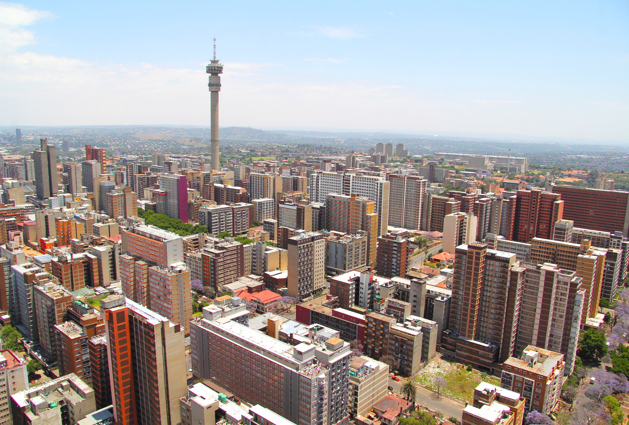
The $137 million bond from Johannesburg in South Africa is the only municipal green bond issued by a developing country city
The report is titled: “Green Bonds for Cities: A Strategic Guide for Policymakers in Developing Countries.”
Since 2007, $131 billion in green bonds have been sold to institutional and retail investors attracted by their link to green projects, goods and services. The last three years has seen an exponential 13-fold increase in the value of annual bonds issued, from $3.2 billion in 2012 to $44 billion in 2015. This is projected to reach $75 billion by the end of 2016.
As of November 2016, 271 cities in developing countries had committed to developing climate mitigation and adaptation plans. However, they currently have limited access to the capital necessary to implement these plans.
There would seem to be considerable room for these cities to access increased finance from the green bonds market. The Climate Policy Initiative (CPI) analysis of the projects underlying green bonds currently in the market shows $2.3 billion in value is linked with city-based projects in developing countries, including urban mass transit systems, district heating and water distribution networks. To put this in context, this represents:
1.7% of total green bond market flows since 2007.
6% of all flows to developing countries: A total of $38 billion of the proceeds from green bonds issued by development finance institutions (DFIs), commercial banks and corporations has been directed toward projects in developing countries.
11% of flows to all city-based projects worldwide: $17 billion has been raised by cities in developed countries such as the US, France and Sweden.
Choosing a strategy to access finance from green bonds
Developing country cities’ own creditworthiness is the key constraint limiting their ability to issue bonds themselves. As of November 2016, the $137 million bond from Johannesburg in South Africa is the only municipal green bond issued by a developing country city. Most finance that flowed to developing country city-based projects did so indirectly: 94% from green bonds issued by DFIs such as the World Bank and Asian Development Bank.
The subsequent sections of the report help cities to decide on the most appropriate short and long-term strategies based on their current creditworthiness, regulatory context and financing goals.
Overfishing is threatening food security off Africa’s western and central coast as many fish species in the region face extinction
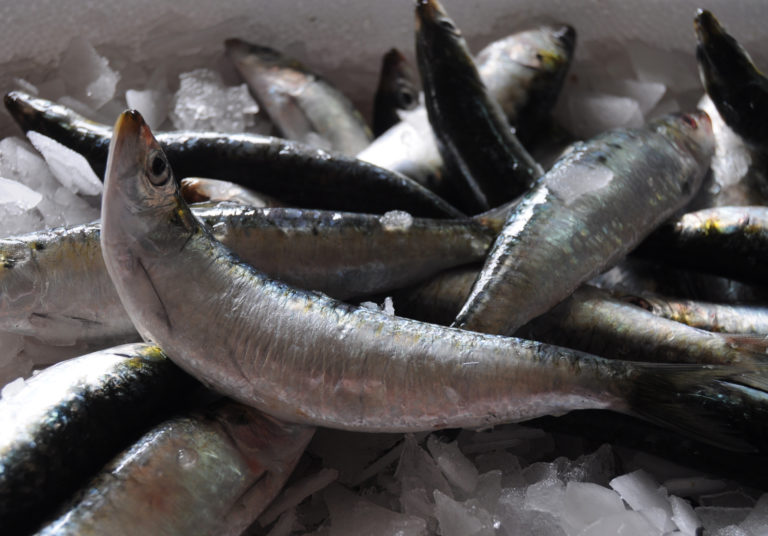
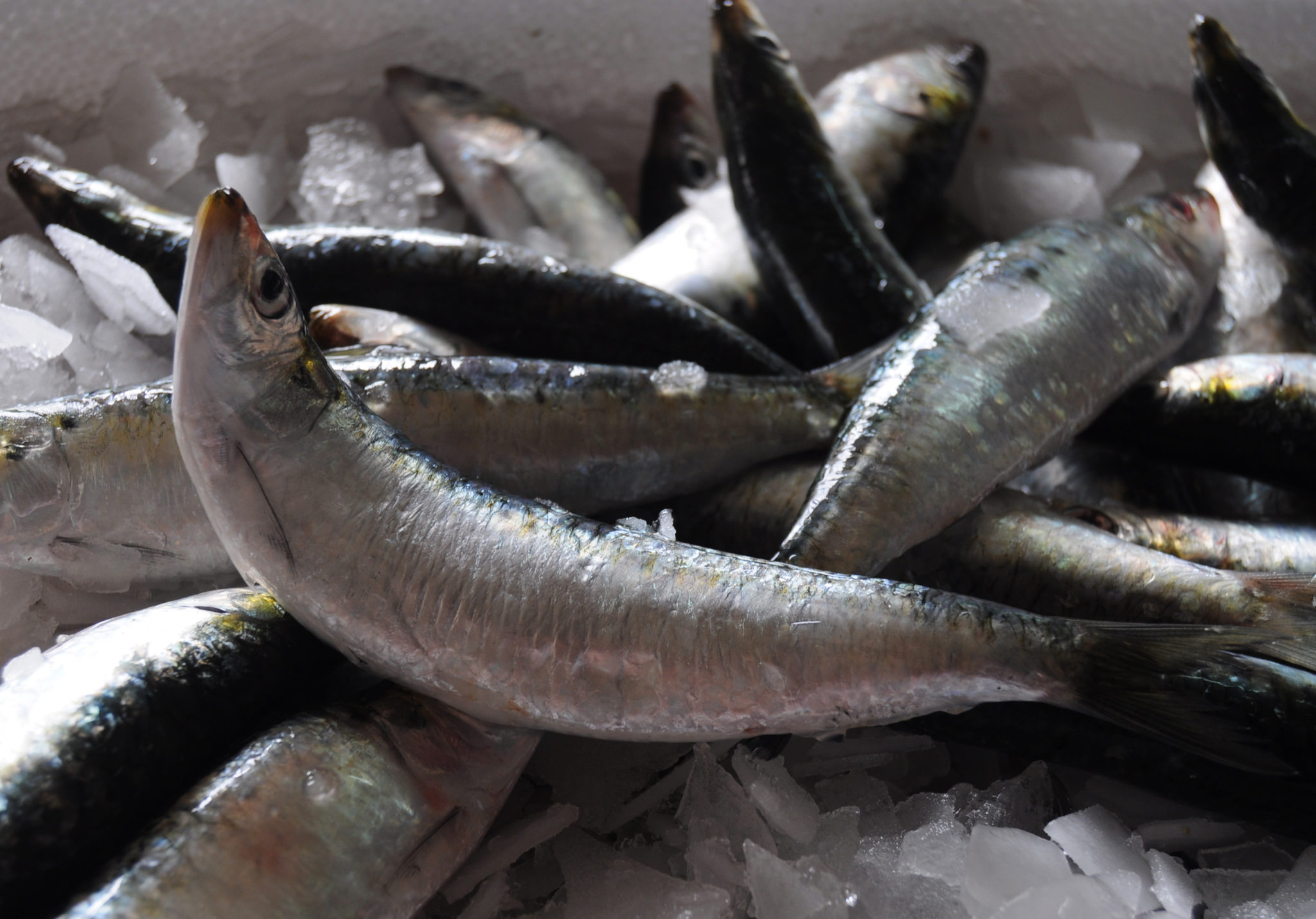
The Madeiran sardine
If urgent action is not taken to stem the tide, the popular fish delicacy – the sardine – may soon disappear from the food menu in African homes
This is because numerous marine fish species – including the Madeiran sardine – are in danger of global extinction due to overfishing along the coast of western and central Africa, threatening food security in the region, according to the Eastern Central Atlantic Red List of Threatened Species published on Thursday, 19 January 2017 by the nternational Union for Conservation of Nature (IUCN).
The report is the first complete assessment of the conservation status of 1,288 bony fish species – a group which comprises the vast majority of fish species – in marine waters from Mauritania to Angola, including offshore islands like Cape Verde. According to its findings, 37 of the assessed species are threatened with extinction and 14 Near Threatened – many of them important food sources. Other threats to those species include the degradation of habitats, pollution, climate change and invasive species, according to the report.
“The growing extinction threat to fish off the central and western coast of Africa could seriously undermine food security across the region, impacting on progress towards the first two Sustainable Development Goals in addition, of course, to undermining SDG14 on life under water. Fish provide a major source of animal protein for coastal communities, which account for around 40% of this region’s population,” says IUCN Director General, Inger Andersen. “In a part of the world where poverty reduction remains a challenge, preserving the rich diversity of marine fish species will help safeguard the livelihoods of local communities.”
Species caught commercially and in small-scale fisheries were found to be most threatened, with 39 of the 51 threatened and Near Threatened species exploited; many of them staple food sources for local people. The Madeiran sardine (Sardinella maderensis), now listed as Vulnerable, is one of three sardine species which are all considered overfished within the region. The Endangered Cassava Croaker (Pseudotolithus senegalensis) is estimated to have declined by 30-60% over the past 10 years, primarily due to overfishing. Croakers are particularly important to local subsistence fishers, who will be most affected by stock declines.
The region houses a rich diversity of fish species in its coastal waters, mangroves, lagoons and major river estuaries such as the Niger delta. Many of these habitats are degraded by oil exploration, development, and the conversion of mangrove swamps to human uses, adding to pressures from overfishing.
Marine resources form the foundation for food security and livelihoods for the nearly 400 million people in western and central African countries with a marine coastline. Fisheries in the region are among the most productive in the world, and play an important role in household incomes and national economies. The artisanal sector dominates fishing employment throughout the region.
“For the first time, we have comprehensive knowledge of the presence and population status of all marine fishes in the region,” says Idriss Deffry, Marine and Coastal Coordinator for the IUCN Programme for Western and Central Africa. “This will provide critical information for improved fisheries and marine protected area management, and identify further research and conservation efforts needed.”
The study highlights the severely limited capacity for fisheries surveillance and enforcement in the region, leading to illegal fishing and overfishing that imperils national and regional management efforts. In many countries illegal catches represent over 40% of the reported legal catch, the report states.
The limited financial and technical capacity in the region leads to species being incorrectly identified, compounding the difficulties of understanding species distributions and population trends. This lack of information has resulted in Data Deficient listings for four of the six snappers, which are heavily targeted throughout the area.
“This report highlights the need for improved knowledge and monitoring of marine biodiversity in the region,” says Beth Polidoro, co-coordinator of the IUCN Marine Fishes Red List Authority. “Many nations are still lacking in adequate marine or coastal protected areas to safeguard marine resources, while many of the current protected areas are in need of increased capacity, funding, infrastructure and governance for effective enforcement and conservation.”
In the wake of a contentious U.S. election and despite the election of a president who has publicly described global warming as a hoax, Americans are increasingly sure global warming is happening, according to a national survey conducted by the George Mason University’s Centre for Climate Change Communication after the presidential election (Nov-Dec 2016).
The number of Americans who are “very worried” about global warming has reached a record high (19%) since the Centre’s surveys began in 2008
The proportion of Americans who think global warming is happening remained steady at 70% in 2016 – nearly matching the highest level measured since November 2008 (71%). But Americans are now also more certain it is happening – the proportion that are “extremely” or “very” sure global warming is happening (45%) is at its highest level since 2008, says the report.
The number of Americans who are “very worried” about global warming has reached a record high (19%) since the Centre’s surveys began in 2008. A majority of Americans (61%) say they are “very” or “somewhat” worried about the issue – nearly equal to the highest level last seen in 2008 (62%).
Likewise, Americans increasingly view global warming as a threat. Since Spring 2015, more Americans think it will harm people in developing countries (65%, +12 points), people in the U.S. (59%, +10 points), future generations (71%, +8 points), their family (46%, +5 points), and themselves personally (41%, +5 points).
K-12 (a short form for the publicly-supported school grades prior to college) instruction on climate change is now required as part of the STEM Next Generation Science Standards. Despite being controversial in some school districts, a large majority of Americans (76%) support teaching children about global warming in school.
The report includes several other results, including measures of public feelings of anger, fear and hope about global warming and the frames by which Americans conceptualise the issue (for example, as an environmental, scientific, political, moral, or religious issue).
Environment related issues such as climate change and sustainable development rank high on the agenda at World Economic Forum in Davos, Switzerland this week.
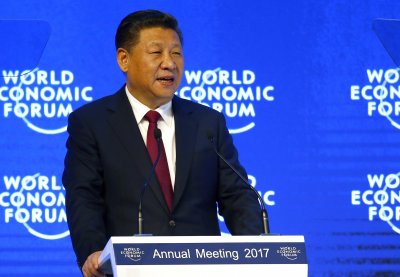
Chinese President Xi Jinping attends the World Economic Forum (WEF) annual meeting in Davos, Switzerland. Photo credit: Ruben Sprich/Reuters
According to the World Economic Forum 2017 Global Risks Report released in time for the meeting, the environment dominates the 2017 global risk landscape in terms of impact and likelihood.
Extreme weather events, large natural disasters and failure to curb greenhouse gas emissions and build resilience to climate change are listed as the most prominent global risks.
Climate change ranks as one of the top three trends to shape global developments over the next 10 years.
The WEF report highlights that even though the risk will play out over the long term, actions have to be immediate and long-lasting to have any hope of reversing the trajectory of climate change, and that the current pace of the transition to low carbon and resilience is not fast enough.
It adds that international cooperation is fundamental to address challenges posed by such risk, from managing “global commons” such as oceans and our atmosphere to enacting international accords such as the Paris Agreement and the progress made last year at the UN Climate Change Conference in Marrakech, Morocco (COP22).
Meanwhile, Executive Secretary of the United Nations Framework Convention on Climate Change (UNFCCC), Patricia Espinosa, is attending the event, where she will speak to business, government and civil society leaders about how the Paris Climate Change Agreement and the UN’s Sustainable Development Goals can be translated into actionable strategies.
The UN Foundation, GSMA, the UN’s Department of Public Information, Guggenheim Partners, and other partners are collaborating to engage people around the world in the important conversations happening at Davos via a digital platform called “SDGlive”.
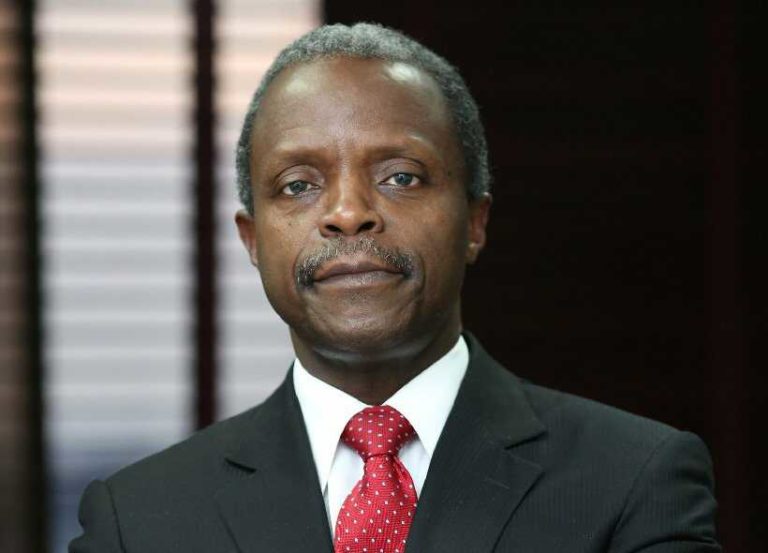
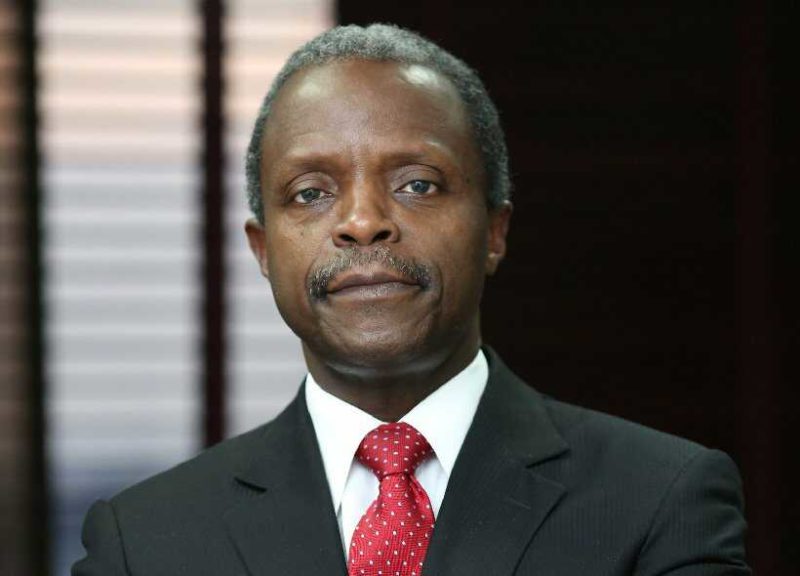
Vice President of the Federal Republic of Nigeria, Prof Yemi Osinbajo, who is undertaking a series of interactive engagements with oil-producing communities, said on Monday, January 2017 in Gbaramatu Kingdom, Delta State, that the years of official neglect and corruption in the Niger Delta region is a thing of the past and that now is the time to prepare for a future of progress and development
Vice President of Nigeria, Prof Yemi Osinbajo
The Niger Delta that we see today including this great kingdom is an area of poor infrastructure, few schools, few hospitals and a severe pollution, as Niger Delta of today is one of daily pipeline vandalisation.
In 2014 alone, there were over 3,700 incidents of pipeline vandalisation, from January to June 2016, there were over 1,447 incidents of vandalisation.
The Niger Delta of today is one where, aside from environmental degradation, between 1998 and 2015, over 20,000 persons have died from fire incidents arising from breaching of the pipelines.
The city is poor and thousands have health challenges especially as a result of environmental pollution.
The Niger Delta of today, anywhere you go, there are signboards of proposed infrastructural projects mostly uncompleted and many are simply abandoned. Many of the initiatives, if you check, the story has not been able to make the big changes required.
From the Niger Delta Development Board in the 60’s, the OMPADEC, the NDDC, & the Amnesty Programme, many of these projects have not been able to meet the objectives that were set for them.
The status-quo of Nigeria, years of official neglect, corruption and malfunction of oil companies have yeilded a massive whole pain till today.
But my message to you today is that it is time to prepare for the future. Our future is not a future of environmental degradation, poor infrastructure; it is not a future of no roads, harrassment.
It is a future of progress and development.
Unfortunately, there is no time because the future is already here; every citizen should ensure that the future is not worse than today and to prepare for a great and promising future of the Gbaramatu Kingdom and the people of the Niger Delta as a whole.
Now, three things must happen and I want you to follow me closely:
We must also recognise that the Niger Delta is a special place, a special economic zone for this nation and so must be treated as a special development zone.
We must recognise a unique environmental and daring challenge of Niger Delta.
The third thing that must happen as we prepare for the future is to realise that the future is full of challenges for the oil industry
Special Development Zone Long ago at the Willinks Commission, it had been acknowledged that, because of the peculiar environment of the Niger Delta, and the profound challenges, it should be treated as a special development zone.
And I agree entirely that this zone has to be treated as a special development zone, but what does this mean in practical terms?
It means that the Federal Government, State Government and the National Assembly representatives alongside NDDC and the Civil Society representatives of the Niger Delta people must sit together and develop a plan and concrete arrangements for development of the Niger Delta.
There is no excuse for not planning together; the Federal Government alone cannot solve the problems of the Niger Delta just as my dear brother President of the Ijaw Youth Council said.
It is impossible for Federal Government alone, but we can, with the State Government in this delta region, National Assembly members and Civil Society Organisations, plan for this special development zone and make sure that they carry it out and they deliver on the promises that we have made to the people.
The State Government should also be prepared to devote substantial portions of there budgets to this special projects.
The PANDEF have submitted a concise list of 16-dialogue issues that will be extemely helpful in ascertaining the key development priorities. That bounded document is an important working document.
It is a document that shows what is required to be done and in every sense the document is an excellent roadmap for the future of the Niger Delta region.
We must also hold some of the international oil companies to the agreement to host communities relating to development of those areas. We must ensure that, in the future, in commercial opportunities rising from oil exploration activities, pipelines supervision and other such contracts should favour host communities.
We must promote indigenous participation of oil companies. Some oil companies have the excellent ideas of giving out ownerships to there host communities.
The critical issue is infrastructure, roads, rails, hospitals and schools.
In the 2017 budget we have provided for the commencement of the Lagos-Calabar rail way, the coastal railway which will go through the Niger Delta. We are doing this with the Chinese. We will be visiting Kurutie, the site of the Maritime University. The President has directed the Ministry of Petroleum to work quickly to see the realisation of all of the objectives in implementing these crucial educational institutions. The bill of the Maritime University has just passed the second reading in the National Assembly and I know we have the commitment of the members of the National Assembly to fast-track this to ensure that the Maritime University can come to fruition as soon as possible.
All of these and every one of them is listed in the bounded 16-dialogue issues projects that will benefit not just the Gbaramatu Kingdom and the entire Niger Delta.
But the issue is how to finance, there must be resources and revenues and if the revenues do not come we are deceiving ourselves and we are telling ourselves stories. Revenues can only come when we are sure that there is peace, this is the way of the obvious and l do believe that this must come with justice, legal justice itself is needed for these to be effected.
I look forward to all that has been said and all that the Youth Council have said.
His royal majesty also assured me that there is a commitment to peace, a committment to ensuring that we are able to make progress and all the revenues that will bring to fruition those things that we have promised and those things that are contained in the bounded document.
Environmental Clean-Up
The second thing that must happen in other to ensure that we prepare adequately for the future is the clean-up of environmental degradation of the entire Delta. The Ogoni clean-up has already been flagged off and an implementation committee is in place. For the clean-up not to be a waste of money, we must enforce strict environmental standard for the oil producing companies including regulatory commitments on gas glaring and all our communities must prevent vandalisation which is also a major source of environmental degradation. Future of Oil The third thing that must happen as we prepare for the future is that the future is full of challenges for the oil industry. And we must recognise that in another 20 to 30 years our oil will not be as precious as it is today and that is reality.
America has stopped buying oil from us. All the countries in the Asia that buy oil now are developing alternative sources of power; China and Japan are developing electric cars. In fact, Japan now has more charging stations than petrol stations everywhere. Solar power & other various sources of energy are getting cheaper.
We must be smart; we must act intelligently and act in time.
We have a window of opportuniy; we must use our oil to develop our people.
This Kingdom, a place like this should not be just like this, it should be better; it should look like Dubai or anywhere in the very developed countries in the world. It shouldn’t look like this, I am not satisfied but we cannot change unless we recognise that we only have a window of opportunity, may be 20, 30 years.
If we don’t take that window of opportunity we will spend that windows toying with ourselves.I pray we will work together to make sure that we are able to deliver for the future, and for all of our people.
But let me say to you all of the young men and women here, the future belongs to you. You are not the leaders of tomorrow, you are the leaders of today because the future is already here, it has come but it comes with tremendous responsibility.
The first responsibility is ensuring peace, development cannot rise without peace, the world is moving quickly, and we must not waste time.
Our President, President Muhammadu Buhari, in several times he has discussed with me, have always said one thing, and I quote “I have spent my life committed to this country, I’ve done nothing else, am not a business man, I have spent all my life in public service, every part of this nation is important to me and as long as God gives me life, I am going to prove that every part of this nation is important to me.”
This part of the nation is important to Mr. President, every word that he says, I believe him because he is a man of his words and I am assuring you that he is completely committed to ensuring that there is justice in Gbaramatu Kingdom, justice in the Niger Delta, peace and progress in the Niger Delta region.