25.6 C
Lagos
Sunday, January 18, 2026
Home Blog Page 2020

How Nigeria can get out of recession – Ex-Gov Obi

0

Former Governor of Anambra State, Mr Peter Obi, has identified three things that the Federal Government must vigorously pursue if Nigeria must get out of economic recession.

GOCOP
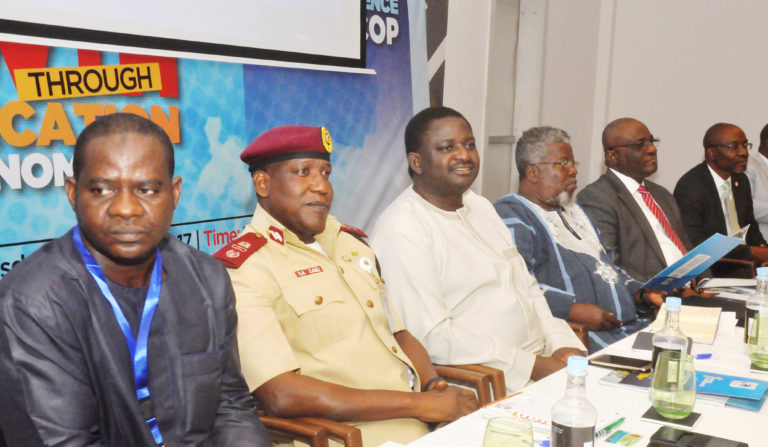
L-R: President, Guild of Corporate Online Publishers (GOCOP), Musilikilu Mojeed; Zonal Commanding Officer, Zone 2, Lagos, Federal Road Safety Corps (FRSC), Sheu Zaki; Senior Special Adviser to the President on Media, Femi Adesina; Prof Akin Olugbinde; Managing Director, News Agency of Nigeria (NAN), Bayo Onanuga and former Anambra State Governor, Peter Obi, during the 1st Guild of Corporate Online Publishers (GOCOP) in Lagos

Mr Obi was a Guest Speaker at the 1st Annual Conference of the Guild of Corporate Online Publishers (GOCOP) held on Thursday, August 10, 2017 at the Renaissance Hotel, Ikeja in Lagos.

Speaking on the theme “Sustaining growth through diversification of the economy”, he contended that the Nigerian economy is already diversified.

Buttressing this, the former governor said the non-oil sector is contributing about 80% to the nation’s GDP, noting that the tragedy is that the oil sector however accounts for 90% of the foreign exchange earnings.

He listed three ways to put the economy back on the path of growth. According to him, government must as a matter of urgency embark on aggressive savings, diversification of the economy towards manufacturing and lastly investment in developmental education.

“Our economy is fully diversified because the non-oil sector is actually contributing about 80 per cent to our GDP today.

“But the tragedy of our economy is that 90 per cent of our export revenue is derived from just one sector – oil.

“Diversifying our economy through manufacturing and investment in education is what we require today to turn around our economy.

“And by aggressive savings we’ll be able to get the resources to bring about micro economic stability to the country, defend our currency and be able to attract FDI and portfolio investments and unlock the resources to invest in our deteriorated infrastructure,” Obi, who described himself as a trader and businessman, said.

Another Guest Speaker and Managing Director of the News Agency of Nigeria, NAN, Mr Bayo Onanuga, charged GOCOP to come up with code of conduct for online media practitioners.

He also charged the leadership of the Guild to pursue capacity building for members through workshops and seminars to broaden their knowledge.

The NAN MD assured that his organisation would collaborate with GOCOP in generating contents, not only text but videos and photographs.

On his part, the keynote speaker, Prof Akinyemi Onigbinde, posited that the nation needs to restructure the polity before talking about diversification of the economy.

“Let me say this, and it is with all sense of responsibility, that the proponents of this ‘diversification’ theory, with respect to the chronically ill Nigeria economy, are not being honest.

“Indeed, I dare say they are being mischievous, just as they insist on playing Nero as our Rome prepares to go up in flames. Truth is, for Nigeria, it may well be one-minute to midnight, if we continue to ignore the ‘first principle’ in nation-building.

“So, what is responsible for Nigeria’s arrested development, to put it in a counter thesis to GOCOP request: Nigeria economy cannot enjoy a sustainable growth and neither can it be diversified because there is even no basis for economic growth.

“As I had earlier suggested, what economy are we to diversify? And As I had also insisted on, there can be no economy to be diversified, hence there will be no growth as to speak of ‘sustainable growth.’

“But let us, however, say that Nigeria will continue to remain in a state of suspended animation, economically, so long as some sections of the Nigerian nation space feel short-changed by the Nigeria political economy, due, largely, to the operations of present structure of the Nigerian state.

“Truth is, so long as the centre holds a ‘veto power’ over the economic activities of Nigeria so-called federating units, so long will Nigeria manifest destiny remain dormant,” Prof Onigbinde said.

Representatives of GOCOP key partners like FRSC, Mobil, NLNG, EFCC delivered goodwill messages calling for sustained relationship while the GOC 81 Division of the Nigerian Army, Major General PJ Dauke, presented a paper on counter-insurgency.

At the end of the one-day conference, the newly elected Executive Committee of GOCOP was inaugurated under the leadership of Mr Dotun Oladipo, Publisher, The Eagle Online.
Buhari administration committed to press freedom, says Adesina

0

The Presidency has assured that the President Muhammadu Buhari administration will not muzzle the media.

GOCOP
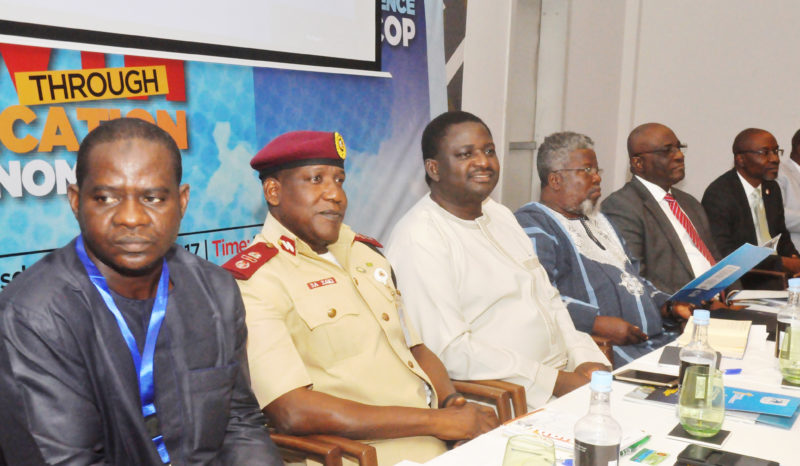
L-R: President, Guild of Corporate Online Publishers (GOCOP), Musilikilu Mojeed; Zonal Commanding Officer, Zone 2, Lagos, Federal Road Safety Corps (FRSC), Sheu Zaki; Senior Special Adviser to the President on Media, Femi Adesina; Prof Akin Olugbinde; Managing Director, News Agency of Nigeria (NAN), Bayo Onanuga and Director, Public Officer, EFCC, Osita Nwajeh, during the 1stGuild of Corporate Online Publishers (GOCOP) in Lagos

Presidential Media Adviser, Femi Adesina, gave the assurance on Thursday, August 10, 2017 while speaking at the First Annual Conference of the Guild of Corporate Online Publishers (GOCOP) held at Renaissance Hotel, Ikeja, Lagos.

Adesina said the Buhari administration is committed to freedom of press hence, would not gag the media.

He, however, enjoined the Nigerian media to be responsible and to only engage in constructive criticism of government activities.

“This government is not interested in muzzling the media in anyway. We are committed to freedom of speech.

“Media should be positively critical, media should be responsible.

“Count this government out of muzzling the media, Adesina stressed.

The Presidential Media Adviser told the ‘August’ gathering that he had been part of GOCOP from inception because members of the Guild are credible professionals that all stakeholders must identify with.

He said: “When you see responsible organisation like GOCOP, we all must support them.

“I identify with GOCOP because I know it has what it takes to do the right thing. I have been a part of GOCOP from the beginning.”

In his welcome address, the outgoing President of GOCOP, Musikilu Mojeed of Premium Times, traced the history of the Guild, saying it has been committed to peer review.

He noted that the number of online news platforms has ballooned in the last few years, stressing the need to protect the cyber space by setting stringent conditions for online publishers to join GOCOP.

Mojeed expressed the readiness of the Guild to partner with relevant government agencies to sanitise the online media practice.
“We are ready to name and shame any member who engages in misconduct,” he told the gathering.

However, he pointedly said the Guild would not welcome any attempt by the government to muzzle or gag the online platforms in any guise.

Momoh tasks Nigerian media on science reporting

1
 
Immediate past Head of Department (HOD), Communication and Media Enterprise at the Pan Atlantic University (PAU), Dr. Isah Momoh, has said that the Nigerian mass communication needs to focus more on science reporting.

NAS award
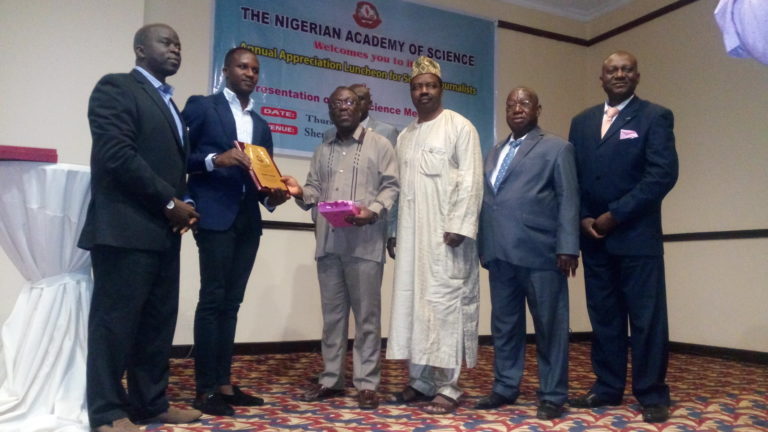
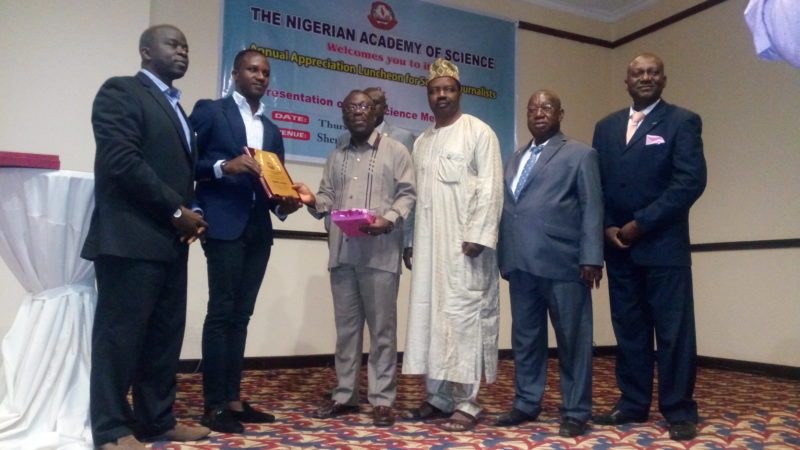
2016 Nigerian Academy of Science Media Awards: Tunde Ajaja of The Punch (2nd left) receiving his award plaque, gift and price money at the NAS Science Media Awards in Lagos on Thursday, August 10, 2017. Photo credit: Innocent Anoruo

In a keynote address delivered at the Nigerian Academy of Science (NAS) annual appreciation luncheon for science journalists on Thursday, August 10, 2017 in Lagos, Momoh noted that Nigeria missed the path to development because science has not met communication in the country.

“Nigerian journalism and mass communication need to focus more on science reporting, coverage, features and analysis.

“The new Nigerian journalism needs also to be done scientifically. This new journalistic genre and style are part of the development journalism thrust for Nigeria’s accelerated development,” he said.

At the event where prizes were presented to winners of the NAS Science Media Awards were NAS president, Professor Mosto Onuoha, who chaired the occasion; NAS Foundation Fellow, Professor Sylvester Adegoke; Nigerian Institute of Journalism (NIJ) Provost, Gbemiga Ogunleye; and Professor Sunday Atawodi of the Biochemistry Department, Ahmadu Bello University (ABU), Zaria, who gave the opening speech.

Tunde Ajaja of The Punch emerged winner of the prize with his story, “One physician to 3,500 patients, yet Nigerian doctors beg for posting”. The runner-up was Mojeed Alabi of New Telegraph with his story on pollution.

While encouraging other print, broadcast and online journalists to work harder so they could win next time, he urged NAS to partner with relevant bodies to widen the scope of the awards.

“The awards should not be just for journalists, but for science literature, especially science fiction and other journalistic innovations, as well as other innovativeness,” he added.

Executive Secretary of NAS, Dr. Oladoyin Odubanjo, said the awards was instituted by the academy to promote science reporting in Nigeria, and that it is open to all print and broadcast journalists, including online. He added that just one entry is accepted per journalist from stories written the previous year.

According to him, the winners were picked from 22 entries received by the academy, including 17 print, four online and one broadcast.

At the event also, NAS was asked to show strong presence in the social media, as that is where Nigeria’s readers are presently.

To make the awards more effective, Momoh advised NAS to outsource the awards’ planning, organisation, marketing and presentation.

In his brief remarks, Prof. Adegoke urged journalists not to yield to gratifications to the detriment of their jobs, but to research and inform the society on the fruit of their research.

“Nigerians are not absorbing the fruits of science. In the quest for development, we look for foreigners while our people make waves overseas,” he added.

For him, aside the President of the country, the media is the next in line when it comes to making weighty statements.

World Elephant Day: Ecologists join forces to save revered animal

0

The goal of World Elephant Day, according to its promoters, is to create awareness of the urgent plight of African and Asian elephants, and to share knowledge and positive solutions for the better care and management of captive and wild elephants.

elephant ivory
Poaching: Forest elephants are poached for their ivory and skin, and threatened with extinction

African elephants are listed as “Vulnerable” and Asian elephants as “Endangered” on the IUCN Red List of threatened species. According to conservationists, both African and Asian elephants face extinction within 12 years.

The current population estimates are about 400,000 for African elephants and 40,000 for Asian elephants, although it has been argued that these numbers are much too high.

The World Elephant Day is an international annual event on August 12, dedicated to the preservation and protection of the world’s elephants.

On August 12, 2012, the inaugural World Elephant Day was launched to bring attention to the urgent plight of Asian and African elephants. “The elephant is loved, revered and respected by people and cultures around the world, yet we balance on the brink of seeing the last of this magnificent creature,” a conservationist was quoted as saying.

The escalation of poaching, habitat loss, human-elephant conflict and mistreatment in captivity are said to be some of the threats to both African and Asian elephants.

Working towards better protection for wild elephants, improving enforcement policies to prevent the illegal poaching and trade of ivory, conserving elephant habitats, better treatment for captive elephants and, when appropriate, reintroducing captive elephants into natural, protected sanctuaries are the goals that numerous elephant conservation organisations are focusing on around the world.

“World Elephant Day asks you to experience elephants in non-exploitive and sustainable environments where elephants can thrive under care and protection. On World Elephant Day, August 12, express your concern, share your knowledge and support solutions for the better care of captive and wild elephants alike,” says worldelephantday.org.

Dr. Stephen Blake, Max Planck Institute for Ornithology states: “Elephants are simply one more natural resource that is being caught up in human greed on the one hand and human need on the other. We somehow need people to become reacquainted with nature or they can have no clue as to the interrelatedness of cause and effect.”

Graydon Carter, Editor of Vanity Fair: “We admire elephants in part because they demonstrate what we consider the finest human traits: empathy, self-awareness, and social intelligence. But the way we treat them puts on display the very worst of human behavior.”

Tobacco proliferation and threat to youths, underage

0

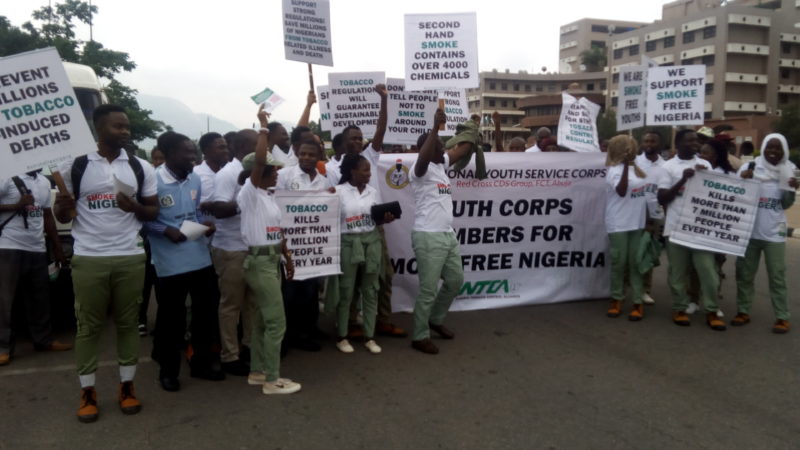
The National Youth Service Corps (NYSC), in partnership with the Nigeria Tobacco Control Alliance (NTCA), during a rally held in Abuja on Thursday, August 10, 2017, expressed support for tobacco control polices promoted by the Federal Minister of Health. Akinbode Oluwafemi, Chairman, NTCA, says in this presentation to Prof Isaac Folorunso Adewole, the Health Minister, that youths and underage are now the target of tobacco corporations

Tobacco NYSC
Members of the National Youth Service Corps (NYSC) during the rally in Abuja

As has been amplified by the World Health Organisation (WHO), tobacco kills nearly six million people annually and, if current trends continue, it will kill more than eight million people worldwide by 2030. A large chunk of these deaths will come from developing nations like Nigeria.

For the NTCA, the signing of the National Tobacco Control Act on May 25, 2015 provides the legal framework for the protection of present and future generations of Nigerians from the devastating health, social, economic and environmental consequences of tobacco use and exposure to tobacco smoke. This singular legislation gives effect to the obligation to protect citizens against tobacco-related harms in the promotion of health and other human rights as contained in the WHO Framework Convention on Tobacco Control (WHO-FCTC) and other related treaties to which Nigeria is a Party.

We commend the efforts of the Ministry of Health at ensuring optimum quality health for every citizen of this country. We are particularly enthralled by the announcement on the occasion of the 2017 World No Tobacco Day that the Nigerian government would commence the implementation of nine provisions of the NTC Act that do not require regulations. This news is particularly refreshing to us when viewed from the prism of the tobacco burden our nation carries because of the tobacco industry target of the youth as replacement smokers for a dying older generation.

The implementation of the nine life-saving provisions as we await the full implementation of all sections of the Act will send a message to tobacco corporations and indeed the global community that Nigeria is serious about ensuring the wellness of its people in line with recommendations of the WHO-Framework Convention on Tobacco Control.

This feat notwithstanding, there are still some issues on the table which we believe your intervention will address.


BATN and the Health of Nigerian Workers

We would like to revisit the reported violation of Nigeria’s labour laws by British American Tobacco Nigeria (BATN) which elicited a response from the Ministry of Labour and Employment via a fact-finding visit to the Ibadan factory of the company where the alleged infractions occurred. Unfortunately no report of the finding has been made public and we do not know why.

Mr. David Folarin – one of the violated workers – died of his ailments last month without getting justice.

Folarin and the other ex-workers of BATN accused the firm of deliberately exposing them to tobacco hazards and other poor factory conditions that cumulatively led to their current poor state of health. Those still alive live with strange ailments that have defied medication and a burden on their already meagre finances.

BATN was also accused of sending ill workers to particular hospitals whose services were solicited to cover up the workers’ injuries even though documents that show these workers were in optimal health at their entry into the company exist. The identified hospitals still operate with impunity.

The workers describe sub-human conditions in BATN Ibadan factory where they were forced to work without protective gear.


Youths and Aggressive Tobacco Marketing

It is no longer in dispute that BATN and other tobacco entities operating in Nigeria continue to exploit the absence of Regulations for the implementation of the NTC Act to  continue aggressive campaigns targeting our kids and young ones represented here by members of the National Youth Service Corps (NYSC).

A recently-released five-country report on tobacco industry marketing of tobacco products near schools across Africa listed Nigeria among countries where this disturbing practice by the tobacco industry is prevalent. The summary of the findings is that the tobacco industry is using every deceptive means to catch them young.

The youths have been the target of the secret smoking parties orchestrated by BATN across the country to conscript first time smokers. At these illicit parties supposed role models that the youths look up to, are recruited to perform “all night” while smoking tobacco products.

Worse is the fact that the youths and underage are now the target of tobacco corporations’ inundation of the Nigerian market with flavoured brands of cigarettes aimed at stoking appeal.

The situation is grave and requires speedy response. The support which our youth corps members have come to show for your leadership as helmsman of the Federal Ministry of Health is in sync with NTCA perception of the achievements of the ministry and opportunities that still exist for more milestones.

Like the NYSC members, we support the call for a fast-track of effective regulations for implementation of the NTC Act. We see our youths as agents of positive change, and not replacement smokers for an older generation of smokers who we view as victims of the tobacco industry stranglehold on lungs.


Our Demands

  • Extend support to the Ministry of Labour and Employment which is investigating the anti-labour practices in BATN Ibadan factory in Ibadan, especially in relation to the health hazards that workers have been exposed to. We urge you to use your good office to champion the cause of the disengaged ill workers
  • Conscript Commissioners of Health in all the states in the enforcement of the nine provisions of the NTC Act that do not require regulations
  • Fast-tracking of implementation guidelines and effective regulations for the implementation of the NTC Act so that it gets the National Assembly approval.

We assure you that the organisations we represent and the entire Tobacco Control community are ready to support the Federal Ministry of Health in its policies aimed at safeguarding the health of our citizens.

African Decentralisation Day: Creating opportunities for youth

0

The theme of the African Union Decentralisation Day 2017, celebrated on Thursday, August 10, 2017, is “Youth Participation”. According to the Local Government and UCLG Africa, this translates as “Investing in Youth”.

coyparticipants2
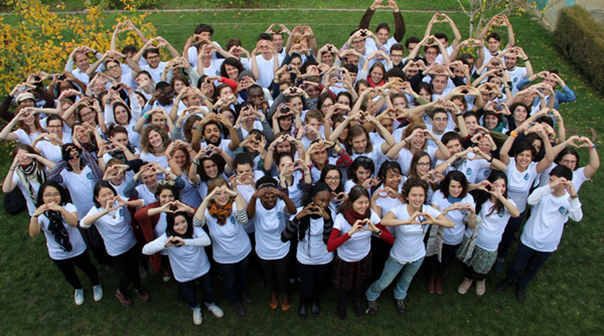
Participants of the Conference of Youth COY 11 last year in Paris. COY 12 focuses on the role of education and capacity building in empowering young people to take action on climate change and to bring about positive change in society

According to the US Census Bureau in 2010, 63% of the Africa’s overall population was below the age of 25. The average age of the African population is 19. We are talking of over 300 million people that will become 500 million in less than 20 years from now.


A threat or an opportunity?

Jean Pierre Elong Mbassi, Secretary General of UCLG Africa considers it threat “if one considers that Africa has the worst schooling outcomes in the world with 51% out of school in the age group of six to 14 years. This translates into the emergence of the phenomenon of ‘Street Children’ in African Cities where more and more children and young people are homeless and live and sleep in the streets”.

In sub-Saharan Africa according to International Labour Organisation (ILO), three in five of the unemployed are youth, and 72% of the youth population live with less than $2 a day. In addition, 10 to 12 million young people join the labour market each year, adding year in year out to the African working poor.

The African Union has declared 2009-2018 “the African Youth Decade” but, according to the UCLG Africa, young people in Africa do not have any real taste of the implementation of the political declaration. The group adds that the persistence of conflicts and wars on the continent continues to fuel uncertainty for the resolve of African leaders to strive and propose a better life for the youth and future generations, “not to mention all the adverse decisions around youth due to poor governance on the continent”.

“For sure there is no quick fix for the youth situation and the unemployment boom, but the reality is that more and more young people in Africa are losing hope of having any future on the continent. Hence, their despair and struggle to find a better life out of the continent, taking incredible risks to try and cross the Mediterranean sea at the expense of their own lives.

“Is the situation definitively desperate? Of course not. Even if there remain a lot of concerns.”

Africa represents over 30% of the world’s youth population. Africa is the youngest continent in the world: 21% of the 1.2 billion people on the continent are between 15 and 24 years old, whereas 42% are less than 15 years old. In the next 20 years, Africa has the opportunity to benefit from a “demographic dividend” where there will be a large workforce supporting fewer children and the elderly, lowering the dependency burden and freeing up resources for development and the improvement of productivity.

Experts say there are good reasons to hope that educational efforts can yield results in terms of a better quality and skilled workforce. In that sense, they add, the youth should be considered as the key and unique player for the economic and social structural transformation of Africa.

“They are the energy and creativity of the future. That is where Africa’s renewal and renaissance will come from,” says Mbassi, adding the the second piece of good news is the determination of young people on the continent to take control of their own lives, creating their own jobs in the popular economy, investing in the tech- economy by adapting new technology’s to fit the reality and economic context of Africa.

“But this good news still remains fragile,” he laments, pointing out that, to transform the emerging potential into capabilities with effective scale-up and implementation on the ground, there needs to be a drastic transformation in the way African societies consider youth participation.

“It takes affirmative action to create an enabling and conducive environment for youth participation in society; and local governments should be at the forefront of this endeavour.”

One of the remarkable initiatives in that regard is the proposal from the UCLG Africa network of female Mayors and local elected women of Africa (REFELA) to launch a campaign this year on “African Cities Without Street Children”, to address the emerging phenomenon. The UCLG Africa invites all African local governments to take part in the initiative.

According to the UCLG Africa, local governments should also be proactive in opening up new opportunities for youth by:

  • Organising open-door operations for youth in order to acquaint them with the functioning of local councils and administrations;
  • Encouraging the creation of municipal councils for the youth that supports  and prepares young people to understand more about the dispensation of city management responsibilities;
  • Opening a youth desk at the local government premises to collect ideas from young people on the way to address burning issues that impede the improvement of the living conditions of the population or that can boost efficiency in service delivery;
  • Launching a youth empowerment programme addressing the main concerns of young people, including job creation; support for entrepreneurship; education, culture, arts and heritage; sports and leisure.

Mbassi submits: “But for local governments to be in a proactive position, they themselves need to be empowered by their national governments. It is striking that despite the strong political will expressed by the Heads of State and Government of the African Union, that adopted the African Charter on Values and Principles of Decentralisation, Local Governance and Local Development at their Conference in June 2014 in Malabo, Equatorial Guinea, where only 11 AU members signed it, and only two have ratified it. Not to mention the situation where local elections are not organised regularly or in a timely way that allows people to democratically choose their local leaders; and even worse, where elected officials are being replaced by appointed ones to manage local governments.

“This is a clear demonstration that celebrating a Decentralisation Day has no meaning, if the African Union members cannot honour even commitments made by their Heads of State and Government. Always remember this Egyptian wisdom: ‘The heart of the matter is not about speculating around the action, but to act’.”

Orlando emerges 40th US city to commit to 100% renewable energy

0

By the year 2050, Orlando commissioners want all the electricity used in the city to come from renewable sources of energy like solar and wind power.

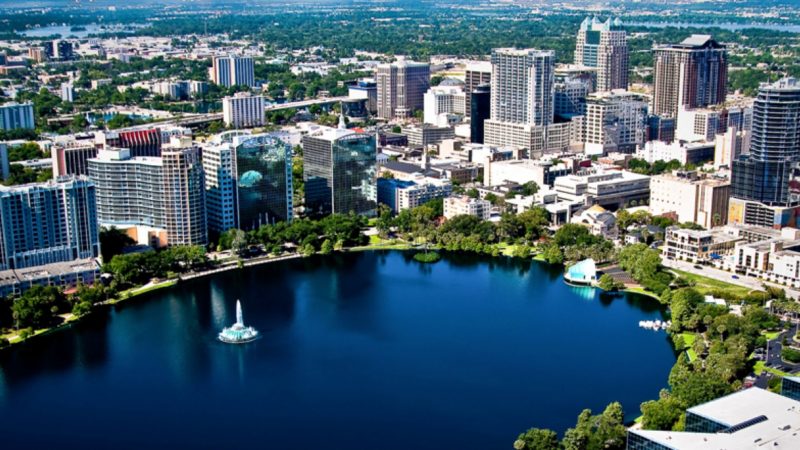
Orlando
Orlando, Florida

In a unanimous vote on Tuesday, August 8, 2017, the Orlando City Council agreed to adopt this goal, joining San Diego, Salt Lake City and 37 other cities across the U.S. that have adopted a 100 percent clean-energy target.

Orlando is the largest city in Florida committing to this goal so far, according to the Sierra Club, with St. Petersburg and Sarasota right behind. Aside from combating climate change and pollution, the city argues the move toward renewable energy increases economic opportunities in Central Florida by creating local jobs in the industry. Orlando Mayor, Buddy Dyer, didn’t call out the climate change aversion of President Donald Trump or the Republican-led Florida Legislature by name, but did say city mayors had to lead the fight against rising seas and increasing temperatures.

“This administration has decided not to honour our commitment to the Paris climate accord, but a lot of mayors around the country have picked up the reins to say if we’re not doing it at the federal level, its incumbent that we lead at the local level,” Dyer says. “More than 50 percent of the world’s population now lives in cities, so we have to be the ones that are leading on the important issues that are of consequence for not just this year, but for decades and even centuries to come.”

Chris Castro, director of sustainability for the city, says over the last decade, Orlando has been trying to move the needle through its Green Works Orlando initiative to become one of the most sustainable cities in the Southeast. The city has already committed to reducing 90 percent of its air pollution and greenhouse gas emissions by 2040 in accord with the Paris Climate Agreement. To achieve this, Orlando has already set a goal of powering 100 percent of municipal operations using renewable energy by 2030. Last year, the U.S. Department of Energy and the Solar Foundation declared Orlando a “SolSmart City” for its leadership on expanding clean energy sources.

“The power from the sun is cheaper to produce electricity than the power from fossil fuels, including coal and even natural gas,” Castro says. “What we want to do is maintain the affordability of our electricity rates. A lot of people think that just by going solar, it’s going to be more expensive, and that is not the case. We’re actually going to be able to levelize our cost of power over decades, and we’ll be able to maintain the affordability and the reliability of our power here in the City of Orlando.”

The council is also particularly interested in the potential employment opportunities created by having this commitment to clean energy. Castro says last year in Florida, solar jobs grew 10 times faster than the overall state economy, adding 1,700 new jobs. Commissioner Sam Ings proposed moving the citywide goal of 100 percent renewable energy to 2035, and Castro said that target could be updated as more technology comes along.

The resolution was applauded by members of the First 50 Coalition, a broad alliance pushing for local sustainability issues that includes the League of Women Voters of Orange County, the Sierra Club and FL SUN.

“I see this vote as historic and a first step toward what we can do in leadership on the national stage,” says Sara Isaac, director of partnerships for the League. “I think that you are sending a signal across the nation of the kind of city Orlando wants to be.”

In a statement, Phil Compton from the Sierra Club’s Ready for 100 Campaign in Florida also praised the decision by Orlando commissioners.

“All across our state and our nation, cities are committing to a future powered by 100 percent clean and renewable energy for all,” Compton says. “Today, Orlando joins this growing movement of cities that are ready for 100 percent clean, renewable energy.”

Courtesy: Orlando Weekly

Anti-corruption bodies seek African Convention against Corruption

0

Two anti-corruption bodies on the continent, the Independent Corrupt Practices and Other Related Offences Commission (ICPC) and the National Anti-Corruption Commission of the Republic of Cameroon (NACC) have called for cooperation among African countries to tackle the problem of corruption on the continent.

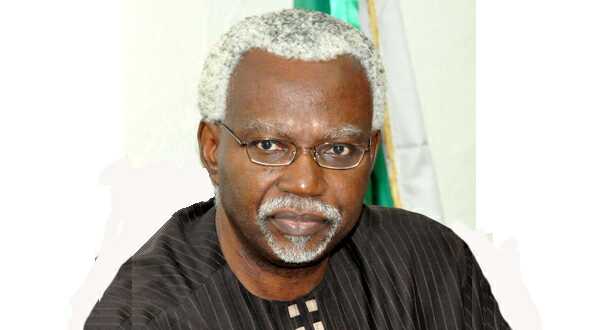
Ekpo Nta
Ekpo Nta, Chairman of ICPC

Heads of the two agencies, Mr. Ekpo Nta (ICPC) and Rev. Dr. Dieudonne Massi Gams (NACC) jointly made the call recently in a parley at the ICPC’s headquarters, Abuja, noting that Africa was ripe to come up with its own collaborative mechanism that would help solve the menace of corruption across the continent.

Rev. Massi Gams, who was on a visit to ICPC with the top management of his organisation spoke first and said he was in Nigeria to understudy the work of ICPC with a view to improving on the operations of his organisation back home in Cameroon.

He explained that the achievements of ICPC in the war against corruption were good enough to be replicated in other African countries.

Gams said, “I think is it useful for us to learn what you are doing to combat corruption because the fight against corruption is global. But we need to first centralize it on the continent if we must go on to make our lives better.

“We used to look beyond to the West before this time for solutions, but now we have the options to learn from one another by creating a southern bloc. We need to see if it is possible to sign a convention of cooperation by African countries against corruption.

“South-South cooperation is not very well done in Africa. We used to think abroad out of the continent but we have many things that we can share here on our continent. That is why I think we must begin inside Africa.”

Mr. Nta, in his remarks, told his Cameroonian colleague of his willingness to collaborate with other African countries in the war against corruption, adding that the continent needed to pull her resources together to tackle one of the biggest problems facing it.

He lamented that only a few African countries (Algeria, Kenya, Egypt and Nigeria) were members of the International Anti-Corruption Academy (IACA) which he said was a drawback for Africa and promised to help Cameroon join the academy.

The ICPC Chairman described in details the various preventive initiatives the Commission was deploying to rid the country of corruption. He spoke about the Anti-Corruption and Transparency Units (ACTUs) domiciled in government establishments; the System Study and Review tool; the Corruption Risks Assessment initiative as well as a host of others.

Nta spoke further on assistance to the Cameroonians: “On the issue of collaboration, I do not see any problem. It will go into my handing-over note. I will assist you to have your country join IACA. We have few African countries as members at the moment which is not good for us.”

The ICPC boss who pointed out that he was on his last official assignment because his tenure was drawing to an end, also promised to sign an agreement with NACC that would allow for staff exchange between the two bodies.

The Rev. Massi Gams and his entourage were taken on a tour of ICPC’s training academy, the Anti-Corruption Academy of Nigeria (ACAN), Keffi, Nasarawa State.

The Reverend was impressed at the state-of-the-art facilities at ACAN and promised to send his staff there for training as soon as he returned home.

GOCOP gets new executive council

0
The Publisher of The Eagle Online, Dotun Oladipo, has been elected President of the Guild of Corporate Online Publishers (GOCOP).
Dotun Oladipo
Dotun Oladipo, Managing Director, The Eagle Online

The election was conducted on Wednesday, August 9, 2017 at Adna Hotel, GRA, Ikeja, Lagos.

Oladipo is the current General Secretary of the Association.

Also elected into the National Executive Committee of the Guild are the Publisher, Real News, Maureen Chigbo, as Deputy President; Publisher, Newsdiaryonline, Danlami Nmodu, Secretary General; and Publisher, Metro Watch, Collins Edomaruse, Deputy Secretary General.

Others are the Publisher, World Stage, Segun Adeleye, Financial Secretary; Publisher, The Scroll, Janet Mba-Afolabi, Treasurer; and Publisher, Qed.ng, Olumide Iyanda, Publicity Secretary.

The election was conducted by a committee led by the Publisher of Global Patriot, Simon Ibe.

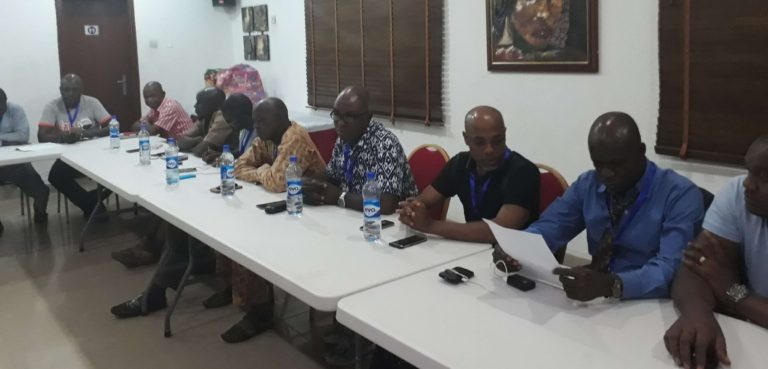
GOCOP election
A view of some members of GOCOP during the election

Speaking after the election, the outgoing Acting President of GOCOP, Musikilu Mojeed, thanked the electoral committee for organising a free and fair poll.

Mojeed congratulated Oladipo and his team, calling on all members of the Guild to give them all the needed support.

The new Executive Committee will be inaugurated at the 1st annual conference of GOCOP holding on Thursday, August 10, 2017 at Renaissance Hotel, Isaac John Street, Ikeja.

The theme of the conference is: “Sustaining Growth through Diversification of the Economy.”

Keynote Speakers at the conference are university teacher, Prof. Akin Onigbinde; the Managing Director of the News Agency of Nigeria, Bayo Onanuga; and a former Governor of Anambra State, Peter Obi.

The Chief of Army Staff, Lieutenant General Tukur Buratai, will also be speaking at the conference.

Buratai will speak on the tackling of the Boko Haram insurgency in the face of the country’s economic reality.

Former Managing Director and Editor-in-Chief of the Sun Newspapers and now the Special Adviser on Media and Publicity to President Muhammadu Buhari, Femi Adesina; and the Managing Director and Editor-in-Chief of New Telegraph Newspapers and also the President of the Nigerian Guild of Editors, Funke Egbemode, will participate in the discussion.

Radio Report: How Lagos can address flood-induced epidemics

0
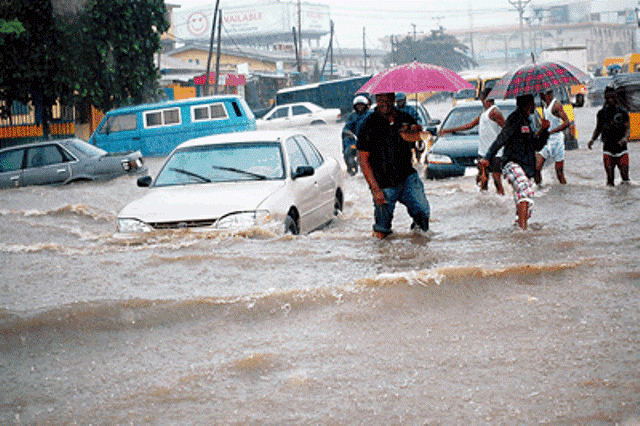
Lagos residents want government in the state to put mechanism in place for checking and managing flood-induced epidemics, as the rain gets to its peak.
Their submission was captured in this report by correspondent Innocent Onoh on the flood update in Lagos.
×