Home Blog Page 2

IPCC opens 64th plenary session in Bangkok

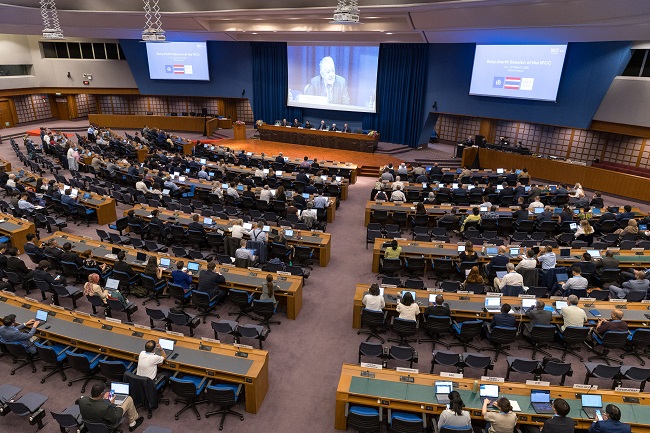
The Intergovernmental Panel on Climate Change (IPCC) began its Sixty‑fourth Plenary Session at the United Nations Economic and Social Commission for Asia and the Pacific (UNESCAP) in Bangkok, Thailand, on Tuesday, March 24, 2026.

Nearly 300 delegates representing IPCC member governments and observer organisations from around the world gathered to advance IPCC’s planned work in the seventh assessment cycle. The session is scheduled from March 24 to 27, 2026.

A key agenda item for this Session is the review of the Principles and Procedures that govern the work of the IPCC, which are subject to review every five years.
IPCC
The IPCC began its Sixty‑fourth Plenary Session on Tuesday in Thailand

With the Panel now more than two and a half years into the seventh assessment cycle, IPCC Chair, Jim Skea, invited member governments to initiate this review at this plenary session and strengthen how the IPCC conducts its business.

“The principles and procedures governing our work are vital in safeguarding IPCC’s ability to deliver comprehensive, neutral, objective, transparent, inclusive, and scientifically robust assessments,” said IPCC Chair Jim Skea during his opening remarks. “The Panel can seize the opportunity presented at this plenary to give this important matter its full and undivided attention,” he added.

During the four-day meeting, the Panel will also discuss raising funds for the IPCC Trust Fund, the work programme of its Task Group for Data Support for Climate Change Assessments, and will consider new observer organisations, among other items. The Panel will also receive progress updates from different parts of the IPCC and various products of the seventh assessment cycle.

The IPCC’s seventh assessment cycle formally began in July 2023 and will culminate in the release of the Synthesis Report to the Seventh Assessment Report (AR7) in 2029. In this cycle, the IPCC will prepare the AR7, comprising three Working Group contributions and a Synthesis Report, and update the 1994 Technical Guidelines for Assessing Climate Change Impact and Adaptation.

The Panel will also produce a Special Report on Climate Change and Cities, the Methodology Report on Short-Lived Climate Forcers and the Methodology Report on Carbon Dioxide Removal Technologies, Carbon Capture, Utilisation and Storage.

During the opening ceremony, delegates were welcomed by the Permanent Secretary of Thailand’s Ministry of Natural Resources and Environment Raweewan Bhuridej. The Plenary was also addressed by the IPCC Chair Jim Skea and the Deputy Secretary General of the World Meteorological Organisation, Ko Barrett.

The opening ceremony also included video messages from Inger Andersen, Executive Director of the UN Environment Programme, and Simon Stiell, the Executive Director of the United Nations Framework Convention on Climate Change.
EU announces €288m grant to Nigeria’s healthcare sector, others

0

The European Union (EU) delegation to Nigeria and ECOWAS has announced the roll-out support of €288 million to Nigeria’s healthcare, agriculture, finance, migration, climate and digital public infrastructure sectors.

The delegation made the announcement at the EU-Nigeria Ministerial news conference in Abuja, to announce the roll-out funds for grant and support for the Nigerian economic sector.

The announcement was done under the new commitment of the EU-Nigeria Partnership.

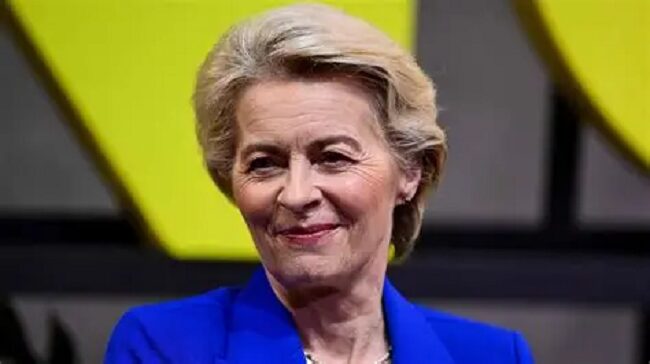
Ursula von der Leyen
Ursula von der Leyen, President of the European Commission

Mr. Stefano Signore, Director General, International Partnerships, European Commission, said that the project represented the acceleration in investment that EU was supporting as part of its Global Gateway Strategies.

Signore said that though much had been done, more was expected to be delivered through the global gate-way strategies.

He said that health and agriculture stood out in this respect as they join forces to improve standards, infrastructure and local manufacturing and inclusion.

He said that the bloc was committing to stronger cooperation on sustainable migration by providing better life options to returnee migrants.

Earlier, Mr. Abubakar Bagudu, Minister of Budget and Economic Planning, said that the event was built on the strong momentum generated at the 2023 EU-Nigeria Strategic Dialogue, which represented a significant milestone.

Bagudu said that it had elevated the mutual engagement and formally launched the EU’S Global Gateway Strategy in Nigeria.

He said that the moment signalled a deepening of ties and a shared commitment to a modern partnership anchored on mutual respect, shared prosperity, and sustainable investment.

“Our engagement has continued to evolve toward a more investment-drive, result-oriented and impact-focused framework that reflects both our ambitions and the realities of a rapidly changing global economy.

“Nigeria remains firmly committed to deepening this strategic relationship. Under President Bola Tinubu’s leadership, we are implementing bold and far-reaching macroeconomic reforms.

“These reforms aim at stabilising the economy, strengthening fiscal sustainability, and creating an enabling environment for private sector-led growth.

“They include efforts to improve revenue mobilisation, enhance transparency in public financial management, rationalise expenditures, and strengthen the efficiency of our foreign exchange market,’’ he said.

Bagudu, represented by Dr Doris Anite-Uzoka, Minister of State, Budget and Economic Planning, said that collectively, they were laying the ground work for a more competitive, resilient, and inclusive economy.

Dr Olasupo Olusi, the Managing Director/CEO Bank of Industry (BoI), said that the synergy demonstrated how strategic partnership could channel long-term investment into Nigeria’s most critical sector.

According to him, through the partnership with the European investment Bank, targeted, long-term financing are being into two priority sectors, healthcare and agriculture.

He said that the sectors were central to Tinubu’s agenda for national resilience and inclusive growth.

Mr. Jarno Syrjaia, the Under Secretary of State for Foreign Trade, Finland, said that Finland assumed the lead role in the new Team Europe Initiative.

Syrjaia said that it was to Strengthen Nigeria’s Digital Public Services and support the three million Technical Talents (3MTT).

He said that his government was proud to announce its responsibility to enhance Nigeria’s digital public services and advance inclusive digital skills.

He said that Finland’s development and training company, HAUS, would lead the implementation in partnership with Estonia’s development agency, ESTDEV, to bring together European expertise in digital government and public-sector innovation.

Mr. Uche Amaonwu, Country Director, Gates Foundation, said that supporting health manufacturing was critical to shared strategic goals.

Amaonwu said that the foundation was glad to work together with its partners who lead the way in mobilising financing for African healthcare players.

He said that it was encouraging to see that the work was translating into concrete investment in Nigeria through the BoI facility.

“We congratulate the BoI and PVAC for mobilising this innovative facility that will serve the real financing needs of Nigerian health manufacturers,’’ he said.

Out of the €288 million, €23 million is for grant support for the Nigerian DPI.

“€108 million is for the recent signatures of €22 million grant and €86 million loan to the Nigerian Government.

Furthermore, €50 million is for the recent signature of a lending Facility to the Bank of Industry to boost the development of healthcare manufacturing project in Nigeria.

Also, €5 million is for a grant supporting training in health, pharma and nutrition sectors.

Others are €85 million in a recent signature of a lending facility to the BoI to support on-lending operations in favour of agri-businesses in selected value chains, in particular dairy and cocoa.

€1 million is for an upcoming launch of a Twinning project with the Ministry of Agriculture, to bring in public sector climate/agriculture experts from Austria, Czech Republic and Latvia.

“€16 million will be for an additional contribution to support Nigeria’s efforts in improving and strengthening the sustainability of its migration governance framework.

This will focus on reintegrating of returning migrants and countering trafficking in human beings (THB) and smuggling of migrants (SoM).

By Maureen Okon

TotalEnergies signs agreements with U.S. to end offshore wind projects

TotalEnergies has signed settlement agreements with the United States Department of the Interior (DOI) to relinquish its Carolina Long Bay lease (Lease OCS-A 0545) and its New York Bight lease (Lease OCS-A 0538), both awarded in 2022, along with its partners. As a result, TotalEnergies will no longer develop offshore wind projects in the United States.

Under the terms of the settlement, TotalEnergies will recover the lease fees paid and will invest an equal amount in the development of U.S. Gas & Power production and exports.

TotalEnergies
TotalEnergies

TotalEnergies’ studies on these leases have shown that offshore wind developments in the United States, unlike those in Europe, are costly and might have a negative impact on power affordability for U.S. consumers. Since other technologies are available to meet the growing demand for electricity in the United States in a more affordable way, TotalEnergies considers there is no need to allocate capital to this technology in the U.S.

“TotalEnergies is pleased to sign these settlement agreements with the DOI and to support the Administration’s Energy Policy. Considering that the development of offshore wind projects is not in the country’s interest, we have decided to renounce offshore wind development in the United States, in exchange for the reimbursement of the lease fees,” said Patrick Pouyanné, Chairman of the Board of Directors and Chief Executive Officer of TotalEnergies.

“Furthermore, these agreements, under which we will reinvest the refunded lease fees to finance the construction of the 29 Mt Rio Grande LNG plant and the development of our oil and gas activities, allows us to support the development of U.S. gas production and export. These investments will contribute to supplying Europe with much-needed LNG from the U.S. and provide gas for U.S. data center development. We believe this is a more efficient use of capital in the United States,” added Pouyanné.

TotalEnergies has also signed recently a Letter of Intent (LOI) with Glenfarne, lead developer of the Alaska LNG project, for the long-term offtake of 2 million tons per year (Mtpa) of liquefied natural gas (LNG) over 20 years, subject to the project’s final investment decision.

TotalEnergies is deploying its integrated energy model across the United States, where it has been active since 1957. Since 2022, TotalEnergies has invested nearly $12 billion in the U.S. to accelerate development in oil, LNG, and electricity.

TotalEnergies is integrated throughout the LNG value chain, with upstream gas production assets in Texas and offshore U.S.

New calculator shows how beach cleanup protects wildlife

0

Ahead of Earth Month, Ocean Conservancy is launching a free, publicly available website, WildlifeImpactCalculator.org, to enable people who clean up beaches and waterways worldwide to determine how many marine animals they are helping protect with their efforts.

“Every piece of plastic cleaned up from our beaches and waterways is one less threat to the life of a marine animal,” said Ocean Conservancy’s Senior Director of Conservation Cleanups Allison Schutes. “Our calculator shows just how much of a difference a cleanup can make for these amazing creatures.”

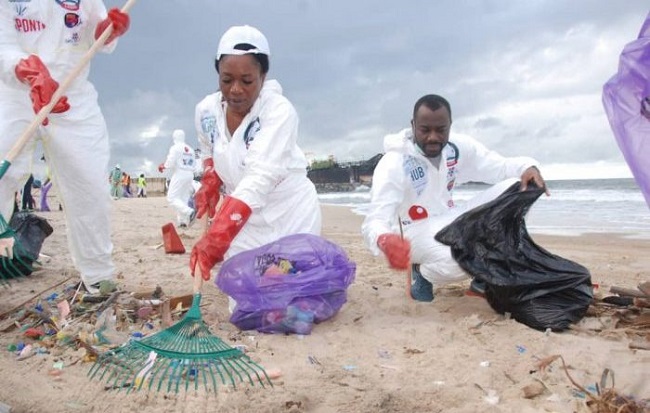
Lagos beach cleanup
A Lagos beach cleanup

Wildlife Impact Calculator website users can enter the number of specific plastic items collected from a beach or waterway to see how many animal lives would have been at risk had those items been ingested. The tool incorporates over 20 types of plastic pollution that have been found inside marine animals, including fishing debrisbottle capsplastic fragmentslidsstrawsplastic utensilsplastic bottlesplastic/foam platesballoonsplastic bags and food wrappers, up to a cap of 9,999 pieces of plastic for each item type.

These types of plastic are among the most commonly found items polluting beaches and waterways worldwide by the millions of volunteers who have taken part in Ocean Conservancy’s International Coastal Cleanup (ICC) over its 40-year history.

Underlying the Wildlife Impact Calculator is award-winning peer-reviewed research led by Ocean Conservancy scientists and published last November in Proceedings of the National Academy of Sciences (PNAS) that quantifies the deadly dose of macroplastics (plastic pieces larger than 5mm) ingested by seabirds, sea turtles, and marine mammals.

“We wanted to make the science as easy to understand as possible and give people the ability to measure the difference they can make,” said Ocean Conservancy’s Manager of Ocean Plastics Research Dr. Erin Murphy, lead co-author of the study underlying the Wildlife Impact Calculator.

“The models informing the calculator look at amounts of plastic in terms of pieces, but how does that relate to items that people are picking up off of beaches? That’s what we wanted to show.”

Like the research, the Wildlife Impact Calculator does not capture the full threat plastic pollution poses to ocean wildlife, since macroplastic ingestion is just one way animals are affected. Other impacts include entanglement as well as the long-term cumulative effects of microplastic ingestion, or exposure to toxic chemicals that leach from plastics when in the ocean.

An estimated 11 million metric tons of plastic flow into the ocean each year – one of the most pervasive global threats to ocean health. Scientists have documented that some 1,300 species across ocean ecosystems – from plankton to whales – ingest plastics, too often with deadly consequences.

In addition to organizing cleanups to reduce harm from plastics already in the environment, Ocean Conservancy advocates for solutions to plastic pollution that prevent it from reaching beaches and waterways in the first place. Ocean Conservancy has advocated for a number of plastics policies at the local, state, federal and international levels such as California’s SB54Florida’s balloon release banthe Farewell to Foam Act, the UN Plastics Treaty, and more.

“We hope that the Wildlife Impact Calculator will inspire people to take action not only by joining their local cleanup efforts but by supporting work to prevent plastic from becoming pollution in the first place,” said Dr. Britta Baechler, Ocean Conservancy’s director of ocean plastics research.

UN chief tasks women on accelerating progress on water, sanitation

0

UN Secretary General, Antonio Guterres, has called on women to accelerate progress on water and sanitation for all.

Guterres made the call on Monday, March 23, 2026, in his message to mark the World Water Day.

World Water Day is an annual United Nations observance day held on March 22 that highlights the importance of fresh water.

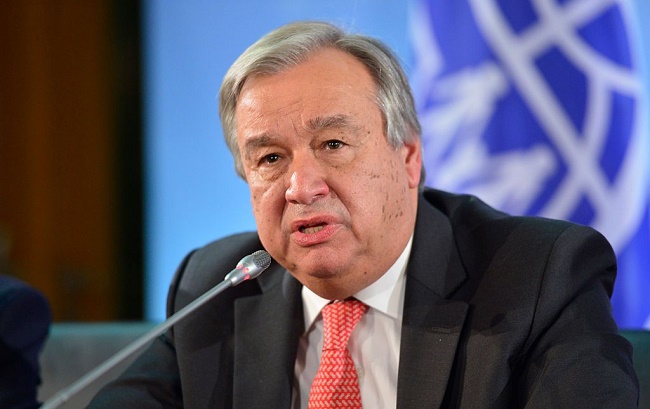
António Guterres
UN Secretary-General, António Guterres

The day is used to advocate for the sustainable management of freshwater resources.

The 2026 World Water Day with the theme: “Water and Gender Equality – Where water flows, equality grows,” is a call for a transformative, rights-based approach that places women’s leadership at the centre of water solutions.

The UN chief said too often, water has been a source of conflict but noted it could also unite people and be a contributor to peace.

“This year’s UN Water Conference will bring the world together to accelerate progress on water and sanitation for all.

“Together, let’s make water a force for gender equality, and let the benefits flow to every community in the world,’’ he said.

According to him, this year’s World Water Day reminds us that safe water and sanitation play a critical role in supporting the rights and health of women and girls.

“When access is lacking, it’s women and girls who pay the highest toll, relying on unsafe toilets; caring for family members made sick from contaminated water; and spending hours each day retrieving water from crowded communal sources – a chore that keeps many girls home from school.

“This year’s theme points to the solution: ‘Where water flows, equality grows.’

“It’s time for governments to scale up investment and strengthen national water and sanitation systems, through improved delivery capacities, workforce training and reliable financing.”

The UN chief further said that developed countries must share the technologies, expertise and financing required to build safe, sustainable and resilient water and sanitation infrastructure.

By Cecilia Ologunagba

Climate ‘emergency’ threatens to deepen energy, humanitarian crisis

Environmental organisation, 350.org, responded to the World Meteorological Organisation’s (WMO) latest report, which sounds the alarm on a global climate “state of emergency,” saying that the crisis will worsen the humanitarian toll of soaring oil and gas prices driven by the Iran war.

The group urged countries to protect their citizens from climate harm and rising costs, and to urgently start transitioning their economies away from fossil fuels.

The WMO’s ​​State of the ​Global Climate 2025 pronounced 2015-2025 as the hottest ​11 years on record, warning that weather has become more extreme on a day-to-day basis, impacting millions of people and causing billions in economic losses.

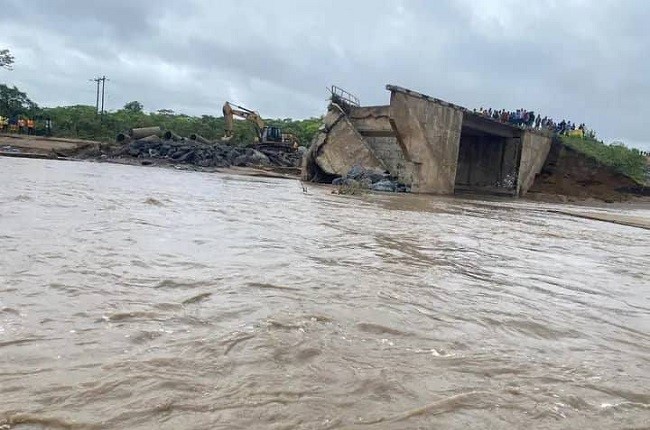
Malawi
Devastating floods in Malawi

The report also said that the increase in the annual carbon dioxide concentration in 2024 was the largest annual increase recorded, driven by continued fossil fuel emissions. Amid an energy crisis described by the International Energy Agency as the “worst” in decades, United Nations ​Secretary-General, Antonio Guterres, points to “our addiction to fossil fuels” as destabilizing both the climate and global security.

The UN’s World Food Programme has warned that if the Iran conflict continues, 45 million more people could face acute hunger due to rising prices. Meanwhile, scientists warn of the possibility of El Niño pushing heat records to record highs and causing severe heatwaves, droughts and floods this year. 

Anne Jellema, 350.org executive director, said: “Soaring prices for fuel, fertilizer and food could be the last straw for millions of families in the global South already pushed into poverty by climate change.

“Governments must act now to stop oil and gas companies profiting from the war – by taxing their windfall profits to finance protections for ordinary people. Some of the revenues should be used to fund wider access to rooftop and balcony solar and other renewable solutions that will immediately reduce families’ bills while also strengthening national energy security.

“If governments care about their people, the time is now to end our addiction to crisis-ridden and planet-destroying fossil fuels.”

From April 24 to 29, the first conference on transitioning away from fossil fuels will be held in Santa Marta, co-hosted by the governments of Colombia and the Netherlands. 350.org urges all governments to join this momentous gathering of countries to plan a fossil fuel phaseout, pursuing a global commitment first made at the COP28 UN climate talks.

UN weather agency warns of record ‘climate imbalance’ as planetary warming accelerates

0

All-time high greenhouse gas concentrations in Earth’s atmosphere continue to drive heat records on land and sea, with long-lasting consequences for humanity, the World Meteorological Organisation (WMO) warned on Monday, March 23, 2026.

Hot on the heels of a scorching decade, the UN’s weather agency has said that the planet’s climate is “more out of balance than at any time in observed history”.

“Between 2015 and 2025, we experienced the hottest 11 years on record,” WMO’s deputy executive secretary, Ko Barrett, said.

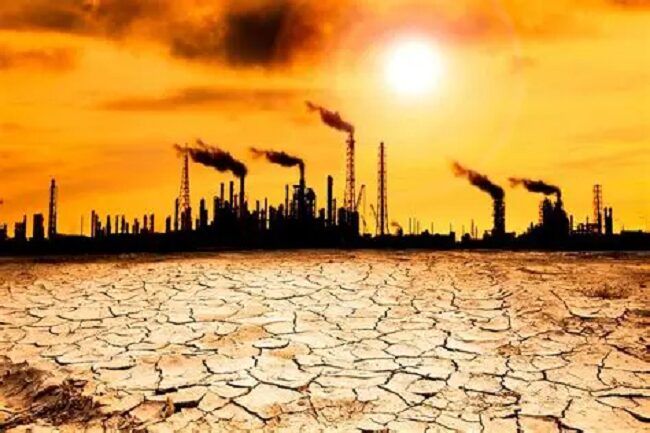
Global warming
Global warming

Last year was some 1.43°C above the 1850 to 1900 baseline in addition to breaking an ocean heat record, she explained.

Grim state of climate

Presenting a grim overview of the state of the climate in 2025, Ms. Barrett stressed that as glaciers continue to retreat and ice continues to melt, “the warming ocean and melting land-based ice are driving the long-term rise in global mean sea level rise.”

She said that the findings are an inspiration “to work harder to get lifesaving forecasts and early warnings into the hands of those who can protect lives and livelihoods” so that they can mitigate the devastating impacts of the ongoing climate turmoil on the most vulnerable.

For its part, WMO has been issuing annual climate updates for more than 30 years, and the record figures in the last decade have been an increasing cause for concern.

Record greenhouse gas levels

The agency’s scientific officer, John Kennedy, said that concentrations in the atmosphere of three key greenhouse gases (carbon dioxide, methane and nitrous oxide) reached record levels in 2024, the last year for which there are consolidated global numbers.

This marked the single-largest year-on-year increase.

“Data from individual sites around the world indicates that levels of these greenhouse gases continue to increase in 2025” and to modify “the energy balance of the planet,” he added.

Worrying energy imbalance

Mr. Kennedy explained that under a balanced system, incoming energy from the sun is about the same as the amount of outgoing energy, but this is not the case at present.

“There’s less outgoing energy due to the increased concentrations of greenhouse gases,” he said. “More energy coming in than going out means that energy is accumulating in the Earth’s system.”

The Earth’s energy imbalance is a new indicator WMO has started tracking, with results pointing to a notable acceleration in the rate at which warming has been progressing between 2001 and 2025.

“The largest fraction of that absorbed energy is going to the oceans, around 90 per cent of the excess energy in the climate system,” Mr. Kennedy said. “This matters because over three billion people depend on these marine and coastal resources for their livelihoods. They’re living off the ocean, and nearly 11 per cent of the global population live on low-lying coasts directly exposed to coastal hazards.”

20 eco-guards trained in Cross River to tackle forest exploitation

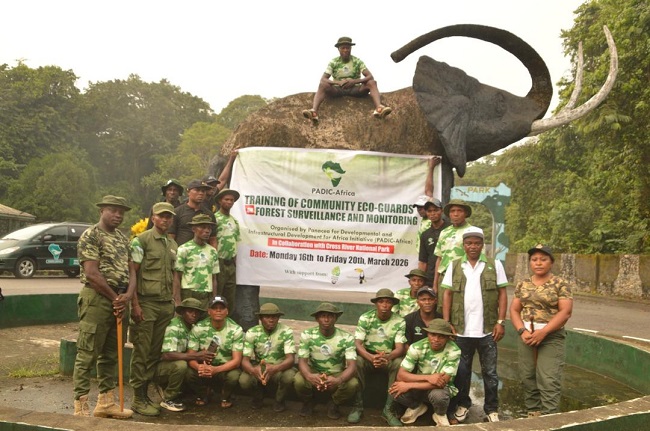
A non-governmental organisation, Panacea for Developmental and Infrastructural Challenges for Africa Initiative (PADIC-Africa), has trained 20 eco-guards in New Ekuri community of Cross River State as part of efforts to curb illegal logging and other forms of forest exploitation in the Ekuri rainforest.

The five-day intensive training, organised by the group, targeted community-based forest defenders and aimed at strengthening grassroots capacity to protect one of Nigeria’s remaining tropical forests.

Executive Director of the organisation and community leader of New Ekuri, Dr. Martins Egot, said the initiative was in response to rising environmental threats, including illegal logging and unauthorised mining activities in the area.

 New Ekuri community
Participants at the eco-guards in New Ekuri community of Cross River State

Egot noted that the training forms part of a broader programme to reinforce community-led forest protection systems across Cross River State, adding that over 100 eco-guards have so far been established in various forest communities by the organisation.

According to him, the programme was designed to enhance the operational capacity of the eco-guards through practical knowledge and field-based skills.

He said the training modules covered anti-poaching strategies, forest surveillance and patrol techniques, intelligence gathering, conflict management, and basic first aid.

“These skills are critical in equipping local forest defenders to effectively respond to the growing challenges facing the Ekuri forest and other forest reserves,” he said.

Egot emphasised the importance of community ownership in conservation efforts, stressing that local participation remains one of the most effective approaches to safeguarding natural ecosystems.

He reiterated the organisation’s commitment to preserving the rich biodiversity of Cross River State and ensuring that forest resources are sustainably managed for future generations.

The training, he added, represents a significant step towards strengthening grassroots environmental governance and empowering local communities as frontline defenders of the environment.

PADIC-Africa, however, called on government agencies, conservation partners, and the public to support ongoing efforts to protect the Ekuri forest and promote sustainable natural resource management across the state.

By Stina Ezin, Calabar 

Family receives death benefit from Ohanaeze Ndigbo North Carolina insurance programme   

The Ohanaeze Ndigbo of North Carolina Cultural Group Benefits (ONNCCGB) has paid out its first-ever insurance death benefit to the family of a deceased Nigerian woman as part of initiatives to enhance the provision of community services to Nigerians living in North Carolina.

The payment was made in July 2025 by the organisation through its insurer, the Hartford’s Group, one of the biggest insurance companies in the United States. This deliberate and intentional community service marked the characteristic of the Ohanaeze Ndigbo Executive Committee, which led the organisation from 2017 to 2019, when the insurance scheme was introduced.

Ohanaeze Ndigbo
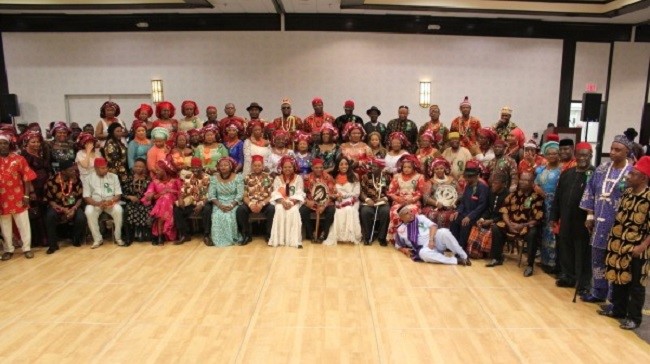
Members of the Ohanaeze Ndigbo in North Carolina

In a press release issued by ONNCCGB and signed by Barrister Nwachukwu Okafor, the insurance claimant, Mrs. Onyinyechi Onuigbo, thanked the establishment for the wonderful and seamless claim experience.

Mrs. Onuigbo, who registered her mother in the scheme, said the claim procedure went smoothly.

“Hello. The insurance company paid us on time,” she said in a thank you message to the organisation, explaining that the entire process took about three weeks because she had to send her mother’s passport to immigration for cancellation.

“Though our mother died in Nigeria that did not stop or delay the payment. Excellent job, we were so happy,” she added.

Speaking about the historic accomplishment, former President of the group, Barrister Nwachukwu Okafor, revealed that in 2017, the Executive Committee of Ohanaeze Ndigbo of North Carolina, under his leadership, began the process of establishing an insurance programme to help immigrant Nigerian families in providing their deceased family members with a dignified funeral.

According to him, Nigerians celebrate their dead and, in most circumstances, prefer to bring their deceased relatives’ remains back to Nigeria for burial. This custom, he elaborated, has become a burden for many families.

He bemoaned the fact that the Nigerian community turned to taxing themselves every time someone passed away in an attempt to address the problem, a system that has remained onerous and unsustainable to this day.

Barrister Okafor noted that the above problem prompted the Executive Committee of Ohanaeze Ndigbo to develop and establish a sustainable programme to ensure that participants receive death benefits when they die.

All Nigerian families residing in North Carolina are eligible to enroll in the Ohanaeze Ndigbo of North Carolina Insurance Programme, which offers term life insurance for a minimum monthly charge of $13 for adults and 60 cents for children.

On its third anniversary, the programme admitted members of Yoruba United, and it is today a living example of a collaborative effort among Nigerians in North Carolina. Enrollment will begin in September 2026, and Nigerian residents in North Carolina are invited to participate.

By Etta Michael Bisong, Abuja

Heirs Energies drives African entrepreneurship, invests $10m in 2,000 startups

0

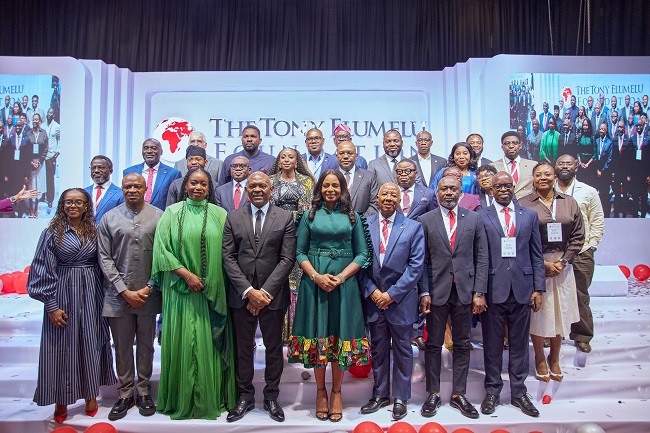
Heirs Energies is supporting the Tony Elumelu Foundation’s (TEF) 2026 cohort of 3,200 African entrepreneurs, helping to drive enterprise growth and job creation across the continent.

The entrepreneurs, drawn from all 54 African countries, were selected from more than 265,000 applicants and unveiled in Abuja on Sunday, March 22, 2026, by TEF Founder and Chairman, Tony O. Elumelu. The scale of applications highlights both the depth of entrepreneurial activity across Africa and the growing demand for early-stage capital and business support.

“The future of Africa will be built by Africans who create businesses, generate jobs and solve the challenges of our continent,” Elumelu said. “Empowering entrepreneurs remains the most sustainable path to economic transformation.”

Heirs Energies
Heirs Energies is supporting the Tony Elumelu Foundation’s (TEF) 2026 cohort of 3,200 African entrepreneurs

Heirs Energies said its support forms part of a broader strategy to link energy development with economic expansion, particularly in regions where access to capital, infrastructure and opportunity remains uneven.

Speaking at the event, Chief Executive Officer, Osayande Igiehon, said the company is positioning its operations to deliver both energy supply and long-term economic value.

“Sustainable energy development must be matched by sustained investment in people and enterprise,” Igiehon said. “Our partnership with the Tony Elumelu Foundation reflects a deliberate effort to expand opportunity while strengthening the communities in which we operate.”

Operating in OML 17 in the Niger Delta, Heirs Energies continues to deliver targeted interventions across enterprise development, education, healthcare and infrastructure.

To date, the company has:

  • Empowered over 500 youths through skills acquisition and enterprise development programmes
  • Supported over 1,621 students through educational grants
  • Reached more than 18,000 people through medical outreach programmes
  • Delivered over 135 community infrastructure projects, with additional projects at advanced stages of completion

Beyond its host communities, Heirs Energies supplies gas into Nigeria’s domestic network, enabling over 350MW of electricity generation – powering homes, schools and industries, and supporting broader economic activity.

Through its partnership with TEF, Heirs Energies has committed over $10 million to support 2,000 African entrepreneurs across two programme cycles.

In 2025, the company supported 1,000 entrepreneurs, with 40% from the Niger Delta, including over 150 from Rivers State.

In 2026, Heirs Energies is supporting another 1,000 entrepreneurs, with 50% from the Niger Delta, deepening its focus on its host region.

Women account for 48% of beneficiaries, reflecting a strong commitment to inclusive growth.

Within Nigeria, impact is concentrated in the Niger Delta, particularly in Rivers State and surrounding communities, alongside broader participation across the country and other African markets.

Across Africa, youth unemployment and limited access to financing continue to constrain business growth, despite rising entrepreneurial activity. Programmes such as TEF play a critical role in bridging this gap, combining capital with mentorship and training.

Heirs Energies said its continued collaboration with TEF reflects a shared focus on enterprise development, job creation and broader economic participation across the continent.