Home Blog Page 1981

WHO commends Nigeria over improved response to disease outbreaks

0

The Nigeria Country Director of World Health Organisaton (WHO), Dr Wondi Alemu, has commended the Federal Government over improved response to outbreak of diseases in the country.
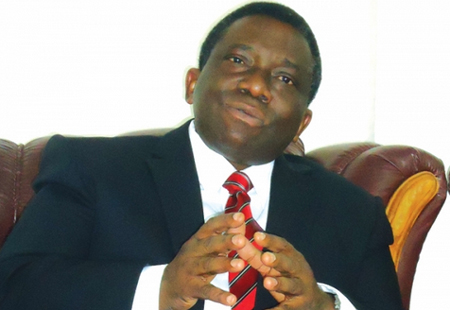
Isaac-Adewole
Minister of Health, Professor Isaac Adewole. He will chair the National Council on Health

The country director made the commendation during the Emergency National Council of Health Meeting organised by Federal Ministry of Health on Monday, February 5, 2018 in Abuja.

Alemu said he observed a lot of changes in the last 14 months when he assumed office as country representative of WHO.

According to him, the changes are in terms of quick response and sharing of information with international communities and development partners within the country.

He said: “This is another laudable gesture by Federal Ministry of Health.

“I will also communicate to my colleagues that Nigeria is responding much better to disease outbreaks than it used to be in the past.”

He said that Lassa fever was not new but it was more tragic recently, adding that what made it more tragic was the passing away of health workers while attending to patients.

He noted that “this is something that should not happen, hence the need to increase awareness on the diseases, particularly on protecting health workers while delivering services.

“As health workers, you may be obliged not to observe the basic protective measures but that is risking our lives.

“Ultimately, it is about having basic equipment available at all times at the facility level. It should be part and parcel of the operations in healthcare delivery.

“We believe that next time this could be avoided particularly sacrificing our health workers due to the lack of basic equipment and protective kits.”

Minister of Health, Prof. Isaac Adewole, said the meeting was summoned to discuss the state of public health challenges in Nigeria with focus on some challenges facing the nation in the past few weeks.

Adewole added that Lassa fever had been a current outbreak in the country, stressing that Nigeria had battled with series of outbreaks in the past few months.

He also urged state governments and other key stakeholders to work with Nigeria Centre of Disease Control to address outbreak of diseases.

The Niger State Commissioner for Health, Dr Mustapha Jibril, commended the Minister of Health for the timely meeting.

Jibril said the Niger State Government was able to do a lot to curtail disease outbreak ravaging the nation.

The commissioner added: “I am happy that Niger State is not among the states that have this challenge.

“In 2016, we had a challenge from Lassa fever where 16 people died and Niger was among the state’s worst hit by the outbreak then.”

However Niger State Government set up isolation centres, procured Hilux vehicles for the state’s  epidemiological team and emergency operation centres with the entire gadget required to do the job.

According to him, the state has been collaborating with WHO to enhance the funding of disease surveillance and notification.

He, therefore, advised the state government to provide funding to district disease surveillance and notification officers to reduce the outbreak.

The commissioner said Niger had not recorded Lassa fever outbreak in 2017 and the state did not have any outbreak or any epidemic prone disease.

Dr Babatunde Ipaye, the Commissioner for Health in Ogun State, said Nigeria was at the receiving end because response to outbreak required collective efforts.

He said trading the blame was not the best way to go, and that public health response everywhere in Nigeria was important and equal.

He said Ogun did not record any case of Lassa fever in 2018 but that, in 2017, the state had three cases with one death.

According to Ipaye, Ogun State was in 2017 awarded the best state in Nigeria in terms of integrated disease surveillance and response by WHO and Federal Ministry of Health.

By Mustapha Yauri
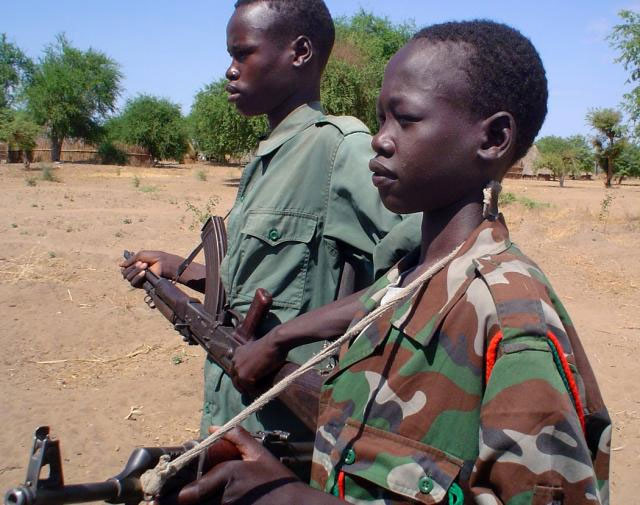
World failing to stop war on children, says UNICEF

0

The UN Children’s Fund (UNICEF) has described January as “a dark month” in crisis-torn Middle East and North Africa.

Child soldiers
Child soldiers. Photo credit: Gabriel Galwak/IRIN

UNICEF also said the violence has had a devastating toll on children, who were being killed in ongoing conflicts or suicide attacks, or freezing to death as they fled active warzones.

“It is simply unacceptable that children continue being killed and injured every single day,” said Geert Cappelaere, UNICEF Regional Director for the Middle East and North Africa.

In the month of January alone, UNICEF said escalating violence in Iraq, Libya, the Palestine, Syria and Yemen has claimed the lives of at least 83 children.

“These children have paid the highest price for wars that they have absolutely no responsibility for. Their lives have been cut short, their families forever broken in grief,” he added.

Cappelaere said that as the Syrian conflict entered its eighth year, intensifying fighting had reportedly killed 59 children in the past four weeks.

Moreover, across Yemen the UN has verified the killing of 16 children in attacks and continues to receive daily reports of more killed and injured children amidst escalating fighting.

Additionally, a suicide attack took the lives of three children in Libya’s Benghazi while three others died playing near unexploded ordnance – a fourth child remains in critical condition after the blast.

Turning to the old city of Mosul in Iraq, a child was killed in a booby-trapped house, and in Palestine, a boy was shot dead in a village near Ramallah.

Furthermore, 16 refugees, including four children, froze to death in a harsh winter storm in Lebanon – fleeing the war in Syria – where many more children were hospitalised with frost bite.

“We collectively continue failing to stop the war on children,” Cappelaere stressed.

“Not hundreds, not thousands but millions more children in the Middle East and North Africa region have their childhoods stolen, maimed for life, traumatised, arrested and detained, exploited.

“Also prevented from going to school and from getting the most essential health services; denied even the basic right to play,” he emphasised.

Cappelaere maintained that we have no justification, no reason to accept this as a new normal adding: “Children may have been silenced. But their voices will continue to be heard.

“Their message is our message: The protection of children is paramount under all circumstances, in line with the law of war.

“Breaching that law is a most heinous crime and jeopardises the future – and not just for children,” the UNICEF Regional Director warned .

By Prudence Arobani

Nepal to ban vehicles older than 20 years to tackle pollution

0

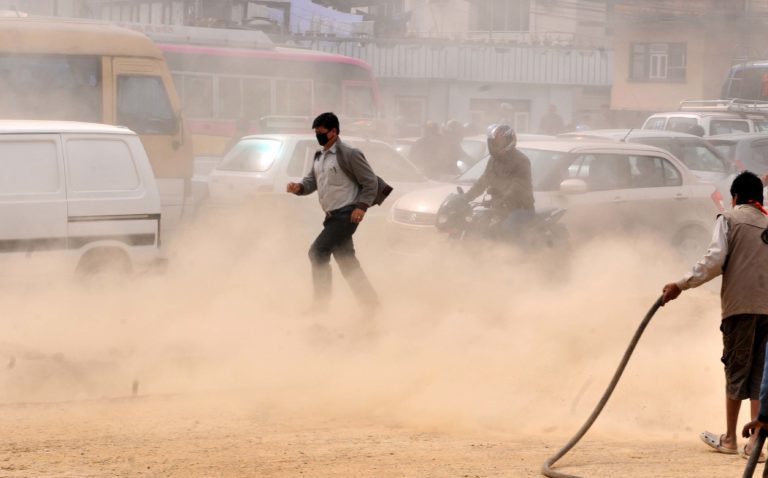
Nepal will ban from the roads vehicles older than 20 years across the country in a bid to control worsening air quality and to ease traffic congestion, officials said on Tuesday, February 6, 2018.

Nepal
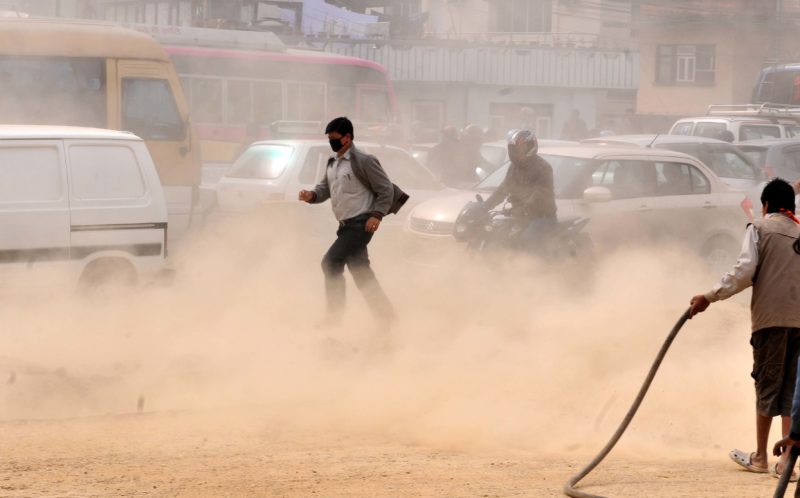
Air pollution and traffic congestion in Nepal

The government decision, which followed a similar campaign in the capital Kathmandu a year ago, will throw out around 5,000 ageing vehicles, including buses, trucks and pickups.

“After mid-March, vehicles that are older than 20 years will not be allowed to drive on the roads,” said Birendra Swar, a spokesman of the Department of Transport Management.
The rule exempts taxis.

“We will check the vehicles and if they are 20 years old, then they won’t be allowed to drive. We hope this will help reduce pollution and ease traffic across the country,” he said.

Authorities have also banned cars from core parts of Kathmandu to reduce congestion.

The global Environmental Performance Index released early in January ranked Nepal’s air quality as one of the worst in the world.

Ecologist urges government to enforce waste disposal laws

0

An ecologist, Mr Abdullahi Aremu, has urged the government to enforce the extant waste disposal laws and sanction those flouting the regulations.

waste evacuation
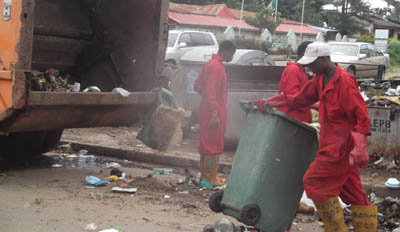
Officials of one of the AEPB waste evacuation contractors, on duty in Garki Area of Abuja

Aremu, who is the Director-General, Advocacy for Environmental and Sanitation Integrity, an NGO, told News Agency of Nigeria (NAN) in Abuja on Tuesday, February 6, 2018 that government should deal with those who littered the environment with garbage.

He particularly urged the Federal Government to resuscitate its “War Against Indiscipline’’ programme, which in 1984 enforced discipline and orderliness in the country.

He said that the government should revive the campaign to tackle the growing menace of indiscriminate disposal of solid and liquid waste.

“In Nigeria, managing waste disposal has become a major concern despite the efforts by the government and private organisations in that direction.

“That is why it is a common sight today to see heaps of festering waste in all the nooks and crannies of the country.

“Residential apartments, markets, waterways, highways, streets and undeveloped plots of land have been converted into waste dumpsites for many households,’’ he said.

Aremu said that the development had increased the volume of waste in a geometrical progression, exerting enormous strains on the waste collection and disposal apparatus.

“It is obvious that some factors responsible for poor waste disposal and management are paucity of funds, excessive population, lack of comprehensive legal framework and enforcement of existing regulations.

“Others include low investment in infrastructure, inadequate human capacity in administrative and technical issues, wrong attitude of the public towards solid waste disposal, poor planning, low data management and uncontrolled urbanisation,’’ he said.

Aremu underscored the need for the three tiers of government to invest in advocacy, fumigation and other basic facilities to facilitate efforts to sanitise the environment and wipe out diseases such as malaria in the country.

By Deji Abdulwahab

AfDB approves $10m loan to boost fund’s portfolio in Africa

0

The Board of African Development Bank (AfDB) has approved a $10 million loan for African Local Currency Bond Fund (ALCBF) to boost its portfolio in Africa.

Akinwumi Adesina
Dr. Akinwumi Adesina

Mrs Olivia Ndong-Obiang, the Principal Communications Officer in AfDB, disclosed this in a statement in Abuja on Tuesday, February 6, 2018.

She said that the ALCBF was also approved by the bank to promote the development of domestic capital markets in Africa and had a tenor of seven years with a two-year grace period.

The ALCBF loan, according to her, would improve access for non-sovereign issuers to long-term funding in local currency, reduce currency and maturity mismatches and increase local financial intermediation.

“The fund will catalyse investments in critical sectors such as renewable energy, housing, health, education, the financial sector and agriculture in line with the bank’s High five priorities.

The bank’s High Five priorities are Light up and Power Africa, Feed Africa, Industrialise Africa and Improve the quality of life for the people of Africa.

“This will ultimately help grow private sector financing through capital markets,” she said.

The News Agency of Nigeria (NAN) reports that the ALCBF was incorporated in December 2012 by German Development Bank on behalf of the German Federal Ministry of Economic Cooperation and Development.

“The fund has invested in Botswana, Ghana, Kenya, Zambia, Lesotho, Senegal, Côte d’Ivoire, Nigeria, Uganda, Malawi, Gabon and Togo.

“As of December 31, 2017, the fund had made 27 investments across 19 companies and in 10 currencies,” Ndong-Obiang said.

By Suzzy Tolofari

German prosecutors in renewed raids on Audi in emissions scandal

0

German state prosecutors on Tuesday, February 6, 2018 conducted renewed raids on the headquarters of carmaker Audi and a manufacturing plant in the widening diesel emissions scandal relating to software designed to cheat exhaust testing.

Audi headquarters
The Audi headquarters in Ingolstadt, Germany

In the train of investigations in the U.S., where the scandal first broke over the parent Volkswagen Group in September 2015, investigators were now looking into six-cylinder diesel engines, prosecutors in the Bavarian capital of Munich said.

Fourteen people are under investigation, including current and former members of the up market carmaker’s executive board.

German media had earlier reported the raids at the headquarters in Ingolstadt in Bavaria and at the plant in Neckarsulm in the neighbouring state of Baden-Wuerttemberg

Prosecutors alleged that Audi sold at least 210,000 diesel-engine cars fitted with cheat software in the U.S. and Europe from 2009 onwards and had been investigating allegations of fraud and illegal product promotion for the past year.

On Tuesday morning, 18 prosecutors accompanied by officials from the state criminal investigation departments, searched the two premises, as well as a private home in Baden-Wuerttemberg.

Thus, far the only person charged is the former head of Audi engine development and member of the Porsche executive.

The man, who is not being named in the media under German law, has been held in custody since his arrest in September.

His appeal against detention is currently before the Munich state court.

Another senior employee at Audi’s Neckarsulm plant was released in November after several months in detention.

Kano to produce 2m seedlings for desert control

0

Kano State Government has approved N12.4 million to the Ministry of Environment for the production of two million assorted seedlings as part of efforts to check desertification.

gum arabic
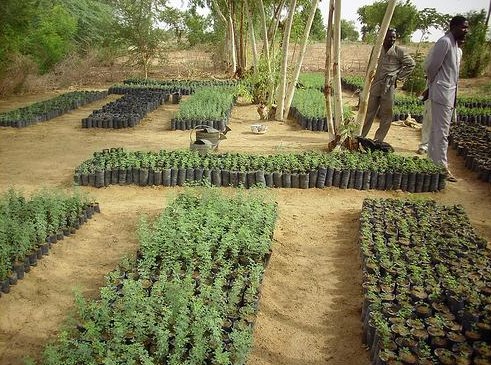
Tree seedlings

The state Commissioner of Information, Malam Mohammed Garba, made the disclosure while briefing newsmen in Kano, the state capital, on the outcome of the state Executive Council Meeting.

He explained that the seedlings would be distributed free to farmers and other members of the general public.

“The state executive council has on Jan. 31 approved the money to enable the Ministry of Environment produce two million seedlings for distribution to people free to enable them plant the seedlings to check desertification.”

According to him, the council also approved the release of N185.4 million for the construction of access road in Tokarawa industrial area, and N8.6 million for the rehabilitation of Tukur Road in Kano metropolis.

The commissioner added that N65.2 million was approved for the reconstruction of a collapsed bridge along Jalabi-Kuluwa-Gwanare road in Bunkure Local Government area of the state.

“The state government has also provided the sum of N31.9 million to the Ministry of Works for the construction of culvert at Darmanawa behind Hassan Gwarzo College,” Garba said.

By Tukur Muntari

World Cancer Day: 70% cancer cases manifest late

0

The Chief Medical Director, University College Hospital (UCH), Ibadan in Oyo State, Prof. Temitope Alonge, said on Monday, February 5, 2018 that over 70 per cent of cancer cases manifest very late, making early care  impossible.

UCH_ibadan
University College Hospital, Ibadan

Alonge told a media briefing to mark 2018 World Cancer Day that people within the age bracket of 40 and 45 years and 50 and 54 years are at risk of developing breast cancer in women and prostate cancer in men.

“At least, 70 per cent of cancer cases manifest very late and this has made early care impossible.

“UCH is a tertiary hospital that has a four-way plan of action of handling treatment of cancer in Nigeria.

“These are cancer prevention, identification stage (when it develops), the diagnostic stage and the end of care session (palliative care).

“As part of activities to reduce the burden of the disease, the management has decided to carry out routine immunisation to prevent cancer.

“We have put in place screening measures of diseases that could later develop into cancer,’’ Alonge said.

He noted:“We are beginning with all female staff of UCH will be screened for breast cancer and after this, the services would be extended to the men who would be screened for prostate diseases and cancer by mid-year.

“UCH has spent a lot ultrasonography and screening machine and even though we cannot screen 100 per cent successful cases, we are very sure the burden of cancer will be reduce considerably after the exercise in Nigeria.

“Hepatitis will be treated free for staff to prevent liver sclerosis and in collaboration with the College of Medicine, University of Ibadan, we will use the laboratory to detect colon cancer.”

Alonge said virtually all hospitals in the country had no data to work with, adding “UCH collated data on cancer cases between January and December, 2016.’’

According to the don, from the report and statistics collated, breast cancer has the highest prevalence rate in women and prostate cancer has the highest prevalence rate in men.

In his presentation, Dr Adeyinka Ademola, said causes of cancer differ in human beings.

Ademola said “precision medicine” has come in handy an important tool for the treatment of cancer in patients.

“The implication of using precision medicine is that we can know the genomes responsible/driving the activities of the particular cancer a patient has.’’

Prof. Niyi Olanipekun, the Head Radiation Oncology Unit and Chairman, World Cancer Awareness Day Committee, said poverty was the primary reason the prevalence rate of breast cancer was high in Nigeria.

Olanipekun also listed ignorance, `out-of-pocket payment policy’ as part of the challenges that had led to the increase in the burden of cancer in Nigeria.

“Influence of quacks, who have become our major competitors as medical practitioners have not helped the situations too.

“Because  these patients cannot access normal medical treatment and these quacks (one medicine treats all) – (in Yoruba meaning Gbogbo nise) tend to be cheaper, patients prefer to visit them for anticipated treatment.’’

Olanipekun said the week-long awareness programme include engaging in public awareness enlightenment programmes, seminar on various cancer cases and palliative medical care.

“We will round off the week with a cancer awareness walk by all staff of the hospital on Saturday,” he said.

The News Agency of Nigeria reports that the theme for 2018 is: “We can, I can”. Under the theme, people are expected to individually and collectively understand and work towards lessening the impact and the harmful effects of cancer globally.

On Sunday Feb. 4, individuals and communities across the world came together to raise awareness about cancer.

By Olabisi Akinbode

US agriculture department seeks collaboration with biosafety agency

0

A team from the Lagos office of the United States Department of Agriculture (USDA), which visited the National Biosafety Management Agency (NBMA) in Abuja on Thursday, February 1, 2018 on a fact finding mission, has pledged its readiness to collaborate with the agency in achieving set mandate.

NBMA
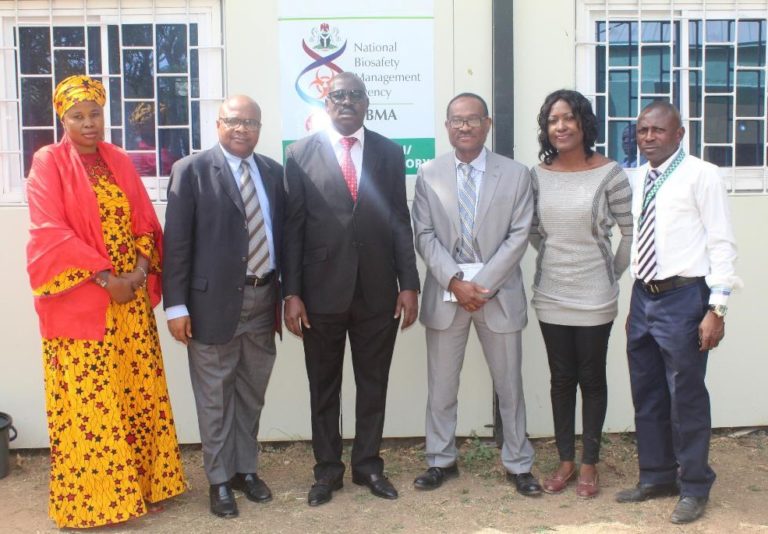
L-R: Hauwa Tahir (Head, Biosafety Enforcement, NBMA), Uche Nzeka (Agricultural Marketing Speacialist, USDA, Lagos), Dr. Rufus Ebegba (DG/CEO, NBMA), Jide Akhidemor (Regional Agricultural Counsellor, USDA, Lagos), Josephine Amedu (Head, GMO Detection and Analysis Laboratory), and Kayili Adams (Head, General Services Unit)

NBMA Director General, Dr. Rufus Ebegba, who received the team, said that the agency was established by the Federal Government of Nigeria to regulate the practice of modern biotechnology to ensure that it does not pose any threat to the environment and human health.

He noted that the practice of modern biotechnology would provide raw materials for industrial use as well as bring about job creation.

Dr. Ebegba stated that, since the inception of the agency, it has approved some permits for genetically modified (GM) crops for confined field trials, another for commercial release and recently approved a permit for GM maize for feed processing.

According to him, due process was followed in the issuance of all the permits, adding that risk assessments were conducted and no potential harm was found.

He said the agency has signed Memoranda of Understanding (MoUs) with other government agencies to ensure that all government border agencies are on the same page on the regulation of modern biotechnology and its products in the country.

Leader of the team, Jude Akhidemor, expressed optimism in spite of the challenges the practice of modern biotechnology faces and stated the department’s preparedness to work with the agency.

Also known as the Agriculture Department, the USDA is the U.S. federal executive department responsible for developing and executing federal laws related to farming, agriculture, forestry, and food.

Expert urges adoption of measures to curb land degradation

0

Deputy Director, Department of Drought and Desertification Amelioration, Federal Ministry of Environment, Mr Bala Gukut, has advised Nigerians to take measures to reduce land degradation in the country.

Picture3
A degraded land

Gukut gave the advice in Abuja on Monday, February 5, 2018 in an interview with News Agency of Nigeria (NAN).

He said that Nigerians, especially those living in rural communities, should do everything possible to protect the land for useful developmental purposes.

“It is unfortunate that people do not accept change; they are not ready to adjust from the activities which their forefathers practised.

“When you tell them to change from the old attitude and educate them on the implications, they will tell you they cannot afford to change the practice.

“There are some activities which our forefathers practised that are currently affecting our lands; now we have discovered that if people continue with such activities, it will cause more harm to our land.

“We try to let people know that human activities such as bush burning and cutting of trees, among other activities, can cause land degradation.

“But people are not ready to accept the change and embrace our concept; this has become a big challenge to us.

“When we even tell them the implications of cutting down trees or bush burning, they don’t listen; rather they would respond that they are doing what their forefathers did.

“They often say `our forefathers never allowed trees to grow without cutting them; we have been cutting our trees for firewood even without replacing them.

“We put fire in our lands and do other activities; we don’t see any negative effect and our forest is still healthy for us; we cannot accept this change.

“Therefore, it is difficult for people to accept our concept and that is a big challenge to us.

“If we did not work towards restoring our degraded lands, it will be very difficult to keep people on farm.

“It will definitely affect our farm production. In other words, food security will consequently become a big challenge to us in the country,’’ he said.

Gukut urged the citizens to embrace the concept of land degradation neutrality in their activities, saying that such efforts would promote the achievement of environmental sustainability by 2030.

He said that the ministry was partnering with relevant stakeholders to ensure the restoration of degraded lands across the country.

By Vivian Emoni