Home Blog Page 1940

GCF approves funding for 23 projects, elects new co-chairs

0

The first Green Climate Fund (GCF) Board meeting of 2018 concluded on Thursday, February 1, after approving 23 projects, valued together at $1,093.5 million of GCF funding.
GCF
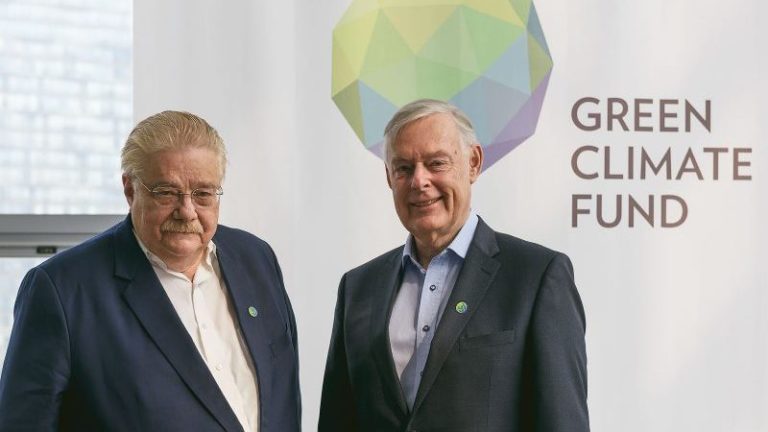
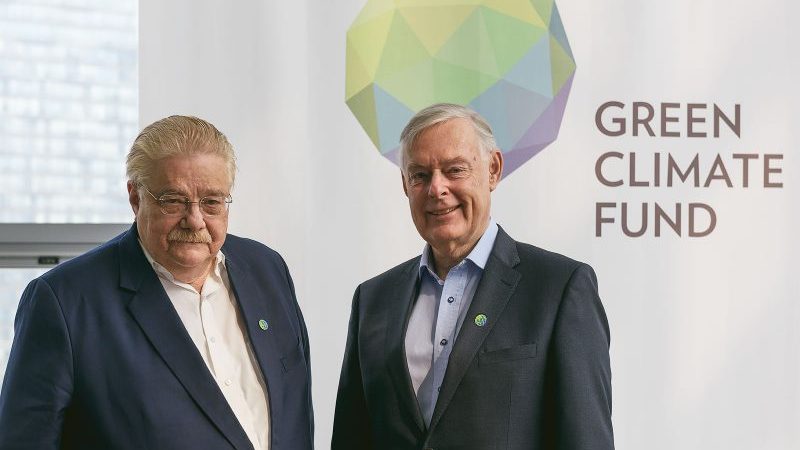
Paul Oquist and Lennart Båge have taken over as co-chairs of the Green Climate Fund board

The new approvals bring the GCF portfolio to a total of 76 projects and programmes, amounting to $3,730.2 million in GCF funding to assist developing countries in their low emission and climate resilient development.

The Board elected Ambassador Lennart Båge and Dr. Paul Oquist as its Co-Chairs for 2018, representing developed and developing countries respectively. A number of significant policy decisions were also made to strengthen GCF’s operations, including adopting an Indigenous Peoples Policy, and an Environmental and Social Policy.

In addition to the funding approvals, the Board approved an additional $60 million for the implementation of the Readiness Programme to assist developing countries in accessing GCF funds.

“We have had a highly positive week, approving over $1 billion in projects, which is a record amount in a single GCF Board meeting,” stated Paul Oquist, GCF Co-Chair.

“This large volume of projects for both mitigation and adaptation – and the additional $60 million for readiness support – shows that GCF is ready to shift gear in supporting developing countries to achieve their climate goals. The projects adopted here will make a real impact in the face of climate challenges,” he continued.

Fellow Co-Chair, Lennart Båge, stated: ‘The Board has successfully managed an ambitious agenda this week, demonstrating its commitment to deliver a serious contribution to the response to climate change. In particular, the adoption of an Indigenous Peoples Policy and an Environmental and Social Policy is an important step towards completing GCF’s policy framework.”

Båge concluded, “Paul and I would also like to thank our fellow Board members for their positive support, and to acknowledge that our work builds on the achievements of our predecessors as Co-Chairs, Ayman Shasly and Ewen McDonald.”

The 19th GCF Board meeting approved the following projects and programmes, including the first project submitted under the new Simplified Approval Process:

  • $42.16 million for the Climate-Resilient Water Sector in Grenada (G-CREWS) with Deutsche Gesellschaft für Internationale Zusammenarbeit (GIZ) GmbH
  • $27.61 million for the Water Sector Resilience Nexus for Sustainability in Barbados (WSRN S-Barbados) with Caribbean Community Climate Change Center (CCCCC)
  • $20 million for the Integrated physical adaptation and community resilience through an enhanced direct access pilot in the public, private, and civil society sectors of three Eastern Caribbean small island developing states in Antigua and Barbuda, Dominica, and Grenada, with the Department of Environment, Ministry of Health and Environment, Government of Antigua and Barbuda (DOE ATG)
  • $25.06 million for the Poverty, Reforestation, Energy and Climate Change Project (PROEZA) in Paraguay with the Food and Agriculture Organisation of the United Nations (FAO)
  • $23 million for Promoting private sector investments in energy efficiency in the industrial sector in Paraguay with the Inter-American Development Bank (IDB)
  • $103 million for Promoting risk mitigation instruments and finance for renewable energy and energy efficiency investments in Argentina with the Inter-American Development Bank (IDB)
  • $195 million for Financial Instruments for Brazil Energy Efficient Cities (FinBRAZEEC) in Brazil with the World Bank
  • $25 million for the Pacific Resilience Project Phase II for RMI in the Marshall Islands with the World Bank
  • $9.27 million for Building climate resilience of vulnerable and food insecure communities through capacity strengthening and livelihood diversification in mountainous regions of Tajikistan with the World Food Programme
  • $27.05 million for Scaling-up Multi-Hazard Early Warning System and the Use of Climate Information in Georgia with UNDP
  • $24.98 million for Enhancing adaptive capacities of coastal communities, especially women, to cope with climate change induced salinity in Bangladesh with UNDP
  • $20 million for the Global Clean Cooking Programme – Bangladesh with the World Bank
  • $86.30 million for Scaling Up Energy Efficiency for Industrial Enterprises in Vietnam with the World Bank
  • $32 million for Strengthening climate resilience of agricultural livelihoods in Agro-Ecological Regions I and II in Zambia with UNDP
  • $32.79 million for Strengthening climate resilience of rural communities in Northern Rwanda with the Ministry of Environment of Rwanda (MOE)
  • $22.50 million for the Africa Hydromet Program – Strengthening Climate Resilience in Sub-Saharan Africa: Burkina Faso Country Project with the World Bank
  • $5 million for the Institutional Development of the State Agency for Hydrometeorology of Tajikistan with the Asian Development Bank (ADB)
  • $40 million for Climate-Friendly Agribusiness Value Chains Sector Project in Cambodia with the Asian Development Bank (ADB)
  • $145 million for the Ulaanbaatar Green Affordable Housing and Resilient Urban Renewal Project (AHURP) in Mongolia with the Asian Development Bank (ADB)
  • $26 million for the Acumen Resilient Agriculture Fund (ARAF) in Ghana, Nigeria, Uganda, with the Acumen Fund Inc
  • $52.50 million for the Zambia Renewable Energy Financing Framework with the African Development Bank (AfDB)
  • $100 million for the Line of Credit for Solar rooftop segment for Commercial, Industrial and Residential Housing sectors in India with the National Bank for Agriculture and Rural Development (NABARD)
  • $9.30 million for Improving rangeland and ecosystem management practices of smallholder farmers under conditions of climate change in Sesfontein, Fransfontein, and Warmquelle areas of the Republic of Namibia with the Environmental Investment Fund (EIF).

More than 350 participants took part in the 19th Board meeting, including observers from civil society and private sector organisations, National Designated Authorities (NDAs), Accredited Entities, and GCF Delivery Partners.
Insurer, Generali, divests €2b from coal

0

Generali, a major player in the global insurance industry, has announced it will divest €2 billion from coal, adding further momentum to the global movement of companies and pension funds to shift assets towards low carbon.

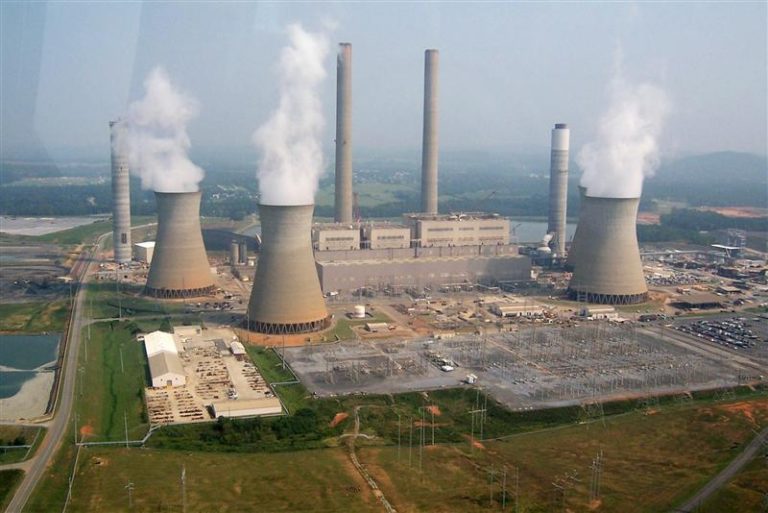
coal-plant
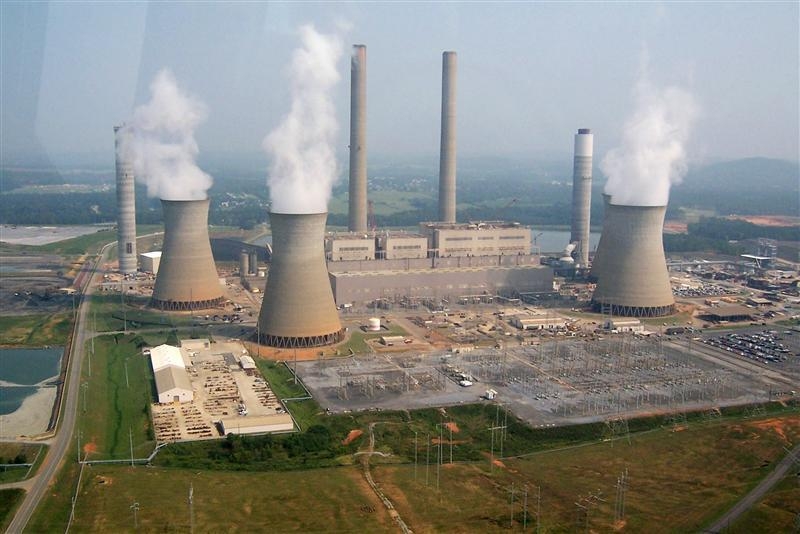
A power plant fired by coal

Leaving the bulk of global fossil fuel reserves in the ground is crucial in order to achieve the central goal of the Paris Climate Change Agreement, which is to limit the global temperature rise this century to well below 2 degrees Celsius compared to pre-industrial levels and to pursue efforts to limit the temperature increase even further to 1.5 degrees Celsius.

The Generali Group has been a staunch supporter of climate action for a number of years. At the UN Climate Change Conference in Paris (COP 21), where the Paris Climate Change Agreement was clinched, Generali joined the Paris Pledge for Action.

The company aims to increase its exposure to green businesses and gradually divest from coal-related companies, committing to the following actions:

  • Invest in €3.5 billion into “green sectors”, mainly through green bonds and green infrastructures.
  • No new investments in businesses associated with the coal sector.
  • Current exposure to the coal sector (approximately €2 billion), will be gradually eliminated through disposing of equity investments, and steadily eliminate bond investments by bringing them to maturity or considering the possibility of divesting before maturity.
  • For underwriting, the range of products with environmental value will increase, maintaining a minimum level of exposure in the coal sector.


Generali Joins the International Movement for Divestment

The move is part of a growing international trend to divest from fossil fuel companies which has been picking up pace over the past months.

In January of this year, New York’s Mayor Bill de Blasio announced plans to divest the City’s $189 billion pension funds of fossil fuel assets.

During last December’s One Planet Summit in Paris, the World Bank pledged to stop investing in oil and gas exploration after 2019.

The issue was also addressed by more than 450 investor, company and capital market leaders at the Investor Summit on Climate Risk at UN Headquarters in New York City this month to map out the next steps for increased action on climate change.

“While we see divestment from fossil fuel assets at more than $5 trillion, last year, the global community invested another $825 billion in fossil fuel use. Once again, your voice and the actions you take will speed the pace with which countries improve the consistency and alignment of their approach,” said United Nations Deputy Secretary General, Amina Mohammed, at the New York summit.

Nigeria’s first Marine Engineering Centre of Excellence takes off at Rivers State University

0

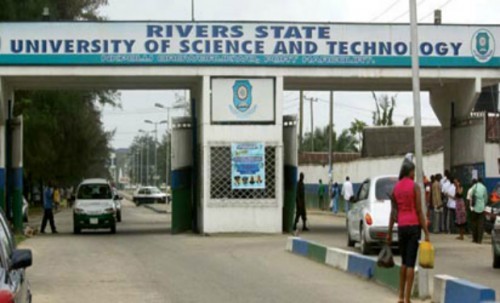
The Centre of Excellence (CoE) in Marine Engineering and Offshore Technology established by the Shell Petroleum Development Company of Nigeria Ltd (SPDC)-operated joint venture at the Rivers State University (RSU) is set to open its doors to the pioneer students who are currently being screened in an elaborate admission process. More than 100 candidates had applied in response to newspaper advertisements, and the shortlisted ones are being screened and interviewed preparatory to commencement of studies in April.

rivers-state-university
Rivers State University

“We continue to thank NNPC and SPDC for being part of our success story at the university,” RSU Vice Chancellor, Professor Blessing Didia, said at the start of the admission interviews. “We are very happy that the centre has taken off, and we congratulate NNPC, SPDC and the other joint venture partners for what they have done for the university.”

Also speaking, the Head of University Relations, SPDC, Professor Edmond Allison-Oguru, expressed the hope that the Centre of Excellence would bring the much-needed improvement in marine engineering and offshore technology in the Niger Delta.

The CoE in Marine Engineering and Offshore Technology, the first in Nigeria, will run 18-month Master’s and Diploma programmes, covering classroom lectures, practical sessions, term project modules and a six-month internship in the oil and gas industry. The multi-million-naira facility was inaugurated in June 2017, during which SPDC Managing Director and Country Chair, Shell Companies in Nigeria, Osagie Okunbor, pledged that it would produce industry-ready Master’s degree graduates to further advancements in Nigeria’s offshore technology sector.

The SPDC JV had earlier established a CoE in Petroleum Engineering and Geosciences at the University of Benin, and endowed six professorial chairs in Nigerian universities as part of the support for the academia.

In 2016, a Chair in Light Weight Automobile Engine Development was established at the Federal University of Petroleum Resources in Effurun, Delta State, which is expected to contribute to the growth of local content in Nigeria’s automobile industry. Also, research at the Shell Professional Chair in Petroleum Engineering at the University of Port Harcourt in 2012 produced the Optiwell well-bore stability software. Use of the software has significantly reduced drilling time as well as costs associated with mud loss and other drilling challenges.

The support for universities is implemented along with other social investment schemes of the SPDC JV, which include the Shell Eco Marathon, the Sabbatical and Research Interns Scheme, Research and Development Grant for competitive proposals and Data support for academic activities from undergraduate to doctoral levels.

Climate change: Farmers advised against early planting

0

Farmers have been advised farmers not to rush into planting crops as it may spell doom for them.

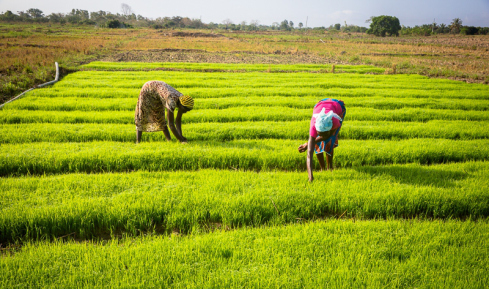
women-engaged-in-dry-season-rice-farming-through-irrigation
Women engaged in dry season rice farming through irrigation

Prof. Charles Igwe of the Faculty of Agriculture, University of Nigeria Nsukka (UNN), gave the advice in an interview with the News Agency of Nigeria (NAN) in Nsukka, Enugu State, on Thursday, March 1, 2018.

Igwe, a professor of Soil Science and the present Deputy Vice-Chancellor, Administration in UNN, said that, based on Nigeria Meteorological Agency (NIMET) prediction, there might be a dry period after the first and second initial rains.

He noted that lack of water in the soil could make crops planted in the southeast to roast as a result of heat occasioned by climate change.

“Based on NIMET prediction this year that there may be dry period after first and second rain in the southeast, it is not advisable for farmers to start planting crops now to avoid heat roasting the crops.

“The happiness of every farmer is to see his planted crops germinate and grow very well so that he will have bumper harvest.

“They should wait till the month of May to plant their crops when NIMET says steady rain will start,” he said.

The DVC said that farmers could start clearing the bush and wait for tillage and planting when there is steady rainfall.

“Farmers can start clearing of bush and other activities but tillage and planting should only start when there is steady rainfall,” he said.

He said that farmers with supplementary forms of irrigation could go ahead to plant vegetables as this is best time to plant vegetables.

“Farmers that have pump water, stream or other form of supplementary irrigations can go ahead and plant vegetables and crops in their farms provided they have enough water for the farm.

“With supplementary irrigation, the farmer will be able to supply the crops with water requirement and the crops will have normal growth and good yield.

“For farmers who have supplementary irrigation, this is the best time to plant vegetables and  make profit from it, as vegetables cost more now because of its scarcity in markets,” he said.

Igwe urged Nigerians to always pay special attention to agriculture to achieve food security and increase the country’s foreign exchange.

By Hilary Akalugwu

LCBC member states asked to end insecurity at Lake Chad region

0

Prof. Peter Nwilo, former Surveyor-General of the Federation, on Thursday, March 1, 2018 urged the member states of Lake Chad Basin Commission (LCBC) to ensure security at the Lake Chad region.

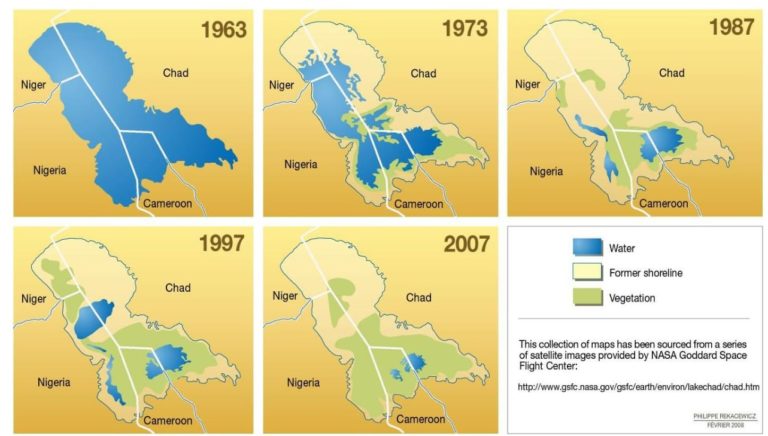
unep-1
The climate variability impact on Lake Chad has also worsened the abundance and conservation status of biodiversity. Photo credit: UNEP

Nwilo gave this advice in an interview with the News Agency of Nigeria (NAN) in Lagos.

According to him, the current situation of insecurity and regional instability at the Lake Chad region are threats to any meaningful resolution to the environmental degradation of the area.

“The current situation of insecurity and regional instability at the Lake Chad region must be addressed and resolved fast for this initiated collaboration among member states to thrive.

“Many people have to be on ground to ensure that Lake Chad is restored to its former glory and they cannot be working in a hostile environment,’’ he said.

Nwilo, who is also a lecturer at the Department of Surveying and Geo-Informatics, Faculty of Engineering, University of Lagos, said many studies had been done on the Lake Chad Region.

He said one of the studies was on “Spatio-Temporal Assessment of Water Depletion and Environmental Changes in Lake Chad”.

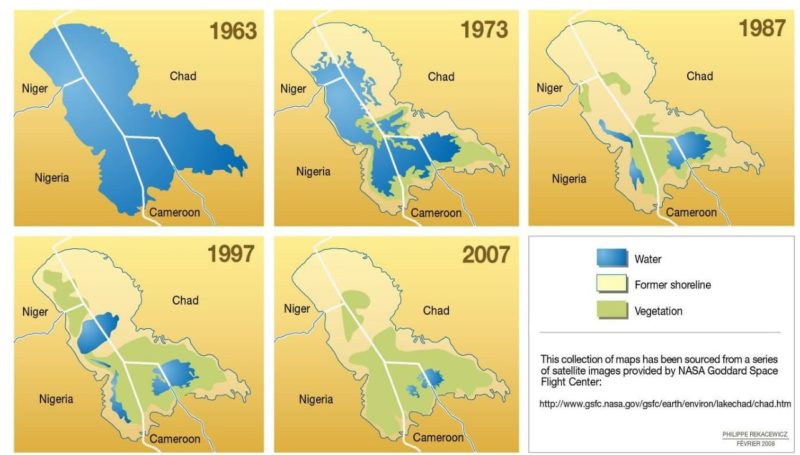
Nwilo said the study showed that Lake Chad water resources had shrunk to75 per cent in surface area with reference to the situation in 1973.

He said that he carried out the study with two lecturers in the department and a researcher at the National Space Research and Development Agency, Abuja.

According to him, the study investigates certain changes in the lake’s environment over a period of four epochs, 1973, 1987, 2003 and 2007.

Nwilo said using inter-basin transfer to recharge the lake as agreed at the just concluded LCBC conference in Abuja was a good option as a long term goal.

He said the member states should also explore the possibilities of controlled flood management channelled toward the rivers that empty into the lake in the meantime.

Nwilo said that Research Centres of Excellence should also be established for the promotion of education, training, research collaboration and skills transfer among the member states of the commission.

Lake Chad Basin Commission held a four-day conference on that ended on Thursday in Abuja had the theme: “Saving the Lake Chad to Revitalise the Basin’s Ecosystem’’.

President Muhammadu Buhari had on Wednesday described the shrinkage of Lake Chad as one of the main factors responsible for insurgency and socio-economic unrest in the Lake Chad member countries.

Buhari, who spoke at the International Conference on Saving the Lake Chad said the negative effects of the shrinkage of Lake Chad “are indeed enormous’’.

The lake, which is one of the oldest lakes in Africa, is shared by Nigeria, Cameroon, the Central African Republic, Chad and Niger.

By Chidinma Agu

Concern over the vulnerable as cold grips Europe

0

A wave of cold weather hitting Europe this week poses health risks, particularly to people in vulnerable situations, the World Health Organisation (WHO) experts on the continent have warned.

Snow - UK
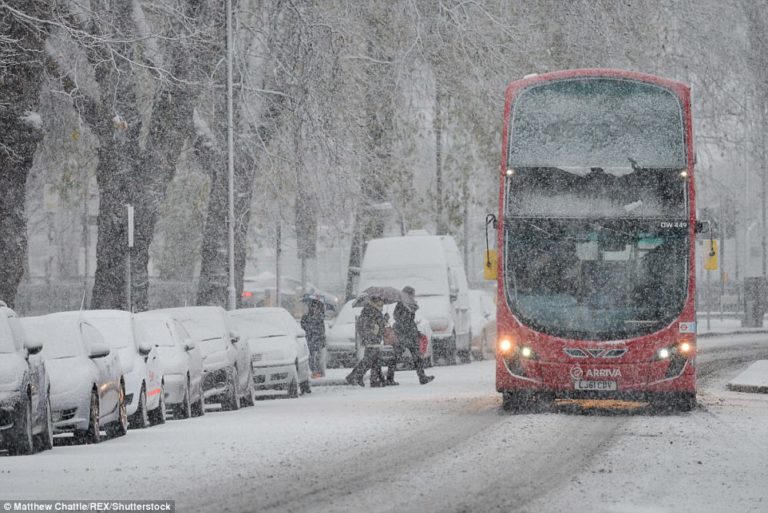
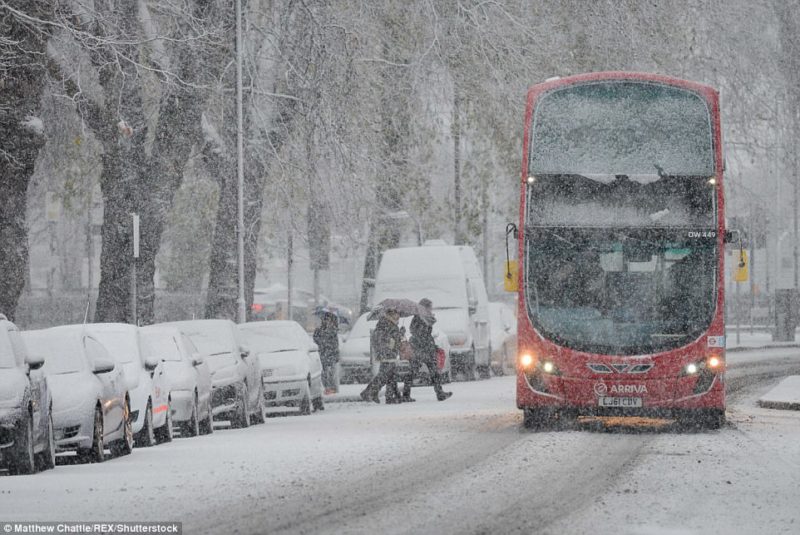
Snow falls in North London, leaving frost covering the front of a bus. Photo credit: The Daily mail

Temperatures are expected to plunge below average in western European Russia, central Europe, the Balkans and the Baltic States.

“Cold, even in places where the temperatures are not at their lowest, can be harmful to people’s health in many ways. It can aggravate existing conditions and raise the risk of increased blood pressure, heart attacks and strokes. Taking preventive action can help reduce the health impacts and risks,” says Dr Zsuzsanna Jakab, WHO Regional Director for Europe. “WHO is carefully following the situation in countries of the European Region. Affected countries should stay alert. Measures must be taken to protect people at risk.”


Poor and vulnerable at highest risk of cold-related illnesses

Cold weather increases the risk of cardiovascular and respiratory disease. Anyone can be affected by cold temperatures at home, at work, while commuting or during leisure activities. Those most at risk of cold-related illness include elderly people, children, and people who have chronic diseases or physical or mental limitations. People taking certain medications or those who are malnourished are also at greater risk of cold-related illnesses.

Frequently, poor households are the hardest hit as the poor can least afford to adequately heat their homes. Homeless people, and refugees and migrants can be especially vulnerable. Their risk increases if they lack adequate shelter, proper clothing, food and medical care.

Health and social services often face the challenge of caring for an increased number of patients suffering from various cold-related illnesses. Disruptions in services and infrastructure can further indirectly aggravate the health effects.


Facts and figures

  • Extreme weather, including cold waves, are common in countries of the WHO European Region and are expected to occur more frequently and severely as a result of global climate change.
  • Severe cold weather spells are especially common in eastern European countries, where 28 people per million died as a result of extreme cold events in 1991–2015.
  • Adverse health effects of cold weather are also costly to health-care systems: in 2009 the United Kingdom’s Department of Health estimated that annual costs to the National Health Service of treating winter-related diseases amounted to around £859 million.
  • A global study conducted by the London School of Hygiene and Tropical Medicine has shown that moderate cold caused more deaths than moderate heat.
  • Many cold-related deaths actually occur on moderately cold days.
  • Deaths associated with cold weather are caused by coronary heart disease, cerebrovascular incidents, respiratory diseases, hypothermia and trauma.
  • Illnesses associated with cold temperatures include: injuries from falls and accidents, hypothermia, cardiovascular problems, respiratory problems, mental health issues including depression, etc.


WHO in Bonn provides guidance to prevent health consequences of cold

The adverse health effects of cold weather are largely preventable. “Governments need timely warnings and solid evidence to better protect people from adverse environmental conditions – and our experts in the Bonn Centre are key partners in ensuring this,” says Dr Elizabet Paunovic, Head of the WHO European Centre for Environment and Health, Bonn, Germany. “Our team provides evidence-based solutions to global challenges affecting the environment, such as on climate change, air pollution, safe water and sanitation, industrial contamination and many others.”

The Bonn Centre is becoming a more important stakeholder in health as we see more adverse environmental conditions which impact on health, such as these cold spells, which are one of the results of climate change. “In cases of extreme adverse environmental conditions, the Bonn Centre has a mandate not only to assist governments to protect their nationals but also to reach out directly to the public through the media, to better inform and hence ensure that the public are well prepared and protected,” adds Dr Paunovic.

The Bonn Centre has developed a set of health recommendations related to cold weather in the following areas:

  • Adverse health effects of exposure to cold
  • What the public can do in preparation for, and during cold weather
  • What health and social services can do
  • What general practitioners can do

Worry as Lake Tanganyika faces degradation, acute pollution

0

The world’s second oldest freshwater lake, Lake Tanganyika, faces issues of degradation and acute pollution on Burundi’s side, former Burundian environment minister, Albert Mbonerane, has said.

Lake
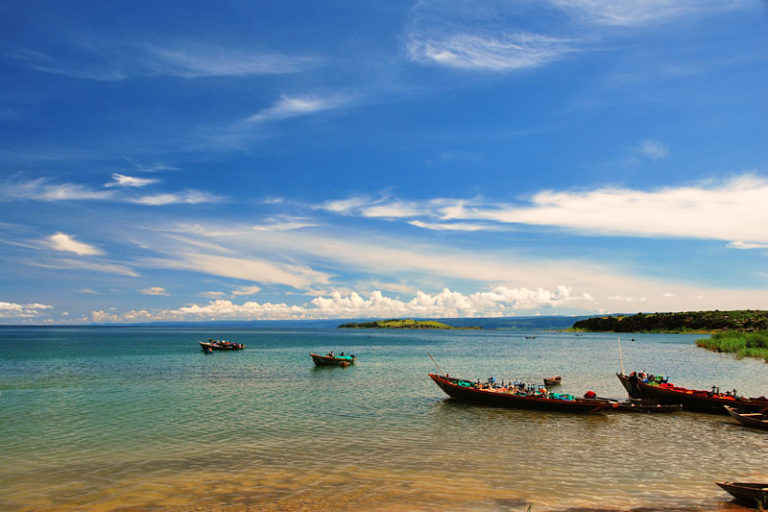
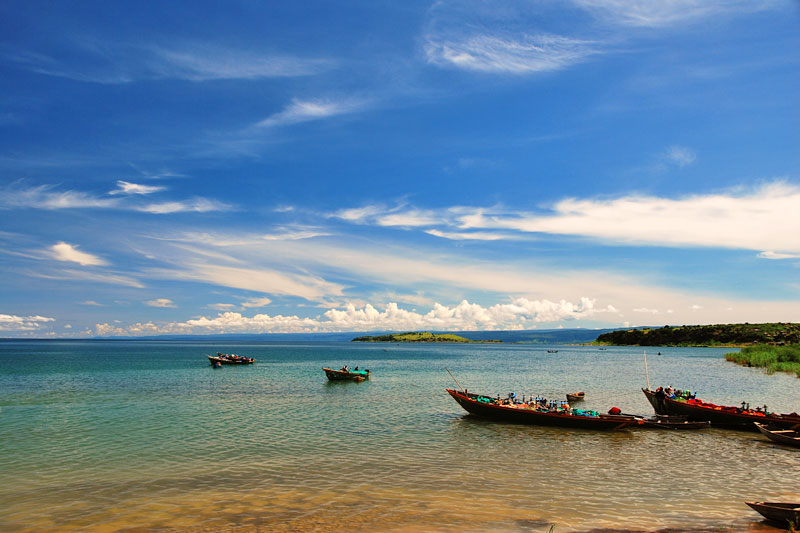
Lake Tanganyika’s waters lap Tanzania, Burundi, Congo DR and Zambia. It is the longest fresh water lake in the world and the second deepest after lake Baikal in Russia. Photo credit: boomsbeat.com

Mbonerane, who is also a founding member of a local environmental protection NGO, told Xinhua in an interview that the lake’s degradation has started to impact on current generations and will seriously affect future generations if appropriate measures are not taken.

He said the lake faces significant decrease in water levels.

Lake Tanganyika, bordered by Tanzania, Zambia, the Democratic Republic of the Congo and Burundi, is the world’s second largest freshwater lake by volume and the second deepest lake with over 350 species of fish.

Millions of people live near the lake and depend on it for drinking water and for food.

The lake also faces “acute pollution” on the side of Burundi, which has 8 percent of the total area of Lake Tanganyika, said Mbonerane.

“Untreated solid and liquid wastes are sent into the lake and this jeopardizes the biodiversity of the lake as well as the water we drink,” he said.

He said the wastes from households and factories are driven into the lake directly or via rivers crossing the capital city of Bujumbura.

Mbonerane said that the untreated wastes going into the lake will force the fish to flee their habitat and will reduce fish’s quality as food and for sale.

He said the quality of the water drunk by Bujumbura residents will also be affected and their health will be affected.

According to him, the “polluter pays” principle provided in the Burundian water code is not implemented to sanction wrongdoers.

Mbonerane urged the authorities to take urgent action to save the lake ecosystem.

He also called for officials from the four riparian countries of Lake Tanganyika to meet and seek ways of protecting the lake “which is very important for future generations.”

He further advised the government to create a ministry in charge of issues of Lake Tanganyika to prioritise its protection.

Northeast humanitarian crisis still critical, says UN

0

The United Nations Office for the Coordination of Humanitarian Affairs (UNOCHA) says the humanitarian crisis in Nigeria’s northeast is still critical due to ongoing hostilities.

UN-Nigeria
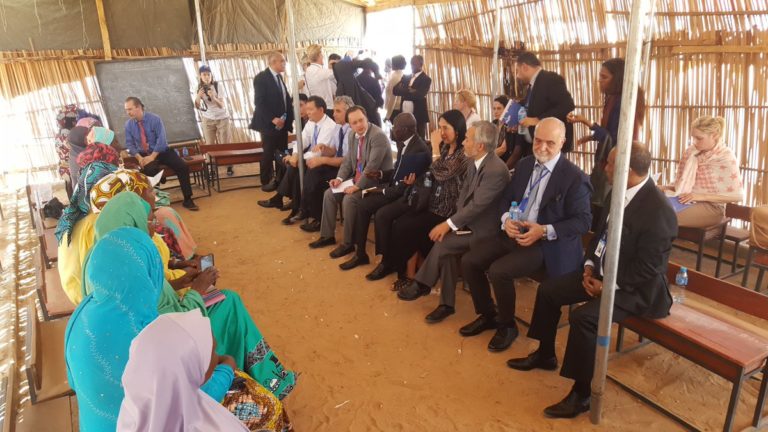
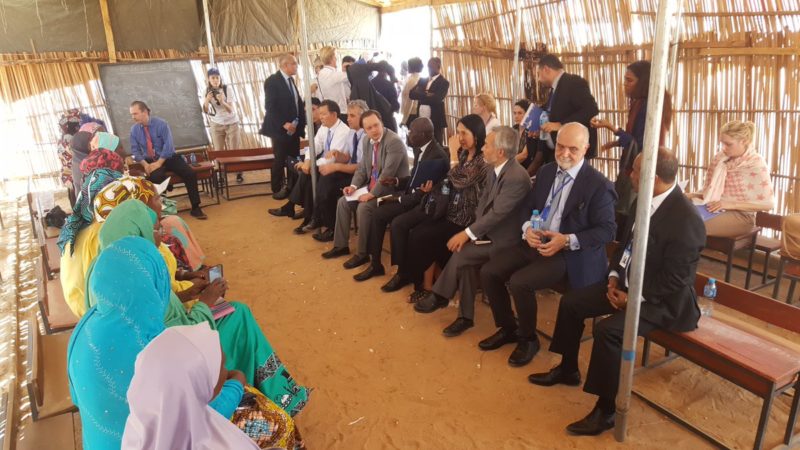
UN Security Council members in a meeting with internally displaced persons (IDPs) in Maiduguri, in a bid to getting first hand info on their challenges

UNOCHA stated this in its monthly humanitarian update report made available to the News Agency of Nigeria (NAN) on Thursday, March 1, 2018 in Abuja.

According to the report, the humanitarian crisis in the region, now in its ninth year, remains massive in scale due to the unending hostilities and incessant attacks by the Boko Haram insurgents.

It stated that the food security situation remained extremely bad as the conflict continued to limit the amount of land under cultivation with 3.7 million persons expected to face critical levels of food insecurity.

The report added that food insecurity would be experienced in the upcoming lean season starting from June to September.

It further disclosed that 1.7 million persons were still internally displaced and human rights violations continued to be reported daily.

It stated that additional displacements were expected as long as hostilities continued.

Furthermore, it stated that information from newly arrived persons indicated that more families were in areas difficult to access by international humanitarian workers.

“Large scale displacements continue to take place in Borno and Northern Adamawa with influxes in January of newly arrived persons in Gwoza (3,842), Mobbar (2,950), Nganzai (2,583).

“Monguno (2,214), Ngala (1,903), Mubi South (783), Konduga (675), Askira/Uba (560), Kukawa (460), and Bama (421).

“Between October 2017 and January 2018, over 40,000 vulnerable persons have been on the move for various reasons including ongoing hostilities, improved security in certain areas and poor living conditions.

“While assessments are still ongoing in these hot-spot areas, rapid assessments and gap analyses have been developed.

“Initial findings show that thousands, including host communities, are in dire need of food, water, shelter, blankets and clothes, and medical care.

“A multi-sectoral response has been possible through the rapid response mechanism and humanitarian organisations have scaled up their advocacy and resource mobilisation activities in order to meet the needs of the affected people.

Humanitarian access continues to present major challenges, especially in Borno with about 926,000 persons still in areas that are hard to reach for international humanitarian organisations.

It added that aid workers were working to expand the humanitarian space in the northeast through civil-military coordination and community engagement.

The report stated that to improve local coordination, assistance and to increase the presence of humanitarians where vulnerable populations reside, five ‘deep field’ humanitarian hubs offering secure accommodation and Internet connectivity had been made operational.

It identified the five areas as Maiduguri, Ngala, Dikwa, Bama and Gwoza, adding that another three – Monguno, Damasak, Banki – would be fully operational this month with an additional one by April in Rann, bringing the total to nine.

The report also pointed out that 2017 recorded many positive developments such as the containment of the cholera crisis in Borno and the establishment of five humanitarian hubs in the field.

It listed other achievements to include the roll-out of a local coordination mechanism and many sectors reaching their targets overall.

It, however, noted that without sustained assistance, all gains could be lost and the situation could quickly deteriorate.

According to the report, in January 2018, humanitarian partners started implementing the activities outlined in the Humanitarian Response Plan, based on priorities and vulnerabilities identified in the Humanitarian Needs Overview.

It stated that the 2018 response would also focus on durable solutions, early recovery, livelihoods and basic services rehabilitation, across all sectors, to support a multi-year vision that goes beyond saving lives today.

“A total of 60 organisations have committed to implementing 173 projects aimed at providing life-saving assistance to 6.1 million women, children and men in Borno, Adamawa and Yobe states.

“The total funding requirements for 2018 stand at $1.5 billion.

“Although funds received in 2018 are extremely low for most sectors as of Jan. 31, 2018, with only 1 per cent ($13 million) of the requirements met.

“Most partners were able to continue to provide life-saving assistance in January thanks to about 196 million dollars carry-over funding from 2017,’’ the report stated.

It added that for the response to be sustainable and to avoid interruption in life-saving services, it is crucial that additional funding be received across all the sectors.

By Lizzy Okoji

FMBN issues 2,724 mortgages worth N20.237b – Fashola

0

The Minister of Power, Works and Housing, Babatunde Fashola, said that since 2015 to date, the Federal Mortgage Bank of Nigeria (FMBN) had issued 2,724 mortgages to Nigerians.

Gov-Babatunde-Fashola3
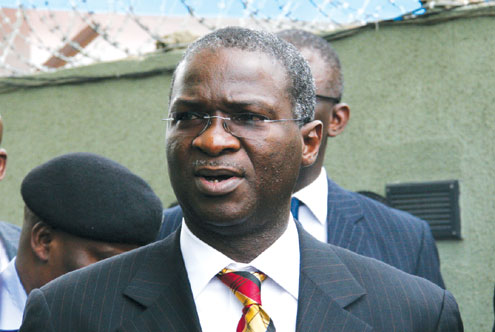
Minister of Power, Works and Housing, Babatunde Raji Fashola (SAN)

Fashola disclosed this while inaugurating the respective Governing Boards of the Federal Housing Authority (FHA) and FMBN on Thursday, March 1, 2018 in Abuja.

The minister noted that the mortgages which were issued under the National Housing Fund (NHF) scheme were worth N20.237 billion.

He said the ministry was piloting a National Housing Programme and constructing houses in 33 states to ensure more Nigerians own homes.

“We are doing this to validate and test what type of housing design responds to Nigeria’s diverse cultural, climatic and religious needs, so as to ascertain what is acceptable and affordable.

“We are at different stages of construction in different states, and we have recommended these designs to FHA, without imposing them.

“Our decision is informed by the evidence of previous housing initiatives that people did not take up resulting in empty houses that still abound in almost every state of Nigeria,’’ he said.

The minister explained that the untaken houses in spite of housing deficit suggested that they were not affordable or acceptable to the people.

He urged the newly inaugurated member of the boards to reposition their brands and provide guidance for the Managing Directors and Management teams of the orgaisations.

“For the avoidance of doubt, let me state that the policy of government is to deliver affordable housing, acceptable to Nigerians.

“The agencies, whose brands you will now administer are the implementing arms of government for housing delivery and housing financing.

“You must, therefore, use your positions to affect the lives of millions of people who will partake and benefit of the prosperity that a housing economy can offer,’’ he said

In response, the FHA board Chairman, Sen. Lawal Shuaibu promised to employ collective efforts to reposition the housing sector.

Shuaibu assured that national housing policy would be effectively implemented.

Also speaking, Mr Adewale Adeeyo, FMBN board Chairman commended the laudable programmes of the ministry aimed at raising the standard of Nigerians.

Adeeyo pledged that the FMBN board would make a monumental impact through provision of affordable mortgages to Nigerians.

By Ella Anokam

Waste management: Lagos urged on innovative, smart approaches

0

An environmentalist, Mr Toyin Oshaniwa, on Wednesday, February 28, 2018 said that the Lagos State Government needed innovative, educative and smart approaches to solve its waste management problems.

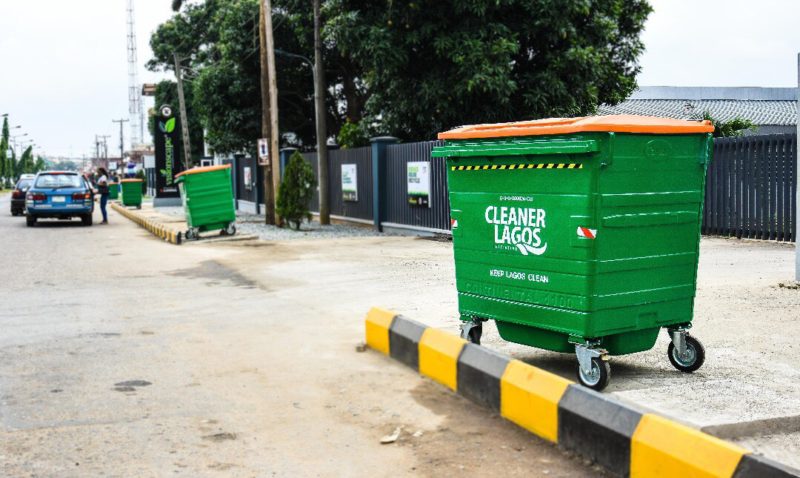
Cleaner Lagos Initiative
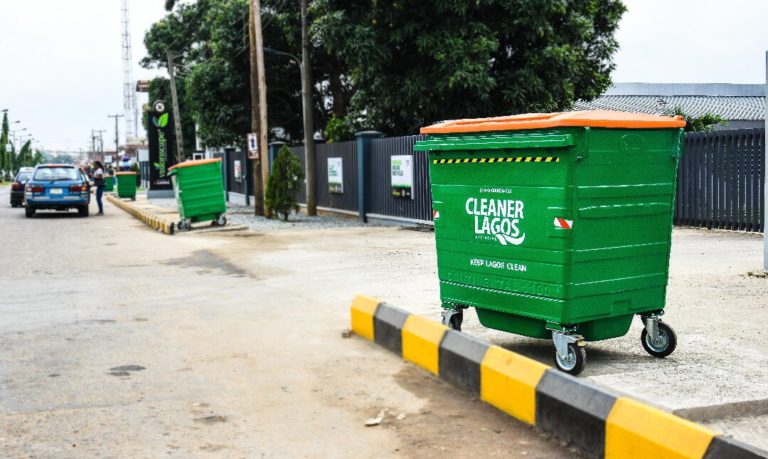
The government has adopted the Cleaner Lagos Initiative

Oshaniwa said this in an interview with News Agency of Nigeria (NAN) in Lagos, while commenting on the increasing heaps of waste in neighbourhoods across the state.

He underscored the need for the Lagos State Government to adopt innovative strategies to address the waste management challenges facing the state.

“With the continuous influx of people into Lagos State, waste generation and management concerns essentially need innovative, educative and smart approaches.

“One significant factor behind the heaps of solid and domestic waste across Lagos environs was the timing and un- managed transition gaps in the waste management system of Lagos State,” he said.

Oshaniwa said that the waste management challenges in the state included the uncoordinated transition from the weekly waste evacuation to a new mode of waste collection.

“The uncoordinated transition from the weekly waste evacuation scheme to the sudden placement of anti-littering bins on Lagos streets was a drawback. That approach should have been introduced at a later stage.

“The public information and educational transitional phase was conspicuously lacking.

“There was no prior information and educational programme to inform the residents of Lagos State about the specifics of the Cleaner Lagos Initiative (CLI),’’ he added.

By Itohan Abara-Laserian