Home Blog Page 1939

Nigeria’s quest for self-sufficiency, food security not negotiable – Buhari

0

President Muhammadu Buhari has challenged the Presidential Fertiliser Initiative (PFI) to ensure availability of quality and affordable fertilisers to farmers at the right time as the nation’s journey to self-sufficiency and food security is not negotiable.
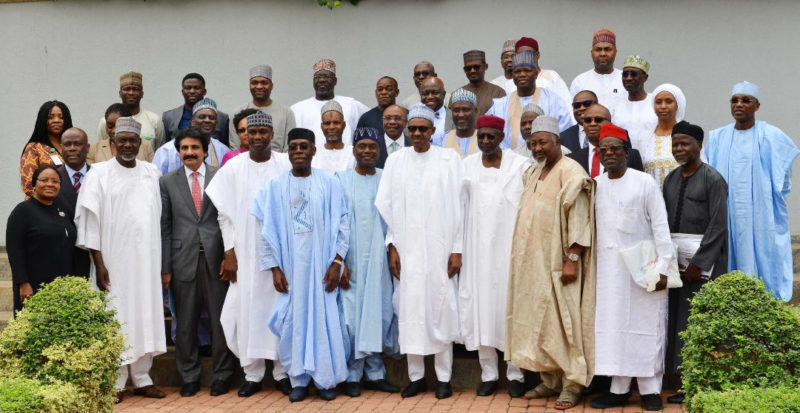
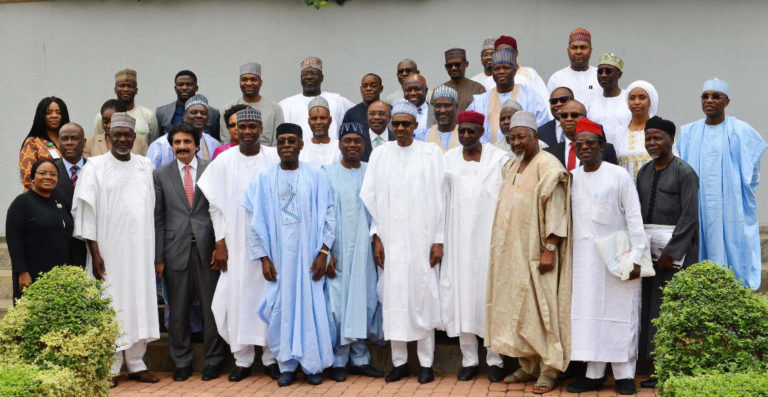
President Muhammadu Buhari in a group photograph with members of the Presidential Fertiliser Initiative and Fertiliser Suppliers Association of Nigeria (FEPSAN) Committee, after a meeting with Mr President at the Presidential Villa in Abuja on Friday, March 2, 2018. Photo credit: Sumaila Ibrahim/BJO/NAN

The President gave the challenge at a meeting with members of the PFI and Fertiliser Producers and Suppliers of Nigeria (FEPSAN) at the Council Chamber of the Presidential Villa, Abuja, on Friday, March 2, 2018.

The Presidency had in Feb. 2017 inaugurated the PFI, which was approved by President Buhari in December 2016, to achieve the local production of one million metric tonnes of blended Nitrogen, Phosphorous and Potassium (NPK) Fertiliser for the 2017 wet season farming.

It was also to achieve an additional 500,000 metric tonnes for dry season farming.

The President saluted the commitment of the Nigerian Sovereign Investment Authority (NSIA) for boosting the activities of PFI to meet its targets.

“I am impressed by the commitment of the Nigerian Sovereign Investment Authority to this project.

“The NSIA and FEPSAN, under the able leadership of the Governor of Jigawa State, must ensure quality and affordable fertiliser is available to farmers at the right time.

“I congratulate all of you for the exceptional work you have done to date and assure you that this administration will do all it takes to make sure this programme continues to grow and impact lives.

“Nigeria’s journey to self-sufficiency and food security is not negotiable,’’ he said.

President Buhari, who urged the NSIA to continue to invest its fund in boosting the socio-economic activities of rural dwellers, maintained that there were endless opportunities in the rural economy.

He said: “I always talk about the endless opportunities in the rural economy if only people would look with an open mind. I will urge you to continue on this track.

“Unless we create an inclusive and diversified economy, the progress of our country, and its future generations, will always be held hostage by external factors such as global oil prices.’’

President Buhari called on the office of the National Security Adviser and other security agencies to allow and protect the movement of all agricultural goods, adding that issues relating to end user certificates must be prioritised.

He noted that the new fertiliser policy had succeeded in addressing cases of illegal diversion of the commodity and pledged that the federal government would continue to provide adequate security in the movement of fertiliser and other agricultural inputs in the country.

“Unlike in previous governments where trucks conveying fertiliser would miraculously disappear in transit, in 2017, none of the 3,333 trucks that participated in this programme went missing.

“I want to assure all participants of the PFI that, we will continue to provide adequate security so that this programme, and its positive impact on Nigeria, is sustained,’’ he said.

President Buhari congratulated the members and leadership of the FEPSAN for producing and making available quality and affordable fertilisers across the country within three months.

“Although you were all competitors in the past, you all put aside your differences and came together to deliver on this important programme. So thank you for putting Nigeria first.

“You must continue on this track,’’ he said.

He acknowledged partnership between the Central Bank of Nigeria, the Minister of Agriculture and Rural Development and state governors to ensure Nigeria feeds itself.

The President noted with delight that the CBN was working with the commercial banks on programmes that would further expand and enhance the PFI, adding that “we must all do our bit to ensure fertiliser is readily available.”

He, therefore, enjoined the Ministry of Finance and NSIA to immediately engage the Governors Forum to conclude their orders while the Ministry of Agriculture and Rural Development should conclude the planning for all government programmes for the 2018 season to ensure synergy.

According to the President,the CBN working with the commercial banks, should ensure affordable capital is available to the farmers and agro-dealers, while the NPA should provide all the necessary support required to expedite the offloading and evacuation of the imported materials.

He also thanked the Chairman of the PFI and Governor of Jigawa, Alhaji Abubakar Badaru, whom he said had virtually relocated to Abuja to oversee the successful take off of the project.

“I must also express my profound gratitude to the people of Jigawa State for allowing us to borrow him on this very important national assignment which indeed, has changed the lives of millions of Nigerians across the country,’’ he added.

In his remarks, Gov. Badaru said all stakeholders exhibited a sense of patriotism to Nigeria, as they all made various levels of sacrifice, leading to a successful implementation of the programme.

He said  already 11 blending plants had so far been activated for the production of the commodity in the country.

Badaru said most of the raw materials used for the production of fertiliser were locally sourced as directed by the President.

He thanked the Chief of Staff to the President, Abba Kyari, for his immense support, which facilitated the smooth take off of the programme,

By Ismaila Chafe
UN launches effort to collect data on disaster losses

0

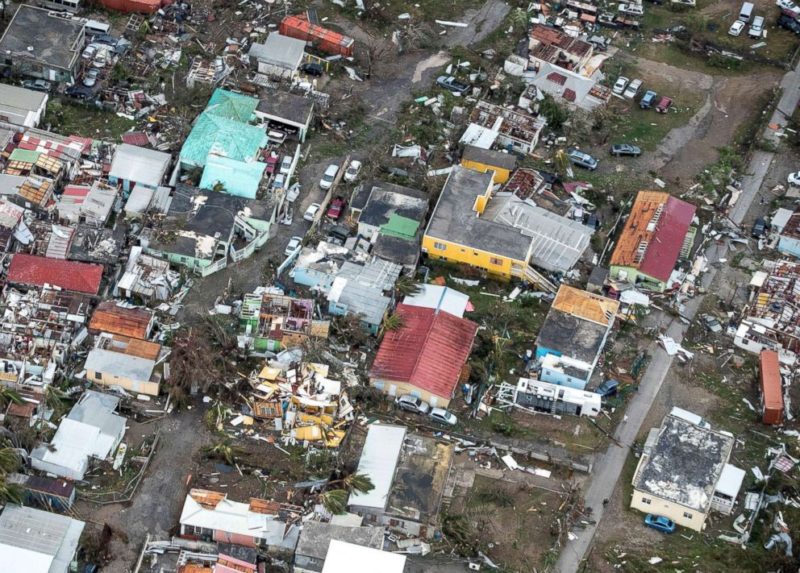
The United Nations (UN) has launched a new initiative to quantify the impact of disasters, mainly from extreme weather, to help countries better cope with them.

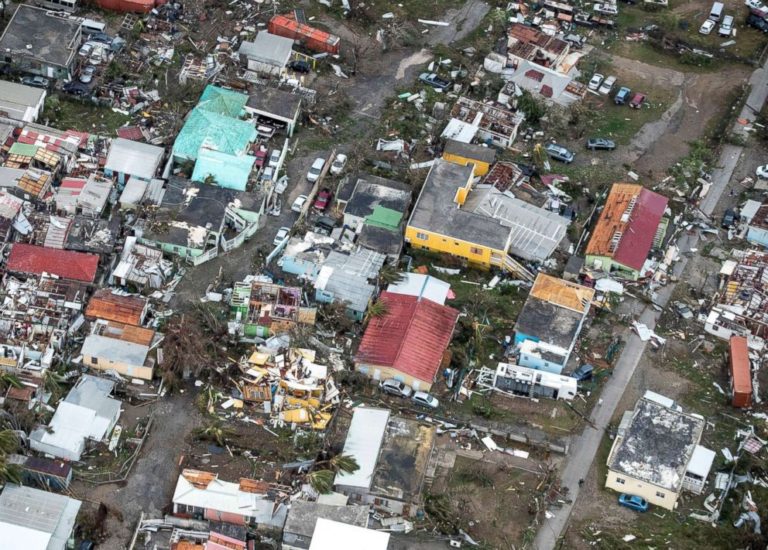
Hurricane Irma
A view of the aftermath of Hurricane Irma on Sint Maarten Dutch part of Saint Martin island in the Caribbean, Sept. 6, 2017.

The UN estimates that around 26 million people are pushed into poverty every year due to extreme weather events, 90% of which are linked to climate change.

A new UN Office for Disaster Risk Reduction (UNISDR) initiative, which was announced on Thursday, march 1, 2018, will collect data on disaster losses as UN Member States implement the Sendai Framework, a global plan for reducing such losses.

“Improving how we manage risk is vital and this requires a deeper understanding of where these losses are occurring and not just for major internationally recorded events. The silent, small-recurring events such as floods and droughts can take a huge toll on communities which lack essential health services and other coping capacities,” says Mami Mizutori, UN Special Representative of the Secretary-General for Disaster Risk Reduction.

Some 144 countries have indicated that they will send their 2017 data by the end of March to its Sendai Framework Monitor online data capture system.

Securing adequate food resources is set to become ever more challenging as climate change accelerates. Curbing emissions and meeting the targets of the Paris Climate Change Agreement is therefore crucial to protecting global populations.

“Reducing greenhouse gas emissions could be the most significant step we can take towards future climate risk reduction,” says Ricardo Mena, head of UNISDR Support and Monitoring of Sendai Framework Implementation Branch.

Since 2009, an estimated one person every second has been displaced by a disaster as a result of climate change, according to the UN High Commission on Refugees (UNHCR).

The uprooting of economic and social livelihoods is set to increase as the risk of climate-related disasters grow globally.

The Sendai Framework targets and indicators contribute to measuring disaster-related goals and targets of the 2030 Agenda for Sustainable Development, in particular SDG 13 – Taking urgent action to combat climate change and its impacts.

In a statement to mark the launch, Ms. Mizutori said: “It is impossible to prevent disasters and to manage risk if a country is not measuring its disaster losses, particularly at the local level, for both small-scale and large-scale events. Such losses are a great setback for efforts to eradicate poverty.

“The Sendai Framework Monitor will provide inputs to the first report on achieving progress on implementing the Sustainable Development Goals in July. “In a world where climate change and extreme weather events contribute to pushing 26 million people into poverty every year, improving how we manage risk is vital and this requires a deeper understanding of where these losses are occurring and not just for major internationally recorded events. The silent, small-recurring events such as floods and droughts can take a huge toll on communities which lack essential health services and other coping capacities.”

World Hearing Day: Governments, agencies asked to stem rise in hearing loss

0

Some 900 million people could suffer from disabling hearing loss by 2050, according to new estimates released by the World Health Organisation (WHO) on the occasion of World Hearing Day to be observed on Saturday, March 3, 2018.

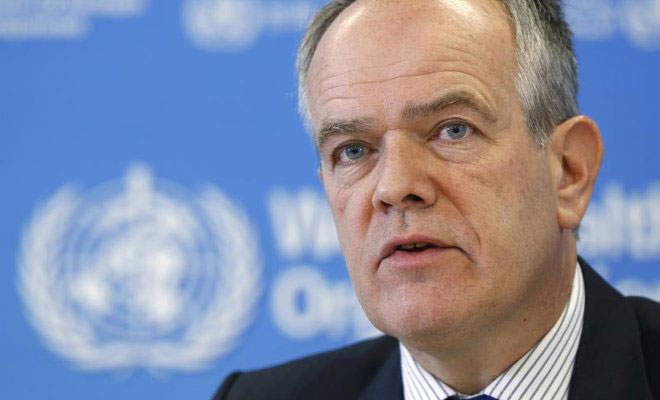
Dr Etienne Krug
Dr Etienne Krug, Director of the WHO Department for Management of Noncommunicable Diseases, Disability, Violence and Injury Prevention

Currently, some 466 million people worldwide suffer from disabling hearing loss, 34 million of whom are children. This is up from 360 million people five years ago, says the WHO.

The UN body attributes this increase to a growing ageing population and the persistence of risks such as ear and vaccine-preventable infections like measles, mumps and rubella; the use of medicines that can harm hearing such as those used to treat drug-resistant tuberculosis and malaria; and exposure to loud sounds through personal audio devices and in entertainment venues and workplaces.

“Past trends and future projections predict a vast increase in the number of people with hearing loss,” says Dr Etienne Krug, Director of the WHO Department for Management of Noncommunicable Diseases, Disability, Violence and Injury Prevention. “Unless appropriate action is initiated, nearly one in 10 people could have disabling hearing loss by 2050. This will considerably affect their lives and pose a significant cost to health systems. Governments must act now to prevent this rise and ensure people with hearing loss can access the services and technologies they need.”

Disabling hearing loss affects people in many ways. It impacts on a person’s ability to communicate, socialise, learn, work and enjoy life, contributing to poverty, social isolation and feelings of loneliness. In older people in particular, hearing loss is linked to cognitive decline, increasing the risk of depression and dementia. Unaddressed hearing loss costs countries an estimated $750 billion annually in direct health costs and loss of productivity.


Interventions can reduce hearing loss and its adverse impacts

Overall it is suggested that half of all cases of hearing loss can be prevented; in children, this figure is around 60%. This includes by immunising children against infectious diseases; screening and treating children who suffer from chronic ear infections; promoting safe childbirth to minimise the risk of asphyxia and neonatal infections associated with hearing loss; avoiding the use of particular drugs harmful to hearing; controlling exposure to loud sounds in occupational and recreational settings; and raising awareness about healthy ear care practices through public health campaigns.

Detecting and intervening early when people do have hearing loss helps to minimise the consequences, especially for children. This is achieved through screening programmes. In cases where hearing loss is unavoidable, it is vital to ensure access to appropriate and affordable assistive technologies such as hearing aids and surgically implanted electronic cochlear implants, and communication services like speech therapy, sign language and captioning.


Governments and partners have a key role to play

To stem the rise in disabling hearing loss, WHO supports governments and their partners to:

  • Integrate ear and hearing care into primary health care systems as part of universal health coverage;
  • Raise awareness among the public about the prevention of hearing loss;
  • Ensure services to treat hearing loss, including access to assistive technologies and communication services;
  • Train hearing care professionals;
  • Regulate sound exposure on personal audio devices and in entertainment venues and workplaces;
  • Empower people with hearing loss to overcome stigma and discrimination.

The WHO has also initiated development of a global report and related toolkit on hearing, to provide authoritative evidence on the magnitude of hearing loss globally, as well as its prevention, treatment and rehabilitation.

Ahead SDG6 review, Nigeria lags behind in water, sanitation provision

0

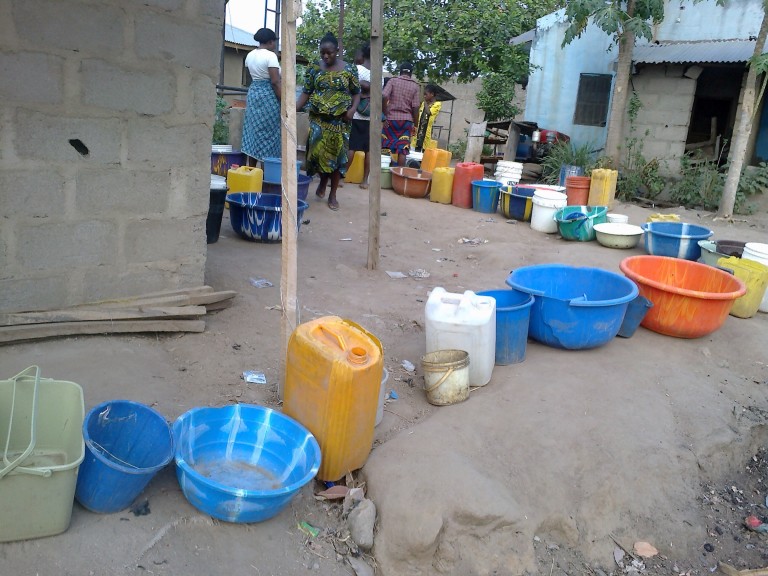
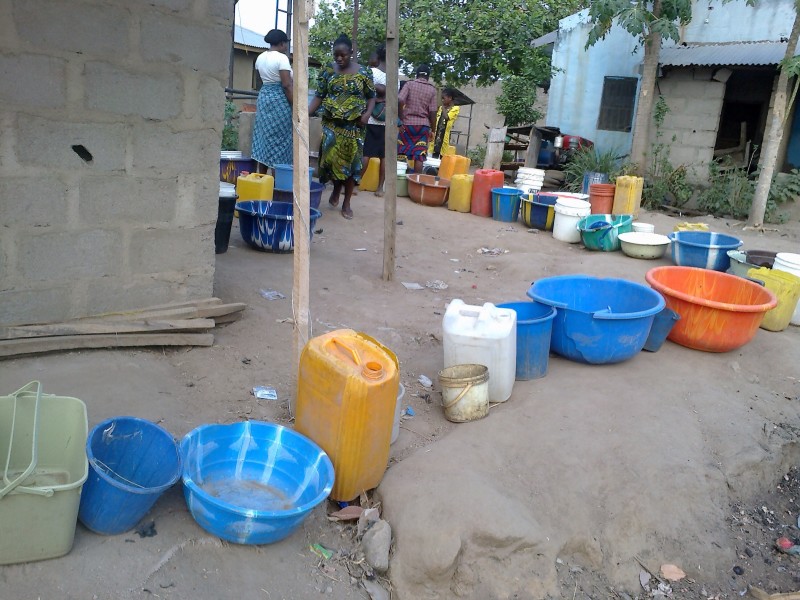
Nigeria is at the precipice of a water, sanitation and hygiene catastrophe, says WaterAid International, which adds that 33% (about 60 million) of people in Nigeria are currently living without adequate access to water, and that 67% (over 120 million people) do not have a decent toilet and 26% (about 47 million people) practice open defecation. Accessibility, availability and quality vary widely in Nigeria, with national averages masking significant inequalities between subnational regions, notes the organisation.

Water
About 60 million Nigerians are currently living without adequate access to water

In a new brief launched this week titled: “How to reach everyone with safe water and sanitation by 2030”, WaterAid says urgent action to finance water and sanitation, to integrate it with efforts on health, nutrition and other related development, and to make progress sustainable is essential to reach everyone, everywhere. Faster progress on all three will save lives, boost development and change the lives of billions of people living in extreme poverty globally. For every $1 spent on water and sanitation, on average $4 is returned in economic benefits.

The Nigerian government must prioritise clean water, decent sanitation and good hygiene for people across the country, if Goal 6 of the Sustainable Development Goals (SDGs) – the provision of clean water and decent sanitation for everyone everywhere – is to be reached by 2030, international charity, WaterAid, points out.

WaterAid Nigeria is urging the government to take action ahead of the UN’s High Level Political Forum in New York in July, where Goal 6 will come under review. Without water, decent sanitation and good hygiene, other SDGs, including those on gender equality, education, health, reducing inequalities and nutrition, cannot be achieved.

Without access to these basic amenities, men, women and children in Nigeria will remain trapped in a cycle of poverty and disease, while being denied their basic human rights to safe drinking water and sanitation.

Dr ChiChi Aniagolu-Okoye, Country Director of WaterAid Nigeria, said: “We are at a critical juncture in the fight to get clean water, decent sanitation and good hygiene to the people of Nigeria and across the world.

“We know that if everyone, everywhere was able to access clean water, decent toilets and good hygiene, then we could help end the scourge of extreme poverty and create a more sustainable future. But we have to act now to make this a reality. The Nigerian government must prioritise water, sanitation and hygiene – the basic building blocks of any prosperous community – ensuring proper financing is put in place to build a more sustainable country today and for future generations. The people of Nigeria will be watching.”

Snow storms shut Ireland, Britain calls in army

0

Snow storms shut most of Ireland on Friday, March 2, 2018 and forced Britain to call in the army to battle some of the worst weather seen in nearly 30 years.

Winter UK
The UK is said to be facing the coldest winter since the Great Freeze of 2010

After a blast of Siberian weather dubbed“the beast from the east”, southern Britain and Ireland were battered by Storm Emma which blocked roads, grounded planes and stopped trains.

At least 24,000 homes and businesses in Ireland were left without power, the stock exchange was shut, all schools were closed and transport ground to a halt with all flights canceled from Dublin airport.

In Britain, a seven-year-old girl was killed in Cornwall after a car crashed into a house in icy conditions, the BBC reported.

Dozens of passengers were stranded on trains overnight in southern England.

The army was called in to help rescue hundreds of drivers stuck in the snow and to transport National Health Service workers.

Roads were closed, schools shut and flights canceled across Britain.

“The Armed Forces are assisting emergency services in ensuring essential NHS staff are able to get to work and carry out their work in local communities,” a spokesman for the Ministry of Defence said.

The army is “standing by to help the Police and civil authorities across the UK following heavy snowfall.

“We are also aware of Armed Forces personnel volunteering in their own time with their own vehicles to help those in need.”

Food security threat, as Benue farmers remain in IDPs camps

0

Benue Valley Initiative (BeVIN), a non-governmental organisation, has expressed concern over the country’s food security, as many farmers in Benue State are still confined to Internally Displaced Persons (IDPs) camps.

Fidelity Bank IDPs
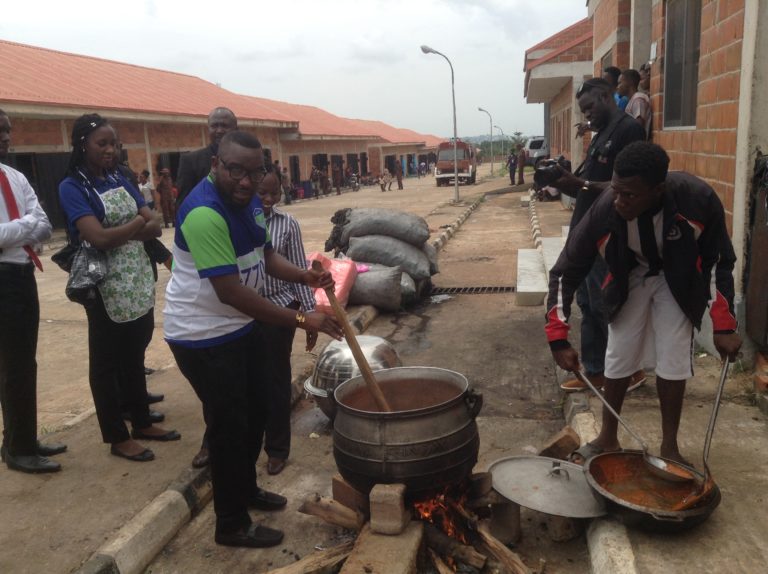
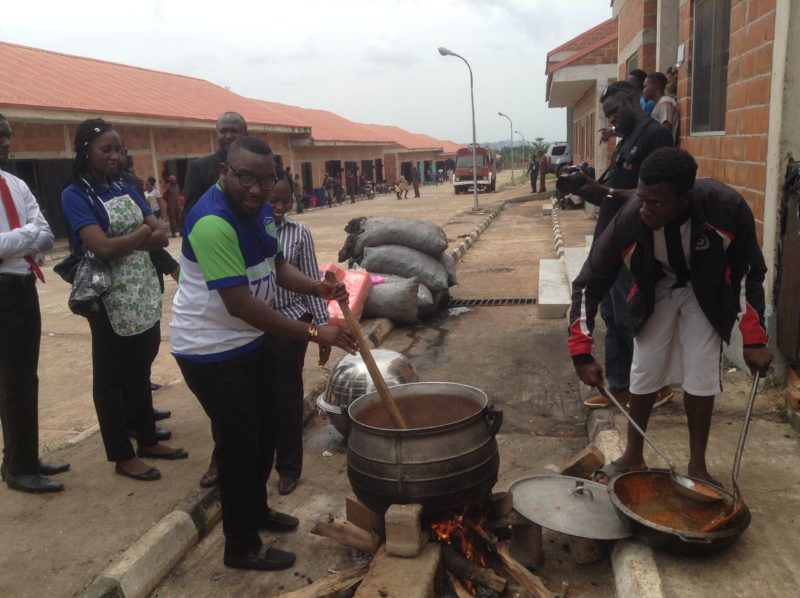
Head, CRS and Sustainability, Fidelity Bank Plc., Mr Chris Nnakwe, lending a hand to cook a meal for IDPs at a camp in Benue State

Its Public Relations Officer (PRO), Miss Sewuese Apeverga, who expressed the worry at a press conference in Makurdi, the state capital, on Friday, March 2, 2018 said that the 2018 cropping season would be negatively affected by the development.

“We are in the harvest period for some crops and in the preparatory period for the 2018 cropping season but many farmers are still staying in IDP camps,’’ she said.

Apeverga said that something urgent needed to be done to address the development so as to forestall an imminent food crisis.

“No conscious efforts are being made to return the farmers to their farmlands so that they can restart their farming activities.

“There is, therefore, imminent threat to food security, hunger and aggravation of poverty,’’ she said.

Besides, Apeverga noted that the IDPs in Benue, Nasarawa and Taraba states were not partaking in the ongoing INEC Continuous Voter Registration, which would soon come to an end.

She said that conscious efforts should be made to facilitate the participation of the IDPs in the exercise.

By Nicholas Dechi

Cleaner Lagos Initiative: Plastic bottles to be phased out by 2023

0

The Lagos State Government said on Friday, March 2, 2018 that it would phase out the use of plastic bottles in the state by 2023.

Plastic bottles
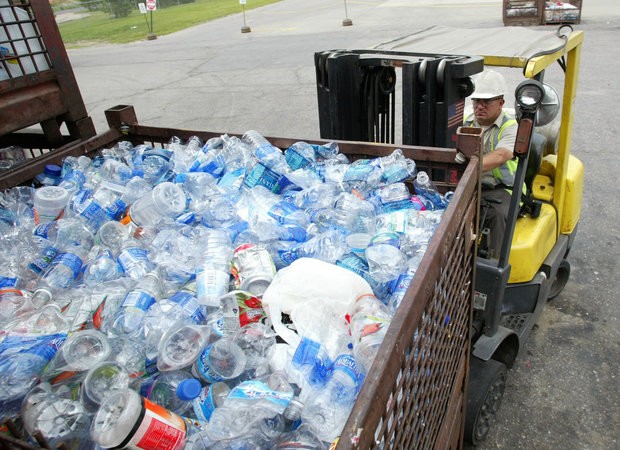
Disposal of waste plastic bottles. Photo credit: Al Goldis / Associated Press

Mr Adebola Shabi, the Special Adviser to Gov. Akinwunmi Ambode on Cleaner Lagos Initiative (CLI), made the disclosure in an interview with the News Agency of Nigeria (NAN) in Lagos.

Shabi said that plastic bottles, also known as pet bottles, needed to be phased out because they could hardly degrade in the environment.

He said that it could  take over 500 years for the bottles to degrade, thereby causing environmental (plastic) pollution.

”In the world now, it is called plastic pollution because they end up in the ocean and affect aquatic lives; they also affect water transportation,” he said.

“The official said that one of  the aspects of the Cleaner Lagos Initiative was recycling.

“In the past, 97 per cent of our waste were buried in the landfill; only three per cent were recycled; but we want a different ball game.

“We want to encourage our youth, investors, to go into recycling because some of what we called waste are not really waste, there are things/products we still get from them.

“We want to encourage less waste to the landfills; that is why we are calling for recycling of pet bottles, papers, used phones and a lot of things.

“We are working seriously on a project to see if we can come up with core starch and polymers to see how those ones can degrade in the environment easily,” he said.

Shabi called on local investors to come up with proposals, adding that the government would encourage them on the technology to use.

”We mean technology that will work with the  environment,” he said.

He said that there were plans to ensure that by  2020, only 30 per cent of waste in the state would end up in the landfills, while 70 per cent would be recycled.

According to him, by year 2025, Lagos wants three per cent of its waste to go to the landfills and 97 per cent be recycled and reused.

“That is why we have been working to educate people on how they can make money through waste-to-wealth.

“In the past, we were exporting the recyclable materials to China; it got to a stage by mid last year, China stopped the import of the recyclable materials, but we can also recycle them here.

“Pet bottles, when recycled, can be added to asphalt to solidify road construction; it can also be used in making textiles.”

“The official told NAN that pet bottles could  also be recycled to make diesel, while cardboard papers could be used and recycled to make tissue paper.

“Look at the issue of electrical/electronic waste that have lived out their lifespans; when we are not using them any longer, they end up in the garbage.

“When you recycle some of these telephone sets, you will get precious metals like gold, palladium, copper and silver; so, why do we call them waste, when they can be recycled?” he asked.

The governor’s aide said that the wood waste, also known as sawdust, could turn to energy after going through synthesation and gasification.

He said that the benefit of biogas was to reduce dependence on the fossil fuel.

Shabi said that the government also desired to recycle waste from animals and poultry, noting that more  than 6,000 animals and 100,000 poultry were slaughtered in the state daily.

According to him, the government has thrown it open to intetested members of the public to come up with ideas on recycling.

“We have been encouraging the youth to come out. We have a lot of used tyres around the streets.

“When you have these tyres, the metals from them are taken out and can be used for fencing, and the rubber will be shredded and be added to asphalt or bitumen for road construction.

“It solidifies road construction. We have been bringing all these things to Lagosians; so, they should be looking at a way of partnering with the government, and government is providing the enabling environment for everyone who wants to come into the business,” he said.

By Florence Onuegbu

CDC unveils Disability Awareness Ribbon amid campaign against discriminatory practices

0

The Children’s Developmental Centre (CDC) has unveiled the Disability Awareness Ribbon with the support of the Lagos State Government in commemoration in aid of the campaign for the Developmental Disability Awareness month.

Isaac-Adewole
Minister of Health, Professor Isaac Adewole

At the launch in Lagos, key stakeholders in the non-governmental organisations (NGOs) space called for action by government at all levels to provide the necessary support towards the upbringing of children with various forms of disabilities.

They also expressed deep concern about the future of children with disabilities in the country where there is no clear cut policy their growth support plan and engagement that will better their lives.

In her opening remarks, Dr. Yinka Akindayomi, service director at CDC, said CDC over the last 20 years has been both a service provider and in forefront of advocating for children and adults with development disabilities and their families.

Akindayomi said in the course of the centre’s intervention it has realised that the inclusion of children and adults with any disabilities can only come through a joint effort.

She noted that there must be a harmonious and strong partnerships among stakeholders for any society to grow, adding that one of the great benefits of working together is the inspiration and ideas that can result from unity, because people from different backgrounds and levels of experience can help in creating solutions to problems in the society especially where stigma is concerned.

“Personal boundaries are limits we set for our selves as individuals but when we work together, there is the motivation to push beyond those boundaries which yields results. Nigeria will be better if we work together, because unity maximises strengths and brings out the best in its citizens. This value of unity is regularly seen in sports, culture, entertainment etc and we should endeavor to include in our everyday life, workplaces, homes and community at large,” she counseled.

In her remarks, Mrs. Emmanuella Otiono, educational consultant at Centre Escolar Educational, emotionally spoke about discrimination against people with disabilities, and advised that rather discourage them by attitude efforts should be made to identify those special talents in them to help them maximise their potentials.

Otiono said her centre like similar others offers a continuum of services that meet the specialised needs of young people with intellectual and developmental disabilities including those with autism or other autism spectrum disorders.

“We help youth in all aspects of their lives so they can be successful at home and in school, with friends and family. We understand that no two young people are alike and consider a number of factors including their home environment, upbringing and clinical history when creating Individualised Service Plans,” she said, adding that whether serving youth in foster care or providing supports in home and community settings, stakeholders should also help youth with intellectual and developmental disabilities reach new heights.

Otiono, expressly noted that youths with physical, cognitive, and emotional disabilities represent special populations at risk for juvenile delinquency, victimisation, educational failure, and poor employment outcomes and that they often have multiple, overlapping risk factors.
She noted that youth with disabilities typically receive mentoring, if at all, within disability-specific programmes rather than in inclusive, community-based programmes.

Speaking further, Otiono stated that early childhood is the period from prenatal development and a crucial phase of growth and development because experiences during early childhood can influence outcomes across the entire course of an individual’s life.

“For all children, early childhood provides an important window of opportunity to prepare the foundation for life-long learning and participation, while preventing potential delays in development and disabilities. For children who experience disability, it is a vital time to ensure access to interventions which can help them reach their full potential.

Despite being more vulnerable to developmental risks, young children with disabilities are often overlooked in mainstream programmes and services designed to ensure child development,” she added.

Other stakeholders at the forum expressed disappointment that these children, however, do not receive the specific supports required to meet their rights and needs as children with disabilities and their families are confronted by barriers including inadequate legislation and policies, negative attitudes, inadequate services, and lack of accessible environments.

They argued that if children with developmental delays or disabilities and their families are not provided with timely and appropriate early intervention, support and protection, their difficulties can become more severe and often leading to lifetime consequences, increased poverty and profound exclusion.

By Yemisi Izuora 

Adediji emerges OAU’s EDM Faculty alumni president

0

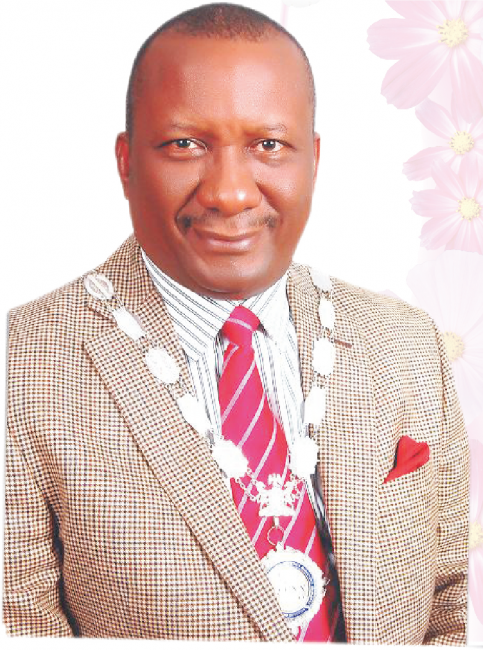
Lagos-based estate surveyor and valuer, Mr Oyebode David Adediji, has emerged president of the Alumni Association of the Faculty of Environmental Design and Management (EDM) of the Obafemi Awolowo University, Ile-Ife, Osun State.

Bode Adediji
Mr Bode Adediji

The association was formally inaugurated last week at the sidelines of Alumni Reunion of the faculty under the chairmanship of the Vice-Chancellor, Professor Eyitope Ogunbodede, represented by the Deputy Vice-Chancellor (Administration), Professor Chris Ajila.

Adediji, fellow and past president of the Nigerian Institution of Estate Surveyors and Valuers (NIESV), holds a Bachelor of Science (B.SC) degree in Estate Management, emerging as the best graduating student of the Department in the University of Ife (now Obafemi Awolowo University) in 1979. He also holds a Master’s degree in Estate Management (Urban Land Appraisal), Reading University, United Kingdom in 1984.

In a statement made available to EnviroNews on Friday, March 2, 2018, Adediji’s publicist, Mr Boye Ajayi, described him as “a man destined to be a leader has grown from being a distinguished scholar into a role model in the real estate profession. He is well positioned to chart a new course for the EDM Faculty through resourcefulness and qualitative leadership.”

According to Ajayi, Adediji is a member of several professional bodies such as: NIESV, Estate Surveyors and Valuers Registration Board of Nigeria (ESVARBON), International Real Estate Federation (FIABCI), African Real Estate Society (AFRES), Nigerian-South African Chamber of Commerce (NSACC), and Institute of Directors (IoD) Nigeria.

In her welcome address during the Alumni Reunion, Professor Olubola Babalola, Dean, Faculty of EDM, pointed out that, as the leading Faculty in the built environment discipline in Nigeria, most of the Alumni hold top positions in consultancy firms, contracting companies, banks, public service, armed forces and other notable offices in and outside Nigeria.

“It is not by accident that the longest building on OAU campus is the Faculty building of professionals in the built environment,” she said, listing the departments in the faculty to include: Architecture, Estate Management, Urban and Regional Planning, Quantity Surveying, Building, Fine Arts, Land Surveying and Geomatics.

The Vice-Chancellor, in his opening remark, said that in the vision to develop the university into the incubator for national policy research and development, there are many areas where the Alumni can assist.

His words: “Your contribution to the university endowment fund initiating developmental project, maintenance of existing infrastructure, student internship, industrial experience and job placement, scholarship and research grants are some of the numerous ways you can add value to the university.”

He asserted that, “with our collective efforts, we can take the faculty and the university at large to an enviable position in the comity of schools of built environment and environmental design and management, both locally and internationally”.

The newly inaugurated cabinet members of the association includes Bldr Lasabi Tunde; Esv Biyi Adesanya; Esv Akin Olawore; Tpl (Prof) Leke Oduwaye; Tpl Toyin Akpan; Tpl Wale Olaoye. Others are Qs Wasiu Akewusola; Qs Sesan Obe; Qs Lekan Adeosun and Olanrewaju Akintilo.

The aims and objectives of the newly inaugurated association include serving as the official link between the OAU and its Alumni; to foster up-to-date and vital information regarding the Institution; to encourage all Alumni to retain their interest in and loyalty to the university at all times; to initiate and execute programmes and activities aimed at accelerating the overall growth and development of the University; and to provide necessary encouragement including financial assistance to an effective leadership for the students of the university.

The association is also aimed at forging useful links between students, parents, teachers and other friends of the university and its community; and to inaugurate and/or revive branches of the association in all parts of Nigeria and beyond.

Belgium ratifies Minamata Convention

0

The Government of the Kingdom of Belgium on Monday, February 26, 2018 deposited its instrument of ratification, thereby becoming the 89th Party to the Minamata Convention.

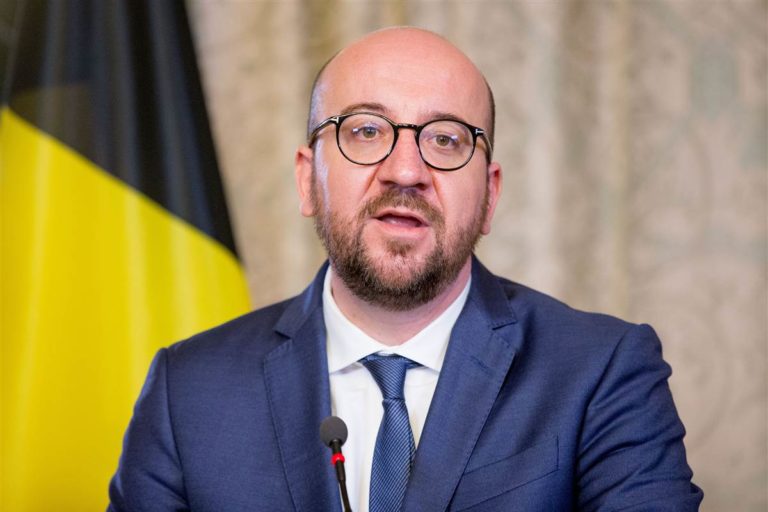
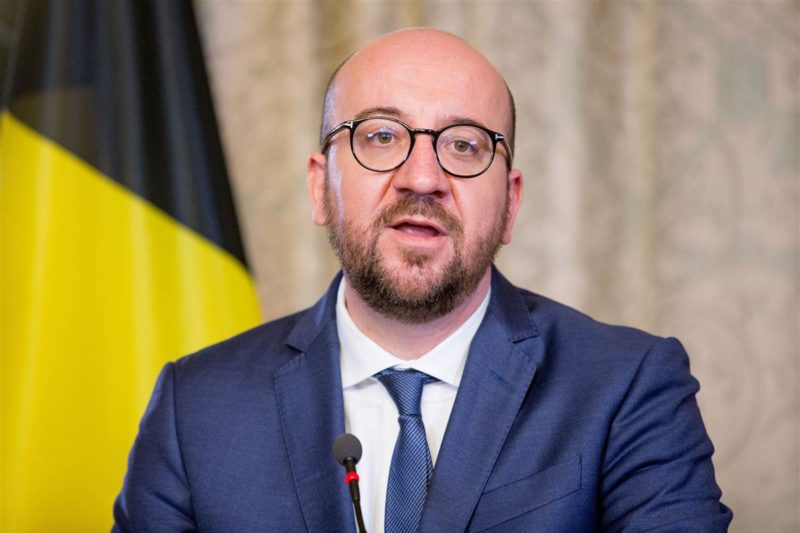
Charles Michel
Charles Michel, Prime Minister of Belgium

Nigeria had several weeks before that on Thursday, February 1 deposited its instrument of ratification, thereby becoming the 88th Party to the mercury treaty.

Cuba had days days before on Tuesday, January 30 deposited its instrument of accession to become the 87th Party to the global pact that aims to control the negative impact of mercury.

Similarly, Lithuania deposited its instrument of ratification on Monday, January 15, 2018 to become the 86th Party to the Convention.

The Minamata Convention on Mercury (“Minamata Convention”) is an international environmental convention for global community to sswork collaboratively against mercury pollution. It aims at achieving environmentally sound mercury management throughout its life cycle. The Convention was adopted at the diplomatic conferences held in Minamata City and Kumamoto City in October 2013.

The 1st Conference of the Parties to the Minamata Convention (COP1), which gathered governments, intergovernmental and non-governmental organisations from around the world, held in Geneva, Switzerland from September 24 to 29, 2017.

The mercury accord entered into force on Thursday, May 18, 2017 after having garnered the required 50 ratifications.