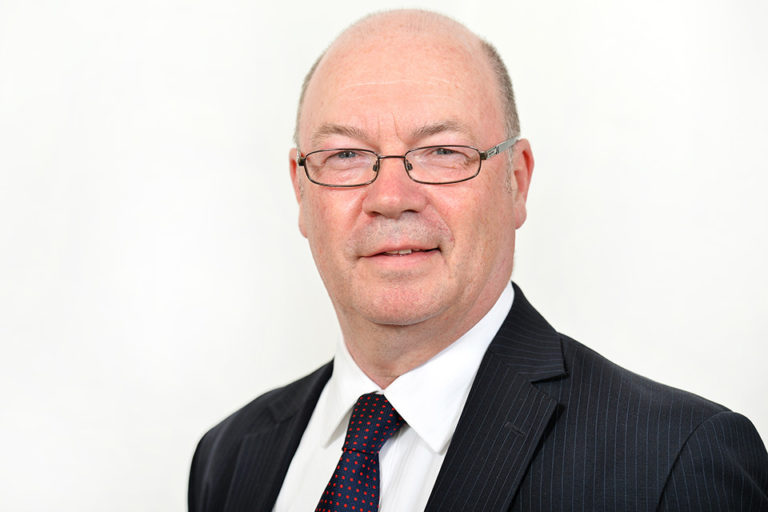
“On World Autism ,Awareness Day, let us reaffirm our commitment to promote the full participation of all people with autism, and ensure they have the necessary support to be able to exercise their rights and fundamental freedoms.”
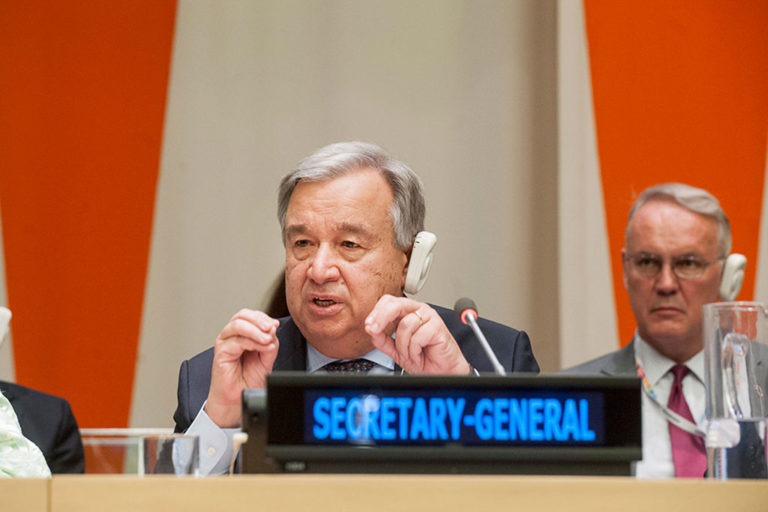
Those were the words of UN Secretary-General, António Guterres, as the world celebrated the World Autism Awareness Day (WAAD) on Monday, April 2, 2018.
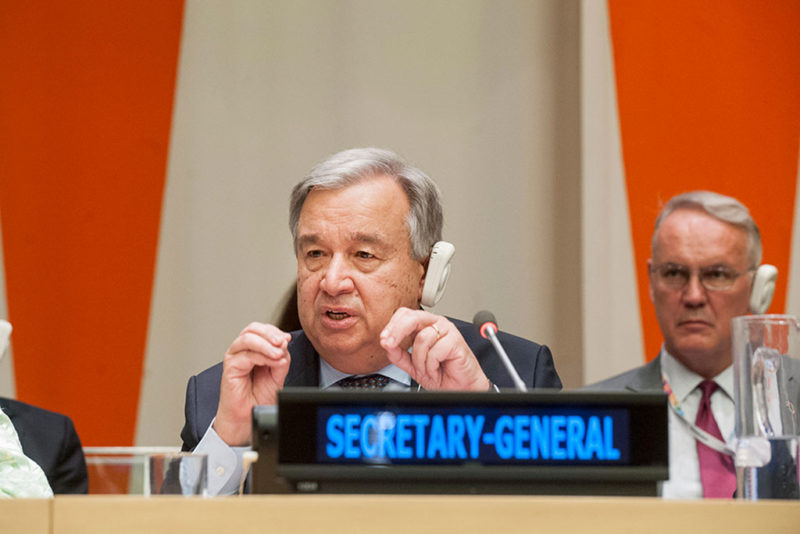
UN Secretary-General, António Guterres. Photo credit: UN Photo/ Kim Haughton
Autism, or autism spectrum disorder (ASD), is a developmental disorder that impairs the ability to communicate and interact. It refers to a range of conditions characterised by challenges with social skills, repetitive behaviours, speech and nonverbal communication, as well as by unique strengths and differences.
The theme for the 2018 WAAD is: “Empowering Women and Girls with Autism”.
In November 2017, the United Nations General Assembly adopted a resolution drawing attention to the particular challenges that women and girls with disabilities face in the context of the implementation of the Convention on the Rights of Persons with Disabilities (CRPD). The resolution expresses concern that women and girls with disabilities are subject to multiple and intersecting forms of discrimination, which limit their enjoyment of all human rights and fundamental freedoms.
The 2018 World Autism Awareness Day observance will hold at United Nations Headquarters in New York on Thursday, April 5, 2018 and will focus on the importance of empowering women and girls with autism and involving them and their representative organizations in policy and decision making to address these challenges.
According to the UN, girls with disabilities are less likely to complete primary school and more likely to be marginalised or denied access to education. The organisation adds that women with disabilities have a lower rate of employment than men with disabilities and women without disabilities.
“Globally, women are more likely to experience physical, sexual, psychological and economic violence than men, and women and girls with disabilities experience gender-based violence at disproportionately higher rates and in unique forms owing to discrimination and stigma based on both gender and disability. As a result of inaccessibility and stereotyping, women and girls with disabilities are persistently confronted with barriers to sexual and reproductive health services and to information on comprehensive sex education, particularly women and girls with intellectual disabilities including autism.”
The UN notes that, through dynamic moderated discussions with experts and advocates, the observance will examine the particular challenges that women and girls with autism face in this context.
Other key issues to be addressed include challenges and opportunities in fully exercising rights in matters relating to marriage, family and parenthood on an equal basis with others, as underscored in Article 23 of the CRPD and in the Sustainable Development Goals (SDGs) adopted by world leaders at the United Nations in 2015 (SDG 5.6).
A huge crack has appeared in Kenya, and it’s growing.
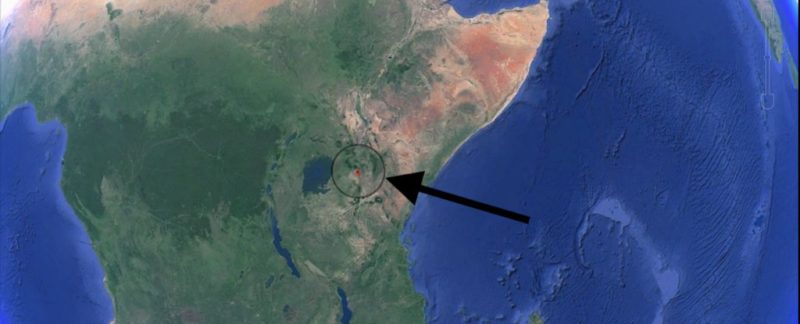
The point of crack in Kenya
A large crack, stretching several kilometres, made a sudden appearance recently in south-western Kenya.
The tear, which continues to grow, caused part of the Nairobi-Narok highway to collapse and was accompanied by seismic activity in the area.
The Earth is an ever-changing planet, even though in some respects change might be almost unnoticeable to us. Plate tectonics is a good example of this.
But every now and again something dramatic happens and leads to renewed questions about the African continent splitting in two.
The Earth’s lithosphere (formed by the crust and the upper part of the mantle) is broken up into a number of tectonic plates.
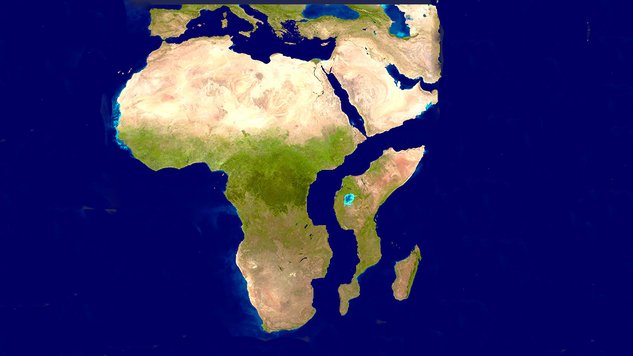
Projection: Africa after the split
These plates are not static, but move relative to each other at varying speeds, “gliding” over a viscous asthenosphere.
Exactly what mechanism or mechanisms are behind their movement is still debated, but are likely to include convection currents within the asthenosphere and the forces generated at the boundaries between plates.
These forces do not simply move the plates around; they can also cause plates to rupture, forming a rift and potentially leading to the creation of new plate boundaries.
The East African Rift Valley stretches over 3,000 km from the Gulf of Aden in the north towards Zimbabwe in the south, splitting the African plate into two unequal parts: the Somali and Nubian plates.
Activity along the eastern branch of the rift valley, running along Ethiopia, Kenya and Tanzania, became evident when the large crack suddenly appeared in south-western Kenya.
Why does rifting happen?
When the lithosphere is subject to a horizontal extensional force it will stretch, becoming thinner. Eventually, it will rupture, leading to the formation of a rift valley.
This process is accompanied by surface manifestations along the rift valley in the form of volcanism and seismic activity.
Rifts are the initial stage of a continental break-up and, if successful, can lead to the formation of a new ocean basin.
Continental rifting requires the existence of extensional forces great enough to break the lithosphere.
The East African Rift is described as an active type of rift, in which the source of these stresses lies in the circulation of the underlying mantle.
Beneath this rift, the rise of a large mantle plume is doming the lithosphere upwards, causing it to weaken as a result of the increase in temperature, undergo stretching and breaking by faulting.
Evidence for the existence of this hotter-than-normal mantle plume has been found in geophysical data and is often referred to as the “African Superswell”.
This superplume is not only a widely-accepted source of the pull-apart forces that are resulting in the formation of the rift valley but has also been used to explain the anomalously high topography of the Southern and Eastern African Plateaus.
Breaking up isn’t easy
Rifts exhibit a very distinctive topography, characterised by a series of fault-bounded depressions surrounded by higher terrain. In the East African system, a series of aligned rift valleys separated from each other by large bounding faults can be clearly seen from space.
Not all of these fractures formed at the same time, but followed a sequence starting in the Afar region in northern Ethiopia at around 30m years ago and propagating southwards towards Zimbabwe at a mean rate of between 2.5 and 5 cm a year.
Although most of the time rifting is unnoticeable to us, the formation of new faults, fissures and cracks or renewed movement along old faults as the Nubian and Somali plates continue moving apart can result in earthquakes.
However, in East Africa most of this seismicity is spread over a wide zone across the rift valley and is of relatively small magnitude. Volcanism running alongside is a further surface manifestation of the ongoing process of continental break up and the proximity of the hot molten asthenosphere to the surface.
A timeline in action
The East African Rift is unique in that it allows us to observe different stages of rifting along its length. To the south, where the rift is young, extension rates are low and faulting occurs over a wide area. Volcanism and seismicity are limited.
Towards the Afar region, however, the entire rift valley floor is covered with volcanic rocks.
This suggests that, in this area, the lithosphere has thinned almost to the point of complete break up. When this happens, a new ocean will begin forming by the solidification of magma in the space created by the broken-up plates.
Eventually, over a period of tens of millions of years, seafloor spreading will progress along the entire length of the rift.
The ocean will flood in and, as a result, the African continent will become smaller and there will be a large island in the Indian Ocean composed of parts of Ethiopia and Somalia, including the Horn of Africa.
Dramatic events, such as sudden motorway-splitting faults or large catastrophic earthquakes may give continental rifting a sense of urgency but, most of the time, it goes about splitting Africa without anybody even noticing.
Twenty years ago, the fate of the Amazonian rainforest was a cause celèbre – and many environmentalists believed it to be a lost one. After decades of rapid deforestation, peaking in the 1990s, prophets of doom were beginning to draft obituaries for the world’s largest tropical forest.
A waterfall in the Amazon rainforest in South America
Now it is being celebrated in a different way. Over the intervening period, the rate of deforestation in the Brazilian Amazon has fallen by more than two thirds. And though the battle for the forest’s future is far from over, it has begun to become a symbol of hope, not despair.
At the heart of the transformation lie determined government policies and an extraordinary programme, pioneered with the Global Environment Facility (GEF) following the vision provided by the government of Brazil, which has created more than 100 reserves. The Amazon Region Protected Areas (ARPA) programme, begun in 2002, has exceeded all its targets.
And it has recently been joined by two other key GEF-financed programmes. One will maintain tens of millions of hectares of forest land in Brazil, Colombia and Peru. The other is a revolutionary, integrated project to promote sustainable agriculture which will reduce pressure on the dry forests adjoining the Amazon.
Everything about the Amazon forest is superlative. It is the largest in the world; it’s biome stretches to over 6 million sq. kilometres, twice the size of India, with more kinds of animals and plants than anywhere else on earth – home to one in every ten of all known species. It contains 70 billion tonnes of carbon, and has a profound influence both on local weather and the world’s climate.
Yet about a fifth of this vast forest – which contains 2,344 indigenous territories – has been cut down. For decades, governments saw it as a frontier that should be opened up to economic development. Roads were carved through it and settlers flocked in to clear land; cattle ranches were established and later turned into soy bean plantations.
That attitude changed dramatically in 1998, when the Government of Brazil pledged to triple the area of the Amazon under legal protection. The rescue effort has had to be on the same huge scale as the forest, and the challenges it faced. ARPA is, quite simply, the world’s biggest-ever bid to conserve tropical rainforests – and it is succeeding.
It set out in 2002 to extend protection to 50 million hectares, a target that was later raised to 60 million hectares. That amounts to 15 per cent of the Brazilian Amazon, an area twice the size of Germany. It reached its goal last year, supporting no fewer than 117 protected areas: in some years ARPA was creating ten times as many such areas, as were being established in the rest of the world put together.
At first it concentrated on creating ecological reserves that excluded people but, as it progressed, it also established several dozen “extractive reserves”, devoted to protecting the livelihood and culture of forest people and ensuring sustainable use of natural resources, such as rubber, Brazil nuts and açaí palm fruit. Subsistence agriculture is encouraged and the reserve’s inhabitants are empowered to become its guardians and stewards.
Nivaldo Sarmento da Silva, a representative of the people of the Tapajós-Arapiuns Extractive Reserve, speaks of how they organised themselves in co-operatives and associations for trade, adding: “The community develops itself”. Another, Ingrid Godhino, describes how they established fish farming – a very important project for us because it helped in producing our own food and generating income.”
The reserves safeguard the climate as well as biodiversity and indigenous people. Between 2005 and 2015, ARPA-supported protected areas avoided carbon emissions equivalent to all those generated each year by motorised transport worldwide.
In 2012, the initiative received the inaugural Development Impact Honours award from the US Department of the Treasury and last year it was selected as one of eight key transformational change projects supported by the GEF.
José Sarney Filho, Brazil’s Minister of the Environment, hails the country’s “highly positive partnership” with the GEF adding; “What makes the ARPA project effective is its funding”.
Rosa Lemos de Sá, CEO of the Brazilian Biodiversity Fund-FUNBIO, ARPA’s financial executor, says that “a programme of such proportions was unheard of – even inconceivable – until the GEF pledged financial support”. And Fabio Leite, its Agency Coordinator, adds: “The GEF was the first funder to assess the risk and to implement the project. It was a pioneer in the finance of the project, which was very important in bringing other donors to our side”.
Stefan Schwager, of the Swiss Federal Office for the Environment, says: “This is a model that could be, and should be, replicated in places that have similar ecosystems.”
In October 2015, the GEF’s Council committed to a new Amazon Sustainable Landscapes Programme, spanning Brazil, Colombia and Peru – which together cover 83 per cent of the Amazon basin – to maintain 73million hectares of forest land, promote sustainable land management in 52,700 hectares and support actions that will help reduce C02 emissions by 300 million tons by 2030.
Implemented by the World Bank, with the World Wildlife Fund and the United Nations Development Programme (UNDP), it will be the first programme to take an integrated approach to safeguarding the Amazon ecosystem – protecting globally significant biodiversity and mitigating climate change by implementing policies to foster sustainable land use, and protected areas management, and to restore vegetation.
Another integrated GEF programme, the Good Growth Partnership, aims to take deforestation out of the supply chain for soy in Brazil, and is focusing on the vulnerable Matopiba area of the country’s Cerrado savannah. It is expected to result in at least 40% of the area being covered in native vegetation.
It promotes a dialogue between conservationists and producers to attain sustainable soy production and stands to benefit farmers as well as the environment because they can get higher prices from concerned consumers for soy grown in an environmentally-friendly way.
Gustavo Fonseca, the GEF’s Director of Programs, says: “ARPA and the Good Growth Partnership are different sides of the same equation. What we are trying to do is to preserve the patrimony that has been created with ARPA over the last 15 years or so, but complement it with an approach that deals with the larger landscape, market forces and supply chains across commodities that have a huge footprint on deforestation.
“Hopefully we have a more integrated, comprehensive approach. You can’t only work with market forces without addressing conservation of representative samples of biodiversity. Conversely, you can’t hope that every single hectare of forest in the Amazon will be protected under a reserve or a national park. You need to have enough space for economic activities to expand, but in a sustainable way, away from standing forests.”
The government of Brazil has signed into law two decrees that designate two new marine protected areas around the Saint Peter and Saint Paul Archipelago and around the Islands of Trindade and of Martim Vaz. The announcement was made during the 8th World Water Forum that held recently in the country.
The island of Trindade is one of two areas that will see expanded protections under a new plan by the government of Brazil. The second area is the Saint Peter and Saint Paul Archipelago
The designation increases the Brazilian marine protected areas from the current 1.5 percent to 24.5% percent, and surpasses the target set by the Convention on Biological Diversity (CBD), which recommends the protection of 10% of marine and coastal areas by 2020. The Global Environment Facility (GEF) has disclosed that it helped finance the work leading to the declaration of the new marine protected areas.
While welcoming the development, Gustavo Fonseca, GEF Director of Programmes, said: “The creation of these marine protected areas in remote areas of the Atlantic Ocean is good news for ocean protection and will also help Brazil meet the objectives of the GEF project on marine and coastal protection (GEF-Mar) that is directly benefitting traditional and fishing communities.”
Both initiatives are a result of common efforts by the Ministries of Environment and Defense, through the Chico Mendes Institute for Biodiversity Conservation (ICMBio) and the Brazilian Navy, promoting the protection of biodiversity in rare marine ecosystems within the limits of the Brazilian Exclusive Economic Zone. The move fulfills national and international commitments to protect at least 10% of its marine biome with biodiversity significance, following the 1992 Convention on Biological Diversity, the 2020 Aichi Goals, as well as the 2030 Sustainable Development Goals.
The rock islets of Saint Peter and Saint Paul, located near the Equator line at 1000km from Northeastern Brazil and 1900km from Western Africa, constitute the smallest and remotest tropical archipelago in the planet, visited in 1832 by Charles Darwin, who studied the isolation that favours uniquely endemic species that risk extinction today.
Further South, resulting from the collision between cold ocean waters and the magma of erupted volcanos from the mountain range underneath the South Atlantic around 3.5 million years ago, the island of Trindade is the only portion tipping above sea level of the 1000km mountain range. Along with the Island of Martim Vaz, Trindade would compose another major protected area in the announced plans of the government.
An environmental group, ‘’Let’s Do It Nigeria’’, said it had developed a mobile app to help track trash points and illegal dumpsite across the country.
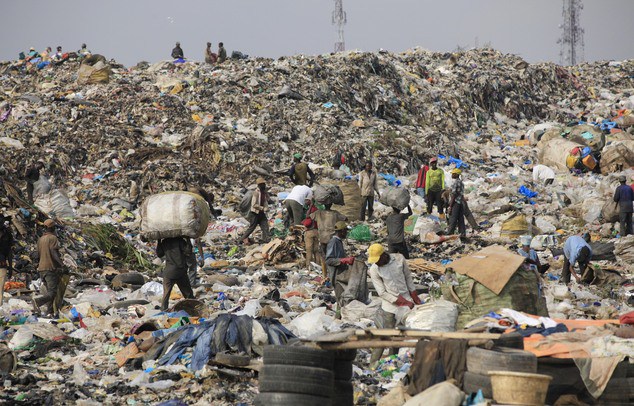
Scavengers at the Olusosun dumpsite in Lagos
The Marketing and Public Relations Manager of the group, Gafar Olorunleke, disclosed this to the News Agency of Nigeria (NAN) in an interview on Sunday, April 1, 2018 in Lagos.
Olorunleke said the mobile app was developed as parts of efforts help the effect management of waste in the country as well realise the group’s dream of a waste-free environment.
“Let’s Do It Nigeria is not about cleaning up alone, we also unite organisations and stakeholders over various sectors of the economy to achieve a common goal of a waste-free environment.
“What we are trying to achieve is a waste free planet. We started this cleanup campaign from the middle of last year and we have held pilot cleanup in almost all states in Nigeria.
“Right now, we have the mobile app called the ‘World Clean Up’ app
‘’As part of our advocacy, we tell Nigerians that they can use this app to locate where there trash points around them.
‘’Contact us, so we can then organise stakeholders and waste organisations to go and clean them up,” he said.
The environmentalist also disclosed that, as parts of the group’s advocacy efforts, the group was also building up a map where illegal dumpsites could be located and necessary action taken by the regulatory bodies.
“From April to June 2018, we will embark on the mapping out campaign. We are building a map where Nigerians can log into a portal and see every point, where we have trash points in Nigeria.
‘’The map shows every point where we have illegal dumpsites in the country.”
He stressed the need for Nigeria to embrace the opportunities inherent I n recycling waste and the benefits of ensuring a cleaner environment.
“We want to make people know that they can live in the waste free environment.’’
He urge the people to see recycling as an opportunity to effectively manage waste instead of dumping refuse all around, littering everywhere with waste.
“There is an opportunity in waste management, so we are also trying to evaluate the value chain of waste management in Nigeria, from the point of household waste disposal to that of recycling.
‘’We want people to see the opportunity in waste management as something they can tap into.’’
Olorunleke said the group’s advocacy activities include a build up toward the world cleanup day scheduled for Sept.
“One of the greatest objectives is to mobilise 5 per cent of Nigerian population for the biggest civil action in the history of the world, which is the World Cleanup Day in September.
At this point of the advocacy, we do more of a build by engaging in a lot of advocacy.
“Currently, we have a volunteer base of 5,002 members all over Nigeria.
‘’We have also reached some download of the mobile World Cleanup App. we are also getting promises from the government to collaborate on this massive action.
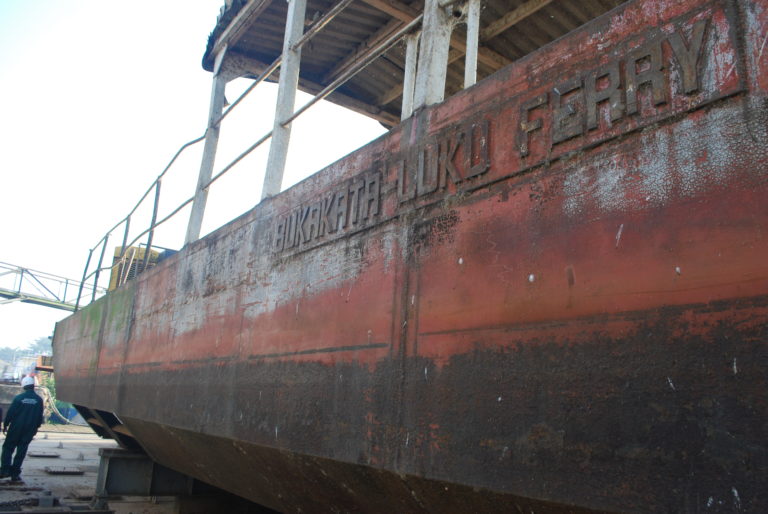
MV Bukakaka under the supervision of Uganda National Roads Authority (UNRA) has been at been at the floating dry dock at Port Bell in Luzira for three years, which has resulted into losing billions of money in docking ( parking) fees.
MV Bukakata. Photo credit: Hope Mafaranga
The Uganda Railways Cooperation (URC) Senior Marine engineer, Aggrey Ojambo, said UNRA pays URC $400 per day for the parking space for the MV Bukakata.
Ojambo said the delay of MV Bukakata overstaying at the dry dock has affected the operations of because they can hardly have other vessels repaired at the dock as it being occupied by MV Bukakata.
Ojambo said the delays also have an implication because they cannot handle emergency in case they surface on the lake, adding that they also lose business because they cannot accommodate other big vessels in the presence of MV Bukakata.
“The long stay of MV Bukakata on this dock has a big negative impact on us because we operate on the business model. It also poses a challenge for us to rescue any vessel which could be under the threat to under sinking,” he said.
Ideally, according to Ojambo, MV Bukakata could have taken only three week to undergo all the necessary repairs if all that is required was put in place to have it fixed and it would also save URNA money.
“This Ferry was meant to be here for only three weeks but it has not taken three years paying USD 400 per day. Any business sensible man cannot compare the cost of three weeks to three years. It does not make any economic sense,” he added.
He said UNRA could have used the opportunity and the Ugandan capacity to save huge amounts of money to have completed the repairs.
“UNRA has not been able to clear the docking fees to URC and it is had issues with the contractors a reason to why the vessel have been on the dock for more time than expected,” he said without mentioning the figure they own UNRA.
However the UNRA head of public and corporate affairs Mark Ssali did not deny that they are in arrears with URC.
“We are aware about the arrears we have with URC and top management of UNRA is engaging with URC to ensure we clear our debt with them, “he said.
Ssali also regretted the delays of finishing the repairs of MV Bukakata which he said were as a result of poor works by the contactors.
“The first contract did a shoddy work and he was terminated, we went on to get the second one who did not do they do. At the moment, UNRA is back in the to get another contract to do the job and I am sure within the next two months, MV Bukakata repairs will be done,” he said.
The Managing Director Kalangala Infrastructure Services Ltd (KIS) John Opondo agreed with Eng. Ojambo saying that initially Uganda used to take her vessels to Mwanza in Tanzania and Kisumu in Kenya for repairs which could be done here.
Opondo said whenever Uganda would take vessels to Kisumu and Mwanza they would pay almost thrice of what UNRA is paying in Uganda.
“At first we used to take our vessels to Tanzania and Kenya but we have actually realised that it can be done here. We have just had our own MV Ssese repaired at this dock.
If we had taken it to Mwanza, we would have spent more than USD 400,000 in repairs, direct and indirect cost but here spent only 200,000 and time,” he said.
The Kalangala Resident District Commissioner Caleb Tukeikiriza said blamed the delays in repairing MV Bukakata to confusion and disorganisation of government’s agencies.
“This could have been worked on long time ago, if UNRA, Ministry of works and URC had a good working relationship,” he said.
The Kalangala district LCV chairperson Willy Lugoloobi said the water transport has not been a top priority to government compared to other sectors.
“Our government has been paying attention to the road sector, upgrading the airfields and lately to the railways but the water transport has been a neglected child,” he said.
Lugoloobi said MV Kalangala is due for repairs according the marine international laws but he expressed concerns that this will affected service deliver and local revenue in the district.
The vessel that plies Nakiwogo landing site in Entebbe and Lutoboka in Kalangala on daily basis has to undergone mandatory inspection and servicing as a requirement to meet the International Maritime Organization (IMO) seaworthiness requirements.
“We are scared if MV Kalangala is taken to Mwanza for repairs it will take more time there as it was before which will affect business in Kalangala,” he said.
According to Lugoloobi, taking vessel to Mwanza is unnecessary expenditure as the have government have the same facilities at Port Bell pier.
However sources from the ministry of works and transport the dry dock at Port Bell can ably facilitated the servicing of the vessel if has no any vessel pending repairs. However currently the dock is engaged by MV Bukakata by UNRA which is pending general repairs and modifications before being allocated to Buvuma Islands at Kiyindi whose vessel is old and too small to handle the increasing traffic volumes.
He said Kalangala can only be accessed by water and if MV Kalangala is not operational, many beaches and hotels are likely to lose business like it was two years when the vessel was taken for repairs.
“You cannot charge a hotel or beach owner local service tax when they do not get guests to stay at their hotels. It’s my appeal that UNRA works on MV Bukakata faster to give away for MV Kalangala to be repaired and serviced at this dock in Ugandan instead of taking it to Mwanza where we will be spending along of money and losing time, “he said.
He however was quick to add that, the 0safety of the people is important but appealed to the concerned authorities to have it done in Uganda.
“I know its mandatory for the vessels to be repaired every after two years and this business is heavily dependent 0on insurance because there no insurance company that will pay you in case of the problems that’s why we have to follow the rules and regulations to ensure that people’s safety is guaranteed,” he said.
Monica Azuba, the works and transport minister, the ministry is planning to remodel Port Bell and the Jinja pier to become regional hub and attract more vessels from neighboring countries.
She said water transport has been neglected, yet it is a modest means of transport for bulky cargo and could protect the road infrastructure from premature failure.
The vessel can carry 22 trailers full of fuel and has fuel reserve tanks (Bankers) of 120,000 liters that can run it for one month.
“Water transport is something we have to pay attention to due to its capacity in transporting bulky cargo. Using water transport will also save our roads from getting old faster due to heavy loads of cargo,” she said.
Abudul Kasiko a professional diver said the ships pass through a lot of hazards like fishing nets. These get stuck in propelas leading to warming up of engines and breakdowns.
“When engines warm up, ships use a lot of fuel leading to losses. Each ship should be checked by engineers at least twice a week depending on its operations,” he said.
Aggrey Bwanga the MV Kaawa Captain said if a ship is operating on salty water, it must be docked and checked as there plates rust often as a result of the chemicals in the water.
For those that operate in fresh waters, they must be docked and checked at least twice every two years. However if there is an emergency, a ship should dock immediately for a checkup as required by the law.
After 10 years of service, a ship must be docked and parts should be changed.
Joseph Mulindwa, the KIS public relations officer, explained that Uganda has the capacity of repairing vessels here and it will help build capacities of our local engineers. “Imagine even the painting of these vessels have also been done in Mwanza but if we keep on doing it here we will create a cadre of technical people on marine sector.”
Malawi’s vulnerability to the devastating impacts of climate change is caused by the country’s significant exposure to climate variability. Agriculture and rural livelihoods are highly sensitive to climatic change. They have very low adaptive capacity at the community and national levels. As a result, a wide range of climate-induced devastations have occurred in Malawi during the past 30 years, including flooding, late rains, and dry spells. These impact all regions in the country but vary depending on geographical location. The phenomena threaten smallholder farmers in all regions.
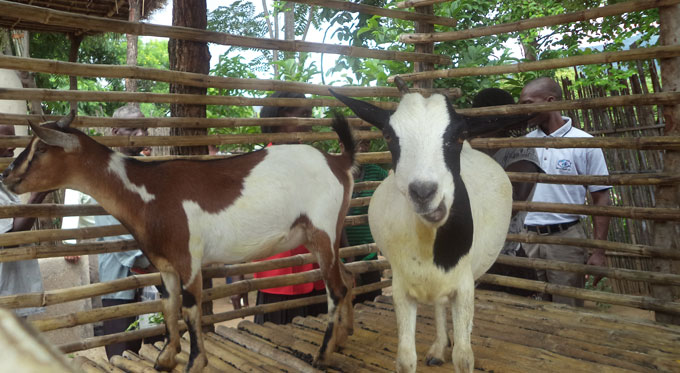
Goat production in Chikwawa: A farmer at GVH Moses shows the standard goat enclosure and the goats he reared
Drought and poor rainfall affect crops, yield and household food security. Crops dry up before maturity, damage due to floods, soil degradation (soil erosion, loss of soil fertility, and siltation of fields), shortage of water, reduction in yield, and consequently food insecurity are among the negative impacts. Since agriculture is the major source of income for most farmers in Malawi, rural livelihoods are significantly affected by these problems. Malawi has of late experienced food shortages in some parts of the country, with about 1.9 million households requiring food assistance since 2007.
Objective
In response to the above challenges, the Climate Adaptation for Rural Livelihoods and Agriculture (CARLA) project was designed and implemented in three of six priority districts with the goal of building community resilience by developing and implementing adaptation strategies and measures that will improve agricultural production and rural livelihoods. The project is to ensure that the capacity to support community-based adaptation to climate change are enhanced and that communities are able to implement integrated climate change adaptation strategies and interventions that improve agricultural production and rural livelihoods.
The African Development Bank’s (AfDB) Board approved a $3 million Global Environment Facility (GEF) grant for the CARLA project on November 10, 2011. The implementation agreement was signed the following year. The project took off on April 12, 2012 and was concluded on June 30, 2016. The overall goal to improve communities’ resilience to climate variability and climate change by developing and implementing adaptation strategies and measures that will improve agricultural production and rural livelihoods were largely achieved. It focused on integrated climate change adaptation strategies and interventions that improve agricultural production and rural livelihoods; and enhanced national and district agencies’ capacities to support community-based adaptation to climate change.
Impact
CARLA reportedly increased household agricultural productivity (maize from one ton per hectare to 4.5 tons per hectare) and reduced food insecurity from nine months of hunger in a year to zero for direct project beneficiaries.
A total of 6,665 goats were distributed at the end of the project. Farmers who benefited from the project have testified to the success of the programme.
The project was implemented in three districts and in each district there was a model village where various climate change adaptation measures were being piloted. The target sites were in Mwakabanga village in the district of Karonga, Moses in Chikhwawa and Kafulama in Dedza District. Best practices from these model villages were disseminated to other communities within the districts and surrounding areas. The adaptation planning process included a stakeholder-led vulnerability assessment and participatory development of a Community Climate Change Adaptation Action Plan, leading to implementation and monitoring of the priority measures in the action plan.
Abraham Simkonda, CARLA Lead Farmer, Karonga District, said: “As one of beneficiaries of CARLA initiatives, I feel very grateful for its timely assistance. The district suffered serious drought this season, but thanks to CARLA I may not feel the impact that much. I will sell some bananas and pawpaws to provide basic household needs.
“To show my appreciation, I have set up a nursery in my garden for growing seedlings distributed free of charge to other farmers in the area. So far, I have given out banana suckers to 15 farmers. After giving out the fruit trees, I also train the beneficiaries using skills that officials from CARLA taught me. I have no doubt that, within the next few years, most farmers in this area will have fruit trees in their homesteads.”
The communities have hailed the small livestock development as one of the most successful interventions with wider impact and coverage because of the “pass on” system where the offspring of goats are passed on to other beneficiaries. The types of livestock being distributed (goats) are adapted to the area and are easy to manage. A total of 6,665 goats were distributed at the end of the project.
Eti Nankhonde, beneficiary of the CARLA Goat Pass-On Scheme in Kannga District, said: “I am so happy because I now have five goats which I never dreamt of. With the five goats, hunger will soon be a thing of the past. I expect these goats to reproduce and give me more goats. I urge my friends who have received goats today to take good care of them so that others may benefit from the initiative.”
General impacts of the project cited by beneficiaries
Adoption of resilient behaviour/knowledge of climate change impacts and implementation of climate change adaptation interventions to mitigate its effects using locally available resources.
Increased food security among participating households and reduction of the lean period from three months to one month. For example, livestock farmers have been able to adapt to food insecurity through income realized from livestock and sales of livestock products.
Improvement in nutrition status through access to, and consumption of alternative sources of proteins from aquaculture, poultry, goats, sheep and pigs.
Improved access to safe water and reduction of incidence of water-borne diseases through bore holes.
Diversification of sources of income through sales of livestock and livestock products enabling some households to provide their needs, pay fees for children, and acquire building materials.
Positive spillover effects of the project to non-beneficiary areas implementing some interventions in the construction of standard goat kraal (shed), cultivation of kitchen/backyard gardens, owning homestead woodlots; fish ponds.
Introduction of rice farming in upland areas of Dedza which was not a traditional crop in the area.
Increased awareness of political leaders and decision makers on climate change adaptation measures through events like field days. The project also held a national open day on May 5, 2016 in Chikwawa, which was attended by the Minister of Agriculture, Irrigation and Water Development.
Donors have pledged an additional $15.3 million to support quick action by the World Health Organisation (WHO) to tackle disease outbreaks and humanitarian health crises through its emergency response fund in 2018, the Contingency Fund for Emergencies (CFE).
Alistair Burt, UK Minister of State for International Development
Canada, Denmark, Estonia, Germany, the Republic of Korea, Kuwait, Luxembourg, Malta, Netherlands, Norway, and the United Kingdom of Great Britain and Northern Ireland announced contributions ranging from $20,000 to $5.6 million at a conference hosted at WHO headquarters in Geneva, Switzerland on Monday, March 26, 2018 – increasing CFE funding levels to $23 million.
This will enable the rapid financing of health response operations in the coming months – filling that critical gap between the moment the need for an emergency response is identified and the point at which funds from other sources can be released. WHO will seek to secure further donor commitments to achieve its $100 million funding target for the 2018/2019 biennium.
First-time pledges were made by Denmark, Kuwait, Luxembourg, Malta and Norway. The UK has increased its overall commitment to the fund from $10.5 million to $16 million, making it the second largest donor after Germany.
“For the UK, the CFE is an extraordinarily good investment. We are convinced it has a vital and unique role to play in the global effort to prevent and mitigate health emergencies. Today we pledge an additional £4 million ($5.6 million) for the Contingency Fund and pledge to work with WHO to better profile to a wider audience the huge value it brings. The G7 and the G20 share the UK’s desire for an adequately funded CFE. We urge our fellow Member States and donors to heed WHO’s call and to step forward to provide financial support for the Contingency Fund for Emergencies,” said Alistair Burt, UK Minister of State for International Development.
The CFE’s ability to release funds within 24 hours sets it apart from complementary financing mechanisms that have different funding criteria and slower disbursement cycles. While other funding mechanisms allow for the scale up of response operations, none are designed to deliver an immediate and early response. The CFE has demonstrated that a small investment can save lives and dramatically reduce the direct costs of controlling outbreaks and responding to emergencies.
“Without the CFE, recent outbreaks of Ebola in DRC, Marburg virus Disease in Uganda and pneumonic plague in Madagascar could have gotten out of control. By acting decisively and quickly, we can stop disease outbreaks and save thousands of lives for a fraction of the cost of a late response. The CFE has proven its value as a global public good that should be underwritten by long term investment,” said Dr Peter Salama, WHO Deputy Director General for Emergency Preparedness and Response.
Since 2015, the CFE has enabled WHO, national authorities and health partners to get quick starts on more than 50 disease outbreaks, humanitarian crises and natural disasters, allocating more than $46 million. It has supported the rapid deployment of experts; better disease detection and reporting; the delivery of essential medicines, supplies and personal protective equipment; the strengthening of surveillance and vaccination; improved access to water, sanitation and health services; community engagement; and more.
Madagascar’s health minister, Dr Lalatiana Andriamanarivo, called for increased support for the CFE, saying it was instrumental to containing an unprecedented outbreak of pneumonic plague that rapidly spread across the island nation in 2017.
“We call on our international partners to support the Contingency Fund for Emergencies to enable WHO to respond to outbreaks everywhere across the world, and to reinforce national capacities to manage health emergencies in the future,” said Dr Andriamanarivo.
In 2017, the CFE provided nearly $21 million for operations in 23 countries, with most allocations released within 24 hours. Over half (56%) of allocations funded responses in the WHO Africa region, with 28% going to responses in countries in the WHO Eastern Mediterranean Region and 11% to the South East Asia Region.
The WHO Health Emergencies Programme has three funding categories: the core budget that covers essential functions; the appeals budget that covers the additional work done in response to acute and protracted health emergencies; and the WHO Contingency Fund for Emergencies.
The Contingency Fund for Emergencies is replenished through donor contributions outside of the WHO Health Emergencies Programme core budget. Contributions are said to be pooled and flexible, rather than earmarked for specific activities.
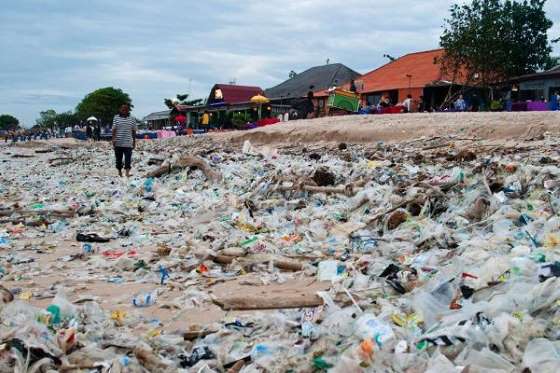
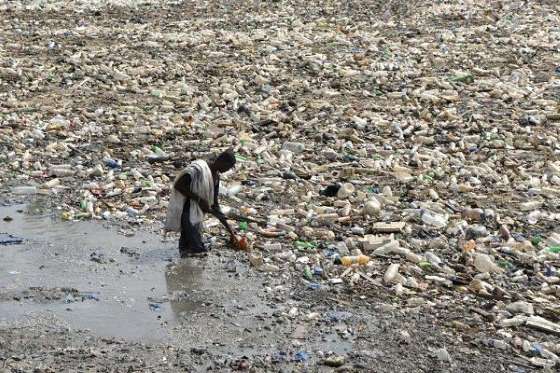
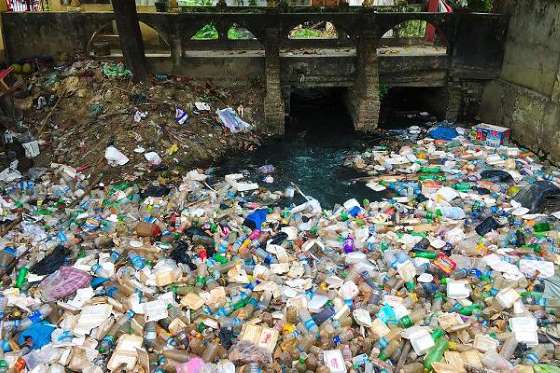
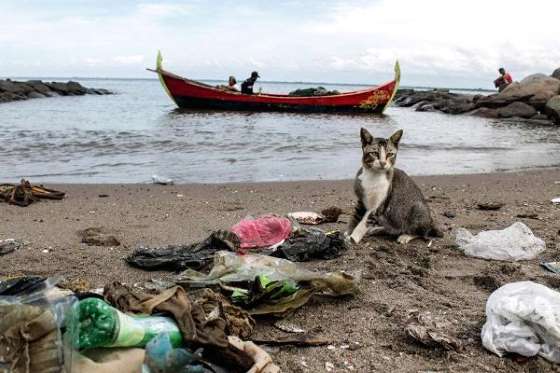
A simple walk on any beach, anywhere, and the plastic waste spectacle is present.
All over the world the statistics are ever growing; indeed, staggeringly. Tons of plastic debris is discarded every year, everywhere, polluting lands, rivers, coasts, beaches, and oceans. Plastic debris can vary in size from large containers, fishing nets to microscopic plastic pellets or even particles.
Environmentalists have long denounced plastic as a long-lasting pollutant that does not fully break down, in other terms, not biodegradable.
The UN Environment states that an estimated 8 million tons of plastic waste find their way into the planet’s oceans every year.
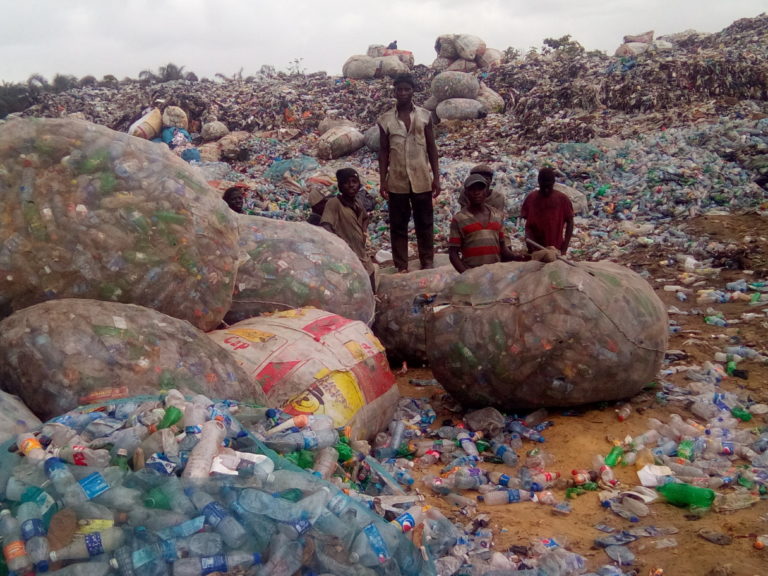
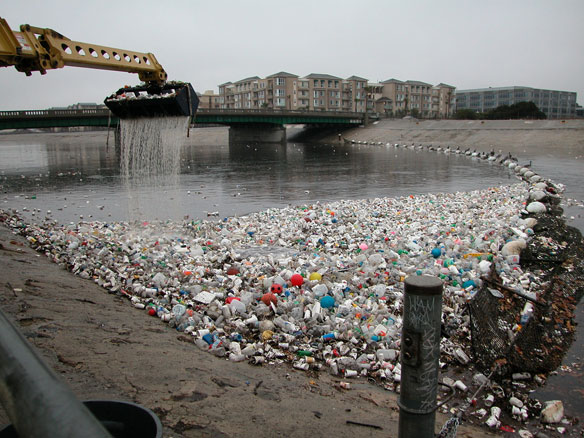
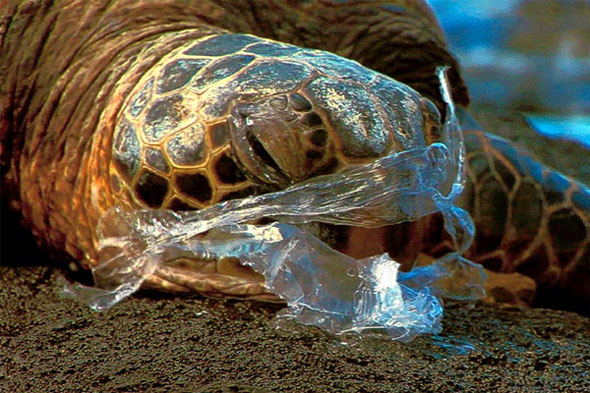
Plastic bottle scavengers and their wares at the Epe Landfill Site/EcoPark in Lagos, NigeriaPlastic is strewn across a beach in Bali, IndonesiaA man gathers plastic at a waste water evacuation canal in the Ebrie Lagoon, Abidjan, Côte d’IvoirePlastic clogs up a waterway in Yangon, MyanmarA cat sits on a beach in Aceh Province, Indonesia, surrounded by plastic wastePlastic pollution at the mouth of the Los Angeles River, Long Beach, California, USAA turtle eating plastic
A visit to every nook and cranny of Lagos these days is something to forget in a hurry. What welcome passers-by are not the beautiful flower hedges or finely tarred roads expected of a mega city. Rather, it is the stench oozing from the heaps of refuse dotting major roads and feeder streets in the state. No thanks to the state government’s decision to abruptly terminate Private Sector Participation (PSP) operations without a proven model of the Cleaner Lagos Initiative (CLI).
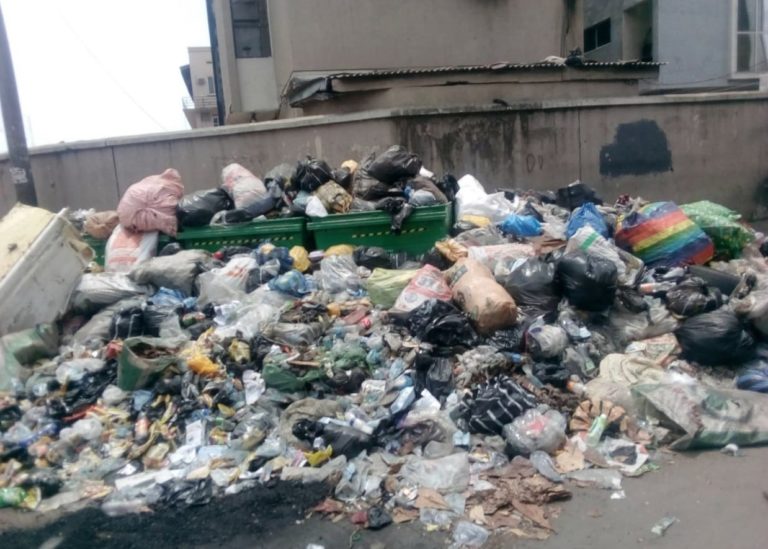
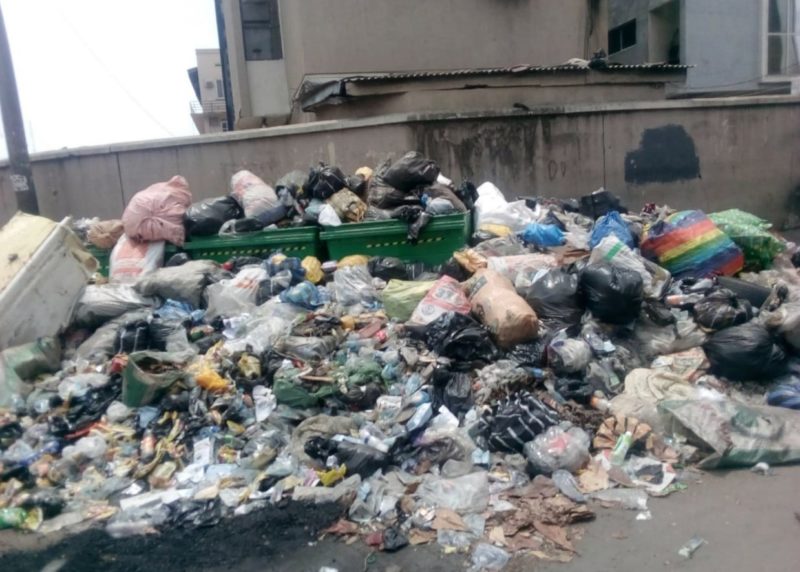
Heaps of refuse on a Lagos feeder road
From my findings, the current waste issue in Lagos is a result of poor planning and coordination, as the state government completely ditched an old model that can be optimised for a new one that has no visible track record or proof of concept to handle such task as Lagos solid waste management. It then beats one’s imagination that the current administration in the state eased out PSP without looking at its impact and knowing fully well that the widely touted “world-class” Visionscape does not have the capacity to hit the ground running in a state that generates about 16,000 tons of waste per day.
But how did we get to such a sorry state? I mean, how did we get to such an appalling situation where constant refuse evacuation has apparently turned rocket science. From Agege to Iyana Ipaja, Oshodi, Mushin, Surulere, Lagos Island, Ajah and Sangotedo among other neighbourhoods in the state, the laments are the same as road medians and junctions are now adorn with refuse. The governor, while justifying his action at different state functions, stressed that the best way to sustain the environment is through the ongoing waste management reform, because it offers a unique opportunity to seek private investment to infuse more efficiency. But of what benefit is a policy or reform without human face?
Except we rise to the occasion and impose sanity on the environment, Lagos may be in for an epidemic outbreak and man-induced disasters. Apart from the stinks oozing from piled refuse heaps across the state, these sites serve as a breeding haven for agents of disease such as mosquitoes, houseflies and rats. It won’t take much effort to realise that the backlash of messy Lagos environment is beginning to bear fruit. Mosquitoes cause malaria; rats transmit disease such as Lassa fever, and houseflies are known agents of bacteria that carry diseases including cholera, typhoid and diarrhoea.
Now the rainy season is approaching. When at its peak, it will be bad news for most residents in the economic nerve of West Africa. At every point in most parts of the city are heaps of debris to be dripped by floods. Thereby obstructing the normal flows and blocking the waterways. If recalled, the state witnessed serious flooding in previous years due to drainage blockage. Without rising to the challenge in a sustainable approach, recurrence should be expected with a bigger bang.
The new operator of waste management in Lagos seemingly lacks adequate manpower and has poor understanding of the local operational context in a clime like Nigeria. Until Visionscape realises efficient waste management is not done with showy pictures and videos flooded on Facebook, Twitter and Instagram, the company is just playing ping-pong. Trust me; the effort expended on image laundering alone is enough to constantly get refuse heaps off the streets of Lagos.
Lagos can be rid of refuse again, but only when the reforms and strategies are right.