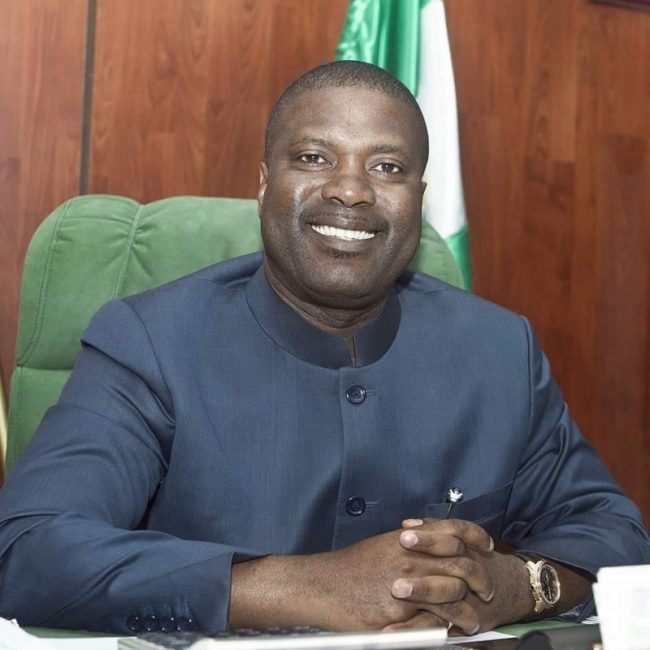
An International environmental researcher, Mr Balogun Oloruntoba, has charged Nigerians to be sensitive to the dangers posed to their health by carbon emissions and other agents of environmental pollution.
Carbon emission: The WHO says that, in one year, 46,750 persons died as a result of outdoor pollution in Nigeria
Balogun, who gave the charge in an interview with the News Agency of Nigeria (NAN) on Wednesday, April 11, 2018 in Abuja, urged the government to invest in reducing its effect.
He called on the Nigerian government to join other developed countries in stopping global warming through reducing carbon emissions to help protect the environment.
“Many developed and developing countries have been focusing on reducing carbon emissions to stop global warming which tends to be vital in protecting the environment.
“Global warming is the gradual increase in the temperature of the earth’s atmosphere accredited to the greenhouse effect caused by increased levels of carbon dioxide and other air pollutants.
“The emissions causing this effect are greenhouse gases which are gases that are absorbed into the atmosphere which end up emitting radiations within the thermal infrared range.
“The major gas taken into consideration is the Carbon dioxide (CO2) gas which is emitted mostly by daily activities of humans such as the burning of materials, petrol and other fossil fuels, production of cement, cutting down trees and more.
“These acts are what lead to the world gradually becoming hotter in all regions.
“The imbalance in climate then causes natural disasters to occur in places that are not prone to disasters and cause extreme effects in prone regions,’’ he said.
Oloruntoba said that the Nigerian Government should create platforms for awareness and encourage Nigerians to take measures to stop global warming.
“It is important for Nigerians to be educated on this as I have realised that a good number of Nigerians have never heard about the concept of climate change or global warming.
“The government should sponsor the spread of global warming awareness and modes of improvement.
“Investing in renewable energy, recycling waste and preventing waste of resources are the major solutions to solving or managing global warming.
“It is important that we plant more trees and greenery around us instead of burning bushes and we should stop dumping waste into water bodies.
“Many people who are into gardening recycle their waste and trash by allowing it decompose in their soil which nourishes the soil and enables growth of plants.
“This sort of measures would help our environment immensely.’’
Often in the immense challenge of climate change, we focus on the immediate action that needs to happen. There is a good reason for this. Science says that we are running out of time to avert the worst impacts of climate change on people and on our planet.
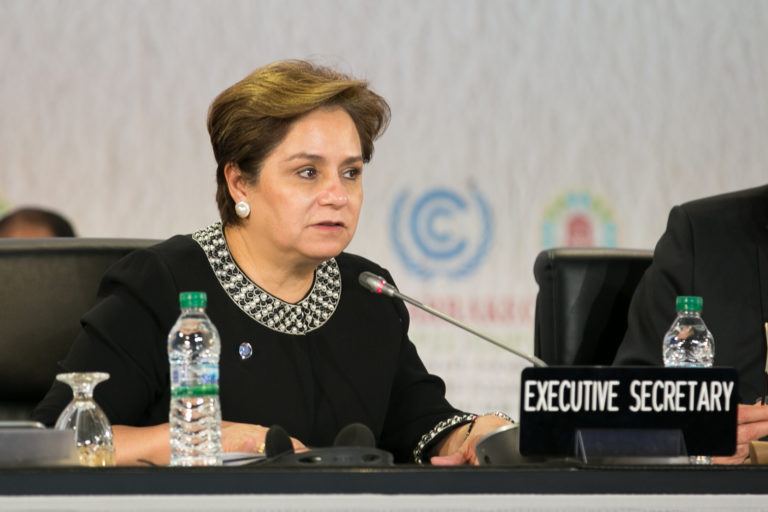
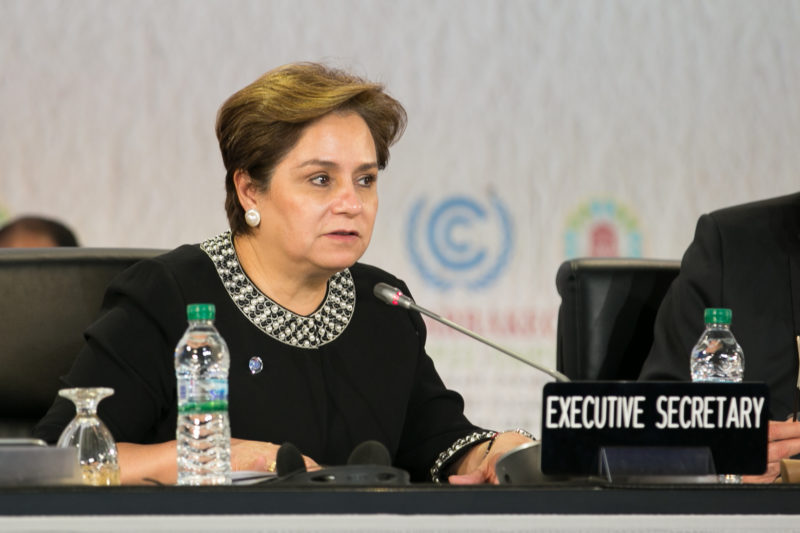
Patricia Espinosa, executive secretary of the UNFCCC
Yet as we take action before 2020, we have to keep an eye on the future. Our action today must be in service to the long-term goals agreed when the world first came together to address the climate challenge.
In the United Nations Framework Convention on Climate Change adopted in Rio de Janeiro in 1992, governments agreed a long-term objective of stabilising “greenhouse gas concentrations in the atmosphere at a level that would prevent dangerous anthropogenic interference with the climate system.” This objective fundamentally guides Parties to the Convention as they engage in the intergovernmental process to address climate change.
This process has delivered important multilateral agreements towards this goal, such as the 2015 Paris Agreement, the Kyoto Protocol and more. These represent concrete actions and time frames to reduce emissions and adapt to the impacts of climate change. They also include cooperation on finance, technology, and capacity building with a view to increase efforts over time.
The Paris Agreement is a bold statement by the international community under the United Nations to transform the global economy. The goals enshrined in the agreement will only be achieved if we limit the impact that our power generation, production methods, agriculture and consumption patterns have on the climate system. The Agreement is itself a global strategy for the longer term that is defined by three aims:
First, limit the average global temperature rise to well below 2C above preindustrial levels and pursue efforts to limit this increase to 1.5C
Second, increase the ability to adapt to the adverse effects of climate change and foster climate-resilient and low greenhouse gas emissions development, in a manner that does not threaten food production.
Third, make financial flows consistent with a pathway toward low greenhouse gas emissions and climate-resilient development.
This provides clear direction for long-term development. Science states that achieving the long-term temperature goal requires global greenhouse gas emissions to peak by 2020 and reduced to zero this century. To limit warming to as close to 1.5C, this reduction to zero must take place around the year 2050. Given the link between economic activity, greenhouse gas emissions and the impacts of climate change, this is a signal to nations and non-state stakeholders alike.
The temperature goal reflects a vision of society we want for the future. It represents a transformation of our economic system where development is not hindered by negative impacts of climate change. Such a transformation compels us to rethink the way we produce, use, and consume energy. It requires innovation in how we manufacture and build, and new strategies to manage land and ecosystems.
To reach net-zero global net greenhouse gas emissions before the end of this century, we need to strike a balance between emissions from human development and the planet’s capacity to remove emissions through healthy, natural ecosystems and sound land management.
This transformation must be achieved over time but also in time. Policies need to be put in place now. Technologies need to be developed, matured, and deployed at scale. The practices and behaviours of all economic actors need to move ever faster toward low-emission and sustainable business and investment models.
From a national perspective, these strategies are fundamental. They inform short- and medium-term political and economic cycles, while providing political certainty for bold action in the real economy. At the same time, they provide the flexibility needed so countries can transform their economies without compromising their development and poverty eradication goals.
UN Climate Change is glad to collaborate with World Resources Institute and United Nations Development Programme to provide nations and stakeholders with a library of value resources to help develop long-term climate strategies and ensure they are successfully implemented. Find out more at www.longtermstrategies.org
UN Climate Change is committed to leverage our many years of multilateral cooperation to achieve a better future for humanity. It is how we can come together to meet the challenge of climate change.
By Patricia Espinosa, Executive Secretary of UN Climate Change
To help unlock economic growth, the African Development Bank (afDB) is coordinating the implementation of an integrated development strategy for Portuguese-speaking countries in Africa.
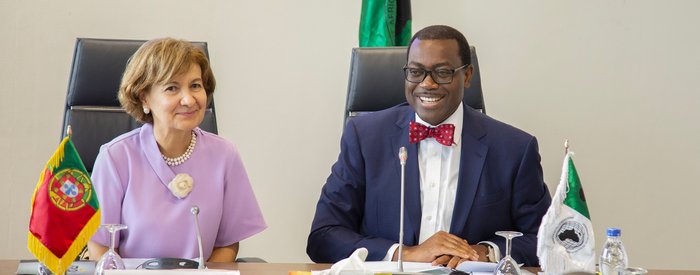
AfDB President Akinwumi Adesina with Portugal’s Secretary of State for Foreign Affairs and Cooperation, Teresa Ribeiro
In preparation for the rollout of this initiative, the bank and the Government of Portugal have signed an agreement to provide language training to African Development Bank staff interested in learning Portuguese, as well as professional conference translation services.
The language-learning cooperation agreement, signed by the Institute for Cooperation and the Portuguese Language (Camões – Instituto da Cooperação e da Língua, I.P.) and the bank at the AfDB headquarters in Abidjan, also provides conditions for the translation and dissemination of the Bank’s standard project procurement and financial management documents into Portuguese.
“The Lusaphone countries are not one contiguous group. What we are talking about here has a cultural, linguistic, political and economic perspective. I believe Portugal will play a key role in bringing about greater integration,” AfDB President Akinwumi Adesina told the visiting Portuguese delegation led by Teresa Ribeiro, Portugal’s Secretary of State for Foreign Affairs and Cooperation.
“As a bank, we are committed to this. We are also delighted about the Portuguese training agreement we have signed,” Adesina said.
Teresa Ribeiro commended President Adesina for his vision and the bank’s support to Lusaphone countries. She welcomed the possibility of a compact that could respond to challenges facing the Portuguese-speaking countries.
“What we want to achieve with the African Development Bank is a very ambitious programme that responds to critical issues. The countries need the compact to enable investors,” she said.
As part of the Bank’s catalytic role, it is relying on the historical, cultural and language bonds that unite Africa’s Portuguese-speaking countries with Portugal and Brazil, to help stimulate greater economic ties, private-sector business growth and trade opportunities.
The Bank has also initiated a Compact for Development for the Community of Portuguese Language Countries (CPLP) with the Government of Portugal to help unlock growth opportunities, develop the potential of untapped natural resources and create local capacity to design and manage projects.
The compact is expected to be signed at the bank’s Annual Meetings, taking place from May 21-25, 2018 in Busan, Korea.
President Adesina spoke about the planned introduction of de-risking instruments to help attract private investors to Portuguese-speaking African countries. He thanked the Government of Portugal for its support and for the deposit of its paid subscriptions to the African Development Fund, the bank’s concessional window.
The President stressed the crucial role the private sector could play in enhancing growth, and described the Africa Investment Forum (AIF) as the bank’s strategy to leverage capital, global pension funds, and capital funds to invest in Africa in a very smart way.
The bank is planning to have a special session for Lusaphone investors at the inaugural Africa Investment Forum, scheduled for November 7-9, 2018 in Johannesburg, South Africa.
Adesina underscored the importance of the Portuguese Technical Cooperation Fund, which Portugal has put in place for the bank’s use. The Fund, he said, has been instrumental in enabling the Bank to provide technical support to Lusophone countries on the continent.
Countries under the Community of Portuguese Language Countries (CPLP) of Africa include Angola, Cabo Verde, Equatorial Guinea, Guinea-Bissau, Mozambique and São Tomé and Príncipe.
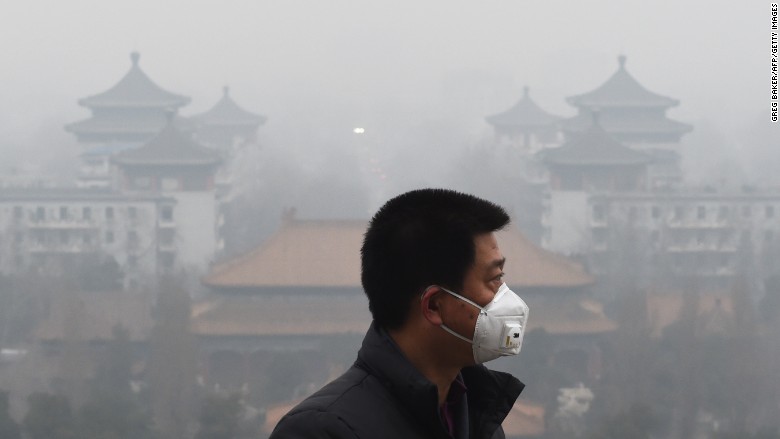
Concentrations of hazardous ground-level ozone have worsened in northern China, despite country-wide efforts to tackle air pollution, according to a study published by Peking University, reported on Wednesday, April 10, 2018.
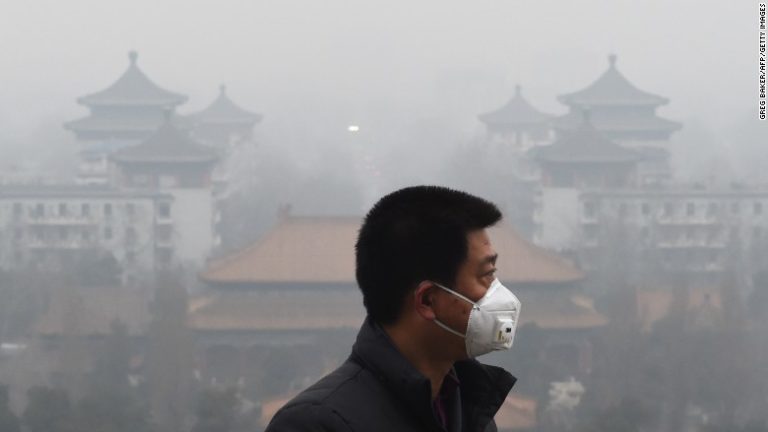
Air pollution in China
Stringent winter restrictions on industry, transportation and coal consumption enabled smog-prone northern Chinese regions to meet politically crucial air quality targets for the 2013-2017 period.
But while concentrations of hazardous airborne particles known as PM2.5 fell, average daytime ozone levels jumped sharply.
The data obtained is according to a study of pollution data on Tuesday in 33 northern cities by Peking University’s Guanghua School of Management and the Centre for Statistical Science.
Also known as “sunburn for the lungs”, ozone is caused by the interaction of sunlight with nitrogen-oxides and the vast amounts of uncontrolled-volatile organic compounds (VOCs) produced by burning fossil-fuels.
Traffic congestion is a major cause.
Ozone is one of six components of China’s official air quality index, along with sulphur dioxide, nitrogen oxides, carbon monoxide, PM2.5 and larger airborne particles known as PM10.
Ozone rose throughout the region, with concentrations up 40 per cent or more in 10 northern cities from 2014 to 2017, the study said.
Cuts in other forms of pollution are believed to have contributed to the rise.
“Regional declines in the amount of PM2.5 and PM10 have reduced the volume of floating particles and increased the strength of the sunlight required to produce ozone,” the paper said.
A study by Chinese researchers published last year identified ozone as a growing health risk that had caused a rise in deaths from strokes and heart disease.
“If you look at the public health impact … PM2.5 is responsible for more than a million premature deaths per year.
Meanwhile, ozone is somewhere above 100,000,” said Lauri Myllyvirta, clean air campaigner with environment group Greenpeace.
“But last summer, ozone really spiked and it is deservedly going to get more attention,” he said.
He added that China should set targets to cut nitrogen oxide and VOC emissions in its next air quality plan, due to be published later this year.
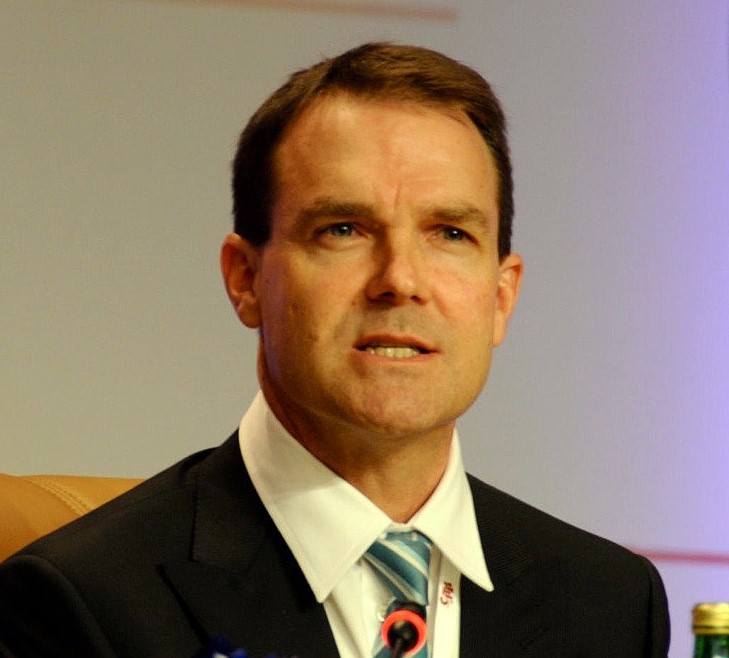
After eight years of service, John E. Scanlon left his position as Secretary-General of the Convention on International Trade in Endangered Species of Wild Fauna and Flora (CITES) on Friday, April 6, 2018.
Scanlon, who is widely believed to have left the Convention and its Secretariat in a strong position, now takes on the role of Special Envoy for African Parks.
Representatives of Parties to CITES as well as UN and other international organisations, in their farewell messages, reflect on Scanlon’s contributions to CITES and beyond over the last eight years.
Former CITES Secretary-General, John Scanlon
Amina J. Mohammed, Deputy Secretary-General of the United Nations: “As you leave CITES after eight years of amazing leadership, I am delighted to know that you will be taking on the vital position of Special Envoy for African Parks.
“The protection of biological diversity is a critical element of the 2030 Agenda for Sustainable Development, and CITES plays a crucial role in promoting the sustainable trade in and management of these precious resources. You have led the organization impressively over the past eight years, growing not only its membership but its effectiveness on the ground. Your commitment to protecting our fragile environment is longstanding – at IUCN, UNEP and CITES – and I know we can count on your dynamic leadership going forward.
“I wish you the very best in your new role and I look forward to our continued collaboration.”
Dr Edna Molewa, MP, Minister of Environmental Affairs, South Africa: “Your tireless effort demonstrated in all the encounters with South Africa will always be remembered. Your departure is taking place during the most important period within the CITES schedule, when we approach the 18th meeting of the Conference of the Parties to CITES.
“Your contribution during the planning and hosting of the 17th meeting of the Conference of the Parties which was held in Johannesburg, South Africa, from September 24 to October 5, 2016 is truly appreciated.
“The Ministerial Lekgotia which discussed the Nexus between the 2030 Agenda for Sustainable Development and the Sustainable Development Goals (SDGs) and the Convention on International Trade in Endangered Species of Wild Fauna and Flora (CITES) is of most memorable to South Africa. This took place the day before the opening of the 17th CoP to CITSE. South Africa is honoured to have had you as a Secretary-General when we hosted this important conference.”
H.E. General Surasak Karnjanarat, Minister of Natural Resources and Environment, Thailand: “To learn that you will be soon completing your mandate as Secretary-General of CITES, we would like to express our heart-felt gratitude for your hard work and kind support to the convention and to Thailand on the implementation of CITES. Having met you in South Africa at CITES CoP17 and during your courtesy visit to our office in Bangkok, we were impressed by your energetic and positive personality in moving forward the difficult work in the fight against illegal wildlife trade.
“We also appreciate the strong leadership and direction that you have provided to CITES Secretariat and in the service of the strengthening and implementation of CITES during these eight years. Your excellent work will be memorable and the Royal Thai Government continues its strong commitment to the CITES Convention.
“We would also like to take this opportunity to congratulate you for your new posting as Special Envoy for African Parks. We wish you all the best and sincerely hope that you will have a prosperous life ever.”
Karmenu Vella, European Commissioner for Maritime Affairs and Fisheries: “Thank you John for all your achievements as Secretary General of CITES.
“Your strategic approach to wildlife conservation has significantly strengthened the impact of the Convention.
“You have led the way in making it a critical tool in addressing overexploitation of natural resources.
“As biodiversity on our planet comes under ever greater threat, we need leaders like you.
“I am sure you will be every bit as successful as a Special Envoy for African Parks.
“It has been a real joy working with you.”
Zhang Jianlong, Minister, State Forestry Administration of China: “For more than eight years, CITES, under the leadership of Mr John Scanlon, has achieved extraordinary progress and accomplishments: the considerable increase in the number of CITES Parties and national CITES implementation capacity; the formation and operation of the International Consortium on Combating Wildlife Crimes, which plays a leading role in fighting the global illegal wildlife trade; the establishment of World Wildlife Day, which helps promote public awareness for wildlife conservation; the control of trade in key marine and timber species; and the promotion of thematic discussion and pilot demonstrations for “CITES and Livelihoods” and “Rural Community”, which have put CITES in an increasingly important position to regulate the international wildlife trade and promote sustainable development.
“These achievements have been made out of the concerted involvement of the international community, the industrious endeavours of the Parties, and the active organization and coordination by you and your CITES Secretariat colleagues. Your passion, devotion, wisdom and hardworking nature have won recognition and respect from far and wide.”
The Rt Hon the Lord Hague of Richmond, the United Kingdom: “During my time as Foreign Secretary and more recently as Chairman of the United for Wildlife Transport Taskfore it has been an absolute pleasure to work with John.
“Over the last eight years he has distinguished himself through his constant dedication to the work of CITES. He has successfully raised the profile of CITES as a whole as well as educating and informing the world of the flora and fauna that are today endangered.
“On a personal level it has been a joy to work with John, who has always brought with him a ready and determined approach to his work on conservation. He is knowledgeable, persuasive, and a very effective leader.
“I thank him for his great service and wish him the best of luck in his next endeavours.”
Prof. Judi W. Wakhungu, Ambassador to France, Portugal, Serbia & Holy See, former Minister of Environment and Natural Resources of Kenya: “It was indeed a great pleasure to have worked together, particularly in the last CoP, where I was the Head of Kenyan delegation and Chair of over 30 African Elephant Coalition Parties to CITES. Through your leadership, we saw the closure of the largest legal domestic ivory markets in China and others have plans for closure. This is a cause advocated for by over 30 African elephant range states. In Kenya, this decision had led to a significant reduction in wildlife trafficking and poaching.
“During your tenure, we saw recruitment of youthful, vibrant staff that practiced a more inclusive strategy with keen interest in African nations in a way that no SG previously did. You spearheaded the listing of many threatened species under CITES Appendices to enhance their protection. I do hope this will continue after your era.
“I am certain your new responsibility at the African Parks will bring more synergy among managers of protected areas, to enhance the conservation and management of our natural resources.”
Judith G. Garber, Principal Deputy Assistant Secretary of State for Oceans and International Environmental and Scientific Affairs, U.S. Department of State: “We would like to thank John Scanlon for his steady and skilful leadership at the helm of the Convention on International Trade in Endangered Species of Wild Fauna and Flora (CITES) for the past eight years. He joined CITES during a surge in the illegal trade in wildlife and the recognition of wildlife trafficking as a high-value, low-risk crime involving transnational criminal networks. Under Mr. Scanlon’s leadership, CITES devised new ways to address this challenge and expanded its partnerships beyond the traditional wildlife management community to include key law enforcement organisations. Mr Scanlon was also instrumental in building the high-level political attention needed to tackle this security threat and in the process raised the profile of CITES.
“We will miss his vision and leadership at CITES, but are pleased that he will continue to make a positive difference for wildlife in his future endeavours with African Parks.”
H.E. Ambassador Christoph Heusgen, Permanent Representative of Germany to the United Nations: “John Scanlon has demonstrated visionary leadership and personal dedication in the battle against illegal wildlife trade and poaching as Secretary-General of CITES. He was instrumental in making sure that the mass poaching of elephants and rhinos in Africa was addressed not only in environmental expert circles, but is today at the highest level of the political agenda. Germany worked very closely with him in taking this issue to the United Nations General Assembly, which adopted its ground-breaking Resolution 69/314 on tackling illicit trafficking in wildlife in 2015.
“Having realised early on that this battle could not be won by environmental institutions like CITES alone, John Scanlon has also built a strong cross-sectoral coalition between CITES and other international institutions such as INTERPOL, the United Nations Office on Drugs and Crime, the World Bank and the World Customs Organisation. We are convinced that in his next position, he will continue to be a driver for change towards a more sustainable future.”
Franz Perrez, Ambassador for the Environment, Switzerland: “Dear John, I remember when we first met in Nairobi, both fully committed to strengthen international environmental governance, not as an objective in itself, but as a tool to achieve more on the ground. By moving from UNEP headquarters in Nairobi to head and lead the CITES secretariat in Geneva, you continued your engagement for a better environment and brought it closer to the ground. It was a privilege and a pleasure to work with you, to benefit from your sharp analytical and strategic thinking, to enjoy your humour, and to be stimulated by your commitment and friendship. Your answers and proposals were not only clear, clever and thoughtful, they were also honest – and this is what I appreciated most. Thank you so much – and all the best for your next steps!”
Gregory J. Sheehan, Principal Deputy Director, US Fish & Wildlife Service: “On behalf of the U.S. Fish and Wildlife Service (Service), we appreciate your leadership over eight years as the Secretary General of the Convention on International Trade in Endangered Species of Wild Fauna and Flora (CITES). Under your guidance, CITES has been elevated to new heights and influence in conservation efforts around the globe. It was my pleasure to make your acquaintance recently and your dedication and passion for the work of CITES as ostensible. My colleagues at the Service speak fondly of their time working with you and greatly value the shared achievements that you have reached.
“You have accomplished much during your tenure: seeing the number of Parties growing from 175 to 183; combating illegal wildlife trade and giving it parity with other international crimes; building collaborative partnerships that have increased funding for CITES; bringing more timber and marine species in trade under CITES regulation; increasing the political visibility of the Convention; engaging new audiences to increase the reach of CITES including travel and tourism operators, youth and rural communities whose livelihoods depend on sustainable use of natural resources.”
Mathias Loertscher, Head of CITES Management Authority of Switzerland and Chair of CITES Animals Committee: “First of all, Switzerland would like to thank John for his outstanding leadership in the years he has been working as Secretary General for the CITES Convention. With his dedication, communication skills and extremely hard work, he has been able to raise the profile of our Convention on the international level to unprecedented heights. He has also been paramount in getting necessary funding for the functioning of the Convention in the future and has led a extremely dedicated Secretariat in supporting the needs of the CITES parties. We already now know that we will miss John but nevertheless we wish him all the best for his new endeavours at African parks. Hopefully our paths will cross again in the future.”
Achim Steiner, Administrator, UN Development Programme (UNDP): “John, I would like to congratulate you on your new assignment at African Parks. Over the past four years collaboration between CITES and UNDP has grown considerably. Under your helm, the influence and impact of the CITES Secretariat and the Convention have grown considerably over the past eight years. And thanks to the strong systems you have established in Geneva, we look forward to maintaining our species CITES-UNDP partnership, building on the close working relationships already in place between our technical teams. Although your leadership with CITES will be missed, we look forward to continuing our collaboration with you over the coming months through African Parks.”
Yuri Fedotov, Executive Director of the United Nations Office on Drugs and Crime (UNODC): “John, my friend and colleague, you have been a tireless and dedicated leader in the fight against the illegal wildlife trade, and you will be sorely missed. With you and CITES as our partner, the UN Office on Drugs and Crime has been able to achieve real results in raising awareness of the need to stop wildlife and forest crime, and in support governments to sharpen their responses.
“The International Consortium on Combating Wildlife Crime remains a signature achievement, of which we can all be proud.
“I am delighted to hear that although we are losing you as CITES Secretary-General, you will continue being a prominent voice for wildlife as Special Envoy for African Parks.
“I wish you every success in this new and challenging endeavour.”
Erik Solheim, Executive Director, United Nations Environment Programme: “John Scanlon is a true champion of wildlife. Under his leadership, the Convention has moved from strength to strength, galvanizing global support for protecting our endangered plant and animal species.”
Ibrahim Thiaw, UN Secretary-General’s Special Advisor for the Sahel and former Deputy Executive Director of the United Nations Environment Programme (UNEP): “The death of the last male northern white rhino on the planet is a reminder of just how fast the clock is ticking down for some of our most threatened species. For the last eight years, John has made sure that CITES got that message to the people who can do the most to prevent extinction from becoming everyday news. He has not only raised consumer awareness about the illegal trade in endangered species, he has shifted the related social, economic and security issues onto the agendas and action plans of political and industrial leaders around the world. So, while John is moving on to new adventures of his own, his work at CITES will have global impact for many years to come.”
Michael Møller, Director-General of United Nations Office at Geneva (UNOG): “During your tenure, the CITES Secretariat has become a strong partner to the United Nations Office at Geneva and I have greatly enjoyed our cooperation in the past years.
“I would like to convey my warmest congratulations to you in your new endeavours. I am pleased that your tireless efforts towards nature conservation will continue in your new role with African Parks.
“I wish you every success in your new position.”
Jim Yong Kim, President, the World Bank Group: “I would like to thank you for your great service over the last eight years as the Secretary-General of the Convention on International Trade in Endangered Species of Wild Fauna and Flora (CITES).
“We at the World Bank Group appreciate your leadership in raising political awareness around key conservation challenges and driving global action to combat illegal wildlife trade. You helped give CITES Parties and their many partners a strong voice to champion critical wildlife conservation and development issues. Also, we would like to thank you for serving as the Chair of the International Consortium on Combating Wildlife Crime (ICCWC) and for spearheading the efforts to get ICCWC recognised as an important mechanism to fight illegal wildlife trade globally. It was a pleasure meeting you and joining HRH The Duke of Cambridge at the World Bank headquarters in 2014 for the third Biennial Meeting of the International Corruption Hunters Alliance. We look forward to building on the strong collaboration with the CITES Secretariat in the years to come and wish you well on your future endeavours as the Special Envoy of African Parks.”
Jürgen Stock, Secretary General of INTERPOL: “Throughout his leadership at the CITES Secretariat, Secretary General Scanlon has been steadfast in developing a strong and effective partnership with INTERPOL.
“Of special note have been his efforts in actively promoting the International Consortium on Combating Wildlife Crime on the international stage. Part of Secretary General Scanlon’s legacy is the raised profile of law enforcement among the CITES community through Decisions which promote stronger engagement with the ICCWC partners, including INTERPOL.
“Since 2010, CITES and INTERPOL have collaborated on many projects to strengthen law enforcement involvement in combating wildlife crime, including the development of the International Wildlife Forensics Network.
“Secretary General Scanlon has played an important role in enhancing global efforts to protect endangered species and built a strong platform upon which we can continue our joint efforts to safeguard our environment.”
Kunio Mukyuria, Secretary General of World Customs Organisation (WCO): “It was a privilege to work with someone as competent and dedicated as John Scanlon, who has done much to solidify the efforts with regard to the joint objective we have to combat illegal wildlife and timber trade.
“As Secretary General of CITES, John also brought important leadership to the International Consortium on Combating Wildlife Crime (ICCWC), and has, through the CITES Secretariat, done much in bringing the customs community to the forefront in respect of CITES enforcement.
“I wish John all the best with his future endeavours and am confident that he will excel. He will carry with him the best wishes of the international customs community.”
Bob Zoellick, Former President of the World Bank, US Trade Representative, and US Deputy Secretary of State: “John led by mobilizing an extraordinary range of partners to help save species. During my work as President of the World Bank, I deeply appreciated his creativity and energy in uniting the causes of development and biodiversity. He recognized that the animals around us are part of nations’ natural and cultural heritage. John also has been in the forefront of working with law enforcement to raise the profile of investigations, prosecutions, and judicial actions against wildlife traffickers — a critical part of the multi-dimensional battle to save threatened and endangered species. John, thanks and all best with your next endeavours!”
Mukhisa Kituyi, Secretary-General of United Nations Conference on Trade and Development (UNCTAD): “While I am contrite to learn that your tenure as Secretary-General of the Convention on International Trade in Endangered Species of Wild Fauna and Flora (CITES) will come to a close at the beginning of April 2018, I would like to express my warm appreciation to you for the good working relations that we have enjoyed in the past.
“Through our Memorandum of Understanding, we have had a long-standing and mutually beneficial cooperation in ensuring sustainable and regulated trade of CITES-listed species. Under your capable leadership, you leave CITES in a much stronger position and thus able to face better the challenges ahead.”
Francis Gurry, Director General, World Intellectual Property Organisation (WIPO): “I should like to thank you for the exemplary cooperation you have extended to the World Intellectual Property Organisation (WIPO) and to me personally during the period of your tenure. I further congratulate you on your highly successful leadership of the CITES Secretariat which, as you say, has seen the Organisation go from strength to strength.
“I am delighted to learn that you intend to continue your good work in advocacy on behalf of African Parks, and I wish you every possible success in this important endeavour.”
Monique Eloit, Director General, World Organisation for Animal Health (OIE): “I would like to thank you for the excellent cooperation we had during your time as Secretary-General of CITES, for your active participation in our activities and for your permanent support to the OIE objectives.
I commend you for the role you have already played in strengthening these links formalized by the signing of the Agreement between our two Organisations.
“I am looking forward to a continued partnership with CITES and I wish you all the best in your new life.”
Inger Andersen, Director General, International Union for Conservation of Nature (IUCN): “We all owe John a great deal for everything he has done as Secretary-General of the CITES Secretariat.
“Over the last eight years, John has managed to elevate the fight against illegal wildlife trade to new levels. He has helped raise the ambition of decision makers to take on innovative and concrete measures that are protecting some of the planet’s most precious and endangered species.
“I am immensely grateful for John’s partnership and collaboration. During John’s tenure, IUCN – which helped establish CITES almost 45 years ago – has deepened its partnership with the Convention and today provides extensive scientific expertise to CITES Parties concerning both legal and illegal use across a range of species.
“John leaves the CITES Secretariat in a very strong position as it continues with its vital mandate to safeguard the future of our natural heritage. He will go down as one of the great Secretary-Generals.
“I wish him every success as he takes on his new and hugely important role as Special Envoy for African Parks.”
Bradnee Chambers, Executive Secretary of the Convention on Migratory Species (CMS): “John has made a phenomenal contribution to strengthening CITES and species protection, something that is difficult to do from the standpoint of one person having an impact an MEA. He has lifted the visibility of the convention at a time when biodiversity itself had slid off the political map and he has engaged new and important decision makers and stakeholders in the fight against illicit trade – from royals to air cargo CEOs, an unlikely group, but actors who are having profound effects on implementing the agreement, raising awareness of the imperative to act and delivering the funding required to make change. The COPs and Standing Committees have become major events on the biodiversity calendar being extremely well-attended and watched closely by the public, NGOs and governments involved. But for those that have worked with John, this does not come as a big surprise.
“The level of energy, insight and raw instinct that John brought to these political global processes is unsurpassed (exhausting but exhilarating for those working for him!). We will miss him in the UN and from the governmental side for the next couple of years but like the species he protects, it is hard to change his basic nature and I know we will soon see him using his talents again on the international political scene, and hopefully in the UN, to strengthen a new area or take on yet another new challenge that he is so good at mastering. Meanwhile I wish him well and I will miss his collaborative spirit and his support to CMS that he has lent unselfishly over these last five years. As with his dedication to his work, his dedication to his friends is unyielding and I look forward to continuing our friendship in his new role as the Special Envoy for African Parks.”
Martha Rojas-Urrego, Secretary General of the Ramsar Convention on Wetlands: “On behalf of the Ramsar Convention on Wetlands and myself, I would like to recognise John for his transformational leadership of the CITES Convention in the past eight years, and congratulate him upon successfully generating global interest and sparking grass roots actions to end illegal wildlife trade and crime.
“John has demonstrated that intergovernmental and multi-lateral platforms are an effective mechanism to mobilise actions and resolve matters critical to the survival of the planet and humanity. It is therefore reassuring that he will continue to work for wildlife in his new role as Special Envoy for African Parks. We wish him continued success and look forward to collaborating with him in his new position given that African Parks manage important wetland areas.”
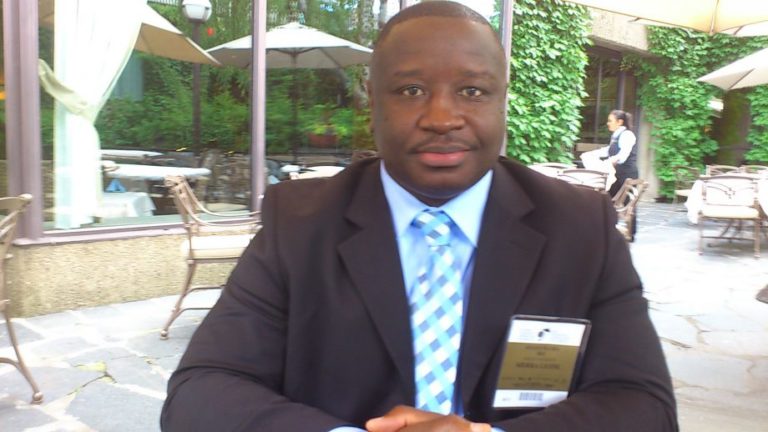
The newly-elected President of Sierra Leone, Mr Julius Bio, on Wednesday, April 11, 2018 issued a directive ordering the suspension of timber export.
President of Sierra Leone, Mr Julius Bio
According to the presidential directive issued by State House, the suspension is part of the government’s strategy to fight deforestation in the country.
Former President Ernest Koroma suspended the export of timber in 2013, but lifted it in early 2017 in the build-up to the 2018 elections.
Although timber logging has created many jobs for Sierra Leonean youths, environmental activists have welcomed the suspension and called on the government to make the suspension a permanent ban.
The Food and Agricultural Organisation (FAO) had expressed concern over the development, saying that deforestation is leading to large scale land degradation, loss of biodiversity and diminished land productivity in the country.
The UN body stated that impacts have negative impact on the livelihoods of local communities including limited access to critical forest resources and loss of agricultural productivity.
It maintained that tree planting would contribute to the restoration of the forest cover in the country, thus promoting the use of renewable energy, mitigating climate change through carbon sequestration and storage.
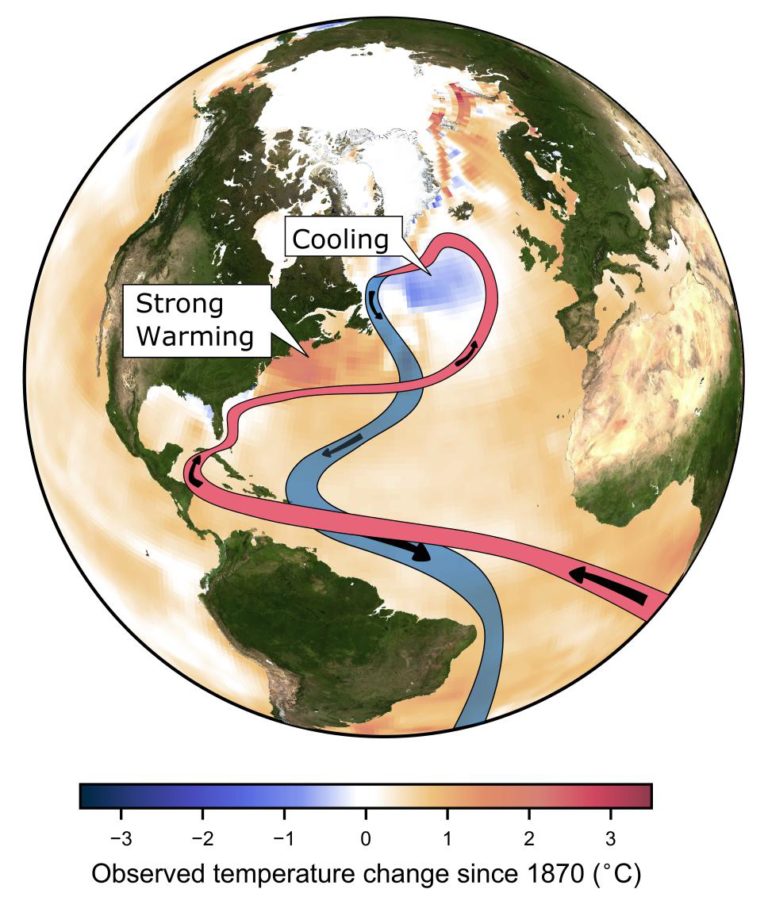
The Atlantic overturning – one of Earth’s most important heat transport systems, pumping warm water northwards and cold water southwards – is weaker today than any time before in more than 1,000 years.
Sea surface temperature data analysis provides new evidence that this major ocean circulation has slowed down by roughly 15 percent since the middle of the 20th century, according to a study published in the highly renowned journal Nature by an international team of scientists. Human-made climate change is said to be a prime suspect for the worrying observations.
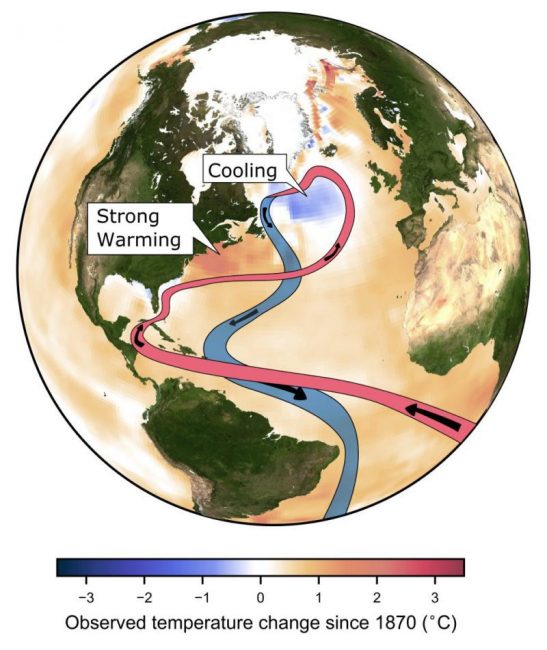
“We detected a specific pattern of ocean cooling south of Greenland and unusual warming off the US coast – which is highly characteristic for a slowdown of the Atlantic overturning, also called the Gulf Stream System,” says lead-author Levke Caesar from the Potsdam Institute for Climate Impact Research (PIK). “It is practically like a fingerprint of a weakening of these ocean currents.” As the currents slow down, they bring less heat towards the north, causing widespread cooling of the northern Atlantic – the only ocean region that has cooled in the face of global warming. At the same time, the Gulf Stream shifts northwards and closer to shore and warms the waters along the northern half of the US Atlantic coast.
“That region has warmed faster than most other parts of the world ocean in recent decades,” says co-author Vincent Saba from the National Oceanic and Atmospheric Administration (NOAA) Laboratory in Princeton, USA. “This specific ocean temperature pattern has been projected by high-resolution computer simulations as a response to rising carbon dioxide levels in the atmosphere – now it has been confirmed by measurements.”
Measurements of sea surface temperatures confirm computer simulations
For decades, scientists have investigated the dynamics of the Atlantic overturning. Computer simulations generally predict that it will weaken in response to human-caused global warming. But whether this is already happening has so far been unclear, due to a lack of long-term direct current measurements. “The evidence we’re now able to provide is the most robust to date,” says Stefan Rahmstorf from the Potsdam Institute, who conceived the study. “We’ve analysed all the available sea surface temperature data sets, comprising data from the late 19th Century until the present.”
“The specific trend pattern we found in measurements looks exactly like what is predicted by computer simulations as a result of a slowdown in the Gulf Stream System, and I see no other plausible explanation for it,” says Rahmstorf. It is in fact not just the pattern in space that matches between computer simulation and observations, but also the change with the seasons.
Global warming likely causes the changes – the effects are far-reaching
The weakening is caused by a number of factors that can be linked to global warming which is caused by greenhouse gases from burning coal, oil, and gas. The Atlantic overturning is driven by the differences in the density of the ocean water: when the warm and hence lighter water travels from the South to the North, it becomes colder and thereby denser and heavier – making it sink to deeper ocean layers and flow back to the south. “But with global warming, increased rainfall as well as meltwater from the Arctic sea ice and Greenland ice sheet is diluting the waters of the northern Atlantic, reducing the salinity. Less saline water is less dense and hence less heavy – which makes it harder for the water to sink from the surface into the deep,” explains Alexander Robinson of the University of Madrid, who co-authored the study.
There have been long debates whether the Atlantic overturning could collapse, being a tipping element in the Earth system. The present study does not consider the future fate of this circulation, but rather analyses how it has changed over the past hundred years. Nevertheless, Robinson cautions: “If we do not rapidly stop global warming, we must expect a further long-term slowdown of the Atlantic overturning. We are only beginning to understand the consequences of this unprecedented process – but they might be disruptive.”
Several studies have shown, for example, that a slowdown of the Atlantic overturning exacerbates sea-level rise on the US coast for cities like New York and Boston. Others show that the associated change in Atlantic sea surface temperatures affects weather patterns over Europe, such as the track of storms coming off the Atlantic. Specifically, the European heat wave of summer 2015 has been linked to the record cold in the northern Atlantic in that year – this seemingly paradoxical effect occurs because a cold northern Atlantic promotes an air pressure pattern that funnels warm air from the south into Europe.
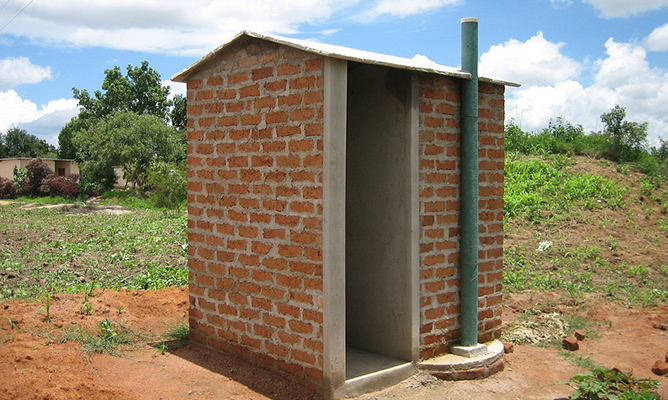
The United Nations Children’s Fund (UNICEF) says it has disbursed N70 million to 3,000 households in four states in Nigeria as loan to construct improved toilets, under its Sanitation Marketing Programme.
A variant of the improved toilet
Mr Amir Syed, the UNICEF International Consultant on Sanitation Marketing, disclosed this in a news conference on Wednesday, April 11, 2018 in Katsina, Katsina State.
According to Syed, the loan is to assist Nigeria attain Open Defecation Free (ODF) status by 2025.
The international consultant listed Katsina, Jigawa, Bauchi and Benue states as the states that benefited from the loans.
He said that the loan was disbursed through some Micro Finance Institutions (MFI’s) in the participating states.
Syed added that the programme had been extended to Zamfara.
Seyd said 18 local government areas in Nigeria were currently participating in the programme.
The international consultant explained that Toilets Business Owners (TBOs), trained on toilet technologies, were engaged to construct the improved toilets for the affected households.
In his contribution, the Executive Director, Katsina State Rural Water Supply and Sanitation Agency (RUWASSA), Alhaji Aminu Dayyabu, said the programme was being implemented in five local governments in the state.
According to him, the local governments are: Bakori, Mai’adua, Sandamu, Safana and Dutsin-ma.
Dayyabu said that 996 households benefited from the loan package, adding that each household was given N40,000 loan to construct improved toilets.
Dayyabu said the loan would be repaid within 10 months.
“Households can have such toilets from TBOs either through their own monies or availing loans from Micro Finance Institutions,’’ he said.
Earlier, Madam Bhawna Maheswari, UNICEF Water, Sanitation and Hygiene (WASH) Specialist, Katsina Office, said the project was aimed at providing people with good toilets to prevent them from contracting diseases.
“The programme will provide opportunity for 50 per cent of households using unimproved toilets and 30 per cent of people practicing open defecation to have improved toilet.
“An improved toilet is supposed to be clean, covered and provide a barrier against diseases,’’ she said.
The Niger Delta Development Commission (NDDC) has called on stakeholders to partner with the commission on its roadmap and framework for sustainable regional development in the region.
Nsima Ekere, NDDC Managing Director
Mr Nsima Ekere, NDDC Managing Director, made the call in a telephone chat with the News Agency of Nigeria (NAN) on Wednesday, April 11, 2018 in Akure, Ondo State.
Ekere said that it had become necessary for the commission to partner with major stakeholders on development projects that would improve the living conditions of the people in the region.
According to him, the commission is looking forward to the synergy that will be unleashed through teamwork, collaboration and sustainable partnership in an atmosphere of peace and security.
“The NDDC board and management have spent the last one year conceptualising and strategising on a roadmap and framework for sustainable regional development.
“Now, we are stepping out of the room armed with ideas. And we are ready to run.
“We need the partnership and collaboration of all stakeholders to make these happen.
“As an intervention agency, our role is to resolve the developmental challenges of the region and support the development ambitions of the states by working together as partners.
“Because this is our home and our region, we have no other place to go,” he said.
He said it was imperative for the commission and stakeholders to come together to improve the living conditions of the people and build a region capable of fulfilling the collective aspirations that would open a new frontier of growth in the region.
Nasarawa State University, Keffi says it has embarked on the training of students on Environmental Impact Assessment (EIA) to enable them find lasting solution to environmental challenges facing the country.
Prof Nasiru Idris
Prof. Nasiru Idris, Dean, Faculty of Environmental Sciences of the university, disclosed this in an interview with the News Agency of Nigeria (NAN) in Abuja on Wednesday, April 11, 2018.
He said students of the faculty were being trained also to ensure that proper environmental management was maintained.
According to Idris, the students are also being equipped to explore all aspects and methodologies of the environmental assessment process, for them to effectively analyse technical reports and oversee complex projects.
‘‘We are training them to meet the needs of the present environmental standards without compromising the ability of future generations,’’ he said.
‘‘We train them to go out and prove themselves and help maintain the status and dignity of Nigerian cities and environment through environmental impact assessment plans.’’
He said that the faculty would be working with willing stakeholders on Environmental Impact Assessment (EIA) as a tool for achieving sustainable development.
‘‘The main objective of the EIA is to ensure that potential environmental impacts are foreseen at the appropriate stage of project design and addressed before any decision is taken on the project.
‘‘We work with stakeholders to stipulate how we manage the impact and its benefits to the environment.”
He urged stakeholders not to wait for government alone to handle environmental issues but partner to achieve the desired result.
‘‘We do not need to wait for government so in our faculty, for instance we are not solely dependent on government for any of the programme in the seven departments in the faculty.
‘‘If you look at the rest of the world today, advanced countries are deviating from seeing environmental issues as the primary responsibility of government, whereas, the issues are also private sector-driven.”
He said called on environment stakeholders to work together with government with a view to finding solutions to environmental challenges.
‘‘Most of the projects in the advanced nations are private sector-driven, essentially powered by donor agencies.
‘‘If we wait for government, we will not make much progress because there are competing needs requiring the very limited resources available to it.
‘‘Look at China, as an example; most of the projects being executed by its government are private sector-driven.
‘‘Today, Abuja is deteriorating because its residents are waiting for government to do everything for them.
It is supposed to be a world class city being built on the “garden city movement concept” of Ebenezer Howard’s design.
The garden city movement is a method of urban planning in which self-contained communities are surrounded by “greenbelts”, containing proportionate areas of residences, industry, and agriculture.
The idea was initiated in 1898 by Sir Ebenezer Howard in the United Kingdom.
He called on Nigerians to think globally and act locally to tap into the potential that abounds in the nation and boost development.
‘‘Nigeria can go places if we utilise our potential.
‘‘We have the resources and if we synergise with government, we will take Nigeria to enviable heights.’’