Home Blog Page 1929

Nigeria reduces malaria prevalence to 27%

0

The Minister for Health, Prof. Isaac Adewole, on Friday, April 13, 2018 said the prevalence rate of malaria has been reduced from 42 per cent in 2010 to 27 per cent in 2015.

Malaria-anopheles
The malaria-causing anopheles mosquito feeding on a victim

He disclosed this at the Malaria Public Sector Stakeholders meeting on dissemination of the Achievements of the MAPS-C project of Africare, an NGO, in collaboration with Exxonmobil, in Abuja.

Adewole, who was represented by Dr Evelyn Ngige, Director, Public Health in the ministry, said that efforts put in combating malaria scourge in the country was yielding positive results, as recent surveys show progression.

According to the minister, Nigeria contributes about 27 per cent of the 260 malaria cases and 23 per cent of the 435,000 deaths recorded in 2016, according to the 2017 World Malaria Report.

Adewole said that in order to sustain the gains and sustain the danger of a reversible, there was a need to deploy innovative approach to prevent, diagnose and treat malaria.

“With an effective surveillance system, we could track our progress.

“We have embarked on actualisation of the basic healthcare fund which is meant to increase the physical space and overall financing of the health sector and lead to the achievement of the Universal Health Coverage (UHC),” he said.
Adewole, while appreciating Africare, said that the Malaria Prevention in MPN Suppliers Communities (MAPS-C) initiative was quite an impressive one.

The initiative, he explained, was an attempt to improve the quality of testing and diagnose malaria while also collating data through the introduction of a new technology, the Deki reader.

The technology, the minister added, was a specialised and integrated platform that uses an innovative approach to improve the accuracy of Rapid Diagnostic Testing (RDT) for data capturing and decision making.

Adewole listed the pilot states for the use of the technology as Akwa Ibom and Rivers.

He however implored Exxonmobile to expand it to other neighbouring areas of the benefitting states.

The minister called on all stakeholders in the health sector, especially the private sector, to collaborate with government in healthcare delivery as well as support malaria control efforts across the country.

Earlier, the Country Director of Africare, Dr Doherty Orode, said that the initiative, which was without its challenges, was successful because of the Deki reader.

She explained that before the introduction of the technology in the communities where the project was implemented, malaria tests were not carried out before treatments and the use of chloroquine was still on.

Orode however said that progress was made later with the Deki reader, which allowed for getting results, accounting for commodities and also gave details which was stored in a portal for future reference.

She also said that a significant reduction in over treatment was achieved after the acceptability of the technology among members of the community.

The News Agency of Nigeria (NAN) reports that Africare is a US-based organisation which seeks to address African development and policy issues to build sustainable, healthy and productive communities.

NAN also reports that its MAPS-C project has served over 90,000 people in four local government areas in Akwa Ibom and Rivers states; namely Eket, Ibeno, Bonny and Ogu-bolo since 2011 to 2018.

By Veronica Dariya
Agency inaugurates 10-day environmental sanitation in Jigawa

0

The Jigawa State Environmental Protection Agency (JISEPA) has embarked on 10-day sanitation in the Northeast Senatorial District of the state.

Gov. Muhammad Badaru
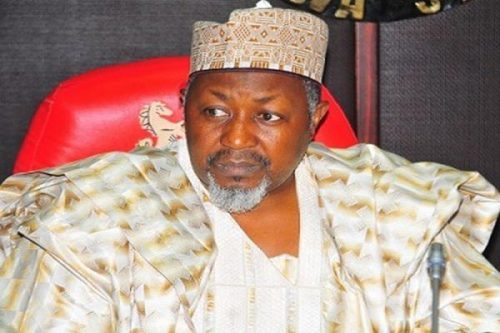
Gov. Muhammad Badaru of Jigawa State

Malam Muhammad Talaki, Information Officer, Hadejia Local Government Area, which is part of the affected councils, made this known to the News Agency of Nigeria (NAN) in Dutse, the state capital, on Friday, April 13, 2018.

JISEPA’s Acting Managing Director, Alhaji Umaru Adamu, reportedly said during the inauguration in Hadejia town that the exercise would involve clearing of drains and waste evacuation.

Talaki quoted Adamu as saying that the exercise, aimed at improving hygiene in rural communities, would also include vector control.

The information officer added that the acting managing director noted that the exercise was also geared towards reducing threat of flooding as the rainy season approaches.

He said that the state government had provided the agency with the needed support for the successful conduct of the exercise.

Talaki told NAN that Adamu also urged all the benefiting communities to cooperate with sanitation workers for the smooth conduct of the exercise.

He said that the area’s Zonal Officer of the agency, Malam Muazu Muhammad, disclosed that the exercise would be for five days in Hadejia council, two days in Auyo and KafinHausa councils and one day in Balangu village.

‘‘The zonal officer said the exercise is part of a comprehensive waste and drain clearance operation designed to enhance sanitation in rural communities in the area.

‘‘The agency is aimed at sensitising the people on the need to keep a clean environment and promote good sanitation habits.

‘‘Muhammad also reiterated the state government’s commitment to protecting the environment through effective waste management.

‘‘He further urged the people to cooperate with the agency’s workers and desist from indiscriminate dumping of waste in residential areas and waterways.’’

He said the zonal officer advised the Hadejia Local Government Area and other wealthy individuals to provide dustbins, refuse dumping sites and waste collection points for easy management of wastes in the area.

By Muhammad Nasir Bashir

Integrate green building technology into National Housing Policy, says environmentalist

0

An environmentalist, Mr Lot Kaduma, has called on the Federal Government to integrate the evolving green building technology into Nigeria’s National Housing Policy.

Estate
Housing estate. Photo credit: lagos.all.biz

Kaduma, an architect and sustainable cities campaigner, made the call in an interview with the News Agency of Nigeria (NAN) in Lagos on Friday, April 13, 2018.

He said that integration of the technology into the National Housing Policy would help to mitigate the effects of climate change in Nigeria.

According to him, green buildings evolved from the green technology concept, designed to mitigate or reverse the negative effects of human activity on the environment.

Kaduma said that embracing green buildings in Nigeria was the way to go, to make the environment friendly to people.

He pointed out that the construction industry constituted a major source of climate change, owing to toxic emissions from non-green buildings.

“The construction industry is a major contributor to climate change, where buildings alone account for over 30 per cent of the world’s greenhouse gas emissions.

“This requires increased awareness among stakeholders in the Nigerian construction industry and the need for a strong buy-in of green building by the stakeholders to ensure its quick adoption in Nigeria.

According to him, a key issue that affects the practicability of green buildings in Nigeria is the level of technical Knowledge available within the construction sector.

“Construction professionals, manufacturers and artisans will need to acquire new skills in the aspect of design, construction and management of green buildings in Nigeria.”

Kaduma also called for the incorporation of the technology into the curriculum of tertiary institutions and professional bodies in the country.

“The technology should be a requisite for professional certification and advancement in professional bodies like the Nigerian Institute of Architects (NIA), Nigerian Society of Engineers (NSE), Nigerian Institute of Builders (NIOB) and the Nigerian Institute of Quantity Surveyors (NIQS).”

The architect said that the long-term benefits of a green building outweighed its high cost implications.

“There is a general perception that the initial cost of green buildings is higher than regular buildings.

“But recent advancements in the green technology industry have led to a fall in the price of green buildings.

“The global community has set a goal to ensure that all buildings are Net-Zero Green Buildings by 2050,” he stated.

NAN learnt that the Heritage Place on Lugard Avenue in Ikoyi, Lagos, is Nigeria’s premier green building.

The building is reputed to be the first to achieve the leadership in Energy and Environmental Design (LEED) certification in both design and construction.

Nestoil Towers in Victoria Island in Lagos, completed in 2016, is also cited as another LEED certified green building in Nigeria.

Others are the Eco Village in Port Harcourt and the Abuja Technology Village, which will be inaugurated next year.

By Mercy Okhiade

Lawmaker calls for arrest of masterminds of air pollution in Rivers

0

Lawmaker representing Obio/Akpor Constituency of Rivers State in the House of Representatives, Rep. Kingsley Chinda, has called on security agencies to apprehend those responsible for the current air pollution in Port Harcourt and its environs.

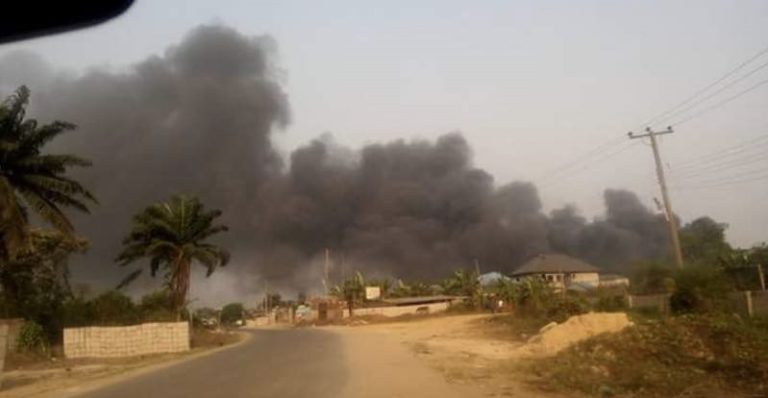
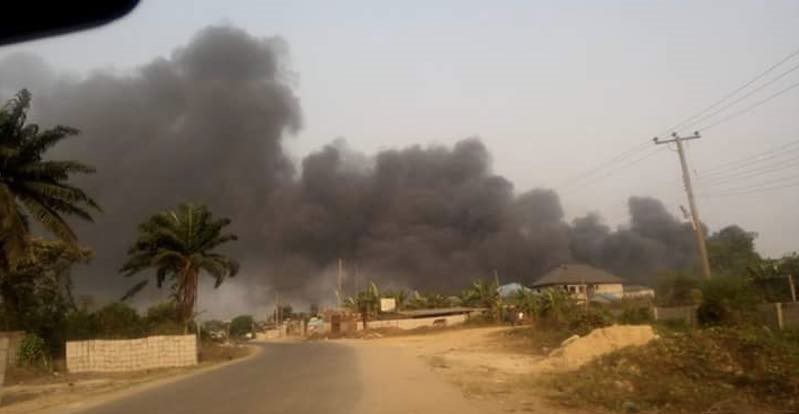
soot-port-harcourt
Soot spreading over a neighbourhood in Port Harcourt, Rivers State

He made the call at a meeting with “Stop the Soot’’ Campaigners and other lawmakers in Port Harcourt, the state capital, on Friday, April 13, 2018.

Chinda blamed the current air pollution, which was caused by black soot, in Port Harcourt and environs on the activities of illegal oil refiners and bunkers in the state.

“There is need for investigation to uncover the owners, sponsors and brains behind the illegal refineries which have gravely affected air quality in the state.

“Some of the information we have indicates that we need to look beyond the artisans because they don’t own these illegal refineries.

“There are some big men; perhaps some politicians and big businessmen who are sitting somewhere and using the artisans to make money,” he said.

Chinda said that some of the owners of the illegal refineries might not be indigenes of the state or natives of the Niger Delta region.

Also speaking, Assemblyman Christian Ahiakwo, lawmaker representing Ogba/Egbema/Ndoni Constituency 1 in Rivers House of Assembly, said the prevalence of black soot in the atmosphere could cause serious health challenges if efforts were made to address it.

He rejected the notion that illegal refineries and International Oil Companies (IOCs) were not those that triggered the lingering soot across the state.

“How come the IOCs have never raised an alarm, even when they see that pressures in their control rooms are rising – signifying that there is a theft case (at the oil pipelines)?

“From investigations, there are some people who are colluding with the producers of the kpo-fire (adulterated fuel and diesel),” he said.

Ahiakwo said that judging from the manner in which pipelines were opened and clamped; some unscrupulous experts were involved in the business of stealing oil from the pipelines.

He said that the security agencies should hunt down and prosecute such individuals, as part of efforts to address the growing menace of air pollution in the state.

By Desmond Ejibas

World’s first renewable mini-grid industry association emerges

0

The Africa Mini-grid Developers Association (AMDA) on Friday, April 13, 2018 announced its official establishment. The trade association – currently numbering 11 member companies including innovative start-ups and established utilities – aims to combine private sector innovation, efficiency, and customer service with public sector support to help end energy poverty across Africa.

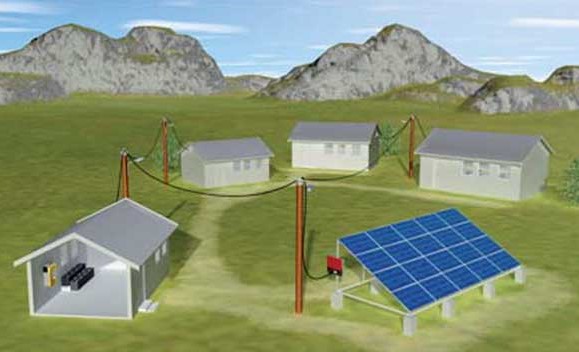
Mini
An impression of a mini-grid solar system

AMDA is said to be the first trade association dedicated exclusively to the mini-grid industry, and is composed of developers operating AC mini-grids that ensure power reliability of at least 20 hours per day. The association also works closely with a variety of solution providers, including EPCs, hardware and software vendors and integrators.

AMDA currently has chapters in Kenya and Tanzania, where member companies have built 430 kilometres of transmission lines, and renewable generation to serve over 11,000 connections, including households, schools, health clinics, micro-enterprise and agriculture. AMDA, which plans to grow into a pan-African platform for private utilities, is in the process of setting up its next chapter in Nigeria, which will include seven additional local developers, and has so far received interest from three other countries.

“AMDA’s vision is to see 100% of Africa electrified before 2030, and this will require utilities to incorporate new and innovative technologies, with mini-grids playing a central role,“ said Jessica Stephens, AMDA’s Global Coordinator. “Mini-grids can deliver more connections per dollar, can be deployed more rapidly than traditional grid infrastructure and play an important role in stimulating local economic opportunities and creating jobs.”

By providing a unified voice for the industry, AMDA aims to partner with governments and utilities to build next generation grids based on the needs of both industry and communities. AMDA will share knowledge and feedback with policy-makers, regulators and investors, while also representing the voice of the customer, which is currently under-represented on the issue of energy access.

Near-term objectives of AMDA include:

  • Mobilise finance for mini-grids:​ working with donors, national governments and other stakeholders to develop a smart Results Based Financing (RBF) fund to support scale-up of mini-grids, as well as finding ways to unlock lower-cost debt capital
  • Equalise public-private incentives: achieving a level playing field, both regulatory and financial, for mini-grids that is on par with other grid-based solutions;
  • Make Integrated planning the norm: establish national grid integration frameworks that are inclusive of mini-grids;
  • Better inform market support activities: highlighting useful areas for public interventions and providing market information to organisations funding R&D and innovation;
  • Unify and expand voice of the sector across Africa: grow the number of members to at least 25 developers across seven countries by the end of 2018, with a longer-term goal of representing all private sector developers across the continent. The next chapter is expected in Nigeria, with the goal of adding Ethiopia and Uganda by the end of 2018.

AMDA is supported by the Shell Foundation, the World Bank and the UK Department for International Development (DfID).

“Mini-grids offer the quickest, most cost-effective way to bring 24-hour power to large parts of Africa, while other areas will be better served by standalone home systems or national grid extension,” said Richard Gomes, Director, Market Development at Shell Foundation. “Unlocking public and private capital to accelerate the growth of this sector is therefore critical to meet the continent’s energy needs. We believe AMDA will help facilitate this by providing an aligned industry viewpoint, accurate market information and technical support for investors and policy-makers that is missing in today’s market.”

Amadou Hott, the African Development Bank’s Vice-President for Power, Energy, Climate and Green Growth, said: “Green mini-grids are an essential part of the bank’s New Deal for Energy, 2 which envisions 75 million new connections coming from distributed energy solutions. Through our various initiatives, including the Green Mini-Grid Market Development Programme, the AfDB looks forward to working closely with AMDA to create the necessary conditions for scaling the sector, and energy access, across Africa.”

“Rural electrification is successful when the needs of remote communities are fully integrated into energy access solutions,” said Prosper Magali, Director, Projects and Business Development at Ensol. “The members of AMDA are committed to partnering with these communities to not only provide the safest, most reliable and highest quality service, but to ensure a low-carbon future that builds economic opportunity, resilience, and gender equity.”

The International Energy Agency (IEA) projects that mini-grids are a $190 billion investment opportunity between now and 2030, also noting that mini-grids and other distributed renewable solutions are the least cost option for three-quarters of all new connections needed in sub-Saharan Africa, where more than 600 million people still lack basic electricity.

Africa strives to turn climate threat into sustainable development opportunities

0

Climate change is a grave threat to Africa and any development gains the continent has made, but ambitious action and investment in response could hold tremendous opportunities.

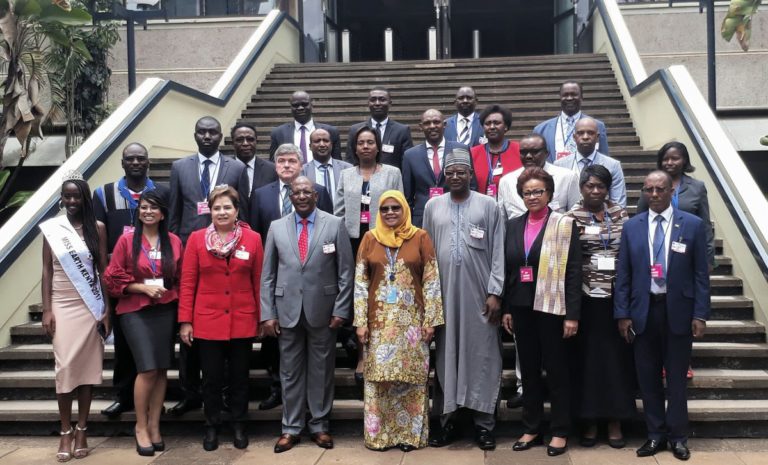
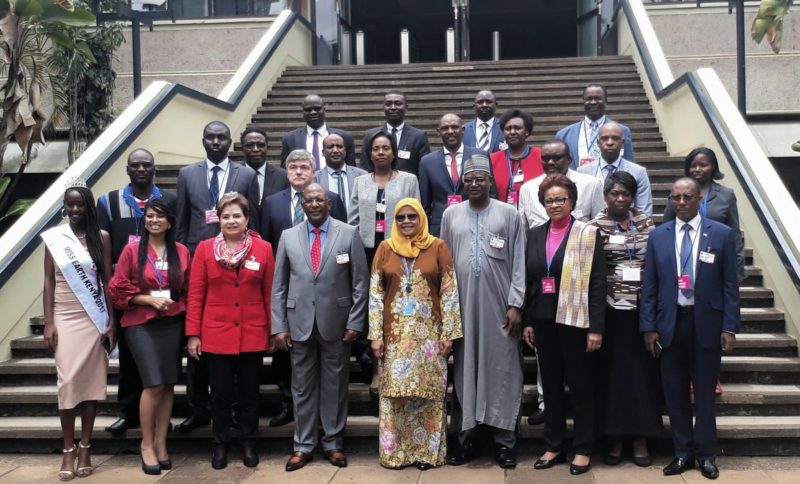
Africa Climate Week
High-level ministerial delegation at the Africa Climate Week in Nairobi, Kenya

This is the message heard at the High-level session of Africa Climate Week in Nairobi, Kenya, where African policymakers, climate change officials and a broad swath of private and public sector representatives are gathered to address climate change.

“Nations are far away from the level of commitment needed to achieve the Paris Agreement‘s goal of limiting temperature rise to 2 degree Celsius, let alone 1.5 degrees, and countries in Africa are among the hardest hit,” said UN Climate Change Executive Secretary, Patricia Espinosa. “We need to invest in ambitious, integrated strategies and programmes in all sectors to turn Africa’s grave threat into a sustainable development opportunity.”

Nations agreed in Paris, France, in 2015 to limit global temperature rise to 2 degree Celsius and strive for a safer 1.5-degree limit. However, commitments made to date, described in countries’ nationally determined contributions, are far from the 2-degree target.

“Africa sees and is sadly witnessing the grave danger posed by climate change,” said Keriako Tobiko, Cabinet Secretary, Ministry of Environment and Forestry, Kenya. “We can’t be scared into inaction, but must rally with investment, ideas and ambition that can turn calamity into development opportunities.”

The meetings, workshops and networking of private and public sector actors and high-level policymakers at the at the first Africa Climate Week are intended to spur climate action on the ground in key sectors, for example energy, agriculture and human settlements.

How to mobilise the vast investment needed to tackle climate change, through market-based approaches and targeted finance, will receive special attention in Climate Week’s cornerstone event, the 10th Africa Carbon Forum.

Another important outcome of Africa Climate Week will be its harvesting of views for consideration in the official climate negotiation process, as part of the year-long Talanoa Dialogue launched at the UN Climate Change Conference in Bonn, Germany, last November.

“Countries made an historic agreement in Paris in 2015. The work now is on implementation, to limit warming, foster climate resilience, and align global finance flows with a pathway towards climate-neutral, sustainable development,” said Tomasz Chruszczow, a Champion of the Marrakech Partnership for Global Climate Action and Special Envoy for Climate Change, Ministry of Environment, Poland, in urging participants at Africa Climate Week to grasp the opportunity offered by the Talanoa Dialogue to inform and shape the international response to climate change.

Africa Climate Week is hosted and supported by the Government of Kenya and organised by the Nairobi Framework Partnership, together with Kenya’s National Environment Management Authority.

New study reveals threats, climate adaptation opportunities in Kenya’s arid lands

0

A team of scientists from the Kenya Markets Trust (KMT) on Wednesday, April 11, 2018 shared all the key research findings of four different thematic studies conducted in Kenya under the Pathways to Resilience in Semi-Arid Economies (PRISE) project.

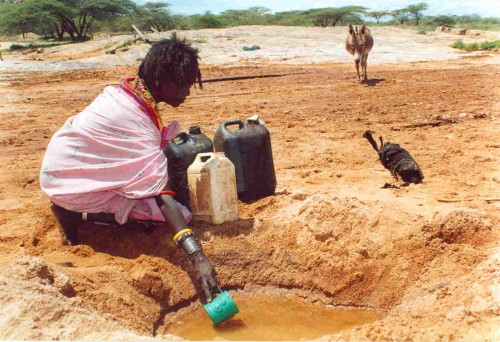
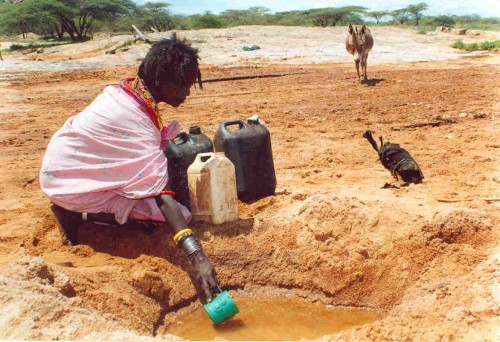
Arid Kenya
Arid land in Kenya

“The Kenya government is now focusing on the “Big Four” agenda aimed at improving livelihoods, creating jobs and growing the economy by focusing on critical areas of the economy in the next five years,” noted Kamau Kuria, the head of KMT.

“It is noteworthy that part of the PRISE study, which aimed at strengthening the understanding and knowledge of decision makers on the threats and opportunities that semi-arid economies face in relation to climate change, will go a long way in helping unlock the potential of semi-arid lands in Kenya and thus enhance  their contribution to the national agenda,” he told delegates drawn from Kenya, Senegal, International Development Research Centre (IDRC) and Overseas Development Institute (ODI) during the event to disseminate key research findings in a Nairobi Hotel.

The study, which was commissioned by the International Development Research Centre (IDRC) Canada and the UK based Department for International Development (DFID) aims at supporting climate resilient economic development in partner countries by identifying opportunities for adaptation that are also opportunities for investment by the public and private sectors.

“These findings from Kenya will help change the narrative in semi-arid areas,” said Dr Eva Ludifrom the Overseas Development Institute (ODI), which is coordinating the PRISE project at a global level.

According to Dr Evans Kitui of IDRC, direct involvement of government officials both at the county and the national level is a pointer towards implementation of policies that will emanate from the four studies. “In the past, research has not been well appreciated. But now, we can see a lot of government participation,” he said.

One of the studies found that, in the past 50 years, temperatures have risen in all the 21 semi-arid counties in Kenya, with five of them recording an increase of more than 1.5oC increase. They include Turkana (1.8oC), West Pokot, ElgeyoMarakwet (1.91oC), Baringo (1.8oC), Laikipia (1.59oC) and Narok (1.75oC).

This, according to Dr Mohammed Said, one of the lead researchers, has impacted greatly on livestock survival, on one hand presenting a disaster, and on the other hand providing an opportunity that can be exploited.

“There were winners and losers,” he told delegates at the forum. “Generally, cattle do  not survive the higher temperatures, while at the same time, sheep and goat population increased exponentially,” said Dr Said.

According to the study, whose theme was to harness opportunities for climate-resilient economic development in semi-arid lands and identifying the potential for economic transformation and diversification in semi-arid lands especially in the beef value chain, the overall population of cattle in all the semi-arid counties reduced by more than 26% between the year 1977 and 2016.

However, the study also reveals that goats and sheep population increased tremendously by 76% in the same period, with camels’ population increased by 14%. “This shows that goats, sheep and camels enjoyed the higher temperatures while cattle could not survive the stress,” said Dr Said.

“We’ve seen great potential for implementing some of the adaptation options and I call upon the stakeholders gathered here today, to pull together so we can build resilience and open up the ASALs for trade, investments and better livelihoods,” said Kuria of KMT.

In Nyeri County for example, Dr James Gakuo began with buying severely emaciated cattle for fattening at his farm in Kiganjo through intensive system of beef production that focuses on feeding cattle for 90 days on concentrate feeds till they reach the desired weight for the market, thereby creating a market for such animals that would otherwise have died.

In just two years, 14 other farmers have followed into his footsteps, and are in the business of fattening emaciated cattle thus providing more market to pastoralists who are hardly hit by tough climatic conditions.

Another study looked at the land tenure with special focus on Maasai pastoralist community in Kajiado County.

The study found out that 64 percent of the entire Kajiado County is now private land that is not open for grazing. “Though this has provided opportunity because privatisation can always lead to greater investment opportunities for those who can secure land, it marginalizes the poor and particularly women in the process,” said Dr Stephen Moiko, one of the lead researchers.

According to Dr Eva Ludi of ODI, these findings will be presented at the Talanoa Dialogue in Bonn, Germany come May 2018.

The purpose of the Talanoa Dialogue is for parties to share climate change related stories, build empathy and to make wise decisions for the collective good.

According to Dr Said, county governments should also take advantage of the research findings and scenario projections to develop their spatial plans.

“These findings will be important in formulation of new policies and strategies such as the National Climate Change Action Plan (NCCAP 2018-2022), the National Wildlife Conservation and Management Strategy, and the County Development Integrated Plans (CIDPs),” said Joseph Muhwanga, the PRISE project National Coordinator in Kenya.

Courtesy: PAMACC News Agency

AfDB earmarks $200m to aid 600,000 African farmers

0

The African Development Bank (AfDB) has signed a $200 million Soft Commodity Finance Facility agreement with the Export Trading Group.

Josephine Ngure
Josephine Ngure, AfDB Director General for the Southern Africa Region

According to a statement from the bank on Thursday, April 12, 2018, the facility, which will benefit 17 African countries, comes as part of its strong commitment to promote agriculture in Africa.

The AfDB said the facility was structured to run as two successive loans of $100 million each with a tenure of up to two years.

The bank said it was aimed at helping local farmers and soft commodity manufacturers to produce quality goods that could be exported.

“The intervention will help local farmers and soft commodity suppliers grow their revenues and produce quality crops for export.

“Specifically, the facility will be used to finance the procurement of identified agricultural commodities from over 600,000 farmers.

“Upon purchase of the soft commodities, the SCFF will provide working capital to ETC thus enabling the company engage in processing of the soft commodities such as cashew nuts prior to export.

“The SCFF will also provide funding to procure farm inputs to be supplied to farmers so as to ensure consistency and quality of the commodities being supplied to ETC.

“This Trade Finance intervention along the agricultural value chain will enable the Bank to reach many small-scale farmers indirectly through ETC,’’ the bank said.

Speaking at the signing ceremony, Ms Josephine Ngure, AfDB Director General for the Southern Africa Region, said the facility would contribute to improving food production in Africa and also add value to it.

“The facility would also contribute to smallholder farmers’ access to inputs like seeds and fertilizers, mechanisation and access to international markets thereby ensuring significant revenues to farmers.

“It will also lead to sustainable process of economic growth and development; regional integration by developing sustainable platforms to supply local and regional markets.

“Lastly, it also has strong gender and youth impact as agriculture employs significant numbers of mostly youths and women,” Ngure said.

Originally established in Kenya in 1967, ETC’s operations connect commodities sourced from the local economies to the broader marketplace and emerging markets to each other and the world.

ETC’s principal activities include: farm inputs and farm implements, processing of agricultural commodities and distribution.

ETC promotes agribusiness in countries where agriculture is, on the average, the biggest employer, providing in excess of 70 per cent of total employment and 77 per cent of all women’s jobs.

By Rachael Ishaya

Government clamours private sector investments in river basins

0

The Federal Ministry of Water Resources has called on the private sector to invest in activities of the river basins to enable the country meet its food security target.

Suleiman Adamu
Suleiman Adamu, Minister of Water Resources

The Director, River Basin Operations and Inspectorate, Mr John Ochigbo, made this call in an interview with the News Agency of Nigeria (NAN) in Abuja on Thursday, April 12, 2018.

He said that government alone cannot meet the needs of agriculture because of insufficient financial resources.

Ochigbo also called for the removal of impediments to land ownership and acquisition by state government to reduce the challenges facing the river basins in the country.

“I want to use this opportunity to invite investors who are interested in this sector to come and join us, the government does not have sufficient funds to do it all alone, so we need the funds of the private sector to come into this business.

“It is a very lucrative business and I can assure them of their returns. We also call on the state governments to assist us in facilitating the release and acquisition of lands for farming in their various states.

“The honourable minister in the last one month did a presentation to the Economic council where all the governors were present and this appeal was also made for the governors to assist the ministry and the government to remove all encumbrances around land acquisition, so we can launch fully into this programme,” he said

By Tosin Kolade

Development without environmental consideration unsustainable, says lawmaker

0

The member representing Port Harcourt Constituency 1 in the Rivers State House of Assembly, Victoria Nyeche, says any development initiative that does not take the environment into consideration is unsustainable.

Victoria Nyeche
Victoria Nyeche

Nyeche, the founder of Go Green Movement, an environmental advocacy campaign organisation, stated this in an interview with the News Agency of Nigeria (NAN) in Port Harcourt, the state capital, on Wednesday, April 11, 2018.

She said that the only way to protect human life was to preserve, conserve and protect the environment.

“The NGO is about the green way of life, it’s an advocacy campaign trying to create environmental awareness because we believe that government should not just talk about development without considering the environment.

“There is need for people to think deeply about the action they take, we need to look at the natural resources that God has provided and use them in a sustainable way.

“That we don’t pay for air doesn’t mean we should pollute the air, that we have water in abundance doesn’t mean we should waste it,’’ she said.

According to Nyeche, the NGO is creating awareness on how people can develop their environment in a way that future generations can also benefit.

“We should not affect the environment in such a way that when you ask your children what a forest is, it become an abstract thing because they won’t get to see forests.

“We are making people know as individuals, NGOs and government, we have a duty to protect our environment and make it a household word that everybody will be a part of.

“So, when government spends so much money in Ministries of Health, Works and others, and appropriate little to Ministry of Environment, they are not actually thinking sustainability.

“A good example is the land reclamation that is going on at Nkpogu area of Port Harcourt without an Environmental Impact Assessment (EIA).

“At the end, it will cause flood and displace people and you just begin to wonder if the development is for the people or the people for the development,” the lawmaker said.

Nyeche, the only female legislator in Rivers Assembly, said that even in business, people must not ruin the environment.

“The full cost of a tree is not to cut it down to get timber; it also purifies the environment by taking off the carbon dioxide and providing us with oxygen.

“So, it sustains our life but people don’t even give a second thought when they cut  down trees, they don’t consider the number of years it takes for a tree to grow,’’ she said.

Nyeche said the Go Green Movement has a nexus with her aspiration to vie for a seat in the Green Chambers of the National Assembly in 2019 to consolidate on her environmental campaign.

By Omuboye Sukubo