31.3 C
Lagos
Wednesday, March 4, 2026
Home Blog Page 1923

Global sea level rise accelerating, says study

0

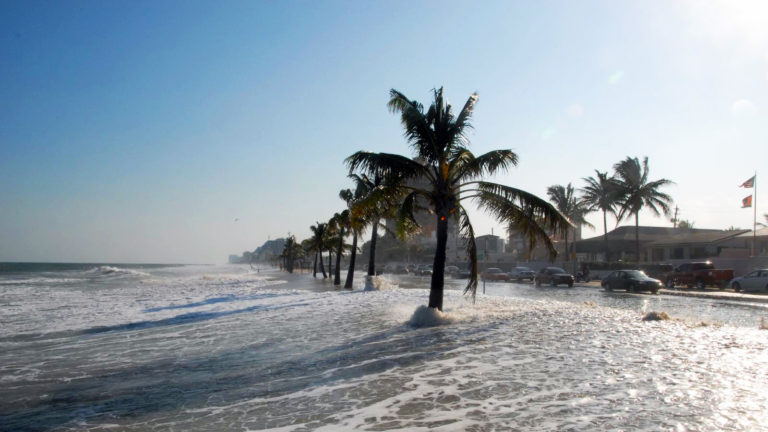
Sea level rise from melting ice sheets is accelerating around the world and the annual rate of the rise could more than triple every year by 2100, according to data published recently in the Proceedings of the American Academy of Sciences (PNAS).
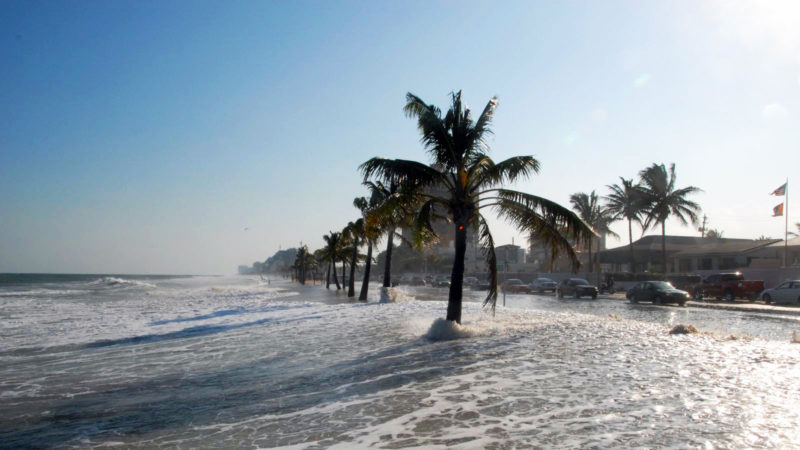
Rising sea level
Rising sea level

A team of researchers led by University of Colorado-Boulder professor of aerospace engineering sciences, Steve Nerem, relied on information collected by satellites over 25 years.

The research of the team shows that sea level rise from melting ice sheets is already responsible for half of the 7 centimeters of increase observed since 1993. At the current rate, the rise of the level of the oceans of about 3 millimeters per year right now could more than triple to reach 10 an extra millimeters per year by 2100.

This would mean that the sea level could rise by 65 centimeters by the end of the century, a figure in line with estimations by the UN Intergovernmental Panel on Climate Change, with serious implications for coastal cities and small island states such as Fiji.

Climate change is driving ocean rise through two phenomena: the rapid melting of ice at the poles and the increased concentrations of greenhouse gases in the atmosphere. This latter phenomenon warms the temperature of the water. Hot water – less dense than cold water – takes up more space, causing the ocean to expand.

“This acceleration, driven mainly by accelerated melting in Greenland and Antarctica, has the potential to double the total sea level rise by 2100 compared to projections that assume a constant rate,” says Nerem. With the increase accelerating each year, the level of the oceans would rise by more than 60 centimeters by the end of the century.  “And that’s naturally a conservative estimate”, he warns.

The results of this work are broadly in line with the projections of the UN Intergovernmental Panel on Climate Change (IPCC) AR5 report, submitted in 2014.

The rapid implementation of the Paris Agreement on Climate Change is crucial to avoid  temperatures and sea levels from rising even faster. The main goal of the agreement is to maintain the rise in global average temperature well below 2°C, and as close as possible to 1.5°C.

Global greenhouse gas emissions, mainly caused by fossil fuel combustion and deforestation, need to peak soon and then decline rapidly to avoid the worst impacts of climate change, which include rising sea levels, more droughts, floods and forest fires.

In order to help achieve the objectives of the Paris Agreement agreement, a unique process dubbed the Talanoa Dialogue was set up by Fiji, which has the chair of the UN Climate Change Conference COP23. The Talanoa Dialogue is an international discussion in which countries and other key actors monitor progress under the Paris Agreement while seeking to increase global ambition.
Governments urged to tax dirty energy

0

Taxes are effective at cutting harmful greenhouse emissions from energy use, but taxation applied by major economies to CO2 emissions is not enough to fight climate change, say experts with the Organisation for Economic Co-operation and Development (OECD) in the report Taxing Energy Use 2018 published on Wednesday, February 14, 2018.

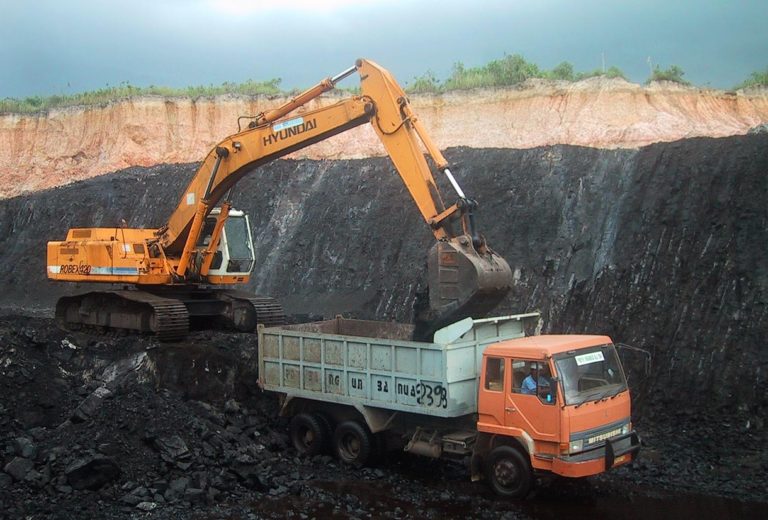
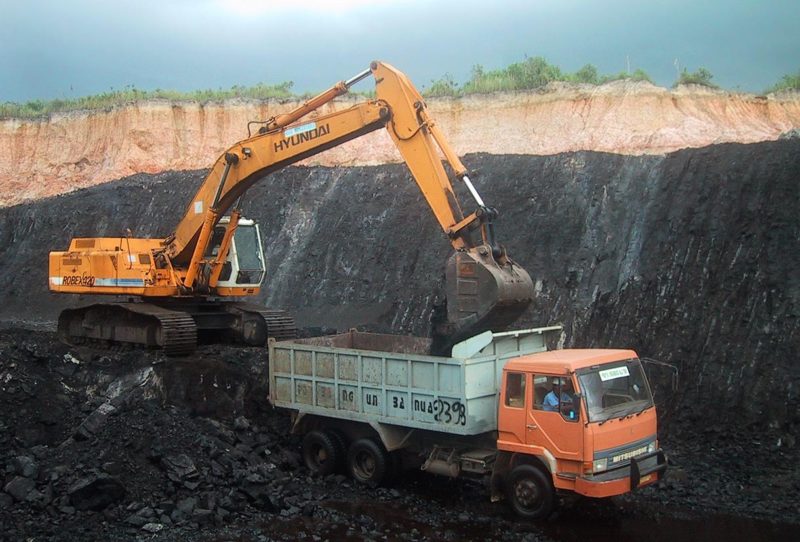
Mining
Mining coal in a deposit. Coal has been widely described as a dirty energy source

The report describes the evolution of this tax on fossil fuels (coal, oil, gas) in 42 OECD and G20 countries – collectively responsible for about 80% of global energy consumption and CO2 emission – during the period 2012-2015.

In the non-road sectors, which account for 95% of carbon emissions from energy use, 81% of emissions are untaxed, and rates are below a low-end estimate of climate costs of €30 per tCO2 for 97% of emissions, says the OECD.

“There is no structural change to the pattern of taxes on energy use between 2012 and 2015. This is disconcerting,” says Angel Gurría, Secretary General of the OECD. “Efforts have been made or are underway in many countries and communities to implement the polluter pays principle, but progress towards more efficient use of taxation to reduce harmful emissions is slow and piecemeal altogether. Governments must do more and better.”

For example coal, which accounts for nearly half of the carbon emissions in the 42 countries studied, still escapes taxation in many countries, and its taxation exceeds €5 per tCO2 in only five countries.


Fuel Tax Reform Showing First Results

Taxes on oil products are relatively high, whatever their uses – exceeding €50 per tCO2 on average in all sectors. Contrary to what would appear desirable for the protection of the environment, taxes on diesel remain lower than those applied to gasoline in 40 of the 42 countries studied. At the same time, several countries have recognised the problem and are initiating change in this area.

The OECD says that carbon taxation is higher and more widespread in road transport than in any other sectors. The share of the taxed emissions in this sector currently reaches 97% and the taxes are higher than 50 euros per tCO2, covering 47% of emissions in 2015 – a marked increase to 37% in 2012. These changes mainly result from fuel tax reforms in large emerging economies such as China, India and Mexico.

The effective increases in taxation therefore mainly concern the road sector, which continues to depend almost exclusively on oil products.

Although taxes are among the most effective tools for mitigating the negative impacts of energy use “most emissions are not taxed at levels that would reduce energy consumption and thus limit climate change,” the OECD report says.

The share of emissions subject to a carbon tax increased from 1 to 6% in 2015, but only 0.3% of emissions are imposed at a level at least commensurate with the cost to the environment.

“The impacts on climate and air quality attributable to the burning of fossil fuels can be controlled, but the longer we wait, the more difficult and costly it will be to meet this challenge,” OECD chief Gurría warned. “Aligning energy prices with the costs of climate change and air pollution is essential for effective and efficient action, and major improvements are urgently needed.”

UN addresses importance of Lake Chad

0

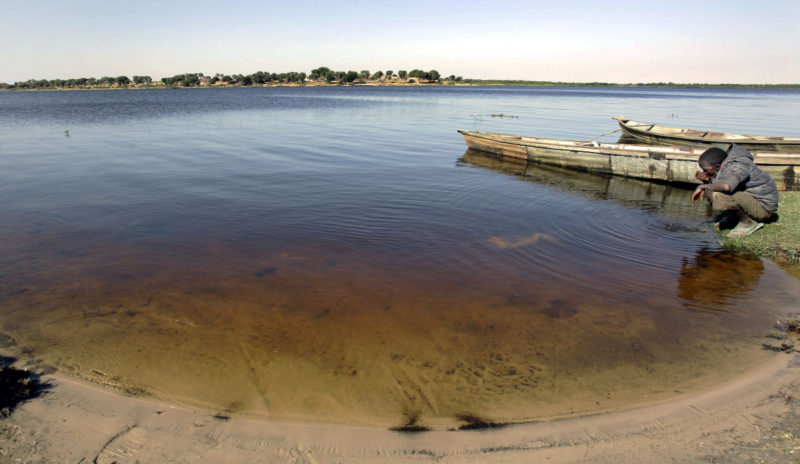
The United Nations Educational, Scientific and Cultural Organisation (UNESCO) is holistically addressing the biosphere reserve and the world heritage importance of the Lake Chad Basin (LCB), an official has said.

lake chad
Scientists say the Lake Chad, that borders Nigeria and some other countries, has shrunken by 95 percent over the past 50 years. They have also linked the Boko Haram insurgency to the lake’s situation. Photo credit: AP/Christophe Ena

Mr Simone Grego, Regional Advisor Sciences at UNESCO, made the statement on Thursday, February 15, 2018 on the sideline of the National Consultation Workshop on  BIOPALT project.

The workshop was sponsored by UNESCO in collaboration with Lake Chad Basin Commission (LCBC) in Abuja.

Biosphere and Heritage of Lake Chad (BIOPALT) is a project targeted at promoting peace in the LCB through the sustainable management of its natural resources.

“UNESCO is addressing the issue of Lake Chad shrinking, issues relating to livelihood and security and is proposing this multidisciplinary project in which natural resources are used as a tool for cooperation rather than conflict.

“The BIOPALT project is planning to address the issue of trans-boundary resources shared by countries around the lake in a consultative, participatory way.

“The flagships of the project are on the biosphere reserves and the World Heritage Listing of the lake relating to science and culture,” Grego said.

He decried the shrinking of LCB over the decades as a result of climate change.

“One of the challenges about Lake Chad is that it shrank for the past 30 years with the surface which went from 25,000 square kilometres in the 1960s to 2,500 square kilometres in 2000.

“It then increased again to 5,000 square kilometres.

‘’This indicates that there is variability of rainfall which is made more extreme by climate change.

“There is a natural component, human component flowing into the lake, so it is a very complex problem,” he said.

Grego added that UNESCO was working toward developing a trans-boundary heritage site around Lake Chad.

He said that the organisation was always ready to assist any government according to their national issues and  help draft policies on such challenges.

The regional advisor said Nigeria understood the challenge of the LCB because it was its `major hotspot’ for security, environmental degradation and migration.

President Muhammadu Buhari and UNESCO’s former Director-General, Ms Irina Bokova in August 2016 held discussions on the restoration of the Lake Chad Basin.

The discussions were on issues of mutual interest toward attaining the Sustainable Development Goals  by 2030 and to reflect on the future of the lake.

Buhari had solicited UNESCO’s assistance to organise an international conference to reflect on the future of the lake and support the preservation of the surrounding environment.

Buhari in 2017 approved the hosting of a conference in Abuja from Feb. 26 to Feb. 28 with focus on creating global awareness on the socio-economic and environmental challenges arising from the shrinking of the lake.

By Ijeoma Ndubisi

UNESCO, partners working for peace, sustainable management of Lake Chad

0

The United Nations Educational Scientific and Cultural Organisation (UNESCO) says it will collaborate with partners to ensure the foundations of peace are built on sustainable management of resources of the Lake Chad Basin (LCB).

Ydo Yao
Ydo Yao

Mr Ydo Yao, the Director of UNESCO, Nigeria said this during the National Consultation Workshop on the Biosphere and Heritage of Lake Chad (BIOPALT) Project in Abuja.

BIOPALT is a project anchored by UNESCO and the Lake Chad Basin Commission targeted at promoting peace in the LCB through the sustainable management of its natural resources.

Yao, who was represented by Mr Saidou Jallow, the Senior Programme Specialist Education, recalled that UNESCO’s preamble constitution was based on sustaining peace among nations.

According to Yao, LCB over time has been threatened by conflicts and insecurity.

“The preamble of the UNESCO constitution states that since wars begin in the minds of men, it is in the minds of men that the defences of peace must be constructed.

“UNESCO and its partners will combine their efforts to ensure that the foundations of peace are built on sustainable management and equitable sharing of the natural resources of the LCB.

“This will also respect the cultures and endogenous practices of the basin,” Yao said.

The director said that the process of the project tagged: Scientific and Cultural Diplomacy began in 2013 in collaboration with the Lake Chad Basin Commission (LCBC).

He said that it aimed at having an overview of the state of relevant knowledge in the management of the natural resources of the LCB among other issues.

Yao said the previous project on the LCB resolved that the LCB could be included in the World Cultural Heritage List and be proposed as trans-boundary biosphere reserve for countries sharing the lake.

He expressed delight that the conclusions of the initial project were being realised, adding that the ongoing project will succeed with more efforts from partners.

The director said the current project was in line with the Sustainable Development Goals (SDGs) of 2030 and the 2063 African Union vision aimed at promoting the region.

Yao said that the project was centred on four pillars while the organisation would synergise with partners to ensure the restoration of the LCB.

“The project has four pillars; study, training and awareness raising, restoring ecosystems and evaluating and disseminating the results of the project.”

Yao said Nigeria’s role among other countries sharing border  with the LCB was very important owing to the activities surrounding the lake.

“Nigeria in this project is very important because it hosts most of the refugees from the LCB, environmental refugees, the detention and security issues all are from Nigeria.

“Nigeria is interested in ensuring that sustainable peace, development is realised in the LCB.”

Mr Abubakar Iliya, a representative from the Presidency on the LCB restoration, said issues about the lake were at the heart of the government.

Iliya recalled that concerns about the lake prompted President Muhammadu Buhari to approve Nigeria’s hosting of an international conference on the depleted basin at the end of 2017.

He, however, urged UNESCO and participants to come up with resolutions that would be of benefit to the conference expected to hold by Feb. 26 to Fed. 28.

NAN reports that the restoration of the Lake Chad basin became necessary following discussions between President Muhammadu Buhari and UNESCO’s former Director General, Ms Irina Bokova in August 2016.

The discussion was on issues of mutual interest toward attaining the Sustainable Development Goals (SDGs) by 2030 and to reflect on the future of the lake.

Buhari called for UNESCO’s assistance to organise an international conference to reflect on the future of the Lake and support the preservation of the surrounding environment.

In Dec. 2017, he approved the conference to be hosted in Abuja with the objective of creating global awareness on the socio-economic and environmental challenges arising from the shrinkage of the Lake Chad.

By Emmanuel Umekwe and Ijeoma Ndubisi

Expert clamours use of clean energy for cooking

0

The immediate-past Chairman of the Abuja Chapter of Nigerian Environmental Society (NES), Mr Akinrele Olusegun, on Thursday, February 15, 2018 advised Nigerians to use alternative, clean energy systems for their cooking.

A woman cooking with a fuel efficient wood stove

Olusegun gave the advice in a telephone interview with News Agency of Nigeria (NAN) in Abuja.

“Nigerians should use the available clean energy sources to meet their cooking needs,’’ he said.

He decried the constant felling of trees for fuelwood, saying that the practice must not be allowed to continue because of its devastating consequences on the environment.

According to him, charcoal production and uses have reached an alarming rate across the country.

“Charcoal production in Nigeria is having devastating ecological and environmental effects; the Ministry of Environment, NES and some non-governmental organisations (NGOs) have been particularly concerned.

“The most common effect of charcoal production is deforestation, which has seriously affected our forests.

“We are understudying some innovations that can give more alternatives to fuelwood and discourage people from using charcoal and other kinds of fuelwood.

“The NES is bringing back the culture of planting trees, especially economic trees, by educating rural dwellers on the menace of deforestation so as to restore our
forests,’’ he said.

He stressed that many citizens did not respect laws prohibiting indiscriminate felling of trees but warned that anybody caught would be prosecuted in accordance with the laws.

Besides, Olusegun urged the government at all levels to improve the funding of environmental agencies, while cautioning environmental experts and researchers against embezzling funds meant for environmental projects.

Mrs Zainab Sanusi, a charcoal seller in Karu, told NAN that although she was aware of the negative effect of the business on the environment, she had no other choice than to continue with the charcoal trade as her means of livelihood.

She recalled that the start-up capital for the charcoal trade was what she could only afford when she was planning to start a business.

“The business is paying my bills because more people are patronising me regularly, especially those who cannot afford the high cost of gas and kerosene nowadays,’’ she said.

By Uwumarogie Peter

Appeal court rules Nigerians cannot pursue Shell spill claim in England

0

The Court of Appeal in London ruled on Wednesday, February 14, 2018 that two Nigerian communities cannot pursue Royal Dutch Shell in English courts over oil spills in Nigeria’s Delta region.

NETHERLANDS-NIGERIA-COURT-ENVIRONMENT-SHELL
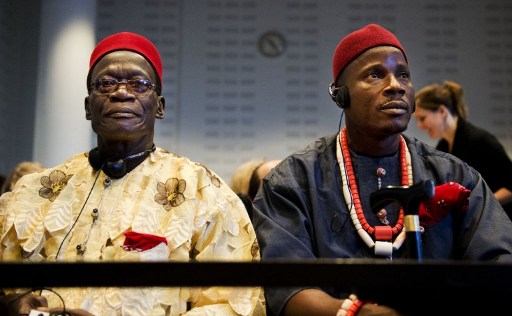
Two of the four Nigerian farmers (Chief Fidelis A. Oguru-Oruma (left) and Eric Dooh) sit in the law courts in The Hague on October 11, 2012. The four farmers take on Shell in a Dutch court, accusing the oil giant of destroying their livelihoods in a case that could set a precedent for global environmental responsibility. Photo credit: AFP / ANP / ROBIN UTRECHT

The split decision upheld a High Court ruling in 2017 that was a setback to attempts to hold British multinationals liable at home for their subsidiaries’ actions abroad.

The court rejected the appeal from law firm Leigh Day on behalf of Nigeria’s Bille and Ogale communities, and upheld a ruling that English courts do not have jurisdiction over claims against Shell’s Nigerian subsidiary Shell Petroleum Development Company (SPDC).

SPDC is jointly operated with the Nigerian government.

Shell said the court “rightly upheld” the earlier ruling, and said Nigeria’s “well-developed justice system” was the correct place for the claims.

Leigh Day said the two Nigerian communities intended to bring the case to Britain’s Supreme Court.

“We are hopeful that the Supreme Court will grant permission to appeal and will come to a different view,” Leigh Day partner Daniel Leader said.

NAN reports that n 2012 the European Court of Justice ruled that Shell parent companies “…in fact exercised decisive influence over their joint subsidiary’s conduct”; Shell Petroleum NV v. European Commission (2012) at para 51.

Further, in 2015 the Dutch Court of Appeal ruled that “Considering the foreseeable serious consequences of oil spills to the local environment from a potential spill source, it cannot be ruled out from the outset that the parent company may be expected in such a case to take an interest in preventing spills…”

The communities appealed against the ruling.

Day is representing over 40,000 Nigerian from two communities (the Ogale Community and the Bille Community) in claims against Royal Dutch Shell plc (RDS) and its Nigerian subsidiary, the Shell Petroleum Development Company of Nigeria (SPDC).

Both communities allege that they have suffered systematic and ongoing oil pollution for years because of Shell’s operations.

Shell does not dispute that both communities have been severely polluted by its oil, or that it has yet to clean up the oil.

However, in November 2016, Shell sought to block the claims in London on the grounds the London-based parent company, Royal Dutch Shell, was not legally responsible for the pollution caused by its Nigerian subsidiary and that it was open to the communities to seek redress through the Nigerian courts.

By contrast, the claimants argued that Royal Dutch Shell exercised significant direction and control over it’s Nigerian subsidiary and was, therefore, liable for its systematic pollution of Ogale and Bille.

Sokoto donates land to Dangote to establish rice mill

0

Governor Aminu Tambuwal of Sokoto State on Wednesday, February 14, 2018 promised to handover 27 hectares of land for immediate establishment of Dangote Rice Mill in the state as the company prepares for production this year.

Aminu-Tambuwal
Governor Aminu Tambuwal of Sokoto State

Tambuwal stated this when he received a delegation from Dangote Industries Limited led by Mansur Ahmed, Director, Stakeholder Relations and Corporate Communications in Sokoto.

The governor pledged his administration’s full support towards ensuring the success of the factory.

“By next Friday, Feb. 16, payment of compensation to land owners will commence while Certificate of Occupancy (C-of-O) will be handed to you next week,’’ Tambuwal assured the delegation.

He expressed optimism that the establishment of Dangote Rice Mill which is located at Runji Village in Kware Local Government Area, would enhance economic activities in the state.

The governor stressed that his administration had been wooing investors from within and outside the country.

He commended the Chairman,Dangote Group of Companies, Alhaji Aliko Dangote, for his support to immunisation exercise and other humanitarian projects in the state and the nation at large.

Speaking earlier, Ahmad said that the machines and other factory facilities for the mill would soon arrive Lagos Port.

Ahmad said that 5,000 out growers were engaged and at present they secured 2,000 metric tonnes of raw rice stored in their warehouse.

According to him, under out grower scheme, farmers were provided with inputs and the company served as the off taker under the arrangement.

He said the factory would process 32 metric tonnes of rice per hour and has the combined capacity of processing 250, 000 metric tonnes per year.

Ahmad said construction, installations and production would commence in six months period adding that the visit was to urge the governor to hasten the processes.

By Habibu Harisu

Lagos commits to reducing housing shortfall

0

The Lagos State Commissioner for Housing, Mr Gbolahan Lawal, on Wednesday, February 14, 2018 reiterated the commitment of the state government to creating an enabling environment for economic growth through massive housing construction across the state.

Estate
Observers say Nigeria’s housing deficit is far in excess of 17 million. Photo credit: lagos.all.biz

Lawal gave the assurance during an inspection tour of some housing estates in Odo Onasa/Odo Ayandelu and Agbowa, both in Ikorodu division.

He said that Odo Onasa/Odo Ayandelu Housing Estate, which comprises 660 housing units, would soon be completed.

The commissioner said that two water treatment plants and a general sewage disposal were also being constructed to serve the estate.

He said that the ChoisCity Estate in Agbowa had been completed and would soon be allocated to the homeowners at an affordable price.

Lawal said that more housing units would still be constructed in the estate in future.

According to him, many housing units in other estates across the state will soon be ready for allocation to first-time homeowners under the Rent-To-Own or Rental Housing Policies of the state government.

“Our target is to construct 20,000 housing units in the state by the year 2020.

“The major focus is to ensure that Lagos residents have access to affordable housing units that are convenient, safe and within employment areas.

“It is also to reduce the housing deficit of the state which stands at about 2.5 million,” he said.

Lawal attributed the inability to meet the housing needs of Lagosians to the daily influx of people into Lagos.

He enjoined residents to always pay their taxes regularly to enable the government to meet its target in the provision of housing and other essential infrastructure in the state.

By Lilian.Chukwu

1,000 students protest in Kathmandu against increasing air pollution

0

Nearly 1,000 students took to the streets of Nepal’s capital Kathmandu on Wednesday, February 14, 2018 demanding cleaner air and pollution free environment.

Nepal
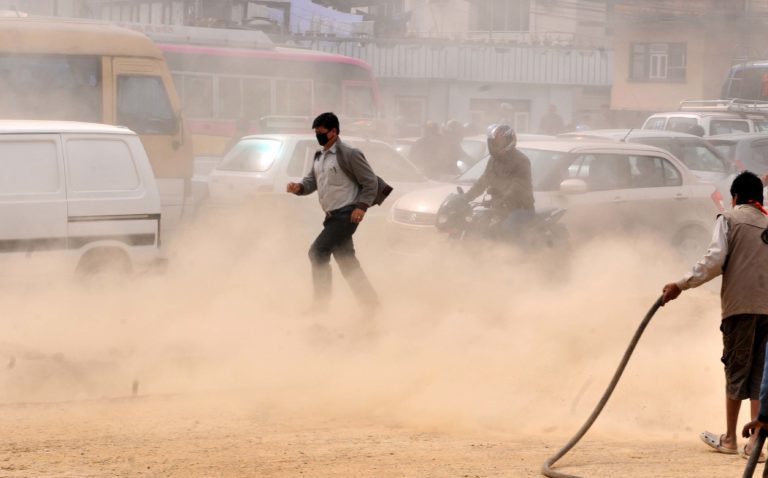
Air pollution and traffic congestion in Nepal

As part of the week-long Campaign for Clean Air Rights “Maskmandu,” youths and students participated in the symbolic protest in Ratnapark to raise awareness about alarming air pollution issue.

Putting masks and carrying colorful placards, they chanted slogans like “We don’t want maskmandu.”

“Kathmandu is dying” and “I love my lungs” among others while some even slept on the main street.

This is the third edition of the campaign launched by a non-governmental organization Clean Energy Nepal with the theme “Me,” or “Myself,” which focuses on the slogan “I love my lungs.”

According to the organiser, the main aim of “Maskmandu” is to create public awareness about the ongoing pollution of Kathmandu Valley and to exert pressure on stakeholders to take concrete action immediately.

Rajan Thapa, an official from Clean Energy Nepal, told Xinhua on the spot that “Kathmandu, the city of temples, has turned into ‘Maskmandu’ today as people are unable to walk on streets without masks.

“Our only will is to see Kathmandu as the beautiful Kathmandu, free from pollution.”

Air quality in the Himalayan country is often regarded as the worst in the world while Nepal is ranked at the bottom among the 180 countries surveyed in terms of air-quality globally.

Kathmandu valley has been facing severe air pollution in the past few years due to smoke emission from vehicles, industries, brick kilns and increasing haphazard road expansion projects.

“We, public are suffering a lot due to increasing pollution, be it several lungs related diseases or even deaths.

“We want our voices to be heard by the government so have come together to protest,” Samikchya KC, a graduate level student at Kathmandu Forestry College, told Xinhua.

National Park Service to equip officers for effective park patrols

0

The Nigeria National Park Service says it is working tirelessly to strengthen and equip its officers for effective park patrols.

FMEnv Retreat
The Conservator-General, National Parks Service, Alhaji Ibrahim Goni

Alhaji Ibrahim Goni, the Conservator-General of the service, made the disclosure in an interview with News Agency of Nigeria in Abuja on Wednesday, February 14, 2018.

Goni noted that the service had obsolete and low calibre firearms and ammunition and required, as an immediate measure, light arms and ammunition for effective park operations.

He said that the officers would undergo Para-military training to prepare and equip them with operational standards toward discharging their duties effectively.

‘‘We are working in collaboration with the Nigerian Army, the Directorate of State Services (DSS) and the Nigeria Police Force in fighting insurgency, banditry and cattle rustling in the park.

‘‘The officers are to be strengthened with advanced military training and in the handling of light arms and ammunition.

‘‘This will help reduce the constant conflicts between the park staff and cattle grazers in the park as a result of the lack of designated cattle routes and functional grazing reserves, which had led to death of many staff and others getting maimed.’’

Goni said that the service would continue to protect the parks from the people of the communities that are trespassing for farming and other human activities.

‘‘These encroachments threaten the conservation of the parks, especially Cross River, Gashaka-Gumti and Kainji Lake National Parks,’’ he said.

He said that the service would construct and rehabilitate rangers’ barracks and access roads, for accommodation and safe custody of operational equipment.

‘‘We will rehabilitate access roads to ease park surveillance and anti-poaching patrol to boost wildlife viewing, and enhance park monitoring and evaluation.

‘‘The surveillance will help us to identify challenges and proffer solutions,’’ he said.

He said that for Nigeria to achieve environmental sustainability, a firm alliance must be established among all stakeholders.

‘‘These communities around our parks should know that our parks are deliberately reserved and conserved for specific reasons.

‘‘Both nationally and internationally, specific areas are protected by the government for the benefit of the environment.

‘‘No nation today is self-sufficient, however, the lower income countries must be helped to develop sustainable environments.’’

Goni said that global and shared resources, especially the atmosphere, oceans and ecosystems, could only be managed on the basis of common purpose and resolve.

The conservator-general said that the service remained committed to achieving her mandate as enshrined in Act 46 Cap 65 Laws of the Federation of Nigeria (LFN) 2010 as amended.

By Ebere Agozie

×