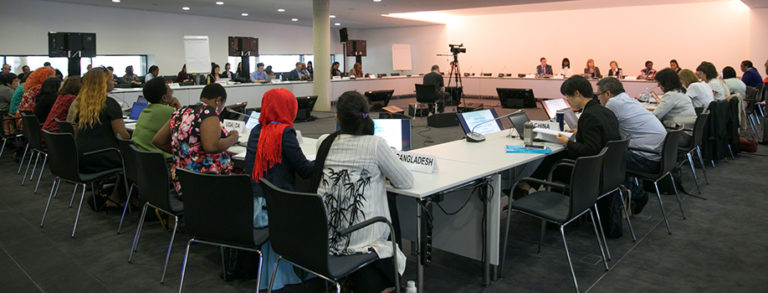
Experts from all around the world gathered at the UN intersessional climate talks in Bonn, Germany to step up action on gender and climate change with a series of workshops and dialogues. The two-week summit held from April 30 to May 10, 2018.
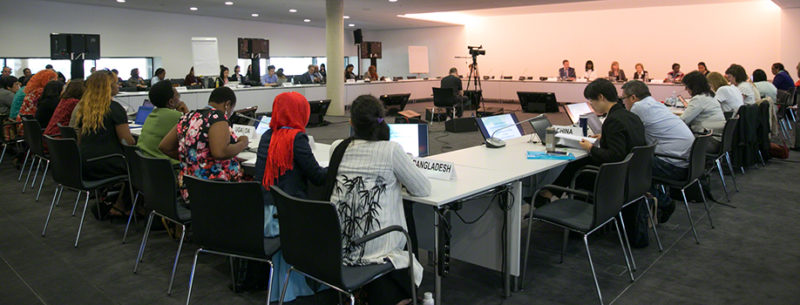
Participants during the in-session workshop on gender and climate change in Bonn
The Gender Action Plan (GAP) of UN Climate Change recognises the differentiated impacts of climate change upon women and men and supports the gender-related actions under the UN Framework Convention on Climate Change with respect to the Paris Agreement.
The plan urges immediate advancement of women’s participation, promotes gender-responsive climate policy and mainstreaming of the gender perspectives in the Paris Agreement’s implementation.
Organised by the UN Climate Change secretariat, the meetings highlighted solutions on how to intensify the implementation of the GAP, including how to address the impacts of climate change on women and girls in climate action.
“We know that the role of women as agents of change and their participation in the political process contributes to the transformation of our society towards a low-carbon and resilient development,” said Jeniffer Hanna Collado of the Dominican Republic’s National Council for Climate Change and the Clean Development Mechanism.
Specifically, experts and researchers from civil society and the public sector explored some of the currently available resources to create gender-responsive climate policies and good practices for addressing gender and climate change. The importance of having gender-analysis and sex-disaggregated data was high on the agenda.
“Sex-disaggregated data and gender data is vital for framing decision-making processes as well as for monitoring the impacts of implementation,” said Lorena Aguilar from the International Union for Conservation of Nature (IUCN).
Women and girls are among the most impacted parts of populations when it comes to climate change, as in many regions of the world, women and girls rely on natural resources for their work and livelihood. However, their access to resources and rights to land ownership are often limited.
It is important to understand that the gender dialogue in climate talks is not only about women, but about both women and men. Also important is to ensure continuous research, with the participation of women, as they are most affected by climate change.
Efficiency in creating gender-responsive climate policies lies in ensuring gender analysis of climate policy and action and in mobilising existing and new resources.
Markus Ihalainen from the Centre for International Forestry Research, mentioned in Bonn that “we need to move beyond female and male binaries and also understand that gender relations can change over time and are affected by climate change as well as responses to it”.
The discussions about the progress on the Gender Action Plan will continue in Katowice at the UN Climate Change Change Conference COP 24 in December.
Towards promoting the phase-down measures under the Minamata Convention on Mercury signed and ratified by Nigeria in February 1, 2018, three Nigerians have been selected from the government, academia and civil society to attend the Global Workshop on Ending Dental Amalgam Use in Children holding in Bangkok, Thailand from May 14 to 15, 2018.
Bangkok, Thailand is hosting the Global Workshop on Ending Dental Amalgam Use in Children
The bigwig Nigerian team comprises Mr Charles Ikeah, Director of Pollution Control and Environmental Health of the Federal Ministry of Environment; Prof. Godwin Arotiba, immediate past Dean, Faculty of Dentistry, Lagos University Teaching Hospital (LUTH); and Dr Leslie Adogame, Executive Director, SRADev Nigeria (focal point NGO).
The global workshop is organised by the World Alliance for Mercury-Free Dentistry in association with UN Environment, and its goal is to assist countries in ending amalgam use in children as well as to promote the phase down measures as an integrated approach to the implementation of the Minamata Convention’s requirement to phase down amalgam use before the 2nd session of the Conference of the Parties (COP2) in November, 2018. According to the organisers, the report of the global meeting is envisaged as information for participants at COP2.
“In Bangkok this month, Nigerian delegates will historically join other five African countries (Zambia, Tunisia, Tanzania, Mauritius and Côte d’Ivoire) to take the giant step to commit to end amalgam for children across Africa and throughout the world,” said Dr Adogame.
Jacob Duer, Chief of Chemicals and Health Branch of UN Environment, states that delegates to the meeting have been “carefully selected to ensure a diversity of experiences and perspectives”. Sharing experiences and strategies to phase out amalgam for children and phase down amalgam use generally will provide an important basis for decision-making for each country at COP2 and beyond, he adds.
Expected workshop participants are experts drawn from countries, including government representatives, civil society, dentists/dental academicians, dental manufacturers, and intergovernmental organisations like UN Environment and World Health Organisation (WHO), all of whom will contribute to presentations and discussions on topics such as:
amalgam’s environmental impact; mercury-free dental materials available for children;
case studies from countries and other entities that have ended amalgam use in children; and
strategies that can be tailored to each country’s needs (such as laws and regulations, dental school curricula updates, modifying insurance and government programmes, and encouraging health promotion programmes that can increase longevity of teeth by preventing dental caries and utilising minimally-invasive mercury-free fillings).
Dominique Bally of the African Centre for Environmental Health based in Côte d’Ivoire, said, “To donate, sell, or otherwise bring amalgam to Africa is not helping the people of our region – it is dumping a neurotoxin into our environment and our bodies. Africans are tired to see their continent being seen as the world dumping site.”
Charlie Brown, Attorney and President of the World Alliance for Mercury-Free Dentistry, an organisation which is spearheading the campaign, made a clarion call on African, Asian and other global delegates attending the meeting, saying: “Please do as the European Union has done: phase out amalgam for children now, for one simple reason: The children of your nation are equally important as the children of Europe.”
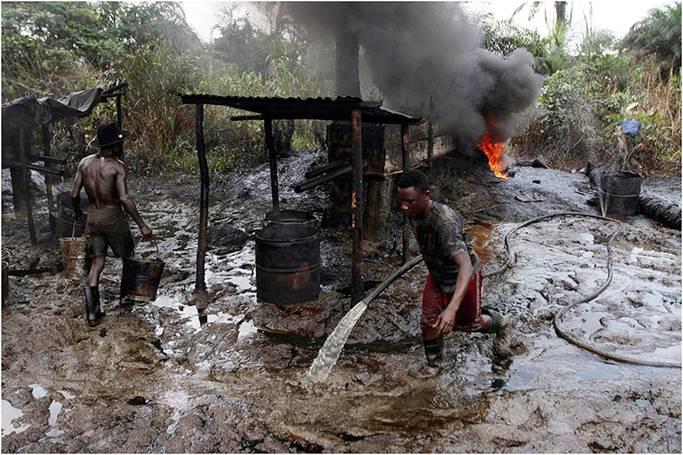
The Joint Military Force (JTF) in the Niger Delta says it has adopted environment-friendly methods in combating oil theft and illegal refining in the region
Illegal refining activities in the Niger Delta
Brig.-Gen Kevin Aligbe, Land Component Commander of the joint force code-named “Operation Delta Safe,” disclosed this to the News Agency of Nigeria (NAN) on Sunday, May 13, 2018 in Yenagoa, the Bayelsa State capital.
Alighe said that troops of the command had introduced the use of swamp buggies in destroying illegal refineries as opposed to setting the camps ablaze.
He said the force used special equipment to crush the accessories and materials used at illegal refining sites.
He further said that the method had made it economically unviable for such sites to spring up again after raids by the joint force.
The commandant noted that the adverse impact of pollution caused by illegal refineries was enormous.
He commander said that some people’s perception that the destruction of illegal refineries was doing damage to the environment was erroneous.
Aligbe said it was the processes in the illegal refining that actually degraded the Niger Delta environment.
According to him, the crude distillation process used by illegal refineries is inefficient and causes a pollution of the environment.
He said that only 30 per cent of the volume of crude stolen by illegal refiners is converted to products.
The commandant said the remaining 70 per cent was wasted and dispersed in the surrounding environment near the camps.
“Our operations are always carried out with the environment in mind; we deploy methods that are environmentally friendly and safe and we do not burn stolen crude as believed in some quarters.
“In fact, burning of products either refined or crude is out of question because it is the evidence that is required to prosecute the suspects that are arrested during raids of illegal refineries.
“We seize the products and after using them as evidence they are disposed in accordance with the oil industry safety regulations.
“We are conscious of the fact that the environment sustains the people’s livelihood.
“The damage that illegal refineries do to the environment is colossal and that is part of the reasons we are fighting to stamp it out.
“The operators are fighting back and we remain resolute,” he said.
Aligbe noted that the joint military force was committed to its mandate of safeguarding oil facilities and preventing sundry criminalities in the region.
The commandant said that the aim was to pave way for economic progress and solicited the support of Niger Delta people.
Shell Nigeria Exploration and Production Company (SNEPCo) delivered a total of 763 million barrels of oil from the Bonga field between first production in 2005 and 2017, while at the same expanding the field with further drilling of wells in Bonga Phases 2 and 3 and through a subsea tie-back that unlocked the nearby Bonga North West field in August 2014.
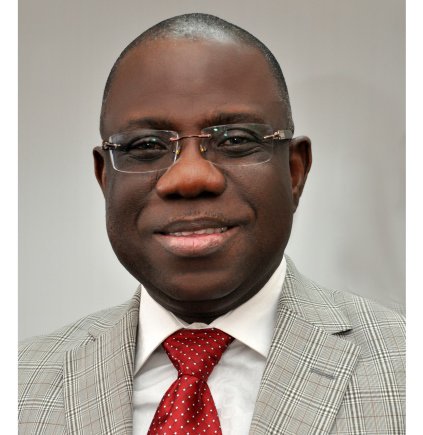
SNEPCo Managing Director, Bayo Ojulari
“The success story at Bonga is not only that it is Nigeria’s first oil and gas production project in more than 1,000 metres of water, or that it increased Nigeria’s oil production capacity by 10% in 2005,” said SNEPCo Managing Director, Bayo Ojulari, while reviewing the operations of the company to journalists in Lagos. “The main point is that Bonga is a Nigerian venture delivered by Nigerians using global expertise and processes offered by Shell that have launched Nigeria into the league of notable deep -water players.”
He identified the Bonga turnaround maintenance in March and April 2017 as a significant milestone in SNEPCo’s operations. This was the most complex and largest of the three previous turnaround maintenances in the 12-year history of Bonga, and has helped to ensure safe and sustained production and reduced unscheduled production deferments. More than 1,000 people and more than 50 Nigerian contractor and sub-contractor companies participated in the exercise.
Another milestone was the refurbishment of five subsea trees in 2015 at a fabrication yard at Onne in Rivers State, the first in sub-Saharan Africa with Nigerian engineers and technicians playing key roles. The feat is consistent with the growth of support industries from Bonga operations which have boosted demand for a range of goods and services including offshore vessels and platforms, materials, floating hotels, helicopters and manpower, creating jobs and providing a range of training and maintenance services to the industry locally.
Working in close collaboration with the Nigerian National Petroleum Corporation (NNPC), the concessionaire and co-venture partners, SNEPCo has implemented a robust social investment portfolio that has made visible impact in the six geopolitical zones of Nigeria.
Mr. Ojulari paid tribute to the staff and contractor personnel who have worked hard to ensure sustained production at Bonga, thereby creating a stable source of revenue for all stakeholders particularly the Nigerian government.
He added: “We are working hard to strengthen the Nigerian connection. It is not a coincidence that, since 2005, the Managing Director of SNEPCo has been Nigerian and today, 96% of SNEPCo’s staff is Nigerian. SNEPCo is also committed to further unlocking Nigeria’s deep-water resources and along with its co-venture and government partners is evaluating opportunities to further increase production of the Bonga field in an efficient and cost-effective way.”
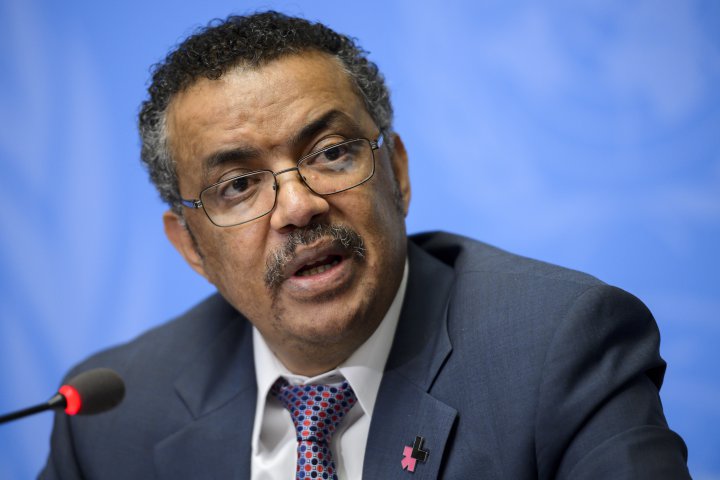
Director-General, World Health Organisation (WHO), Dr Tedros Ghebreyesus, has arrived Kinshasa, capital of the Democratic Republic of Congo (DR Congo), to assess the needs of Ebola response first-hand.
Dr Tedros Adhanom Ghebreyesus, Director General of the World Health Organisation (WHO). Photo credit: FABRICE COFFRINI/AFP/Getty Images
The director general announced this on his Twitter handle @DrTedros on Sunday, May 13, 2018.
He said WHO staffers were in the team that first identified the outbreak, adding that the organisation was working with its partners to send more staff, equipment and supplies to the area.
Ghebreyesus said that the organisation and its partners were also working with national health authorities to contain the Ebola outbreak in DR Congo.
He reassured that the organisation and its partners were committed to the continuous action to beat Ebola.
According to him, as of May 11, “our case count is two confirmed cases, 12 suspected cases and 18 probable cases.”
He added: “I just arrived in Kinshasa, DR Congo with the Regional Director for Africa, Dr Moeti Matshidiso, and the WHO Deputy Director-General, Emergency Preparedness and Response, Dr Pete Salama.
“We have been briefed about current situations and WHO and partners are committed to continuing swift actions to beat Ebola,’’ Ghebreyesus said.
The organisation, also on its Twitter handle @WHO, said that mobile laboratory materials have been shipped to strengthen the rapid analysis of samples from Bikoro, the Ebola-affected area in DR Congo.
WHO had on Thursday, May 10 announced that it released $1 million from its contingency fund for emergencies to support the rapid response to the outbreak in the country.
The News Agency of Nigeria (NAN) reports that the outbreak was first confirmed by the organisation on May 8 with the two cases occurring at Bikoro health zone, Equateur province.
WHO says it has alerted countries surrounding DR Congo about the outbreak to enable them to take precautionary measures to prevent spread.
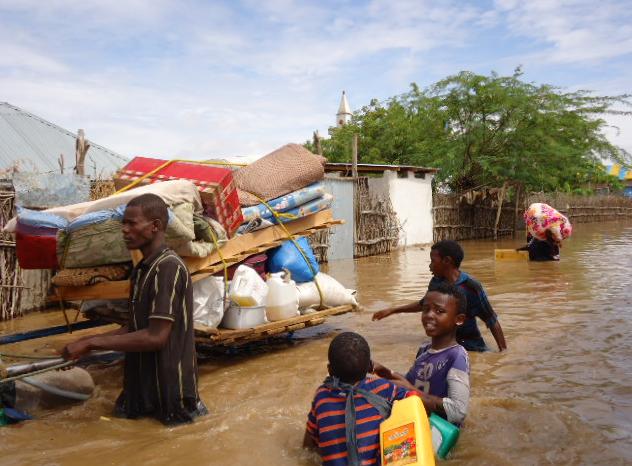
Heavy rains in Somalia’s Juba and Shabelle river basins continue to cause flash and riverine flooding displacing an estimated 220,000 people, the UN Office for the Coordination of Humanitarian Affairs (OCHA) said on Friday, May 11, 2018.
Victims of flooding in Somalia
Jens Laerke, Deputy spokesperson for OCHA, said at a regular UN briefing that a total of 718,000 people have been affected by the floods in the northeast African region that have claimed 132 lives in Kenya.
“Humanitarian partners and Somali authorities are providing life-saving assistance, logistical support to move people to higher grounds, and distributing sandbags to repair river breakages,” said Laerke.
In Ethiopia, flash floods are expected to continue in flood-prone areas.
In April alone, nearly 171,000 people were displaced across the country, the majority by flooding in Somali region.
Floods have also destroyed some 13,000 hectares of farmland and damaged health facilities and schools.
The government in Ethiopia and partners are dispatching emergency relief including safe drinking water and hygiene and sanitation relief which are crucial to avoid a reemergence of acute watery diarrhea.
In Kenya, more than 311,000 people have been displaced by floods and the death toll has risen to 132, including some 30 people, who were killed in Nakuru, when a dam bursts its banks on May 9.
“The government and partners, in particular, the Kenyan Red Cross, are responding including with search and rescue of people marooned by floods,” said Laerke.
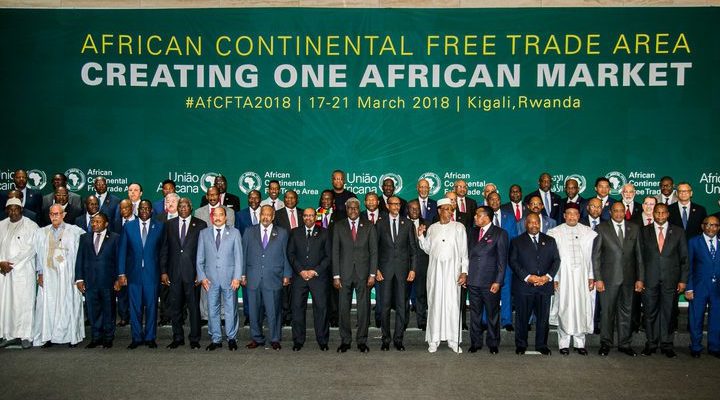
The potential for the African Continental Free Trade Area (AfCFTA) to become a powerful tool for driving industrialisation, economic diversification and development has been highlighted at the start of the UN Economic Commission for Africa’s (ECA) Conference of Ministers in Addis Ababa (Ethiopia). The four-day event, holding from May 11 to 15, aims to advance the ambitious initiative to form a regional common market which the ECA believes could boost intra-African trade from its current level of 16% to 52% by 2022.
Delegates at the conference
Addressing the gathering, Vera Songwe, Executive Secretary of the ECA, stated that realising the promise of the AfCFTA and its development goals required the continent to take “bold actions” on many fronts.
She told the 51st session of the Conference of Ministers: “Now we must seize the momentum at hand, to focus on how to operationalise the agreement in a manner that realises its potential to the benefit of the average African.”
The Executive Secretary also observed the most important and urgent action is to create the ‘fiscal space’ to foster public and private investment, while ensuring economic diversification with the view to creating jobs.
Her address also acknowledged concerns that the AfCTA may cause tariff revenues losses leading to ‘holes’ in national budgets. The AFCFTA’s impact upon taxes applied to imported and exported goods, however, would be “small and gradual”,’ according to the Executive Secretary, who explained: “These tariff revenue losses may be outweighed by the additional revenues from growth to be generated by AfCFTA.”
Africa’s governments were also urged to take a broader review of macroeconomic policies, especially fiscal measures, in order to ensure they are ‘fit for purpose’ to make the most of the AfCFTA.
Vera Songwe remarked: “We need to improve our levels of fiscal space. This includes boosting tax revenues, improving the efficiency of public expenditure management, tackling illicit financial flows and making use of private finance for public projects.”
This year’s conference follows the signing of the AfCFTA by 44 countries earlier this year, while a total of 50 signed either the agreement or the Kigali declaration underscoring their commitment to the visionary, pan-African project. On Thursday, May 11, Kenya and Ghana handed over to the African Union Commission the documents ratifying the continental free trade, becoming the first two countries to do so.
In addition to the ministerial proceedings, expert sessions and parallel side events will address the conference theme: “Creating fiscal space for jobs and economic diversification”. These will highlight the importance of accompanying taxation measures to support and fully take advantage of the AfCFTA while also strengthening fiscal sustainability in Africa. Other topics include agriculture’s role in economic growth; financing infrastructure; tackling illicit financial flows; and an integrated strategy for the Sahel.
There will also be the launch of the 5th African Governance Report; the Global Education Monitoring Report; and the 2018 Assessing Regional Integration Report. The ECA’s annual Adebayo Adedeji Lecture (named in honour of the body’s longest-serving executive secretary that passed away in April) will be given by Prof. Mary Teuw Niane, Senegal’s Minister of Higher Education, Scientific Research and Innovation. It will pay also tribute to Prof. Calestous Juma, a renowned supporter of harnessing innovation and technology to advance Africa’s development, who died last month.
A dam project that was abandoned 37 years ago may be resurrected in the bid to provide succour to a thirsty neighbourhood in Borno State.
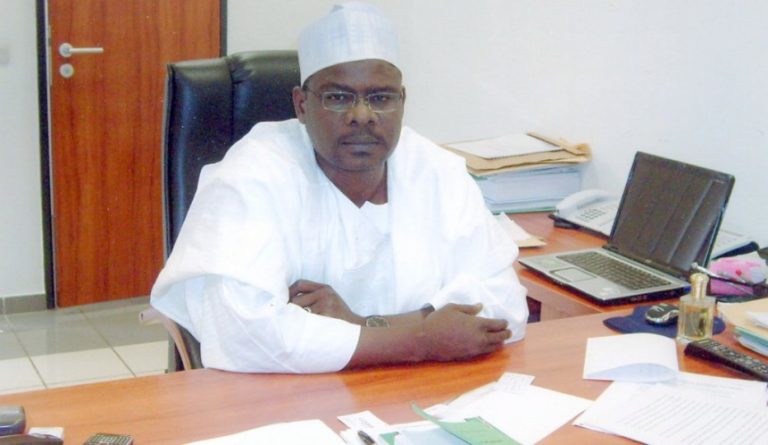
Senator Ali Ndume
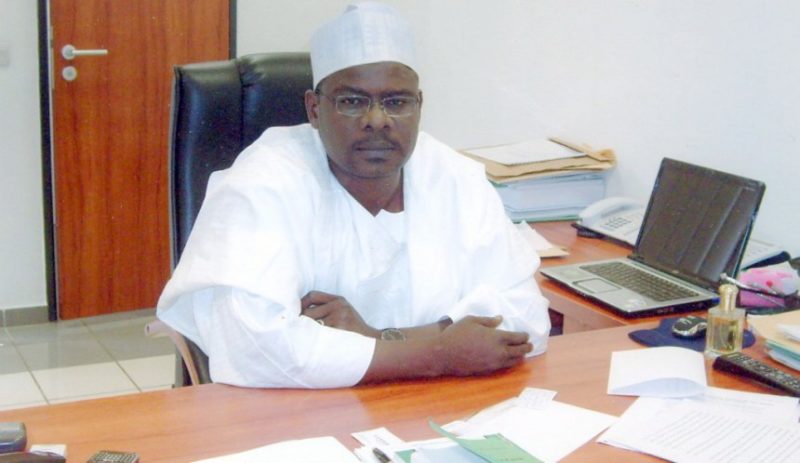
Senator Ali Ndume (APC, Borno South) has appealed to the Federal Government to complete the Biu Dam project to address water scarcity in the area.
Ndume made the appeal in an interview with the News Agency of Nigeria (NAN) on Sunday, May 13, 2018 in Maiduguri, the state capital.
Ndume said that more than 200,000 people of the zone lacked access to portable water which is gradually crippling socio-economic activities of the area.
He explained that the first phase of the project was awarded to LeeFakino in 1979 and re-awarded to Nalando Company recently but had remained abandoned.
He claimed that although the state government had paid its counterpart fund for the completion of the dam, the Federal Government was yet to release its share for the continuation of the project.
He added that the dam, when completed, would assist in tackling the problem of water shortage as well as provide water for irrigation.
“The government should also look into the possibility of relocating IDPs from communities that share border with Cameroon like Ngoshe, Ashgashiya, Kirawa.
“We are thinking that the pressure on Pulka, which houses six wards, is overstretched and one of the biggest challenges that the people are currently facing is lack of water.
“Pulka is currently housing about 65,000 IDPs from six wards in the villages in the mountains. Government as a matter of urgency must build temporary camps to decongest this over population.
“They should also construct artificial dams to enable IDPs that have returned to their communities like Gwoza, Limakara and Izge to go back to their farms.
“We are appealing to the African Development Bank (AfDB), World Bank as well as the UNDP to look into the possibility of completing the long awaited Biu Dam using its own resources,” he said.
An environmentalist, Mr Idowu Salawu, has called for establishment of a solar farm at the Olusosun Dumpsite in Lagos recently closed by the state government.
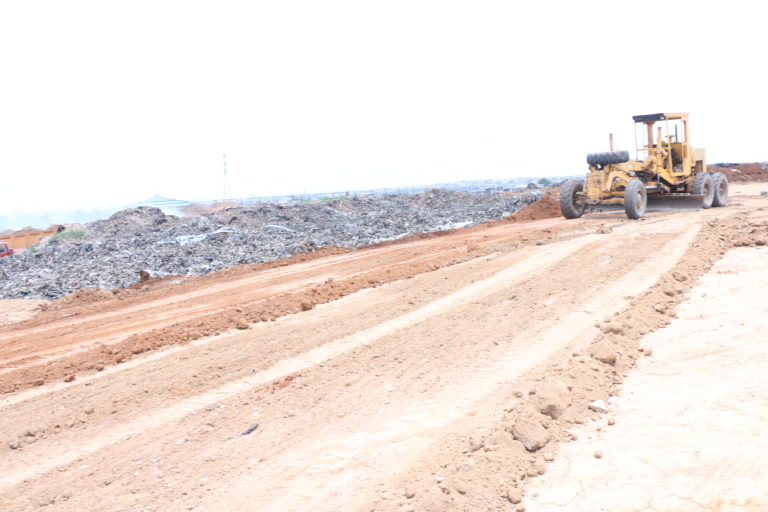
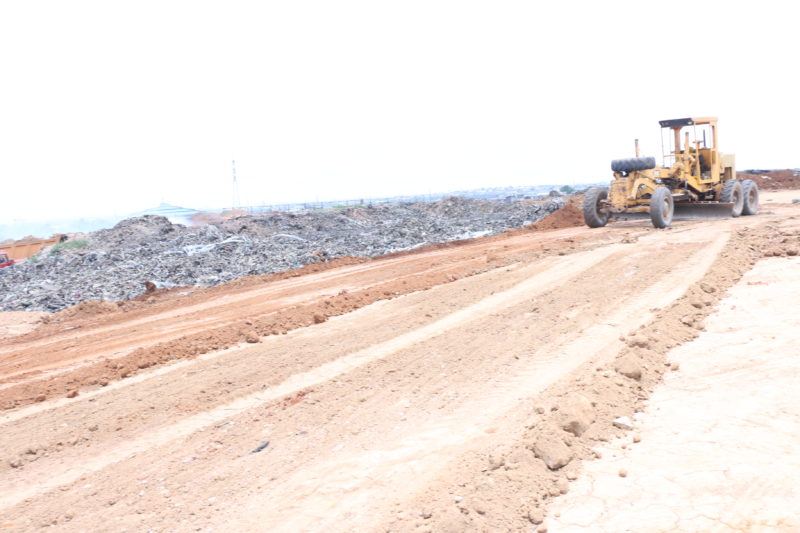
Capping at the Olusosun dumpsite in Lagos
Salau, Chief Executive Officer, Macpresse West Africa Ltd., made the call during a visit to the Lagos Office of the News Agency of Nigeria (NAN).
Salawu said that the proposal by the state government to convert the dumpsite to a recreation centre was below the economic potential of the landfill.
“Olusosun is a treasure to Lagos; it is located at the heart of Lagos and close to the national grid.
“It is a good development that the state government has decided to transform the dump site to a recreation centre, but the government should look beyond a park.
“I advise establishment of a value chain because of its strategically located; the Olusosun Dumpsite can generate 25 megawatts of electricity,’’ he said.
The expert said that the landfill could accommodate the solar farm, an energy-generating facility and a recreation park for economic viability.
“Scientific reports state that you can generate one megawatt of electricity from one million metric tonnes of landfill waste.
“Olusosun has been in existence since 1992; from estimates, it has received not less than 25 to 30 million metric tonnes of landfill waste that can produce 25 megawatts of electricity.
“It can also produce 325,000 cubic feet of gas, enough to power from 800kw to 1,000kw of electricity turbine plant.
“The state government can incorporate the solar farm, energy-generating facility and recreation park at the Olusosun site,” he said.
Salawu called for caution in the current capping of the landfill to avert disaster.
He called for a scientific approach to the capping.
“Landfill fires are very delicate; one method cannot be used to turn off the fire.
“It takes a multifaceted approach. We have the surface and the sub-surface landfill fire.
“I hope that the capping of the landfill is done appropriately so that it does not result in sub-surface fire.
“I advise that a post-closure study plan of the dump site be carried out before capping the landfill with laterite.”
“The expert added that there should also be a gas mapping study to locate the various kinds of gases beneath the surface.
“The capping should be done scientifically to get the best of it, in terms of economic viability,” he said.
Akinbode Oluwafemi, deputy director, Environmental Rights Action/Friends of the Earth Nigeria (ERA/FoEN), alleges that the visit of World Bank Executive Directors to the country is to promote privatisation, particular in the water sector. Under the aegis of the Our Water Our Right Coalition, he calls on the populace to resist the move
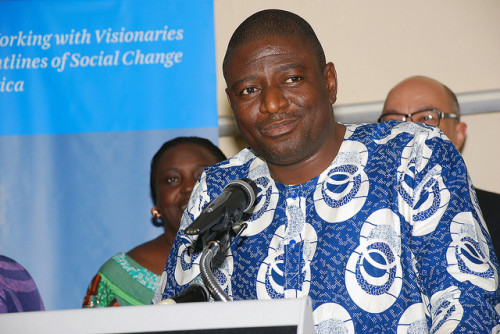
Akinbode Oluwafemi, Deputy Executive Director, Environmental Rights Action/Friends of the Earth Nigeria (ERA/FoEN)
We are concerned with the World Bank invasion of Nigeria and Lagos in particular. Earlier this week we received reports of World Bank Executives’ visit to the Vice President, Prof. Yemi Osinbajo, and the Lagos State Governor, Akinwunmi Ambode, as part of a host of engagements supposedly to study the challenges and expectations of their partners in West Africa.
Ten executive directors of the bank from different countries came for this visit. They are from Switzerland, France, Italy, Nordic, Peru, Germany and South Africa (representing Angola, Nigeria and South Africa). Others are from Burkina Faso (representing Francophone sub-Saharan Africa), Zimbabwe (representing Anglophone sub-Saharan Africa), United Kingdom and Indonesia.
On Wednesday, May 9, 2018 when the team visited Governor Ambode, he is credited as saying that the various budget support initiatives of the bank in the water sector in Lagos had supposedly resulted in “stronger ties with the institution” and urged the bank to plough more funds into water and other key projects in the state.
The Ambode administration continues to present Lagos as a state ready for any form of private investment and water remains one of the sectors that it is pushing for investors to take control of.
This is very disturbing.
Since 2014 we have challenged attempts at the commodification of Lagos water by the Lagos State government through a Public Private Partnership (PPP) model now being vigorously pursued across the globe by the World Bank.
We unearthed the secret advisory contract between the World Bank’s private arm – International Finance Corporation (IFC) – and the Lagos government which the IFC walked away from due to popular resistance that we spearheaded along with our global partners in the struggle to keep our water from for-profit corporations.
We have shown through well-documented researches that the PPP and other privatisation models that the World Bank wants to foist on us through their heartless partners in government have failed in every continent that they were introduced. Water privatisation models promoted by the World Bank through its private arm – IFC failed in Beunos Aires, Cochabamba, Paris, Manila, Delhi, Tanzania, Cameroun, Ghana, and more recently in Gabon.
We had equally urged the Lagos State Government to invest some of the huge revenue it rakes in monthly in sustainably funding its water infrastructure, including rehabilitation of existing waterworks spread across the state.
World Bank behind the scenes
Beginning in 2017 the World Bank rolled out a vision to promote privatisation, leveraging on crowding in the private sector. Its priority now seems tailored to changing policies and regulations to promote private finance. This may have informed the decision of the Lagos government in February 2017 to introduce the comprehensive environment law which was laced with anti-people sections including the criminalisation of boreholes and wells to pave way for privatisers to take over the sector. Faulty argument of the Lagos government is that Lagos has the resource which is water, the people which it believes must pay, and so-called investors that it woos with promises of money to be made in the state water sector.
The Our Water Our Right Coalition had to organise public protests culminating in the march on Alausa secretariat in 2017 which forced the government to expunge the wicked sections from the law.
Unfortunately, it is still promoting the World Bank new approach which prescribes private investment for projects then PPP and only if the two fail will public finance be an option.
The visit of the huge number of World Bank executives to Nigeria and particularly Lagos may actually be a smokescreen because it was kept away from civil society and other critical stakeholders whom it fears will raise red flags. The visit may actually be a signal it wants to move forward with new projects in Lagos focusing on privatisation and PPP.
As we have said time and again, around the globe, the World Bank private arm – IFC has been advising governments, conducting corporate bidding processes, designing complex and lopsided water privatisation contracts, dictating arbitration terms, and is part-owner of water corporations that win the contracts it designs and recommends, all while aggressively marketing the PPP model to be replicated around the world.
Not only do we see these activities as undermining democratic water governance, they also constitute an inherent conflict of interest within the IFC’s activities in the water sector as has been observed from in different countries.
In Manila and Ghana World Bank corporate partners attempted to privatise and profit from water. Poor service, limited ace,ss and chronic quality problems forced the Ghanian government not to renew a bank-backed contract for a private corporation to manage the country’s water.
Despite its 60-day disclosure policy, the Lagos advisory contract which it walked away from after much pressure in 2015 was not disclosed on the bank’s website and was hidden from civil society.
We reiterate our NO to water privatisation
We believe that the visit of the World Bank team to Nigeria and particularly Lagos is a whitewash. As anticipated, critical stakeholders like civil society and the public have been kept in the dark on the critical reasons behind the visit and the banks’ poster projects.
The Our Water Our Right Coalition uses this medium to reiterate our call
No to the ongoing wholesale privatisation of Nigeria and privatisation of our water
The federal and state governments, particularly Lagos should reject contracts designed by, involving, or influenced by the IFC, which operates to maximise private profit, among others.
Lagos and other states of the federation can fund water sustainably if they build the political will to prioritise water for the people and come up with a comprehensive plan that invests in the water infrastructure necessary to provide universal water access, create jobs, and improve public health
Government at all levels must integrate broad public participation in developing plans to achieve universal access to clean water and uphold the human right to water as an obligation of the government, representing the people.