In the spirit of the 2018 International Women’s Day, Unique Women in Agriculture Initiative Cluster (UWIACI), has pressed for progress in women and agricultural issues in Nigeria.
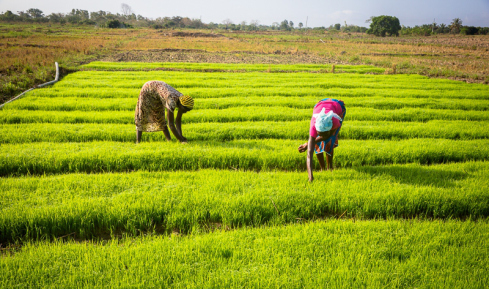
Women engaged in dry season rice farming through irrigation
Bridget Okonofua, president, Unique Women in Agriculture Initiative (UWAI) and the brain behind UWIACI, said one key area Nigerians need to press for progress is in agriculture as it concerns women.
UWIACI is a women-owned non-profit organisation established to respond to leadership, production, value chain, opportunities and capacity development challenges confronting women in the agriculture sector.
All over the world, March 8 is a date that unites millions of women celebrating one another’s achievement and calling for greater equality in every area of life.
According to her, the push for gender equality has gained steam in recent months, following a series of revelations about abuse and gender inequality in several sectors of the society.
The Federal Ministry of Agriculture and Rural Development says women account for 75 per cent of the farming population in Nigeria, working as farm managers and suppliers of labour.
For Okonofua, though women constitute a large portion of the farming population, their possibilities in agriculture are hindered by formal and traditional rules.
She said: “They have low access to funding, land – women produce 80 per cent of crops but own about one per cent of land, technological advancement and market opportunities. They are usually classified as high risk projects when applying for loan facilities; they are therefore rarely connected with agricultural export crops, transportation and large-scale or commercial farm production, but are usually involved in small-scale farming and processing jobs.
“From a growth as well as equity perspective, such gender inequalities are problematic as they lower well-being and are forms of injustice in most conceptions of equity and justice.”
Okonofua has formed a cluster, in which women come together to invest, get trained and take up seemingly difficult tasks with a collaborative effort.
Less than a year in existence, membership of the group has skyrocketed to over 200.
“We have collaborated to embark on piggery, watermelon and cassava cultivation projects, sponsored farmlands for farming and trained over 50 women in agricultural waste management and hydroponics.
“The theme for this year’s International Women’s Day, “Press for Progress”, is a call to seek advancement in every area where this inequality is prevalent. We are committed to doing our part in the area of women and agriculture,” she added.
International Women’s Day, usually celebrated on March 8, is a day set aside to celebrate the social, economic, cultural and political achievements of women all over the world. The theme for 2018 International Women’s Day is “#Press for Progress” – a push for gender equality worldwide. The Nigerian Alliance for Clean Cookstoves has joined the rest of the world to press for progress in gender equality especially when it comes to the unpaid work and task associated with cooking.
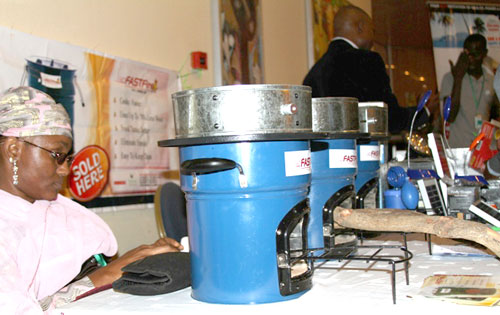
Clean cookstoves
Nigeria, says the group, suffers a “silent” energy crisis – poor access to clean cooking energy. Over 20 million households and about 120 million Nigerians depend on wood primarily as a source of fuel for cooking, it adds.
“It is recognised that women disproportionately make up this number. This is despite the abundance of modern cooking energy sources including natural gas. The World Health Organisation (WHO) estimates that cooking in an open fire releases harmful toxic (especially particulate matter and carbon monoxide), which causes about 95,000 deaths annually in Nigeria. After malaria and HIV/AIDS, this is Nigeria’s third highest killer of mostly women and children. Cooking in an open fire in your kitchen is also likened to burning 400 cigarettes an hour.
“Cooking inefficiently using the traditional method (open fire), causes pneumonia in children, low birth weight babies, still birth, and lung diseases. Moreover, it is expensive, burning up to 90% more wood than is necessary and costing poor families money that could be put to better use on education, health and nutrition.”
According to the alliance, the use of efficient and clean cookstoves saves lives, improves livelihood, empowers community and combats climate change. Enhancing access to clean cookstoves is linked with progress on the implementation of many of the Sustainable Development Goals (SDG). The Nigerian Alliance for Clean Cookstoves, adds the organization, promotes the transition from the use of traditional three-stone stoves/open fire to higher levels of efficiency and cleaner cookstoves such as LPG, ethanol, electric, solar and efficient biomass stoves.
“The Nigerian Alliance recognises that when given the chance, women and girls, including those displaced by insurgency can do so much more with their time. A clean cookstove means new opportunities for women, within their families, their communities and the society at large. Inadequate access to clean cooking energy needs to be taken as a development priority and be tackled today.
“As we celebrate the International Women’s Day, NACC recommits and reaffirms support to all women who are striving to overcome energy poverty, especially women-led community groups and organisations, and women investors to speed progress in ending energy poverty – and bring clean cooking solutions to everyone. Let us press for progress towards clean and safe cooking practices to prevent death and diseases for women and children, and accelerate the fight against cooking energy poverty.”
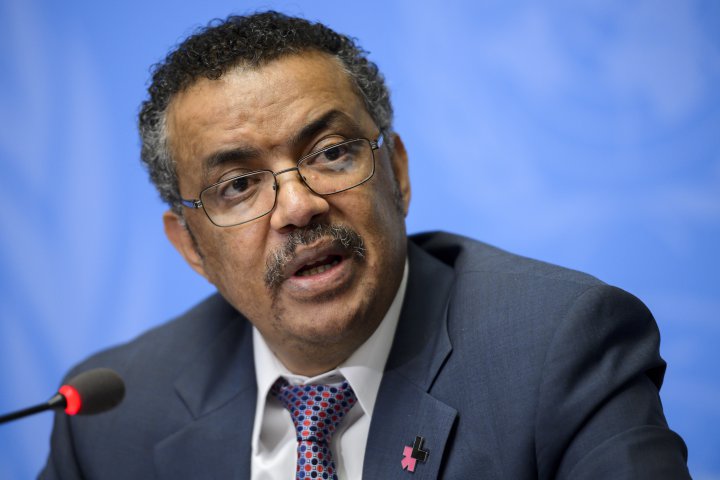
Director-General of the World Health Organisation (WHO), Dr Tedros Adhanom Ghebreyesus, in a message to commemorate the 2018 International Women’s Day, says that gender equality must be at the core of ‘Health for All’ agenda
Dr Tedros Adhanom Ghebreyesus, Director General of the World Health Organisation (WHO). Photo credit: FABRICE COFFRINI/AFP/Getty Images
On this International Women’s Day, we imagine a world where every woman and girl has access to quality and affordable health care, a world in which women and girls can freely exercise their sexual and reproductive health rights, and one where all women and girls are treated and respected as equals.
The theme for this year’s International Women’s Day is the “Time is Now: Rural and urban activists transforming women’s lives”; and today is a good day for each and every one of us to speak-up for gender equality and women’s rights.
At the World Health Organisation, we’re speaking up for women and girls’ right to health. When women and girls are able to stay in school longer, plan or prevent pregnancies and access health services without discrimination, they can improve their economic opportunities, and ultimately transform their futures.
But, we also must do more than speak. We must act.
Nothing will help women and girls more than ensuring that everyone, everywhere, can benefit from quality health services when and where they need them, without fear of falling into poverty when using them.
Today, at least half of the world’s people are lack access to essential health services – such as antenatal care throughout pregnancy, or immunisations to prevent maternal and neonatal tetanus or HPV – because they are not available or are financially out of reach. A disproportionate number of these people are women and girls.
Almost 100 million people are also being pushed into extreme poverty – living on less than $1.90 per day – because they have to pay for health services out of their own pockets. This is unacceptable. A woman should not have to choose whether to send her child to school, purchase food or pay for a health visit.
Universal health coverage – WHO’s top priority – means that health packages designed for women and adolescent girls should include services to promote health and prevent and treat disease. Excluding access to contraception from health plans, therefore limiting women’s and adolescent girls’ ability to plan or prevent pregnancies, is not health for all. It’s discrimination and it fuels further gender inequality.
Fundamental to achieving universal health coverage is equity. All women and girls – rich or poor, urban or rural, educated or illiterate – must be able to access the health services equally. But, in low- and middle-income countries, the proportion of births attended by skilled health personnel differs by up to 80 percentage points between the richest and poorest women. The presence of skilled health personnel during childbirth is a key to preventing maternal and newborn deaths.
These skilled birth attendants and the largely female health workforce must also be allowed to participate in leadership and decision-making, access formal employment, make a fair wage, and work in a place free from physical and sexual violence.
I am working to make sure we also walk the talk when it comes to women in the health workforce. Today, more than 60% of our senior positions are held by women, and we’re working to ensure our regional and country offices follow suit. We can’t be effective at promoting universal health coverage if we don’t have all voices at the table – and today I’m excited to see the female faces from all over the world sharing their ideas for change.
We know that, when universal health coverage is achieved, poverty will be reduced, jobs will be created, economies will grow, and communities will be protected against disease outbreaks. But we also know women’s economic opportunities will advance, and their children’s health and development will follow in step.
The Environmental Rights Action/Friends of the Earth Nigeria (ERA/FoEN) has called on the Federal Government to immediately commence enforcement of the ban on sale of cigarettes in single sticks following a new Africa-wide report which shows that sale in single sticks is a tactic by tobacco corporations to reach kids because of their ready availability and cheapness.
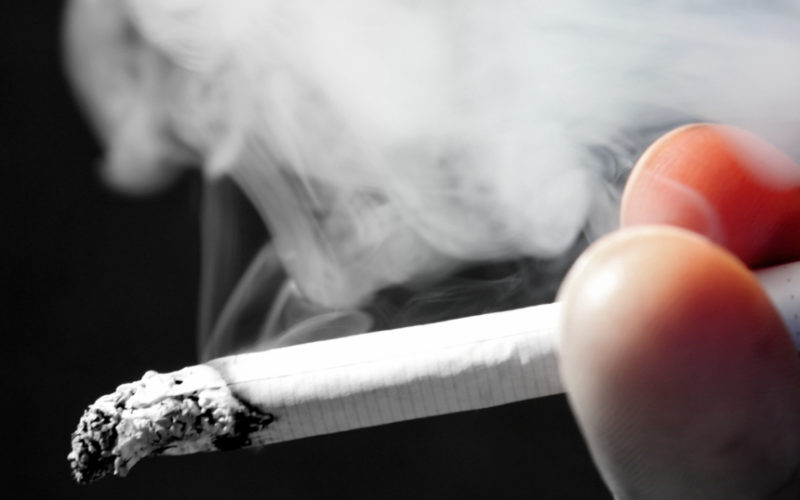
According to scientists, tobacco smoking is dangerous to health
The report, titled: “Sale of Single Sticks of Cigarettes in Africa”, released in Cape Town, South Africa on Wednesday, March 7, 2018 by the Africa Tobacco Control Alliance (ATCA), identified the British American Tobacco (BAT), Philip Morris International (PMI), and Imperial Brands as the main perpetrators of the practice in 10 African countries surveyed.
The 10 surveyed countries are Nigeria, Togo, Uganda, Niger, Kenya, Ghana, Cote d’Ivoire, Chad, Cameroun, and Burkina Faso.
According to the ATCA, the data for the new report was collected around locations where young people meet such as malls, shopping centres, movie theatres, and game shops in the capital cities of the countries under study.
Three questionnaires were used for three different target groups to provide different perspectives on single stick availability in the respective countries.
At the public presentation of the report in Cape Town, Deowan Mohee, the Executive Secretary of ATCA, said although many African countries have legislation banning the sale of cigarettes in single sticks, tobacco companies have continued to “openly flout” the laws.
In a statement issued in Lagos, ERA/FoEN said that the mention of Nigeria in the list of countries deliberately targeted by the tobacco corporations has further reaffirmed how desperate the tobacco industry “wants to grab the lungs of kids” in Nigeria and across the continent.
ERA/FoEN Deputy Executive Director, Akinbode Oluwafemi, said: “Report after report has shown that the tobacco industry is deliberately targeting kids as replacement smokers. The depth of the single sticks survey shows this wicked practice is Africa-wide and urgently requires swift and deliberate actions across the continent to save our kids and the next generation.”
Oluwafemi noted that the report confirmed findings in the “Big Tobacco Tiny Targets Nigeria Report” which ERA/FoEN and the Nigerian Tobacco Control Research Group presented to the public in 2017 after a survey in five states – Nassarawa, Lagos, Oyo, Kaduna and Enugu.
The ERA/FoEN boss said, “The Nigerian government needs no further proof to justify further delay in commencement of the enforcement of the NTC Act. Single stick sale is a proven ploy that gives our kids unfettered access to the lethal products marketed by BAT, PMI and other tobacco entities. Only an immediate ban will save our kids from an imminent epidemic.
“Tobacco consumption is a major public health concern and a serious threat to development in Africa. Since tobacco companies worry more about illicit profits by getting as many people as possible to smoke, it is the duty of our government to safeguard our lives. Banning single sticks is one of the ways of doing this.”
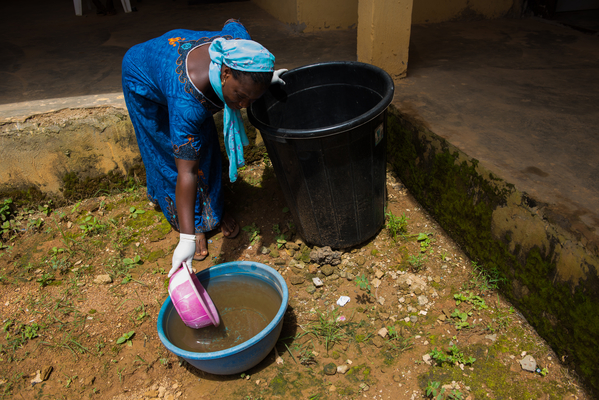
In Nigeria, almost a third of hospitals and clinics in the country do not have access to clean water; the same percentage do not have safe toilets and one-in-six do not have anywhere to wash hands with soap. This puts some of the most vulnerable members of society – mothers and their newborns – at unacceptable risk of infection and death.
Gloria Samuel, 37, a cleaner at Bwari town Primary Health Centre, showing the rain water collected that is used to clean the toilets because there is no water supply to the centre. They also buy clean water to use for cleaning more sensitive sanitation and for patients who need clean water to wash. Upkuduru ward Bwari LGA, Abuja, Nigeria
As the world commemorates International Women’s Day, WaterAid Nigeria calls on all stakeholders in the health sector to accelerate progress towards ensuring improved access to water, sanitation and hygiene in health care facilities. The assumption that water, sanitation and hygiene (WASH) is beyond the remit of the health sector is a costly perception which hinders progress in reducing maternal and child deaths.
It has been shown that a baby’s chances of dying in the first month of life is cut by half if a mother and her birth attendant both wash their hands before handling the baby. Tragically for one in five babies who die in their first month in the developing world, just being washed in clean water and cared for in a clean environment by people who had washed their hands could have prevented their untimely deaths. The ability to keep a hospital or clinic clean is such a fundamental basic requirement of health care that we must question whether a facility without clean running water or basic sanitation can adequately serve its patients.
Women and girls, who make up more than half the world’s population, are often more deeply impacted than men and boys by a lack of access to water, sanitation and hygiene.
The theme for this year’s International Women’s Day, #PressforProgress, calls on people to keep motivated in the now strong global momentum of advocacy, activism and support striving for gender equality. We need to push for the consideration and inclusion of women in all spheres of society and development.
Dr ChiChi Aniagolu-Okoye, Country Director of WaterAid Nigeria, said: “Dirty water, poor sanitation and poor hygiene including lack of handwashing facilities with soap is primarily a women’s issue, impacting the health and well-being of women and girls more than men. It is causing a crisis of massive proportion in health that simply cannot continue and which needs addressing at the highest levels. Clean, plentiful water, good sanitation and good hygiene including handwashing with soap are absolutely essential to effective health care.
“At WaterAid, our work is all about transforming lives by improving access to water, sanitation and hygiene and women and girls bear the brunt of the burden caused by a lack of access to these basic and life-saving services.
“The world’s leaders promised to eradicate extreme poverty and leave no one behind in the Global Goals on Sustainable Development. We must keep pressing for progress for women. That means ensuring, amongst other things, that women have access to adequate facilities in health care centres. Ensuring we make progress for women and girls in this area will ultimately lead to healthier women and families, who have a better chance of working their way out of extreme poverty.”
A lack of access to water, sanitation and hygiene also has implications beyond health. The lack of these essential services creates a massive crisis for developing countries like Nigeria – undermining not just health systems but education, economic development, and progress on gender equality. All sustainable development is made impossible without clean water and access to sanitation and hygiene facilities.
On the International Women’s Day 2018, WaterAid Nigeria is calling for:
The Nigerian Government to ensure that healthcare facilities and birthing centres have safe toilets, clean running water and functional handwashing facilities, to reduce maternal, newborn and child deaths
Water, sanitation and hygiene to be positioned as a crucial contributor to health and for policy makers and health sector stakeholders to become aware of the link and crucial role that sanitation plays in improving child survival rates and health outcomes
The inclusion of water, sanitation and hygiene into health plans, policies and programming
Our leaders to fund, implement and account for progress towards the Sustainable Development Goals and particularly Goal 6 – to ensure water, sanitation and hygiene for all
An improvement in access to water and sanitation with political prioritisation and long-term increases in financing for water, sanitation and hygiene, by Government at all levels.
The International Women’s Day 2018 was celebrated on Thursday, March 8, 2018 with the theme: “Time is Now: Rural and urban activists transforming women’s lives”. It is regarded as an important opportunity to look at women’s and girls’ rights in the context of climate change, as well as equality and justice with an intention to turn momentum on climate into action.
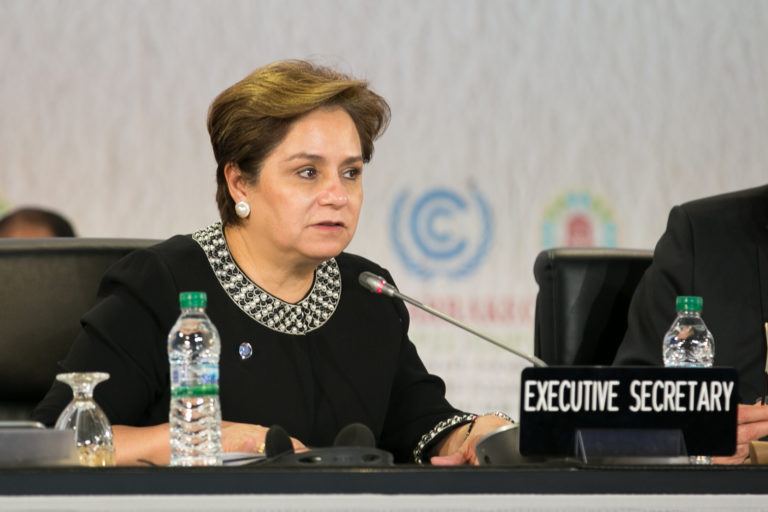
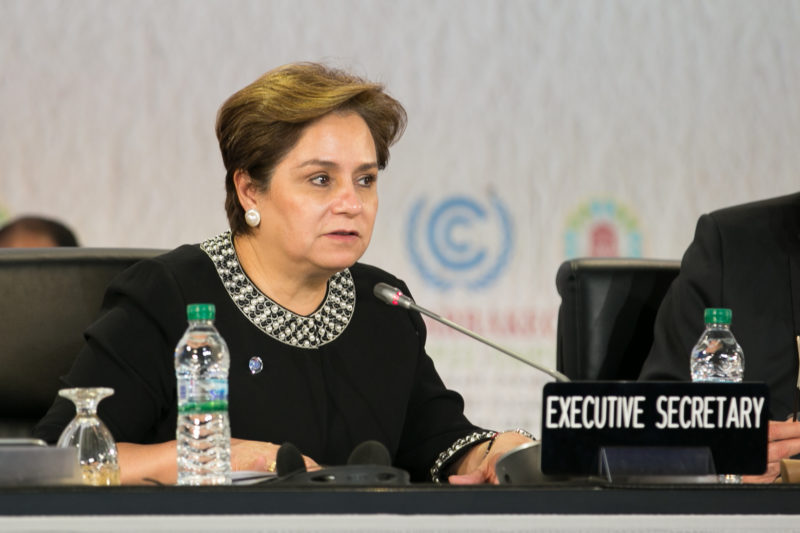
Patricia Espinosa, executive secretary of the UNFCCC
Women are said to be powerful agents of change, so integrating their voices into the climate decision making processes is critical to build a low carbon and more climate resilient societies. Including women and men equally in UN climate processes and policy is also imperative at all levels of climate action.
The Paris Climate Change Agreement acknowledges this, saying: “…climate change is a common concern of humankind, Parties should, when taking action to address climate change, respect, promote and consider their respective obligations on human rights, as well as gender equality, empowerment of women and intergenerational equity”.
Governments made important steps towards a “gender-responsive” approach at UN Climate Change Conference COP 23 in Bonn, Germany, in 2017. In Bonn, they adopted the first ever “Gender Action Plan”.
The plan aims to increase the participation of women in all UN Climate Change processes, further strengthening their contribution in all activities to build resilience to climate change, curb greenhouse gas emissions and implement climate-related decisions taken under the UN umbrella.
Women and girls face higher risks and are more vulnerable to the burdens from the impacts of climate change than men. This is particularly true for poor people. Women’s social status in most societies means that they are the predominantly responsible for food production, water supply and energy supply for heating and cooking. As the impacts of climate change increase, these tasks will become more difficult and time-consuming.
The implementation of the gender-responsive climate policy at regional, national and local levels will allow for women to bring their wealth of knowledge to the table, enhancing the ability of societies to deal with the changing climate.
Women’s involvement in climate action is also important in achieving the UN Sustainable Development Goals, which notes: “Gender equality is not only a fundamental human right, but a necessary foundation for a peaceful, prosperous and sustainable world. Providing women and girls with equal access to education, health care, decent work, and representation in political and economic decision-making processes will fuel sustainable economies and benefit societies and humanity at large.”
The head of UN Climate Change, Patricia Espinosa, calls for raised gender and climate ambition: “If we are to make the changes needed, we must have unprecedented cooperation, coordination and confidence. And women must be at the forefront. It’s not opinion. It’s not aspiration. It’s a fact.”
Nigeria’s Lassa fever outbreak has reached record highs with 317 laboratory confirmed cases, according to figures released recently by the Nigeria Centre for Disease Control (NCDC).
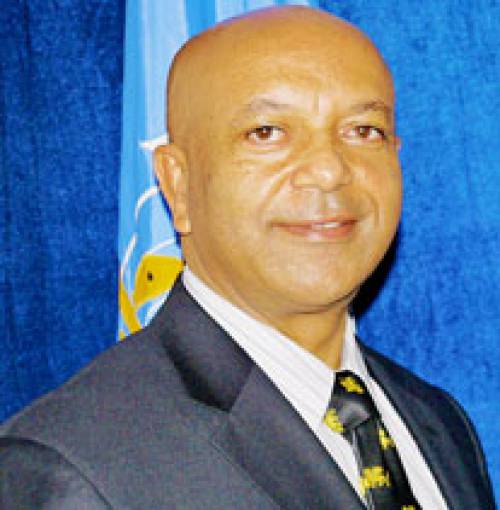
Dr. Wondimagegnehu Alemu, the WHO Country Representative to Nigeria
Although endemic to the West African nation, Lassa fever has never reached this case count in Nigeria before, according to the World Health Organisation (WHO). The number of confirmed cases during the past two months exceeds the total number of confirmed cases reported in 2017.
The outbreak has affected 18 states since the first case was detected on January 1, 2018, resulting in 72 deaths caused by the acute viral haemorrhagic fever. A total of 2,845 people who have come into contact with patients have been identified and are being monitored.
The WHO disclosed that it is supporting the NCDC-led response with a focus on strengthening coordination (including through the Global Outbreak Alert and Response Network), surveillance, contact tracing, laboratory testing, clinical management of patients, and community engagement. State health authorities are said to be mobilising doctors and nurses to work in Lassa fever treatment centres.
“The ability to rapidly detect cases of infection in the community and refer them early for treatment improves patients’ chances of survival and is critical to this response,” said Dr Wondimagegnehu Alemu, WHO Representative to Nigeria.
Health facilities are particularly overstretched in the southern states of Edo, Ondo and Ebonyi. WHO is likewise working with health authorities, national reference hospitals and the Alliance for International Medical Action (ALIMA) to rapidly expand treatment centres and better equip them to provide patient care while reducing the risks to staff. Among those infected are 14 health workers, four of whom have died.
“Given the large number of states affected, many people will seek treatment in health facilities that are not appropriately prepared to care for Lassa fever patients and the risk of infection to healthcare workers is likely to increase,” said Dr Alemu.
Health workers are being trained in infection, prevention and control measures, such as the importance of wearing personal protective equipment (PPE) and isolating patients during treatment. WHO has provided an initial supply of PPE, other related materials and is assessing additional needs with a view to addressing them.
WHO is also supporting national response efforts in neighbouring Benin, where more than 20 suspected cases have been reported.
Additionally, the UN health body is supporting coordination for Nigeria’s response to Lassa fever with national and state health actors, and stakeholders and with partners in the Global Outbreak Alert and Response Network (GOARN), including the United States Centres for Disease Control and Prevention, the Bernhard Nocht Institute for Tropical Medicine, Afenet, the Alliance for international Medical Action, the Nigeria Red Cross Society, UNICEF, the University of Maryland, the Public Health Agency of Canada, the Irrua Specialist Teaching Hospital, the Federal Medical Centre Owo, and the Federal Teaching Hospital Abakiliki.
Chief Judge Sidney R. Thomas, writing for a unanimous three-judge panel of the Ninth Circuit Court of Appeals on Wednesday, March 7, 2018 rejected the Trump administration’s “drastic and extraordinary” petition for writ of mandamus in the landmark climate lawsuit, Juliana v. United States, brought by 21 youth supported by Our Children’s Trust.
Donald Trump, US president
The Court ruled that the Juliana case can proceed toward trial in the U.S. District Court for the District of Oregon and that the Trump administration had not satisfied the factors necessary for an extraordinary writ of mandamus.
The three-judge panel consisted of Chief Judge Sidney Thomas, and Circuit Judges Marsha Berzon and Michelle Friedland. Judge Friedland replaced Alex Kozinski on the panel after he resigned on December 18, 2017, one week after oral argument was held on the petition.
Julia Olson, executive director and chief legal counsel of Our Children’s Trust and co-counsel for youth plaintiffs, said: “The Ninth Circuit just gave us the green light for trial. We will ask the District Court for a trial date in 2018 where we will put the federal government’s dangerous energy system and climate policies on trial for infringing the constitutional rights of young people.”
The Trump administration’s mandamus petition sought early review of U.S. District Court Judge Ann Aiken’s 2016 denial of motions to dismiss the youth’s lawsuit, which seeks a constitutionally compliant national energy system and science-based climate recovery action by the federal government. Rejecting the government’s position in their petition, the Ninth Circuit ruled that the federal government had not established that it was harmed by any discovery order and had not met the factors for issuing an extraordinary writ.
The Court concluded: “There is enduring value in the orderly administration of litigation by the trial courts, free of needless appellate interference. In turn, appellate review is aided by a developed record and full consideration of issues by the trial courts. If appellate review could be invoked whenever a district court denied a motion to dismiss, we would be quickly overwhelmed with such requests, and the resolution of cases would be unnecessarily delayed.”
Like any other defendant who loses their motion to dismiss, the U.S. defendants must participate in discovery and defend themselves at trial, even though it will take time and resources to do so. That is the structure of our legal system.
Victoria Barrett, 18-year-old plaintiff from White Plains, New York, said: “Today, the Ninth Circuit sided with progress. I’m grateful that my fellow plaintiffs and I can have our voices heard, and that climate science can have its day in court. The Trump administration tried to avoid trial, but they can’t ignore us. Our future is our choice and I believe the courts will stand with our constitutional rights.”
Kiran Oommen, 21-year-old plaintiff from Seattle, Washington, said: “The question of the last few years has not been ‘do we have a case’ but rather ‘how far will the federal government go to prevent justice.’ We have seen that they are willing to go to many lengths to cover up their crimes and maintain the status quo, but not even the Trump administration can go far enough to escape the inevitable tide of social progress. The Ninth Circuit’s decision affirms that we are on the side of justice, and for justice we are moving forward. We’ll see you in court.”
Tia Hatton, 20-year-old plaintiff from Bend, Oregon, said: “The Ninth Circuit has denied the U.S. government’s inappropriate writ of mandamus, yet another step that the our federal government took to delay a revealing trial. This favorable decision allows us 21 youth to share expert testimonies of climate dangers in the face of existing fossil fuel energy policies. My greatest hope in addressing climate change lays in a successful trial, where the only acceptable outcome is a court-ordered science-based climate recovery plan.”
Sahara Valentine, 13-year-old plaintiff from Eugene, Oregon, said: “To our supporters: be ready for the new trial date and plan on being with us at the court house here, in Eugene, where our voices will be heard.”
Philip L. Gregory of Gregory Law Group, co-lead counsel for the youth plaintiffs, commented: “The Ninth Circuit clearly recognised the importance of a complete record at trial particularly as to the climate science. We will promptly ask the District Court for a trial date in 2018 so that the urgency of the climate crisis can be addressed through appropriate remedies.”
Juliana v. United States is not about the government’s failure to act on climate. Instead, the 21 young plaintiffs assert that the U.S. government, through its affirmative actions in creating a national energy system that cause climate change, has violated their constitutional rights to life, liberty, and property, and has failed to protect essential public trust resources. The case is one of many related legal actions brought by youth in several states and countries, all supported by Our Children’s Trust, and all seeking science-based action by governments to stabilise the climate system.
Our Children’s Trust is a nonprofit organisation, leading a coordinated global human rights and environmental justice campaign to implement enforceable science-based Climate Recovery Plans that will return atmospheric carbon dioxide concentrations to below 350 ppm by the year 2100.
Earth Guardians is a Colorado-based nonprofit organisation with youth chapters on five continents, and multiple groups in the United States with thousands of members working together to protect the Earth, the water, the air, and the atmosphere, creating healthy sustainable communities globally.
The African Development Bank (AfDB) says it will offer $300 million to financial intermediaries to support the Affirmative Finance Action for Women in Africa (AFAWA).
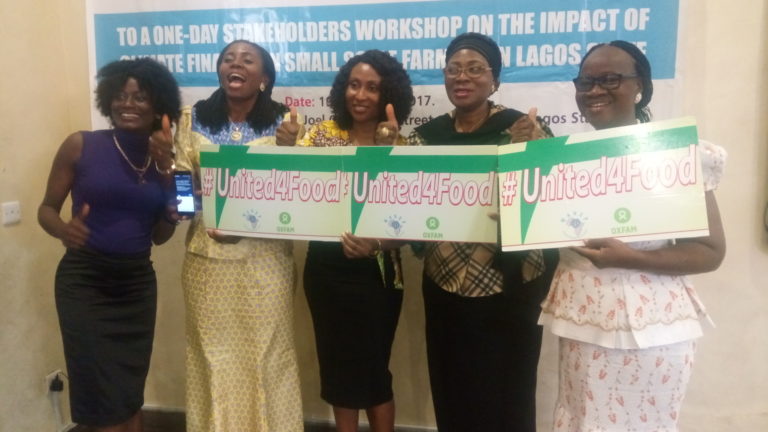
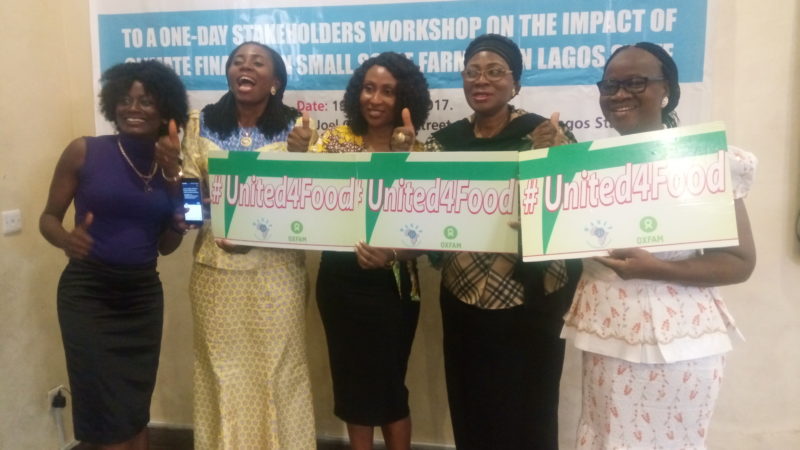
A group of women during a food campaign
Mr Ebrima Faal, the Senior Director, Nigeria Country Department, AfDB, said this at the 2018 International Women’s Day (IWD) commemorative event organised by the bank on Wednesday, March 7, 2018 in Abuja.
Faal was represented by Mr Late Lawson-Zankli, the Manager of Operations in the bank.
He said the theme of this year’s event was “Time is now: Rural and Urban Activists Transforming Women`s lives.”
According to him, the objective of AFAWA is to unleash women’s economic potential by enabling more businesses operated by women access available and affordable finance.
“We want to achieve this by mobilising about 300 million dollars to financial intermediaries through a partnership driven approach, by measuring impact and by supporting financial system in Africa,” Faal said.
He said AFAWA had four components which are: AFAWA women financing facility, technical assistance programme, enabling environment and AFAWA women lab.
Faal explained that the financing facility would catalyse debt financial resource to targeted women-owned Small and Medium Enterprises (SMEs), and larger formal MSMEs, while AFAWA technical assistance programme would provide assistance to women financing ecosystem.
Faal added that AFAWA enabling environment would be complemented by technical assistance and grants channeled to AfDB member countries in alignment with budget support operations to influence policy making, and gender mainstreaming among others.
He noted that AFAWA women lab would create a knowledge centre, documenting the first hand challenges, constraints and dynamics facing women in accessing finance.
According to him, the pursuit of gender equality is, therefore, integral to the vision of the bank.
He said addressing gender inequalities and reducing gender disparities would improve economic efficiencies and growth.
“The bank ensures priority is given to women in all its operations. All projects have clear indicators on gender with which progress on gender mainstreaming are monitored and evaluated,” Faal said.
The National Programme Officer, United Nations Women, Mrs Patience Ekeoba, said women needed to be celebrated by institutions, family and the Federal Government due to their contribution to economic growth and development.
In her remarks, the President, Change Mangers International Network, Mrs Felicia Onibon, called for more attention to the needs and development of women in rural communities.
Onibon said it was important for leaders at all levels, regional, national, state and local government to objectively look at women’s issues to improve their livelihood, particularly in rural areas.
At its 19th Board Meeting in Songdo, South Korea, the Board of the Green Climate Fund (GCF) has approved the first funding proposal of the African Development Bank (AfDB) for Zambia’s Renewable Energy Financing Framework. The GCF will provide a $50 million loan and a $2.5 million grant
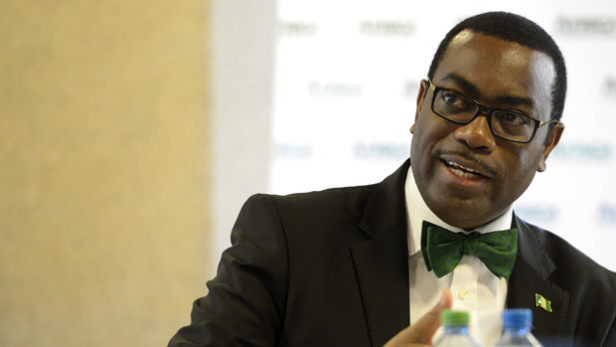
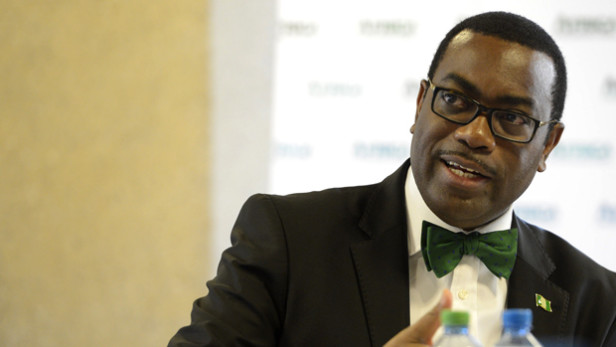
Akinwumi Adesina, President of the African Development Bank. Photo credit: res.cloudinary.com
The Framework aims to finance 100 MW of renewable energy projects under the Renewable Energy Feed-in-Tariff (REFiT) policy of Zambia. The primarily solar projects will help diversify Zambia’s energy production which is heavily reliant on Hydro-electricity. Facing a serious electricity supply deficit due to recent droughts, the Government of the Republic of Zambia launched the REFiT policy in 2017 to crowd-in private investments for small-scale renewable projects up to 20MW.
This is the first programme that will be co-financed by the GCF and the AfDB following the signing of the Accreditation Master Agreement on November 8, 2017 between the two institutions, making the bank a credited implementer of GCF-approved projects.
“This is a significant first fruit of our joint commitment for development and growth in Africa that aligns with the Paris Agreement. We look forward to partnering further with the Green Climate Fund to help increase Africa’s share of climate finance” said Akinwumi Adesina, President of the AfDB.
The AfDB has placed climate change mitigation and adaptation, as well as powering Africa at the top of its agenda. The bank’s second Climate Action Plan commits to 40% of bank approvals to classified as climate finance annually by 2020 and its New Deal in Energy for Africa, which aims to provide universal access to energy by 2025.
“This innovative project represents an important and fitting milestone in our partnership with GCF. Not only do the projects pave the way for providing clean, sustainable energy to around 300,000 people, through diversifying Zambia’s energy mix. It will also make the country more resilient to the effects of climate change,” said Amadou Hott, Vice President for Power, Energy, Climate and Green Growth at the AfDB.