The environment around us is an essential part of human survival. I like to believe that people who do not care about the environment simply do not understand how important it is to all of us, and that it probably does not affect them directly. These are my reasons why we should be concerned about the environment.
Taking care of the environment makes the world a better place
A clean environment is essential for healthy living
The more you don’t care about the environment, the more it will become polluted with contaminants and toxins that have a harmful impact on our health. Air pollution can cause respiratory diseases and cancer, among other problems. Water pollution can lead to typhoid, diarrheal diseases, and other ailments. The local authorities have to promote caring for the environment.
Earth is warming
For the sake of our children and our future, we must do more to combat climate change, adapt to its impact and mitigate its effects.
Children yet unborn will appreciate it
There is the need to look ahead into the future, there must be a realisation of the fact that there are attendant consequences if we waste and destroy natural resources, and unsustainably exhaust the land – instead of using it in a way that will increase its usefulness. So it is our duty to leave the Earth in a better state that we met for the unborn generation.
Biodiversity is key
Biological diversity or biodiversity refers to the variety of plants, animals, and other living things in our world. It can be negatively influenced by habitat loss and degradation due to human activity, climate change, and pollution, among other things.
Planet earth is our home
Until when technology makes it possible for human being to permanently reside in space or any other planet, the Earth for now is our home – it is where we live, so we had better take good care of it. For sure, we would be doing our world and ourselves a lot of good if we do the simplest things in our home or wherever we find ourselves to make this a reality.
What can we do?
The problems we are facing now are tough. However, the good news is that, you don’t have to be an expert or a millionaire to save the Planet – everyone can help to do their bit for the environment. In other words, if each of us can be more conscious of environmental issues and willing to take some simple steps to save the Planet, we can make a huge difference.
Nowadays, with increasing environmental awareness among the public, people around the world are coming together to fight for a greener future, and the effort has been yielding great results. As a pioneering member of environmental advocacy community, Better World International, is always committed to improve and take care of our immediate environment, by providing practical tips to its members on the things they can do to live more sustainably and save the Earth.
By Olumide Idowu (Team Lead, Climate Wednesday; @OlumideIDOWU)
Farmers are among the first victims of climate change as they rely on the weather and the environment in its entirety for their production and livelihoods.
Mithika Mwenda, Secretary General of the Pan African Climate Justice Alliance (PACJA). Photo credit: cloudfront.net
But until the last climate meeting in Bonn in November 2017, agriculture had been missing from the decisions of the Conference of Parties (COP) of the United Nations Framework Convention on Climate Change (UNFCCC).
The COP23 decision on agriculture, also known as the Koronivia Decision on Agriculture, which took five years of discussions to reach, is a turning point for small-holder farmers.
It indeed provides hope for farmers and processors in developing economies as it will deliver meaningful action on adaptation to adverse effects of climate change on agriculture.
“Agriculture is now being looked at as a sustainable development issue,” said Mithika Mwenda of the Pan African Climate Justice Alliance (PACJA). “We look at climate change not just as a scientific issue but it is an agricultural issue; it affects livelihoods of the people, it’s a human rights issue”.
Climate vulnerabilities across value-chain commodities affect farmers. The financial and technological needs of farmers to adapt are therefore as critical as the mitigation technics to reduce greenhouse gas emissions of the agricultural sector.
However, Parties and observers to the climate talks now have two years to work on bold actions needed in agriculture before more specific ones are agreed upon in 2020.
African civil society and partners believe it is now time to evaluate how the UNFCCC can provide ways for farmers and agro-processors to adapt to climate change, increase their resilience with technology transfer, information dissemination, leverage finance and capacity building.
At the ongoing Bonn Climate Talks, CUTS International and PACJA jointly convened a group of agriculture and climate experts, working across Africa, to reflect on the challenging road towards advancing decisions on the Koronivia Joint Work on Agriculture.
During the event, the panelists brought greater focus on integrating African agriculture sector challenges into the joint work. The panel included Mithika, Martial Bernoux of the Food & Agriculture Organisation, Catherine Mungai from the CGIAR Research Programme on Climate Change, Agriculture and Food Security as well as George Wamukoya, Expert & Consultant on Climate Change and Agriculture.
They explored how developing countries can take the process forward to effectively deal with the impacts of climate change on their agriculture.
Mithika observed the need to inspire a bottom-up approach in the discus to get local communities and farmer groups engaged in the process.
“In the next couple of months, we’ll like to mobilise communities at the local level because we want to make this very practical,” he said.
As an observer, CUTS International has submitted proposals to the Koronivia Joint Work on Agriculture, which explore the socio-economic and food security dimensions of climate change in developing countries’ agricultural sector.
According to the non-profit NGO, the concerns and needed related to agriculture and food security “must be heeded by all Partners by agreeing to bold actions that support developing countries and LDCs in order to enhance their agriculture resilience in facing climate adverse effects and ensuring an agricultural development that is conscious of not only its environmental, but also social and economic impacts”.
An agriculturist, Mr Ismail Olawale, has called for restraint in efforts to adopt and practice agricultural biotechnology in the nation.
Agricultural biotechnology involves the use of genetic engineering, molecular markers, diagnostics, vaccines, and tissue culture, to modify living organisms
Agricultural biotechnology, also known as “agritech’’, involves the use of genetic engineering, molecular markers, diagnostics, vaccines, and tissue culture, to modify living organisms such as plants, animals and microorganisms.
Olawale, who spoke to News Agency of Nigeria (NAN) on Friday, May 4, 2018 in Lagos, lauded the contributions of “agritech’’ to the promotion of food security across the globe.
He, nonetheless, said that Nigeria was not ready for the adoption and practice of agricultural biotechnology due to ignorance and poor regulations.
“An average Nigerian farmer cannot tell you what biotechnology is all about. Obviously, it is difficult to implement agricultural biotechnology practice among most local farmers.
“In Nigeria, a lot of advocacy on `agritech’ is done in research papers and not yet in practical with the local farmer.
“In developed climes, the practice of agricultural biotechnology is well regulated but in Nigeria, we do not have the technology and administrative strength to regulate this trend.
“We may have policies or agenda promoting the idea of using biotechnologically driven agriculture to boost food security but we are not ready to delve into it,” he said.
Besides, Olawale said that some local poultry farmers had been misusing agricultural biotechnology in egg production, citing the negative effect of genetically modified eggs on human reproductive health as fallout of the abuse.
“Elements of agricultural biotechnology are gradually being adopted by local poultry farmers. They add a genetically modified additive to the feeds of layers which doubles their egg production.
“Some local farmers have abused this technology by mischievously doubling the dosage of this additive to poultry feeds in order to produce more eggs, with the reverse effect of infertility in humans following consumption.
“A group of five veterinary doctors in 2016 examined samples taken from 15 poultry farms in Kaduna and Zaria; their findings showed that only one farm complied with the specified dosage for biotechnologically developed eggs,’’ he said.
Olawale advised the government and stakeholders in agriculture to be cautious in adopting agricultural biotechnology and underscored the need for proper advocacy among local farmers.
“We should not just adopt agricultural biotechnology practice without preparing the groundwork.
“Nigerians have the tendency of abusing biotechnology-driven agriculture because there are no regulatory bodies to guide the practice,” he said.
A group of women in Thabaneng, Mafeteng, about 75 kilometres south-west of Maseru in Lesotho, seems unhappy with the side-lining of women’s development needs despite the fact that they often bear the brunt of climate change.
But the women are taking an uncharted path to change the situation.
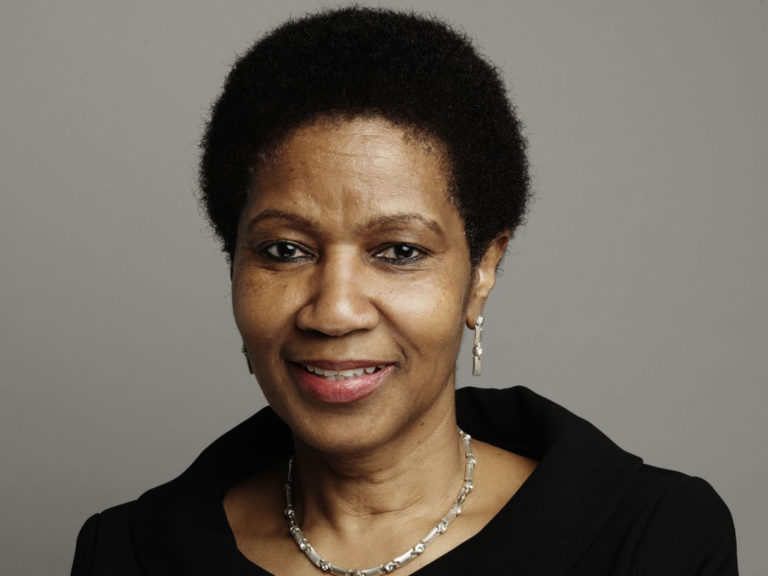
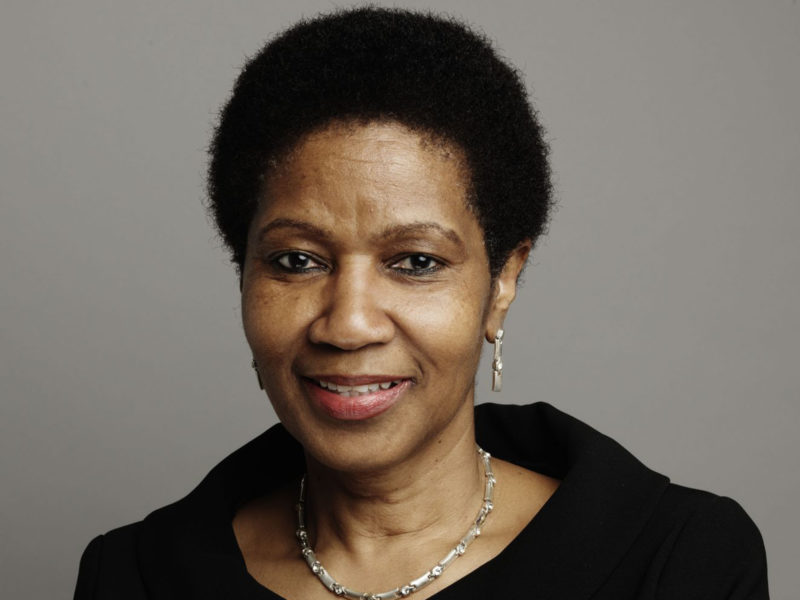
Phumzile Mlambo-Ngcuka, Executive Director, UN Women
The women – all members of a small-scale farmers group that seeks to highlight the debilitating effects of climate change on poor rural communities, say there is need for a complete change in efforts to halt the phenomenon.
The farmers’ group is unhappy that rural women’s plight is given little priority on the climate change agenda, arguing that emphasis should be directed at community-based approaches to address gender and climate change.
One of the women, Mapheko Phera, says her area was one of the worst affected by El Nino which caused the driest weather phenomenon that hit many parts of Southern Africa in 2015. This was when she decided to join hands with other women to form the Small-Scale Farmers Forum of Lesotho.
Phera, a mother of three, said life began to change for her when she joined the piggery project, a major component of the forum.
She now sells piglets, pork and livestock foods to supplement her meagre earnings from subsistence farming.
“It was in this rural women assembly where I acquired knowledge and skills on farming,” she said.
However, persistent drought meant that Phera’s livestock business was also in danger of collapsing as water had become scarce. This led to her abandoning the piggery project.
“There was no water and food for the pigs and I began losing some of them. I couldn’t stand watching them die without rescuing them. Selling them was the only option left for me,” Phera said while bemoaning the worst drought in living memory that has now crippled her livelihood.
The UN Women supports the essential idea of ensuring that women like Phera are empowered as critical actors in addressing the impact of climate change.
The agency says this is critical in ensuring that women and girls enjoy their rights and are able to make better decisions to better respond to disasters.
The UN Women clearly states that in many parts of the Southern Africa, women and girls from rural areas in particular, are disproportionally affected by the negative impact of climate change.
One of the founders of the Forum, ‘Mamalefetsane Phakoe, said some of the skills members of the assembly acquire include sewing, crop production, animal and poultry farming.
“Our assembly moulds women into small scale farmers with the ability of establishing income generating projects with the purpose of adapting to climate change,” Phakoe said.
“We promote the use of indigenous seeds in our cropping activities knowing fully that known climatic patterns have changed. We share amongst others, while on the other hand we also encourage women to practice agrology agriculture and other efforts of being adaptive to this global concern,” explained Phakoe.
The Paris Agreement calls for action to respect, promote and consider respective obligations on gender equality and the empowerment of women in addressing climate change. It also gives mandates for gender-responsive adaptation and capacity building activities.
On the other hand in the light of the 2030 Agenda for Sustainable Development Goals (SDGs) adopted by world leaders in 2015, there has to be an opportunity for renewed work on gender and climate.
The UN Women believes that to advance this agenda and contribution to the achievement of SDGs, it is critical to focus on gender sensitive climate change responses and approaches.
The SDGSs agenda adopted by the world leaders in 2015 acknowledges women as beneficiaries and enablers of climate action and as agents of climate change while African Union Agenda 2063 provides a strong impetus for advancing gender and climate change.
The rural assembly women believe that with the full support from the Lesotho government especially in providing markets for their products, the programme will not just benefit them and their families but also other women from their village who are keen on joining the assembly.
Assembly members produce handicrafts such as shoes, headbands, dried vegetables among others to sustain their families during drought seasons.
In May 2016, a declaration was taken up by rural women, women smallholder farmer organisations, supporting civil societies and media in Southern Africa, in Johannesburg, South Africa.
Concerns raised in it included an increasing impact of climate change on rural women smallholders, which they said needs urgent attention to prevent further hardships in their lives and that of their households as well as communities.
It also raised concern over declining access to natural resources such as marine, forestry, land, water and livelihood support systems by rural women smallholder farmers due to the negative impact of climate change.
This Declaration urged the Southern African Development Community (SADC) chairperson to champion the issue of climate change among fellow heads of states and governments.
The Declaration encourages decision makers to prevent a recurrence of the disaster of 2015/16 growing season, by listening to the voices of women in SADC, who demanded the implementation of existing commitments and policies of international and regional conventions that are pro-rural smallholders and gender equality.
Lesotho is said to have small carbon footprint, as it is committed to tackling both the causes and consequences of climate change.
The women, therefore, urge everyone to join hands in building a climate resilient nation.
The Ecological Organic Agriculture (EOA) has requested the Minister of Agriculture and Rural Development, Dr Audu Ogbeh, to champion organic agriculture system in West Africa to improve the health of the people.
Minister of Agriculture and Rural Development, Chief Audu Ogbeh
Mr Ernest Aubee, the Chairman of EOA Initiative in West Africa and Head of Agriculture, Directorate of Agriculture and Rural Development of ECOWAS Commission, made the request in Abuja on Friday, May 4, 2018 during EOA’s advocacy visit to the minister.
Aubee, who led the advocacy visit by the Regional Steering Committee of EOA Initiative in West Africa, said the visit was to raise awareness about organic agriculture in Nigeria and West Africa.
He added that the visit was also to lay emphasis on the benefits of food security and healthy food production for healthy living.
He said “organic farming is a farming method that involves growing and nurturing of crops without the use of synthetic based fertilisers and pesticides. Also, no genetically modified organisms are permitted.
“Rather, it gives farms and animals life conditions that correspond to their ecological roles and allow the crops to display natural behaviour.”
The chairman used the opportunity to announce the forthcoming National Organic Agriculture Business Summit (NAOBS) in Lagos on July 10 to July 13.
Dr Olugbenga AdeOluwa, the Country Coordinator of EOA, had in an interview with News Agency of Nigeria (NAN) urged Nigerian farmers to embrace organic farming to enable them to reap all benefits of the farming system.
He said: “Some of the benefits include improved health and nutrition; organic farming causes little damage to environment and less cost for society, while reducing nutrient losses as well as erosion.
“Organic farming facilitates better water management, low use of non-renewable resources, safer working conditions and less risk of contamination.
“It makes efficient use of solar energy; it promotes production of biological systems, maintains and improves soil fertility, while maximising re-circulation of plant nutrients and organic matter.”
AdeOluwa said the products and produce of organic farming were all guided by organic standards, stressing that “pure organic farming practice maintains its standard by the use of microbial preparations for pest management, as well as use of high-yielding but disease-resistant breeds of crops and animals.
“It also promotes the application of improved compost methods and bio-fertilisers, as well as efficient green manures, cover crops and nitrogen-fixing plants.”
The EOA delegates had earlier visited Mathew Owolabi, Director with Ministry of Agriculture and Rural Development, on behalf of the minister.
Owolabi said one of the major challenges of organic farming in the country was the lack of research about the farming method.
He urged the delegates to use the forthcoming National Organic Agriculture Business Summit to address the challenge and others.
Other delegates on the advocacy visit were from Benin Republic, Mali, Nigeria and Senegal, among whom was Prof. Victor Olowe, the President of Association of Organic Agriculture Practitioners of Nigeria.
The Kyoto Protocol’s Clean Development Mechanism (CDM), which has spurred registration of thousands of climate and development projects worldwide, can inspire, inform and lend infrastructure to whatever similar tools countries choose to build under the Paris Climate Change Agreement.
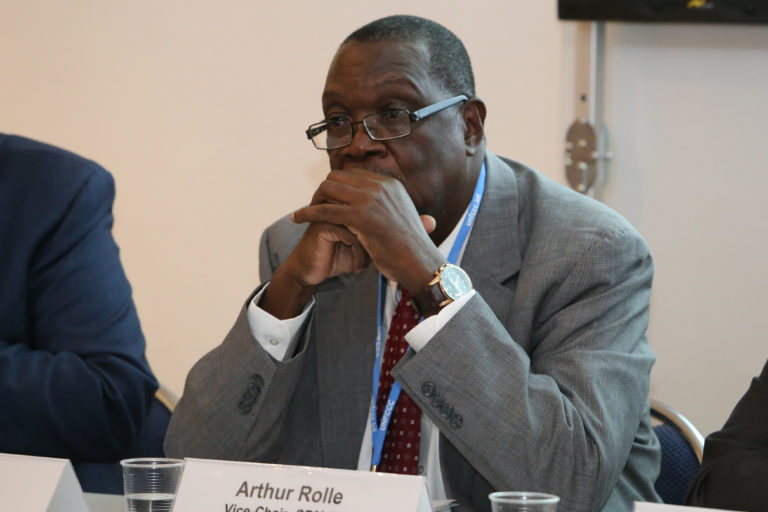
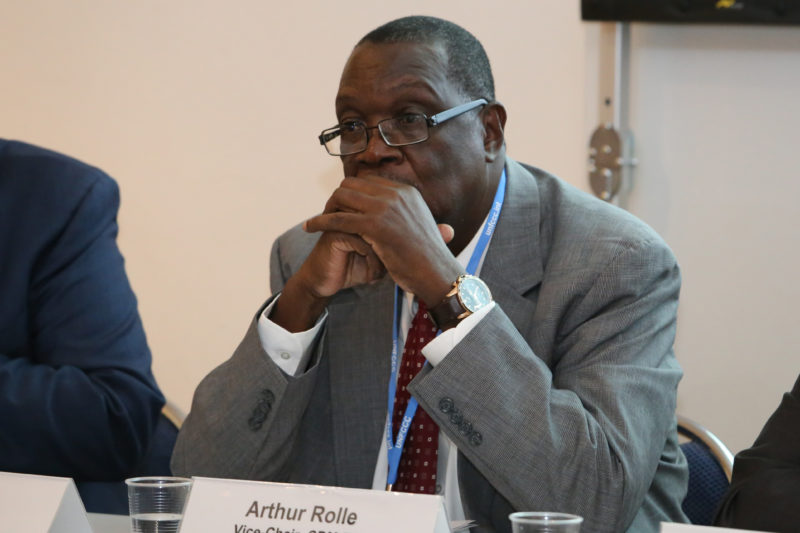
Arthur Rolle, Chair of the CDM Executive Board
This was the message delivered in Bonn during the week by CDM experts with one eye on developments now underway to implement the Paris Agreement, which calls for creation of a new mechanism to incentivise greenhouse gas reductions and contribute to sustainable development. Countries are meeting in Bonn, Germany for interim negotiation sessions in advance of the UN Climate Conference in December, 2018 in Katowice, Poland, where nations are expected to agree a workplan for implementing the Paris Agreement.
Under the CDM, projects in developing countries earn a saleable credit for each tonne of greenhouse gas they reduce or avoid. The incentive has led to the registration of more than 8,100 projects and programmes in 111 countries and the issuance of more than 1.9 billion CERs. Each CER is equivalent to one tonne of carbon dioxide reduced or avoided.
“The CDM has an unmatched track record among instruments for action to reduce greenhouse gas emissions,” said Arthur Rolle, Chair of the CDM Executive Board, at the session side event, before listing some of the infrastructure that underpins the mechanism.
The CDM has vetted and approved some 260 methodologies for measuring baseline emissions and monitoring the emission reductions achieved by registered projects, everything from large industrial gases projects, to solar and wind power projects, to projects to promote the use of clean cookstoves and water filters.
Together with these methodologies is a comprehensive and evolved governance structure that relies on national authorities and third-party validators and verifiers to ensure sustainable development projects receiving CERs have in fact achieved the reductions claimed – that a tonne claimed represents a true reduction equivalent to a tonne of CO2.
The “many methodologies, approaches, policy architecture and lessons learned” from the CDM “paved the way” for a range of new systems now in place or on the way, said Jeff Swartz, Director of Climate Policy and Carbon Markets at South Pole Group. He named a few, including the voluntary market mechanisms “which have largely used the CDM elements,” Australia’s “emission reduction fund inspired by the CDM,” and a national “offset mechanism” being considered in China. CDM should be “instrumental in implementation of Article 6.4 of the Paris Agreement (and) we should not lose sight of the public money invested.”
In 2015 in Paris, countries committed to limiting global temperature rise to 2 degrees Celsius and to work towards the safer target of 1.5 degrees Celsius. Among the tools and approaches agreed by countries to help meet their commitments is a “sustainable development mechanism” to incentivize climate action, described in Article 6 of the Paris Agreement.
“CDM and its components should be brought into the future, and housed in the new regime of the Paris Agreement,” said Albert Magalang, who heads the CDM Designated National Authority in the Philippines and who will help negotiate the future of the CDM and what develops under the Paris Agreement.
A representative of third-party validators and verifiers, Werner Betzenbichler, illustrated the present state of the CDM. He has seen the number of his colleagues working full time on the mechanism drop considerably and the number of validation and verification companies engaged in any work on the CDM drop to 30 from a peak of 50.
Mr. Betzenbichler, Chair of the Designated Operational Entities and Accredited Independent Entities Coordination Forum, would like to see CDM continue in parallel with the new mechanism under Paris Agreement.
In the first five-year commitment period of the Kyoto Protocol, ending in 2012, CERs were sought after, principally in the European Emissions Trading System, and the CDM thrived, with projects flocking for registration. Demand for CERs from CDM projects has since dropped, and the Doha amendment to launch a second commitment period of the Protocol has yet to be ratified. What should happen to the CDM and what exactly should come next under the Paris Agreement are hotly debated.
We should not “reinvent the wheel,” but we should ask “how do we make it better,” said Mandy Rambharos, Climate Change and Sustainable Development Manager at Eskom in South Africa and a lead negotiator on CDM and Article 6 of the Paris Agreement, who stressed the need for “predictability, clarity, and simplicity,” of such crediting mechanisms designed to incentivise climate action.
“It’s not a copy and paste job,” said Ms. Rambharos, “but the benefits of the CDM are real. What do you do with all of these; they cannot be lost.”
The CDM is a “credible tool” whose rules, modalities and procedures have been “built over decades,” said El Hadji Mbaye Diagne, a climate negotiator from Senegal and a member of the CDM Executive Board. “The CDM has a track record of managing pace and scale of mitigation action.”
Mr. Mbaye Diagne said stakeholders in developing countries express support for the CDM and for the regional collaboration centres set up to encourage CDM projects and programmes in underrepresented places, such as Africa.
Work to develop a work programme to implement the Paris Agreement, including its Article 6, continues in Bonn until May 10.
Criticisms have trailed the inclusion of the Cross River State Security Adviser, Mr. Jude Ngaji, as a member of the judicial commission of inquiry constituted to investigate the genesis of the Boki oil palm estate crisis that resulted in loss of lives and property, and left several people traumatised.
House of the Clan Head of Okundi
A circular issued on Wednesday May 2, 2018 by Mr. Christian Ita, the Chief Press Secretary to Governor Benedict Ayade, listed Mr. Ngaji as part of the six-man team expected to be chaired by Justice M. Eneji.
Other members of the committee include Justice Edem Ekefre, former Attorney General and Commissioner of Justice, Mr. Attah Ochinke, Pastor Sam Inyang and Dr. Mercy Akpama.
The choice of the State Security Adviser (SSA) as affiliate of the group has raised questions on the integrity of such a high level and sensitive panel to effectively carry out its responsibilities and deliver on her mandate.
Human rights lawyer, Dr. Joseph Odok, in a statement released shortly after the names were made public, expressed concern over the personality of the SSA and urged the governor to immediately replace him with someone that has a higher pedigree and undeniable character.
“The distrust around Mr. Ngaji is also not unconnected with perceived compromise and refusal to act in some critical moments in the days of Boki crisis especially when his services were mostly needed,” Dr. Odok said.
He argued that Mr. Ngaji’s lack of security experience is evidence in the poor management and escalation of the feud which has empowered a certain group over others to unleash mayhem on innocent and law abiding citizens in the state.
“Most times he basically refused to intervene, he allowed our people to die, or allowed a particular group of miscreants kill our people,” he lamented.
Rather than the option of the SSA as element of the commission, the rights campaigner advised Governor Ayade to expand his horizon and search for a more capable security expert to help decipher the ongoing chaos in Boki.
The document issued by the spokesman to the governor highlighted that the current management committee of the contentious oil palm estate has been dissolved.
It also added that the Nigerian Army has taken over full control of the oil palm estate to douse the renewed hostility as well as restore law and order in the affected communities.
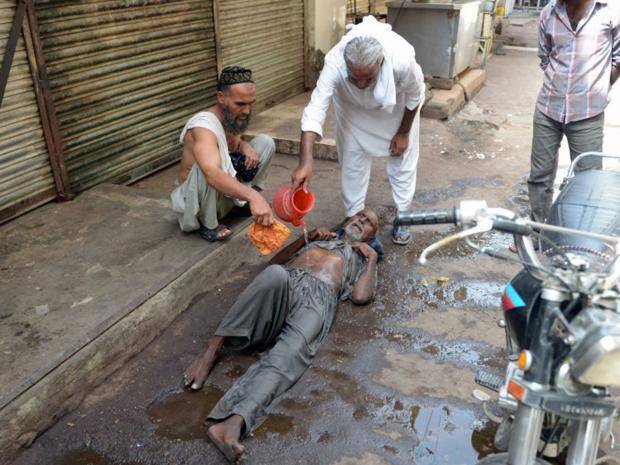
Health authorities have declared a heatwave red alert in the southern Pakistani city of Karachi, after temperatures surged above 40 and winds came to a halt in the coastal region.
Authorities have declared a heatwave red alert in the southern Pakistani city of Karachi
“We have ordered hospitals, children health care units and clinics to be vigilant for possible emergencies,” said Nasir Durrani, a local official in Karachi, where a severe heatwave in June 2015 caused around 2,000 deaths.
“People have been asked to stay indoors, consume as much liquids as they can and not to face the sun,” Durrani said, terming the situation alarming.
Temperatures in the city of more than 20 million went up to 44 degrees Celsius on Thursday, May 3, 2018 and were expected to touch the same level on Friday, May 4, meteorological department local chief Shahid Abbas said.
“What makes things worse is a high humidity level, at nearly 80 per cent,” he said.
Temperatures were expected to begin sinking Saturday, when winds from the Arabian Sea start blowing again.
The 2015 heatwave stuck the city during the Muslim holy month of Ramadan, when people fast from dawn to dusk, a factor that contributed to the high death toll and aggravated the situation.
No death has been reported so far this time.
Pakistan, sandwiched between the highly industrialised nations of China and India, faces some of the worst fallout from climate change.
On Sunday, temperatures in a Pakistani town near Karachi surged above 50 degrees Celsius, the highest ever recorded on earth in the month of April.
Carbon dioxide (CO2) emissions in the EU increased by 1.8 per cent in 2017, compared to the previous year, the EU’s statistics office said on Friday, May 4, 2018.
EU Commissioner for Climate Action and Energy, Miguel Arias Cañete
Emissions rose in a majority of the bloc’s 28 countries, Eurostat said, noting that the highest increases were reported in Malta (12.8 per cent), Estonia (11.3 per cent) and Bulgaria (8.3 per cent).
In some of the biggest member states of the bloc – notably France, Italy and Spain – there were increases, too.
In Germany, a slight decrease of 0.2 per cent was reported.
Carbon dioxide is considered to be largely responsible for climate change and global warming.
The EU has made international commitments under the 2015 Paris climate change accord to reduce CO2 emissions.
Eurostat estimates the figures based on monthly energy statistics.
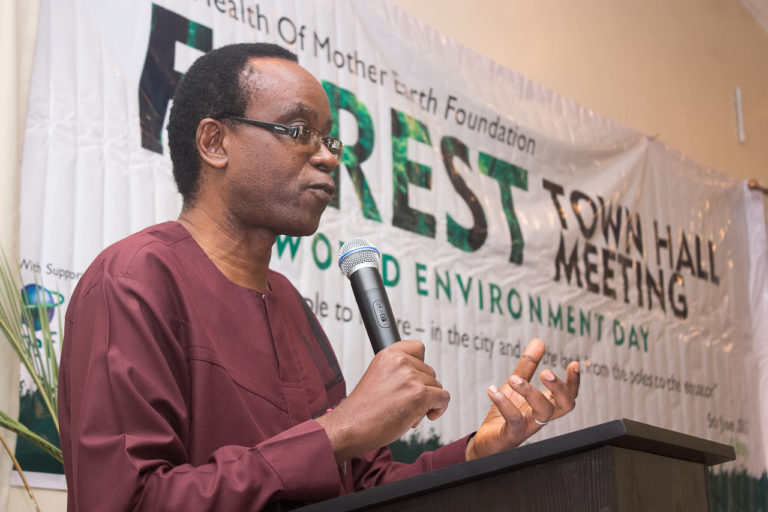
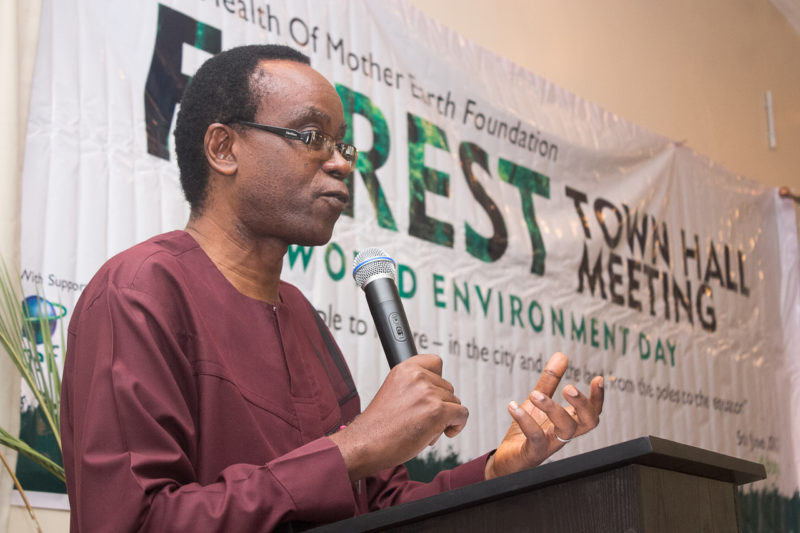
Nnimmo Bassey, Director, Health of Mother Earth Foundation (HOMEF), in this presentation delivered on Thursday, May 3, 2018 at the Stakeholders’ Dialogue on Building Trust and Common Ground for a Successful Clean-Up Port Harcourt, Rivers State, describes the Ogoniland clean-up exercise as not only a positive alternative vision, but also an opportunity to build and consolidate environmental justice
Nnimmo Bassey
Pollution is the number one killer in the world today. It is deadlier than the wars in the world today, than smoking, malnutrition and others. This was the finding published by one of the world’s most respected medical journals, on October 19, 2017. The research looked into air and water pollution, among others. We all know that the Niger Delta is classified among the top 10 most polluted places in the world. And we all know some of the key findings of the United Nations Environment Programme (UNEP) report on the assessment of the Ogoni environment. All water bodies are polluted with hydrocarbons, soils polluted to a depth of 5 metres at a number of places and benzene is found at levels 900 times above World Health Organisation standards. We all know that the Niger Delta has the lowest life expectancy level in Nigeria. This is why the clamour for a clean-up of the region has been a long-drawn struggle.
The history of the struggle for the clean-up of Ogoni environment is that of the struggle for environmental, socio-economic and political justice. This struggle picked steam in the late 1980s and peaked in the early and mid-1990s. The enterprise can be characterised as a struggle for the right to live in dignity, pursue self-actualisation and build a future for upcoming generations. The bedrock was the demand for justice. This was captured through well-articulated demands for the remediation of the damaged Ogoni environment. With cautious and robustly peaceful organising, the demands were catalogued in a carefully crafted Ogoni Bill of Rights (OBR) of 1990.
The Bill noted that although crude oil had been extracted from Ogoniland from 1958, its inhabitants had received NOTHING in return. Articles 15-18 of the OBR illustrate some of the complaints of the people:
That the search for oil has caused severe land and food shortages in Ogoni – one of the most densely populated areas of Africa (average: 1,500 per square mile; national average: 300 per square mile).
That neglectful environmental pollution laws and sub-standard inspection techniques of the Federal authorities have led to the complete degradation of the Ogoni environment, turning our homeland into an ecological disaster.
That the Ogoni people lack education, health and other social facilities.
That it is intolerable that one of the richest areas of Nigeria should wallow in abject poverty and destitution.
This Bill of Rights was the precursor to the Kaiama Declaration of the Ijaws, lkwerre Rescue Charter, Aklaka Declaration for the Egi, the Urhobo Economic Summit, Oron Bill of Rights and other demands of peoples’ organisations in the Niger Delta. It became an organising document for the Ogoni people and also eventually inspired other ethnic nationalities in the Niger Delta to produce similar charters as a peaceful way of prodding the government into dialogue and action.
Although the OBR has never been directly addressed by government, the detailed assessment of the Ogoni environment that culminated in the release of the now famous United Nations Environment Programme (UNEP) report on August 4, 2011 can be said to be a response to some of the demands of the OBR. We note at this point that before the report was released information leaked out that the bulk of the blame for the pollution of Ogoni had been placed on the people. This led to a flurry of protests and by the time the report was eventually released the blame for the massive environmental destruction was more acceptably situated. It could not have been otherwise because the payment for the study was made on the basis of the polluter-pays principle by the lead international oil company (Shell Petroleum Development Company – SPDC) that operated in the area.
Resilient and Successful Struggles
Community organising succeeds where the people have identifiable goals that address their needs or issues. The resilience of a struggle is assured when the people and their leaders have a clear strategy, are able to adapt to unfolding situations, and are willing to change tactics as may be necessary without repudiating the core of what brought them together. This flexibility is possible when the people have a shared understanding of what their collective objectives are and what sacrifices may need to be made to attain the targets. The Ogoni struggle, through the leadership of the Movement for the Survival of Ogoni People (MOSOP), has been an exemplary case study for other nationalities to learn from.
Understanding the depth of the crisis and determining to speak truth to power was aptly captured in one of the last poems, Silence Would be Treason, that Ken Saro-Wiwa wrote while in prison:
But while the land is ravaged
And our pure air poisoned
When streams choke with pollution
Silence would be treason
As we consider the Ogoni clean-up today, we bear in mind that Ogoni has become a global metaphor for resilient community organising against impunity. Saro-Wiwa foresaw this when he wrote in his prison memoir, A Month and A Day:
In virtually every nation state there are several “Ogonis” – despairing and disappearing people suffering the yoke of political marginalisation, economic strangulation and environmental degradation, or a combination of these, unable to lift a finger to save themselves. What is their future?
The global component of the Ogoni situation has important implications for those who see it as a local struggle. It also has implications for those whose geographies are outside the limits of Ogoni. Those within must understand that their success charts the path that would lead to the clean-up of other regions. For those looking in from the outside, the stakes are no less because of the interconnectedness of our environment.
The Ogoni Environment is not isolated from the wider Niger Delta environment. Polluted ground water or polluted air does not obey political or traditional or cultural boundaries. When one part is cleaned up there is the urgent necessity to step to the next spot. Seeing everyplace as discrete and separate would only lead to living in a fool’s paradise believing that the land is clean whereas pollution from elsewhere would be doing its deadly job, unseen, unnoticed except in the festival of funerals that would persist.
Oil Damage Narratives
There was a time when the oil companies operating in the Niger Delta could not boldly claim that the hydrocarbons pollution in the area is caused by local peoples. There was copious evidence of the ill-maintained pipelines and flow stations. Oil spills from equipment failure were the norm. Poorly handled toxic wastes and produced water could not be hidden. And, of course, gas flares continue to stick their sooty fingers in the air as criminal giant cigarettes. The oil companies laboured in vain to shift blames. Reports from communities, the media and environmental justice campaigners continued to pile up evidence of the guilt of the oil companies.
The tide began to change with the rise of violent militancy in the oil fields. Oil infrastructure became targets and the pollution that emanated from the conflicts could neither be hidden nor denied. In fact, the explosions were marked as badges of achievement by the groups that carried out the attacks. Violent militancy achieved aspects of their objectives: gaining attention of the governments that are demonstrably more interested in pipelines and petrodollars than in the peoples and their environment. The militarisation of the Niger Delta rather than bring peace is contributory to the insecurity of lives and infrastructure in the region.
And so the environment suffered and new sources of pollution became entrenched in the region. Oil companies found a plank on which to hang blames for the pervading environmental degradation. They also found excuse in their operational locations being “inaccessible” due to insecurity and with that oil spills could go unchecked for any length of time.
The Amnesty Programme in its first and second coming helped to curtail deliberate tampering with oil facilities. But, a non-violent but equally deadly version of interferences crept in by way of what is generally called illegal refineries, but which we prefer to call bush refineries.
The bush refineries are incredibly polluting. The operators either do not know how toxic the environment in which they work is or they simply do not care. Obviously, the refineries meet the need for petroleum products in zone of perpetual shortages and high costs. Obviously, the operators have economic gains from the enterprise. However, what does it profit a person to make piles of money and not live to enjoy it? What does it benefit a person to accumulate wealth and pollution and sentence entire communities and future generations to death?
Today, when anyone thinks of the pollution of the Niger Delta, decades of incontrovertible pollution by oil companies are now forgotten and all fingers are pointed at the bush refineries.
It is so bad that even when the Port Harcourt refinery continually belches smoke into the atmosphere, fingers are pointed at the bush refineries as the cause of the soot in the atmosphere. The burning, bombing and strafing of bush refineries’ drums and barges of refined or unrefined petroleum products by security forces are accepted as signs of operational successes. We tend to think that pollution does not matter. How wrong can we get!
All the oil companies have to do today to ensure the narrative is shifted away from them is to take some journalists on their choppers for pollution tours, picking out the awful patches destroyed by bush refiners. Who would not do that? The fact that industrial scale oil theft has been going on for decades is hardly spoken of these days because of the visible and graphic horrors of the bush refineries.
Deadly Impacts
The Niger Delta is so scarred, so polluted today that what we have on our hand is an environmental emergency, no less. Our air, water and land are all polluted. We plant crops and end up with poisoned harvests. We cast our nets and hurl in poisoned fish, when we see any. We breathe and our nostrils are blackened by soot. Our rivers, streams, creeks and ponds are clearly polluted, yet we drink the waters for lack of choice. All these have deadly impacts.
Oil pollution causes habitat loses, biodiversity degradation, loss of livelihoods and loss of lives.
The heavy metals extracted along with crude oil include cadmium, lead, mercury, arsenic, copper, iron, barium and many others. These have serious risks to human health and wildlife. Health risks include abdominal pains, kidney diseases, nervous problems, bronchitis, fragility of bones, prostate and lung cancer. They can also cause brain malformations as well as pregnancy and birth complications.
Mercury can rapidly penetrate and accumulate in the food chain. Acute poisoning produces gastroenteritis, inflammation of the gums, vomiting and irritation of the skin with dermatitis which can turn into ulcers.
The flared associated gases cause a cocktail of dangerous health impacts including conjunctivitis, bronchitis, asthma, diarrhoea, headaches, confusion, paralysis and others. Of course, we know of the acid rain that occurs when sulphur and nitrous oxides mix with moisture in the atmosphere.
Poorly handled produced water contaminates creeks, rivers, lakes, aquifers and other water sources. This causes the salination of these waters, soil and associated biodiversity. Salts and metals present can include cyanide which can cause immediate death if ingested. Cyanide in low doses can lead to intense headaches, sour taste, and loss of smell and taste, dizziness, vomiting, difficulty in breathing, anxiety, convulsions, loss of consciousness. In chronic intoxication it can produce goitre.
Clearly, it is extremely unsafe for untrained and unprotected persons to go near crude oil spills and materials used in the extraction processes. Seeing our people literally swim in crude oil and fire in the bush refineries is absolutely appalling.
Cleaning Up Today for Tomorrow
The Ogoni clean-up exercise is an intergenerational investment.
For the short time he was alive and in office, Thomas Sankara of Burkina Faso understood that a people that cannot feed themselves are not truly free. He also saw the direct link between environmental sanity and social justice. In analysis of the work of this great son of Africa, Amber Murray states:
Liberation is incomplete when people hunger daily. Environmental protection and sustainability were therefore crucial to Sankara’s strategic thinking. Today, the continent faces serious environmental and climatic challenges that affect food production, access to water and public health. These challenges include water pollution, deforestation, soil erosion, droughts, floods, desertification, insect infestation, and wetland degradation. Environment protection is inextricably linked to social security, poverty eradication, and health.
The clean-up process has many components and many actors. While the Hydrocarbon Pollution Remediation Project (HYPREP) and other levels of government have various roles to play, there are also the contractors, consultants and the community leaders and people. We have individual responsibilities as well as collective responsibilities. The federal government and its agencies have responsibilities and so do the state and local governments. The clean-up is a complex social engineering project that goes beyond the technicalities that we will soon be seeing with machines, chemicals and diverse equipment. We refer to this exercise as social engineering because apart from remediation the environment we have to decolonise our thinking and relationships. All these require some work.
First, we have to understand that the clean-up is primarily for the sake of our children and future generations. If this fails we could as well look forward to a future in which the Niger Delta will be a museum with no inhabitants because not just the people, but the ecological systems would all be dead. This places a moral burden on all of us, on policy makers, on leaders and on us the people.
Successful social engineering calls for the spirit of sacrifice. The clean-up will produce new skill sets, new jobs and massive employment that would stretch for several years if we get this first steps right. Again, we emphasize that this will require sacrifice. If anyone approaches this sacred task of building an environment for future generations with the aim of profiteering, thievery or self-aggrandisement, you can be sure that the entire scheme will ship wreck.
No contractor should cut corners. No individual or company should trigger new pollutions. As my friend, Inemo Semiama, says, “You cannot successfully mop the floor with the tap running.”
Wisdom
This epic social engineering will require the wisdom of our peoples. It will require local knowledge. The youths must embrace the spirit of sacrifice for it is the way to build the moral authority that will be needed to question activities and actions that may occur in the process of the clean-up implementation. These could include the calls for transparency, for ensuring the availability of funds and for insisting that delivered jobs match specifications, expectations and set milestones.
This effort will also demand and require collective wisdom through popular consultations. The Ogonis have the critical advantage that makes this possible because of the existence of the mass organ, MOSOP – with its youth, women and other arms. Working organically together, there will be no shortage of diversity of wisdom to tackle even the most intractable problems.
Ogoni is a laboratory, a classroom. A careful implementation of this massive social engineering programme will illustrate how the oppressed can escape from being put down by the wielders of privilege and power.
Going Forward
Halting production never halted pollution. Those responsible must continue to bear the responsibility. Those instigating new sources of pollution must halt such acts for the sake of our children, our tomorrow and for the sake of other beings with which we share the planet. We cannot build a liveable tomorrow on a polluted today.
Our slogan as the exercise takes roots should be: A Clean Ogoni: Zero Tolerance for Old and New Pollution.
We have a right to claim what belongs to us as ours. However, taking steps that end up killing us or destroying our environment for the sake of expressing our right of ownership is both a false reasoning and a false economic move. When we do things that compound our problems we are simply playing into the hands of the forces of exploitation.
This is our opportunity to reclaim our humanity. It is time to reclaim our dignity. It is time for all of us in the Niger Delta, nay, Nigeria to stand together in solidarity. There is no part of this nation that is not crying for environmental remediation. From the polluted creeks of the Niger Delta to the contaminated lagoons of Lagos and the rivers in the north, to the Sambisa Forest polluted with military armaments and erosion ravaged lands of the east, we are united by our ecological challenges.
The clean-up is a positive alternative vision. It is time for vigilance based on knowledge. Not a time for complacency. Not a time to be silent. It is time to hold government and its agencies, oil companies and our leaders accountable. It is time to demand accountability and responsibility of ourselves.
The clean-up is an opportunity to build and consolidate environmental justice. Together we can leverage the opportunity. It is a path we must walk together and not alone. As the African proverb says, you may go fast by going alone, but you can only go far by going together. We are that intertwined and interconnected.