Home Blog Page 1887

Obasanjo canvasses for biotechnology to end hunger

0

Former President, Olusegun Obasanjo, has said that without innovative advances such as biotechnology in agriculture, global efforts at ending hunger would remain a mirage as far more land would need to be cultivated to feed the world’s teeming population.
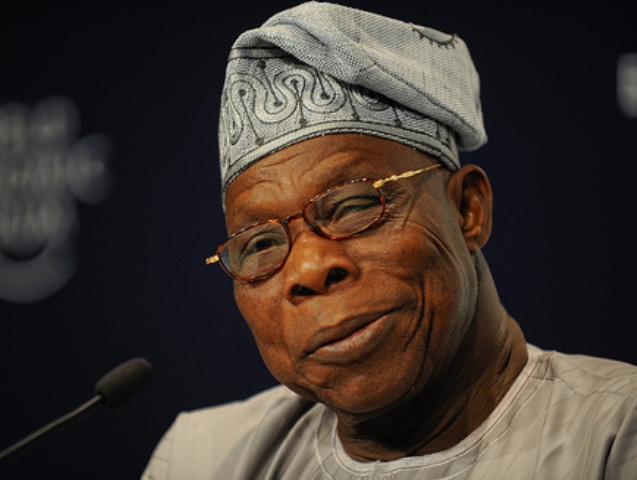
Olusegun Obasanjo
Chief Olusegun Obasanjo

Obasanjo said at the South West Sensitisation programme of the Open Forum on Agricultural Biotechnology (OFAB) which held at Abeokuta, Ogun State, that the world’s population is estimated to reach about 9.7 billion by 2050. “If agricultural yields stay the same, we would need to cultivate more than double the present amount of land to feed that population. That’s 82% of our total land area on earth.”

He said biotechnology is taking mankind beyond the depths of understanding of chemical and physical possibilities, and has the potential to increase agricultural productivity, enhance food security, develop a better health care delivery system, boost an efficient industrial development process for transforming raw materials and detoxifying hazardous wastes, reduce mortality rates, move agriculture away from a dependence on chemical inputs and help to reduce environmental problems.

He said that agriculture occupies a strategic position in global efforts to address issues of hunger and diseases, adding that it therefore remained one of the most potent tools for Nigeria as the government intensifies efforts to diversify the economy and enhance the wellbeing of the people.

“Deliberate efforts should be made on the part of government to encourage scientific incursion into agriculture via policy measures specifically designed to encourage research and development and the adoption of new technologies,” he said.

He said that the challenges of today’s world have brought many pressures to bear on agriculture: population growth, insects and pests infestation of crops, weed invasiveness, soil infertility, salinity, the impact of climate change (drought and rise in temperature), greenhouse gas emissions, and water and energy shortages.

“This scenario heightens the critical role of innovation to make agriculture a business- more competitive and sustainable.

“I’m excited that OFAB has presented a formidable platform for dialogue on the transformation of agriculture through quality information dissemination on agricultural biotechnology in Africa, he added.

In a remark, Mr Oguntunde Abayomi, the Overseeing Director General of National Biotechnology Development Agency (NABDA), said that the event was very timely and pertinent especially at this period that Nigeria and other African countries are adopting improved agricultural technologies for food security.

It is also commendable that OFAB has earned a reputation for committing itself to a painstaking dissemination of information and correction of misconceptions around agricultural biotechnology through organising sensitisation events similar to this all over Nigeria, he added.

His words: “By this creative initiative, it has become possible for Nigerians to identify their need for improved agricultural technologies and recognise where they stand in the scheme of things in terms of the effort to achieve global food security through sustainable agricultural practice.”

In a presentation, Dr Rose Gidado, the OFAB Country Coordinator, highlighted why biotechnology has kept the promise of achieving food security across the world.

She noted that the sensitisation programme was aimed at enlightening the public within the South West Zone on the benefits of biotechnology and promoting an understanding of the potentials of agricultural biotechnology and biosafety.
Two Congo Ebola patients attended church with 50 people before dying – MSF

0

Two Democratic Republic of Congo Ebola patients who fled hospital in the city of Mbandaka on Monday attended a prayer meeting with 50 people hours before they died, Jean-Clement Cabrol, an emergency medical coordinator at Medecins Sans Frontieres (Doctors Without Borders), said on Thursday, May 24, 2018.

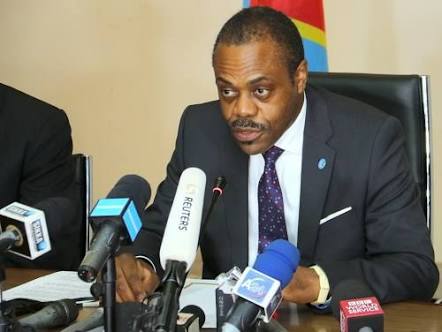
Orly Ilunga
Orly Ilunga, the Congolese Minister of Health

Health officials are scrambling to contain an outbreak of the deadly disease in the heavily populated port city in northwest Congo that is believed to have killed 22 people since April.

Two new deaths from Ebola and seven new confirmed cases have been recorded in Democratic Republic of Congo, the health ministry said on Tuesday.

One of the deaths occurred in the provincial capital of Mbandaka, according to a daily bulletin.

A nurse also died in the village of Bikoro, where the outbreak was first detected, ministry spokeswoman Jessica Ilunga told Reuters.

The ministry said the seven new confirmed cases were registered in Bikoro.

Health officials administered an experimental vaccine on Monday to 33 medical workers and Mbandaka residents, WHO spokesman Tarik Jasarevic told reporters in Geneva.

The vaccine manufacturer Merck has provided WHO with 8,640 doses of the vaccine and an additional 8,000 doses are expected to be available in the coming days, WHO said.

Congo’s ninth outbreak of Ebola since 1976 is believed to have killed at least 28 people so far.

Officials are particularly concerned by its appearance in Mbandaka, a crowded trading hub on the Congo River with road, water and air links to Congo’s capital, Kinshasa.

NAN reports that the WHO said it will need $26 million for the Ebola Response in the DRC over the next three months.

WHO said it had also released $2 million from its Contingency Fund for Emergencies, to scale up the Ebola response.

The Government of DRC, with the support of WHO partners, is preparing to vaccinate high risk populations against Ebola Virus Disease (EVD) in affected health zones.

The organisation said health workers operating in affected areas were being vaccinated on Monday and community outreach had started to prepare for the ring vaccination.

More than 7,500 doses of the rVSV-ZEBOV Ebola vaccine have been deployed to DRC to conduct vaccination in the northwestern Equator Province where 46 suspected, probable and confirmed Ebola cases and 26 deaths have been reported – as of Friday.

Ebola in DRC may spread nationally, internationally – WHO

0

The Democratic Republic of the Congo (DRC) remains on an “epidemiological knife-edge” regarding the spread of the deadly Ebola disease, in spite of the quick response by authorities and international partners to the threat, the World Health Organisation (WHO) has warned.

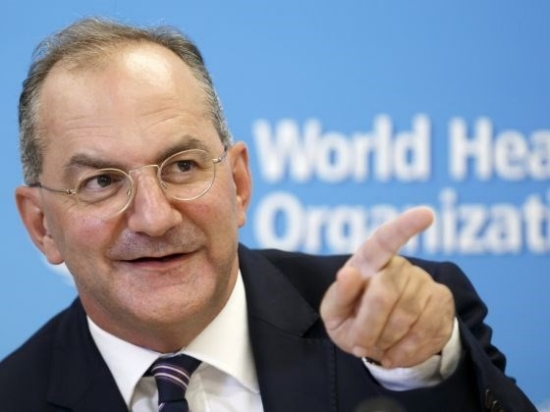
Peter Salama
Peter Salama, WHO’s Deputy Director-General of Emergency Preparedness and Response

Speaking in Geneva at the World Health Assembly, Dr Peter Salama, WHO Deputy Director-General, who heads Emergency Preparedness and Response, said that there were several reasons why the current outbreak – which has claimed 27 lives since it was declared on May 8 – had yet to be contained.

Epidemiology is the branch of medicine which deals with the analysis of the incidence, distribution, and control of diseases’ conditions in defined populations.

“It’s hard to recall a situation of an outbreak where a Government has responded more quickly and more decisively than in this outbreak,” Salama said.

The WHO official added that it was “a multi-partner effort and it’s not over yet. We’re really just at the beginning”.

“I used the phrase yesterday that we’re on the epidemiological knife-edge of this response, the next few weeks will really tell if this outbreak will spread to urban areas or if we’re going to be able to keep it under control.”

Unlike previous Ebola events in DRC – this is the country’s ninth since 1976 — the 2018 outbreak has been complicated by the fact that it involved rural and urban areas, he said.

“This has raised the chances that it might spread both nationally and internationally,” Salama said.

He noted particularly since the city of Mbandaka – where the disease was identified after first surfacing in the relatively remote Bikoro – is close to the Congo river, which acts as the main transport link to DRC’s capital, Kinshasa.

”With 58 confirmed, probable or suspected cases of the disease in the country as of Wednesday, effective tracing of anyone who had come into contact with the disease would “make or break” the response to Ebola,” Salama said.

He described the task ahead as “the detective work of epidemiology”, adding that medical personnel at a hospital in Wangata, Mbandaka, were tracing some 600 contacts from three separate chains of transmission.

One of these chains was associated with a funeral in a neighbouring town of Bikoro; another was linked to a health-care facility in the small village of Iboko; and the third related to a church ceremony.

“Each one has the potential to expand if not controlled,” Salama said.

The WHO official confirmed that a selective, or “ring vaccination” programme had just begun and that efforts were ongoing to ensure that the Ebola drug could be stored in “ultracold” conditions at between -60 and -80°C.

WHO has repeatedly stressed that vaccination was only one measure among many in any outbreak response.

That message was repeated in Geneva by Tedros Ghebreyesus, WHO Director-General, who praised the commitment and sacrifice of the communities and health workers on the front line, as “the most important element in fighting this outbreak”.

The WHO chief also underlined that the coordination among international health partners was essential, too, before highlighting that even he had problems in accessing rural Bikoro to see the problem first-hand, during his visit to the area shortly after the beginning of the outbreak.

By Prudence Arobani

Housing deficit blamed on frequent change in policies

0

The Secretary to the Government of the Federation (SGF), Mr Boss Mustapha, has blamed the 17 million housing deficit in Nigeria on policy somersaults by successive administrations.

Boss Mustapha
Secretary to the Government of the Federation (SGF), Boss Mustapha

Mustapha stated this while receiving delegates from the Federal Housing Authority (FHA), according to a statement signed by Andrew Uhwe, Director Press, OSGF, on Wednesday, May 23, 2018 in Abuja.

He urged the FHA members to come up with a comprehensive social housing roadmap to tackle the huge housing deficit in the country and entrench policy sustainability in the sector.

“The provision of affordable and low-cost houses to citizens is a primary responsibility of the government because it is a social investment that should ease housing challenges.

“But over the years this objective had not been realised because of policy somersaults by the successive administrations.

“Since government is a continuum all developmental policies of the agency should be sustained and not discarded,’’ Mustapha said.

The SGF reiterated the determination of the present administration to tackle the huge housing deficit, by ensuring that a million houses were built across the country every year.

He applauded the productive efforts of Nigerians in Diaspora through their remittances to the economy.

He added that these remittances could be invested in beautiful estates for those in diaspora to halt the problem of fraud and abuse of trust by their friends and relatives.

Earlier, the Chairman of the Board, Senator Lawal Shuaibu, said the visit was to brief the SGF on activities and challenges of the agency and to seek for support and intervention in key areas of concern.

He stressed that in the 45 years history of the FHA government had made huge investment of over a trillion naira in housing projects.

He lamented the challenge of poor budgetary funding and requested that states assist the agency with suitable lands where they could build and sell.

He solicited for the amelioration of their estates ravaged by ecological problems requesting that the Office of the Secretary to the Federal Government coordinates the diaspora city project.

By Kate Obande-Okewu

Nigeria intensifies screening at airports to stem Ebola

0

Following Ebola outbreak in the Democratic Republic of Congo, Central Africa, the Federal Government has increased surveillance in all airports to forestall the re-occurrence of 2014 experience.

Isaac Adewole
Minister of Health, Isaac Adewole

The News Agency of Nigeria (NAN) reports that the Federal Airports Authority of Nigeria (FAAN) and the Port Health Services personnel have increased the screening of international passengers at the Nnamdi Azikiwe International Airport, Abuja.

Mrs Henrietta Yakubu, General Manager, Corporate Affairs of FAAN, told NAN that the organisation had not relaxed its surveillance at the airports since the case of the virus was first recorded in Nigeria in 2014.

Yakubu said that all the equipment and personnel used in combatting the virus in 2014 were still very much on ground at the airports.

She explained that the thermal scanners that monitor temperature of passengers and capture their pictures were still functioning very well in all airports.

“When passengers walk pass the scanners, it registers their temperature and if yours is high, you are pulled aside for observation.

“Since the virus was reported in Congo, all relevant agencies, including the Port Health Services have been mobilised and are collaborating effectively to ensure the safety of passengers and airport users at all time,” she said.

NAN recalls that Congo had been battling to stem the spread of the virus through Ebola vaccination campaign it began on Monday in a northwest provincial capital.

It was reported that the virus had spread from rural towns into an urban centre with over a million people.

The Federal Government had on May 9 directed the relevant ministries of help to step up emergency surveillance activities at all land and airport borders, so as to keep Nigerians safe.

The disease was first discovered in Congo in the 1970s. It is spread through direct contact with body fluids from an infected person, who suffers severe bouts of vomiting and diarrhoea.

More than 11,300 people died in an Ebola outbreak in the West African countries of Guinea, Liberia, Nigeria and Sierra Leone between 2013 and 2016.

By Sumaila Ogbaje

Review of Bauchi WASH policy long overdue, say stakeholders

Stakeholders in the Water Sanitation and Hygiene (WASH) sector in Bauchi State on Wednesday, May 23, 2018 resolved to review the state’s WASH policy.

Zuwaira Hassan
Bauchi State Commissioner for Health, Zuwaira Hassan

The News Agency of Nigeria (NAN) reports that the decision was reached at a meeting organised by Wateraid Nigeria, and facilitated by the State Ministry of Budget and Economic Planning.

The meeting was attended by Commissioners, Permanent Secretaries and Directors of the state ministries of Water Resources, Environment, Health, Education, Agriculture as well as Budget and Economic Planning.

Speaking during the meeting, Commissioner for Budget and Economic Planning, Mr Abubakar Dambam, called for a review of the WASH policy to ascertain roles of Ministries, Departments and Agencies (MDAs).

Dambam said WASH services required multi-sectoral approach, hence the need for all line MDAs to collaborate in achieving its set goals.

“One cannot, for example, talk about water without involving the Ministry of Environment in view of the current challenges of global warming.

“Most machinery at the Gubi Dam water treatment plant are outdated and cannot stand the test of time.

“The state Water Board and the Rural Water Supply Agency (RUWASA) also have to be brought on board,’’ he said.

Also speaking, the Commissioner for Health, Dr Zuwaira Hassan, stressed the need for inter-sectoral collaboration.

Hassan listed polio, cholera, malaria and Lassa fever as some water and sanitation-related disorders that could be triggered by poor WASH management.

“Water is key to health because in health facilities, it is required for effective waste management.

“It is required to flush waste, for sterilization and for washing clothes of patients, so the determinant of health is water,’’ she said.

Earlier in his remarks, the spokesman of Wateraid Nigeria, Mr. Saheed Mustapha, had urged key stakeholders at the meeting to create linkages to enable the MDAs operate and work together.

He called on MDAs to always release appropriate data that may be required by the committee set up to achieve an all-encompassing better reviewed WASH policy for the state.

NAN reports that a seven-man committee was set up to review the Water Sanitation and Hygiene (WASH) policy, to ascertain the roles of each ministry, department and agency (MDAs) in its implementation.

They all agreed that there were gaps already identified in the 2012 state WASH policy that must be harmonised to guarantee improved access to WASH.

By Mohammed Ahmed Kaigama

Group condemns killing of anti-pollution protesters in India

0

Centre for Science and Environment (CSE), has strongly condemned the killing of protesters in Tuticorin, Tamil Nadu. The residents of the area were protesting against the proposed doubling of capacity of the Vedanta group’s Sterlite copper plant. Further, citing long-festering pollution concerns, they were demanding permanent closure of the plant.

Chandra Bhushan
Chandra Bhushan, Deputy Director General, Centre for Science and Environment (CSE)

“We condemn the killing of innocent protestors. Considering the history of this plant, the residents were justified in protesting against the expansion. This plant has polluted the environment and flouted standards with impunity for the past 20 years,” said Sunita Narain, Director General, CSE.

The 400,000-tonne-capacity smelting plant of Sterlite has been at the centre of pollution controversy since it was proposed in 1995.This plant was rejected by three states – Gujarat, Goa and Maharashtra – because of its highly polluting nature; before it was allowed to be set-up in Tamil Nadu. While taking Environment Clearance (EC), the company had flouted norms by misrepresenting facts and giving a faulty Environmental Impact Assessment (EIA) report. Firstly, it said that the plant is not located within 25 km of ecologically sensitive area, which was found to be wrong as the plant is located near Munnar Marine National Park. In addition, the company submitted a faulty rapid EIA report without conducting any public hearing.

Since its commencement in 1997, the plant has been found on numerous occasions to flout the pollution norms with impunity and foregone permit requirements by pollution regulators, as observed by the courts. In fact, a Supreme Court (SC) monitoring committee in 2004 found the plant had not provided adequate infrastructure and facilities for management of highly toxic arsenic-containing wastes. The plant was also found to be emitting sulphur dioxide far in excess of the permissible standards.

In 2010, the Madras High Court closed the plant because it was polluting the environment and had flouted norms while setting up the plant. In 2013, the Supreme Court imposed a penalty of Rs 100 crore on the company for polluting the environment.

In March 2013, a toxic gas leak from the plant made several hundreds of residents living in its vicinity sick. The Tamil Nadu Pollution Control Board ordered a closure of the smelting unit on March 29, but the Principal bench of the National Green Tribunal (NGT) gave a clean chit to Sterlite and revoked the closure order based on technicalities.

Sterlite stands as a classic case of failed environmental governance. Years of violations and concerns raised again and again by residents of the area seems to have mattered little.

“With such a poor track record on environment for nearly two decades, a plant like Sterlite’s copper unit, would not have been allowed to operate anywhere in the world. However, not only does it continue to operate in Tuticorin, but is also planning to double its capacity. This reflects the abject failure of the environmental governance in the country.  It shows how weak and toothless are our pollution regulators,” said Chandra Bhushan, Deputy Director General, CSE.

“The big question today is, whether Sterlite will get a clean chit once again and be allowed to expand? Or whether regulators will come together, and court observations will be considered closely to look into the matter in people’s interest.

“Considering its history of irresponsibility and its location in an ecologically sensitive area, we strongly recommend that this plant should be closed down and an environmental de-contamination plan should be implemented to clean-up the contamination caused by the plant’s operation. This work can immediately start with Rs. 100 crore that the SC had imposed five years back,” emphasised Bhushan.

CIFOR, Mongabay partner to improve forest research communication

0

The Centre for International Forestry Research (CIFOR), a scientific organisation that researches ways to better manage and preserve the planet’s tropical forests, and Mongabay, a leading environmental reporting platform dedicated to raising awareness globally about social and environmental issues related to tropical forests, have launched a partnership to increase the dissemination of news about the status of the world’s forest ecosystems.

Rhett Butler
Founder and CEO of Mongabay, Rhett Butler

As both organisations share a commitment to communicating scientific research and improving the capacity of journalists and investigators to report on forest conservation, the two-year agreement will help to build awareness of the crucial relationship between forests and people across the globe.

The two organisations will complement each other’s activities through greater production of original reports and news about forests and conservation, expanded participation in CIFOR events and webinars and through professional training opportunities for Mongabay’s network of journalists.

“I have always been a great fan of Mongabay,” said Robert Nasi, CIFOR Director General. “This is science communication at its best – informing and influencing society for a more sustainable world. I see only benefits in our future collaboration.”

“Combining Mongabay’s reach and commitment to in-depth environmental journalism with CIFOR’s world-class research will take science communication to the next level,” said John Colmey, CIFOR’s Director of Communications, Outreach and Engagement.

“As one of the world’s top forest research institutions, CIFOR is at the forefront of efforts to understand forest ecosystems globally,” said Founder and CEO of Mongabay, Rhett Butler. “This collaboration will enable Mongabay’s vast network of journalists to leverage CIFOR’s expertise and expansive body of research to explore issues related to tropical forest conservation and management.”

“This collaboration between CIFOR and Mongabay is a breakthrough. It’s exciting to see two key players in forest conservation join forces to investigate and report on the progress and challenges we are facing in saving forests and addressing climate change,” added Aida Greenbury, an Indonesia-based advisory board member of Mongabay.

42 new cases reported in Adamawa cholera outbreak

0

The Director Public Health of Adamawa State Ministry of Health, Dr Bwalki Dilli, has said that the number of those infected by suspected Cholera outbreak in Mubi has increased from 134 to 176.

Bindo Umaru Jibrilla
Governor Bindo Umaru Jibrilla of Adamawa State

Dilli told News Agency of Nigeria (NAN) on Wednesday, May 23, 2018 in Yola, the state capital, that no additional death has been recorded apart from the initial 12.

He said that sufficient drugs had been mobilised for the patients receiving treatment in Mubi General Hospital with the support of the World Health Organisation (WHO) and the United Nations Children’s Fund (UNICEF).

“The outbreak is still contained within Mubi North and Mubi South Local Government Areas (LGAs) of the state,” Dilli said.

Also speaking to NAN, the chairman of Mubi North LGA, Alhaji Musa Bello, lauded the prompt intervention by health officials and called on the public to give the needed support and cooperation.

Bello said the outbreak started following a heavy downpour that flooded many sources of water particularly wells in rural communities.

He called for more personal and environmental hygiene, particularly the need to stop open defecation.

By Yakubu Uba

Rivers to establish tyres, waste recycling centres to curb soot pollution

0

Governor of Rivers State, Nyesom Wike, has said that the government is planning to establish a centre to recycle used tyres and organic waste material to end soot menace in the state.

soot-port-harcourt
Soot spreading over a neighbourhood in Port Harcourt, Rivers State

Wike told newsman on Tuesday, May 22, 2018 in Port Harcourt, the state capital, that the government was also discussing with experts on other environmentally friendly ways to end the perennial hydrocarbon emissions in the state.

“The Rivers government is committed to ending the current soot in the atmosphere due to grave the implication it has on the health of the people.

“We support the destruction of illegal refineries by security agencies, but while doing this, we shouldn’t do it in a manner that would destroy lives and depopulate the state,” he said.

The governor said that his administration had also started sensitising the people on ways to reduce the effect of soot in their homes.

“The soot does not discriminate between who is APC or PDP member or discriminate between who is a governor and who is not; it affects all of us.

“If you enter my room, everywhere is black, and so, it also affects me. We are all into this together,” he said.

The governor urged security agencies to adopt other environmentally friendly methods in the destruction of illegal refineries and bunker sites in the state.

By Desmond Ejibas