Home Blog Page 1879

States tasked on smart cities

0

The Project Manager, United Nations Habitat for a Better Urban Future, Prof. Mustapha Zubairu, on Wednesday, June 13, 2018 urged state governments to work assiduously toward developing smart cities.

Smart city
Smart city

Zubairu, who made the call at the 2018 International Conference of the Nigerian Building and Road Research Institute held in Abuja, said that states which develop smart cities were likely to become technology and innovation hubs.

The conference, which has the theme: “Sustainable Development Goals (SDGs) and the Nigerian Construction Industry: Challenges and the Way Forward’’, focuses on creating awareness on the need to implement sustainability in construction practices and evolve new strategies to embed sustainability into construction activities.

According to him, most smart city applications are built around the Internet of Things (IOT)-objects embedded with sensors and wireless connectivity and analytics tools to enable them send and receive data that can be analysed and acted upon.

“The effectiveness and sustainability of cities and towns are hinged on subsisting level of good governance and a paradigm shift is required to build good understanding, mutual respect and partnership between state governments and residents of the cities,” Zubairu said.

He, however, expressed concern over illegal access to data generated from smart cities.

“Among the challenges to overcome in establishing smart cities in Nigeria are that since the internet is a global network, it will be difficult for Nigeria alone to control and prevent illegal access to data generated from its smart cities.

“Most of the private sector organisations that collect and store citizen’s data are not legally bound to protect their rights,’’ Zubairu said.

He called for the amendment of the 2012 National Urban Development policy to incorporate a national goal, objectives and strategies on smart city.

According to him, there is also need to allocate a percentage of the Ecological Fund to finance the development of components of smart cities such as research and development on improving cyber security as well as developing smart digital infrastructure.

By Ikenna Uwadileke

Oyo evolves technology-driven solution to environmental challenges

0

As part of its transformation efforts, the Oyo State Government in collaboration with a waste management firm has evolved a technology-driven method of tackling various environmental challenges in the state.

Ibadan
Ibadan, Oyo State, Nigeria

Dr Bisi Akin-Akinlabi, the Special Adviser to the Governor on Education, made the disclosure at a news conference on Wednesday in Ibadan.

The News Agency of Nigeria (NAN) reports that the news conference held at the Technical University (Tech-U), Ibadan, as part of activities to herald the OYOMESI Festival of Learning.

The Oyo State Model Education System Intervention (OYOMESI) is an initiative of the state government aimed at raising competent civil citizens.

NAN reports that the weeklong event would hold from June 29 to July 5.

Akin-Alabi also stated that the festival would host a competition tagged “Hackaton”, a technology-driven competition aimed at providing IT solutions to identified environmental management challenges.

“Among the challenges to be examined are Waste Collection Billing and Payment System; Reporting of Illegal Dumpsites; City Enumeration and Management, and Recycling Measurement and Reporting,” she said.

She noted that the competition would attract an investment of N2 million for the winners coupled with mentorship and coaching from experienced IT and business professionals.

Mr Paul O’ Callaghan, Managing Director, WestAfrican ENRG Limited, said that the competition was the first in Nigeria, adding that no fewer than 250 participants had signified intention to participate in the competition.

Also speaking, Prof. Ayobami Salami, the Vice Chancellor of Technical University,  said the festival of learning in the state coincided with the first anniversary of the institution.

He said the aim of establishing the university was to find  innovative solutions to human challenges on daily basis, noting that this  aligns with the focus of  the Hackaton competition.

The event was attended by Mr Akin Oyedele, Senior Special Assistant to the Governor on Media, Prof. Adesola Ajayi, Deputy Vice-Chancellor, Technical University  and Mr Alex Oladeji, Registrar, Technical University.

By Akeem Abas

Global urban inhabitants expected to hit 2b by 2030

0

The Director-General, Nigerian Building and Road Research Institute (NIBBRI), Prof. Danladi Matawal, says additional two billion urban inhabitants are expected by 2030.

Nigeria Population
Nigeria’s population is said to be equivalent to 2.55% of the total world population

Matawal made this known on Wednesday, June 13, 2018 in Abuja during 2018 NBRRI International Conference.

The theme of the conference is: “Sustainable Development Goals (SDGs) and the Nigerian Construction Industry – Challenges and the Way Forward”.

According to him, the development will be a consequence of rapidly growing cities in Africa, Asia and Latin America.

“With this rapid growth comes an urgent need for sustainable building and construction through the integrated, global approach and support of UN as well as other country programmes.

Matawal said Nigeria ought to key into the rest of the world for innovative, simple, cheap and user-friendly solutions to develop the nation’s building environment.

He said that such effort would help to harness benchmarks of the UN-SDGs to develop a sustainable built environment to satisfy the needs of the present without destroying the potential of the future.

The Minister of Science and Technology, Dr Ogbonnaya Onu, said the present administration was committed and determined to rebuild nation’s infrastructure, particularly in the area of housing and roads.

According to him, a good network of roads is vital in the transportation of men, women, children and goods from one part of the country to another.

“We need decent houses for our citizens, the rich and the poor, the old and the young to live in. We also need houses for our schools, hospitals, offices, markets to mention a few.

“We need roads connecting our numerous cities, our rural areas and those leading from urban to rural areas. We also need roads to our farms, homes, schools, hospitals, markets and places of relaxation and entertainment.

“This is very important in getting Nigerians to know the various parts of the country and hence help promote national unity and stability,” he said.

He said that such effort would open areas of business through the utilisation of locally available materials for the construction of roads, houses and creation of wealth for individuals and the nation at large.

Onu said the conference would showcase enormous achievements made by researchers in NIBRRI, adding that the ministry had planned to help the institute to become one of the best in the world.

“Recently NIBRRI protected its intellectual property right by securing a patent for its laminated bamboo board. This product utilises wastes bamboo during construction. This is one of the wastes to wealth initiative of the institute.

“This product is durable and termite resistant, which serves as a heat insulation. Its strength is comparable with those of structural timber product like plywood and provides aesthetics to the interior of a building,” Onu said.

By Gabriel Agbeja

AfDB to invest $120m to boost cassava, others

0

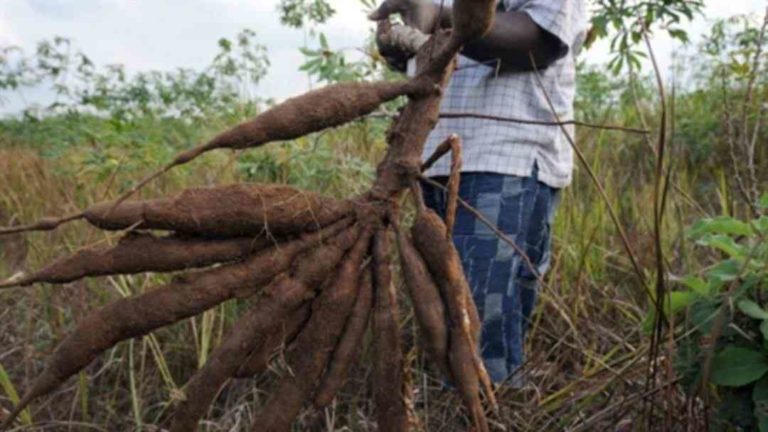
The African Development Bank (AfDB) said is to invest $120 million in the next three years to boost cassava production and transform eight other commodities.

cassava
Cassava farming

AfDB’s Director of Agriculture, Dr Martin Fregene, made the remark at the ongoing conference on Global Cassava Partnerships (GCP) for the 21st Century in Cotonou, Republic of Benin.

The News Agency of Nigeria (NAN) reports that the conference is the fourth in its series.

Fregene said in a statement that the nine commodities were cassava, rice, maize, sorghum, millet, wheat, livestock, aquaculture, high iron beans, orange-fleshed sweet potatoes.

He said that transforming cassava on the African continent would help African nations to cut imports and redirect about $1.2 billion into African domestic economies.

“The bank’s investment in cassava comes at a time when African governments are scaling up efforts to end food imports and create wealth.

“Cassava is a strategic crop for Africa food security and wealth creation for youth and women.

“Another dimension to the importance of cassava is in nutrition, where cassava can enhance the nutrition of children directly or as feed for poultry and other livestock,’’ Fregene said.

He said that the largest volume of cassava coming from Africa supported more than 350 million people.

Dr Kenton Dashiell, Deputy Director-General for Partnerships for Delivery at the International Institute of Tropical Agriculture (IITA), said at the event that unlocking the potential of cassava required partnerships, according to the statement.

Dashiell said that close collaboration of partners in the cassava value chain would address constraints facing the crop.

He commended the GCP21 for filling the gaps in cassava research and development by organising conferences, thereby enabling experts to share knowledge on innovations in cassava.

NAN reports that the GCP21 is a not-for-profit international alliance of 45 organisations coordinated by Claude Fauquet and Joe Tohme of the International Centre for Tropical Agriculture (CIAT).

By Itohan Abara-Laserian

UNODC recommends community-based treatment for drug addicts

0

The United Nations Office on Drugs and Crimes (UNODC) has recommended community-based treatment model as intervention for curbing abuse of narcotic and psychotic drugs in Nigeria.

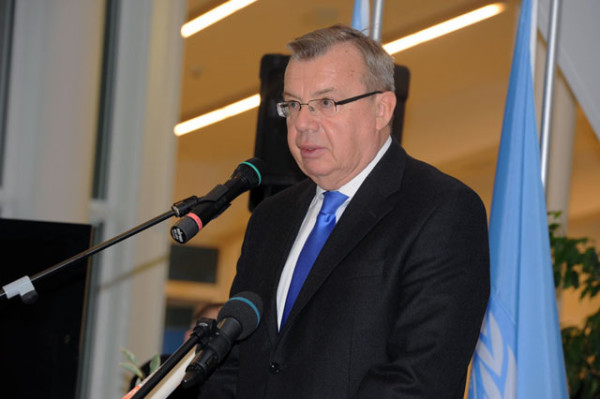
Fedotov
Yury Fedotov, Executive Director, United Nations Office on Drugs and Crime (UNODC)

The Project Officer of UNODC, Mrs Harshet Virk, made the recommendation in Enugu on Wednesday, June 13, 2018 at the first South East Round Table on Substance Abuse organised by the Pharmaceutical Society of Nigeria (PSN) in collaboration with Bensther Foundation.

Virk explained that the community based treatment model encompassed such elements like outreach, recovery management and social services, referral for treatment, screening and assessment of substance use disorders.

Others, she said, include long and short term treatment and outpatient treatment.

“These treatments work for the drug dependency users whether they are suffering from drug intoxication, dependence syndrome or harmful use,” Virk noted.

She pointed out that chaining drug addicts or stigmatising against drug users would only compound the problem as it would in no way help the victims.

According to Virk, there is no cure for drug dependency users but only treatment.

“Let us be true to ourselves. There is no cure all over the world for drug dependency users but there are treatment processes for them,” she said.

She described the proposed model as `a human right centred drug treatment’ aimed at reversing the negative impact of persisting drug use disorders and helping addicts to recover from the disorder.

The project officer said that UNODC had trained 2,000 staff that would implement the model in 10 states including Enugu State where Model Treatment Centres had been planted noting that funding for drug issue was limited.

In his remarks, the state Chairman of PSN, Dr Egbuna Udeorah, said the society had done a lot of sensitisation to eliminate drug abuse among the youth in the state.

Udeorah, however, said the organisation lacked funds and mobility to reach the hinterlands and appealed for assistance from the state government and corporate organisations.

Earlier, Mr Nonso Maduka, Executive Director of Bensther Foundation, said recommendations and deliberations made at the summit would be compiled and sent to relevant bodies for further actions.

Maduka called on relevant agencies to make funds available for similar programmes in order to combat drug abuse ravaging the society.

SEMA sensitises Kaduna residents to flood issues

0

The Kaduna State Emergency Management Agency (SEMA) says it has started sensitising residents to early-warning flood signals in the flood-prone areas of the Kaduna metropolis.

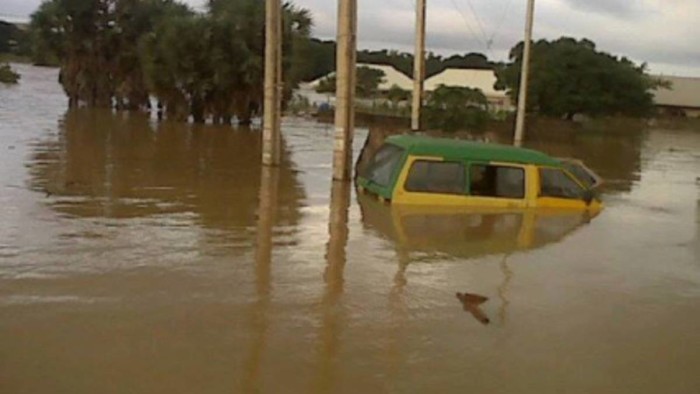
kaduna
A flooded neighbourhood in Kaduna. Photo credit: saharareporters.com

Mr Ben Kure, the Executive Secretary of SEMA, said this on Wednesday, June 13, 2018 in an interview with News Agency of Nigeria (NAN) in Kaduna.

He said that the agency had embarked on the public sensitisation campaign in flood prone-areas around Kigo Road, Nassarawa, Gonin Gora and Unguwar Romi in Kaduna.

Kure stressed that the campaign was undertaken because of the need to remind the residents of the need to relocate from flood-prone areas to safer places, in view of the predictions of Nigerian Meteorological Agency (NIMET).

According to him, the state government has made adequate arrangements to cater for potential Internally Displaced Persons (IDPs) in the flood-prone areas.

He, however, urged the residents to get ready for their relocation at the slightest indication of major flooding of nearby rivers and streams.

He also said that in the event of flooding, public primary schools would be used as temporary IDPs camps.

Kure advised the residents of the state to heed the advice of the state government to relocate from flood-prone areas to safer places.

He also urged the residents to clear the drainage channels in their neighbourhoods, while refraining from dumping garbage in the drainage channels so as to prevent their blockage.

By Ezra Musa

Declaring victory in Congo’s Ebola epidemic too early – WHO

0

The head of the World Health Organisation (WHO) has cautioned against declaring victory too early in Congo’s Ebola epidemic, in spite of encouraging signs that it may be brought under control.

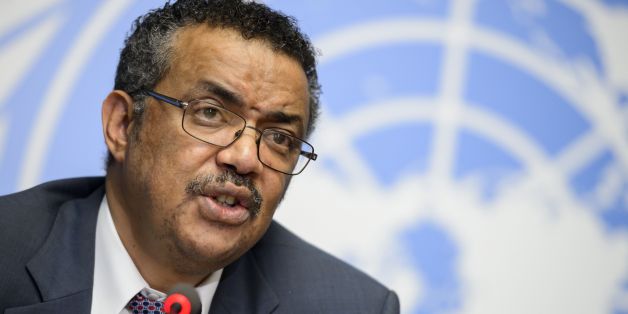
Dr Tedros Adhanom Ghebreyesus
Dr Tedros Adhanom Ghebreyesus, Director-General of the World Health Organisation (WHO). Photo credit: AFP / FABRICE COFFRINI / Getty Images

“The outbreak is stabilising, but still the outbreak is not over,” WHO chief Tedros Ghebreyesus told newsmen on a visit to Democratic Republic of Congo’s capital Kinshasa.

“We are still at war, and we need to continue to strengthen our surveillance and … be very vigilant.”

WHO officials on Friday, June 8, 2018 expressed cautious optimism that the epidemic of the deadly virus was stabilising, partly owing to the swift deployment of vaccines.

But a day earlier, Congo’s health ministry reported its first confirmed case of Ebola in over a week, in the rural community of Iboko.

Ghebreyesus said 2,200 people had been vaccinated, and that case management and tracing contacts of victims had gone well.

But he said: “It’s not over until it is over. Even if one case crosses into Congo (Republic) and gets to an urban area that could trigger another epidemic.”

The hemorrhagic fever has killed 27 people since the outbreak began in April, and there have been 62 cases, 38 of which were confirmed in a laboratory.

A further 14 are probable Ebola cases, and 10 more people are suspected of having Ebola.

In contrast to past Ebola outbreaks health workers have moved quickly to halt Congo’s latest epidemic.

Ebola killed at least 11,300 people from 2013 to 2016 in West Africa and during that outbreak WHO was criticised for not taking it seriously enough in its early stages.

NAN reports that on May 14, WHO gave the go-ahead by officials in the Democratic Republic of Congo to import and use an experimental Ebola vaccine in the country.

The vaccine, developed by Merck in 2016, has proven safe and effective in human trials, but it is still experimental as it does not yet have a license.

It must be kept at -60 to -80 degrees Celsius (-76°F to -112°F), creating huge logistical challenges.

The shot, which was tested in Guinea in 2015 at the end of a vast Ebola outbreak in West Africa, is designed for use in a so-called “ring vaccination” approach.

This would mean that when a new Ebola case is diagnosed, all people who might have been in recent contact with them are traced and vaccinated to try and prevent the disease’s spread.

World Day Against Child Labour: No under-18 should be toiling – Ryder

0

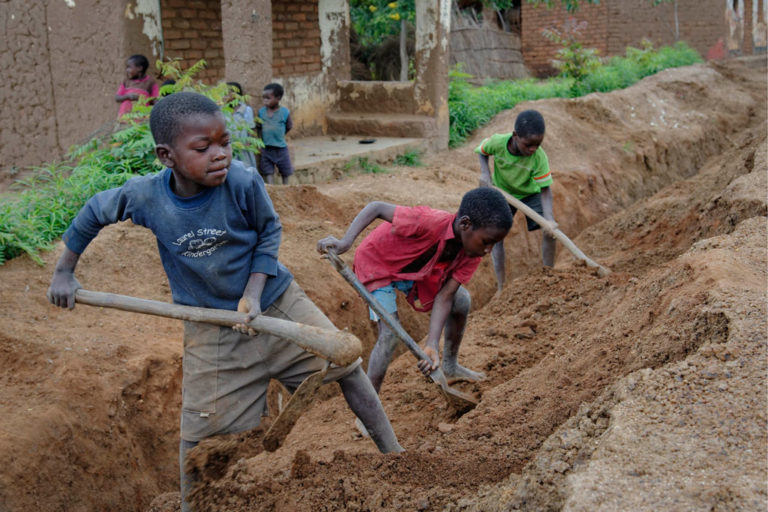
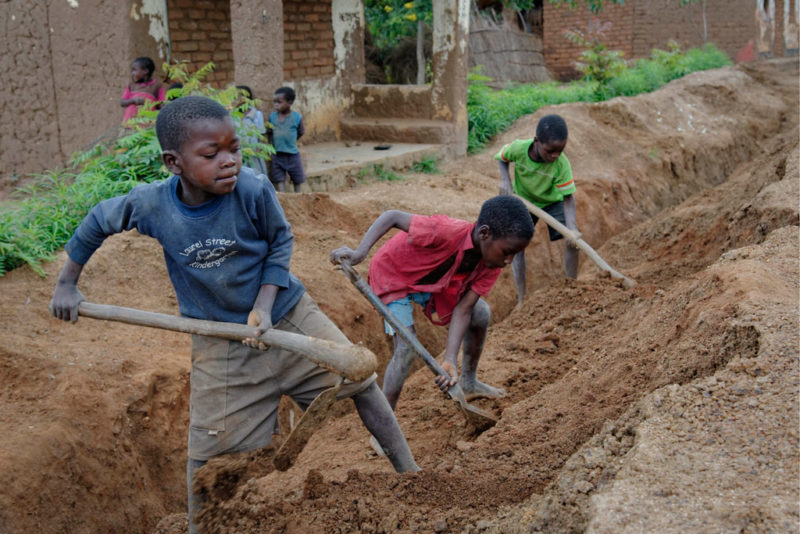
No child under the age of 18 should be toiling in mines, fields, factories and homes, carrying heavy loads or working long hours, the head of the UN labour agency said on Tuesday, June 12, 2018 marking the World Day Against Child Labour.

Child labour
Child labour

“Many suffer lifelong physical and psychological consequences. Their very lives can be at risk,” said International Labour Organisation (ILO) Director-General, Guy Ryder, in his message for the Day, calling for urgent global action to end common dangers associated with child labour.

About 73 million children are involved in doing hazardous work – almost half of the 152 million children aged 5 to 17 across the world, who are still forced into child labour.

“These children are toiling in mines and fields, factories and homes, exposed to pesticides and other toxic substances, carrying heavy loads or working long hours,” he said.

The World Day, which was first marked under the auspices of the ILO in 2002, draws attention to the global extent of child labour and the efforts needed to eliminate it.

The Sustainable Development Goals (SDGs), adopted by world leaders in 2015, include a renewed global commitment to ending child labour.

Although the overall number of children in hazardous work has decreased in recent years, progress has been limited to older children.

Between 2012 and 2016, according to ILO, the number of children aged 5 to 11, doing dangerous work in contravention international treaties, increased.

“This is unacceptable,” Ryder said.


Agriculture accounts for most of child labour

Nearly three out of every four children made to work, are in the agriculture sector, according to the Food and Agriculture Organisation (FAO).

After years of steady decline, child labour on farms and in the fields has started to rise again, driven in part by an increase in conflicts and climate-induced disasters.

This worrisome trend, not only threatens the wellbeing of millions of children, but also undermines efforts to end global hunger and poverty, FAO warned.

“Children who work long hours are likely to continue to swell the ranks of the hungry and poor,” said FAO Deputy Director-General, Daniel Gustafson. “As their families depend on their work, this deprives the children of the opportunity to go to school, which in turn prevents them from getting decent jobs and income in the future”.

ILO’s conventions on child labour, namely the Minimum Age Convention of 1973 and the Worst Forms of Child Labour Convention of 1999, require governments to establish a national list of hazardous work, prohibited for children.

These treaties have been ratified by 171 and 181 ILO member States respectively, reflecting a near global commitment to end child labour in all its forms.

NiMet predicts cloudy skies, thunderstorms, isolated rains on Wednesday

0

The Nigerian Meteorological Agency (NiMet) has predicted cloudy weather conditions over the Central States of the country on Wednesday, June 13, 2018 with prospect of isolated thunderstorms over Minna and Abuja axis during the morning hours.

weather
cloudy weather

NiMet’s Weather Outlook by its Central Forecast Office in Abuja on Tuesday also predicted day and night temperatures in the range of 27 to 33 and 20 to 24 degrees Celsius respectively.

It added that isolated thunderstorms were also expected to prevail over Jos, Mambilla Plateau, Kaduna and part of Niger state in the afternoon and evening hours.

The agency predicted that the southern States would experience cloudy morning with day and night temperatures in the range of 30 to 31 and 24 degrees Celsius respectively.

It also predicted isolated rain showers over Osogbo, Akure, Ado, Lagos, Abeokuta, Shaki, Iseyin, Ilorin, Obudu, Enugu, Abakaliki, Owerri and Abia later in the day.

According to NiMet, Northern States will experience partly cloudy to cloudy skies in the morning with day and night temperatures in the ranges of 36 to 40 and 23 to 25 degrees Celsius respectively.

“Later in the day, prospects of isolated thunderstorms are likely over places such as Yola, Gombe, Bauchi axis and Yelwa.

“Cloudy skies with prospects of isolated thunderstorms and rains showers over some parts of the country with varying intensities are anticipated in the next 24 hours,” NiMet predicts.

By Sumaila Ogbaje

Government to establish 300ha of woodlot in Gombe

0

The Federal Government is to establish 300 hectares (ha) of woodlot in seven out of the 11 Local Government Areas of Gombe State.

Alhaji Salisu Dahiru
National Project Coordinator, Nigeria Erosion and Watershed Management Project (NEWMAP), Alhaji Salisu Dahiru

Mr Richard James, Communication Officer, Nigeria Erosion Watershed Management Project (NEWMAP), a World Bank assisted project of the Federal Ministry of Environment, disclosed this on Tuesday, June 12, 2018 in Kaltungo town of Kaltungo Local Government Area of the state during a visit to one of the woodlot plantation sites.

He said 300 hectares of woodlot was earmarked for Gombe, adding that, already, 60 hectares had been approved as pilot project in three Local Government Areas, namely Kaltungo, Yamaltu-Deba and Kwami.

According to him, 20 hectares of woodlot would be established in each of the three areas, saying that the project was under a component of NEWMAP known as Degraded Land Rehabilitation.

He said the woodlot would prevent desert encroachment and also serve as wind breaker.

The communication officer said arrangement had been concluded for the commencement of the project, just as consultants had inspected the sites for the plantation.

James said African indigenous trees which were endangered species, as well as economic trees of enormous importance to the public, would be planted.

In his remarks, the ward head of Poshereng in Kaltungo Local Government Area, one of the woodlot locations, commended the Federal Government under President Muhammadu Buhari for the initiative.

He assured NEWMAP that the community would nurture the trees to maturity.

By Hajara Leman