25.1 C
Lagos
Monday, December 29, 2025
Home Blog Page 1879

Bamako Convention: Preventing Africa from becoming a dumping ground for toxic wastes

0

African nations have long been at the centre of incidents involving hazardous waste dumping. From the leaking barrels of toxic waste in Koko, Nigeria in 1988 and the Probo Koala scandal in Cote d’Ivoire in 2006, to the current piles of e-waste threatening the health of West African communities; the continent continues to be disproportionally affected by the dumping of harmful chemical materials.
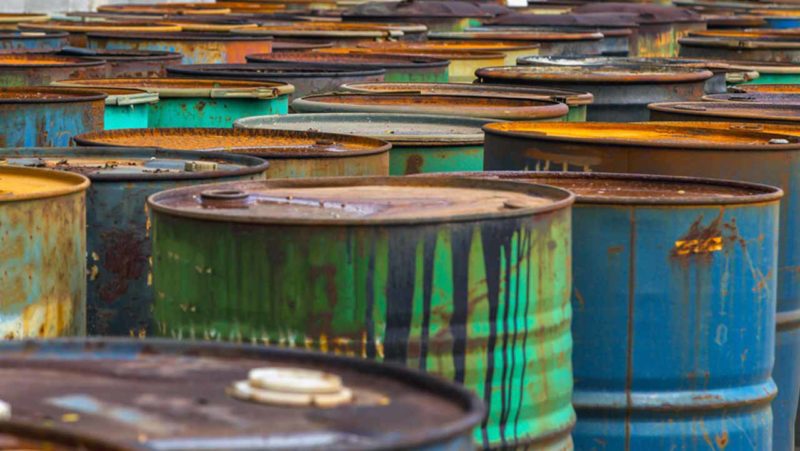
Koko waste
Toxic waste containers. Over 2,000 drums, sacks, and containers full of hazardous wastes were dumped in Koko, a small fishing village in southern Nigeria, in 1988

In an effort to prevent incidents such as “Koko” and “Probo Koala” from happening again, and to reinforce existing international treaties surrounding the shipment and disposal of hazardous waste – as established in the Basel Convention and Bamako Convention – African States have come together for the second Conference of the Parties (COP2) to the Bamako Convention.

The conference holds from Tuesday, January 30 to Thursday, February 1, 2018 in Abidjan, Cote d’Ivoire. While pursuing the objectives of the Convention, COP2 has been designed as a platform to discuss ways and means of ensuring that the continent rids itself of hazardous wastes and contribute to the achievement of a pollution-free planet.

“We have a collective responsibility to safeguard communities from the environmental and health consequences of hazardous waste dumping,” said Ibrahim Thiaw, Deputy Executive Director of UN Environment. “The creation of regional Public-Private Partnerships could lead to the creation of adequate facilities to manage hazardous waste internally generated in Africa. Previous experiences have led us to establish these international treaties around chemical waste, and together we must ensure they continue to be adhered to.”

The Basel Convention, established in 1989, prevents the shipment and disposal of hazardous waste from industrial to developing countries. This international treaty establishes a procedure of strict requirements and consents of any transboundary movement of hazardous waste.

To complement the Basel Convention, African Nations established the Bamako Convention in 1991. The Convention, which came into force in 1998, is aimed at protecting the health of populations and the environment of African countries through a ban on the import of all hazardous and radioactive wastes. It also prohibits the dumping or incineration of hazardous wastes in oceans and inland waters, and promotes the minimisation and control of trans- boundary movements of hazardous wastes within the African continent. The Convention also aims to improve and ensure ecologically rational management and handling of hazardous waste within Africa, as well as the cooperation between African nations.

“It is expected that at COP-2 of the Bamako Convention, Parties will reaffirm their engagement for an effective implementation of the Convention including establishing synergies with other international treaties,” said Julliette Biao Koudenoukpo, Regional Director and UN Environment Representative in Africa.

“Parties are also expected to identify mechanisms and financial resources to implement the Convention,” she added.

The first Conference of the Parties (COP-1) to the Convention took place from June 24 to 26, 2013 in Bamako Mali. One of the outcomes of this Conference is a declaration by African Ministers of Environment in which they state their determination “to prevent Africa from becoming a dumping ground for toxic wastes through an effective implementation of the Bamako Convention”. The declaration further states that “the import of hazardous waste into Africa is a crime against humanity” and commit “to prompt action to overcome barriers to effective management and minimization of waste in Africa through increased knowledge on waste scenarios in order to prevent harm to health and environment.”


Probo Koala incident

In 2006, a Panama-registered cargo tanker, chartered by Trafigura, a commodities trading multinational, dumped over 500 cubic meters of highly toxic waste in Abidjan, killing 17 people and poisoning thousands.


Koko, Nigeria incident

In 1988, Italian businessmen illegally dumped over 2,000 drums, sacks, and containers full of hazardous wastes in a small fishing village in southern Nigeria. The waste was claimed by the dealer to be fertilisers that would help poor farmers, but instead it turned into a nightmare. Few months later the containers started leaking causing stomach upset, headache, failing sight and death to the local community. The area around the dumpsite was rendered inhabitable and 500 residents were evacuated. People in the Koko village still remember this accident as “drums of death”.
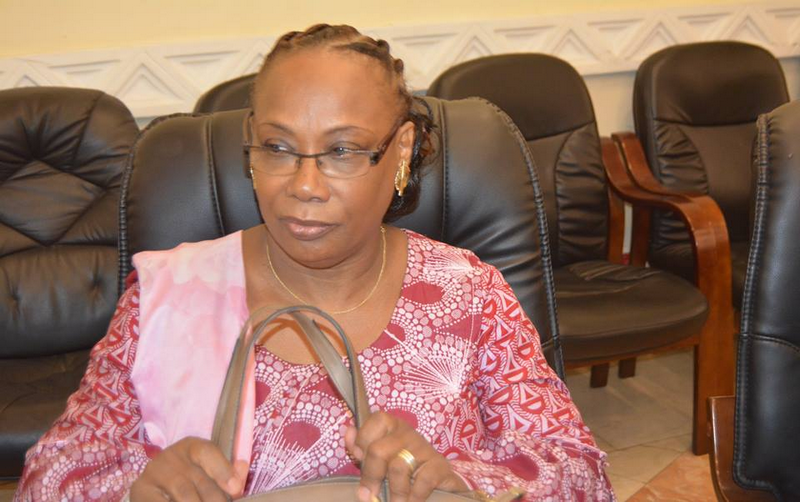
Bamako Convention: COP2 begins in Abidjan

0

The Second Session of the Conference of the Parties to the Bamako Convention (also known COP2) kicked off on Tuesday, January 30, 2018 in Abidjan, the capital city of Cote d’Ivoire.

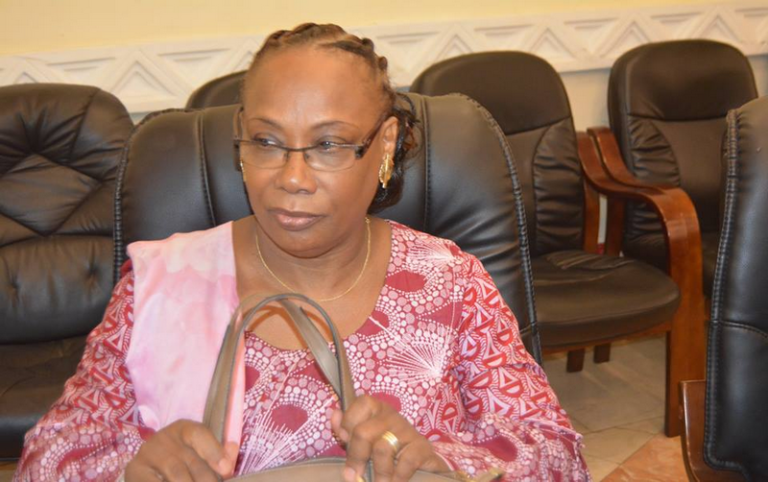
Aida Keita M'bo
Mme Aida Keita M’bo, President of the COP and Malian Minister for Environment, Sanitation and Sustainable Development

The conference, which holds under the theme: “The Bamako Convention: a platform for a pollution-free Africa”, will be rounded up on Thursday, February 1, 2018.

“COP2 aspires to provide a platform to discuss ways and means of ensuring that the continent rids itself of hazardous wastes and contribute to the achievement of a pollution-free planet,” says Mme Aida Keita M’bo, President of the COP and Malian Minister for Environment, Sanitation and Sustainable Development.

Host Minister and Ivoirian Minister for Public Health, Environment and Sustainable Development, Mme Anne Désirée Ouloto, urged her colleagues to work towards a COP2 outcome that will “prevent Africa from becoming a dumping ground for toxic wastes through an effective implementation of the Bamako Convention”.

“The importation of hazardous waste into Africa is a crime against humanity and we must commit to prompt action aimed at overcoming barriers to effective management and minimisation of waste in Africa through increased knowledge on waste scenarios in order to prevent harm to health and environment,” Mme Ouloto added.

“We have a collective responsibility to safeguard communities from the environmental and health consequences of hazardous waste dumping,” said Ibrahim Thiaw, Deputy Executive Director of UN Environment.

“Africa is not the dustbin of the world,” Thiaw added while reinstating UN Environment’s commitment to a pollution-free world.


From Basel to Bamako Convention

The Bamako Convention is a treaty of African nations prohibiting the importation of any hazardous (including radioactive) waste into Africa.

The convention which came into force in 1998  is a response to Article 11 of the Basel convention which encourages parties to enter into bilateral, multilateral and regional agreements on Hazardous Waste to help achieve the objectives of the convention.

African Nations established the Bamako Convention in 1991 to complement the Basel Convention.

The Convention, which came into force in 1998, is aimed at protecting the health of populations and the environment of African countries through a ban on the import of all hazardous and radioactive wastes.

It also prohibits the dumping or incineration of hazardous wastes in oceans and inland waters, and promotes the minimisation and control of trans-boundary movements of hazardous wastes within the African continent.

The Convention also aims to improve and ensure ecologically rational management and handling of hazardous waste within Africa, as well as the cooperation between African nations.

Courtesy: PAMACC News Agency

Coal phase-out: Announcing CO2-pricing triggers divestment

0

Putting the Paris climate agreement into practice will trigger opposed reactions by investors on the one hand and fossil fuel owners on the other hand. It has been feared that the anticipation of strong CO2 reduction policies might – a “green paradox” – drive up these emissions: before the regulations kick in, fossil fuel owners might accelerate their resource extraction to maximise profits. Yet at the same time, investors might stop putting their money into coal power plants as they can expect their assets to become stranded.

Nico Bauer
Nico Bauer of the Potsdam Institute for Climate Impact Research (PIK)

Now for the first time a study investigates both effects that to date have been discussed only separately. On balance, divestment beats the green paradox if substantial carbon pricing is credibly announced, a team of energy economists finds. Consequently, overall CO2emissions would be effectively reduced.

“Strong future climate policies can reduce emissions even before they come into effect if they are credibly announced,” says lead-author Nico Bauer from the Potsdam Institute for Climate Impact Research (PIK).

While the Paris agreement is weak in short-term policy ambition, with close to 200 countries committing themselves to limit temperature increase to well below 2 degrees Celsius compared to pre-industrial levels, it will require strong climate policies in the future to reduce emissions over the longer term.

“We find that 10 years before carbon pricing policies are actually introduced, investors start pulling their money out of the coal power sector,” says Bauer. “They shy away from investing in fossil fueled power plants as they realise that the lifetime during which these plants will make money will be curtailed by the future climate policy. We find this divestment reduces emissions by between five to 20 percent, depending on the strength of the climate policy, already in the time before the climate policy gets implemented.”


“A price of $20 per ton CO2 doubles the cost of using coal”

Coal is particularly susceptible to carbon pricing. “Adding a carbon price of 20 US-dollars per ton of CO2 doubles the cost of using coal,” says co-author Christophe McGlade from University College London (UCL) and the International Energy Agency (IEA). “Power sector investors see that coal power plants will become uncompetitive under carbon pricing and so shift their portfolios towards low-carbon sources of electricity.”

McGlade adds: “Oil is much less sensitive to carbon pricing. While we found that the green paradox effect can emerge in oil markets – with major oil resource holders boosting oil production because of fears their resources will be left stranded – this is likely to be much smaller than the divestment effect that reduces coal use.”

Computer simulations of energy markets’ future dynamics are commonly used to investigate the economic effects of policies.

“We ran our simulations with a variety of CO2 pricing levels, steadily reaching between 25 and $300 per ton CO2 by 2050, with a medium scenario reaching $100. These taxes were introduced with a number of different delays to represent various degrees of climate policy stringency and credibility and see how fossil fuel markets react in anticipation of such climate policies,” says co-author Jérôme Hilaire from PIK and the Mercator Research Institute on Global Commons and Climate Change (MCC).

He adds: “This is to account for uncertainties, but the divestment effect prevails over the green paradox effect in almost all tax cases investigated regardless of the implementation delay, and therefore decreases overall emissions. Only if CO2 pricing starts very late, for example not before 2050, and then at a very low level, anticipation by market forces leads to an increase in CO2 emissions instead of a decrease.”


Pricing emissions in China, the EU, UK, Canada, and even in California

“Our results hinge on some crucial assumptions – that policymakers can commit to introducing strong climate policies several years into the future, that the carbon pricing is uniform across regions, that investors believe the policy-makers will do what they say they will do, and that investors are shrewd in adapting their investment strategies accordingly,” says co-author Paul Ekins from UCL, who is also a member of the European Union Commission’s High-Level Panel on Decarbonisation Pathways.

If different CO2 pricing regulations at different price levels were to be introduced in different countries, the authors find that while some emissions-intensive production facilities move from places of high regulation to those with low standards, this effect is limited.

“CO2 emissions pricing schemes are emerging in China, the EU is currently in the processes of fixing its trading scheme, and CO2 prices are in place in the UK, in Chile, in Canada, and even in California, the sixth-largest economy in the world. The Paris agreement delivered a strong signal that policy makers take climate change seriously and are ready and willing to deliver on the necessary emissions reductions. By anticipating the implementation of policies to tackle climate change, market forces will likely reduce emissions, helping us on the first step towards achieving deep emissions reductions – as long as the policy signals are strong, clear and credible.”

EU summons ministers in bid to tackle poor air quality

0

The European Commission on Tuesday, January 30, 2018 summoned ministers from nine EU member states for a final chance to pledge how they will tackle air pollution before facing legal action for failing to meet the bloc’s emissions limits.

Karmenu Vella
Karmenu Vella, Commissioner for Environment, Maritime Affairs and Fisheries of the European Commission

According to EU Environment Commissioner, Karmenu Vella, every year, over 400,000 Europeans die prematurely due to poor air quality, which triggers conditions such as asthma, heart disease and lung cancer.

One of the main pollutants in cities is vehicles, especially those running on diesel fuel.

The nine countries invited to the Brussels talks, Britain, the Czech Republic, Germany, Spain, France, Italy, Hungary, Romania and Slovakia, all face court proceedings if they do not take steps to curb emissions.

“It is clear that the agreed air quality limits for several key pollutants had to be met already many years ago,’’ Vella wrote recently, adding that measures introduced or planned by the member states in question “are not enough.”

During the talks, activists from the environmental campaign group Greenpeace protested outside the European Commission with banners demanding “Clean Air Now.”

According to Benjamin Stephen of Greenpeace, car fumes are killing tens of thousands across Europe, accusing governments of failing to take the necessary steps to meet air pollution limits.

“That is criminal, and should be penalised,’’ Stephen added.

German Environment Minister Barbara Hendricks has said ahead of Tuesday’s talks that Berlin had failed to take the necessary steps, while also appealing to the car industry to clean up diesel vehicles.

New Delhi is India’s most polluted city, says report

0

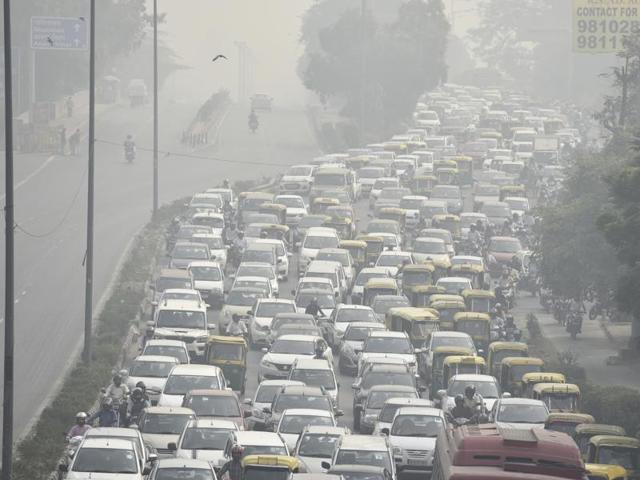
The Indian capital, New Delhi, is the country’s most polluted city, while Uttar Pradesh is the country’s most polluted state, a new report has revealed.

Delhi pollution
Air pollution in New Delhi

The report, titled “Airpocalypse II”, by global environmental organisation Greenpeace’s India chapter, has found that Delhi is the most polluted city in India, while with 15 of its cities among the 30 polluted cities of the country, Uttar Pradesh is India’s most polluted state.

According to the report, these cities in Uttar Pradesh include state capital Lucknow, Noida and Ghaziabad on outskirts of Delhi, Varanasi, Allahabad, Kanpur and Agra.

The report is based on air pollution data – Particulate Matter (PM) 10 levels – collated from the Central and State Pollution Control Boards.

The report added that Delhi and all these 15 cities in Uttar Pradesh were found to have PM 10 levels much more than the global permissible limit of 20 micro-grams per cubic meter (as per World Health Organisation standards) and 60 (as per Indian standards).

Apart from Delhi and Uttar Pradesh, the states of Rajasthan and Maharashtra in the west and Bihar in the east are the places where children are “worst affected.”

“Together these states are home to 12.9 million children, who are below or up to five years of age, trapped in bad air exceeding by more than twice the annual standard,” the report said, in what is claimed to be alarming.

The Indian government has not reacted to the report.

Why Bayelsa is unable to provide potable water for Yenagoa residents

0

The Bayelsa State Government says paucity of funds and road construction activities within Yenagoa, the state capital, are responsible for it’s inability to provide safe-drinking water for residents.

Seriake-Dickson
Seriake Henry Dickson, Governor of Bayelsa State

Commissioner for Water Resources, Mr Nengi Tuobonah, stated this in Yenagoa on Monday, January 29, 2018 during an inter-ministerial news briefing.

He, however, said the government has been trying to alleviate the suffering of the people by providing water through tankers at 20 strategic locations in the capital, at N20 per 20-litre container.

The commissioner assured that residents of Yenagoa and other selected cities in the state would enjoy potable water at the end of the first quarter of the year.

He said that the government had paid its counterpart funding of N42 million for the tripartite intervention by donor agencies, including World Bank, European Union and UNICEF, to provide potable water for residents.

“By the end of the first quarter of the year, everybody, every household and every family living in Yenagoa metropolis, water will be reticulated to their door steps by the grace of God.

“The World Bank will contract its project by the mid of February, and by the end of the first quarter of the year, I believe those contracts will be concluded; so, our people should expect water by their door steps,” he said.

By Shedrack Frank

Namibia opens first GMO laboratory

0

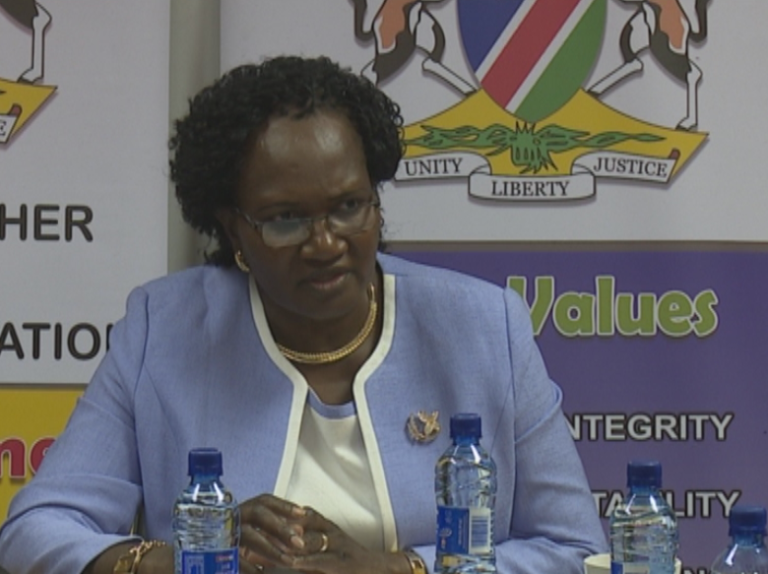
Namibia on Monday, January 29, 2018 opened a laboratory for testing food for Genetically Modified Organisms (GMO), which is said to be the first in the Southern African country.

Itah Kandjii-Murangi
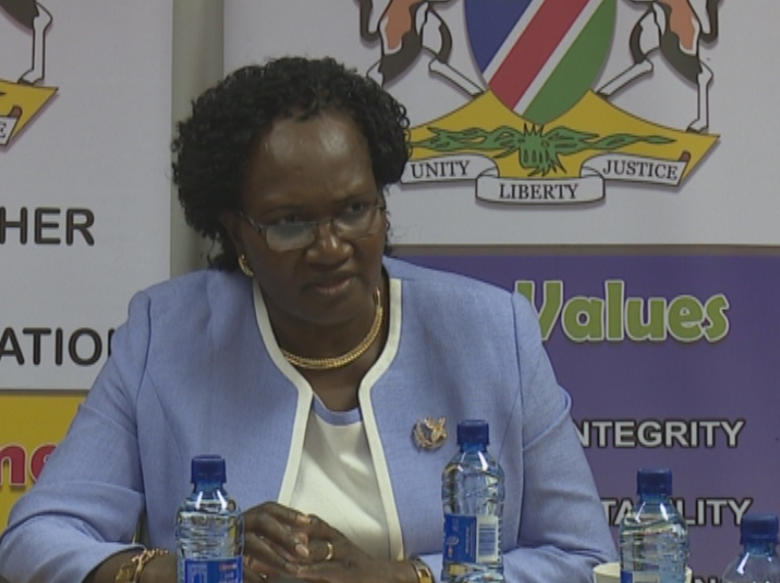
Namibian Higher Education, Training and Innovation Minister, Itah Kandjii-Murangi

The Higher Education, Training and Innovation Minister, Itah Kandjii-Murangi, opened the laboratory, designed by the National Commission on Research, Science and Technology in Windhoek.

Kandjii-Murangi said the laboratory would play a crucial role in testing genetically modified products.

He added: “GMO testing is crucial to ensure that only GMOs and GMO products that are approved for use in Namibia are in the market.”

According to Kandjii-Murangi, the laboratory will also play a role in building local capacity through research, producing professors and researchers in the field of biotechnology.

The minister noted that, by building local food safety assessment capacity, Namibia would be in a better position to make informed decisions on the standard of food produced or imported through an evidence-based approach.

She further said that Namibia suffered misinformation on GMOs because of the lack of detection capacity and training in biotechnology.

Kandjii-Murangi urged universities, the food industry and pharmacies to utilise the laboratory.

How firms cut supply chain emissions, save money – Report

0

The number of companies forging ahead with an industry-leading approach to tackling emissions in the supply chain has doubled in a year,according to new research by CDP, the non-profit global environmental disclosure platform, with analysis provided by McKinsey & Company.

espinosa
Patricia Espinosa, Executive Secretary of the UNFCCC, wrote the foreword in the report

CDP has awarded 58 companies – out of a total of +3,300 – a place on its second annual Supplier Engagement leader board, double the 29 identified in 2017. These leaders – which include Bank of America, BT Group, Nestlé, Panasonic, Rolls Royce, Société Générale, Tokyo Gas Co. and Unilever – are recognised for their work with suppliers to reduce emissions and lower environmental risks in the supply chain.

The leaders are announced as more companies than ever before are looking at water security in their supply chains – leading to a 15% rise in suppliers disclosing water data to their customers through CDP in 2017 – and organisations including Klabin, L’Oréal and McDonald’s are among the first to work with CDP to tackle deforestation in their supply chains.
Examples of leadership among the 58 companies include:

  • Ajinomoto: the Japanese food, chemicals and pharmaceuticals corporation worked with a key supplier to become the only company worldwide to sell drinks in 100% recycled heat-resistant PET bottles, reducing the use of virgin plastics from fossil fuels by around 2,000 tonnes a year.
  • Kellogg Company: the global food company operates its Origins programme across 21 countries, supporting around 294,000 farmers to become more sustainable and build resilience to the impacts of climate change.
  • Sky: in partnership with a key supplier, the European entertainment and telecommunications company is pioneering a circular economy model for its new set-top box, using sustainable product design to create a closed loop system with zero waste to landfill.

Gabrielle Ginér, Head of Sustainable Business Policy at BT Group, said: “We’re proud to be recognised on CDP’s Supplier Engagement leader board for our efforts to engage suppliers on climate change. Reducing our supply chain emissions is an essential component of our ambitious science-based target to help keep global temperature rise below 1.5°C. Working with suppliers through CDP’s supply chain programme is crucial to driving this change.”

Closing the Gap: Scaling up sustainable supply chain practices, CDP’s Global Supply Chain Report 2018, is based on climate, water and deforestation-related data collected from 4,872 supplying companies across global supply chains at the request of 99 of the world’s largest purchasing organisations. Wielding a combined purchasing power in excess of $3 trillion, these organisations include Accenture, BT Group, Cisco, KMPG UK and Philips Lighting.

Last week’s discussions at Davos concerning international trade – which is projected to grow fourfold by 2050, from a baseline year of 2010 – and the World Economic Forum’s recently published Global Risks Report 2018 – which confirmed environmental risks as the most significant facing humanity – has all highlighted the importance of addressing supply chains when tackling environmental challenges. This is especially significant because greenhouse gas emissions located in the supply chain are on average four times higher than those arising from direct operations.

“Delivering on the ambitions of the Paris Agreement will require businesses to play a key role to reduce emissions, manage water resources and limit deforestation within their operations and their supply chains,” commented Patricia Espinosa, Executive Secretary, United Nations Framework Convention on Climate Change, who has written the foreword in the report.

“I am pleased to see that an ever-increasing number of companies reporting to CDP are integrating sustainability-thinking into their business models and applaud the members of the CDP supply chain program for being pioneers in this regard. I encourage businesses to work with suppliers to raise ambition across their supply chain.”

The report – which includes commentary from The Carbon Trust – reveals that this leadership is paying dividends, as awareness of climate change-related risks and opportunities is increasing down the supply chain. Over three quarters (76%) of suppliers responding to CDP have identified some inherent climate change risks to their business and more than half (52%) report that they have integrated climate change into their business strategy.

There is huge potential for positive impact. Reductions equivalent to 551 million metric tonnes of carbon dioxide – more than Brazil’s total emissions in 2016 – were reported by suppliers worldwide in 2017. This is an increase from 434 million metric tonnes reported in 2016. Cost savings amounting to $14 billion were reported in 2017 as a result of emissions reduction activities.

Yet, this impact is only a fraction of what could be achieved if all organisations at each tier of the supply chain were engaged and working to drive down emissions. Currently, less than a quarter (23%) of supplier respondents are in turn engaging with their own suppliers to reduce emissions, suggesting that many may be missing out on business opportunities and financial savings.

Dexter Galvin, Global Director of Corporates and Supply Chains at CDP, said: “Big businesses have for some time understood the importance of managing their Scope 1 and 2 emissions, but Scope 3 emissions, hidden in the value chain – and far greater in volume – are just as vital. While it’s encouraging that awareness of climate-related risk is filtering down the supply chain, it’s crucial that engagement and action follows. As our findings show, this not only makes sound business sense, but can result in considerable cost savings for both purchasing organisations and their suppliers.”

In addition to a global analysis, the report looked more closely into eight major economies to compare how well-prepared suppliers are to mitigate environmental risk. It found that suppliers in some countries are taking a clear lead, while others are lagging behind:

  • France: Reflecting the national momentum signalled at the recent One Planet Summit in Paris, supplying companies in France are the most likely to have climate change integrated into their business (80%), while 74% report board-level responsibility for climate change
  • Japan: Despite the government’s historic focus on energy security over climate change, Japanese companies have the highest rates of disclosure – 87% of suppliers responded to the CDP climate change questionnaire – and are the most likely to set emissions reduction targets (77%).
  • United States: The US administration might be withdrawing from the Paris Agreement, but American corporates are saying ‘We are Still In’ and stepping up on climate: 33% of organisations on the Supplier Engagement leader board are US, making it the best-represented nation, ahead of the UK at 15%.
  • Brazil: Abundant in national resources, but plagued by economic and political instability, Brazil has the lowest level of target setting (just 21% of respondents have set emissions reduction targets and a mere 8% have set renewable energy targets) and only 6% of supplying companies are engaging with their own suppliers on climate change.
  • China: While it has above-average disclosure rates for Scope 1 and 2 emissions – awareness of which will likely be bolstered by the recently announced national emissions trading system – only 15% of Chinese respondents are engaging with their own suppliers on the issue.

Steven Swartz, a partner in the McKinsey & Company Southern California office, said: “We’re seeing investors and businesses placing substantial capital into the low-carbon economy, driven by the expectation of sound long-term economics. This is a major opportunity for businesses to take the lead, and an especially good time for them to have impact as cost of clean technology continues to fall.”

African leaders commit to elevate nutrition as driver for economic growth

0

African leaders on Monday, January 29, 2018 made a landmark commitment to remove nutrition-related barriers that prevent children and societies from realising their full potential.

AU-AfDB
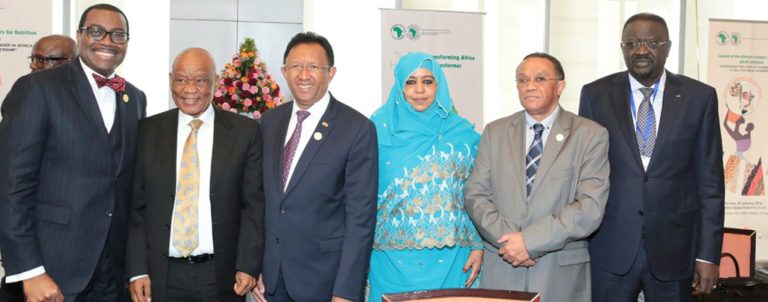
The leaders have agreed to jointly overcome malnutrition and elevate nutrition as driver for economic growth and sustainable development

The leaders made the commitments at the launch of African Leaders for Nutrition (ALN) − an initiative championed by the African Development Bank (AfDB) and the African Union Commission (AUC) – in Addis Ababa, where they agreed to jointly overcome malnutrition and elevate nutrition as driver for economic growth and sustainable development.

According to the President of the AfDB, Akinwumi Adesina, stunted children today will lead to stunted economies tomorrow. The impact of stunting is irreversible, but preventable.

Poor nutrition is responsible for stunting children’s growth, harming children’s educational development and future economic prospects. In 2016, 59 million African children suffered from stunting and 14 million suffered from wasting. Combined together, this is more than the population of France, more than the population of South Africa and seven times the population of Switzerland, Adesina warned.

“There’s every reason to care: poor nutrition is the main cause of death for millions of children under five. Indeed, three million children die every year in Africa from malnutrition. If current trends continue to 2030, Africa will have lost a mind boggling 36 million children because they didn’t have enough to eat or to eat well enough.”

The African Union has endorsed the African Leaders for Nutrition initiative and encouraged its champions to continue to dialogue and strengthen advocacy efforts in support of improved nutrition.

The Prime Minister of Lesotho, Motsoahae Thomas Thabane, read the resolution of African leaders on the ALN initiative, where they agreed that food security without improved nutrition will not deliver the desired inclusive socio-economic outcomes − especially as the number of those affected by hunger and malnutrition has not decreased over the past few years.

The declaration commended Member States who have made progress in ending child stunting and addressing underweight children and encouraged others to do the same.

“Nutrition is at the heart of our continental agenda and is a developmental issue. Nutrition security remains critical to all ongoing programmes and has a positive impact on development. Working together, we can make a difference,” said the Chair of the African Union Commission, Moussa Faki Mahamat, in a statement at the event.

President Adesina described Africa as the only region where the number of stunted children has increased, from 47 million in 1990 to 59 million in 2016.

“There is both a moral and economic obligation on us to resolve this utterly preventable African disaster. Africa can defeat stunting and malnutrition if its leaders align and leverage their combined will,” he told African leaders.

“So, today, I speak for the victims of the silent killer of life: malnutrition. God did not create kids’ stomachs to be empty. Nothing breaks our hearts more than a mother unable to calm the rumbling, hollow stomach of her hungry baby. A proverb in my Yoruba language says, ‘Elders cannot be in the marketplace and watch the heads of babies hang lose when strapped to the mothers back’.”

To the leaders, he said: “You are the elders. You cannot watch as three million babies die from malnutrition on the backs of equally malnourished mothers. We all need to hear the voices of these mothers and children and act without delay!”

He described ‘grey matter infrastructure’ as Africa’s most important infrastructure and stressed the determination of the African Development Bank to help Africa feed itself and become self-sufficient in food: nutritious food.

“The African Leaders for Nutrition initiative will keep a report card, an Africa Nutrition Accountability Score Card, which will rate countries scientifically on their progress in addressing malnutrition and building grey matter infrastructure. This policy innovation will build incentive to complement and strengthen the commitment. To achieve greater impacts on nutrition, governments should prioritise nutritional investments, through Nutrition-Sensitive Budgeting.”

The President of Madagascar, Hery Rajaonarimampianina, who presented an African Union Commission’s study on the Cost of Hunger in Africa (COHA), described malnutrition as one of the main barriers that prevent children and societies from realising their full potential.

“Stunted children fall ill more frequently – generating high health costs to families and the economy equivalent to between 1-30% of the total public budget allocated to health, or 3% of GDP. If we reduce current stunting rates by 50% by 2025, we can expect a saving of $21.7 billion; if we achieve the AU Malabo goal of reducing stunting to 10% and underweight children to 5% by 2025, we can expect a saving of up to $39.3 billion,” he said.

High levels of antibiotic resistance found worldwide

0

The first release of surveillance data on antibiotic resistance by the World Health Organisation (WHO) reveals high levels of resistance to a number of serious bacterial infections in both high- and low-income countries.

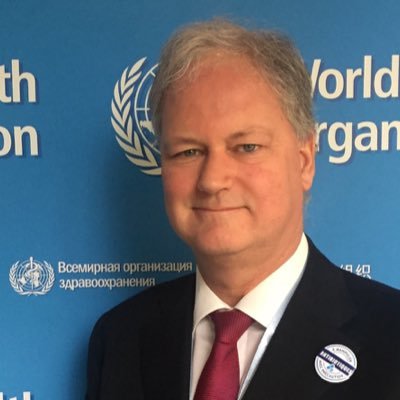
Dr Marc Sprenger
Dr Marc Sprenger, director of WHO’s Antimicrobial Resistance Secretariat

WHO’s new Global Antimicrobial Surveillance System (GLASS) reveals widespread occurrence of antibiotic resistance among 500,000 people with suspected bacterial infections across 22 countries.

The most commonly reported resistant bacteria were Escherichia coli, Klebsiella pneumoniae, Staphylococcus aureus, and Streptococcus pneumoniae, followed by Salmonella spp. The system does not include data on resistance of Mycobacterium tuberculosis, which causes tuberculosis (TB), as WHO has been tracking it since 1994 and providing annual updates in the “Global tuberculosis” report.

Among patients with suspected bloodstream infection, the proportion that had bacteria resistant to at least one of the most commonly used antibiotics ranged tremendously between different countries – from zero to 82%. Resistance to penicillin – the medicine used for decades worldwide to treat pneumonia – ranged from zero to 51% among reporting countries. And between 8% to 65% of E. coli associated with urinary tract infections presented resistance to ciprofloxacin, an antibiotic commonly used to treat this condition.

“The report confirms the serious situation of antibiotic resistance worldwide,” says Dr Marc Sprenger, director of WHO’s Antimicrobial Resistance Secretariat.

“Some of the world’s most common – and potentially most dangerous – infections are proving drug-resistant,” adds Sprenger. “And most worrying of all, pathogens don’t respect national borders. That’s why WHO is encouraging all countries to set up good surveillance systems for detecting drug resistance that can provide data to this global system.”

To date, 52 countries (25 high-income, 20 middle-income and seven low-income countries) are enrolled in WHO’s Global Antimicrobial Surveillance System. For the first report, 40 countries provided information about their national surveillance systems and 22 countries also provided data on levels of antibiotic resistance.

“The report is a vital first step towards improving our understanding of the extent of antimicrobial resistance. Surveillance is in its infancy, but it is vital to develop it if we are to anticipate and tackle one of the biggest threats to global public health,” says Dr Carmem Pessoa-Silva, who coordinates the new surveillance system at WHO.

Data presented in this first GLASS report vary widely in quality and completeness. Some countries face major challenges in building their national surveillance systems, including a lack of personnel, funds and infrastructure.

However, WHO is supporting more countries to set up national antimicrobial resistance surveillance systems that can produce reliable, meaningful data. GLASS is helping to standardise the way that countries collect data and enable a more complete picture about antimicrobial resistance patterns and trends.

Solid drug resistance surveillance programmes in TB, HIV and malaria have been functioning for many years and have helped estimate disease burden, plan diagnostic and treatment services, monitor the effectiveness of control interventions, and design effective treatment regimens to address and prevent future resistance. GLASS is expected to perform a similar function for common bacterial pathogens.

The rollout of GLASS is already making a difference in many countries. For example, Kenya has enhanced the development of its national antimicrobial resistance system; Tunisia started to aggregate data on antimicrobial resistance at national level; the Republic of Korea completely revised its national surveillance system to align with the GLASS methodology, providing data of very high quality and completeness; and countries such as Afghanistan or Cambodia that face major structural challenges have enrolled in the system and are using the GLASS framework as an opportunity for strengthening their AMR surveillance capacities. In general, national participation in GLASS is seen as a sign of growing political commitment to support global efforts to control antimicrobial resistance.

The need for a global surveillance system was highlighted by WHO in 2014 in the “Antimicrobial resistance global report on surveillance”.

In October 2015, WHO launched the Global Antimicrobial Surveillance System (GLASS) working closely with WHO Collaborating Centres and existing antimicrobial resistance surveillance networks and based on the experience of other WHO surveillance programmes. For example, TB drug resistance surveillance has been implemented in 188 countries over the past 24 years. HIV drug resistance surveillance started in 2005 and by 2017, over 50 countries had reported data on pretreatment and acquired resistance using standardised survey methods.

Any country, at any stage of the development of its national antimicrobial resistance surveillance system, can enrol in GLASS. Countries are encouraged to implement the surveillance standards and indicators gradually, based on their national priorities and available resources.

GLASS will eventually incorporate information from other surveillance systems related to antimicrobial resistance in humans, such as in the food chain, monitoring of antimicrobial consumption, targeted surveillance projects, and other related data.

×