Home Blog Page 1856

Consumers, private sector critical in fighting droughts, land degradation

0

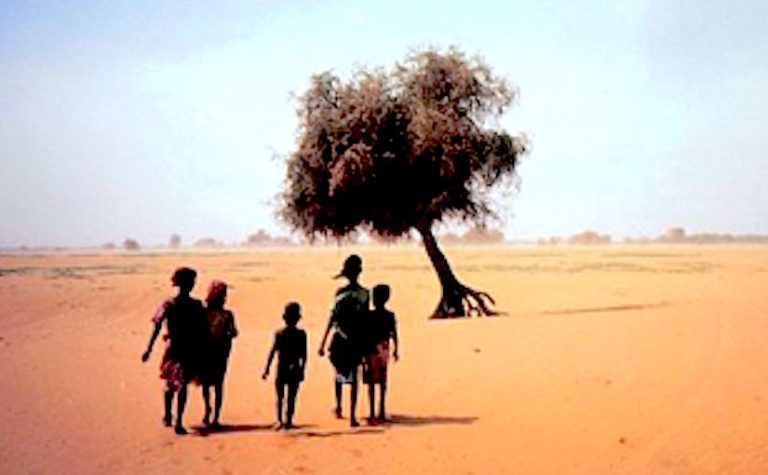
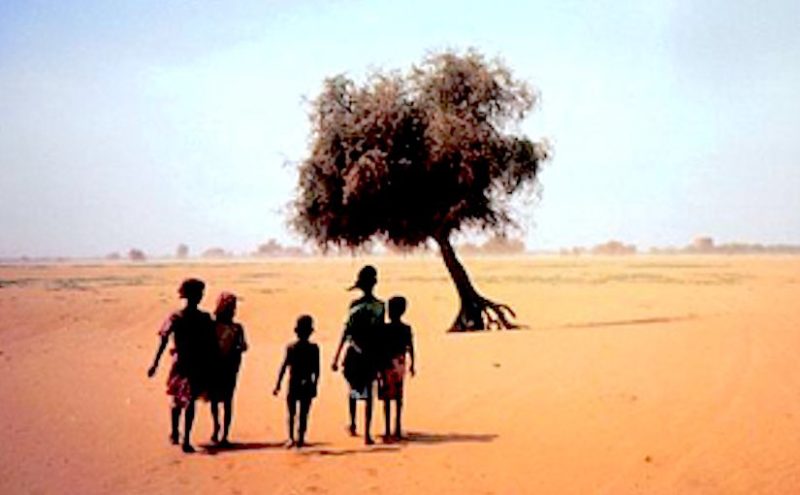
More than 3.2 billion people, or two in every five people, are impacted by land degradation today and up to 143 million people could move within their countries by 2050 to escape water scarcity and falling crop productivity due to the slow onset impacts of climate change.
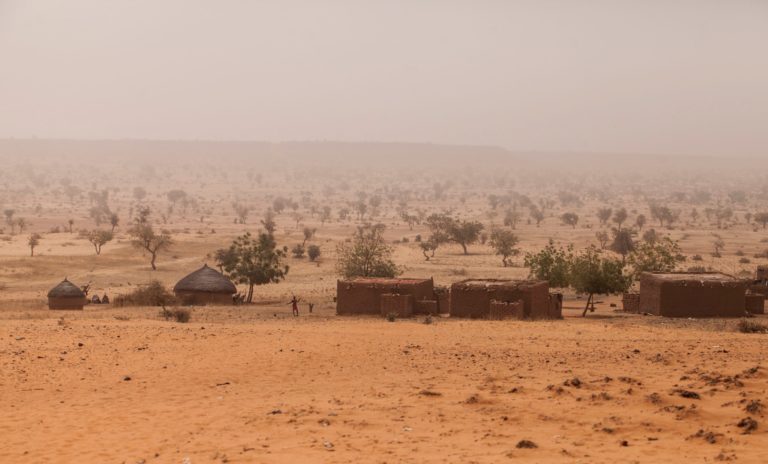
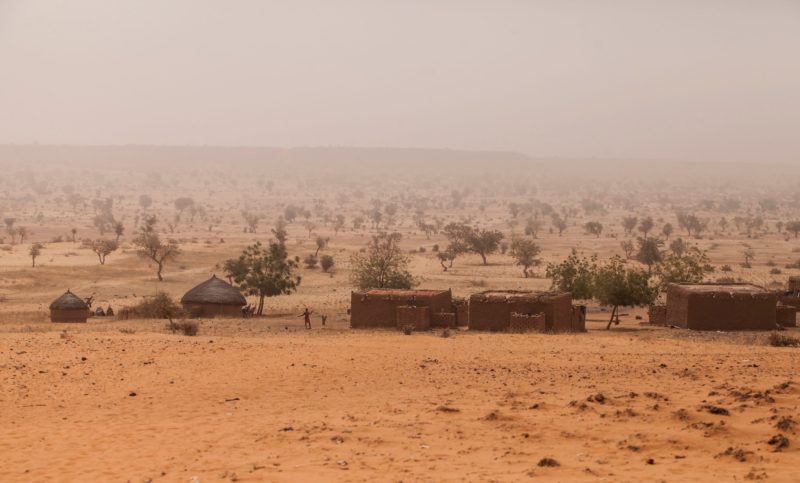
Desertification
Desertification

To avoid these threats, Monique Barbut, Executive Secretary of the UN Convention to Combat Desertification (UNCCD), has called on consumers and the private sector to join governments to save healthy land. She added that lack of preparedness for future droughts in particular, could lead to massive social and political upheavals.

“Everything we produce and consume has a land footprint. A bicycle requires 3.4 square metres of land. Ten square meters of land are used to produce a laptop. Producing one kilogramme of beef takes 22 square metres,“ but few people give thought to these daily processes “because the losses are not visible – or at least not accounted for – in the products we consume,” Barbut stated.

“We are all decision-makers because in our daily lives, our choices have consequences. Our small decisions transform the world,” she stressed, and called on consumers to make choices that reward land users whose practices protect the land from degradation.

Barbut, who heads the international agreement that deals with desertification, land degradation and drought effects, also warned that it is dangerous to reduce the true value of healthy land to its economic value alone.

She made the remarks in observance of the World Day to Combat Desertification on Sunday, June 17, 2018. The global observance event took place in Quito, Ecuador.

Ecuador, it was gathered, promotes a bio-economy among its agriculturalists in order to diffuse sustainable land management technologies, which maintain the land’s productivity.

The country is also pursuing the Sustainable Development Goal target of achieving land degradation neutrality, which means avoiding, reducing and reversing land degradation to ensure the amount of healthy land it had in 2015 is the same in 2030, and stays stable thereafter.

Barbut also underlined the need to “go beyond conscious consumerism” to engage the private sector and governments in better land uses because “the real value of the land is not just economic.”

“Land is worth so much more than the economic value we attach to it. It defines our way of life and our culture – whether we live in the city or the villages. It purifies the water we drink.  It feeds us.  It surrounds us with beauty. But, we cannot meet the needs and wants of a growing population if the amount of healthy and productive land continues to decline so dramatically,” Barbut said.

Tarsicio Granizo, Minister of Environment, Ecuador, said: “Desertification is a matter that not only has to do with the environment, but also with food sovereignty and with protection of the agricultural soil.”

The Global Land Outlook  (The GLO) of 2017 states that 45% of the food consumed globally comes from the world’s dryland areas, and that falling productivity, food shortages and water scarcity in these regions is creating insecurity. The GLO warns that about 20% more productive land was degraded from 1983 to 2013, and that Africa and Asia face the greatest threats, going forward.

“We must do far more to recognise the immense value of healthy and productive land in strengthening the resilience of the world’s poorest communities, which are facing more drought and other slow-onset climate disasters,” said António Guterres, UN Secretary-General, in marking the Day.

Five of the eight slow onset events identified by the Climate Change Convention as potential future sources of huge losses and damage are manifestations of declining land productivity. These are desertification, salinization, land and forest degradation, biodiversity loss and rising temperatures. Globally, about two billion hectares of land are degraded. Most of it can be restored back to health.

“Science has given us the knowledge and tools we need for managing land to build resilience to drought and the impacts of climate change. Governments and the communities whose lives and livelihoods depend on the land can take steps now to prepare for future drought,” Guterres said.

The sustainable land management technologies needed to minimise and reverse many of these effects exist, but the policy instruments and investments to promote their spread are non-existent. As a result, some of the most land-dependent communities are exposed to the growing powerful and adverse weather effects, such as recurrent droughts, unpredictable rainfall and disappearing ground water sources.

Barbut highlighted three critical actions that consumers and the private sector can take to encourage land users and governments to save healthy land from further degradation and to recover nearly barren lands.

First, changing consumer behavior and unsustainable production patterns. Second, adopting more efficient land use planning. Third, creating mechanisms like the LDN Fund that will motivate the private sector to invest in land restoration.

“The public needs to be empowered.  If they know that the choices they make every day can make a difference in terms of how the land is used – whether it is abused or nurtured – I am sure they will choose and consume more wisely,” she said.

“Governments must create incentives that can encourage the private sector to see that sustainable management of the land and the restoration of degraded land is the socially responsible thing to do. The UNCCD is ready to help initiatives that can restore degraded land at scale,” she said.

She called on countries to formulate the targets to be achieved by 2030, which signals that “a country has a systematic plan to ensure sufficient high quality land is available in the long-term to meet the demand for essentials like food and water.”

Minister Granizo said: “The Government of Ecuador is proud to host, for the first time in Latin America, the celebration of this international day, which was attended by prominent authorities of the Convention to Combat Desertification.”

World Day to Combat Desertification is observed every year on June 17 to raise awareness about the status of the land resources, especially at country level, and to mobilise required actions.
UN enhances Ofada rice production with solar energy

0

Ofada rice, the popular delicacy, may get to dining tables at even cheaper prices, thanks to an initiative aimed at enhancing its production via solar energy.

Ofada Rice Agro-processing Mill
Ofada Rice Agro-processing Mill in Ogun State

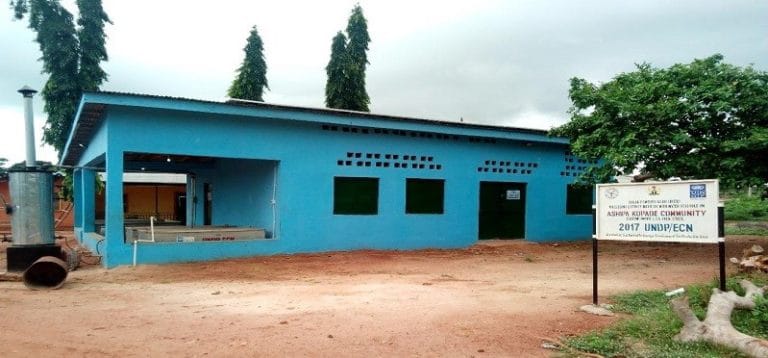
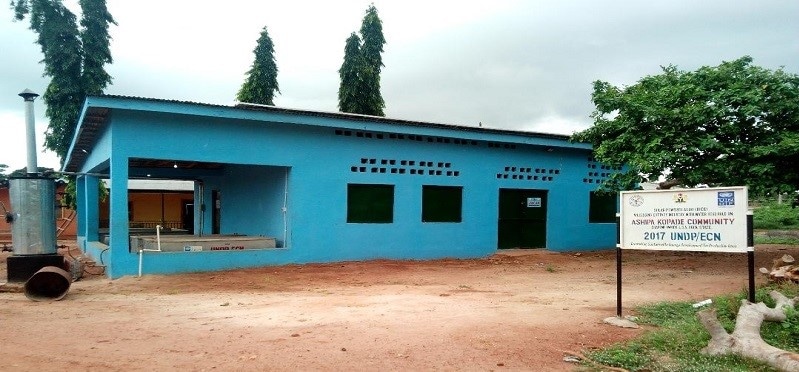
Courtesy of a collaboration involving the United Nations Development Programme (UNDP) Nigeria Country Office and the Energy Commission of Nigeria (ECN), off-grid solar powered commercial agro-processing is transforming the rice processing industry.

A three-month construction period that ended April 2018 saw the installation of solar energy systems and equipment such as pre-cleaner, per boiler, dryer, miller and de-stoner to boost the processing of Ofada rice in Moloko Asipa, an agrarian community in Obafemi Owode Local Government Area of Ogun State.

The project has reportedly increased the production capacity of the mill, which hitherto ran on diesel. Besides reducing production cost, the scheme has created employment opportunity especially among the youth in the community. A borehole was also constructed to supply water to the community at no cost.

Chief Executive Officer of Ofada Rice Agro-processing Mills Limited, operator of the facility, Mr. Ayodele Adenekan, said that since the solar plant was completed in April, all the equipment have been working round the clock on solar power.

He disclosed that, prior to the realisation of the project, the mill spent from N18,000 to N20,000 every month on diesel depending on the volume of rice to be processed. He added however that all that stopped since the project was completed.

“It has greatly increased our production, I now produce more at less cost,” he added.

Adenekan said the gesture has also led to job creation for youth in the community who have been engaged in the Ofada rice processing. He attributed this to the fact that the equipment installed doubled the capacity of what existed in the mill before.

He disclosed the equipment installed had also help to enhance the quality of Ofada rice processed at the mill. He commended the UNDP/ECN for bringing such an initiative to the community.

Asked on the next line of action after the UNDP/ECN gesture, Adenekan said he is now looking at how to export Ofada rice because of the high demand by Nigerians in the diaspora who cherish the delicacy.

Corroborating him, Mrs. Janet Adegboye who processes her rice harvest in the mill, commended the initiators of the project, saying processing her rice has become easy with the completion of the project.

“We are very happy with what UNDP/ECN has done for us,” she stressed.

Baale-General of Moloko Asipa, Mr. Nureni Kolawole Adesina, commended UNDP and ECN for the equipment installed that has made rice processing faster and cheaper. He said the facility has also provided employment opportunities for youth in the community who have been engaged in the mill.

He also expressed appreciation for the borehole provided for the community which, he stated, has eased water shortage challenges in the community.

“Water has been scarce in the community before now, we used to go long distances to fetch water to the palace, but this has stopped. It has been a blessing to the community and we are happy about it.”

The Nigerian rice sector has experienced some remarkable developments and growth in recent years. Both rice production and consumption in Nigeria have vastly increased. With rice now being a structural component of the Nigerian diet and rice imports making up an important share of Nigerian agricultural imports, there is considerable political interest in increasing the consumption of local rice.

One of the major constraints that have affected the development of Nigerian rice sector is the inability of the local rice to match the quality of imports. While majority of the mills (85%) are powered with fuel engines, 10% are using electric engines and four mills (5%) have invested in both types. Operators recognise that it is cheaper to run electric-powered mills than fuel-powered equipment but the erratic supply of electricity jeopardises the workshop operations.

Cleaner Lagos, Visionscape in face-off over sacked 300 street sweepers

0

There appears to be confusion regarding the actual employers of the 300 street sweepers’ supervisors that were recently sacked in Lagos State.

Street sweeper
A street sweeper in Lagos

Environmental utility firm, Visionscape Sanitation Solutions Ltd (VSS), told the News Agency of Nigeria (NAN) on Sunday, June 17, 2018 in Lagos that the supervisors were employed for the Lagos State Government, under the Cleaner Lagos Initiative (CLI).

Mr Adebola Shabi, the Special Adviser to the Governor on CLI, said the government had nothing to do with the news making the rounds that it had sacked the 300 supervisors.

Shabi said that the CLI contracted Standard Street Manpower Ltd. (SSML) on the employment of street sweepers.

According to him, Cleaner Lagos is a government initiative, not a contractor, while Visionscape is the contractor, hence, government can decide it does not want Visionscape but Cleaner Lagos will remain.

“Maybe it is Visionscape that sacked them; Cleaner Lagos has not sacked anybody.

“SSML is a consultant to the state government on engagement of sweepers but we have told them that, at the end of June, all sweepers should be handed over to the Ministry of Environment.

“We don’t know any issue about the sack; I have been trying to get the information from Visionscape and they are directing me to their head office.

“The sack has nothing to do with Cleaner Lagos because we did not employ and we did not sack. Lagos State does not believe in sacking people,’’ he said.

The Head, Corporate Communications, VisionScape, Mrs Motunrayo Elias, told NAN that the company was not the only contractor under the CLI.

Elias said that when the structure for waste management was put in place, government said it wanted street sweepers to clean the inner streets, among other arrangements.

She said that the structure for street sweepers’ supervisors was also put in place, that was the arrangement between CLI, VSS and SSML, which was the company managing the street sweepers.

Elias said that the supervisors were hired by SSML but were trained by VSS and worked with VSS Area Managers, to ensure the synergy of sweeping and packing the refuse.

“Now, with the controversy about PSP operators wanting to go back to work, government said that the street sweepers should revert to them.

“So if you have taken the street sweepers, what are you going to do with their supervisors?

“When we had a meeting, the issue was brought up and government asked how much was the salary. That was where the problem started.

“Government said it cannot afford the salary, which was between N80,000 to N120,000 but can only pay N25,000 per month.

“So the company paid the supervisors their disengagement bonuses, with Visionscape paying them two months’ salaries, while government was trying to decide.

“For fact, the supervisors were supposed to be transferred to the Ministry of Environment. It was a labour contract from the CLI,’’ she said.

Elias said that the structure that was put in place for waste management in the state injected income to the economy, as people were better off.

She said that it was essential to take the good with the bad, as nobody talked about the good that the whole system was doing when it was creating employment.

NAN reports that the disengagement letters to the supervisors were signed by the Head, Human Resources and Administration, SSML, Oluwatoyin Ayoola.

The letter reads: ‘“In light of the recent review of the implementation of the Cleaner Lagos Initiative and the impact of these changes on our operational requirements as discussed at our meeting held on the 2nd of June 2018, we regrettably write to inform you that it affects your employment with Standard Street Manpower Ltd.

“As discussed, the transfer of Ward Level Sanitation Programme (community sanitation workers) to the Lagos State Government has rendered your position as Sanitation Supervisor redundant and your services will no longer be required with effect from 14th of June, 2018.’’

By Florence Onuegbu

Government, traditional rulers collaborate to end open defecation in Katsina

0

The Katsina State Rural Water Supply and Sanitation Agency (RUWASSA) says it is collaborating with traditional institutions to put an end to open defecation in the state.

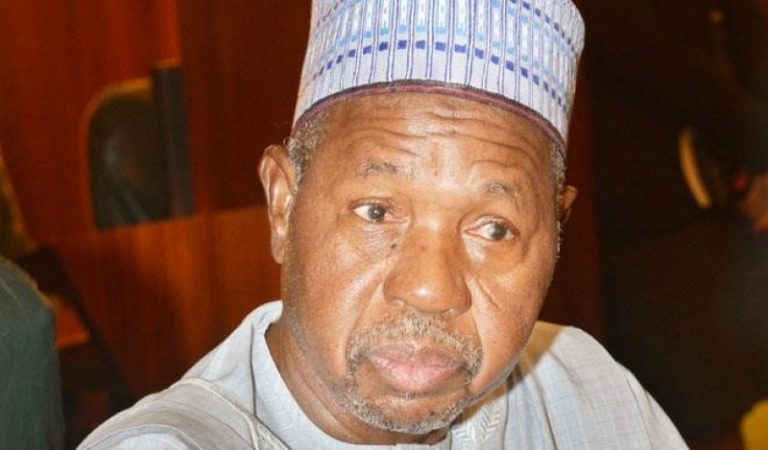
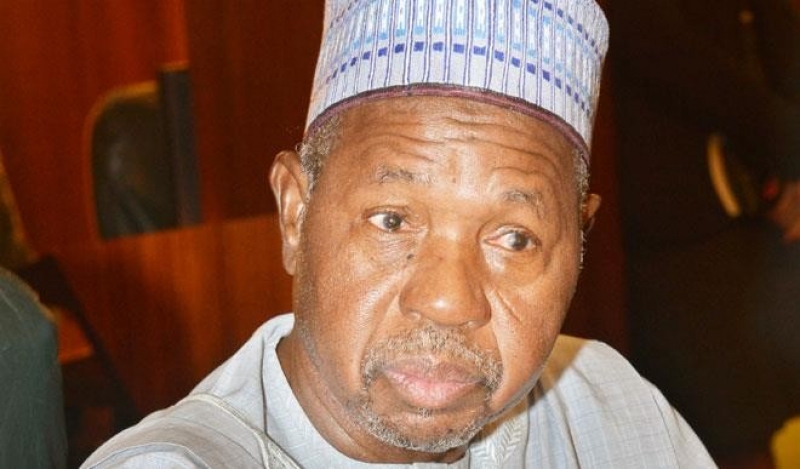
Alhaji Aminu Bello Masari
Alhaji Aminu Bello Masari, Governor of Katsina State

Alhaji Aminu Dayyabu, the Executive Director of the agency, disclosed this in an interview with the News Agency of Nigeria (NAN) on Sunday, June 17, 2018 in Katsina, the state capital.

Dayyabu said that decision was aimed at the state to achieve Open Defecation-Free (ODF) status and improved sanitation, by 2025, under the Sanitation Hygiene and Water in Nigeria (SHWAN) project supported by the United Nations Children’s Fund (UNICEF).

The executive director noted that the programme would also assist to reduce water and sanitation related diseases particularly in rural areas of the state.

He said that agency has already held meeting with 44 District Heads under the Katsina Emirate and 13 in Daura Emirate Councils, respectively, on modalities to achieve the set objective.

Dayyabu said the traditional leaders agreed to prosecute any household who failed to construct a latrine for use of the family within a given time frame.

The executive director added that local government councils on the other hand would provide land to enable  entrepreneurs construct latrines around market areas and other public places in the state.

He further said that UNICEF would provide water and sanitation facilities to enhance hygiene in such places through the agency.

‘’People will pay little amount of money after using the latrine which will be used for its regular maintenance,’’ he said.

He also revealed that RUWASSA has so far linked about 1,000 households in the state with Micro Finance Institutions (MFI) who provided the households with loans to construct latrines.

According to him, a minimum of N40,000 loan facility was given to each beneficiary to construct an improved latrine under the Sanitation Marketing programme.

Dayyabu said that the latrines were constructed through Toilet Business Owners who linked the households with experts in the construction of improved latrines.

He said that the agency would continue to join hands with UNICEF to enhance water supply and sanitation in the state.

‘’The state government is determined to continue supporting us to join hands with UNICEF to improve rural water supply and sanitation.

‘’It is in view of that now we have 26 local governments participating in SHAWN project, that make Katsina as the state with the highest number of participating local governments in the country,’’ he said.

By Zubairu Idris

UN urges effective land preservation to combat desertification

0

On World Day to Combat Desertification and Drought observed on Sunday, June 17, 2018, the UN has called for effective land preservation to combat desertification.

Picture1
Desertification and land degradation are said to be very serious challenges that lead to hunger and poverty

According to a statement by the UN Convention to Combat Desertification (UNCCD), land is not a limitless resource and ignoring its role in our everyday lives threatens food and water supplies, biodiversity and the security of us all.

The UNCCD urged everyone to recognise the true value of land.

“I would ask you: when you choose what to eat, what to wear or what to drive, think about how your choice impacts the land – for better or for worse,” said Ms Monique Barbut, UNCCD Executive Secretary.

In her message for the day, Barbut said land-grabbing, unplanned urban sprawl, unsustainable agriculture and over-consumption could yield quick economic gains.

However, such short-sightedness eventually causes degradation and loss of critical ecosystem services due to unsustainable land use, she warned.

“As a result, a third of the world’s usable land has already severely degraded over the last 30 years, with 75 billion tonnes of soil from arable land lost annually,” she said.

According to her, everyone can contribute to, and benefit from, investing in sustainable land management – as consumers, producers, corporations or governments.

Barbut said: “Farmers can invest in smart agriculture with higher yields but reduced pesticides.

“Policymakers and land managers can invest in sustainable land management while consumers can choose to spend on organic and fair-trade products that avoid ruining the land.

“Let us work together to transform the way we consume, produce, work, and live together without compromising our current or future social, economic or environmental security without compromising the land on which it all depends”.

The UN General Assembly established the World Day in 1994 to promote public awareness of land degradation and to draw attention to the implementation of the UNCCD – the sole legally binding international agreement linking environment and development to sustainable land management.

The World Day is observed annually on June 17, the date the UNCCD was adopted, while the 2018 theme for the Day is “Land has true value – invest in it”.

The campaign hopes to promote changes in behaviour and adoption of more efficient planning and practices, to ensure there are sufficient land resources for the world’s long-term sustainability and economic prosperity.

By Prudence Arobani

Cross River communities seek review of operational agreement with oil plantation

0

Communities in Cross River State have demanded for the review of memorandum of understanding (MOU) on Wilmer Oil Palm Plantation estates operating in their communities.

Wilmer protest
Protesters accuse Wilmer of deforestation, exploitation and land grab

They also called for a review of the Environmental Impact Assessment (EIA) reports if they ever existed.

The communities made these demands in Calabar, the Cross River State capital, during an interactive section with journalists during a forum on Community Land Rights in Forested Landscapes, organised by the Environmental Rights Action/Friends of the Earth Nigeria (ERA/FoEN), a civil society organisation.

Some of the communities affected in Akamkpa and Biase local government areas alleged that Wilmer, which owns the oil palm estates in the communities, has failed to keep to agreements in the MOU. They therefore called for a review.

Coordinator of the group, who is a native of Akampka, said, “We see this as a new form of colonialism and that is what is happening. We think it is not right and we think it is necessary for us to discuss those things and it is necessary to carry out a review, not just of the MOU but a review of the EIA if they exist at all.

“There is need to also check if, in the process of carrying out EIA, processes are followed. If women were involved in the processes because the environment impact on women is different but we don’t know. Today we have issues where women are talking about infertility because of the pollution of the environment.”

Speaking earlier, the Executive Director of ERA/FoEN, Dr. Godwin Ojo, said it was discovered that the multinational company and the state government entered into an MOU alongside communities but alleged that such agreement was yet to be made public.

He said the locals, especially those from communities like Ekong-Anaku, Akwa Ikot, Effanga, Iboko, Umai, Betem, Uwet, Atan and Odot, are only employed as labourers and provided with unskilled jobs.

He therefore recommended that “Wilmer should enter fresh consultation with the community people on how to implement the mandatory corporate social responsibility (CSR) scheme for Cross River State and for the benefit of the people.

“They should also halt further expansion into individual, family and communities lands and conduct FPIC before any expansion commences.”

Ojo also demanded that government should ensure that the communities’ customary land rights are protected and should likewise conduct periodic monitoring and compliance to the existing MOU.

His words: “The government and the companies develop deaf ears to the cry of the people. Protest from communities, voice of reasoning and silence are flooded under the carpet, not just swept, they are hidden under the carpet.

“What we are saying is that the MOUs that are entered into, with government and the companies, the communities have not been carried along. The lines of demarcations as we speak have now become source of conflicts.

“Wilmer claimed that they are maintaining their boundaries and that they are not infringing but the communities are claiming that they have already infringed on communities lands and this is one of the sources of conflict. Even the national bars as we state have delved into the matter but yet to come up with their findings.”

One of the affected persons that hails from Uwet community who lost her family land to Wilmer, Mrs Nkoyo Effiom, complained, “Mine is not an exception. Wilmer stepped into Uwet community last year and they have started their exploit which eventually has affected the women mostly because our farmlands have been taken and, in most cases, the women are not carried along.

“The women are not aware of what is going on. No source of portable water exists, so I really think that government should look into the problems of the communities most especially that of Uwet.

“Apart from this, other social amenities are not there so the little one we have, we have to preserve them to be useful to us,” she said.

By Tina Ezin, Calabar 

Nigeria to transform to major driver of global growth – Mohammed

0

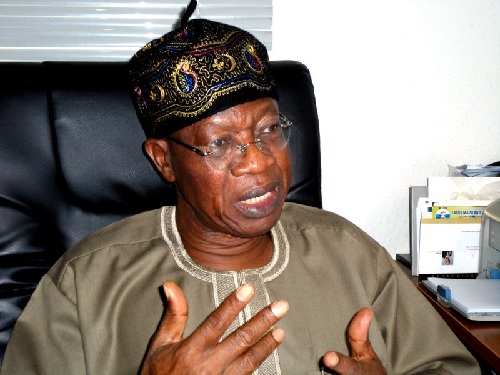
Minister of Information and Culture, Alhaji Lai Mohammed, says Nigeria will transform to major driver of global growth with its pool of vibrant, energetic youths and government’s repositioning policies.

Lai Mohammed
Alhaji Lai Mohammed

The minister said this in a keynote address he delivered at the 2018 “Africa Together Conference” at the University of Cambridge in the UK on Saturday, June 16.

A text of the minister’s address was made available to newsmen on Sunday in Abuja by his Special Adviser, Mr Segun Adeyemi.

The minister was speaking on the global projection of Africa’s population which is said to double by 2050.

According to him, the anticipated development would not be a threat to the continent and the member states if proper things are done.

Mohammed specifically said that the administration of President Muhammadu Buhari was implementing the right policies to maximise the projection for national development.

“To some, this is a ticking time bomb. What if there is no opportunity? What will youths without jobs do, mobilise, destabilise?

“True in Africa, urbanisation has not correlated with poverty reduction as it has in other regions.

“However, where some see looming clouds, I see a concentration of energy,’’ he said.

The minister added: “The number of people reaching working age will be larger than the rest of the world combined by 2035. And they will be young.

“This great pool of vibrant and energetic labour has the potential to transform the continent’s development.

“If there is one country that is emblematic of this, it is perhaps Nigeria. Indeed, it will be largest contributor to this surge.

“We shall move from being the 7th largest nation on earth to the 3rd. And among the ten largest nations on earth, Nigeria will be the fastest growing,’’ he said.

The minister said the Buhari administration was steadily transforming Nigeria through innovative measures that were yielding positive results and repositioning the country for greatness.

He listed investment in people, changing the business environment and building national infrastructure as some of the areas in which the administration had made an impact.

According to him, by focusing on education and skills acquisition, the administration is addressing the need to create opportunities for the country’s teeming youth population.

To address the challenge of school enrolment and high number of out-of- school children, he said 8.2 million are being fed daily free meals in 45,000 schools.

He said the Home-Grown School Feeding programme had yielded other results, including the employment of more than 80,000 cooks and a ready-made market for food crop farmers.

The minister said skills shortages in the labour pool were being addressed through several measures, including the four-pronged N-Power programme.

He said the administration was also changing the business environment for good, focusing especially on removing the red tape that makes it cumbersome for business and stifles innovation.

The minister noted that the challenge of access to credit was also being frontally addressed by making it possible for MSMEs to register their movable assets, such as vehicles and equipment for collateral, to raise loans and finance.

Mohammed told his audience that the two most critical impediments against business, decent transport connections and a reliable power supply, were also being tackled.

“For instance, Nigeria earmarks 30 per cent of its annual national budgets for capital expenditure.

“That means 2.7 trillion Naira has gone toward our infrastructure in the last two years – unprecedented in our history,’’ he said.

By Rotimi Ijikanmi

Windstorm, downpour, wreak havoc in Bauchi

0

Heavy rainfall and windstorm on Saturday, June 16, 2018 destroyed property in Bauchi metropolis, the Bauchi State capital, reports the News Agency of Nigeria (NAN).

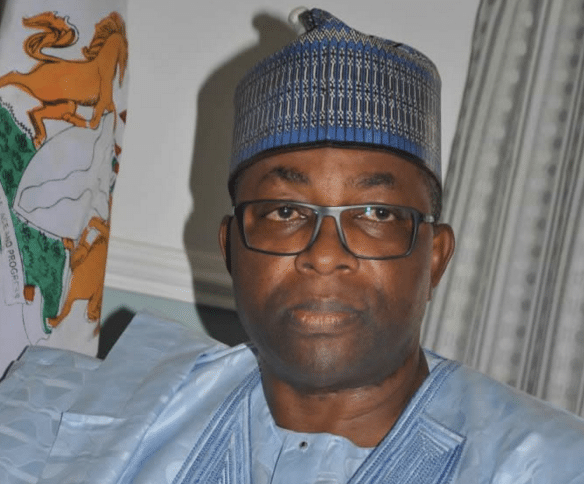
Mohammed Abdullahi Abubakar
Mohammed Abdullahi Abubakar, Governor of Bauchi State

Although there were reports of injuries, the authorities are yet to ascertain whether or not some people had lost their lives.

The downpour, which started at about 4pm, lasted for about two hours, uprooting trees, removing roofing sheets and destroying buildings

A NAN correspondent who went round reports that pieces of roofing sheets, fallen trees and electricity poles, as well as debris of destroyed houses, littered the town. Some people were also rendered homeless.

Areas worst affected are Yakubu Wanka, Makwalla, Bakin Kura, Wuntin Dada, Fadaman Mada, Federal Low Cost, Zango and Old Airport areas of the metropolis.

In Fadaman Mada, the windstorm removed a substantial part of the roofing of the Bauchi Zonal office of NAN.

Contacted for comments on the incident, Permanent Secretary, Bauchi State Emergency Management Agency (SEMA), Malam Shehu Ningi, told NAN that they were still collating facts on casualties and property destroyed.

He however said that their preliminary findings indicated that the destruction was enormous, adding that details would be presented to newsmen soon.

By Mohammed Ahmed Kaigama

Constant dialogue, key to peace in Niger Delta, says Dokubo

0

Coordinator, Presidential Amnesty Porgramme, Prof. Charles Dokubo, has identified constant dialogue with critical stakeholders in the Niger Delta as a critical factor in ensuring peace in the region.

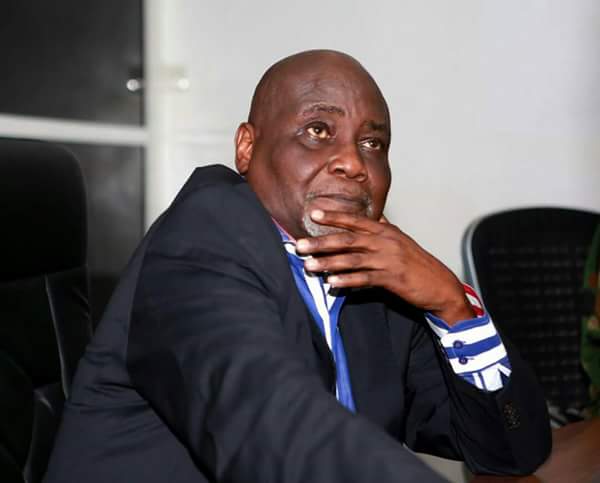
Prof. Charles Dokubo

Dokubo made this known while speaking at the News Agency of Nigeria (NAN) Forum in Abuja.

“Let me tell you what I did in the first two months, the critical stakeholders in the region especially those militants and their group leaders to hold a meeting with them in Lagos.

“To tell them the purpose of my appointment and to see how we can  drive this programme and  to maintain the security that  we already have and all of them bought into my own plan.

“After that I met with the field commanders, phase one, two, three commanders in Abuja here and they also bought into my own plan.

“My reason for bringing them in is that if they agree to work with you, that peace that has been there will continue to be there, you can neither work against them nor can you work irrespective of them.

“You have to work with consent with them; let them see the benefits of working together in a stable environment so that they could fit in and also help their people.

“If you claim to represent a particular part of the country and if you cannot maintain peace in that area there then there is a problem.

“If you should represent them and you should make sure they have all it takes to stay in that place and have peace.

“For them, the most important thing is to talk to them, to relate with them, understand and feel their pulse so that you can know exactly what they want and this is exactly what they want and this is what I did.

“I believe the peace that has been there will continue to be there.’’

The professor, however, said there was a need to be alert in order to respond rapidly to maintain the peace and security being enjoyed in the region because something small could ignite and threaten the peace in the region.

The amnesty boss stressed that maintaining peace and securing the environment was for the benefit of all Nigerians especially those in the region.

He therefore advised the militants and agitators to work with government so that lasting peace could be achieved in the region.

“My advice has always been that if the environment is secure, it is also secure for all of us.

“Also If you go on bursting pipes and all that, that that environment which you say you are protecting is going to create a problem for people who are staying there even for children yet unborn.

“I put it before them; it is not just about going to burst pipes because the pipes are not in Kaduna, the pipes are in your place and that is the place where your fishing and farming will be disturbed.

“So that is my own  plan let them see the benefit of working together with government  and let them see that  with government  what we were not able to achieve before , we can now get it.

“Because they are also part of the system, they discuss with me, they exchange idea with me so that with that we can move forward.”

Dokubo, however, said the major challenge of the programme was working with people who are used to working in a faulted environment, a dynamic environment.

According to him, these people have been so used to a particular way things have been moving so when you bring a new thing they challenge that concept.

“It worries their sense of entitlement in that programme; so you  will continue to work,  you do not have to rest, you either make sure you change them to adopt and adapt or they live you to work on your  programme.

He assured Nigerians that the amnesty programme would definitely achieve its purpose and attain the heights set for it under his administration.

By Okeoghene Oghenekaro and Jacinta Nwachukwu

Nigerians advised on proper waste disposal

0

An environmental scientist, Mr George Ebisike, has advised Nigerians to dispose of waste properly to avoid environmental degradation as well water and airborne diseases.

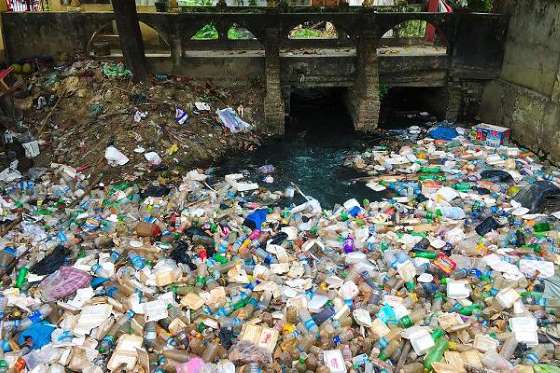
Myanmar Plastic waste
Plastic clogs up a waterway

Ebisike, who doubles as a researcher, gave the advice in an interview with the News Agency of Nigeria (NAN) on Saturday, June 16, 2018 in Abuja.

He identified micro-plastics as one of the biggest dangers to man and animals hence Nigerians should be more cautious of proper waste disposal.

The expert said that in the course of humanity advancement, it was important that civilised citizens handle the challenges of waste in their environment in an ideal way.

He stressed that micro-plastics such as plastic bottles, water sachets and polythene bags had become extremely dangerous for the marine and human lives as all spheres of the environment are interconnected.

“Human activities such as littering of plastic containers, water sachets and polythene bags after use have led to blockage of drainages, flood, and air pollution when burnt leaving an unhealthy environment.

“Research has shown that lots of bio-plastics have been consumed by birds, fishes and livestock which are dangerous to the health of the species.

“Unfortunately science has not been able to carry out a research of what the effect or health implication will be when humans consume such livestock waste,’’ he said.

Ebisike also urged Nigerians to manage the use of plastics while imbibing the culture of reducing single use plastics, whereby people purchase bottle or sachet water, drink it once and trash them.

He said countries around the world are changing the culture by encouraging people to carry their personal water bottles or water flask, to reduce the consistent use and disposal of several plastics.

He added that the recycling process of plastics usually takes a long time while most of such substances end in landfills or water bodies which in turn become harmful to aquatic animals.

Ebisike said this has however underscored the need for Nigerians to become more conscious of environmental health, as an unhealthy environment has several health implications to humans and animals likewise.

He said activities of man in industrial health, product longevity and management of bye products of industrialisation allowed the release of excess carbon in the environment in the past 200 to 300 years.

The environmentalist said the surplus carbon in the environment cannot be controlled as such has adverse effect on society with health implication on man and sustainability of certain species of animals.

Ebisike said governments at all levels have roles to play in terms of policy direction, behavioural change among citizens and creating the consciousness to drive technological transfer among young engineers.

“Through recycling, waste products can be converted into bio-fume which adds to the fuel we have from petro-chemical processes, thereby taking away lots of plastics from the environment.

“The end products will be put back into the system, reducing the cost of kerosene, creating opportunities for research in universities, while creating jobs for citizens.

“It is of utmost importance that the younger generation understands their responsibility to the environment while keeping abreast with modern technology used in managing waste products.

“Parents and teachers must inculcate the culture of separating wastes in an ingenious way, while discouraging burying at landfills as such becomes poisonous to the water table underneath the earth,’’ Ebisike added.

By Talatu Maiwada