Some residents of Mararaba and its environs on Wednesday, July 18, 2018 commended the Nasarawa State Government for its prompt response to their calls for intervention in tackling the environmental challenges facing the area.
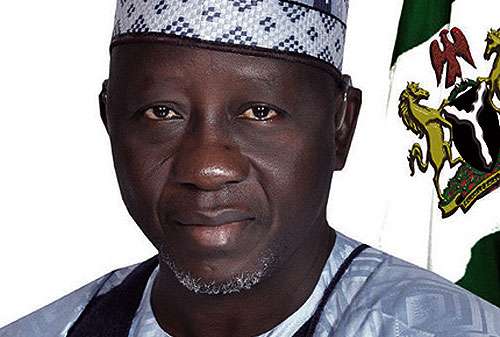
Governor of Nasarawa State, Umaru Tanko Al-makura
The residents, who spoke in an interview with News Agency of Nigeria (NAN), expressed happiness over what they described as “the new look of Mararaba’’.
Mrs Alice Utan, a petty trader, said that the environment of the area had become an eyesore to many residents and visitors, as heaps of refuse dotted the entire surroundings.
“All of a sudden, the area is now beginning to have a cleaner look because of the new approach adopted by Gov. Umaru Tanko Al-Makura’s administration.
“Few months ago, we started observing street cleaners sweeping the road early in the morning before the commencement of our businesses; this is very commendable.
“You will agree with me that living in a clean environment is important to our physical health as well as our overall well-being.
“This is what the government is trying to do for us, we must commend it,’’ she added.
Also speaking, Mr Francis Attah, a teacher, said that the rate of environmental degradation in the country was alarming; adding that one of the contributory factors was the failure of many people to exhibit good sanitation habits.
He cited a recent World Health Organisation (WHO) report that claimed some diseases were caused by environmental factors such as filthy surroundings, among others.
He particularly condemned some residents’ habit of dumping garbage on the streets and urged them to always keep the environment clean to stay healthy.
Besides, Attah called on the government to provide more refuse receptacles for the residents of Mararaba, saying that this would encourage the people to properly discard their refuse without spreading it by the roadside.
“I have noticed that the population of Mararaba has strikingly overwhelmed the available facilities in the community.
“Besides employing street sweepers to keep the roads clean, government should station more refuse bins by the roadside, as this would encourage the residents to dump their rubbish in the bins.
“However, this shouldn’t be an excuse for the reckless habit of those who dump refuse indiscriminately and thereby, endanger human health,’’ he said.
Miss Ekamma Ita, a student, also commended the state government for taking steps to address the environmental challenges facing the residents of Mararaba.
According to her, people can now breathe easily in their newly sanitised neighbourhood when they wait to board vehicles at various bus stops along the road.
“I really appreciate the state government for its approach to solve the serious environmental challenges we have encountered on this road in recent times.
“I, therefore, give kudos to Gov. Al-Makura,’’ she said.
The Nigerian Erosion Watershed Management Project (NEWMAP) on Thursday, July 19, 2018 appealed to Obosi community in Anambra State to bear with it over the slow pace of work at its gully erosion sites.
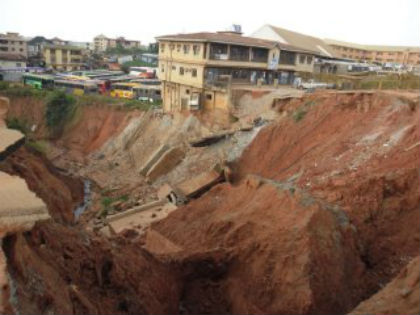
A gully erosion site
Mr Emeka Achebe, Head of Communications of NEWMAP in the state, made the appeal while speaking with the News Agency of Nigeria (NAN) in Obosi, Idemili North Local Government Area (LGA).
Achebe was reacting to reports by the community that the project might have been abandoned.
He said that a large portion of the job would have been completed but for rainfall that had slowed it down.
He said that the contractor, Chez Aviv Ltd, had not abandoned the project, adding that work on the project was ongoing.
Achebe said the rains had prevented the contractor from executing the concrete works.
According to him, the concrete work in the World Bank assisted project, cannot be done under the prevailing weather but the preliminary jobs were currently ongoing.
“For instance, the baseline topography survey is ongoing at Ire Village, while a drainage job is going on at Ugamuma as well as the reinforcement of a compromised building at Nkpor.
Achebe said the survey would reveal additional erosion sites to those captured in the original plan, assuring that the work would be comprehensively executed.
The people of Obosi community had called on the contractors to hasten the completion of the project to save the residents from the menace of gully erosion.
Mr Ike Madubuosah, President-General of Obosi Town Union, said the community was thankful to the Anambra State Government and World Bank for the project but wondered about the delay in the execution of the job.
Madubuosah said the delay in effective takeoff of erosion control civil work on the sites was a major cause for worry as more land and households were being exposed to danger.
The president-general described Obosi as an ecological disaster area that demanded urgent and sustainable control and remediation work.
“The ecological situation in Obosi is worrisome now; we have challenges with seven major gully erosion sites, including two in Ugamuma, two in Ire, one in Umuota and two in Uruowulu,” he said.
The contractors have two years to complete the job.
The Delta State Commissioner for Works, Chief James Augoye, has warned residents of Asaba and Okpanam communities to desist from indiscriminate dumping of waste on the waterways.
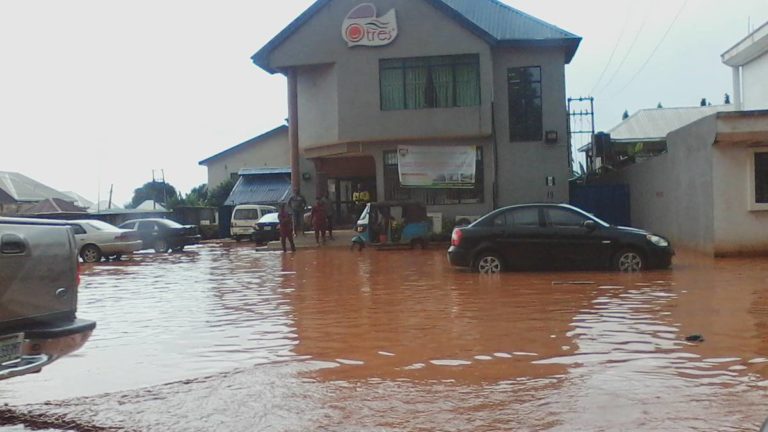
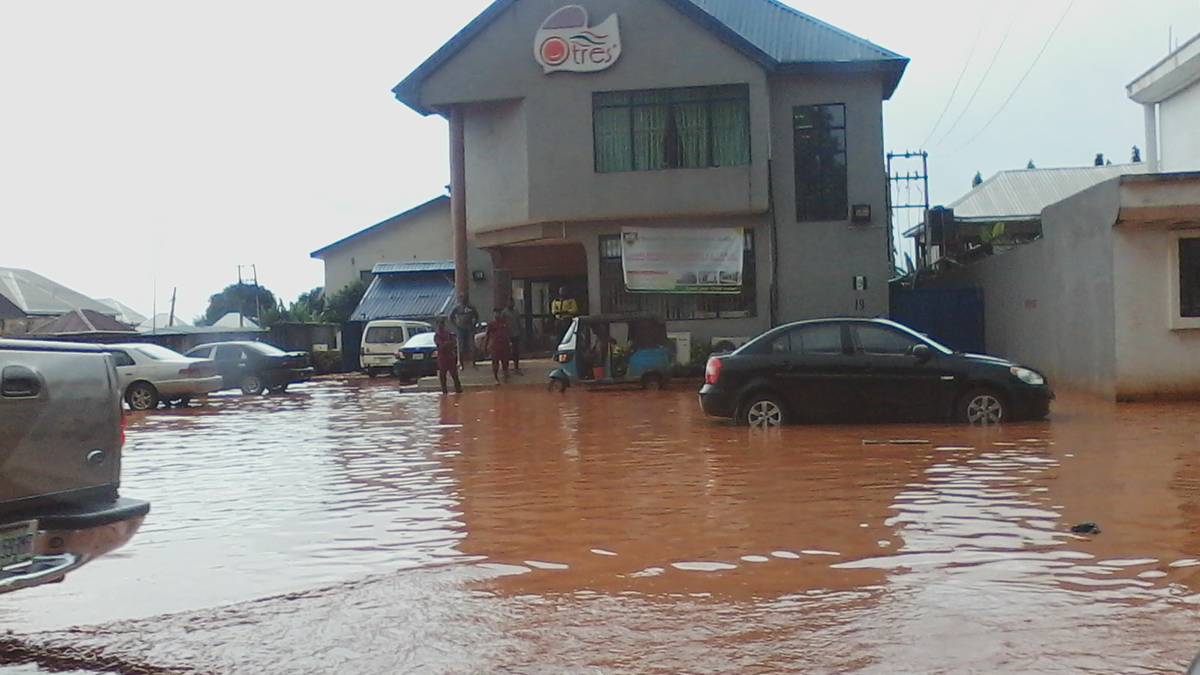
Flooding in Asaba
The commissioner gave the warning while responding to questions on the challenges of flooding in the state capital on Wednesday, July 18, 2018 in Asaba, the state capital.
He said that the state government was committed to addressing all flood-related challenges in Asaba, Warri and other flood-prone areas across the state.
Augoye said that government had embarked on three strategic storm water projects in Asaba.
The commissioner said that the challenge of flooding in the state capital would soon be addressed after completion of the project in February 2019.
Augoye said that the current flooding challenge was not only caused by the quantum of flood water from rainfall but the indiscriminate dumping of waste by the residents of Asaba and Okpanam communities.
He said that with the rainy season, the challenge would not be over yet until the storm water projects were completed.
Augoye said that road constructions and drainage works were ongoing at various corners of Asaba in addition to the dualisation of Okpanam road among others
He said that it was not strange that the rain on Monday and Tuesday this week had disrupted activities in the area.
According to him, the government is on course with the ongoing storm water projects in Asaba and is determined to make the drains effective to evacuate flood waters in the state capital.
“The governor in his quarterly briefing had said that the storm water projects will not have much effect this year until 2019 when they will be completed.
“Apart from the high volume of water particularly from the Okpanam axis to Asaba, the challenge we have is with the people who dumped waste indiscriminately into the water channels.
“The people have turned the drains to refuse dumps. This is creating a serious problem to us,’’ the commissioner said.
He, however, assured that state capital would be cleaned up within the week to make it presentable, as the contractors handling the roads and drainage channels were working into the nights.
“We are sure that before the contingents for the African Senior Athletics Championship will start arriving the state, Asaba shall be cleaned up and made presentable,” Augoye said.
He said that the state government had granted approval for the construction of two pedestrian bridges; one at the Summit Junction and the other at the Abraka Market in Asaba.
According to the commissioner, the modalities are being worked out and the contractor will soon commence work on the pedestrian bridges.
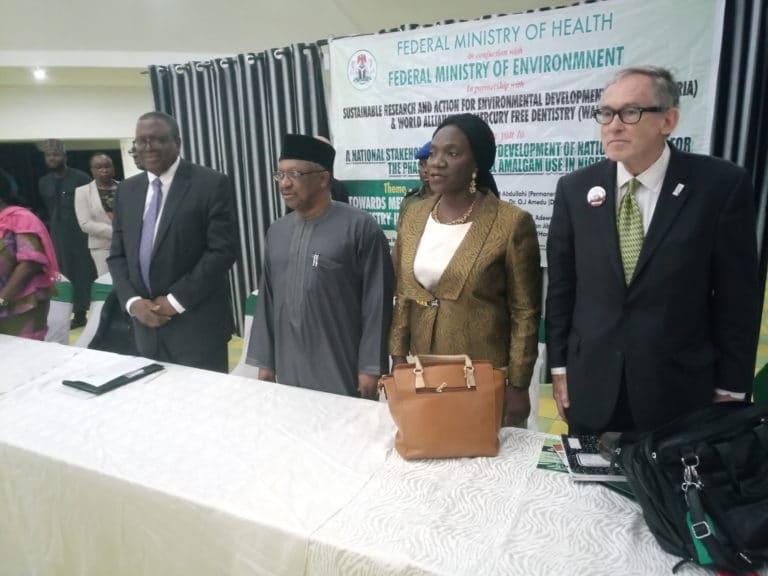
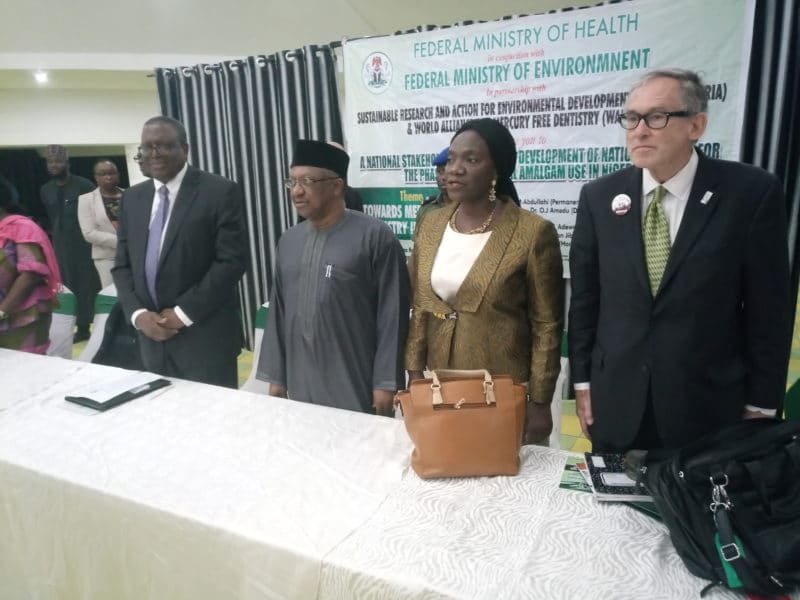
In alignment with the provisions of the Minamata Convention on Mercury, which Nigeria is a Party to, the country will achieve a complete phase out of mercury in amalgam use in dentistry by 2022.
L-R: Prof. Babajide Alo of the University of Lagos; Minister of State for Health, Dr. Ehanire Osagie; Dr. B. O. Alonge, Head, Dental Division, Federal Ministry of Health; and Mr Charlie Brown, President of the World Alliance for Mercury-Free Dentistry, during the summit in Abuja
This formed the kernel of a unanimous decision by participants at a National Stakeholders Summit on “Development of a National Policy for the Phasedown of Dental Amalgam Use in Nigeria” on Tuesday, July 17, 2018 in Abuja. The forum had “Towards Mercury-free Dentistry in Nigeria” as its theme.
While emphasising that coordinated actions are needed to drive the phase down of Amalgam use, delegates resolved to end the use of dental amalgam as restorative material in children under 16 years, pregnant women and breastfeeding mothers (the vulnerable group) by December 2020.
Towards achieving this, they recommended that the Federal Government should initiate a coordinated multi-sectoral approach for an effective phase down of use of dental amalgam in the country.
Besides the introduction and promotion of alternatives/transition to alternatives through subsidies, participants clamoured the initiation of a phased down work plan, which they stressed must also include legislative review and development of guidelines, gathering baseline data and developing the National Policy.
While stopping the inflow of amalgam from other countries and donor agencies, and updating dental school curricula and training of academic staff of dental schools, it was also suggested that the media should be engaged in awareness creation on the health impacts of mercury in dental amalgam.
Besides halting the inflow of amalgam from other countries and donor agencies and devising a government budget sub-head for mercury management in products, participants demanded a government policy to reduce duties or provide waivers for the alternatives to amalgam and encourage lower tariff for alternative restorative materials.
Delegates also agreed to:
Engage financial experts for advice on how to access available funds from global donor agencies to support the phase down implementation;
Intensify the campaign for improved oral health at all levels in order to promoted prevention and reduce the need for Dental restorations; and,
Modify National Health Insurance Scheme and government programmes
The objective of the summit, organised by the Federal Ministry of Health in collaboration with the USA-based World Alliance for Mercury-Free Dentistry, and Sustainable Research and Action for Environmental Development (SRADev Nigeria), was to provide a platform for national stakeholders to work collegially to begin the phase down of the use of dental amalgam, review the National Policy on phase down of dental amalgam use, and develop a draft phase down roadmap for Nigeria.
The forum brought together some 102 participants drawn from government, dental practitioners, dental surgery technicians, academia, civil society groups and the media to deliberate on policy issues for the phasing down of the use dental amalgam in the country.
Goodwill messages were delivered by the Nigerian Orientation Agency (NOA), Nigerian Medical Association (NMA), Nigerian Dental Association (NDA) and the World Alliance for Mercury Free Dentistry (WAMFD).
In a keynote address, the Minister of State for Health, Dr. Ehanire Osagie, provided an overview of mercury as a toxic substance posing a global threat, noting the damaging effects on health and environment.
According to him, the Minamata Convention calls for a phase down and consequently a phase out of the use of dental amalgam, adding that policy to be developed should give preference to a “phase out” for children, pregnant and breastfeeding women.
He said: “There is still a regrettably low level of awareness of the dangers of mercury, and the development of this policy on the phasedown of dental amalgam will give first priority to ending its use in pregnant and breastfeeding women and children in Nigeria. It is a task requiring multiple competences. I therefore urge all experts to engage each other exhaustively at this stakeholder meeting to develop a robust national policy document.”
While delivering a guest lecture, Prof. G. T Arotiba of the University of Lagos stressed that, contrary to the widely held impression that dental mercury mostly goes into the mouth of the patient, and stays there until a person dies, a close examination of the mercury life-cycle however shows that nearly 80% of the dental mercury used every year goes into the solid (municipal or hazardous) waste and wastewater streams.
He described mercury as a potent neurotoxin, with other systemic effects, adding that the fetus and young children especially vulnerable.
“There has been and two to three-fold increase of mercury in the environment since the Industrial revolution, and levels predicted to double by 2050,” Prof. Arotiba warned.
Executive Director of SRADev Nigeria, Dr Leslie Adogame, in a presentation, disclosed that a study revealed that most dental clinics/hospital and incinerators/medical waste treatment facilities in Nigeria are very high-risk environments for mercury vapour emissions and as such pose serious health risk to workers and the general population.
He suggested that the current curriculum at dental colleges and teaching institutions be reviewed and revised to include mercury toxicity and hazards, mercury specific occupational and health safety, mercury releases and emissions control, environmentally sound mercury waste management, non-mercury dental fillings and alternate material and capsulated mercury amalgam and mechanised mixing technologies.
Dominique Bally Kpokro of the African Centre for Environmental Health as well as World Alliance for Mercury-free Dentistry stated that Africa is leading the world to have amalgam phase down steps in the Minamata Convention in countries like Nigeria, Senegal, Togo, Benin, Côte d’Ivoire, Congo, Tunisia, Cameroon, Ethiopia, Kenya, Uganda, Tanzania, Burundi, Zambia, and Mauritius.
In Côte d’Ivoire for example, he listed activities to include:
Opening of a mercury-free dental clinic in Abidjan
Monitoring of mercury vapours in all dental clinics
Change of dental curricula in dental faculty
Validation of regulation banning amalgam use for children pregnant women and nursing mothers
The Minamata Convention is a global treaty intended to protect humans and the environment from the anthropogenic emissions and releases of mercury and mercury compounds, recognised as chemicals of global concern, due to long-range atmospheric transportability, persistence in the environment, ability to bio-accumulate in ecosystems and have negative effects on health and the environment.
Some residents of Port Harcourt and Bolo communities have lauded the Federal Government, Rivers Government and the Nigerian Navy for taking steps to end hydrocarbon pollution in the state.
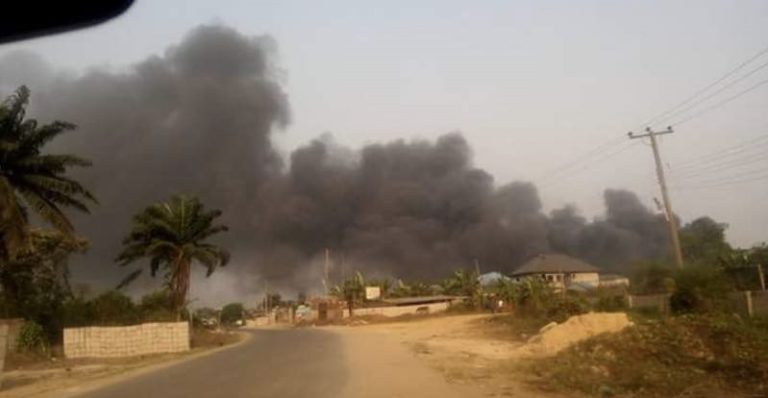
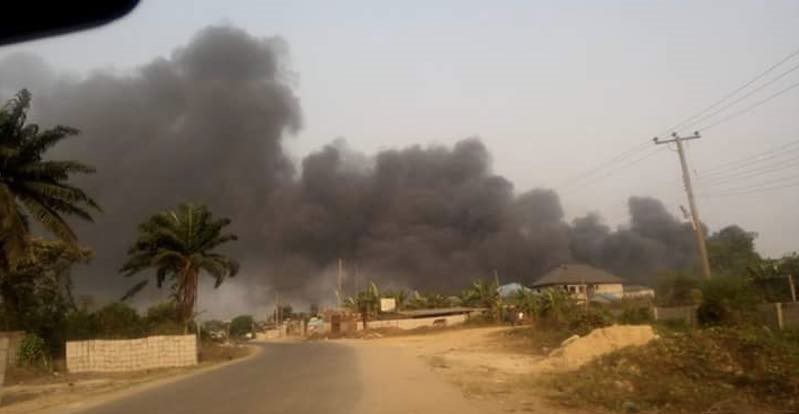
Soot spreading over a neighbourhood in Port Harcourt, Rivers State
A cross section of respondents who spoke to the News Agency of Nigeria (NAN) on Wednesday, July 18, 2018, said the soot emission had suddenly disappeared from their homes and places of work.
NAN also reports that Rivers has been grappling with soot emission blamed on the activities of illegal oil refiners as well as indiscriminate burning of tyres and certain activities in abattoirs that affected the ecosystem.
“It is gratifying to note that the soot menace which we have all been worried about has all of a sudden vanished from the atmosphere,” Joseph Ada, a civil servant, said.
Lucy Offor, a banker, said reduction of the soot was timely in view of the grave health risk the air pollution had on the health of the people.
“My hope is that government and particularly the Nigerian Navy continue to do whatever they are doing to avoid resurgence of illegal refining sites in the state.
“It is too real to be true that we are again breathing seemingly quality clean air after several months of breathing contaminated oxygen and hydrocarbon particles,” she added.
Chibuzor Obiora, a spare part dealer in the popular Ikokwu Market, described the declining soot as a welcome development to business in the market.
Etim Udoh, a teacher, however, said the rainy season might have contributed to the reduction of soot in the atmosphere, pointing out that the situation would become clearer during the dry season.
An operator of one of the destroyed illegal oil facilities in Bolo community, Abgede Oloye, attributed the soot reduction to ‘Swam Buggy’ operation launched by the navy in the destruction of illegal refineries.
Oloye, who expressed mixed feelings over destruction of his illegal bunker site, agreed the site and other illegal refineries commonplace in the area were partly responsible for the soot.
“The Navy has reduced our sites to scrapes. However, the air pollution has reduced, and we no long take drugs to treat ourselves of the smoke we inhale at the sites,” he explained.
Capt. Victor Choji, Executive Officer, Nigerian Navy Ship Pathfinder Port Harcourt, said the navy was winning the war against oil theft and soot pollution in the state.
He explained that the swam buggy approach was a strategy that completely crushed metallic tanks and reduced capability of oil thieves to revive their illegal oil refineries.
“We are using a multi-faceted approach in tackling the soot knowing that unlawful refining of crude oil was major source of funding for sea pirates and other criminal elements.
“If people could build illegal refineries; they can equally use same ingenuity to create legitimate means of livelihood for themselves,” he said.
The Rivers Commissioner for Environment, Prof. Roseline Konya, agreed that the soot had reduced, thanks to joint efforts of the State Government, the navy and other stakeholders.
“Government set up a technical committee; task force and employed the services of experts to tackle the soot. We thank God that the soot has reduced,” she noted.
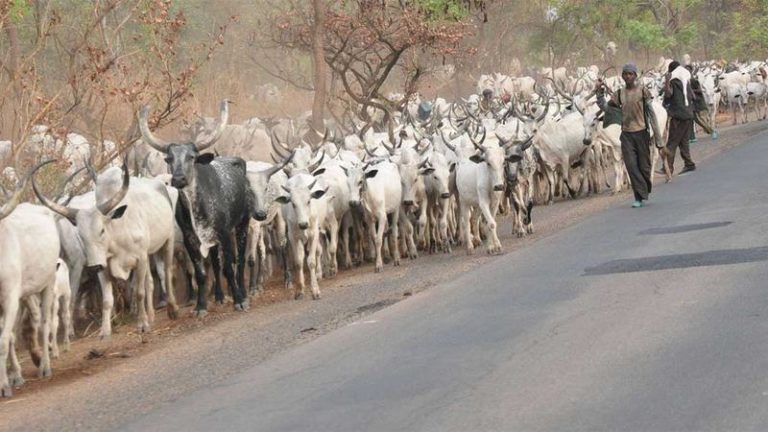
The Special Representative of UN Secretary-General for West Africa and the Sahel, Mohamed Ibn Chambas, says the conflicts between herdsmen and farmers in Nigeria are becoming more sophisticated and deadlier.
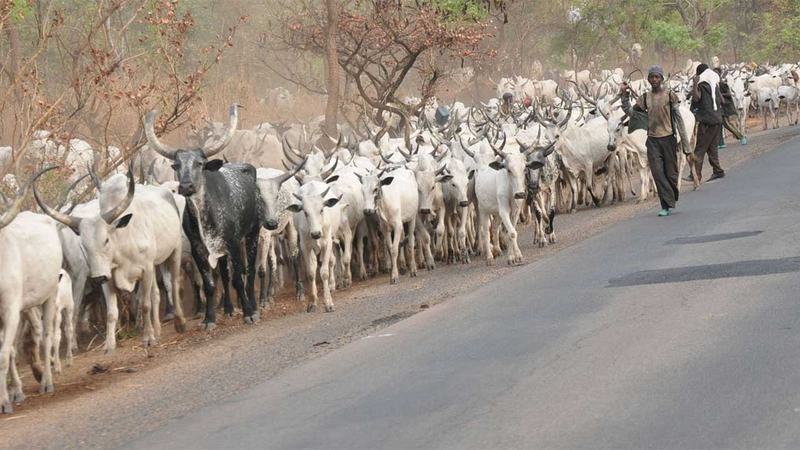
Herdsmen
Chambas, who is Head, UN Office for West African and the Sahel (UNOWAS), in a report presented to the UN Security Council, said the violence was a major security threat in the region, warning that it risks changing into terrorist attacks.
“Violence between farmers and herders is increasingly a major security threat in the region and risks morphing into the terrorist attacks that have defined the security landscape.
“Farmer-herder conflicts are becoming more sophisticated and deadlier, especially in Nigeria’s Middle Belt.
“During four days in June, new spates of attacks and retribution killings between herders and farmers in this region resulted in scores of deaths,’’ the UN envoy for said.
In the Lake Chad Basin, Chambas said despite gains made by the Nigerian armed forces and the Multinational Joint Task Force, Boko Haram remained active.
The UN envoy for West Africa and the Sahel said: “The trend of Boko Haram, using female suicide bombers continues, and reportedly almost one in five suicide bombers is a child.
“The most recent attacks on a Nigerian military garrison in Yobe and the ambush of a military convoy in Borno are the latest manifestations of the threats still posed by Boko Haram.
“There is a need for increased support to diplomatic, security and humanitarian responses to Boko Haram, in a holistic manner.
“To this end, UNOWAS is providing technical support for a joint summit of the Economic Community of West African States (ECOWAS) and the Economic Community of Central African States (ECCAS), on July 30, as called for by Security Council resolution 2349 (2017).
He explained that the severe depletion of Lake Chad had led to environmental degradation, socio-economic marginalisation and insecurity for 45 million people.
According to him, an estimated 2.3 million people remain displaced by the aggregate effects of insecurity and climate change.
He appealed to Member States to support the humanitarian response to the Lake Chad crisis, which remains critically underfunded and revitalisation of the Lake Chad Basin.
“Let me stress that any military response to security challenges in the region needs to be matched by the implementation of comprehensive strategies linking security and humanitarian interventions to development and human rights initiatives.
“There is also need to increase our collective efforts to address the challenges facing the Sahel region with actions that combine politics, security and development,’’ Chambas stressed.
He said the period under review saw an upsurge in popular discontent in the region manifested through often violent demonstrations calling for political and economic reforms.
“The sometimes violent conduct of security forces, notably in dealing with popular demonstrations, has also fuelled political tensions.
“Commitment by countries of the region and support from the international community will be key to ensuring the effectiveness and accountability of security sector institutions as part of broader security sector reform efforts.
“Several countries continue to struggle with justice, national reconciliation and human rights challenges.
“Among those is the concerning number of high-profile arrests, judicial prosecutions and convictions against political and civil society actors.
“We must collectively continue to urge Member States to provide an enabling environment for the exercise of the freedoms of expression and assembly, which are critical in consolidating democracy and good governance,’’ the UN envoy said.
He said UNOWAS would continue to closely monitor the situation with forthcoming elections in Nigeria, Mauritania and Senegal.
“In some countries of the region, including Nigeria, UNOWAS is working closely with ECOWAS and other partners to support the establishment of national peace architectures that can provide a systematic and inclusive approach to the prevention, management and resolution of conflict.’’
Some 1.1 billion people around the world face immediate risks from lack of access to cooling, says a report from Sustainable Energy for All released at the High-Level Political Forum (HLPF) on Sustainable Development in New York City on Monday, July 16, 2018.
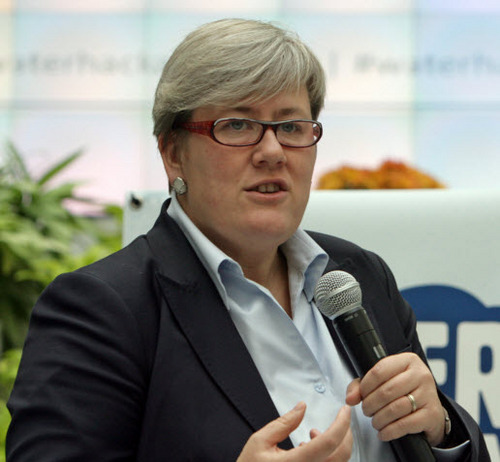
Rachel Kyte, CEO and Special Representative of the UN Secretary-General for Sustainable Energy for All (SE4ALL)
Cooling is crucial for a variety of often overlooked functions including safe storage of vaccines and drugs, cool office buildings in hot climates, and transportation of fish to market.
The report, titled: “Chilling Prospects: Providing Sustainable Cooling for All”, highlights access to cooling as an important emerging opportunity in climate adaptation innovation.
“In a world facing continuously rising temperatures, access to cooling is not a luxury – it’s essential for everyday life. It guarantees safe cold supply chains for fresh produce, safe storage of life-saving vaccines, and safe work and housing conditions,” said Rachel Kyte, CEO and Special Representative to the United Nations Secretary-General for Sustainable Energy for All.
To close the gap in access to cooling, “we ask cities, communities and country leaders to think about cooling action plans. This can be an output of work on NDCs (Nationally Determined Contributions) under the Paris Agreement,” she added.
“Companies that produce HFC free, affordable air conditioning appliances are looking at market opportunity of multiple billions of people,” she said. “The market opportunity is…enormous.”
HFCs are an important chemical used in refrigeration, but also an extremely potent greenhouse gas. Depending on the type of HFC compound, the refrigeration chemical is 150- 11,000 times more powerful as a greenhouse gas than carbon. It is estimated that cooling is now responsible for about 10% of climate change and growing rapidly. Future choices about refrigerants, the efficiency of cooling technologies, and how cooling is powered will have a significant impact on achieving the Paris Climate Change Agreement.
Access to cooling will be more important in the future as climate change impacts amplify. The study shows that the impacts of access to cooling are a fundamental equity issue. Of 1.1 billion people at risk, 470 million people are in poor rural areas without access to safe food and medicine and 630 million are in hotter, poor urban slums with insufficient cooling to protect them against heatwaves.
These at-risk populations are also concentrated in nine countries across Asia, Africa and Latin America: India, Bangladesh, Brazil, Pakistan, Nigeria, Indonesia, China, Mozambique and Sudan.
This year’s High-Level Political Forum on Sustainable Development is reviewing progress on Sustainable Development Goal (SDG) 7: Access to affordable Reliable, sustainable and modern energy for all.
Cooling is a complex issue and it is essential to achieving many other (SGDs). But cooling also requires energy, and increased cooling from HFCs and fossil fuel powered energy drives climate change which will make cooling even more important.
The report projects that by 2050, global work-hour losses for increased heat are expected to be as high as 12% in some regions like West Africa and South Asia which will translate into as much as 6% of annual GDP lost.
More broadly, despite improved access to electricity globally, close to one billion people continue to live without electricity. Moreover, approximately three billion people lack access to clean-cooking solutions and are exposed to dangerous levels of air pollution.
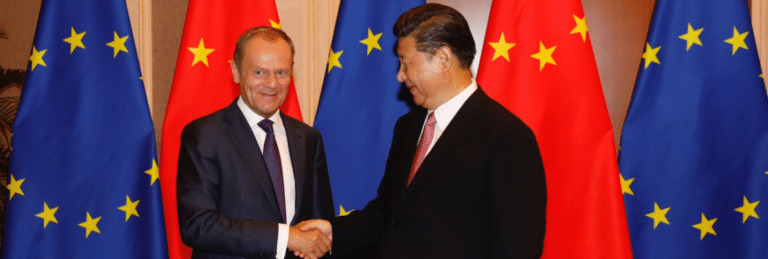
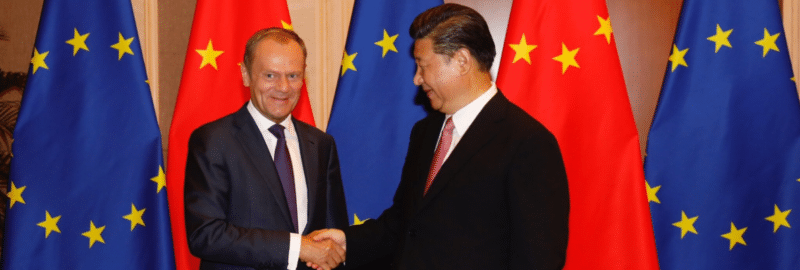
China and the European Union reaffirmed their commitment to the Paris Agreement in a joint statement on Monday, July 16, 2018 after the 20th EU-China Summit held in Beijing.
European Council President, Donald Tusk (left), with Chinese Premier, Li Keqiang, in Beijing
During the summit, leaders highlighted the importance of tackling climate change and called other nations to step up climate action. This effort is said to have become more urgent than ever because of the disastrous effects of climate change. The leaders expressed their commitment to advance cooperation on the implementation of the Paris Agreement and fully support the upcoming UN Climate Change Conference (COP24), which will take place in December 2018 in Katowice, Poland.
President of the European Commission, Jean-Claude Juncker, said: “We have underlined our joint, strong determination to fight climate change and demonstrate global leadership. It shows our commitment to multilateralism and recognises that climate change is a global challenge affecting all countries on earth. There is no time for us to sit back and watch passively. Now is the time for decisive action.”
The 16-point joint statement and the annex on climate change and clean energy was agreed on by the European Council President Donald Tusk, European Commission President, Jean-Claude Juncker, and Chinese Premier, Li Keqiang. The statement highlighted the impact of climate change and underscored the need for rapid action to fight against it.
Among other important points related to tackling climate change, the statement talked about the promotion of a global clean and low-carbon energy transition, especially towards sustainable, affordable, reliable and modern energy services.
Leaders also expressed their joint support for other important areas like human rights, trade and foreign and security cooperation. Based on the principles of respect, trust, equality and mutual benefit, leaders agreed to further deepen their partnership for peace, growth, reform and civilisation by comprehensively implementing the EU-China 2020 Strategic Agenda for Cooperation.
Inspired by discussions on the possibilities of transformational change, a keynote address by Canadian astronaut Roberta Bondar, and a celebration of indigenous culture, more than 1,000 delegates from around the world concluded two critical meetings of the UN Convention on Biological Diversity (CBD) in Montreal, Canada.
Cristiana Paşca Palmer, Executive Secretary of the Convention on Biological Diversity (CBD)
The meeting resulted in recommendations to accelerate and scale up actions needed to achieve existing global biodiversity targets by 2020 (the Aichi Biodiversity Targets). Governments also addressed the process for negotiating a new and more effective global biodiversity framework for the post-2020 period.
Dr. Cristiana Paşca Palmer, UN Assistant Secretary-General and CBD Executive Secretary, noted that “The results in Montreal reflect governments’ awareness of the need for accelerated actions to achieve the Aichi Biodiversity Targets. The outcomes of these meetings identified key areas that require additional attention. What we need now is to turn these discussions into effective and inclusive actions on the ground.”
The 22nd meeting of the Convention’s Subsidiary Body on Scientific, Technical and Technological Advice (SBSTTA-22) and the second meeting of the Subsidiary Body on Implementation (SBI-2), which were held from 2 to 13 July 2018, represented the last preparatory processes before the UN Biodiversity Conference 2018 being held in Sharm El Sheikh, Egypt this November.
An Atmosphere to Inspire Transformational Change
The negotiations took place in an atmosphere shaped by a desire to bring about transformational change and achieve the goals of building a future of life in harmony with nature. A seminar, organised by the Secretariat in the weekend between the two subsidiary body meetings, brought together social scientists, representatives of the World Economic Forum, governments and a full range of stakeholders active in the Convention process, for a “deep dive” into possible sustainability transitions pathways for systemic change.
During the open dialogue, Dr. Paşca Palmer invited participants to reflect on solutions for moving away from the linear way of thinking and path dependencies, to take a systems view approach in our relationship with nature and biodiversity. She framed the discussion around the question: “How do we empower the agents of change and frontrunners to build new pathways or accelerate transition to sustainability?” The resulting discussion provided a variety of insightful perspectives on the possibilities for change.
Delegates to the SBI meeting were also inspired by the words of Canadian astronaut and member of the order of Canada, Roberta Bondar, who delivered a keynote address featuring breath-taking images of the earth from space. Dr. Bondar said “I envy all of you because you are in a position to create change… and encourage others to make change. We know we can do it, we just have to keep our energy alive.”
The government of Canada sponsored a reception at the opening of the SBI meeting, where indigenous traditions, culture and music were shared with the delegates, providing a lived experience of the key role that traditional knowledge plays in building a future of life in harmony with nature.
Looking beyond 2020: Setting the Stage for Negotiations
Inspired by the overall possibilities and the need for urgent action, delegates assessed progress under the Convention, and advanced a proposal for the negotiating path towards the post-2020 global biodiversity framework. Stressing that “2020 is just around the corner,” the CBD Executive Secretary observed that the process for designing the post-2020 biodiversity framework needs to be science-based, transparent, and inclusive. The meeting requested inputs from Parties and stakeholders on ways to move forward with the process by August 15.
Meetings Outcomes
Delegates recognised the need to leverage emerging new scientific research including the work of the Intergovernmental Science-Policy Platform on Biodiversity and Ecosystem Services (IPBES), such as the recently released regional assessments. Parties also invited greater collaboration between the IPBES and the Intergovernmental Panel on Climate Change (IPCC).
A major topic addressed at the meeting was mainstreaming of biodiversity into sectors that depend on biodiversity, and whose actions cause potential adverse impacts to ecosystems and species. Governments recommended a package of actions for governments, businesses and other stakeholders, to facilitate the incorporation of biodiversity considerations into the energy, mining, infrastructure, manufacturing and processing, and health sectors.
Advances in the Implementation of the Nagoya Protocol
Countries noted considerable progress in setting access and benefit-sharing frameworks. However, the delegates underlined, that further efforts are needed to make the Protocol fully operational. The meeting also addressed the way forward for advancing on a global multilateral benefit-sharing mechanism, and on the question of specialised international instruments related to access and benefit-sharing in the context of Article 4.4 of the Protocol.
Digital Sequence Information
Governments generally recognised the positive contribution of digital sequence information on genetic resources for the conservation and sustainable use of biodiversity, but important divergences in views remain with respect to the implications of this issue for the fair and equitable sharing of benefits arising from the utilization of genetic resources. The understanding of the different perspectives achieved during the meeting will underpin the important decisions to be taken on this topic in Egypt, decisions that could influence the future work of the Convention and its Nagoya Protocol.
Synthetic Biology
On the question of synthetic biology, due to uncertainty around the impacts of organisms with engineered gene drives, countries were called to apply a precautionary approach for the release of such organisms, including when it comes to experimental releases. Underlining that more research and analysis are needed, governments called for broad international cooperation to assess the possible impacts on biodiversity of this technology.
On risk assessment of living modified organisms, including organisms containing engineered gene drives, countries agreed on a process for identifying topics that may warrant the development of international guidelines. Delegates requested the CBD Executive Secretary to commission a study on organisms containing engineered gene drives and modified fish.
On a few elements, consensus was not possible and further discussions were tabled for the November meeting.
Other Thematic and Cross Cutting Issues
Countries looked at the question of mechanisms for conservation of biodiversity that extend beyond existing notions of protected areas and recommended that the definition ‘other effective area-based conservation measures’ be considered by the COP, along with technical advice on guiding principles.
A methodology and a set of principles to guide the assessment of the role and contribution of indigenous peoples and local communities to the overall implementation of the Convention was also addressed in a draft decision to be taken up by the COP in November.
Governments recognised that, as new scientific information continues to emerge, there may be a need to modify existing ecologically or biologically significant marine areas (EBSAs). Countries also identified the need for agreed-upon means and approaches to describe new EBSAs in areas where EBSA workshops have already been held. A proposal for processes to revise existing, and describe new, EBSAs was advanced to the COP.
Delegates recommended that COP 14, this November, adopt the global action plan 2018-2030 for the conservation and sustainable use of pollinators. Governments urged the engagement of businesses, indigenous peoples and local communities, and other relevant actors, involved in production landscapes, to address the drivers of loss of wild and managed pollinators in all ecosystems.
The Lagos State Government has called for collaborative effort from stakeholders to improve sanitation in the Apapa area of the state.
Special Adviser to Lagos State Governor on the Environment, Mr. Babatunde Hunpe
Mr Babatunde Hunpe, the Special Adviser to the Governor on the Environment, made the call on Wednesday, July 18, 2018 at a stakeholder meeting in Lagos.
The meeting was between the Lagos State Ministry of the Environment, the Nigeria Union of Petroleum and Natural Gas Workers (NUPENG), the Apapa Ports Authorities.
Tank Farm Owners, National Association of Road Transport Owners (NARTO), Community Development Associations (CDAs) and Apapa Local Government were also part of the meeting.
Hunpe said that the meeting was held to foster ownership of the sanitation initiatives in the area.
He said that there had been pervasive disorder and attendant environmental infractions in the Apapa area.
The Special Adviser said that the infractions made the Lagos State Government, through the Ministry of Environment, to intervene to restore sanity in the sector.
According to him, the cooperation of all stakeholders is necessary to achieve a cleaner environment and restore the beauty of the area.
Hunpe said that the concerned associations within the port authority should come together to form a strong team that would own and sustain the ongoing efforts of the government.
He said that to address indiscriminate waste disposed along the road, government had decided to add two additional Waste Collection Operators to mop up waste from the road, while refuse bins would be placed at strategic locations.
Hunpe said that several environmental infractions such as littering and open defecation were outcomes of the undue presence of trailers on the road.
“Under normal circumstances, the expressway ought to be free.
“But the anomalies in this area, which keeps trailers perpetually on the road, and hawkers who have taken advantage of the situation, have contributed largely to the abuse of the environment,” Hunpe said.
He urged all stakeholders to cooperate with Commercial Waste Operators and ensure the provision of mobile toilets.
According to him, NUPENG should enlighten tanker drivers on the value of clean environment.
Hunpe said that the ministry would also prevail on the Public Works Corporation to assist in clearing the drainage.
Port Manager of Tin Can Island, Mr Emmanuel Akparere, thanked the Lagos State Government for its efforts and promised to bring together all stakeholders to ensure a cleaner Apapa.
Akparere said that the state government had done well by showing concern for the wellbeing of Lagos residents.
He said that the Port Authority had identified the root cause of the degeneration of the environment to be non-provision of holding bays by the shipping companies.
According to him, the Port has strategies to ensure the provision of the important facility.