Home Blog Page 1845

NESREA endangering lives by its secrecy – FOI Hall of Shame

0

The Media Rights Agenda (MRA) on Monday, July 23, 2018 inducted the National Environmental Standards and Regulations Enforcement Agency (NESREA) into its “Freedom of Information (FOI) Hall of Shame”, accusing it of undermining its own effectiveness by disregarding the FOI Act and possibly endangering the lives of Nigerians by its secrecy.

Dr. Lawrence Anukam
Dr. Lawrence Anukam, Director-General, National Environmental Standards and Regulations Agency (NESREA)

In a statement in Lagos, Mr. Ayode Longe, Programme Director at Media Rights Agenda (MRA), said the agency, which has among its duties the creation of public awareness and provision of environmental education on sustainable environmental management, the promotion of private sector compliance with environmental regulations other than in the oil and gas sector, and the publication of general scientific or other data resulting from the performance of its functions, has failed Nigerians in its core functions as well as in the implementation of a critically important piece of legislation aimed at promoting transparency, accountability and public participation in the important sector that it oversees.

He said: “There is no information available anywhere about any research, monitoring and enforcement of compliance by NESREA with any environmental regulation or laws while there is very little information available on its website or elsewhere about its activities, operations and businesses.  We fail to see how this cloak of secrecy under which it operates, in breach of the express provisions of the Law, is in the interest of NESREA or helps it to advance its goals.”

Established by the National Environmental Standards and Regulations Enforcement Agency Act of 2007, NESREA has responsibility for the protection and development of the environment, biodiversity conservation and sustainable development of Nigeria’s natural resources in general as well as environmental technology, including coordinating and liaising with relevant stakeholders within and outside Nigeria on matters of enforcement of environmental standards, regulations, rules, laws, policies and guidelines.

According to Mr. Longe, although the agency says its operational strategy is to establish a robust environmental information management system, including a database and databank, it has failed to disclose the categories of information that the FOI Act requires it to publish proactively, including information about its businesses, activities and operations.

He noted that the agency has failed to proactively publish the lists of reports, documents, studies or publications prepared by independent contractors for the agency as well as files containing applications for contracts, permits, grants, licenses or agreements, which it is obliged to do under the FOI Act.

Besides, Mr Longe said, although the agency has a long list of accredited consultants whose certificates are ostensibly up to date as at July 2018, there is no information about the names, salaries, titles, and dates of employment of employees and officers of the agency as required by section 2(d) (vi) of the FOI Act.

He accused the agency of failing to disclose reports and details of organisations or individuals that are violating environmental laws or regulations, standards, rules, policies and guidelines, thereby creating a lack of public awareness on the issue, contrary to its mandate, and possibly endangering the lives of Nigerians as a result.

Longe said since the FOI Act was passed into Law and came into force in 2011, NESREA had not submitted any annual report to the Attorney-General of the Federation on its implementation of the Act, as required by section 29 (1) of the Law.  He noted that, as at February 1 of this year, NESREA ought to have submitted a total of seven such reports to the Attorney-General of the Federation.

In addition, he said that there was no indication on the agency’s website or anywhere else that it has designated an appropriate officer to whom applications for information should be sent.

Section 2(3) (f) of the FOI Act requires every public institution to proactively publish the title and address of the appropriate officer of the institution to whom an application for information under the Act should be sent but provides that the failure of any public institution to publish any such information shall not prejudicially affect the public’s right of access to information in the custody of such public institution.

Longe accused NESREA of also violating Section 2 (3) (f) of the Act, adding that even the Office of the Attorney-General of the Federation, the oversight body for the implementation of the FOI Act, which maintains a database of such FOI Desk Officers of public institutions, has no record of compliance by the agency.

According to him, the institution is also in breach of section 2 (3) (d) (i) and (e) (iii) of the Act as it has consistently failed to proactively disclose any information relating to the receipt and expenditure of public or other funds as well as information containing applications for any contracts made by it or between it and other public institutions or private organizations.

Longe noted that the institution had apparently also not trained its officials on the public’s right of access to information or records held by it and for the effective implementation of the FOI Act, as required by Section 13 of the Act.

He said: “Media Rights Agenda calls on the Buhari Administration not to condone this sort of potentially pernicious disregard of our laws by public institutions. Heads of public institutions such as NESREA who do not appear to have an appreciation of the importance or seriousness of the offices they hold have no business holding public office.”

According to Longe, “The Government must move away from what appears to be a public policy of condoning the violation of our laws by the same public institutions that should be in the forefront of championing compliance with the Law, especially when they have regulatory functions and require other public and private bodies to obey the Law and report to them. If the regulatory bodies are themselves in breach of the Law, they rob themselves of the moral or legal authority to insist on compliance by other entities over which they superintend.”

Launched by MRA in July 2017, the “FOI Hall of Shame” highlights public officials and institutions that are undermining the effectiveness of the FOI Act through their actions, inactions, utterances, and decisions.
World Mangrove Day: NCF, MangroveXpo to showcase beauty of nature

0

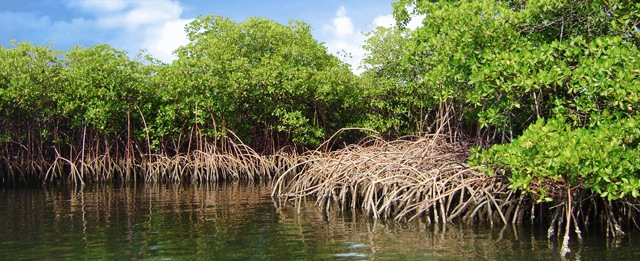
The Nigerian Conservation Foundation (NCF), in collaboration with MangroveXpo, will at the Lekki Conservation Centre in Lagos commemorate the International Day for the Conservation of the Mangrove Ecosystems by showcasing the beauty of nature and resources of Nigeria’s mangrove forest.

Mangroves
Mangroves

The International Day for the Conservation of the Mangrove Ecosystems will be globally observed on Thursday, July 26, 2018. NCF and MangroveXpo also intend to use the event to create awareness on the environmental challenges faced by mangrove ecosystems.

Mangrove forests, said Dr. Muhtari Aminu-Kano, Director General of the NCF, are ecosystems that grow along tropical coasts, where they thrive in saltwater and tidal conditions. He described the mangrove ecosystem as one of the important ecological habitat and biodiversity hotspots for aquatic species of great value for sustenance of the ecosystem. It protects some of the most vulnerable coastal communities from the devastating impacts of climate change.

He said: “Although mangrove forests cover just a minimal fraction of Nigeria’s land surface, Nigeria has the largest mangrove ecosystem in Africa and they store more carbon than any other type of forest and are therefore an important part of the solution to climate change.

“Nigeria has extensive mangrove forests in the coastal region of the Niger Delta. It is considered as one of the most ecologically sensitive regions in the world, the Niger Delta mangrove forest is situated within a deltaic depositional environment.”

The event, he disclosed, would feature speakers such as Obinna Chidoka, Chairman, House Committee on Environment and Habitat. A book titled “Man & Mangroves: An Environmental Awakening” will be previewed by Professor Frank Ugiomoh, a Professor of Art History and Theory, University of Port Harcourt.

Representatives of Chevron Nigeria Ltd, Shell Nigeria Ltd, ExxonMobil Nigeria Ltd, NLNG, Seplat Petroleum, and students will grace the occasion, which will also feature a photo exhibition session.

Africa50: Kenyatta, Adesina seek accelerated private sector investment in infrastructure

0

President Uhuru Kenyatta of Kenya has made an urgent call for developing and funding bankable infrastructure projects to drive Africa’s growth agenda.

Africa50
President Uhuru Kenyatta of Kenya and Dr Akinwumi Adesina of the AfDB with two other dignitaries during the Africa50 meeting in Nairobi, Kenya

In his keynote address at the Africa50 General Shareholders Meeting held in Kenya’s capital, Nairobi, President Kenyatta said support for bankable projects in energy, transport, ICT, water and sanitation provide unprecedented opportunities for private sector participation.

“The private sector must step up and help us close the infrastructure gap on the African continent. Public funding is limited, and there are competing priorities,” he said.

Kenyatta announced Kenya would double its current shareholding investment in Africa50 to $100 million. “We must have the confidence to trust and invest in our own infrastructure. Let us grow our partnership and make Africa50 a success.”

According to statistics provided by the African Development Bank (AfDB), the continent’s infrastructure funding requirements stand at close to $170 billion a year, leaving a financing gap of $68 – 108 billion.

AfDB President and Chairman of Africa50, Akinwumi Adesina, said, “We need to act with speed and urgency. Our people expect nothing else.” He emphasized the importance of tackling factors that inhibit private sector infrastructure investments, including high costs of financing, weak regulations, lack of cost reflective tariffs, low profitability, and weak regulatory frameworks for public-private partnerships.

Private sector infrastructure financing in Africa remains low, averaging $6 billion per year. In 2016, the figure dipped to $2.6 billion.

Adesina said Africa requires new models of financing infrastructure. “We must work smart to attract greater levels of investment financing for infrastructure development in Africa. Globally, there is approximately a US$ 120 trillion pool of savings and private equity. Africa must creatively attract some of this into the continent,” he said.

In response to Africa’s infrastructure finance deficit, the AfDB has launched the Africa Investment Forum (AIF) set to take place in South Africa in November 2018. The transaction-based forum is expected to be a gathering of global pension funds, sovereign wealth funds and institutional investors, and key private sector players.

Adesina commended President Kenyatta for the country’s bold commitment to and investments in infrastructure development over the last five years. Infrastructure accounts for 77% of the bank’s Kenya portfolio.

“Mr. President, you were one of the first African leaders to support the creation of Africa50, which I am honored to chair,” said Adesina. “The African Development Bank, of which I am President, helped create Africa50 because we believe new institutional models are needed to close Africa’s huge infrastructure financing gap. Africa50 will be a game changer on infrastructure financing.”

He urged countries that have not yet become shareholders of Africa50 to do so. Africa50 currently has a shareholding base of 25 African states.

Africa50 Chief Executive Officer, Alain Ebobissé, said his organisation was committed to ensuring the speedy execution of African infrastructure projects.

Three years after its founding, Africa50 is said to have become a key player in driving infrastructure investments, with commercial rates of return in Africa. It has mobilised over $850 million in infrastructure investments and expects to mobilise up to $3 billion through its private sector window. Africa50 has made major investments in several shareholder countries, including Egypt (400 MW solar power plants), Nigeria, Senegal and Kenya, among others.

Japan posts record temperature of 41.1°C as deadly heatwave rolls on

0

Japan on Monday, July 23, 2018 posted a record high temperature of 41.1 degrees Celsius in the
city of Kumagaya, the highest temperature ever recorded in the country, according to the Meteorological Agency.

Japan heatwave
Children play in a fountain in a Nagoya park heat wave continued

Japan has been hit by a heatwave this month, with dozens of people reportedly dying of heatstroke, including three on Monday.

Most of the victims have been elderly.

According to the agency, the temperature rose above 40 degrees in the prefectures of Gifu, Saitama and Tokyo.

A 90-year-old man was among Monday’s victims, according to Kyodo News. He was found unconscious before dawn in the city of Chichibu, north of Tokyo, and pronounced dead at a local hospital.

On Sunday, temperatures had risen above 35 degrees Celsius in 237 monitoring points out of 927 areas, which the Meteorological Agency said was the largest number this year.

The Tokyo Fire Department said that 3,125 ambulances were dispatched in the capital on Sunday, the largest on a single-day basis since it started emergency medical operations in 1936.

Authorities have urged the public to take precautions, such as ensuring adequate hydration and avoiding unnecessary outings.

The agency has predicted the heatwave will continue to hit the country until the end of July.

It comes after about 220 people were killed when heavy rains in western Japan triggered floods and landslides earlier this month.

The sweltering weather has hampered recovery efforts in many of the disaster-stricken areas

Nigeria too poor to meet development expectations, says don

0

An Associate Professor of Economic History with the Kaduna State University (KASU), Dr Terhemba Wuam, has said that Nigeria is too poor to meet its developmental challenges.

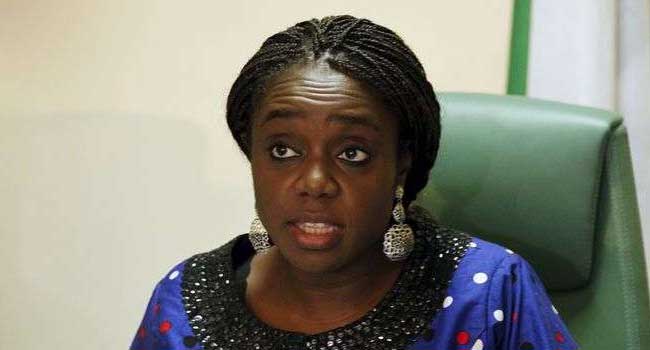
Kemi-Adeosun-finance-minister
Minister of Finance, Kemi Adeosun

Wuam made the remarks on Monday, July 23, 2018 in Kaduna at the opening of a National Conference with the theme, “The Central Bank of Nigeria and the Nigerian Economy Since 1958”, organised by the university’s Department of History.

He noted that the country’s earnings were too low to meet people’s expectations in terms of growth and development and wondered why those entrusted with leadership still steal from public treasury in spite of the nation’s poverty.

According to him, in comparison to the rest of the world, Nigeria is poor like the rest of Africa and does not have the money to warrant the level of theft from the public treasury.

“For example, the GDP of the whole of Africa with 1.3 billion population is 2.2 trillion U.S. dollars, out of which Nigeria’s GDP with 191 population is 380 billion dollars, the largest economy in the continent.

“This is far below Brazil’s $2.14 trillion and India’s $2.85 trillion GDP.

“But because many Nigerians are ignorant of this, they think that Nigeria is very rich and that is why people steal.

“The reality is, we don’t really have the money, which is the more reason we should not embezzle the little we have.

“When public officials divert resources, schools barely run, hospitals become empty shells and our roads and other public infrastructure degrade and become dilapidated.”

Wuam, who is the Head of History Department at the university, explained that the conference was an opportunity to brainstorm on the fundamental role of CBN to the Nigerian economy.

He also said that the conference presents an opportunity for scholars, especially economic historians, social scientists and management scholars to deliberate on the role of money to the development of modern Nigeria.

Wuam added that the conference was first in the series of events to be held in the coming year under the auspices of “The Money and Development in Nigeria Programme.”

“The initiative was predicated on the important milestone of the CBN turning 60 in 2019.

“The programme offers us an opportunity to begin an exploratory intellectual journey on knowledge about money, investment, banking and how they propel growth in Nigeria, Africa and the developed world.

“We shall try to understand what money is and what it represents; who has it and who doesn’t; how nations acquire money and get rich.

“This is important because understanding money is important for national development,” he added

Also speaking, Dr Yasin Abubakar, Head of History Department, Usmanu Dan Fodio University, Sokoto, said that the conference would appraise the performance of the apex bank in the growth and development of the nation’s economy since 1958.

Abubakar, a core convener of the conference, added that the aim was to critically examine majors issues regarding CBN’s role in facilitating economic growth and regulating banking and monetary sectors of the country’s economy in the last 60 years.

According to him, the CBN Acts of 1958 mandates the apex bank to ensure monetary and price stability, issue legal tender currency, maintain external reserve, act as bankers’ bank and provide financial advice to the Federal Government.

Prof. Dan Chuku of Nnamdi Azikiwe University, Awka, in a keynote address said that for the Nigerian economy to experience geometric growth with a multiplier effect on the populace, the CBN should detach itself from partisanship and primordial sentiments.

Mrs Comfort Gaiya, assistant director at CBN thanked organisers of the conference, saying that it would enrich the knowledge of many that do not know much about the operations and role of CBN.

By Philip Yatai

IFAD-CASP to visit 207 villages to examine programme implementation

0

The Climate Adaptation and Agribusiness Support Programme of the International Food and Agricultural Development (IFAD-CASP) says it will visit 207 villages in seven states to scrutinise the programme implementation.

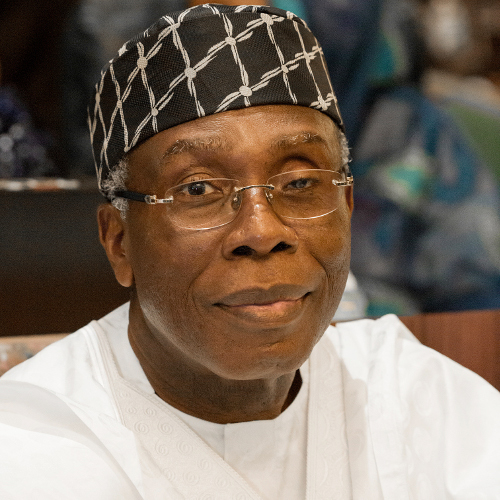
Chief Audu Ogbeh
Minister of Agriculture and Rural Development, Chief Audu Ogbeh

Mr Richard Nzekwu, National Coordinator (Climate Change and Adaptation) of IFAD-CASP, said this in an interview with News Agency of Nigeria (NAN) in Dutse, Jigawa State, on Friday, July 20, 2018.

He said that the visit would enable IFAD-CASP to ascertain the challenges facing beneficiary farmers as well as their action plans during the programme implementation.

Nzekwu spoke when a team from International Centre for Agricultural Research in the Dry Areas (ICARDA), a Jordan-based non-governmental organisation, visited Jigawa.

He said that IFAD-CASP would assist the farmers to adapt to climate change issues and adjust to soil management, water conservation techniques, while embracing modern crop harvesting technologies.

“It is on this note that IFAD-CASP is partnering with ICARDA to address the major problems facing farmers due to climate change.

“We have noted the problems in each community of every state that is partnering with us, and by the grace of God, we have taken measures to tackle them; the problems will soon be solved,’’ he said.

Meanwhile, the ICARDA team has visited Dagwaje and Koya villages, agrarian settlements that are about 200 kilometres away from Dutse, where the people spoke about their problems and the efforts made to address them.

NAN reports that Katsina, Jigawa, Yobe, Borno, Kebbi, Sokoto and Zamfara are currently participating in IFAD-CASP programme.

By Abdullahi Shugaba

Lagos metropolis to experience water supply disruption

0

The Lagos State Water Corporation (LSWC) says major areas of the metropolis will experience disruption in water supply as it embarked on a four-day repairs of its major pipes.

Muminu Badmus
LWC Managing Director, Mr Muminu Badmus

The corporation Group Managing Director, Muminu Badmus, said on Sunday, July 22, 2018 that the repair work which started on Saturday on its major water pipes on Carter Bridge-Iddo axis would end on July 25.

“The water leakage at Carter Bridge is 600mm diameter pipe between Oyingbo and Iddo Motorway would be affected.

“This will lead to disruption in water supply to major parts of Lagos metropolis.

“The parts of Lagos that will experience disruption in water supply during the repair are: Lagos Island, Victoria Island, Ikoyi, Surulere, Yaba and Ebute Meta.

“We are soliciting for the cooperation of the general public during the repairs as we are working to ensure steady water supply in the state and to serve you better,’’ he said.

Badmus said that the corporation decided to carry out the repair work before the closure of the Third Mainland Bridge for repairs.

“The repairs on the pipes are necessary at this period to ease traffic movement in the area before the closure of the Third mainland Bridge on July 27,’’ he said.

Badmus said that the Nigeria Police and Lagos State Transport Management Authority (LASTMA) would be available to ensure smooth vehicular movement during the period.

By Chidinma Agu

NiMet predicts thunderstorms, rains, cloudy weather for Monday

0

The Nigerian Meteorological Agency (NiMet) has predicted morning thunderstorms over cities in the Central States of the country such as Ilorin, Minna, Abuja, Jos, Lafia and Bauchi in the morning of Monday, July 23, 2018.

cloudy weather
cloudy weather

NiMet’s Weather Outlook by its Central Forecast Office in Abuja on Sunday also predicted day and night temperatures in the range of 25 to 33 and 18 to 23 degrees Celsius respectively.

It added that there were chances of thunderstorms over Gombe, Lafia, Jos, Kaduna, Abuja, Makurdi and Lokoja axis later in the day.

The agency predicted that southern states would experience prospect of cloudy morning with chances of rains over places like Awka, Ikom, Abakaliki, Obudu, Ogoja, Port Harcourt, Eket, Warri, Calabar, Ijebu-Ode and Lagos.

It also predicted chances of thunderstorms and rains over most parts of the region with day and night temperatures of 27 to 31 and 21 to 24 degrees Celsius respectively.

According to NiMet, Northern States will experience cloudy condition over the Inland of the south west with possibility of light rains over the remaining parts of the region in the morning.

It also predicted thunderstorms and rains over the entire region with day and night temperatures in the range of 27 to 32 and 20 to 25 degrees Celsius respectively.

“Cloudy conditions with prospects of thunderstorms and rain in varying intensities are anticipated over the country within the next 24 hours,” NiMet predicts.

By Sumaila Ogbaje

UNDP expert lauds Nigeria’s climate action efforts

0

Nigeria has received a pass mark in its efforts towards attaining low carbon emissions and addressing sustainable development challenges.

Catherine Diam-Valla
Catherine Diam-Valla, Climate Change and Gender Specialist, National Determined Contributions (NDC) Support Programme, United Nations Development Programme (UNDP), made the submission at a recent forum in Lagos to validate Nigeria’s Draft NDC document

Catherine Diam-Valla, Climate Change and Gender Specialist, National Determined Contributions (NDC) Support Programme, United Nations Development Programme (UNDP), made the submission at a recent forum in Lagos to validate Nigeria’s Draft NDC document.

Nigeria has of recent recorded remarkable triumphs such as the high rating of its First Biennial Update Report (BUR1) by the United Nations Framework Convention on Climate Change (UNFCCC), receipt of the 2018 Green Bonds Award under the category of “New Countries Taking Green Bonds Global” at the Annual Green Bonds Conference in London, UK following country’s issuance of a N150 billion Green Bond to the public, as well as the inclusion of seven Nigerians amongst the 721 experts from 90 countries invited to participate in the Sixth Assessment Report (AR6) as authors and editors.

But Diam-Valla, at the Validation Workshop for UNDP-NDC Support Programme, singled out Nigeria’s progress on the sectoral implementation plans under the NDC.

“Nigeria has Sectoral Action Plans that specify what the five sectors have to do. Some countries are only now working at doing implementation plans whereas Nigeria has already completed the sectoral implementation plans,” she said, adding that the UNDP is determined to help countries take actions that will lower carbon emissions

Her words: “My impression of Nigeria’s efforts toward addressing climate change issues has been quite positive. Nigeria has done some major work on the NDC since they started. They were the first to do the INDC which I guess every country had to do. But they also did the NDC roadmap on their own, which was right after the NDC. It gives a high-level direction to what they must do and what they are going to do. And they went even further. Nigeria is quite advanced in the process and the political will definitely exists.”

The goal of the UNDP process, according to her, is to help countries to implement their NDCs and the will to do it is to have the right institutional framework, and the right governance to get all the different bodies involved.

“So, right now, we are trying to ensure that Nigeria has a sectoral action plan which specifies each sector, the precise priority sector in the NDCs, what each sector must do, what their roles are, and how to get the buy-in to do the work. We are also addressing issues bordering how much money is needed to implement the NDC and where to source the money from.”

Stakeholders review climate communication document as A’Ibom seeks government collaboration

0

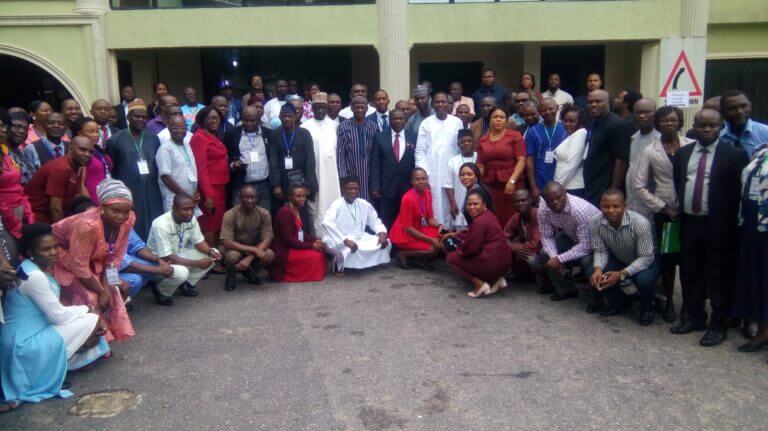
The city of Uyo in Akwa Ibom State was the centre of attraction as climate change desk officers of the 36 state Ministries of Environment and the Federal Capital Territory (FCT), civil society organisations (CSOs) and some strategic stakeholders gathered from Thursday, July 19 to Friday, July 20, 2018 to review Nigeria’s Draft Third National Communication (TNC) to the United Nations Framework Convention on Climate Change (UNFCCC).

Third National Communication Uyo
Participants at the stakeholders’ review of Nigeria’s Draft Third National Communication in Uyo, Akwa Ibom State

Organised by the Department of Climate Change (DCC) of the Federal Ministry of Environment with the support of the United Nations Development Programme (UNDP), the two-day stakeholders’ workshop, according to Dr Peter Tarfa, the DCC director, was informed by Nigeria’s commitment to its reporting obligation to the UNFCCC, albeit in a transparent and inclusive manner.

“Continuous preparation of a National Communication document, in series, is an obligatory requirement on all parties to the UNFCCC, which aims to communicate to the Convention and the global community, national inventory of greenhouse gas sources and sinks, mitigation options, vulnerability, adaptation and abatement analysis of the impacts of climate change. It also serves as a basis for reference on future auditing of greenhouse gas inventory in the country. Nigeria has produced and submitted its first and second National Communications to the UNFCCC in fulfilment of its reporting obligation. Activities are in top gear towards finalisation of the Third National Communication,” said Dr Tarfa.

Prior to Uyo, a two-day stakeholders’ inception workshop was held in Keffi, Nasarawa State, in May 2017 to address several key enabling activities of the project. The was followed by the engagement of the services of the consulting firm of Triple “E” Systems to develop the draft document.

Another two-day forum held in Kaduna for the institutionalisation of thematic working groups for activity data sourcing and development of category and sub-category templates. Data was then sourced and obtained from relevant ministries, departments and agencies (MDAs), even as a daylong consultation with the Organised Private Sector (OPS) in Lagos took place in the bid to capture inputs into the document.

“The workshop in Uyo is aimed at subjecting the TNC draft to wide stakeholder’s review to reflect national circumstances and also ensure a transparent, complete, accurate and accountable document,” emphasised Dr Tarfa.

In his opening remarks in Uyo, Dr. Shehu Ahmed, Permanent Secretary in the Federal Ministry of Environment, described the ministry as the designated National Focal Point (NFP) with a core mandate of implementing the UNFCCC, the Kyoto Protocol, and the Paris Agreement. The DCC, he added, is executing this responsibility, and in the process working closely with all ministries in the government as well as with the private sector players, and civil society towards developing policies, projects and programmes “with the aim of achieving a level of sustainable development for the prosperity and well-being of all citizens”.

Represented by Auwal Maidsbino, Director, Planning, Research and Statistics (PRS), Dr Ahmed added: “Towards the preparation of Nigeria’s Third National Communications, we recognised the invaluable roles of the MDAs, state and local governments, civil society and the private sector, most especially in responding to the growing concern for understanding and addressing climate change challenges and in the areas of understanding the past and the future impacts caused by this phenomenon in our nation.

“The National Communication requires us to list the main actions we have taken over the previous years and assess the additional options of response that we have available to mitigate the cause of the problem and to adapt ourselves to its consequences.

“If we act in isolation, we’ll never get to where we need to be. But if we work together, we can accomplish great things. There is much to learn from each other as there are great challenges to be addressed. An important feature of this event is its harvesting of views for consideration in finalisation of the Third National Communication (TNC) document and to ensure a cross-sectional involvement and national ownership of the document.

“The engagement of all levels of government – local, sub-national and national – is crucial to tackle effectively climate change. This is especially important in the context of the Nationally Determined Contribution (NDC) of Nigeria under the Paris Agreement. Under the NDC, Nigeria is committed to unconditional reduction of Greenhouse Gas (GHG) emissions by 20% below Business As Usual (BAU) projections by 2030, and a conditional contribution of 45% reduction, based on commitment with international support.”

In a goodwill message, the Akwa Ibom State Commissioner for Environment and Mineral Resources, Dr Iniobong Ene Essien, disclosed that, in responding to the challenges of climate change, the state government has put in place measures aimed at tackling the adverse effects of the phenomenon.

“One of such measures is the development of a Roadmap for Sustainable (Green) and Resilient Economic Development of Akwa Ibom State (2018-2030). This document outlines projects and activities to be implemented by the state government in collaboration with development partners/private sector to foster a low carbon and resilient economic development in the state,” he said.

According to him, a state-level institutional response was identified as an urgent requirement for the implementation of the Roadmap. To coordinate the activities of the Roadmap, he stated that government established a Department of Climate Change in the Ministry of Environment and Mineral Resources and has equally set up Inter-Ministerial Technical Committee on Climate Change.

“This Department thus becomes the focal point for all climate change and related activities in the state,” the Commissioner stressed, adding that, as part of the state’s mitigation strategy on waste management, preparations are in advanced stages for the signing of an MoU on waste recycling between the state government and the firm of P & A Environmental Solutions Limited.

He stated that Akwa Ibom has the potential to contribute to Nigeria’s Nationally Determined Contributions (NDCs) through its abundant renewable energy resources and other natural resources that support the agriculture sector.

“With the longest shoreline in the country, the state can support eco-friendly and sustainable tourism, while its vast mangrove plantations will contribute to protecting its shoreline from coastal erosion. We therefore solicit further strong collaboration with the Federal Ministry of Environment in capacity building of our personnel, projects development/implementation as well as financial support to tackle some of our climate change challenges,” Dr Essien said.