Home Blog Page 1844

Africa moves to sustainably green its judiciaries

0

African Chief Justices and Presidents of Supreme and Regional courts on Wednesday, August 1, 2018 commenced a three-day symposium in the Mozambican’s capital of Maputo to discuss how to strengthen adjudication of environmental disputes in Africa. The symposium aims at establishing Sustainable Green Judiciaries across the continent through empowering judicial training institutions.

Adelino Manuel Muchanga
Adelino Manuel Muchanga, Chief Justice of Mozambique

Participating in the second symposium on greening the judiciaries in Africa are also judicial educators, heads of judicial education institutions, representatives of judicial systems from France, Brazil, Bhutan, and Sri Lanka. The symposium is supported by Institut de la Francophonie pour le development durable, UN Office on Drugs and Crime, the Austrian Government, the Swiss Government, International Fund for Animal Welfare and the International Commission of Jurists.

“The judiciary is uniquely placed as a body that can transform and advance environmental matters. Enhancing the capacity of judges and magistrates is critical to the achievement of sustainable development goals,” said Adelino Manuel Muchanga, Chief Justice of Mozambique.

Participants will also discuss how to empower judicial training institutions in Africa on environmental matters. The objective is to equip judges, magistrates and judicial staff with knowledge and skills on adjudication and resolution of environment cases to ensure environmental sustainability.

“You have a critical role to play in ensuring environmental matters are adequately and fairly adjudicated to ensure the environmental injustice is mitigated or avoided,” said Elizabeth Mrema, Director of Law Division, UN Environment, at the opening of the symposium.

“This symposium provides a platform for you as heads of judiciaries, to discuss the emerging trends on adjudication of environment cases to strengthen the rule of law, promote and sustain judicial education, among others,” she added.

A regional curriculum and manual on environmental law for Judges and Magistrates will be launched at the symposium.

Participants will also seize the opportunity to launch the Africa Judicial Educators Network on Environmental Law.

“It is the expectation of the Africa Judicial Educators Network on Environmental Law that the use of the curriculum and manual will contribute to sustainable development in Africa and consequently in the whole world,” said Justice Sir Dennis Adjei, the chairperson of the Africa Judicial Educators Network on Environmental Law.

The African Judicial Network on Environmental Law will provide opportunities for exchanging information, create partnerships for collaboration, strengthen capacity, and provide research and analysis on environmental adjudication, court practices, and environmental rule of law.

A judiciary well informed of the rapidly expanding boundaries of environmental law issues would play a critical role in ensuring a healthy and secure environment through the interpretation, enhancement and enforcement of environmental law.

Trainings on environmental law in Africa have always been ad hoc and inconsistent. With this new approach to integrate environmental law through curriculum and manual development, a sustainable training programme for the judiciary is achievable.

Illegal trading of natural resources is estimated to cost Africa US$120 billion per annum, which is 5% of the Continent’s GDP. A strong judiciary system will help Africa to curb these illegal activities in environment and natural resources and use the savings to achieve its sustainable development goals.
Experts seek to advance landscape restoration in Africa

0

Finding solutions to meet the challenge of landscape restoration in Africa, where almost 50 million hectares of land is degraded each year, is a complex challenge requiring an innovative, coordinated, international response, says a top forestry expert who will speak at an upcoming conference in Nairobi.

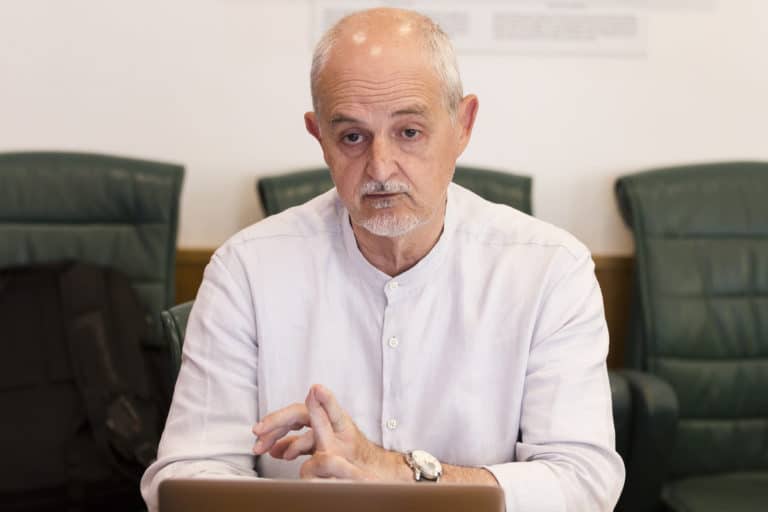
Robert Nasi
Robert Nasi, Director General of the Centre for International Forestry Research (CIFOR)

Over 800 multi-sector stakeholders from across Africa and around the world will meet in Nairobi, along with at least 30,000 people online, at the “Prospects and Opportunities for Restoration in Africa” Global Landscapes Forum (GLF) at UN Environment headquarters in Nairobi from August 29 to 30.

“Africa’s landscape must be restored to ensure the natural resource needs of the continent’s rapidly expanding population will one day be met, but there is no silver bullet,” cautioned Robert Nasi, director general of the Centre for International Forestry Research (CIFOR), co-coordinator of GLF with UN Environment and the World Bank.

The event will highlight many current landscape restoration initiatives and help set the stage for many more, demonstrating how countries are building on political will through actions on the ground to tackle land degradation.

Although annually Africa loses about 2.8 million hectares of forest, an area roughly the size of Saudi Arabia, the continent shows immense potential for landscape restoration. In total, two thirds of the continent’s land mass is degraded, according to World Resources Institute.

“Africa’s population growth protections are one key aspect of the challenge,” said Erik Solheim, executive director of UN Environment, who will speak at the Nairobi event. “Another is that many parts of the world will be looking to Africa for food production. The key challenge is therefore how do you provide for job creation and increased food production, and protect the environment? The answer is of course proper land-use planning.”

Local communities have restored more than five million ha of degraded landscapes across the continent, while more than 20 nations have pledged to restore 100 million ha of forest by 2030 through the African Forest Landscape Restoration Initiative (AFR100).

At GLF Nairobi 2018, delegates representing governments, international and grassroots organisations, the financial and private sector, indigenous communities and youth will draw upon these initiatives to pave the way forward in making forest and landscape restoration a reality.

Dialogues will take the shape of discussion forums, plenaries, online webinars and Landscape Talks, similar to TED Talks, while exciting side events, exhibitions and scientific report launches will celebrate Africa’s work in restoration and inspire action across sectors.

The event offers invaluable opportunities for stories and interviews related to restoration and environmental concerns. In addition to Nasi and Solheim, other key speakers include: Wanjira Mathai, chair of the Green Belt Movement; Hindou Ibrahim, National Geographic explorer and advocate for indigenous knowledge and rights; officials from environmental and forestry ministries across Africa, the World Wide Fund for Nature (WWF), the Rainforest Alliance and many more.

Clean energy innovators light homes, power devices with water

0

A home lighting system, a climate-controlled device that cools the environment, and a zero-emissions electricity generator. All powered by water.

Those are some of the success stories that emerged from the recently-held Clean Energy Innovation Challenge.

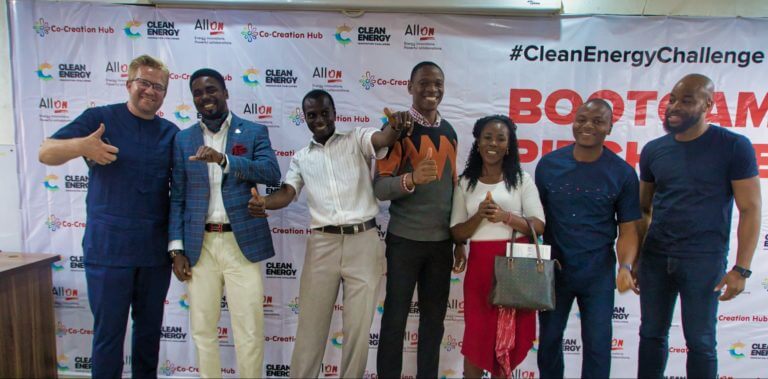
Indeed, after a rigorous selection process, challenging boot camp and engaging pitch competition, the winners of the Clean Energy Innovation Challenge were selected at the Co Creation Hub headoffices in Yaba, Lagos on Friday, July 27, 2018.

Clean Energy Innovators Challenge
Clean Energy Innovators Challenge winners with All On CEO, Dr Wiebe Boer

The Clean Energy Innovation Challenge, with the aim of unearthing and supporting renewable energy innovators in Nigeria, awarded startup capital to four early stage energy companies, namely: Aspire, Hydrolite, Hydrotriciton and ZeroElectric.

One of the winners of the $10,000 startup capital is Jos-based Hydrotriciton, a company that has developed a zero-emissions electricity generator that runs completely on water. Commenting on firm’s selection, CEO Choji Bare stated: “To have won this competition will really spur our growth. Our next step is to produce massively and launch into the market.”

Another one of the winners, Aspire, uses solar energy, battery storage and smart inverters to monitor solutions and deliver clean energy solutions to customers.

ZeroELectric has developed a climate-controlled system that cools the environment with water in areas without electricity.

Hydrolite has developed a home lighting system powered purely by water and is designed for off-grid communities. Their torches can last up to two weeks after contact with water.

In addition to startup capital, these companies and the five other finalists will receive top class incubation support from Co Creation Hub to take their ideation phase businesses to the next level.

Speaking on its involvement in the Clean Energy Innovation Challenge, Co-Creation Hub’s Director for Innovation, Femi Longe, said: “With Nigeria’s increasing energy requirements to achieve its developmental goals, amidst the threat of climate change, there is a need to find and support our clean energy innovators to build successful and sustainable businesses around their solutions. We are pleased to be working with All On on such a lofty agenda and look forward to supporting all the innovators to test and scale their ventures.”

The Clean Energy Innovation Challenge will enable All On to further its mandate of supporting innovative models to improve energy access to unserved and underserved segments of the Nigerian population.

Speaking on the impact of the challenge, All On CEO, Dr. Wiebe Boer, remarked: “The quality of applications received, and the winners selected for the Clean Energy Innovation Challenge are a demonstration of the potential that exists in the renewable energy sector in Nigeria. With our startup capital and Co Creation Hub’s incubation expertise, we are hopeful that these companies will mature to become sustainable businesses, employers of labor and on track for exponential growth to address the access to energy challenges that exist in the country.”

All On is an off-grid energy impact investment company that works with partners to increase access to commercial energy products and services for under-served and un-served off-grid energy markets in Nigeria, with a special focus on the Niger Delta.

At Olomola Lecture, experts advocate inclusive urban planning

0

Chairman of the Nigerian Institute of Town Planners (NITP), Lagos Chapter, Mr Kunle Salami, has called for inclusive urban planning to achieve the sustainable Lagos smart city.

Olomola lecture
Dignitaries at the maiden edition of Dr Femi Olomola Annual Lecture in Lagos

Salami made the call while speaking with the News Agency of Nigeria (NAN) on Thursday, July 26, 2018 on the sideline of the maiden edition of Dr Femi Olomola Annual Lecture, organised by the institute in Lagos.

He said for an achievable and effective integrated urban development in Lagos, governments at all levels must ensure an intensive engagement with the stakeholders, professionals and other relevant bodies.

Lack of this was one of the reasons why Lagos seemed to lack coherent and integrated urban development.

He said citizens needed to be engaged right from the conceptualisation of the plan, to design, implementation and review, stressing the need for regular interface between the governance and the governed.

According to him, to achieve the desired sustainable and inclusive development, the Lagos State government must adopt a people-centered approach in undertaking urban planning.

“Moving toward people-centered urban planning requires a restructuring of policy-making process and a restructuring of jurisdictional responsibility in physical planning and development.

“A dynamic process must evolve where governments will have to transform from regulating and approving institutions to bodies that enable and collaborate with citizens to respond to their needs,” he said.

Salami lamented that several regeneration/redevelopment plans had been prepared, but that the government lacked the will to faithfully commit to them.

“Often times, while those laws remain unimplemented, untried and untested to discover the lacunae, we begin to clamour for an amendment, a review or a totally new formulation.

“Unfortunately, things don’t suddenly change for the better with a ‘do nothing’ approach; neither do they change through prayer and fasting only,” he added.

Lagos state Commissioner for Physical Planning and Urban Development, Rotimi Ogunleye, urged town planners to play a more active role in infrastructure and urban development of the state.

He admitted that planning a city is tough, as a result-oriented stakeholders meetings and involvement should be paramount.

According to him, many of the sub-Saharan African major cities are rapidly going through a process of urban restructuring and physical transformation in their struggles to be integrated into the global economic system.

“To key-in into this new order of things, the administration of Governor Akinwunmi Ambode of Lagos State places high premium on building a collective stake in urban development planning and regeneration to foster inclusive sustainable Lagos smart city.

“Lagos, just like many other sub-Saharan Africa’s large cities, is cut in the struggles of managing population growth, urban development challenges and quest for urban modernity,” he said.

The Commissioner noted that an inclusive urban development model particularly in Nigeria can only be systematic, as it is rooted in a couple of principles that cannot be achieved overnight.

He commended the organisers for making Inclusive Urban Development a key issue of discussion at the lecture.

“This is bound to provoke a deeper understanding of the model and its positive implications in tackling city challenges and improving citizen’s quality of life.

“The renewed role for Urban Planning must incorporate the diverse views in planning decisions, consider the dynamic character of the urban area and thereby create a new form of urbanism: an urbanism for all and sundry.

“Stakeholders must be engaged in the development of plans and securing financial outlays for the implementation of selected priority projects.

“We are all resistant to change, nobody wants a change. But that change is necessary for a better future. And the Town Planners are professionally trained to effect the change,” he added.

Guest speaker, Oye Ibidapo-Obe, former Vice Chancellor, University of Lagos, said that infrastructure and urban development was a collective responsibility of both the government’s and the citizens.

Ibidapo-Obe, a professor, said that rapid population growth and urban expansion exert heavy burden on urban facilities, saying that the rapid increase in slums calls the need for proper planning.

He said statistics suggests that about 70 percent of the population of Lagos live in slum, a reality that calls for concern, considering the investment status laws and regulations.

He said that the provisions of housing, serviced land, infrastructure and urban services and livelihood opportunities have not kept pace with the population growth.

“Slum, rather than sickness, is just a symptom showing fundamental inadequacies in planning.

“Upgrading is any intervention that improves the physical conditions of a settlement, which in turn enhances the lives of its inhabitants.

“If the rural areas will be upgraded to be as comfortable as the urban cities, many people will prefer to stay there,” he said.

He added that proper planning brings about urbanisation, economic growth, job opportunities, among others.

By Lilian Okoro

Sustaining global development goals in Nigerian construction industry

0

The theme of the recent International Conference organised by the Nigerian Building and Road Research Institute (NBRRI) in Abuja “Sustainable Development Goals (SDGs) and the Nigerian Construction Industry: Challenges and the Way Forward’’, suggests an indication of the Federal Government’s interest in following the global development trend in all aspects of life.

Professor Danladi Matawal
Director General of Nigerian Building and Road Research Institute (NBRRI), Professor Danladi Matawal

In his presentation during the conference, Prof. Danladi Matawal, the Director-General of NBRRI, said that SDGs remained as an effective direction to creating environment conducive for global community.

According to him, SDGs address significant development that Millennium Development Goals (MDGs) failed to do in environmental degradation, inequality, weak institutional capacity and unsustainable consumption behaviour in society.

“In a sense, SDGs can be said to be concise, easy to communicate and action-oriented, which are the advantages over MDGs.

“The goals may also be described as universal, integrated, interlinked, inseparable, planet-sensitive and centered on people,’’ he said.

He said that the government would ensure the provision of smart cities and sustainable communities, design and construction of infrastructure and renewable energy technology.

He also said that a scheme — Sustainable Built Environment (SBE) — would be central to the delivery of policies for sustainable development.

He further explained that the scheme would adopt environment-friendly design, procurement, construction methods and management practices toward efficient buildings and infrastructure.

Matawal said that the SDGs, which reflected a global agenda toward socio-economic development, were indicated in government’s plan for economic development, social inclusion and environmental sustainability.

According to him, the increasing determination of society to achieve sustainable development for all has been an influential factor for government’s assent to the 2030 Agenda for Sustainable Development.

“The 2030 Agenda for Sustainable Development which comprise 17 goals, 169 targets and about 100 indicators represent a new direction for the global community,’’ he said.

Matawal observed that the new global development goals for the next 12 years aimed at improving prosperity and wellbeing by addressing the present economic, social and environmental challenges in the society.

“These transformational goals are universally applicable to all countries and tackle the challenges of eliminating extreme poverty, safeguarding environmental sustainability while achieving economic and social wellbeing.

“It also considers different realities, capacities and levels of development of various countries,’’ he said.

Matawal argued that Nigeria ought to key into the rest of the world for innovative, simple, cheap and user-friendly solutions to develop the nation’s building environment.

Expressing the government’s readiness in sustaining SDGs, Dr Ogbonnaya Onu, the Minister of Science and Technology, said that the present administration was committed and determined to rebuild nation’s infrastructure, particularly in housing and roads to meet SDGs.

According to him, a good network of roads is vital in the transportation of men, women, children and goods from one part of the country to another.

“We need decent houses for our citizens, the rich and the poor, the old and the young, to live in; we also need houses for our schools, hospitals, offices, markets to mention a few.

“We need roads connecting our numerous cities, our rural areas and those leading from urban to rural areas, to our farms, homes and places of relaxation and entertainment.

“This is very important in getting Nigerians to know the various parts of the country and help them to promote national unity and stability,’’ he said.

He said that such development would open areas of business through the utilisation of local materials for the construction of roads, houses and creation of wealth for individuals and the nation.

Onu also explained that the conference would showcase enormous achievements made by researchers in NIBRRI, noting that the ministry had planned to help the institute to become one of the best in the world.

“Recently NIBRRI protected its intellectual property right by securing a patent for its laminated bamboo board.

“This product utilises wastes bamboo during construction; this is one of the wastes-to-wealth initiative of the institute.

“This product is durable and termite-resistant which serves as a heat insulation, its strength is comparable with those of structural timber product like plywood and provides aesthetics to the interior of a building,’’ Onu said.

But Prof. Kabiru Bala, Chairman, Council of Registered Building of Nigeria, pleaded with the Federal Government to adequately address challenges facing construction industry to meet world standard

He said that such effort would further spur the relevant stakeholders to work toward meeting the desired development in construction industry.

He listed challenges facing Nigerian construction industry to include unethical practice, poor productivity and profitability, shortage of qualified workers and inconsistent prices of building materials, among others.

“The net consequences of these are high incidences of infrastructural failure and collapse arising from lack of adherence to specification.

“The use of foreign codes and standards without consideration for local situations and environmental peculiarities of a project should be discontinued.

“The adoption of the National Building Code of 2006 is gradually gaining grounds and should be promoted to enhance the development of sustainable construction in Nigeria,’’ he said.

He, therefore, advised that the construction industry should be harmonised and conducted in accordance with the relevant laws and standards guiding quality management of buildings and infrastructure development process with the active participation of key stakeholders.

The United Nations (UN) believes that the adoption of the SDGs marks a crucial moment for the global development agenda.

It also holds the belief that the new SDGs and the broader sustainability agenda address significantly the unsustainable consumption behaviour in the society.

By Gabriel Agbeja, News Agency of Nigeria (NAN)

Flooding: NEMA warns against dumping of refuse in water ways

0

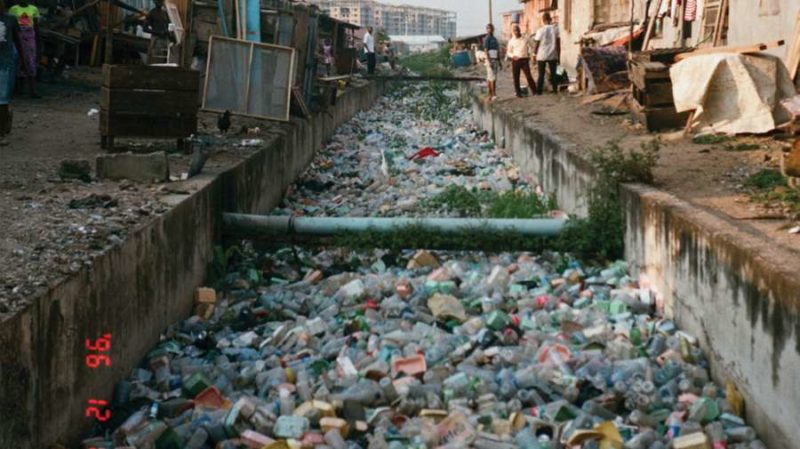
The National Emergency Management Agency (NEMA) Kano Operations Office has warned residents of Jigawa and Katsina states, especially those living in flood-prone areas, to desist from dumping refuse in water ways.

refuse disposal
Inadequate refuse disposal and unsavoury habit lead to clogged drainage channels that contribute to flooding

The warning is in a statement signed by the agency’s Head of Operations, Malam Nura Abdullahi in Kano on Tuesday, July 31, 2018.

He stated that the advice was necessary to avoid another major flood following the recent flood disaster which wreaked havoc on many communities in Jibia Local Government Area of Katsina State.

He added that “we find it necessary to issue this warning because some residents are in the habit of dumping refuse in drains, which can cause flooding.”

The head of operations also warned residents of the two states, being under the jurisdiction of his office, against erecting structures in flood-prone areas.

Abdullahi noted that the agency would continue to partner with other agencies such as the State Emergency Management Agency (SEMA), National Orientation Agency (NOA) and media organisations in the two states to sensitise communities about the importance of clearing the drains.

He said mitigation of flood disasters could only be effected through increased awareness and compliance to town planning regulations and due regards to environmental sanitation among citizens.

He added that “disaster management is everyone’s business: we must all play our roles in creating resilient communities.”

By Ramatu Garba

ADB launches ‘Strategy 2030’ in response to Asia-Pacific region’s changing needs

0

The Asian Development Bank’s (ADB) Board of Directors has approved a new long-term corporate strategy, “Strategy 2030”, that sets out the institution’s broad vision and strategic response to the evolving needs of Asia and the Pacific.

Takehiko Nakao
ADB President, Takehiko Nakao

“Asia and the Pacific has made great progress over the last half century in poverty reduction and economic growth, but there are unfinished development agendas,” said ADB President, Mr. Takehiko Nakao. “Under Strategy 2030, we will combine finance, knowledge, and partnerships to sustain our efforts to eradicate extreme poverty and expand our vision towards a prosperous, inclusive, resilient, and sustainable region.”

ADB’s aspirations are aligned with major global commitments such as the Sustainable Development Goals, the Financing for Development agenda, the Paris Agreement on climate change, and the Sendai Framework for Disaster Risk Reduction. Given the size of Asia and the Pacific, achieving such commitments will depend critically on the region’s success.

Strategy 2030, according to the ADB, recognises that the ambitious global development agenda must be tailored to specific local circumstances.  The body says it will strengthen its country-focused approach, promote the use of innovative technologies, and deliver integrated interventions that combine expertise across a range of sectors and themes and through a mix of public and private sector operations.

It further stresses that it will continue to prioritise support for the region’s poorest and most vulnerable countries by applying differentiated approaches to meet the diverse needs of various groups of countries: fragile and conflict-affected situations, small island developing states, low-income and lower middle-income countries, and upper middle-income countries. Across these country groups, ADB discloses that it will also prioritise support for lagging areas and pockets of poverty and fragility.

Infrastructure investments – particularly those that are green, sustainable, inclusive, and resilient – will remain a key priority, says the ADB, adding that it will likewise expand operations in social sectors, such as education, health, and social protection.

The bank points out that it will focus on seven operational priorities: (i) addressing remaining poverty and reducing inequalities; (ii) accelerating progress in gender equality; (iii) tackling climate change, building climate and disaster resilience, and enhancing environmental sustainability; (iv) making cities more livable; (v) promoting rural development and food security; (vi) strengthening governance and institutional capacity; and (vii) fostering regional cooperation and integration.

At least 75% of the number of ADB’s committed operations (on a three-year rolling average, including sovereign and nonsovereign operations) will promote gender equality by 2030, the organisation discloses, pointing out that it will ensure that 75% of the number of its committed operations (on a three-year rolling average, including sovereign and nonsovereign operations) will be supporting climate change mitigation and adaptation by 2030. Climate finance from its own resources will reach $80 billion for the period 2019 to 2030. A new corporate results framework – expected to be ready in mid-2019 – will include more targets for ADB’s other operational priorities.

To support the seven operational priorities under Strategy 2030, ADB says it will expand and diversify its private sector operations to reach one-third of ADB operations in number by 2024.

“We will expand our private sector operations in new and frontier markets, such as fragile and conflict-affected situations and small island developing states. We will also support more public-private partnerships,” said Mr. Nakao.

He adds that ADB’s private sector operations will help improve environmental, social, and governance standards; provide financing that is not available from the market at reasonable terms; improve project design and development outcomes; and mitigate perceived risks. In addition to innovative infrastructure, they will increase support for agribusiness, and support social sectors such as health and education through private ventures, he contends.

ADB further notes that it will continue to be a reliable financier and catalyser of finance. “A key measure of our success will be the volume and quality of additional resources we mobilise on top of our own financing,” Mr. Nakao adds, pointing out that ADB targets a substantial increase in long-term cofinancing by 2030, with every $1 in financing for its private sector operations matched by $2.50 in long-term cofinancing.

The institution will also work closely with its developing member countries to produce the most relevant knowledge products and services, albeit by proactively engaging in research, providing high-quality policy advice, strengthening countries’ institutional capacity, and expanding knowledge partnerships.

Nakao adds: “As it strives to be stronger, better, and faster, ADB will pursue a dramatic modernisation of its business processes by taking advantage of available technology. It will expand its products and instruments, strengthen human resources, and accelerate its digital transformation. ADB is committed to diversity in the workforce, including promoting gender balance and a respectful work environment for all. ADB will institute a ‘One ADB’ approach, bringing together knowledge and expertise across the organisation. It will collaborate with civil society organizations in designing, implementing, and monitoring projects.

“In preparing Strategy 2030, extensive consultations were carried out with a wide and representative group of stakeholders across ADB’s membership, leading development experts, and civil society organisations.

“ADB is committed to achieving a prosperous, inclusive, resilient, and sustainable Asia and the Pacific, while sustaining its efforts to eradicate extreme poverty. Established in 1966, it is owned by 67 members – 48 from the region. In 2017, ADB operations totaled $32.2 billion, including $11.9 billion in cofinancing.”

World Rangers Day: 107 rangers died in line of duty, says conservator-general

0

Conservator-General, National Parks Service (NPS), Alhaji Ibrahim Goni, says 107 rangers lost their lives worldwide in the line of duty between July 31, 2017 and July 31, 2018.

Park Rangers
Park rangers on parade during the 2018 World Rangers Day celebration in Abuja

Goni disclosed this while delivering the speech of the President of the International Rangers Federation (IRF) at the 2018 World International Day or World Rangers Day celebration in Abuja on Tuesday, July 31.

He said that the natural world was under immense pressure through the loss of species, habitat destruction, climate change, and environmental crime issues.

“These challenges need urgent attention and the many solutions to the problems varied and are complex, therefore rangers must play critical frontline role in defending our natural heritage, now and always into the future.’’

The Conservator-General assured that the service was working tirelessly to strengthen and equip its officers for effective park patrols.

He noted that the service had obsolete and low calibre firearms and ammunition and required, as an immediate measure, light arms and ammunition for effective park operations.

“We are working in collaboration with the Nigerian Army, the Directorate of State Services (DSS) and the Nigeria Police Force in fighting insurgency, banditry and cattle rustling in the park.

“This will help reduce the constant conflicts between the park staff and cattle grazers in the park because of the lack of designated cattle routes and functional grazing reserves, which had led to death of many staff and others getting maimed.

“We will rehabilitate access roads to ease park surveillance and anti-poaching patrol to boost wildlife viewing, and enhance park monitoring and evaluation,’’ he said.

Dr Okeyoyin Okedeji, Assistant Conservator-General, Ecological Resource Management of the service, gave a roll call of the fallen heroes.

“We lost 107 rangers worldwide: Africa, 63; Nigeria, three; and a total of 29 officers died in active service since the inception of the National Park,’’ he said.

In his good will message, Dr Rufus Ebegba, Director General, National Biosafety Management Agency (NBMA), congratulated the rangers who risked their lives to protect the environment.

“I give you my gallant salute for preserving and conserving our natural resources.

“I also congratulate the Conservator-General for what he has been doing in reviving the National Park to meet the international standard and wish that rangers are properly kited and well armed for law enforcement.

“Our country is very dangerous when it comes to enforcing the law, people lose their lives trying to protect the law,’’ he said.

Mr Jonah Moses, one of the rangers, thanked the Conservator-General for the training given to the rangers to be able to carry out their jobs effectively.

News Agency of Nigeria (NAN) reports that the Service in conjunction with Health is Wealth for life sustainability in Africa as part of the world rangers celebration, held a Medical Outreach programme on Malaria Testing and Treatment in three Park Headquarters Neighbouring Communities.

The communities are Kuchigoro, Karemajiji and Ruga all in the Federal Capital Territory.

By Ebere Agozie

Government insists on strict implementation of Abuja Master Plan

0

The Minister, Federal Capital Territory (FCT), Malam Muhammad Bello, has insisted on the strict implementation of Abuja Master Plan to avoid congestion being experienced in Lagos.

Abuja
Abuja

Bello said this at the ongoing two-day retreat for members of the Federal Capital Development Authority (FCDA) Board on Tuesday, July 31, 2018 in Abuja.

The minister, who chaired the 7th FCDA Board, warned members against deviating from the original Abuja Master Plan, saying that it would affect development of the city.

He urged them to bring in their wealth of experience to bear on the assignment and to leave indelible footprints.

According to him, there is need to present a reputable capital city for the future generations, built on the legacies of hard work, commitments and dedication to nation-building.

Bello, who was represented by the FCT Permanent Secretary, Mr Christian Ohaa, told the 10-member board that the retreat could not have come at a more auspicious time than now.

“The FCDA is entrusted with the mission of building a world-class city with standard infrastructure on quality service delivery, which no doubt placed huge responsibilities on your shoulders.

“The board is expected to set out broad-based policy guidelines, key performance indicators, technical services, support to actualise the goals of the building a first-class city comparable to the best in the world,’’ he said.

By Kabir Muhammad

World Rangers Day: Threats to Gashaka-Gumti National Park, by conservator

0

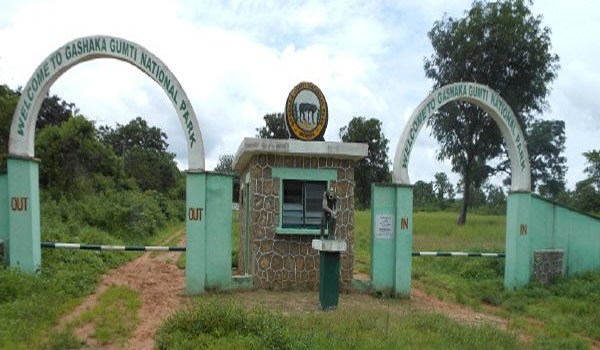
The Park Conservator, Gashaka-Gumti National Park in Taraba State, Mr Yuhanna Saidu, has identified increasing environmental problems and illegal human activities as some of the major threats to the continued survival of the park.

Gashaka-Gumti-National-Park
The Gashaka Gumti National Park

Saidu spoke on Tuesday, July 31, 2018 at an event to commemorate the World Rangers Day in Serti, headquarters of Gashaka Local Government Area of the state.

“Gashaka-Gumti National Park has had its fair share of human pressure on the park resources ranging from activities of poachers, illegal grazing, mining, fishing, farming and logging.

“More disturbing is the current spate of desperation for illegal logging of Rosewood, commonly called Madrid.

“Rosewood is a valuable timber used for many purposes, such as forage for livestock, medicine, dyes for cloths and luxury furniture.

“It is unfortunate that in Nigeria today, Taraba happens to be the last point where Rosewood is found, and logging is intense.

“These activities, if not quickly checked, will result in dire environmental consequences not only within the immediate area, but also the nation at large,” he said.

The News Agency of Nigeria (NAN) reports that the World Rangers Day was first commemorated on July 31, 1992, by the UK based International Rangers Federation (IRF).

It is to commemorate rangers killed or injured in the line of duty and to celebrate the work rangers do in protecting the planet’s natural resources and cultural heritage.

The forum encourages park rangers and park wardens across the world to share their successes and failures.

In his goodwill message at the occasion, the Lamido of Gashaka Emirate, Alhaji Zubairu Hamman-Gabdo, commended the resolve of the Rangers in the protection of the park and its resources.

Hamman-Gabdo also expressed confidence with the theme of this year’s celebration which is: “I stand with World Rangers: Protecting Wildlife and Wild Places.”

“This clarion call must continue to support the work of the rangers and assist in drumming the message of conservation far and wide, so that collectively we can make a difference,” he said.

According to him, the media must also do more in publicising the activities of Gashaka-Gumti National Park, which is the largest in West Africa.

NAN reports that the event attracted the presence of the Commanding Officer of the 20 Model Mechanised Battalion, Serti, Lt Col. Sani Adamu, and officers of other security outfits in the area.

Families of some fallen rangers of the park, who died in the course of duty were also honoured at the occasion.

By Saidu Adamu