Home Blog Page 1837

Niger to check tree felling by penalising charcoal merchants

0

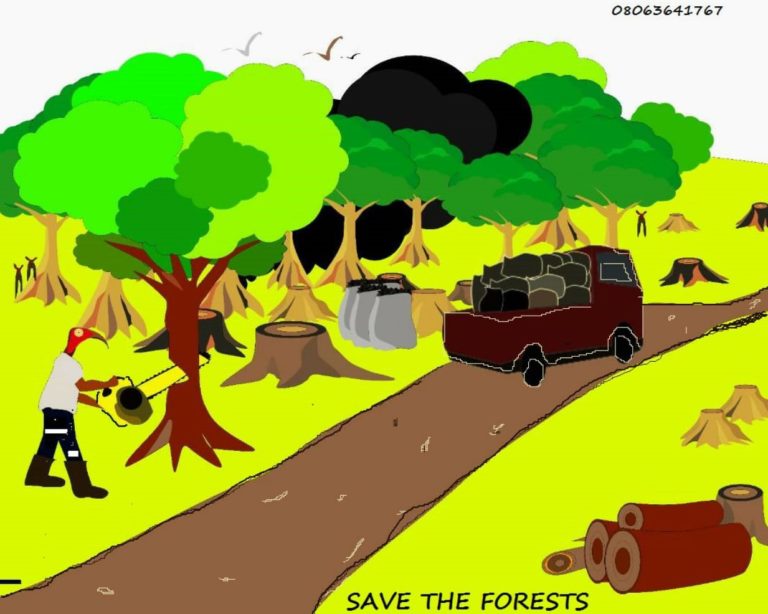
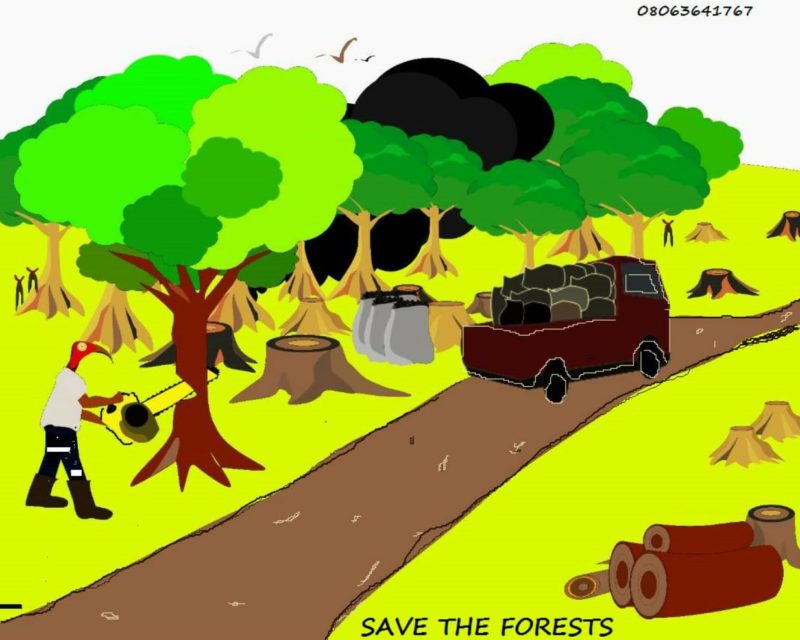
The Niger State Government on Wednesday, August 8, 2018 said it would strengthen its environmental laws to curb tree felling and penalise anyone engaged in sale of charcoal in the state.
Forest
Saving the forests from charcoal merchants

Governor Abubakar Bello said this at the flag-off ceremony to promote cultivation of cashew by the state government in collaboration with National Cashew Association (NCAN) in Bida Local Government Area of the state.

He said that an expanded security meeting would be held to strengthen the law, to discourage felling of economic trees by some undisciplined and unpatriotic persons.

“We must take this seriously to penalise whoever is caught selling charcoal.

“A report reaching me is that in the next five to 10 years, there won’t be any Shea nut tree in the state as a result of activities of some undisciplined persons.

“This charcoal is not being used by the people in the state, but it’s being transported and exported to other countries,” he said.

Bello disclosed that the state government had resolved to plant 10,000 cashew trees, and directed each Local Government to provide 50 hectares of land for the plantation.

He solicited the support of traditional rulers and political appointees to sensitise their people to desist from felling of economic trees for charcoal.

In his address, Alhaji Ibrahim Jibril, Minister of State for Environment, said Niger State, with over 76,000 square kilometers of land mass which is the biggest in the country, needs to adequately harness the resource for agriculture purposes to feed the nation.

He said that there was more than 400,000 hectares of land for cashew cultivation across the country which could be turned into wealth, if properly harnessed.

The minister said that statistics showed that cashew could earn N24 billion in terms of foreign exchange and could be turned to juice just as its shell could be used in paint making.

Jibril disclosed that the ministry was partnering with state government and Nigeria Erosion and Watershed Management Project (NEWMAP) to use additional funding of $400 million from the World Bank to address gully erosion in the state.

In his remarks, the Etsu Nupe, Alhaji Yahaya Abubakar, said that the choice of Edu-Soko Farm Nigeria Limited, as one of the sites for the project was a welcome development.

He said that the farm was established to promote and protect green environment for economic purpose as well as the empowerment of youth and women.

Abubakar said that about 2,500 youths from the local government areas of the state would be trained on leadership skills, while 250,000 cashew seedlings would be distributed for planting before the year ends.

By Rita Iliya
Government, NIRSAL, CIAT seek to curb emissions through climate smart agric

0

The Federal Government and the Nigeria Incentive Based Risk Sharing System for Agricultural Lending (NIRSAL) are working with the International Centre for Tropical Agriculture (CIAT) to reduce greenhouse gas emissions.

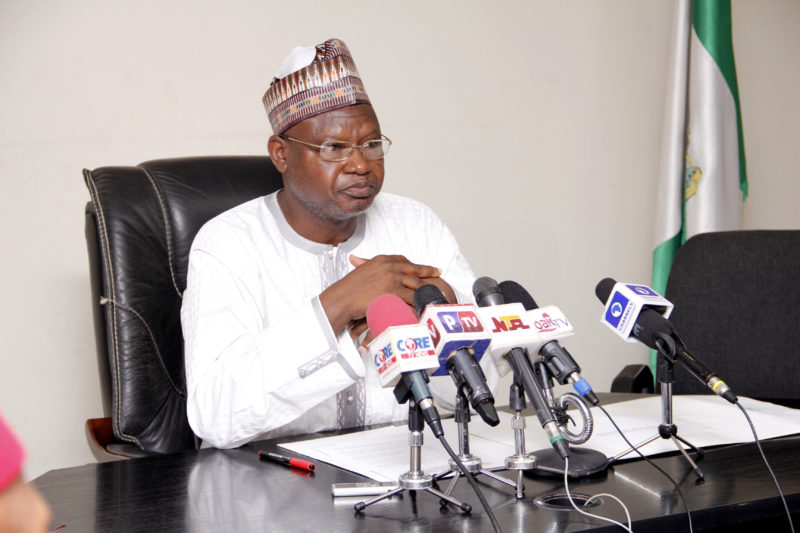
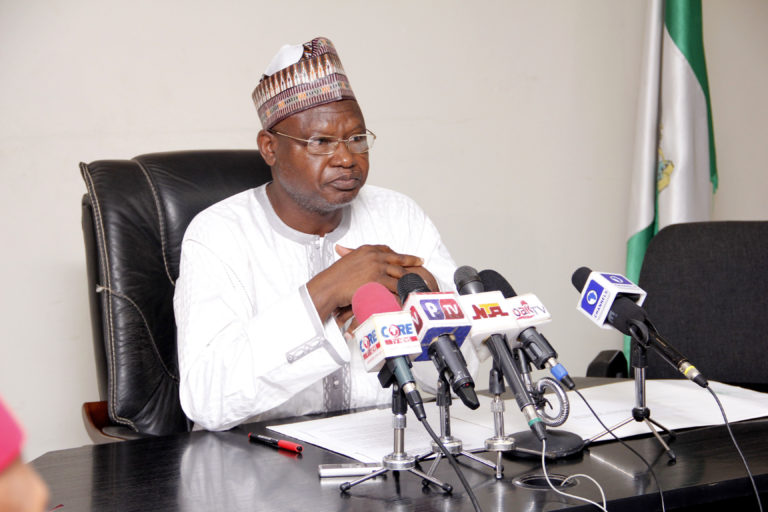
Ibrahim Usman Jibril
Environment Minister of State, Ibrahim Usman Jibril

They also signed an agreement in Abuja on Wednesday, August 8, 2018 to profile climate risks for agricultural commodities.

The risks facing agricultural commodities include flooding, drought, and desertification among others.

Speaking at the event, Mr Aliyu Abdulhameed, the Managing Director of NIRSAL, said the agreement was aimed at achieving the country’s Nationally Determined Contribution (NDC) signed at the UN Climate Change Conference of Parties (COP 22) in Paris.

Abdulhameed explained that the partnership was also geared toward protecting investments, providing an overview of climate risk issues and vulnerabilities to potentially impact agricultural production.

He said the move would have a direct impact on smallholder farmers across the country to increase their production and income.

He said the partnership would strengthen existing support systems in agriculture, build capacity and facilitate the development of robust response plans and programmes for a climate-resilient agriculture sector.

According to him, this provides a policy directive for the pursuit of climate compatible development in Nigeria.

“We understand that our efforts in growing the agricultural sector must be sustainable and at the same time, not detrimental to the environment.

“In our analysis, close to 30 per cent of the Nationally Determined Contribution (NDC) Goals for Nigeria are achievable via sectoral focus on agriculture alone,’’ he said.

The Minister of state for Environment, Alhaji Ibrahim Jibril, said the country had signed the Paris agreement and had committed itself to reducing green-house emission by 20 per cent.

Jibril, represented by Dr Peter Tarfa, Director, Climate Change, said the agriculture sector was a major emitter of green-house gases.

“The Federal Government has signed the Paris agreement and while doing the NDC, we realise that the agriculture sector is the major emitter of green-house gases.

“This becomes very central that in tackling climate change in this country, we have to reduce emissions from this sector bearing in mind that that agriculture sector is the major employer of labour.

“Priority of Nigeria and other developing countries is in the area of adaptation to the impact of climate change.

“It is for this reason that we are creating a platform through a policy direction for participation by NIRSAL and CIAT to bring benefits to the end user, who are the farmers,” Jibril said.

The African Director of CIAT, Dr Debisi Araba, said the centre would exchange knowledge and expertise with NIRSAL with a view to improving access to finance to farmers.

Araba said the centre would work with farmers to understand how climate change impact their practices, how they are coping and build a work-plan to get alternative options to improve agricultural production.

The CIAT is a non-for-profit research and development organisation; it is dedicated to reducing poverty, hunger and protecting natural resources in developing countries.

On Nov. 26, 2015, President Muhammadu Buhari approved Nigeria’s NDC to ensure adaptation to the Paris agreement.

By Ginika Okoye

Bridges, crops suffer as heavy rains drench Turkey

0

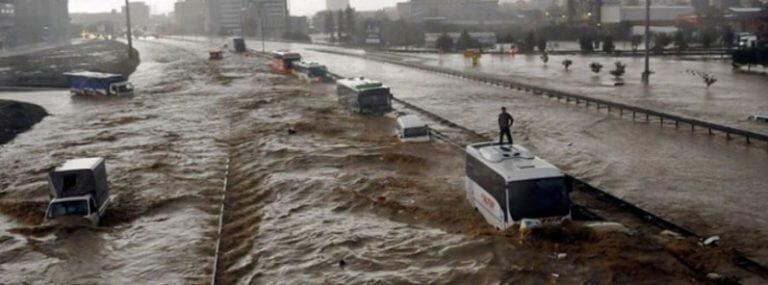
Bridges collapsed, hundreds of workers were evacuated from factories, and tonnes of hazelnut crops were swept away on Wednesday, August 8, 2018 as torrential rains lashed Turkey’s Black Sea coast.

Turkey flooding
Flooding in Turkey

The coastal province of Ordu was badly hit.

A statement from the governor’s office said heavy rains caused landslides and more than 100 flash floods.

A total of 715 workers, at a hazelnut farm and a textile factory, had to be moved to safety, the governor’s office said.

The coastguard joined rescue efforts. Helicopters, ambulances and bulldozers were dispatched to several neighbourhoods in Ordu, one of 18 provinces along the 1,700-kilometre Black Sea coast.

Broadcast footage showed people scrambling to higher ground.

One elderly man was rescued from the balcony of his two-storey home in the bucket of a bulldozer.

Cars and houses were underwater.

“We are having a serious disaster in seven of our districts. As many as eight bridges were destroyed,’’ Ordu Mayor Enver Yilmaz told private DHA news agency.

There were no casualties so far, five people were injured.

Haberturk daily reported that 30,000 tonnes of hazelnut crops were washed away in the floodwaters.

Turkey produces nearly 70 per cent of the world’s hazelnuts, according to the Customs and Trade Ministry.

The weather bureau warned that heavy rains will continue overnight through Thursday.

Ahead global action summit, world prepares to ‘rise for climate’

0

On Saturday, September 8, 2018, people around the world will take part in hundreds of actions under the banner of “Rise for Climate” to highlight increasing climate impacts and the need for real climate leadership.

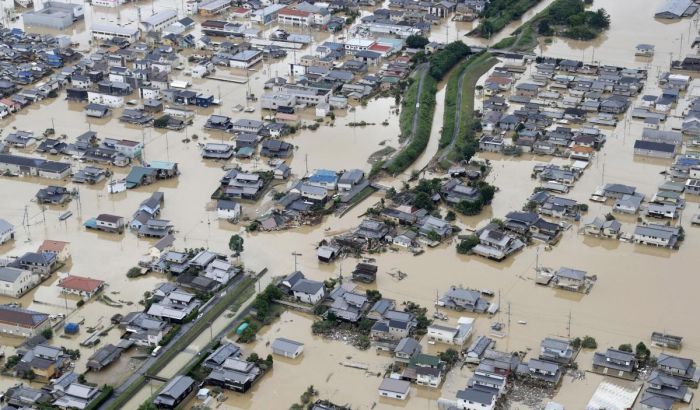
Flood in Japan
Flooding in Japan

Persons across five continents will be showcasing community-led solutions to the climate crisis and demanding that political leaders and decision makers step up their climate action ahead of the Global Climate Action Summit taking place on September 12 in San Francisco, California.

The communities most impacted by the fossil fuel industry and climate change will be participating thus:

  • In Africa there will be climate summits where local leaders will call for an acceleration of the just transition to fair and equitable energy systems;
  • Pacific Island nations will petition their local institutions to commit to 100% renewable energy;
  • Affected communities in Thailand will be marching outside the UN climate change conference in Bangkok to ensure negotiators hear the message of the people joining Rise for Climate around the world;
  • In Latin America groups will rise to challenge dangerous fossil fuel extraction methods like fracking; and
  • In Europe, communities will challenge their local municipalities to ditch dangerous fossil fuels and transition to 100% renewable energy.

So far in 2018, the world has witnessed a range of severe impacts related to climate change including: numerous floods in Kenya, Ghana, Cote d’Ivoire and Sudan and in sub-Saharan Africa, Cape Town became the first major city in the world to suffer and come back from the brink of Day Zero brought on by extreme droughts.

With 19 countries on the African continent going to the polls in a few months, including South Africa, Senegal, Ghana and Benin, Rise for Climate will presumably set the tone for a series of upcoming political moments and challenge decision-makers to act. The reality of the climate crisis should be the pressure that necessitates actions to tackle it.

The launch of the IPCC’s special report on the consequences of global warming surpassing 1.5C degrees should galvanise governments in their efforts to prevent the worst impacts of climate change, while the Climate Vulnerable Forum being held by the governments in-line to suffer the worst consequences of unchecked global warming is a chance to learn from the leadership of those on the frontlines. The Global Climate Action Summit convening non-state actors, and the UN Climate Negotiations bringing governments to the table, are opportunities for decision-makers at all levels to provide deeper commitments and accelerate their responses.

Lerato Ngakane of 350Africa.org said in a statement: “The actions of the Rise for Climate mobilisation will be highly visual, creative and unique with renowned artists located in Brazil, Canada, Samoa, New Zealand, Ukraine, Portugal, Netherlands, Uganda, and Indonesia as well as community groups across the planet taking part to help bridge language, culture and geographic gaps and find the common core to build a groundswell of support for real climate leadership, increase the pressure on national leaders that are falling short of their commitments, and create the right momentum to secure a fast and just transition to an equitable world.”

“Climate impacts are hitting communities right now with heat waves, wildfires, droughts, and flooding making headlines in the last few weeks alone. This September thousands of people around the world are going to draw a line in the sand and say no more to the root cause of these tragedies, no more to fossil fuels. We have all the solutions we need at hand; the time is now to accelerate a just and swift transition to 100% renewable energy for all. Communities all around the world will expressively and artistically demonstrate why it is time for governments to take example from local leaders,” May Boeve, Executive Director, 350.org, stated.

“For people of faith and spirit, the choice couldn’t be clearer: mass climate-induced humanitarian and ecological devastation, or an all-we’ve-got commitment to life in the form of 100% renewable energy for all and a just transition for affected workers and communities. We choose life. And, we want our leaders to show us by their commitments that they are making the same choice,” Rev. Fletcher Harper, Executive Director, GreenFaith, stressed.

“In exactly one month, people around the world will rise to challenge leaders participating in the Global Climate Action Summit in California and in other key meetings beyond to say 100% renewable energy is what we want, and we want it now because it is good for our health, pockets, securing jobs and robust economies. The age of fossil fuels is closing. It is a dying industry. If renewable energy technology and cost continue on their current path of exponential improvement, a fossil fuel smoke stack will become a relic of the past in no time,” Wael Hmaidan, Executive Director, Climate Action Network, noted.

“This October hundreds of scientists from top institutes will report to our governments, describing exactly how much devastation will be wrought on our communities if they do not take urgent, transformative action to limit global warming to 1.5°C degrees. In the Pacific region, we don’t need scientists to tell us this, in my home country the Philippines we are already managing the horrendous consequences of massive storms like Typhoon Yolanda. It is the imminent threat to our nations and cultures combined with the tenacity of communities in the region that drives us to lead the way in mobilisations like Rise for Climate and show the rest of the world what true climate action looks like,” said Lidy Nacpil, Coordinator of the Asian Peoples Movement on Debt and Development.

“The decisions we make now will define our ability to secure a more prosperous future and keep warming to levels that will avoid catastrophic climate change impacts. It will take everyone doing everything to change climate change. That’s why we are joining local leaders, frontline communities, and individuals and calling on our political leaders to step up and lead the momentum for strong climate action. The voice of ordinary people matters and can make a difference,” said Manuel Pulgar-Vidal, WWF’s global climate and energy programme leader.

Australia updates energy emissions audit

0

The Australia Institute’s Climate & Energy Programme has released a special update of the country’s National Energy Emissions Audit (The Audit), authored by renowned energy expert, Dr Hugh Saddler.

Dr Hugh Saddler
Dr Hugh Saddler

The special update, titled: “What AEMO’S Integrated System Plan Report implies about the National Energy Guarantee”, shows there are multiple scenarios in which much larger emission reductions and levels of renewable energy generation can be achieved in the National Electricity Market (NEM) than envisaged in the current National Energy Guarantee (NEG), and at a lower cost.

Some of the key finding of the report are listed to include:

  • AEMO believes renewables of about 50% by 2030 is possible with secure reliable power, under some approaches the renewable share could reach nearly 70% without compromising security and reliability, provided that new transmission lines and various other grid upgrades are completed in a timely manner.
  • The proposed NEG 26% emissions reduction target is virtually meaningless, as it will be exceeded well before 2025 in all of AEMO’s scenarios. By 2030 emissions reduction could reach nearly 40%, or even more under some scenarios
  • Under the “Slow” scenario, where the fall in grid consumption outweighs the slower growth of new renewable capacity, the reduction in emissions relative to 2005 reaches 49%
  • While under the “Fast” scenario, where the acceleration of renewable generation construction outweighs the acceleration in electricity consumption, the reduction in emissions by 2030 reaches nearly 53%’Under the “Neutral” scenario, emissions almost reach the target level in less than two years from now, and decisively exceed it in 2022-23. By 2030 the reduction reaches 39%.

The National Energy Emissions Audit is published quarterly.

National Parks Service inaugurates editorial board, harps on accurate information

0

The Conservator-General of National Parks Service, Ibrahim Goni, says accurate information is the backbone for national economic development and growth.

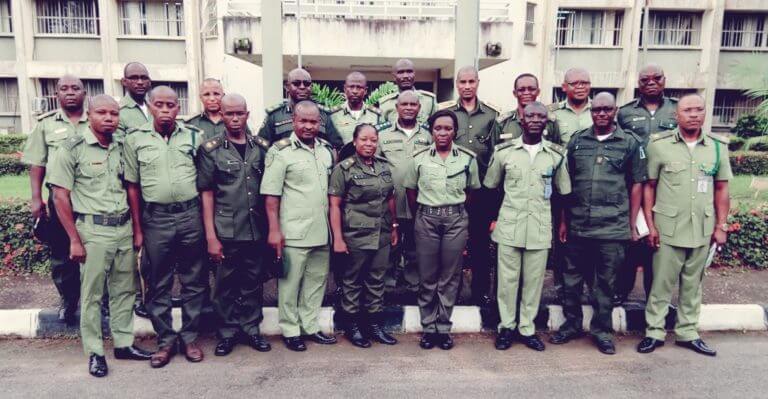
National Parks Service
The Conservator-General of National Parks Service, Ibrahim Goni, with members of the newly inaugurated National Parks Service Editorial Magazine Board

Goni said this on Wednesday, August 8, 2018 in Abuja during the reconstitution of the service’s nine-man Editorial Magazine Board to showcase the abundant potential in the country’s tourism industry.

The C-G said that proper information about the service to the public was necessary to gain national and international recognition.

He said the absence of the magazine had created huge gap in the dissemination of information on the activities of the national park.

“I want to draw your attention to the challenges posed by social media in contemporary reportage.

“You must rise to the occasion by ensuring that where facts are distorted on social media and similar platform, you should swiftly correct the misinformation,” he said.

He advised the members to bring in creative ideas and innovation that would enrich the quality of the publication.

“You must endeavour to showcase the abundant potential and hidden treasures of our national parks to improve tourist arrivals and revenue generation through the quality of your publications.

“Your publications should dwell more on issues that have direct bearing with the promotion of our corporate image and put information about the service in proper perspectives,” he added.

In an address of welcome, Alhaji Suleiman Yahaya, Assistant Conservator-General, Human Resource Management, emphasised that information was important to the organisation to showcase its activities.

According to him, information is power, information leads to formation, so lack of effective communication will lead to misinformation.

“This is why the board is inaugurated to set the ball rolling in putting the right information about the service to the public,” said Yahaya.

Chairman of the Editorial Board, Conservator of Park, Zanna Lawan, pledged that the board would justify the confidence reposed in them by being prompt and objective in their reportage.

Other members of the board are: DCP Yakubu Zull, DCP Maria Mamman, ACP George Kargong, CPW Ikpeme Rebecca, APW 1 Williams Rail, SP1 Alex Bwala, SPI Ibrahim Abdulfatai and CPWU Mathias Enaberue, who is Secretary.

Biosafety agency reviews, validates operational guidelines

0

The National Biosafety Management Agency (NBMA) has commenced the review and validation of some of its guidelines to strengthen the nation’s biosafety system.

National Biosafety Management Agency (NBMA)
Participants at the meeting

Dr. Rufus Ebegba, Director General/CEO, NBMA, said at the opening of the review and validation meeting in Abuja on Wednesday, August 8, 2018 that the guidelines were in the process of development over the past two years and had undergone intensive in-house assessment and critical review by stakeholders and needed final validation before being release to the general public.

Dr. Ebegba said that the guidelines for review and validation include the NBMA Risk Analysis Framework which details risk assessment – a precondition for the release of any Genetically Modified Organism (GMO).

“The guideline encompasses risk management plans and strategies to be employed if any potential risk arises from the practice of modern biotechnology. The guideline aims to strengthen the enforcement system for proper regulation,” he said.

Other guidelines reviewed at the workshop are NBMA Administrative Manual, NBMA Communication Strategy, National Biosafety Emergency Response, Biosafety Information Manual, Institutional Biosafety Committee Guidelines, Biosafety Laboratory Manual and NBMA Inspection Guidelines.

He added that the Biosafety Laboratory Manual ensures the accurate analysis of GMOs and the guaranteed safety of personnel working in the laboratory.

Dr. Ebegba thanked all the stakeholders present especially the media for accurate dissemination of information on issues of biosafety in the country. He noted that the media still have a lot to learn in terms of relating issues of biosafety to the general public.

The review and validation meeting was attended by stakeholders from different Ministries, Departments and Agencies (MDAs) who are involved in the National Biosafety Framework.

Cross River community gets electricity after centuries in darkness

0

People of Umon Island, a small riverine community on the coast of Cross River, have been cut off from civilisation for 200 years. Located in Biase local government area of the state, this village has never tasted electricity and all the sweetness it brings:

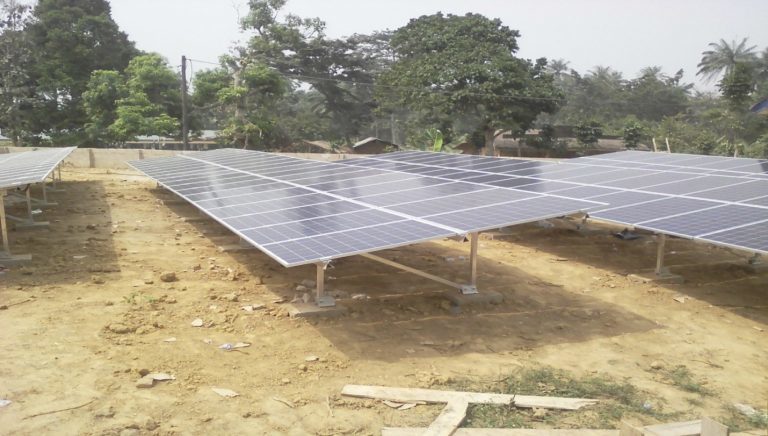
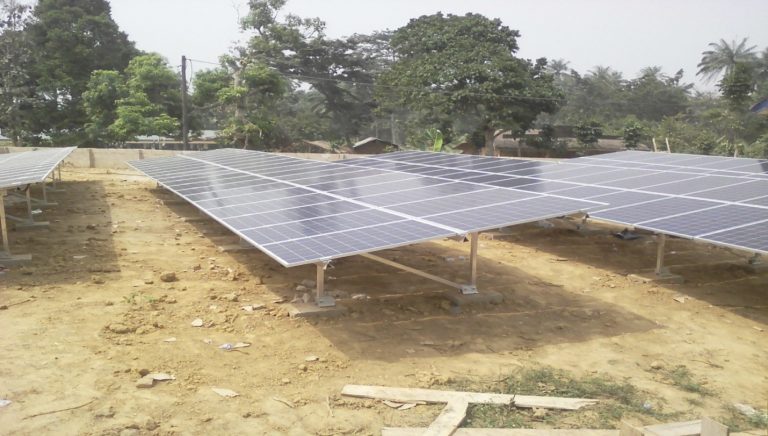
solar panels
Array of solar panels in Umon Island

Villagers have no safe drinking water as inhabitants drink directly from the murky water drawn from the large river surrounding them. There is also no functional primary health centre. The only one found was under lock and key. The primary and secondary school on the Island had no light to power computers, charge phone batteries, switch on the fans and power some laboratory apparatus. Thus, most students attend boarding school at Calabar, the state capital.


Let there be light

But, today, there is light. And where there is light, there is joy, progress, economic development, less crime and improved qualiy of life. They owe their thanks to the German government which, through its arm of international cooperation, GIZ (Deutsche Gesellschaft fur Internationale Zusammenarbeit), introduced the solar mini-grid idea to bring electricity to the village. In this village, the implementing partner is the Community Research and Development Centre – which introduced the solar 50 kilowatts mini-grid system in March 2018.

The GIZ, in a bid to bring economic development, promote the use of renewable energy and reduce reliance of the national grid system, signed a memorandum of understanding with five states namely Ogun, Niger, Plateau, Sokoto and Cross River to provide solar with the aim of promoting economic development in such communities which could have otherwise never seen the light of day.

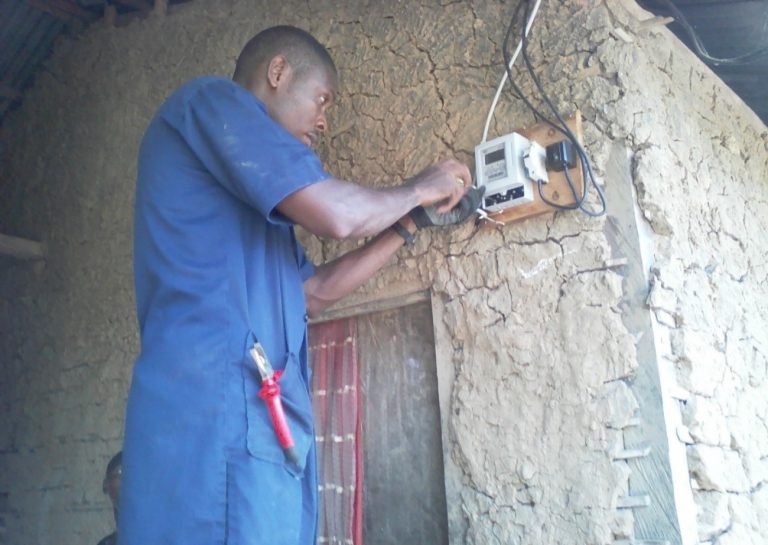
pre-paid meters
Installation of pre-paid meters in Umon Island

How it works

Abrahma Asuquo, the field electrical engineer managing the project at Umon Island, showed EnviroNews the solar system, which is housed in a room containing 48 batteries, with each carrying two volts and six battery inverters to generate 50 kilowatts. Also, outside the CREDC office, there are 18 photovoltaic cells (solar panels) which receive sunlight. The sunlight is converted to direct current that passes through the grid.

The power stored in the grid is ultimately fed into homes that are connected. The executive director of CREDC, Etiosa Uyigue, said if the government can adopt such models, it would reduce reliance on the national grid system, which is now not meeting the country’s electricity demand.

A census conducted by CREDC found that there are about 200 homes in the community and a sister community. Uyigue said letters were sent to the homes heads to sign an end-user agreement before their homes can be connected to the grid.


Meeting country’s power needs

“What we are trying to show the government by this project is that if we have pockets of small, small, power generation like this in communities, we will not need to depend on the national grid alone, Uyigue said.

Though the country’s transmission capacity has increased from 5000 MW to 7000 MW, it is still besieged with problems of weak transmission lines, obsolete cables and poor management. If national grid should collapse, the whole country will be plunged in darkness. The minigrid can only generate 50 kilowatts which is equivalent to 0.05 megawatts, a fraction of the country’s power generation capacity of 7000megawatts. According to him, the project, which costs N80 million is small, but it is achievable and sustainable, it is meeting the needs of communities which may never get connected.

“Our recommendation to the government is to decentralise the national grid. We are not relying on the national grid. This and with the private sector participation, we will do the maintenance. Let the government have the political will to even begin going to the communities,” he says.

At the time of visit, this reporter who slept in the village for two days observed that there was light for about 18 hours at a stretch every day.

“It could be more consistent, but we have a little hitch in the solar system, which is being fixed,” Asuquo, who took this reporter around, says. Community members told this reporter that their businesses are moving.

James Akpan, who sells soft drink on the Island, says, “I can sell my drink now. Before no one wants to buy it because it is not cold, but now, it is moving well.”

It was concluded that the project has improved the quality of lives of up to 5,000 inhabitants of the island, whose preoccupation are fishing, farming, boat construction, retailing and petty trading.


Climate change implication

According to environmentalists, renewable energy is the way to go to reduce the effect of climate change. It is free, clean energy from the sun, which does involve cutting down trees or burning of fossil fuels. By adopting this, the country is not only meeting its power demand and promoting economic development, it is also leaving zero carbon footprint and contributing to the reduction of the global climate change.

By Romemel Akodu

NEMA to partner emergency response agencies to tackle Onitsha flooding

0

The National Emergency Management Agency (NEMA) says it is ready to work with emergency response agencies and organisations to tackle flooding in Onitsha and its environs.

Onitsha flood
Flooding in Onitsha. Photo credit: aljazirahnews

The South-East Director of the Agency, Mr Walson Ibarakumo, told the News Agency of Nigeria (NAN) in Enugu, the Enugu State capital, on Tuesday, August 7, 2018.

According to him, synergy with NEMA and other organisations with similar mandate is critical in ensuring that imminent flooding in the area do not cause colossal damage to lives and property.

Ibarakumo said that the agency had written to most of the agencies and organisations in Anambra State for their help in a case of emergency evacuation.

NAN reports that the emergency response agencies and organisations include the Anambra SEMA, Red Cross, Ocha Brigade of Anambra, Boys Scout, Marine Police, Nigerian Navy, and Nigerian Army Engineers all in Onitsha.

According to him, the essence of involving all first line emergency response agencies is to get them ready, adding that there are signs of massive flooding in Onitsha and its environs.

“We are meeting with the state government officials and later with all emergency first response agencies and organisations.

“The meeting will be for us to understand each other in terms of what each agency/organisation can bring on the table and their areas of strength as well as exchange ideas on how to move when the time comes.

“This will afford us the opportunity to work in unison and co-ordination as well as achieve our target of serving our people.

“I mean the people affected by the imminent flood, on time,’’ he said.

The zonal director urged the locals in Anambra to work closely with their leaders, chiefs and local emergency management committees.

“The local emergency committees should quickly alert the State Emergency Management Agency (SEMA) that will contact NEMA.

“NEMA in turn will inform our emergency response partners for us to move on time.’’

By Stanley Nwanosike

Germany tests solar car with built-in panels

0

A Munich-based start-up has taken advantage of the strong Bavarian sun this summer to test the final development of the charging system of its Sion car, an all-electric solar vehicle that lets you charge as you drive.

Sion solar car
The Sion solar car

Germany will likely miss its target of putting one million electric cars on the road by 2020 but the government said in April it was ready to offer support to companies that make batteries for electric vehicles.

Sono Motors, founded in 2016, is developing the Sion, a fully-electric vehicle that has solar cells integrated into its bodywork.

It can be charged via solar power, from conventional power outlets or other electric cars.

Production will start in the second half of 2019 at one of its German plants and the company has around 5,000 orders which it aims to start selling at €16,000 ($18,540) in 2019.

Sion will have 330 solar cells attached to the vehicle’s roof, bonnet and sides and its battery system will offer a range of around 250 km before it needs recharging.

“We have a seat heater, there is air conditioning, there is a large infotainment system where I can also connect my phone interactively, which means I really have a full vehicle which is very simple, has no frills,” Laurin Hahn, Co-founder and Chief Executive of the startup said.