Home Blog Page 1836

Scientists demand Shell’s immediate response to Niger Delta spill

0

After more than 50 years of continuous oil spills into Nigeria’s Niger Delta, Shell oil has reportedly caused another big oil spill, this time in and around the village of Aghoro in Bayelsa State.
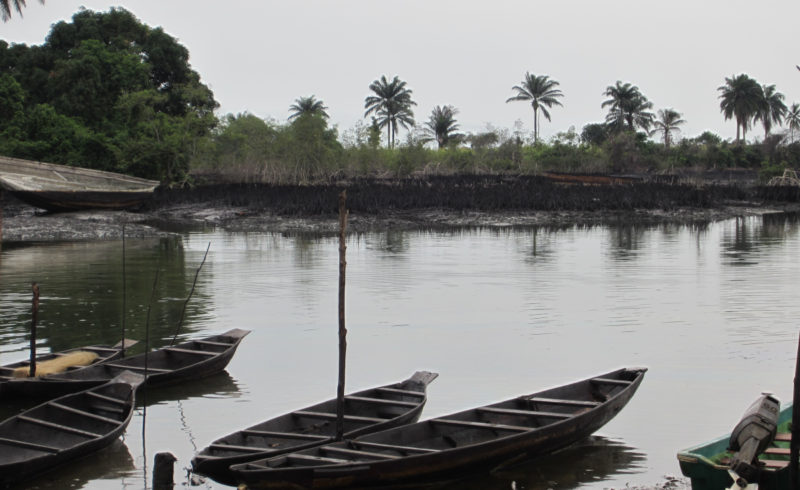
Oil spill pollution
A water body in the Niger Delta polluted by crude oil

On Thursday, May 17, 2018 (although some reports state the spill began much earlier, on April 24, 2018), the Aghoro community experienced a significant oil spill due to what is said to be a mechanical failure in Shell’s 24” Trans-Ramos Pipeline across Bayelsa State.

Dr. Ebikeme Festus Odubo, an environmental consultant and a regulator in the United States, who also is from Aghoro Community, recently visited the spill site to examine the spill’s effects first hand.

“The impact of the ecological devastation from this oil spill on the community, its citizens, and our way of life is tremendous. This tranquil community of fisherman, farmers and people who, for centuries, have relied upon our natural resources for life-sustaining purposes will be changed forever,” stated Dr. Odubo.

The Aghoro River and its productive mangrove forests, which serve as a major resource for the livelihood of its residents, has been covered in crude oil, severely affecting fish and wildlife in the area. The Aghoro River is also the main source of drinking and cooking water for the community. The incident is said to have resulted in an impending food, health, and environmental crisis in the financially impoverished area.

Yeitiemone Frederick Agbedi, a member of the Nigerian House of Representatives serving the Aghoro community, recently stated: “This is a devastation on the people and the environment.  A medical team should have been on the ground before now, dealing with expected medical issues and conditions. Shell should have made provision for alternative water supplies for these Communities having ruined their source of cooking and drinking water.”

Professor Richard Steiner, a marine scientist and oil spill expert in the University of Alaska who has worked on oil spills in the Niger Delta for many years, says the 2018 Aghoro spill is yet another tragic example of Shell’s reckless treatment of the Niger Delta environment and people.

“This is an old story in the Niger Delta. Shell consistently fails to maintain its pipeline network to global Best Available Technology (BAT) standards as required by the Nigerian federal law. Their pipelines continue to fail, causing massive oil spills and severe environmental and human health injury. Shell then resists its legal responsibility of spill clean up, claims compensation, environmental restoration, and repairing/maintaining its pipelines. This historic corporate recklessness needs to end,” Steiner said.

Nigeria, one of the world’s most oil rich countries, has a history of catastrophic oil spills that have wreaked havoc on the environment and local communities. The Aghoro Community is in Ekeremor Local Government Area of Bayelsa State, Nigeria.

Because of the extensive oil spill, Dr. Odubo and Prof. Steiner call for an immediate corporate and humanitarian response to assist the people of Aghoro and its neighboring communities in Bayelsa State with food, clean water, health and medical care, spill clean up, victim’s claims compensation, and an environmental restoration programme.
Gombe residents urged to imbibe tree planting culture

0

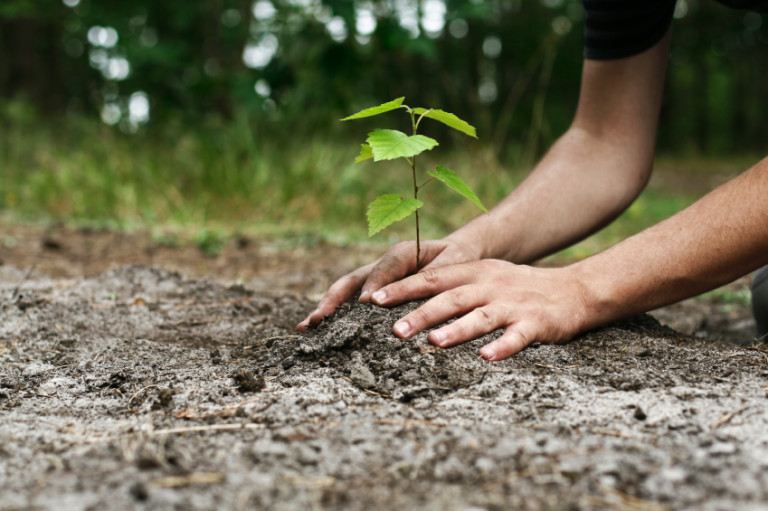
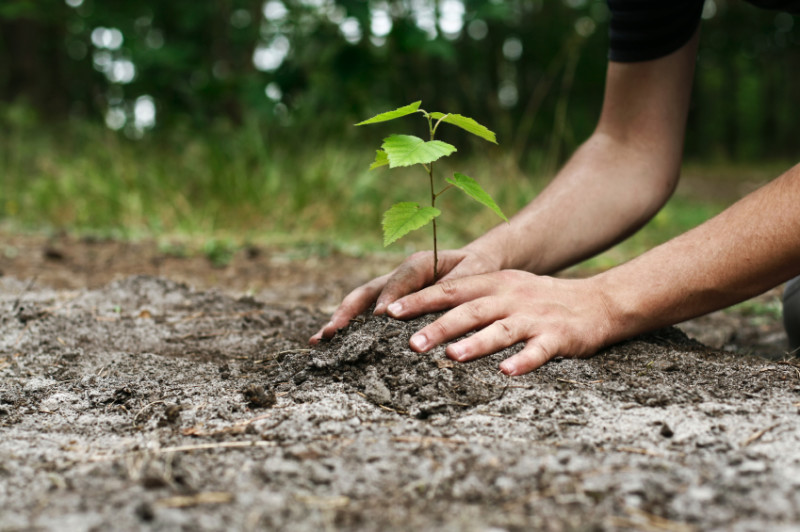
The National Environmental Standards and Regulations Enforcement Agency (NESREA) has advised Gombe State residents to imbibe the culture of planting tree in their environment.

Tree-Planter
Tree planting

Mr Wuave Daniel, the Gombe State Coordinator of NESREA, gave the advice in an interview with the News Agency of Nigeria (NAN) in Gombe, the state capital, on Monday, August 6, 2018.

Daniel said that environmental protection should be the concern of all residents, adding that tree planting is the best tool to protect the environment and human from flooding and air pollution.

According to him, residents in rural areas are quick to fell trees for economic purposes without making efforts to replace them.

“We must cultivate the habit of planting trees, especially in areas where flooding is severe, not just for the environment but for our health too. Environmental health aids human health.

“The flood, air pollution and other environmental hazards are issues that tree planting can be used to address. Planting tree is the cheapest way of protecting our environment.

“If the over 200 truckloads of firewood that are transported from our forests down to the city everyday have become a culture, why should people refuse to cultivate the habit of planting back those trees.

“We must begin to take the responsibility of protecting the environment for the good of humanity.

“When we refuse to plant trees, we make ourselves more vulnerable to the effect of our actions,’’ he said.

He decried the constant felling of trees for wood, saying that the practice must not be allowed to continue because of its devastating consequences on the environment.

He lauded the state government for being environment friendly.

By Uwumarogie Peter

Climate change: $2.4tr fashion industry shifts to low carbon

0

With the help of the United Nations, the world’s $2.5 trillion fashion industry is shifting to more sustainable business models which can help fight climate change and achieve the Sustainable Development Goals (SDGs).

Fashion industry
The fashion industry contributes to around 10% of global greenhouse gas emissions

The fashion industry, including the production of all clothes which people wear, contributes to around 10% of global greenhouse gas emissions due to its long supply chains and energy intensive production.  The industry consumes more energy than the aviation and shipping industry combined.

Shifting practices in the fashion industry to reduce carbon emissions is key to limiting warming to as close to 1.5°C above pre-Industrial Revolution levels, in line with the goals of the Paris Agreement on Climate Change.

In addition to its carbon intensive supply chain and production processes, the fashion industry consumes a great deal of other precious resources.

To make just one pair of denim jeans, 10,000 liters of water is required to just grow the one kilo of cotton needed for the pair of jeans. In comparison, one person would take 10 years to drink 10,000 liters of water.

Cumulatively, the fashion industry produces about 20% of global waste water. Furthermore, 85% of textiles end up in landfills or are incinerated when most of these materials could be reused.

One good example of how ambition to tackle climate change is growing in the fashion industry is collaborative initiative called the UN Alliance for Sustainable Fashion, co-sponsored by 10 UN organisations including UN Climate Change.

To help build awareness around fashion’s impact on the environment, UN Development Programme Goodwill Ambassador Michelle Yeoh explains the use of forest-based materials for sustainable fashion in this video “Made in Forests”.

UN Climate Change encourages sustainable fashion through its Climate Neutral Now (CNN) campaign which connects organisations that want to offset carbon emission with investments in carbon emissions reductions across the developing world.

Lindita Xhaferi-Salihu, who works for Climate Neutral Now, described CNN’s involvement with sustainable fashion as “kick-starting a multi-stakeholder initiative to mobilise fashion around climate action through three work streams: enabling “within sector” collaboration; facilitating engagement with policymakers; and catalysing action and providing recognition.”

At last year’s (2017) major UN Climate Change Conference in Bonn, Germany, the fashion industry outlined which steps it is taking to support the goals of the Paris Climate Change agreement.

For example, the fast fashion retailer H&M shared their strategy to be 100% run on renewable energy by 2040 with a fully circular production model, where the by-product of one industry serves the objective of another.


Other Inspiring Examples of Climate Action in the Fashion Industry

The 2018 Pulse of the Fashion Industry Report also contains positive news. There was a 6% increase in general sustainability efforts across the entire garment industry since last year’s report. The weakest points in the industry are small and medium sized enterprises in the entry- to mid-price segments which comprise just over 50% of the entire industry, pointing to issues of scale in implementing general sustainability measures.

However, new data presented in the 2017 report shows that a failure to implement sustainability measures into garment production will cause companies to lose out on a 2% increase in earnings by 2030.

Additionally, the famous blue jean manufacturer Levi, Strauss & Co has announced a new climate change action plan. Using Science Based Targets, the company plans to reduce greenhouse gas emissions by 40% across its global supply chain by 2025. The plan also includes a 90% reduction in greenhouse gas emissions in all owned-and-operated facilities, which will be achieved by investing in onsite renewable energy and energy efficiency upgrades.

Moldova ratifies biosafety protocol

0

The Republic of Moldova has ratified the Nagoya-Kuala Lumpur Supplementary Protocol on Liability and Redress to the Cartagena Protocol on Biosafety, making it the 42nd nation to do so.

Igor-Dodon
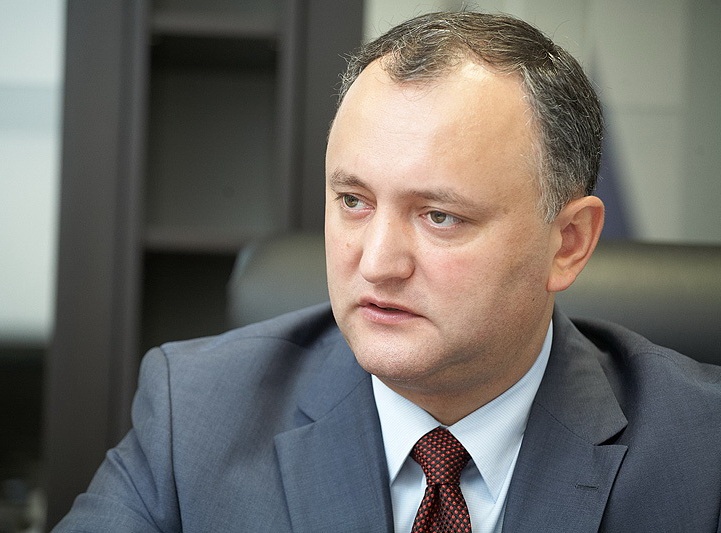
Igor Dodon, President of Moldova

The eastern European country and former Soviet republic deposited its instruments of ratification on Monday, July 30, 2018. It will enter into force on Oct 28, 2018.

The Nagoya-Kuala Lumpur Supplementary Protocol to the Cartagena Protocol on Biosafety was adopted by the Conference of the Parties serving as the meeting of the Parties to the Cartagena Protocol on Biosafety on October 15, 2010.

In accordance with its Article 17, the Supplementary Protocol was opened for signature on March 7, 2011 at the United Nations Headquarters in New York by Parties to the Cartagena Protocol on Biosafety. It remained open for signature until March 6, 2012.

The Supplementary Protocol entered into force on March 5, 2018, the 90th day after the date of deposit of the 40th instrument of ratification, acceptance, approval or accession.

The Cartagena Protocol on Biosafety to the Convention on Biological Diversity is an international agreement which aims to ensure the safe handling, transport and use of living modified organisms (LMOs) resulting from modern biotechnology that may have adverse effects on biological diversity, taking also into account risks to human health. It was adopted on January 29, 2000 and entered into force on September 11, 2003. Some 171 countries have so far ratified it.

Nigeria signed the Supplementary Protocol on February 1, 2012 but is yet to ratify it.

AfDB to increase fish production, others by 5m tonnes in Africa

0

The African Development Bank (AfDB) through its Technologies for African Agricultural Transformation (TAAT) programme is targeting to increase aquaculture production in Africa by five million tonnes by 2025.

Akinwumi Adesina
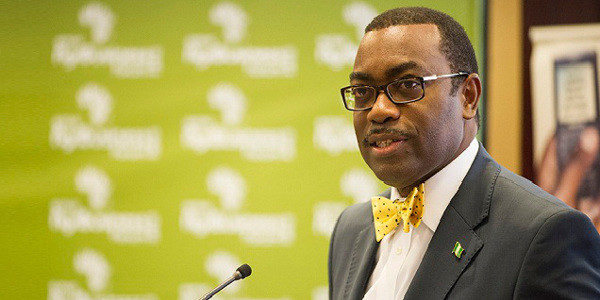
Dr. Akinwumi Adesina, President of the African Development Bank (AfDB)

Dr Chrysantus Akem, the TAAT Programme Coordinator, said this at a workshop organised for focal countries under the TAAT programme in Abuja on Monday, August 6, 2018.

Akem said that TAAT programme, an initiative of the AfDB under the “Feed Africa”, was targeting to increase inland water fish to enable Africa to become self-sufficient in fish production.

He noted that the priority of the programme was also to enlarge the production of cassava, rice, wheat, orange fleshed potatoes, maize, beans, sorghum and millet, livestock and small ruminants.

According to him, AfDB initiated the programme with $120 million hoping to use it as start up money to tap into $700 million that the World Bank has made available in its African Agricultural Transformation Programme.

“TAAT was conceived to make sure that the Feed Africa is carried forward, to bring together a number of value chains to see how to transform agriculture across Africa.

“AfDB realised that there are a lot of technologies, but they are either in shelves or in publications and Africa continues to import, spending more than $35 billion just on food crops, most of which it can produce.

“AfDB took the lead in reviewing all available technologies to see how to transform agriculture in Africa.

“Bill and Melinda Gates have made available more than $230 million through AGRA to also support the programme.

“This is a 10-year-programme which started in 2015 and will end in 2025,’’ he said.

Alhaji Muazu Mohammed, the Director of Fisheries, Federal Ministry of Agriculture and Rural Development, said that the country’s annual national demand for fish stood at 3.5 million tonnes.

Mohammed, represented by Mr Pwaspo Istifanus, the Deputy Director, Aquaculture in the ministry, said the country’s total production was 1.1 million tonnes with a deficit of 2.4 million tonnes.

He said that fisheries contributed about 4.5 per cent to the Gross Domestic Product and employed an estimated 10 million citizens in both primary and secondary operations.

The director listed some challenges affecting aquaculture development in the country to include high cost of good quality fish feed and inadequate genetic improvement and diversification of over 200 indigenous culturable fish species.

Dr James Apochi, the National Project Coordinator, West Africa Agricultural Productivity Programme (WAAPP), said the programme had developed no fewer than 11 technologies that had increased fish production in the country.

“We want to upscale our technologies, introduce regional markets that will go beyond Nigeria,’’ he said.

Prof. Bernadette Fregene, the Compact Leader of the programme, listed the implementers of TAAT to include WorldFish, IITA, universities, seed companies and fish feed millers.

Some participants and fish stakeholders who came from Ghana, Cameroon and Benin Republic, appealed to the programme to find lasting solution to the high cost of fish feeds.

By Ginika Okoye

Wildfire burns in Portugal for 4th day

0

Over 1,150 firefighters struggled to put out a fire in Portugal’s southern Algarve tourist region on Monday, August 6, 2018 which injured 25 people overnight and led to the evacuation of homes and hotels.

Portugal wildfire
Portugal wildfire

The fire, which started on Friday, grew over the weekend during a heat wave sweeping large parts of Europe.

Temperatures have started to fall from the peak of nearly 47 degrees Celsius, but it remains very hot in most parts of the country.

Emergency services added a further 350 firefighters to combat the flames overnight.

Twenty-four people were treated for light burns and smoke inhalation while one person suffered more serious burns.

People were evacuated from the area but Joao Furtado, 60, was forced to hide in a water tank to escape the flames as his house burned down, according to his sister-in-law.

“He was panicking because he was trapped in the house.

“There was fire everywhere and he couldn’t get out,’’ said Maria Helena Furtado.

Civil protection authorities said smoke was making it difficult for firefighting planes to access the area, but nine helicopters were flying.

There were 350 fire engines involved in the effort.

The fire is burning in the hills above the Algarve coast, an area popular with tourists for its hot springs, while the smoke could be seen from the coast.

Antonio Monteiro, Head of the Caldas de Monchique Spa Resort, one of the region’s best-known hotels, said: “We had to evacuate all hotel guests and we don’t have any information about when we will reopen.’’

Another hotel in the region, the Macdonald, was also shut.

Portugal’s biggest wildfire killed 114 people last year and it has since reinforced emergency services in the centre of the country where the worst fires usually break out.

Until last week Portugal’s summer had been unusually cold and wet.

Why public-private partnership is vital for climate action, by Fadina

0

In the light of her limited adaptive capabilities to deal with the consequences of climate change, Nigeria has been called upon to adopt collective actions to address the climate threats to human, business and ecosystems.

Prince Lekan Fadina
Prince Lekan Fadina

Executive Director, Centre for Investment, Sustainable Development, Management and Environment (CISME), Prince Lekan Fadina, who made the submission in Lagos on Monday, July 9, 2018 at the beginning of a two-day workshop for the review of the Draft Third National Communication (TNC) to the United Nations Framework Convention on Climate Change (UNFCCC), stated that such action should entail a collaboration involving the public and private sectors.

In a presentation titled: “Public Private Partnership for Climate Action in Nigeria”, Prince Fadina, while making a case for the role of the private sector, pointed out that the private sector accounts for 70% of all investments worldwide, even as 90% of people in developing countries depend on private sector, informal sector and small business.

“Adapting to the impacts of climate change is enormous challenge, and there is increasing number of private sector companies worldwide that are beginning to address climate change in their investments and business planning. They are turning the challenges to opportunities – green jobs, alternative energy, sustainable investments and low carbon industries,” said Fadina.

According to him, the global debate on climate finance has increasingly focused on the potential of the private sector to contribute to and/or leverage climate finance.

“At the outset discussion on the role of the private sector in finance was focused on mitigation to reduce the level of green house gases emission. Today, the private sector is increasingly relevant about the global adaptation debate,” he stated.

Fadina stressed that public and private sector organisations must see each other as partners in development, saying that there is need for trust, mutual confidence, understanding and appreciating each other’s strengths and weaknesses.

“We must strive for common vision and common objectives because the end-result is the prosperity of the Nigeria People,” he stressed, adding however that, to thrive and make sustainable investments, the private sector requires the existence of appropriate policy framework and an enabling environment.

While strengthening the partnership between government and business, and encouraging international co-operation on monitoring climate risks, Fadina recommended that national programmmes that entail investing in social preparedness measures, tackling inequality, bolstering IT infrastructure, education and innovation should be put in place.

His words: “The Continental Trade Treaty Agreement is in our doorsteps which makes Africa one market; our government and private sector should start to address the implications of this in our climate challenge and opportunities programmes.

“We believe that climate problem is real and all of us must act to respond, and we equally believe that the private sector can make a substantial contribution. It can help to solve but cannot solve all the problems, but it can make enough of a contribution that its worth pursuing.

“There is a need to set up a platform like the Talanoa Dialogue where government and private sector can have opportunities to share experience on climate issues and development. We should encourage participation and investment through public-private partnership in education, building capacity, creating awareness, invest in knowledge and research.”

IPCC to consider global warming report for approval

0

The Intergovernmental Panel on Climate Change (IPCC) will meet in Incheon, Republic of Korea, from October 1 to 5, 2018 to consider the Special Report “Global Warming of 1.5ºC”. Subject to approval, the Summary for Policymakers will be released on Monday, October 8 with a live-streamed press conference that will be addressed by the IPCC Chair and Co-Chairs from the three IPCC Working Groups.

Hoesung Lee
Hoesung Lee, IPCC chair. Photo credit: reneweconomy.com.au

The opening session of the meeting will include statements by the Chair of the IPCC, senior officials the IPCC’s two parent bodies World Meteorological Organisation (WMO) and United Nations Environment Programme (UN Environment) and of the United Nations Framework Convention on Climate Change (UNFCCC), and senior officials of the Republic of Korea.

The report, whose full name is “Global Warming of 1.5°C, an IPCC special report on the impacts of global warming of 1.5°C above pre-industrial levels and related global greenhouse gas emission pathways, in the context of strengthening the global response to the threat of climate change, sustainable development, and efforts to eradicate poverty”, is being prepared under the scientific leadership of all three IPCC Working Groups.

Formally, the meeting will start with the 48th Session of the IPCC. Next, a joint session of the three Working Groups chaired by their Co-Chairs will consider the Summary for Policymakers line by line for approval. Then the 48th Session of the IPCC will resume to accept the Summary for Policymakers and overall report.

The IPCC decided to prepare the report, in response to an invitation from the UNFCCC Conference of the Parties at its 21st meeting in December 2015 when the Paris Agreement was signed.

The IPCC is the UN body for assessing the science related to climate change. It was established by the UN Environment and WMO in 1988 to provide policymakers with regular scientific assessments concerning climate change, its implications and potential future risks, as well as to put forward adaptation and mitigation strategies. It has 195-member states.

IPCC assessments provide governments, at all levels, with scientific information that they can use to develop climate policies. IPCC assessments are a key input into the international negotiations to tackle climate change. IPCC reports are drafted and reviewed in several stages, thus guaranteeing objectivity and transparency.

The IPCC assesses the thousands of scientific papers published each year to tell policymakers what we know and don’t know about the risks related to climate change. The IPCC identifies where there is agreement in the scientific community, where there are differences of opinion, and where further research is needed. It does not conduct its own research.

At its 41st Session in February 2015, the IPCC decided to produce a Sixth Assessment Report (AR6). At its 42nd Session in October 2015 it elected a new Bureau that would oversee the work on this report and Special Reports to be produced in the assessment cycle. At its 43rd Session in April 2016, it decided to produce three Special Reports, a Methodology Report and AR6.

Uganda sends samples of strange, deadly disease to U.S.

0

Uganda has sent samples to the United States for further laboratory tests after a strange disease in the central region district of Mubende left eight people dead and 16 others hospitalised.

Yoweri Museveni
President of Uganda, Yoweri Museveni

The Ministry of Health in a weekend statement said previous laboratory tests turned out negative for all known viral hemorrhagic fevers like Ebola, Rift Valley Fever, Crimean Congo, Marburg and yellow fever.

The ministry turday said once the results from the U.S. are out, the public will be informed.

The ministry said with support from partners, it is taking measures to control the spread of the disease.

The ministry also said an isolation center has been established at Mubende Regional Hospital for containment and close monitoring of suspected cases. A surveillance team is also already in the field to do case search in communities and health facilities.

The ministry urged the public to report any suspected cases to the nearby health facility.

The symptoms of the disease include high fever, blood in vomit, acute headache and bloody diarrhea.

The strange disease was first reported on July 1 when the index case was registered. Since then, eight deaths have been recorded and 16 other people hospitalised.

A reflection on the North Cascades trail project

0

Ten days of trail construction and maintenance doesn’t make you trail expert, but helps to shape your mind, body and soul to what trail construction entails. It gives you what is known by trail professionals as the “Trail Eyes”, a lens for picturing whether you are doing it the right way. Keeping water off the trail is one of the most important trail design elements and the use of water diversions is an effective way of achieving this.

Sahale Arm Mounts (North Cascades)

It has been proven over time that water on trails shortens the life of the trail and increases maintenance. Every trail expert will do anything possible to avert these gory incidents by maintaining the standard. These are thoughtful lessons we picked from Ben as he journeyed with us to the beautiful North Cascades region. Ben is that same environmental guru at EarthCorps that oversees environmental projects in its various forms.

The North Cascades are a section of the Cascade Range of western North America. They span the border between the Canadian province of British Columbia and the U.S. state of Washington and are officially named in the U.S. and Canada as the Cascade Mountains. The U.S. section of the North Cascades and the adjoining Skagit Range in British Columbia are most notable for their dramatic scenery and challenging mountaineering, both resulting from their steep, rugged topography.

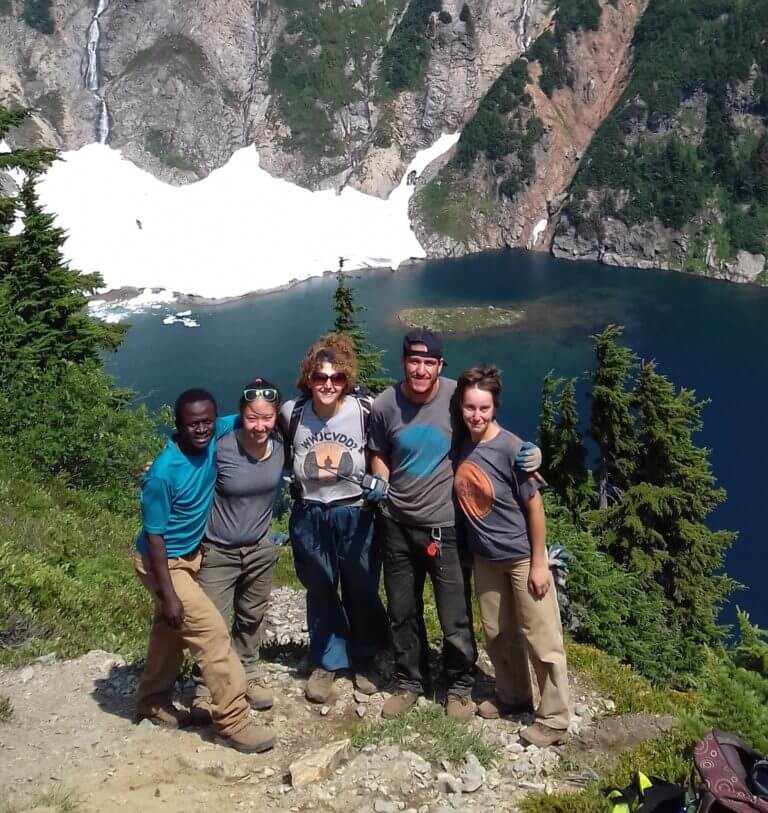
We camped at the North Cascades National Park and drove 30 minutes to our place of primary assignment every day. Our task is to install Check Dams, do some brushing and clear drains on the pyramid lake trail. The last three days of the trip was lovely as we did some maintenance work (brushing and drainage) on Sahale Arm and Jack Mountain trail.

Check Dams or steps are usually put in place to stabilise trail segments that are being gutted by erosion. It’s a cross-tread barrier, made of a log (or laid rock) 6 to 8 inches in diameter buried at least 2/3 its diameter in the tread at a right angle to the trail. The Check Dam’s function is to slow water velocity enough to cause the water to deposit its load of soil and gravel behind the dam, thus maintaining the tread level.

Clearing and brushing, on the other hand, refers to the cutting and removal of all living and dead vegetation using 10 feet height and 4 feet on each side of the tread centerline standard. After keen observation and rigorous study, we started building the steps and ensured that we use our trail eyes to meet the standard. We were able to install 58 to 60 Check Dams, clear all drains and did half a mile brushing on pyramid lake trail.

The most gratifying aspect of this project was seeing hikers appreciating our work and giving feedback. Luk, the ranger in charge of the project really liked our work and remarked, “You are the best and most coordinated set of volunteers have ever worked with”. Luk is a man to see and work with if you are chanced to visit the North Cascades National Park. He is humane, simple and down-to-earth.

Adnane’s crew is one crew to beat when it comes to cooperation, commitment and paying attention to details. We always work hard and give in our very best to every project. We act like sisters and brothers without borders and put aside our differences to always achieve the desired goal. We really enjoyed the company of Jordan on the crew as we missed Abby and Gabi. Robyn, Emma, Gabi, and Abby are not just beautiful, but they all matched brain with beauty. The crew leader (Adnane) is a man of high intellect and fun to be with.

Our journey to the North Cascades created a window of opportunity to meeting amazing people and seeing beautiful sites. We will not forget so soon the other Youth Corps group that we shared space with at the park. It is true they are deaf and dumb, but their smartness and creativity are one to marvel at. They taught us different sign languages and showed us how life can be more meaningful if we put aside our differences. Truly, there is much ability in disability.

By Alabede Surajdeen (Environmental Restoration International Exchange Fellow at EarthCorps, Seattle, Washington, USA; @BabsSuraj; alabedekayode@gmail.com)