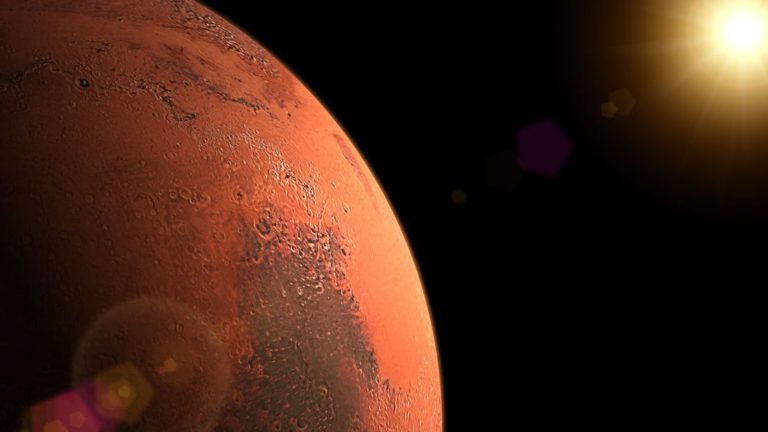
Mars will make its closest approach to Earth in 15 years on July 31, which means the red planet will be shinier and bigger and easier to observe, said U.S. space agency NASA.
Sunrise in Mars
The two planets will be just 57.6 million km apart on July 31, while Mars will appear brightest from July 27 to July 30, making it easier to be seen with telescope or the naked eye.
“It’s magnificent. It’s as bright as an airplane landing light,” said astronomer Harry Augensen from Widener University, Pennsylvania.
“Not quite as bright as Venus, but still because of the reddish, orange-ish-red color, you really can’t miss it in the sky.”
Before the closest approach, Mars will be in opposition on Friday, which means Mars and the Sun will appear in opposite positions as viewed from Earth.
On the same day, the longest total lunar eclipse of this century will be visible in Africa, Asia, Australia, Europe and South America.
Mars will look fainter by mid-August since it travels farther away from Earth in the orbit around the Sun.
Mars and Earth were closer than this year in 2003, when the two planets were just 55.7 million km apart, which was the closest in nearly 60,000 years and won’t happen again until 2287, NASA said.
How to release the postal sector’s immense potential in service delivery and profitability is the topic of the Universal Postal Union’s Ministerial Strategy Conference to be held in Addis Ababa, Ethiopia from September 6 to 7, 2018.
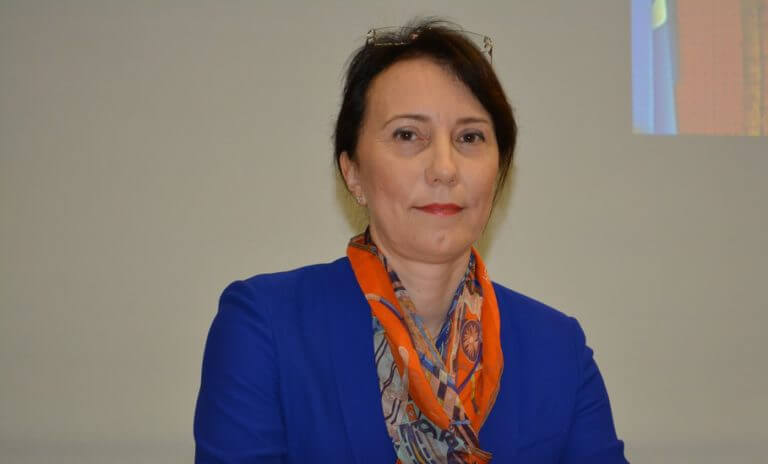
UPU’s Deputy Director General, Pascal Clivaz
Speaking about the forthcoming conference, UPU’s Deputy Director General, Pascal Clivaz, said: “UPU is proud to hold the conference in Addis Ababa. The views of ministers and regulators are vital to the future of the global postal sector as innovative policies and regulations can energise the sector and stimulate efficiency.”
Titled, “Gearing up the postal sector to drive socio-economic development”, the conference will hear from high profile speakers including ministers in charge of the sector, regulatory chiefs, heads of intergovernmental agencies, and other senior leaders.
Held two days, panel sessions include discussions on developing effective policies, encouraging investments in the postal sector, regulating in the age of digital innovation, and the importance of partnerships in sustaining the relevance of the sector.
The conference will take place during UPU’s Extraordinary Congress in Addis Ababa, from September 3 to 7, which is scheduled to discuss the reform of the Union as the spur for encouraging significant changes in the overall postal sector.
In May, UPU released its annual “Postal Development Report” exploring the relationship between a country’s postal development and progress on the 2030 Agenda for Sustainable Development. Research, for example, found that postal infrastructure is relatively more resilient than any other national physical infrastructure, as its operations rely primarily on people.
Britain recorded its hottest day of the year on Thursday, July 26, 2018 as a report warned that a heatwave blamed for more than 2,000 deaths in 2003 could become a summer norm in the country.
Sunbathers in Brighton
“It’s officially the hottest day of the year so far! Charlwood in Surrey has reached 33.9 degrees Celsius – and we’re likely to see hotter yet,” tweeted the national weather forecaster, the Met Office.
The weather forecaster said earlier that it expected temperatures to peak at about 36 degrees Celsius in south-eastern England, which would exceed the 2017’s high of 34.5.
The Met Office said some parts of Britain have recorded nearly 60 consecutive “dry days,” with less than 1 millimetre of rainfall, but heavy rain is forecast to bring relief to some areas from Friday.
Britain’s all-time record of 38.5 degrees Celsius was set during the 2003 heatwave, with similar hot spells likely to become common by the 2040s, according to a report by lawmakers.
The average number of heat-related deaths is expected to reach 7,000 annually by the 2050s, partly because of an ageing population, said the Environmental Audit Committee of parliament’s elected main house, the Commons.
Despite recognising the severity of the risk, “the government fails to give leadership on planning for the effects of heatwaves on public health; social services; and critical national infrastructure such as transport, digital systems and water supply,” the report said.
“Heatwave warnings are welcomed as barbecue alerts, but they threaten health, well-being and productivity,” said opposition Labour lawmaker Mary Creagh, the committee’s chair.
“The government must stop playing pass the parcel with local councils and the National Health Service and develop a strategy to protect our ageing population from this increasing risk,” Creagh said.
Nigeria will on the night of Friday, July 27, 2018 experience a spectacular total lunar eclipse, which will last for one hour, Prof. Augustine Ubachukwu, has said.
Total lunar eclipse
Ubachukwu, the leader of Astronomy and Astrophysics Research Group of the University of Nigeria, Nsukka, disclosed this on Thursday in an interview with the News Agency of Nigeria in Abuja.
“Nigeria is set to experience a very spectacular total lunar eclipse on Friday, July 27, weather permitting.
“It will be visible from 9:30 p.m. and last till 11: 220 p.m. “This total lunar eclipse will be primarily visible from the world’s Eastern Hemisphere, which are Europe, Africa, Asia, Australia and New Zealand.
“Part of South America will be able to watch the final stages of the eclipse just after sunset on July 27.
“New Zealand will catch the beginning stages of the eclipse before sunrise on July 28.
“It will be the century’s longest total lunar eclipse with a whopping one hour and 43 minutes in totality.
“It starts with a partial eclipse at 7:24 p.m. The total eclipse begins at 8.30 p.m., and ends at 10.13 p.m. The peak of the eclipse will occur at 9.22 p.m. The partial eclipse ends at 11.19 p.m.,’’ he said.
Ubachukwu observed that a lunar eclipse could occur only on the night of a full moon.
The scientist said during a total lunar eclipse, the earth completely blocks direct sunlight from reaching the moon, while the only light reflected from the lunar surface would be refracted by earth’s atmosphere.
According to him, unlike solar eclipses, lunar eclipses are safe to view without any eye protection or special precautions as they appear dimmer than the full moon.
The professor, however, said that the next total lunar eclipse that would be visible in Nigeria would occur on Jan. 21, 2019.
Prof. Rabiu Babatunde, the Director, Centre for Atmospheric Research in Kogi State, told NAN that people should not be perturbed at the occurrence.
Babatunde said that the event underscored the fact that planetary objects, including the earth were in a state of defined continuous motion.
He said that the occurrence necessitated the need for scientists to continue monitoring and exploring the dynamics of the motion and the phenomena associated with them.
“Keeping tab on the dynamics will enable scientists sensitise the global community of any hazard associated with such occurrences,’’ he said.
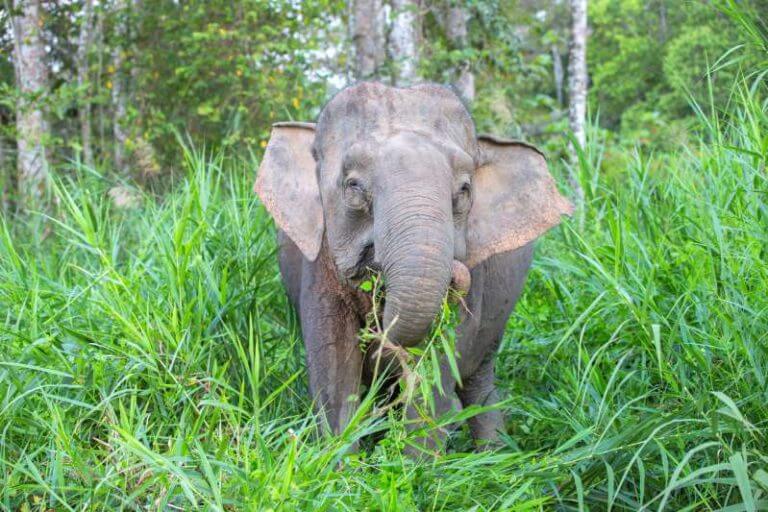
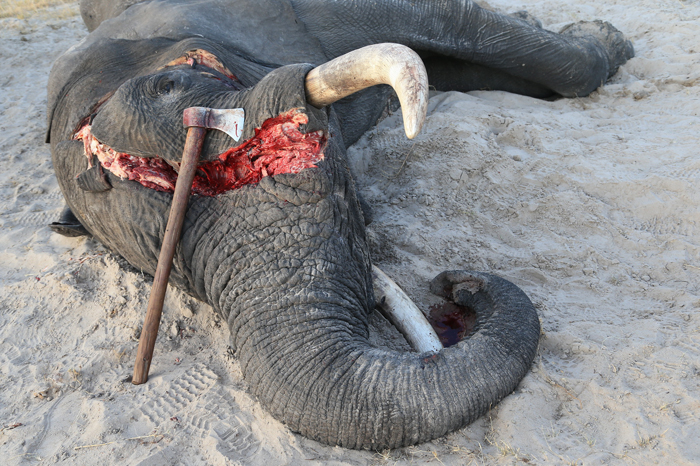
A pygmy elephant was shot dead on Borneo island after it destroyed villagers’ crops, a Malaysian wildlife official said on Thursday, July 26, 2018, the latest of the endangered creatures to be killed.
A pygmy elephant in Borneo. Photo credit: Sylvain CORDIER/Gamma-Rapho via Getty Images
The male elephant, believed to be about four years old, was found on Monday by the side of a road in the state of Sabah, on the Malaysian part of Borneo, local wildlife department director, Augustine Tuuga, told AFP.
He said the “merciless” killing was carried out near a remote settlement, and authorities were investigating who was responsible.
“(The elephant) was killed out of revenge for destroying crops,” he said, adding the crops included palm oil trees.
He said the creature’s tusks remained intact, indicating the elephant was not killed by poachers seeking to sell its ivory on the black market.
It was the latest case in Malaysia of human-animal conflict, which happens when human settlements or agricultural plantations expand into a species’s natural habitat.
Malaysia is home to vast tracts of rainforest and a kaleidoscope of exotic wildlife, from elephants to orangutans and tigers, but the numbers of many rare species have fallen dramatically in recent decades.
As well as human-animal conflict, many endangered animals are hunted for their body parts which fetch a high price for use in traditional medicine in China, and elsewhere in Asia.
At least 18 pygmy elephants have been killed in Malaysian Borneo since April, The Star newspaper reported. Causes of death included elephants being targeted by poachers and poisoning.
Pygmy elephants are baby-faced with large ears, plump bellies and long tails that sometimes drag on the ground, according to environmental group WWF.
Rainforest-clad Borneo is the world’s third-largest island and is shared between Malaysia, Indonesia and Brunei.
Extreme weather, including record temperatures and heatwaves, drought and disastrous precipitation, has marked the first half of summer in the northern hemisphere. This has had widespread impacts on human health, agriculture, ecosystems and infrastructure and led to devastating wildfires.
WMO Deputy Secretary-General, Elena Manaenkova
“2018 is shaping up to be one of the hottest years on record, with new temperature records in many countries. This is no surprise. The heatwaves and extreme heat we are experiencing are consistent with what we expect as a result of climate change caused by greenhouse gas emissions. This is not a future scenario. It is happening now,” said WMO Deputy Secretary-General, Elena Manaenkova.
The persistency of high temperatures in some regions – including northern Europe – as been due to a stationary high-pressure system. This is common in summer in both Northern and Southern Hemispheres. The jet stream, a core of strong winds around 10 kilometers above the Earth’s surface that blow from west to east and which steer weather around the globe – is generally slower in summer and occasionally become weaker than usual, then very settled weather occurs on the surface.
There is much scientific research into whether climate change and substantial changes to sea surface temperature, escalated by high multi-decadal natural variability, are contributing to more profound effect in altering the atmospheric circulation and so leading to more “blocking patterns.”
Drought and heat in northern Europe
WMO’s Regional Association for Europe’s Climate Centre on Climate Monitoring, operated by the German Weather Service, DWD, issued a second Climate Watch advisory with guidance on drought and above normal temperatures valid from July 19 until August 6. The guidance product, used by National Meteorological Services to issue national warnings and forecasts, referred to “a continuation of the drought situation and above-normal temperatures for at least the next two weeks for northern Europe (from Ireland to the Baltic States and southern Scandinavia).
“The weekly temperature anomalies are forecasted with up to +3 to +6°C (in the first week in parts +6 to +10°C). The probability that precipitation will be below the lower tercile is more than 70% in the first week and more than 50% in the second week. This drought may be accompanied by water scarcity, local thunderstorms, risks of wildfires and harvest losses since soil moisture is reduced,” it said.
Amid an extended heatwave in Scandinavia, temperatures topped 30°C in the Arctic Circle. Norway saw a record temperature of 33.5°C in Badufoss on July 17, and it reached 33.4°C in Kevo, Finland. Influenced by a warm wind, the far north of Norway (Makkaur) saw a new record minimum overnight temperature of 25.2°C on July 18.
The heatwave followed an exceptionally dry and warm May in northern Europe, leading to a a sustained elevated risk of forest fires throughout Scandinavia and the Baltic region. Sweden reported about 50 forest fires burning in mid-July.
Deadly fires fanned by extremely high winds killed dozens of people near Athens on the night of July 24 in one of Greece’s worst tragedies for years. Temperatures on July 23 reached about 38°C and there were strong west winds. Greece, however, has not witnessed below average precipitation so far this summer and so meteorological conditions in Greece cannot be compared to Scandinavia.
Ireland recorded heatwaves at 15 synoptic stations (five consecutive days or more with maximum temperature over 25°C) and an absolute drought at all its stations.
The UK saw its driest first half of summer on record, with just 47 mm between June 1 and July 16. The Met Office has said that the heatwave will continue across much of England this week, with temperatures peaking up to 32-34°C in a few places on July 27 or 28.
Armenia saw a heatwave from June 29 to July 12. The average daily air temperature was 4 – 7° C above normal and up to 9°C in some region. A new record temperature of 42.6°C was observed at Areni on July 12.
The combination of little precipitation and sustained above-average temperatures impacted agricultural production (primarily cereals and hay), while water supply disruptions or restrictions are reported locally. No significant rain is expected until at least mid-July, nor are temperatures forecast to return at normal during the same month, according to the Copernicus European Drought Observatory.
Conversely, southern parts of Europe including parts of Spain, Italy, Greece and Turkey, have been witnessing below average temperatures and above average precipitation for the early part of summer.
The conditions were due to a persistent anticyclone, or high pressure, system blocked over northern Europe. Atmospheric blocking over the northern North Atlantic involves isolation of large regions of air from the westerly circulation for 5-14 days or more.
Atmospheric blocking alters normal climates across Europe and Russia by shifting storm tracks. Typically associated with an anticyclone, the zonal wind pattern known as the jet stream deviates from its mean position and its westerly winds reroute north and south of the anticyclone. Blocking is typical winter weather phenomena, but it can also influence summer weather patterns as well and it could be linked to extremes such as Russian heat wave in 2010.
Recent analysis suggests that climate change from human activities, also called anthropogenic forcing, might indeed affect the characteristics of blocking events in the Euro-Asia sector, in particular leading to longer blocking episodes.
Another possible player in creating summer atmospheric blocking situations is the interaction between the atmosphere and the Atlantic Ocean, which modulates sea surface temperature patterns on decadal time scales. These surface temperature patterns can influence the occurrence probability of summer blocking.
Extreme temperatures
An intense heatwave hit Japan. Within the nationwide observation network deployed by the Japan Meteorological Agency (JMA), 200 out of 927 stations recorded maximum temperature exceeding 35 degrees Celsius on July 15. On July 19, JMA issued a warning of very high temperatures from July 24 to August 2. Kumagaya set a new maximum daily temperature record of 41.1°C, with Oume on 40.8°C on July 23, according to JMA. Both are near Tokyo. The dangerously high temperatures and humidity came as Japan sought to recover from its worst flooding and landslide disasters in decades.
While issuing warnings of dangerously high temperatures, JMA also produced “Weather Analysis Maps” showing meteorological conditions and temperatures, updated every hour.
The Korean Meteorological Administration issued a severe warning for several days that daily maximum temperatures will be more than 35 degrees, as a number of daily temperature records were broken. It said that no big change was expected in the pressure system, with hot conditions likely to continue until the end of July.
Ouargla, in Algeria’s Sahara Desert, reported a maximum temperature of 51.3°C on July 5. It is likely that this is the highest reliable temperature ever recorded in Algeria. WMO’s Weather and Climate Extremes Archive currently lists Kebili, Tunisia, as being Africa’s highest temperature with 55°C recorded in July 1931. However, there have been questions about the reliability of colonial era temperature records in Africa.
On June 28, Quriyat, just south of Muscat, on the coast of Oman, recorded a 24-hour minimum temperature of 42.6°C, meaning that the coolest overnight temperature did not drop below that level. Although highest “low” temperature is not currently monitored as a category in the WMO Weather and Climate Extremes Archive, it is believed to be the highest such temperature ever recorded by a thermometer.
Many parts of North Africa saw a heatwave from July 3 to 10. Morocco saw a new record of 43.4°C at Bouarfa on July 3. High temperatures are also forecast for the week beginning July 23.
The station of Furnace Creek in Death Valley national park in California, USA, recorded a temperature of 52.0°C on July 8. The station holds the record for the highest recorded temperature on Earth at 56.7°C (134°F), on 10 July 1913.
Other parts of California were also gripped by extreme heat. Downtown Los Angeles set a new monthly July minimum overnight record of 26.1°C on July 7. Chino, near Los Angeles, saw a record temperature of 48.9°C (120°F). Burbank airport set a new absolute record of 45.6°C (114°F) on July 6, beating 45°C in 1971, and Van Nuys Airport saw a record temperature of 47.2°C (117°C) according to the US National Weather Service.
NWS issued an excessive heat warning for South East California and Southwest and South-Central Arizona, valid through July 25. It said temperatures in Las Vegas valley may reach up to 46°C and Death Valley National Park 53°C. Waco, Texas reported an all-time high temperature record of 45.6°C on July 23.
In Canada, a heatwave combined with high humidity in the province of Quebec contributed to dozens of deaths, especially among the vulnerable and elderly.
At the same time, parts of Eastern Canada saw a brief return of wintery weather, with snow in parts of Newfoundland and Cape Breton (Nova Scotia), and temperatures of -1C, in St John’s and Halifax. Winter weather this late in the year is rare, this being the first since 1996.”
Temperatures were exceptionally high over large parts of northern Siberia in June 2018. That trend continued through the first week of July. The Western Siberian Hydromet Center of Russia issued a storm warning due to temperatures of more than 30°C for more than five days, expected to last between 9 and 16 July. This creates high risks of wildfires as well as of power supply, transportation, and utility services disruptions and drowning of people escaping the heat in water. Krasnoyarsk Region reported daily anomalies of 7°C above average, with fires already impacting about 80,000 hectares of forest.
In addition to the exceptionally high over large parts of northern Siberia in June 2018, temperatures were also well above average over much of the USA, central Canada and North Africa, and over the Middle East and northern China.
The contiguous USA had 3rd hottest June on record. But many parts of the country had well above average minimum overnight temperatures, according to the US National Centers for Environmental Information. In 2018 (as of July 9), there have been 6 weather and climate disaster events in the USA, with losses exceeding $1 billion each across the United States. These events included 4 severe storm events and 2 winter storm events. Overall, these events resulted in the deaths of 36 people and had significant economic effects on the areas impacted.
Japan Heavy Rain Event
Japan suffered the worst flooding and landslide in decades, with many daily rainfall records broken between June 28 and July 8. According to official government figures, more than 200 people lost their lives. Around 10,000 houses have been destroyed and/or inundated.
Japan is one of the world’s best prepared countries for disaster risk reduction and disaster management. JMA issued emergency warnings in advance, targeting as many as eleven prefectures in the country to alert people to the significant likelihood of catastrophes. The emergency warning system was launched by JMA in 2013, based on lessons from the major tsunami caused by the 2011 Great East Japan Earthquake. In addition, JMA dispatched its experts as the JMA Emergency Task Team or JETT, to local governments in the region to best support multi-hazard disaster prevention activities. It set up a web portal dedicated to the heavy rain event.
Between June 28 and July 8, there was extraordinarily heavy rainfall caused by a huge amount of water vapor from a stationary rainy front, in addition to damp air remaining from Typhoon Prapiroon. West Japan and Hokkaido experienced record precipitation during the period, according to the Japan Meteorological Agency (JMA).
Total precipitation at many observation sites reached two- to four times the mean monthly precipitation for July. For instance, 1,800 mm of rain fell in Shikoku, 1,200 mm in Tokai, 900 mm in North Kyushu, 600 mm in Kinki, and 500 mm in Chugoku. This triggered a large number of landslide, inundation and flood events.
Relationship with Climate Change
Episodes of extreme heat and precipitation are increasing as a result of climate change. Although it is not possible to attribute the individual extreme events of June and July to climate change, they are compatible with the general long-term trend due to rising concentrations of greenhouse gases.
Many recent studies have found that the probability of the extreme event has been influenced by human activity, either directly or indirectly. Of a set of 131 studies published between 2011 and 2016 in the Bulletin of the American Meteorological Society, 65% found that the event’s probability was significantly affected by anthropogenic activities. In the case of some extreme high temperatures, the probability increased by a factor of ten or more.
It has been more difficult to identify anthropogenic influence in the attribution of precipitation extremes. Whilst some studies have found that the probability of some extreme precipitation events was increased, most often indirectly, by climate change, for many other studies the results have been inconclusive. This is because the underlying long-term climate signal in extreme precipitation is less clear than it is for temperature and, because extreme precipitation events typically occur on shorter spatial scales than extreme temperature events. At present, attribution studies are mostly carried out in research mode in peer-reviewed literature.
The IPCC 2012 Special Report on Extreme Events anticipates for example that “it is likely that the frequency of heavy precipitation or the proportion of total rainfall from heavy falls will increase in this century over many areas of the globe” and that “a 1-in-20 years annual maximum daily precipitation amount is likely to become a 1-in-5 to 1-in-15 years event by the end of the 21st century in many regions”.
The Nigeria National Petroleum Corporation (NNPC), on Wednesday, July 25, 2018 pledged that more than five million jobs would soon be created to alleviate the unemployment levels in the country.
Group Managing Director of NNPC, Dr Maikanti Baru
The Group Managing Director of the NNPC, Dr Maikanti Baru, said this in a lecture he gave at the 12th Mechanical Engineers Distinguished Lecture organised by the Nigerian Institution of Mechanical Engineers in Abuja.
According to him, the need to mitigate energy insecurities and ameliorate environmental and health issues has awakened the worthwhile benefits to developing the renewable energy sector.
“In Nov. 2017, the corporation signed an MoU with the Ondo State government to establish a 65 million-litre Biofuel plant in Okeluse. The plant and other associated products such as cassava feedstock production will create at least one million direct and indirect jobs.
“By Dec. 2017, the NNPC and the Benue State government had an agreement for the proposed Biofuel plant. Upon completion, the plant is projected to generate about one million direct and indirect jobs. Benue has since donated the land for that project.
“Early in March, we also signed MoU to set up a Biofuel plant and refinery in Kogi state. The project will create over two million jobs.
“In Nov. 2017, a MoU was signed between the NNPC and Kebbi State for the establishment of a refinery and Biofuel plant. The 20,000-hectare project will use sugarcane as feedstock, create over a million jobs across the value chain.
“This would facilitate diversification of NNPC business opportunities and increase domestic sugar production,” Baru said.
He further explained that a biodiesel agreement the corporation had with Cross Rivers State would be sold as B20 in the market while unutilised quantities would be exported.
He called on the engineers to up their skills and expertise to enable the government to realise the dream of energy sufficiency, job and wealth creation for the masses.
The President, Nigeria Society of Engineers, Mr Adekunle Mokuolu, said the challenge from Baru would be taken to ensure that all the dreams of the Federal Government were realised.
Awards of excellence were presented to Baru and Amb. Bunu Sherriff Musa.
The lecture series was officially inaugurated in 1995 as a means of identifying, recognising and honouring notable mechanical engineers in the country.
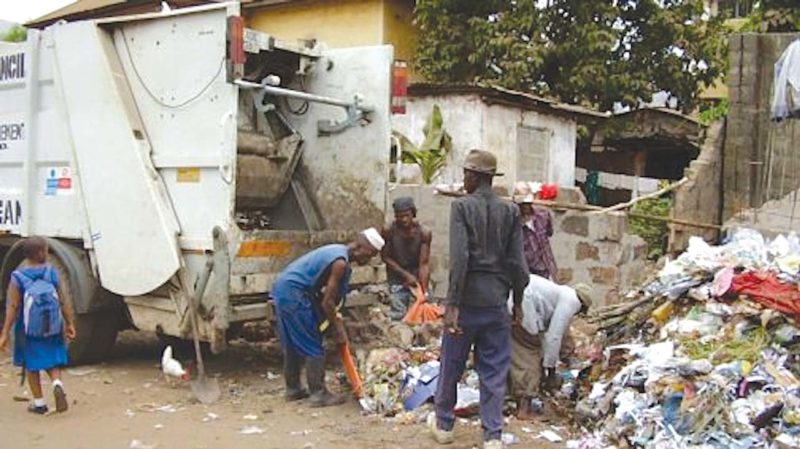
Erstwhile chairman, Nigeria Society of Engineers (NSE), Environment Division, Mr Odumeru Musilideen, has called on government at levels to engage more health officers to monitor indiscriminate disposal of waste and sanction defaulters with appropriate penalty.
Waste disposal: Lagos waste PSP operators at work
Musilideen made the call in Lagos in an interview with the News Agency of Nigeria (NAN) on Wednesday, July 25, 2018, saying that disposal of pet bottles, cans and e-waste, especially electronic gadgets along waterways and drainage were the major causes of flooding.
He said that defaulters could be sanctioned appropriately because many of such waste, especially gadgets, contained heavy metals such as calcium, mercury that percolate into the soil, posing danger to the environment.
“Many of these elements find their ways into water body and permeate into the ground water sources and the effect can be grave when the water is used for either cooking or drinking.
“Heavy metals are really hazardous as they can damage the kidney and cause cancer,’’ he said.
Musilideen noted that once stringent sanctions were given to offenders for random dumping of waste, the water channels would be free.
He advised Nigerians to embrace the culture of proper waste disposal, to live a healthy life.
South African law enforcement agencies have arrested 13 people on illegal wildlife trade charges as part of the country’s contribution to a global operation against poaching, authorities said on Wednesday, July 25, 2018.
African elephant poaching in conflict zones suggests that corruption, rather than conflict, is the primary enabler of elephant poaching
Operation Thunderstorm was launched by Interpol in May 2018, bringing numerous countries in a joint effort to curb wildlife poaching, according to the South African Department of Environmental Affairs (DEA).
For South Africa, attention was paid to transnational trafficking routes originating at airports and other ports of entry and exit between South Africa and Europe, Botswana and Zimbabwe.
“As well as to international mail centres and the value chain of rhino horn trafficking syndicates,’’ DEA spokesperson, Albi Modise, said.
Among the successes recorded was the confiscation of four endangered Spotted Ragged Tooth Sharks, also known as the Sand Tiger Shark or Dusky Shark, at Cape Town International Airport, during an inspection of a container holding the illegal consignment.
“The seizure of the live sharks, which were being exported to the Netherlands, is an indication that the problem of live shark smuggling is bigger than initially believed as demand for live sharks from aquariums worldwide has increased,’’ Modise said.
According to the DEA, in the operation, law enforcement agents also seized live pangolins, abalone, ivory and rhino horns.
“Worldwide, 1,974 seizures were recorded, and 1,400 people arrested during investigations and searches in 92 countries during Operation Thunderstorm,’’ the DEA said.
In addition, officials had seized 48 live primates, 14 big cats including tiger, lion, leopard and jaguar and several tonnes of wood and timber.
According to the DEA, the operation also saw eight tonnes of pangolin scales seized worldwide, including almost four tonnes by Vietnamese Maritime Authorities on board a ship arriving from the Democratic Republic of Congo.
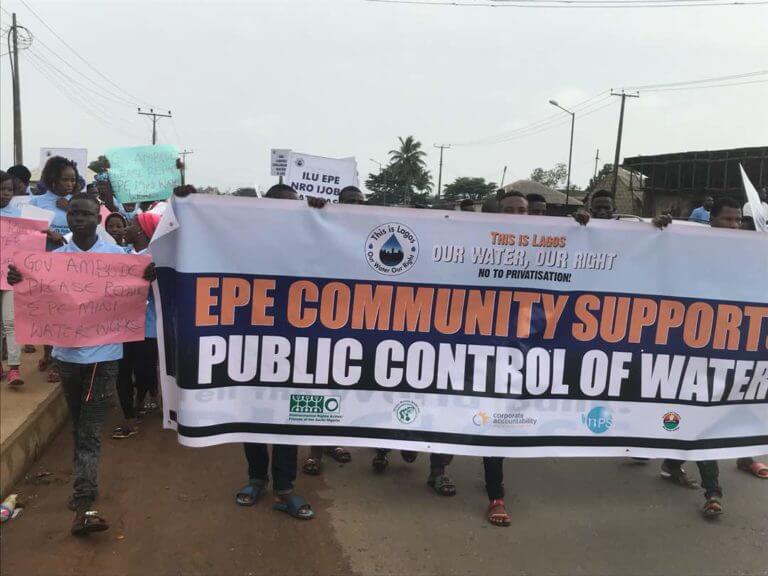
Youths, women groups and grassroots advocates on the platform of the Epe Community Water Parliament (ECWP) have demanded that the Governor Akinwunmi Ambode administraton rehabilitate the Epe Mini Waterworks and evolve solutions to the lingering water crisis in Lagos within democratic and public control.
Epe community members during the protest arch
The ECWP, an affiliate of the Our Water, Our Right Coalition, registered its aversion to water privatisation plans by the state government through a protest march on the streets of Epe and a visit to the campaigns office of Olusegun Olulade, representing Epe Constituency II at the Lagos State House of Assembly, asking him to side with them in demands to keep Lagos water public. The group also marched to the premises of the Epe Mini Waterworks where they displayed placards with various inscriptions and demanded rehabilitation of the facility.
Coordinator of ECWP, Adesanya Oguntimirin, said that the Epe community had reservations about plans to concession Lagos water infrastructure to privatisers under a Public-Private-Partnership (PPP) model of water privatisation which will bring in three corporations with allaged unsavory human rights record. The corporations are Veolia, Abengoa and Metito.
“The PPP is an anti-people model because it is built only on the premise that water is a commodity that money can be made from. It does not accommodate the human right to water and is difficult to exit. It is laced with uncertainties such as rate hikes, service cutoffs, unfulfilled infrastructure promises which, combined, will not guarantee access to water by our mostly poor people.”
He said that the Epe people in unanimity reject water privatisation and want a rehabilitation for the waterworks in the community to reduce the suffering of mostly women who will have to go long distances to get water at huge costs.
A women rights activist, Funmi Ajayi, also emphasised the challenges women face in obtaining water, adding that water privatisation would further burden women who will have to cough up more to get water and be cut off if they cannot pay.
“The language of the state government is one that is solely focused on making revenue from water and not anything about human right or anything near it. These poor women here marching against privatisation are the ones who know what lies ahead and have decided to ask that the state government does not take them on that road. We will resist it.”
Speaking in solidarity with the community people, Deputy Executive Director of Environmental Rights Action/Friends of the Earth Nigeria (ERA/FoEN), Akinbode Oluwafemi, said that ERA/FoEN stands in full support of the protest march and petition to Olulade, who is representing Epe Constituency.
In his words: “The voice of the people is the voice of God. We anticipate that the representative of the Epe people will hearken to the demands of his people and side with them to demand a halt to PPP and concessioning of the future of our people to for-profit only entities.”
The ERA/FoEN boss also added: “While we can see that a lot of development has come to the Epe community in form of good roads and lighting of the streets, the most crucial element of life which is water is still elusive because of the non-rehabilitation of the mini water works.”
Representative of the Epe women, Bisi Fasasi, said that the reports of plans to privatise water was already sending jitters down the spines of the women, even as she cautioned that water should not be privatised under any guise as it would add more burden to women already weighed down with ensuring their household had adequate water for basic use.
Fasasi added that the inability of the Epe mini waterworks to deliver potable water to the locals had forced most households to patronise unwholesome sources that continually expose them to illnesses.
In the petition to Olulade, the group asked him to side with them on their demands for the rehabilitation of the Epe Mini-Waterworks, a halt to concession of Lagos water infrastructure with transnational corporations like Veolia, Metito, Abengoa; and that the Akinwunmi Ambode administration fully uphold the human right to water as an obligation of the government representing the people.
It also asked Governor Ambode to integrate broad public participation including that of women in developing plans to achieve universal access to clean water, rejection of contracts designed by or involving the IFC, which operates to maximise private profit, increase in budgetary allocation to the water sector, and the institution of a Water Trust Fund that will expand public financing of the water sector.