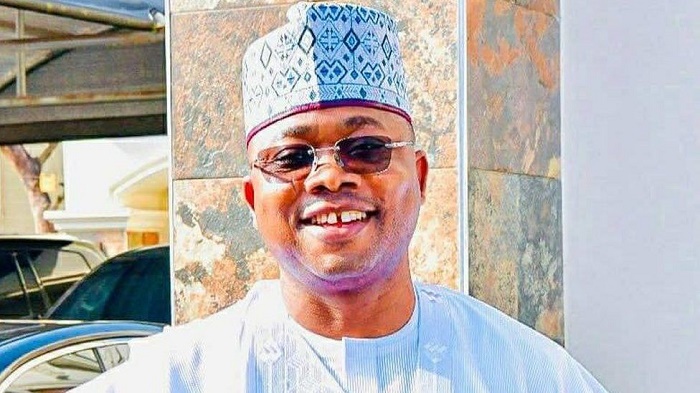
Gov. Ahmed Ododo of Kogi State on Saturday, September 6, 2025, vowed to keep the people of the state safe by deploying the needed Infrastructure to curb impending flooding and erosion threats.
Ododo gave the assurance in a statement signed by the Commissioner for Information and Communications, Mr. Kingsley Femi Fanwo, in Lokoja, the state capital.
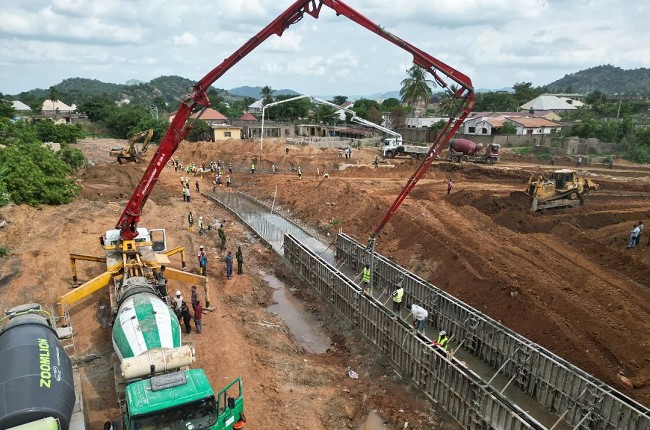
Contruction of drainage channel in Kogi State
The governor said that the deployed infrastructure were designed to provide lasting solutions to ecological challenges across the state.
He said that his administration is determined to change the face of Kogi with solution-tailored infrastructure that guaranteed safety, sustainability, and improved quality of life for the people.
“The newly constructed drainage systems in parts of the state, including Etahi, Omigbo and Olubojo in Ankpa, have already begun delivering results.
“Our drains are working as designed. Rainwater is being efficiently collected and channeled away, reducing the risk of flooding. Within minutes of heavy rainfall, the water is soaked away, leaving communities safe and accessible,” he said.
According to him, the government is leveraging the Agro-Climatic Resilience in Semi-Arid Landscapes (ACReSAL) Project to strengthen flood control measures and reclaim land previously destroyed by ecological challenges.
He stressed that the Mr. Ladi Jatto led Kogi ACReSAL has become a game-changing platform for the administration, which is making the best of the opportunities it offered to drive sustainable solutions for ecological challenges.
Ododo added, “My administration’s environmental initiatives reflect my vision of building resilient communities through sustainable projects that directly addressed the peculiar needs of the state.
“Kogi is no longer just reacting to ecological disasters; we are proactively deploying infrastructure that prevents them. This is a new dawn in our approach to flood control and environmental sustainability.”
Kogi is one of the states in Nigeria that has experienced devastation from flood in past years.
Africa’s wealthiest man and President of Dangote Industries Limited, Aliko Dangote, has called on Africans to leverage on internal strengths and global opportunities to fill existing gaps, and adopt a deliberate re-orientation toward industrialisation of Africa’s manufacturing sector, as a panacea against the current global economic instability.
The renowned entrepreneur encouraged operators in the manufacturing and industrial sectors across the continent to embrace a fundamental shift in mindset and develop robust regional value chains and deepen intra-African trade as inward solutions to boost overall development across the continent.
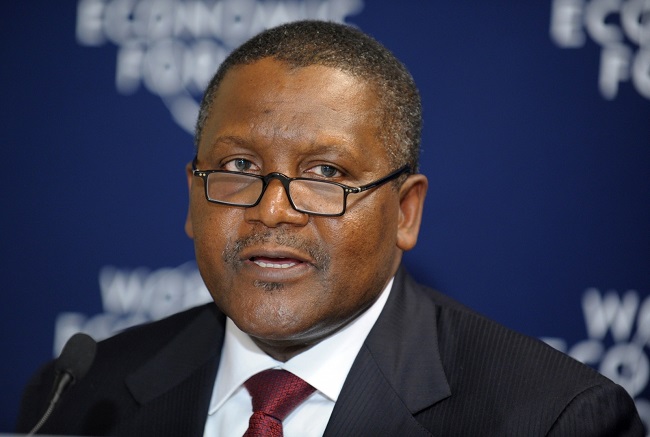
Aliko Dangote
Dangote, who noted that current geo-political tensions and trade wars have caused major economies to reevaluate their traditional trade partnerships with a view to diversifying their supply chains, also urged African exporters to benefit from the current process to fill the gap by competitively supplying the required products.
These recommendations were contained in Dangote’s welcome address at the company’s Special Day at the ongoing 4th Intra-African Trade Fair holding in Algiers, Algeria, where he was represented by his Special Adviser and Representative, Ahmed Mansur.
“I am glad to be here at the 4th Intra-African Trade Fair (IATF). I am immensely grateful to the organisers – not only for inviting me and giving me the opportunity to speak – but also for going a step further by dedicating this remarkable day to my organisation, Dangote Group. To have today officially set aside as Dangote Day is both an honour and a privilege.
“I thank the conveners – The African Export Import Bank, the African Union Commission and the Africa Continental Free Trade Area Secretariat – for organising this event. We appreciate the invaluable contributions you have made and the excellent work you continue to do in promoting, facilitating, and deepening trade and investment across the continent”, Dangote added.
According to him, “this year’s theme, ‘Gateway to New Opportunities’, resonates deeply as a powerful reminder of the huge potential and prospects that abound across the African continent. For too long Africa’s resources have been exported as primary commodities in their raw and unrefined state with limited domestic processing or beneficiation.
“There must be a fundamental shift in mindset and a deliberate re-orientation toward industrialisation and the development of Africa’s manufacturing sector. While this was always necessary in the past, it is even more urgent today, given the alarming rise in youth unemployment, and the need for sustainable, inclusive growth,” he added.
The business tycoon observed that current geo-political tensions and trade wars have caused major economies to reevaluate their traditional trade partnerships with a view to diversifying their supply chains.
“African exporters could benefit if they can fill the gap by competitively supplying the required products. Furthermore, global instability has encouraged African nations to look inward and actively pursue greater regional self-reliance. This inward focus can catalyse the development of robust regional value chains and significantly deepen intra-African trade,” he advised.
“At Dangote, we are very proud of our Afrocentric posture, driven by an unwavering commitment to the continent’s growth and industrial transformation. We have added value to limestone and created the largest cement company in sub Saharan Africa with an aggregate cement production capacity of about 52MMtpa across 10 countries,” Dangote stated.
“Similarly, our 3MMtpa urea plant has contributed to the attainment of fertiliser self-sufficiency. Nigeria, once solely reliant on imports is now a net exporter of granulated urea to destinations in Africa as well as to South America, North America and Europe.
“More recently, we have witnessed the commencement of operation of Africa’s biggest oil refinery – also the world’s largest single-train facility, with a capacity of 650kbpd. This landmark project is gradually reducing the region’s long-standing dependence on imports of refined petroleum products, particularly from Europe, while also generating surplus for export to global markets. As Africa becomes more self-sufficient in energy it should reduce our vulnerability to external shocks and supply disruptions.
“Africa’s potential and prospects are immense. However, this potential will only be fully actualised if individual nations take deliberate steps to improve their business environment. Unlocking new economic opportunities requires the implementation of appropriate policy reforms, investment in infrastructure, and attractive sector wide incentives to facilitate the inflow of private capital,” Dangote concluded.
At the Dangote Special Day, which drew admirers and various attendees, various Business Units of the conglomerate such as Dangote Cement, Dangote Sugar, Dangote Salt (NASCON), Dangote Fertiliser, Dangote Polypropylene, and Dangote Packaging did presentations and urged greater collaboration among trade partners and manufacturers across Africa for the development of the continent.
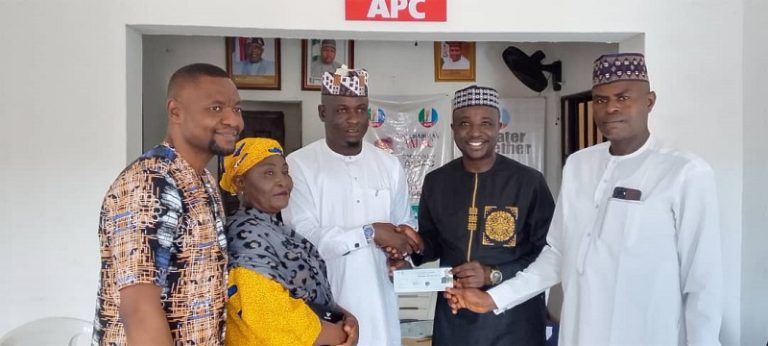
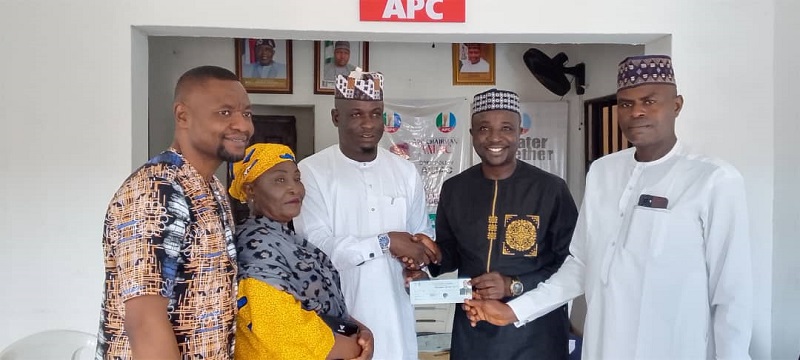
Seasoned journalist and environmental rights crusader, Etta Michael Bisong, has joined Nigeria’s ruling party, the All Progressives Congress (APC), as part of his efforts to combat climate change through effective governance.
Speaking on Friday, September 5, 2025, in Abuja, shortly after being received by the party executives, Bisong, who currently serves as the director of Media and Publicity for the APC Climate Change Network (ACCN), disclosed that his choice of going into politics was informed by his understanding of the relationship between real-life development and political power.
Participants during the official ceremony held in Abuja, Nigeria’s capital.
According to him, all are familiar with the reality of climate change, as its devastating impacts are no longer distant possibilities but what frontline communities experience every day. From flooding issues to extreme weather conditions and the displacement of our families in different locations across the country and around the globe, not to mention the food insecurity challenges that are cropping up and the critical infrastructure that it affects.
However, Bisong pointed out that even in the face of all the climatic challenges that Nigeria is experiencing as a country, opportunities lie ahead for it to explore, because intentional climate governance provides the nation a superlative chance to reinvent its development pathways and to innovate and build resilience that benefits not only the present but generations to come.
“True climate action can only be achieved through effective governance,” he stated, which is why he believes environmentalists should enter politics to strengthen their campaign.
As a result, the communicator-turned-politician urged other well-intentioned environmental activists to join the political movement in order to further their advocacy and assure a sustainable future for all Nigerians, Africa, and the world.
His heartfelt gratitude goes to Citizen Greg Odogwu, the ACCN’s national coordinator, for spearheading this historic process, as well as the entire executive team of the APC, Wuse, Ward, for their show of love and for welcoming him into this incredible community.
In the same vein, Citizen Greg Odogwu, the ACCN’s national coordinator, hinted that he has been a member of the ruling APC since 2014. He clarified that he chose to call himself a “citizen” in order to use the term as a catchphrase to inspire everyone to be patriotic.
“I happen to be the national coordinator of the APC Climate Change Network (ACCN), because I am trying to bring value of what I do to this space,” he told the participants who gathered to witness the groundbreaking ceremony.
Odogwu, a seasoned environmental journalist, said Bisong’s joining the ruling APC was a huge plus because he will be using his more than 17 years of experience in the media and climate field to help the party win over more green votes during the upcoming general elections in 2027 and beyond.
Ayuba Idi, the chairman of Wuse Ward, in his remarks, commended Bisong for his choice of choosing the ruling APC to foster environmental change.
According to him, the APC is a community for anyone who is aspiring to transform the nation through the delivery of good governance.
He underscored the party’s constitution, which he said is supreme and above all the members, no matter how highly placed or influential the person may be in the society.
In conclusion, Idi thanked members of his executive team for making time to be part of the occasion and urged everyone to remain faithful and avoid anti-party activities, warning that it’s a strong violation of the party ethical guideline.
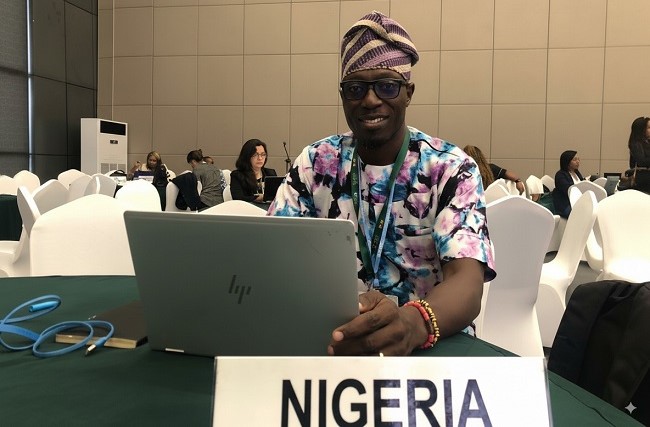
At the Implementation Lab on Cities at the ongoing Africa Climate Week in Addis Ababa, I joined the session and we reflected on the fact that cities are always at the frontline of the climate crisis, yet they also hold the solutions. Therefore, to unlock the full potential of cities, we must accelerate scalable, implementable actions across urban areas, backed by proper financing, governance capacity, and inclusive leadership.
It is obvious that cities continue to face a financing gap and weak local government capacity that is limiting their ability to take leadership. The people in informal settlements remain highly vulnerable to climate impacts, underscoring the need for inclusive planning. One thing that became clear to us was that ambition alone is not enough but implementation – this remains the true test of leadership for cities.
Gboyega Olorunfemi
Several examples were showcased which include: the Durban’s community-based early warning systems to protect vulnerable residents; Dakar’s Bus Rapid Transit (BRT) solutions reducing emissions and improving mobility; Brazil’s “Adapt-a-City” initiative supporting 600 cities; and, Rwanda and Philippines partnerships fostered through the World Resources Institutes’ (WRI) “bringing national and subnational actors together”.
These examples did not just provide hope, but they also led us to some of the key barriers, such as: Sustainability of financing projects; project preparation gaps that hinder access to climate funds, and catalytic funds that are often misdirected to actors without financial expertise – this trend must be corrected.
For effective cities emancipation, key takeaways from the lab are that stronger collaboration between national and subnational governments is important; co-ownership of financial instruments for long-term resilience is ascertained; development partners aligning catalytic finance with real local needs is guaranteed and more importantly, SMEs and community-led groups are included in financing architecture – this is part of our ongoing dedication at the Society for Planet and Prosperity ensuring that the subnational are given adequate chance and recognition.
Therefore, for Nationally Determined Contributions (NDCs) to drive real change, they must be localised. And because the NDCs are political statement of countries, the subnational governments need to be integrated into the process of developing them and national strategic financial frameworks that will enable them to attract sustainable investment outlined and strengthened.
The Green Climate Fund (GCF) and other global financial instruments must provide clear windows for national–subnational–SME collaboration. This is when climate ambition will translate into meaningful and equitable solutions for cities.
By Gboyega Olorunfemi, Senior Policy Analysts, Society for Planet and Prosperity (SPP), Addis Ababa
The Nigerian Midstream and Downstream Petroleum Regulatory Authority (NMDPRA) says there are no subsidies in the oil and gas sector as Nigeria operates a completely deregulated market.
Mr. George Ene-Ita, the Director, Public Affairs Department, NMDPRA, made this known in Abuja on Friday, September 5, 2025.
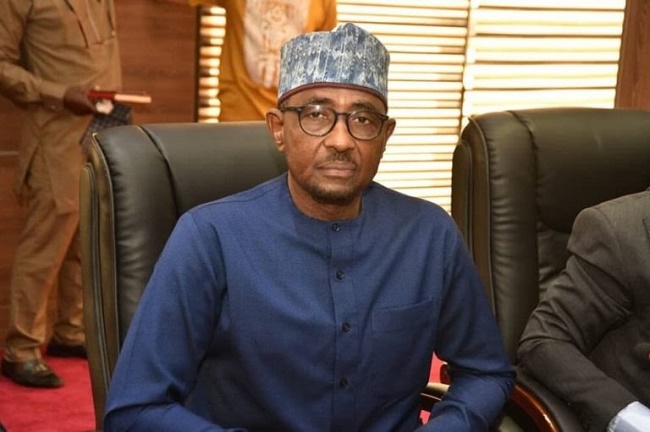
Chief Executive Officer of NMDPRA, Mr. Farouk Ahmed
Ene-Ita was reacting to the recent reports that the Federal Government has removed subsidies or increased the price of Compressed Natural Gas (CNG).
CNG refilling stations in the Federal Capital Territory (FCT) had early this week increased the product from N230 to N380 for one Standard Cubic Metre (SCM), amid long queues.
The increase in price might be connected to scarcity of the product due to lack of infrastructure which had necessitated long queues witnessed at every refilling station, especially in the FCT and Lagos.
“What we have is a baseline price for our gas resources, including CNG as dictated by the Petroleum Industry Act (PIA),” the spokesperson said.
He said that, as long as the prevailing CNG market price conforms to the baseline, then the pricing is legitimate.
Meanwhile, the Presidential Initiative on Compressed Natural Gas (P-CNGI) had said that no directive or policy had been issued by the Federal Government to alter CNG pump prices.
The P-CNGI emphasised that the recent pump price adjustments announced by certain operators were purely private-sector decisions and not the outcome of any government directive or policy.
For absolute clarity, it said while pricing matters fell under the purview of the appropriate regulatory agencies, no directive or policy had been issued by the Federal Government to alter CNG pump prices.
The P-CNGI said its mandate, as directed by President Bola Tinubu, was to catalyse the development of the CNG mobility market and ensure the adoption of a cheaper, cleaner, and more sustainable alternative fuel and diesel nationwide.
Prominent leaders including the Prime Minister of Grenada, Dickon Mitchell; the Prime Minister of Saint Kitts and Nevis, Dr Terrance Drew; Nigeria’s Minister of Finance and Coordinating Minister of the Economy, Wale Edun; Minister of Industry, Trade and Investment, Dr Jumoke Oduwole; and the Governor of Zamfara State, Dauda Lawal, were among the personalities who commended the socio-economic impact of Dangote Industries Limited’s investment across Africa at the ongoing 2025 Intra African Trade Fair (IATF) holding at Algiers, capital of Algeria.
At the Dangote Group exhibition stand, said to be one of the most visited at the continent’s leading trade and investment forum, the majority of inquiries centred on polypropylene (PP), a key product of the Dangote Petroleum Refinery. Polypropylene is a versatile thermoplastic polymer used in a wide variety of products, ranging from food containers to automobile parts. It is valued for its strength, low weight, and resistance to heat and chemicals.
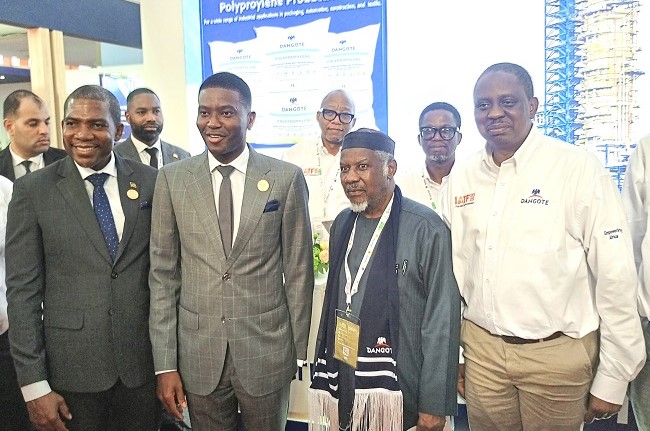
L-R: Prime Minister of Grenada, Dickon Mitchell; Prime Minister of Saint Kitts and Nevis, Terrance Drew; Nigeria’s Minister of Finance and Coordinating Minister of the Economy, Wale Edun; Engr. Mansur Ahmed, Special Adviser to and Representative of the President of Dangote Group, Aliko Dangote, and Group Head, Commercial Foods, Dangote Industries Limited, Garba EL-Suleiman at the Dangote stand at the ongoing 2025 Intra African Trade Fair at Algiers, Algeria…yesterday
The Grenada and St. Kitts and Nevis Prime Ministers, Nigeria’s two ministers and the Zamfara State Governor, who led separate delegations to the Dangote stand on Friday, September 5, 2025, commended the far-reaching impact of the Dangote Group in its various investments in Nigeria and Africa, which have boosted economic development across the continent. They were received by Mansur Ahmed, Special Adviser to, and Representative of, the President of Dangote Group, Aliko Dangote, and Group Head, Commercial Foods, Dangote Industries Limited, Garba EL-Suleiman, and other key executives of Dangote Industries.
As a Premier Partner of the fourth edition of IATF2025, Dangote Group is showcasing its diverse operations spanning cement, fertilisers, petrochemicals, refined petroleum products, sugar, salt, and logistics. The company operates over 18 subsidiaries across sectors vital to Africa’s industrial and economic transformation. The Dangote Special Day is scheduled to take place on Saturday during the fair.
Organised by Afreximbank, in collaboration with the African Union Commission and the AfCFTA Secretariat, and hosted by the People’s Democratic Republic of Algeria, the biennial IATF seeks to boost intra-African trade and promote investment opportunities throughout the continent.
This year’s edition features participation of production and service companies, alongside an investment and trade forum highlighting Africa’s potential for economic integration. During the week-long fair, more than 2,000 exhibitors, including businesses from the African continent and globally, are showcasing their goods and services to visitors and buyers while exploring opportunities and exchanging trade and market information, which is projected to translate into over US$44 billion in trade and investment deals.
According to the Group Chief Branding & Communications Officer, Dangote Industries Limited, Mr. Anthony Chiejina, “Our partnership with IATF is built on a shared vision of commitment to advancing Africa’s economic growth. Having experienced the tangible impact of IATF2023, we are proud to build on that momentum as a Premier Partner for IATF2025. This platform continues to drive meaningful connections and opportunities across the continent, and we look forward to contributing to its success once again in Algiers.”
The Fair is billed to run from September 4 to September 10.
Africa appears to be making waves on the global stage as a driving force in ocean conservation, setting bold goals and delivering innovative solutions to safeguard marine ecosystems for future generations. With a coastline of more than 30,000 kilometers and some of the world’s richest marine biodiversity, African nations are stepping forward to lead.
Now in its second year, the OceanLove Innovation Award is on track to become the world’s most inclusive ocean-related innovation award. With nearly 200 applicants already from 58 countries – more than double last year’s total – and still a month to go before the deadline, participation is expected to rise even further. Remarkably, over 60% of current applications come from Africa, with Ghana leading the way, followed by Kenya, Cameroon, and Nigeria.
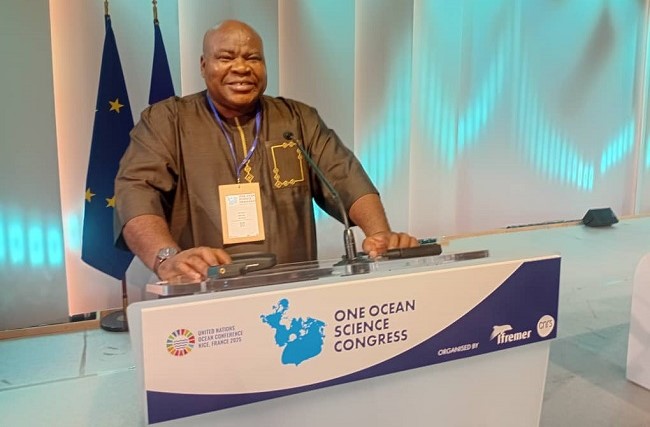
OceanLove Nigeria Ambassador and President of the Pan African Vision for the Environment (PAVE), Anthony Akpan
This growth is largely driven by the dedicated efforts of 23 OceanLove Ambassadors across Africa, who are mobilising their communities to contribute creative, practical, and transformative solutions. The ambassadors, representing countries from Egypt, Sierra Leone, Nigeria, Cameroon, Ghana, Sudan, Namibia, Liberia, Madagascar, Togo, Morocco, Tunisia, Kenya, Mozambique and Comoros. They have diversified backgrounds, but they are uniting behind a common vision: empowering African innovators to shape the future of ocean conservation.
This diverse group of ambassadors is guided by Charles Sylvanus Boye from Sierra Leone, whose leadership and passion have been instrumental in shaping their collective mission.
As Charles aptly puts it: “The ocean binds our continent to the world. If we fail to protect it, we weaken Africa’s place in the global future. I am proud to lead our young minds in the Global South and inspire them to promote the OceanLove Innovation Award 2025.”
OceanLove Ghana Ambassador, Peter Teye Busumprah, reflected on the momentum: “Participating in the UN Ocean Conference and engaging with the University of Ghana’s Marine and Fisheries Outreach has been truly inspiring. These experiences reinforced my belief that we protect what we love. The OceanLove Innovation Award is a vital beacon, encouraging innovative solutions to safeguard our oceans. As Ghana’s Ambassador, I am proud to champion this initiative, knowing that our shared passion and commitment can drive meaningful change for marine ecosystems.”
In Cameroon, Ewube Kelly Laure Egbe emphasised the importance of youth engagement: “Hosting OceanLove Innovation Award activities at the University of Buea, schools in Buea and Limbe, and on CBS Radio was an incredible opportunity to connect with passionate students, young changemakers, and coastal communities. Their commitment to ocean conservation reaffirms the urgent need to invest in youth-led innovation across Africa. The Award is not just a prize – it is a platform that nurtures bold ideas, elevates community-based solutions, and empowers the next generation of ocean champions.”
Nigeria’s Anthony Akpan highlighted the award’s global mission: “The OceanLove Innovation Award is designed to advance Challenge 10 of the UN Ocean Decade by highlighting the ocean’s vital role in human wellbeing, culture, and sustainable development. Through this initiative, we aim to address barriers to behavior change and foster a transformative shift in humanity’s relationship with the ocean.”
Ilco van der Linde, Founder of OceanLove, emphasized why Africa and the Global South are central to the mission: “Within the next two years, the OceanLove Innovation Award will become the world’s largest and most inclusive ocean-related innovation award. Unlike many other initiatives that primarily focus on highly educated participants from the West, our approach is different – we actively seek out bright minds in the Global South. These are the communities living daily with the realities of global warming, overfishing, and pollution, and many have already developed creative, practical solutions.
“Yet their ideas often go unseen due to limited internet access, weak infrastructure, and a lack of investment. Through our ambassadors, we are determined to identify and support these changemakers, inviting them one by one to share their innovations. While the Global South bears the brunt of these challenges, it also holds the potential to be the frontrunner of global change.”
The OceanLove Innovation Award is endorsed by the United Nations Decade of Ocean Science for Sustainable Development and supported by legendary ocean advocate, her deepness, Dr. Sylvia Earle (89), who reminds us: “People need to participate as if their lives depend on it. Because it does!”
An esteemed panel of acclaimed scientists and activists rich with expertise from the NGO sector volunteered to sit on the panel of judges. Among them is Mohamed Kamal, a public health engineer and environmental activist, and the co-director of Greenish, a leading Egyptian NGO focused on environmental education, sustainability, and climate advocacy.
Also joining the panel is Saad Abid, a Moroccan environmentalist and founder of the Bahri Association, who won the 2024 OceanLove Innovation Award for his micro-waste collection tool “The Chbika.” Applications for the 2025 OceanLove Innovation Award remain open until the 30th of September. The award invites innovators worldwide to submit ideas for products, tools, campaigns, or initiatives that can measurably contribute to the protection of oceans, seas, and marine ecosystems.
The Gates Foundation has urged Nigerian leaders to accelerate action on gender equality goals by moving from policy launches to real delivery for women and girls.
The foundation emphasises that Nigeria’s development success hinges on translating policies into tangible actions that benefit women to achieve common goals in women’s health and inclusive economic growth.
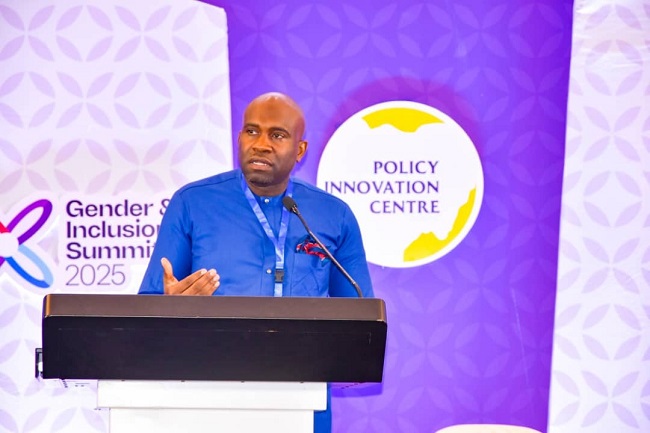
Ekenem Isichei, Deputy Director of Programme Advocacy and Communications (PAC) at the Gates Foundation
Ekenem Isichei, Deputy Director of Programme Advocacy and Communications (PAC) at the Gates Foundation, made the call during his keynote address at the 2025 Gender and Inclusion Summit organised by the Policy Innovation Centre (PIC), Abuja.
The summit, with the theme: “New Voices and New Approaches for Accelerating Inclusive Society”, brought together government, private sector and civil society to discuss gender inclusion and its impact on economic growth and development.
Isichei said inclusive growth cannot be achieved unless women are intentionally prioritised in national and state policies, warning that progress made in women’s health and empowerment could stall without stronger institutional delivery and budgetary commitment.
“Our goal is to leverage our knowledge and capital to enable the government to best serve its people to execute on budget commitments for key health innovations, to streamline donor delivery coordination mechanisms, to plan and operationalise national development plans on the state level, and much more.”
He emphasised that the conversation became important at a time when bilateral aid to Nigeria fell by 40 per cent as programmes that intentionally support women’s health or empowerment remained targeted.
Isichei added that funding for maternal and child health dropped by 67 per cent.
“We gather at a time when resources and momentum towards gender equality goals are waning.
“Since we gathered last year, bilateral Official Development Assistance that is aid from a donor country to Nigeria has dropped 40 per cent, and programmes that intentionally support women’s health or empowerment were especially targeted.
“Funding towards maternal and child health in Nigeria dropped by 67 per cent.
“That means that for every three women in your community, two of them will not have access to critical women’s health commodities that they had last year.
“When 70 per cent of Nigeria’s poorest are women, we cannot ignore the unique experiences of women in climbing out of poverty.
“At the Foundation, we have seen the hard evidence that proves that investing in women’s health and women’s economic empowerment has a lasting impact across generations.
“It leads to healthier families, stronger economies, and a more just world,” Isichie said.
He called on national and subnational governments to invest in skills systems and staying power to implement programmes effectively and not just to inaugurate.
“This means institutionalising gender desks, strengthening planning and budget units, and equipping local PHC managers and Gender Officers with the tools and data to lead with impact.”
He also called for dedicated public resources for women, saying gender-responsive budgeting “cannot remain an annual budget exercise.”
Isichei called for clear expenditure targets for women-led MSMEs, which must be protected, disbursed and monitored.
He recalled that the Gates Foundation recently pledged $2.5 billion through 2030 for research and development in women’s health, calling on governments, the private sector, and civil society to co-invest.
Though civil society groups were praised for pushing inclusion into the national conversations and matching urgency with operational clarity, Isichie urged private sector leaders to see inclusion as smart economics rather than charity.
Meanwhile, the chairperson of Nigeria Governors’ Spouses’ Forum (NGSF), Prof. Olufolake Abdulrazaq, reiterated the Forum’s commitment to advancing gender equality and women’s empowerment, pledging stronger interventions to dismantle systemic barriers.
Abdulrazaq said that various state-level reforms are already underway, stressing that Kwara State has signed a 35 per cent gender inclusion bill into law.
She added that 10 states now grant six months of maternity leave to working mothers.
According to her, several states, including Imo, Ogun, and Ekiti, have female deputy governors, with Kwara reporting 50 per cent female representation in its cabinet.
Such measures, Abdulrazaq said, signal progress toward reshaping governance and leadership representation in Nigeria.
In another remark, the Second Deputy Governor, Central Bank of Ghana Matilda Sante-Asiedu said true progress extends beyond economic growth, as it is rooted in inclusion and representation for all.
Gender equity, she said “is not a moral responsibility but strategic for building societies that are inclusive, resilient and prosperous.
Changing the narrative of inclusion requires transformational thinking and an unconventional approach to doing things.”
She urged all leaders and policymakers to embrace bold ideas and establish institutions that truly reflect the diversity of the African continent.
Kano State Government has reassured the residents of its commitment to tackling urban flooding through sustainable measures to safeguard lives and property.
Dr Dahiru Hashim, the Commissioner for Environment and Climate Change, stated this in a statement on Friday, September 5, 2025, in Kano, following Thursday’s heavy rainfall that resulted in flooding across parts of the metropolis.
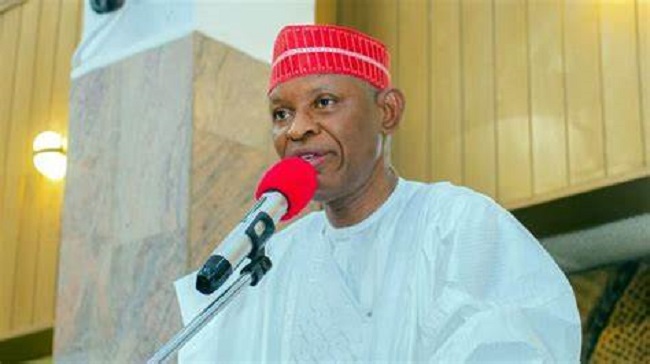
Gov. Abba Yusuf of Kano State
Hashim said the downpour, which lasted more than three hours in many areas, was unusual in both intensity and duration.
According to him, the incident is one of the well-documented consequences of climate change linked to rising global temperatures that increase atmospheric moisture and cause prolonged rainfall.
He said the government had earlier desilted major drains at the beginning of the rainy season to ensure free water flow and supported self-help groups across the metropolis to desilt minor drainages.
The commissioner added that waste management systems were also being strengthened to prevent blockages, while trees were being planted along major roads to enhance water absorption and reduce runoff.
“A major drainage channel is also under construction at Babangwari roundabout, designed to safely convey more than half of the city’s runoff.
“For the long term, the Ministry will propose in the 2026 budget a new drainage master plan for Kano metropolis, as the current system may not withstand future climate-induced rainfall patterns,” he said.
Hashim urged the residents to cooperate by properly disposing of waste and refraining from building on waterways, stressing that such practices worsened flooding and endangered lives.
He reiterated the government’s commitment to building a resilient Kano metropolis and ensuring the safety of residents against climate-related risks.
The Ondo State Government’s Department of Wildlife Conservation, Parks and Ecotourism, in collaboration with Centre for Human Settlements and Sustainable Developments (CHUSSDEV), has initiated a reforestation project at Osse River Park.
The state government was also in technical partnership with Federal University of Technology, Akure (FUTA), and the Nigeria Conservation Foundation (NCF).
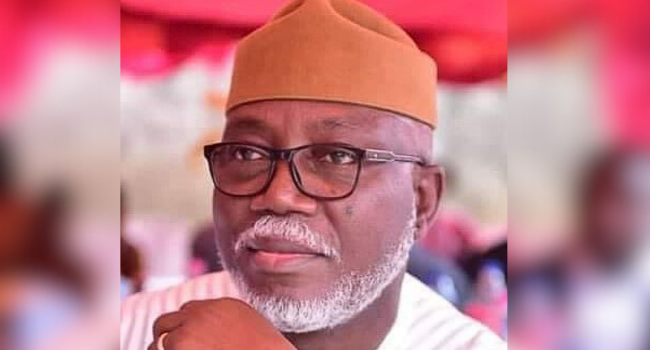
Gov Lucky Aiyedatiwa of Ondo State
Mr. Leye Akinola, State Commissioner for Agriculture and Forestry, who inaugurated the tree-planting on Friday, September 5, 2025, at the park in Ose Local Government Area of Ondo State, said the aim was to restore forest habitats for animals.
Akinola, represented by the Director of Wildlife Conservation, Parks, and Ecotourism, Mr. Oluwasola Ibosiola, appreciated the partners for their support in restoring the forest to its former glory.
“The project aims to restore the forest habitat for animals that have migrated by planting 5,000 indigenous tree species,” he said.
Earlier, Prof. Oluseyi Fabiyi of FUTA’s Department of Forestry and Wood Technology, who facilitated the project, explained that human activities such as encroachment, farming, and poaching led to the disappearance of animals from the forest.
Fabiyi added that the project would engage local farmers in tree planting and maintenance, promoting agroforestry and wildlife conservation.
Also, Prof. Anthony Ogunjinmi of FUTA’s Department of Ecotourism and Wildlife Management, noted that the park was once a thriving habitat for large mammals.
He expressed hope that the reforestation would attract the animals’ return and support ecotourism and research.
Ogunjinmi advised the Ondo State Government to consider handing over the park to the National Park Service for better management and conservation.
Meanwhile, Dr Joseph Onoja, the Director-General, NCF, who spoke on the conservation efforts, highlighted the organisation’s dedication to nature conservation and sustainable development in Nigeria.
Onoja, represented by Dr Adedayo Memudu, NCF Zonal Coordinator, South-West Zonal Office, emphasised NCF’s mandate, which included protecting endangered species and habitats, advocating for climate action, promoting nature-based solutions and providing environmental education.
“As a leading voice in environmental protection, NCF focuses on initiatives like the Forest-Green Recovery Nigeria project, aiming to increase forest cover from 4-7 per cent to 25 per cent by 2047,” he said.
The director-general, therefore, appreciated stakeholders for coming together to restore the natural habitat degraded by human activities, making the park conducive for wildlife, ecotourism and conservation.