Home Blog Page 1819

Two Singaporean students develop water purifying material, win prize

0

Two students from Singapore, Caleb Liow Jia Le and Johnny Xiao Hong Yu, have won the 2018 Stockholm Junior Water Prize for producing reduced graphene oxide, a material that can be used to purify water from agricultural waste products.
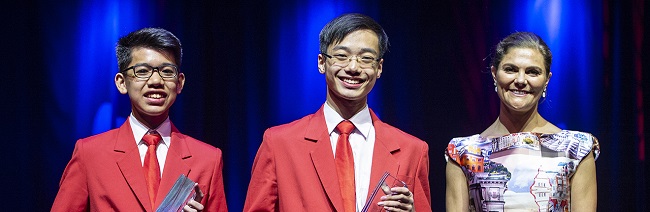
Caleb Liow Jia Le and Johnny Xiao Hong Yu

In a statement, Ms Jens Berggren, Communications Director, Stockholm International Water Institute (SIWI), said Crown Princess Victoria of Sweden, the patron of the prize, presented the prize at an award ceremony at the on-going World Water Week in Stockholm.

The World Water Week holds from Aug. 26 to Aug. 30 annually.

In their project, Caleb Liow Jia Le and Johnny Xiao Hong Yu developed a new method to produce reduced graphene oxide (rGO), a material that has huge potential to purify water.

The students, using durian rind and sugarcane bagasse , found a more environmentally friendly and cheaper method for producing rGO.

The statement quotes Caleb Liow Jia Le, while receiving the award as saying. “I am very, very happy, I am shocked that we won the prize because I really didn’t expect it!”

The Stockholm Junior Water Prize goes to the winners of an international annual competition with more than 10,000 entries from all over the world.

In its citation, the jury highlighted the wide local benefits of the students’ method.

“This year’s winning project inspires communities to find local solutions to improve water quality and resource recovery.

“The project developed a leading edge, inexpensive, and widely applicable method to clean water. Further development of this method will lead to public health and ecosystems protection.

“Therefore, the project embodies the themes of 2018 World Water Week – Water, Ecosystems and Human Development.

“The winning project has included concepts of circular economy, nanotechnology, and green chemistry. The project’s success will set new trends in the way we filter water.”

When asked how they would like to take the project further, Johnny Xiao Hong Yu said: “We will definitely try to think of ways to improve it and make it even more sustainable, even more environmentally friendly, so that it can be used to make an impact in the future.”

Mr Torgny Holmgren, Executive Director of SIWI, said he was impressed by the students’ innovative project, adding that the provision of clean water was one of humanity’s greatest challenges.

He said the 2018 outstanding winners had found a way to purify water that was low-cost using, locally available resources and could help in getting clean water to the 2.1 billion people who still lacked it.

SIWI is an international water institute working to solve global water challenges by improving how water is used and managed.

The group influences decision-makers, facilitates dialogue and builds knowledge in water issues, thereby contributing to a just, prosperous and sustainable future for all.

SIWI organises the world’s most important annual water and development meeting, World Water Week, and awards the Stockholm Water Prize and Stockholm Junior Water Prize.

The World Water Week has brought together more than 3,500 participants from more than 130 countries representing governments, private sector, multilateral organisations, civil society and academia to find joint solutions to global water challenges.

By Tosin Kolade
PACJA, CSDevNet boost coalition for climate change, sustainable development in Nigeria

0

As Nigeria continues to explore actionable ways to address the menace of climate change, one of the greatest challenges experienced in the drive to achieve this is gross division among various stakeholders sitting on different ends of the negotiation table.

PACJA and CSDevNet
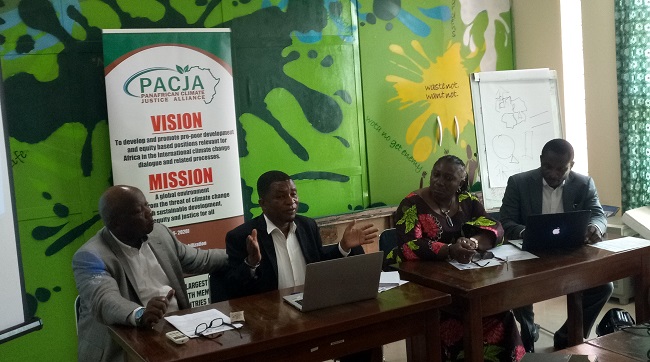
L-R: Director, Mshelia & Co., Huzi Mshelia; Secretary General, Pan-African Climate Justice Alliance (PACJA), Dr. Mithika Mwenda; Executive Director, Women Environmental Programme, Dr. Priscilla Achakpa; and National Coordinator, Climate and Sustainable Development Network of Nigeria (CSDevNet), Atayi Babs, during the National Consultative Workshop

In a bid to address this, Pan-African Climate Justice Alliance (PACJA) through the Climate and Sustainable Development Network of Nigeria (CSDevNet) recently developed a framework for a stronger coalition for key stakeholders and more efficient delivery by other active organisations.

Civil society organisations (CSOs) are said to play a vibrant role in addressing issues around climate change and sustainable development.

The PACJA/CSDevNet framework was determined during the National Consultative Workshop on Nationally Determined Contributions (NDCs) and Talanoa Dialogue held in Abuja on Tuesday, August 28, 2018.

Facilitated by PACJA’s Secretary General, Mr. Mithika Mwenda, the entire coalition was at the the end of the day redistributed across six sectors namely: Finance, Gender, Adaptation, Mitigation/Energy, Media/Information, and Intergenerational/Innovative Technology.

The heads of the newly created sectors, known as “Conveners”, will work closely with the CSDevNet board in implementing the numerous PACJA programmes in Nigeria

According to Mwenda, the newly designed civil society framework will accommodate many other stakeholders across the six geo-political regions of Nigeria to act in the national interest in implementing the Paris Agreement in the country.

Furthermore, he said, this will afford organisations an opportunity to work collectively as against working in silos and together strengthen engagements to timely actualise the implementation of the NDCs in the five priority areas: Energy, Oil & Gas, Agriculture & Land use, Power, and Transport.

The National Consultative Workshop had “Accelerating NDCs & Paris Agreement Implementation in Nigeria” as its theme.

By ‘Seyifunmi Adebote, Abuja

National Parks Service, Wukari varsity to collaborate in ecotourism, conservation education

0

The Nigeria National Parks Service has signed a Memorandum of Understanding (MoU) with the Federal University, Wukari in Taraba State to collaborate in ecotourism, research and conservation education.

Ibrahim Goni
Alhaji Ibrahim Goni, Conservator-General of the National Parks Service

The MOU was signed by Alhaji Ibrahim Goni, the Conservator-General of the service, and Prof. Abubakar Kundiri, the Vice Chancellor of the university, at the service headquarters in Abuja on Wednesday, August 29, 2018.

This disclosure was contained in a statement signed by the Media Assistant to the Conservator-General, National Park Service, Yakubu Zull.

The C-G said that the MoU was the second of its kind since he assumed duty as the Chief Executive of the National Park Service.

He called on other institutions of learning to emulate the university to raise the bar in natural science education and conservation of biological biodiversity.

Goni stated that the National Parks, which served as a field laboratory to students studying natural sciences in tertiary institutions had so far trained more than 2,000 students.

The Vice Chancellor, in his response, said that the MOU marked a milestone in the advancement of quality education in the university.

He observed that government funding alone could not sustain the operations of the university, hence the need to explore other areas of funding.

“With the MOU, the university will now have access to the Parks’ facilities for research to boost tourism activities that will generate revenue and employment opportunities for the youth.

According to him, the development will also boost revenue and fulfill its mandate.

By Ebere Agozie

Facebook to run on 100% renewable energy by 2020

0

Facebook on Tuesday, August 28, 2018 committed to powering its global operations on 100 per cent renewable energy by 2020.

Facebook
Facebook

The company is also promising to cut greenhouse gas emissions by 75 per cent in the same time frame. They have already met their target of being powered by 50% renewable energy one year early and they aim to double that over the next two years.

The social network consumes a huge amount of electricity to power its data centres. In 2017, Facebook’s total carbon footprint was 979,000 metric tons of carbon dioxide equivalent, 62% of this was from their data centres.

However, after its sustainability pledge, it is on track to be one of the largest corporate purchasers of renewable energy.

Bobby Hollis, Director of Global Energy at Facebook, said: “We bring an open and innovative approach to finding renewable energy solutions that can move energy markets forward. Since 2013, we have added over 3 gigawatts of new solar and wind energy to the grids that power our data centres, all while opening those markets for other customers to follow our lead.”

Marty Spitzer, Director of US Climate and Renewable Energy Policy and World Wildlife Fund, said: “Facebook’s involvement has helped engage other companies in signing on to the Corporate Renewable Energy Buyer’s Principles. We now have more than 50 companies demanding clean and renewable energy from utilities across the U.S.”

Greenpeace commented: “Facebook was the first major internet company to commit to be 100% renewably powered and continues to play a leadership role within the sector.”

Last year, Facebook pledged its support for climate action by supporting the Paris Agreement through the We Are Still In initiative. They also set the record for clean power purchases in 2018.

Facebook joins other tech titans such as Apple and Google in a commitment to go green.

Courtesy: Climate Action Programme

All On partners with GEF, AfDB, others to launch $58m off-grid energy facility

0

Nigerian off-grid energy investment company, All On, has announced its partnership with the African Development Bank (AfDB), the Nordic Development Fund (NDF), Global Environment Facility (GEF) and Calvert Impact Capital (CIC) towards a $58 million first close for the Off-Grid Energy Access Fund (OGEF).

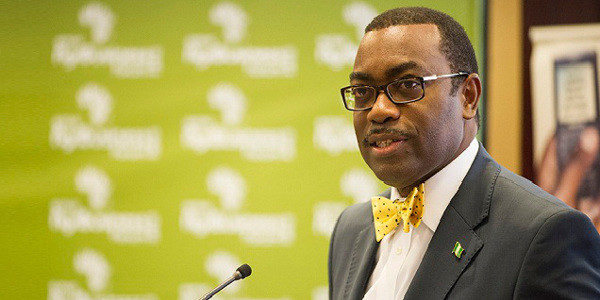
Akinwumi Adesina
Dr. Akinwumi Adesina, President of the African Development Bank (AfDB)

The OGEF, which is managed by LHGP Asset Management (LHGP), an alternative fund manager with offices in Lagos, London, and Nairobi, is a dedicated debt fund for off-grid energy companies and is part of the AfDB-sponsored Facility for Energy Inclusion (FEI). The FEI is a $500 million finance platform designed to provide loan facilities in both local and hard currencies to support innovative energy access companies.

Dr. Akinwumi Adesina, AfDB President, said: “Access to electricity is a fundamental human right. That is why the African Development Bank set up the Fund for Energy Inclusion, to support off-grid energy systems. I am delighted that All On and Shell have joined forces with the African Development Bank to invest private capital in this Fund to help accelerate access to electricity in Nigeria. Together we will close the energy access gap in Nigeria and across Africa.”

OGEF achieves its first close with equity and debt commitments of $58 million from All On, AfDB, NDF, GEF and CIC, and the structuring process and investments build on support from Shell Foundation, DFID and USAID. FEI OGEF has been designed to provide a flexible range of loan facilities in predominantly local currency, to companies in the household energy access sector including distributors, manufacturers, end-user credit providers and other businesses supporting the ecosystem.

According to Wiebe Boer, the CEO of Nigeria-based All On, an off-grid energy impact investment company backed by Shell, “We see OGEF as a great opportunity for public and private investors to work together to address Africa’s significant access to energy gap.  We look forward to working with LHGP, especially the Nigeria-based team, to build a solid portfolio of off-grid energy companies that are improving livelihoods by providing affordable power to unserved and underserved communities.”

This first close follows the official launch of FEI at the Africa Energy Market Place (AEMP) on July 5 and 6, 2018, where the initiative was presented to the governments’ representatives of five African countries – Côte d’Ivoire, Ethiopia, Egypt, Nigeria and Zambia – as well as leaders from the private sector and the development partner communities.

Air pollution linked to mental decline

0

Shocking new research suggests air pollution has a serious impact on mental capabilities as well as physical health in human beings.

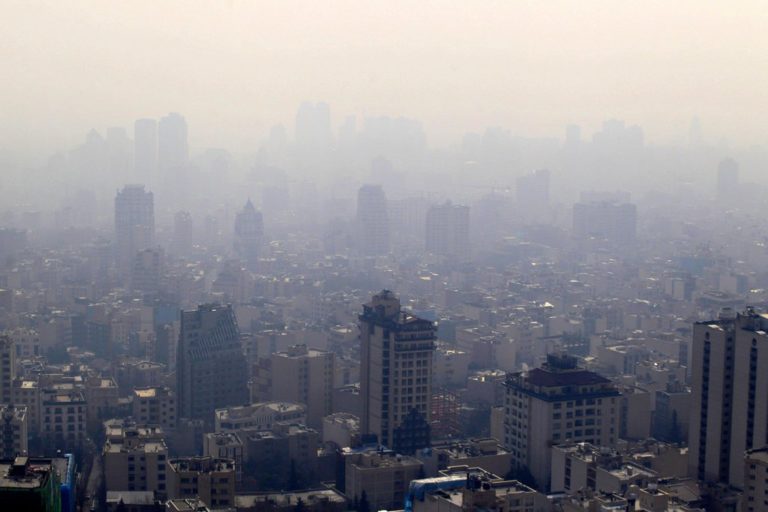
Air pollution
Air pollution blankets the skyline of Tehran

High levels of pollution can trigger a decrease in language and arithmetic skills – with the average impact of ‘dirty air’ equivalent to losing a year in education.

The United Nations has blamed air pollution for seven million deaths worldwide each year, while campaigners have urged local government to take more action.

An international team of researchers led by Beijing Normal University analysed language and arithmetic tests conducted on 20,000 people across China between 2010 and 2014.

However, the study is relevant worldwide, as the latest figures show around 95 per cent of the global population are now breathing unsafe air.

Scientists conducted the tests across China in areas with varied levels of pollution.

According to the latest findings, air pollution is a significant cause of loss of intelligence – roughly equating to the impact of losing a year of education.

Although previous research had found air pollution is capable of harming cognitive performance in students, this latest study is the first to examine people of all ages.

It also analysed the difference between men and women.

‘Polluted air can cause everyone to reduce their level of education by one year, which is huge,’ researcher Xi Chen of Yale School of Public Health told the Guardian.

‘But we know the effect is worse for the elderly, especially those over 64, and for men, and for those with low education.

‘If we calculate [the loss] for those, it may be a few years of education’, he said.

Worse still, the researchers found that the longer people are exposed to dirty air, the greater the damage to their intelligence levels.

‘We find that long-term exposure to air pollution impedes cognitive performance in verbal and math tests’, researchers wrote in their paper, published in the journal Proceedings of the National Academy of Sciences.

‘We provide evidence that the effect of air pollution on verbal tests becomes more pronounced as people age, especially for men and the less educated.

‘The damage on the aging brain by air pollution likely imposes substantial health and economic costs, considering that cognitive functioning is critical for the elderly for both running daily errands and making high-stake decisions’.

For the latest study, scientists accounted for the gradual decline in cognition seen as people age.

They also ruled out the possibility that people are more impatient or uncooperative during tests when the pollution levels were especially high.

French Environment Minister quits in major Macron blow

0

In a stunning setback to the French government, Nicolas Hulot has announced his resignation. He said he felt “all alone” while trying to advance green policies in the government.

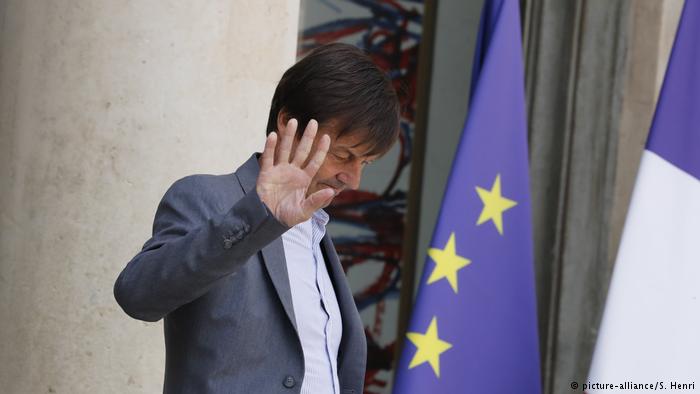
Nicolas Hulot
Nicolas Hulot, a former TV presenter and environmental activist

The Environment Minister on Tuesday, August 28, 2018 made the announcement on France Inter radio, saying it was the result of an “accumulation of disappointments.”

The announcement strikes a major blow to French President Emmanuel Macron, who had pledged to make France a global leader for climate solutions.


What Hulot said

  • The French government’s lack of progress on steps to tackle climate change, defend biodiversity and address environmental threats resulted in an “accumulation of disappointments.”
  • “I don’t want to lie any longer. I don’t want to maintain the illusion that my presence in government means that we are meeting these environmental challenges.”
  • “France is doing more than a lot of other countries. Do not make me say that it is doing enough. It is not doing enough. Europe is not doing enough. The world is not doing enough.
  • “I have a bit of influence, but I have no power and no means.”


What about ‘Make Our Planet Great Again’?

During his presidential campaign, Macron had pledged to enact ambitious environmental policies in an attempt to advance his image as the antithesis of US President Donald Trump, who pulled the US out of the 2015 Paris accord. Macron even adopted Trump’s slogan, urging people to join his environmentally friendly cause and “Make Our Planet Great Again.”

But Hulot suggested that Macron’s government has paid little more than lip service to environmental issues. He highlighted, for example, the government’s pledges to cut back reliance on nuclear energy to 50 percent by 2025 and to curb the use of pesticides and said there had been little progress on several other initiatives.


Elysee defends progress

Government spokesman Benjamin Griveaux told BFM news channel that Hulot should have warned Macron and Prime Minister Edouard Philippe before announcing his resignation.

“Do you do an environmental revolution in one year? The response is no,” said Griveaux. “I prefer little steps to not moving.”

Observers have suggested that Hulot’s departure could cause further shakeup within the government and prompt Macron to reshuffle his cabinet.

AU wants member states to acquire skills for accessing Green Climate Fund

0

The African Union (AU) Commission has urged stakeholders to train officials of member states, agencies and academic institutions on the skills of developing, implementing and monitoring of Green Climate Fund (GCF) Proposals.

AU Commission
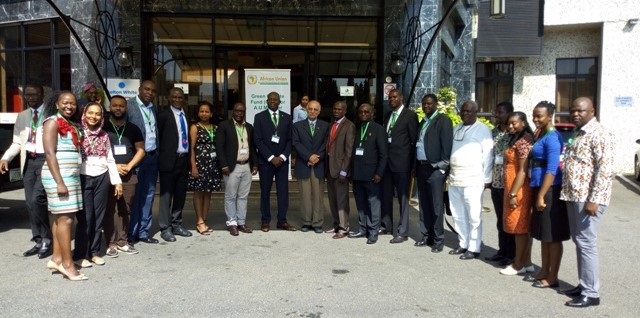
Participants and facilitators at the Capacity Building Workshop for AU member states on Accessing Green Climate Fund (GCF) organised by the African Union Scientific, Technical and Research Commission in Abuja on Aug. 28, 2018

Prof. Sarah Agbor, the Commissioner, Department of Human Resources, Science and Technology, African Human Commission, made the call in Abuja on Tuesday, August 28, 2018 while declaring open a three-day capacity building workshop for representatives of AU member states.

The workshop, organised by the African Union Scientific, Technical and Research Commission (AU-STRC) Abuja, was aimed towards training the participants on the process involved in accessing the fund.

She said: “The Green Climate Fund aims to promote a paradigm shift towards low emission and climate resilient pathways in developing countries to limit or reduce their greenhouse gas emissions and to adapt to the impact of climate change.

“However, many AU member states have been able to access the GCF, and that is why this particular conference is very essential.

“Where do we go, how do we go, how do we implement and get member States access to the GCF?

“The key development mechanism has registered a minimal success of less than 2% in Africa in terms of Projects as compared to China alone that has over 80%.

“Some studies attest that this is due to the lack of institutional and technical Capabilities which attract funds in accordance with best practices.

‘’I started the paradigm in design execution and monitoring of projects, learning lessons from the challenges of CDM, particularly where all member States have little knowledge, skills and nuances of design, implementation, monitoring and evaluation of fundable projects

“In response to the above mentioned, the African Union Scientific, Technical and Research Commission, with the technical support of the African Centre for Technology Studies, the African Sustainable Health and the Institute of Climate Change and Adaptation, Nairobi, Kenya.

“May I underscore the need to prepare officials of member states’ industries, agencies, parastatals and academic institutions for training on the skills of developing, implementing, and monitoring of GCF projects.

“We hope and believe that you will take advantage of this unique opportunity to learn, improve and strengthen your capacity with the requisite knowledge and competencies on the operation of the GCF and hoe to develop competitive affordable GCF project proposals.

“And that on returning to your institutions, organisations and parastatals, you will in turn champion this cause and train others to create the chain.

“And this will help establish GCF project development and management development skills within states.’’

The AU commissioner further urged the stakeholders at the workshop to realise that they had a responsibility to the continent.

“The dream of achieving what Africa should be lies in all of you. We say health is wealth, but when there is pollution everywhere how can there be health?

“In whatever capacity you are attending this meeting, you have already been taken as an ambassador to promote the GCF and for it to be implemented so that at the end of the day, we will benefit from the positives that will come out of it,’’ she added.

The News Agency of Nigeria (NAN) reports that participants from 17 African countries are attending the three-day conference.

The countries are Ethiopia, Botswana, Kenya, Tanzania, Gambia, Ghana, Egypt, and South Africa.

The others include Cameroon, Zambia, Mauritius, Malawi, Zimbabwe, Liberia, Swaziland, Uganda, and Nigeria.

By Patricia Amogu

Marshall Islands emerges new Climate Vulnerable Forum chair

0

The Federal Democratic Republic of Ethiopia concluded its chairmanship of the Climate Vulnerable Forum (CVF) and the Vulnerable Twenty (V20) Group of the member states of the CVF with a handover ceremony held at Addis Ababa on Tuesday, August 28, 2018 transferring presidency responsibilities to the Republic of the Marshall Islands.

Hilda-Heine
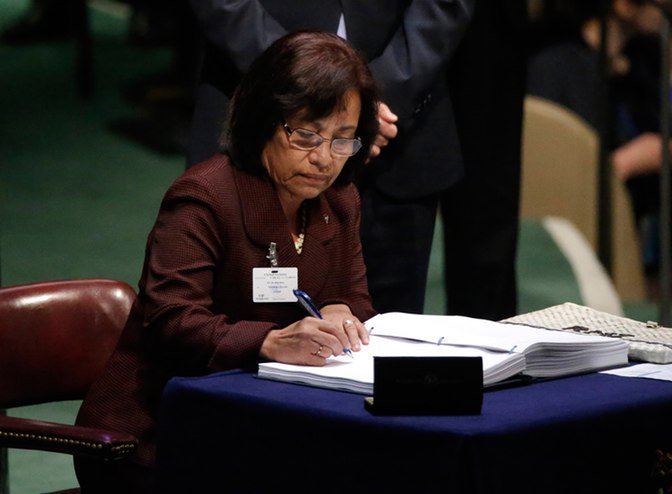
Hilda Heine, President of Marshall Islands

Speaking at the event, Dr. Gemedo Dalle, Minister of Environment, Forest and Climate Change, said: “The Marshall Islands gives us hope. They are very vocal and committed to fighting climate change. The CVF is in safe hands. We strive for 1.5°C to thrive and we can do this together. The dream of a safer world needs the cooperation of all countries, and of every man, woman, and child.”

Accepting the responsibilities of the Forum chairmanship, Mr. Carlsan Heine of the Office of the President of the Marshall Islands said: “We have come together on climate change and we will continue to fight together on climate change. The Marshall Islands stands on the shoulders of the giants of this Forum who came before us as we seek to implement the CVF Vision and the core priorities of the V20 Finance Ministers. We are proud that a Pacific island nation of less than 100,000 inhabitants under female leadership will take forward this global Forum at this critical moment.”

The Marshall Islands is convening an entirely online Virtual Summit of the Climate Vulnerable Forum on 22 November 2018 and it was indicated that the Summit would be front and center of the Forum’s work for the remainder of 2018.

The handover ceremony took place in conjunction with meetings of the V20 Focus Groups and a CVF-V20 Troika Meeting held at Addis Ababa from August 27 to 28, 2018, gathering senior CVF and V20 officials from different world regions.

Groups slam inclusion of new coal in S’Africa’s electricity plan

0

The inclusion of new coal in the updated draft Integrated Resource Plan for Electricity (IRP) will cost South Africa close to R20 billion more than is needed to spend and will make electricity more expensive for all South Africans. If the Department of Energy were to publish the least-cost plan that civil society organisations have been demanding, it would not include any new coal.

Melita Steele
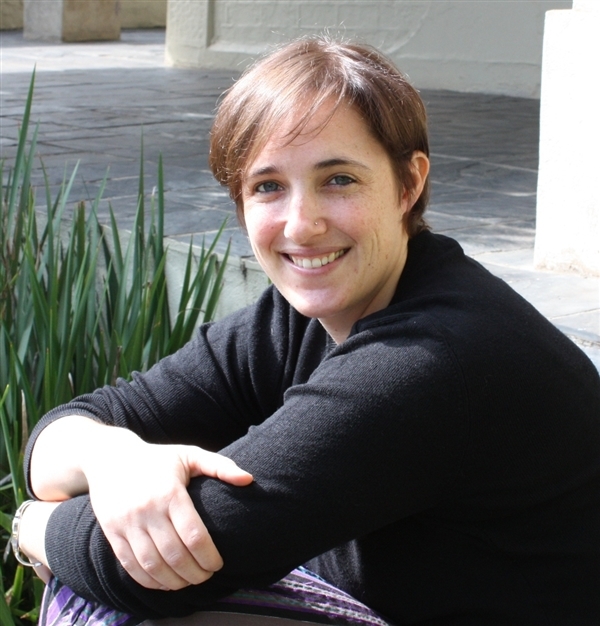
Greenpeace Africa’s Senior Climate and Energy Campaign Manager, Melita Steele

Allowing the two new coal plants contemplated by the draft IRP to go ahead would be disastrous for water resources, air quality, health, land, and the climate, environmentalists believe.

The Life After Coal Campaign (consisting of Earthlife Africa, the Centre for Environmental Rights, and groundWork) and Greenpeace Africa argue that the inclusion of an additional 1000 MW of new coal-fired power – on top of existing and under-construction coal – puts the Department of Energy in conflict with the rights enshrined in the Constitution, given that there are safer, cleaner, and less-expensive energy options available.

“While we recognise the increased emphasis on renewable energy in the draft IRP, unless the Minister of Energy substantially revises and amends the draft IRP to ensure that the Constitutional right to a healthy environment is preserved and protected – and specifically excludes any new coal – the Department runs the risk of the IRP being challenged in court,” warns Melita Steele, senior climate and energy campaign manager at Greenpeace Africa.

Robyn Hugo, head of the Pollution & Climate Change Programme at the Centre for Environmental Rights, says that the updated IRP fails to take sufficient account of the external costs of the various available technologies. “Coal is an outdated and dirty technology – the environmental and health costs of which have not been factored into electricity planning.”

At present, almost 90% of South Africa’s energy mix is already comprised of coal, despite many of these plants failing to meet the required emission standards and causing devastating health impacts.

A 2016 report by UK-based air quality and health expert Dr Mike Holland found that air pollution from Eskom coal-fired power stations kills more than 2,200 South Africans every year and causes thousands of cases of bronchitis and asthma in adults and children annually.

“This costs the country more than R33 billion annually, through hospital admissions and lost working days,” says Bobby Peek, Director of groundWork.

“In addition to these severe health impacts, coal-fired electricity is also enormously water-intensive and the estimated costs of rehabilitating old mines and mining areas runs into the billions”, says Steele.

“Even discounting the health and environmental dangers of coal, it simply makes no economic sense to include coal in the IRP, as it is more expensive than other technologies such as wind and solar power,” says Makoma Lekalakala, director of Earthlife Africa.

The Campaign and Greenpeace Africa will reiterate all of these – and other concerns – in comments on the draft IRP. It is crucial that South Africa’s future electricity plan is least-cost and in the public interest. All South Africans – including coal workers and the unemployed – must be part of the process to ensure a just energy transition.