The General Manager, Kebbi Urban Development Authority (KUDA), Malami Muhammad Shekare, on Tuesday, August 28, 2018 said it had expended N33 million on evacuation of drains and clearing of waterways in the state.
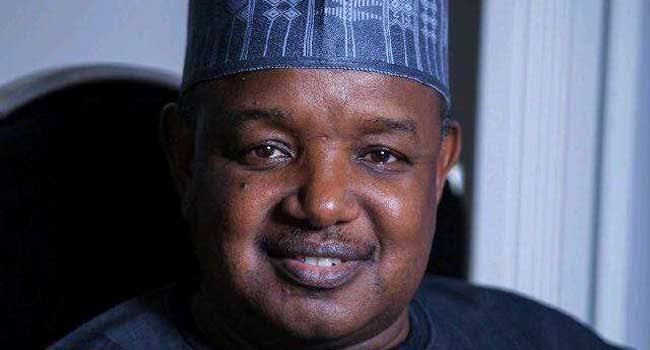
Alhaji Atiku Bagudu, Governor of Kebbi State
Shekare told the News Agency of Nigeria (NAN) in Birnin Kebbi that the exercise was part of efforts to prevent flooding in the state.
He said the authority had engaged over 200 unemployed youths to assist in the evacuation and desilting of drains in major towns in the state.
“The State Governor, Alhaji Atiku Bagudu, approved N33 million for the exercise, and we engaged the services of unemployed youths in Zuru, Argungu, Birnin Kebbi and Yauri areas to assist in the evacuation and clearing.
“The exercise has so far yielded positive results as we have not witnessed flood in those areas apart from Argungu Local Government Area,’’ the general manager said.
He warned residents against erecting structures on the various drainage systems in the state and waterways, saying it was illegal.
“We will not hesitate to deal decisively with defaulters as we have been sensitising them on the dangers of building structures on the drains,” he said.
Shekare urged residents in the 21 local government areas to evacuate their drains to avoid flooding during the rainy season.
“As part of the measures to avert the flooding, we usually experience in the 11 local government areas, we urge residents to complement the state government’s efforts by evacuating the drains around their premises,’’ he said.
The UN Children’s Fund (UNICEF) said more than 82,500 children are being prepared for the new school year in Ebola-affected areas of the Eastern Democratic Republic of the Congo (DRC).
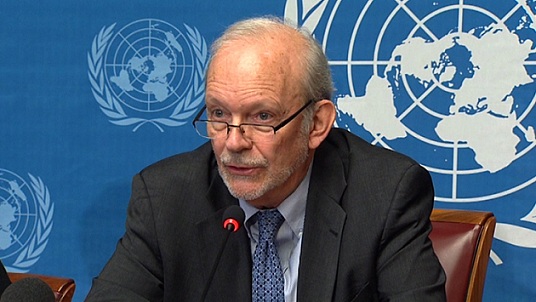
Anthony Kirsopp Lake, Executive Director of the United Nations Children’s Fund (UNICEF)
UNICEF said it was scaling up education, health and water, sanitation and hygiene programmes to assist the schools to provide a protective learning environment for children and their teachers.
The Government of the DRC recently made the decision to proceed as planned with the start of the school year in the affected provinces of North-Kivu and Ituri, where some 250 schools are listed as being in Ebola-affected health zones.
“Education is a right for every child and essential for children to develop to their full potential.
“Especially in times of crisis such as an Ebola outbreak, schools are vital for children to find stability, learn prevention measures and receive psychosocial support.
“Every effort must go into ensuring a smooth and safe start to the new school year,” said Dr Gianfranco Rotigliano, UNICEF Representative in the DRC following his visit to Mangina, the epicentre of the Ebola-epidemic.
School principals and teachers would receive training on Ebola prevention and protection, and how to educate children on good hygiene practices to avoid the spread of the virus.
To ensure schools in the affected health zones are well prepared for early detection and response, UNICEF is distributing health and WASH supplies including laser thermometers, hand washing units and megaphones and prevention posters to each of the 250 schools.
UNICEF and partners are working to train school principals and more than 1,750 teachers in the affected health zones about Ebola and protection measures against the virus.
They are also organising prevention communication activities for parents’ committees and local authorities on prevention measures in every concerned school.
They prepare teachers to sensitise all children at the beginning of the school year on good hygiene practices to contain the spread of the virus and distribute 500 laser thermometers – two in each school – to monitor the health situation of children.
UNICEF and partners are also installing 1,500 hand washing units – six in each school – to promote hand washing and hygiene, as well as distribute megaphones and prevention posters in every school.
Nigerian Social and Economic Research Institute (NISER) in Ibadan on Tuesday, August 28, 2018 called for more rural electrification projects to boost power supply across the country.
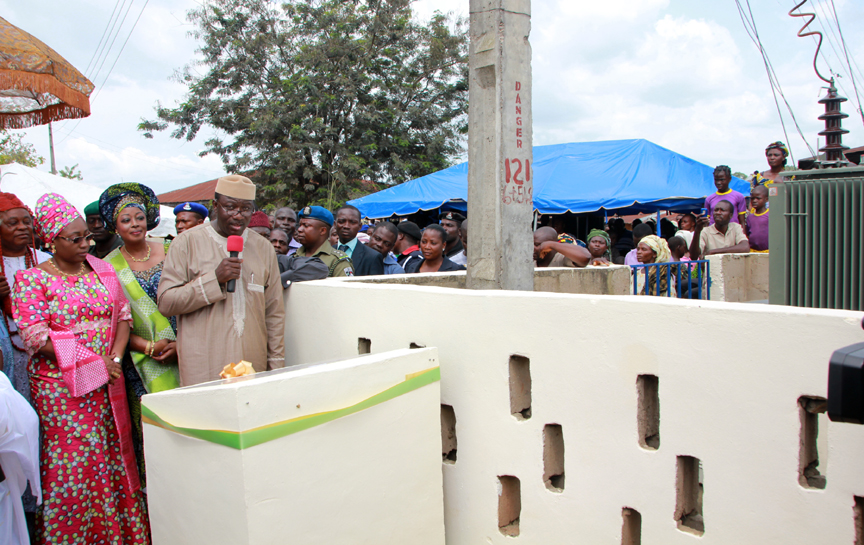
Commissioning of a rural electrification project
Dr Femi Ogundele of the Agriculture and Food Policy Department in NISER made the call while delivering a lecture at the NISER Research Seminar Series (NRSS).
Ogundele spoke on the topic “Electricity Consumption and Households’ Welfare Effects in Nigeria.”
He said rural electrification projects would promote rural industrialisation and curb rural-urban drift among the populace.
Ogundele said that massive procurement and deployment of prepaid meters would ensure justice in electricity charges.
He said that there was the need for a national policy and framework for enforcement of rules and standards guiding the use of generating sets due to their environmental effects.
“There is need to exercise caution on the extent to which tariff on electricity can be increased as households don’t adjust electricity expenditure upward proportionately to increased tariff.
“Efforts to make the cost of the environmentally friendly alternatives such as solar affordable is necessary to solve the problem of reliability and environmental pollution,” he said.
Ogundele said that electricity supply should reach the minimum daily average of 10 hours considered as satisfactory by households before any tariff adjustment.
Earlier, NISER Director-General, Dr Folarin Gbadebo-Smith, had said availability of electricity was key to healthy living, stressing that almost nothing would function without it.
Gbadebo-Smith, represented by Prof. John Adeoti, Head of Science and Technology Innovation in NISER, said that the NRSS was a platform where the institute interacted with stakeholders on NISER researches with the aim of improving the economy.
He commended the stakeholders for their support and for finding time to attend the seminars.
The Chairman of the occasion, Prof. Andrew Ayodele, said that rural areas should be developed through adequate supply of electricity to stop rural-urban migration.
Ayodele also said there was the need to support massive provision of electricity to discourage the use of generating sets with its concomitant effects on the environment.
The United Nations Children Fund (UNICEF) has urged the Bauchi State Government to settle its counterpart fund of N250 million to enable it benefit from intervention fund under the Sanitation, Hygiene and Water in Nigeria (SHAWN) project.
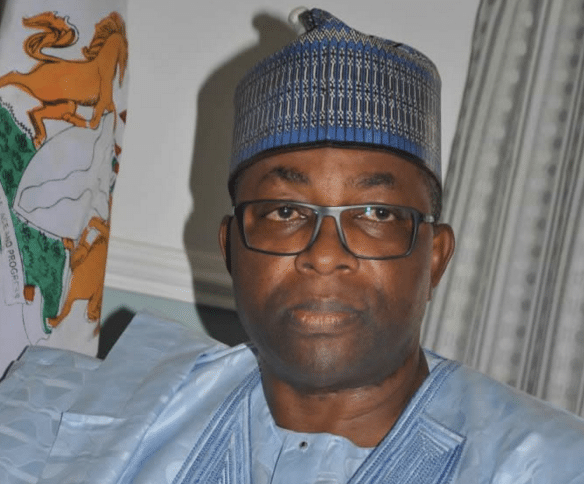
Mohammed Abdullahi Abubakar, Governor of Bauchi State
UNICEF officer in charge of Water Sanitation and Hygiene (WASH) in Nigeria, Mr Zard Jurji, made the call on Monday, August 27, 2018 when he led a team of UNICEF staff on a visit to the deputy governor of the state, Alhaji Audu Katagum in Bauchi, the state capital.
According to him, money has been set aside by the government of United Kingdom for the implementation of SHAWN projects in 12 Local Government Areas of the state.
He therefore warned that the state government might lose the fund if payment of the counterpart money is not completed in earnest.
Jurji also called on the state government to upgrade the WASH units of local government areas to the status of department for proper supervision and sustainability of SHAWN projects in the state.
In his response, the deputy governor, Katagum, said the State government would pay it counterpart fund within two weeks.
He commended UNICEF and the United Kingdom for its commitment towards improving the lots of the people, especially in the area of water, sanitation and hygiene
Poor water management and stressed ecosystems cause poverty and violent conflicts. To avoid a global water crisis, more nature-based solutions are urgently needed. These were key themes during the inauguration of World Water Week 2018 on Monday, August 27, which has brought world leaders, water experts, development professionals and business representatives from all over the world together in Stockholm, Sweden.
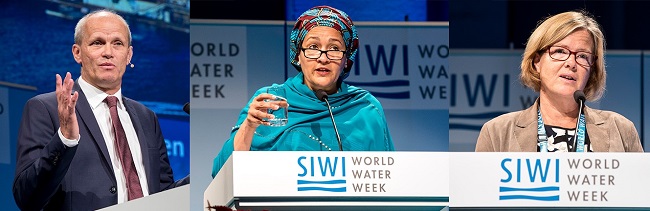
L-R: Torgny Holmgren, Executive Director of SIWI; Amina J. Mohammed, Deputy Secretary-General of the United Nations; and Carin Jämtin, Director-General of the Swedish International Development Cooperation Agency, all spoke at the opening of the World Water Week 2018
There is a growing realisation that humans are increasingly vulnerable to water shortages, extreme weather and social unrest. Decades of unprecedented economic and population growth, rapid urbanisation and climate change have led to stressed ecosystems and high pressure on limited water resources. In response to this, societies must find and implement solutions that work with, rather than against, nature.
World Water Week, the leading meeting-place for the global water community, is this year focused on the link between water, ecosystems and human development. Some 3,700 participants meet in Stockholm from August 26 to 27 to discuss concrete solutions to the escalating water challenges.
“With the rapidly growing demand for water, it is becoming increasingly clear that water is everybody’s issue. Scarcity of water has become the new normal in so many parts of the world,” said Torgny Holmgren, Executive Director of SIWI, which organises World Water Week.
In his welcome address on Monday, Mr. Holmgren called for a shift towards more green infrastructure solutions, noting that they are inherently multi-functional: “City parks retain rain, improve the microclimate, contribute to biodiversity – and look good doing so. Green solutions are, in addition, also often much more resilient than grey. They tend to bend rather than break under pressure. They can repair themselves and restore their functionality also after significant damage.
Amina J. Mohammed, Deputy Secretary-General of the United Nations, talked about the strong link between environmental degradation, poverty and violent conflicts. This is not least visible in her home country Nigeria, which in recent years has suffered from terrorism: “I believe that the tragedy of Boko Haram is inextricably linked to poor water management and the solution to the conflict in the region must include equitable ways of using water resources,” she said.
As an example of the dramatic consequences of a collapsing ecosystem, Amina J Mohammed referred to Lake Chad, which has shrunk by 90 per cent, saying that “it has impacted food insecurity and is increasing the risk of water-borne diseases, but it is also causing poverty by taking away farmers’ livelihoods, especially for women. And it has a gender dimension, contributing among others to low levels of school-enrolment among our girls. Taken together, all these factors have contributed increasingly to insecurity in our region, already affected by religious extremism.”
Similar views were expressed by Åsa Regnér, Assistant Secretary-General and Deputy Executive Director, Director for the Intergovernmental Support and Strategic Partnerships Bureau, at UN Women. She described lack of water as a root cause of poverty and inequality since “only in Sub-Saharan Africa, women and girls spend 40 billion hours a year collecting water, equivalent to a year’s worth of labour by the entire workforce in France”.
Carin Jämtin, Director-General of the Swedish International Development Cooperation Agency, also talked about the relationship between poverty, conflicts and lack of clean water. “In countries affected by conflict and fragility, tensions over water increase. There is evidence that water and sanitation infrastructure have been attacked, or that the access to clean water is denied as tactic or weapon of war. Without access to clean water, children fall ill, hospitals do not function, and disease and malnutrition spread quickly. Among the threats against children in conflict, the lack of safe drinking water is one of the deadliest,” Jämtin said.
Karin Wanngård, Mayor of Stockholm, pointed to the risk from populism and short-sightedness but also felt that cities were increasingly coming together to find new solutions, adding: “I hope that this week will help the global community to get closer to the goal of a sustainable world.”
Many of the speakers also expressed optimism about the increase in new solutions borrowed from nature. An inspiring example is the work of Stockholm Water Prize winners Professors Bruce Rittmann and Mark van Loosdrecht. Interviewed by SIWI’s Senior Manager International Policies, Maggie White, on how their research on environmental biotechnology has revolutionized water treatment Bruce Rittman said:
“Microorganisms live in water and when we use microorganisms we are making water a key part of the solution to many of our environmental challenges.” He added: “We want to have a merging of environmental and economic interests. We don’t want to make pollution control and environmental protection just a cost to society, we want to turn that also into a generator of resources and economic value.”
SIWI is an international water institute working to solve global water challenges by improving how water is used and managed.
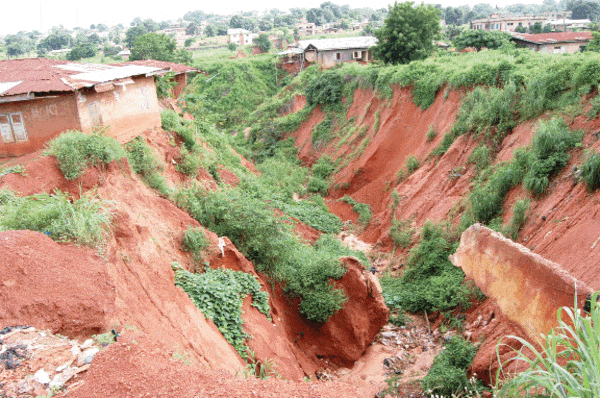
The Nigerian Society of Engineers (NSE) has blamed manmade factors for the devastating effects of erosion menace in Anambra State and the entire southeast.
A erosion site in Idemili, Anambra State
Mr Edmund Nkalu, Chairman of NSE, Awka Branch, made the call in an interview with the News Agency of Nigeria (NAN) in Awka on Monday, August 27, 2018.
NAN reports that the branch will hold a lecture with the theme “A case for Good Governance; Role of the Procurement Process” on Aug. 30 as part of its 60th anniversary.
Nkalu said erosion menace in Anambra was caused primarily by the soil type which was prone to erosion and the topography also increased the speed of runoff water which had helped the activities of storm water.
He, however, said that manmade factors including indiscriminate construction of buildings, covering of soil surfaces with concrete slabs, no or out dated urban designs and poor project supervision were exacerbating the menace.
Nkalu said people should imbibe the habit of keeping green surroundings as well as make adequate arrangements to ensure that rain water from their premises was properly collected and channeled.
“It is clear that storm water has been causing enormous damage in this part of the country, especially in Anambra, but it is not a new event as it has been with us for a while.
“There are manmade and natural factors that cause erosion but the man-made factor is an area that interest us.
“What can we do to reduce and control erosion which occurs as a result of human activities?
“At the individual level, people should design their buildings in such a way that flood water from rain can be absorbed in the soil, instead of these concrete floors which prevent water from percolating into the soil and increase the speed of runoff.
“It is ignorance that makes people to seal off the floor unlike in other climes where people only cover the portion for walkway to the house and leave the other areas green and to absolve the water.
“Let people begin to plant grass, there is nothing bad in having farm or garden in compounds,” he said.
Nkalu said the society decided to focus on effective procurement process in its forthcoming lecture because of its role in ensuring sustainable and resilient infrastructure projects.
He condemned the collapse of roads and structures due to erosion, blaming it on poor adherence to standards and supervision.
He urged government agencies, developers, community leaders to attend the lecture which was designed for the purpose of enhancing service delivery in both the public and private sectors.
“The Society of Engineers is not comfortable with roads collapsing within two years; we are calling on the supervisory agencies to step up their functions and help check the loss of scarce funds that goes into poor quality jobs.
“We need a concerted effort of the approval agencies, the physical planning board, the city development agencies, the Ministry of Environment to come up with a master plan designs.
“Specifications for road designs should be strictly adhered to, there are challenges of paucity of which make the contractors to cut corners.
“The procurement system must be thorough, the material quality must meet standards, the contractor must be competent and the cost of contract must be realistic to be able to build a quality road,” he said.
The chairman said the society was interested in good governance which according to him was all about service delivery in every sector of the economy.
The Kebbi State Emergency Management Agency (SEMA) says it has begun the assessment of damages caused by flood in 11 local government areas of the state.
Alhaji Atiku Bagudu, Governor of Kebbi State
The Acting Executive Director, Abbas Kamba, made this known in an interview with News Agency of Nigeria (NAN) on Monday, August 27, 2018 in Birnin Kebbi, the state capital.
Kamba said that the aim was to determine the level of support required by those affected.
He said that recent flooding had affected communities in Argungu, Birnin Kebbi, Suru, Bunza, Aleiro, Kalgo, Jega, Bagudu, Gwandu, Dandi and Shanga local government areas.
The official disclosed that 12 villages were affected by the flood in Shanga Local Government alone where many homes and farmlands were destroyed.
“The villages include Raha, Yola, Tsamiya, Dugu, Dugu Tsohuwa, Saminaka, Tudunwada, Faila, among others,” he said.
Kamba said the agency’s assessment would cover the number of households and farmlands affected.
According to him, the flood was caused in some areas by blocked waterways.
“We will collaborate with the National Orientation Agency to sensitise the public on the dangers of erecting illegal structures on waterways.
“Some areas were affected by the flood because the waterways had been blocked by illegal structures, and water must surely find its way,” he said.
Harvard scientists found that rising levels of carbon dioxide from human activity made rice and wheat less nutritious, which could result in 175 million people zinc-deficient and 122 million people protein-deficient by 2050.
Higher atmospheric levels of carbon dioxide result in less nutritious crop yields
A study published on Monday, August 27, 2018 in the journal Nature Climate Change showed that more than one billion women and children could lose a large amount of their dietary iron intake, putting them at increased risk of anemia and other diseases.
“Our research makes it clear that decisions we are making every day, how we heat our homes, what we eat, how we move around, what we choose to purchase, are making our food less nutritious.
“This can imperiling the health of other populations and future generations,” said Sam Myers, Lead Author of the Study and Principal Research Scientist at Harvard Chan School.
According to the study, higher atmospheric levels of carbon dioxide result in less nutritious crop yields, with concentrations of protein, iron, and zinc being three per cent to 17 per cent lower when crops are grown in environments where carbon dioxide concentrations are 550 parts per million (ppm) compared with crops grown under current atmospheric conditions, in which carbon dioxide levels are just above 400 ppm.
The study has shown that by the middle of this century, when atmospheric carbon dioxide concentrations are expected to reach around 550 ppm, 1.9 per cent of the global population or roughly 175 million people could become deficient in zinc.
And 1.3 per cent of the global population or 122 million people could become protein deficient.
Also, 1.4 billion women of childbearing age and children under five who, are currently at high risk of iron deficiency could have their dietary iron intakes reduced by four per cent or more.
The researchers also emphasised that billions of people currently living with nutritional deficiencies would likely see their conditions worsen because of less nutritious crops.
With the development of new techniques, wood is now being used to build skyscrapers and recent months have seen a surge in large timber structures being constructed across the globe claiming to be the biggest, the tallest, or the first of their kind. But observers are worried about the impact of the trend on the environment.
An impression of W350, a 70-storey, 350-metre skyscraper that would also be Japan’s tallest building on completion in 2041
No fewer that seven of these structures located across Europe, Asia and North America are either still on the drawing board, under construction or already in existence.
Some of these are the “Dutch Mountains” in Veldhoven, Eindhoven, The Netherlands; “W350” in Tokyo, Japan; “Treet” in Bergen, Norway; “Mjøstårnet” in Brumundal, Norway; “Oak Timber Tower” in London, UK; “HoHo Tower” in Vienna, Austria; and “Brock Commons Student Residence” in Vancouver, Canada.
Touted as the “largest wooden building in the world”, the Dutch Mountains was conceived via a multi-disciplinary partnership made up of tech companies, service providers, architects and developers, and would contain a hi-tech, mixed-use programme for residents and visitors.
The W350 is a 70-storey, 350-metre skyscraper that would also be Japan’s tallest building on completion in 2041. Designed by Sumitomo’s Tsukuba Research Laboratory in collaboration with Tokyo practice Nikken Sekkei, the $5.9 billion multi-use tower containing a hotel, residential units, offices, and shops would be wrapped in large balconies covered in plants.
W350 would be almost four times higher than the world’s current tallest timber building – the 18-storey Brock Commons Student Residence in Vancouver. But the tallest wooden skyscraper in the world is soon to emerge in 2018: the 24-storey, multi-purpose HoHo Tower stands at 84 metres with 76 percent of the building made from timber.
The Dutch Mountains in The Netherlands
One of the current claimants of the world record for the tallest timber building is Treet in Norway, which stands at 51 metres tall, even the though the Mjøstårnet is set to reach an even taller height of 81 meters. Construction of Mjøstårnet began in early September and is due for completion in March 2019.
Even though proponents of the technology claim that it is sustainable and reduces the carbon footprint compared with the conventional method, some environmentalists however remain sceptical.
Wood has long been a favoured construction material, noted for being durable, lightweight and inexpensive. In fact, Japan’s government passed a law in 2010 promoting the sustainable use of wood in all public buildings up to three stories high.
But architect and environmental activist, Nnimmo Bassey, says cutting trees for large building structures will intensify the creation of plantations or cause deforestation.
“These compound climate and social crises,” he adds, pointing out that plantations “are bad news for the climate”.
“Many of them are planted after clearing and felling of trees. Plantations are not only bad for the climate, they are bad for communities who lease land and biodiversity,” he notes, adding:
“Let me state clearly that high rise timber structures pose unique risks and should be erected with full understanding of such risks. Topmost risk is that of fire. Consider if such structures were in the line of the raging fires in California, for example.”
A forestry, environmental as well as research & development (R & D) expert, Dr David Ladipo, also frowns at the development, saying that to use wood so intensively is not sustainable beyond research or exhibition level.
His words: “This system of 70 to 90% wood in structures such as buildings will drive forest or tree felling to its brink and accentuate our environmental problems the more. If the lumber will be sourced from Japan and Switzerland or any other place in Europe and Asia, their forests will be exhausted.
“Unfortunately, all the wood will come from Africa and the developing world, as the Chinese are presently exploiting our wood massively in Nigeria. Africa already has its problems of deforestation, charcoal production, climate change, poor agriculture yield, etc. Further exploitation of its forests will further warm the continent and have a telling effect on the developed world.
“So, the world should frown against the massive use of timber. Instead, they should use utilise reconstituted timber/wood, which is made from sawdust and cement. They should also source the wood from elsewhere and not from Africa.”
While Prince Lekan Fadina of the Centre for Investment, Sustainable Development, Management & Environment (CISME) expressed concern over “the loss of cover which the trees provide and the loss of the economic benefit and the impact on the environment and sustainable livelihood”, Ako Amadi of the Community Conservation and Development Initiatives (CCDI) on the other wonders if the construction is utilising forest hardwood or plantation timber like teak.
“No problem if it’s teak as it is grown in plantations even in Nigeria with the purpose of using its timber,” adds Amadi.
Some parties are however not entirely against the development.
“Wood is a renewable resource so if it could be sustainably harvested, it could be a suitable replacement for cement, a product with high carbon emissions during production,” submits Chike Chikwendu, engineer and head of the Centre for Energy and Environmental Sustainability.
“Norway is already pioneering a 10-storey wooden building. I have not gone through the details, but my expectation is that selective cutting and replanting of wood would be the sustainability means. The wood will not be sourced from outside. It will be nice to get the project concept,” contends Prof Olukayode Oladipo of the University of Lagos, Akoka.
Prof. Daniel Gwary of the University of Maiduguri states: “From the surface, this development looks worrisome in terms of carbon sequestration point of view. However, it is important to note some important things. First, house and general construction work round the world using wood is not new but has been going on for centuries at a sustainable scale. For trees to serve as effective sinks, they need to be managed and part of the management process is pruning and replacing older trees with young ones.
“Secondly, for countries like Japan that are in earthquake zones, they require lighter building materials for safety and wood is four times lighter than concrete therefore is a preferred building material.
“Thirdly, the Japanese company building the 70-storey skyscraper, the Sumitomo Forestry Co Ltd, is a forestry-architectural outfit that is committed to GHG emission reduction and intends to use wood from old forest planted soon after the world war. This is to be part of the forest management strategy.
“Finally, with reduced global use of paper due to new information technology (IT) it is argued that this new limited demand for wood for construction may be sustained with good plan.”
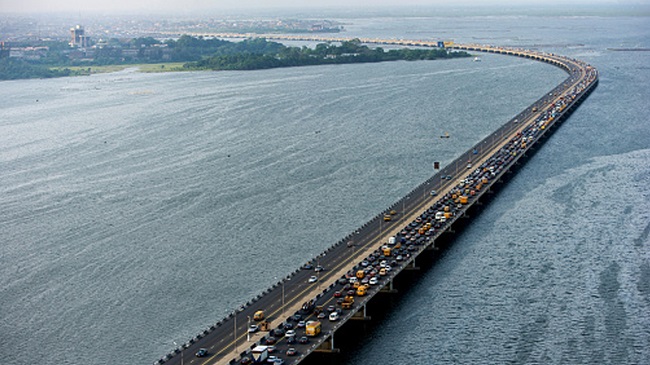
The Third Mainland Bridge in Lagos was on Sunday, August 26, 2018 reopened to traffic after closure for three days for investigative maintenance tests.
Third-Mainland-Bridge
The 11.8km bridge was closed to traffic on Aug. 24 for investigative maintenance tests and it was scheduled to be reopened to traffic Aug. 26.
Lagos State Commissioner for transportation, Mr Ladi Lawanson led a delegation of the state officials to the reopening ceremony while the Director, Highways, Bridges and Designs in the Federal Ministry of Works, Mr Adetokunbo Sogbesan, also led the ministry’s team.
Also at the event were the heads of the traffic regulatory and law enforcement agencies and their teams.
After the opening ceremony on the bridge, Police officers supervised the removal of the barriers on the bridge about 5.00 p.m. to open it to traffic.
Sogbesan told journalists that the bridge was opened earlier than schedule because the test was completed on time due to favorable weather.
“We were to open the bridge at midnight today, we are going ahead of schedule,’’ he told journalists.
He said the result from the test would be sent to Italy and that it was an opportunity for technology transfer as local engineers would join in the analysis of the result from the expansions joints.
Sogbesan said underwater inspection of piers of the bridge would be done later in November when the water level would have gone down.
The Federal Controller of Works, Lagos State said that about 32 expansion joints were tested, adding that the results needed analysis before further action.
“We expect that the result would be out by next month.’’
The Lagos State Commissioner for Transportation reacting to the opening said: “I am as excited as all Lagosians.’’
He commended the tests, stating that it was a proactive measure toward observing good maintenance culture.
Lawanson said the state was developing its other modes of transport for ease of movement across the state, adding that it had just finished a conference of developing water transport.
Mr Gainrranco Albertazzi, Joint Managing Director, Borini Prono, the contractors handling the project, said digital machines were used to get accurate readings from the expansion joints.
He thanked residents and motorists for their cooperation during the period of the closure of the bridge.
The Deputy Commissioner of Police in Charge of Operations, Mr Ali Mohammed, said the Police were able to effectively manage the traffic and security during the period of the closure.
According to him, policemen were stationed at every 100 metres along the diversion routes, adding that there were no complaints relating to the bridge closure.
“We deployed over 1,000 policemen to take charge of these points until the bridge is open,’’ he said.
Also, Assistant Corps Commander of the FRSC, Hauwa Olowookere, said that the collaboration of all the agencies made the operations smooth during the closure.
Mr Adeoye Oluyemi, Head of Operations, LASTMA, disclosed that more than 650 officials were deployed during the period, adding that there were no issues except for a lone accident around Adeniji Adele.
There were enough caution tapes, reflective signs and adequate signs on diversion routes during the period, he added.