Germany’s Agriculture Ministry is holding steady in its decision to wait for final official figures on the extent of damage caused by drought before drumming up aid for farmers.
Angela Merkel, German Chancellor
State and federal officials met in Berlin on Monday, August 13, 2018 to discuss the ongoing drought, which may have caused more than €1 billion ($1.14 billion) of damage to the agriculture sector.
However, a state secretary for the ministry said on Monday that it was still too early to decide.
“The exact extent of the damage can be measured only next week. Therefore, we’re sticking to our road map: Only when concrete and reliable figures are available can a final decision on federal aid be made,” said Hermann Onko Aeikens.
“A range of aid initiatives are already under way on the state level,” Onko Aeikens added.
The German Farmers’ Association has called for one billion euros in aid to be stumped up to counteract the costs of failed harvests.
Of particular concern is a shortage of cattle feed and the ministry is yet to publish its own damages estimate.
The World Health Organisation (WHO) has called for “free and secure” access to the Ebola-affected people in the conflict-affected region of North Kivu in the Democratic Republic of the Congo (DRC).
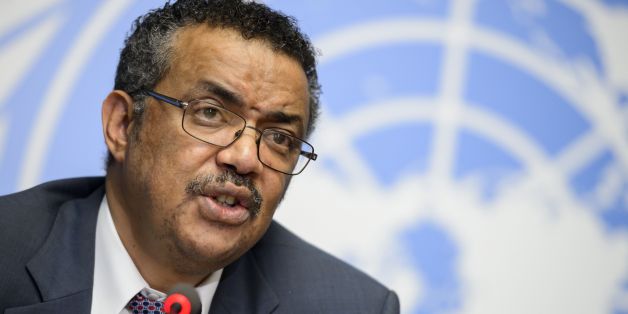
Dr Tedros Adhanom Ghebreyesus, Director-General of the World Health Organisation (WHO). Photo credit: AFP / FABRICE COFFRINI / Getty Images
WHO Director-General, Dr Tedros Ghebreyesus, said after seeing first-hand the complexities of the Ebola response, said that unhindered access to the disease-affected people was necessary in order to bring the outbreak under control.
Tedros said: “All of those participating in the response must be able to move freely and safely in conflict areas to do the work that is needed to bring the outbreak under control.
“The population must also have access to treatment centers that save lives and stop the spread of disease.”
While the latest Ebola outbreak was the country’s 10th, it was the first time that the disease had struck a densely populated active conflict zone, WHO said.
As was done in the recent outbreak in the west of the country, WHO said it was supporting the Ministry of Health in DRC in key aspects of the response.
A little more than a week since the government declared the new Ebola outbreak, Tedros and other top WHO officials went on a two-day mission to the city of Beni as well as to Mangina, the epicentre of the epidemic, where most of the confirmed cases had been reported so far.
The top officials of the global health agency were Dr Matshidiso Moeti, WHO Regional Director for Africa and Dr Peter Salama, WHO Deputy Director-General for Emergency Preparedness and Response.
A range of armed groups are active in the area and, according to WHO, this insecurity is creating a challenge for health teams attempting to reach communities for active case finding and monitoring, often requiring armed escorts.
WHO warned that the violence could also discourage members of the community from coming forward for treatment.
Moeti said: “WHO has vast experience with delivering health services in conflict zones in Africa.
“We will build on this experience to ensure that our staff and partners can do their work and save the lives of the people we are here to help.”
On Wednesday, August 8, 2018, health responders in DRC launched a vaccination campaign to mitigate the risk of spread of the Ebola disease.
The Federal Mortgage Bank of Nigeria (FMBN) Board has approved the implementation of the “Rent-To-Own” pilot housing scheme to begin with 3,000 houses nationwide.
Observers say Nigeria’s housing deficit is far in excess of 17 million. Photo credit: lagos.all.biz
A statement signed by Mrs Zubaida Umar, FMBN Corporate Communications Group Head, on Sunday, August 13, 2018 in Abuja, stated that the scheme was a strategic move designed to make home ownership more accessible and affordable for Nigerian workers.
The FMBN “Rent-to-Own” scheme is an innovative affordable housing product that provides an easy and convenient payment plan towards home ownership for Nigerian’s workers.
The scheme is designed for workers to move into FMBN homes as tenants, pay for and own the properties through monthly or yearly rent payments spread over periods of up to 30 years.
Umar noted that the properties would also attract a single digit interest rate of nine per cent on the price of the property on an annuity basis to increase affordability.
“The product will cover properties with the maximum value of N15 million.
“The rent-to-own housing product targets Nigerian workers who are contributors to the National Housing Fund (NHF) and will be implemented in phases. About 3000 houses are planned for the pilot phase with 3,000 beneficiaries.
“To deliver on the rent-to-own housing scheme, FMBN will partner with reputable estate developers for the construction of cost-effective housing stock nationwide.
“Payments for the houses will be domiciled with the CBN through the Treasury Single Account (TSA).
“Properties that are planned for the rent-to-own scheme are Existing Estates that are funded by FMBN nationwide and non-funded estates,” she said.
Speaking on the development, FMBN Managing Director, Mr Dangiwa Ahmed, was quoted as saying that the rent-to-own was another groundbreaking initiative targeted at increasing access to affordable housing by workers in the low-medium income brackets.
“The rent-to-own housing product is designed to make sure that any worker who collects salary should be able to live in his own home and pay conveniently over periods as long as 30-years!
“This is a massive relief especially given how little workers earn.
“I am delighted that we have successfully added this product to the many other initiatives that we have made possible to make homeownership a lot easier for Nigerian workers.”
Ahmed commended President Muhammadu Buhari for his commitment to the development of housing and the Minister of Power, Works and Housing, Babatunde Raji Fashola, for his continual support on the ongoing reforms to re-position FMBN.
He added that the scheme would eliminate the burden of equity contributions by workers for housing loans, complement its existing products and help the bank to utilise abandoned estates that were to be transferred to the scheme.
The Nigerian Conservation Foundation (NCF) on Sunday, August 12, 2019 urged companies manufacturing Fast-Moving Consumer Goods (FMCG) to save the environment from plastic pollution through recycling.
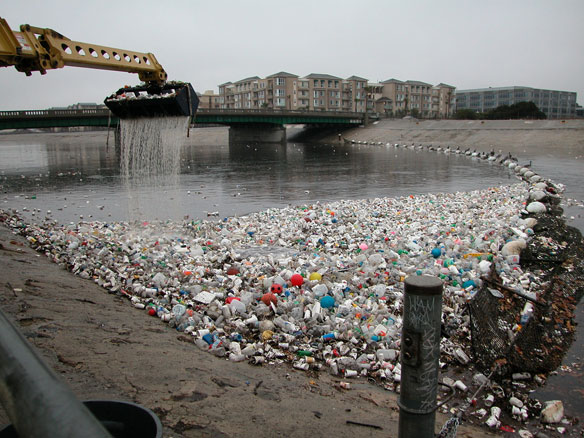
Plastic pollution
Mrs Abidemi Balogun, NCF’s Senior Conservation Officer, Environmental Education, gave the charge in an interview with the News Agency of Nigeria (NAN) in Lagos.
The consultant also appealed to multinational companies to join the campaign against plastic pollution.
Balogun said the companies could attach incentives to waste collection and recycling to create more jobs and reduce plastic pollution to save the environment.
She explained that the NCF was carrying out an advocacy programme on proper waste collection, recycling and management in 17 communities in Eti-Osa Local Government Area of Lagos.
The NCF official said the aim of the campaign was to educate residents on dangers of inappropriate waste disposal, and that the residents were trained on waste-to-wealth and recycling initiatives.
Balogun said the foundation also introduced recycling points to buy the sorted wastes from the residents, saying most participants were earning good money from the programme.
She suggested the need for FMCGs and multinational corporations to perfect ways of buying back plastic wastes from residents for the purpose of recycling plastic products.
She said the NCF carried along community heads as it sensitised residents and engaged in physical clean up with them.
Balogun added that the foundation introduced a point-based collection with centres within the communities and participants were paid after reaching a particular level.
“Some of the communities just generate the waste; they did not know that they could generate income from it.
“One thing we identified from the exercise is that most of the waste is plastic and it is none biodegradable, it does not break down, so, most of it goes back into the environment or the water bodies.
“That is why for the 2018 World Environment Day, plastic pollution was the focus because it is a global concern.
“We call on other corporate organisations, the beverage companies to have initiatives like this, where they can develop programmes to buy off plastics from communities thereby engaging them.
“It will serve as a source of employment to the communities because if some people know that they can get money from collecting plastics, they will want to go into it as a full-time job because plastic is everywhere,’’ she said.
Balogun said the NCF had also started discussing with clubs in schools across the council area, and that the schools usually went round to clean up the environment while creating awareness.
“The students can also use the waste materials to make things they can use in the home.
“We want continuity of the initiative, that is why we are going beyond the communities to working with the schools because even when the children graduate, other children are there to continue the activity,’’ she said.
Balogun said the foundation got a grant of N7 million in 2017 for the programme, and that the criteria for selection of the communities included proximity to NCF and low-income areas.
She listed the communities to include, Mopo Onijebu, Ataguntan, Sangotedo, Badore and Ikate, among others.
African governments have been told to urgently transit to renewable energy, while diversifying their economies away from dependence on fossil fuels, exploitation of peoples and the destruction of the gifts of nature.
Members of Oilwatch
This submission formed part of the declarations issued on Tuesday, August 7, 2018 at the close of the Oilwatch Africa conference held in Lamu, Kenya.
While declaring full support for the demands of the Save Lamu movement, delegates at the conference that comprised Oilwatch Africa network members, Lamu community representatives, non-governmental organisations (NGOs) and community-based organisations (CBOs) declared their opposition to the use of public funds to subsidise fossil fuel.
The forum wants land tenure systems on the continent to respect community ownership as dictated by culture and tradition It likewise stressed that communities must give their free prior informed consents for projects proposed for their territories while retaining their right to say “No”.
Theme: “Beyond Fossil Fuels”, the two-day conference considered the politics of fossil fuel extractions, the impacts of fossil fuels on the continent and the strategy to unlock Africa’s power using alternatives to fossil fuels energy systems that are environmentally friendly and socially just.
Participants also considered the implications of the proposed LAPSET project (Coal power plant, deep Sea Port and Oil extraction) by the Kenyan Government on the socio-economic lives of the people of Lamu, including the impacts of these project on their culture, agriculture, fisheries and livelihoods of the people.
After listening to the Save Lamu movement experiences, the conference noted that Lamu is an example of similar dirty energy and mega projects being pursued on the continent without full consultations with the people and without their free prior informed consent.
The conference further analysed:
Africa’s energy needs and the politics of a just transition;
The challenges that fossil fuels funding in African countries, including the issues of debt and the resolution of disputes under a jurisdiction different from the involved country;
The way Africa should go about renewable energy in relation to land tenure and land use;
The political corruption and abuse of political power as a major problem faced by the people;
The destruction of livelihoods and local economies by the polluting activities of fossil fuels industries; and,
The issues of land grabbing, displacements and the marginalisation of communities in Africa due to fossil fuel industry activities, among others.
The Coordinator, Food Sovereignty Programme for Friends of the Earth Africa, Mariann Bassey-Orovwuje, has said that the commercialisation of Bt Cotton in the country is not a victory but a breach of law and order.
Samples of the Bacillus thuringiensis cottons (Bt. Cotton) on display
Bassey-Orovwuje was reacting to the recent announcement by National Committee on Naming, Registration and Release of Crops, Livestock/Fisheries varieties at National Centre for Genetic Resources and Biotechnology (NACGRAB) and remarks made by Dr. Rufus Ebegba, DG/CEO of National Biosafety Management Agency (NBMA) and Dr Rose Gidado, the country representative of Open Forum on Agricultural Biotechnology (OFAB) and staff of the National Biotechnology Development Agency (NABDA) concerning the release and commercialisation of Bt Cotton in Nigeria.
In a statement on Thursday, August 9, 2018, the activist described the development as “a pointed disregard of the best interest of the Nigerian people and their right to be consulted and respected”, adding that “this adds a new dimension to the suspicion that disregard for judicial processes is taking a worrisome turn in current situation of things in Nigeria and if we have surrendered our sovereignty to corporate interests”.
According to her, NBMA and NABDA are defendants in the pending suit filed by the Registered Trustees of Health of Mother Earth Foundation (HOMEF) and 16 other civil society organisations (CSOs) in the Federal High Court of Justice of Nigeria in the Abuja Judicial Division, September 13, 2017, suit No FHC/ABJ/C5/846/2017.
It was gathered that the Plaintiffs – HOMEF and 16 others – sought, amongst other reliefs, a declaration that NBMA, the 1st Defendant in the case, did not comply with the provisions of the National Biosafety Management Agency Act in granting the permits to the 3rd Defendant, Monsanto Agricultural Nigeria Limited, and NABDA, the 4th Defendant in the case, for the purpose of commercial release of Bt Cotton (Mon 15985) and confined field trial with (1) NK603 and (2) MON89034 x NK603 maize in Nigeria.
The plaintiffs reportedly sought an order of perpetual injunction restraining the 3rd Defendant and 4th Defendant by themselves, their agents, servants, workmen or otherwise or whatsoever from carrying out any activity or further activities pursuant to the permits granted by the 1st Defendant.
The Plaintiffs, claimed Bassey-Orovwuje, considered the permits granted by NBMA to Monsanto and NABDA in breach of and a threat to the Fundamental Human Rights of the Plaintiffs as well as the general public as stipulated in the 1999 Constitution of Nigeria as amended in 2011. The Plaintiffs, she added, also want an order revoking the permits granted by the 1st Defendant to the 3rd and 4th Defendants/Respondents, stressing that the Plaintiffs opined that the issuance of the said permits on May 1, 2016 which happened to be a public holiday being Sunday and Workers’ Day is illegal, null and void.
She alleged that while the court is yet to deliver her judgement on the case, the defendants, NBMA, NABDA and Monsanto in apparent defiance to the ongoing court process went ahead on Thursday, July 26, 2018 to register and release some Genetically Modified (GM) products and the Bt cotton – one of the subjects of litigation, into the Nigerian environment.
Bassey-Orovwuje said: “The newly released and registered products amongst others include two transgenic hybrid cotton: MRC 7377 BG11 and MRC 7361 BG1.1 They were developed by Mahyco Nigeria. Mahyco is another name for Monsanto and MRC 7377 BG11 and MRC 7361 BG11 refer to the same Bt Cotton (Mon 15985). That is the subject of litigation. This information is displayed on the webpage of the International Service for the Acquisition of Agri-Biotech Applications (ISAAA).
“Dr. Rufus Ebegba, DG/CEO of NBMA, a regulator whose agency is named in this suit and an agency that is supposed to be unbiased and ensuring a thorough regulation of these products, stated in the light of this development that he has severally said that the country is ripe for commercialisation of Genetically Modified (GM) products.
“This singular action speaks volumes. If these agencies can show this brazen disregard for due process, if they can show this level of contempt for an ongoing court case over a matter of such grave importance, how do Nigerians trust them with their food, crops and livestock?
“The Federal Government should notify Nigeria if the NBMA, NABDA and Monsanto are above the laws of Nigeria. In the meantime, Nigerians, farmers and potential traders and buyers should beware of this threat to your foods, health and environment.”
As the government works on continuing abandoned water projects, another reason to complete them in the fastest possible time has come to the attention of many Nigerians and this involves water’s capability to get rid of air pollutants indoors.
A wall indoor fountain: Wall fountain inside the home can keep indoor air clean. Photo credit: Homedit
Based on a study done by avian diseases experts Daniel J. King and Bailey W. Mitchell, water can purify the air by breaking down the components of airborne germs, bacteria, and viruses. With 94% of Nigerians exposed to air pollution that exceed guidelines set by the World Health Organisation (WHO), Mitchell’s and King’s findings is a welcome development.
A Serious Predicament
Indoor air pollution is often ignored but it is becoming a cause for concern as it is among the top environmental health risks around. Air pollution exposure in Nigeria is quite high as compared to other parts of the region, according to Little Green Data and it is disconcerting. Apart from causing death due to diseases linked to air pollution, it is also costing the country an estimated 1% of its Gross Domestic Income.
This problem puts the average Nigerian in a tight spot too because solvent-based home purifiers cost a whopping ₦150,000. However, there are a few ways to counter indoor air pollution, according to researchers from the Covenant University in Ota, Ogun State. These include cooking outside of the home, using light that does not produce fumes, and improving the home’s ventilation.
Purifying Air with Water
Placing a water fountain or a wall fountain inside the home can keep indoor air clean. The science behind this claim lies on the positive charge carried by most indoor air pollutants and water’s negative charge. When a collision happens, water breaks down the particles until they are no longer airborne. According to Mitchell and King’s article, the process can reduce airborne microorganisms that attach themselves to dust and dead skin cells since water can break them down until they fall to the ground.
Water Supply
While Nigeria gets 215 cubic kilometres of surface water annually, basic water supply is still a problem in the country. Pollution plays a major role in this predicament, according to the WHO, since many of Nigeria’s rivers and streams are used as dumping sites for toxic substances. However, the water scarcity in the country must be put in context. Nigeria’s water coverage is now over 67%, according to UNICEF, and the remainder will be covered by the government’s unfinished water projects. Despite the perceived water scarcity in Nigeria, there is enough water that can be used to purify indoor air.
This is good news for many because installing a water fountain inside the home can get rid of air pollutants naturally and it is more cost-effective than other types of air purifiers. Nigeria’s indoor air pollution problem can be solved, and households only need to take advantage of water’s negative charge to get this done.
The Nigerian Meteorological Society (NMetS) has advocated for changes in the nation’s agricultural practices due to the heat wave currently ravaging most parts of the world.
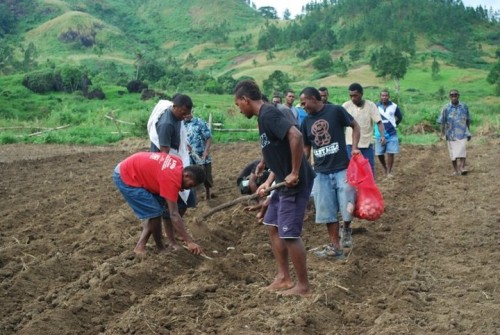
Youths involved in farming. Photo credit: smeonline.biz
The President of the society, Prof. Clement Akosile, made the call in an interview with the News Agency of Nigeria (NAN) on Thursday, August 9, 2018 in Lagos.
Akosile said that the call became necessary because the nation’s agricultural practices depended on rain and Nigeria was closer to the Equator.
According to him, Nigeria is bordered by many desert regions and that when heat wave hits such regions, it will cut-across the country.
“It will affect plants, animals and humans as major parts of the country become dry.
“The dry land will ginger movement of people and animals southwards in search of comfort from the harsh weather. It could worsen the herdsmen and farmers’ clash,’’ he said.
He said that farmers must take irrigation farming serious because heat wave can cause hunger and famine.
“Nigeria is blessed with abundant rainfall; areas in the North experience flooding, the flood water should be harvested and harnessed in a sustainable way for agricultural processes.
He said that now was the time to find solutions to nature currently bringing changes to the environment globally, adding that the way we prepare for the potential danger would make a great difference in reducing the intensity.
The Chief Executive of Connected Development (CODE), Mr Hamzat Lawal, has been named amongst the 100 World’s Most Influential People in Digital Government in 2018.
Hamzat Lawal
Lawal was among those mentioned in an inaugural list released on Wednesday, August 8 by Apolitical, a global policy platform.
The list is said to be the first of its kind to show the full international spread of innovative work in the field, celebrating world-beating individuals from every continent. South America, East Asia, sub-Saharan Africa and smaller European nations emerge among the most dynamic regions.
An excited Lawal stated: “I’m humbled to receive this news and recognition with so much excitements being named among the 100 World’s Most Influential People in Digital Government in 2018 by Apolitical, a global network for government, helping public servants find the ideas, people and partners they need to solve the hardest challenges facing our societies.
“I dedicate this honour to people across Africa in rural communities hoping for better service delivery and to enjoy the dividend of democracy. I also dedicate this to all our friends and partners in the civil society space, funders, media partners, supporters and my colleagues at Follow The Money International, who are dedicated and innovative young people leading campaigns to foster responsive governance that delivers on the aspiration of the people.”
Eve Powell, Communications Lead, Apolitical, said: “Public servants from all levels of government appear alongside representatives of the private and third sectors and academia. Everyone included has exerted outsize influence on the transition to digital governments, whether through policymaking, research, advocacy or other means. All of them work to ensure the services government provides make full use of the opportunities offered by digital technology — while avoiding the pitfalls. Those in the top 20 include: Malcolm Turnbull, Audrey Tang, Martha Lane Fox, Tim Berners-Lee, Jennifer Pahlka and Evgeny Morozov.
“The 100 Most Influential People Working in Digital Government were curated from nominations from hundreds of digital government experts from leading organisations, including 14 national digital services, The Alan Turing Institute, the OECD, the UN, Future Cities Catapult, USAID, and the Open Government Partnership.
“Apolitical expects the annual list of the 100 Most Influential People in Digital Government to highlight what’s working in digital government, and through the work of those named to provide both a snapshot and a road map for the future of digital policy.”
Robyn Scott, CEO, Apolitical, stated: “People working in digital government often go unrecognised by the wider public, yet the work they do is vital as both the opportunities and risks of digital technologies increase.
“It’s a been a joy to produce this list recognising the most influential individuals in the field – including some incredible unsung heroes – from around the world.”
Apolitical is a global platform for governments that puts the best solutions at the fingertips of public servants, wherever they are in the world. The platform is used by public servants and policymakers in more than 120 countries to connect with each other and to find original and curated content about what’s working in policymaking around the world including on topics such as digital government and government innovation.
The National Environmental Standards and Regulations Enforcement Agency (NESREA) says it will enforce laws to check “environmental terrorism’’ in the northeast zone.
Dr. Lawrence Anukam, Director-General, National Environmental Standards and Regulations Agency (NESREA)
Its new Director, Mr Abdussalam Isa, made the assertion on Thursday, August 9, 2018 in an interview with the News Agency of Nigeria (NAN) in Gombe, Gombe State.
Isa assumed office on July 31 as the head of NESREA, North-East Zonal Office in Gombe.
He said that the agency would ensure that companies and individuals adhere strictly to the environmental laws in the zone or face legal action.
According to him, environmental terrorism is taking place in some quarters where people and companies fail to be environment-friendly or relinquishing their corporate social responsibilities to government alone.
He said that the only way to sustain the environment for posterity was to enforce the law that protects the environment.
“If the agency fails in that task, some species of trees may go extinct,’’ NESREA director said.
He said that the agency would achieve this by strengthening environmental monitoring network across the zone to enforce compliance.
The NESREA director said that the environmental laws were made to protect the soil, trees and air quality against environmental terrorism.
“We must enforce the laws, if we must protect our environment and make it safe for all; any company or individual that fails to abide by environmental laws should be prepared to go to court.
“We shall prosecute anyone who breaches the law to serve as a warning to others.
“We shall strengthen environmental monitoring network as well as partner with private organisations to enforce compliance across the zone.
“Even the activities of construction companies will be monitored against air pollution.
“If laws are not enforced, they will be useless for the purpose for which they have been enacted. This will not happen in this zone as we are committed to fighting to keep our environment.
“Aside the enforcement of laws, we as an agency will plant trees and also be involved in periodic cleaning of our environment to show examples,’’ he said.
Isa said that there would be sensitisation to make the people know the implications of violating environmental laws.
He then appealed to people to give the agency the needed supports to achieve its task.