Home Blog Page 1810

Court strikes out anti-GMO case, activists pledge to fight on

0

The Federal High Court of Justice, sitting in Abuja on the Wednesday, August 15, 2018, struck out a suit instituted by the Health of Mother Earth Foundation (HOMEF) and 16 other civil society organisations (CSOs) against some government establishments relating to genetically modified organisms (GMOs) due to technicalities.
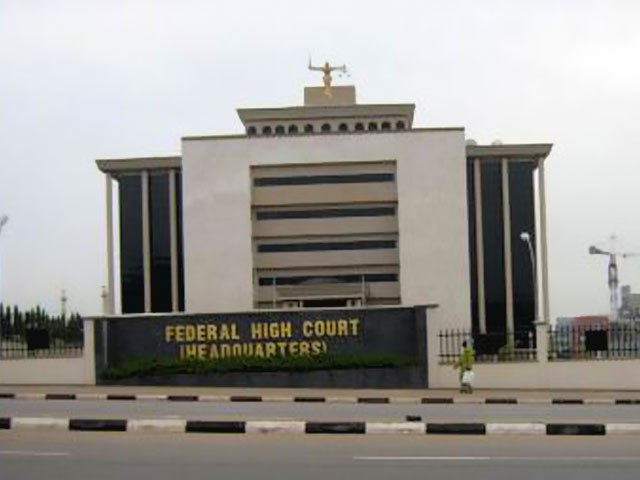
Federal High Court Abuja
Federal High Court, Abuja

The Judge, in delivering his judgment, opined that although the plaintiffs have a Cause of Action in the matter, the court’s hands are however tied due to one of the objections raised by the defendants – the suit is statute barred.

According to the Judge, it is a contravention of the provisions of the Public Officers Act, which states that any action instituted against a public officer as regards his/her discharge of duties must be instituted within three months, after the said breach occurred.

The suit, with No: FHC/ABJ/C5/846/2017, was said to have been brought a year after the permits had been issued.

HOMEF, in a statement made available to EnviroNews, expressed displeasure at the judgement, describing it as “a fall back on efforts to preserve the nation’s food system from being overturned by the agricultural biotech industry”.

The registered Trustees of HOMEF and 16 other CSOs in September 2017 filed the lawsuit against the Nigerian Biosafety Management Agency (NABMA), the Minister of Environment, Monsanto Agricultural Nigeria Limited, National Biotechnology Development Agency (NABDA), Minister of Agriculture, Attorney General of the Federation and National Agency for Food and Drugs Administration and Control (NAFDAC) over permits granted for GMO products.

In the summons which was taken out by Ifeanyi Nwankwere of Basilea Juris Associates, the plaintiffs insisted that the 1st defendant did not comply with the provisions of the National Biosafety Management Agency Act in granting the permits to the 3rd and 4th defendants. The CSOs asserted that the procedure and issuance of the permits flouts and threatens the fundamental human rights of the people as enshrined in section 33, 34, 36 and 39 of the 1999 constitution of Nigeria as amended in 2011.

Other issues which the plaintiffs brought forward were that NABDA, said to be a part of the governing Board of NBMA, in its application did not state adequate measures put in place to prevent cross pollination with natural varieties during field trials, and that NBMA granted the permits without any public hearing regardless of the consequential issues raised in objections sent in by the Plaintiffs.

HOMEF maintained that agricultural biotechnology along with its current advances come with specific risks both immediate and long-term and require thorough safety assessments.

Nnimmo Bassey, environmental activist and Director at HOMEF, said: “Nigeria’s present regulatory architecture cannot ensure food and environmental safety as shown by the manner in which the National Biosafety Management Agency handles GMO applications. One troubling example is the case of genetically modified maize varieties which were illegally shipped into country by WACOT Nig. Ltd. in September 2017. The agency after announcing that together with the Nigerian customs service they would ensure that the illegal seeds were repatriated approved an application by this company to import these products over a period of three years, barely a month after its announcement that illegal maize should be repatriated. This action contradicts the biosafety law which requires 270 days notice before imports to allow for adequate safety assessments.”

Bassey emphasised that “the only essence of genetically modified crops is for the economic benefit of the biotechnology corporations and their counterparts and not the interest of Nigeria.  With the release of these products into the environment, the damage will be irreversible, and the current economic strength of Nigeria cannot afford that damage.”

The activist added further in the statement that the court ruling encourages “administrative rascality and constant disregard for public interest and due process”.

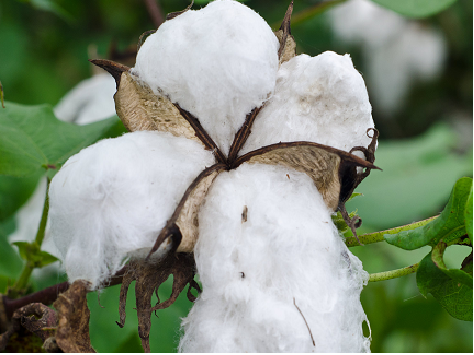
According to HOMEF, while the case awaited judgment, the defendants, NBMA, Monsanto and NABDA on July 26 registered and released the Bt cotton varieties (MRC 7377 BG11 and MRC 7361 BG11) along with other GM products into the Nigerian environment. These cotton varieties, the group adds, refer to the same cotton MON 15985 in the suit as evident on the website of the International Service for the Acquisition of Agri-Biotech Applications (ISAAA).

“The health and economic welfare of all Nigerians, which constitutes our fundamental rights, are at risk if GMOs are allowed in the country. Nigerians must be aware that we are neither respected nor protected,” he warned.

But Dr Rufus Ebegba, head of the NBMA, described the judgement as a victory for Nigerians, and a manifestation of the judiciary as a beacon of hope and justice.

His words: “The NBMA is much more encouraged to continue due dilligence in ensuring that Nigerians are protected from any potential adverse effect in the regulation of modern biotechnology and its products. However, this shows that our biosafety system is working. I urge Nigerians to trust the NBMA and not be distracted by fear mongering.”

According to him, NBMA remains an umpire in the regulation of GMOs, even as he assured that, with the Agency on ground, the safety of their health and environment would continually be its number one responsibility.

Also reacting to the court ruling, Mariann Bassey-Orovwuje, lawyer and chair of the Alliance for Food Sovereignty in Africa (AFSA), said in the statement that it would have been in the interest of justice to grant the reliefs set out on the face of the summons as, according to her, the case represented not just consumers safety but the survival of  millions of small scale farmers whose livelihoods are threatened by the corporate takeover of food systems in the guise of agricultural biotechnology.

“We hope that when the impacts of GMOs set in, the government of Nigeria will not say ‘we were not informed or warned about the impacts of GMOs’,” she declared, adding:

“The civil society coalition is of strong conviction that this is a cause worth fighting and would continue to seek redress. The organisations pledge not to relent in pushing the case for food safety and food sovereignty in Nigeria. They have pledged to continue to resist attempts by Monsanto, its international and local partners to control our food, land, life and democracy.”
Shell boss calls for diversification roadmap

0

The Managing Director of Shell Nigeria Exploration and Production Company (SNEPCo), Bayo Ojulari, has harped on economic diversification as a panacea for job creation and rapid economic growth of Nigeria. He spoke at the just-concluded annual conference and exhibition of the Nigeria Council of the Society of Petroleum Engineers (SPE) where Shell Companies in Nigeria bagged the award for best exhibitor, beating to the second and third positions Chevron and Exxon Mobil respectively.

SNEPCo
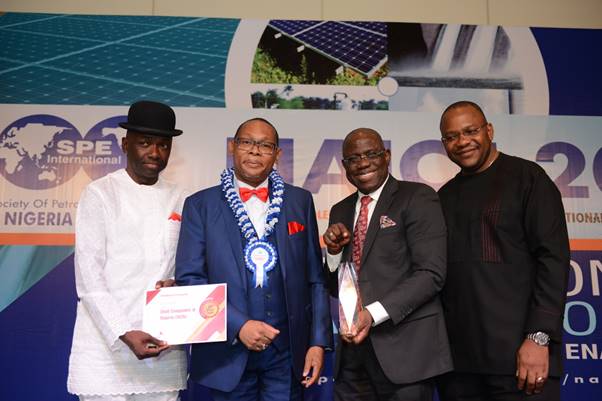
L-R: Lead, Subsurface Shallow Water, Shell Nigeria Exploration and Production Company (SNEPCo), Kefe Amrasa; Outgoing Chairman, Nigeria Council of the Society of Petroleum Engineers, Chikezie Nwozu; Managing Director, Shell Nigeria Exploration and Production Company, Bayo Ojulari and Shell’s Vice President, Health, Safety and Environment, Osa Igiehon, at the presentation of The Best Exhibitor Award to Shell at the just-concluded SPE Nigeria annual conference and exhibition in Lagos

Speaking on the conference theme, “Diversification of the Nigerian Economy – The Oil & Gas Industry as an Enabler”, Ojulari called for a diversification roadmap bearing the commitment signature of major stakeholders in the Nigerian project.

“With such a roadmap, we are able to track performance year-in year-out while remaining focused,” he said.

Ojulari added, “For Nigeria to diversify its economy, it must leverage the low hanging fruits such as agriculture, petrochemicals, which use gas as its feedstock and most importantly, education and technology.”

At the awards ceremony, two Shell staff, Oghogho Effiom and Stella Egwim, received the SPE Nigeria Chairman Medallion awards while 10 other Shell staff got Service awards. The awards reportedly demonstrated a strong Shell participation at the 2018 SPE conference at which 20 technical papers were delivered by Shell staff out of 150 papers constituting about 13% from Shell.

“Over the years, Shell Companies in Nigeria have continued to demonstrate thought leadership at flagship industry events such as the SPE and we continue to promote self-development and professional affiliation by our staff as part of our wider human capacity development in Nigeria,” said Ojulari who received the best exhibitor award from the outgoing SPE Nigeria Council Chairman, Mr. Chikezie Nwosu.

According to Shell, it’s exhibition stand combined aesthetics, architecture, informative posters, panel discussion sessions, career talks, video presentations and the Shell Health stand, to be a central attraction at the conference.

Visitors who thronged the Shell booth were received by the lead exhibitor, Kefe and team. The guests were drawn from oil servicing firms, equipment manufacturers, student, professional and academic bodies as well as international and indigenous oil contractors and companies.

Nigeria: From fossil fuel to a sustainable future economic model

1

While the industrial revolution raised the standard of living for Western states as early as the 1920s, Nigeria’s discovery of crude oil was not until 1956. Over half a century into the production of crude which has delivered socio-economic advancements for well organised societies like Norway, Nigeria is yet to realise its long-awaited resource-led prosperity.

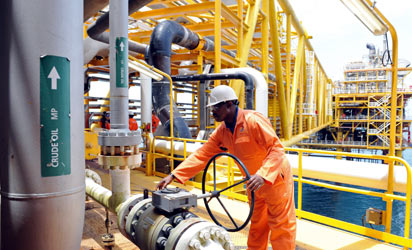
oil installation
Fossil fuel infrastructure: oil installation

One would think being one of the 10 biggest oil exporting countries in the world should guarantee progression. But Nigeria’s poor resource management and lax policy implementation coupled with corruption have stifled underdevelopment, fuelled inter-ethnic rivalries and stoke regional marginalisation. All of which comes at a price.

For instance, the ever-constant unrest in the Niger Delta region is strongly correlated to environmental despoliation in the wake of oil drilling. Lack of proper compensation to oil-bearing communities whose lands are being degraded with polluted streams and damaged agriculture are some of the externalities created by poor governance of oil resources.

Worse still, policies crafted to protect land and people are often not properly implemented for selfish reasons and citizens’ wellbeing and livelihood are compromised by state brutality or the effects of environmental damage. Added to that is the dilemma that is climate change, the most defining challenge of our time.

As climate change poses a direct threat to countries globally, there has been a sharp turn in many places towards clean and renewable energy to curb emission and reduce the pressure that humans exert on the planet. Among the countries now pioneering green energy and leading the fight against climate change is China. Though still with the US the joint highest polluter in terms of overall carbon emission, China is now the world’s leading nation in terms of investment in clean energy technologies, most prominently hydro/wind power.

China despite being the world’s largest consumer of coal and the second-largest consumer of oil is gradually transitioning to low-carbon energy and power industries. In 2017, renewable energy encompassed 36.6% of China’s total installed electric power capacity and 26.4% of total power generation.

So, it is both hypocritical and deplorable to witness China furthermore investing a wholesome $3 billion atop its $12 billion prior investment in Nigeria’s oil sector. This investment benefits China more than it does Nigeria, especially when one considers China’s ambition to surpass every other nation in clean and renewable energy production and consumption. China’s need to secure fossil fuels is mainly energy related geopolitical concern. For China to reduce its dependency on fossil fuels, it will need to rebalance the economy away from energy-intensive industries, a smart strategic play Nigeria should learn from.

Investments in Nigeria’s economy aimed at helping to turn around the failing oil-based economic model will be welcome. By contrast, investments that merely reinforce failed models without taking account of externalities such as the massive number of deaths arising directly or indirectly from air pollution should be discouraged.

Other challenges such as the acid rain destroying crops or affecting the human body are also worth mentioning. Unless addressed consistently, they risk spiralling out of control, exacerbating the plight of entire regions such as the innumerable cases of water pollution, land degradation, environmental warming, and the clear threats that these and other externalities of fossil fuel use pose to our civilisation, including sustainable agriculture.

Nigeria has earned large oil revenues over decades without much developmental achievements to show for it. The periodic celebration of spikes in global oil prices does little more than trap the common people in poverty, health risks, and compromised quality of life. The countries that benefit more from our oil production have achieved exponential growth and whilst they are moving forward to the next phase of innovation, Nigeria continues to count very little in the way of sustainable development.

For Nigeria to realise its clean energy potential, it must be steadfast in its push for divestment from the oil sector following the Norwegian example that has prohibited its oil-backed sovereign wealth fund from investing in hydrocarbon assets as a way of hedging its decarbonisation risk. We must use current ventures to stimulate a clean energy industry. Even government-led investment using public grants to incentivise renewables could launch us on the path to a greener future. Nigeria must enact functional environmental conservation policies and ensure their implementation to protect people, regions and our collective future.

Nigeria can boost her green performance using a combination of subsidies, policy targets and manufacturing incentives to drive energy production and expand access to affordable electricity. With the right approach to supporting innovation we can to join the rest of the world in going clean and green. The world is currently on the fast lane to sustainability and we do not want to play catch-up.

By Nasreen Al-amin (Executive Director, Eco-Africa, Nigeria)

Global tree cover increasing, study finds

0

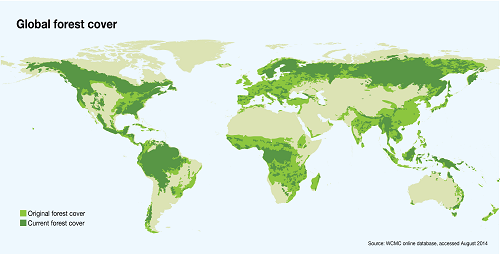
A team of researchers from the University of Maryland, the State University of New York and NASA’s Goddard Space Flight Centre has found that new global tree growth over the past 35 years has more than offset global tree cover losses.

Global Forest Cover
Global forest cover

In their paper published in the journal Nature, the group describes using satellite data to track forest growth and loss over the past 35 years and what they found by doing so.

There has been a growing consensus in recent years that, because humans cut down so many trees (most particularly in the rainforests), the global tree cover is shrinking.

In this new effort, the researchers have found that not to be the case. They contend that global tree cover is actually increasing.

To track global tree cover changes, the researchers studied data from advanced and very high-resolution radiometers aboard a series of 16 weather satellites covering the years 1982 to 2016.

By comparing daily readings, the researchers were able to see small changes occurring regularly over a relatively long period of time – which added up to large changes. Over the entire span, the researchers found that new tree cover had offset tree cover loss by approximately 2.24 million square kilometres – which they note is approximately the size of Texas and Alaska combined.

The researchers report that most of the new tree cover occurred in places that had previously been barren, such as in deserts, tundra areas, on mountains, in cities and in other non-vegetated land. They further report that much of the new growth came about due to efforts by humans (such as reforestation efforts in China and parts of Africa) and because of global warming – warmer temperatures have raised timberlines in some mountainous regions and allowed forests to creep into tundra areas. Other areas of new tree growth resulted from large farm abandonments in places like Russia and the U.S.

The researchers report that their calculations showed that human activities have directly caused approximately 60 percent of new global tree growth. They suggest their technique for monitoring tree cover could be used to predict tree cover changes in the future due to global warming.

GOCOP, CPJ demand immediate release of Premium Times journalist

0

The Guild of Corporate Online Publishers (GOCOP) has demanded the immediate release of Premium Times Security Reporter, Samuel Ogundipe, detained by the Nigeria Police Force for carrying out his constitutional duty.

Samuel Ogundipe
Samuel Ogundipe

A statement signed by the Guild’s Publicity Secretary, Olumide Iyanda, on Wednesday, August 15, 2018 also condemned the arrest by the Police Special Anti-Robbery Squad and harassment of the online newspaper’s Editor-In-Chief, Musikilu Mojeed, and Education Reporter, Azeezat Adedigba, both of who have been released.

The Guild noted with dismay that the Police action was carried out on the day Acting President Yemi Osinbajo ordered the restructuring of the dreaded Special Anti-Robbery Squad, which is notorious for blatant human rights abuses.

While Mojeed and Adedigba have been released after harrowing interrogations, Ogundipe was still in detention as at Wednesday morning with no contact with his family or employers.

GOCOP considers the circumstances of the journalist’s arrest as a damning indictment of the President Muhammadu Buhari Government, which has been accused by several groups and individuals of gross abuse of citizens’ rights.

Ogundipe was arrested over a report on a correspondence sent by the Inspector-General of Police, Ibrahim Idris, to acting President Osinbajo on the sacked Director-General of the Department of State Services (DSS), Lawal Daura.

Daura was dismissed last week by Osinbajo for deploying DSS operatives to the National Assembly in a show of brute force.

Ogundipe’s commendable refusal to disclose the source of his report is the reason the Police have held on to him in flagrant disregard for the Nigerian Constitution, which states that the Press shall at all times be free to hold the government accountable to the people.

GOCOP condemned the arrest and harassment of journalists in whatever form.

It advised the Nigerian Government to lecture its security agents on the provisions of the Freedom of Information Act, which confers Journalism Confidentiality Privileges on the media.

GOCOP demanded the release of Ogundipe and other journalists held by the Police and other government agencies without further delay.

The Committee to Protect Journalists has also joined other prominent individuals and groups in condemning the arrest and detention of the journalist.

In a statement on Wednesday, CPJ urged the Nigerian Police to immediately release the detained journalist, stressing that Ogundipe is not a criminal

Angela Quintal, CPJ Africa Programme Coordinator, speaking from Johannesburg, South Africa, said: “CPJ is gravely concerned by reports that Premium Times journalist Samuel Ogundipe was detained by Nigerian Police yesterday for his reporting.

“Samuel Ogundipe must be released immediately without any condition and be allowed to report without fear of reprisal.

“Journalists are ethically bound not to disclose their confidential sources and the fact that police reportedly arrested him because he refused to name his source is outrageous.

“Samuel Ogundipe is a journalist who is protecting his sources, and not a criminal. He must be freed now.”

Video: Why is California always on fire?

0

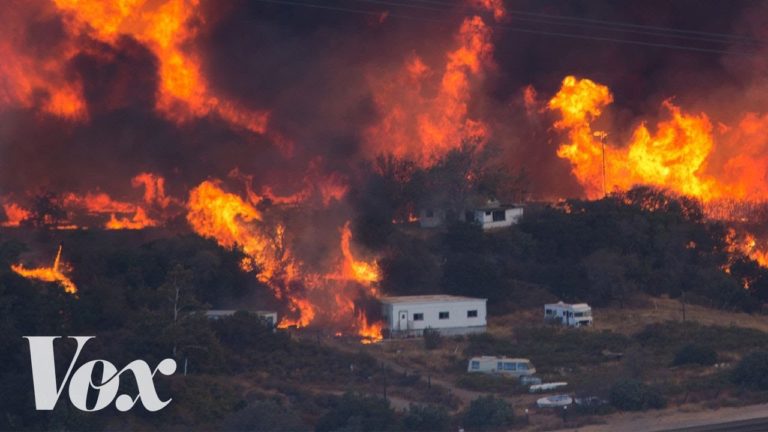
Wildfires are intensifying in California – but “wild” fires might be a misnomer at this point, because humans are responsible for why they’ve gotten so out of control.

Proceedings of the National Academy of Sciences found that 84 percent of fires are started by humans.

The Carr fire in northern California, for example, was sparked by the rim of car with a flat tire.

Courtesy: Vox

Sokoto to plant 100,000 economic trees

0

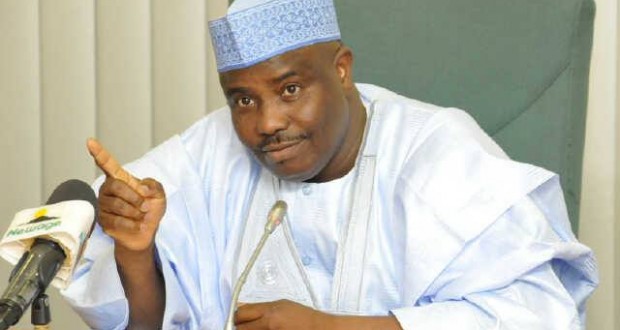
Gov. Aminu Tambuwal of Sokoto State on Tuesday, August 14, 2018 flagged off planting of 100,000 varieties of economic trees across locations of the state.

Aminu-Tambuwal
Governor Aminu Tambuwal of Sokoto State

The programme, which was designed by the Sokoto State Zakkat and Endowment Commission, took place at the Government Girls College, Sokoto, the state capital.

Tambuwal, represented by the Secretary to the State Government, Prof. Bashir Garba, said that the exercise was designed to cover the 86 districts of the state.

“The programme as an annual event was designed to cover the entire 86 districts of the state to improve our revenue generation system.

“This year we intend to plant 100,000 seedlings of economic trees, across the districts as well as all boarding secondary schools and tertiary institutions across the state.

“Moreover, we are all aware of the general importance of tree planting in Islam, as reward of such acts will continue even after death.

“In addition, such projects if well protected in our various schools, will serve as a revenue source to take care of the schools’ needs in future,” Tambuwal said.

He commended the Sultanate Council for supporting the programme and the State Zakkat Commission for initiating the planting programme across the state.

He called on the 86 District Heads in the state to monitor and support the exercise for the overall development of the society.

Speaking, the Sultan of Sokoto Alhaji Sa’ad Abubakar III, commended the Sokoto State Government for its commitment towards supporting the living standard of the people.

Abubakar described the initiative as one of the greatest achievements worthy of emulation by all states.

“The gesture will no doubt serve to support the economy, protect the environment and reduce poverty among our people, as well as attract a lot of reward from Allah.

“Moreover, the importance of tree planting can never be over emphasised, as such, it will continue to support our future plans,” the monarch said.

Earlier, Chairman of the Commission, Malam Lawal Maidoki, said that the tree endowment programme was aimed at encouraging act of charity among Muslims faithful.

“Islam encourages its followers to cultivate, conserve and exploit nature so that it can be beneficial to humans.

“Planting trees is regarded as an act of charity (Sadaqa) and the planter receives blessings from all those who benefit from it.”

NAN reports that the economic trees planted on Tuesday at the event include Moringa, Mango, Cashew, Tamarind and Neem.

By Muhammad Nasir Bello

Bloomberg launches $20m global tobacco industry watchdog

0

Global health organisation, Vital Strategies, on Monday, August 13, 2018 congratulated Bloomberg Philanthropies on the launch of its new $20 million global tobacco industry watchdog, STOP (Stopping Tobacco Organisations and Products).

José Luis Castro
José Luis Castro, CEO and President of Vital Strategies and Executive Director of The International Union Against Tuberculosis and Lung Disease

STOP will be powered by a consortium of three leading anti-tobacco groups, with Vital Strategies joining with its sister organisation, the International Union Against Tuberculosis and Lung Disease (The Union) as a sub-grantee. STOP will use innovative research methods to expose industry attempts to derail tobacco control policies. It will also counter the industry’s efforts to, according to Vital Strategies, hook a new generation of smokers, with a special focus on 16 emerging markets where the consortium has strong relationships with governments and civil society.

“Bloomberg Philanthropies’ investment is a game-changer,” said José Luis Castro, CEO and President of Vital Strategies and Executive Director of The International Union Against Tuberculosis and Lung Disease.

He added: “The tobacco industry spends billions of dollars every year to drive its – often hidden – agenda to mislead consumers, journalists and policymakers. This investment will allow health advocates to bring innovation and proven strategies to expose industry wrongdoings on a global scale. Vital Strategies and The Union are honoured to be a part of an effort that will bring rapid progress against the world’s leading preventable killer – tobacco use – and expose the unethical business practices that drive seven million tobacco-related deaths every year.”

In addition to The Union and Vital Strategies’ participation as one of the partners, the other organisations who won the global competition to form this watchdog group are the Tobacco Control Research Group (TCRG) at the University of Bath and the Centre for Good Governance in Tobacco Control (GGTC). Each organisation has deep global and in-country experience in research, analysis, monitoring and advocacy, as well as media strategies that increase support for tobacco control policies.

STOP partners will draw from cutting-edge research, technology and media experience to cut off the tobacco industry’s influence around the world. Over the three-year term of STOP’s engagement, the group will encourage whistleblowers to report on misdeeds, publish exposé reports, employ “big data,” crowdsourcing methods, and mobile apps, to amplify and maximise STOP’s impact. Existing tools such as the University of Bath’s Tobacco tactics website, and the Tobacco Atlas published by Vital Strategies and the American Cancer Society will jump-start the efforts, it was gathered.

STOP will support World Health Organisation’s work to reduce tobacco use, including the implementation of the Framework Convention on Tobacco Control (WHO FCTC). It will specifically challenge the industry’s efforts to influence government policy in contravention of Article 5.3 of the WHO FCTC.

Scientists predict unusually warm climate from 2018 to 2022

0

Scientists on Tuesday, August 14, 2018 predicted that the years 2018 to 2022 are going to be an “anomalously warm’’ period, with greater chance of extreme temperatures.

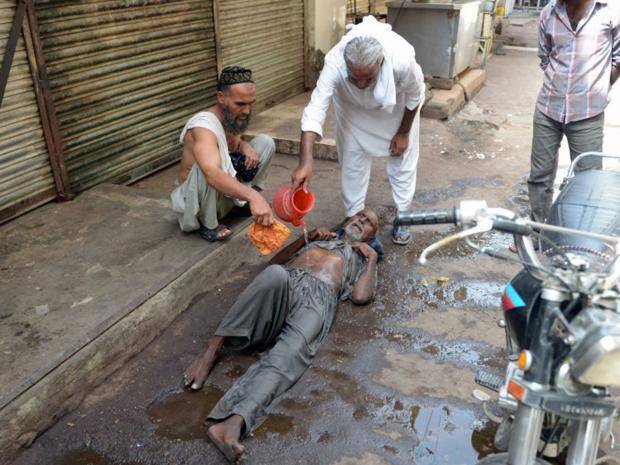
Pakistan-heatwave
Heatwave in the southern Pakistani city of Karachi

“The current climate has a large likelihood to reach a warmer-than-normal period over the next five years on top of the forced global warming trend,’’ said the study by British and Dutch researchers based on a probabilistic forecast system.

The study, published in science journal Nature Communications, said the trend will reinforce current long-term global warming trends.

The prediction comes as a severe and prolonged heatwave sweeps the northern hemisphere.

The researchers say they have developed a statistical model that provides reliable predictions of global mean air and sea surface temperatures in a few hundredths of a second, on a laptop.

It considers external forces affecting global mean surface temperature, such as greenhouse gases and aerosols, which follow certain socio-economic scenarios, as well as natural variability, which is harder to predict, they said in a statement.

Classical forecast systems give comprehensive climate data in a single prediction but are costly due to the need for supercomputers.

The system can be adjusted to predict other climate measures, such as precipitation, and to focus on various regions, the researchers said.

Farmers say cultivation of GM cotton seeds will be optional

0

The National Cotton Association of Nigeria (NACOTAN) says the cultivation of biotechnology cotton seeds by farmers in the country will be made optional.

GM-Cotton
The GM Bt Cotton

President of the association, Mr Anibe Achimugu, told the News Agency of Nigeria (NAN) in Abuja on Tuesday, August 14, 2018 that two varieties of biotechnology cotton which had been released for commercialisation were currently undergoing farm demonstration trials.

He expressed optimism that the biotech cotton varieties would be distributed to farmers in the next planting season, adding that farmer would be presented with the option of planting the conventional seeds (organic) or the biotech cotton seeds.

“With the introduction of biotechnology cotton seeds, two varieties that have been approved for commercialisation right now.

“They have told us that we should expect up to four tonnes per hectare and that was conducted by the Institute of Agricultural Research (IAR), the only institute mandated to work on cotton in Nigeria for release.

“Those two varieties are being tested under normal farming conditions.

“It is not in a laboratory but demonstration fields by farmers, so we believe that with what will happen this year by next year, I am not saying that there will be 67,000 farmers that will be farming biotech cotton.

“It is not for us to insist that farmers should farm biotech cotton, but we want to be able to say to a farmer for instance, if you want to do organic cotton which has a premium price in the international market, please go ahead.

“IAR will provide the conventional seed, the non-biotech seeds so we want to encourage IAR, we want government to fund IAR for them to have the capacity to improve the quality of their seeds, to produce more.”

chimugu said that cotton farmers were currently producing 450 to 500 kilogrammes of cotton per hectare as against some West African countries and neighbours that were doing an average of 1.2 tonnes per hectare.

He listed some of the challenges currently faced by cotton farmers to include lack of quality seeds, climate change and lack of irrigation facilities.

“The immediate challenge is poor quality seeds available for farmers.

“What we have are tired conventional seeds that ideally should not be planted more than three times, but they are in the hands of farmers for 4 to 10 times, so you can’t expect to get good yields from that and that is why we have poor yields,’’ he said.

He appealed to the government to adopt cotton as a national asset adding that the sector could employ youths, generate wealth and earn foreign exchange for the country.

By Ginika Okoye