The Lagos State Government has said that it has not privatised water supply, neither has it awarded water privatisation contract to any organisation. The authorities say that the Public Private Partnership (PPP) model that it was initiating in the water sector was still at bidding stage.
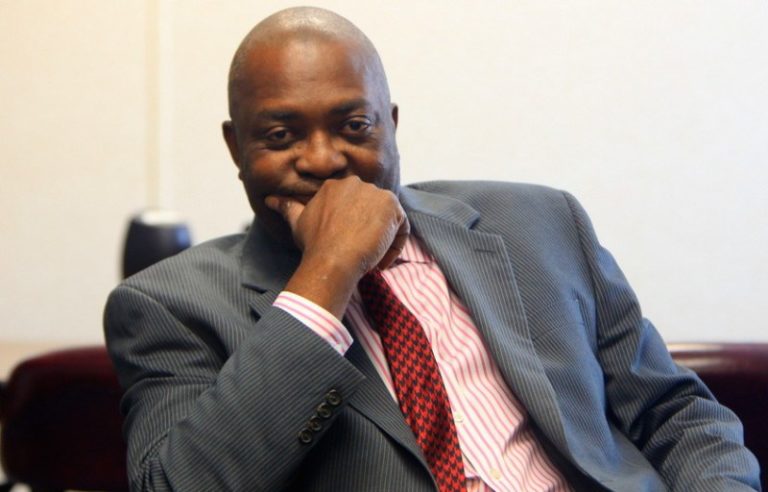
LWC Managing Director, Mr Muminu Badmus
This was made known on Thursday, August 16, 2018 in Ijora by Muminu Badmus, Managing Director, Lagos Water Corporation (LSWC), while reacting to reports in some section of the media.
Badmus debunked reports by some online media that the state government had awarded water privatisation contract to a discredited company as false, stressing that such insinuations were at best preemptive as government had only shortlisted a number of reputable companies, none of which was yet to have the contract.
He explained that the Lagos Water Corporation had publicly advertised an Expression of Interest (EOI) which attracted seven local and international firms, out of which four firms were shortlisted following a rigorous and transparent process.
He assured Lagosians that government would continue to work in their interest in the bid to promote their wellbeing, adding that this was the main reason why the Akinwunmi Ambode administration had prioritised provision of potable water to the people by investing in water facilities as evidenced by the increase of water supply to 220 million gallons per day (MGD) to rapidly bridge supply gap.
Badmus stated that the exponential increase in population has continued to push the water supply need of Lagos State to 570MGD, leaving a gap of over 300MGD, while for the same demographic reason, the state’s resources faced pressure from other critical areas.
“Globally, attention is being shifted to the PPP arrangement to provide infrastructure for the people as government can no longer shoulder the responsibility alone,” he said.
He said that what the government was working towards was ultimately a PPP arrangement and not outright withdrawal, adding that government was midwifing an arrangement that would ensure the injection of both public and private funds and expertise to drive seamless provision of potable water to the teeming population of Lagosians.
He assured Lagosians that, as the ultimately beneficiaries, they would have cause to rejoice at the outcome of the ongoing process which not only promise to evolve an effective and enduring solution to the water supply needs of Lagosians, but also bring about a model for the country and the entire West Africa sub-region.
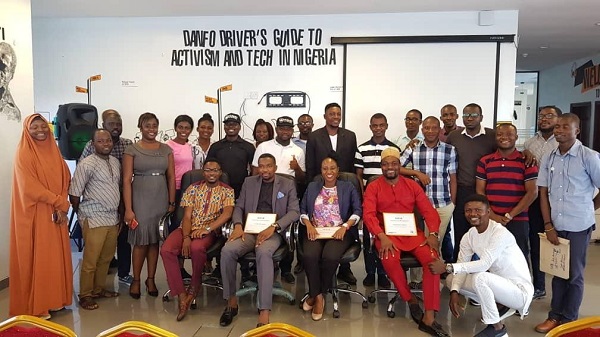
As part of the activities of International Climate Change Development Initiative (ICCDI) to celebrate this year’s International Youth Day (observed globally on August 12, 2018), ICCDI in partnership with BudgitCo hosted an event tagged ‘’Creating Safe Spaces for Youth’’ on Tuesday, August 14, 2018 in Lagos.
Participants at the event
The event relates to the United Nations theme for the International Youth Day tagged ‘’Safe Spaces for Youth.’’ The theme for this year was in line with Goal 11 of the 2030 Global Goals. The purpose of the event was how youths can efficiently engage in activities related to their needs and interests in areas of sports, environment and entrepreneurship in exploring their talents and potentials; participate in decision making processes and freely express themselves.
The event began by 2pm with guest speakers who have excelled in their diverse fields and endeavours. They include David Lanre Messan, Founder/CEO of Troggeurban; Chisom Mbonu-Ezeoke, the first and only female soccer analyst to have ever anchored on Super Sports Nigeria; and Chuks Anyaduba, Social Entrepreneur/Media Consultant.
Co-Founder, Olumude Idowu, in his welcome address, reiterated about the 2030 Global Goals and the need for all hands to be on deck. He also emphasised how the youths can expand their network in building a fruitful relationship with mentors and role models in their area of interest. Also, a representative of BudgitCo gave a speech on how BudgitCo, the business arm of BudgIT, successfully funded start-ups and helped entrepreneurs in achieving their dreams of owning a business.
This was followed by an engagement session where speakers decided to share their success stories as well as their challenges. Several key points shared by them was that whatever area of business you develop a strong interest in, be passion-driven about it irrespective of what others would do to want to make you quit. Challenges are bound to happen which would want to deter you from your focus and make you throw in the towel, but there is always a glimpse of hope in an environment of despair. A good mentor is also needed very necessary for you thrive and keep pushing your goals and aspirations through all the daunting challenges.
The session was very engaging, which was followed by questions and answers session. The questions of lack of women’s involvement in sporting activities, compared to their male counterparts were addressed; also, on how to promote your ideas and your project globally to make it a brand name were also addressed.
Idowu gave the closing remark with a presentation of an award plaque to the guest speakers while showering encomium on them for their great work and achievement in their endeavours. He also took time to express his appreciation for BudgitCo in making the year’s International Youth Day a success.
By Idemudia Isaac (Research & Development, ICCDI Africa)
Until readers finish reading this piece, the above title remains a puzzle in search of a meaning. The choice of the title was traceable to the first Lagos Tourism Summit (LTS) held on Monday, April 16, 2018, at the Eko Hotels and Suites in Victoria Island under the auspices of the Lagos State Government. This writer’s habitual search for ICYMI (In Case You Missed It) news items about Nigeria and Lagos, in particular, led to the discovery of the Lagos Tourism Summit news report, which the incumbent Governor of Lagos State, Mr. Akinwunmi Ambode was the initiator.
Akinwunmi Ambode, Lagos State governor, delivering a speech at the Lagos Tourism Summit
A handful of cities have proven that tourism can positively drive the urban economy
Examples of cities whose economy thrives on tourism are not far-fetched. Listed hereto, not necessarily in order of prominence, are the globally-acclaimed cities noted for their tourism innovations and success stories such as Chicago, New York City, Miami, Orlando, Los Angeles in the United States of America; Dubai, UAE, City-State of Singapore, New Delhi, India, Tokyo, Japan, Jerusalem, Israel, Istanbul, Turkey, London, UK, Rome, Italy, Paris, France, Sydney, Australia, Nairobi, Kenya and Madrid, Spain. The mere mention of the name of any of the cities cited in this piece conjures a quick memory of “the attractions” that make the city popular as a destination point for tourists from all over the world. Orland has Disney World, Nairobi has a Wildlife tourism, Singapore has ecotourism, Rome and Jerusalem are popular for religious tourism, Paris is a magnet for the fashionista, Madrid is the city of bullfighting festival, New York is the world capital city with an array of “must see and to-do-list” of things available to first-time visitors and tourist returnees. Chicago is home to numerous fascinating museums and its awesome architecture and breathtaking Millennium Park (Chicago’s tourist square). The list of other popular attractions in all these cities is inexhaustible but can be easily accessed on the internet by intending tourists to any of the cities prior to choosing the best place to go on tourism.
Statistics of revenue from tourism affirm the importance of tourism as an economic booster
From well-organised tourism, some cities rake in huge revenue to boost and sustain their local economy. According to a 2013 report by Master Card Global Destination Cities Index, revenue receipt from tourism was stupendous. New York City grossed $18.6 billion, London $16.3 billion, Paris $14.6 billion, Tokyo Singapore $ 13.5, $12.7 billion, Dubai $ 10.4 billion, Los Angeles $7.8 billion and Rome $6.4 billion. The updated survey of the same report for recent years would show an increase in revenue from tourism because there is a corresponding increase in global tourism in the last ten year. Tourism competition among countries and cities is very keen. It is those with cutting-edge attractions, friendly environment, innovation, safety and proactive policy that stay afloat in the business.
Lagos tourism is overdue for a Risorgimento – a time of renewal
Therefore, the Lagos Tourism Summit was a commendable initiative by governor. On the surface, it is viewed as a clarion call by the governor that all hands must be on deck to rejuvenate a “comatose industry. Methinks it goes beyond a call. As good as the initiative was, the outcome and the follow-up on what transpired at the Tourism Summit would determine whether the LASG is ready to walk the talk. Like the proverbial journey of one thousand miles, the LASG has rightly taken the first step. The government has put up an advertorial calling for an Expression of Interest (EoI) from industry experts to submit proposals for the development of a long-range Tourism Plan for Lagos State. If at the end of the day a Tourism Plan is drawn, the skepticism is that the plan would remain what it is: A plan on paper.
The political will to implement the elements of the plan by the government that initiated it is always a major problem. History is replete with the story of various plans made by the government which either fails to take-off or poorly implemented. Sadly enough, some projects are abandoned mid-stream once there is a change of baton in government. We have failed woefully in our (wrong) perception of not accepting governance as a “continuum.”
We, therefore, counsel that being a long-range plan, it must be sustainable for the plan period (15-20 years) beyond the tenure of Governor Ambode administration. A new administration can continue to do a periodic review and modification of the plan to determine its successes or pitfalls instead of using scarce state resources again on a new tourism plan trying to re-invent the wheels.
Governor Ambode cuts the image of a zealous leader who is running faster than a deer to deliver the dividends of democracy to Lagosians
It is to his credit that he has initiated the execution of many social programmes and ambitious infrastructural projects. To the governor, caution is the word. He should realise that commitment is not the synonymy success. In his new attempt to enhancing tourism in Lagos State, he must ponder why that viable sector of the economy has failed woefully in the past despite its potentials. He must query the lack-luster performance of the Lagos State Ministry of Tourism, Arts, and Culture which fails to impress no tourist. Here is the next narrative of the past failure.
The diversification of the economy must include tourism
Tourism in Lagos is a metaphor for an “unpolished diamond” which needs to be polished to shine. Put in simple language, it is a cash-cow in need of food to grow. Even if the LASG is going to start from ground zero, the potentials are there to make Lagos a tourist paradise. However, the potentials have not been fully exploited. What are the factors responsible for the neglect of Lagos tourism sector?
Number one deficiency is instability of institutional arrangement and policy somersault for tourism management in Lagos State. The institutional arrangement has continuously suffered an identity crisis. From 1991 to-date, the sector went through frequent name changes/nomenclatures and institutional arrangements without corresponding achievements. During Governor Michael Otedola in 1991, it was yanked from the Ministry of Home Affairs to embrace an all-encompassing name: Bureau of Information, Tourism, and Culture. In 1994, it was merged with the Ministry of Information and Culture during which period the Lagos Tourism Board (LTB) was established. The LTB’s onus responsibility was to promote tourism under another new supervisory Ministry of Commerce, Industry, and Tourism.
By 1998, it morphed to Lagos State Waterfront and Tourism Development Corporation (LSWTDC) and by 2007, two distinct Ministries were created from the LSWTDC namely: Ministry of Tourism and Intergovernmental Relations and Ministry of Waterfront Infrastructure Development. When Mr. Akinwunmi Ambode assumed office as the Executive Governor of Lagos State in 2015, at his whims, he changed the institutional nomenclature to the Ministry of Tourism, Arts, and Culture.
The constant change in name and institutional arrangement apparently created a lot of confusion. Little or no time was given to the formulation of a coherent policy on tourism. The development of both old and new tourist sites/attractions were neglected including a robust machinery for information dissemination. The government effort at promoting tourism in the state was disjointed. Every new administration wants to outdo each other in the “name change” race while performance stock-taking was inadvertently sidelined.
A new name does not translate to excellent performance. Strong institutional leadership, vision, dynamism, innovation and team spirit ought to have been cultivated by previous administrations ab initio instead self-aggrandisement.
Information is the currency of tourism
Poor information outreach cannot effectively promote tourism. Samuel Johnson (1709-1784) British author made the point very clear that “the best thing to knowing something is knowing where to find it.” In the contemporary world, the Internet of Things (IoT) has made information dissemination so simple even in the comfort of people’s home. If there is a paucity of information about a place and its attractions, the urge to visit is nil. It counts twice if the source to get the information is non-existent or not user-friendly.
While writing this piece, a comparative analysis was done regarding two cities (Chicago and Singapore). The City of Chicago has a prolific information machinery. It has a well-developed website loaded with an array of information a tourist would want to know about Chicago tourism. E-information on tourism is complemented with innumerable documentation in form of flyers, outdoor advertisements, brochures, and visitor’s information centres and human contacts popularly called the “Chicago Greeters” who serve as tour guides. On the website, a user can effortlessly surf for such information as Chicago attractions, festivals, famous restaurants, hotels, music concerts, cultural centres, museums, amusement parks, aquariums, coming events and daily tours. Tourists also have the luxury of watching video documentary about Chicago Tourism on YouTube and the option of downloading a series of Apps to search for more information on a phone device. The Chicago Cultural Centre is usually a beckon for in-town tourist searching for what to do in the windy city.
If the Chicago information machinery is superb, Singapore’s is superlative. It is a city that operates fully on Information, Communication, and Technologies (ICT). The city-state is A+ smart city and a tourist delight. Its Tourism information is known as “Open Access.” There is no inhibition. The city’s sloganeering about its tourism and hospitality is rated the best in the world. The Singapore Tourism Board (STB) does an excellent job by using the reflection of the mood and times to come up with an ideal slogan to lure tourists from all over the world. “Instant Asia, Surprising Singapore, New Asia, Uniquely Singapore, Your Singapore and Passion Made Possible” are a few of the fascinating slogans Singapore has used to the hilt to boost its tourism industry. The high-end tourism infrastructure that Singapore had to develop and still developing to enhance the growth of the tourism industry, is another storyline beyond the scope of this piece.
The comparison of the above narrative with the Lagos State Ministry of Tourism, Arts, and Culture (MTAC) is a comparison between day and night. The difference is clear. Chicago and Singapore are both accomplished smart cities very prominent on the information highway. Whereas Lagos is at the threshold of becoming a smart city. Meaning a city that uses information and communication technologies regularly to improve the delivery of government services to the public. Many of the Lagos State Government’s Ministries, Departments, and Agencies (MDAs) are poorly managed information-wise. The Lagos State Ministry of Tourism is guilty as charged. Its website is devoted to irrelevances. There is no useful information available to prospective tourist in dire need of knowledge about Lagos tourism. Most tourists won’t give a hoot about the names of the past commissioners or permanent secretaries of the Ministries. Similarly, no news report meant for a local audience can be of interest to foreign nationals using the website from far-flung countries such as Australia, Canada, Russia, Fiji, Mexico or the Philippines. The information most tourists would be eager to read is: what is so special about Lagos, places to visit, safety, upcoming events, ease of doing business, local transportation, local cuisines and entertainment…music, movie theaters, clubhouses and more of spectacular things tourists savour when they are on vacation in other foreign countries.
The Ministry of Tourism, Arts and Culture ought to be restructured
Among the 25-point responsibilities of the Ministry, “tourism promotion and information dissemination” is listed as a key responsibility. Unfortunately, the function has suffered serious setback either due to government neglect or clueless institutional leadership. Governor Ambode having determined to revive the tourism industry with gusto, he must completely overhaul the entire Ministry of Tourism, Arts, and Culture and if found necessary, he should consider a change of its leadership and eliminate redundancy. Information is the life-support of a thriving tourism economy analogous to water, as the sustenance of human life. Tourism also thrives on visuals- i.e what tourists see one on one. What excites them and make them nostalgic about the places they visited. The huge expenditure committed on tourism revival in Lagos might not make the desired impact due to the weak channel of information dissemination. Put simply, a situation of “worth seeing? Yes, but not worth going to see,” may form in the mindset of foreigners who have the intention to visit the megacity on vacation.
Postscript
After the conclusion of this piece, the newly released 2018 Global Cities Liveability Index report by The Economist Intelligence Unit and World Bank was made public on the Internet. Of the 140 cities surveyed, Lagos ranked 138 making it the third worst city to live in the world after Bangladesh, Pakistan, and Damascus, Syria. Sadly too, Lagos maintained the same position in the 2017 global report. The 2018 report is a drawback on the public image of Lagos. It places an additional burden on the LASG’s effort to showcase the megacity to the rest of the world as a “choice destination” for intending tourists from foreign countries. Therefore, the government would have to redouble its effort to have a niche in the volatile global tourism industry.
The Special Adviser to the President on Niger Delta and Coordinator, Amnesty Programme Office, Prof. Charles Dokubo, says the office will collaborate with the National Oil Spill Detection and Response Agency (NOSDRA) on disaster reduction programmes in the Niger Delta.
Director-General, National Oil Spill Detection and Response Agency (NOSDRA), Sir Peter Idabor
Mr Murphy Ganagana, Special Assistant on Media to Special Adviser to the President on Niger Delta and Coordinator, Amnesty Programme, made this known in a statement on Thursday, August 16, 2018 in Abuja.
Dokubo said that this partnership would include sensitisation campaigns on environmental hazards occasioned by decades of oil exploitation and safety measures.
He assured the agency on the readiness of his office to partner NOSDRA towards curtailing the effects of environmental degradation on communities in the Niger Delta.
According to him, plans are underway for a conference on oil exploration and environmental degradation to investigate the geological background of the Niger Delta and impact assessment.
“I think we have to look at the ripple effects of environment; environmental degradation and economic resurgence is one issue we should always look at.
“It has taken a long time and now that the government has decided that clean up period has come, it is commendable.
“I face a peculiar problem in the sense that whenever there is a crisis, most of the people I deal with will go and blow up pipelines.
“I always tell them that they are not blowing up pipes that are in Kaduna; they are blowing up pipes that are in their own environment and that children yet unborn will suffer from these activities.
“Oil pollution are not things that we hear in developed countries; new technologies are available that we can use now, but for our environment, it is already devastated.”
He said that to resuscitate the environment, there was need to create awareness that this environment belongs to us, adding and if we do not take care of it, it would affect us negatively.
Mr Peter Idabor, Director General, NOSDRA, said the agency was concerned about the health of people living in the Niger Delta, especially the infusion of toxic substances through food chains.
Idabor commended Dokubo for his efforts at deepening peace and stability in the Niger Delta.
He called for the conversion of deep pits created during the construction of major roads in the Niger Delta to fish ponds to create jobs and wealth for beneficiaries of the Amnesty Programme.
“We have noticed that your activities have drastically reduced cases of vandalism of pipelines in the Niger Delta, and we commend you for that.
“We are responsible for the national oil spill contingency plan which is geared towards the third-tier oil spills in the country.
“We are very much concerned about the health of our people; our greatest concern is the infusion of some of these toxic substances through the food chains and the effect on the health of our people.
“So, one of the things we do is to help create awareness; sensitise people on how to deal with this problem of having oil spillage in their immediate environment.
“At this stage, there is little anybody can do, but if we can prevent people from getting too close to the substances, contaminated areas or eating foods that are contaminated, it will go a long way to educate the people.
“That is why we have come to see if we can partner with you, and also have an opportunity to present resource persons from our own agency for you in any area that you require,” he said.
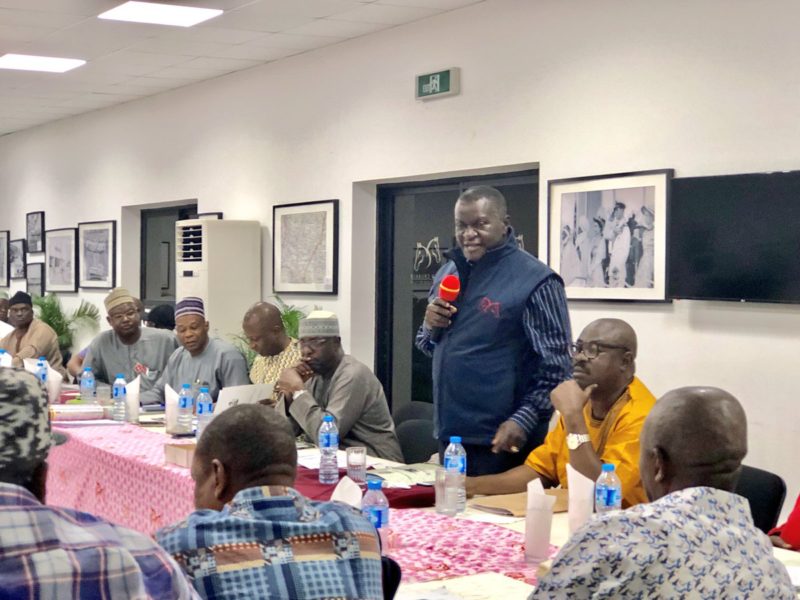
At a daylong a forum held in Abuja on Thursday, August 16, 2018, the National Emergency Management Agency (NEMA) and a group of stakeholders sought to devise strategise on best ways to prevent and mitigate climate-induced disasters in the country.
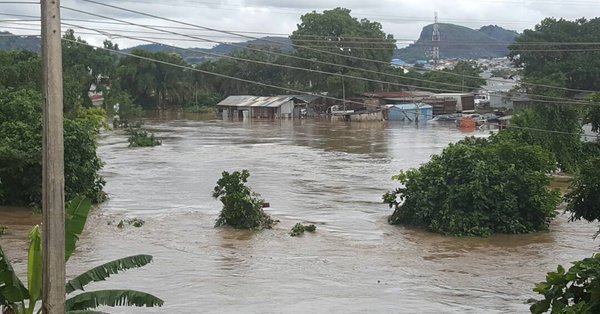
Flooding has been the major form of natural disaster in the world including Nigeria
Mr Mustapha Maihaja, Director-General, NEMA, said that the National Stakeholders Workshop aimed at improving the mitigation and response mechanism in the country.
He described the event as relevant, considering past experiences of unprecedented natural and human disasters that have been affecting collective resilience of Nigerians.
“This national workshop is among the steps necessary to collectively prepare and strategise to reduce climate induced disasters in our country.
“As part of our collective responsibilities as servants of the people, Ministries, Departments and Agencies (MDAs) need to always come together with a view to restrategising plan of actions.
“Towards safeguarding and protecting our citizens, infrastructure and other elements that are vulnerable in the environment.
“The impact of disasters on lives, properties and environment depends on the Country’s level of preparedness.
“Which to a large extent relies on effective early warning systems that in turn drives all processes constituting our early action mechanisms,’’ Maihaja said.
Maihaja said that, in line with the paradigm shift to Disaster Risk Reduction, NEMA was preparing to also map out vulnerable communities based on the prediction as indicated by climate risk monitoring agencies.
He explained that it was a way to enhance and direct enlightenment campaigns in critical states.
The director-general said that the new approach will pay off positively if the submissions of the Technical Committee are adhered to and the resolutions taken to the target population.
Maihaja said that NEMA as a coordinating agency collaborated with relevant stakeholders to put together in a simplified manner the disaster implications of the Annual Flood Outlook (AFO) and the Seasonal Rainfall Prediction (SRP).
He said that the documents were put together to remind stakeholders of their roles when it comes to risk mitigation, preparedness and response.
Maihaja said that the media also played a key role is creating awareness to those in the grassroots to increase their preparedness.
Also speaking, Mr Idris Abbas, Director-General, FCT Emergency Management Agency (FEMA), said that the workshop was apt and the most desired to boost emergency response and most especially, Disaster Risk Reduction
Abbas said that preparedness was one of the key ingredients of disaster management and effective response.
Abbas said that the National Emergency Centre established by the National Communications Commission is fully functional now and the 112-emergency number was also fully functional in the FCT.
He said that the innovation would really enhance response in addition to what the army and Road Safety were doing.
“When all the agencies on preparedness have done their own, like the NHISA and the NiMet, it would now be for the response agencies to sit down and articulate their response plans in other to respond properly.
“The workshop is very apt, and I commended NEMA for the gigantic step and I want to assure that we would give our best joining their course’’, Abbas said.
In his remarks, Mr Clement Eze, a representative of the Nigeria Hydrological Services Agency (NHISA), lauded NEMA for always creating the platform for stakeholders to brainstorm on enhancing the safety of the country.
He said that when it comes to emergency issues, NHISA, was at the upstream sector of predicting flood and informing the relevant agencies and the public on the next step to take.
Eze said that flood has been the major form of natural disaster in the world including Nigeria.
He said that before the onset rainy season, NHISA had warned various states and communities that were likely to be affected by flood.
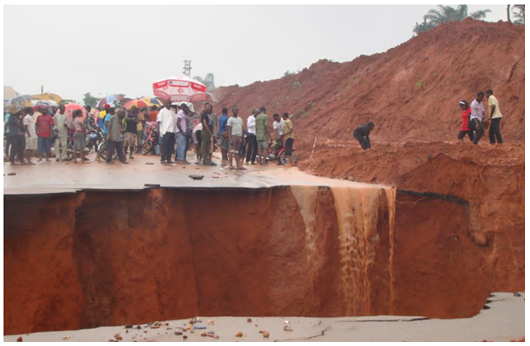
A lawmaker representing Idemili South State Constituency in Anambra, Mr Chukwuka Ezenwune, has raised alarm over an erosion site which he said had claimed a section of a road at Uke in the state.
Gully erosion in southeast Nigeria
Ezenwune, in an interview with the News Agency of Nigeria (NAN) on Thursday, August 16, 2018 at the erosion site, called for urgent government intervention to avoid disaster.
He said the call became imperative to avert loss of lives and property along the road linking Nkpor and Nnobi, Nnewi, Ekwulobia, Awka-Etiti towns and other communities in Anambra and Imo states.
“This road is one of the busiest roads in the state. In fact, it is a by-pass to other communities in Anambra and Imo.
“At this point, I don’t advise any articulated vehicle to use this road because it has already caved into the second lane for incoming vehicles.
“If an urgent action is not taken, the erosion will bring untold hardship not only to the people of Idemili North and South Constituency, but to the entire people of the state.
“I am using this medium to send a Save Our Soul (SOS) to the state and Federal Government to save the road and avoid unnecessary deaths,” he said.
He recalled that former Premier of Eastern region, Dr Michael Okpara, and the governor of old Anambra State, Chief Jim Nwobodo, planted cashew and malaina trees during their era to control erosion in the area.
However, the lawmaker expressed concern that felling of the trees for construction without proper flood and erosion channel control were causing more damages to the area.
“Government should come up with a policy that nobody should erect structures or even start farming on places where it planted trees or constructed drains without its permission.
“For them to have uprooted the trees, caused erosion to be endemic in my constituency,” he said.
He also appealed to the Federal Road Safety Corps (FRSC) to urgently put up sign posts to warn motorists of the danger ahead on the road, especially at night.
Also, Mr Gabriel Emenike, a motorist, who plies the road daily, described the erosion site as a “death trap.”
“This is terrible. I saw this development two days ago and I was not impressed.
“If something is not done urgently before another big rainfall, I do not think people will be able to use the road again,” he said.
For Mr Chidiebere Mkpuma, a horticulturalist near the site, said the continued use of the road without fixing the damages might result to accident and loss of lives.
“An articulated vehicle that tried to dodge the erosion site some days ago almost caused an accident but nobody died.
“The erosion site has been there for long but became worse due to the ongoing road and building constructions around here.
“A particular church used graders to push down some trees during demarcation which had been a wage controlling the erosion all the while,” he said.
No fewer than three million toilets are needed to be constructed annually if Nigeria would meet the Sustainable Development Goals to scale up sanitation and hygiene before 2030, the United Nations Children’s Fund (UNICEF) has said.
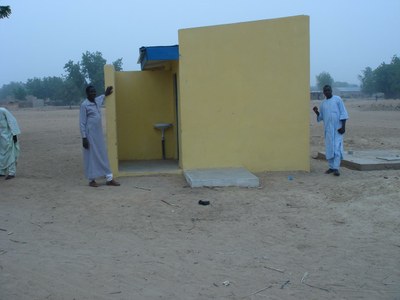
A public toilet
This was the thrust at a National Meeting for Operationalising the Open Defecation-Free (ODF) Campaign Plan in Abuja on Thursday, August 16, 2018.
Mr Farooq Khan, a UNICEF Water, Sanitation and Hygiene (WASH) Specialist, noted that the present deficit in toilets ought to be reversed, saying that if Nigeria would meet the SDG-six, it must increase budgets for sanitation.
He said that the goal of the ODF Nigeria National Campaign was for Nigeria to achieve its SDG targets on sanitation by eradicating open defecation first by 2025 and achieving Universal Access to Safely Managed Sanitation by 2030.
According to him, the strategic objectives of the Campaign is for the tiers of Government in all states to prioritise sanitation in its development agenda, through budgetary allocations and institutional framework.
He added that this could be further strengthened through advocacy and media dissemination of key messages such as “Poor sanitation results in economic loss”.
“Sanitation is dignity and eradication of open defecation is feasible within limited resources.”
Khan stressed that Nigeria ought to mandate relevant institutions to assign full time trained manpower to work on implementation of the National and State ODF campaigns.
He commended the Kano and Ogun state governments for signing agreements to improve access to water and sanitation.
Mr Emmanuel Awe, representative from the Federal Ministry of Water Resources, said although some states have shown interest in scaling up progress on sanitation and hygiene, many of them have not begun implementation of the ODF protocol to meet national targets.
Awe said that without an appropriate support from the Federal Government, the state governments in Nigeria may delay in implementing their State ODF Plans in time, using only their own resources.
“It is ideal for the state to develop their State Sanitation Scale Up plan and implement such plan using their own resources but, in reality, state leadership often are not likely to comply, primarily because sanitation is not their priority, or they have other pressing issues to address.
“It should also be noted that the Federal Government is committed to achieving the SDG which Nigeria ratified on behalf her people. However, the states are under obligation to implement the ODF plan in line with FGN commitment.’’
According to him, the political economy analysis of sanitation in Nigeria clearly indicates that poor sanitation and Open defecation is primarily the issue faced by the poorest poor.
Dr Garba Abari, Director General, National Orientation Agency (NOA), stressed the need to create mass scale demand for improved sanitation by changing the social norms on sanitation and hygiene.
He decried the dwindling culture of sanitation, saying this trend needed to be reversed.
Abari called for all tiers of government to begin to pass the sanitation and hygiene messages in order to make for ownership by the populace.
The News Agency of Nigeria reports that the Multidimensional Poverty Analysis from the 2017 Multiple Indicator Cluster Survey (MICS) reports data reveals that 44.9 per cent of those defecating in the open are the less privilaged in the society.
These poor also happen to have very little appreciation of this as an issue affecting their lives negatively and hence do not raise their voice in demand for improved sanitation.
The data reveals that the poor often are voiceless and hence are unable to influence the state development agenda on their own.
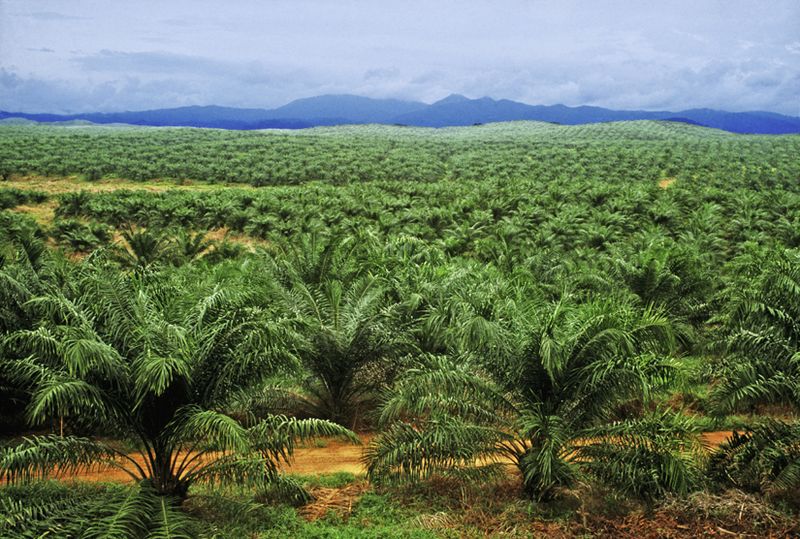
Indonesian, Liberian and International NGOs have filed five new complaints against Indonesia’s largest palm oil company, Golden Agri Resources (GAR).
A palm oil plantation
GAR, which is part of the huge Sinar Mas (Golden Rays) conglomerate run by the Widjaja family with interests ranging from palm oil and pulpwood to real estate and banking, is failing to comply with the Roundtable on Sustainable Palm Oil’s (RSPO) standards, claim the NGOs.
Both GAR and its subsidiary in Liberia – Golden Veroleum Liberia (GVL) – angered NGOs when they recently withdrew GVL’s membership of the Roundtable on Sustainable Palm Oil (RSPO), thus dodging a demand from RSPO that it should halt development of its palm oil mill on contested lands.
Mina Beyan of the Liberian NGO Social Entrepreneurs for Sustainable Development (SESDev) said: “We have been helping the local communities impacted by GVL to complain about the unfair way that GVL has been acquiring their lands, since 2012. Finally, earlier this year the RSPO Complaints Panel agreed – after a detailed independent investigation – that the complaints were valid. GVL was told to stop the land grab, but they refused. And now they have walked out of the RSPO. This delinquent behaviour challenges the very fabric of RSPO. Are RSPO standards only to be observed in the breach?”
According to Liberian NGOs, GVL was pushing ahead with its development despite the refusal of the Blogbo community to cede their lands to the company, despite their complaints to the RSPO, despite their complaints being upheld by the RSPO Complaints Panel and despite the Panel upholding the stop work order it had issued, after overruling an appeal by GVL against the Panel’s decision.
“This is a blatant attempt by GVL and GAR to evade their obligations to the RSPO. They use their RSPO membership to attract investment and to market their palm oil but when their bluff is called they just walk away from their responsibilities,” said James Otto of the Monrovia-based NGO Sustainable Development Institute (SDI).
Another complaint alleges that GAR is in violation of Indonesian laws which prohibit companies and corporate groups from holding more than 100,000 hectares of land. GAR publicly admits to holding more than four times that amount. Compliance with the law is a core principle of the RSPO standard but the RSPO Complaints Panel has avoided making a ruling on this matter for more than three years.
GAR has also delayed providing promised smallholdings to local Dayak and Malay communities from whom it acquired lands in 2007-2009 in the centre of Borneo, despite being required to do so by the RSPO Complaints Panel more than three years ago after a complaint from Forest Peoples Programme (FPP).
“Indonesia says it welcomes investment in palm oil plantations to help alleviate poverty and bring development,” says Rahmawati Winarni, Executive Director of the Indonesian NGO Transformation to Justice (TUK), “but GAR is just taking peoples’ lands and then wilfully delaying compensating them for it. Why should poor landowners be forced cede their lands and then wait decades for promised smallholdings, while these huge companies reap their profits? Actually, it is the Indonesian government that should be stopping this kind of abuse not just the RSPO,” she added.
In 2013, investigations by TUK and Forest Peoples Programme had revealed that GAR was cheating people out of their lands in violation of the RSPO standards – which require members to respect customary rights and only take their lands with their free, prior and informed consent. This led to a detailed complaint to the RSPO, which the complaints panel (CP) upheld in 2015, requiring GAR to make remedy for the lands it had taken without consent. RSPO CP froze all expansion and land acquisition by GAR in all 18 of GAR’s operations that were the subject of the complaint.
“Since then GAR has refused to renegotiate these unfair land deals, despite an RSPO ruling that it must make remedy for taking lands without communities’ free, prior and informed consent,” notes Marcus Colchester, Senior Policy Advisor for Forest Peoples Programme. “‘Justice delayed is justice denied’ is an apt saying.”
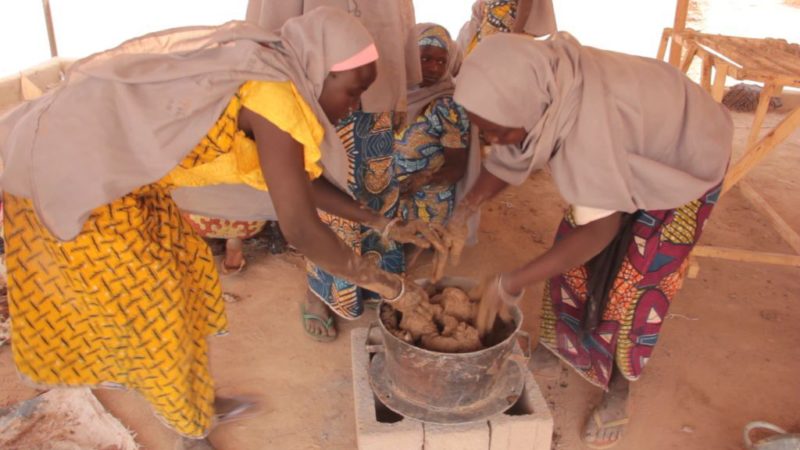
The World Food Programme (WFP), in conjunction with its partner INTERSOS, has distributed fuel-efficient stoves to 7,340 displaced families in Banki town, Borno State.
IDP women molding a fuel efficient stove
According to a statement signed by Kelechi Onyemaobi, WFP’s National Communications Officer, on Wednesday, August 15, 2018 in Abuja, the stoves were distributed under WFP’s Safe Access to Fuel and Energy (SAFE) Initiative.
Onyemaobi said that the distribution was aimed at improving the beneficiaries’ quality of life and reduced the protection risks faced by women and girls using fire woods for cooking.
“An assessment carried out by WFP in January 2018 in four local government areas in Borno state, revealed that 85 per cent of women felt at risk when collecting firewood from various threats including violence, sexual assault and even abduction.
“76 per cent of those surveyed were not able to cover their daily cooking needs due to inadequate supplies of firewood.
“While 70 per cent have no access to wood fuel resources in their immediate living environment as a result of the insecurity arising from the ongoing conflict between the security forces and Non-State Armed Actors which has limited people’s movements,’’ he said.
Sarah Longford, WFP Country Director in Nigeria, said that the distribution was made to the vulnerable population, to ensure that people are able to prepare food under a secured situation.
She said step are being taking to protect women and young girls whose lives are exposed to great danger, while crossing unsafe territories to fetch firewood.
She explained that the stoves burn 50 per cent less fuel when compared to conventional open cooking fires.
Longford added that the stoves reduce the burden of care on women and girls who can spend less time spent on gathering firewood.
She noted that firewood is also becoming an increasingly scarce and expensive commodity in towns where population movements are restricted.
“Quite often, families have been forced into poor dietary habits because they cannot afford fuel which means they risk eating undercooked food, rely on less nutritious foods that do not require cooking or eat fewer meals,” Longford said.
According to her, the stove also has additional health and environmental benefits, as it prevents further deforestation and produces far less smoke than traditional fires, reducing the incidence of respiratory diseases.
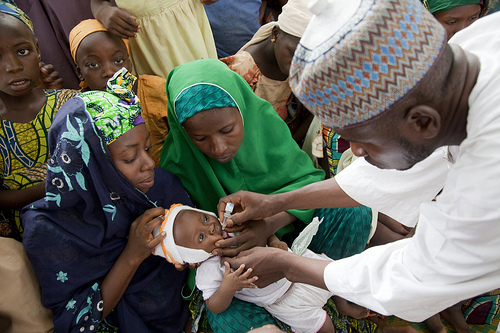
Rotary on Wednesday, August 15, 2018 announced nearly $100 million in grants to support the global effort to end polio, a vaccine-preventable disease that once paralysed hundreds of thousands of children each year.
Polio immunisation in Nigeria. Photo credit: comminit.com
The announcement comes as Nigeria marks two years without any reported cases of wild poliovirus, following four reported cases in 2016.
“Nigeria has prevented further cases of wild poliovirus thanks to the improved surveillance and rapid response protocols Rotary and its Global Polio Eradication Initiative partners have supported, particularly in Borno,” said Dr. Tunji Funsho, chair of Rotary’s Nigeria PolioPlus Committee. “We must remain vigilant about maintaining political and financial support to ensure strengthened immunization practices as we redouble our efforts toward ending polio in Nigeria and around the globe.”
Concurrently, Pakistan has made strides in reducing reported cases of wild poliovirus, having lowered its case count from 306 in 2014 to only eight reported cases in 2017.
“Nigeria’s progress proves that halting the spread of wild poliovirus is possible,” said Aziz Memon, chair of Rotary’s Pakistan PolioPlus Committee. “Although we currently have a record low number of reported cases of polio in Pakistan, we must remain vigilant about implementing the rapid response and surveillance protocols Rotary and its Global Polio Eradication Initiative partners have established and focus on accelerating our efforts toward eradicating polio.”
While significant strides have been made against the paralyzing disease, wild poliovirus is still a threat in parts of the world, with 10 cases in Afghanistan and three cases in Pakistan this year so far. As long as a single child has polio, all children are at risk, which underscores the need for ongoing funding and political commitment to eradication.
To support polio eradication efforts in countries where polio remains endemic, Rotary is allocating the majority of the funds it announced today to: Afghanistan ($22.9 million), Pakistan ($21.7 million), and Nigeria ($16.1 million).
Further funding will support efforts to keep 12 vulnerable African countries polio-free: Cameroon ($98,600), Central African Republic ($394,400), Chad ($1.71 million), Democratic Republic of the Congo ($10.4 million), Guinea ($527,300), Madagascar ($690,000), Mali ($923,200), Niger ($85,300), Sierra Leone ($245,300), Somalia ($776,200), South Sudan ($3.5 million), and Sudan ($2.6 million).
Africa will also see $5.8 million in funding for surveillance activities and $467,800 for technical assistance. Additional funding will go to Bangladesh ($504,200), Indonesia ($157,800), Myanmar ($197,200), and Nepal ($160,500), with an additional $96,300 funding surveillance in Southeast Asia. The remainder of the funding ($6.6 million) will go to the World Health Organization (WHO) for research activities.
Rotary has committed to raising $50 million a year to be matched 2-to-1 by the Bill and Melinda Gates Foundation, amounting to $450 for polio eradication activities over a three-year period. To date, Rotary has contributed more than $1.8 billion to fight the disease, including matching funds from the Gates Foundation, and countless volunteer hours since launching its polio immunization program, PolioPlus, in 1985.
In 1988, Rotary became a core partner in the Global Polio Eradication Initiative with the WHO, UNICEF, and the U.S. Centres for Disease Control and Prevention. The Gates Foundation later joined. Since the initiative launched, the incidence of polio has reportedly plummeted by more than 99.9 percent, from about 350,000 cases in 1988 to 22 confirmed in 2017.