The UN has announced that it is supporting the Nigerian Government-led rapid assessment and response to the flooding disaster in the country, in collaboration with its humanitarian partners.
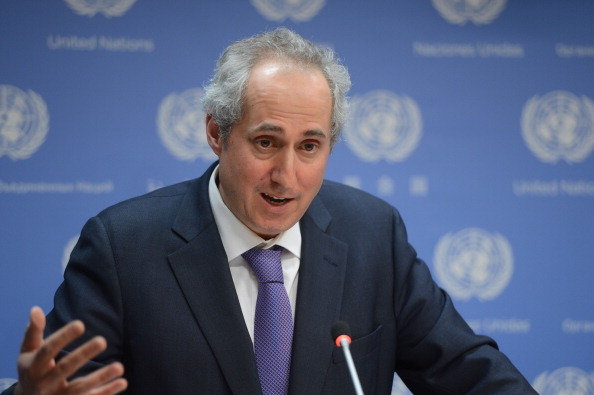
UN spokesperson, Stephane Dujarric
The UN spokesperson, Mr Stephane Dujarric, said this at a news conference at the UN headquarters in New York on Tuesday, September 18, 2018.
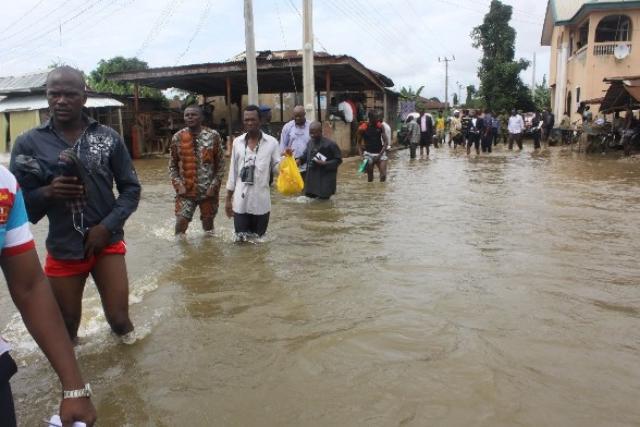
Dujarric said: “On Nigeria, over the past two weeks, floods caused by heavy rains have affected at least 12 states in Nigeria, with areas located along the Niger and Benue rivers at particular risk.
“Yesterday, the Government of Nigeria declared a national disaster in four states – Kogi, Niger, Anambra and Delta.
“The United Nations and humanitarian partners are supporting the Nigerian Government-led rapid assessment and response, including through coordination, information management and reporting.”
The Federal Government on Monday declared a national disaster over flooding that had affected the four states.
The declaration was made by the Director-General of the National Emergency Management Agency (NEMA) on behalf of President Muhammadu Buhari.
More than 100 people have died in floods in several Nigerian states following heavy rains that caused the Rivers Niger and Benue to overflow, NEMA said.
Eight other states: Taraba Adamawa, Kebbi, Edo, Rivers, Benue, Bayelsa and Kwara are being monitored, the agency said.
The National Emergency Management Agency (NAN) has advised residents in seven flood-prone communities in Ohaji/Egbema and Oguta Local Government Areas of Imo State to quit their homes to prevent any calamity.
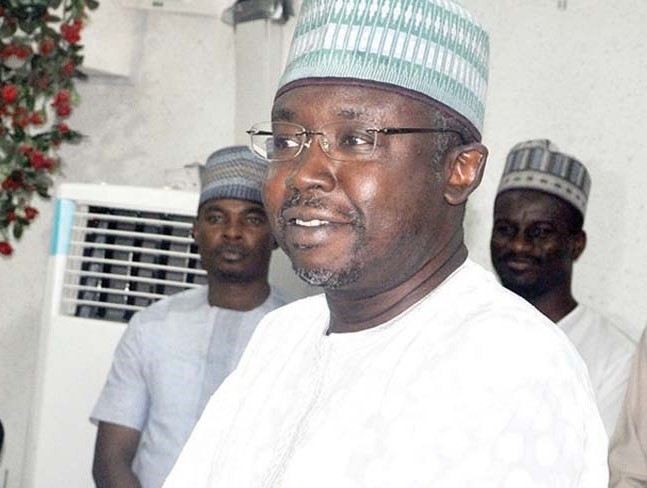
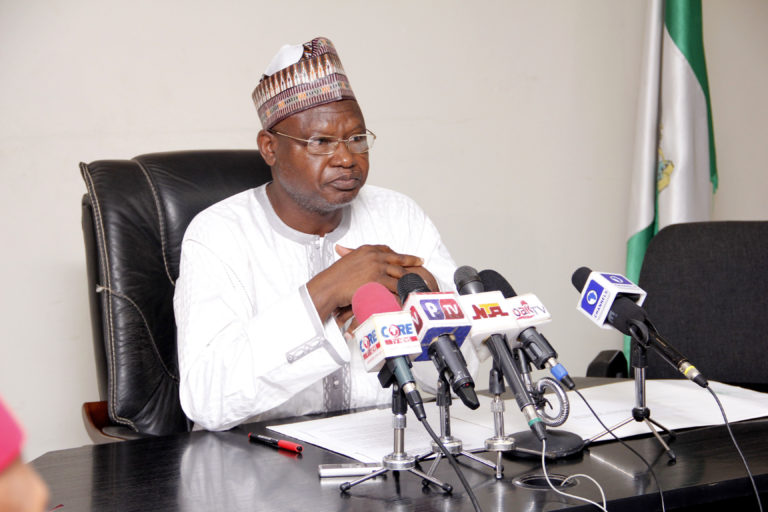
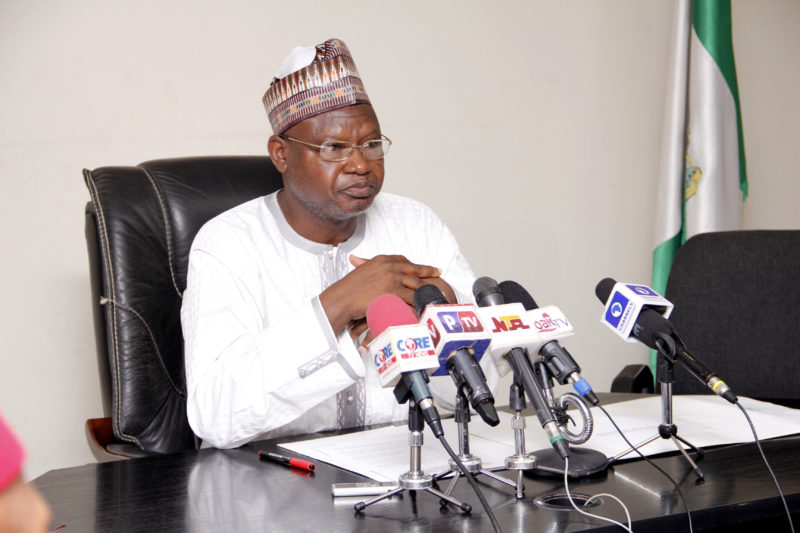
Mustapha Maihaja, Director General, NEMA
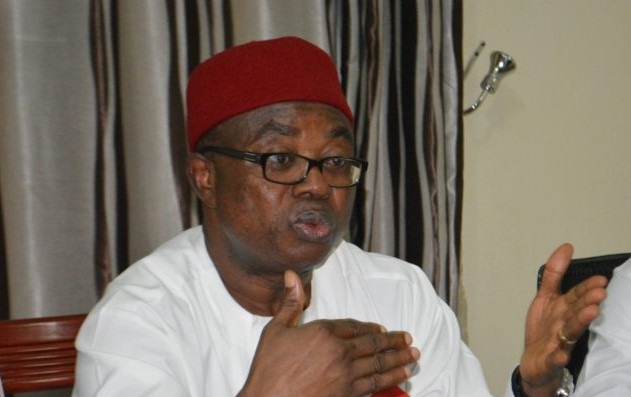
Mr Evans Ugoh, Head of Imo/Abia Operations Office of NEMA, gave the advice on Tuesday, September 18, 2018 when he led officials of the agency to assess river level in the flood-prone communities.
“Residents in the area must be ready to quit to avoid major casualties should there be any flooding,” he said.
Ugoh, who said Oguta Lake and Orashi River had risen above the normal level, noted farmlands in the seven communities had been submerged by the overflowing rivers in the area.
He expressed concern that the Orashi River and Oguta Lake had also risen above the 2012 level when floods ravaged many parts of the country.
“You must continue to monitor movement of sea constantly and report to us where necessary for immediate action,” he said.
Ugoh listed the communities under threat as Ossemotto, Oguta, Eziorsu, Orsuobodo, Opuowa, Mmahu and Etekwuru.
He advised the flood-prone communities to daily observe rivers in their areas.
“NEMA has already strategised with other disaster stakeholders on the development for immediate response in case of any emergency.
“Flood-prone communities must be alert and always monitor the movement of rivers in their areas and report same to the agency promptly for immediate action,” he said.
He said the Oguta Lake, a tributary of Orashi River, has strong connection with the River Niger and has in recent time posed serious dangers to residents of the river bank areas.
He gave assurance that the agency was taking serious measures to avoid recurrence of the 2012 flooding.
Chairman, House of Representatives Committee on Climate Change, Samuel Onuigbo, said on Tuesday, September 18, 2018 that adequate and appropriate actions were needed from stakeholders to tackle climate change challenges in the country.
Samuel Onuigbo
Onuigbo, who represents Umuahia North/South Federal Constituency of Abia in the National Assembly, told the News Agency of Nigeria (NAN) in Abuja that deliberate efforts were also needed to ensure straight implementation of the responses.
“First, it is to ensure that adequate responses are put in or set aside for tackling climate change issues and that when these responses are put in or set aside, there must be a deliberate effort to ensure their straight implementation.
“Two, people should be taught, should be lectured on basic things they should do in trying to preserve the environment because some of the challenges we are having today such as flooding and others, are all functions of human activity.
“We must take action to save the environment; we must not linger carelessly; in all it is up to human beings – those who are occupying decision-making positions – to take action and preserve lives.”
The lawmaker stressed the need for neighboring countries to inform the Nigerian government before releasing water from their dams.
“In a situation where you are talking about coastal flooding or flooding arising from River Niger or as a result of activities by neighboring countries, we should go into serious agreement with such neighboring countries so that whenever they want to open their dams, they must put us on notice.
“And then finally, the Bill on climate change has been passed by the National Assembly.
“So, we expect the Presidency to work on it and ensure that the president assents to it because you need a law to back you up in taking a lot of actions.
“Without the law, some actions cannot be taken.
“That will be my advice to Mr President on how to tackle the challenges of climate change especially as they relate to flooding.”
All primary, post primary and tertiary schools in Ogbaru Local Government Area of Anambra have been temporarily closed in reaction to the flood disaster in the area.
Flooding in Anambra State
The council Chairman, Mr Arinze Awogu, disclosed this while inaugurating the distribution of relief materials at the council headquarters, Atani on Tuesday, September 18, 2018.
Awogu said the closure of the schools was in line with the directive of Gov. Willie Obiano who said schools in the affected areas should close to avert loss of life.
“We are in an emergency and for us, safety of life is paramount, people will not have need for education when they are dead.
“So in line with the directive of the governor, we have asked that all the schools in Ogbaru be temporarily shut down,” he said.
He said that a 12-man Local Emergency Management Committee had been set up to ensure effective rescue and coordination of victims as well as distribution of relief materials to those in Internally Displaced Persons (IDPs) camps.
The council boss said Ogbaru had taken delivery of buckets, mattresses, mats, mosquito nets and blankets from the State Emergency Management Agency (SEMA) but noted that it was still a far cry from what was required.
According to Awogu, about 190 households comprising of no less than 1, 100 persons are presently at the three IDPs camp located at the council secretariat, Community primary school Odoekpe and St James Anglicans Church, Iyiowa.
He noted that 13 out of the 16 villages were on the coastal bank of River Niger and all had been critically affected by flood adding that the remaining three were also highly exposed to the menace.
The chairman, who had also been sacked from his house, said no life had been lost to the flood in Ogbaru now stressing that destruction of property, farm, farm produce and livelihood of the people was massive.
He urged people to move to the camps and decried their reluctance to leave their ancestral homes.
“We are close to where we found ourselves on 2012, when the water height was 12.84 metres and as at yesterday it stands at 11. 80 metres, so you can see how close we are to it.
“There are 16 communities in Ogbaru and 13 of them are along the river bank; all these towns are terribly submerged.
“These are Odoekpe, Atani, Akiri, Ochuche, Mputu, Osamala, Oguikpele, Obaogume and Ummunankwo and they are all gone.
“Others are Obagu, Umuzu, Obaogume, Ogbakuma, all these towns are submerged, no place is safer than the other.
“It is a humanitarian challenge here, we need the best help we can get, it is good that the federal government has declared Anambra flood a disaster, we want to see massive deployment of relief materials here.
“We need effective medical assistance because of the looming epidemic; we need food, disinfectants, toiletries and other emergency items.
“What we are distributing is what we got from SEMA, we want NEMA to react to their declaration by massively deploying relief materials here,” he pleaded.
He thanked Obiano and the people of Ogbaru who had helped to draw attention to the disaster and rendered assistance.
The Zambian government on Tuesday, September 18, 2018 expressed concern over the outbreak of cholera in neighbouring Zimbabwe, saying the outbreak could spill over.
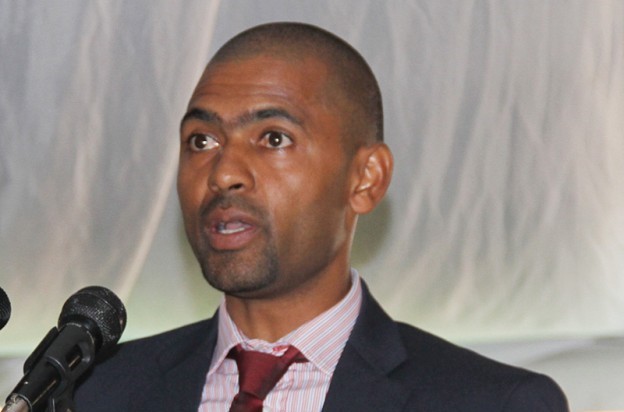
Zambian Minister of Local Government and Housing, Vincent Mwale
Cholera has broken out in Zimbabwe and has so far claimed about 30 lives while thousands of cases have been recorded.
Minister of Local Government and Housing, Vincent Mwale, said the cholera outbreak in the neighbouring country was a source of concern because of the shared border.
He has since called for concerted efforts to keep the surroundings clean. He further said a ministerial committee on epidemic outbreaks will meet this week.
“It is about cleanliness and how we take care of our environment. It is possible that we can have cholera. Things that need to be done are very clear to us,” he said.
The minister, however, said there was currently no cholera outbreak in the country.
Similarly, Zambian authorities said on Tuesday that remains of deceased people, who were involved in a bus accident in South Africa’s Mokopane in Limpopo Province will be flown from that country.
Eleven Zambians died on Monday when the bus in which they were traveling from Zambia to South Africa overturned after a tyre burst, while scores of others were injured.
Among the dead included eight men and three women.
Emmanuel Mwamba, Zambia’s High Commissioner to South Africa said the embassy was working with the South Africa Road Fund to meet some of the costs associated with the critically injured and the deceased.
“We are encouraging families, who have relatives in South Africa to help identify the deceased.
“For those with no one in South Africa, the bus service will fly into South Africa a family member to help with the identity of the deceased persons,” he said in a statement.
The Zambian envoy urged affected families to exercise patience to enable authorities’ process mandatory procedures.
Governor Godwin Obaseki of Edo State on Tuesday, September 18, 2018 said the state government would soon carry out intervention work in three gully erosion-prone communities of Iguosa, Evbuotubu and Erhumwunse.within the Benin metropolis.
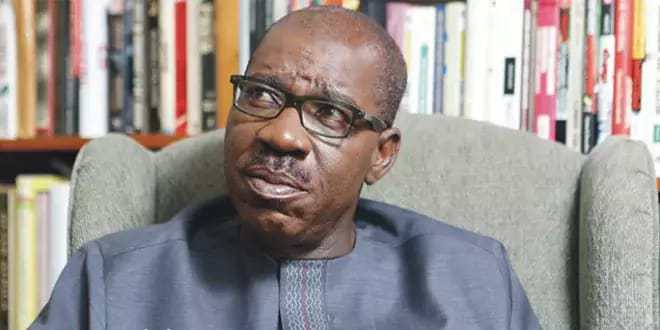
Governor Godwin Obaseki of Edo State
Obaseki gave the assurance in a statement by Mr Crusoe Osagie, his Special Adviser on Media and Communication, which was made available to the News Agency if Nigeria (NAN) in Benin City, the state capital.
The governor said other affected communities to enjoy the palliative included Queen Ede in Ikpoba Okha Local government area and some others in Auchi axis of Edo North senatorial district.
He assured residents of the communities that the intervention work would be carried out in phases, saying that the state government was not oblivious of the worrying situation in the communities.
Obaseki disclosed that the state government was partnering with the World Bank’s Nigeria Erosion and Watershed Management Project (NEWMAP) to provide succour to some of the affected communities.
According to him, “We are working with partners to ensure that the affected communities are salvaged.
“There are extensive projects in Auchi, Ewu, Ibore as well as Queen Ede. A good number of them have been finished and the people are better off with the projects.
“We appeal to residents in Iguosa, Evbuotubu and Erhumwunse to be patient as we are making plans to also intervene in their communities.
“We understand the apprehension by the people residing in these communities. I want to assure them that we have them in our plans.
“We urge the people in these communities to be hopeful, understanding that just as we have dealt with the gully erosion sites in Ibore, Ewu and others, we will also get to them,” he said.
The governor noted that his administration would efficiently manage the state’s resources for the benefit of the people.
The Management of Federal Polytechnic Oko, Anambra State, has directed its students in Atani Campus to vacate immediately, due to flooding that has submerged the campus.
Chief Willie Obiano, Governor of Anambra State
In a statement made available to the News Agency of Nigeria (NAN) on Tuesday, September 18, 2018 in Awka, the state capital, the management of the institution said that the order became imperative, to avoid casualty.
The statement signed by Mr Obini Onuchukwu, the Public Relations Officer of the polytechnic, urged the students to vacate the campus for one week.
Onuchukwu, however, said that the emergency holidays might be extended, if the remedial work the management intended to do failed to salvage the situation.
“The access roads to the campus, fields, offices and classrooms have all been submerged and the students are having challenges accessing their classrooms.
“The institution’s perimeter fencing, electric transformer and generating sets are also submerged, resulting in total blackout.’’
Onuchukwu urged both the National Emergency Maintenance Agency (NEMA) and the State Emergency Maintenance Agency (SEMA) to come to the aid of the polytechnic.
“We encounter flooding almost yearly, but the magnitude of this year’s flooding has gone beyond what we had recorded in the recent past.
“Apart from the campus, hostels belonging to individuals where our students stay off campus were also submerged, making life and activities in the school impossible.’’
The spokesman attributed the recent disaster to lack of proper drainage system within the host communities.
He recalled that in 2012, a similar flooding adversely affected the institution’s academic activities for several months.
Onuchukwu said that the flood had already damaged some household appliances and personal belongings of the students suach as books and mattresses.
An estimated 10 million people worldwide developed Tuberculosis (TB) in 2017, and the world is far from ending the epidemic, the World Health Organisation (WHO) said on Tuesday, September 18, 2018.
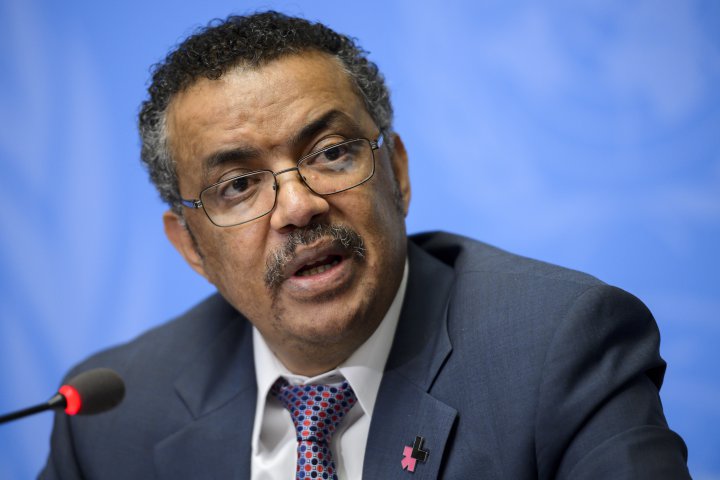
Dr Tedros Adhanom Ghebreyesus, Director General of the World Health Organisation (WHO). Photo credit: FABRICE COFFRINI/AFP/Getty Images
TB is one of the top 10 causes of death globally and killed an estimated 1.6 million people worldwide in 2017, according to the UN’s health agency.
The WHO recorded 6.4 million cases of TB officially but estimates the number of people who developed the disease was as high as 10 million due to underreporting and underdiagnosis.
Cases of TB were reported in all countries and age groups, but two-thirds of cases were in eight countries: India, China, Indonesia, the Philippines, Pakistan, Nigeria, Bangladesh and South Africa.
High-income countries had a lower prevalence of the disease, with only six per cent of total cases reported in the Americas and Europe.
The TB mortality rate is falling at about three per cent per year, and the best estimate for overall reduction from 2000 to 2017 is 42 per cent.
“For most countries, however, the ‘end’ of TB as an epidemic and major public health problem remains an aspiration rather than a reality,” the report says.
About one quarter of the world’s population is infected with TB bacteria. Only a small proportion of those infected will become sick with TB.
The WHO is releasing its annual report on TB ahead of a UN meeting of world leaders hosted in New York on Sept. 26.
UN officials and world leaders are expected to issue a call to action at the meeting to speed up progress toward the goal of ending the epidemic by 2030.
Nigeria has launched the initial phase of its National Talanoa Dialogue, a process designed to help countries implement and enhance their Nationally Determined Contributions (NDCs) by 2020.
Environment Minister of State, Ibrahim Usman Jibril
One of the key outcomes of the UN Climate Change Conference COP23 in Bonn in November 2017, the Dialogue runs throughout 2018.
The first of a two-phase initiative is an On-line Assessment, in respect of which Environment Minister of State, Ibrahim Usman Jibril, officially launched on Monday, September 17, 2018. The second phase of the National Talanoa Dialogue is a National Stakeholders Meeting.
Jibril disclosed in a statement that the assessment, which is developed to harvest information, opens for 10 days from Monday, September 17 to Wednesday, September 26, 2018. The information harvested, he added, would be later validated during a National Stakeholders Meeting that will hold in collaboration with the United Nations Development Programme (UNDP).
His words: “On behalf of the Federal Ministry of Environment, I announce the launching of this assessment tool and request all relevant stakeholders to participate in providing valuable response realising the achievement of the Nationallt Determined Contribution (NDC) goals. Furthermore, organisations / groups / networks / associations / individuals in Nigeria are requested to access the online survey at: https://www.surveymonkey.com/r/nationaltalanoadialogue.
“I look forward to your response in this online assessment towards raising climate ambition in achieving the the Nationally Determined Contribution goals, Paris goal of 1.5/2.0oC, and Sustainable Development Goals in Nigeria.”
According to him, the Ministry is undertaking the assessment in collaboration with the Nigerian Conservation Foundation (NCF), Centre for Policy Research and Development Solutions (CPRDS) and Instuitute for Public Policy Analysis & Management (IPPAM).
The Talanoa Dialogue refers to the “2018 facilitative dialogue” agreed by Parties in Paris to take stock of the collective efforts of Parties in relation to progress towards the log-term goal referred to in the Paris Agreement and to countries’ efforts to combat climate change: Where are we? Where do we want to go? How do we get there?
At the 23rd session of the Conference of the Parties (COP23) to the United nations Framework Convention on Climate Change (UNFCCC), Parties were recommended to have “national Talanoa Dialogue engaging stakeholders to help inform the process.”
South Africa on Monday, September 17, 2018 issued a cholera alert following an outbreak in neighbouring Zimbabwe.
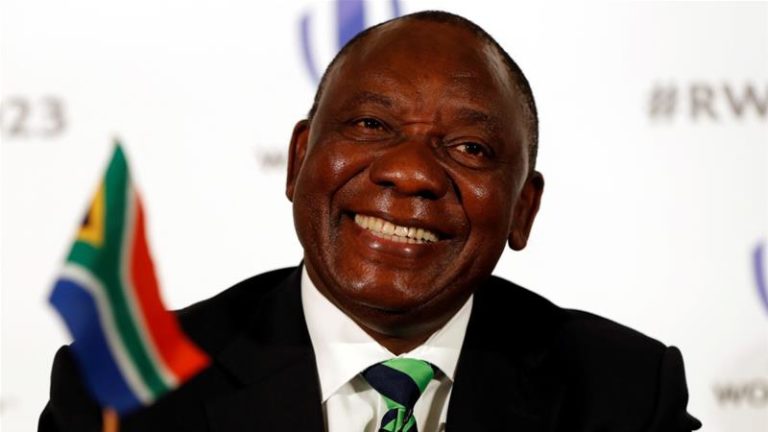
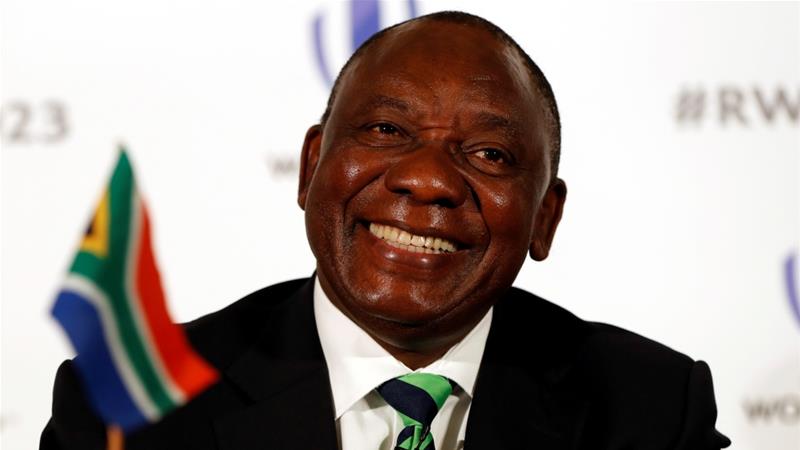
President Cyril Ramaphosa of South Africa
“There is a significant risk that travelers from the outbreak-affected area may present with cholera in South Africa,’’ the National Institute for Communicable Diseases (NICD) said.
Healthcare workers countrywide, especially those in Limpopo Province, which borders Zimbabwe, should be on high alert for suspected cholera cases, the NICD said.
It urged the public, especially those living near the border with Zimbabwe, to use safe water and practice good hygiene to reduce the risk of cholera and other diarrhoeal diseases.
According to the World Health Organisation (WHO), as of Sept. 11, almost 2,000 suspected cholera cases, including 24 deaths, were reported in Zimbabwe.
The outbreak is linked to inadequate supply of safe piped water and subsequent use of unsafe water supplies, including boreholes and wells.
As of Sept. 13, there are no confirmed or suspected cases of cholera in South Africa, the NICD said.