Nestlé has announced new plans to ensure the reduction of deforestation.
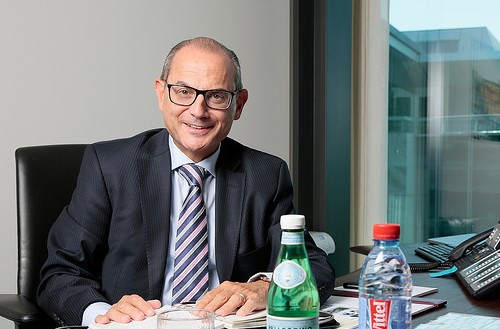
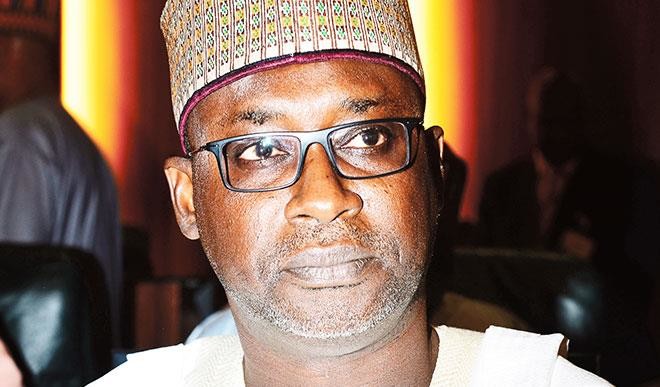
Magdi Batato, Executive Vice President and Head of Operations at Nestlé S.A
The Swiss company has set an enhanced plan to ensure that it fulfils its 2020 No Deforestation commitment by being the first global food company to implement Starling, a satellite-based service, to monitor 100 per cent of its global palm oil supply chains.
Magdi Batato, Executive Vice President and Head of Operations at Nestlé S.A, said: “Nestlé has always been committed to source the raw materials we need to make our products in a responsible manner. In 2010, we made a No Deforestation commitment stating that all our products globally will not be associated with deforestation by 2020.”
Starling use cutting-edge technology to provide un-biased year monitoring of land cover charges and forest cover disturbances. The data collected from the process allows companies to manage risks and perform field intervention strategies to drive change.
François Lombard, Head of the Intelligence Business at Airbus Defence and Space, said: “Starling is a fully digital service, offering best-in-class machine learning and cloud technologies to provide very precise and near-real time forest cover change information. Terabytes of satellite images are turned into actionable information, to provide our customers with a reliable service to monitor their supply chains and to early identify potential deforestation events.”
Deforestation is a complex problem and Nestle has urged the entire industry to work together to ensure it is addressed appropriately.
Palm oil is a vegetable oil and is the most widely used of its kind. However, the practices to produce palm oil result in widespread deforestation and loss of habitat for wildlife.
By December 2018, 100 per cent of Nestlé’s palm oil will be monitored for deforestation using satellite imagery.
The District Head of Auyo in Jigawa State, Alhaji Umar Baffa, wept openly on Saturday, September 22, 2018 over the devastation caused by flood in Auyo town and other villages in the district.
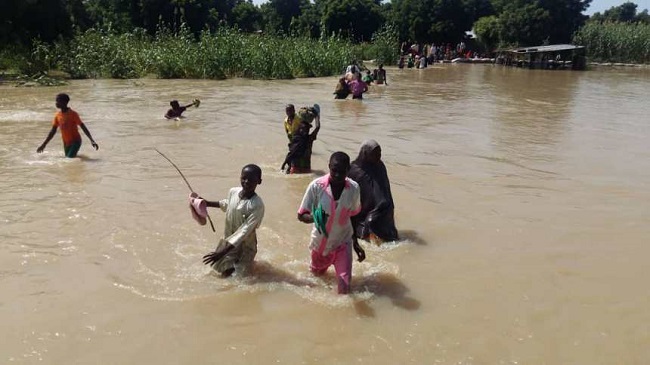
A flooded Gululu community at Jahun LGA, Jigawa State. Photo credit: premiumtimesng.com
Baffa, who holds the title of Sarkin Auyon Hadejia, said at his palace that the flood, caused by the overflow of the Hadeja-Jamaare River, completely submerged the town and neighbouring communities.
“Three of my people died and properties worth N3.5 billion were lost in the flooding that submerged the town and some villages in my domain.
“For two days, water was overflowing from the Hadejia-Jama’are River to Auyo and, before we could do anything, the water submerged the town and the neighbouring villages.
“The villages included Jura, Rafeji, Uza, Gamakwai, Zabaro and Ayama, among others.
“In the process, three people got missing and we immediately put up a search team and their bodies were later found.
“Many houses, farmlands, animals and other properties were destroyed during the flooding,” the monarch said.
A businessman, Alhaji Isa Auyo, who lost 10 trailer loads of fertiliser, said it was a devastating experience.
“You can see the whole town is submerged; all the people have deserted the town and are now taking refuge in various Internally Displaced Person (IDPs) camps across the state.
“I am really worried about the plight of the people and I appeal to the government, individuals and corporate organisations to rescue us from this catastrophe.
He said that the state government had already undertaken an assessment of the damage and brought food and medicines.
Auyo added: “This is not the first time we are experiencing this episode in Auyo town, we had similar incident in 2001, but the current one is more devastating.
“I am appealing to the Federal Government to look into ways of tacking this recurring phenomenon.
“We were told that the water was from River Congo which overflowed through Cameroon to Lake Chad Basin is causing havoc in many places in Nigeria.
“I urge the federal government to do something to control the water so that that it can pass through our rivers with low velocity without causing any harm to us.
“I also want the Federal Government to include Jigawa among the 11 states where a state of emergency was declared over flooding.”
Stakeholders in the nation’s environment and sustainable development sector have been urged to adopt technology to effectively address the challenges of climate change.
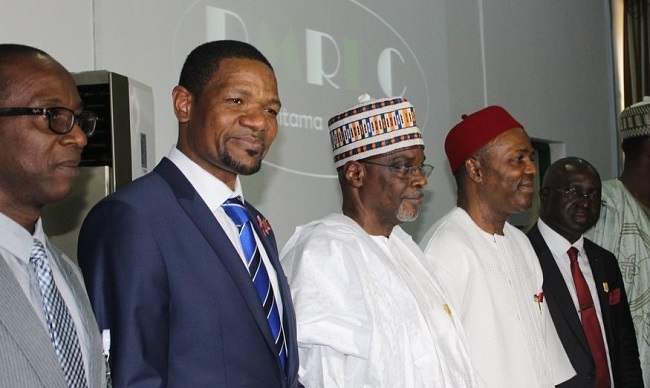
L-R: Dr. Reuben Bamidele, representative of UNIDO; Dr. Richard Munang, UNEP’s Regional Climate Change Coordinator; Bitrus Bako Nabasu, Permanent Secretary, Ministry of Science and Technology; Dr. Ogbonnaya Onu, Minister of Science and Technology; and Dr. Peter Ekweozoh, Project Coordinator, Ministry of Science and Technology
This formed the kernel of discussions at the National Inception Workshop on Technology Needs Assessment (TNA) for Climate Change Mitigation and Adaptation that held on Monday, September 10, 2018 in Abuja.
Speaking at the workshop, the Regional Climate Change Coordinator of the United Nations Environment Programme (UNEP), Dr. Richard Munang, said: “To address climate change, Nigeria has everything she needs to pave the way for the entire continent. The problem with mitigating climate change in Africa is not totally a financial problem but that we have not paid attention to build people’s capacity and implore them to combat Climate Change in their respective locations and using tailored approaches.”
Dr. Reuben Bamidele, a representative of the United Nations Industrial Development Organisation (UNIDO), underscored the need for an effective response to monitoring and evaluation regarding climate change issues in Nigeria. He also pledged UNIDO’s willingness and availability to provide support to the Federal Government of Nigeria during the TNA process.
Citing the examples of China and Israel, the Minister of the Federal Ministry of Science and Technology, Dr. Ogbonnaya Onu, urged Nigeria to move with the rest of the world by leveraging technology to mitigate climate change and the resulting effects.
He said: “Climate change is real, and the effects are with us, not only in Nigeria but across the world too. We see the evidence with the drying up of the Chad Basin, desertification, rise in sea level, coastal encroachment, and other environmental disasters we witness every time.
“The problems of climate change are not just economical but also a social problem too. We should not be afraid of the existence of climate change; the challenge for us is our inability to use science and technology to mitigate it.”
The minister referred to countries like China and Israel, applauding their efforts to leverage science and technology to combat climate change and create jobs in their countries.
Mr. Chukwuemeka Okebugwu, a representative of Dr. Peter Tarfa, Director, Department of Climate Change in the Federal Ministry of Environment, gave a brief report of the Inter-ministerial Committee on Climate Change to help Nigeria determine her Nationally Determined Contributions of 20% (unconditional) and 45% (conditional).
His words: “The Federal Ministry of Environment is working closely with her counterparts in the Federal Ministry of Science and Technology and other related MDAs to work out solutions and ensure that Nigeria is enabled to solve many problems associated with climate change. This Technology Needs Assessment is critical to help us develop a roadmap and work with the appropriate knowledge needed to combat climate change in Nigeria.”
A National Steering Committee of the TNA on Climate Change was inaugurated by the minister.
The workshop invited interested parties to come up with practical solutions that will combat climate change and other related environmental and social challenges that stem from it. The framework for the TNA was to organise stakeholder involvement, develop a work plan, inaugurate a national team and conclude on support tools necessary for the assessment. Three focal groups – Energy, Industrial and Agriculture – were formed and presented with respective tasks.
The Nigerian Erosion and Watershed Management Project (NEWMAP) has begun the process of controlling gully erosion threatening the Federal High Court and other property at the Alex Ekwueme erosion site, Awka, the Anambra State capital.
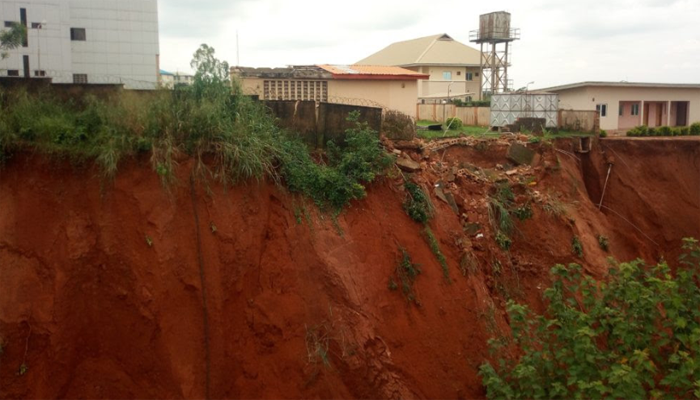
The Federal High Court, Awka is under serious gully erosion threat and at the verge of imminent collapse
Mr Mike Ivenso, Project Coordinator of NEWMAP in Anambra, told the News Agency of Nigeria (NAN) on Sunday, Deptember 23, 2018 in Awka that the project had held a pre-bid meeting with some potential contractors for the control works.
He said Gov. Willie Obiano had declared emergency on the Alex Ekwueme gully erosion site which was threatening several structures, including the Federal High Court, a hotel, federal secretariat and access roads.
He said the bidding process was “abridged” in the light of the urgency of the project and the need to rescue the area expeditiously.
The World Bank-sponsored NEWMAP project coordinator said the prospective contractors were expected to respond on or before Oct. 4, two weeks after the process commenced instead of the normal eight weeks.
Ivenso said the contract would be for a period of 12 months but expressed hope that it would be delivered by March next year.
According to him, funding for the project has been appropriated by the state government which is working in concert with the Federal Government as well as the World Bank.
“We have met with potential bidders, six of them, and they have visited the site to take an assessment of what to do to enable them come up with responsive bids which we can evaluate.
“His Excellency, Gov. Willie Obiano has declared an Emergency on the Alex Ekwueme erosion site and has mandated NEWMAP and all relevant agencies to fast track the intervention works here.
“A lot of landslide has occurred here, and the erosion is fast encroaching into the Federal High Court and the governor has directed that we expedite control intervention works here.
“This vicinity houses significant amount of federal, state and private property, the area is called Central Business District, the Federal High Court is not the only threatened structure.
“We have a five-star hotel, the State High Court is not far from here, there is the upcoming Federal Secretariat, access roads to the other parts of the district are all in severe danger and that is what informed the declaration of emergency in this area.
“We intend to rescue all these properties with a combination of civil works and bio-remediation activities,” he said.
Ivenso said the Anambra government had already spent about N22 million on the preliminaries of the project as a demonstration of its commitment to the speedy execution of the project.
“Already, Anambra Government has spent about N22 million on Environmental Impact Assessment and Resettlement Action Plan; these are the two major things that must be done before any World Bank intervention works can commence as well as the engineering design.
“The Administration Judge of this court has expressed grave fears about the emerging erosion, the Judges complex have been vacated because of the advancing landslide, our mandate is for a speedy and rapid response, so, we expect that it will be remedied by March next year.
Contributing, Mr Mike Okonkwo, Commissioner for Environment in Anambra, said that Obiano was very concerned about the erosion challenge, the safety of Anambra people and their property.
Okonkwo said the governor was glad that the intervention process has started with the commencement of bidding and thanked the World Bank and Federal Government for heeding the call to rescue the area.
“We have had ministers and heads of agencies visit the area, everybody knows that it is a very dangerous environmental challenge, that is why the bidding process is abridged.
“We must pay attention to every detail in the bid so that we don’t get any objection, we look forward to seeing the end of this by Oct. 4,” he said.
The Minister of Water Resources, Suleiman Adamu, has told the Federal High Court in Lagos to “grant the Ministry more time within which to compile and furnish Socio-Economic Rights and Accountability Project (SERAP) with information on the spending on water, and locations of specific projects, in view of the high volume of the information involved.”
Suleiman Adamu, Minister of Water Resources
Mr Adamu said, “It is not true that millions of Nigerians are drinking water from contaminated sources. It is not the duties of the Ministry of Water Resources alone to provide drinking water for the citizens.”
The Ministry of Water Resources stated this in court in its reply to the Freedom of Information suit number FHC/L/CS/632/18 filed in April by SERAP requesting Mr Adamu and the Minister of Agriculture and Rural Development, Mr. Audu Ogbeh, to “explain why millions of Nigerians have to resort to drinking water from contaminated sources with deadly health consequences, despite the authorities claiming to have spent trillions of naira of budgetary allocations on the sector since 1999.”
However, while Mr Adamu has promised to render account on spending on water projects and is now asking the court for more time to do so, Mr Ogbeh has reportedly failed, refused and/or neglected to respond to SERAP’s request and has not filed any paper in court to counter the suit filed by the organisation.
But Mr Adamu, through a counter-affidavit dated September 7, 2018 and sworn to by Kwushue Abolaji, Legal Officer at the Ministry of Water Resources, said: “The delay in furnishing SERAP with the requested information is not deliberate. The information will soon be ready, and it will be forwarded to SERAP without further delay. We humbly urge the court to grant us more time within which to do this.”
The Written Address signed by M.C. Mbam, Counsel to Mr Adamu, reads in part: “The Ministry of Water Resources did not refuse or decline to furnish SERAP with the requested information but was only unable to furnish it within the stipulated timeframe. We have already agreed in a letter dated 12 March 2018 to provide the information.”
“The inability of the Ministry of Water Resources to furnish the information is not deliberate rather it was because of the enormity of the materials required which could not be collated easily because more than one department is involved. Under the rules of this court, the judge may as often as he deems fit and either before or after the expiration of the time appointed by the rules extend or adjourn the time for doing any act or taking any proceedings.”
“The Ministry is still compiling the information and has written to various departments to provide the information for onward transmission to SERAP. We need more time to compile and transmit the requested information to SERAP. It will not be in the interest of justice to grant SERAP’s reliefs.”
It will be recalled that Justice Shagari had in June granted the order for leave following the hearing of an argument in court on exparte motion by SERAP counsel Ms Bamisope Adeyanju.
Before the suit was filed, Mr Adamu had agreed in a letter to “publish details of spending and locations of projects on water and sanitation for periods covering 2010-2016, as well as details of allocations to the 36 states of the federation.”
Mr Adamu, in a letter with reference number FMWR/LU/S/374/I, and dated March 12, 2018 and signed by P.C. Mbam, Acting Director (Legal) of the Federal Ministry of Water Resources, said: “We will work hard to provide SERAP with the details of spending, and the information requested as they relate specifically to Water and Sanitation projects from 2010 to 2016.”
Mr Adamu also said: “The Federal Ministry of Water Resources was demerged from the Federal Ministry of Agriculture and Rural Development in 2010. A copy of your letter will be forwarded to the Federal Ministry of Agriculture and Rural Development for action on the other years before 2010. For emphasis sake, we advise that SERAP should send aseparate request directly to the Federal Ministry of Agriculture and Rural Development for the period (1999-2010) outside the purview of the Federal Ministry of Water Resources’ projects.”
SERAP also then welcomed “the firm commitment by Mr Adamu to explain to Nigerians what exactly have happened to trillions of naira budgeted for water and sanitation across the country between 2010 and 2016. Mr Adamu’s commitment is refreshing, especially coming at a time many public institutions and ministries such as the Nigerian National Petroleum Corporation (NNPC) are rejecting public requests for information and making information on the spending our commonwealth harder to access.”
SERAP said it would now file a reply on points of law in court to the counter-affidavit filed by Mr Adamu. The organisation criticised Mr Ogbeh for so far failing to respond to its FOI request or reply to its suit.
SERAP in its FOI request dated March 2, 2018 claimed that “many toilets in public offices are out of order because of lack of water while millions of Nigerians remain desperate for water in their homes, often resorting to contaminated sources and drilling their own boreholes that can become easily mixed with sewage, with negative environmental impacts, and devastating for people’s health.”
SERAP’s FOI request reads in part: “We are concerned that millions of Nigerians do not have access to clean and potable water and adequate sanitation. There is no water to show for the huge budgetary allocations and purported spending and investment in the sector since the return of democracy in 1999. Successive governments have failed to improve affordability of water for millions of low-income Nigerians, thereby denying them access to water.
“Contractors handling water projects are reportedly engaging in schemes like the deliberate use of substandard pipes, among others, to make profit, leading to loss of water. This dearth of water also affects sanitation. The large number of broken down water facilities across the country has hindered effective water supply to the citizens.
“We urge you to use your leadership position to provide within 14 days of the receipt and/or publication of this letter detailed information on the spending on specific water and sanitation projects and their locations carried out by the Ministry of Water Resources and Rural Development for the following years: 1999, 2000, 2001, 2002, 2003, 2004, 2005, 2006, 2007, 2008, 2009, 2010, 2011, 2012, 2013, 2014, 2015, and 2016 (1999-2016); as well as details of allocations to the 36 states of the federation.”
Eleven different African institutions have come together through a consortium to build capacities of indigenous scientists who are researching on common diseases, especially those that are transmitted from livestock to human and vice versa through a concept known as “One Health”.
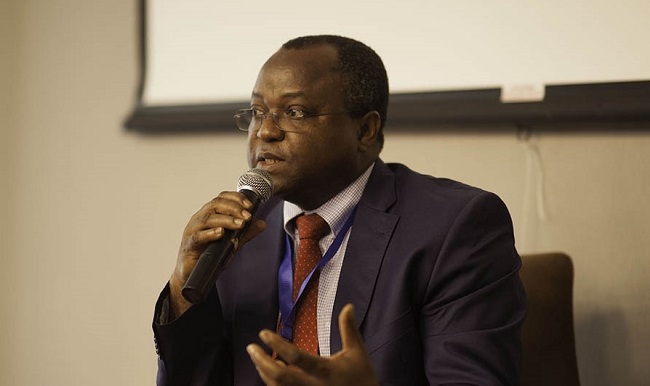
Dr. Bassirou Bonfoh
“Many times, we treat tuberculosis in humans, but it doesn’t work because it is originating from livestock animals,” said Dr Bassirou Bonfoh, the Director for the consortium also known as African Science Partnership for Intervention Research Excellence (ASPIRE).
“One Health concept therefore recognises that the health of people is connected to the health of animals and the environment, and must therefore be tackled wholesomely,” said Bonfoh.
One Health is a collaborative, multisectoral, and trans-disciplinary approach -working at the local, regional, national, and global levels – with the goal of achieving optimal health outcomes recognising the interconnection between people, animals, plants, and their shared environment.
The consortium is currently supporting 60 young African scientists (Masters, PhD students and Post Doctoral) who are currently researching on different diseases that include TB, brucellosis and rabies, among many others.
James Akoko from Kenya is one of the fellows studying Brucellosis for his PhD at Maseno University.
Brucellosis is one of the neglected diseases, and it is transmitted from livestock to humans through poor meat handling, consumption of unpasteurised dairy products and direct contact with infected animals.
“My study seeks to understand the role of different animals in the treatment of the disease,” says Akoko.
He notes that if one is infected with the disease, then it is important to understand the origin in order to address the disease conclusively.
“In many cases, we treat Brucellosis without knowing whether the patient picked it from a goat, a cow or even a camel,” says Akoko. To address this, his study insists on interviewing the patient to understand the very animals they interact with, what kind of meat they eat and the milk they take so as to know the target for vaccination.
Through the consortium, Akoko is linked to supervisors based in Kenya, Tanzania and Switzerland. “We coordinate through skype meetings, emails, workshops and even conferences,” stresses the researcher.
Other researchers are focusing on major steps towards elimination of rabies in Africa.
“There is evidence that rabies can be eliminated. But we have not been able to do it,” ponts out Bonfoh.
The scientists are therefore involved in efforts to eliminate rabies in Tanzania, Senegal and Côte d’Ivoire using an all-inclusive approach of “One Health.
“Governments need to take up the fight against these important diseases, which affect mostly the poor,” notes Bonfoh. “But the problem has been that nearly all governments focus on priority diseases while neglecting some very important ones,” he adds.
Argentina on Friday, September 21, 2018 launched a new microwave imaging satellite to monitor natural disasters and soil moisture, in a long-term bid to bolster the farm sector.
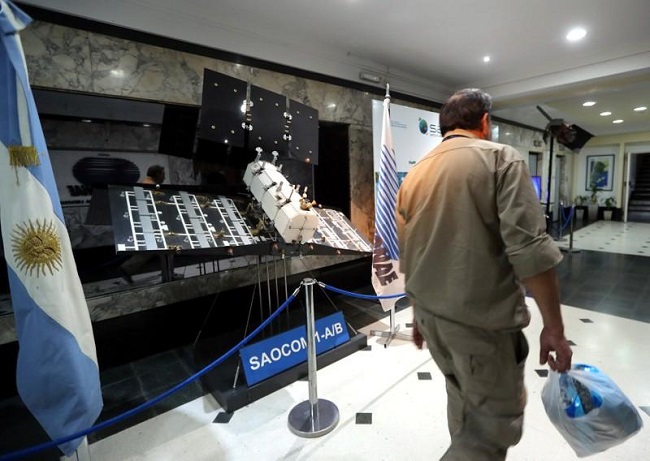
A man walks past a scaled-down replica of the SAOCOM 1-A/B satellite on display at Argentina’s space agency CONAE in Buenos Aires, Argentina September 20, 2018. Photo credit: REUTERS/Marcos Brindicci
Agriculture is an industry that has historically been the backbone of the country’s economy.
Scheduled to launch on a SpaceX Falcon rocket from Vandenberg Air Force Base in California on Oct. 6, Argentina’s SAOCOM 1a satellite “is going to boost the high-quality precision agriculture Argentina relies on,” President Mauricio Macri told farmers and industry representatives last week.
Scientists say the soil and subsurface mapping data provided by the $600 million project would help increase crop yields.
The radar antennae technology will allow Argentina to access a real time “water map”, almost unique in the world, which will allow for prediction of harvest yields, floods, and droughts, the government said.
Argentina’s already-struggling economy has suffered a series of setbacks since Macri took power, led by a drought that sapped grain exports earlier this year.
It was a sharp devaluation of its peso currency that prompted the government to seek a $50 billion standby financing deal with the International Monetary Fund.
The government announced earlier this month it would institute fiscal belt-tightening measures, including a tax on the country’s primary exports like corn, wheat, and soy.
“This mission will be incredibly valuable to the country’s farmers.
“We are hoping that the information will provide a five to seven dollars return on every dollar invested,” said Raul Kulichevsky, Executive and Technical Director for Argentina’s National Space Activities Commission (CONAE).
While Argentina’s previous satellites have relied on optical surveying, scientists say the SAOCOM mission will provide precision X-ray and microwave imaging across Argentina’s grain-producing plains, regardless of weather or time of day.
“This technology is novel and has never before been used in Argentina. It is the product of 10 years of research,” Head Researcher on the SAOCOM mission, Laura Frulla, said in an interview.
But the project will not provide much help to Argentina’s cash-strapped economy in the short-term, according to analysts.
“Farmers depend on these satellites to ensure good crop yields.
However, given that this won’t become operative until June 2019, there is little it can do to help Argentina’s current economic situation,” said German Heinzenknecht, weather specialist at the Applied Climate Consultancy.
The Nigeria Youth SDGs Network will host a roadshow in Abuja on Tuesday, September 25, 2018 to mark the third anniversary of the United Nations’ Sustainable Development Goals (SDGs) as part of the global #Act4SDGs activities.
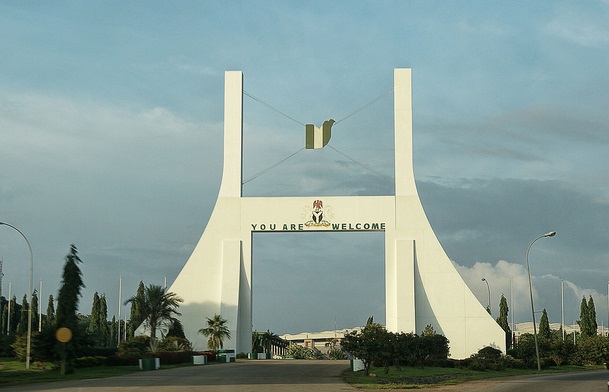
The Abuja city gate: Abuja is hosting a roadshow to celebrate the third anniversary of the SDGs
Believed to be the country’s foremost youth-dominated SDGs coalition, the Nigerian Youth SDGs Network, under the chairmanship of Semiye Michael, will bring individuals representing different organisations together for an Act4SDGs Roadshow to raise awareness on the SDGs and get more young people to understand and be committed to implementing the global goals in Nigeria.
Speaking ahead of the Roadshow, ‘Seyifunmi Adebote, the coalition’s Abuja representative, said: “The 17 goals are very ambitious; too ambitious for the government or international community alone to achieve. Other sectors must be brought into the picture to deliver their best. The legislatures, local governments, civil society organisations, media, businesses and entrepreneurs, scientists and academia and most importantly people themselves. Therefore, we have chosen to host this roadshow to spread the information about the SDGs and ensure no one is left behind.”
Carved from the Millennium Development Goals (MDGs), the SDGs were adopted unanimously by 193 Heads of State and other top leaders at a summit in New York in September 2015 to serve as a framework for the world to achieve 17 Goals and 169 targets by 2030.
“Thanks to the consistent efforts of young people across, Nigeria has improved on the global SDGs index in recent time, this has also truly reflected in some developments witness across the country,” said Adebote.
Global waste could grow by 70 per cent by 2050 as urbanisation and populations rise, said the World Bank.
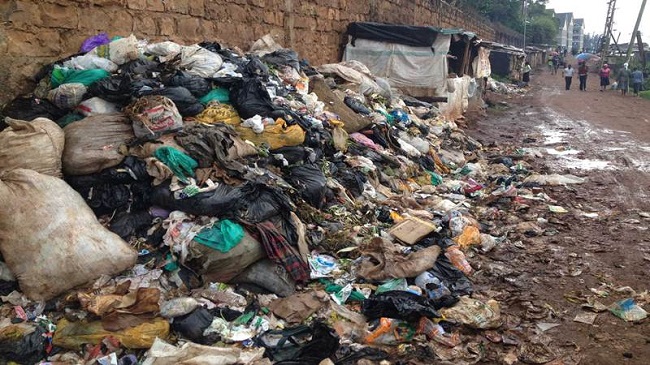
Indiscriminate waste disposal in sub-Saharan Africa
South Asia and sub-Saharan Africa are set to generate the biggest increase in rubbish.
Countries could reap economic and environmental benefits by better collecting, recycling and disposing of trash, according to a report.
The report calculated that a third of the world’s waste is instead dumped openly, with no treatment.
“We really need to pay attention to South Asia and Sub-Saharan Africa, as by 2050, South Asia’s waste will double, sub-Saharan Africa’s waste will triple,” said Silpa Kaza.
Kaza is World Bank urban development specialist and report lead author.
“If we don’t take any action it could have quite significant implications for health, productivity, environment, livelihoods,” she told the media by phone from Belarus.
According to the report, the rise in rubbish will outstrip population growth, reaching 3.4 billion tons by 2050 from around two billion tons in 2016.
High-income countries produce a third of the world’s waste, despite having only 16 per cent of world’s population, while a quarter comes from East Asia and the Pacific regions, it said.
While more than a third of waste globally ends up in landfill, over 90 per cent is dumped openly in lower income countries that often lack adequate disposal and treatment facilities, said the report.
A booming waste burden could also contribute to climate change impact, with the treatment and disposal of current waste levels generating around five per cent of carbon emissions.
Adequate financing for collection and disposal is one of the biggest issues for cities that often struggle to cover the costs of providing waste services, said Kaza.
“If the incentives are aligned and there’s an ability for contracts to be enforced, then the private sector can be a really powerful player,” she said.
Boosting recycling and cutting plastics consumption along with food waste could help reduce rubbish, said the report, which noted a number of low-income countries lack laws to deal with waste.
Plastics, which can contaminate waterways and ecosystems for thousands of years, comprise 12 per cent of all waste, the World Bank said.
“Unfortunately, it is often the poorest in society who are adversely impacted by inadequate waste management,” Laura Tuck, World Bank sustainable development vice president, said in a statement.
“It doesn’t have to be this way. Our resources need to be used and then reused continuously so that they don’t end up in landfills.
The World Rivers Day promotes stewardship, increases awareness and encourages river conservation across the globe, according to its promoters.
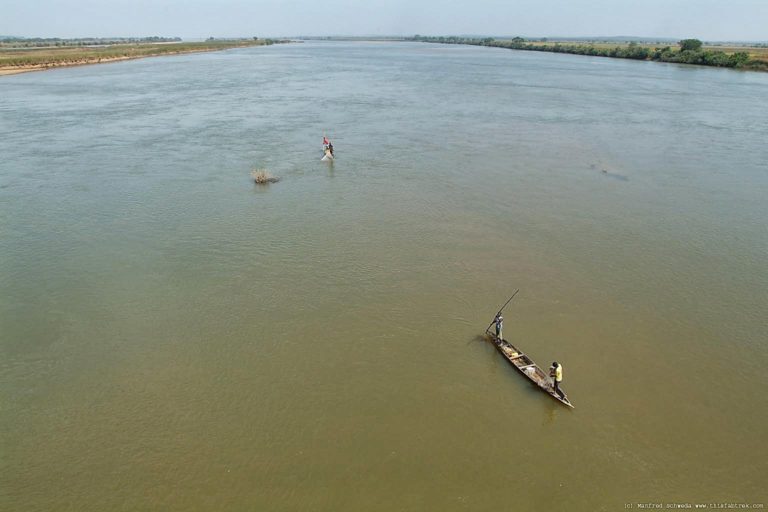
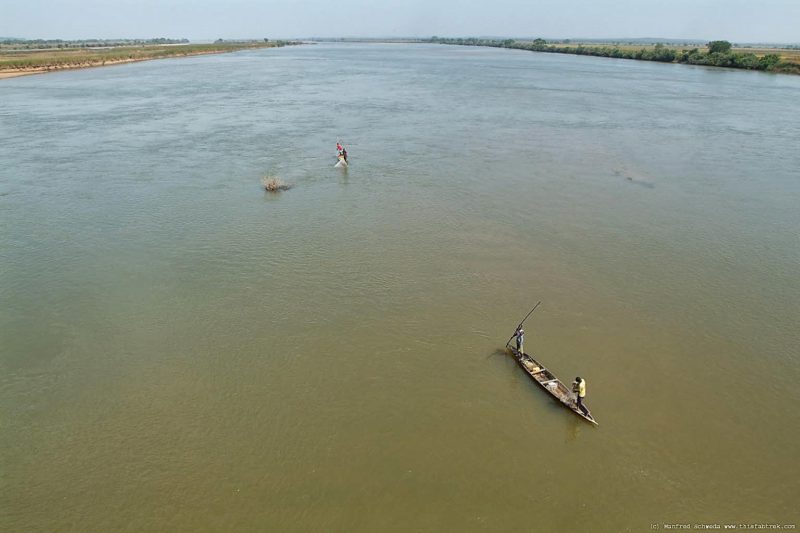
There are fears that the River Niger in West Africa is drying up. There are concerns that many of the world’s rivers face severe and increasing threats associated with climate change, pollution, and industrial development
Millions of people around the world will participate in the 2018 World Rivers Day on Sunday, September 23. With many of the world’s rivers facing increasing pressures associated with climate change, pollution, and industrial development, more than 70 countries are participating in this year’s festivities.
Numerous events around the world will focus on educational and public awareness activities while others will include river cleanups, habitat restoration projects, and community riverside celebrations. World Rivers Day has its roots in the success of BC Rivers Day, which has been celebrated for the past 38 years in Canada’s western-most province.
World Rivers Day strives to increase public awareness of the importance of waterways as well as the many threats confronting them.
“Rivers are integral to all life. Yet, many waterways continue to face an array of threats and are often impacted by inappropriate practices and inadequate protection,” says Mark Angelo, World Rivers Day Chair and Founder and Chair Emeritus of the Rivers Institute at the British Columbia Institute of Technology.
Endorsed in its inaugural year by the United Nations University and the International Network on Water, Environment and Health, and with groups such as the Sitka Foundation as lead sponsor along with the support of others such as the Real Estate Foundation of BC and the Pacific Salmon Foundation, World Rivers Day events will take place in countries ranging from Canada to England, the United States to India, Australia to Bangladesh, Nigeria to Malaysia, and from the Caribbean to the great rivers of Europe.
“Millions of people, dozens of countries, and numerous international organizations will be contributing to World Rivers Day,” says Angelo. “It provides a great opportunity for people to get out and enjoy our waterways. At the same time, the event strives to create a greater awareness of the urgent need to better care for our rivers and streams.”
Robert Sandford, EPCOR Chair of Water Security at United Nations University, and an internationally recognised expert on scarcity and conservation issues, says, “World Rivers Day is rightfully acknowledged and hailed for its global effort to increase awareness of the vital importance of our water resources and the need to properly protect and steward them in the face of mounting pressures.”
Through its first decade, World Rivers Day complimented the UN’s Water for Life Decade and continues to do so as part of the UN’s current Water Action Decade. In addition, groups such as the United Nations University and the International Network on Water, Environment and Health remain valued supporters.
Angelo, a recipient of the Order of Canada, his country’s highest honour, as well as the inaugural recipient of a United Nations Stewardship Award for Science, Education and Conservation, initially founded BC Rivers Day in British Columbia back in 1980 in conjunction with the Outdoor Recreation Council of BC. He then successfully lobbied numerous organisations as well as agencies of the UN to recognise World Rivers Day in 2005.