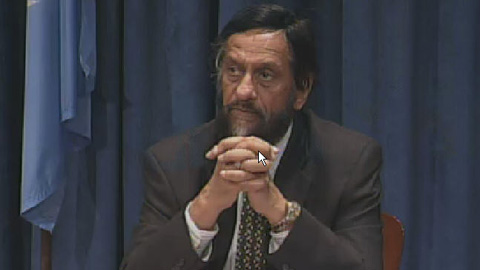
Former UN climate change panel chief, Rajendra Pachauri, will face trial in a sexual harassment case, an Indian court ruled on Friday, September 14, 2018.
Rajendra Pachauri, former Chair of the Intergovernmental Panel on Climate Change (IPCC)
The court said there was enough material to proceed against Pachauri, according to a lawyer representing the complainant.
Pachauri, 78, resigned from the UN’s Intergovernmental Panel on Climate Change (IPCC) in February 2015 after his colleague, a researcher at The Energy and Resources Institute, made allegations of sexual harassment
The woman, then aged 29, alleged Pachauri made physical advances and sent her lewd emails and text messages after she started working at the institute in 2013.
Pachauri has denied all allegations against him.
As head of IPCC, Pachauri received a Nobel Prize, jointly awarded to the panel and former U.S. vice president Al Gore in 2007 for their work on climate change.
An internal committee at the woman’s research institute had found him guilty of misconduct.
The next hearing in the case when charges are expected to be framed is scheduled on Oct. 20.
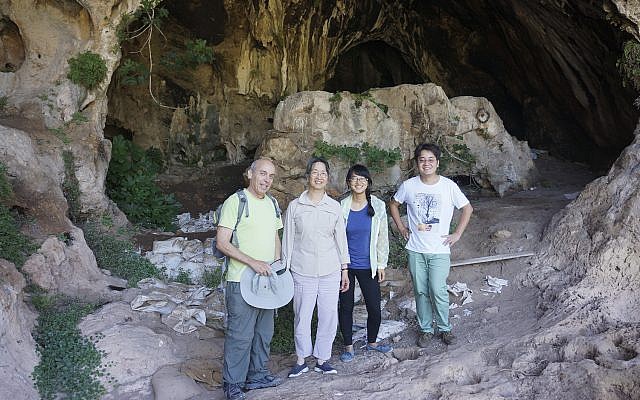
Archaeologists in Israel have discovered what is thought to be the world’s oldest alcohol production site in a cave near the coastal city of Haifa.
A team of Stanford University and Israeli archaeologists stand in the entrance to Raqefet Cave
“This is the earliest evidence of alcohol production that we know of,” Dani Nadel, one of the archaeologists from Haifa University, said on Friday, September 14, 2018.
It’s unclear exactly what kind of alcoholic drink was brewed there, Nadel said, adding that they “didn’t find a bottle of beer there”.
He said that they “the archaeologists” suspected that it might have been a kind of fermented porridge.
“They brewed something that contained a decent amount of alcohol,” Nadel said, explaining that the process relied on the fermenting of grains, still a key process in beer production today.
In the Rakefet Cave in Mount Carmel, only small amounts of alcohol were found to have been produced at the site, where archaeologists found traces of frozen grains in holes in the ground.
Findings also revealed that the cave was also used by people from the Natufian culture to bury the dead, as Nadel and other researchers found out during previous digs.
The Natufian culture began around 15,000 years ago in an eastern Mediterranean region.
The Israeli researchers believe that the alcohol might have been produced as part of a Natufian ceremony.
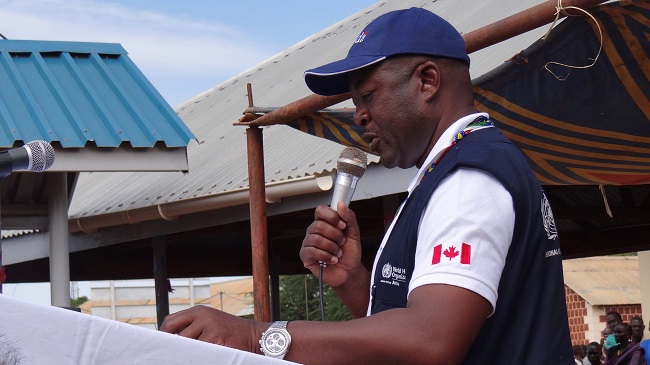
The World Health Organisation (WHO) said on Friday, September 14, 2018 it had stepped up efforts by training health workers to accelerate the elimination of human African trypanosomiasis or sleeping sickness in South Sudan.
Evans Liyosi, WHO Representative for South Sudan
Evans Liyosi, WHO Representative for South Sudan, said this in a statement issued in Juba, the nation’s capital.
He said the UN health agency trained health experts on the use of different diagnostic tools and case management.
“Sleeping sickness is endemic in South Sudan. Its elimination requires combined efforts of WHO, National Sleeping Sickness Control Programmes, and other partners to strengthen control activities and improve the surveillance of the disease,” Liyosi said.
He said the objective of the training was to empower national personnel from seven hospitals located in key trypanosomiasis endemic areas of South Sudan.
The hospitals were in charge of trypanosomiasis control to optimise diagnosis and treatment, strengthen surveillance and plan effective control and elimination activities and reinforce communications and supply chain for an uninterrupted functioning of the sites.
The participants were also provided with laboratory reagents and blood sampling materials for kick-starting new diagnostic capacities in the seven sites.
Trypanosomiasis is a parasitic disease that is fatal if left untreated. The disease is transmitted by the tsetse fly where it mainly affects impoverished rural communities.
According to WHO, South Sudan is one of the country’s most affected by sleeping sickness.
In 2018, about 5,400 people were screened for sleeping sickness and 13 patients were treated, according to the WHO.
Since 2006, said WHO, control interventions including access to diagnosis and treatment have been considerably diminished due to insecurity, impassable roads as well as the withdrawal of NGOs providing trypanosomiasis diagnosis and treatment activities.
The UN health agency said it had laid out a roadmap to eliminate the disease as a public health problem by 2020, by maximising efficiency in order to achieve elimination.
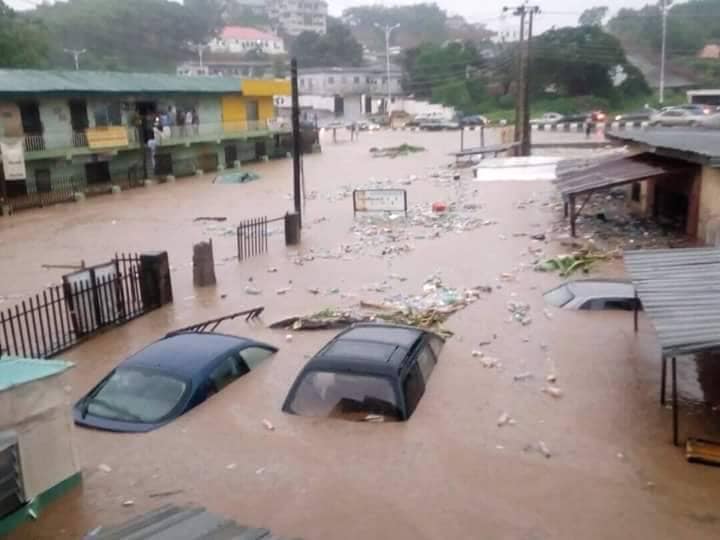
The Director-General (DG), National Emergency Management Agency (NEMA), Mr Mustapha Maihaja, has placed all Disaster Response Units across the country on red alert due to rise in water level.
Flooding in Abeokuta, Ogun State
NEMA Director of Search and Rescue, Air Commodore Akugbe Iyamu, who represented the DG, announced this on Friday, September 14, 2018 in Ilorin, Kwara State, when a NEMA team visited the Commanding Officer, 222 Battalion Rece, Major Emmanuel Okoye, at the Sobi Military Cantonment.
Iyamu noted that water level across the country had been rising consistently due to heavy rainfall.
“As at yesterday (Thursday) the water level was 10.84 at the confluence in Lokoja; this is approaching the level experienced in 2012 which was about 12.
“Putting that into focus and looking at that in perspective, that is why we are building a response team to adequately address it.
“The DG has put all the response agencies on red alert to be mainstreamed if the situation gets to catastrophic disaster,” Iyamu added.
He added that the Agency had identified 12 frontline states that might be prone to flood this year, adding that flood in those states could occur any time.
“The DG has formed six teams to go around these frontline states to ascertain the preparedness of the Response Agencies there and to ensure that those that are vulnerable and threatened by flood are evacuated to safe areas,” he said.
According to the Director, NEMA team is in Ilorin to assess the preparedness of the Army Disaster Response Unit, in case of disaster in Kwara, Kogi and Niger states.
Iyamu described the military as a key player in disaster management in the country, hence the visit to the 222 Battalion.
He said there were two types of disaster; minor and catastrophic, adding that when catastrophic disaster occurred, government would call the Disaster Rescue Unit (DRU), across the country to the rescue.
Iyamu, however, advised the people of Kwara not to exercise any fear in case of any disaster, especially flood as the Agency was up to the task.
“You in Kwara have nothing to fear; we are ready; we are prepared to deploy our team whenever disaster occurs,” he said.
The director of Search and Rescue at the Defence headquarters, Vice Admiral Dolapo Kolawole, said the military was an important component of disaster response.
He added that military worked in synergy with NEMA, adding that there was a military unit designated as Disaster Response Unit.
Kolawole said he was in the NEMA team to Kwara to assess the response team at the 222 Battalion.
Earlier, the Commanding Officer, 222 Battalion, Major Okoye, highlighted the disaster situation in Kwara and the area most prone to flood.
He said over 2,000 hectares of farmland were destroyed by flood in Patigi, Lafiaji and Shonga, particularly on the bank River Niger.
The Commanding Officer also said a cemetery and school in Oloje area of Ilorin were affected by flood.
Okoye, however, listed the challenges of the response unit to include lack of resources, vehicles and communication equipment.
He called for adequate synergy between NEMA and all response agencies in the country.
The team also visited the 333 Medium Airlift Group (MAG), Nigerian Air Force, Ilorin, where the Commander, Group Capt Patrick Obeya, presented the readiness of the Response Unit to any disaster or emergency.
Group Capt. Obeya told the team that the response unit was in need of qualified personnel in disaster management, rescue, airlifting and air dropping of relief materials.
Iyamu expressed satisfaction at the response plan of the 333 MAG and the brief which he said was not ambiguous.
Lego has announced plans to stop the production of plastic blocks by 2030.
Lego plastic blocks
The Lego shapes will alternatively be made from plant-based materials in an attempt to reduce plastic waste.
The Danish company is set to release their new eco-friendly line consisting of 25 various brick shapes that will resemble nature-inspired products.
They will be made out of polyethylene, which is made from sugar cane, and are set to be rolled out in Lego box sets later this year. However, the toy manufacturer admits that this material is not strong enough to make regular Lego pieces.
Lego are investing 1 billion kroner and hiring around 100 people to ensure that its promise is fulfilled.
Lego said: “Resources should be sourced and used responsibly, so they will still benefit future generations. We are constantly in pursuit of more sustainable solutions to our raw materials consumption and our packaging.”
Tim Brooks, Vice President of environmental responsibility at Lego, said: “At Lego, we want to make a positive impact on the world around us, and we are working hard to make great play products for children using sustainable materials. This is a great first step in our ambitious commitment of making all Lego bricks using sustainable material.”
Lego have also committed to reducing carbon emissions by promising 100 per cent renewable energy by 2020 and they are aiming for a carbon neutral supply chain. They are also promoting recycling by encouraging families to recycle or donate unwanted Lego bricks.
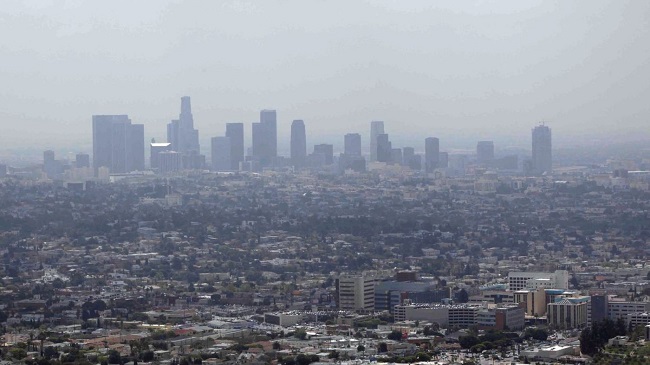
Twenty-seven of the world’s greatest cities, representing 54 million urban citizens and $6 trillion in GDP, have peaked their greenhouse gas emissions.
Smog blankets downtown Los Angeles
New analysis reveals that the cities have seen emissions fall over a five-year period and are now at least 10% lower than their peak. City Halls around the world have achieved this crucial milestone, whilst population numbers have increased, and city economies have grown. These 27 cities have continued to decrease emissions by an average of 2% per year since their peak, while populations grew by 1.4% per year, and their economies by 3% per year on average.
The cities are: Barcelona, Basel, Berlin, Boston, Chicago, Copenhagen, Heidelberg, London, Los Angeles, Madrid, Melbourne, Milan, Montréal, New Orleans, New York City, Oslo, Paris, Philadelphia, Portland, Rome, San Francisco, Stockholm, Sydney, Toronto, Vancouver, Warsaw, Washington D.C.
The world’s leading scientists have calculated that global greenhouse gas emissions need to peak by 2020 at the latest and then come down very steeply. At present, global emissions are still rising. That is why it is so important that many of the world’s greatest cities are bucking the trend and showing that a low carbon world is possible.
C40 & Arup’s Deadline 2020 research revealed in 2015 what the world’s great cities need to do to deliver on the highest goal of the Paris Agreement – keeping global temperature increase to 1.5°C. Cities in Europe, North America and Australia must peak their emissions by no later than 2020, with all cities globally reaching the same milestone by around 2030. C40’s analysis reveals that these 27 cities in fact already peaked their emissions before 2012, the latest year for which peaking can be identified. Many more cities worldwide are also on track to peak their emissions by 2020.
The list of cities, all members of the C40 Network of mayors committed to bold climate action, was revealed by Mayor of Paris and C40 Chair Anne Hidalgo. The announcement came on the opening day of the Global Climate Action Summit, in San Francisco.
Interviews carried out by C40 with senior city officials revealed that the main drivers for cities to achieve peak greenhouse emissions were: decarbonisation of the electricity grid; optimising energy use in buildings; providing cleaner, affordable alternatives to private cars; and reducing waste and increasing recycling rates. The analysis revealed the power of cities to bring down their emissions through bold climate action and investment in sustainable infrastructure and policies. It also revealed the importance of collaboration with national and regional governments and businesses operating within cities, as well as citizens, to deliver the collective action needed to cut emissions.
“It is an incredible achievement for these 27 cities, including Paris, to have peaked their emissions,” said Mayor of Paris and Chair of C40, Anne Hidalgo. “As the greatest custodians of the Paris Agreement, mayors of the world’s great cities have once again shown that cities are getting the job done. The commitment of so many of my fellow mayors to deliver on the highest ambition of the Paris Agreement, and the dedication I have witnessed from so many cities, businesses and citizens here at the Global Climate Action summit, means many more cities will achieve this key milestone before 2020.”
“To prevent the worst impacts of climate change, we have to cut greenhouse gas emissions even as the population grows,” said Michael R. Bloomberg, UN Secretary-General’s Special Envoy for Climate Action and President of the C40 Board. “Cities are showing that it can be done – and that the same steps they’re taking to reduce their carbon footprint are also strengthening their local economies, creating jobs, and improving public health.”
To date, mayors of more than 60 C40 cities have publicly committed to develop and begin implementing ambitious climate action plans by 2020 that go beyond national commitments, in order to achieve the highest goals of the Paris Agreement at the local level. These plans will see many more cities achieve peak emissions in the years ahead and become emissions neutral by no later than 2050.
“As the Federal Administration rolls back critical environmental protections, San Francisco continues to lead in the fight against climate change,” said San Francisco Mayor, London Breed. “Our greenhouse gas emissions peaked in 2000, since then, we’ve successfully reduced them by 30% from 1990 levels, while growing our economy by 111% and increasing our population by 20%. But in order to fully realise the ambitions of the Paris Climate Accord, we must continue to make bold commitments and accelerate actions that reduce emissions and move us towards a clean energy future. That is why, in addition to formally joining the Sierra Club’s nationwide clean energy campaign, San Francisco is committing to reducing landfill disposal by 50% by 2030 and ensuring all of our buildings are net-zero emissions by 2050.”
“The City of Milan is proud to join other C40 cities in announcing the peak of its emissions,” said Giuseppe Sala, Mayor of Milan. “This is the result of no revolution, but of a steady evolution in the life of our city, namely in the way we move around and in the way we reduce, recycle and reuse waste. We see a continuous advancement, that spans over more than 20 years and progressively led to 1 every 7 citizens using shared cars or bikes and to 60% of quality separate waste collection. Such significant results could not have been achieved without the engagement and commitment of the citizens of Milan.”
“The mobilisation against climate change must be carried on and intensified in order to be successful,” said Valerie Plante, Mayor of Montréal. “This is why Montréal stays its course and increases its efforts to accelerate emission reductions and reach the targets set in the Paris Agreement. Local governments play a major role in promoting innovative urban practices, engaging citizens and organisations, enabling the emergence of sustainable neighborhoods, and in implementing ambitious climate policies.
“With a 24 per cent reduction in GHG emissions since 1990, Toronto is proud to be a leader on climate change,” said John Tory, Mayor of Toronto. “Reflecting that leadership, City Council in July 2017 unanimously adopted an additional interim target – a 65 per cent reduction in GHG emissions by 2030 – through its TransformTO Climate Action Strategy.”
“From moving to 100 percent renewable energy in our public buildings, to supporting our private partners as they work to reduce emissions, Chicago is showcasing to the world the impact that cities can have on climate change for their residents and for people around the world,” said Mayor of Chicago, Rahm Emanuel. “Chicago is proud to stand with these 27 cities in a continued commitment to achieve the goals of the Paris Agreement and will continue to take ambitious steps towards improving our environment while strengthening our communities.”
“After the C40 Summit in Mexico, we committed to doing twice as much in half the time,” Lord Mayor Clover Moore of Sydney said. “Greenhouse emissions in the City of Sydney peaked in 2007 and have declined every year since – despite our economy expanding by 37 per cent. We’ve achieved this because we developed a long-term plan with ambitious targets and we determinedly stuck to that plan for over a decade. We have one of the largest rooftop solar programmes in Australia, we converted our streetlights to LED and we’re working with industry leaders to reduce their emissions. We lead by example and we partner with businesses and residents to help them on their journey. As the first government in Australia to be certified carbon neutral, our achievements show the impact that can be had at a City level despite shocking inaction from State and National Governments.”
“Thanks to consistent energy policies, Basel achieved peaking emissions,” said Elisabeth Ackermann, Mayor of Basel.” However, the challenge is to further reduce our consumption of energy and resources and to foster renewable energy production. This demands the promotion of new consumption patterns that are based on a combination of efficiency, consistency, sufficiency and innovation.”
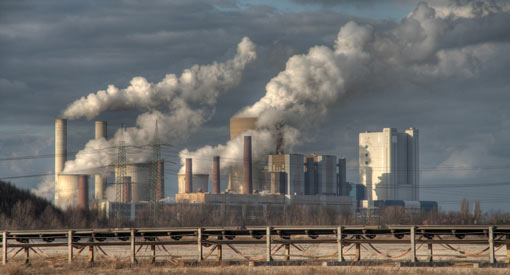
A report published on Thursday, September 13, 2018 shows the potential for all sectors of global economy – energy, food and agriculture, industry, buildings and transport – to halve greenhouse gas emissions by around 2030. Stronger policies, the digital revolution and greater climate leadership are necessary to accelerate the economic transformation, say the authors.
GHG emission: A coal-fired power plant
The report, launched by Christiana Figueres and global sustainability researcher Johan Rockström, to open the Global Climate Action Summit in San Francisco, concludes that the energy transformation in the next decade could occur much faster than many forecasts as the price of renewables drops low enough to outcompete fossil fuels. But keeping up the pace will require sharper policies to push out fossil fuels. Other sectors, however, are off track.
The digital revolution remains a wildcard, says the report. Technology can directly influence 30% of the emissions cuts needed by about 2030, and indirectly affect the rest through influencing consumer habits, scaling up a sharing economy and supporting business transformation to a circular economy.
Greenhouse gas emissions must fall sharply to stabilise climate well below 2°C and aim for 1.5°C as agreed by nations in Paris in 2015. Emissions peaking in 2020 and approximately halving by about 2030 is consistent with the Paris Agreement’s aim.
“Right now, it is easier to imagine a global climate catastrophe than a rapid economic transformation, yet the next decade could see the fastest energy transition in history,” says co-lead author Owen Gaffney from Future Earth and the Stockholm Resilience Centre.
“People underestimate the power of exponential growth. In Norway, electric cars went from 6% of new sales to 47% in five years. If renewables keep doubling every five or six years, as they have for a decade or more, they will push out fossil fuels much faster than most forecasts. But not without stronger policies,” he added.
The authors argue that the digital revolution is already driving an economic transformation.
“How this revolution is directed could make or break international climate targets. The tech sector can influence whether we live on a 1.5-2°C planet or on a +3°C world,” says Johan Falk co-lead author from Future Earth and the Stockholm Resilience Centre.
“Technology will not solve the climate challenge alone. The key is to reach a critical mass of companies, cities, nations, industries and citizens that are contributing to the Paris Agreement and show how attractive this is – this will create the snowball effect we need to scale solutions”, says Falk.
The roadmap identifies the accelerators in terms of climate leadership, policy and technology required to scale 30 solutions and concludes that a set of game-changing strategies in the next 18 months are needed to keep up an appropriately fast pace.
These strategies include:
Accelerate climate leadership initiatives exponentially among companies, cities, industries and individuals to reach a critical mass with goals and actions to halve emissions fast.
Create task forces to build momentum to end fossil-fuel subsidies, build out carbon pricing and wide-scale adoption of circular-economy approaches, as part of a broader goal to have coherent policies to shift away from fossil fuels.
Launch global tech initiatives, or “accelerators” to align the Fourth Industrial Revolution (digitalisation, artificial intelligence, cloud computing, internet of things, etc) with the goal to halve global greenhouse gas emissions by 2030 – specifically to explore how tech giants can use their influence to support societal goals.
The report highlights that many companies can cut their own emissions faster than 50% every decade – and influence their suppliers to do the same. The next frontier is how companies can influence the consumers of their products and services to support low-carbon operations and lifestyles.
“To win the fight against climate change, we need to constantly push beyond what conventional wisdom tells us is possible. The digital revolution is one of the most powerful tools at our disposal. Now, to realise the full potential, we need leadership and action: by policy makers, business leaders and all of us,” says Mikko Kosonen, President of the Finnish Innovation Fund Sitra who produced the report together with Future Earth with WWF, Ericsson and Stockholm Resilience Centre and others.
“Disruption is here. Three unstoppable forces are pushing us towards a future of prosperity, growth and clean energy: climate leadership, market forces and the digital revolution,” says former UN climate head Christiana Figueres, convenor of Mission 2020, a partner in the report.
The report launch comes after months of unprecedented heat waves, droughts and flooding across the planet that have been linked to human-induced climate change that show even moderate warming can cause global-scale disruption. New research published in August 2018 shows the risks of crossing the 2°C threshold could be more severe than scientists previously realised.
The roadmap will be available as a ready-to-use digital dashboard. It is intended to be used in the future by companies, cities and countries to align their efforts with the Paris climate targets. The dashboard has been developed for the Swedish government to support its stated ambition to become carbon neutral by 2045.
“As a sustainability pioneer in the private-sector, we have been both an advocate of climate action and investing in research and development of climate solutions. We understand the urgency for action. We believe leveraging new technology, such as digitalisation and 5G, will be fundamental to reduce carbon emissions by half every decade, meeting the Carbon Law. As a company, we have cut our own emissions by 50% and are working to meet further reduction targets. We have demonstrated solutions that help make it possible and now other companies and policy-makers must join the quest for broader adoption of solutions to enable exponential reduction of carbon emissions globally,” says Börje Ekholm, CEO, Ericsson.
“Leaders from cities, investors and corporates are forming alliances for climate action to inspire governments and peers to step up their efforts to reduce emissions. These include setting ambitious targets based on science, implementing these through increased entrepreneurship, and accelerating high impact innovation. We must do this if we are to have a future where people can live in harmony with nature,” notes Manuel Pulgar-Vidal, leader of WWF’s global climate and energy programme.
“The world has crossed a Rubicon where incremental change is no longer adequate to address climate change. Fortunately, research and innovation have given us what we need – save time – to tackle the climate crisis. This roadmap shows how business, politicians and civic groups can leverage this knowledge to scale up progress exponentially. We’ve got the knowledge and the tools. And we increasingly, we have the economics behind us. Now we just need the drive to accelerate forward,” notes Amy Luers, Executive Director, Future Earth.
“The world is at a critical juncture and the stakes could not be higher. Greenhouse gas emissions need to peak by 2020 and then fall dramatically – approximately halving every decade to reach the Paris Agreement’s terms. The consequences of missing this goal are potentially catastrophic for humanity. Yet all solutions exist to begin halving emissions immediately. Now is the moment to move from incremental to exponential action,” stresses Johan Rockström, Stockholm Resilience Centre, co-chair Future Earth, incoming co-director Potsdam Institute for Climate Impact Research.
The report is a collaboration between Future Earth, the Finnish Innovation Fund Sitra, the Stockholm Resilience Centre, Mission 2020, WWF, Ericsson, Internet of Planet and supporting partners Telia Company, Project Drawdown, KTH Royal Institute of Technology, Fossil-free Sweden, MapLauncher, Swedish Energy Agency and Storythings. It supports the Step Up Declaration being launched at the summit and Entrepreneurs Declaration launched in advance of the summit.
The roadmap is based on the Carbon Law – a scientific paper published in 2017 that shows that halving carbon dioxide emissions every decade to 2050 is consistent with the Paris Agreement’s aim to keep global average temperatures well below +2°C and aim for +1.5°C. An international team of experts from research, technology, and NGOs synthesised over 60 reports and academic analyses assessing scenarios related to very low greenhouse gas emissions.
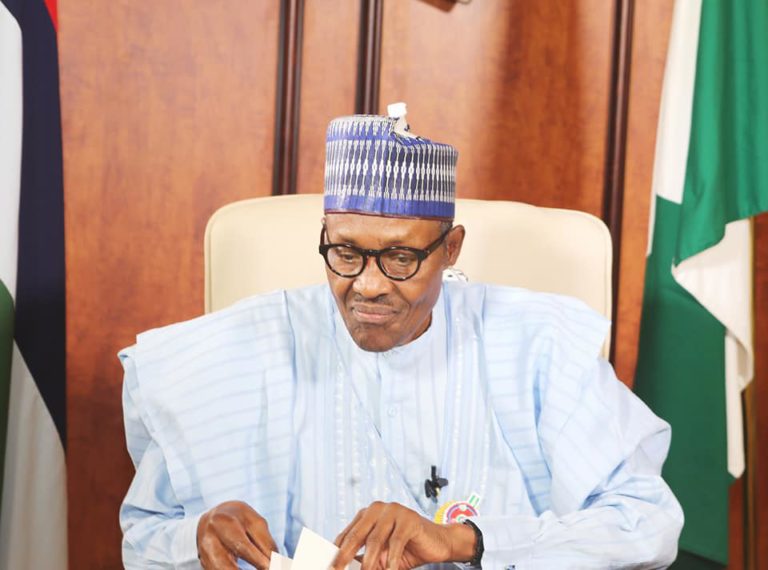
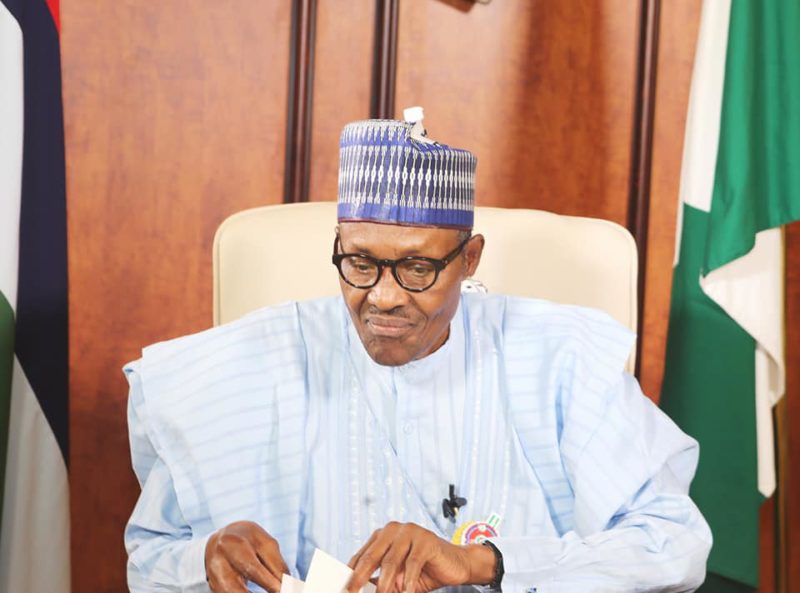
President Mohammadu Buhari on Thursday, September 13, 2018 inaugurated gully erosion and flood control projects at Akpene Eket community in Eket, Akwa Ibom State.
President Muhammadu Buhari
The president, at the inauguration, said the projects were aimed at checking flooding and gully menace at Akpene Eket and its environs.
Mr Okechukwu Enelamah, Minister of Industry, Trade and Investment, represented the president at the occasion.
Buhari noted that the projects were parts of the 26 Federal Government ecological intervention projects for the second quarter as approved on April 10, 2017.
He expressed optimism that the projects would bring huge relief to the communities threatened by ecological challenges.
The four projects are located at Etim Inyang Etuk Street, Marina Street, Afiigh Iwaad Street and Parkins street in the community.
The News Agency of Nigeria (NAN), reports that the projects were executed by the Federal Government through the Ecological Fund Office (EFO) in the office of the Secretary to the Government of the Federation.
Buhari restated the commitment of his administration in ensuring that no part of the country would suffer any neglect owing to its geographical location or political consideration.
“The age-long problem of gully erosion in this part of the country cannot be overemphasised.
“I therefore implore the communities to cherish these laudable projects by preventing indiscriminate dumping of refuse in the drainage,” he said.
The State Commissioner for Environment, Dr Iniobong Essien, commended the Federal Government for the projects.
He said that the projects were in line with the dreams of Gov. Udom Emmanuel of Akwa Ibom to tackle menace of erosion in the state.
He added that the state had yearned for the presence of the Federal Government in terms of projects.
The commissioner disclosed that the state was going through erosion and ecological challenges in all its 31 local government areas, documenting over 1,000 erosion and ecological sites across the states.
“We have prioritised them in other of importance, impact and severity of the ecological sites,” he said.
He advised the communities not to use the completed projects as dumping sites, reminding them that “lots of infrastructure have gone bad because of lack of poor maintenance culture.
“My sincere hope is that in the execution of these projects, a special mention should be made about the maintenance and founds allocated for the purpose while somebody should follow the time line for such maintenance,” he said.
He appealed to the Federal Government to involve the state in the implementation, planning and execution of such projects.
Dr Habiba Lawal, Permanent Secretary Ecological Fund Office, said the projects were awarded by Ecological Fund Office Tender Board (EFOTB), 2017 and completed in seven months.
“These projects were initiated through a request for an urgent intervention from the community forwarded to (EFOTB) to arrest the continuous flooding and erosion menace in Akpene Eket town,” she said.
Lawal said the timely completion of the projects was made possible through the efforts of the project contractor and consultant, who worked tirelessly to meet completion deadline.
Chief Inin Ekanem, the Village Head of Akpene Eket, thanked the Federal Government for the projects.
He said that “anytime this kind of projects is being commissioned, we are always very happy, may God bless the Federal Government.”
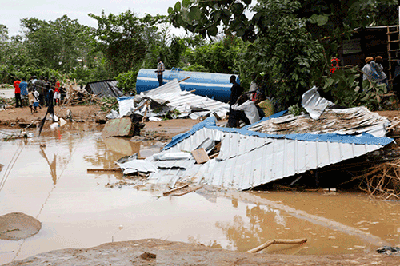
The Katsina State Emergency Management Agency (SEMA) says 4,000 houses have been destroyed by rainstorms in some parts of the state during this year’s rainy season.
Homes left in ruins after a rainstorm
The SEMA Executive Secretary, Alhaji Haruna Musa, who disclosed this to newsmen in Katsina, the state capital, on Thursday, September 13, 2018, said two persons have also died in building collapse during the season.
Musa said that several others sustained various degrees of injuries, while several houses were destroyed.
He said that Baure, Daura, Jibiya, Malumfashi, Kusada and Musawa Local Governments were among the worst affected areas.
“We receive reports of rainstorm on daily basis from different parts of the state,’’ he said.
He said the agency had assessed the incidents, with a view to assisting the victims, adding that after the assessment, the state government provided relief materials to alleviate the suffering of the victims.
In a related development, The National Emergency Management Agency (NEMA), North-West zone, has organised a stakeholders meeting in the state.
The meeting was aimed at ascertaining the level of the state’s preparedness and collaboration in disaster management.
The Zonal Coordinator, Mr Ishaya Isah, stressed the need for all stakeholders in disaster management to work together to evolve a culture of preparedness, prevention, resilience and response to disaster.
“This is with a view to proffering solutions towards efficient and effective disaster management.
“Let me at this juncture warn that unless disaster management and risk reduction are effectively driven at all levels, their impacts will be extremely difficult and costly to address,” he said.
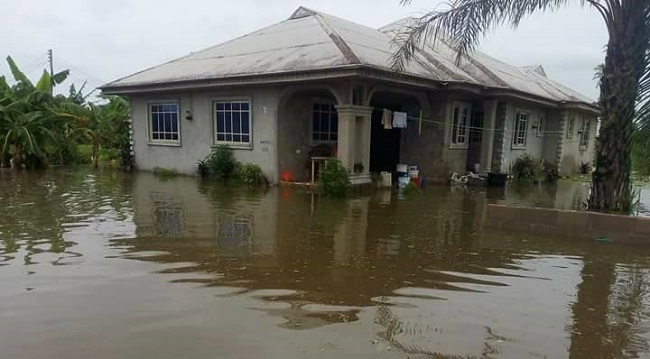
The Bayelsa and Anambra state governments are taking steps to ensure that the anticipated flooding expected in some states does not have adverse consequences on residents.
Flooding in Yenagoa, Bayelsa State
Mr Daniel Iworiso-Markson, the Bayelsa State Commissioner for Information, gave the assurance on Thursday, September 13, 2018 in an interview with the News Agency of Nigeria (NAN) in Yenagoa.
Similarly, the National Emergency Management Agency (NEMA) has advised the Anambra State Government to as a matter of urgency begin immediate evacuation of people living in the flood prone areas to the emergency shelter centres in the state.
Iworiso-Markson said that the Bayelsa government had stepped up activities to mitigate the anticipated flooding of states located on the lower basin of the River Niger, including Bayelsa.
The commissioner said that the state government, against the experiences of the 2012 flood, had set up a flood response team.
According to him, the team comprising of relevant government agencies will go around the state to monitor flood-prone areas and respond swiftly to any emergency situation.
The development is coming on the heels of the alert by the Nigeria Hydrological Services Agency (NHSA) that nine states on the axis of River Niger and three others on the River Benue axis are set to experience floods.
Iworiso-Markson said the state government was partnering with stakeholders and experts, including the State Emergency Management Agency (SEMA), to ensure that flooding was put under control.
He gave an assurance that there was no cause for alarm given the proactive steps so far taken by the government.
The commissioner also said that the state government had provided a call centre with dedicated telephone lines to enable residents in the state report cases of high-water level in their areas.
He said that the mobile numbers to contact were 08025814636, 08110413567 and 09037582261.
The Bayelsa government had in 2012 set up a flood Management Committee headed by Chief Francis Doukpola to disburse the N500 million donated to the flood victims by Chief Mike Adenga.
According to Doukpola, the committee became moribund after the funds and N35 million take-off grant were allegedly depleted.
NAN investigations, however, indicate that many residents of coastal communities prefer flooding as their fishing vocation enjoy a boom during such incidents.
Mr James Agodi told NAN that despite the challenges associated with perennial floods, many pray for water levels to rise and overflow the banks with abundant fish.
“Those of us living near the riverside actually enjoy abundant fish catch during flood seasons as there is no need to go far to get fish.
“The flood waters carry a lot of fish and there would be a catch anywhere there is a net.
“Even those who are not engaged in fishing as their occupation return home at such times to fish.
“So, to us, the saying that there is an opportunity in adversity holds true,” Agodi said.
Mr Vincent Owen, Director of Planning, Research and Forecasting, NEMA, Abuja, gave the advice on Thursday when he visited Enugwu-Out in Anambra East Local Government Area in accompany of some staff of the agency and other stakeholders.
According to him, the weather forecast by the Nigeria Hydrological Services Agency (NIHSA), that 2018 flood may come in same magnitude of the flood of 2012, should not be treated with levity.
Owen said that the update regarding the flood was so alarming, adding that all the indices during the 2012 flood were visible while the speed at which the river was rising needed urgent action.
“There is nothing to wait for in the evacuation of the people living in the flood prone areas in Anambra, the indices seen in 2012 flood have manifested in all the areas visited.
“In Ogbarua communities, all the towns have been affected by the flood, in Enugwu-Otu and Nkpundo-Otu, the story is not different,’’ he said.
Owen, however, said NEMA was committed to providing relief materials to all states affected by flood or other emergency issues in the country.
The director advised all the 12 states located in the flood prone areas to take the forecast serious while assuring of the agency speedy assistance, whereever the need might arise.
Owen said that the Nigerian Government has received a message from the Cameroon Government of its intention to open Lagoon Damns and ask for proactive measures by the affected states.
He said that if the forecast were not timely adhered to, the imminent flood shall be worse than the 2012 flood experience.
Owen said that the visit to flood prone states was to have first-hand information on the preparedness of such states in moving the victims to higher grounds and providing decent camps for the people.
He explained that the volume of water noticed in Ogbura and Enuwgu Otu was alarming and portends danger if not handled as quickly as possible.
Mr Cyprian Agupugo, Anambra Executive Director of SEMA, in his response, said that the state government had embarked on sensitisation and enlightenment campaigns on actions to be taken by the victims.
Agupugo said that the state had also made ready 28 emergency shelter centres in its flood prone areas and assured that other necessary materials would be provided.
He said that now that it was evident, that the flood was rising, displaced persons would be evacuated and taken to centres closest to them.
Agupugo commended NEMA for reiterating the warning and reassuring SEMA on its willingness to play its part to ensure that nothing hinders the success of evacuation and safe guarding of the people living in the flood prone areas.
Some of the residents who spoke during the visit said the flood which started around July had increased beyond their expectation this September and had destroyed their farmland.
Mrs Grace Oneh, a health worker, said that the flood had covered the homes of many people and that most of the victims had gone upland to stay with friends and relatives.
She appealed to SEMA to commence the distribution of relief materials, on time to avoid being too rowdy and be ready to alter the method by involving community leaders.
The NEMA team comprised members of the Red Cross Society and the Fire Service.