Gaya community in Niger Republic has appealed to the Kebbi State Government in Nigeria to allow its residents utilise the access road in Bagudu Local Government pending the repair of its bridge that was washed away by flood.
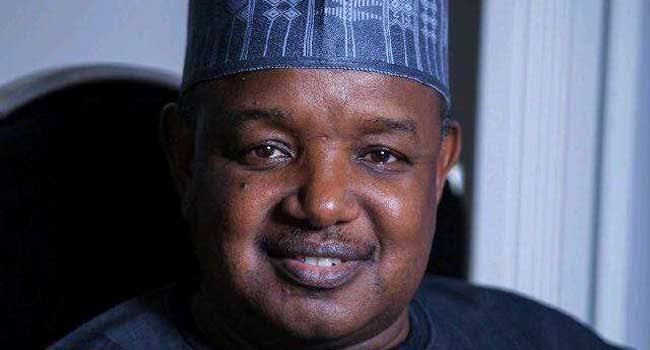
Alhaji Atiku Bagudu, Governor of Kebbi State
The governor of Gaya city, Samaila Usman, made the appeal when he paid a courtesy visit to Kebbi Deputy Governor, Alhaji Samaila Yombe, in Birnin Kebbi on Thursday, September 13, 2018.
He said: “I have come to pay you a courtesy visit and appeal to your government to permit our people to use the alternative route which cut across Bagudu, Suru and Dandi Local Government Areas.
“This will be just for the time it takes to reconstruct the collapsed Gayan Bridge.
“The bridge, which served as route to our people coming to Nigeria for economic gains and exchange of relationship and brotherliness, collapsed as a result of the flood along River Niger.”
Usman said that despite being in separate countries, the people of Gaya and Nigerians have remained like family.
He said that the kinship had been sustained by mutual faith and belief in one another, in view of similarities in culture, beliefs and values.
“We are still family and we always are,’’ the Gaya governor said.
Usman commended the Kebbi government for ensuring peace and unity amongst the people in the towns bordering Niger Republic and Nigeria.
In his remarks, the deputy governor expressed appreciation for the visit and assured that the request would receive appropriate attention.
“We consider people from Niger Republic, especially in Gaya and Dosso cities part of our extended family.
“We will not leave you alone as we will do all it takes to assist as much as we can,’’ Yombe assured.
The News Agency of Nigeria (NAN) reports that Gaya is a city in the Dosso Region of Niger located 254 km south-east of the capital, Niamey.
It is located on the banks of the Niger River, near the Benin and Nigeria borders.
Chairman of Ogbaru Local Government Area of Anambra State, Mr Arinze Awogu, has directed the Enugu Electricity Distribution Company (EEDC) to cut supply to flood-prone areas for fear of massive electrocution.
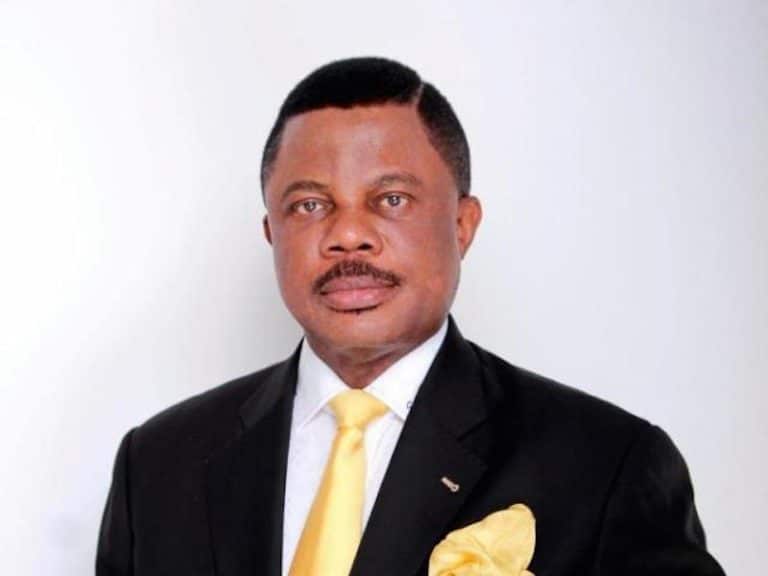
Chief Willie Obiano, Governor of Anambra State
Awogu told the News Agency of Nigeria (NAN) in Awka, the state capital, on Sunday, September 16, 2018 that most electricity installations in the areas had been submerged due to incessant rains.
He said that no fewer than 9,000 persons from 1,500 households had been displaced from their homes in Ogbaru council.
Awogu noted that there were dangers of possible health hazard as many sewage pits had been ripped open by the flood.
He described the flood situation in Ogbaru as an emergency that demands swift response from the National and Anambra State Emergency Management Agencies.
The chairman requested that the Internally Displaced Persons (IDPs) in the state be properly equipped for evacuation of flood victims.
“NEMA, SEMA and Red Cross officials have visited Ogbaru for on-the-spot- assessment, we are still awaiting their intervention to minimise loss of lives and property.
“The flood is having all the signs of the devastating 2012 flood and we request that IDPs camps be equipped so that the over 9,000 affected persons can move into the camps.
“We can only access people’s homes by canoe because everywhere is massively flooded, the flood comes in the night and by morning people are scampering for safety.
“There is need to sand fill some areas within the IDP camps, and at the moment no single relief material has been brought to any of the designated camps.
“The worse seem not to have been seen as we are only battling with the water released from Shiroro, Kainji and Jebba dams, the Cameroonians have not released theirs and they will do so in couple of days and when that happens, it will be a disaster for us here,” he said.
The chairman appealed to both Federal and State ministries of health to respond urgently to the health challenges posed by the flood,” he said.
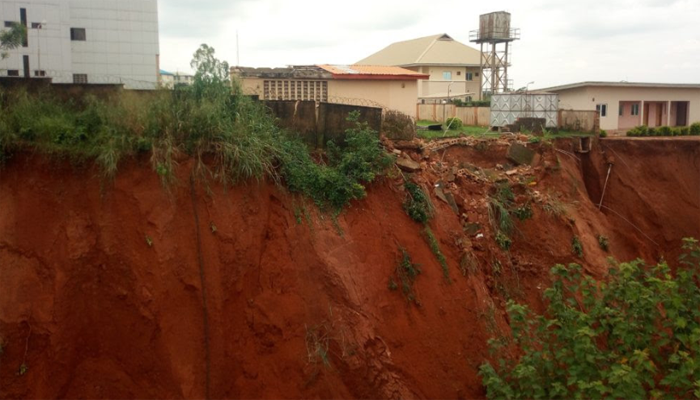
As judicial activities resume on Monday, September 17, 2018 at the Federal High Court in Awka, the Anambra State capital, occupants and property face a critical exposure to subsidence as gully erosion continues to eat up part of the premises.
The Federal High Court, Awka is under serious gully erosion threat and at the verge of imminent collapse
Already, the perimeter fencing on one part of the premises, the generator house and borehole facility have collapsed into the gully erosion.
The ravaging erosion had already cut off access to the Judges quarters, its Boys Quarter and the adjoining buildings including the abandoned Anambra Government House project.
Some members of judicial staff who pleaded anonymity feared that the court would not be conducive for judicial activities when the courts resumes on Monday.
They said the surge in human population would make the effect of the disaster to be increasingly felt as the structure would come under more pressure.
According to the staff, the entrance into the court premises may collapse as erosion had crept to the gate.
They wonder why no respite had come their way despite their outcry and media reports.
“Nothing has happened up till now, rather more of the fence is falling and that has increased the speed of the erosion, the existence of the main building is seriously threatened now.
“Court will resume on Monday and that means more people and vehicle will be coming in, the erosion is almost at the gate and soon the entrance will be cut off.
“As it is now, we do not have water, so I wonder how the Judges, the staff, litigants and their counsels will work effectively.
“No part of the complex is safe now because they already had visible cracks due to underground vibrations; we need immediate assistance because we cannot afford to lose this building to erosion,” one of the sources said.
When contacted, Mr Emeka Achebe, Head of Communications in NEWMAP in Anambra State, urged calm as efforts were on to address the challenge.
Achebe said NEWMAP had already approved a special intervention plan known as “Gully Rapid Action and Slope Stabilisation (GRASS)” for the site and would be activated soon.
“GRASS will control damage and immediate threat to houses and other critical infrastructure.
“We urge them to remain calm, in no distant time, activities will commence at the site,” he said.
Mrs May Esealuka, the Deputy Chief Registrar of the Court, had lamented the looming disaster, saying efforts to get intervention had failed.
“We have sent letters to the Anambra State Government in November last year and all the people and agencies that matter in Anambra, including NEWMAP came and saw things for themselves.
“What is happening here is sad, every moment my heart jumps that the worst will happen; there is no road to the Judges Quarters anymore,” she said.
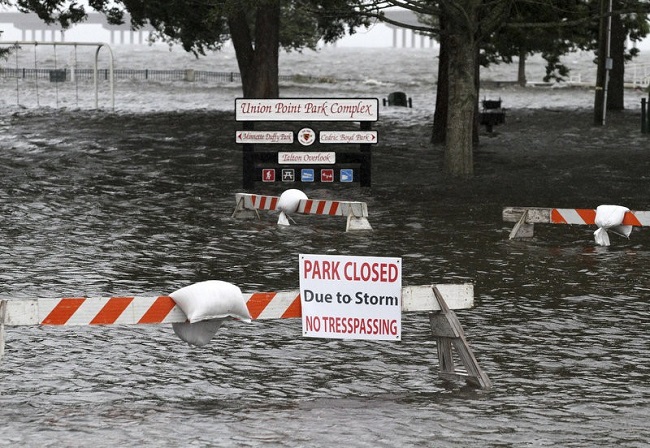
Pentagon deployed two amphibious warships – USS Kearsarge and USS Arlington – to offer disaster relief and search and rescue assistance for Hurricane Florence following Hurricane Florence’s landfall.
Hurricane Florence: Union Point Park flooded with rising water from the Neuse and Trent Rivers in New Bern, N.C., from the outer bands of the hurricane. Photo credit: NJ.com
The U.S. Department of Defense said about 7,000 troops were also deployed to respond to Florence in the coming days after it caused catastrophic flooding in North and South Carolina.
Pentagon said U.S. Northern Command, the National Guard and military services were actively supporting Federal Emergency Management Agency along with state and local responders.
Florence’s centre was about 75 kilometre west-southwest of Wilmington, North Carolina, and about 45 kilometres northeast of Myrtle Beach, South Carolina, according to the National Hurricane Center.
Gen. Terrence O’Shaughnessy, North American Aerospace Defense Command and Northcom Commander, said various Pentagon assets had been positioned to surround the storm.
“We have quite literally surrounded the affected area with (Defense Department) capability that will be critical in hours and days following the storm’s impact.
“Defense Secretary Jim Mattis’ guidance to me is clear: we are anticipating the needs.
“We are moving forward under our own authorities to be able to respond as soon as a request is made.
“Saving lives and mitigating suffering is a top priority and military forces are well-positioned to respond immediately, O’Shaughnessy said.
U.S. President Donald Trump had earlier directed FEMA and law enforcement to respond to the disaster and had commended their responses so far.
“Great job FEMA, First Responders and Law Enforcement – not easy, very dangerous, tremendous talent. America is proud of you. Keep it all going – finish strong!” Trump tweeted.
At least five persons have been killed as Florence, now downgraded from Hurricane to a tropical storm, continued to ‘wreak havoc’ on East Coast battering North Carolina and South Carolina.
Trump also tweeted to mourn those who died in the Hurricane: “Five deaths have been recorded thus far with regard to Hurricane Florence!
“Deepest sympathies and warmth go out to the families and friends of the victims. May God be with them!”
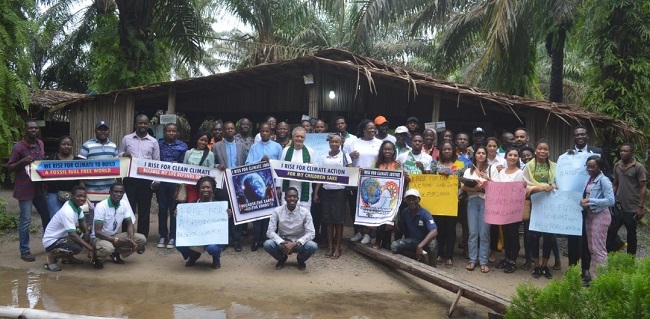
The Nigerian Conservation Foundation (NCF) has underlined need for a multi-faith intervention towards achieving alternative paradigm in reducing the impact of climate change and other environmental challenges in Nigeria.
Participants at the Interfaith Rise for Climate event in Lagos
Director General of NCF, Dr. Muhtari Aminu-Kano, made the submission in a keynote address at a forum themed: “Interfaith Rise for Climate” on Saturday, September 8, 2018 and hosted at LUFASI Nature Park, Lagos.
To achieve this alternative paradigm, Dr. Aminu-Kano sighted moderation in human consumption pattern, environmental stewardship as well as having ethical boundaries and contentment in human approaches to money and market while considering a holistic wellbeing as part of the framework for the new paradigm.
While giving examples of Muslim initiatives in existence that have proven very successful in environmental protection, he highlighted Eco-Islam; Islamic Declaration on Climate Change; Green Muslim Climate Network, Green fatwas; Green mosques; Green Hajj; Green iftar; and Green khutbah, etc.
Dr. Muhtari Aminu-Kano shared insights on Islamic principles and approaches to protect the environment as defined in Eco-Islam, a movement pioneered by Islamic Foundation for Ecology and Environmental Studies (IFEES). He reiterated on four Islamic principles which are the foundation for the inter-link between environmental protection and Islam belief – Tauhid (Unity); Fitra (Creation); Mizan (Balance); and Khalifa (Stewardship). Adding that Hima (Sustainable management); Harim (protection); Waqf (Trust Fund); and Hisba (Enforcement) are the approaches or mechanisms that Muslim societies have employed to observe and implement the tenets of these four principles.
Other speakers included representatives from the Christian faith and Buddhist community in Lagos who also shared their respective faith insights about environmental protection. The plenary session gave the opportunity to discuss on modalities to further work together as a multi-faith network towards advancing the work of creation and protect the environment. Environmental Awareness in faith-based institutions was identified as one of the first steps to use in evangelising and engaging followers of all faith institutions in driving action on environmental protection.
In order to continue the conversation around engaging inter-faith in driving climate action, Dr. Aminu-Kano used the event to announce NCF’s plan to host a public lecture and engage with faith leaders towards a strong campaign to save the Nigerian environment. This will be launched in 2019.
A Joint Faith declaration was made with seven key points as action for faith-based institutions which were based on public environmental awareness, engagement with faith-based governance structure, mainstreaming environment into theological doctrines and curriculum, and commitment to divest from fossil-fuel to renewable energy-powered worship centres.
The daylong event, which was organised in conjunction with Green Faith, was held to galvanise action with other global marches and activities including the Bangkok March to call-to-action national, sub-national leaders, government, private sector, faith-based institutions, and other stakeholders etc. as world leaders met for the Global Climate Action Summit in San Francisco, which ended at the weekend.
The Board of Trustees (BOT) of the Nigerian Conservation Foundation (NCF), led by Izoma Philip Asiodu, has appointed Mr. Ayoola Onajide and Mrs. Onari Duke as members of the National Executive Council of NCF.
Ayoola Tokunbo Onajide
Ayoola Tokunbo Onajide, an architect, is the Principal Partner & Managing Director of ATO Architects, a firm he founded in 1988. He has been involved in managing infrastructural projects for the Federal Government, multinationals, institutional and bilateral organisations.
Onajide is a fellow of the Nigerian Institute of Architects, the Royal Institute of British Architects and the South African Institute of Architects. He is a fellow of the Institute of Directors (IoD) and a 1998 Alumni of the Lagos Business School. He designed Lekki Conservation Centre and has passion for eco-friendly activities.
Onari Duke
A former first lady of Cross River State, Onari Duke is the chairperson of the Child Survival and Development Organisation of Nigeria (CSDON), a non-profit organisation she established to promote affordable healthcare to women and children in Nigeria and ensure the total wellbeing and development of children.
She is Managing Partner of the law firm Duke & Bob-Manuel and also the Executive Chairman of Allied Merchants & Brokers Limited. She is a Director of United Bank for Africa Plc and a member of the Board of UNCTAD (United Nations Centre for Trade & Development). She has been playing critical role in the restoration of mangroves in Cross River State.
Dr. Muhtari Aminu-Kano, Director General of NCF said in a statement: “The BOT is confident that these appointments will impact positively on NCF’s vision of Nigeria where people prosper while living in harmony with nature. Onajide and Duke were inaugurated during the Council meeting which held at International Institute of Tropical Agriculture, Ibadan.”
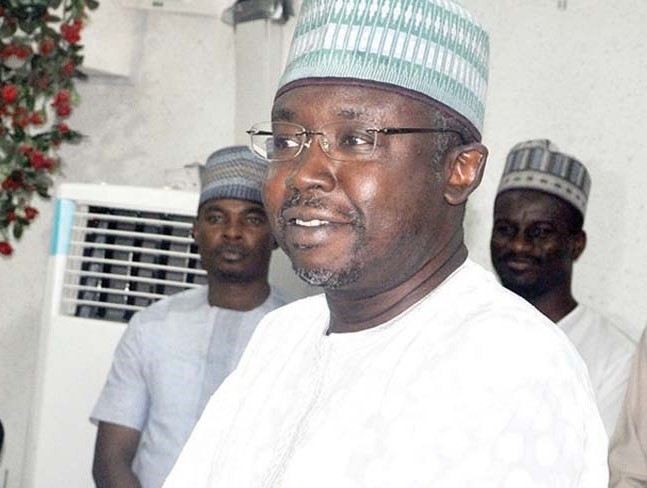
The National Emergency Management Agency (NEMA) has received N3 billion to respond to the looming flood disasters following a red alert issued on September 7, 2018 by the National Hydological Services Agency (NHISA).
Mustapha Maihaja, Director General, NEMA
Mr Mustapha Maihaja, Director General, NEMA, made this known on Saturday, September 15 in Abuja during a meeting involving NEMA officials and stakeholders to assess the reports from the fact-finding committees after visiting the flood prone states.
According to Maihaja, President Muhammadu Buhari approved N3 billion for the first stages of preparedness, response disaster mitigation.
Maihaja said that the agency has immediately swung into action in case there are more worrying indications of a looming flood.
He said that reports from the fact-finding committees are worrisome as some states including Niger, Kogi, Delta and Anambra have already started witnessing flooding.
“From the first response, President Muhammadu Buhari has approved up to N3 billion for the first response.
“We are here today to assess the already alarming situation, with declaration of red alert done on Sept. 7.
The declaration further culminated to the constitution of six committees that went around 12 states.
“NiMet has reported that from today to the next 72 hours, there would be continuous rain in the North, the Central and the Southern states of Nigeria.
“NHISA has reported also that today, the levels at the measuring stations, at the confluence of the Rivers Niger and Benue at Lokoja is 10.98 meters.
“This confirms that the volume is still increasing and with the threatening in flow at Lagdo Dam, with the level as at yesterday recorded at 21.4 meters when compared to the highest level.
“They will be forced to discharge at 21.6 meters that means we are left at 0.2 meters to get to that level and the continuous inflow makes it more worrisome,’’ Maihaja said.
Maihaja said that it was on that note that stakeholders under the coordination of NEMA have activated a National Contingency Plan, a policy document, which gives NEMA the power to establish operational structure.
The director general said that an operational structure has being put in place with a National Emergency Operational Centre domicile at the NEMA headquarters and five Zonal Emergency Operational Centres (EOC).
Maihaja said that EOC A, will be responsible for operations in the following States; Kebbi, Niger and Kwara States.
He said that EOC B will be responsible for operations in Edo and Kogi States, while EOC C will be operational at Amambra and Delta States.
He listed EOC D to be responsible for operations in Benue, Taraba and Adamawa and lastly, EOC E to be responsible for operations in Rivers and Bayelsa.
Maihaja said that the NEMA situation room was also being activated for collecting data, analyzing the data for information sake to guide the operations of the national EOCs and the Zonal EOCs.
He said that the nation would be given regular information and updates on further developments.
The News Agency of Nigeria (NAN) reports that on Friday, President Muhammadu Buhari ordered Maihaja to declare a “national disaster’’ in the event that anticipated flooding turns a reality in some parts of the country.
The President’s directive follows a warning from NHISA that Rivers Niger and Benue have almost reached the levels that resulted in the 2012 flooding.
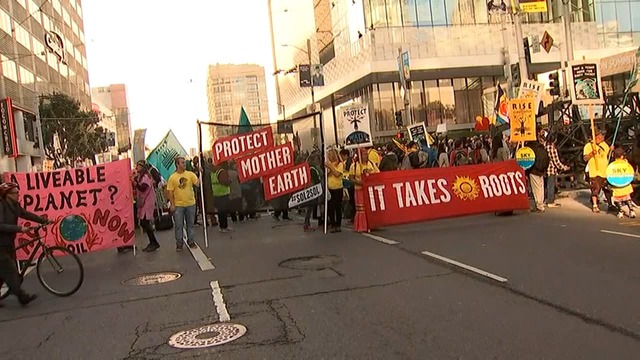
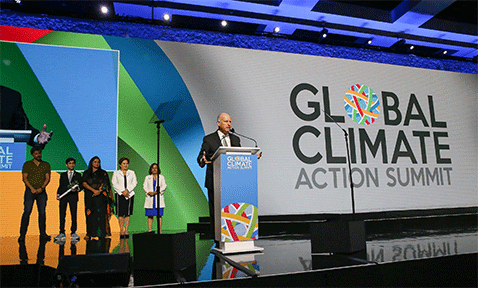
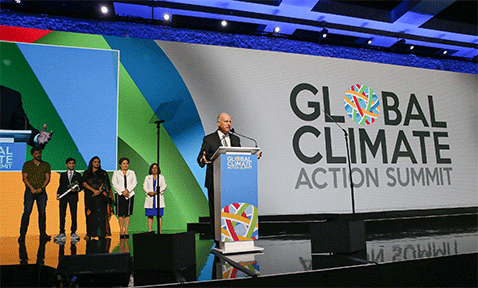
Against a backdrop of typhoons and hurricanes hitting different parts of the world, business and state leaders, indigenous groups, and investors gathered at the Global Climate Action Summit (GCAS) in California over two days and pledged to step up their climate commitments to meet the Paris targets and keep warming below 1.5°C.
Protesters block the streets in San Francisco as the world gathered for the Global Climate Action Summit
Over 100 Mayors, state and regional leaders, and CEOs committed to become emissions neutral by 2050 at the latest and in line with the 1.5°C degree goal of the Paris Agreement.
More than 400 businesses will set science-based targets. More than 60 CEOs, state and regional leaders, and mayors said they will decarbonise their transport sector by 2030. Many cities, major businesses, state and regional governments committed to net-zero carbon buildings, cutting emissions equivalent to more than 50 coal-fired power stations.
Indigenous groups, state and local governments, and businesses launched coalitions to deliver climate solutions through forests, food and land. Nearly 400 investors managing $32 trillion will work to ensure a low-carbon transformation of the global economy with the urgency required.
The GCAS appears to have demonstrated that momentum is growing. But, according to civil society organisations, the world needs to do more and quicker to meet the climate change challenge and keep warming from devastating whole countries, states, communities and bolstering poverty, migration, diseases and insecurity.
They insist that climate change is faster than mankind and catching up quickly with Hurricane Florence just battering the US Southeast coast and Typhoon Mangkhut currently threatening millions in Southeast Asia. Mangkhut is expected to be as strong as Typhoon Haiyan, which left more than 6,000 people dead in the Philippines in 2013, according to observers.
In the light of the devastating impacts being suffered by people in the Philippines and the US, members of the Climate Action Network (CAN) and partners say it’s not enough and more needs to be done.
They stressed that more sub-national actors must step up globally with tangible commitments that collectively help meet the Paris targets and substantially reduce emissions, bending the curve by 2020.
But most importantly, they added, governments must listen to the terrorised voices of people fleeing Mangkhut and Florence and the calls of the sub-national actors who thet say backed words with action in the California Summit and step up to enhance their nationally determined contributions by 2020 in line with the Paris promise and the ratchet up mechanism.
The Summit closed with a call to action and to inclusive multilateralism to achieve the urgent and required transformative change in societies and economies.
The call to action consists of three asks:
STEP-UP AMBITION NOW: Commit to increased climate ambition, including in the form of strong national policies and updated, enhanced Nationally Determined Contributions (NDCs) by 2020, consistent with what science tells us is needed to achieve the goals of the Paris Agreement;
CHART A CLEAR PATH TO YOUR ZERO-CARBON FUTURE: Develop net-zero mid-century emissions plans to inform future NDCs and to guide long-term economic and technological transformation that ensures decent jobs and increasing community resilience; and,
EMPOWER BOTTOM-UP CLIMATE ACTION: Support and accelerate climate action at the local and regional level, with legislation, regulation, financing and policies that incentivize zero-carbon development, and through inclusive, transparent planning, dialogues and consultations that empower businesses, cities, states, investors, civil society, and individuals.
Jennifer Morgan, Executive Director, Greenpeace International, said: “The urgency and pace and scale we need now on climate change means a different level of climate leadership is required. We saw some commitments here at the Global Climate Action Summit from businesses and investors, but what we really need to see are commitments in line with full divestment from fossil fuels. That’s leadership. If you are taking the stage here to talk about your climate commitments, are you following up in your countries, with your heads of government? Because that’s leadership. And we are lacking for leadership on the national level – with the exception of a few bright spots.”
Sven Harmeling, Global Policy Lead Climate change and Resilience with CARE International: “We welcome the strong signal of urgent action that business, states, cities and civil society sent at the Summit. Climate change impacts are hitting people hard already today, particularly women and girls. Another super storm is threatening people in the Philippines, and people on the US Southern coast face Hurricane Florence. It is time for all government and non-state actors to step up their climate ambition, such as those cities who announced in San Francisco that they would strengthen their resilience and reduce emissions in line with the global goal of limiting climate disruption to 1.5°C. Governments must take the voices from the Summit as a sign of confidence that they can go faster and further with policies that tackle climate change.”
Alden Meyer, Director of Strategy and Policy, Union of Concerned Scientists: “We have seen bold climate action on full display at the Summit these last two days. Cities, states, businesses, NGOs, and others are charting the path to the transformation of the global economy that is needed to meet the ambitious temperature limitation goals world leaders agreed to three years ago in Paris. Now we need those leaders to step up as well by strengthening their national commitments under Paris. The ever-increasing wave of powerful storms, floods, wildfires, heat waves, and droughts across the world underscores the huge economic and human costs of inadequate action.
“The good news is that the continuing revolution in renewable energy, efficiency, and storage technologies, together with emissions reduction and sequestration strategies in the forest and agriculture sectors, provides us with the suite of cost-effective solutions we need to confront the climate crisis. All we need now is the political will to take full advantage of those solutions and bring the fossil fuel era to a close.”
Erika Lennon, Senior Attorney, Center for International Environmental Law (CIEL): “At the same time that we welcome the commitments of businesses, states, cities, and civil society at GCAS, we recognize more ambitious action is urgently needed. The devastating impacts of climate change on people around the world are increasing. Three years ago, in Paris the world committed to keeping global temperature rise below 1.5 degrees.
“It is past time for governments to take the action needed to end our dependence on fossil fuels, including by shifting financial support away from the fossil fuel industry. As typhoons and hurricanes batter southeast Asia and the southeast United States, it is increasingly evident that we need rights-based and people-centered climate action, and we need it now.”
Michael Brune, Executive Director of the Sierra Club: “The bold commitments announced at the Global Climate Action Summit are a testament to the strength of American cities, as well as countries around the world, that will not turn away from the crisis of climate change, as Donald Trump would have us do. We know that we cannot stop climate change alone, but together we can take on the challenge. This fight is far from over, and with unprecedented droughts, hurricanes, wildfires, and floods ravaging the globe, it has never been clearer that world leaders must join us in stepping up and facing the demand head on.”
Top UN officials welcomed the outcomes of the Global Climate Action Summit that concluded on Friday, September 14, 2018 in San Francisco, showcasing a surge of climate action and commitments from regions, cities, businesses, investors and civil society; and calling on governments everywhere to step up their efforts to tackle climate change.
Californian Governor, Jerry Brown, played host to an official programme of events that generated more than 500 commitments
Leaders from all sectors of society gathered at the event to demonstrate how they are “taking ambition to the next level” with a wave of fresh and brave climate action announcements that, if implemented, will generate over 65 million new, low-carbon jobs by 2030.
“We are experiencing huge economic losses due to climate change.” said UN Secretary-General António Guterres.” But the Global Climate Action Summit has brought together actors demonstrating the vast opportunity afforded by climate action. They are betting on green because they understand this is the path to prosperity and peace on a healthy planet.”
This momentum culminated in a landmark Call to Action, which was presented to the UN’s Envoy on Youth, Jayathma Wickramanayake, in a symbolic gesture to illustrate that it is future generations who will be most affected by the decisions of the current generation to build a better, more resilient world.
Accepting the Summit’s Call to Action on behalf of the United Nations, UN Climate Change Executive Secretary Patricia Espinosa said: “This Summit and its Call to Action make an important contribution towards achieving our collective goal: to keep global temperatures to 1.5 degrees Celsius in line with the Paris Agreement. It will encourage governments worldwide to step up their actions, demonstrating the vital role that states and regions, cities, companies, investors, and civil society are playing to tackle climate change.”
The event took place against a background of accelerating impacts of climate change, including Super Typhoon Mangkhut that made landfall on Saturday and Hurricane Florence, which continues to devastate communities on the east coast of the United States.
UN Environment highlighted the vital role of non-Party stakeholders in propelling the global fight against climate change forward, in an excerpt of their Emissions Gap Report launched at the Summit.
“Climate change is undoubtedly the defining issue of our time, and working together across nations, organisations and communities is the only way that we can tackle this enormous task and seize the huge opportunities,” said head of UN Environment Erik Solheim. “We have seen here over the past few days the inspiring amount of work that is already being undertaken by communities around the world to address these issues. If we manage to put our environment first, we can come out on the other end of this formidable challenge and achieve our common goal, a sustainable world for all.”
Patricia Espinosa’s speech at the Closing Ceremony underscored the need for all actors to embrace “inclusive multilateralism”, strongly mirroring the UN Secretary-General’s remarks on Monday in New York, where he called on leaders to adopt a sense of urgency to deliver a decisive response to climate change.
This spirit of collaboration is in keeping with the history of San Francisco, which witnessed the signing of the UN Charter in 1945, first establishing a rules-based international order that championed multilateralism over self-interest, and endorsed progress not through conflict, but through all people working together.
Over the last couple of days, Californian Governor, Jerry Brown, played host to an official programme of events that generated more than 500 commitments.
Participants used these events to unveil new commitments under five challenge areas – healthy energy systems, inclusive economic growth, sustainable communities, land and ocean stewardship, and transformative climate investments – captured in the Summit’s final communiqué and registered on UN’s revamped Climate Action Portal – aimed to send a strong signal to governments to step up action by 2020, when global emissions need to peak and then swiftly decline.
The outcomes of the Summit – a ‘call to action’ from actors who are seizing the opportunities to transition to a low-carbon economy – will provide a valuable contribution ahead of UN General Assembly discussions and New York Climate Week, taking place in a few days’ time.
UNDP Administrator Achim Steiner said, “Bold climate action could deliver $26 trillion in economic benefits and create millions of jobs. By bringing together cities, states, private sector and civil society, the Global Climate Action Summit is setting the stage for even more ambitious action needed to achieve the goals of the Paris Agreement.”
Business leaders were fully engaged in the Global Climate Action Summit: “It is clear that enlightened business leaders are taking their place at the vanguard of climate action and seizing the opportunity that this exponential shift to a cleaner and more sustainable economy represents,” said Lise Kingo, CEO and Executive Director of the UN Global Compact. “Now we need to ensure that all companies, industries and markets step up to the challenge.”
Additionally, the Intergovernmental Panel on Climate Change will issue a Special Report in October. The report will look not only at the impacts of 1.5C warming but also at the pathways that are still available to limit warming to 1.5C, while enhancing sustainable development and alleviating poverty.
Importantly, the outcome of the Summit will provide encouragement to governments as they finalise the implementation guidelines of the Paris Agreement in Poland in December of this year. It will guide them in preparing their national climate action plans in 2020 and give them bold options and examples for change in designing their short and long-term climate strategies.
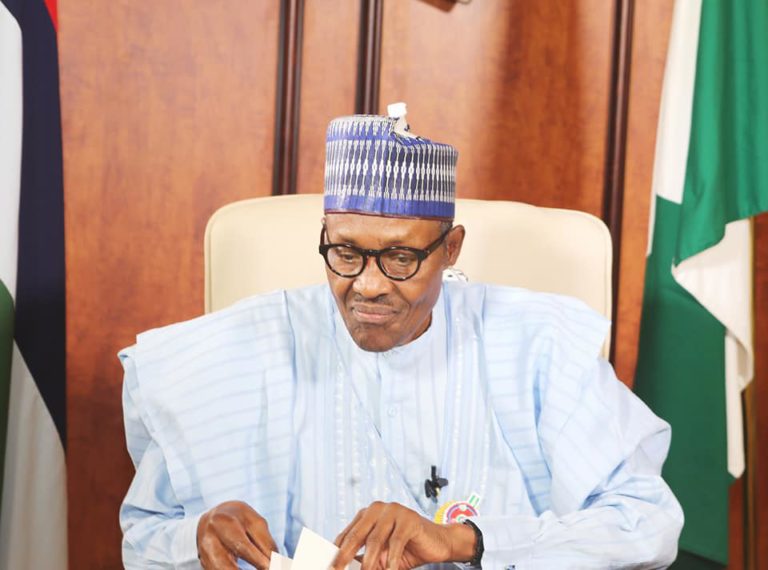
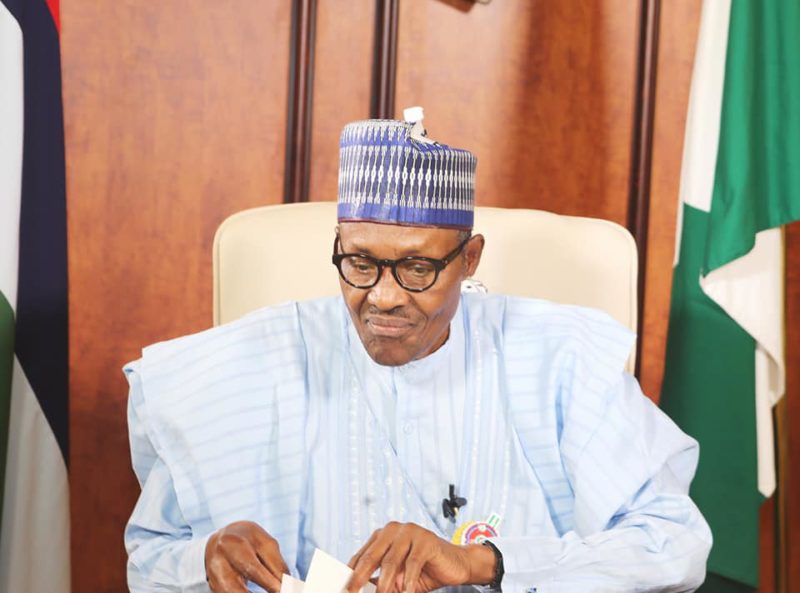
President Muhammadu Buhari has delegated authority to the Director-General, National Emergency Management Agency (NEMA), Mustapha Maihaja, to declare a “national disaster’’ if anticipated flooding turns a reality in parts of the country.
President Muhammadu Buhari
Malam Garba Shehu, the President’s Senior Special Assistant on Media and Publicity in a statement in Abuja, said the President’s directive followed a warning by the Nigeria Hydrological Services Agency that Rivers Benue and Niger had almost reached levels that resulted in flooding in 2012.
The 2012 disaster had led to lost of lives and destruction of property in some parts of the country.
A letter to the Director-General, NEMA, titled: “Situation Report on the River Flood along the Banks of Rivers Benue and Niger’’, which was signed by the Chief of Staff to the President, Abba Kyari, said: “Delegation of authority to the Director General of NEMA to activate the Disaster Response Units of the military for possible search and rescue missions, and the procurement and proportionate stocking of relief materials and health related items up to N3 billion to provide for the needs of possible victims.’’
The letter also instructed the head of the emergency agency to provide regular updates to the President.