Home Blog Page 1780

Guinness, WaterAid undertake ‘Water of Life’ project in Kebbi

0

Guinness Nigeria Plc has entered into partnership with WaterAid towards ensuring sustainable access to water, sanitation and hygiene, while helping people act to improve their health and well-being.
Kaduna community
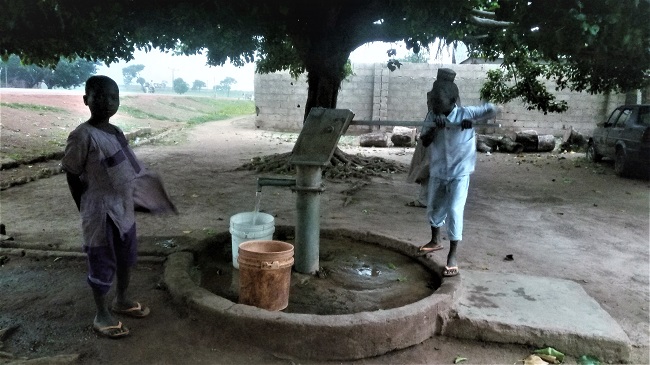
Children of Unguwan Gandu Zuntu, Kubau Local Government Area of Kaduna State fetching water from a handpump borehole provided by SHAWN II Project in the community

The partnership has the Guinness Nigeria “Water of Life” programme and WaterAid Nigeria working with the Kebbi State Government through the Rural Water Supply and Sanitation Agency (Kebbi RUWASSA), alongside the technical support of the United Nations Children’s Fund (UNICEF) in implementing a sustainable water project to contribute to building thriving communities in the state. The project is aimed at providing inclusive access to clean water to an estimated 2,500 people in D’kwa village, Danko/Wasugu LGA in Kebbi and strengthening the capacity of the community management structures to support sustained operations of the water facility model.

The water facility is expected to alleviate the water challenges faced by D’kwa community – which is largely a farming community where many households rely on unsafe shallow wells and other unimproved surface sources for their supply of drinking water.

During the dry season from November to January, residents usually have to walk for 2kms to 3kms to get water from a stream. This scarcity, according to WaterAid, disproportionately affects women and girls, putting them at greater physical risk, as many households rely on them to go fetch water from these distances in areas that are also prone to sand storms.

Speaking on the project, Corporate Relations Director, Guinness Nigeria Plc., Mrs. Viola Graham-Douglas, said: “The Guinness Nigeria ‘Water of Life’ programme is aimed at providing access to clean water, basic sanitation and hygiene in order to reduce poverty, promote better health, wellbeing, gender equality and empower women and girls. We’re working with key partners to shine a light on these issues and find lasting solutions, one community at a time.

“This project is also expected to support local development as the financial model to manage the water point will also help small businesses to thrive and make local financing fund pool available to support larger community development initiatives. This supports Guinness Nigeria’s focus on supporting local livelihoods and prosperous rural economies.”

Overall, access to water, sanitation and hygiene (WASH) services has remained low in Nigeria, submits WaterAid. According to the UNICEF/WHO Joint Monitoring Programme, about 60 million people out of a population of nearly 190 million still lack access to clean water while only 33% have access to basic sanitation – meaning approximately 120 million people in Nigeria do not have access to toilet facilities.

Dr. ChiChi Aniagolu-Okoye, Country Director of WaterAid Nigeria, said: “Water, sanitation and hygiene remain one of the most neglected issues in our country today. At WaterAid, our work is all about transforming lives by improving access to these life-saving services for the poorest and most marginalised in our society. However, this is not something that government, development partners or any one entity can do alone. We need everybody to be on board, especially the private sector. The WASH sector needs more partnerships of this kind if we are going to ensure we get clean water, decent toilets and good hygiene to everyone, everywhere by 2030.”

The National Bureau of Statistics estimates that, in Kebbi State, just over half (51.1%) of households have access to clean water and even lesser (30.5%) have access to sanitation resulting in open defecation rates of 25%. This lack of access to affordable, convenient and safe water and sanitation sources affects sustainable development in health, education and livelihoods, locking people into a vicious cycle of poverty and disease, notes WaterAid.

The “Water of Life” scheme is said to be Guinness Nigeria’s flagship sustainable development programme. Since its launch, Guinness Nigeria has reportedly provided safe drinking water for over two million Nigeria through approximately 35 water schemes spread across 22 states of the federation. Aside directly delivered projects, Guinness Nigeria also delivered three water health centres in partnership with Water Health International.

WaterAid on the other hand has worked in the country since 1995, partnering with the government and people of Nigeria to ensure sustainable access to water, sanitation and hygiene as well as utilising and strengthening local capacity to adequately provide quality technical assistance for water, sanitation and hygiene delivery and development in Nigeria.
EU scheme seeks to strengthen resilience of returnee IDPs

0

The International Centre for Energy, Environment and Development (ICEED) in partnership with Mercy Corps is implementing a project aimed at strengthening resilience in six of the local government areas (LGAs) affected by insurgency in Borno State.

internally-displaced-persons-NEMA
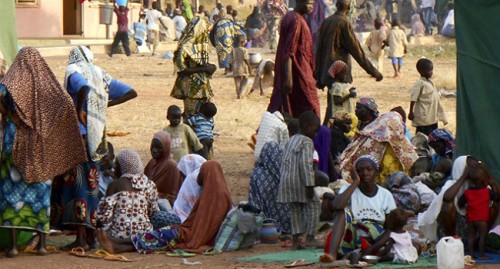
Women and children in a IDPs camp. The displacement was informed by the Boko Haram insurgency. Photo credit: channelstv.com

The Borno “MAIDA” project reportedly aligns with the global objective of the EU’s planned support for early recovery in the state. The European Commission is funding the project.

To this end, ICEED is building the capacity of 280 IDPs returnees in the production of fuel efficient cookstoves as well as the installation and maintenance of solar PV systems across six LGAs. The inaugural training was conducted in Jere LGA and lasted from October 15 to 29, 2018 with the training of 38 IDPs returnees on the production of fuel efficient cookstoves. The training will be replicated in Biu, Hawul, Kwaya Kussa, Mafa, and Bama/Gwoza LGAs.

Executive Director of ICEED, Ewah Eleri, in his remark, said: “This project seeks to enhance recovery and strengthen resilience in Borno State through capacity building for improved livelihoods as lack of opportunities for employment and meaningful livelihood contributes to youth restiveness and tension.

“Adopting alternative fuels and energy technologies can create jobs for IDPS, especially women and youths. The use of fuel efficient cookstoves produced by the trainees will also reduce the health risks of indoor air pollution faced by women and children in addition to improving efficiency in fuelwood usage and thereby contributing to addressing climate change,” he concluded.

The project was informed by an assessment conducted by Mercy Corps and ICEED in March 2017 across Biu, Hawul, Kwaya Kusa, Mafa, Jere and Maiduguri metropolis, which showed a limited access to cooking energy.

The conflict has apparently increased the rate of deforestation, resulting in degradation of watersheds and increased fuelwood collection by IDPs and communities across the LGAs. The absence of government support for agro-forestry activities and ongoing military activities as led to the decreasing tree cover. Other alternatives like kerosene and LPG seem either in short supply or nonexistent in some communities.

“Access to household energy is vital to improved livelihood; however, this is often highly constrained in conflict-affected areas. Poor energy access can have a debilitating effect on the recovery and resilience of conflict affected populations. Access to fuel-efficient stoves, cooking fuel and lighting is usually a minimum standard in humanitarian response. However, while clean cookstoves and lighting are all recognised as lifesaving non-food items provided to IDPs, these minimum requirements are not often met,” said Eleri.

Big brands pledge to turn tide on global plastic waste

0

Big brands – from Coke to Kellogg – pledged on Monday, October 29, 2018 to cut all plastic waste from their operations in what the United Nations called the most ambitious effort yet to fight plastic pollution.

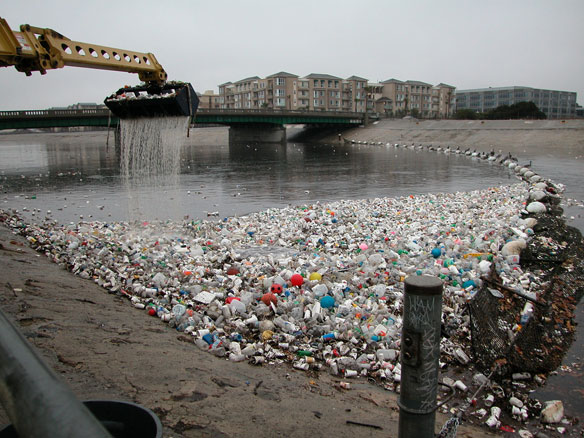
Plastic pollution
Plastic pollution

The initiative comes as public pressure mounts on manufacturers and retailers to cut back the deluge of plastic packaging that is clogging landfills and choking the seas.

“We know that cleaning up plastics from our beaches and oceans is vital, but this does not stop the tide of plastic entering the oceans each year.

“We need to move upstream to the source of the flow,” said Ellen MacArthur, the record-breaking British sailor who is behind the plastic initiative.

The pledge by 250 organisations included many of the world’s biggest packaging producers, leading consumer brands, retailers and recyclers, as well as governments and NGOs.

The Ellen MacArthur Foundation launched its New Plastics Economy Global Commitment in collaboration with the United Nations Environment Programme (UNEP).

Signatories promised to eliminate single-use and unnecessary plastic and to innovate so that all packaging could be recycled.

Their targets are to be reviewed regularly and updates posted on their progress to drive momentum, the Foundation said.

UNEP has estimated that if current pollution rates continue, there will be more plastic in the sea than fish by 2025.

Eight million tonnes of bottles and waste swamp the oceans each year, killing marine life and entering the food chain.

“Most efforts until now have been focused on cleaning up plastic pollution.

“This commitment is about eliminating pollution at its source,” Rob Opsomer, who leads the foundation’s New Plastics Economy initiative, told the Media.

Erik Solheim, executive director of UNEP, described the commitment as “the most ambitious set of targets we have seen yet in the fight to beat plastics pollution.”

Last week, the European Parliament voted for a complete ban on single-use plastic items, including straws and cutlery, in a bid to curb pollution.

Three of the brands that signed up, Coca-Cola, PepsiCo and Nestle, were recently named the world’s worst plastic polluters, according to an index by the Break Free From Plastic movement.

In North America, these three brands accounted for 64 per cent of all plastic pollution identified in cleanups, according to the analysis.

“We are focused on improving the sustainability of all of our packaging.

“We are doing this regardless of the type, and increasing the amount of recycled and renewable material,” Ben Jordan, senior director of environmental policy at Coca-Cola,’ said.

PepsiCo said it had made several pledges in a bid to “build a PepsiCo where plastics need never become waste”.

“Protecting our planet is hugely important to us.

“We are committed to achieving 100 per cent recyclable, compostable or biodegradable packaging by 2025,” PepsiCo spokesman, Gian-Carlo Peressutti, said.

Governments asked to accelerate access to water, sanitation security for Africa

0

Water experts, policy makers, government representatives, UN agencies, donors and non-governmental organisations kicked off the celebration of the seventh edition of the Africa Water Week in Libreville, of Gabon on Monday, October 29, 2018 calling on African governments to reflect on achievements made so far towards availing clean water and sanitation services to all.

Makame Mbarawa
Prof Makame Mbarawa, AMCOW President

The weeklong event is convened by the African Ministers Council on Water (AMCOW) in collaboration with UKaid supported project for Unlocking the Potential of Ground Water for the Poor (UpGro), USAID, Africa Development Bank (AfDB), the Global Water Partnership (GWP) and the International Water Management Institute.

According to Prof Makame Mbarawa, the AMCOW President and the Minister for Water and Irrigation for Tanzania, the event is a call to action and positions Africa to creatively think, act and win.

“This is an opportunity to share lessons and good practices in water security management, to share lessons and good practices on enhancing water and sanitation resilience to climate change,” he said in a statement.

One of the objectives is also to create an opportunity to contribute to developing strategies on raising adequate and sustainable financing of water and sanitation agendas.

The 7th Africa Water Week brings together over 1,000 participants from governments, regional institutions, international partners, the private sector, the scientific community, civil society, and the media particularly from Africa

The Minister for Water and Energy for Gabon, Patrick Eyogo Edzang, lauded Prof Mbarawa’s statement, saying that accomplishing water security is imperative to safeguarding sustainable access to adequate quantities of acceptable quality water to maintaining livelihoods, human wellbeing, and socio-economic development.

The Africa Union Commissioner for Rural Economy and Agriculture, Sacko Eyogo Leonel Correa, urged all African governments to include more water sanitation and hygiene projects in their National Determined Contributions (NDC) to unlock more climate-related financing mechanisms such as the Green Climate Fund, Adaptation Fund, AfDB Climate related Funds, and a host of other sources of funding.

Intended Nationally Determined Contributions (INDCs) is a term used under the United Nations Framework Convention on Climate Change (UNFCCC) for reductions in greenhouse gas emissions that all countries that signed the UNFCCC were asked to publish in the lead-up to the 2015 United Nations Climate Change Conference held in Paris. Once the agreement is ratified, the INDCs automatically changes to NDCs.

“I also want to congratulate AMCOW on the launch of the 2018-2010 strategy and, therefore, I call upon our ministers to take action, and they should not keep this important document on their shelves,” said Correa, calling on development partners to help in implementation of the tool.

In a video recorded speech to the delegates, Amina J. Mohammed, the Deputy Secretary General of the United Nations and a former Minister of Environment of Nigeria, noted that the challenge of water scarcity is exacerbated by the widening impacts of climate change.

“This is both unacceptable, and yet avoidable,” she said.

She called on political leadership to accelerate progress. “In this regard, the United Nations is working closely with the African Ministerial Conference to build momentum for the South South corporations in support for the Sustainable Development Goals.”

Wambui Gichuri, the Director for Water Development and Sanitation Department and Africa Water Facility at the AfDB, reminded the delegates that Africa loses an estimated 5% of its Gross Domestic Product to poor water development and management, an estimated 5% to 25% due to climate change impacts, and that more than 300 million people on the continent lack access to improved water supply.

The event will help shape policy direction for water resources and related sector management in Africa; influence science, technology and innovation, network with decision makers and implementers, scientists, development specialists, knowledge managers, industrialists and manufacturers, civil society and other major stakeholders in water and related sectors.

Courtesy: PAMACC News Agency

Nigeria to attain polio-free status in next 11 months – NPHCDA

0

The National Primary Health Care Development Agency (NPHCDA) says Nigeria may be certified polio-free in next 11 months, if access to insecure areas in Borno, and some parts of the North-East improves.

Isaac Adewole
Minister of Health, Isaac Adewole

Dr. Faisal Shuaib, Executive Director, NPHCDA, disclosed this on Monday, October 29, 2018 in Abuja during the 36th meeting of the Expert Review Committee on Polio and Routine Immunisation in Nigeria.

The executive director said Nigeria was very close to obtaining a polio eradication certificate, adding that the country had gone over 24 months with very strong surveillance without a case of wild polio virus.

Shuaib said the surveillance showed clearly that government was not missing any wild polio in the country.

“If this positive trajectory continues, then it is very likely that certification institutions will review the progress that Nigeria has made and the lack of wild polio virus transmission.

“Very likely, in the next few months, we will be certified a polio-free nation.

“It will be an unprecedented declaration in the life of Nigerians; a situation where no single child is paralysed due to wild polio virus,’’ he said.

Shuaib reiterated the agency’s commitment to sustain the population’s immunity against wild polio virus and other vaccine-preventable diseases through strengthened routine immunisation programmes.

“One of the greatest challenges we still face is around mothers and care givers bringing their kids to health facilities to access routine immunisation, even in the urban centres where places are accessible.

“We still have that challenge largely because folks have not realised the need for kids to take the full complement of routine immunisation vaccines let alone in the hard-to-reach areas,’’ the executive director said.

He urged parents and caregivers to visit health facilities and access such services.

The Chairman of the review committee, Prof. Oyewale Tomori, said that there was hope and enthusiasm by the key stakeholders to end polio and strengthen routine immunisation programmes in the country.

He said Nigeria should not relent on its routine immunisation programmes even after securing certificate of a polio-free status.

The outgoing Country Representative, World Health Organisation (WHO), Dr. Wondi Alemu, said progress had been achieved in accessing trapped children, adding that available data showed the number was shrinking.

“This will help us in expanding our reach in terms of administering vaccines and tracking down, if any, the circulation of wild polio virus,’’ Alemu said.

He said that sustained population immunity through routine immunisation remained key for polio eradication adding that the outbreak of cVDPV2 outbreaks pointed at gaps in immunity.

News Agency of Nigeria (NAN) reports that cVDPV2 is a type 2 strain of polio largely from environmental samples, although they are not wild polio cases they present with similar symptoms.

CVDPV2 are as a result of several years of low routine immunisation coverage.

Alemu said the ongoing accelerated efforts to ramp up coverage for all routine expanded programme on immunisation vaccines was commendable.

According to him, attaining and sustaining high immunisation coverage is the foundation for measles elimination and other accelerated disease control initiatives.

The country representative assured the meeting of its full support as Nigeria moved towards ending polio.

He commended NPHCDA for its ability to provide avenue for the partners to work together towards a common cause.

The meeting observed a minute silence in honour of health workers that lost their lives in the cause of polio eradication programmes across the country.

NAN reports that the battle to attain a polio-free Nigeria had been on since 2014.

In 2016, the global public health community was thrown into anxiety with the detection of four new cases of Wild Polio Virus (WPV) in rapid succession in Borno State, Northeast Nigeria.

At the 34th meeting of the ERC, the consensus was that insecurity is still a major challenge in Borno State, leading to inaccessibility, and this remains a significant risk to global eradication efforts.

Group decries high rate of poaching of elephants, monkeys, others

0

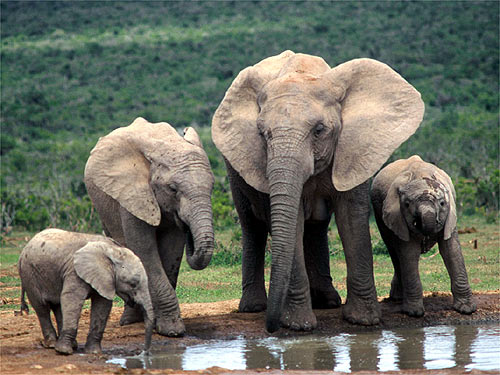
The Nigerian Association of Zoological Gardens and Wildlife Parks (NAZAP), has decried the rising rate of poaching and illegal trading in endangered animals such as elephants, monkeys, tortoises, and others.

Sumatran elephants
Elephants

NAZAP in a communique issued in Abuja at the end of its annual general meeting and training, urged relevant agencies to curtail the activities of animal traffickers.

The communique was signed by Francis Abioye, the new President of NAZAP.

“NAZAP condemns in strong terms all poaching and illegal trading activities in endangered animals, not limited to elephants, monkeys, tortoise, pangolin, among others.

“NAZAP calls on all operators in the sector to strictly adhere to both local and internationally accepted best practices towards the attainment of SDG 2030.’’

NAZAP also set up a five-member advocacy committee, to engage relevant authorities/stakeholders to address the existing gaps in the establishment, management and monitoring of zoological gardens and parks.

A 12-member executive was elected at the annual general meeting, with Abioye emerging as President.

Abioye said that there was need for the government to build the capacity of security agencies to enable them to safeguard the animals and the environment.

“Our environment is made up of flora and fauna; unfortunately, we are unfriendly with these friends that support our lives.’’

He said that the country was faced with the “worst form of natural disasters in world history,’’ adding that “NAZAP has inaugurated Wildlife Advocacy Group to mitigate wildlife and human conflicts across the nation.’’

Outgoing President of the association, Olajumoke Morenikeji, who spoke, urged the new executive not to relent in taking the association to the next level.

The outgoing president stressed that the association’s core interest was to encourage environmental conservation, wild life preservation, among others.

By Gami Tadanyigbe

Poisonous air has devastating impact on billions of children, warns WHO

0

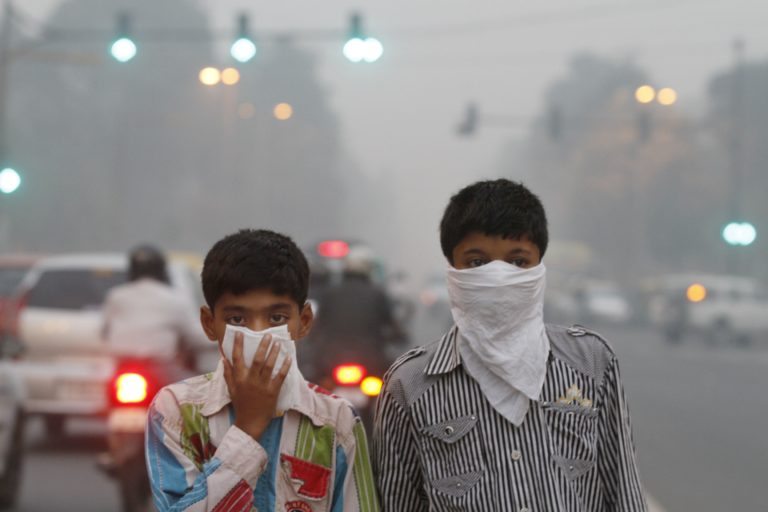
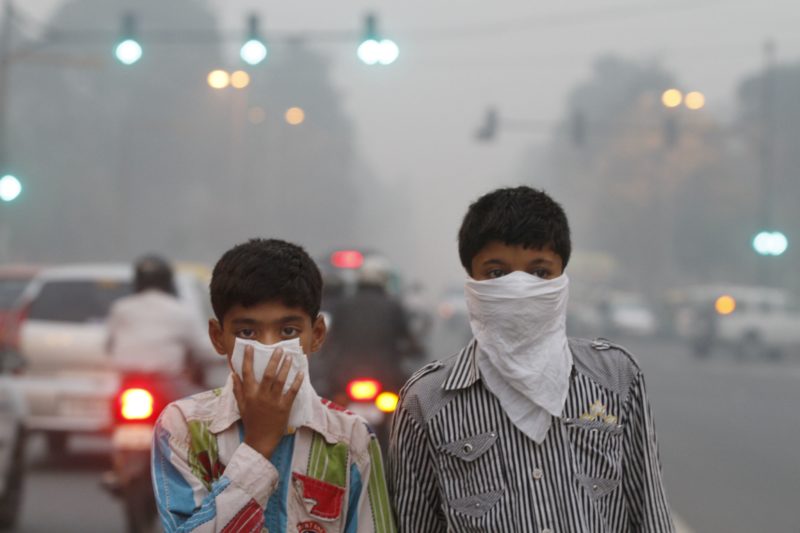
Poisonous air is having a devastating impact on billions of children around the world, damaging their intelligence and leading to hundreds of thousands of deaths, the World Health Organisation (WHO) warned on Monday, October 29, 2018.

air-pollution
Children exposed to air pollution. The WHO says that more than one in four deaths of children under five years of age are attributable to unhealthy environments

In a study on the health effect of toxic air on children, the Geneva-based UN agency estimated 600,000 deaths below the age of 15 in 2016.

WHO also said air pollution not only kills hundreds of thousands of children each year, but exposure at a young age also increases the risk for chronic diseases in adulthood.

Toxic Air Pollutants (TAPs) are those pollutants that are known to cause cancer or other serious health effects, such as reproductive effects or birth defects, or to cause adverse environmental effects.

The study found that over 90 percent of the world’s young people, 1.8 billion children are breathing toxic air, storing up a public health time bomb for the next generation.

The WHO said medical experts in almost every field of children’s health are uncovering new evidence of the scale of the crisis in both rich and poor countries, from low birth weight to poor neurodevelopment, asthma to heart disease.

According to Dr Tedros Adhanom, WHO director general, polluted air is poisoning millions of children and ruining their lives.

“This is inexcusable, every child should be able to breathe clean air so they can grow and fulfill their potential,’’ Adhanom noted.

The findings coincide with the start of the first global conference on air pollution and health in Geneva, including a high-level action day at which nations and cities are expected to make new commitments to cut air pollution.

The WHO study found that children are particularly vulnerable to air pollution because pollutants are often more concentrated nearer to ground level.

It added that their developing organs and nervous system are also more susceptible to long-term damage than those of adults.

“Air pollution is stunting our children’s brains, affecting their health in more ways than we suspected,’’ the WHO’s public health chief Maria Neira said, pointing to higher risks of cancer, obesity and heart disease.

According to Neira, to change this situation, countries and cities must wean themselves off fossil fuels and boost public transportation.

Venice braces for worst flooding in nearly 40 years

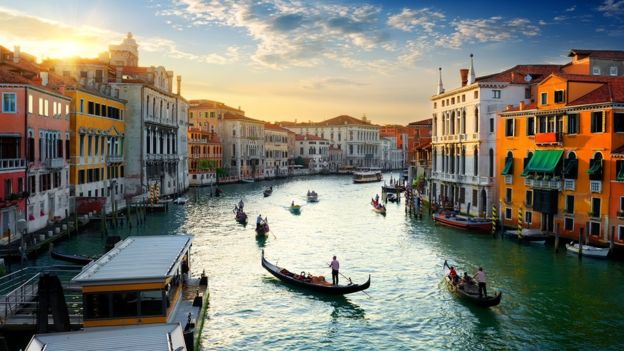
Italy’s lagoon city of Venice is bracing itself for the worst flooding event since 1979, amid a nationwide weather alert across Italy, local authorities reported on Monday, October, 29, 2018.

Venice
Venice

“The high tide was due to reach 160 centimetres, a level that leaves 77 per cent of Venice’s historic centre under water,’’ the authorities said.

On Dec. 22, 1979, the high tide rose to 166 centimetres above the zero-reference point at Punta della Salute, the Southern entrance of the Grand Canal in front of St Mark’s Square.

The worst flooding of modern times for Venice was a 194-centimetre-high tide in 1966.

Civil protection officers were on high alert in many parts of Italy as heavy rains and strong winds plagued much of the country.

In the Southern region of Calabria, a man was reported missing after his boat crashed against a pier on Sunday while he was trying to enter the port of Catanzaro during stormy weather.

Rail and motorway traffic near the Brenner Pass, which links Italy to Austria, was temporarily suspended both on Sunday and Monday, and parts of the Milan-Bologna motorway were flooded.

As a precaution, schools were closed in several areas, including in the Northern Veneto and Liguria regions, in parts of Abruzzo and in Rome.

Environment stakeholders urged to address herders-farmers conflict

0

The Federal Government on Monday, October 29, 2018 urged stakeholders in the environment sector to support its efforts to tackle the incessant herders-farmers conflicts in the country.

Lawrence Aliboh
Mr Lawrence Aliboh, Permanent Secretary, Federal Ministry of Environment, speaking at the opening of the 12th National Council on Environment (NCE) meeting in Akure, Ondo State

Mr Lawrence Aliboh, the Permanent Secretary, Federal Ministry of Environment, gave the advice on in Akure, Ondo State, at the opening of the 12th National Council on Environment (NCE) meeting.

He said that relevant stakeholders had a role to play in addressing the problem.

The theme of the meeting was “Environment and Security: Consolidating Nigeria’s Environmental Reforms towards Sustainable Development’’.

Aliboh said that the theme was very apt in view of the increasing challenges facing in the country which were somewhat related to the use of the environment and its resources for various economic activities.

“An immediate case in point is the avoidable herders-farmers conflict that is being accentuated by resource use challenges. This is where stakeholders in the environment sector have a key role in their resolutions,’’ he said.

The permanent secretary, who described NCE as the highest policy making body for the environment sector in Nigeria, urged the council to deliberate on critical decisions aimed at addressing environmental degradation.

Aliboh urged the council to proffer sound recommendations, most especially in the context of the growing global emphasis on the importance of the environment sector.

According to him, the assignment of the council is to review the level of implementation of the decisions taken at the previous council meetings and assess the progress made so far in the sector.

Aliboh, who said that the three tiers of government and relevant stakeholders had submitted memoranda on current environmental issues and perceptible challenges, said that memoranda were classified into six thematic groups.

“The technical groups are Flood, Erosion and Coastal Zone Management, Pollution Control, Environmental Health, Climate Change and Renewable Energy.

“Others are Forestry, Drought and Desertification Amelioration, Environmental Assessment and Institutional Governance,’’ he said.

Aliboh said that the classification was geared towards proffering solutions to these environmental challenges to enhance their implementation at all levels.

Mr Funso Esan, the Ondo State Commissioner for Environment, urged the Federal Government to encourage state governments to accord the environment sector the importance it deserved in terms of political will, commitment and funding.

He said that it was also imperative to ensure the judicious management of the environment and its resources to spur sustainable national socio-economic development.

“Sustainable environment is a precondition for the attainment of sustainable inclusive growth and development.

“It is, therefore, pertinent to mainstream environment into all sectors of the economy as a cross-cutting issue in development,’’ he added.

By Deji Abdulwahab

New Brazilian leader told to uphold climate commitments, safeguard human rights

0

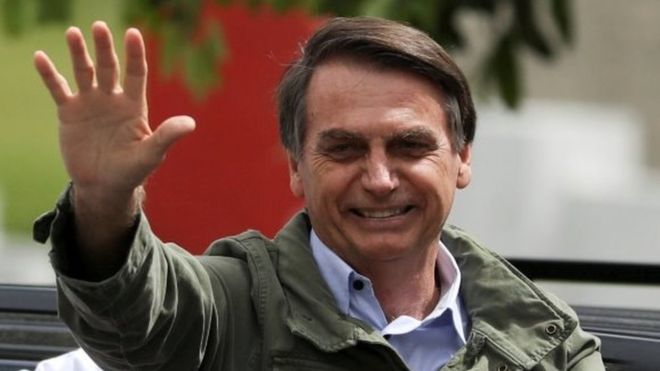
After what seemed a polarising electoral campaign that promoted hatred and division, candidate Jair Bolsonaro won the runoff for the presidency of Brazil on Sunday, October 28, 2018.

Jair Bolsonaro
Jair Bolsonaro

Bolsonaro had vowed to withdraw the country from the Paris Agreement but retracted that proposal days before the election. However, he has indicated he will weaken the form and enforcement of Brazil’s climate policies, including allowing the development of fracking in Brazil.

He has said he will loosen regulation protecting Indigenous Peoples’ rights and will not allow one square centimetre more to be managed by Indigenous Peoples. He has also stated he wants to restrict NGOs and civil society activism, including by restricting rights to public protest and other forms of democratic participation.

Brazil’s Paris commitment is to reduce emissions by 37% on 2005 by 2025 by increasing zero carbon energy, promoting reforestation, and stopping illegal logging, particularly in the Amazon.

International environment and rights activist group, 350.org, has however frowned at the new leader’s submissions, saying that he should, among other issues, keep to the country’s climate commitment.

May Boeve, 350.org Executive Director, said in a statement made available to EnviroNews: “The election of far-right candidate Bolsonaro to the highest office in Brazil represents a real threat to human rights at home and a risk to the momentum for climate action abroad. Brazil’s Paris commitment is of global significance, and any retreat from it would be deeply concerning. If Brazil steps back from the content of its commitment on forest protection and switching to zero-carbon fuels it could unravel the progress made on climate action in recent years and would be deeply unpopular and dangerous.

“The right of Brazilians to protest and to hold their elected representatives to account on environmental, or any issue, must be respected and protected. Brazil has a leadership role to play in protecting and uplifting Indigenous Peoples’ rights and has committed to reach zero deforestation by 2030 and restore forests by 12 million hectares, among other goals. Brazilians do not want to abdicate that leadership.

“Some 85% of Brazilians are concerned about climate change, they know they are in fact one of the countries most vulnerable to ever-increasing climate impacts, and they want more action; not less. Mr. Bolsonaro must work in the interest of all Brazilians, including Indigenous Peoples whose rights to their ancestral land continue to be challenged, but who hold extraordinarily valuable traditional knowledge on how we can live sustainably on this shared planet.

“A warming planet will be deadly for many in Brazil. The poorest will be the hardest hit by unchecked climate change. Poor and vulnerable communities in Brazil also suffer most from the activities that drive climate change – ike fossil fuel extraction, fracking, and deforestation. These people must be at the forefront of the mind of the new President.

“For our part, we will keep promoting civic engagement and grassroots organising to stop fossil fuels and to support a rapid and just transition powered by renewable energy. We will keep the need for Brazilian leadership on climate on the national and global agenda.

“We will be resilient. Our team in Brazil is resilient and will support and engage all people who are committed to defending human rights and a safe and healthy environment. In this climate we must all be resilient.”