Home Blog Page 1773

How climate change matters in 2018 US Congressional election

0

Although Americans have recently become more worried about global warming, it is ranked lower in priority compared to other, more immediate and visceral issues. According to a recent Pew Research Centre poll, 46% of Americans said that climate change should be a top priority for the president and Congress relative to other issues like terrorism (73% of Americans), healthcare costs (68%), and social security (67%).

A similar pattern appears to have emerged in a recent research on American public opinion by the Centre for Climate Change Communication, George Mason University in Fairfax, Virginia.

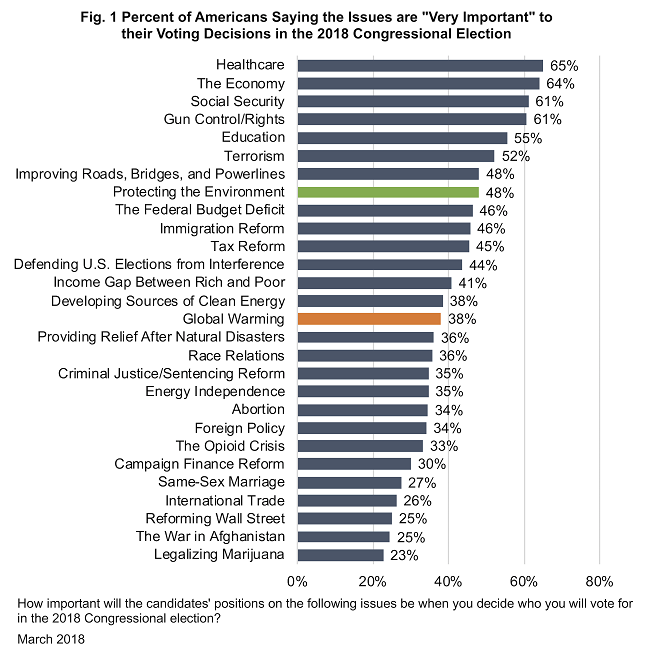
Out of 28 different issues registered voters say will influence their vote for Congress in 2018, global warming ranked 15th in importance (Fig. 1). Nearly four out of 10 Americans said that a candidate’s position on global warming will be very important to them when deciding whom to vote for in the 2018 Congressional election.
2018 US Congressional election
2018 US Congressional election: Percent of Americans saying the issues are “very important” to their voting decisions

The low priority ranking of climate change is said to be partly due to the human tendency to prioritise current risks and discount future threats. As a result, despite the heroic efforts of many scientists, activists, politicians, and other advocates, across the globe and in the U.S. in particular, “policies are lagging very, very far-miles, miles, miles behind the science and what needs to be done,” according to Nobel prize-winning economist William D. Nordhaus.

Americans’ political ideologies and partisan affiliations, however, have a strong influence on how they view climate change. The Pew Research Centre poll above found that 68% of Democrats – as compared with only 18% of Republicans – said that climate change should be a top policy priority. Similarly, the George Mason University 2018 research found that, among registered voters, global warming was ranked as the fourth most important issue to the voting decisions of liberal Democrats while it was ranked as the least important out of 28 issues by conservative Republicans.

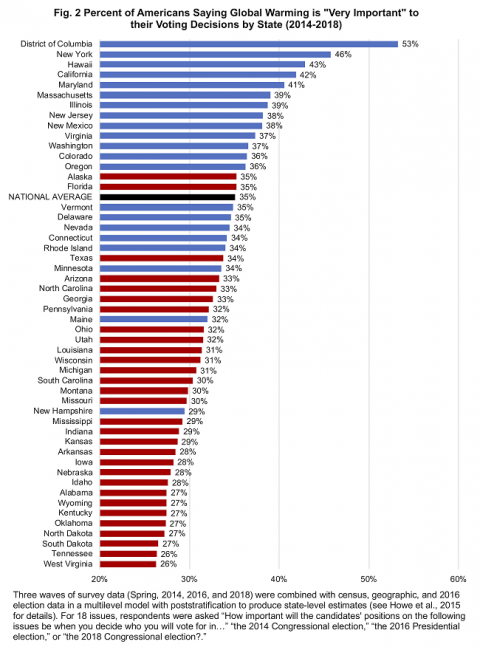
Using the models underlying our Yale Climate Opinion Maps, clear differences emerged between red and blue states (that is, voted Republican or Democratic in the 2016 presidential election). On average, blue state residents are much more likely than those in red states to say global warming will be important to their voting decisions, with a few exceptions (Fig. 2).

For instance, red states Alaska and Florida hover around the national average. In Alaska, climate change has caused flooding and permafrost melting, which is damaging roads, buildings, airports, railroads, and pipeline infrastructure. One study estimates these damages will cost $5.5 billion by 2100. In Florida, “a wealth management company worth $1.5 billion is advising customers that South Florida’s real estate market might be a risky place to invest” due to sea level rise. More severe hurricanes and harmful algal blooms may also be a factor.

Anthony Leiserowitz, Director of the Yale Programme on Climate Change Communication, said in a recent Los Angeles Times article, “This is not just a political issue anymore in some places… voters are seeing the consequences (of warming) right here, right now.”
2018 US Congressional election
2018 US Congressional election: Percent of Americans saying global warming is “very important” to their voting decisions by state

In addition to Washington DC, where global warming ranked 8th in voting issue importance, New York (11th in ranking), Hawaii (9th), and California (13th) top the list of states where the issue is most highly ranked. Greater exposure to coastal storms, wildfires, and other extreme events is likely influencing residents’ opinions in these states. The Yale Climate Opinion Maps show Washington DC and New York also have the highest population percentages who believe that global warming is affecting the weather (75% and 71%, respectively).

Residents in these states also talk about global warming more than those in most other states. By contrast, just over a quarter of Americans say global warming will be important to their voting decisions in Alabama (17th in issue importance ranking), Kentucky (16th), and West Virginia (17th) – the same red states where residents are less likely to talk about global warming and hear about it in the media.

Although many Americans rank global warming as a relatively low priority voting issue, the more general issue of environmental protection is a higher voting priority: about half of registered voters say that a candidate’s position on protecting the environment will be very important to their vote (Fig. 1).

Given that many existing environmental problems, as well as the economy, public health, and community infrastructure, will be impacted by climate change, it is important that Americans understand the connections. A warmer climate means more severe weather, increased stress on most species, less fresh water, more acidic oceans, and less permafrost. In contrast, a rapid transition to clean, renewable energy sources would provide cleaner air, improve public health, and provide economic opportunities along with many other co-benefits beyond reducing climate change. Many climate solutions actually have bi-partisan support, an important fact that is greatly overlooked in the current era of extreme political partisanship.

As more Americans come to better understand that many environmental, health, and economic impacts of climate change are interrelated –   and as the costs of clean energy continue to drop –   it is likely that the issue will become a bigger voting priority in the public.
Abu Dhabi to host 10th World Urban Forum in 2020

0

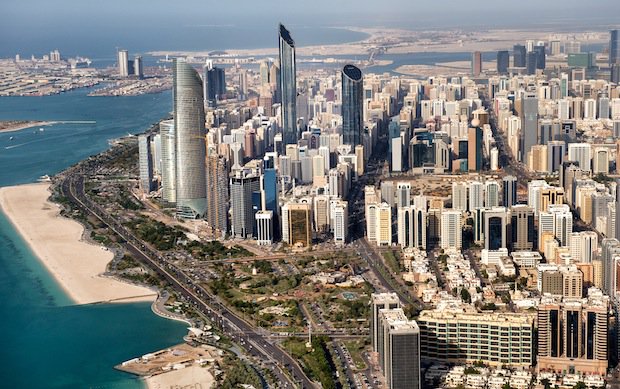
The Ministry of Foreign Affairs and International Cooperation (MOFAIC) and the Abu Dhabi Department of Urban Planning and Municipalities on Saturday, October 17, 2018 signed an Agreement with the United Nations Human Settlements Programme (UN-Habitat) for Abu Dhabi to host the 10th session of the World Urban Forum (WUF10) in 2020. This will be the first time an Arab country hosts the landmark Forum.

Abu Dhabi
Abu Dhabi, UAE

Besides being the capital and the second most populous city of the United Arab Emirates (the most populous is Dubai), Abu Dhabi is also capital of the Emirate of Abu Dhabi, the largest of the UAE’s seven emirates.

WUF10 will be convened by UN-Habitat and jointly organised with the Abu Dhabi Department of Urban Planning and Municipalities, along with partners including the Abu Dhabi Department of Culture and Tourism, Abu Dhabi National Exhibition Centre, Ministry of Foreign Affairs and International Cooperation and General Secretariat of the Executive Council.

Established in 2001, WUF is the world’s premier gathering on urban issues. The Forum examines the impact of rapid urbanisation and its implications for social, economic and environmental policies in communities, cities and towns. UN-Habitat, the convener of the Forum, is the United Nations focal point for sustainable urban development working for an inclusive and prosperous urban future.

The Forum will provide a platform to discuss 21st century city planning within a context of rapid development with specific cultural and demographic considerations. It will showcase the Abu Dhabi Planthrough which the city aims realise its long-term sustainable development vision through concrete achievements that position the Emirate as a benchmark in a region with one of the fastest rates of urbanisation in the world.

In the lead up to the Forum, the Abu Dhabi Department of Urban Planning and Municipalities will host the first Pan-Arab Urban Development Symposium in partnership with UN-Habitat in April 2019. Key decision makers, city authorities and urban experts from 22 Arab countries engaged in implementing the New Urban Agenda – to make cities inclusive, safe, resilient and sustainable – will be invited to exchange views and compare experiences about urban challenges facing fast-changing Arab cities.

H.E Mr. Falah Al Ahbabi, Chairman of the Abu Dhabi Department of Urban Planning and Municipalities, said: “We are extremely pleased Abu Dhabi has been chosen to host the 10th session of the World Urban Forum, particularly as it marks the first time an Arab nation has hosted this global event. Abu Dhabi has already attracted international merit for implementing urban sustainability in innovative ways, having itself experienced a phenomenal shift towards urbanisation in a relatively short space of time. This Forum provides an opportunity to showcase these achievements and Abu Dhabi’s role in promoting and implementing sustainable urban development as well as cementing our reputation as a global hub for innovation.”

“I would like to congratulate Abu Dhabi and commend the timely preparations and planning already underway by the city authorities and by the United Arab Emirates Government for this important event,” said UN-Habitat Executive Director, Maimunah Mohd Sharif. “Abu Dhabi, like so many cities in this region, is undergoing rapid and transformative urbanisation and we commend the focus on sustainability shown by the Government. This open, inclusive Forum, with its high-level participation, is a unique opportunity to focus on how urban development can be implemented in a sustainable way around the world.”

H.E. Mr. Falah Al Ahbabi added: “We are delighted and eager for the opportunity to discuss solutions that are being tested by pioneering cities around the world while also showcasing our city, country and renowned Emirati hospitality. Hosting the World Urban Forum in 2020 also provides the opportunity to celebrate our late Founding Father, His Highness Sheikh Zayed’s vision which put us firmly on the path to sustainable development, as well as recognising our young country’s achievements in what will be the 49th year since the union of our emirates.”

WUF10 will lead to new partnerships and actions to meet the challenges of urban areas. Key topics including human capital, resource management, education and culture, mobility, data and much more, will be discussed during the conference.

The Forum plays a key role in implementing the New Urban Agenda, a framework unanimously adopted at the United Nations Conference on Housing and Sustainable Urban Development (Habitat III), laying out how cities should be planned and managed to best promote sustainable development. Abu Dhabi strongly supports the New Urban Agenda as it represents its own ideal for creating a sustainable Emirate by preserving and enriching its physical and cultural identity, while improving quality of life for all its residents. Abu Dhabi’s urban development vision encompasses four pillars: economic, social, cultural and environmental.

The Forum will bring together some 20,000 delegates from more than 150 countries. It will provide an opportunity to strengthen relationships and engagement and demonstrate the feasibility of incorporating sustainable and context-based practices in developed and developing countries.

Food insecure people in northeast drop from 5.2m to 2.9m – FAO

0

The UN Food and Agriculture Organisation (FAO) says food security has improved in northeastern states with the number of food insecure people dropping from 5.2 million to 2.9 million.

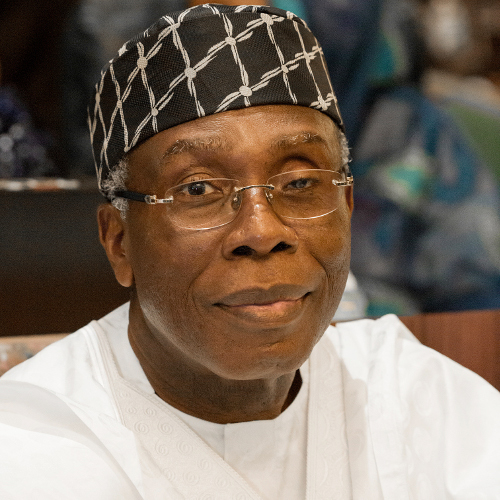
Chief Audu Ogbeh
Minister of Agriculture and Rural Development, Chief Audu Ogbeh

The FAO Representative in Nigeria Mr Suffyan Koroma, represented by Mr Patrick David, the FAO’s Programme and Liaison Officer, said that the number dropped between August 2017 and August 2018 in Adamawa, Borno and Yobe states.

Koroma disclosed this at the presentation of October 2018 Cadre Harmonise (CH) Analysis Outcome for 16 states and FCT in Abuja on Friday, November 2, 2018.

Cadre Harmonise is an early warning and food insecurity nutrition analysis tool to serve Food Crisis prevention and Management Framework which considers various food security and nutrition outcomes in 16 states.

He noted that the number reduced because of massive support from the government and the international community.

“Despite this improvement, there is still a huge need to respond to and FAO in partnership with WFP supported and will continue to support the Government of Nigeria in providing emergency and resilient livelihood assistance.

“We will also provide nutritious food crops, cash crops and livestock support to more than one million vulnerable individuals identified through the cadre harmonise,’’ he said.

Ms Myrta Kaulard, the World Food Programme (WFP) Country Director, emphasised the need for data collection to shape the right way of intervention and assist government policies.

Kaulard said that there were increased number of people who do not have access to land and could not return to farming activities.

She said that tackling insecurity and access to land in the northeast were priorities to reduce the number of people who required assistance in the area.

“WFP looks at the policies and actions by state and federal authorities and where there are gaps, we provide food assistance or cash requirements for the affected people to buy food.

“The result of these joint efforts is very encouraging because in 2016, there were concerns of famine in the Northeast and year after year, we have seen a gradual improvement in conditions,’’ she said.

Dr Abdulkadir Mu’azu, the Permanent Secretary, Federal Ministry of Agriculture and Rural Development, emphasised the need for data collection which was the major aim of the cadre harmonise analysis.

Mu’azu, represented by Mr Matthew Owolabi, a director in the ministry, said that the government would continue to support all stakeholders and take appropriate actions required based on the analysis.

Dr Issoufou Baoua, the Food Security Analyst Expert of Cadre Harmonise, said the analysis was done in October 2018.

Baoua said that the analysis was done with evidence and data from climate change and livelihood support in the 16 states.

He said that although there were still challenges to be addressed, the food security situation had improved in the 16 states when compared with two to three years back.

The experts listed the states where the analysis as Adamawa, Bauchi, Benue, Borno, Gombe, Jigawa, Kaduna, Kano, Katsina, Kebbi, Niger, Plateau, Sokoto, Taraba, Yobe, Zamfara and the FCT.

The News Agency of Nigeria (NAN) reports that the CH analysis started in Nigeria in 2015 to help support and assist government interventions on food and nutrition security.

It is being supported by the FAO, WFP, and Committee for Drought Control in the Sahel (CILSS), among others.

By Ginika Okoye

Pollution: NIMASA to enforce 0.5 per cent sulphur limit on ships

0

The Director-General (DG) of Nigeria Maritime Administration and Safety Agency (NIMASA), Dr Dakuku Peterside, on Friday, November 2, 2018 said that the agency would enforce strict compliance on sulphur pollution.

shipping
Shipping

Peterside said the measure would be in line with International Maritime Organisation (IMO) regulation which put a maximum of 0.5 per cent sulphur cap on all fuel used by vessels by the year 2020.

According to a document signed by Isichei Osamgbi, NIMASA Head, Corporate Communications, the D-G made the statement during an interactive session with newsmen at the ongoing maritime week in Dubai.

“That part of the requirements adopted at the 73rd meeting of the Marine Environment Protection Committee (MEPC) of the United Nations maritime organ is to reduce the sulphur content permitted in ships’ fuel oil globally to 0.5% with effect from 1st January 2020.

“The 2020 fuel challenge is geared towards energy efficiency, environmental pollution control, health as well as core regulatory enforcement issues.

“As a maritime nation, we cannot afford not to comply with the IMO standard which will also do a lot in mitigating global warming and other related environmental issues”, Peterside said.

He said that the IMO ban which related to fuel intended for combustion, propulsion and operation purposes on board ships will enter into force on March 1, 2020.

Peterside said that all member states were expected to comply with the stated standard by this date.

He said that it would in the best interest of Africa to ensure compliance because the continent did not have the technology to mitigate effects of sulphur fuel on the environment.

The maritime boss enumerated some of the steps the agency planned to take to manage the transition and ensure compliance to include embarking on massive enlightenment and stakeholder’s engagement.

The agency would collaborate with fuel refiners and suppliers and a schedule for pre-enforcement to engender the right approach.

“It is worthy of note that the IMO has been working to reduce harmful effects of shipping on environment since 1960.

“The Annex VI to the International Convention for the Prevention of Pollution from Ships (MARPOL) was adopted in 1997 to address air pollution from shipping.

“The regulation 14.1.3 of Annex VI of the convention seeks to control airborne emissions of compounds such as sulphur oxides, nitrogen oxides and other ozone depleting substances arising from shipping activities.

“All these is in order to mitigate its effects on health and the environment,” he said.

By Uchenna Eletuo

How Turkey’s coal investments are poisoning people, air, seas – Report

0

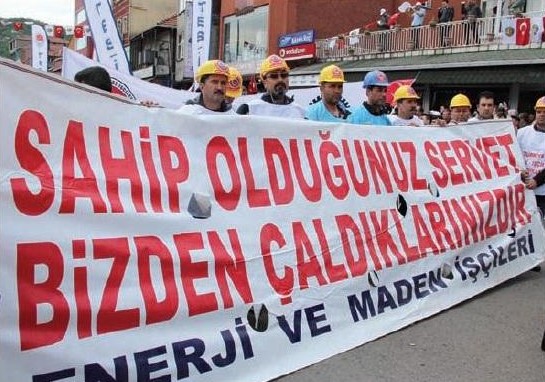
Villagers affected by three polluting coal mines in Muğla city, Turkey have joined together to demonstrate against plans to extend the mines. People had their photos taken and projected them in front of Yatağan coal power plant.

Yatağan Coal Power Plant
A Yatağan Coal Power Plant protest

“After years of suffering from the deadly impacts of lignite mines and coal burning in their lands, the villagers of Muğla came together to remind us all that coal pollution affects everyone – no matter where it is burned, we all pay its environmental and health impacts,” says Efe Baysal, Turkey Campaigner, 350.org.

A new report released on Friday, November 2, 2018 shows the “The Real Costs of Coal: Muğla” in Turkey by CAN Europe. The research places a spotlight on plans to expand three coal-fired power stations in Muğla city and demonstrates the huge price those living nearby and those in countries further afield face from air pollution.

The Real Costs of Coal: Muğla shows that since the plants became operational in 1983, the three coal plants are responsible for the release of: 9.5 million tons of sulphur dioxide, 890,000 tons of nitrogen oxides, 65,000 tons of dust, and 28,000 kg of mercury.

According to health impact modelling carried out by the study, the pollution has caused more than 45,000 premature deaths, hospitalisation of around 46,000 people due to respiratory and cardiovascular illnesses and the loss of 12 million working days, a price too high to pay. The testimonies of the villagers living in Muğla support these findings, according to 350.org.

Dr. Haluk, a resident of Karacahisar Village, said: “In the last decade, the cause of death in our village has changed significantly, it’s mostly cancer. We also see more and more young children, and non-smokers with acute respiratory diseases.”

The findings of the report come at a moment when health experts around the world have met in Geneva for the first WHO Global Conference on Air Pollution and Health. The Conference is expected to deliver a “Call for Urgent Action” on air pollution, an issue caused primarily by burning of coal.

Due to the transboundary nature of pollutants, Muğla’s coal plants’ costs to health are being felt in Europe and East and North Africa, with the largest transboundary impact taking place in Egypt, followed by Israel, Greece and Palestine.

Since coming online in 1984 the three plants have released 360 million tons of CO2, an expansion will mean spewing another 328 million tons of CO2 into the atmosphere.

“The expansion of any new coal power plant is inconceivable given the findings of the IPCC report released this October.  Every ton of coal burned makes an immediate contribution to the quantity of CO2 in the atmosphere causing long term and irreversible climate change. We need to keep fossil fuels in the ground now to ensure that we stay below 1.5 degrees to avoid catastrophic climate change,” says Hoda Baraka, Global Communications Director, 350.org

Expert says review of Lagos environmental law overdue

0

An environmentalist, Mr Taiwo Adewole, says the the review of the Lagos State Environmental Law 2017 is long overdue.

Ambode
Akinwunmi Ambode, Governor of Lagos State. Photo credit: ecomium.org

Adewole, Chief Executive Officer of Taiwo Adewole and Associates, told the News Agency of Nigeria (NAN) on Friday, November 2, 2018 in Lagos that the 2017 Environmental Law was done in a hurry.

He said that the previous Environmental Law was done to favour of Visionscape Sanitation Solutions and the state lawmakers had seen the flaws and now want to set the record straight.

“There are a lot of flaws because it was rushed and passed into law just to favour Visionscape, all in the name of Pubic Private Partnership (PPP),” the environmentalist said.

He said that while reviewing the law, the aspects of first line charge payment to Visionscape and total scrapping of the Private Sector Participants (PSPs) should be investigated.

According to him, the area of introduction of Waste Collection Operators (WCO), which is selective of some selected PSPs, and killing of the Lagos Waste Management Authority (LAWMA) should be reviewed.

“The new law should give all opportunity previously given to Visionscape to the PSPs in terms of PPP and funding based on first line charge and signing of bonds for the indigenous PSP/investors,” he said.

NAN reports that the Lagos State House of Assembly on Thursday began a three-day retreat to review the state’s Environmental Law and nine others, to meet global best practices.

The Speaker, Mudashiru Obasa, said the House was committed to moving the state forward with realistic laws.

Obasa said that, to move Lagos State forward, there was the need to put in place laws that were enduring and in conformity to the interest of the people.

“We must restructure them (selected laws) and introduce new laws where applicable. We need laws that can satisfy the interest of our constituents.

“In our parliamentary business, we need to pick laws that we have passed and see areas we need to tinker with, so that we continue to do what we were elected for,” he said.

Obasa said that Lagos had a good environmental law in place but had problems with the implementation.

“We are here because people raised eyebrows over some aspects, and we want to see how we can amend them.

“We have brought in people who have served as commissioners, as insiders, to tell us what is wrong with the laws and what we need to do.

“We will continue to review our laws. It is by going through them regularly that we will prepare our state for a better law.

“Even if a law was passed yesterday, we can come around to review it today,” he said.

By Florence Onuegbu

FAO wants inclusion of food, nutrition security analysis in university’s higher degree curriculum

0

The UN Food and Agriculture Organisation (FAO) has called for partnership with the Federal Government and some universities on the inclusion of food and nutrition security analysis in master’s degree curriculum.

Suffyan Koroma
Suffyan Koroma, FAO Representative in Nigeria

The Country Representative of FAO, Mr Suffyan Koroma, made the call in Abuja on Friday, November 2, 2018 at the presentation of October 2018 Cadre Harmonise (CH) Analysis Outcome for 16 states and FCT.

Koroma, who was represented by Mr Patrick David, the FAO’s Programme and Liaison Officer, said that inclusion of the analysis in the higher degree curriculum would facilitate the training of experts in food and nutrition analysis.

He said that the training of experts would also ensure the sustainability of the Cadre Harmonise analysis and boost the gathering of data on food and nutrition in the country.

“FAO wishes to partner with the government of Nigeria and some Nigerian universities to initiate a curriculum at the Master’s degree level for the training of experts in food and nutrition security analysis.

“FAO Nigeria will continue to provide the needed technical support for the regular conduct of the Cadre Harmonise analysis as well as the expansion of the process to the remaining states.

“We believe that there is also a need to increase the commitment of the states and Federal Government to financially support data collection,’’ he said.

Koroma pledged that the organisation would continue to support the government by providing emergency and resilient livelihood assistance, including nutritious food crops, cash crops and livestock support.

Cadre Harmonise is an early warning and food insecurity nutrition analysis tool to serve Food Crisis Prevention and Management Framework, which considers various food security and nutrition outcomes in 16 states.

News Agency of Nigeria (NAN) reports that the Cadre Harmonise analysis started in Nigeria in 2015 to support and reinforce government interventions in food and nutrition security.

The Cadre Harmonise analysis is facilitated by FAO, the World Food Programme (WFP) and Committee for Drought Control in the Sahel (CILSS), among others.

By Ginika Okoye

Earth tremor hits Abuja again, NEMA, geological agency confirm incident

The National Emergency Management Agency (NEMA) and the Nigeria Geological Survey Agency (NGSA) have confirmed an incident of earth tremor at the Maitama District of Abuja, the Federal Capital Territory, on Thursday, November 1, 2018.

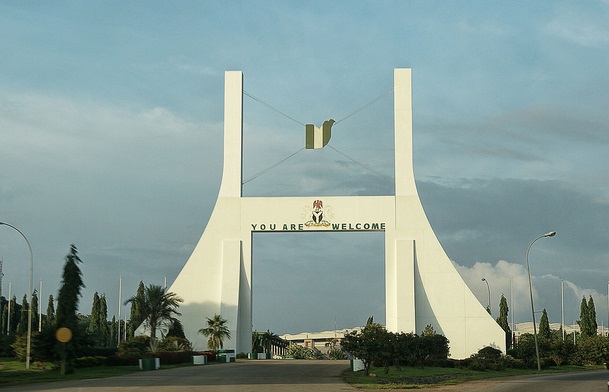
Abuja
The Abuja city gate

Both agencies confirmed this in a joint statement signed by Mr Vincent Owan, Director, Planning, Research and Forecasting NEMA, and Mr Abdulrazak Garba of the NGSA, and made available to newsmen in Abuja.

The earth tremor was reoccurring just a few months after an earth tremor shook the Mpape axis and environs in the FCT in September.

In the statement, the NGSA revealed that it received a call at about 12.45 p.m from a location in Maitama reporting the incident after which a technical team was immediately dispatched to the location.

It stated that a team was sent to the location of the call for an on-the-spot assessment and an internal response protocol was immediately activated, informing relevant government agencies and stakeholders.

“Our preliminary findings indicated that the tremor occurred at about 12.26 hrs around the vicinity of Panama Street in Maitama District, Abuja.

“After the field evaluation, the NGSA determined that the intensity was about 3.0 on the Mercalli Intensity Scale.

“That means it was just felt indoors and lasted less than one minute.

“Further inspection revealed that there was no structural damage due to the vibrations and hence, NEMA was adequately briefed by the NGSA.

“The residents were consequently assured that there was no cause for alarm,’’ it stated.

According to Owan, the NGSA technical teams are conducting further assessments and will continue to update the public on further development.

Visiting the scene of the incidence, residents expressed worry over the reoccurrence of the earth tremor in the FCT, saying that they no longer feel safe.

Hajiya, Lami Abubakar, who lives on Panama Street, said that it was important for adequate assessment to be done around the axis that has been experiencing the earth tremor.

She said that this would help identify the causes, to know if it was natural or due to manmade activities for possible solutions or safe practices that should be adhered to by residents.

She said that the reoccurrence was too soon, and she was yet to recover from the shock which has also affected her three-year-old baby.

Abubakar called on relevant agencies not to take the incident for granted.

By Lizzy Okoji

UNIDO, Edo to construct 2mw micro dam in Benin

0

Gov. Godwin Obaseki of Edo State says his administration is working with the United Nations Industrial Development Organisation (UNIDO) to construct a two-megawatt micro dam on Ikpoba River to improve power generation as well as to create jobs in the state.

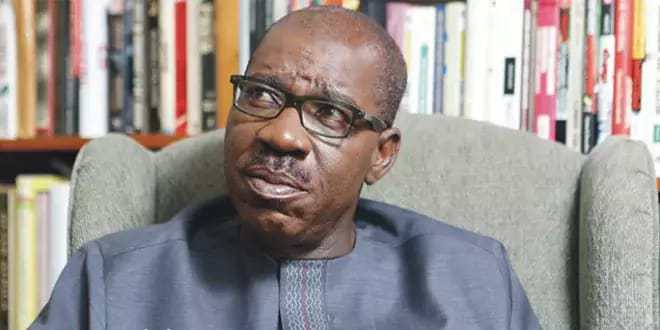
Godwin-Obaseki
Governor Godwin Obaseki of Edo State

The Special Adviser to the Governor on Media and Communication Strategy, Mr Crusoe Obaseki, said this in Benin City, the state capital, on Thursday, November 1, 2018.

The Governor’s Aide said Obaseki disclosed this when he led some members of his cabinet on a condolence visit to family members of the late industrialist, Dr Efionayi Iyayi, in Benin on Wednesday.

The governor, extolling the roles late Iyayi played in boosting economic activities in the state, said: “We share his dreams that you must create the enabling environment for business to thrive.

‘’We will do all in our power, as a government, that the dream of creating jobs for Edo people is realised by my tenure.”

The governor said the two-megawatt dam project would commence next year and, on completion, supply power to a 30-hectare estate.

He said the estate would have an entertainment park that would host Nollywood investments.

Obaseki said his administration was also working on a 50-megawatt power plant that would be fired by gas produced in Ologbo area of the state.

‘’Two weeks ago, the National Electricity Regulatory Commission approved licence for one of our partners in Ologbo for the first phase of a 50-megawatt electricity which will be fired by gas produced in the area.”

‘’Construction has started, and the first phase of the electricity will supply power to the Benin Industrial park,” said the governor.

In his remarks, the first son of the deceased, Mr Caesar Iyayi, thanked Gov. Obaseki and his entourage for the condolence visit.

He said his late father lived an accomplished life worthy of emulation and created jobs for many people in Edo through his investments in manufacturing, construction and agriculture.

“He used his own resources to build a 20-kilometre road linking Benin-Abuja Expressway to Akure.

“He extended electricity to Egba Community from Benin City and built factories and police stations in the state.

“My father led a life of accommodation, tolerance, justice and sacrifice,” he said.

By Joy Odigie

Council urges aggressive campaign against environmental degradation

0

The National Council on Environment (NCE) has urged stakeholders to intensify efforts in engaging on aggressive campaign against human activities causing environmental degradation in the country.

Ibrahim Usman Jibril
Minister of State for Environment, Ibrahim Usman Jibril

The council gave the advice in a communique read by the Minister of State for Environment, Alhaji Ibrahim Jibril, in Akure, Ondo State, on Wednesday, October 31, 2018.

The NCE, the highest policy and decision-making body in the environment sector, held its 2018 meeting between Oct. 29 and 31 in Akure, Ondo State.

The theme of the meeting was: “Environment and Security: Consolidating Nigeria’s Environmental Reforms towards Sustainable Development’’.

In the communiqué, the council observed that man-made activities were more responsible for environmental degradation than natural causes.

It also called on the three tiers of government, private sector, community-based organisations, faith-based organisations and NGOs to engage in aggressive public enlightenment and sensitisation programmes.

“The council has noted the ongoing reforms in the environment sector.

“It emphasised the need to prioritise the intricate and inexorable linkage between environment and security – food, human, social, economic and cultural by government at all levels as well as the citizenry,’’ the minister said.

The council called on the Federal Government to place environment as a top priority national security strategy.

“The council considered 138 memoranda, stepped down 33 and recommended 105, consisting of 70 actions and 35 information memoranda.

“In alignment with the theme of the council meeting, deliberations focused on consolidating reforms in the environment sector, strengthening the environmental sector in line with contemporary environmental challenges.’’

By Deji Abdulwahab