The state of Kerala in India has released an action plan to contain antimicrobial resistance (AMR). It is the first state in the country to do so.
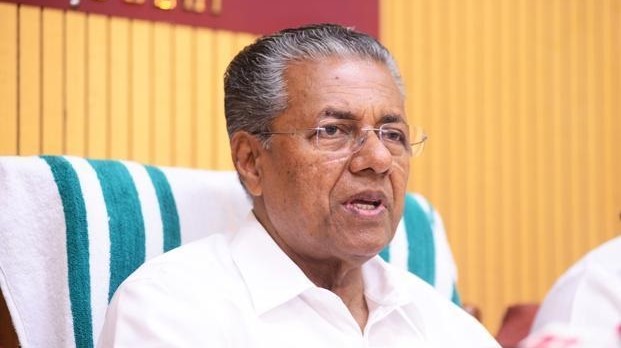
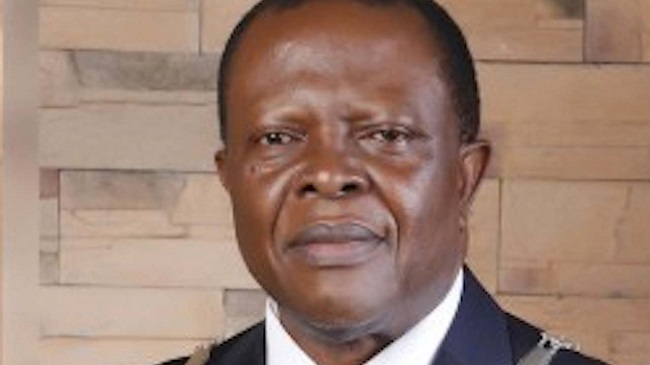
Pinarayi Vijayan, Chief Minister of Kerala
The Centre for Science and Environment (CSE) on Friday, October 26, 2018 in a statement welcomed the Kerala Antimicrobial Resistance Strategic Action Plan (KARSAP), which was released by Pinarayi Vijayan, Chief Minister of Kerala, at a state-level consultation held in Thiruvananthapuram on October 25.
Antimicrobial resistance – in particular, antibiotic resistance – is a global public health threat. Antibiotics used to treat diseases are increasingly becoming ineffective because of their overuse and misuse in human health and in the production of food from animals such as chicken, fish and dairy products. Poor management of waste from hospitals, farms, pharmaceutical industry and households also adds to the problem.
Responding to the global call for action, India had released its national level plan on AMR along with a Declaration in Delhi in April 2017, which called for state-level action plans. Kerala is the first state to announce its plan.
“We congratulate the state of Kerala for achieving this milestone. It has led this much needed step in India’s fight to contain AMR. Other states should now come forward with their plans to handle this public health crisis in the country,” said Chandra Bhushan, deputy director general, CSE.
Amit Khurana, programme director, food safety and toxinsprogramme of CSE, pointed out that “since health, livestock, fisheries and environment are state subjects, it is imperative that states develop their own plans for effective action on the ground across the country”.
“Kerala’s plan reflects the required multi-sectoral approach. Besides human health aspects, it aims to address animal and environmental dimensions of the AMR problem, which is crucial for effective containment of AMR,” said Rajeshwari Sinha, deputy programme manager, food safety and toxinsprogramme, CSE.
CSE has actively contributed to the Kerala action plan and is an implementation partner in the state’s AMR containment efforts. Earlier, it had helped in development of India’s national action plan and is also a stakeholder in implementation. In the past, it has highlighted misuse of antibiotics in food animal production in the country and environmental linkages of AMR. CSE continues to advocate for required change in policy and practice.
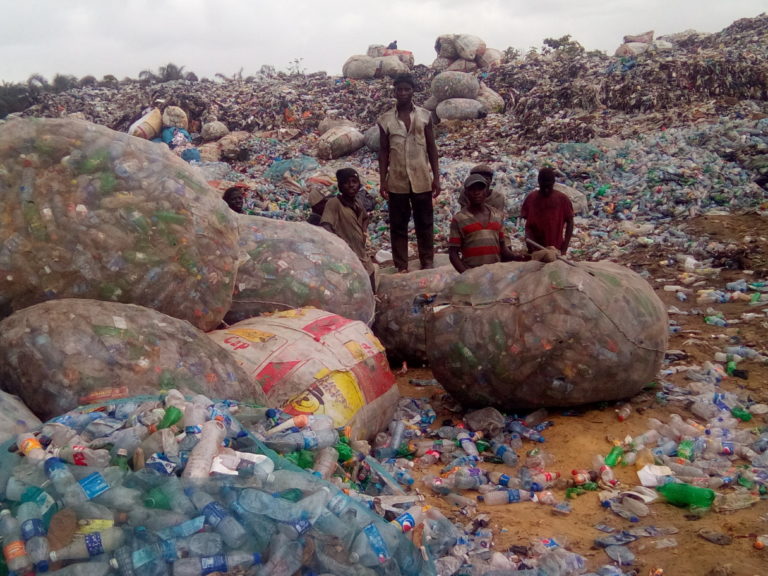
To cut the tide of proliferation of plastic waste materials in Nigeria, the Federal Ministry of Environment is preparing a new National Plastic Management policy.
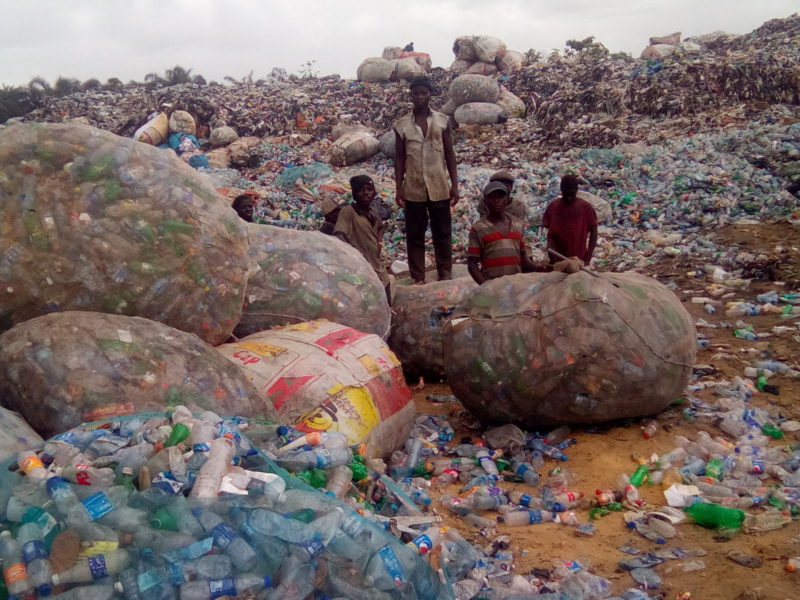
Plastic bottle scavengers and their wares at the Epe Landfill Site/EcoPark in Lagos, Nigeria
Minister of State for Environment, Mr Ibrahim Jibrin, made this known at the 2018 National Health Advancement Conference organised by Help Keep Clean Foundation on Thursday, October 25, 2018 in Abuja.
The minister was represented at the Conference by Mr Dominic Abonyi, Registrar of the Environmental Health Registration Council of Nigeria.
He said the new policy would give guidance on the course of action for the relevant stakeholders in mitigating the alarming spread of single use plastic, used daily nationwide.
He noted that Nigeria was faced with diverse environmental challenges ranging from desertification, draught, erosion and pollution.
The minister said the environmental challenges presents with other hazards such as biological, chemical, ergonomic and physical which threaten human survival and development efforts of Nigerians by inflicting injuries, causing diseases and psychosocial disorders.
He said the environmental challenges encumber production potentials of industrial and agricultural sectors and trigger socio-cultural conflict if not properly managed.
He underscored the need for “re-awakening national awareness on environmental health hazards and safety” as echoed by the theme of the conference.
Earlier, Ms Chikezie Ijeoma, the Convener of the conference and Founder, Help Keep Clean Foundation, an NGO, said the conference would explore innovative strategies and pathways at ensuring healthy environment across Nigeria.
“We have converged to engage a relative discourse on the theme: Re-awakening national awareness on environmental health hazards and safety. It is a campaign that set new agenda as an intervention to environmental challenges in Nigeria.”
Mr Mike Omotosho, Founder, Mike Omotosho Foundation, and Chairman of the occasion, said the increasing environmental pollution in the society should be at the forefront and source of concern for the nation.
As a public health enthusiast, Omotosho described the environmental challenges in Nigeria as “a potential tsunami”.
“While most of us feel helpless in matters of national interest, environmental pollution is another area where we can personally influence what is happening and bring about the desired change,’’ he said.
He added that biggest factor for immense concern was the increase in carbon dioxide level due to emissions from fossil fuel and other factors such as land use, ozone layer depletion, agriculture and deforestation, among others.
“Because of the peculiar nature of our nation now, deforestation due animal grazing is one of the burning issues and of national concern.
“Livestock is responsible for 18 per cent of world greenhouse gas emission as measured in carbon dioxide equivalent.
“This include land use change, meaning deforestation in order to create grazing land; as much as 70 per cent deforestation was to make way for grazing lands,’’ he said.
He said that in addition to carbon dioxide emissions, livestock was responsible for 65 per cent of human induced emissions.
He added that livestock also produce 35 per cent of human induced methane which has 25 per cent global warming potential of carbon dioxide.
“From these figures, we must therefore keep in mind that all forms of pollution that affect our natural environment will end up having long term effect thereby making life in such areas unsafe for future generations,’’ he said.
“The theme of the conference could not have come at a better time than now.
“Indeed, we can all play a role in preserving our environment starting with our immediate community, not just for our self but for future generation,’’ he said.
Highlight of the event include special recognition awards to the wife of the President of the Senate, Mrs Toyin Saraki, and Mr Mike Omotosho, among other Nigerians.
The unveiling of a book titled “Tom and his hand washing friends”, authored by the convener, also featured at the occasion.
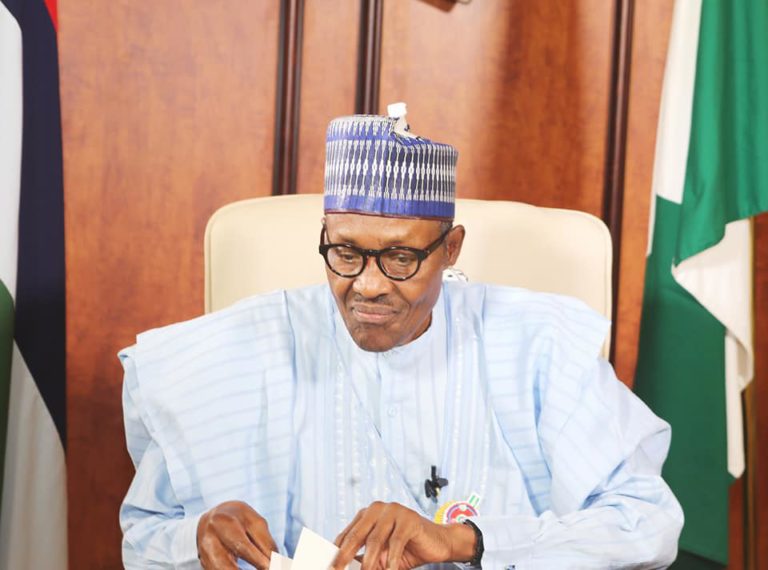
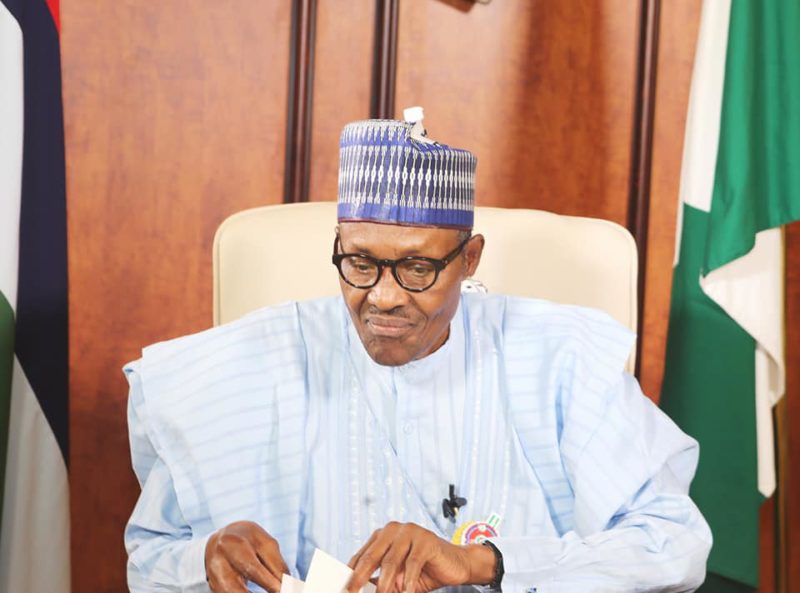
The Minister of Water Resources, Alhaji Suleiman Adamu, on Thursday, October 24, 2018 said that President Muhammadu Buhari would declare a state of emergency on water and sanitation come November 8.
President Muhammadu Buhari
Adamu made the disclosure during the Special Town Hall Meeting of the Federal Government held at Emeritus Prof. Theophilus Ogunlesi Hall of University College Hospital (UCH) in Ibadan, Oyo State.
The town hall meeting was aimed at briefing the people on the achievements of the Buhari-led administration in infrastructure development.
“I wish to inform you that for the first time in Africa, President Buhari is going to declare state of emergency on water and sanitation, precisely on Nov. 8.
The minister lamented about several abandoned water projects across the federation under the past administrations and said that the sum of N3 billion would be provided annually to states with workable water master plans.
“The existing master plan on water resources in the country was abandoned and contracts were awarded without recourse to the needs of the country.
“To realise adequate water supply, we would increase our intervention to support state governments to N3 billion annually. This would be for states that have proper water master plan,” he said.
He said that government would also return the monthly environmental sanitation to address issue of open defecation and other sanitation issues.
He said that the Federal Government was working round the clock to provide adequate water supply to communities and cities across Nigeria.
The minister said that the present administration had inaugurated many water projects, among which he said were to cater for power supply, irrigation dams and domestic water supply.
He said: “It is a shame that, today, there is no single city in this country that can boast of pipe-borne water supply and 100 per cent coverage to all the citizens.
“This is why the president has decided to take up the responsibility of supporting water infrastructure in Nigeria.’’
The minister also said that the Federal Government was working on Memorandum of Understanding (MoU) with the World Bank to assist 6 cities in country on urban water supply.
He added that government would also sign a partnership arrangement to improve on the Ikere Gorge Dam in Iseyin to harness its full potential.
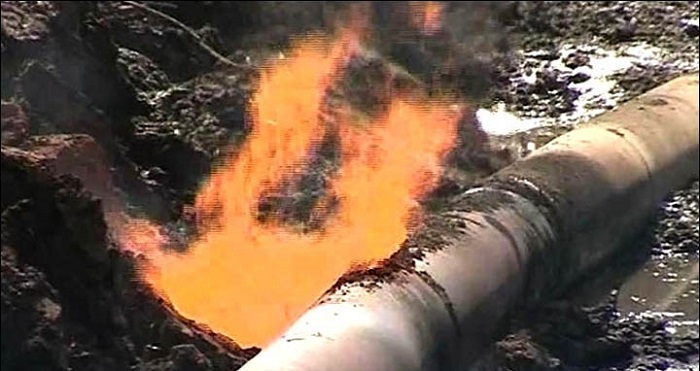
The Environmental Rights Action/Friends of the Earth Nigeria (ERA/FoEN) has blamed Nigeria’s reliance on fossil fuels for the unrelenting oil spill-related incidents across the country, the recent one involving over 50 persons incinerated when a pipeline belonging to the Pipelines and Product Marketing Company (PPMC) in Umuode Community in Aba, Abia State, exploded.
About 50 persons were reportedly incinerated when a pipeline belonging to the PPMC in Umuode Community in Aba, Abia State, exploded
The incident occurred at Umuimo and Umuaduru villages in Osisioma Ngwa council area of the state when a pipeline said to have been abandoned by the PPMC for about three years was suddenly used to pump fuel, leading to leakages that residents of the area swooped on to meet their needs.
Spokesperson of the Nigerian National Petroleum Corporation (NNPC), Ndu Ughuamadu, had turned the blame on residents whom, he claimed, tampered with oil facilities.
But ERA/FoEN in a statement issued in Lagos on Thursday, October 25, 2018, said that it was unfortunate that the NNPC and other oil industry agencies dodge responsibility and continue to give excuses whenever their ill-maintained facilities leak and cause havoc to man and the environment.
ERA/FoEN Executive Director, Godwin Uyi Ojo, said: “With every oil spill incident and the weighty costs, it is now evident that the lives of our people mean nothing to the Nigerian government in its unsustainable wedlock with a fossil-fuels dependent economy. This, like previous incidents, confirms the assertion.”
Ojo explained that, with Nigeria’s refusal to muster the political will to transit from fossil fuels, it will be left behind as more and more countries embrace and make phenomenal inroads into renewables that have proven to be safe, environment-friendly, and becoming readily accessible.
“Starting with the Jesse fire disaster in Delta, to Abule Egba, Atlas Cove and Ijegun in Lagos, Arepo in Ogun and those happening across the Niger Delta, thousands have lost their lives, and it would seem the government has not learnt any lessons. The waste of the lives of our people is simply unexplainable in the light of evident alternatives,” said the activist.
He frowned at reports that the PPMC failed to mobilise to Umuimo and Umuaduru villages many months after locals alerted about the inherent dangers of the leaking fuel, stressing that the NNPC and PPMC are only interested in putting up self defense in their public statements, at the expense of lives.
“The time for cheap talk is long past. Every life counts. The spills, explosions and deaths will only stop when Nigeria weans itself of fossils and leapfrog into the renewable’s regime. The environment will be the better for it, our people will be safe and economic growth will be assured. Unless we explore this path, this unfortunate situation will continue,” Ojo stated.
The Lagos-based ITB Construction Nigeria Limited has called for the digitisation of the construction industry in the country. Managing Director of ITB, Mr. Ramzi Chidiac, made the call recently at the firm’s office on Victoria Island.
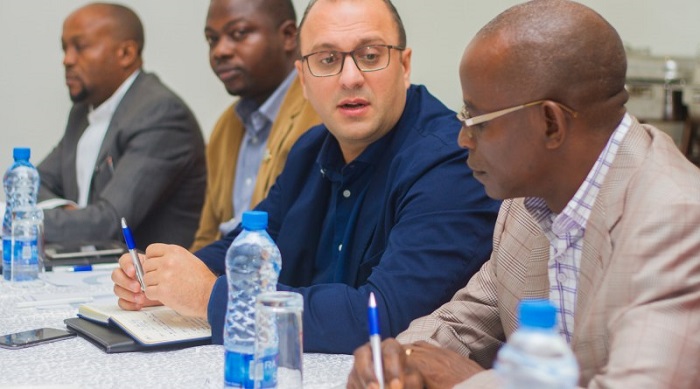
Managing Director of ITB, Mr. Ramzi Chidiac (second right), in the company of some of his managers during a recent forum in Lagos
Chidiac noted that digital technology would foster the growth of the construction industry, minimise project delays, reduce the occurrence of accidents, and guarantee cost effective building projects. In addition, the adoption of digital technology would pave way for the emergence of green and smart buildings, which brings about positive benefits for the environment, he said.
His words: “If adequate and collective attention is given to the value of technology in construction, we can better control the quality and standards upheld in engineering. As Nigeria moves closer to its vision 2020, it is imperative that all sectors are challenged to uphold the best standards. I believe that the way forward for the construction industry is to embrace digitisation.
“At ITB, we recognise the huge benefits that technology can bring to human lives and to the environment, and that is why we are committed to providing advanced building solutions. Evidenced by our use of steel and concrete, and the construction of the first Leadership in Energy and Environmental Design (LEED) certified building in Nigeria, we continually seek efficient ways to adopt new technology to improve the standard of living.”
ITB Nigeria, he further disclosed, has made an appreciable mark in the country with several projects, and continues to advocate for smart buildings and green architecture. The full range of services is constantly challenged by the desire to revolutionise how buildings are erected and the effect they have in the overall aesthetics of the city and its environment, Chidiac disclosed.
Connected Development (CODE) has secured a working relationship with the media for its policy advocacy activities on the National Action Plan on Business and Human Rights (NAPBHR).
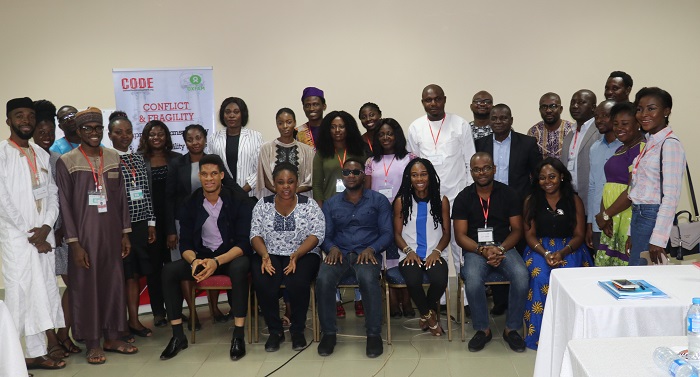
Participants at the Roundtable
The development emerged after following a two-day roundtable in Abuja for the media on the organisation’s campaigns around the NAPBHR in the oil and gas sector, especially as it affects host communities and the corporate social responsibility expectation of these communities; as well as the economic, social and environmental sustainability compliance of these operators.
The roundtable came on the heels of community outreaches to at least two host communities of oil wells and flow stations in Delta and Akwa Ibom states respectively in the Niger Delta. The roundtable provided media professionals an avenue to share their experiences relating to story collection in the Niger Delta, as well as access to knowledge resources on the UN Guiding Principles on Business and Human Rights, and the timeline of the National Action Plan to adopt it in Nigeria.
There were also discussions on legal instruments for regulating the oil and gas sector in Nigeria, and deliberations on a strategy for the media to work with CODE to tell human interest stories of the people of host communities and highlight the fragility and conflict that arises from the activities of operators in their communities.
Through its “Follow the Money” model, CODE provides marginalised and vulnerable communities with resources to amplify their voices with independence and integrity; as well as information that ushers social and economic development through online and offline platforms that close the feedback loop between citizens and the government to enhance social contracting and accountability.
Since 2012, CODE has worked in over 100 local communities across Nigeria, The Gambia and Kenya; impacting over 1,500,000 marginalised lives by engaging national and sub-national governments. It also tracked some N3 billion ($10 million) in budgeted sums for contracts, to provide education, health and WASH (water, sanitation and hygeine) essential supplies and amenities for the communities direly in need.
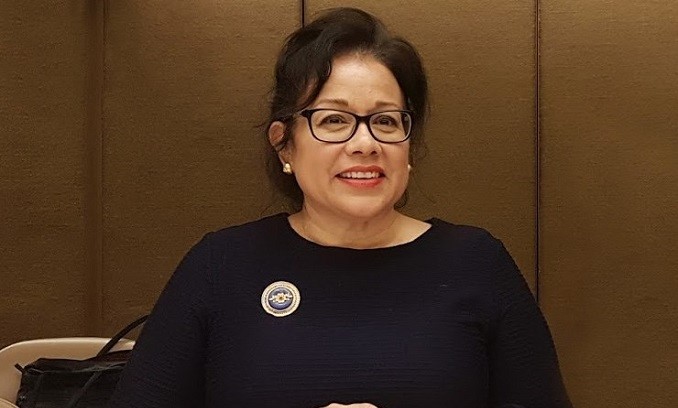
An environmental economist, Ms. Ivonne Higuero, has been named as the new Secretary-General of the Convention on International Trade in Endangered Species of Wild Fauna and Flora (CITES).
Ms. Ivonne Higuero
She replaces John E. Scanlon, who left the position on Friday, April 6, 2018 after eight years in service. Scanlon has taken on the role of Special Envoy for African Parks.
With a career spanning 26 years in international organisations in the area of sustainable development, Higuero, a national of Panama, has experience working at the global, regional and national levels, and engaging with stakeholders across the public and private sectors.
During her 24 years with the UN, she has held varied roles managing financial and human resources, overseeing the implementation of programmes of work and the provision of secretariat services to intergovernmental bodies.
Ms Higuero served at the UN Environment headquarters in Nairobi and the Regional Office for Europe, as the Coordinator of the Pan-European Biological and Landscape Diversity Strategy and as the focal point for biodiversity related and regional sea conventions, amongst other natural resource management roles between 1994 and 2014.
Between 2014 and 2018, she served in the United Nations Economic Commission for Europe, most recently as the Director of the Economic Cooperation and Trade Division where she led and supervised programmes on trade facilitation, access to markets, innovation and competitiveness policies and public-private partnerships. Prior to this, she was Director of the Commission’s Forests, Land and Housing Division and Chief of the Operational Activities and Review Section of the Environment Division.
She holds a Bachelor of Science degree in Biology from the University of Missouri (United States of America) and a Masters’ of Environmental Management Degree in Natural Resource Economics and Policy from Duke University (United States of America).
Commenting on her appointment, Ms Higuero said: “It is an honour and a privilege for me to have been selected for this exciting assignment. The preamble to the Convention, noting the ever-growing value of wild fauna and flora from aesthetic, scientific, cultural, recreational and economic points of view, has never been truer and it fits very well with Agenda 2030 and the Sustainable Development Goals. I look forward very much to assisting the Parties to implement CITES to the highest standard”.
Carolina Caceres, representing Canada as current Chair of the CITES Standing Committee, welcomed the appointment, saying: “CITES Parties will be delighted that the post of Secretary-General has been filled and impressed with the long and broad experience of Ivonne Higuero. On behalf of the Parties, I would like to warmly welcome her to CITES and wish her every success with her new appointment.”
An environmental economist, Ms. Ivonne Higuero, has been named as the new Secretary-General of the Convention on International Trade in Endangered Species of Wild Fauna and Flora (CITES).
She replaces John E. Scanlon who left the position on Friday, April 6, 2018 after eight years in service. Scanlon has taken on the role of Special Envoy for African Parks.
With a career spanning 26 years in international organisations in the area of sustainable development, Higuero, a national of Panama, has experience working at the global, regional and national levels, and engaging with stakeholders across the public and private sectors.
During her 24 years with the UN, she has held varied roles managing financial and human resources, overseeing the implementation of programmes of work and the provision of secretariat services to intergovernmental bodies.
Ms Higuero served at the UN Environment headquarters in Nairobi and the Regional Office for Europe, as the Coordinator of the Pan-European Biological and Landscape Diversity Strategy and as the focal point for biodiversity related and regional sea conventions, amongst other natural resource management roles between 1994 and 2014.
Between 2014 and 2018, she served in the United Nations Economic Commission for Europe, most recently as the Director of the Economic Cooperation and Trade Division where she led and supervised programmes on trade facilitation, access to markets, innovation and competitiveness policies and public-private partnerships. Prior to this, she was Director of the Commission’s Forests, Land and Housing Division and Chief of the Operational Activities and Review Section of the Environment Division.
She holds a Bachelor of Science degree in Biology from the University of Missouri (United States of America) and a Masters’ of Environmental Management Degree in Natural Resource Economics and Policy from Duke University (United States of America).
Commenting on her appointment, Ms Higuero said: “It is an honour and a privilege for me to have been selected for this exciting assignment. The preamble to the Convention, noting the ever-growing value of wild fauna and flora from aesthetic, scientific, cultural, recreational and economic points of view, has never been truer and it fits very well with Agenda 2030 and the Sustainable Development Goals. I look forward very much to assisting the Parties to implement CITES to the highest standard”.
Carolina Caceres, representing Canada as current Chair of the CITES Standing Committee, welcomed the appointment, saying: “CITES Parties will be delighted that the post of Secretary-General has been filled and impressed with the long and broad experience of Ivonne Higuero. On behalf of the Parties, I would like to warmly welcome her to CITES and wish her every success with her new appointment.”
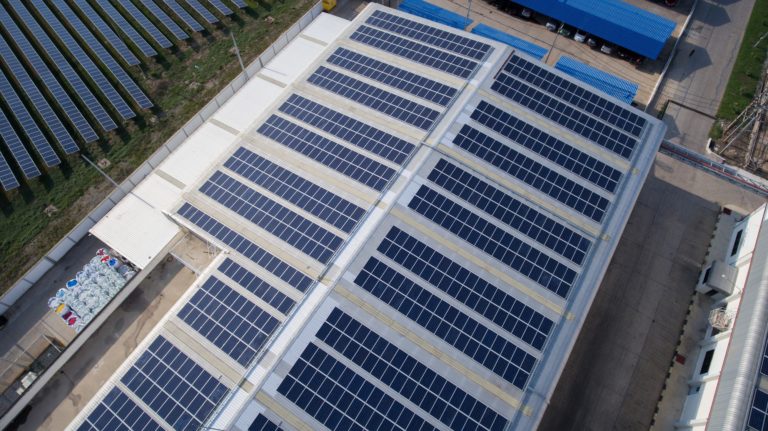
Minister of State for Environment, Alhaji Ibrahim Jibril, says the Federal Government will spend N10.6 billion Green Bond to execute its Energising Education Programme.
Aerial view of solar panels on rooftop. Energising Education Programme will be executed through provision of solar power in higher institutions
Jibril told the News Agency of Nigeria (NAN) in Abuja on Thursday, October 25, 2018 on the sideline of the ministry’s preparation for the 12th National Council on Environment meeting that it would be executed through provision of solar power in higher institutions.
The meeting is to hold between Oct. 29 and Oct. 31, in Akure, Ondo State.
According to him, the Federal Ministry of Environment is partnering the Federal Ministry of Works, Power and Housing in its Energising Education Programme to provide solar power in the nation’s higher institutions.
“We have already raised N10.6 billion when we launched green bond last December. This money is targeted towards renewable energy.
“Therefore, we are partnering the Federal Ministry of Works, Power and Housing in its Energising Education Programme to provide solar power in the institutions of higher learning.
“This will serve as alternative means of raising fund to address climate related issues,” the minister said.
He said that the ministry issued the Green Bond as alternative source of funding because of the huge capital outlay required to finance the nation’s renewable energy projects.
Jibril expressed optimism that the bond would boost the nation’s economy and protect the environment.
he Federal Ministries of Environment and Finance, in collaboration with Green Bond Advisory Group, launched the green bond in December 2017.
Director-General, Debt Management Office (DMO), Ms Patience Oniha, said the Federal Government borrowed the N10.6 billion, in line with its borrowing agenda as stated in the 2017 budget.
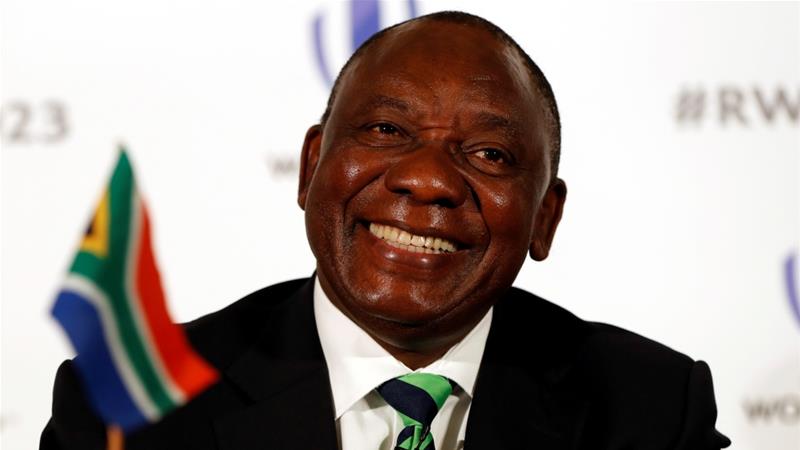
Newly appointed finance minister Tito Mboweni’s maiden speech in the current ‘technical recession’ will be a task to keep the country from succumbing to mounting pressure on the economy.
President Cyril Ramaphosa of South Africa
350Africa.org is calling on the new finance minister to re-examine budget forecasts in Wednesday’s speech, and urge the Development Bank of Southern Africa (DBSA) to commit to not financing the proposed coal power plants.
Inclusion of new coal in the 2018 draft IRP will cost South Africa nearly R20 billion, according to the Energy Research Centre (ERC). This is said to be more than the country needs to spend on energy infrastructure and will make electricity more expensive for all South Africans – since the costs will be passed on to consumers.
Ahmed Mokgopo, 350Africa.org’s Divestment campaigner, said: “The country does not need new coal. We need public finance institutions like DBSA which invest public money into development projects to commit to not putting their money into dirty energy that will come at a great cost for South Africans. The DBSA and other development banks should take their cue from the World Bank which recently announced their decision not to finance a coal plant in Kosovo.”
Climate change and environmental issues are putting constraints on South Africa’s economic growth, says 350Africa.org. Eskom, a coal intensive giant, is the biggest risk to the country’s economy, according to Goldman Sachs.
“As a progressive force and development economist in Ramaphosa’s cabinet, Mr Mboweni cannot ignore the challenges posed by government’s approach to sideline issues of people’s health, the environment and climate change.”
350Africa.org said it commissioned a comparative study into the financial cost burden of the IPP’s against the 2018 national budget on Social Development. A key finding showed that the additional costs of the coal Independent Power Producers (IPPs), when set against the Department of Basic Educations School Infrastructure Backlogs budget, could be allocated to eradicate dangerous school buildings, provide sanitation and decentralised electricity to schools. This budget was cut by R 3.6 billion over the next three years. R19.68 billion rand, the standard reference scenario used in the study, could be allocated to eradicate pit latrines (a legal requirement since 2016) and replace unsafe school buildings and electrify schools without electricity.
“South Africa has become a prime destination for renewable and decentralised energy investments, this has been largely driven by the Renewable Energy Independent Power Producer Procurement Programme (REIPPP). The latest bid round of the REIPPP, announced in April 2018, has resulted in R56 billion in FDI for the production of 2300 MW of renewable energy via solar PV and CSP, wind and biomass to be added to the grid over the next five years. This is a huge milestone not only for the renewable energy sector, but also a good indication of investor confidence following years of uncertainty regarding management of the economy,” according to 350Africa.
An estate surveyor and valuer is referred to in Nigeria as a professional member of NIESV (the Nigerian Institution of Estate Surveyors and Valuers) who is also registered and empowered by law through the Estate Surveyors and Valuers Registration Board of Nigeria (ESVARBON) to carry out property valuation tasks in the interest of the owner/prospective owner and the society.
Rowland Abonta, President of the Nigerian Institution of Estate Surveyors and Valuers (NIESV)
With a combination of efforts from the government, investors and, most importantly, a estate surveyor and valuer, landed properties in every area of the society (rural and urban) can be put to optimal use once they are properly managed.
His services extend beyond the regular acquisition and disposal of landed properties, but with a vast knowledge covering the major areas of property development in its entirety and its immediate impact in the society, they are better placed to make policies that will foster development in any rural or urban society.
Having good infrastructure, of course is one of the prerequisites for development in any society, having the right long-term maintenance strategy will go a long way in sustaining those infrastructures. With the wealth of experience at the disposal of estate surveyors and valuers, formulating and implementing a strong maintenance policy should be a cakewalk.
By joining hands with the government, estate surveyors and valuers are also able to advise the government on the best way to develop a locality by mapping out some areas which will be perfect for residence, industrial or commercial buildings. Due to their involvement in the development of that master plan, the community will most likely experience speedy and healthy growth.
Estate surveyors, in conjunction with other like-minded bodies (independent investors or a government-backed subsidised fund), also come together in some occasions to implement projects that will not only benefit the initiator, but also the host community.
For instance, it is a well-known fact that the houses in the Abuja metropolis cannot cater for the teeming population. Worse still, the majority cannot afford a decent home due to the relatively high cost of living. Professionals in the real estate industry saw this as an opportunity to invest in the suburban region of the city. The aftermath of this investment birthed affordable housing in relatively new areas like Kubwa, Zuba, Gwarimpa, Suleja among many other areas.
These new houses were not only beneficial to the owners, they also:
benefitted the government by decongesting the municipal
increased the government’s source of revenue.
improved commercial activities in the host communities.
From the above, it can be deduced that an estate surveyor and valuer is capable of significantly boosting the development of any community due to the cross-disciplinary knowledge he/she possesses about landed properties in its entirety and its impact on the community.
In addition to the above, estate surveyors and valuers also handle other activities like feasibility and viability appraisals, facilities management, project management and general real estate consultancy services.