Home Blog Page 1765

Completing abandoned water projects paramount, says government

0

The Federal Government on Tuesday, November 13, 2018 said the completion of all abandoned water projects in the country was paramount to the overall goal of improving access to potable water in the country.

suleiman adamu kazaure
Suleiman Adamu Kazaure, Water Resources Minister

Mr Suleiman Adamu, the Minister of Water Resources, said this at the opening of the 2018 Media Week to highlight achievements of the administration in the last three years.

According to him, the ministry is focused on working in line with the National Water Resources Master Plan, which targets deriving optimum benefits for Nigerians.

He said that the ministry had in the last three years embarked on only two projects of Kazaure Water Supply Project and the Dukku Regional Water Supply project in Jigawa and Gombe states respectively.

“We are committed to completing all ongoing viable projects in the ministry to derive optimum benefits from government’s investments.

“It is instructive to note that since the inception of administration, my ministry has initiated only two projects, this underscores the emphasis on completion of the numerous ongoing abandoned projects inherited from past administration,” he said.

Adamu said that the ministry had initiated the National Irrigation Development programme to aid economic diversification, promote food security and employment creation.

He said that this programme would establish additional 100,000 hectares of irrigated farmland by 2020 and 500,000 hectares by 2030.

He noted that the ministry was working with private sector and state governments to complement governments’ efforts to deliver 41, 000 hectares of irrigated agriculture by 2019.

The minister added that the ministry was also implementing the Transforming Irrigation Management in Nigeria programme in partnership with the World Bank to the tune of $495 million.

“The project involves the rehabilitation and expansion of about 42,000 hectares of irrigation land under the first phase to be completed by 2022.”

He said that Bakolori, Hadeija, Kano River, Dadin Kowa, Middle Rima Irrigation projects were ongoing with the overall goal of poverty reduction and sustainable agriculture production.

The minister however lamented that only 1,930 megawatts out of the 12, 220 megawatts of hydro power potential was being developed at Kainji, Jebba and Shiroro Dams, noting that efforts were on to concession some of them to become more beneficial to the populace.

Earlier, Alhaji Aliyu Pategi, the Chairman, House Committee on Water Resources, commended the ministry on implementation of the Songhai model of agriculture, urging all river basins to adopt the same model to improve lives of Nigerians.

Pategi noted the challenges of poor capacity building of river basins needed to be corrected at the ongoing National Council of Water Resources meeting and pledged the commitment of the legislature to promote all programmes to reposition the water sector.

By Tosin Kolade
Don attributes agric problems in Nigeria, Africa to climate change

0

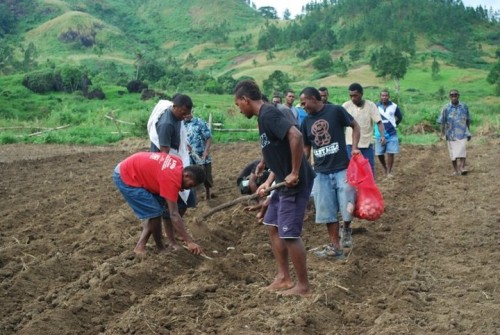
An academic, Prof. Olubunmi Omotesho, on Tuesday, November 13, 2018 said the problems of agriculture in Nigeria and Africa could be attributed mainly to climate change.

farming-can-be-fun
Youths involved in farming. Photo credit: smeonline.biz

Omotesho, who is of the University of Ilorin, made this known at a two-day Policy Dialogue on Crop/Livestock Integration, organised by Synergos Nigeria, in collaboration with other stakeholders in Abuja.

He said that climate change, which resulted in desertification and harsh weather, had increased problems such diseases, pests, loss of pastures, reduction of soil nutrient and fertility, among others.

He said that the mitigation strategy to be used include irrigation practices, land tenure system policy, increase in agricultural research and development, women and youth empowerment among others.

“If we can integrate, it will increase our production of grain, beef, milks and fibre.

“And we will have higher turnover of several segments of local economy, the potential for partnership with more benefits and increase soil cover from crops and pasture residual will be the outcome,” he said.

Ms Victoria Fajemileyin, the Policy Advisor to Synergos Nigeria, called for review of government policies to effectively implement and resolve the unending farmers and pastoralists conflicts in parts of the country.

Fajemileyin made the call in an interview with the News Agency of Nigeria (NAN) on the sidelines of the Policy Dialogue on Crop/Livestock Integration.

“We are connected to crops and livestock production both at national and state levels.

“The Land Act of 1972 says local government areas oversee giving right to occupancy for farming and grazing.

“ECOWAS also provided a law that says for anybody to lead the herd, he has to be 18 years, but the law is not actually working here.

“The law is only concerned with the nomadic life of herdsmen and people above 18, it did not provide solutions to address gaps like the challenges of cattle rustling and kidnapping among others.

“Some people do not really know about any policy, it means that we are consciously incompetent to adhere to it, since we do not know about the policy and how it will address such challenges.

“At end of the programme, we are going to have a communiqué that every stakeholder will go back to their states with and adopt and think of how to implement it,’’ she said.

Earlier, Mr Victor Adejoh, the Senior Field Manager, Synergos Nigeria, said that the dialogue was to map out ways of integrating livestock and crops production using systemic approach.

“Our goal is to look at existence policy at different levels and see how we can bring an alignment in terms of research work we have done.

“We have seen some of the existing policy implemented on the level of intervention for government and we believe it will solve a lot of issues in the sector.’’

Mr Mawuli Sablah, the Nutrition and Food Systems Expert, of Food and Agricultural Organisation (FAO), commended Synergos for bringing all the stakeholders in animal and crop sector together to dialogue.

“This is a very important dialogue because it takes it into account issues of farmers and herders, their challenges and conflicts.

“FAO has food systems approach where we make sure that food security comprises nutritional value to promote optimal national wellbeing.

“It is very important for us to have this integrated approach of having crops and livestock working effectively together so we can have more synergy in these agricultural sub-sectors to work closely to advance towards agricultural policy of Nigeria.

“We cannot achieve this without dialogue because we believe dialogue is very important to advance cooperation and to ensure farmers and herders work in harmony for optimal peace to reign in Nigeria,’’ he said.

No fewer than 70 stakeholders from federal and states ministries and private sector organisations attended the meeting, which will end on Nov. 14.

By Kudirat Musa

Woodlots establishment: Cross River commends communities for donating lands

0

An official of the Cross River State Government, Dr Edu Effiom, on Tuesday, November 13, 2018 commended communities that voluntarily donated lands for the establishment of woodlots in the state.

Gov Ben Ayade
Gov Ben Ayade of Cross River State

Effiom, the state’s Focal Person for the Project, made the commendation while conducting the project’s Steering Committee round some of the plantations in Calabar Municipality.

Wikipedia defines a woodlot as a parcel of a woodland or forest capable of small-scale production of forest products (such as wood fuel, sap for maple syrup, sawlogs, and pulpwood).

It also has recreational uses like bird watching, bushwalking and wildflower appreciation.

Effiom said that the committee was set up to ensure adherence to sustainable fuel-wood management across the state.

He said that some communities had donated lands for the project and planted gmelina and teak seedlings (using 3-by-3 metre spacing) with the technical assistance of the State Forestry Commission.

According to the state official, the communities that donated lands included Esuk-Utan in Ikot Ansa community in Calabar Municipality, Igwo community in Obudu and Bateriko community in Boki Local Government Areas.

“Ikot Ansa community donated three hectares, Igwo community four hectares and Bateriko community donated three hectares of land respectively.

“This makes it a total of 10 hectares of land developed as woodlots in Cross River State,’’ Effiom said.

The Leader of the steering committee, Engr. Okon Ekpenyong, expressed satisfaction with the commitment and passion of the communities and thanked them for embracing the project.

Ekpenyong said that the benefits of the project were numerous, adding that it would impact positively on the environment for the benefit of the larger society.

Responding on behalf of the communities, Mr Patrick Adorable, Chairman, Forest Management Committee, Igwo community, said they were pleased to be part of the project.

Adorable appealed for material and financial assistance to enable the communities to maintain the established woodlots.

They also expressed their readiness to partner the state in other areas of the project.

By Benson Ezugwu

We’re cooperating with stakeholders to resolve waste management challenges, says NESREA

0

Director General, National Environmental Standards and Regulations Enforcement Agency (NESREA), Dr Lawrence Anukam, says the agency is working together with other stakeholders to proffer solutions to waste management challenges in the country.

Dr. Lawrence Anukam,
Dr. Lawrence Anukam, Director-General, National Environmental Standards and Regulations Agency (NESREA)

He disclosed this on Monday, November 12, 2018 in Abuja at the ongoing 8th Edition of National Regulatory Dialogue 2018.

According to him, the agency has the responsibility to develop regulations and enforce them.

“The agency has 34 regulations and these regulations are specifically on healthcare and waste management.

“We have been experiencing indiscriminate disposal of waste from the healthcare system and hospitals, which has negative impact on both humans and the environments,” he said.

Anukam added that the agency was working together with various stakeholders at state and federal levels to proffer solutions to the poor waste management system in the country.

“The agency was facing a lot of challenges and one way to overcome those challenges is to work together with both private sector and state government agencies.

“To make sure that there is better level of awareness creation, Nigeria is a big country, so all hands must be on deck to create awareness on the laws of the land.”

He also called on corporate international organisations operating in Nigeria to obey the law of the land by setting good examples in proper waste management.

“The management of waste is everybody responsibility, if we don’t get it right, it becomes a problem, we can do a lot better even from our homes.”

He, however, advised Nigerians to make sure they protect their environment and ensure good hygiene within their homes, workplace and social setting to ensure a safe and sound environment.

By Sandra Isaac and Yahaya Abubakar

UN to explore resilience, climate change in Sahel, Caribbean

0

Following the recent landmark report by the UN Intergovernmental Panel on Climate Change (IPCC) saying that it is still possible to limit climate change to 1.5°C, the UN Economic and Social Council (ECOSOC) will hold two meetings exploring resilience in climate-vulnerable areas. These are Africa’s Sahel region (which has seen higher temperature, recurrent droughts and severe land degradation) and the Caribbean (which was pummeled by a pair of severe hurricanes in 2017).

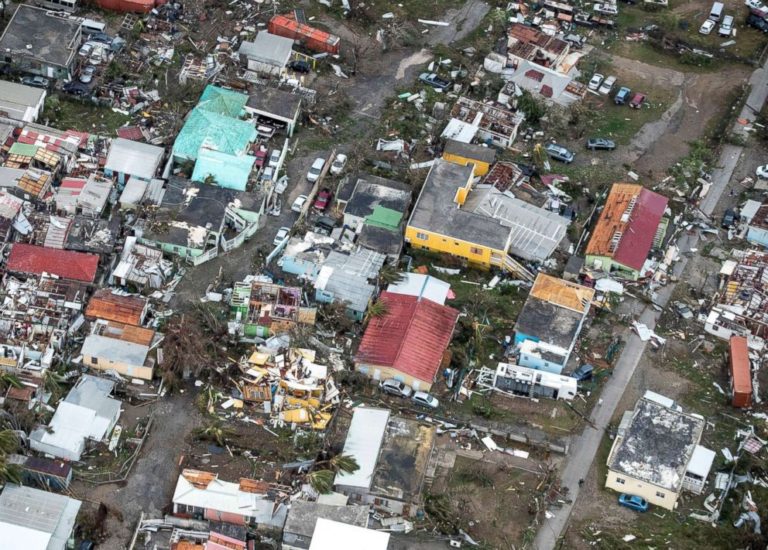
Hurricane Irma
A view of the aftermath of Hurricane Irma on Sint Maarten Dutch part of Saint Martin island in the Caribbean, Sept. 6, 2017.

Climate change is seen as a threat multiplier – it exacerbates and amplifies existing problems and challenges. And while the climate change contribution to any specific condition or event is still being closely studied, the interlinkages between climate change and conflict are considered by many to be increasingly evident in many parts of the world, including in Africa’s Sahel region, one of the world’s poorest and most vulnerable regions, says the UN.

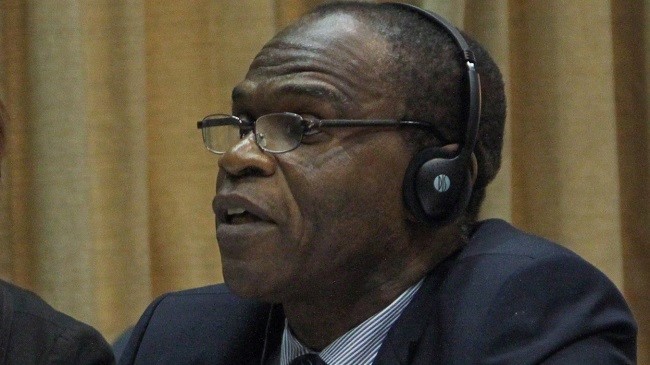
“We are all seeing the consequences of climate change through more extreme weather, rising sea levels and diminishing Arctic sea ice,” said Rhonda King, ECOSOC President. “The increase and intensity of climate-related disasters is worrying. And the human cost is significant – people losing their lives, livelihoods and being displaced.”

ECOSOC, together with the UN Peacebuilding Commission, will look at the interlinkages between climate change and sustaining peace in the Sahel region where temperature increases are projected to be 1.5 times higher than in the rest of the world, and where 90 per cent of its economy is reliant on agriculture and pastoralism. Droughts in the region have had devastating impacts on people who have little resilience and few coping strategies.

In the Sahel, the effects of climate change are compounded by persistent governance and security challenges that further contribute to the Sahel’s dire humanitarian situation. More than four million people in the Lake Chad Basin area have faced food insecurity in 2018, along with ongoing conflict and insecurity. Shortages of land, pasture and water have led to the forced migration of pastoralist communities in Burkina Faso, Chad, Mali, Mauritania and the Niger, putting 2.5 million people at risk of a livelihood crisis in 2018 in the affected areas. The number of displaced people across the Lake Chad basin region was 2.3 million, including 1.7 million internally.


Hurricane Recovery in the Caribbean

Hurricane Maria, a colossal category 5 hurricane with winds of over 160 mph (257 kph), hit the Caribbean island nation of Dominica on 18 September, devastating critical infrastructure, including electrical lines, houses, and public buildings such as government offices, schools and hospitals.  More than 90 per cent of roofs were damaged or destroyed and 57,000 people (around 80 percent of the total population) were directly affected.

Climate change has exacerbated the vulnerabilities faced by Small Island Developing States – countries where one natural disaster can erode a generation of development gains, such as in Dominica in 2017 with Hurricane Maria. Because most of the hurricane and cyclone-affected countries were categorised as middle income – based on GDP per capita – they were therefore ineligible for concessional development financing from multilateral financial institutions.

About 90 per cent of financing for disaster risk reduction worldwide is still directed at emergency response and reconstruction and rehabilitation, while only 10 per cent is for preparedness and resilience. While $106 trillion are available through different funds worldwide, only 1.6% is invested in infrastructure and even less in initiatives to increase resilience.

A pledging conference for the Caribbean islands in 2017 mobilised over $1.6 billion in grant pledges plus $1.6 billion loans including debt relief. According to assessments, the principal economic sectors of tourism and agriculture were significantly impacted. Recovery costs were estimated to surpass $5 billion. For some countries such as Dominica, the impact was 3.5 times their Gross Domestic Product.

The ECOSOC meeting will look at the measures and practices by countries that helped manage and respond to the hurricanes in the Caribbean; take stock of progress made in terms of disbursements and results achieved as well as remaining gaps and challenges; and explore new and innovative approaches to financing climate resilience.

Investments in green tech increase knowledge of environmental impact

0

Agri-tech and other types of environmentally-focused technologies are some of the top areas of investment in Nigeria and elsewhere in Africa, which is great considering that South Africa, Nigeria and Kenya are ranked as the three most popular investment destinations on the continent.

Technology
Technology and sustainable living can go hand in hand

Following a recent article published by the New York Times regarding how people use technology to be more environmentally-friendly, countries around the world are taking note of various innovations that can not only help induce more environmental consciousness but also make it easier to live a green life. From investing in clean, green tech to utilising smart applications in everyday life that monitor our environmental impact, there are actually more than a few ways that technology and sustainable living go hand in hand.


Monitoring Your Carbon Footprint with Green Apps

Applications such as Haze Today make it easy to track the air pollution levels all around the world, not just in Nigeria. While it’s important to know the levels of carbon monoxide, sulphur dioxide, ground-level ozone and particle pollution within your own community, it can be pretty sobering to take a look at the air quality in places such as China and India to really understand how each of our own carbon footprints impacts the global well-being. As startups around the world continue to invest in these types of technologies and make them more accessible to everybody, they will continue to raise awareness of the importance of taking care of our environment while also giving people the power to monitor it in real-time themselves.


Blockchain Revolutionising Environmentally-Friendly Purchases

Regarding environmental issues such as climate change and the sustainability of a product or company, many people have reported that what they truly lack is a certain level of trust that the production of what they are purchasing was really done in a “green” and sustainable manner. Seeing as blockchain makes data essentially tamper-proof, tech companies are beginning to look towards the technology in order to create supply chain receipts in order to let customers know exactly where their products are coming from. This is exactly the type of transparency and trust that many consumers are looking for in their everyday purchases. Blockchain technologies could serve to revolutionise the way that companies are required to do business, thus enhancing the overall sustainability throughout many supply chains.


Transforming Agriculture Through Technology

The environment is a precious resource, especially to African countries, as it accounts for more than 50% of the source of sustenance. The environment provides a source of livelihood, income and food to Nigeria and other African countries through agriculture, animal husbandry, fishing, hunting, and more natural industries, making it one of the largest areas that African tech startups are looking to invest in. By bolstering up the type of technology available to farmers and people working within the agriculture industry, startups can help create an industry that is thriving enough to support small Nigerian farmers.

Consumers all around the world are looking for ways to ensure they are engaging in sustainable transactions and purchasing products that help reduce their carbon footprint. As investors and innovators continue to dedicate time and resources to agri-tech and other green technologies within Nigeria and beyond, there will be only positive outcomes and benefits for the Earth and the people living on it.

By Cassandra Ally

Shell decries frequent sabotage of pipeline, spills in Bayelsa

0

Shell Petroleum Development Company (SPDC) on Monday, November 12, 2018 decried the high rate of vandalism on its pipeline network at its oilfields in Bayelsa State resulting to oil leaks and pollution of the environment.

Osagie Okunbor
Osagie Okunbor, Managing Director, Shell Petroleum Development Company

Mr Bamidele Odugbesan, the Media Relations Manager at SPDC, told News Agency of Nigeria (NAN) that the oil firm expressed regrets at the incessant spills and was committed to maintaining environmentally sustainable operations.

He said that although the May 17 oil spill on the Trans Ramos Pipeline was traced to equipment failure, many other leaks were predominantly caused by sabotage.

“The rate of spills on the Trans Ramos Pipeline is very worrisome, for instance between April and May 26, spill incidents were reported on that line and out of these, 18 of them were caused by sabotage, eight were operational,” he said.

Odugbesan said that SPDC had recovered more than 95 per cent of spilled oil from the spill incidents on the Trans Ramos Pipeline (TRP) which runs across Bayelsa and Delta states.

He said that the oil recoveries were made on sections of the TRP in Aghoro community, Bayelsa and Odimodi community, Delta.

He said that the pipeline, which remained shut-in since the incidents, supplied crude to the SPDC’s Forcados Oil Export Terminal in Niger Delta.

“In line with the standard operating procedures of SPDC, the TRP was shut down immediately the incidents were reported, and the Oil Spill Response and the Emergency Response teams were activated.

“The team was able to contain as well as manage the incidents and prevent further spillage.

“As soon as clean-up and site assessment are completed, we are committed to starting the immediate remediation of the impacted areas in Aghoro and Odimodi communities,’’ Odugbesan said.

By Nathan Nwakamma

China postpones lifting ban on tiger, rhino parts trade

0

China has postponed the lifting of a ban on the trade of rhino horn and tiger parts for medicine and other uses, the government said on Monday, November 12, 2018.

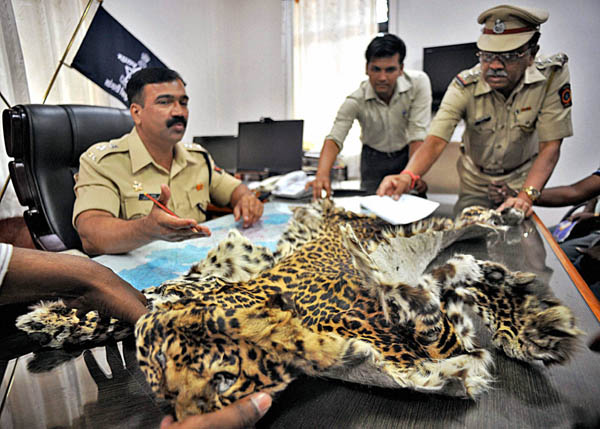
Tiger part
Police officers display tiger-skin recovered from smugglers in Sangli, India. Photo credit: PTI

The government said this after a storm of protest from conservation groups over a plan to water down the decades-old prohibition.

In October, the State Council issued a circular replacing a 1993 ban on the trade of tiger bones and rhinoceros’ horn, opening up exceptions under “special circumstances”, including medical “research”.

Environmental groups said lifting of the ban would be disastrous for endangered rhinoceros and tiger populations, even if the animal parts were only sourced from those bred in captivity.

Rhinos and tigers are already under critical pressure from a black market supplying the traditional medicine trade.

The “detailed regulations for implementation” of the October change had been “postponed after study”, the official media reported, citing State Council Executive Deputy Secretary-General Ding Xuedong.

Under the October plan, exceptions to the ban could be made for parts from those animals, bred in captivity, being used for medical and scientific research, education and “cultural exchanges”.

Ding did not give a reason for postponing the change, or indicate if it would be permanent, but said the old ban remained in force.

“The ‘three strict bans’ will continue to be enforced: strictly ban the import and export of rhinos, tigers and their byproducts.

“Strictly banned are the sale, purchase, transport, carrying and mailing of rhinos, tigers and their byproducts.

“The use of rhino horns and tiger bones in medicine are strictly banned,” Ding said.

China would continue to “organise special crackdown campaigns” with a focus on “addressing the illegal trade of rhinos, tigers and their byproducts”.

“Illegal acts will be dealt with severely,” Ding said.

Conservation groups argue that easing the ban would be devastating for efforts to protect tigers and

rhinos.

Such lifting would confuse consumers and authorities as to which products were legal and which not and expand markets for them.

China banned trade in tiger bones and rhino horns 25 years ago as part of global efforts to save the animals.

Commercial tiger farms are legal in China, and although using tiger bones in medicine was banned, tiger parts from farms often end up in tonics or other medicines, animal rights groups say.

Air pollution level continues to worsen in New Delhi

0

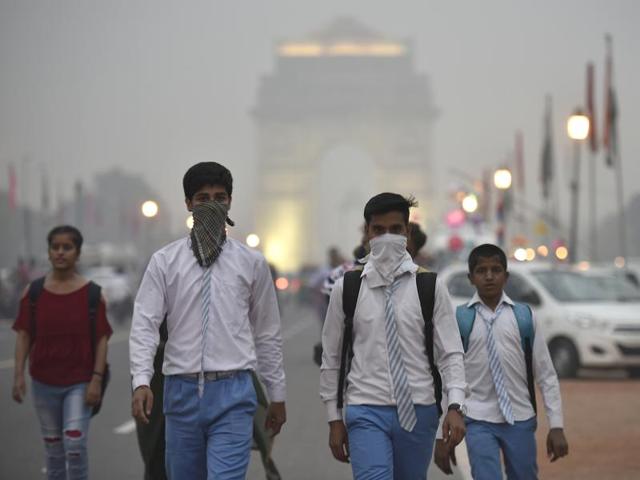
The air pollution level in India’s capital city New Delhi on Monday, November 12, 2018 continued to be in the severe category, officials said.

New Delhi pollution
New Delhi is ranked as among the most polluted cities in the world

According to the Central Pollution Control Board (CPCB), the overall air quality index (AQI) remained in very poor category at 381.

“The AQI in Delhi at 9 a.m. (local time) today was recorded at 381, the air quality is severe and prominent pollutants are PM 2.5 and PM 10,’’ data released by CPCB said.

Health officials said very poor air quality would causes respiratory illness on prolonged exposure.

On Sunday, the air quality remained in the severe category at 405.

The air quality plunged into “severe-plus emergency” category on Thursday, night after Hindu festival of Diwali.

A thick blanket of smoke engulfed the city and outskirts Thursday and people complained of difficulty in breathing and itching in the eyes.

The air quality worsened because of the rampant bursting of toxic fireworks despite Supreme Court ban.

Authorities, to contain the pollution levels, have banned entry of trucks in the city and already ordered a halt on all construction activities involving excavation with its limits.

Meanwhile, the government official in neighbouring Haryana state on Sunday said it was unfair to blame its farmers for Delhi’s poor air quality.

“In 2017, farm waste was burnt on just 2% of the total sown area of paddy, and the figure further fell to 1 per cent this year.

“However, it is being projected as if our farmers are burning farm waste in each and every field,’’ an official release quoted Haryana Chief Secretary D S Dhesi as saying at an event in Hisar.

Report says air pollution continues to worsen in New Delhi especially during winter months.

Nigeria adopts climate-smart agriculture to boost food security

0

The Shehu Musa Yar’Adua Foundation is set to promote climate-smart agriculture as a strategy to boost food security in the country.

Ahmed Inusa
Nigerian Ambassador to Belgium, Ahmed Inusa

Mr Amara Nwankpa, Director, Public Policy Initiative of the Foundation, disclosed this to the Europe Correspondent of the News Agency of Nigeria (NAN) on Monday, November 12, 2018 in Brussels.

Nwankpa spoke to NAN on the sideline of the screening of the film “Swallow”, held at the EU Secretariat and the Nigerian Embassy in Brussels.

He said the nation was faced with major food security challenges, owing to climate change – a situation that would get worse if not addressed – as the nation’s population is estimated to hit 400 million by 2050.

“People knew of the signs but couldn’t associate delayed and unpredictable rains, drought and ocean acidification to climate change.

“A lot of these changes are irreversible as the soil will not renew itself as it used to, a 100 years ago.

“The rains will not return to how it used to be, and these changes are permanent.

“So, the message now is adaptability and coping strategies.

“We have to start thinking of innovative strategies on how to cope with the loss of the savannah region and erosion in the south-east,’’ Nwankpa said.

To address the challenges, he said that the Yar’Adua Foundation would support young farmers through advocacy on how to manage scarce land for agriculture and grazing of cattle.

“We will also educate fish farmers on how to adopt new fishing methods owing to lack of fresh water sources and effect of ocean acidification.’’

Similarly, the Nigerian Ambassador to Belgium, Ahmed Inusa, said that the film showcased the effect of climate change in Nigeria and served as a call for action to address the challenges.

Inusa noted the various investment opportunities arising from wastages of produce due to inadequate infrastructure and agricultural practices.

He, however, commended the government’s continuous effort in promoting agriculture in the country.

NAN reports that the film “Swallow” featured inspiring stories and explored opportunities and solutions to the nation’s food security challenge.

The event was attended by members of the African diplomatic core in Belgium, EU officials, the Nigerian Diaspora Organisation and experts on food security.

By Habiba Broger