The Minamata Convention on Mercury has approved five projects in the First Round of its Specific International Programme amounting to $1 million.
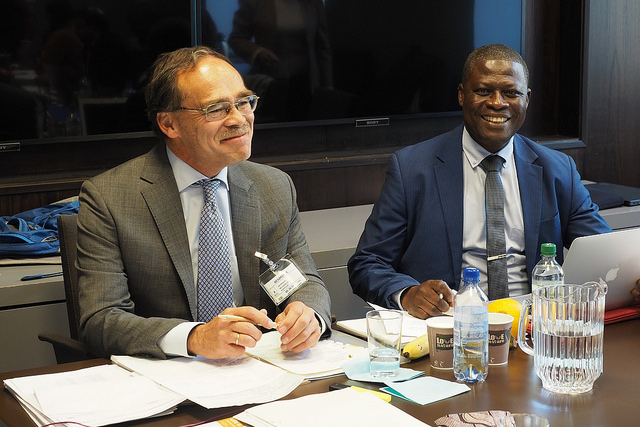
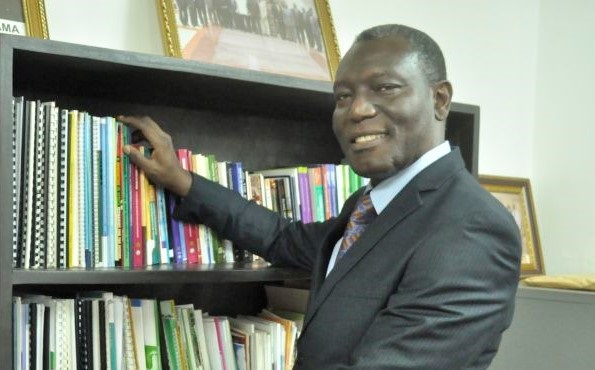
Sam Adu-Kumi (right) and Reggie Hernaus
Co-Chairs of the Governing Board of the Specific International Programme of the Convention, Sam Adu-Kumi (Ghana) and Reggie Hernaus (The Netherlands), who made the disclosure in a statement on the Convention’s website on Monday, October 8, 2018, said that the projects were approved on Wednesday, October 3.
The successful projects were submitted by Argentina, Armenia, Benin, Iran and Lesotho.
The Specific International Programme is aimed at improving the capacity of developing-country Parties and Parties with economies in transition to implement their obligations under the Convention.
“On behalf of the Board, we would like to congratulate these applicants,” stated Adu-Kumi and Hernaus, adding: “We noted the high interest in the Specific International Programme, and would like to commend all the applicants, whether successful or not in the First Round, for having prepared high-quality submissions despite the short time frames.”
In total, 19 applications, from 18 Parties, were received by the deadline. According to the Board, it was heartened that applications were received from all regions, including from least developed countries and from small island developing states.
The Co-Chairs added: “The Board would also like to sincerely thank Austria, Denmark, Germany, the Netherlands, Norway, Sweden, the United Kingdom, and the United States for their contributions to the First Round of the Specific International Programme.
“The Board was unfortunately not in a position to satisfy all requests for funding in this round. Given the high interest shown we hope to be able to launch the next round soon and in this regard would like to encourage those in a position to do so to contribute to a robust next round of the Programme.
“The Board will present its full report to the Conference of the Parties at its second meeting.
“On behalf of the Board we would also like to thank the Government of Norway for the gracious invitation to convene this meeting in Oslo.”
The Minamata Convention on Mercury, under Article 13, sets up a Specific International Programme to support capacity building and technical assistance.
The Governing Board of the Specific International Programme met in Oslo, Norway, from October 2 to 3 to review applications to its First Round.
The Members of the Governing Board of the Specific International Programme are:
For Africa: Sam Adu-kumi (Ghana) and Younous Adoum Abdallah (Chad)
For Asia and the Pacific: Prasert Tapaneeynagkul (Thailand) and WTB Dissanayake (Sri Lanka)
For Central and Eastern Europe: Kaupo Heinma (Estonia) and Anahit Aleksandryn (Armenia)
For Latin America and the Caribbean: Florencia Grimalt (Argentina) and Nero Cunha Ferreira (Brazil)
For Western Europe and Others: Reggie Hernaus (The Netherlands) and Atle Fretheim (Norway)
The President, Nigerian Meteorological Society (NMetS), Prof. Clement Akoshile, on Wednesday, October 10, 2018 urged farmers to desist from planting close to water courses.
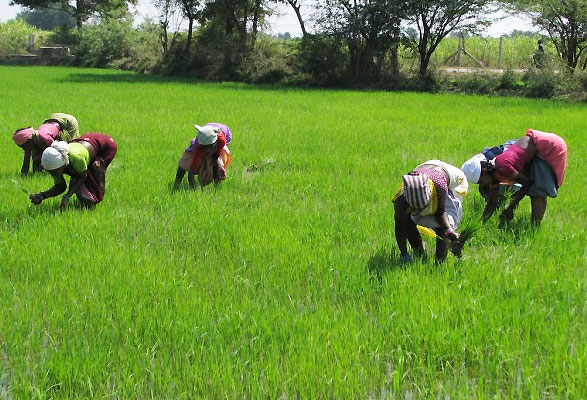
Rice farming
Akoshile gave the advice in an interview with the News Agency of Nigeria (NAN) in Lagos.
According to him, farms that produce crops such as rice and millet among others need a lot of water.
“Such crops should not be planted along water courses so that water will not wash them away.
“Farmers should make sure they give allowance for the water course, but they can create channels far from the massive water and those one’s can come as irrigation points.
“If they are able to create the channels, they will be useful for agriculture and for their personal use as well,” he said.
Akoshile said that government at all levels could also assist farmers in creating a place where the flood water could be stored.
He said that those ponds would be useful especially when excess water from the dams that contribute to flooding were released.
The president said that the diverted flood water could be amassed and used like dam for agricultural purposes.
He called for more efforts by government to ensure that areas prone to flood have a secondary dam to boost farming.
Akoshile explained that the secondary dams would become useful for farmers instead of posing as danger to the people.
He maintained that government already knows flood prone areas from geological and geographical surveys as well as meteorological records.
“As soon as government maps out the areas prone to flooding, it will be easy to plan where to divert or store the water so that the area may not become flooded.
“This could also be extended to mapping out areas where people should and should not build houses or do farming,’’ he said.
Akoshile said that those infrastructures that block water channels should also be mapped out and removed to stop flooding and prevent destruction of lives and property.
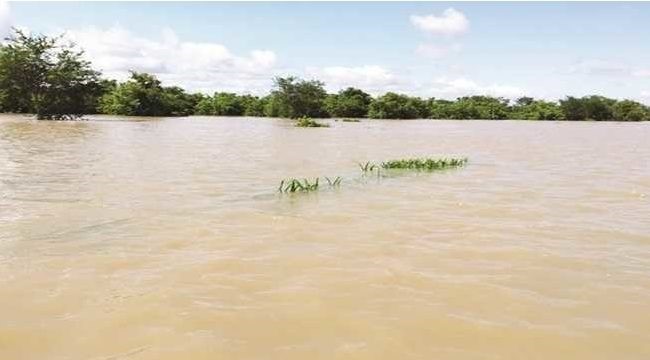
No fewer than 500 rice farms at Okpotuwari and Ondewari communities in Southern Ijaw Local Government Area of Bayelsa State have been submerged by floods, the News Agency of Nigeria (NAN) reports.
A flooded farm
Mr Ezekiel Ogbianko, Chairman, Rice Farmers Association in the state, who inspected the submerged farms on Wednesday, October 10, 2018, called on the federal and state governments to come to the aid of the affected farmers.
At Ondewari, a community leader, Prof. Itimi Godwin, said that the rice farms were ready for harvest before the disaster.
“We need a lot of things, particularly we want the National Emergency Management Agency (NEMA) to come and see the level of damage done here.
“As you can see, this is a colossal loss; we are calling on the federal government to come to our aid, as the people here are suffering. We need relief materials such as rice, garri, cement and roofing sheets,” he said.
NAN recalls that NEMA had earlier said that over 150,000 people have been displaced by flood in Bayelsa this year.
The site manager of Ondewari Rice Farm, Mr Fredrick Adam, said the loss was colossal and the farmers would appreciate immediate support from government.
Also, the Paramount Ruler of Okpotuwari Community, Chief Tiger Moses, said that the community was expecting bountiful harvest before the flood.
“As you can see the flood is very disturbing, our crops have been destroyed, fish settlement and plantain farms are also damaged.
“We want the assistance of the federal government and other stakeholders; right now, our sources of water have been contaminated,” he added.
Climate-linked disasters accounted for three-quarters of overall disaster losses in the past 20 years causing at least $2.25 trillion of damages, the UN reported on Wednesday, October 10, 2018.
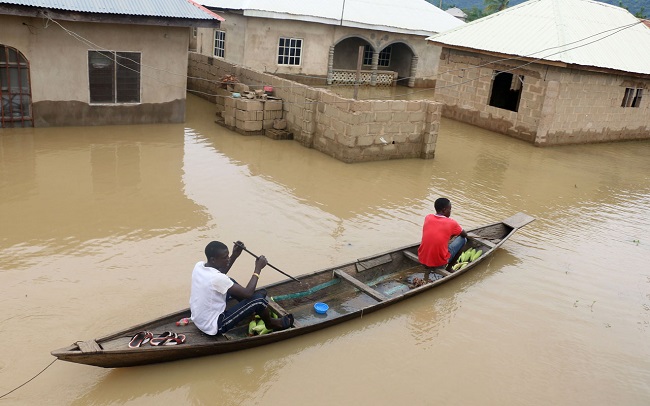
Residents steer a dugout canoe past flooded houses following heavy rain in the Nigerian town of Lokoja, in Kogi State, on September 14, 2018. Photo credit: AFP / Sodiq Adelakun
From 1998 to 2017, direct losses from all disasters totaled $2.9 trillion, of which 77 per cent was due to extreme weather that is intensifying as the world warms, the UN Office for Disaster Risk Reduction (UNISDR) said in a report.
That compares with overall losses of $1.3 trillion from 1978 to 1997, 68 per cent of that accounted for by climate and weather hazards, including storms, floods and droughts.
“We can see that climate change is playing an increasingly important role in driving up disaster losses around the world, and that probably will be the case in the future as well,” said Ricardo Mena, an official at the Geneva-based UNISDR.
On Monday, climate scientists warned that if global average temperatures rise more than 1.5 degrees Celsius (2.7 degrees Fahrenheit) above pre-industrial times, it would lead to more suffering – especially among the world’s poorest.
The planet has already heated up by about one degree Celsius.
Climate change is increasing the frequency and severity of extreme weather, and disasters will continue to set back sustainable development, the UNISDR report warned.
Climate-related disasters accounted for about 90 per cent of the 7,255 major disasters between 1998 and 2017, most of them floods and storms, it said.
Losses were greatest in the U.S. at $945 billion, followed by China at 492 billion dollars and Japan at $376 billion.
In the past two decades, 1.3 million people were killed and 4.4 billion were injured, left homeless, displaced or required emergency help.
More than half the deaths were caused by 563 earthquakes and related tsunamis, said the report drawing on data from the Centre for Research on the Epidemiology of Disasters in Belgium.
Although rich countries shoulder the highest absolute economic losses, the report noted the disproportionate impact of disasters on low and middle-income countries.
People in poorer nations are seven times more likely to be killed by a disaster than in wealthier ones, Mena said.
In developing countries, economic losses are not analysed for many disasters, meaning the new data was just the “tip of the iceberg”, he noted.
Puerto Rico was the only high-income territory ranked among the top 10 places for annual losses as a percentage of economic growth, alongside Haiti, Honduras, Cuba, El Salvador, Nicaragua, Georgia, Mongolia, Tajikistan and North Korea.
Mami Mizutori, UN Special Representative for Disaster Risk Reduction, called for greater efforts to tackle high fatalities in regions prone to earthquakes.
The 2,000 deaths and widespread destruction caused by last month’s earthquake and tsunami on Indonesia’s Sulawesi island exposed the need to raise public awareness and apply high standards for construction in seismic zones, she added.
The report ramped up the urgency for countries to put into practice a global plan for managing disaster risk hammered out in 2015 in Sendai, Japan, UNISDR’s Mena said.
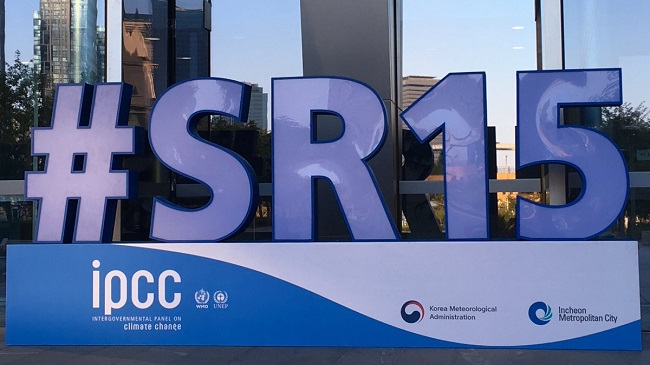
The climate alarm could not have been much louder than the special report (SR15) that was released on Monday, October 8, 2018 by the Intergovernmental Panel on Climate Change (IPCC). While the Paris Agreement presented the famous target of limiting global temperature rise to 1.5 degrees Celsius, or well below 2.0 degrees, the special report shows that such a range may actually be political wishful thinking. The Special Report clearly shows that a temperature rise of 1.5 degrees above pre-industrial levels will bring about severe changes compared to current extreme weather events.
The Special Report shows that a temperature rise of 1.5 degrees above pre-industrial levels will bring about severe changes compared to current extreme weather events
Professing a diagnosis is easier than providing a solution, especially when you do not wish to ruffle feathers. Most scientists and laymen agree that although global warming has risen and abated in the past, what has happened since the industrial revolution is a vertical climb that shows no sign of reversion. It is also generally agreed that the catastrophic rise is largely systemic – caused by the exploitative economic system that the world is locked on. It is this rigged system that blocks the routes to the needed climate action.
Is it not known that the problem is about the continual burning of fossil fuels that stokes the atmosphere with greenhouse gases? Why is the world reluctant to stop the extraction and burning of fossil fuels even though these are known to be detrimental? The answer is simply that the powers-that-be prefer profit to people and the planet. So, business as usual continues and disaster brings even more profit through displacement of poor people and the grabbing of resources that the poor and the vulnerable are unable to access or return to.
The world will cringe at the dire prognosis of the report, and then go right ahead to dig up more coal, more crude oil and proceed with more fracking. Governments will still dig for coal and destroy forests in the process, despite loud alarms raised by forest protectors such as the ones at the Hambach Forest in Germany. And in Nigeria, the flaring of associated gas will continue and the dream of a superhighway through the last pristine forest will persist in Cross River State.
Happily, the appeal court at The Hague sided with Urgenda in the case against the Dutch government and declared that the government has a duty to take adequate climate action as a means of protecting the citizens from climate impacts and for securing the human rights. Interestingly the court also discounted the Dutch government’s argument that the carbon being pumped into the atmosphere today will be sucked out in future. We note that SR15 also acknowledges that the carbon-sucking technologies being bandied about are unproven.
The IPCC report diagnosed the problem and raised the alarm urging politicians and economic leaders to act. However, some of the suggested actions are equally alarming and will likely add more problems for the poor, the unprotected and the vulnerable, in the unfolding climate chaos.
We are told that the window for halting the chaotic climate march is a narrow 12 years. It is stated that by 2030, the global emissions of carbon dioxide must be cut by 45 percent from 2010 levels. It is also estimated that by 2050 renewables should provide 85 percent of global electricity.
So, what is to be done? When the IPCC says that action must be taken to ensure that the store of carbon in the atmosphere is brought to net zero, what is meant is that the amount of carbon released from excessive consumption and burning of fossil fuels and the like must be equal to the amount of carbon that is captured and stored somewhere, locked in sinks or deflected by some other means. These proposed actions, the hallmark of market environmentalism, are the real alarm bells that we should wake up to.
And, we cannot forget that about seven million square kilometres will be needed for so-called energy crops. That sounds nice, no? The more understandable names for those crops are biofuel and agrofuel crops. These are crops grown to feed machines or to provide biomass for some synthetic processes. An uptake of that massive size of land away from food crops will bring profit to industrial farmers; promote genetically engineered crops and attendant agrotoxics while raising global hunger and diverse social malaise. Also, more forests will be designated as carbon sinks with corresponding exclusion of communities from enjoying and managing their common heritage.
It is estimated that up to $2.4 trillion would have to be invested in energy systems in the next two decades to limit global temperature increase to 1.5 degrees Celsius. This is at a time that the world cannot raise $10 billion for Climate Finance.
Polluting and capturing and locking up pollutants in some carbon prisons, is not a new idea. It is a brilliant marketing spin. It allows business as usual, permits climate irresponsibility and delivers heavy cash to the polluters. For example, oil companies that use associated gas to literally scrape the bottom of oil wells will claim they are engaged in carbon capture and sequestration – even though they release the carbon in the first instance by drilling for oil. Companies engaged in geoengineering will don their beautiful badges as climate engineers and work to deploy an array of climate-interfering planetary experiments – including cloud whitening, solar mirrors in the sky, other forms of solar radiation management as well as ocean fertilisation. Yes, with net zero carbon targets we can keep cranking up global temperatures but hope that “we have the technologies” to handle the problems.
Humankind’s techno optimism gives policy makers that assurance and also that the oceans and genetically engineered trees can suck carbon from the atmosphere. It assures them that we can ape volcanoes and release particles into the sky that would block the sun and cool the earth. Suddenly it is as though our planetary systems are not interconnected and one part can be tweaked without a corresponding result elsewhere. But, who would really care if the negative impacts can be deflected on those destined for the slaughter?
Catastrophe is not inevitable if we can wake up from slumber and face reality. Life style changes and alternative investment patterns can no longer be delayed. Investment in socialised forms of renewable energy cannot be postponed. Fossil fuels must be seen as stranded or bad assets and left in the ground. Agroecological food production cools the planet, so investment and support must be extended to that and to small scale producers.
The cost of inaction or bad action is extreme. Temperature increases will make it impossible for certain crops, including maize, rice and wheat to be cultivated. Millions more will be hit by flooding. Sea level will rise, and coastal erosion will be more dramatic. With the suite of negative changes, the tide of climate refugees will rise.
The voluntary, nationally determined contribution of the Paris Agreement is clearly not the solution. It is time for nations to step up and accept legally binding emissions reduction based on historical and current carbon emissions. The alarm has been sounded. It is no more time to sleep.
By Nnimmo Bassey (Director, Health of Mother Earth Foundation)
Institutional reform is a key intervention towards ensuring the resilience of African economies and the livelihoods of communities, says the African Climate Policy Centre (ACPC) of the United Nations Economic Commission for Africa (ECA).
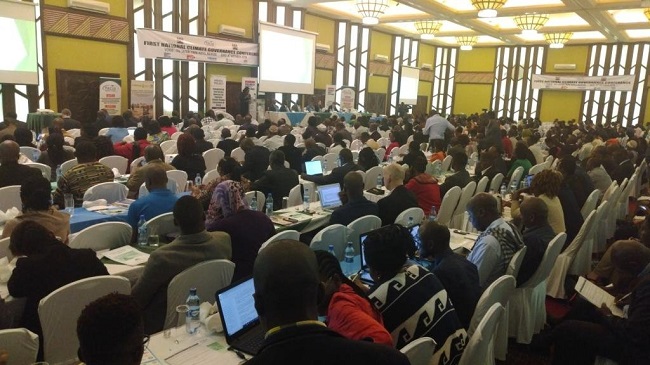
Participants at the First Kenya National Climate Governance Conference
According to James Murombedzi, Officer-in-Charge of ACPC, communities have long practiced many adaptation strategies and devised many viable responses to changing conditions.
“However, there are limits to how well communities can continue to practice adaptive livelihoods in the context of a changing climate. They need the support of an enabling environment created by government-planned adaptation,” he observed.
He was addressing participants at the First Kenya National Climate Governance Conference on Tuesday, October 9, 2018, which preceded the Seventh Conference on Climate Change and Development in Africa (CCDA-VII) commencing on Wednesday in Nairobi, Kenya.
The climate governance conference comes on the heels of the IPCC report on Global Warming of 1.5oC, which says the world is heading towards catastrophe if immediate action is not taken to halt greenhouse gas emissions.
“We have adequate knowledge of the causes of global warming, and the science is conclusive. There is no room for climate deniers in this discourse,” said James Murombedzi. “However, the inaction that we have seen is not because there is insufficient knowledge or technology or finance. We have enough of these to be able to change the way in which we produce, distribute and consume goods and services.”
The report by the Intergovernmental Panel on Climate Change confirms what the impacts of climate change that African is already experiencing.
Mithika Mwenda of the Pan-African Climate Justice Alliance (PACJA) said the implementation of climate policies remains crucial.
“The successful implementation of Nationally Determined Contributions (NDCs), a set of actions each country has committed under Paris Agreement to combat climate change, will be determined by the policy and legal frameworks which will be laid down by individual countries,” he noted.
African economies and communities are generally dependent on natural resources. The use and management of these natural resources also tends to be characterised by institutional structures which are poor, making them vulnerable to climate extremes.
CCDA-VII will focus on mobilising action towards the achievement of the objectives of the Paris Agreement.
The ACPC, through the ClimDev Africa initiative, is already exploring the climate governance prospects for Africa structural transformation towards achieving the aspirations of Agenda 2063 and the Sustainable Development Goals (SDGs).
“Climate change is cross-cutting. It affects every aspect of life, and our ability to achieve the SDGs or indeed any of the aspirations of agenda 2063 is constrained by climate change. Because of its cross-cutting nature, climate governance is complex. It requires the participation of multiple stakeholders, with sometimes conflicting interests,” said James.
With the support of DfID, the ACPC is also implementing the Weather and Climate Information Services (WISER) which seeks to promote the production and use of climate information and contributes to building the capacities of hydrological and meteorological authorities across the continent.
he ACPC has also developed a five-year programme which seeks to support African countries in building resilient infrastructure and economies.
Climate finance is however a major constraint to climate action.
The ACPC posits that “if local governments access decentralised climate finance, they should be empowered to disburse these climate funds for investment in priorities chosen with communities for adapting to climate change”.
The Africa Development Bank (AfDB), in partnership with the International Institute of Tropical Agriculture (IITA), is convening a high-level partnership meeting to develop an action plan to deploy proven technologies against the highly destructive Fall Armyworm (FAW) in East Africa. Ultimately, an appreciable management of FAW in East Africa will significantly reduce adult populations which subsequently migrate to initiate attacks in other regions.
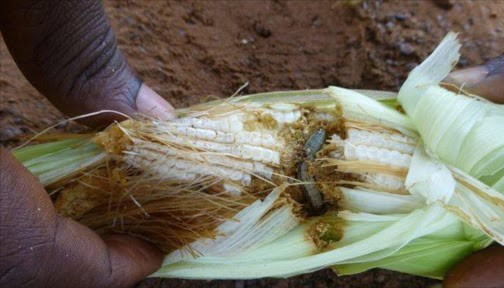
Armyworm invasion
The meeting will bring together ministerial level government representatives and experts from the government of Kenya, as well as authorities including from African Development Bank, IITA, the African Agricultural Technology Foundation, the Alliance for a Green Revolution in Africa, FAO, CIMMYT, CABI, United States Agency for International Development (USAID) and the Syngenta Foundation.
Fall Armyworm, or Spodoptera frugiperda, is an insect that is native to tropical and subtropical regions of the Americas. In its larval stage, it can cause significant damage to crops, if not well managed. The caterpillar prefers maize but can feed on more than 80 additional species of plants including rice, sorghum, millet, sugarcane, vegetable crops and cotton.
The talks are part of continent-wide regional approaches to address the FAW threat. As part of its Technologies for African Agriculture Transformation (TAAT) agenda, the African Development Bank established a Fall Armyworm Compact to mobilise support from researchers and the public and private sector, to confront the menace. The Compact seeks to identify new technologies to combat the pest and rapidly deploy them to smallholder farmers across the continent.
Participants will look at ways to deploy the most effective Fall Armyworm-combating technologies to tens of millions of smallholder farmers in the shortest possible time. One focus will be on the Syngenta Foundation’s seed treatment pesticide known as Fortenza Dou, considered effective against Fall Armyworm in the first 30 days of the plant’s growth.
Participants will be drawn government representatives, key private sector and researchers and development actors from Burundi, Ethiopia, Eritrea, Kenya, Rwanda, Somalia, South Sudan, Sudan and Uganda. Partner organisations in this initiative including the Food and Agriculture Organisation (FAO), United States Agency for International Development (USAID), the Alliance for a Green Revolution in Africa (AGRA) and Syngenta Foundation will also be present.
The workshop seeks to take stock of available technological options and on-going FAW interventions by partners; identify options on financing delivery of the proven technological options to farmers; identify necessary policy and regulatory framework reforms to allow for registration of these new technologies across the region and get buy-in and agreements of all stakeholders required for concerted action to achieve quick wins in the war against FAW.
On October 18, 2018, Nigeria and the world shall join the International Association for Promoting Geoethics (IAPG), to celebrate the International Geoethics Day. The initiative was born in 2017 with the aim to raise the awareness of the geoscience community and society about the importance of geoethics.
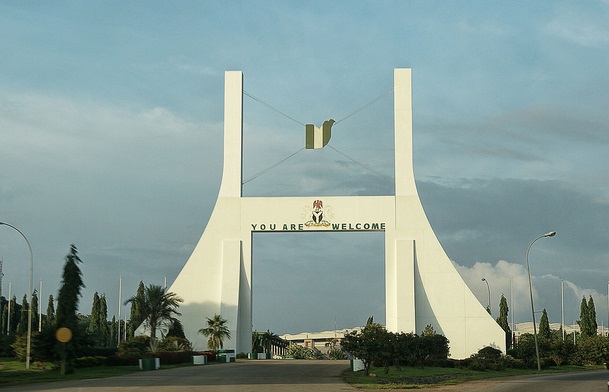
The Abuja city gate
The Geoethics Day falls into the Earth Science Week and will be the occasion to reaffirm the geoethical values in which the world is presently realising holds the key to not only ensure that we maintain a sound biodiversity balance, but that we shall be able to achieve most of the Sustainable Development Goals (SDGs).
In the case of Nigeria, the recent earth tremor in the Federal Capital Territory (FCT) leaves no one in doubt that we have come to the place where we must become responsible in our geological activities and other issues pertaining to environmental governance.
According to media reports, the earth tremor that lasted for three days in Mpape and some parts of Maitama district in Abuja left not only residents, but also the whole country apprehensive that an earthquake was about to occur. The residents of the affected areas were alarmed by the sudden shake of the earth, which started on Thursday, September 5 to 8, as they were seen relocating to other places in the city with fear of losing their lives.
The Federal Capital Territory Emergency Management Agency (FEMA) dispelled fears of an earthquake, stating that even though an “abnormal” occurrence, the area was not in an earthquake zone. Nevertheless, the government agency added that the incident was likely caused by stress in underground rocks resulting from human activities which included blasting and mining of rocks.
According to the statement from FEMA, “Whilst appreciating the call from the public, the FCT emergency management agency (FEMA) wish to make the following statements; That the possible cause of the earth shaking might be as a result of earth tremor. That it is a sign of seismic movement within the earth. This is caused by sudden break along a fault line which results in sudden release of energy that makes the ground to shake.
“It is caused by stress in underground rocks and may be due to rock blasting and mining activities in an area.”
This, therefore, is why Nigeria as a developing country must now review all its geoscientific sectors with a view to ensuring that the Abuja tremor and others that have happened in other states before now – like in Kaduna State in 2016 – would not repeat it or develop into widespread national emergencies. We are very much aware of the fact that we do not have the material resources and psychological preparedness to face natural disasters of significant magnitude.
Earth science or geoscience includes all fields of natural science related to the planet Earth. It is the branch of science dealing with the physical constitution of the earth and its atmosphere, the study of our planet’s physical characteristics, from earthquakes to raindrops, and floods to fossils.
The Earth sciences can include the study of geology, the lithosphere, and the large-scale structure of the Earth’s interior, as well as the atmosphere, hydrosphere, and biosphere. Typically, Earth scientists use tools from geography, chronology, physics, chemistry, biology, and mathematics to build a quantitative understanding of how the Earth works and evolves.
Earth science affects our everyday lives. Interestingly, when the Earth resources are exploited, these geoscientists must inculcate a fresh Earth-centric consciousness of responsibility for their direct and indirect activities to be sustainable, leaving a better environment for future generations. This is where Geoethics come in.
Ethics is the field of knowledge that deals with the principles that govern how people behave and conduct activities. Ethics is well established as being of relevance to other scientific disciplines (e.g., medical ethics, bioethics). Given the multiple interfaces of geoscience with society, it is appropriate that we all consider our social role and responsibilities. Geoethics, therefore, is the branch of ethics which relates to the interaction of human activity with our physical world in general and with the practice of the Earth sciences.
This is not just a niche area of research but extends to all geoscientists irrespective of their field (e.g., volcanology, engineering geology, hydrogeology, metamorphic petrology) and employment sector (e.g., industry, academia, public sector). Geoethics provides a framework for us all to reflect on the shared values that underpin our work as geoscientists, and how these values shape our professional actions, and our interactions with colleagues, society and the natural environment.
For us in Nigeria, it will address the problem of the Niger Delta about resource exploitation. It will also address indiscriminate mining in Abuja and other states; and also, tree-felling in the Northern parts of the country, which has worsened desertification and seasonal flooding.
Therefore, the International Association for Promoting Geoethics, Nigeria, organises its First National Conference to celebrate the International Geoethics Day 2018, from October 18 to 19. This is to seek avenues of integrating geoethics into working practices and providing opportunities for networking and promoting the application of geoethics for sustainable development.
The main theme of the conference is Integrating Geoethics into the Extractive Industry Governance.
There is no doubt that our country needs to lead Africa in this all-important sector because it holds the promise to enhance vital developmental sectors like agriculture, mining and natural resources management.
Nigeria needs developmental strides like this to prepare its future scientists for the challenges ahead. And, to carve a niche for the country in the comity of nations.
As a developing country, our young geoscientists need to make commitments for enduring nation-building. This is a proposal of Hippocratic-like oath for early-career geoscientists, expressing their commitment to geoethics values in geoscience research and practice. This is the only way future ‘Abuja tremors and possible earthquakes’ could be avoided.
By Harrison Arinze Ikwumelezeh, National Coordinator, International Association for Promoting Geoethics, Abuja
Three and a half year after the historic Urgenda-verdict by the The Hague district court, the Dutch judiciary, again, ruled in favour of Urgenda. The The Hague Court of Appeal affirmed the 2015 decision of the The Hague district court that the Dutch State violates its duty of care by not taking enough action to lower its CO2 emissions by 25% in 2020. The Court of Appeal even took it one step further by, this time, basing the duty of care on the human rights provision of article 2 and 8 of the European Convention of Human Rights. Femke Wijdekop writes.
Celebration after the verdict
Three and a half years ago I was present at the court house, this time I watched the verdict via live-stream, with my own future generation playing on my lap. I was nervous and in my mind I joined the other co-litigants in the courtroom. However, soon after the chief-judge started reading the summary of the verdict – which, she warned, was elaborate and would take up to half an hour – I started to feel hopeful about the direction the verdict was going.
Unlike the district court, the court of appeal accepted Urgenda’s appeal to article 2 European Convention on Human Rights (the right to life) and article 8 European Convention on Human Rights (the right to family and private life), also in a “collective action”-case as is the Urgenda climate case (I am one of 886 co-litigants). The Court said that the duty of the Dutch State, as a State Party to the Convention, to protect the human rights to life and to family and private life, requires it to take action to ward off dangerous climate change. The Dutch State had not challenged the scientifically back-up facts presented by Urgenda regarding the impending dangers of climate change, and the Court of Appeal affirmed these facts.
The next question was if the failure of the Dutch State to meet the goal of minimally 25% CO2 emissions by 2020 was tortious. The Court concluded that it was. Meeting this internationally agreed and scientifically based goal, in order to at least stay below global warming of 2 degrees celsius, requires the Dutch government to take speedy climate action. Delay of such action leads to even bigger risks of dangerous climate change.
Alternative pathways to reduce emissions presented by the State, such as CO2 capturing technologies, cannot (solely) be relied upon to reach the 25% goal. Also, the precautionary principle requires the State to take climate-action amidst the insecurity of the exact global warming and emissions-tipping points which lead to catastrophic climate change.
Next, the Court of Appeal rejected all the arguments of the State against the 2015-verdict. The verdict did not violate the separation of state powers since it is the duty of the judiciary to protect human rights which have direct effect in the Dutch legal order, such as articles 2 and 8 of the Convention. The order of the 2015 verdict to reduce CO2 emission with 25 % leaves the State with enough policy freedom in choosing the adequate measures to achieve this goal.
With other words, the State is left with enough manoeuvring space in fulfilling the obligations of the Convention (‘margin of appreciation’-doctrine). Also, the fact that the Dutch CO2 emissions form only a small part of the global emissions leading to dangerous climate change does not take away the responsibilities of the Netherlands to address its own share. (As a side-note, the chief-judge joked that ‘it would be too much to ask of Urgenda to start climate cases against all the other nations of the world’).
This all led to one conclusion: the State acted tortuously by not taking enough measures to reduce CO2 emissions according to its international obligations. The State thus violates its duty of care to protect Urgenda, its co-litigants and the Dutch populations from future human rights violations caused by dangerous climate change.
After the reading, sighs of relief and cheers sounded through the courtroom. Marjan Minnesma, CEO of Urgenda, in tears said she ‘could not have hoped for a better result’. I too felt cheerful and empowered, cheering in my living room which startled my baby and our animal companion. I felt empowered in my search to practice law from a personal values-driven place. Many lawyers, including environmental lawyers, much to my surprise, had responded to the 2015-verdict in a ‘wait and see’, almost cynically, way. Many agreed with the objective of the climate case on a personal level, but professionally disagreed that the judiciary was the right place to enforce stricter climate policy.
This would violate the constitutional principle of the separation of state powers. The Court of Appeal today (October 9, 2018) showed that it could think beyond legalistic interpretations in order to honour its function as the protector of human rights while being rooted in the reality of our rapidly changing climate and ecology. Yes, the order to reduce CO2 emissions at a quicker pace would bring with it financial costs – the Court acknowledged – but these costs are the sacrifice we have to make to avoid much more serious ecological and social costs; harm both to human life and to nature and biodiversity.
Applause for the Court of Appeal for looking at the climate case through a wider lens and for bringing the human rights-dimension of government inaction so clearly into focus.
As the world grapples with how best to address climate change impacts including global warming, some scientists are of the view that the tools of biotechnology have a lot to offer in that regard.
Dr. George O. Essegbey
“Biotechnology can contribute to mitigating climate change in two ways…” says, Dr. George Essegbey, a Chief Research Scientist with the Science Technology Policy Research Institute of Ghana’s Council for Scientific and Industrial Research (CSIR-STEPRI).
“First, is the direct removal of greenhouse gases using genetically engineered plants, since they can be more efficient in removing carbon dioxide from the atmosphere,” Dr. Essegbey said. He explained that genetically modified or engineered plants come with a novelty of providing a continuous re-generating system that will improve carbon dioxide uptake.
“What is novel here however, is the accelerated ability of the plant to remove carbon from the atmosphere and reduce global warming,” Dr. Essegbey noted. Thus, genetically engineered plants can enhance afforestation and reforestation measures. His proposal fits into the concept of forest-related mitigation measures, deemed by some experts as the most practicable and cost-effective option for responding to climate change.
A statement issued some time ago by Forests Dialogue’s Initiative (TFD) on Forests and Climate Change, said addressing deforestation is necessary to take advantage of the intricate relationship between forests and climate change. On one hand, forests can mitigate climate change by absorbing carbon, while on the other they can contribute to climate change if they are degraded or destroyed. In turn climatic changes may lead to forest degradation or loss – which exacerbates climate change further.
The statement further noted that the forest sector has a unique ability to simultaneously reduce emissions, capture and store carbon, and lessen the vulnerability of people and ecosystems to climate change. These could be attained through measures including sustainable forest management, forest conservation, reforestation, afforestation and the use of sustainably produced wood products as substitutes for emissions-intensive materials.
Dr. Essegbey mentioned the second contribution of genetically modified plants to the fight against climate change as the ability of such plants to be more adaptive to their environments. “As climate change impacts on the various ecosystems, the ability of plants to survive or flourish in their natural habitats is impaired. It is possible to genetically construct plants or crops to still flourish in their changed environments by inserting the right genes into them,” Dr. Essegbey said.
Touching on whether to use biotechnology tools to conserve biodiversity, he preferred the application of more conventional means such as “producing accessions of genetic materials and preserving them, keeping aboretums, creating forest and game reserves, maintaining parks and gardens, and protecting living species that are on the brink of extinction.”
Dr. Essegbey added that “modern biotechnology contributes to enhance the effectiveness of some of these conventional conservation practices.”
His comments come on the heels of the released UN Intergovernmental Panel on Climate Change (IPCC) report, which says “unprecedented changes are needed for the world to limit global warming to 1.5°C above pre-historic levels.” This is important because according to the report titled: “Special Report on Global Warming of 1.5°C,” the least increase in global warming beyond the 1.5°C will significantly worsen the risks of drought, floods, extreme heat and poverty for hundreds of millions of people.”
Since its release, various organisations and institutions have been responding with calls on national governments to act immediately to avert the pending catastrophe that can be averted. The Director-General of the Indian based Centre for Science and Environment (CSE), Sunita Narain, says the IPPC Report serves as a final warning for concerted action.
“Even at a little over 1.0°C warming, India is being battered by the worst climate extremes – it is clear that the situation at 1.5°C is going to worsen. The new report from the Intergovernmental Panel on Climate Change (IPCC) has served us a final warning that we must get our act together – now and quickly.”
CSE’s Deputy Director General and Head of the Climate Change Unit, Chandra Bhushan says that with the predictions of worsening situations, “countries like India, with large populations dependent on the agricultural and fishery sectors, would be highly impacted.”
Their comments are contained in a press statement issued to present highlights of CSE’s, analysis of the IPCC report. The CSE statement notes that while a 1.5°C rise in global temperatures will be precarious, a 2°C rise would be catastrophic. Citing the IPCC report, the statement points out that “the risk of transition from 1.5°C to 2°C is very high and that the effects at 2°C will be more devastating than what IPCC’s Fifth Assessment Report had indicated.”
When that happens, coastal nations and agricultural economies like India would be the worst affected. It will lead to decline in crop yields, unprecedented climate extremes and increased susceptibility could push poverty by several millions by 2050, according the statement. It therefore appeals to the world to focus exclusively on limiting warming to 1.5°C instead of 2°C, which is the upper limit of the temperature goal mentioned under the Paris Agreement.
To this end, Mr. Bhushan urged the global community to set a new goal for climate change: “The goal of climate change now must be firmly fixed to 1.5°C to give the communities and nations a fighting chance to avoid the worst impacts of climate change.” He further urged his country India to “take the lead in creating a global coalition for a 1.5°C world to save its poor and vulnerable.
Meanwhile, the Pan Africa Director of Oxfam International, Apollos Nwafor in his response to the IPCC report believes it is as an ominous prediction for Africa. “Climate change has set our planet on fire, millions are already feeling the impacts, and the IPCC just showed that things can get much worse. Settling for 2°C would be a death sentence for people in many parts of Africa. The faster governments embrace the renewable energy revolution and move to protect communities at risk, the more lives and livelihoods that will be spared,” he declared.
In a statement, Mr. Nwafor noted: “A hotter Africa is a hungrier Africa. Today at only 1.5°C of warming globally, crops and livestock across the region are being hit and hunger is rising, with poor small-scale women farmers, living in rural areas suffering the most. It only gets worse from here.”
He pointed out that merely following the Paris Agreement will make matters worse. “To do nothing more and simply follow the commitments made in the Paris Agreement condemns the world to 2°C of warming. The damage to our planet and humanity would be exponentially worse and irreparable.”
Mr. Nwafor therefore called for increased, responsible and accountable climate finance from rich countries that supports small scale farmers, especially women to realise their right to food security and climate justice.