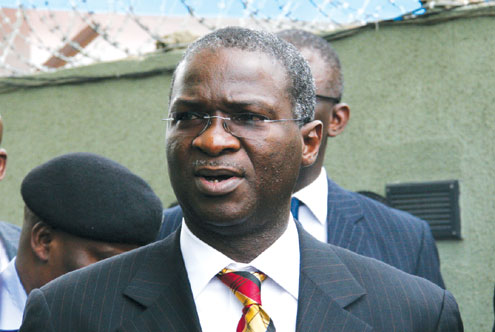
The Minister of Works, Power and Housing, Mr Babatunde Fashola, on Monday, November 19, 2018 said the Federal Government would deploy solar energy systems to 37 universities in the country.
Minister of Power, Works and Housing, Babatunde Raji Fashola (SAN)
Fashola made this known while delivering the 32nd Convocation Lecture of the Yaba College of Technology (YABATECH), titled: “Sustainability of Technological Advancement-A Key to Industrial Growth’’.
He said the solar energy project was ongoing, saying that government would soon deliver 12 Mega Watts of electricity in nine institutions.
“We are embracing technology and we are embracing solar energy. We will go phase by phase until we complete the 37 federal institutions.
“We have started construction of roads in 14 tertiary institutions for internal road rehabilitation.
“I don’t know the last time the Federal Government went back to rehabilitating internal roads or build independent power plants for its own universities in this country.
“That is what President Buhari’s government is doing now,” he said.
Fashola said that the country must develop a technology to store electricity, pointing that, today, it is still difficult to store electricity.
The minister said the Federal Government had invested in Automated Meter Reading Machines.
“Everybody, from providers of power to consumers of power can see the value chain from a remote location.
“Once this can happen, it will mean that investment in power will grow. The investment in transmission will grow and investment in distribution will grow.
“Everybody is getting his money and reinvesting appropriately,’’ he said.
The minister said technology had advanced growth in every sector of the economy, from Banking to ICT.
He noted that technology was sustainable because it was evolving without disrupting lives in a bad way.
“Our world is changing so very quickly; our world will change so much I suspect in the next 10 to 20 years.
“We can leap-frog with technology; we can deploy them and we can add value to it. The world is changing, add your own,” he said.
Earlier, Mr Obafemi Omokungbe, Rector of the college, said the Convocation lecture was a very important component of the graduation ceremony.
Omokungbe said the lecture was an avenue to examine issues of national and global interests with a view to proffering solutions to identified challenges.
He said the recommendations would assist the relevant organs of government in formulation and implementation of policies that might be beneficial to the nation at large.
“Your presence here is not an accident and we do not want the opportunity to be lost by us.
“There is, therefore, a huge burden on the college for replacement of these facilities that have become dilapidated and decayed due to age, particularly at a time when fund is a serious and harrowing issue.
“First, we seek your assistance to facilitate the completion of the reconstruction of the college road network and request for the construction of an electricity substation for the college.
“The issue of electricity supply to the college has been a daunting task to be accomplished by the college management alone.
“As an institution of higher learning, the poor power supply or lack of it, has been a constant factor for disharmony between students and the management,” the rector said.
The inaugural United Nations World Geospatial Information Congress (UNWGIC) is being held in Deqing, East China’s Zhejiang Province. The event started on Monday Nov. 19, 2018 and will end on Nov. 21.
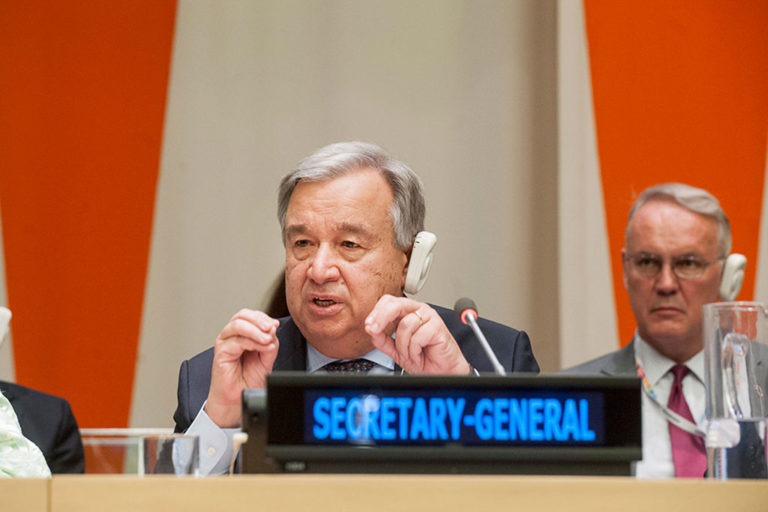
UN Secretary-General António Guterres. Photo credit: UN Photo/ Kim Haughton
UN Secretary-General Antonio Guterres sent a video message to the congress, expecting the UNWGIC to “use geospatial information to build a safer, better world where no one is left behind.”
Themed “The Geospatial Way to a Better World,” the UNWGIC aimed to advance the potential and usefulness of geospatial information for sustainable development and to tackle global challenges.
Guterres noted that to achieve the Sustainable Development Goals, reliable, timely and accessible geospatial information is in need for decision-making, ensuring effective and inclusive development initiatives and measuring progress.
He also encouraged participants to provide suggestions on developing new and emerging technologies, sharing the digital economy, and building smart societies.
The event includes exhibitions, meetings, workshops and learning events.
Delegates from over 100 countries and regions, geospatial information organisations, and academic and research institutions are attending the conference.
Civil Society on Monday, November 19, 2018 at the ongoing United Nations Convention on Biodiversity Conference of Parties (COP 24) in Egypt, called on African and all other delegates to apply caution on the issue of synthetic biology (synbio) and gene drive organisms (GDOs), saying that delegates from the continent are not adequately representing the continent’s interest at the summit.
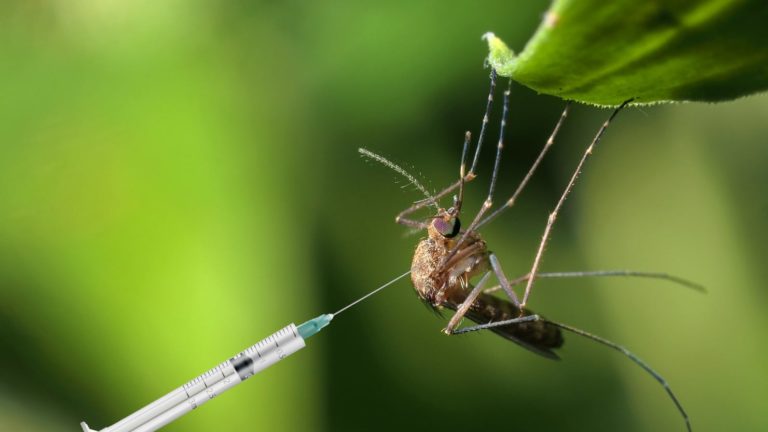
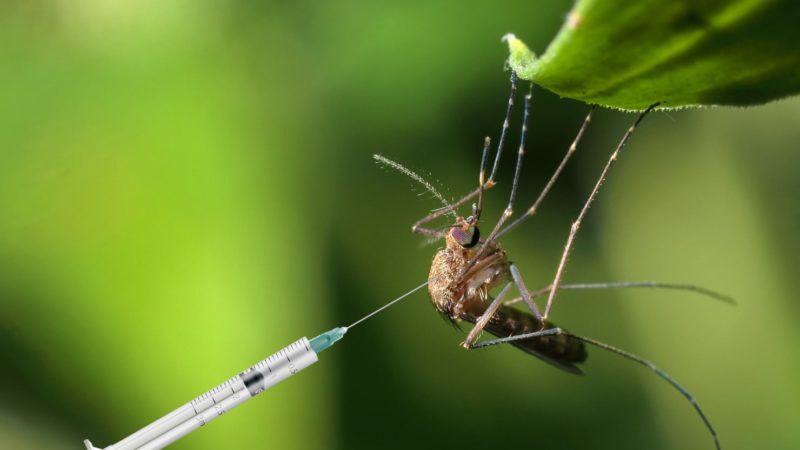
Gene drives, such as those being promoted by Target Malaria, aimes at releasing gene drive mosquitoes in Burkina Faso
As representatives of a broad range of African civil society organisations, we do not feel represented by the delegations of Nigeria and South Africa, in their attempt to speak on behalf of the people of Africa on the issue of synthetic biology (synbio) and gene drive organisms (GDOs).
Throughout the history of the United Nations (UN) Convention on Biological Diversity (CBD) and the UN Cartagena Protocol on Biosafety, African delegates have championed the defence of our biodiversity, protection of our seeds, indigenous agroecological practices and culture. They have always advocated the need for a precautionary approach.
In the past, African delegates have strongly defended our ecological life-support systems from threats, such as Terminator technologies (seeds designed to be sterile).
We are now alarmed at what is going on at COP14 and how our concerns for our environment, biodiversity and communities are being betrayed and threatened by delegates from some African nations. In particular, they are not representing our concerns about gene drives and synbio.
Most countries in Africa are still grappling with the threats from basic genetic engineering and associated agro-toxics and do not even have experience or capacity for basic regulation of the risks for those first-generation genetic technologies, let alone synbio and GDOs.
Gene drives, such as those being promoted by Target Malaria, aimed at releasing gene drive mosquitoes in Burkina Faso, are a deliberately invasive technology designed to propagate genetic material across an entire population – potentially wiping out entire species. As Africans, we are forced to confront this new and serious threat to our health, land, biodiversity, rights, and food supply.
African government delegations appear to have been neutralised. They have fallen from grace on the altar of the multi-national corporations, gene giants and private foundations. The African group’s position at the CBD slavishly replicates the position of these interest groups.
As Africans, we do not wish to be lab-rats for Target Malaria’s experiments. We refuse to be guinea pigs for their misguided disruption of our food systems and ecology.
We call on the African and all other delegates to put the brakes on this exterminating technology. We reject any form of representation that is against the interest of our peoples and biodiversity. We call on the governments of Africa to call their delegates to order and avoid acquiescence to unfolding intergenerational crimes.
The GMO-Free Nigeria Alliance, Health of Mother Earth Foundation (HOMEF) and over 35 other civil society organisations have condemned efforts by government and biotech corporations to persuade Nigerians to accept agricultural biotechnology, even as they denounce the registration and release of genetically modified (GM) cotton varieties (Maycho C567 BG II and Maycho C571 BG II) into the country.
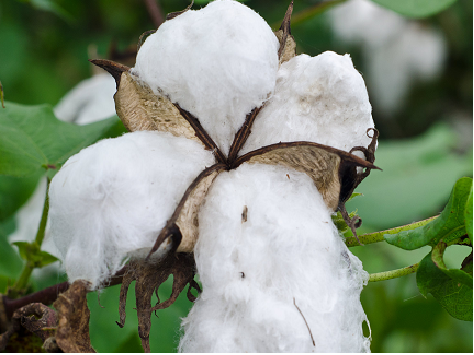
The GM Bt Cotton is said to have failed in Burkina Faso, with farmers making claims from Monsanto
The Federal Ministry of Science and Technology as well as the Ministry of Agriculture in conjunction with biotech company, Bayer/Mahyco (formally Monsanto) Agricultural Nigeria Limited, the Open Forum for Agricultural Biotechnology (OFAB) and the National Biotechnology Development Agency (NABDA) held a press conference on Monday, November 19, 2018 to inform the public on the recently released transgenic cotton varieties.
“We were utterly embarrassed to see the Minister of Science and Technology, Dr Ogbonnaya Onu, merely regurgitated the claims of the biotech industry that GMOs would bring about increase in agricultural yields, reduce pesticide use and improve economic situation for farmers – all of which have serially been proven to be false!” the group said.
On his part, the Minister of Agriculture, Audu Ogbeh, was reported to have said that Nigerians are too afraid, and that Nigeria cannot remain backward with regard to modern biotechnology. “Nigerians do not accept to be ambushed in this way by government agencies and officials,” the group insisted.
The coalition of CSOs, farmer groups and faith-based organisations representing thousands of consumers, food safety and environmental actors warned Nigerians to beware of the propaganda and to see the push for genetically modified organisms (GMOs) as “a money-making venture for the biotech corporations and their political jobbers”.
The group stated: “The move by the Nigerian government to commercialise the transgenic cotton varieties opens the doors for more genetically modified products (including the GM cowpea) and represents nothing but disaster for farmers, the entire public and our agricultural system.”
According to the coordinator of the GMO-Free Nigeria Alliance, Gbadebo Rhodes-Vivour, it is erroneous for Nigeria to adopt a crop variety which is famous for its failure in many countries where it has been used.
His words: “In 2016 Burkina Faso, discontinued cultivation of this genetically modified cotton due to poor quality of the cotton and high cost of inputs. Farmers in India have had a disastrous experience with this type of cotton as it proves ineffective against the bollworm pest and causes instead a boom of non-target pests, increase in pesticide use and in production cost. China, Indonesia and Pakistan are other countries where the transgenic cotton has failed.
“Experts in Kenya including the Kenya Biodiversity Coalition (KBioC), Africa Biodiversity Network, and Greenpeace Africa oppose plan to introduce this crop into their country stressing that it is unwarranted and unsafe,” Rhodes-Vivour added.
Nnimmo Bassey, Director of HOMEF stated: “The results of the use of GM cotton in other countries have shown that the promoters of agricultural biotechnology in Nigeria are knowingly peddling falsehood. As if to buttress this, South African government have recently rejected Monsanto’s triple stacked GM drought tolerant maize as they found that the data provided by company was insufficient to demonstrate the claimed drought tolerance and insect resistant efficiency of the GM event.”
The activist added: “It is regrettable that our ministers would front for Monsanto, a corporation that now goes by another name (Bayer), and that is well known for suppressing and distorting scientific research in order to accumulate profit at the expense of farmers, peoples and the planet. Combined with the dismal performance of the Nigerian delegation at the ongoing UN Convention on Biodiversity COP in Egypt it is clear that the GMO promoters have sold Nigerians and Africa at large for a mess of porridge. It is time for the Nigerian government to merge the National Biosafety Management Agency and the National Biotechnology Development Agency as there is no basis for their pretending to be separate entities.”
Mariann Bassey-Orovwuje, a lawyer and food sovereignty activist, stated: “It is appalling for the Federal Government to partner with Bayer/Monsanto and their hired helpers in this manner.”
She insisted that Nigeria is not ready to handle the implications of deploying genetically modified crops. Our regulatory system is stacked against the people as there is no provision for strict liability and redress in the country’s biosafety law and thus when the crop fails, the burden will be on our farmers. “To say that GMOs mean increased yield for farmers and the use of less herbicides and pesticides is the most blatant falsehood of the century.”
In 2016, when the application for environmental release and market placement of the cotton was advertised by the National Biosafety Management Agency (NBMA), HOMEF sent in objections outlining socio-economic, molecular, as well as safety and environmental concerns. In their submission to the Agency, HOMEF stated that the transgenic cotton contained the toxins: cry2Ab2 and cry1Ac which have no history of safe use in nature and have been shown to have similarities to known allergenic proteins. Also, no baseline data was provided on safety assessments and the application did not consider any combinatorial or cumulative effects of the modified proteins.
On environmental impact, it was pointed out that the application did not make provision for treatment of non-target organisms (organisms other than the target pests) and no data was provided on tests used by the company to back the claim of no adverse effect. Also, the specificity of the ecological situation in Nigeria was not considered.
Gloria Okon, a farmer based in Katsina State and a member of the GMO-Free Nigeria Alliance, pointed out that “farmers in Nigeria do not need GM cotton or beans. Farmers need to be provided with extension services to expose them to natural strategies (such as biological control and integrated pest management systems) to combat invading pests instead of government and Monsanto imposing solutions that will not help the poor.”
The statement concluded with a call for the Nigerian government and the entire public to reject agricultural biotechnology as solution for food challenges, to seek innovative systems such as agroecology that protect and enhance ecosystems, support small holder farmers and increase productivity.
Governments have been asked to put laws in place to enable communities’ initiatives take leadership role in conservation efforts.
Ken Kinney, Executive Director Ghana Development Institute
Ken Kinney, Executive Director Ghana Development Institute, noted that, by enacting laws, the governments would empower communities to focus on energy and food nutrition programmes.
“This will let the communities assume ownership hence diversify concentration in conservation matters,” Kinney said during a press conference in the sidelines of the ongoing Convention of Biodiversity’s (CBD) Conference of Parties in Egypt during the launch of a new briefing paper by the Global Forest Coalition (GFC).
He said that, besides giving incentives to foreign investors in timber and mining sectors, local communities need to be supported fully as the custodian of the natural resources.
Kinney noted that the rate of deforestation has grown high in Africa due to failure to incorporate indigenous people who have indigenous knowledge of conserving the environment.
“The communities should be considered by the government for support to help conserve biodiversity,” he added.
The paper attributed the leading cause of deforestation and biodiversity loss to giving incentives to produce and export meat and animal feed stocks like soy.
It noted that such subsidies must be phased out by 2020 to conserve biodiversity, in line with the Aichi Target 3 (4), while positive incentives should be developed to support alternatives.
Dr. Simone Lovera-Bilderbeek, GFC’s director, noted that European Union’s (EU) imports are directly incentivizing unsustainable meat production that is likely to further increase deforestation.
“There is need for a rapid reduction in meat and dairy consumption and incentives for small scale, localised and ecological sound food production and community conservation initiatives to support biodiversity conservation as an alternative,” she said.
She further said that meat and soy are the top two contributors to deforestation that must be eliminated as a financial and other support for these sectors.
Lovera-Bilderbeek noted that 90 percent of biodiversity are found in the forest hence the need to conserve al forests.
“We require a new and rapid shift towards consuming other foods that are not necessarily meat and dairy products to increase conservation of biodiversity,” she said.
The authors of the paper observed that incentives to produce and export meat and animal feed stocks in major producer countries like Brazil, Paraguay and Argentina are a leading cause of deforestation and biodiversity loss.
They singled out Brazil as one of the countries with the highest deforestation rates on the planet.
Between 2005 and 2015, the Brazilian government invested 3.18 billion dollars in the livestock industry, 90 percent of which went to just three corporations.
According to the paper, in 2017, 48 billion dollars went to agribusiness companies in the form of cheap credit. But in comparison, only 115.6 million dollars was allocated to combatting deforestation and forest degradation.
The study was also done in Tanzania, Ghana, Democratic Republic of Congo and Uganda.
Around 15 percent of terrestrial and 7 percent of marine areas are now covered by protected areas, a report released by the UN Environment shows.
Naomi Kingston, Head of Protected Areas Programme at the UN Environment
Naomi Kingston, Head of Protected Areas Programme at the UN Environment, said that the move shows that the world is on track to meet important conservation targets.
“By July 2018, more than 20 million km2 of the earth’s land surface and nearly 27 million km2 of marine areas had been designated as protected Areas – locations that receive protection to achieve the long-term conservation of nature,” Kingston told journalists during the launch of the protected planet report 2018 on the sidelines of the UN Biodiversity Conference in Sharm El Sheikh Egypt.
Kingston observed that this represents an increase in 0.2 percent of terrestrial and 3.2 percent of marine areas since the last report was published in 2016.
She noted that the continued growth in protected areas around the world is essential for the future of biodiversity adding that the great increases in protection of the marine environment over the past two years will play a key role in restoring the health of the ocean, that is being achieved due to a strong collaboration between countries, non-governmental organisations and international organisations.
The Protected Planet Report 2018 reviews the progress of Aichi Biodiversity Target 11, which aims for the effective and equitable management of 17 percent of terrestrial and 10 percent of coastal and marine areas by 2020.
Cristiana Pasca-Palmer, Executive Secretary, Convention on Biological Diversity (CBD), called on countries to make resolutions on protecting areas with urgency to meet the deadline.
“You have two years of ‘low hanging mangoes’ to pursue the set goals and report back within the time frame,” Pasca-Palmer added.
She said that then report shows that the world is on track to meet the coverage aspect of target 11, and emphasises the needs to meet other aspects by 2020.
Kathy MacKinnon, Chair, IUCN World Commission on Protected Areas, called for the recognition and supports the efforts being made by indigenous peoples and local communities, as well as private actors who conserve critical areas.
She said that protected Planet provides the essential information for decision-makers to base their decisions on achieving the existing targets by 2020, and most importantly to inform the approach for the post-2020 global biodiversity framework.
“Protection of these areas are to help conserve biodiversity whereas on 20 percent are currently protected in countries,” Mackinnon said.
She revealed that, for every 10 years, 10 newly protected areas are added in the list of the so far protected areas.
Mackinnon however said that the increase is encouraging but urged countries to focus on expanding the areas and confer the benefits to the communities.
Hany El Shaer, Regional Programme coordinator with the World Heritage and Business and Biodiversity Programme, protection of areas in the Middle East remains elusive due to sporadic wars witnessed in the region.
“We try to bring countries together, but some are undermining our effort as they fail to visit certain countries that are not their allies in the global set up,” Shaer noted.
He said that there remain significant challenges to achieve all elements of Aichi Biodiversity Target 11 in the region even as other countries make important strides into achieving the goal.
“Shaer noted that there remains a huge task to protecting the areas in the region and called for support to achieve the set goal,” he added.
The report shows that fishing is now banned in 432,000 square miles of Antarctic reserve, in attempt to preserve over 16,000 species, including the Adelie Penguin (Pygoscelis adeliae) and Minke Whale (Balaenoptera bonaerensis).
In addition to hosting the report, there is now a new interactive digital version, highlighting key findings, and providing monthly updates to track progress.
The UN Environment World Conservation Monitoring Centre (UNEP-WCMC), International Union for Conservation of Nature (IUCN) and the National Geographic Society (NGS) partnered in compiling and releasing the Protected Planet Report 2018.
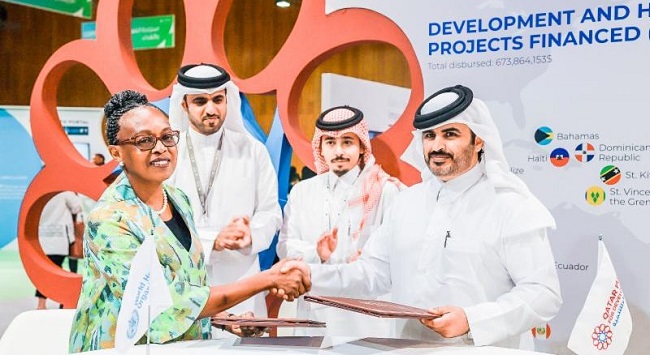
During the World Summit for Innovation in Health Care (WISH), the Qatar Fund for Development (QFFD) signed an agreement with the World Health Organisation (WHO) Regional Office for Africa to support the Expanded Special Project for Elimination of Neglected Tropical Diseases (ESPEN).
The Qatar Fund for Development (QFFD) signs its first agreement with the World Health Organisation (WHO) Regional Office for Africa
Within the United Nations, the WHO directs international health and leads partners in global health response. The WHO addresses global health issues, designs health research, sets norms and standards, clarifies evidence-based policy options, provides technical support to countries in need and monitors and assesses health trends.
Through the agreement, QFFD will contribute $3 million, between 2018 and 2020, to the global fight for the elimination of neglected tropical diseases that are still rampant in sub-Saharan Africa. By supporting ESPEN, which aims to achieve 100% geographic coverage of preventive treatment across all endemic countries in the region by 2020, QFFD will help African countries to accelerate control and eliminate these NTDs, and thus contribute to poverty alleviation, improved economic productivity and quality of life for affected people in Africa.
“The Qatar Fund for Development considers healthcare as one of the highest priority sectors, being part of the Sustainable Development Goals notably the third goal to ensure healthy lives and well-being for everyone. More than 70% of countries and territories that report the presence of NTDs are low income or lower-middle income economies. Therefore, this kind of project aligns with the State of Qatar’s goal to help those in need around the world,” said Mr. Misfer Hamad Al-Shahwani, Deputy Director General for Development Projects, QFFD.
While signing the grant agreement, the WHO Regional Director for Africa, Dr. Matshidiso Moeti, expressed her gratitude to the Qatar Fund for Development for the donation and commended its vision of helping those in need.
“I am delighted that the Qatar Fund for Development has joined the community of partners that are working together to break the chain of poverty and misery caused by these NTDs,” said the WHO Regional Director for Africa.
ESPEN focuses on a data-driven approach to inform evidence-based action aimed at accelerating elimination. With country ownership and leadership as a guiding principle, ESPEN contri¬butes to the broader WHO target of universal health coverage, long-term sustainability and health system strengthening. Working with Ministries of Health, ESPEN strengthens the last mile of the supply chain to ensure high quality donated drugs are utilized and tracked appropriately, while promoting continuous innovation, development and adaptation, which are required to ensure accelerate sustainable country progress.
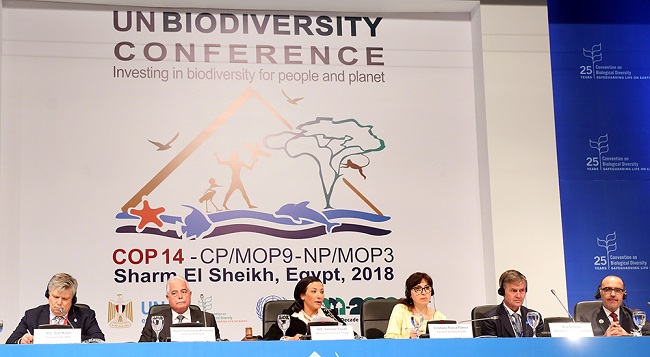
The 2018 UN Biodiversity Conference opened on Saturday, November 17, 2018 in the seaside town of Sharm el-Sheikh, Egypt with an opening ceremony that included an address from President of Egypt, Abdel Fattah Saeed Hussein Khalil el-Sisi, who emphasised the crucial importance of the meeting for Egypt, and for global efforts for sustainable development.
L-R: View of the dais during the opening session of the High-level Segment with Siim Kiisler, Minister of Environment, Estonia, President of the United Nations Environment Assembly (UNEA); Khaled Fouda Saddiq Mohammed, Governor of South Sinai, Egypt; Yasmine Fouad, Minister of Environment, Egypt; Cristiana Paşca Palmer, Executive Secretary, Convention on Biological Diversity (CBD); Erik Solheim, Executive Director, UN Environment Programme (UNEP); and José Octavio Tripp Villanueva, Ambassador of Mexico to Egypt, COP 13 Presidency
Only two years remain in the commitment period for the Strategic Plan for Biodiversity 2011-2020. Over the next two weeks, governments will be urged to ramp up their ambitions and actions to achieve action on the 20 targets they established in Nagoya, Japan in 2010.
At this year’s conference, national governments, regional organisations, and other key stakeholders from around the world will engage in intense discussions with the goal of making a final push to achieve agreed upon global biodiversity targets for 2020 and to start the momentum for an ambitious and achievable post-2020 global biodiversity framework.
Dr. Cristiana Paşca Palmer, Executive Secretary of the UN Convention on Biological Diversity, emphasised the critical urgency for the international community to work together to preserve global biodiversity now. “If we do not act, we soon may reach tipping points that may cause irreversible destruction to nature and ultimately to humankind”.
The meeting convenes in the 25th year of entry into force of the Convention. During those years, decisions taken by governments have resulted in a global network of protected areas, 15 per cent for land and close to six per cent of the global oceans, and the development of important policy guidance and legislation for natural resource conservation and sustainable use regulation.
Despite these successes, strong evidence suggests that there is insufficient action taking place. Regional reports and other assessments from the Intergovernmental Science-Policy Platform on Biodiversity and Ecosystem Services (IPBES), released in March, showed that in every region, with the exception of a number of positive examples where lessons can be learned, biodiversity and nature’s capacity to contribute to people are being degraded, reduced and lost due to a number of common pressures – habitat stress; overexploitation and unsustainable use of natural resources; air, land and water pollution; increasing numbers and impact of invasive alien species and climate change, among others.
The “Living Planet Report 2018” by WWF also found that worldwide vertebrate populations are currently set to decline by 60 per cent from their 1970 levels by 2020.
Egypt takes the helm of the Convention for the pivotal next two years, following on the work of Mexico which held the presidency from 2016 until now. This year’s meeting of the Conference of Parties is being chaired by H.E. Yasmine Fouad, Minister of Environment of Egypt.
H.E. Yasmine Fouad said: “Nature and humanity are not separate entities, and Africa is leading the way on the post-2020 global biodiversity framework.”
Delegates to the meetings plenary also heard messages from United Nations officials including the President of the United Nations General Assembly, María Fernanda Espinosa Garcés, and the Deputy Secretary-General, Amina J. Mohammed. Both stressed the importance of biodiversity protection for achievement of the Sustainable Development Goals and the need for a robust follow-up to the Strategic Plan for Biodiversity.
Discussions in Sharm el Sheikh will also seek to expand coalition of actors to explore innovative approaches and find ways to scale and accelerate initiatives to protect nature. The Governments of Egypt and China, along with the Secretariat of the Convention on Biological Diversity have announced the Sharm el Sheikh to Beijing Action Agenda for Nature and People to collect, coordinate, and celebrate actions taken by an array of stakeholders to protect biodiversity: (www.cbd.int/cop/cop-14/annoucement/nature-action-agenda-egypt-to-china-en.pdf).
Governments will present plans to bring biodiversity and nature into the heart of decision-making in the crucial economic sectors of mining and energy, infrastructure, processing and manufacturing and health. H.E. José Octavio Tripp Villanueva, Ambassador of Mexico to Egypt, and representing the COP 13 Presidency, said: “From Cancun to Sharm el Sheikh, the mainstreaming of the conservation and sustainable use of biodiversity into productive sectors has gained momentum, giving testimony to the power of positive and inclusive unilateralism.”
The conference also includes discussions on the Cartagena Protocol on Biosafety, on the labeling, transport and handling of GMOs, and the Nagoya Protocol on Access to Genetic Resources and the Fair and Equitable Sharing of Benefits Arising from their Utilisation.
In addition, Sir Paul McCartney delivered a message on the importance of reducing meat consumption and thanked the conference for committing to two “Meatless Mondays” – days where meat would not be served on the site.
National Geographic and WWF International also provided videos to the plenary, with WWF International underscoring the need for delegates to seek an ambitious global framework to combat nature loss.
A high percentage of skin lighteners sold worldwide contain dangerous levels of mercury, according to test results contained in a new report by the Zero Mercury Working Group.
Application of skin lightening cream
In 2017 and 2018, 338 skin-lightening creams from 22 countries were collected and tested for mercury.
Ten per cent of the creams (34 creams) had mercury concentrations vary many times higher than levels allowed under the international agreement to control mercury, the Minamata Convention. The levels found in the cosmetics ranged from just over 90 times to an incredible 16,000 times the allowed level post-2020.
Mercury is a dangerous neurotoxin which builds up in the human body and cause serious damage to the skin, lungs, kidneys, digestive, immune and nervous systems.
Fifteen out of the 22 sampled countries have legislation or other requirements consistent with the Minamata convention provisions. Out of the seven countries where high mercury samples were found, only four have legal requirements prohibiting creams with more than 1 ppm mercury content.
As the Second Meeting of the Minamata Convention of the Conference of the Parties gets underway in Geneva, Elena Lymberidi-Settimo, Project Manager at the European Environmental Bureau and Zero Mercury Working Group International Coordinator said: “The exposure and toxic trade in illegal high mercury skin lighteners is a global crisis which is expected to only worsen with skyrocketing global demand. To combat this, it’s important for governments to quickly enact and enforce regulations and effectively warn consumers.”
Despite being identified on many government detention lists, recent testing indicates the wide prevalence of high mercury and illegal products indiscriminately sold on the internet.
In a separate exercise, the Mercury Policy Project, the Sierra Club and the European Environmental Bureau purchased skin lighteners from eBay and Amazon websites. The brands purchased included many previously identified as high mercury by New York City, the state of Minnesota, the European Union, Singapore, UAE, the Philippines and many other national governments. Nineteen products had illegal mercury levels, typically more than 10,000 times higher than the legal threshold of 1ppm.
“Internet platforms Amazon and eBay must stop breaking the law with their toxic trade in illegal cosmetics,” said Michael Bender, director of the Mercury Policy Project. “They have the responsibility and resources to prevent exposing their customers to toxic products.”
Over 50 civil society groups from more than 20 countries sent letters today to Amazon and eBay, calling on them to stop marketing illegal mercury-based skin lightening creams. In their letters, the groups are calling on Amazon and eBay to among others to ensure the products they sell comply with government regulations, develop and monitor lists of toxic skin lighteners and require prior sale approval for those to be sold.
As countries strive to comply with the 1ppm mercury content cutoff provision pertaining to cosmetics in the Minamata Convention on Mercury, a new study has listed a range of measures by which to reduce exposure to mercury from skin lighteners. It also explores renewed opportunities for collaboration with all levels of government and civil society.
Application of skin lightening cream
Scheduled for release at the Second Meeting of the Conference of the Parties (COP2) to the Minamata Convention on Mercury holding in Geneva Switzerland, the report, titled: “Mercury-added skin-lightening creams: Available, inexpensive and toxic”, was supported in the process of its actualisation by numerous organisations including Nigeria’s SRADev, which undertook the country study.
According to the study, new regulations and enforcement programmes, better enforcement, non-discriminatory advertising, harmonisation of enforcement efforts, targeted monitoring of the marketplace, accurate labelling, education and popular enforcement are measures that can be adopted to curb exposure to mercury from skin lighteners.
The study describes trade of mercury-added skin-lightening products as a global crisis expected to only worsen with skyrocketing demand, especially in Asia, the Middle East and Africa. “Consistent with other research, a new Zero Mercury Working Group (ZMWG) study indicates that a significant percentage of skin-lightening creams sold worldwide contains dangerous levels of mercury,” it adds.
“In 2017 and 2018, 338 skin-lightening creams from 22 countries were collected by 17 of our non-governmental organisation (NGO) partners from around the world and tested for mercury. Some 34 creams (10% of the samples) had mercury concentrations ranging from 93 – 16,353 parts per million (ppm). These levels significantly exceeded not only the legal standard established by countries that regulate these products, but also the provisions set forth in the Minamata Convention disallowing after 2020 the ‘manufacture, import or export’ of cosmetics with a mercury content above 1 ppm,” submit the authors.
Mercury is regarded as toxic and a risk to human health. Regular use of skin bleaching or skin-lightening creams and soaps containing mercury, say scientists, can lead to rashes, skin discoloration and blotching. They add that long-term exposure can have serious health consequences, including damage to the skin, eyes, lungs, kidneys, digestive, immune and nervous systems.