Home Blog Page 1757

Activists decry biotech campaign, GM cotton release

0

The GMO-Free Nigeria Alliance, Health of Mother Earth Foundation (HOMEF) and over 35 other civil society organisations have condemned efforts by government and biotech corporations to persuade Nigerians to accept agricultural biotechnology, even as they denounce the registration and release of genetically modified (GM) cotton varieties (Maycho C567 BG II and Maycho C571 BG II) into the country.
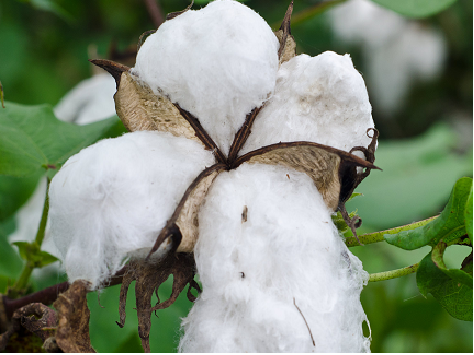
GM-Cotton
The GM Bt Cotton is said to have failed in Burkina Faso, with farmers making claims from Monsanto

The Federal Ministry of Science and Technology as well as the Ministry of Agriculture in conjunction with biotech company, Bayer/Mahyco (formally Monsanto) Agricultural Nigeria Limited, the Open Forum for Agricultural Biotechnology (OFAB) and the National Biotechnology Development Agency (NABDA) held a press conference on Monday, November 19, 2018 to inform the public on the recently released transgenic cotton varieties.

“We were utterly embarrassed to see the Minister of Science and Technology, Dr Ogbonnaya Onu, merely regurgitated the claims of the biotech industry that GMOs would bring about increase in agricultural yields, reduce pesticide use and improve economic situation for farmers – all of which have serially been proven to be false!” the group said.

On his part, the Minister of Agriculture, Audu Ogbeh, was reported to have said that Nigerians are too afraid, and that Nigeria cannot remain backward with regard to modern biotechnology. “Nigerians do not accept to be ambushed in this way by government agencies and officials,” the group insisted.

The coalition of CSOs, farmer groups and faith-based organisations representing thousands of consumers, food safety and environmental actors warned Nigerians to beware of the propaganda and to see the push for genetically modified organisms (GMOs) as “a money-making venture for the biotech corporations and their political jobbers”.

The group stated: “The move by the Nigerian government to commercialise the transgenic cotton varieties opens the doors for more genetically modified products (including the GM cowpea) and represents nothing but disaster for farmers, the entire public and our agricultural system.”

According to the coordinator of the GMO-Free Nigeria Alliance, Gbadebo Rhodes-Vivour, it is erroneous for Nigeria to adopt a crop variety which is famous for its failure in many countries where it has been used.

His words: “In 2016 Burkina Faso, discontinued cultivation of this genetically modified cotton due to poor quality of the cotton and high cost of inputs. Farmers in India have had a disastrous experience with this type of cotton as it proves ineffective against the bollworm pest and causes instead a boom of non-target pests, increase in pesticide use and in production cost.  China, Indonesia and Pakistan are other countries where the transgenic cotton has failed.

“Experts in Kenya including the Kenya Biodiversity Coalition (KBioC), Africa Biodiversity Network, and Greenpeace Africa oppose plan to introduce this crop into their country stressing that it is unwarranted and unsafe,” Rhodes-Vivour added.

Nnimmo Bassey, Director of HOMEF stated: “The results of the use of GM cotton in other countries have shown that the promoters of agricultural biotechnology in Nigeria are knowingly peddling falsehood. As if to buttress this, South African government have recently rejected Monsanto’s triple stacked GM drought tolerant maize as they found that the data provided by company was insufficient to demonstrate the claimed drought tolerance and insect resistant efficiency of the GM event.”

The activist added: “It is regrettable that our ministers would front for Monsanto, a corporation that now goes by another name (Bayer), and that is well known for suppressing and distorting scientific research in order to accumulate profit at the expense of farmers, peoples and the planet.  Combined with the dismal performance of the Nigerian delegation at the ongoing UN Convention on Biodiversity COP in Egypt it is clear that the GMO promoters have sold Nigerians and Africa at large for a mess of porridge. It is time for the Nigerian government to merge the National Biosafety Management Agency and the National Biotechnology Development Agency as there is no basis for their pretending to be separate entities.”

Mariann Bassey-Orovwuje, a lawyer and food sovereignty activist, stated: “It is appalling for the Federal Government to partner with Bayer/Monsanto and their hired helpers in this manner.”

She insisted that Nigeria is not ready to handle the implications of deploying genetically modified crops. Our regulatory system is stacked against the people as there is no provision for strict liability and redress in the country’s biosafety law and thus when the crop fails, the burden will be on our farmers. “To say that GMOs mean increased yield for farmers and the use of less herbicides and pesticides is the most blatant falsehood of the century.”

In 2016, when the application for environmental release and market placement of the cotton was advertised by the National Biosafety Management Agency (NBMA), HOMEF sent in objections outlining socio-economic, molecular, as well as safety and environmental concerns. In their submission to the Agency, HOMEF stated that the transgenic cotton contained the toxins: cry2Ab2 and cry1Ac which have no history of safe use in nature and have been shown to have similarities to known allergenic proteins. Also, no baseline data was provided on safety assessments and the application did not consider any combinatorial or cumulative effects of the modified proteins.

On environmental impact, it was pointed out that the application did not make provision for treatment of non-target organisms (organisms other than the target pests) and no data was provided on tests used by the company to back the claim of no adverse effect. Also, the specificity of the ecological situation in Nigeria was not considered.

Gloria Okon, a farmer based in Katsina State and a member of the GMO-Free Nigeria Alliance, pointed out that “farmers in Nigeria do not need GM cotton or beans. Farmers need to be provided with extension services to expose them to natural strategies (such as biological control and integrated pest management systems) to combat invading pests instead of government and Monsanto imposing solutions that will not help the poor.”

The statement concluded with a call for the Nigerian government and the entire public to reject agricultural biotechnology as solution for food challenges, to seek innovative systems such as agroecology that protect and enhance ecosystems, support small holder farmers and increase productivity.

Governments asked to institute laws to empower community conservation

0

Governments have been asked to put laws in place to enable communities’ initiatives take leadership role in conservation efforts.

Ken Kinney
Ken Kinney, Executive Director Ghana Development Institute

Ken Kinney, Executive Director Ghana Development Institute, noted that, by enacting laws, the governments would empower communities to focus on energy and food nutrition programmes.

“This will let the communities assume ownership hence diversify concentration in conservation matters,” Kinney said during a press conference in the sidelines of the ongoing Convention of Biodiversity’s (CBD) Conference of Parties in Egypt during the launch of a new briefing paper by the Global Forest Coalition (GFC).

He said that, besides giving incentives to foreign investors in timber and mining sectors, local communities need to be supported fully as the custodian of the natural resources.

Kinney noted that the rate of deforestation has grown high in Africa due to failure to incorporate indigenous people who have indigenous knowledge of conserving the environment.

“The communities should be considered by the government for support to help conserve biodiversity,” he added.

The paper attributed the leading cause of deforestation and biodiversity loss to giving incentives to produce and export meat and animal feed stocks like soy.

It noted that such subsidies must be phased out by 2020 to conserve biodiversity, in line with the Aichi Target 3 (4), while positive incentives should be developed to support alternatives.

Dr. Simone Lovera-Bilderbeek, GFC’s director, noted that European Union’s (EU) imports are directly incentivizing unsustainable meat production that is likely to further increase deforestation.

“There is need for a rapid reduction in meat and dairy consumption and incentives for small scale, localised and ecological sound food production and community conservation initiatives to support biodiversity conservation as an alternative,” she said.

She further said that meat and soy are the top two contributors to deforestation that must be eliminated as a financial and other support for these sectors.

Lovera-Bilderbeek noted that 90 percent of biodiversity are found in the forest hence the need to conserve al forests.

“We require a new and rapid shift towards consuming other foods that are not necessarily meat and dairy products to increase conservation of biodiversity,” she said.

The authors of the paper observed that incentives to produce and export meat and animal feed stocks in major producer countries like Brazil, Paraguay and Argentina are a leading cause of deforestation and biodiversity loss.

They singled out Brazil as one of the countries with the highest deforestation rates on the planet.

Between 2005 and 2015, the Brazilian government invested 3.18 billion dollars in the livestock industry, 90 percent of which went to just three corporations.

According to the paper, in 2017, 48 billion dollars went to agribusiness companies in the form of cheap credit. But in comparison, only 115.6 million dollars was allocated to combatting deforestation and forest degradation.

The study was also done in Tanzania, Ghana, Democratic Republic of Congo and Uganda.

By Duncan Mboyah, Sharm El Sheikh

World protected areas increasing, UN says

0

Around 15 percent of terrestrial and 7 percent of marine areas are now covered by protected areas, a report released by the UN Environment shows.

Naomi Kingston
Naomi Kingston, Head of Protected Areas Programme at the UN Environment

Naomi Kingston, Head of Protected Areas Programme at the UN Environment, said that the move shows that the world is on track to meet important conservation targets.

“By July 2018, more than 20 million km2 of the earth’s land surface and nearly 27 million km2 of marine areas had been designated as protected Areas – locations that receive protection to achieve the long-term conservation of nature,” Kingston told journalists during the launch of the protected planet report 2018 on the sidelines of the UN Biodiversity Conference in Sharm El Sheikh Egypt.

Kingston observed that this represents an increase in 0.2 percent of terrestrial and 3.2 percent of marine areas since the last report was published in 2016.

She noted that the continued growth in protected areas around the world is essential for the future of biodiversity adding that the great increases in protection of the marine environment over the past two years will play a key role in restoring the health of the ocean, that is being achieved due to a strong collaboration between countries, non-governmental organisations and international organisations.

The Protected Planet Report 2018 reviews the progress of Aichi Biodiversity Target 11, which aims for the effective and equitable management of 17 percent of terrestrial and 10 percent of coastal and marine areas by 2020.

Cristiana Pasca-Palmer, Executive Secretary, Convention on Biological Diversity (CBD), called on countries to make resolutions on protecting areas with urgency to meet the deadline.

“You have two years of ‘low hanging mangoes’ to pursue the set goals and report back within the time frame,” Pasca-Palmer added.

She said that then report shows that the world is on track to meet the coverage aspect of target 11, and emphasises the needs to meet other aspects by 2020.

Kathy MacKinnon, Chair, IUCN World Commission on Protected Areas, called for the recognition and supports the efforts being made by indigenous peoples and local communities, as well as private actors who conserve critical areas.

She said that protected Planet provides the essential information for decision-makers to base their decisions on achieving the existing targets by 2020, and most importantly to inform the approach for the post-2020 global biodiversity framework.

“Protection of these areas are to help conserve biodiversity whereas on 20 percent are currently protected in countries,” Mackinnon said.

She revealed that, for every 10 years, 10 newly protected areas are added in the list of the so far protected areas.

Mackinnon however said that the increase is encouraging but urged countries to focus on expanding the areas and confer the benefits to the communities.

Hany El Shaer, Regional Programme coordinator with the World Heritage and Business and Biodiversity Programme, protection of areas in the Middle East remains elusive due to sporadic wars witnessed in the region.

“We try to bring countries together, but some are undermining our effort as they fail to visit certain countries that are not their allies in the global set up,” Shaer noted.

He said that there remain significant challenges to achieve all elements of Aichi Biodiversity Target 11 in the region even as other countries make important strides into achieving the goal.

“Shaer noted that there remains a huge task to protecting the areas in the region and called for support to achieve the set goal,” he added.

The report shows that fishing is now banned in 432,000 square miles of Antarctic reserve, in attempt to preserve over 16,000 species, including the Adelie Penguin (Pygoscelis adeliae) and Minke Whale (Balaenoptera bonaerensis).

In addition to hosting the report, there is now a new interactive digital version, highlighting key findings, and providing monthly updates to track progress.

The UN Environment World Conservation Monitoring Centre (UNEP-WCMC), International Union for Conservation of Nature (IUCN) and the National Geographic Society (NGS) partnered in compiling and releasing the Protected Planet Report 2018.

By Duncan Mboyah, Sharm El-Sheikh, Egypt

Qatar, WHO seek to eliminate neglected tropical diseases in Africa

0

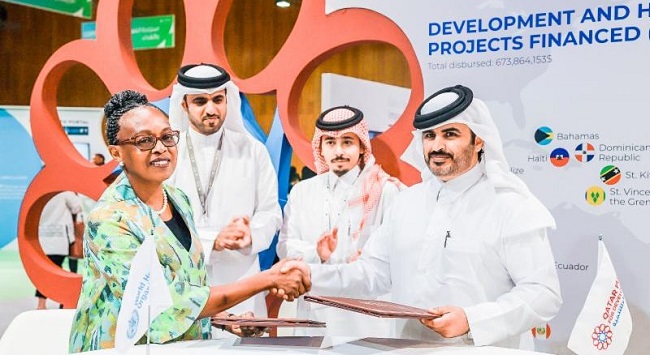
During the World Summit for Innovation in Health Care (WISH), the Qatar Fund for Development (QFFD) signed an agreement with the World Health Organisation (WHO) Regional Office for Africa to support the Expanded Special Project for Elimination of Neglected Tropical Diseases (ESPEN).

QFFD Agreement
The Qatar Fund for Development (QFFD) signs its first agreement with the World Health Organisation (WHO) Regional Office for Africa

Within the United Nations, the WHO directs international health and leads partners in global health response. The WHO addresses global health issues, designs health research, sets norms and standards, clarifies evidence-based policy options, provides technical support to countries in need and monitors and assesses health trends.

Through the agreement, QFFD will contribute $3 million, between 2018 and 2020, to the global fight for the elimination of neglected tropical diseases that are still rampant in sub-Saharan Africa. By supporting ESPEN, which aims to achieve 100% geographic coverage of preventive treatment across all endemic countries in the region by 2020, QFFD will help African countries to accelerate control and eliminate these NTDs, and thus contribute to poverty alleviation, improved economic productivity and quality of life for affected people in Africa.

“The Qatar Fund for Development considers healthcare as one of the highest priority sectors, being part of the Sustainable Development Goals notably the third goal to ensure healthy lives and well-being for everyone. More than 70% of countries and territories that report the presence of NTDs are low income or lower-middle income economies. Therefore, this kind of project aligns with the State of Qatar’s goal to help those in need around the world,” said Mr. Misfer Hamad Al-Shahwani, Deputy Director General for Development Projects, QFFD.

While signing the grant agreement, the WHO Regional Director for Africa, Dr. Matshidiso Moeti, expressed her gratitude to the Qatar Fund for Development for the donation and commended its vision of helping those in need.

“I am delighted that the Qatar Fund for Development has joined the community of partners that are working together to break the chain of poverty and misery caused by these NTDs,” said the WHO Regional Director for Africa.

ESPEN focuses on a data-driven approach to inform evidence-based action aimed at accelerating elimination. With country ownership and leadership as a guiding principle, ESPEN contri¬butes to the broader WHO target of universal health coverage, long-term sustainability and health system strengthening. Working with Ministries of Health, ESPEN strengthens the last mile of the supply chain to ensure high quality donated drugs are utilized and tracked appropriately, while promoting continuous innovation, development and adaptation, which are required to ensure accelerate sustainable country progress.

Governments set stage to take ambitious actions for nature, people

0

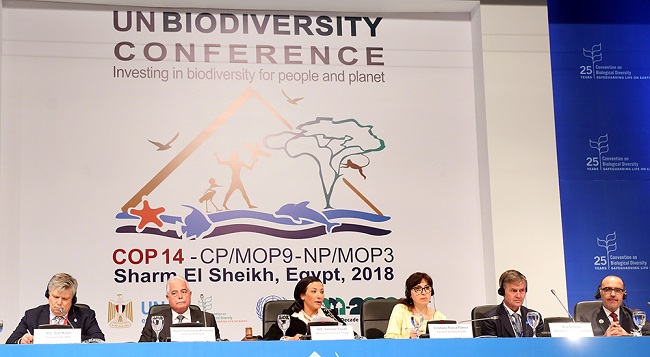
The 2018 UN Biodiversity Conference opened on Saturday, November 17, 2018 in the seaside town of Sharm el-Sheikh, Egypt with an opening ceremony that included an address from President of Egypt, Abdel Fattah Saeed Hussein Khalil el-Sisi, who emphasised the crucial importance of the meeting for Egypt, and for global efforts for sustainable development.

CBD COP14
L-R: View of the dais during the opening session of the High-level Segment with Siim Kiisler, Minister of Environment, Estonia, President of the United Nations Environment Assembly (UNEA); Khaled Fouda Saddiq Mohammed, Governor of South Sinai, Egypt; Yasmine Fouad, Minister of Environment, Egypt; Cristiana Paşca Palmer, Executive Secretary, Convention on Biological Diversity (CBD); Erik Solheim, Executive Director, UN Environment Programme (UNEP); and José Octavio Tripp Villanueva, Ambassador of Mexico to Egypt, COP 13 Presidency

Only two years remain in the commitment period for the Strategic Plan for Biodiversity 2011-2020. Over the next two weeks, governments will be urged to ramp up their ambitions and actions to achieve action on the 20 targets they established in Nagoya, Japan in 2010.

At this year’s conference, national governments, regional organisations, and other key stakeholders from around the world will engage in intense discussions with the goal of making a final push to achieve agreed upon global biodiversity targets for 2020 and to start the momentum for an ambitious and achievable post-2020 global biodiversity framework.

Dr. Cristiana Paşca Palmer, Executive Secretary of the UN Convention on Biological Diversity, emphasised the critical urgency for the international community to work together to preserve global biodiversity now. “If we do not act, we soon may reach tipping points that may cause irreversible destruction to nature and ultimately to humankind”.

The meeting convenes in the 25th year of entry into force of the Convention.  During those years, decisions taken by governments have resulted in a global network of protected areas, 15 per cent for land and close to six per cent of the global oceans, and the development of important policy guidance and legislation for natural resource conservation and sustainable use regulation.

Despite these successes, strong evidence suggests that there is insufficient action taking place. Regional reports and other assessments from the Intergovernmental Science-Policy Platform on Biodiversity and Ecosystem Services (IPBES), released in March, showed that in every region, with the exception of a number of positive examples where lessons can be learned, biodiversity and nature’s capacity to contribute to people are being degraded, reduced and lost due to a number of common pressures – habitat stress; overexploitation and unsustainable use of natural resources; air, land and water pollution; increasing numbers and impact of invasive alien species and climate change, among others.

The “Living Planet Report 2018” by WWF also found that worldwide vertebrate populations are currently set to decline by 60 per cent from their 1970 levels by 2020.

Egypt takes the helm of the Convention for the pivotal next two years, following on the work of Mexico which held the presidency from 2016 until now. This year’s meeting of the Conference of Parties is being chaired by H.E. Yasmine Fouad, Minister of Environment of Egypt.

H.E. Yasmine Fouad said: “Nature and humanity are not separate entities, and Africa is leading the way on the post-2020 global biodiversity framework.”

Delegates to the meetings plenary also heard messages from United Nations officials including the President of the United Nations General Assembly, María Fernanda Espinosa Garcés, and the Deputy Secretary-General, Amina J. Mohammed.  Both stressed the importance of biodiversity protection for achievement of the Sustainable Development Goals and the need for a robust follow-up to the Strategic Plan for Biodiversity.

Discussions in Sharm el Sheikh will also seek to expand coalition of actors to explore innovative approaches and find ways to scale and accelerate initiatives to protect nature.  The Governments of Egypt and China, along with the Secretariat of the Convention on Biological Diversity have announced the Sharm el Sheikh to Beijing Action Agenda for Nature and People to collect, coordinate, and celebrate actions taken by an array of stakeholders to protect biodiversity: (www.cbd.int/cop/cop-14/annoucement/nature-action-agenda-egypt-to-china-en.pdf).

Governments will present plans to bring biodiversity and nature into the heart of decision-making in the crucial economic sectors of mining and energy, infrastructure, processing and manufacturing and health.  H.E. José Octavio Tripp Villanueva, Ambassador of Mexico to Egypt, and representing the COP 13 Presidency, said: “From Cancun to Sharm el Sheikh, the mainstreaming of the conservation and sustainable use of biodiversity into productive sectors has gained momentum, giving testimony to the power of positive and inclusive unilateralism.”

The conference also includes discussions on the Cartagena Protocol on Biosafety, on the labeling, transport and handling of GMOs, and the Nagoya Protocol on Access to Genetic Resources and the Fair and Equitable Sharing of Benefits Arising from their Utilisation.

In addition, Sir Paul McCartney delivered a message on the importance of reducing meat consumption and thanked the conference for committing to two “Meatless Mondays” – days where meat would not be served on the site.

National Geographic and WWF International also provided videos to the plenary, with WWF International underscoring the need for delegates to seek an ambitious global framework to combat nature loss.

One in 10 skin lighteners contain dangerous neurotoxin mercury, report finds

0

A high percentage of skin lighteners sold worldwide contain dangerous levels of mercury, according to test results contained in a new report by the Zero Mercury Working Group.

Skin lightening creams
Application of skin lightening cream

In 2017 and 2018, 338 skin-lightening creams from 22 countries were collected and tested for mercury.

Ten per cent of the creams (34 creams) had mercury concentrations vary many times higher than levels allowed under the international agreement to control mercury, the Minamata Convention. The levels found in the cosmetics ranged from just over 90 times to an incredible 16,000 times the allowed level post-2020.

Mercury is a dangerous neurotoxin which builds up in the human body and cause serious damage to the skin, lungs, kidneys, digestive, immune and nervous systems.

Fifteen out of the 22 sampled countries have legislation or other requirements consistent with the Minamata convention provisions. Out of the seven countries where high mercury samples were found, only four have legal requirements prohibiting creams with more than 1 ppm mercury content.

As the Second Meeting of the Minamata Convention of the Conference of the Parties gets underway in Geneva, Elena Lymberidi-Settimo, Project Manager at the European Environmental Bureau and Zero Mercury Working Group International Coordinator said: “The exposure and toxic trade in illegal high mercury skin lighteners is a global crisis which is expected to only worsen with skyrocketing global demand. To combat this, it’s important for governments to quickly enact and enforce regulations and effectively warn consumers.”

Despite being identified on many government detention lists, recent testing indicates the wide prevalence of high mercury and illegal products indiscriminately sold on the internet.

In a separate exercise, the Mercury Policy Project, the Sierra Club and the European Environmental Bureau purchased skin lighteners from eBay and Amazon websites. The brands purchased included many previously identified as high mercury by New York City, the state of Minnesota, the European Union, Singapore, UAE, the Philippines and many other national governments. Nineteen products had illegal mercury levels, typically more than 10,000 times higher than the legal threshold of 1ppm.

“Internet platforms Amazon and eBay must stop breaking the law with their toxic trade in illegal cosmetics,” said Michael Bender, director of the Mercury Policy Project. “They have the responsibility and resources to prevent exposing their customers to toxic products.”

Over 50 civil society groups from more than 20 countries sent letters today to Amazon and eBay, calling on them to stop marketing illegal mercury-based skin lightening creams. In their letters, the groups are calling on Amazon and eBay to among others to ensure the products they sell comply with government regulations, develop and monitor lists of toxic skin lighteners and require prior sale approval for those to be sold.

How to reduce exposure to mercury from skin lighteners, by study

0

As countries strive to comply with the 1ppm mercury content cutoff provision pertaining to cosmetics in the Minamata Convention on Mercury, a new study has listed a range of measures by which to reduce exposure to mercury from skin lighteners. It also explores renewed opportunities for collaboration with all levels of government and civil society.

Skin lightening creams
Application of skin lightening cream

Scheduled for release at the Second Meeting of the Conference of the Parties (COP2) to the Minamata Convention on Mercury holding in Geneva Switzerland, the report, titled: “Mercury-added skin-lightening creams: Available, inexpensive and toxic”, was supported in the process of its actualisation by numerous organisations including Nigeria’s SRADev, which undertook the country study.

According to the study, new regulations and enforcement programmes, better enforcement, non-discriminatory advertising, harmonisation of enforcement efforts, targeted monitoring of the marketplace, accurate labelling, education and popular enforcement are measures that can be adopted to curb exposure to mercury from skin lighteners.

The study describes trade of mercury-added skin-lightening products as a global crisis expected to only worsen with skyrocketing demand, especially in Asia, the Middle East and Africa. “Consistent with other research, a new Zero Mercury Working Group (ZMWG) study indicates that a significant percentage of skin-lightening creams sold worldwide contains dangerous levels of mercury,” it adds.

“In 2017 and 2018, 338 skin-lightening creams from 22 countries were collected by 17 of our non-governmental organisation (NGO) partners from around the world and tested for mercury. Some 34 creams (10% of the samples) had mercury concentrations ranging from 93 – 16,353 parts per million (ppm). These levels significantly exceeded not only the legal standard established by countries that regulate these products, but also the provisions set forth in the Minamata Convention disallowing after 2020 the ‘manufacture, import or export’ of cosmetics with a mercury content above 1 ppm,” submit the authors.

Mercury is regarded as toxic and a risk to human health. Regular use of skin bleaching or skin-lightening creams and soaps containing mercury, say scientists, can lead to rashes, skin discoloration and blotching. They add that long-term exposure can have serious health consequences, including damage to the skin, eyes, lungs, kidneys, digestive, immune and nervous systems.

Mercury-free dentistry alliance demands end to amalgam use in children

0

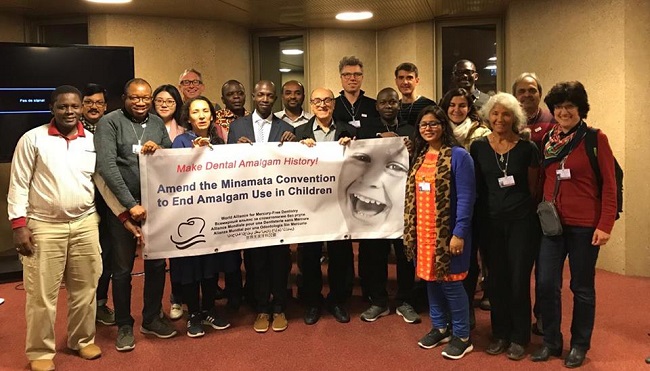
The World Alliance for Mercury-Free Dentistry has urged countries to end amalgam use in children by 2020.

World Alliance for Mercury-Free Dentistry
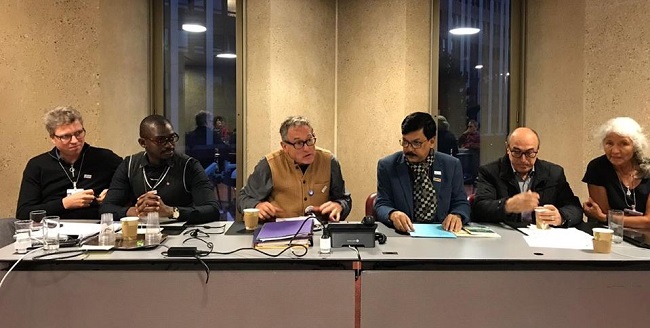
President of the World Alliance for Mercury-Free Dentistry, Charlie Brown (third from left), chairs a preparatory meeting in Geneva on the eve of the Second Meeting of the Conference of the Parties (COP2) to the Minamata Convention on Mercury

The submission is contained in the World Alliance’s position on dental amalgam released on Sunday, November 18, 2018 to the Second Meeting of the Conference of the Parties (COP2) to the Minamata Convention on Mercury holding in Geneva, Switzerland.

The World Alliance for Mercury-Free Dentistry is a global coalition of non-governmental organisations (NGOs) that brings together dentists, scientists, physicians, journalists, environmentalists, patients, parents, consumers, engineers, academics, and other civil society stakeholders to work for the end of dental amalgam – especially for children.

“The beginning of the end is already here for amalgam use in this most vulnerable population. It’s time to stop storing mercury in children’s mouths – and put it where it belongs: the hazardous waste bins of history,” says Charlie Brown, President of the World Alliance for Mercury-Free Dentistry.

World Alliance for Mercury-Free Dentistry
Representatives of member countries of the World Alliance for Mercury-Free Dentistry and NGOs from the countries like Bangladesh, India, China, Lebanon, Vietnam, Cote d’Ivoire, Nigeria, Kenya, Germany, USA are part in the meeting

According to the organisation, children are particularly vulnerable to mercury. “Children’s developing brains and neurological systems are especially susceptible to the neurotoxic effects of mercury,” the group notes in the position paper, adding that mercury-free fillings are now available for children.

“Between the irrelevancy of filling longevity in short-lived milk teeth and amalgam’s higher failure rates in these teeth, using amalgam instead of mercury-free fillings in children can longer be justified,” the Alliance emphasises, stressing that ending amalgam use in children is a proven phase down step, and that ending or restricting amalgam use in children has already proven to be an effective phase down step.

Brown states that, at a recent workshop sponsored by the UN Environment and the World Alliance on Promoting Dental Amalgam Phase-Down Measures Under the Minamata Convention and Other Initiatives, experts from 21 countries shared their wealth of experience in phasing down amalgam use – especially for children – in a variety of settings.

Shedding some light on the Nigerian process, Dr Leslie Adogame of SRADev Nigeria points out that the “Nigeria process to actualise this started in 2014 with the famous Abuja Declaration”.

His words: “Recently a national stakeholders’ summit organised by Federal Ministry of Health in collaboration with SRADev Nigeria on Development of National Policy on Phase Down of Dental Amalgam Use held in Abuja in July 2018, resolved ‘to end the use of Dental Amalgam as restorative material in children under 16 years, pregnant women and breastfeeding mothers (the vulnerable group) by December 2020, and finally make amalgam use history by setting Amalgam phase out date in Nigeria for December 2022’.”

Mercury is used in dental amalgam, a restorative material that is approximately 50% mercury. Between 270 and 341 tonnes of dental mercury is used around the world annually, accounting for 21% of global mercury consumption. Dental mercury are said to enter the environment via several pathways, such that many children around the world are exposed to a double dose of amalgam’s mercury: first when it is implanted in their teeth and a second time when it contaminates their environment.

Nigeria threatened by desertification, says NCF

0

Nigeria is losing about a half kilometre of its land mass annually to desert encroachment and time is of essence before the entire country becomes a desert.

Desertification in Nigeria

The Director-General of the Nigerian Conservation Foundation, Dr Muktari Aminu-Kano, raised the alarm in Lagos on Sunday, November 18, 2018.

He made the disclosure at the 2018 edition of the Green Ball series with theme: “Green Recovery Nigeria: Restoring Mangroves and Reclaiming the Desert.”

Aminu-Kano said that mangroves were also being lost in the Niger Delta and that the nation had already lost up to 95 per cent of its forest cover.

He warned that urgent measures must be taken to curb deforestation and forest degradation to stop what he described as ugly consequences of climate change for the nation.

The NCF chief also warned on the “firewood crisis,’’ saying that the problem must be addressed to discourage use of fire wood use as cooking gas.

He stressed the need to strengthen the Green Recovery Nigeria scheme, aimed at retaining a significant proportion of Nigeria’s landmass under forest.

Aminu-Kano also called for sustained intensive awareness campaign among all tiers of governments to change the practice of tree felling to tree planting.

He noted that government must have to promote clean sources of cooking energy to protect the nation’s forests form being used as firewood.

“Green Recovery Nigeria is our push to bring the agenda that Nigeria is pathetically losing 95 per cent of its forest cover and we have only five per cent left.

“350,000 hectares of land are being lost annually to desertification and the land lost is about 0.6, which is about half a kilometre every year.

“If you think you live in Lagos and it cannot reach you, it will only take some time. Imagine the annual movement of 0.6 kilometres.’’

Chairman of the NCF Board of Trustees, Chief Philip Asiodu, in a speech, recalled that Nigeria entered an agreement with the Food and Agriculture Organisation in 1988 to restore 25 per cent of its forest cover.

Asiodu said that while other African countries commenced implementation of the agreement, Nigeria had done nothing and had lost almost all its forest cover.

He noted that with increasing population, the effects of climate change were manifested through gully erosions in the South East and desertification in the Sahel.

“There is a lot of work to do to persuade the government into action,’’ he said.

The Wife of the Lagos State Governor, Mrs Bolanle Ambode, represented by the Permanent Secretary, Lagos State Ministry of Environment, Mr Abiodun Bamgbose, thanked the NCF for its efforts at addressing environmental issues.

Ambode said that humanity had become vulnerable to how it treated the gift of the environment.

“The Lagos State Government does a lot of tree planting every year. All multinationals should rise and support this fight because government alone cannot do it,’’ she said.

The News Agency of Nigeria (NAN) reports that an award was presented to Mrs Ajoke Muhammed, widow of late former Head of State, Gen. Murtala Muhammed for her contributions to issues involving sustainability and preservation of the environment.

The wife of the Ogun State Governor, Dr Olufunso Amosun, also received an award for her contributions to saving the environment.

By Grace Alegba

How we’ve supported infrastructure growth in Rivers, by Shell

0

The Shell Petroleum Development Company of Nigeria Limited (SPDC) says out of the over N41 billion disbursed for community projects in the Niger Delta, about N15 billion went to Rivers State under the Global Memorandum of Understanding.

Igo weli
General Manager, External Relations of SPDC, Igo Weli

“Between 2006 and end of 2017, a total of N14.86 billion has been invested by the SPDC Joint Venture in the GMoU clusters in Rivers State, giving communities a highly-valued opportunity to decide and implement projects and programmes that have a lasting impact on people’s lives,” said the General Manager, External Relations of SPDC, Igo Weli, on Saturday, November 17, 2018 in Port Harcourt, the Rivers State capital, at the 2018 edition of the Nigerian Society of Engineers Port Harcourt Branch Week.

Weli, who spoke on the role of oil and gas sector in the infrastructure development of Rivers State, said the SPDC JV funding enabled 19 GMoU clusters in Rivers State to embark on projects covering health, education, water and power supply improvement, sanitation and infrastructure development. He added that the success of the GMoU initiative proved what could be achieved when government, international oil companies, communities and NGOs worked together for the common good.

Under the terms of the GMoU, SPDC JV provides secure five-year funding for communities to implement development projects of their choice, which are managed by Cluster Development Boards under the guidance of mentoring NGOs.

On social infrastructure, Weli listed the N1.5 billion ultramodern library donated by Shell to the state government to commemorate Nigeria’s centenary celebration, and the establishment of a Community Health Insurance Scheme at Obio Cottage Hospital in Port Harcourt where the average number of patients increased from about 600 to about 7,500 per month in 2017, making it one of the most utilised health facilities in the area. He said 10 other hospitals in Rivers State also enjoyed “robust health intervention scheme by SPDC JV”.

In education, he cited the establishment of the first centre of excellence in Marine Engineering and Offshore Technology at Rivers State University in Port Harcourt in 2017, which has commenced programmes leading to the award of master’s degrees in Marine Engineering (Power Plants), Naval Architecture and Offshore and Subsea Engineering. This, he said was in addition to the many SPDC JV scholarship schemes which date back to the 1950s.

On the statutory role of the oil and gas sector in infrastructure development in Niger Delta, Weli noted that each player in the sector was expected to contribute 3% of its annual budget to the Niger Delta Development Commission (NDDC) for the purpose of facilitating the rapid, even and sustainable development of the Niger Delta region into an area that is economically prosperous, socially stable, ecologically regenerative and politically peaceful. “Between inception of NDDC in 2002 and the end of 2017, Shell companies alone contributed N338.12billion to the commission,” he said.

He noted that the responsibility for the development of communities, societies or states resides primarily with government and community stakeholders themselves. “It stands to reason therefore that abdicating that responsibility for development to the private sector either fully or substantially is, in my assessment, one of the key issues militating against sustainable development not just of Rivers State but of the Niger Delta.”

He frowned at the expectation that private sector should take on the role of government even after fulfilling their statutory obligations to the state and investing as much as their businesses can carry in social investments in the host communities. “This is not sustainable and perhaps accounts for the steady drop or reduction in investments, hence the dwindling opportunities in employment, contracts, and so on, in the Niger Delta in the past two decades.”

Weli added: “The region is no longer very attractive to investors because of the unrealistic demand and entitlement mindset. The future of the Niger Delta is in the hands of private investors; therefore, stakeholders need to re-set their expectations and approach to achieve sustainable growth and development. Investors are to be wooed and investments, attracted, not taken for granted.”

He therefore appealed for a conducive operating environment to enable the private sector do business profitably without fear so that they could implement social investment projects and programmes.

He said: “For the private sector, including the oil and gas industry to support the state for infrastructure development, the state, as a matter of policy, and the people, as a matter of dogged commitment, must resolve to make the state peaceful, friendly, attractive and competitive.”