Home Blog Page 1753

African ministers adopt Pan-African action agenda on ecosystem restoration

0

African Ministers of Environment together with partner organisations have committed to an ambitious action agenda taking a coherent approach to addressing the interlinked challenges of biodiversity loss, land degradation and climate change. The action agenda will accelerate commitments for ecosystem restoration to improve resilience in the region.  Their deliberations represented the opening sessions of the 2018 UN Biodiversity Conference.
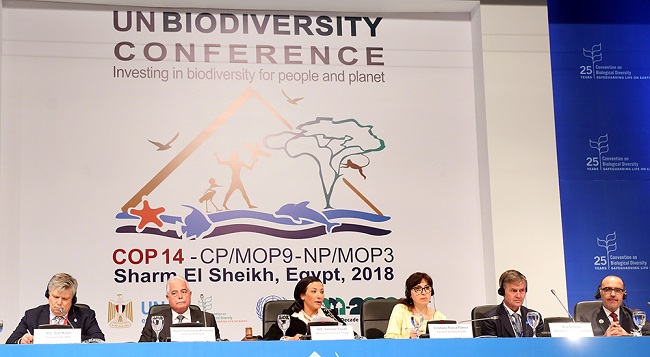
CBD COP14
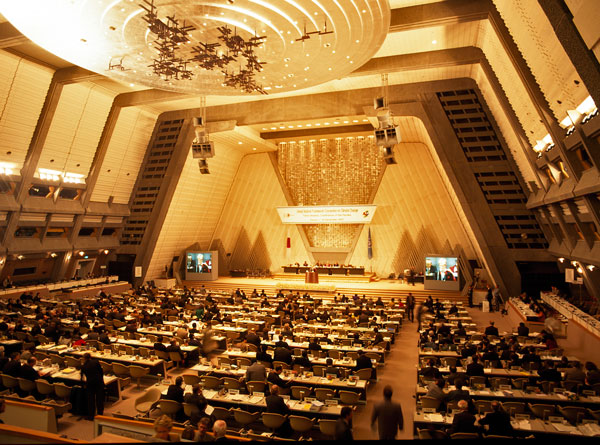
L-R: View of the dais during the opening session of the High-level Segment with Siim Kiisler, Minister of Environment, Estonia, President of the United Nations Environment Assembly (UNEA); Khaled Fouda Saddiq Mohammed, Governor of South Sinai, Egypt; Yasmine Fouad, Minister of Environment, Egypt; Cristiana Paşca Palmer, Executive Secretary, Convention on Biological Diversity (CBD); Erik Solheim, Executive Director, UN Environment Programme (UNEP); and José Octavio Tripp Villanueva, Ambassador of Mexico to Egypt, COP 13 Presidency

The African Ministerial Summit on Biodiversity was held on November 13, 2018 at Sharm El-Sheikh International Congress Centre in Egypt, under the theme: “Land and ecosystem degradation and restoration: priorities for increased resilience in Africa.”

The Summit brought together more than 100 delegates including over 30 ministers responsible for the environment and other sectors, six ambassadors plus other heads of delegation along with key partners. The delegates discussed Africa’s biodiversity priorities and identified strategic actions and opportunities to upscale commitments for combating land degradation and enhancing ecosystem restoration.

Dr. Yasmine Fouad, Minister of Environment of Egypt, said: “I am honoured to have hosted this first African Ministerial Summit on Biodiversity which I am convinced will lead the way to promoting natured-based solutions for increased resilience and wellbeing of people in Africa.”

Dr. Cristiana Pașca Palmer, Executive Secretary of the Convention on Biological Diversity, said: “The adoption of the African Ministerial Declaration on Biodiversity and the Pan-African Action Agenda on Ecosystem Restoration for Increased Resilience by the Summit provides an impetus for the achievement of the Aichi Biodiversity Targets and will contribute to shaping a New Deal for Nature and People in 2020.

“Your political leadership, paired with the support of the African Union Commission, the New Partnership for Africa’s Development Agency, and the United Nations system, has elevated the importance of restoration in achieving our 2050 Vision of “living in harmony with nature”. The Secretariat of the Convention stands ready to further support this work.”

In a series of interactive dialogues, the summit participants reviewed the status and trends in land and ecosystem degradation in Africa and their impacts on biodiversity and ecosystem services and people’s wellbeing.  They shared experiences, successes and lessons learned on ecosystem restoration in the region.

Several Ministers and delegates presented their national commitments and actions taken on ecosystem restoration. For example:

  • Cameroon has committed to restoring 12 million hectares of degraded and deforested lands, which represents over half of the country’s total forested area.
  • Ethiopia has restored millions of hectares of degraded forest areas by mass mobilisation and active participation of local farmers and has committed to restore 15 million hectares of forests.
  • Uganda plans to restore up to 3 million hectares of forest and over 1 million hectares of wetlands by 2040.
  • Chad highlighted their work on ecosystem restoration in the context of the Great Green Wall of the Sahara and Sahel and work on restoration of Lake Chad.
  • Guinea is planting 100 hectares of trees each year to restore degraded ecosystems.
  • Niger plans to restore 213,000 hectares of degraded land yearly, stabilise 36,500 hectares of sand dunes, and assist the natural regeneration of 70,000 hectares as part of its commitment to restore 3.2 million hectares by 2030.
  • Seychelles has adopted an ecosystem-based approach to dealing with all three Rio Conventions and has committed to completely restore all its important water catchments.
  • Burkina Faso has committed to restoring 5.16 million hectares of degraded land by 2030.
  • Sudan is implementing ecosystem-based adaptation projects to address the impacts of climate change to address biodiversity loss, climate change and land and ecosystem degradation.
  • South Africa has developed a National Action Programme to address desertification, land degradation and drought.
  • Algeria has committed to restoring natural ecosystems to an area of at least 5 million hectares by 2030.
  • The Gambia commits to halt the conversion of forests and wetlands to other land cover classes by 2025.
  • Madagascar has committed to restoring 4 million hectares of degraded land and forest.
  • Kenya has committed to restoring 5.1 million hectares of land.

The Pan-African Action Agenda, endorsed by the Summit, will be submitted for adoption by the African Union Assembly of Heads of State and Government at its 32nd Ordinary Session in January 2019.

It is expected that the Pan-African Action Agenda will provide a strategic direction for ecosystem restoration in the region, promote continent-wide awareness and political support for restoration efforts, help to accelerate and upscale ecosystem restoration commitments and targets; and galvanise synergetic and integrated action towards the achievement of those commitments and targets.

The UN Biodiversity Conference continues, with the High-Level Segment being held from November 14 to 15, and the opening of the negotiations by the Parties to the Convention on November 17, 2018.
Ministry inaugurates committee to develop robust coal roadmap

0

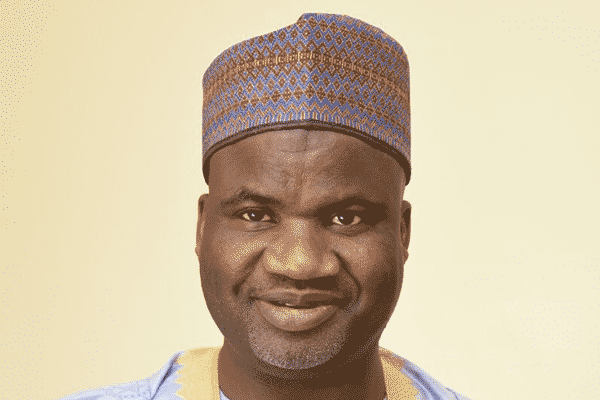
The Minister of State, Mines and Steel Development (MMSD), Alhaji Abubakar Bwari, has inaugurated a 13-man committee to develop a robust road map of the Nigeria’s coal assets.

Alhaji Abubakar Bwari
Minister of State, Mines and Steel Development (MMSD), Alhaji Abubakar Bwari

Bwari inaugurated the committee on Project Delivery Team for the Reinvigoration of the Coal Sector and Concession of the Nigerian Coal Corporation (NCC) coal blocks on Thursday, November 15, 2018 in Abuja.

He said that the committee should review and make appropriate recommendations on the coal assets to suit the concession of the remaining five coal blocks of the Nigerian Coal Corporation.

He said that the committee should define the Terms of Reference of any consultant that would be engaged to conduct any study or valuation of the coal blocks.

Bwari said that the committee should design the implementation of a marketing programme to attract high quality prospective investors among others.

He charged the committee to ensure that the concessions of the five remaining NCC coal blocks were conducted through a competitive bidding process.

He recalled that, on April 2015, the National Council on Privatisation (NCP) approved the use of a project delivery team for the privatisation of the five remaining coal blocks of the NCC.

He said that the delivery team originally comprised representatives from the Bureau of Public Enterprises (BPE), the Ministry of Mines and Steel Development and two of its agencies, Ministry of Power, Works and Housing; and Ministry of Environment.

“The first delivery team was inaugurated three months later after the approval of the NCP on July 2015, but subsequent events necessitated the reconstitution of the team.

“We discovered that there was need to reflect the agreement that the project will now be jointly managed by the BPE, and one of the ministry’s agencies and Mining Cadestre Office (MCO).

“This is in view of the complementary mandate of the BPE and MCO to concession the coal blocks through a competitive bidding process,’’ he said.

Bwari said despite the first delivery team inaugurated in 2015, subsequent events necessitated the reconstitution of the team to reflect the agreement that the project would now be jointly managed by the BPE, MMSD, and MCO.

“This event is the culmination of the collaborative effort of both the MMSD and BPE to ensure that we have a delivery team that is alive to its responsibilities and capable of advancing the coal to power.’’

The minister said that the members were carefully selected to reflect both the seriousness of the committee and the overriding need to explore all avenues to generate adequate power for Nigerians.

He urged the committee to take the task seriously considering the renewed attention that President Muhammadu Buhari had brought to the sector through his commitment to diversify the nation’s economy.

Mr Alex Oko, the Director General of BPE, said that the inauguration of the committee marked a significant milestone toward the implementation of the coal sector reform.

Oko said that the reform in the coal sector was aimed at attracting the needed investment for exploration, mine development and promoting healthy coal sector.

He said that the key reform steps that was required to ensure a successful concession process include policy reform, liquidation of NCC, generation of detailed geo-sciences, information and date.

Others are facilitating upstream and downstream linkages, environmental, social, health and safety, impact assessment and management.

He said that NCP had approved that the assignment should be concluded within 24 months.

Mr Yusuf Adamu, the Chairman of the committee, had assured that the committee would deliver its duty as expected.

By Francisca Oluyole

ActionAid urges adequate funding of agric extension services

0

The Programme Coordinator, ActionAid Nigeria, Mr Azubike Nwokoye, on Thursday, November 15, 2018 called on the Federal Government to strengthen agricultural extension services in the country.

ActionAid Agriculture
Agriculture

Nwokoye told newsmen in Abuja that plans by the government to distribute drought-resistant seeds to farmers might not yield the desired results without technical support to the farmers.

The ActionAid coordinator emphasised that agricultural extension agents were needed to provide the required technical support to benefiting farmers.

“For us, if you are going to do that, you need the extension agents to provide technical knowledge to farmers, especially women on how to use the seeds.

“However, if the extension component is not well funded, and the government releases the seeds, you might end up losing a lot of resources.

“It is the extension workers that will facilitate access and provide technical support to smallholder farmers on early maturity and variety of seeds, improved seedlings and livestock,” he said.

Nwokoye urged all stakeholders including local and state governments to play their parts to ensure that extension services were repositioned to drive the country’s agricultural development.

He also emphasised the need for government to extend the planned intervention to other crops and livestock also affected by the flood across the country.

The News Agency of Nigeria (NAN) reports that the Minister of Agriculture and Rural Development, Chief Audu Ogbeh, hinted at the seed distribution plans in Abuja recently.

Ogbeh had warned that the country might experience shortage of rice in 2019 following the recent flooding that affected many rice producing states in the country.

He said his ministry was exploring ways of assisting farmers affected by the incident, as part of measures to avert the looming rice scarcity.

“There are different varieties of rice that are being produced at National Agricultural Seed Council, including Faro 66 and 67 which are drought-tolerant.

“We hope to get them into the field in large quantity for farmers to plant in the near future,” the minister said.

By Philomina Attah

Environmental health officers sensitise Nigerians on hygiene

0

The Environmental Health Officers Registration Council of Nigeria (EHORECON) has commenced campaign of sensitising Nigerians on the need to maintain good hygiene through the provision of safe toilets.

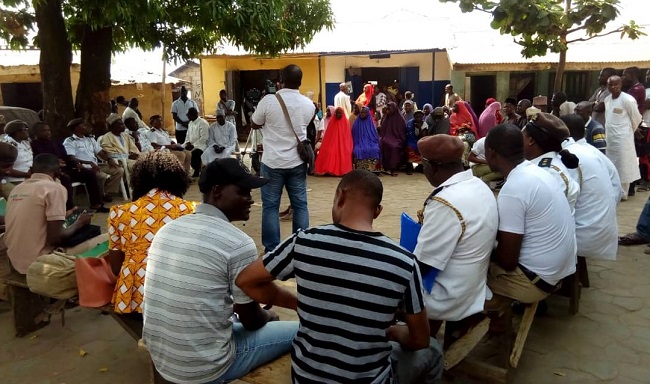
Dei Dei community
The people of Dei Dei community and environmental officers

The health officers of the council were sensitising Nigerians as part of the activities lined up to mark the 2018 World Toilet Day as declared by the United Nations General Assembly in 2013.

The theme of this year’s World Toilet Day is “When Nature Calls” focuses on raising awareness and inspiring actions to tackle global sanitation crisis as well as ensuring that toilet construction and management are ecosystem friendly.

The campaign on Thursday, November 15, 2018 took the EHORECON team to Dei Dei community on a satellite town in the Federal Capital Territory (FCT).

The team leader, Mr Nathaniel Omonayajo, demonstrated to the people the dangers of open defecation.

He said that apart from the unsightly nature of open defecation, it also causes serious health challenges.

Omonayajo urged them to ensure healthier methods of disposing feaces.

“A major consequence of poor excreta disposal is the high rate of morbidity and mortality among children,” he said.

Mr Damian Mgbaramuko, the President, Environmental Health Officers Association of Nigeria, FCT Chapter, expressed pleasure that the present administration had shown commitment in addressing sanitation challenges in the country as well as ending open defecation.

Ahaji Haruna Sani, the Sarki of Dei-dei community, appealed to the government to assist rural communities through the provision of public toilets and adequate dumpsites for proper refuse disposal.

By Ebere Agozie

Over 175m Nigerians live in unclean environments – Expert

0

The National Coordinator, Clean-Up Nigeria (CUN), Prince Ene Owoh, says a recent performance indicator result shows that over 175 million Nigerians live in unclean environments.

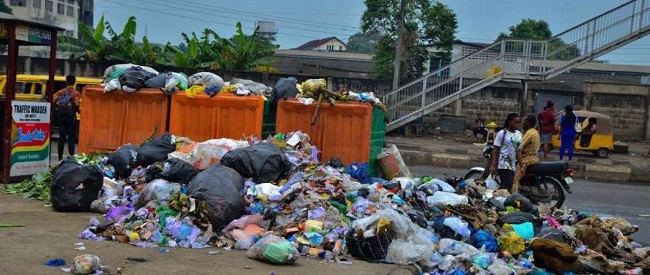
Unclean environment
An unclean environment

As a result, he called for increased funding on sanitation as well as improved working conditions for sanitary workers.

Owoh made the disclosure on Thursday, November 15, 2018 in Abuja during the presentation of the State of Nation’s Cleanliness Performance Rating Index for all states, capitals, cities and geo-political zones of Nigeria for 2018.

He said the rating was carried out by a 15-man National Technical Working Committee for the Conference of Green Crystal Awards (GCA) pursuant to the silver jubilee celebration of Clean-Up Nigeria.

The National Population Commission (NPC) had in April put Nigeria’s current population at 198 million.

Owoh said the report presented indicated that funding by state and local government councils were inadequate and amounted to nothing in comparison with the work at hand.

“The performance indicators and the results of the report showed over 175 million Nigerians live in unclean environments.

“The condition and wages of sanitary workers should be improved, and medical allowances given for their regular health check-ups, at least twice yearly.

“There has also been steady and increased deterioration of the health of sanitary workers in Nigeria by 75 per cent,” he said.

Owoh said a way of improving on sanitation, government should be to tackle the dangers of open defecation by building more public toilets and baths nationwide.

“The sanitation and hygiene practices of the people in over 33 states and the FCT still leaves much to be desired which calls for serious management on the part of government, individuals and groups.

“There has been prevalence of sanitation related diseases from 20-35 different diseases in Nigeria today but steady decline in the procurement of sanitation management equipment,” said Owoh.

He said additional emphasis should also be given to the informal sectors engaged in waste recycling and re-use enterprise as a means of generating employment.

He called on government at all levels to set up and enforce the regular clean-up of drains with renewed energy, as 93 per cent of the states have seriously neglected the cleaning of gutters and drains, as well as vegetation control.

The Nation’s Performance Rating Index Report adjudged the state of Akwa Ibom as the cleanest state for 2018, while Abuja and Cross River states came second and third respectively.

NAN also reports that the performance indicators used included street cleanliness, vegetation and drain control, waste management services, public opinion, knowledge, attitude and practice of hygiene and sanitation of the people.

By Ebere Agozie

Forum explores land degradation impact on people, ecosystem

0

For the first time since the adoption of the UN Convention to Combat Desertification (UNCCD) in 1994, world governments are meeting to consider the impact of land degradation on people and ecosystems, drawing on data gathered on the ground. The meeting will take place on January 29 to 30, 2019 in Georgetown, Guyana, during the Seventeenth Session of the Committee for the Review of Implementation of the Convention (CRIC 17).

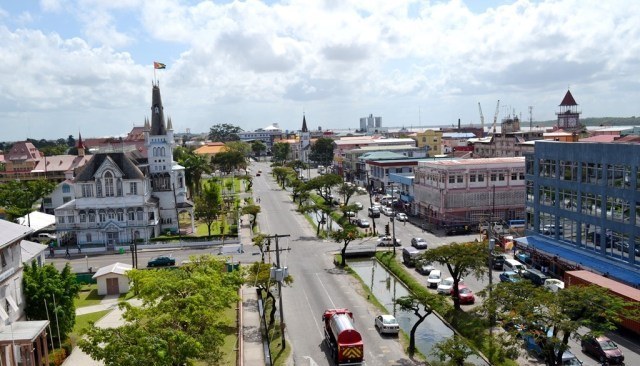
Georgetown, Guyana
Georgetown, Guyana

In 2009, scientists recommended, and governments agreed on the 11 indicators to use to measure land degradation. The proportion of the population living above the poverty line, which measures the impact on people, and the change in land cover, which measures the impact on the land, are mandatory.

The indicator on land cover was refined further in 2014 and now measures land cover, soil organic content and net primary productivity. It was made one of the Sustainable Development Goals (SDGs) indicators of Life on Land in 2015 because achieving it – known as achieving land degradation neutrality – will ensure there is stability in the amount and quality of land resources necessary to support life on Earth by 2030, and onwards.

Further, CRIC 17 will consider, in depth, this and other emerging issues such as drought management, halting forced migration in degraded areas negatively impacted by climate change and progress in promoting gender equality, which are on the agenda of Conference of the Parties –  the governing body of the Convention – that will meet in Fall 2019. CRIC 17 will be preceded by a two-day training some of these issues.

Nigeria ratifies amended Kyoto agreement on climate change

0

The Federal Executive Council (FEC), presided over by Vice-President Yemi Osinbajo, on Wednesday, November 14, 2018 approved the ratification of the Doha Amendment of the Kyoto Protocol on climate change.

Kyoto Protocol
The Kyoto Protocol was adopted in 1997 during the Third Session of the Conference of the Parties to the United Nations Framework Convention on Climate Change (UNFCCC – COP3), Kyoto, Japan

Minister of State for Environment, Alhaji Ibrahim Usman Jibril, made this known when he briefed State House correspondents on the outcome of the weekly meeting of the Council at the Presidential Villa, Abuja.

According to the minister, the protocol concerns the UNFCCC, an international environmental treaty adopted on May 9, 1992. Climate change is regarded as a major global issue across the world.

The Doha Amendment establishes a second commitment period (2013 to 2020) for the Kyoto Protocol, an international agreement to reduce the emissions of greenhouse gases (GHGs). The Kyoto Protocol to the United Nations Framework Convention on Climate Change (UNFCCC) was adopted in 1997 by the third Conference of the Parties (COP3) in Kyoto, Japan.

The Federal Ministry of Environment presented a memo which was taken and approved for the ratification of the Doha amendment of the Kyoto Protocol.

“This Protocol concerns the UN framework convention on climate change, which is a major global issue across the world now.

“The Protocol was crafted in 2004 and Nigeria is a party to that and the initial period of commitment of the Kyoto Protocol was from 2008-2012 and, after that, the new segment now is 2013-2020,’’

He maintained that the essence of the protocol was to commit advanced countries to mitigate the effects of gas emissions on developing countries.

The minister further stressed that the Doha Amendment of the Kyoto Protocol was essentially meant to assist countries like Nigeria that were not producing any significant emission but suffering the consequences.

“The essence of this protocol is to commit advanced or developed countries that are mostly industrialised and are at the forefront of production of gas emissions, which are harmful to the environment, leading to climate change and therefore causing global problems environmentally.

“So, the Doha Amendment of the Kyoto Protocol is essentially to assist countries like Nigeria, which are developing and are not producing any significant emission but are suffering the consequences. We are all aware of flooding that we experienced this year, and this has been going since 2012.’’

According to the minister, by ratifying the protocol, Nigeria and other developing countries stand to gain a lot in form of financial assistance and access to technology.

“The benefit Nigeria stands to gain from this Doha Amendment of the Kyoto Protocol is that, first of all, once the amendment is ratified as we want it to be, there will be access to financial assistance which will help in motivating and adapting to impact of climate change.

“Secondly, there will be access to technology and capacity building and there will also be networking with other nations and organisations, who are more advanced and can be of help to us as a country.

“Lastly, continuation of flexible mechanisms and contribution to global efforts as no one country has the solution for this problem alone. So, the idea is to team up and then get the developing countries to be assisted effectively, he added.

He said the Attorney General of the Federation and Minister of Justice, Abubakar Malami, would provide the instrument of ratification, which would also be signed later by the President and be deposited at the United Nations headquarters in New York.

On the Ogoni cleanup, Jibril said the Federal Government had so far generated over $180 million for the commencement of the exercise in the next few weeks.

The minister disclosed that about 21 contractors would be mobilised to site as the procurement processes had reached the final advantaged stage.

He said: “Yesterday (Nov. 13) the Ministerial Tender Board sat to consider the submission of the procurement department of Hydrocarbon Pollution Remediation Project (HYPREP) and 15 lots were up for grabs.

“On Friday, the Governing Council of the Ogoni Trust Fund will meet and ratify this, and we hope that, by the next week, these letters will be out, and the contractors will be mobilised to site.

“You must ask whether there is funding, yes, of course there is funding. Again, this is the first time the government has done something.

“Because of the confidence that the oil companies have in the government, because of the governance structures that are put in place, the opening of the Ogoni Trust Fund will be able to mobilise $180 million from the oil companies.

“From the NNPC, SPDC and other ventures, they have mobilised $180 million and it is in the escrow account with the Standard Chartered Bank of London and the Board of Trustee is managing that.’’

Usman observed that the Buhari administration had indicated genuine commitment towards ensuring smooth implementation of the Ogoni cleanup.

He, therefore, enjoined all stakeholders, including the affected communities, to continue to support and show more understanding for a hitch-free cleanup.

“So, as far as we are concerned, we can beat our chest and say that the Buhari administration has shown the way forward on this cleanup exercise and we hope and pray that the people whom we are working for, will have cause to laugh and smile very soon,’’ he added.

By Ismaila Chafe

FAO warns of armyworm invasion affecting 1.5m farmers

0

The Food and Agriculture Organisation (FAO) on Wednesday, November 14, 2018 raised an alarm of impending armyworm invasion of maize and rice plantations in the country.

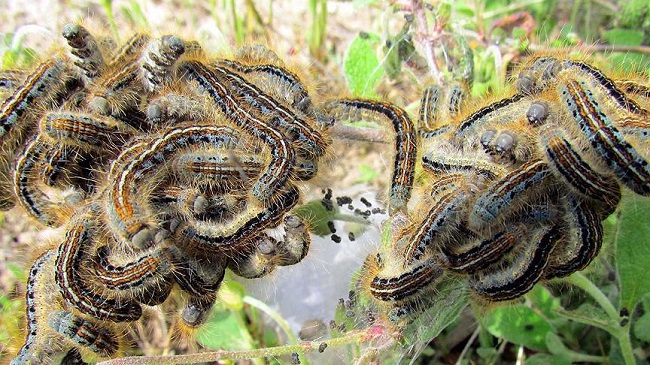
Armyworm
Armyworm invasion

FAO said in its November Situation Report that the invasion of the Fall Army Worm (FAW) would ravage farmlands affecting an estimated 1.5 million farming households.

The fact sheet indicated that the Spodoptera Frugiperda, otherwise called FAW, is a devastating pest commonly found in tropical climate and feeds on approximately 80 plant species including maize and rice.

It disclosed that the pest continued to ravage maize fields at an alarming rate since it was first discovered in 2016 in Nigeria, adding that the damage caused by the pest was estimated at over $268 million in Abia, Ekiti, Ondo and Oyo states.

FAO noted that FAW’s alarming rate of expansion and its manifestation in many parts of the country portends great danger to the availability for food and a major concern to stakeholders.

In Nigeria, maize is not only a major staple food crop relevant to the food security and nutrition of nearly 200 million people, but also a key input for industry in the country.

“The sector is a key source of income to millions of Nigerians, more than 80 per cent of households engage in an agriculture-based livelihood.

“Agriculture is also essential to national food security, nutrition, foreign exchange earnings, employment and revenue,” it said.

To control the pest, FAO adopted FAW project which focused at capacity building and integrated pest management, as well as conducted a livelihood impact mapping exercise in July 2018; in six states of the south while similar exercise was being conducted in six Northern states.

FAO listed the projects to include capacity building training for 1,200 farmers; 100 extension workers, and 50 stakeholders including researchers, quarantine officers and other personnel of the Ministry of Agriculture.

The document showed that the trainees were exposed to techniques on the application of surveillance tools, worm recognition, control and management, while the organisation also distributed fertilisers, seeds and inputs to the farmers.

It showed that each of the benefiting farmers received 25 kilograms of certified maize seeds, one kilogram of herbicide, 50 kilogrammes of NPK fertilisers, one knapsack sprayer and one pheromone trap.

According to the document, the organisation needs adequate funding to enhance response activities and effectively control the pest.

“FAO’s funding for FAW activities has been depleted; the organisation is currently the sole financial source for its response in Nigeria, though committed to saving the livelihoods of farmers and other agriculture sector stakeholders affected by FAW, FAO faces significant financial constraints to carry out monitoring, prevention and response activities.

“To undertake a comprehensive response in Nigeria, FAO is seeking 3 million dollars to upscale FAW mitigation and elimination through direct response and capacity development of local actors.

“To date, FAO’s FAW response has totaled 461, 000 dollars. It has utilised funding from its Technical Cooperation Fund to provide FAW-related support in Nigeria. The Organisation requires urgent support from willing resource partners to save livelihoods affected by FAW.”

By Rabiu Sani

UNICEF convenes global meeting on open defecation

0

The UN Children’s Fund (UNICEF) is meeting with key players in sanitation, among other stakeholders in West Africa, to strengthen local sanitation markets, its Supply Director, Etleva Kadilli, said on Wednesday, November 14, 2018 in a statement in Abuja.

Anthony Lake
Anthony Lake, Executive Director, UNICEF. Photo credit: ctvnews.ca

Kadilli stated that the meeting was part of efforts to support 250 million people globally to abandon open defecation.

According to her, the meeting, which is ongoing in Abuja, is aimed at enabling 60 million people to gain access to at least basic sanitation service by 2021.

The meeting, which opened on Nov. 13, will end on Nov. 15.

The director stated that “the UNICEF meeting with industry, financial institutions, governments and development partners is to discuss how to shape healthy sanitation markets in the West and Central Africa Region.

“One of the key approaches in the UNICEF global strategy for water, sanitation and hygiene is to build sustainable markets for goods and services where supply meets demand.

“There is need for governments and development partners to work with global and local businesses to ensure that appropriate solutions are available and affordable to those who need them.”

Kadilli, who noted that 2.4 billion people worldwide do not use improved sanitation, stressed the need for consultation as important signals were urgently needed to achieve Sustainable Development Goals (SDGS) sets targets.

She assured that UNICEF had been key custodian of SDG 6.2 and would work to achieve equitable access to sanitation and hygiene for all and to end open defecation by 2030.

She added that “open defecation is a life-threatening practice as contact with human waste can lead to diseases such as cholera, typhoid, hepatitis, polio and diarrhea. Inadequate or non-existent sanitation causes tremendous harm.

“Everyday, 700 children under five years die from diarrhea related diseases.”

Ms Marie-Pierre Poirier, UNICEF’s Regional Director for West and Central Africa, also noted that the level of open defecation in West and Central Africa accounted for 14 per cent of global open defecation.

Poirier specifically noted that in Nigeria alone, 46.5 million people practice open defecation, making it the second highest ranked country worldwide.

She added that “between 2008 and 2017, the creation of sanitation demand through ‘Community Approaches for Total Sanitation in West and Central Africa’ led to an increase of almost 25 million people living in open defecation-free communities.

“Despite this recent success, the current rate of progress is insufficient to eliminate open defecation by 2030.

“While UNICEF will continue to rely on proven strategies, new accelerators are needed to support local markets to deliver sustainable sanitation solutions at scale.

“Following the rise in demand for toilets, we will work with countries to enhance the engagement of the private sector to provide adequate and affordable sanitation products and services, including in isolated, often underserved rural areas.”

She says UNICEF has a long history of influencing markets and driving product innovation that has increased children’s access to essential commodities.

By Felicia Imohimi

Akeredolu reiterates commitment to eradicate open defecation in Ondo

0

Gov. Oluwarotimi Akeredolu of Ondo State on Wednesday, November 14, 2018 reiterated the commitment of his administration to eradicate open defecation in the state.

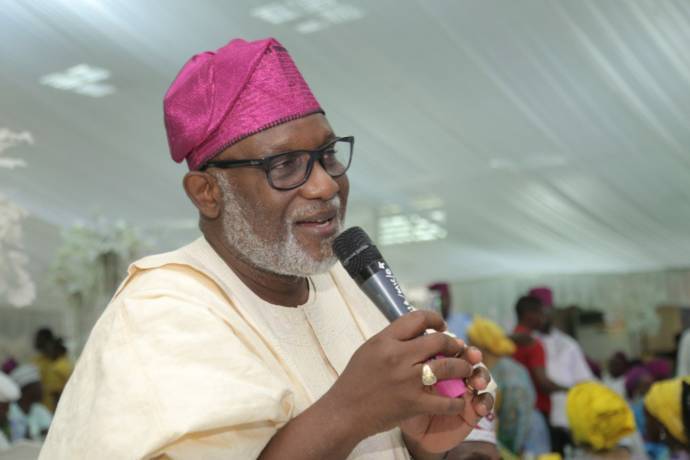
Oluwarotimi Akeredolu
Gov. Oluwarotimi Akeredolu of Ondo State

He made this known in Akure when a team from Global Alliance, a non-governmental organisation (NGO) paid him a courtesy visit in Akure.

He explained that the commitment was part of ongoing efforts the state government was making in collaboration with the UN Children’s Education Fund (UNICEF).

The governor said “we know our shortcomings and we need to have consistent advocacy. A number of houses do not have toilets.

“Banks have assisted us to build boreholes in many areas of the state, while primary schools have modern toilets.

“We have also gone ahead to provide water to make sure that most of our villages have boreholes, and we have rehabilitated over 500 boreholes.”

Akeredolu, therefore, appealed to Federal Government to complete dams instead of leaving the reticulation of such dams to state governments.

He added that “if we continue to run our affairs disjointedly, we won’t get anywhere.”

Dr Brylyne Chitsunge, the Ambassador for Food Security in Africa, said that the visit was to see how the NGO could assist the state to combat food security.

Chitsunge explained that 440 hectares of land had been acquired to help Africa combat shortage of food.

According to her, global citizen concept will be hosting 100,000 people in South Africa to mark the centenary celebrations of late Nelson Mandela, where dignitaries will discuss global investment opportunities in different sectors.

She, therefore, invited Akeredolu to be part of the dignitaries.

By Ayodeji Alabi