The International Rescue Committee on Friday, November 30, 2018 said an outbreak of the deadly Ebola virus in the Democratic Republic of Congo has become the second-worst in history.
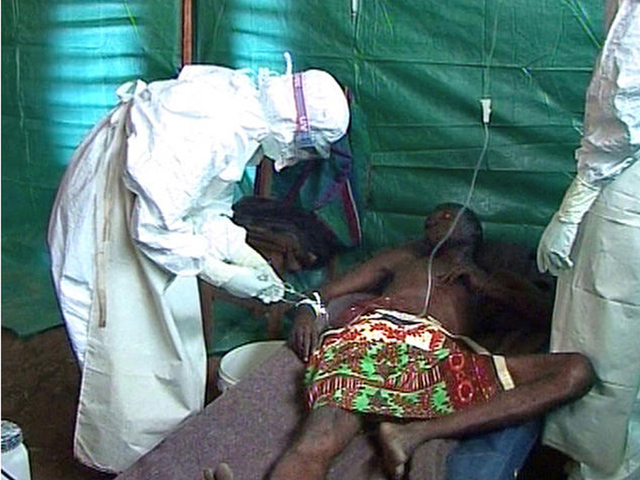
An Ebola patient receiving treatment
“As of today, the outbreak has seen 426 cases of infection, 245 deaths, with a case fatality rate of 57 per cent,’’ the U.S. humanitarian organisation said in a statement.
The IRC’s toll will surpass the 2000 to 2001 outbreak in Uganda, which killed 224 of the 425 people it infected, making it the second-worst after the virus killed over 11,000 people in West Africa between 2014 and 2016.
According to figures from the Congolese Ministry of Health, 47 of the 426 cases are “probable” however not confirmed, while an additional 75 cases are “suspected”.
The outbreak is concentrated in North Kivu, an eastern region where numerous militia groups are fighting for control over the country’s rich natural resources.
According to the ministry, almost half of the 106 confirmed deaths were in the city of Beni which has a population of approximately 800,000 people.
According to Michelle Gayer, the IRC’s senior director of emergency health, the tragic milestone clearly demonstrates the complexity and severity of the outbreak.
“While the numbers are far from those from West Africa in 2014, we’re witnessing how the dynamics of conflict pose a different kind of threat,’’ Gayer said.
He added that it was “highly likely’’ that the outbreak would not be under control for another six months.
The outbreak began shortly after the country’s government declared an end to another outbreak in the country’s west in June.
Conservator-General of the Service National Park Service, Alhaji Ibrahim Goni, says the service will soon embark on campaign against bush burning during the dry season.
Alhaji Ibrahim Goni, Conservator-General of the National Parks Service
Goni made this known in an interview with the News Agency of Nigeria (NAN) in Abuja on Friday, November 30, 2018.
According to him, the campaign has become necessary following the onset of the harmattan season, stressing that some herdsmen deliberately set fire around wild parks in a bid to get fresh fodder for their animals.
“They do this to enable them access Savannah land to influence early regeneration for their animals.
“We also have incidences where people embark on either individual hunting or communal hunting and set the bush on fire to drive out animals, so they can capture or kill them.
“And one of the bad effects is the killing of many animals sometimes in excruciating ways by burning them alive which is among the worst possible deaths.
“An animal that burns to death plausibly experiences a few times more pain than an animal dying in another way, and it is our responsibility to protect and preserve these animals.”
He said that each time you burn the bush or set vegetation on fire, even a standing rock would be weakened, adding “you are not only burning the grasses, you are destroying the soil nutrients.’’
“It also leads to air pollution and increases the carbon content in the atmosphere; and when this happens the ozone layer is destroyed, so you increase the intensity of the heat on the earth.’’
Goni listed some of the measures to guard against uncontrolled bush burning to include the clearing of boundaries around the homes and farmlands.
“At our parks, we ensure that immediately after the rainy season, we embark on boundary clearing, and have graders run across the boundary to create ridges of about six meters in wide.
“This we consider as a fire breaker so that when fire is set outside of our parks, the fire cannot penetrate our parks.’’
Goni, however, said that there were some advantages of controlled bush burning which included stimulating plant growth.
“After controlled bush burning, in the long run, the affected area will invite more sunlight, new grass and fresh vegetation as fodders for animals.”
He explained that the campaign was aimed at protecting wildlife and vegetation during the harmattan season.
He cautioned members of the public against uncontrolled bush burning during the harmattan, especially in and around parks.
He further called on Nigerians to have respect for the environment.
Chinese President Xi Jinping has called for long-term input, an innovative approach to consolidate and develop the green ecological barrier in North China.
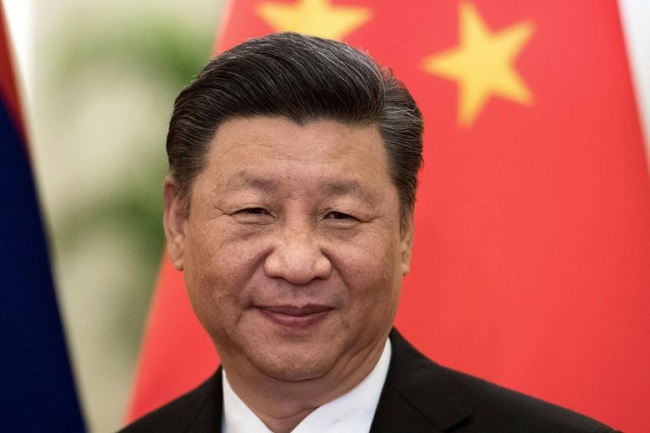
Chinese President, Xi Jinping
Xi, also general secretary of the Communist Party of China (CPC) Central Committee and chairman of the Central Military Commission, made the remarks as he gave instructions on the construction of the Three-North Shelterbelt Forest Programme.
“The programme is a major ecological project implemented together with the reform and opening-up drive, and a signature project in building an ecological civilisation,” Xi said.
Xi commended the unremitting efforts made over the past 40 years, stressing that the programme had generated significant ecological, economic and social benefits.
He added that the programme had equally become a successful model in international ecological management.
However, Xi warned that ecological system in the Three-North regions (the northeastern, northern and northwestern regions) remained fragile.
He said continued efforts in promoting the programme would not only boost regional sustainable development, but also the sustainable development of the Chinese nation.
Premier Li Keqiang gave written instructions, calling for continued efforts to push forward the programme, while making overall consideration for demand and factors such as water resource carrying capacity.
“Efforts should be made to jointly promote the programme with the country’s rural vitalisation strategy and battle against poverty in order to enhance afforestation while increasing local residents’ income and build a more solid ecological barrier for sustainable development,” Keqiang said.
A meeting on the programme was convened in Beijing giving awards to individuals and organisations that made outstanding contributions to the programme.
Vice Premier Han Zheng said at the meeting that construction of Three-North Shelterbelt Forest Programme still faced difficulties and challenges.
He called for greater effort to protect the ecological environment, promote high-quality development of the programme and consolidate the green ecological barrier.
Zheng also called on local governments to learn from the spirit of Three-North Shelterbelt Forest Programme and strengthen protection of natural ecological system.
Attempts by Chinese companies and local governments to conceal pollution violations are “extremely stupid” and will not succeed, China’s environment ministry said on Friday, November 30, 2018 after a spate of cover-ups in the country.
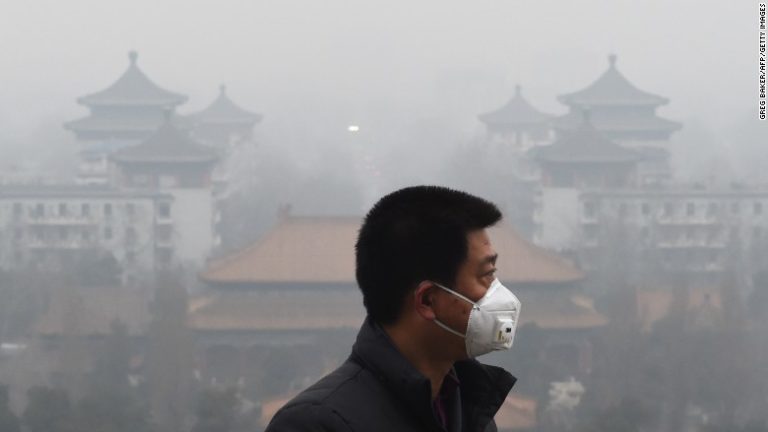
Air pollution in China
Now in the fifth year of its war on pollution, China has struggled to enforce its environmental laws and Beijing wants market regulators, graft watchdogs, police and the courts to play a bigger role in punishing polluter
The Ministry of Ecology and Environment (MEE) has named and shamed several local jurisdictions and companies over the past month for deliberate acts of deception designed to hide compliance failures.
This month, one firm deliberately misreported the spilling of nearly 70 tonnes of petrochemicals into the sea at the Quanzhou port in southeast Fujian province, the local government said in a statement.
The ministry said that seven company workers have been arrested and several officials dismissed.
“Any attempt to conceal the truth is extremely stupid and in vain,” environment ministry spokesman Liu Youbin said at a news briefing in Beijing when asked about the port incident.
“The relevant company is directly responsible for the incident, but the local government also didn’t do a good job dealing with the emergency, especially in disclosing relevant information,” he added.
China is in the middle of a new campaign to curb winter smog and forced at least 46 cities since Monday to adopt emergency measures to cut emissions after air quality deteriorated across northern and eastern regions.
Despite pressure from Beijing, many growth-obsessed local governments turn a blind eye to polluting enterprises they consider vital sources of jobs and economic growth.
This month, state media reported that officials in eastern China’s Shandong province were caught throwing chemicals worth 46 million yuan (6.63 million dollars) into a river to disguise pollution levels.
In Shijiazhuang, capital of Hebei province, officials were accused of trying to cover a one-kilometer (0.62 mile) section of a river with tarpaulin to hide water pollution from inspectors, according to a state media report last month.
Liu said environmental inspections enable local governments to promote “high-quality economic development” and the scrutiny will continue.
“We will not ease supervision and will continue to carry out inspections,” he said.
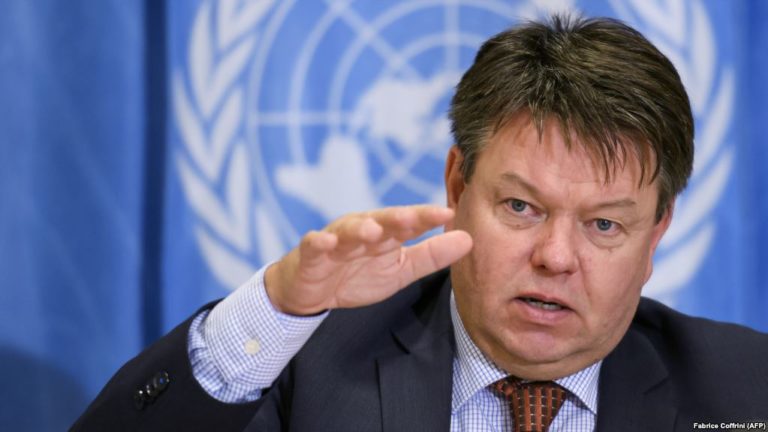
The UN weather agency says the world is heading in the wrong direction to slow climate change after another year of near-record temperatures.
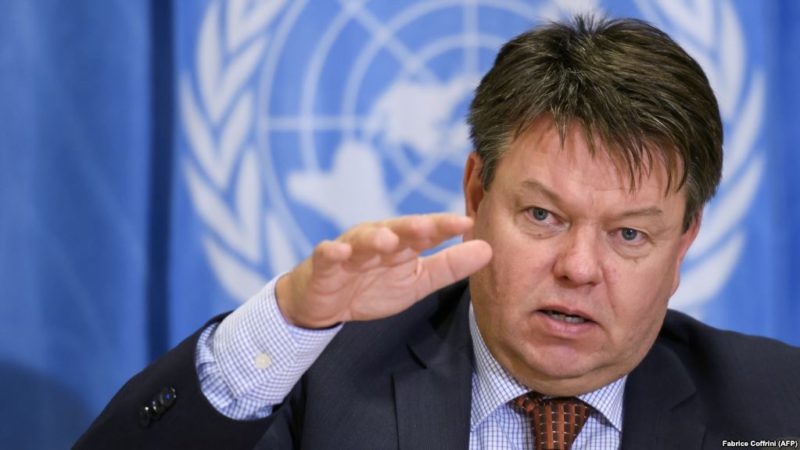
WMO Secretary-General, Petteri Taalas
Secretary-General of the World Meteorological Organisation (WMO), Prof. Petteri Taalas, said: “We are not on track to meet climate change targets and rein in temperature increases.
“Greenhouse gas concentrations are once again at record levels and if the current trend continues, we may see temperature increases 3-5 degrees centigrade by the end of the century.
“If we exploit all known fossil fuel resources, the temperature rise will be considerably higher.”
Data from five independent global temperature monitors which formed the basis of the latest annual WMO Statement on the State of the Climate report, indicated that this year is on course to be the fourth highest on record.
He expressed worry that the 20 warmest years on record had been in the past 22 years, with the top four in the past four years.
“It is worth repeating once again that we are the first generation to fully understand climate change and the last generation to be able to do something about it,” Taalas said.
The WMO scribe’s comments supported the findings of another authoritative global body, The Intergovernmental Panel on Climate Change (IPCC).
In its report on Global Warming of 1.5°C, IPCC concluded that the average global temperature in the decade prior to 2015 was 0.86 degrees centigrade above pre-industrial levels.
Between 2014 and 2018, however, this average had risen to 1.04 degrees centigrade above the pre-industrial baseline, IPCC’s experts said.
“These are more than just numbers,” said WMO Deputy Secretary-General, Elena Manaenkova, noting that “every fraction of a degree of warming makes a difference to human health and access to food and fresh water”.
The extinction of many animals and plants also hinged on global warming, the WMO official insisted, along with the survival of coral reefs and marine life.
“It makes a difference to economic productivity, food security, and to the resilience of our infrastructure and cities.
“It makes a difference to the speed of glacier melt and water supplies, and the future of low-lying islands and coastal communities. Every extra bit matter,” Manaenkova said.
WMO’s report added to the scientific evidence that would inform climate change negotiations from Dec. 2 to Dec. 14 in Katowice, Poland.
The key objective is to adopt the implementation guidelines of the Paris Agreement on Climate Change, which aims to hold the global average temperature increase to as close as possible to 1.5 degrees centigrade.
This target is possible, according to the IPCC, but it would require “unprecedented changes” in our lifestyle, energy and transport systems.
Highlighting the economic impact of higher global temperatures, WMO noted that many countries were increasingly aware of the potential problems.
This included the United States, where a recent federal report detailed how climate change is already affecting the environment, agriculture, energy, land and water resources, in addition to transport, people’s health and welfare.
A just-published United Kingdom assessment also warned that summer temperatures could be up to 5.4 degrees centigrade hotter, and summer rainfall could decrease by up to 47 per cent by 2070.
In Switzerland, famed for its mountains and skiing, national weather experts warned early November that the country was becoming hotter and drier.
In addition, the weather experts warned that the country is expected to struggle with heavier rainfall in the future – and less snow.
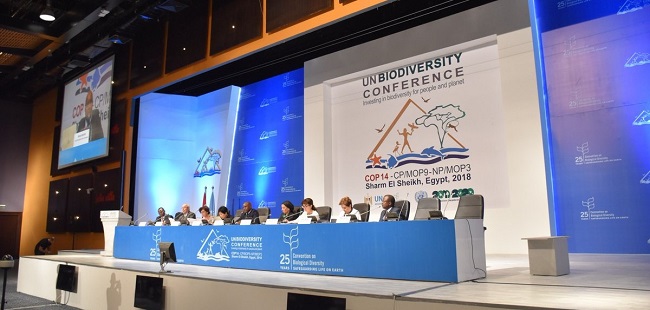
The 2018 UN Biodiversity Conference of the Parties (COP14) closed on Thursday, November 29 with broad international agreement on reversing the global destruction of nature and biodiversity loss threatening all forms of life on Earth.
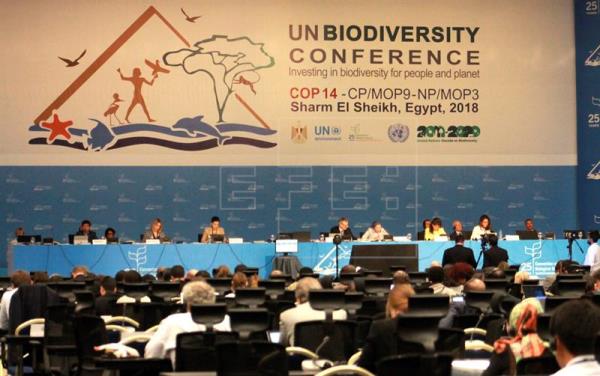
The 2018 UN Biodiversity Conference of the Parties (COP14) closed on Thursday, November 29
To combat the crisis, governments agreed to accelerate action to achieve the Aichi Biodiversity Targets, agreed in 2010, from now until 2020. Work to achieve these targets will take place at the global, regional, national and subnational levels.
The meeting also agreed on a comprehensive and participatory process for developing the post-2020 global biodiversity framework anticipated to be agreed upon at the next Conference of Parties (COP15) in Beijing, China in 2020. The framework aims to safeguard nature and biodiversity for decades to come.
Dr. Cristiana Paşca Palmer, Executive Secretary of the UN Convention on Biological Diversity, thanked delegates for their work and their commitments at the meeting. Throughout the conference, she laid out the scientific case that humankind is currently on an unsustainable path that involves a continuing steep loss of biodiversity with cascading consequences for nature and for human society, including in the global economy, the availability of food and water, and human security, health and wellbeing.
Dr. Paşca Palmer said: “Nature is dynamic and interrelated – and so must be our response. We must move from the very real incremental change that we have created to a model that continues to push incremental wins while also fundamentally reaching for transformational change. As this COP shows, we have already begun this journey.”
To engage all sectors and stakeholders, the Government of the Arab Republic of Egypt, the Government of the People’s Republic of China, and the Secretariat of the United Nations Convention on Biological Diversity announced the launch of a Sharm El-Sheik to Beijing Action Agenda for Nature and People to catalyse, collect, and celebrate actions taken in support of biodiversity conservation and its sustainable use.
Yasmine Fouad, Minister of Environment of the Arab Republic of Egypt and COP 14 President, reiterated that ministers and heads of delegation welcomed Egypt’s initiative to promote a coordinated approach to address biodiversity loss, climate change and land and ecosystems degradation.
She called on the United Nations General Assembly to convene a summit on biodiversity at the level of heads of State prior to the CBD COP15 in 2020, and for countries to complete the achievement of the CBD Strategic Plan before the end of this decade.
From the “city of peace”, Sharm El Sheikh, Minister Fouad stressed Egypt’s appreciation for the opportunity to host COP 14 with representations of delegations from countries, organisations and institutions over 17 days under one common slogan, “Investing in biodiversity for People and Planet.”
“We need to think seriously about system transformation and a new social contract to protect the global commons,” Naoko Ishii, CEO and Chairperson of the Global Environment Facility said at the opening of COP14. “Nature and people deserve a new deal,” Ishii said. “2020 offers one last opportunity for the global community to get its act together – let’s not miss it!”
Other announcements and decisions made at the conference include:
An African Ministerial Summit held immediately prior to COP 14 produced a Ministerial Declaration as well as the Pan-African Action Agenda on Ecosystem Restoration for Increased Resilience;
COP14 decision on cooperation also called for UN General Assembly to designate 2021 to 2030 as the UN Decade of Ecosystem Restoration;
The Business and Biodiversity Forum produced dialogues and recommendations to further strengthen private sector and corporate engagement in support of the biodiversity and mainstreaming agenda;
Building on the theme of the conference, COP14 adopted a decision for a long-term strategic approach to mainstreaming biodiversity into the work of a number of productive sectors, including energy and mining, infrastructure, manufacturing and processing and health, with a view to contribute to the post 2020 process;
A Nature and Culture Summit announced activities to advance work on biological and cultural diversity in collaboration with the United Nations Educational, Scientific and Cultural Organisation (UNESCO) and indigenous peoples and local communities;
Voluntary guidelines were adopted on various issues, including on the design and effective implementation of ecosystem-based approaches to climate change adaptation and disaster risk reduction; on the repatriation of traditional knowledge and on integration of protected areas and other effective area-based conservation measures into the wider land- and seascapes;
Decision for further studies and discussions under a number of Ad Hoc Technical Expert Groups were also adopted, in particular groups were agreed for synthetic biology and digital sequence information. The meeting also adopted a procedure for avoiding conflicts of interest in expert groups under all three bodies of the Convention;
The meeting adopted important decisions on issues related to the three objectives of the Convention, including: pollinators, sustainable wildlife management, health, invasive alien species and resource mobilisation;
The meeting adopted decisions on issues related to the the Nagoya Protocol on Access to Genetic Resources and the Fair and Equitable Sharing of Benefits Arising from their Utilisation and the Cartagena Protocol on Biosafety, including risk assessment and risk management, socio-economic considerations, specialised international access and benefit-sharing instruments in the context of Article 4, paragraph 4 of the Nagoya Protocol, and on a Global Multilateral Benefit Sharing Mechanism, and others.
Landmark Convention on Biological Diversity decision calls on governments to conduct strict risk assessments and seek indigenous and local peoples’ consent ahead of potential release of “exterminator” technology
The UN on Thursday, November 29, 2018 made a significant global decision on how to govern a presumably high-risk new genetic engineering technology – gene drives.
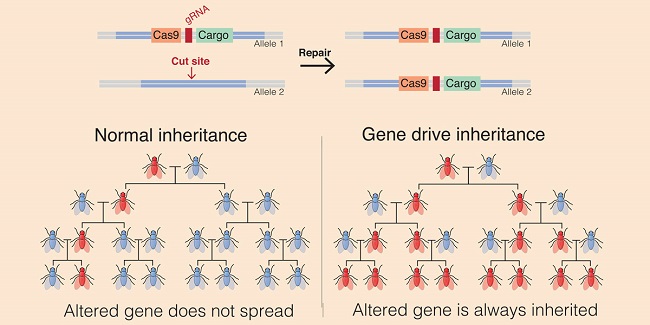
A gene drive is a genetic engineering technology that can propagate a particular suite of genes throughout a population
A gene drive is a genetic engineering technology that can propagate a particular suite of genes throughout a population. Gene drives can arise through a variety of mechanisms. They have been proposed to provide an effective means of genetically modifying specific populations and entire species.
“This important decision puts controls on gene drives using simple common-sense principles: Don’t mess with someone else’s environment, territories and rights without their consent,” explains Jim Thomas, co-executive director of the ETC Group. “Gene drives are currently being pursued by powerful military and agribusiness interests and a few wealthy individuals. This UN decision puts the power back in the hands of local communities, in particular indigenous peoples, to step on the brakes on this exterminator technology.”
The Convention on Biological Diversity decision also requires that, before an environmental gene drive release, a thorough risk assessment is carried out. With most countries lacking a regulatory system for the technology, it requires that new safety measures are put in place to prevent potential adverse effects. The decision acknowledges that more studies and research on impacts of gene drives are needed, to develop guidelines to assess gene drive organisms before they are considered for release.
“In Africa we are all potentially affected, and we do not want to be lab rats for this exterminator technology,” notes Mariann Bassey-Orovwuje of Friends of the Earth Africa and chair of the Alliance for Food Sovereignty in Africa. “Farmers have already marched in the streets of Burkina Faso to protest genetically engineered mosquitoes and we will march again if they ignore this UN decision. We are giving notice now that potentially affected West African communities have not given their consent or approval to this risky technology.”
The agreement to seek and obtain consent may immediately impact the most high-profile (and well-funded) gene drive project, by researchers at London’s Imperial College, who aim to release genetically engineered mosquitoes in Burkina Faso as a step towards future gene drive mosquito releases. Contrary to Target Malaria’s claims, people living in the villages targeted for potential release have not been consulted or given consent.
This decision follows a campaign by hundreds of organisations, along with concerns expressed by several governments represented at the UN, who called for a moratorium on the environmental release of gene drives.
The globally-agreed decision requires that governments must seek the approval of “potentially affected indigenous peoples and local communities” prior to considering any release of gene drives, including experimental releases. Given that gene drives are designed to spread through a species and across geographic regions – a novel feature of this form of genetic engineering – any environmental release could potentially affect communities far beyond the single release site and it will now be necessary to seek wider consent. This puts an important halt to gene drive releases moving forward. The UN decision, it was gathered, justifies controls on gene drive releases because of their potential impact on the “traditional knowledge, innovation, practices, livelihood and use of land and water” of Indigenous peoples and local communities.
Guy Kastler from La Via Campesina, a global movement that represents over 200 million peasants from 182 organisations in 81 countries, said: “The prospect of this technology brings unprecedented risks that we can’t accept. The UN should have decided a clear moratorium on gene drives. La Via Campesina calls on peasants of the world to oppose in every country the implementation of this technology, which can potentially exterminate our crops or animals and other elements of biodiversity essential to our productions and livelihood.”
Research reported this week has shown that Anopheles mosquitos (one of the insects that carry the malaria parasite) may routinely be blown long distances across Africa by winds at upper atmospheric levels. This could potentially expand the geographic area of “potentially affected” Indigenous peoples and local communities to the entire continent.
The UN decision comes in the same week that the Cayman Islands decided to end trials of experimental genetically engineered mosquitoes amid reports that infectious mosquito populations increased instead of declining. Caribbean countries were among those supporting a moratorium on gene drives.
Besides the requirement for consent, the conditions require that risk assessments are carried out and risk management measures put in place “to avoid or minimise potential adverse affects”.
The decision recognises that, before these organisms are considered for release into the environment, more research and analysis are needed, and the UN should develop specific guidance to evaluate potential impacts on biodiversity and communities.
Such guidance is now agreed to be developed through a “Risk Assessment Ad Hoc Technical Expert Group”, established on Thursday under another decision. Because the development of formal risk assessment guidance is set to take some years, this part of the decision may also practically act as a further brake on the release of gene drive organisms.
The first green bond issued by the World Bank 10 years ago created the blueprint for today’s $500+ billion labeled bond market. Heike Reichelt, Head of Investor Relations and New Products at the World Bank Treasury, in this treatise looks at how green bonds changed investor and issuer behavior and how the same model can be applied to help achieve the Sustainable Development Goals (SDGs)
Heike Reichelt, Head of Investor Relations and New Products at the World Bank Treasury
Last month, the Seychelles – an archipelago of 115 islands known for beautiful beaches and coral reefs – issued the first blue bond of its kind to support sustainable marine and fisheries projects. The Seychelles raised $15 billion from investors like Calvert Impact Capital, Nuveen and Prudential and will report back on how funds are being used to achieve a positive impact.
That bond is the most recent in a series of innovations in the fixed income market that raise funding from the capital markets dedicated to a defined social purpose, with issuers engaging with investors around purpose and offering more transparency on the financing. These types of products allow issuers and investors to benefit from standardised debt products that support investments at scale, while at the same time connecting investments to their social purpose.
Estimates for the volume of these purpose-related bonds vary, depending on how narrowly the market is defined. Looking only at the labeled bond market, the volume is over $500 billion for the last 10 years. Considering issuers – even just municipalities and development banks – that support social projects financed through the bond markets, the number quickly goes up to several trillions of Dollars per year.
Investors’ interest in the social and environmental purpose of their investments reflects a fundamental shift in the bond market. Investors want data that shows not only how they can reduce environmental, social and governance risks in their portfolios, but also how their investments are helping to contribute to society. They recognise the power they must support initiatives their stakeholders care about, and the ability to do so without giving up return. Issuers are responding. Issuers are engaging with investors to show how their bonds present opportunities to achieve both financial and social returns.
Ten years ago, concerned that climate change posed a significant risk to their portfolios, a group of Swedish pension funds – through Skandinaviska Enskila Banken (SEB) – looked for opportunities that support climate-friendly solutions. They wanted high quality, liquid products that would not carry additional project risk. And they wanted information about how their investments would achieve impact. They approached the World Bank and we worked together to design a new product. The green bond was born.
Issued in 2008 by the World Bank, this bond created the blueprint for today’s green bond market. It defined the criteria for projects eligible for green bond support, included a recognised climate research institution, CICERO, as a second opinion provider, and added impact reporting as an integral part of the process, highlighting the importance of transparency.
The World Bank’s first green bond received strong support from the market and interest from others, including climate policymakers, Ceres and the Climate Bond Initiative. They raised awareness for the challenges of climate change and demonstrated the potential for institutional investors to support climate-smart investments through liquid instruments without giving up financial returns. It formed the basis for the green bond principles coordinated by ICMA, the International Capital Markets Association. It highlighted the social value of fixed income investments and need for a sharper focus on transparency. And – starting with the first green bond issued in 2008 – investors have been publishing their names and providing quotes when they buy green or other labeled bonds.
Since then, the World Bank has raised about $13 billion through more than 150 green bonds in 20 currencies for institutional and retail investors all over the globe. Other green bond issuers now include companies and banks of all sizes and several countries. All issuers are measuring, tracking and reporting on the social and environmental impact of their investments. Fannie Mae is the largest issuer of green bonds by volume in a single year. Fiji last year issued the first emerging market sovereign green bond. Every bank active in the international capital markets has staff dedicated to green or sustainable bond financing. Green lending criteria are being incorporated in loans. There’s an industry of second opinion providers and verifiers – including rating firms and others providing information to investors and supporting issuers. And the green bond concept has been expanded to other labels – social, sustainable, blue, etc.
Kenya’s umbrella organisation of plastic recyclers on Thursday, November 29, 2018 said it planned to recycle 14,000 tonnes of plastic bottles by 2025 as it steps up efforts towards the management of plastic pollution.
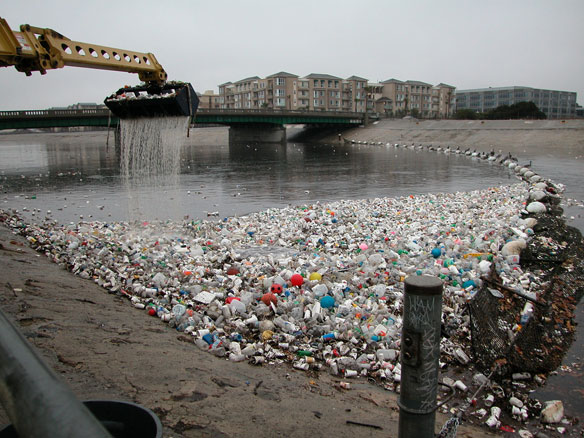
Plastic pollution
The Kenya PET Recycling Company (PETCO) is planning to spearhead the collection and recycling of 20 per cent of the plastic wastes by the end of the year.
“Eventually, the target is to collect and recycle 70 per cent or 14,000 tonnes of the plastic wastes in the entire country by 2025,’’ Joyce Gachugi, country programme manager at the Kenya PET Recycling Company Limited, said.
Kenya, which banned the use of plastic bags in 2017, has obliged industry players to self-regulate the management of post-consumer PET bottles in the country.
Kenya pledged to focus on the protection of aquatic resources, adopt policies, strategies and mechanisms to harness blue economy while confronting the challenges of waste management.
The country committed to ensure responsible and sustainable fishing to conserve endangered fish species and ensure safety and security in high seas for smooth global trade.
PETCO and the Kenya Association of Manufacturers (KAM) recently signed an Agreement of Cooperation toward holistic management of PET plastic bottles in the country.
The agreement is an integrated recycling scheme that aims at creating an end-to-end ecosystem for plastic reprocessing in the country with the circular economy concept that keeps resources in use for a long time.
Under the agreement, manufacturers through KAM and PETCO jointly developed strategies, initiatives and infrastructure to ensure efficiency in the collection, processing and recycling of PET plastic bottles in the country.
A university don has urged nations to resort to the use of information, communication and technology (ICT) in biological diversity conservation efforts.
A session at the UN Biodiversity Conference in Sharm El Sheik, Egypt
Prof. Moussa Moustafa, vice president and dean, Faculty of Information Systems and Computer Science, October 6 University in Egypt, told a side event at the UN Biodiversity Conference in Sharm El Sheik that ICT offers hope in eradicating misuse of biodiversity.
“The application of android smart phones and remote sensing can be a powerful tool for biodiversity monitoring and conservation,” he said.
Prof. Moustafa observed that ICT and its positive use can move the global biodiversity conservation in the right direction.
The don said that all countries must begin to see digital technology in nature conservation as a force that will transform the work of conservation scientists, protected area managers and conservation organisations.
“Change will be driven partly through peer pressure, and partly through the inherent possibilities and problems that digital technology brings,” he said.
Prof. Moustafa noted that ICT can help in biodiversity conservation since it avails knowledge, creates awareness and encourages communities to change their attitude to embrace biodiversity.
He noted that the availability and growing broadband and mobile connectivity, the access to online data, the use of remote sensing technologies and platforms are capable of creating changes in the way consumption of environmental and cultural assets can be managed.
The don noted that, without investment in biodiversity monitoring, existing observation gaps would remain and continue to impair the achievement of UN biodiversity goals.
“Long-term biodiversity observations are crucial to detect and understand changes in biodiversity and ecosystem services,” he noted.
He decried threats to biodiversity by human activities in land use, the release of nitrogen and phosphorus into the environment, freshwater extraction and diversion, ocean acidification and ozone depletion and climate change.
“The life and health of living organisms depend on the blessings of ecosystems based on biodiversity, but increasing human activities is a big threat as it is causing the decrease of species at a high rate,” Moustafa added.
He noted that data gathered by ICT has been used in a wide range of applications that can also be applied in the field of biodiversity to promote sustainable use.