Home Blog Page 1736

COP24: AfDB expresses resolve to fight climate change firmer

0

The curtain fell on Friday, December 14, 2018 on COP24, this year’s global UN climate summit held in Katowice, Poland. However, negotiations continued throughout the weekend to reach agreement on specific parts of the ‘rulebook’ to be applied  from 2020 by the 197 signatories of the Paris Agreement, to limit global warming to 2°C-1.5°C relative to pre-industrial levels.
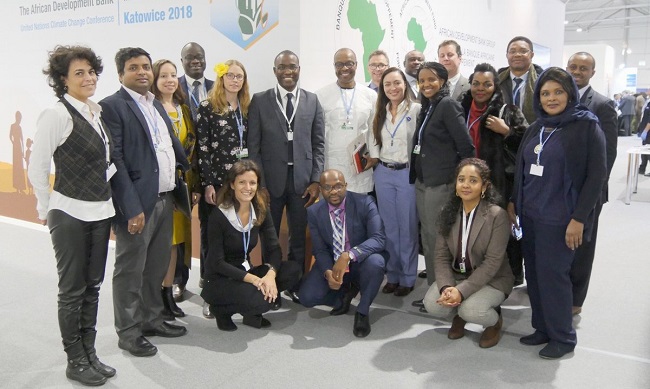
AfDB COP24
The AfDB team at COP24 with Vice-President, Power, Energy, Climate and Green Growth, Amadou Hott, and Director, Climate Change and Green Growth Department, Anthony Nyong

For two years, the 50 African countries that have ratified the Paris Agreement focused on the need to construct a specific, transparent framework for climate finance. African negotiators – including the AGN, supported by the bank – have also been negotiating to have  developed countries, largely responsible for global warming, to implement their  commitments. Developed countries are required to help developing countries conduct their ecological transition in line with the Paris Agreement made in December 2015.

During the two weeks of the conference, the African Development Bank assumed its role as primary champion of African interests and a steadfast supporter of African negotiators. In addition to its role as purveyor of knowledge, experience and expertise, it organised 50 panel discussions and conferences at its Pavilion,which bubbled with a wealth of views shared by 30  experts who led discussions across the subject of climate change in all its dimensions: water and sanitationagriculture and forestrytransport and urban development.

The gender dimension, the role of civil society and the private sectormeteorology and related technologiesrenewable energy and implementation of Nationally Determined Contributions, were other topics discussed.

“We see women who are losing their livelihoods; we see hungry children; we see communities reduced to dust by tornadoes and hurricanes. That’s what motivates us, that drives us, that makes us redouble our efforts to work to reduce the adverse effects of climate change on our communities,” said Anthony Nyong, Director of the bank’s Climate Change and Green Growth Department at COP24.

Nyong continued, “We will continue to work with those who are conscious of the urgency and the need to respond to the challenges facing Africa, and that is what we’re going to focus on: ensuring that Africa has the resources it needs, so that climate change does not completely negate the progress that the continent has made. We want to carry on building on the gains made, not make them all over again to then see them destroyed.

“Because the urgency is right there… the final decision of the COP ‘insists on the urgency of greater ambition’, but it does not lay down any time span and this does not bode well for developing countries in general or for African countries in particular, since they are amongthe most affected in the world by climate change.

“So, COP25, to be held in Chile, is already in our diaries.

“For the African Development Bank, the ‘fight’ continues, and the bank is determined to stay on the front line – always defending the interests of its 54 Member States and their people.”
Government, UNDP validate National Disaster Risk Management Policy

0

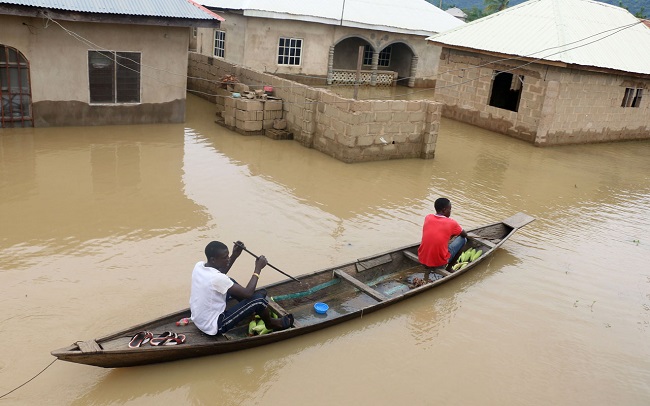
The Federal Government in collaboration with UN Development Programme (UNDP) and other stakeholders is seeking to validate the National Disaster Risk Management Policy (NDMP) to effectively manage emergencies and disasters in the country. 

Nigeria flood
Residents steer a dugout canoe past flooded houses following heavy rain in the Nigerian town of Lokoja, in Kogi State, on September 14, 2018. Photo credit: AFP / Sodiq Adelakun

The NDMP outlines government’s policy direction on current challenges to reducing risks from hazards facing the country and articulates government’s renewed commitment to risk reduction. 

Mr Mustapha Maihaja, Director-General of National Emergency Management Agency (NEMA), said at the opening of a two-day workshop to validate NDMP on Tuesday, December 18, 2018 in Lagos that the document would be of immense value to stakeholders.

Maihaja, represented by Mr Benjamin Oghenah, Deputy Director, Disaster Risk Reduction, said the document was expected to promote nationally integrated strategy that would strengthen community resilience against disasters.

He said: “It will in reality address several under-served areas of disaster management that have not been adequately covered in the practice of disaster management in the country.

“Such areas range from adoption of resilience as a guideline for disaster management to the addressing of disaster management and conflict interface.

“It has been a long but meticulous journey getting to this stage and I thank you all,’’ he said.

According to him, when the document becomes fully operational, it will help to expand awareness and understanding of disaster and strengthen multi-stakeholders governances system for disaster reduction management.

In addition, he said that the document would enhance preparedness capacity to reduce exposure, vulnerability and impacts of hazards events or conditions.

He explained that the document would increase social,economic and environmental investments to strengthen resilience to disaster through hazard risk reduction.

Earlier, the General Manager of Lagos State Emergency Management Agency (LASEMA), Mr Adesina Tiamiyu, urged stakeholders to intensify sensitisation on risk reduction in the country.

Tiamiyu said people needed to know what to do and who to call in case of disasters and emergencies.

“For example, there is a policy that guides everybody on what to do and who to call in case of disaster abroad; if it works there, it should also work here.

“We (stakeholders) should collaborate with each other to sensitise the citizens on what to do and support the State Emergency Agencies (SEMAs) to deliver on their mandate,’’ he said.

Also speaking, Prof. Andrew Obafemi, Director, Centre for Disaster Risk Management and Development Studies, University of Port Harcourt,urged SEMAs to be proactive in responding to emergencies in the country.

Obafemi, however, called for support for NEMA, SEMAs and other agencies working in the sector to respond effectively to manage disasters in the country.

Also, the Corps Marshall of Federal Road Safety Corps (FRSC), Dr Boboye Oyeyemi, told stakeholders that the Corps had intensified efforts to ensure safety of Nigerians during the yuletide.

Oyeyemi said as part of the “Ember-month programme”, the corps had re-activated emergency rescue ambulances, camps, help areas and roadside clinics.

“We have started sensitising Nigerians on what to do on unplanned journeys, night journeys and what to do in case of accidents and emergencies,’’ he said.

Oyeyemi, who was represented by the Chief Route Commander, FRSC, Chinekeokwu Cyprian, urged Nigerians to call 122 in case of any emergency.

Also, the Inspection General of Police, Ibrahim Idris,encouraged various societies and communities to help protect lives and properties of citizens.

Idris, represented by AIG Rasheed Akintude, said the stakeholders should not limit the collaboration to experts alone, adding that every Nigerian should be involved in the management of risk reduction.

The NDMP is a 10-year plan to be reviewed every five years.

S. Africa welcomes balanced outcome of climate change talks

0

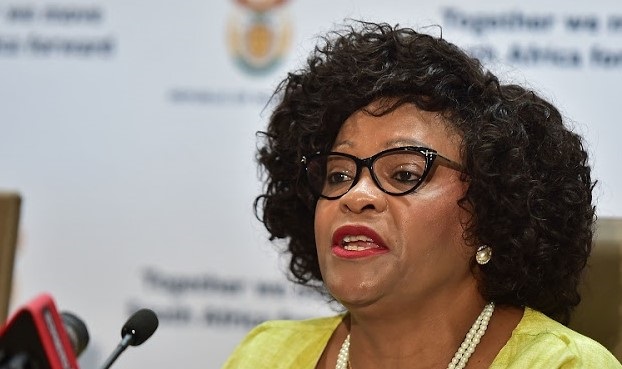
South Africa on Tuesday, December 18, 2018 welcomed the balanced outcome of the recently concluded climate change talks in Katowice, Poland, the Minister of Environmental Affairs, Nomvula Mokonyane, said in a statement.

Nomvula Mokonyane
Nomvula Mokonyane

South Africa is comfortable that decisions adopted at the talks provide developing countries with flexible arrangements that allow space for institutional and technical capacity building on communication and reporting obligations under the Paris Agreement, Mokonyane said.

The talks, known as the 24th Session of the Conference of the Parties to the UN Framework Convention on Climate Change (UNFCCC C0P24),was hosted by Poland, the COP Presidency, from Dec. 2, to Dec. 14, in the city of Katowice.

The outcome of the talks “resulted in balanced implementation guidelines for the Paris Agreement,” Mokonyane said.

“In this regard supporting the development of capacity is a key enabling aspect of the Paris Agreement,” she said.

The minister added that South Africa particularly welcomes the decision to extend the mandate for capacity building support for reporting by developing countries by the Consultative Group of Experts (CGE) until 2026.

The CGE will play a vital role in enabling effective reporting by developing countries, thus enhancing transparency of climate action and support and ultimately enabling more climate action, the minister said.

During the climate change talks in Katowice, negotiators from nearly 200 countries agreed on a package of the implementation guidelines,or a common rulebook of the landmark 2015 Paris Agreement on climate change.

The agreed guidelines mean that countries can now establish the national systems that are needed for implementing the Paris Agreement starting from 2020.The same will be done at the international level. 

Out-gone minister urges new minister to address environmental challenges

0

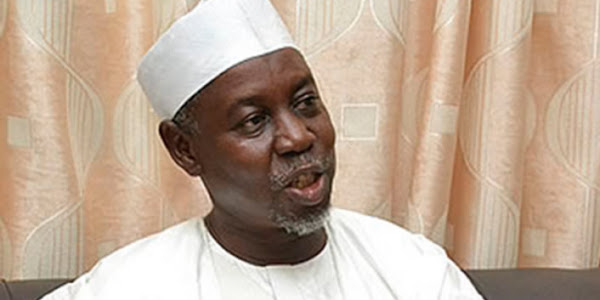
Alhaji Ibrahim Jibril, the out-gone Minister of State for Environment, has urged the Minister of Environment, Alhaji Suleiman Hassan, to improve on the ministry’s efforts in addressing the country’s environmental challenges.

New Environment Minister
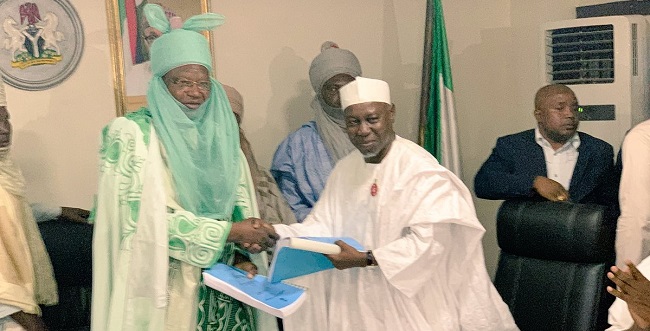
Erstwhile Environment Minister of State now the 12th Emir of Nasarawa, Ibrahim Usman Jibril (left), hands over to new Environment Minister, Suleiman Hassan, who was Minister of State for Power, Works & Housing

JIbril, who was recently turbaned as new Émir of Nasarawa Emirate Council, Nasarawa State, gave the advice at the handover ceremony in Abuja on Tuesday, December 18, 2018.

“It is important to say that anyone who wants to lead this ministry must put his thinking cap to find means of addressing numerous environmental challenges,” he said.

The outgoing minister, who led the ministry for over three years, urged the management and staff of the ministry to give Hassan maximum support and cooperation to deliver the ministry’s mandate.

According to him, the incoming minister should complement the ministry’s efforts to implement climate change actions, Ogoni clean-up and other numerous environmental challenges.

Jibril said that he would hand over the sum $170 million with projects detail in an extra account.

According to him, $5 million are in the ministry’s domicile account and there is additional N200 millions in another account.

He added that all these were contained in the handover document.

The outgoing minister thanked the management and staff of the ministry for giving him support and cooperation to transform the nation’s environment sector.

The new emir, who described himself as environmentalist, promised to continue to discharge environmental duties in his domain.

Responding, Hassan, who solicited for support and cooperation from the management and staff of the ministry, said that he would build on the ministry’s achievements to ensure their sustainability.

By Deji Abdulwahab

Companies in England to foot bills for wastes disposal, recycling

0

Companies and factories in England will have a legal obligation to foot the bill for the disposal or recycling of waste packaging they produce under new plans by Britain’s environment minister.

Theresa May
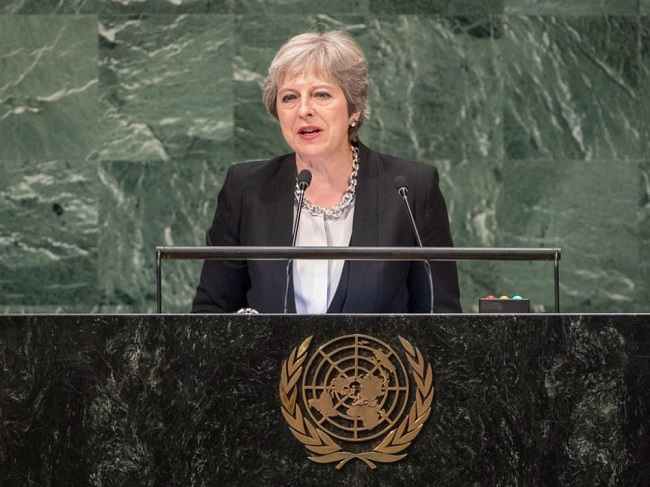
Prime Minister of the United Kingdom, Theresa May. Photo credit: United Nations

Prime Minister Theresa May has pledged to eradicate avoidable plastic waste by 2042 as a growing flood of plastic endangers life in the world’s oceans.

“We can move away from being a ‘throw-away’ society, to one that looks at waste as a valuable resource,” Michael Gove, minister for the Department of the Environment, Farming and Rural Affairs, said in a statement on the proposed overhaul to England’s waste system.

“We will cut our reliance on single-use plastics, end confusion over household recycling, tackle the problem of packaging by making polluters pay, and end the economic, environmental and moral scandal that is food waste.”

Producers of items that are harder to recycle, such as cars and batteries, will have to take more responsibility for what they produce,while a byzantine system for household recycling will be simplified in a bid to boost recycling rates.

The proposals only affect England as environmental policy is devolved to regional assemblies in Wales, Scotland and Northern Ireland.

The issue of single-use plastics has become more salient this year after China cracked down on imports of plastic trash, leading the UN Environment chief to call on developed nations to re-think their use of plastics.

In October, finance minister Philip Hammond announced a taxon plastic packaging which does not meet a threshold of at least 30 per centre cycled content from April 2022.

Britain also wants to tackle food waste.

Supermarkets and other food businesses will have to report annual food surplus and government may consult on mandatory targets to prevent food waste if no more progress is made.

“Our priority is to stop surplus food from becoming waste …Ideally, surplus food should be redistributed for people to eat,” Gove’s strategy paper said. 

Campaigners demand ban on GMOs in Nigeria

0

Representatives of farmers, consumers, civil society organisations, scientists, youth and women groups on Monday, December 17, 2018 denounced the admission into Nigeria of genetically modified (GM) crops and products.

Anti-GMO public rally
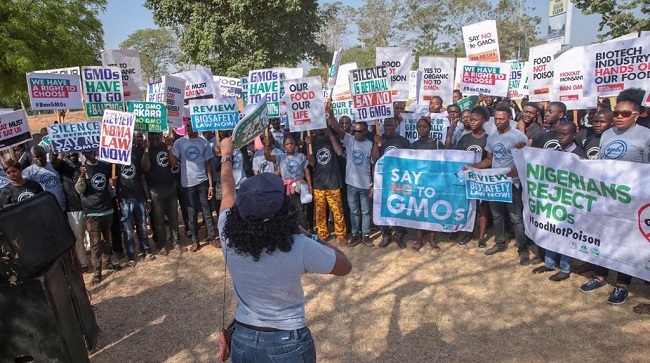
The anti-GMO public rally in Abuja

The condemnation was made at a public rally in Abuja, where the campaigners claimed that the products pose a threat to the nation’s food system, biosafety and overall well being.

The demonstration, according to them, was aimed at increasing public awareness on the implications of agricultural biotechnology and to call for a ban on genetically modified crops and food products in Nigeria.

GMOs have found and are still finding their way into the country either as illegally imported products or with approval of the National Biosafety Management Agency (NBMA), the activists allege, saying that a recent market survey carried out in 10 Nigerian cities by Health of Mother Earth Foundation (HOMEF) “confirms the presence of over 30 imported products (most of which were cereals and vegetable oils) of genetic engineering in our market shelves”.

“The NBMA approves nearly every application brought to it without proper safety assessments, without due consideration of public opinion or the impact of proposed activities or of the concerns raised by the public. A notorious case of concern is the approval of importation of genetically modified (GM) maize by WACOT Ltd in December 2018 just a few weeks after the company had tried to smuggle the grains in. The law was blatantly disregarded in this case as it requires that a minimum of 270 days be given before any application is approved to allow for proper impact assessments,” said the activists at the rally, which was organised by was organised by HOMEF in collaboration with the GMO-Free Nigeria Alliance, Women Environmental Programme, Bio-Integrity and Natural Food Awareness Initiative, U-Red, CISLAC and CLIMATTERS, as well as several other CSOs.

The coalition stressed that, besides the possibility that there are no proper risks assessments conducted, the Nigerian public is largely unaware of the type of food that is on their plates. They noted that while other nations are taking steps to ban the use of GMOs and review their biosafety laws, the Nigerian government appears to be bent on introducing more GM crops into the environment as, according to the coalition, it prepares to release a variety of cowpea which is acclaimed to be resistant to the Maruca insect pest.

They lamented that while the battle against use of GMOs rages on, other technologies such as synthetic biology (Synbio) and gene drives organisms (GDOs) that have dire socio-economic and ecological consequences are finding their way to Africa.

“Yet, shockingly, most African countries have become advocates for gene drives probably with the hope of attracting grants and other pecuniary benefits. This was evident at the recently concluded Conference of Parties (COP24) of the Convention on Biological Diversity (CBD) which held in Egypt where Nigeria and South Africa were the spokespersons for Africa,” the coalition stated, even as it lists its demands to include:

  • A nullification of the permits already granted for dealings with GM products in Nigeria
  • A close surveillance of our borders, markets and farms to halt illegal entry of GMOs into Nigeria
  • A ban of all toxic agro chemicals, especially those composing of glyphosate which has been identified as a probable carcinogen.
  • A halt to the assault on our agriculture through genetic modification of staple crops and a halt on negotiations towards adoption of Gene Drives.
  • An urgent review of the National Biosafety Management Agency Act 2015

The coalition submitted: “We urge that Nigeria should be circumspect about technologies that aim to contaminate our natural varieties and environment, destroy our agricultural systems, rupture our socio-economic fabric and assert unbridled control over our food system. Our government should focus on supporting local farmers with needed infrastructure-storage and processing facilities, access to land and loans and provision of accessible markets.

“We reject agricultural biotechnology as solution for food challenges and demand that Nigeria should instead invest in innovative systems such as Agroecology which in addition to ensuring productivity, protect/enhance ecosystems and promotes economic well being of farmers.”

Government, stakeholders seek to validate draft forest emission reduction Level

0

The Federal Government has promised to ensure Nigeria attains the 120-degree global emission reduction level with the validation of the National Forest Emission Level Document (FREL).

Forest Reference Emission Level
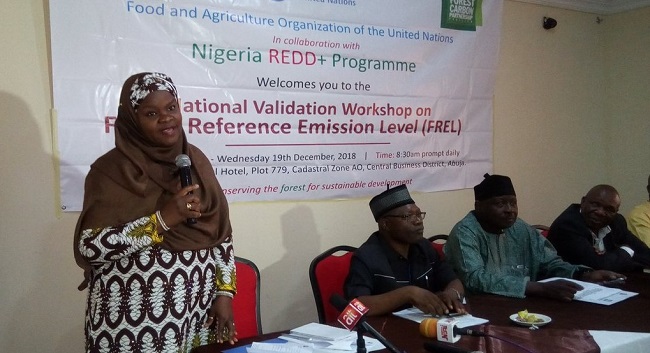
L-R: Halima Bawa Bwari of the Department of Climate Change, Federal Ministry of Environment; Dr John Fowenba, Consultant to the FAO; Sagir El Mohammed, a representative of the Permanent Secretary, Federal Ministry of Environment; and Dr Moses Ama, National Coordinator, Nigeria REDD+ Programme, during the National Validation Workshop on Forest Reference Emission Level (FREL) in Abuja

Mr Lawrence Alibo, the Permanent Secretary, Federal Ministry of Environment, gave the promise on Monday, December 12, 2018 in Abuja at the validation workshop on FREL.

Alibo said that this became imperative as FREL was a benchmark on which Reduction of Emissions from Deforestation and Forest Degradation in Developing Countries (REDD) was measured.

He said that government was working in line with the pledge made by President Mohammadu Buhari at the COP21 in Paris Convention to attain the 120 degree Nationally Determined Contributions (NDC) to reduce global emissions.

He quoted the president as saying that the reduction would meet 20 per cent conditional attainment and 45 per cent unconditional emission reduction.

Alibo said that the validation came at the right time to serve as an opportunity for the country to gauge its performance not only in implementing REDD+ but also in meeting its commitment to the NDC.

He said that the workshop symbolised an advancement of the earlier sub-national FREL development under the UNREDD+ programme and submitted to UNFCCC after a successful technical assessment.

The UN Programme on Reducing Emissions from Deforestation and Forest Degradation (UN-REDD) programme created in 2008 is a collaborative programme of the FAO, UNDP and the United Nations Environment Programme (UNEP), on Reducing Emissions from Deforestation and Forest Degradation in Developing Countries.

“The success story of the UNREDD has continued to serve as a pedestal for the country’s continuous progress toward its climate change mitigation targets, especially in the forestry sector.’’

He said that the steady progress being made had attributed to the additional funding from the World Bank.

According him, this has enabled the expansion of implementation in Ondo, Nasarawa and River states where pilot activities are undertaken.

Ajibo challenged participants to see the workshop as an opportunity to work out modalities on how best to reverse the negative effects of climate change in Nigeria.

“In addition to scaling up emission reduction activities in order to limit the increase in average global temperatures to well below 2 degrees centigrade between now and 2020.’’

Mr Suffyan Koroma, the FAO Country Representative in Nigeria, commended the participants for raising awareness on “National Forest Inventory under REDD programme’’.

Koroma, who was represented by Mr John Fonweban, FAO Forestry Officer REDD + Programme, said the objective of the workshop was to review and adopt the National FREL Report for Nigeria prior to its eventual submission to the UNFCCC for technical assessment.

He said that the step would also enable participants to estimate emission factor for accurate figure based on the destruction of the different types of forest in Nigeria.

Koroma said that FREL would serve as a standard on which future REDD+ activities would be measured during the implementation of the strategy in the country.

The FAO official said that the workshop had become imperative to verify all data collection because inadequate data had been a major factor militating against forestry development in Nigeria.

He said that the socio-economic aspect of the inventory was also very crucial as they provided a better understanding of forest resource use by the population.

Koroma said that the inventory would also help in the establishment of possible links between forest resources use, employment and livelihoods.

“It is an inventory that covers all the land use types in the sense that you have one hectare of forest destroyed and used for agric plantation, you will be able to see how much you are losing,’’ he said.

The FAO official said that the workshop would also serve as tools for advocacy and resource mobilisation for sustainable forest management at the country level.

He said that FAO had succeeded in building the capacity of the relevant stakeholders with the use of modern forestry equipment and techniques as well as in the use of Remote Sensing/GIS (SEPAL) tools for land use mapping.

“It also assisted in change detection and accuracy assessment for Activity Data (AD) estimation.’’

A Forest Reference Emission Level or Forest Reference Level (FREL and FRL) is one of the four elements a country is required to develop in order to participate in REDD+ under the UNFCCC.

The FREL and FRL are benchmarks to assess the country’s performance or judge its effectiveness in the implementation of REDD+ activities.

Participants at the three-day workshop were drawn from ministries of environment across the country and other relevant agencies.

The last forest inventory in Nigeria was conducted over 20 years ago.

Don tasks government on adverse climate change challenge

0

A don, Prof. Magnus Ojeifo, has urged the Federal Government to intensify efforts to reduce the impact of climate change in the country.

Alhaji Suleiman Hassan
Alhaji Suleiman Hassan, Minister of Environment

Ojeifo, a professor of Geography and Environmental Management at the Ambrose Alli University Ekpoma, Edo State, made the call at a workshop on “Climate Change Impact: Mitigation and Adaptation Measures”.

The programme was organised by Inter-Africa Committee in conjunction with the Global Environmental Facility (GEF).

“The effect of climate change has challenged governments and organisations to take certain actions with the view to curbing global warming and reducing its effects.

“Efforts must be made by government to stop or reduce gas flaring and oil spills in oil producing communities,” he said.

Ojeifo said that programmes at curbing gas emissions had not been properly initiated because of lack of technology, poverty, poor legislation and policies.

According to him, climate change is the rise in the earth’s surface temperatures globally due to anthropogenic or human activities.

“Climate change, also known as global warming, begins with the greenhouse effect caused by the interaction between the earth’s atmosphere and incoming radiation from the sun.

“Its effect is increased through anthropogenic activities.What this means is that the atmospheric gases are primarily responsible for the greenhouse effect known as greenhouse gases.

“When water vapour, Carbon Dioxide (CO2), Methane (CH4) and Nitrous Oxide (N2O) are released in large amounts into the atmosphere through human activities, it increases the natural greenhouse effect which results in rising temperatures globally,’’ he said.

The don described climate change as the most disturbing global environmental challenge, adding that the activities include burning of fossils, improper waste disposal, bush burning and deforestation.

He said that scientific evidence showed that climate change was likely to have negative impact on the global effort to achieve the United Nations’ SDGs.

“In particular, climate change will obstruct efforts to reduce the existing poverty being experienced by some of the world’s population.

“Climate change is also likely to lead to changes in the ecosystem, which will consequently contribute to degradation and reduce availability of water and food globally.

“It is therefore more likely to become the world’s major driver of increased human conflict,’’ he said.

Ojeifo also called on Federal Government and relevant stakeholders to tackle climate change challenges to improve and sustain the nation’s climate and environment.

He added that government should encourage initiative at developing modern technology that involved the manufacture of solar and programmes to support technological initiative for climate change.

In the same vein, the don said intensive agriculture, landuse planning, infrastructural provision, tree planting, and modern methods of farming as some of the adaptation necessary for sustainable growth and development.

Earlier, the Edo Project Coordinator, Inter-Africa Committee, Mr Felix Okoanegbete said that the organisation “is a grassroots one with actions that address global environmental problems ranging from deforestation to climate change.’’

“IAC is aimed at identifying community-based approaches that are relevant to the needs of the people.

“The organisation also supports projects that are relevant,effective and efficient in addressing grassroots issues of livelihood, poverty,gender equality and women empowerment in achieving global environmental benefits,” he said.

The IAC is an NGO operating in 28 states. 

By George Edomwonyi 

Government inaugurates four-year Action Plan for Health Security

0

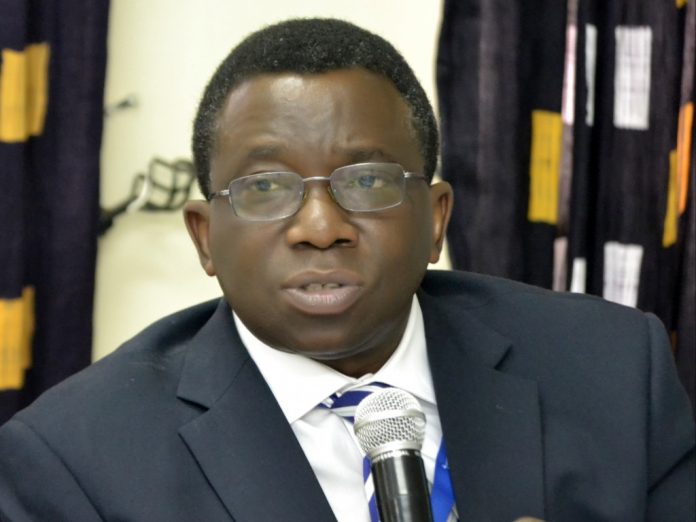
The Minister of Health, Prof. Isaac Adewole, has inaugurated the National Action Plan for Health Security for the Year 2018 to 2022, to strengthen response in 19 public health threats and improve response to health emergencies.

Isaac Adewole
Minister of Health, Isaac Adewole

Inaugurating the plan on Monday, December 17, 2018 in Abuja,the minister said the implementation would help to entrench and resolve to build a safer and prosperous Nigeria.

Adewole said that Nigeria had a Joint External Evaluations of the International Health Regulations in June 2017, which demonstrated many critical gaps that needs to be filled to protect the country from next major event.

“As I listened to the result of the evaluation we scored 40per cent, which is failure, in medical school you need to score 50 per cent in medical school to record a pass.

“We are deeply worried about the result, and then I did remark that we should be bothered about the base line and what happened thereafter.

“This result has helped to guide the NAPHS planning processes and to develop a roadmap for security strengthening in Nigeria,’’ the minister said.

Adewole noted that preparedness for health security is like an insurance policy for the national health prosperity.

“Although we hope that we never face a deadly epidemic like the West Africa Ebola epidemic of 2014-2016, we need to ensure that we are ready at all the time,’’ he said.

He added that Nigeria was making progress in the emergency response programmes and other several areas, stressing that ‘’Mr President receives weekly update on the state of national health emergency in Nigeria, tome that is unusual.’’

He noted that while Nigeria was making progress in national health emergency, the development of the National Action Plan for Health Security was what was required to achieve more success.

Earlier, Dr Chikwe Ihekweazu, the Director-General, Nigeria Centre for Disease Control (NCDC), said that the framing of the plan was to demonstrate that health doesn’t only have health benefit but also provide economic and security benefit.

He said there was need to come together and jointly own a response across the 19 areas, including surveillance, port health, immunisation and medical counter measures, among others, in order to achieve desired results.

He said the five-year plan include collaborative efforts from many stakeholders integrates preparedness and response. The director-general said the plan articulates all aspects of what to be done, it set out desirables, milestone to be achieve and provides platform for bringing everyone together.

He added that major initiatives that have been identified to come out of the plan includes digitalisation of disease surveillance across the country; building strong laboratory architecture, and building epidemiology workforce at every level.

Similarly, the Director-General, World Health Organisation (WHO), Dr Tedros Ghebreyesus, said keeping the world safe was one of the organisation’s top priorities, adding that global health security is a shared responsibility.

Represented by the Officer in Charge WHO Nigeria, Dr Clement Lasuba, the director-general said scaling up and financing the implementation of the International Health Regulations was vital for building sustainable capacities to detect and respond to emergencies.

He added that the best defence against outbreaks and other crises was strong, resilient health system based on people-centred primary care. 

Five bodies with signs of carbon monoxide poisoning found in Russia

0

Five bodies with signs of carbon monoxide poisoning were discovered in a boiler room of a non-residential building in the town of Domodedovo South of Moscow, the Russian Investigative Committee said on Monday, December 17, 2018.

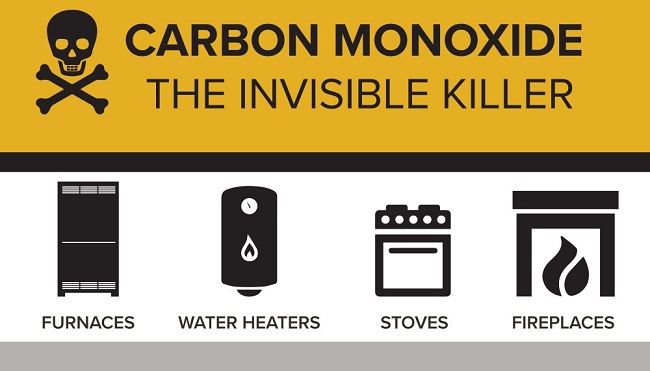
Carbon monoxide
Carbon monoxide is widely regarded as a silent killer

It said in a statement that the deceased were citizens of countries neighbouring Russia aged from 28 to 59.

During the inspection of the scene, a gas cylinder, a gas stove and bottles with alcohol-containing products were found, the statement said.

The Investigative Committee has opened a criminal case to determine if there was a violation of safety rules.

An investigation, including forensic medical examinations of the bodies, is underway to establish the circumstances of the incident.