Kenya is developing a strategy on the donkey value chain to help encourage farmers keep many animals, a government official has said.
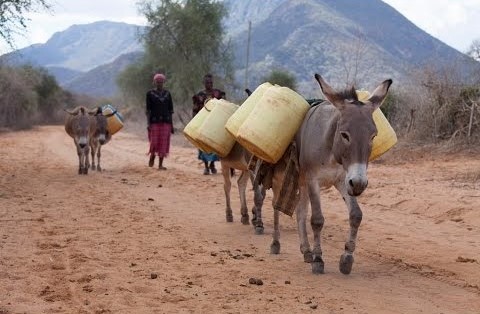
In Kenya, donkeys are used for domestic and commercial purposes
Michael Cheruiyot, a Senior Deputy Director of Veterinary Services, said that the strategy would streamline production,upkeep, welfare, movement and breeding.
“We are developing donkey’s strategy since they are useful animal but their contribution to the national economy and support to humans is not well recorded,” Cheruiyot said during the launch of Alliance for Donkey Welfare Organisations in Kenya (ADWOK) in Nairobi.
Cheruiyot noted that the strategy that will be officially launched in 2019 will also be used to help identify the correct number of donkeys in the country, adding that the existing number of 1.8 million may not be understated.
He said that the government is currently applying modern methods of breeding including Artificial Insemination (AI) to help improve the population of the animal.
In Kenya, donkeys are used for domestic and commercial purposes generating income for households and providing savings.
They perform chores such as ploughing,
transporting commodities and transporting water and firewood.
Raphael Kinoti, chairman of ADWOK, said that donkeys are endangered as the rate of slaughter is higher than their production.
He said that, to date, 1,200 donkeys are slaughtered daily in the four licensed slaughter houses in the country.
Kinoti called on the government to declare a moratorium on trade on donkey to help increase the population of the donkeys in the country.
“We need a moratorium to be declared to help increase the number of donkeys in the country as is the case with the yearly moratorium on fishing activity on Lake Victoria,” Kinoti added.
He observed that for the number of donkeys to increase there is also need for an organised system of production as is happening with the cattle, pigs, and sheep.
Kinoti said that a study conducted in the country in 2017 shows that donkeys earn users $5 to $12 and contributes $4.8 million in the country’s economy.
The study further found that the loss of a donkey in a family could result in a 39 percent increase of labour for women.
The official however complained that theft of donkeys is currently the most risk that farmers are facing, adding that4,800 donkeys were stolen between the months of Jan. and Aug. 2018.
ADWOK is an open platform of registered organisations dedicated to improving the welfare of working animals in Kenya.
It was formed to help save the animal from cruelty treatment and abuse through different acts of omission and commission including, beating, kicking and negligence that denies the animal fundamental freedoms.
More than 75 percent of Kenya’s 1.8 million donkeys are working animals hence constituting a great economic activity for the country.
The Katsina State Government says it has spent N2 billion to boost the production of cotton and other crops in the state in the last three and a half years.
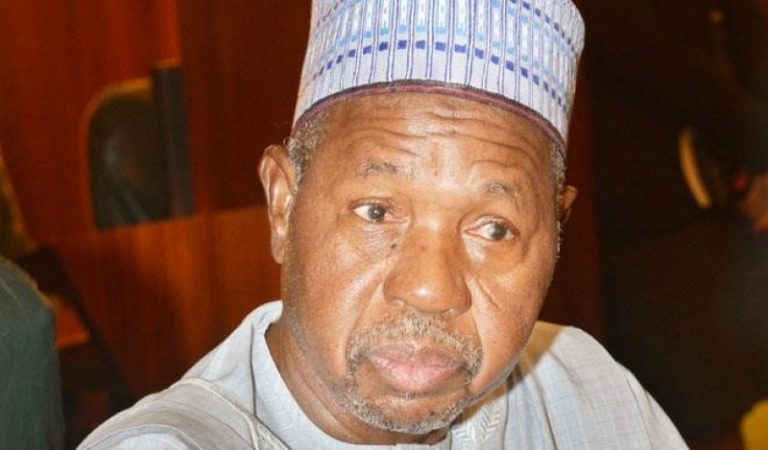
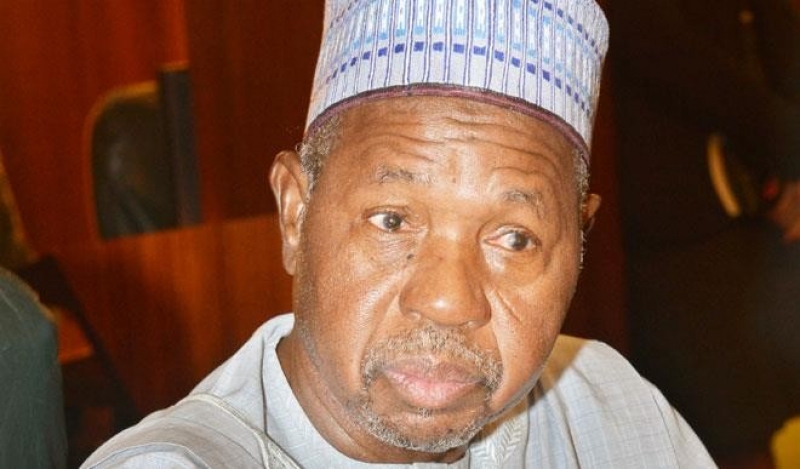
Alhaji Aminu Bello Masari, Governor of Katsina State
According to the government, it released the funds to the Ministry of Agriculture and its parastatals for the development of the agricultural sector.
Gov. Aminu Masari made the disclosure during the opening ceremony of a three-day agricultural show on Tuesday, December 18, 2018 at Kafin Soli village of Kankia Local Government Area of Katsina State.
Masari, represented by his deputy, Alhaji Mannir Yakubu, said the funds were released for the implementation of various agricultural activities aimed at boosting food production and employment.
The governor said that his administration was collaborating with the Institute of Agricultural Research, Ahmadu Bello University (ABU) Zaria, for the revival of cotton production in both dry and wet seasons.
He said that efforts were being made by government to source improved seed varieties for farmers with short duration of maturity and high yield to increase their production, generate employment to create wealth.
He urged agriculture extension service agencies, research institutions, universities and other relevant stakeholders to partner with the state government to boost agricultural production in the state.
“The government has also provided facilities, incentives and the enabling environment to small scale farmers to be fully engaged all year round.
“Our target is to ensure that both wet and dry seasons farmers in the state are being supported and empowered to compete positively with the global challenges.’’
The governor called on citizens of the state to support the administration’s programmes and policies.
He appealed to the people to stop the felling of trees, encroaching into government forests reserves and grazing reserves to avert drought, desertification as well as farmers/herdsmen clashes.
Earlier, the Chairman of the Agric Show Committee, Alhaji Shehu Ibrahim, said that the state government organised the show with the aim of showcasing farm produce from Katsina State.
Ibrahim, who is also managing director of the state’s AgricProject, said the farmers had recorded bumper harvest through the assistance of the state government by providing enough fertiliser and other farm inputs.
Nigeria Medical Association (NMA) has decried inadequate cancer reportage and legislation and called for laws to curtail environmental carcinogens in the country.
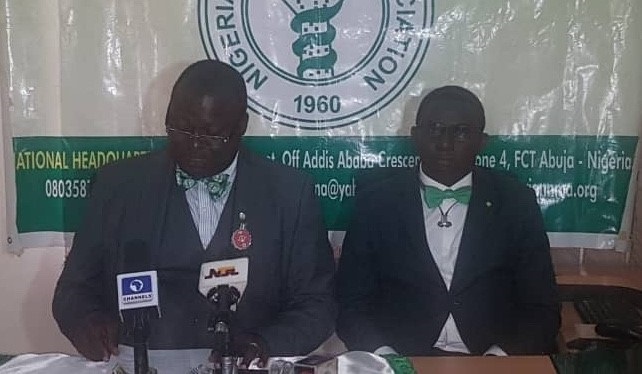
Dr Francis Faduyile, President, Nigeria Medical Association (NMA) at a press conference
The association made the call in a communiqué issued by Dr Francis Faduyile, NMA President, at the end of its National Executive Council (NEC) meeting on Tuesday, December 18, 2018 in Abuja.
It said that exposure to tobacco smoke and industrial pollution and poor enforcement of existing laws on cancer control and limited diagnostic and treatment facilities added to the risk of cancer.
The association also said that the high cost of managing cancer patients and the exclusion of cancer treatment in the National Health Insurance Scheme remained the main factors responsible for increased incidence and burden of cancer in Nigeria.
It decried inadequate budgetary allocation to the health sector and the neglect as well as poor funding of various cancer registries and cancer research in the country.
The association, however, called on governments at all levels to institute effective cancer prevention and control strategies aimed at reversing the rising incidence of cancer.
It described cancer as a major killer in Nigeria.
The association said it had a significant role to play in promoting the health of Nigerians, particularly to accelerate the implementation of Sustainable Development Goals (SDG 3).
It implored governments to create a conducive environment for multi-stakeholder partnerships through good governance, transparent public institutions and the rule of law in refreshing the SDG 3.
The association noted that health insurance had the capacity to provide solution for accessible, affordable and sustainable health delivery for Nigerians.
It said the State Health Insurance Schemes lacked the necessary determinations for success as major stakeholders were not consulted before their take-off.
The association decried the recent outbreak of yellow fever in some states and noted that the country had been experiencing sporadic outbreak of yellow fever since September 2017.
It appealed to governments to ensure that yellow fever vaccine was readily available for immunisation of all Nigerians, especially at the epidemic zone.
It called on agencies involved in curtailing epidemic viral haemorrhagic diseases as well as yellow fever to work swiftly to curtail the spread and prevent further outbreaks of the diseases in the country.
The National Space Research and Development Agency (NASRDA)says the agency is collaborating with developed space agencies across the globe to facilitate indigenous design and launch of a Nigerian satellite by 2030.
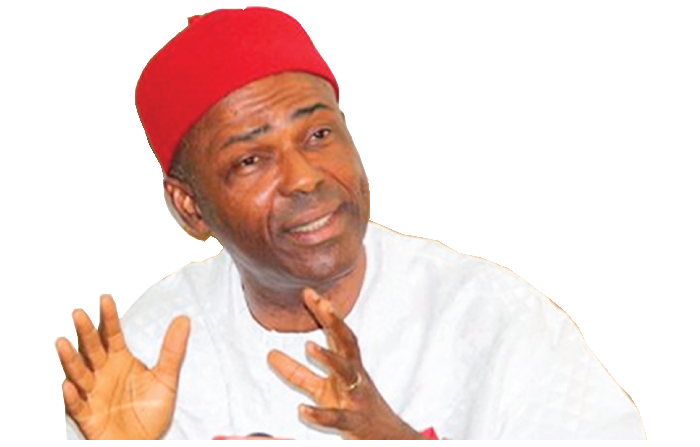
Dr. Ogbonnaya Onu, Minister of Science and Technology
Dr Felix Ale, the Head of Media and Public Relations of the agency, disclosed this on Tuesday, December 18, 2018 in an interview with News Agency of Nigeria (NAN) in Abuja.
Recently, the Minister for Science and Technology, Dr Ogbonnaya Onu, confirmed that the Federal Government would be collaborating with Ukraine Government on space science technology.
It will also be recalled that the pioneer Director-General of the space agency, Sen. Robert Boroffice, had, during his tenure from 1999 to2009, projected that the country would design and launch a satellite on Nigerian soil by 2018.
Ale, however, said that the agency could not meet up with the demands of designing local satellite within the period and had to restrategise,which included capacity building, hence the foreign collaboration.
According to Ale, the space agency is operating on a National Space Policy roadmap which aims to design and launch a satellite in Nigeria between 2005 and 2030.
The NASRDA media head said: “We are not just interested in space programme to be seen but we want a situation where we will be able to design and launch our satellites here in Nigeria.
“The collaboration with Ukraine Space Agency is part of efforts to actualise the target of building and launching our own satellite.
“We are partnering with some developed countries that have seen it all in the area of space science and technology, so we can use it as a platform to develop our capabilities.
“The collaboration will also engender knowledge transfer so that at the appropriate time, we will be able to design and launch our satellites.”
He further said that the collaborations would strengthen the use of space science technology to address socio-economic problems in the country.
On the proposal to site the African Space Agency in Nigeria,the officer said that NASRDA was considering the facilities in the space agency.
Ale said: “If Nigeria hosts the African Space Agency, she will automatically be the headquarters of space agencies in Africa and we are qualified in the area of space science technology.
“We recently bid, and a committee was raised which accessed our facilities to see what we have on ground.
“If African space agency is in Nigeria, we will be key players in space programme in the global community.”
He recalled that the country launched five satellites, a nano-satellite and had intervened in disaster management which was part of the agency’s activity profile that qualified it for the African Space Agency host.
Nigeria from the onset of owning satellites from 2003 had launched them from Russia and China respectively.
The Conservator-General, National Park Service, Alhaji Ibrahim Goni, has called on state governors to emulate the Niger State Government’s effort in stopping further degradation of the environment.
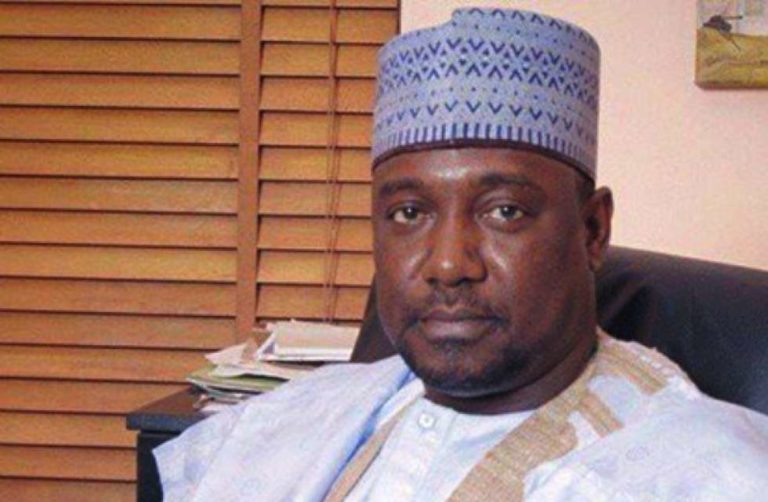
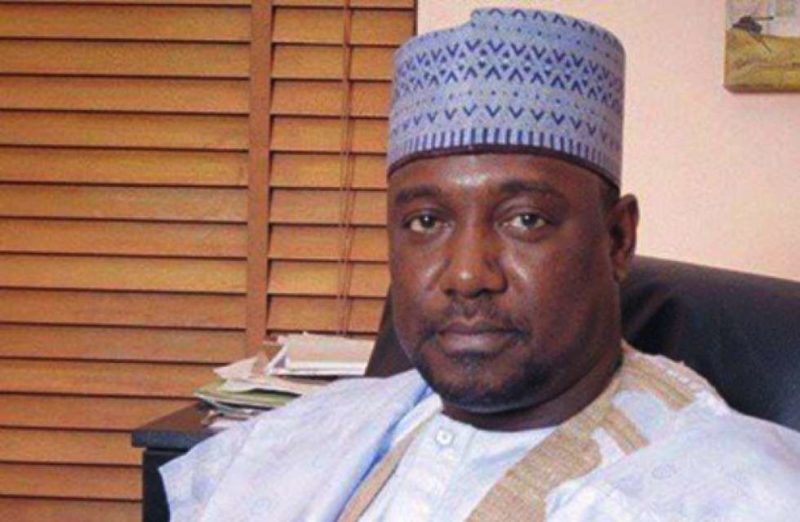
Alhaji Abubakar Sani Bello, Governor of Niger State
Goni said this in a statement issued by his Media Assistant, Yakubu Zull, on Tuesday, December 18, 2018 in Abuja.
He said that Gov. Abubakar Sani of Niger State was currently prosecuting some illegal wood loggers in Agaie Local Government Area of the state.
“I thank the governor and call on other governors to emulate Sani by prosecuting defaulters to deter others in engaging in such act in the state,” he said.
The C-G said that the service had commenced the monitoring of migration of herdsmen from North to South of the country to avoid the destruction of the Parks’ vegetation and other protected areas.
“I have directed the conservators of the seven parks to closely follow up the North-South migration of the herdsmen and communal hunters to avoid trespass and incessant conflict along the migratory routes.”
He said that the agency was collaborating with security agencies for effective protection of the parks.
According to him, the service has adequate security and surveillance patrol at all the national parks in the country, so they will not become hiding places for criminals.
“This is to ensure the safety of lives and property of visitors, tourists, our animals and plants at the parks at all times.
“Our intention is to rid the parks of criminals and hoodlums, who may want to take advantage of our security shortfalls to perpetrate nefarious activities in and around the parks.
He, consequently, enjoined the Parks officials to always use their professional knowledge in carrying out the exercise to avoid unnecessary clash with the herdsmen.
On the agenda of the Global Environment Facility (GEF) Council, which opened on Tuesday, December 18, 2018 in Washington DC, are the first projects to be funded under its new, four-year investment cycle, known as GEF-7, and measures to further improve the GEF’s efficiency,accountability, transparency and environmental and social safeguards.
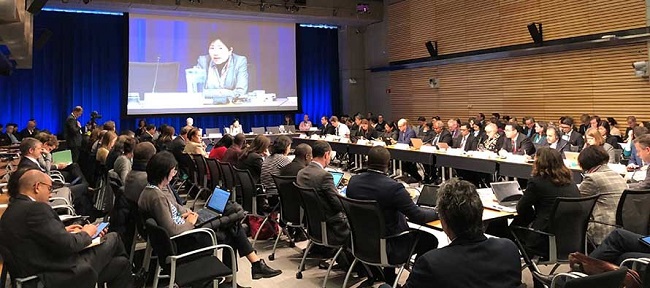
GEF Council Meeting
The 55th GEF Council meeting is the first to beheld since the conclusion of the GEF-7 negotiations earlier this year at the GEF Assembly in Da Nang, Viet Nam, which endorsed the new GEF-7 strategy, and $4.1 billion replenishment by governments of the GEF’s trust fund.
In her opening remarks to the Council, GEF CEO and Chairperson, Naoko Ishii, reflected on what has happened since Da Nang. “During the past few months, more and more evidence has been put forward that we are not winning the war on global environmental degradation,” she said. “In some aspects, we are even going backward.”
“There is a need for urgent action to respond to those increasing challenges,” Ishii continued while reflecting on how recent international negotiations dealing with biodiversity (CBD COP14), mercury (Minamata COP2) and climate (UNFCCC COP24) all focused on accelerating action.
Commenting on GEF’s role, she said “GEF-7 is a powerful instrument for us, the GEF, to take our part in fighting the war against climate change and global environmental degradation.”
“Science tells us that we need transformational change in key systems,” she said. “GEF-7 programming strategies are designed to help catalyse transformational changes to food and land use systems,sustainable cities, and push the energy transition, while protecting key biomes.”
“In doing so, we emphasise the importance of involving key actors, not only national governments, but cities, private sector, CSOs and communities,” she said.
Noting GEF-7’s “very ambitious goal”, Ishii said that “for us to achieve it, we need to firm up our implementation policies and procedures. There is lots of room for tightening up our project preparation and execution so that we can deliver the results soonest.”
The 55th GEF Council, which ends December 20, will consider proposed new policy measures to speed up the preparation, endorsement, and implementation.
It will also have before it a proposed policy with new requirements for documenting and reporting on environmental and social risks,and potential impacts – and their management – throughout the GEF project and programme cycle, while also strengthening protections for indigenous peoples.
Even though the GEF already performs well on transparency and access to information, another new proposed policy would clarify its procedures and practices in this area.
The Council will also have before it a report showing that89 per cent of the GEF’s active projects that provided performance ratings were rated moderately satisfactory or higher for progress towards development objectives, and 83 per cent reached the same standard for progress in implementation.
The initial 18 GEF-7 projects before the Council would place13.8 million hectares of land and sea under protection or improved conservation of biodiversity, restore 300,000 hectares of degraded land, avoid the release of the equivalent of 23.1 million metric tons of carbon dioxide to the atmosphere and reduce, and/or dispose of, 7,100 metric tons of toxic chemicals.
The total GEF expenditure of $157.8 million is expected to attract an indicative $819.7 million in co-financing from other sources and, in all, 25 recipient countries will benefit from this work programme. A $64million grant to the GEF Small Grants Programme will benefit 107 countries with community-level work.
The Economic Community of West African States (ECOWAS) on Tuesday, December 18, 2018 restated its commitment to support Nigeria and other member states in their efforts to sustain management of forest resources in the sub-region.
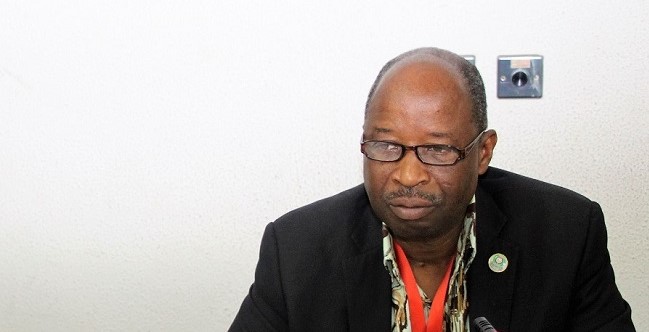
Dr Johnson Boanuh
The ECOWAS Director of Environment, Dr Johnson Boanuh, said this at the National Consultation Workshop on the Technical and Financial Partners of the Nigerian Forest Investment Programme in Abuja.
“The ECOWAS Commission and its partners will spare no efforts to assist member states in finding solution to the problem of sustainable management of forest resources in our sub region,” Boanuh said.
The director said that the workshop was to support Nigeria in advocating and mobilising resources for the effective implementation of its National Forest Investment Plan.
According to him, this is therefore a decisive and critical period in the member states efforts for creating an enabling environment for the sustainable management of forests and wildlife in our sub region.
Dr Adeshola Adepoju, the Director-General, Forest Research Institute of Nigeria, urged relevant stakeholders in the forest sector to invest in forests plantation to enable the country to achieve 25 per cent forests cover as recommended by Food and Agriculture Organisation (FAO).
Adepoju, who disclosed that the country had only five percent forests cover, said that President Muhammadu Buhari administration was able to plant over two million seedlings compared with four million trees planted by the previous administrations.
“Before this administration came in, four million trees were planted within the nation’s five per cent cover but going by the green bond arrangement by this administration, over two million seedlings were planted in843.6 hectares land.
“For us to have a safe environment, we need 20 hectares of land to meet the 25 per cent forest cover,” the director-general said.
He said that the workshop was imperative for all relevant stakeholders to have a robust policy on forest Investment. According to him, it will also enhance the implementation of the National Forest Investment Plan.
Adepoju stressed the need for relevant stakeholders to provide clean cooking stoves while implementing the National Forest Investment Plan.
The Miyetti Allah Kautal-Hore, a Fulani socio-cultural association, on Tuesday, December 19, 2018 called on the federal and state governments to secure grazing reserves across the country, to curb the farmers/herders’ crisis.
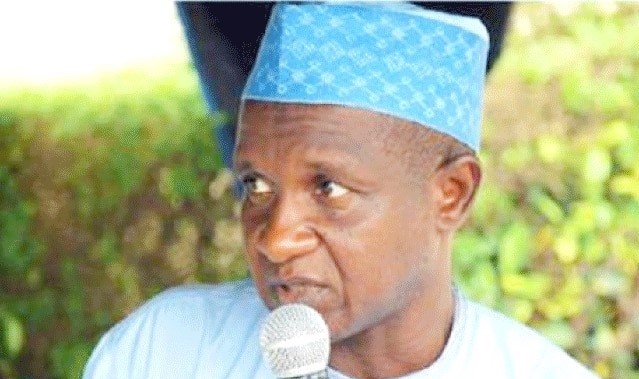
Alhaji Bello Abdullahi Bodejo
National President of the group, Alhaji Bello Abdullahi Badejo, made the call in Sokoto, Sokoto State, during a courtesy visit to Gov. Aminu Tambuwal.
He said that most gazetted grazing reserves had been appropriated by farmers and should be retrieved by government.
“The Federal Government should bring back our grazing reserves, some are gazetted, and some are not.
“We do not know the reason why the the government is delaying the preparation of the grazing reserves so that cattle herders can go back to their grazing areas.
“We have the national and the international cattle route,where are they now? This is because the government is not serious about the reserves.
“We are saying that if these ranches are in place, farmers and herder’s crisis would have been resolved most significantly,” he said
Badejo alleged that, of recent, the National Economic Council gave the Kaduna State Government N5 billion to build ranches, which he claims are yet to be seen.
On politics, the Fulani leader said the group has not endorsed any presidential candidate, because none of them has unveiled any agenda for herders.
He regretted that while the Federal Government have many intervention packages for farmers, including soft loans and distribution of fertiliser, nothing is done for the cattle herders.
“Endorsing any candidate is a very difficult position for the association to make, noting that President Muhammadu Buhari is Fulani and his main rival, Atiku Abubakar, is also Fulani.
“What we want is just a solution to national problems, so that peace reigns,” he said.
Badejo flayed the media for its bias reporting of the crisis involving farmers and Fulani herdsmen in the country.
He reiterated that the false propaganda against the Fulanis would not address the problems and stressed that the association is always ready be part of genuine efforts to end the recurring crisis.
Mozambican journalist Estacio Valoi and two foreign journalists have been reportedly detained in Palma, Cabo Delgado province,northern Mozambique.
Filipe Nyusi, President of Mozambique
According to the Friends of the Earth Mozambique, the incident occurred in the morning of Monday, December 17, 2018 by the Forças Armadas de Defesa de Moçambique (Defense Forces of Mozambique). It was gathered that, despite having permission from the local and provincial authorities to do their reporting work, the journalists were stopped, and their cameras taken away.
In a statement made available to EnviroNews, the group declared: “We, Justiça Ambiental, as a Mozambican civil society organisation, cannot accept this abuse of freedom of press. We citizens have the right of movement in our country and the right to observe and report what is going on in our country, especially human rights violations and other injustices. If journalists and civil society do not have freedom to investigate and monitor, and are suppressed by the state and the army, then the truth will be constantly suppressed. This is not acceptable.
“Palma is the place where the Mozambican government and corporations are in the process of extracting gas. This is affecting the livesand livelihoods of the communities in the area, this is affecting the biodiversity and it will most certainly worsen the climate crisis. It is already having negative impacts and journalists and civil society have a right to monitor the situation. Without this overview, the situation in Cabo Delgado could turn into a humanitarian crisis.
“We say no to the state and military trying to block the truth from coming out. We demand a recognition of the impacts and injustices already occurring in the area due to impending gas extraction. We demand the release of these journalists! We further demand the right of journalists and civil society to monitor the impacts and for the impacts to be addressed and corrected. We denounce the collusion of the State with the forces of private capital, which results in corporate impunity and the further deterioration of the lives of the majority of Mozambicans.”
Civil society organisations (CSOs) are known for giving a voice to the voiceless with the aim of transforming society for the better. But CSOs are now being asked to move away from providing simplistic solutions to complex problems, since they often end up worsening situations.
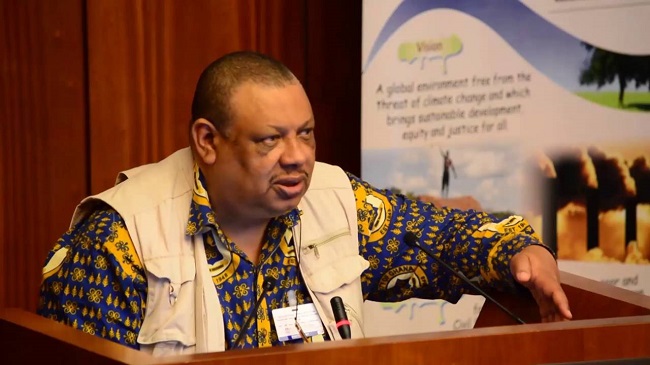
Prof. Chris Gordon
“This is because the world has changed tremendously over the last decade,” says, Prof. Chris Gordon of the Institute for Environment and Sanitation Studies (IESS), University of Ghana, Legon. He notes that “while successes have been secured in promoting human development and reversing some environmentally unsustainable trends, new problems have emerged,longstanding problems remain inadequately addressed and many diverse problems are becoming more tightly entwined.”
Prof. Gordon made these remarks when he chaired the opening session of the 9th Annual Civil Society Review of the Natural Resources and Environment Sector. The two-day review was on the theme:“Review of CSOs-Stakeholder Engagements on Effective Natural Resources Governance in Ghana: Challenges and Prospects.”
This year’s review enabled members to take stock of past communiqués issued on the natural resources and environment sector over the years and to evaluate their implementation by stakeholders. It took place in Accra from November 29 to 20, 2018 and was organised by the KASA platform, an umbrella body of CSOs working in the natural resources and environment sector.
Prof. Gordon reasoned that “to ensure effective transformation in today’s society, will require a new type of CSOs, who will think outside the box and come up innovative solutions that can tackle the complex problems, multitude of factors and the intricacy of global development challenges associated with transformation.”
Commenting on the theme, Prof. Gordon queried CSOs to ask themselves the kind of governance they wanted to see. “The crux of the 9th Annual Review is Effective Natural Resources Governance. So first, we need to ask ourselves what sort of governance we want.”
He elaborated by highlighting three options of governance that CSOs could opt for, saying, “Is it governance for transformations – that creates the conditions for transformation in socio-technical-ecological systems to emerge; or governance of transformation –to actively trigger and steer a transformation process; or transformation in governance – which is a transformative change in governance regimes?”
Prof. Gordon urged CSOs to select the governance option that will best address the local situation, which are easily masked by global trends and uneven distribution of environmental pressures and impacts, such as food insecurity, water stress and vulnerability.
For instance, he wondered why some people are determined to take advantage of the on-going environmental degradation.“The world is drowning in plastics and others think that the financial gains of individuals through galamsey are enough to pay for the reversal of the damage to our waters, our forests and our health.”
Prof. Gordon looked forward to as trengthened CSO functioning in Ghana’s natural resources sector and that of the entire West African Sub-region.
As part of the opening session, optional statements were presented by representatives of some CSOs and NGOS. Boakye Twumasi-Ankra of Tropenbos Ghana used the occasion to introduce the organisation to the KASA members, saying it evolved out the erstwhile Tropenbos International Ghana. He said Tropenbos has contributed a wealth of knowledge to the forestry sector and pioneered innovative measures for tackling environmental challenges.
Mr. Twumasi-Ankra mentioned a key example as the multi-stakeholder dialogue, which he said was a unique approach used to explore negotiated solutions to illegal chainsaw milling in Ghana. According to him, “the approach culminated in policy and technical options, including a domestic market policy and the artisanal milling concept… that helped to address domestic market illegalities under the FLEGT-VPA implementation in Ghana.”
FLEGT-VPA is the Forest, Law, Enforcement,Trade and Governance initiative and the Voluntary Partnership Agreement between Ghana and the European Union. The aim is to foster trade in legal timber and ensure sustainable forest management through tackling and discouraging illegalities within the forest sector.
He commended KASA for coordinating the actions of the various coalitions in the natural resources and environment sector and called for stronger partnerships and concerted efforts among CSOs in the natural resources sector in line with SDG 17, which focuses on partnerships.
The representative of SNV Ghana recounted how for the past three years, the organisation along with other project partners including the Forestry Commission’s National REDD Plus Secretariat, Climate Law and Policy, and the KASA Initiative has been working on the multi-country project known as Operationalising National Safeguard Requirements for Results-based Payments from REDD+.
He said the project, which is being implemented in Ghana, Peru and Vietnam has made significant progress since its inception in 2016, with support from the German Federal Ministry of Environment, Nature Conservation and Nuclear Safety. Progress made so far include the establishment of a dedicated technical safeguards sub-working group; and the development of various documents including a Safeguards Information System Design; Principle, Criteria and Indicators for monitoring REDD+; and Hotspot Intervention Area Management Plan for the Juabeso and BiaLandscape.
During the general plenary sessions, it was realised that the coalitions in the various sectors had made some form of progress. For instance, the forest and wildlife sector has seen the of the Timber Resource Management and Legality Licensing Regulations, 2017, LI 2254and the development of Guidelines for Assemblies Utilisation of Timber Royalties.
The water, sanitation and hygiene several innovations including the launch of the Media Coalition against Open Defecation.
The oil and gas sector appeared to have made the most gains during the year under review in monitoring the sub-sector’s performance. Per their report, Ghana scored 67 out of 100 points in 2017 on the global oil governance index, which placed the country 13th among a list of 89countries and 2nd in Africa. Moreover, Ghana’s sovereign wealth fund was assessed as the second best governed among 34 funds with the best performances recorded in value realisation, revenue management, and the creation of enabling environment for citizens’ participation in the sector. But the group noted that the country scored poorly in national budgeting.
Modest gains were made in the rest of the sectors namely mining; environment and climate change; land; and fisheries.
The review ended on the note that the various coalitions have a lot of work to do to make the needed impact in the sector,even in the face of dwindling funding sources. Members were optimistic that through strategic partnership activities, they will make meaningful progress, so that come the next annual review, which will be towards the end of 2019, a lot of success stories will be documented and told.
In an interview, the Chairperson of KASA, Mrs. Hannah Owusu Koranteng, said KASA has performed creditably since its inception initially as a donor funded initiative. She said the review process is mainly to help identify strategies and advocacy tools to be more effective in working closely with the government for the benefit of the entire nation.
Mrs. Koranteng explained that this process was important because “as a nation we’re not changing our policies, so the focus on capital will not change. But as a people we need to change to make capital more sensitive, effective and responsive in meeting the needs of communities.”
She looked forward to a future of effective collaboration among key stakeholders. “In the years ahead, we hope to strengthen collaboration with government, state and citizens to foster unity for a common purpose, including ensuring the rights of nature.”
The facilitator of this year’s Review process, Tony Dogbe, described it as “a very introspective process,” adding that “now, we need to define the kind of governance we want to see in the natural resources and environment sector.”
He proposed ways in which CSOs could engender and maintain their effectiveness, saying members need to start engaging citizens in order to facilitate a citizens-led advocacy, which can be effective in bringing about changes. Furthermore, members needed to build their capacity in courtroom advocacy, gather evidence in monitoring and tracking,develop independent reports as well as initiate bills and policies through consultations with communities, government, researchers, academia and the private sector.
Mr. Dogbe also urged CSOs to become professional and strategic in budgeting.