The Economic Community of West African States (ECOWAS) on Tuesday, December 18, 2018 restated its commitment to support Nigeria and other member states in their efforts to sustain management of forest resources in the sub-region.
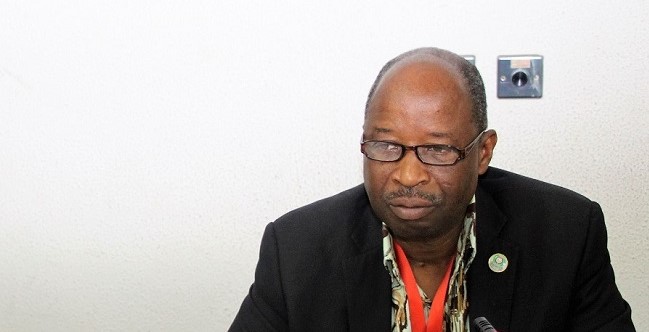
Dr Johnson Boanuh
The ECOWAS Director of Environment, Dr Johnson Boanuh, said this at the National Consultation Workshop on the Technical and Financial Partners of the Nigerian Forest Investment Programme in Abuja.
“The ECOWAS Commission and its partners will spare no efforts to assist member states in finding solution to the problem of sustainable management of forest resources in our sub region,” Boanuh said.
The director said that the workshop was to support Nigeria in advocating and mobilising resources for the effective implementation of its National Forest Investment Plan.
According to him, this is therefore a decisive and critical period in the member states efforts for creating an enabling environment for the sustainable management of forests and wildlife in our sub region.
Dr Adeshola Adepoju, the Director-General, Forest Research Institute of Nigeria, urged relevant stakeholders in the forest sector to invest in forests plantation to enable the country to achieve 25 per cent forests cover as recommended by Food and Agriculture Organisation (FAO).
Adepoju, who disclosed that the country had only five percent forests cover, said that President Muhammadu Buhari administration was able to plant over two million seedlings compared with four million trees planted by the previous administrations.
“Before this administration came in, four million trees were planted within the nation’s five per cent cover but going by the green bond arrangement by this administration, over two million seedlings were planted in843.6 hectares land.
“For us to have a safe environment, we need 20 hectares of land to meet the 25 per cent forest cover,” the director-general said.
He said that the workshop was imperative for all relevant stakeholders to have a robust policy on forest Investment. According to him, it will also enhance the implementation of the National Forest Investment Plan.
Adepoju stressed the need for relevant stakeholders to provide clean cooking stoves while implementing the National Forest Investment Plan.
The Miyetti Allah Kautal-Hore, a Fulani socio-cultural association, on Tuesday, December 19, 2018 called on the federal and state governments to secure grazing reserves across the country, to curb the farmers/herders’ crisis.
Alhaji Bello Abdullahi Bodejo
National President of the group, Alhaji Bello Abdullahi Badejo, made the call in Sokoto, Sokoto State, during a courtesy visit to Gov. Aminu Tambuwal.
He said that most gazetted grazing reserves had been appropriated by farmers and should be retrieved by government.
“The Federal Government should bring back our grazing reserves, some are gazetted, and some are not.
“We do not know the reason why the the government is delaying the preparation of the grazing reserves so that cattle herders can go back to their grazing areas.
“We have the national and the international cattle route,where are they now? This is because the government is not serious about the reserves.
“We are saying that if these ranches are in place, farmers and herder’s crisis would have been resolved most significantly,” he said
Badejo alleged that, of recent, the National Economic Council gave the Kaduna State Government N5 billion to build ranches, which he claims are yet to be seen.
On politics, the Fulani leader said the group has not endorsed any presidential candidate, because none of them has unveiled any agenda for herders.
He regretted that while the Federal Government have many intervention packages for farmers, including soft loans and distribution of fertiliser, nothing is done for the cattle herders.
“Endorsing any candidate is a very difficult position for the association to make, noting that President Muhammadu Buhari is Fulani and his main rival, Atiku Abubakar, is also Fulani.
“What we want is just a solution to national problems, so that peace reigns,” he said.
Badejo flayed the media for its bias reporting of the crisis involving farmers and Fulani herdsmen in the country.
He reiterated that the false propaganda against the Fulanis would not address the problems and stressed that the association is always ready be part of genuine efforts to end the recurring crisis.
Mozambican journalist Estacio Valoi and two foreign journalists have been reportedly detained in Palma, Cabo Delgado province,northern Mozambique.
Filipe Nyusi, President of Mozambique
According to the Friends of the Earth Mozambique, the incident occurred in the morning of Monday, December 17, 2018 by the Forças Armadas de Defesa de Moçambique (Defense Forces of Mozambique). It was gathered that, despite having permission from the local and provincial authorities to do their reporting work, the journalists were stopped, and their cameras taken away.
In a statement made available to EnviroNews, the group declared: “We, Justiça Ambiental, as a Mozambican civil society organisation, cannot accept this abuse of freedom of press. We citizens have the right of movement in our country and the right to observe and report what is going on in our country, especially human rights violations and other injustices. If journalists and civil society do not have freedom to investigate and monitor, and are suppressed by the state and the army, then the truth will be constantly suppressed. This is not acceptable.
“Palma is the place where the Mozambican government and corporations are in the process of extracting gas. This is affecting the livesand livelihoods of the communities in the area, this is affecting the biodiversity and it will most certainly worsen the climate crisis. It is already having negative impacts and journalists and civil society have a right to monitor the situation. Without this overview, the situation in Cabo Delgado could turn into a humanitarian crisis.
“We say no to the state and military trying to block the truth from coming out. We demand a recognition of the impacts and injustices already occurring in the area due to impending gas extraction. We demand the release of these journalists! We further demand the right of journalists and civil society to monitor the impacts and for the impacts to be addressed and corrected. We denounce the collusion of the State with the forces of private capital, which results in corporate impunity and the further deterioration of the lives of the majority of Mozambicans.”
Civil society organisations (CSOs) are known for giving a voice to the voiceless with the aim of transforming society for the better. But CSOs are now being asked to move away from providing simplistic solutions to complex problems, since they often end up worsening situations.
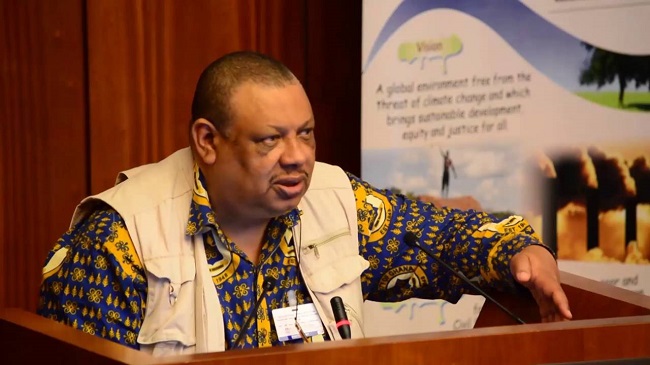
Prof. Chris Gordon
“This is because the world has changed tremendously over the last decade,” says, Prof. Chris Gordon of the Institute for Environment and Sanitation Studies (IESS), University of Ghana, Legon. He notes that “while successes have been secured in promoting human development and reversing some environmentally unsustainable trends, new problems have emerged,longstanding problems remain inadequately addressed and many diverse problems are becoming more tightly entwined.”
Prof. Gordon made these remarks when he chaired the opening session of the 9th Annual Civil Society Review of the Natural Resources and Environment Sector. The two-day review was on the theme:“Review of CSOs-Stakeholder Engagements on Effective Natural Resources Governance in Ghana: Challenges and Prospects.”
This year’s review enabled members to take stock of past communiqués issued on the natural resources and environment sector over the years and to evaluate their implementation by stakeholders. It took place in Accra from November 29 to 20, 2018 and was organised by the KASA platform, an umbrella body of CSOs working in the natural resources and environment sector.
Prof. Gordon reasoned that “to ensure effective transformation in today’s society, will require a new type of CSOs, who will think outside the box and come up innovative solutions that can tackle the complex problems, multitude of factors and the intricacy of global development challenges associated with transformation.”
Commenting on the theme, Prof. Gordon queried CSOs to ask themselves the kind of governance they wanted to see. “The crux of the 9th Annual Review is Effective Natural Resources Governance. So first, we need to ask ourselves what sort of governance we want.”
He elaborated by highlighting three options of governance that CSOs could opt for, saying, “Is it governance for transformations – that creates the conditions for transformation in socio-technical-ecological systems to emerge; or governance of transformation –to actively trigger and steer a transformation process; or transformation in governance – which is a transformative change in governance regimes?”
Prof. Gordon urged CSOs to select the governance option that will best address the local situation, which are easily masked by global trends and uneven distribution of environmental pressures and impacts, such as food insecurity, water stress and vulnerability.
For instance, he wondered why some people are determined to take advantage of the on-going environmental degradation.“The world is drowning in plastics and others think that the financial gains of individuals through galamsey are enough to pay for the reversal of the damage to our waters, our forests and our health.”
Prof. Gordon looked forward to as trengthened CSO functioning in Ghana’s natural resources sector and that of the entire West African Sub-region.
As part of the opening session, optional statements were presented by representatives of some CSOs and NGOS. Boakye Twumasi-Ankra of Tropenbos Ghana used the occasion to introduce the organisation to the KASA members, saying it evolved out the erstwhile Tropenbos International Ghana. He said Tropenbos has contributed a wealth of knowledge to the forestry sector and pioneered innovative measures for tackling environmental challenges.
Mr. Twumasi-Ankra mentioned a key example as the multi-stakeholder dialogue, which he said was a unique approach used to explore negotiated solutions to illegal chainsaw milling in Ghana. According to him, “the approach culminated in policy and technical options, including a domestic market policy and the artisanal milling concept… that helped to address domestic market illegalities under the FLEGT-VPA implementation in Ghana.”
FLEGT-VPA is the Forest, Law, Enforcement,Trade and Governance initiative and the Voluntary Partnership Agreement between Ghana and the European Union. The aim is to foster trade in legal timber and ensure sustainable forest management through tackling and discouraging illegalities within the forest sector.
He commended KASA for coordinating the actions of the various coalitions in the natural resources and environment sector and called for stronger partnerships and concerted efforts among CSOs in the natural resources sector in line with SDG 17, which focuses on partnerships.
The representative of SNV Ghana recounted how for the past three years, the organisation along with other project partners including the Forestry Commission’s National REDD Plus Secretariat, Climate Law and Policy, and the KASA Initiative has been working on the multi-country project known as Operationalising National Safeguard Requirements for Results-based Payments from REDD+.
He said the project, which is being implemented in Ghana, Peru and Vietnam has made significant progress since its inception in 2016, with support from the German Federal Ministry of Environment, Nature Conservation and Nuclear Safety. Progress made so far include the establishment of a dedicated technical safeguards sub-working group; and the development of various documents including a Safeguards Information System Design; Principle, Criteria and Indicators for monitoring REDD+; and Hotspot Intervention Area Management Plan for the Juabeso and BiaLandscape.
During the general plenary sessions, it was realised that the coalitions in the various sectors had made some form of progress. For instance, the forest and wildlife sector has seen the of the Timber Resource Management and Legality Licensing Regulations, 2017, LI 2254and the development of Guidelines for Assemblies Utilisation of Timber Royalties.
The water, sanitation and hygiene several innovations including the launch of the Media Coalition against Open Defecation.
The oil and gas sector appeared to have made the most gains during the year under review in monitoring the sub-sector’s performance. Per their report, Ghana scored 67 out of 100 points in 2017 on the global oil governance index, which placed the country 13th among a list of 89countries and 2nd in Africa. Moreover, Ghana’s sovereign wealth fund was assessed as the second best governed among 34 funds with the best performances recorded in value realisation, revenue management, and the creation of enabling environment for citizens’ participation in the sector. But the group noted that the country scored poorly in national budgeting.
Modest gains were made in the rest of the sectors namely mining; environment and climate change; land; and fisheries.
The review ended on the note that the various coalitions have a lot of work to do to make the needed impact in the sector,even in the face of dwindling funding sources. Members were optimistic that through strategic partnership activities, they will make meaningful progress, so that come the next annual review, which will be towards the end of 2019, a lot of success stories will be documented and told.
In an interview, the Chairperson of KASA, Mrs. Hannah Owusu Koranteng, said KASA has performed creditably since its inception initially as a donor funded initiative. She said the review process is mainly to help identify strategies and advocacy tools to be more effective in working closely with the government for the benefit of the entire nation.
Mrs. Koranteng explained that this process was important because “as a nation we’re not changing our policies, so the focus on capital will not change. But as a people we need to change to make capital more sensitive, effective and responsive in meeting the needs of communities.”
She looked forward to a future of effective collaboration among key stakeholders. “In the years ahead, we hope to strengthen collaboration with government, state and citizens to foster unity for a common purpose, including ensuring the rights of nature.”
The facilitator of this year’s Review process, Tony Dogbe, described it as “a very introspective process,” adding that “now, we need to define the kind of governance we want to see in the natural resources and environment sector.”
He proposed ways in which CSOs could engender and maintain their effectiveness, saying members need to start engaging citizens in order to facilitate a citizens-led advocacy, which can be effective in bringing about changes. Furthermore, members needed to build their capacity in courtroom advocacy, gather evidence in monitoring and tracking,develop independent reports as well as initiate bills and policies through consultations with communities, government, researchers, academia and the private sector.
Mr. Dogbe also urged CSOs to become professional and strategic in budgeting.
The curtain fell on Friday, December 14, 2018 on COP24, this year’s global UN climate summit held in Katowice, Poland. However, negotiations continued throughout the weekend to reach agreement on specific parts of the ‘rulebook’ to be applied from 2020 by the 197 signatories of the Paris Agreement, to limit global warming to 2°C-1.5°C relative to pre-industrial levels.
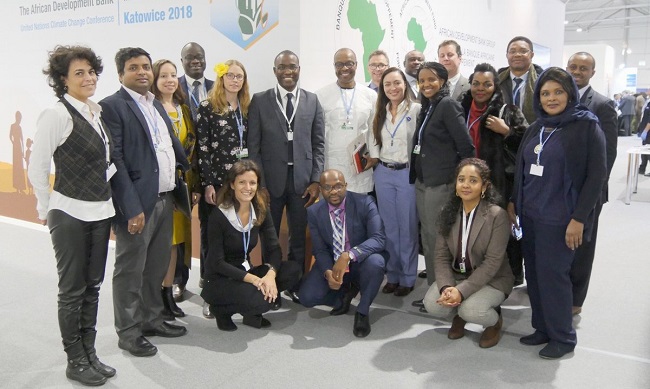
The AfDB team at COP24 with Vice-President, Power, Energy, Climate and Green Growth, Amadou Hott, and Director, Climate Change and Green Growth Department, Anthony Nyong
For two years, the 50 African countries that have ratified the Paris Agreement focused on the need to construct a specific, transparent framework for climate finance. African negotiators – including the AGN, supported by the bank – have also been negotiating to have developed countries, largely responsible for global warming, to implement their commitments. Developed countries are required to help developing countries conduct their ecological transition in line with the Paris Agreement made in December 2015.
During the two weeks of the conference, the African Development Bank assumed its role as primary champion of African interests and a steadfast supporter of African negotiators. In addition to its role as purveyor of knowledge, experience and expertise, it organised 50 panel discussions and conferences at its Pavilion,which bubbled with a wealth of views shared by 30 experts who led discussions across the subject of climate change in all its dimensions: water and sanitation, agriculture and forestry, transport and urban development.
“We see women who are losing their livelihoods; we see hungry children; we see communities reduced to dust by tornadoes and hurricanes. That’s what motivates us, that drives us, that makes us redouble our efforts to work to reduce the adverse effects of climate change on our communities,” said Anthony Nyong, Director of the bank’s Climate Change and Green Growth Department at COP24.
Nyong continued, “We will continue to work with those who are conscious of the urgency and the need to respond to the challenges facing Africa, and that is what we’re going to focus on: ensuring that Africa has the resources it needs, so that climate change does not completely negate the progress that the continent has made. We want to carry on building on the gains made, not make them all over again to then see them destroyed.
“Because the urgency is right there… the final decision of the COP ‘insists on the urgency of greater ambition’, but it does not lay down any time span and this does not bode well for developing countries in general or for African countries in particular, since they are amongthe most affected in the world by climate change.
“So, COP25, to be held in Chile, is already in our diaries.
“For the African Development Bank, the ‘fight’ continues, and the bank is determined to stay on the front line – always defending the interests of its 54 Member States and their people.”
The Federal Government in collaboration with UN Development Programme (UNDP) and other stakeholders is seeking to validate the National Disaster Risk Management Policy (NDMP) to effectively manage emergencies and disasters in the country.
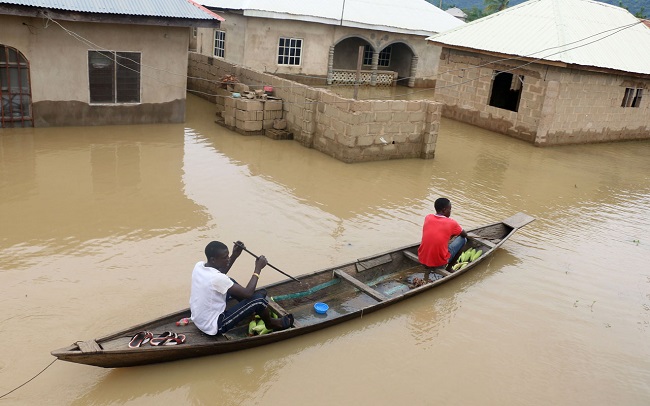
Residents steer a dugout canoe past flooded houses following heavy rain in the Nigerian town of Lokoja, in Kogi State, on September 14, 2018. Photo credit: AFP / Sodiq Adelakun
The NDMP outlines government’s policy direction on current challenges to reducing risks from hazards facing the country and articulates government’s renewed commitment to risk reduction.
Mr Mustapha Maihaja, Director-General of National Emergency Management Agency (NEMA), said at the opening of a two-day workshop to validate NDMP on Tuesday, December 18, 2018 in Lagos that the document would be of immense value to stakeholders.
Maihaja, represented by Mr Benjamin Oghenah, Deputy Director, Disaster Risk Reduction, said the document was expected to promote nationally integrated strategy that would strengthen community resilience against disasters.
He said: “It will in reality address several under-served areas of disaster management that have not been adequately covered in the practice of disaster management in the country.
“Such areas range from adoption of resilience as a guideline for disaster management to the addressing of disaster management and conflict interface.
“It has been a long but meticulous journey getting to this stage and I thank you all,’’ he said.
According to him, when the document becomes fully operational, it will help to expand awareness and understanding of disaster and strengthen multi-stakeholders governances system for disaster reduction management.
In addition, he said that the document would enhance preparedness capacity to reduce exposure, vulnerability and impacts of hazards events or conditions.
He explained that the document would increase social,economic and environmental investments to strengthen resilience to disaster through hazard risk reduction.
Earlier, the General Manager of Lagos State Emergency Management Agency (LASEMA), Mr Adesina Tiamiyu, urged stakeholders to intensify sensitisation on risk reduction in the country.
Tiamiyu said people needed to know what to do and who to call in case of disasters and emergencies.
“For example, there is a policy that guides everybody on what to do and who to call in case of disaster abroad; if it works there, it should also work here.
“We (stakeholders) should collaborate with each other to sensitise the citizens on what to do and support the State Emergency Agencies (SEMAs) to deliver on their mandate,’’ he said.
Also speaking, Prof. Andrew Obafemi, Director, Centre for Disaster Risk Management and Development Studies, University of Port Harcourt,urged SEMAs to be proactive in responding to emergencies in the country.
Obafemi, however, called for support for NEMA, SEMAs and other agencies working in the sector to respond effectively to manage disasters in the country.
Also, the Corps Marshall of Federal Road Safety Corps (FRSC), Dr Boboye Oyeyemi, told stakeholders that the Corps had intensified efforts to ensure safety of Nigerians during the yuletide.
Oyeyemi said as part of the “Ember-month programme”, the corps had re-activated emergency rescue ambulances, camps, help areas and roadside clinics.
“We have started sensitising Nigerians on what to do on unplanned journeys, night journeys and what to do in case of accidents and emergencies,’’ he said.
Oyeyemi, who was represented by the Chief Route Commander, FRSC, Chinekeokwu Cyprian, urged Nigerians to call 122 in case of any emergency.
Also, the Inspection General of Police, Ibrahim Idris,encouraged various societies and communities to help protect lives and properties of citizens.
Idris, represented by AIG Rasheed Akintude, said the stakeholders should not limit the collaboration to experts alone, adding that every Nigerian should be involved in the management of risk reduction.
The NDMP is a 10-year plan to be reviewed every five years.
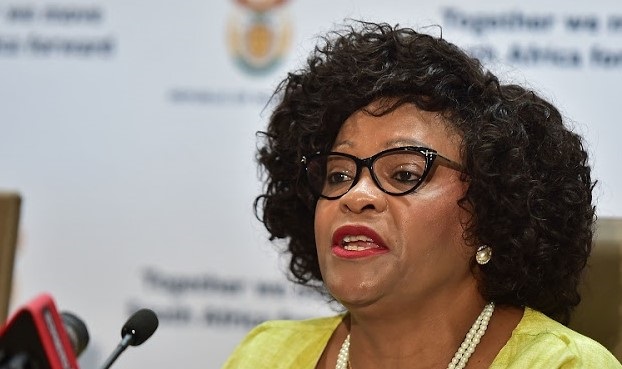
South Africa on Tuesday, December 18, 2018 welcomed the balanced outcome of the recently concluded climate change talks in Katowice, Poland, the Minister of Environmental Affairs, Nomvula Mokonyane, said in a statement.
Nomvula Mokonyane
South Africa is comfortable that decisions adopted at the talks provide developing countries with flexible arrangements that allow space for institutional and technical capacity building on communication and reporting obligations under the Paris Agreement, Mokonyane said.
The talks, known as the 24th Session of the Conference of the Parties to the UN Framework Convention on Climate Change (UNFCCC C0P24),was hosted by Poland, the COP Presidency, from Dec. 2, to Dec. 14, in the city of Katowice.
The outcome of the talks “resulted in balanced implementation guidelines for the Paris Agreement,” Mokonyane said.
“In this regard supporting the development of capacity is a key enabling aspect of the Paris Agreement,” she said.
The minister added that South Africa particularly welcomes the decision to extend the mandate for capacity building support for reporting by developing countries by the Consultative Group of Experts (CGE) until 2026.
The CGE will play a vital role in enabling effective reporting by developing countries, thus enhancing transparency of climate action and support and ultimately enabling more climate action, the minister said.
During the climate change talks in Katowice, negotiators from nearly 200 countries agreed on a package of the implementation guidelines,or a common rulebook of the landmark 2015 Paris Agreement on climate change.
The agreed guidelines mean that countries can now establish the national systems that are needed for implementing the Paris Agreement starting from 2020.The same will be done at the international level.
Alhaji Ibrahim Jibril, the out-gone Minister of State for Environment, has urged the Minister of Environment, Alhaji Suleiman Hassan, to improve on the ministry’s efforts in addressing the country’s environmental challenges.
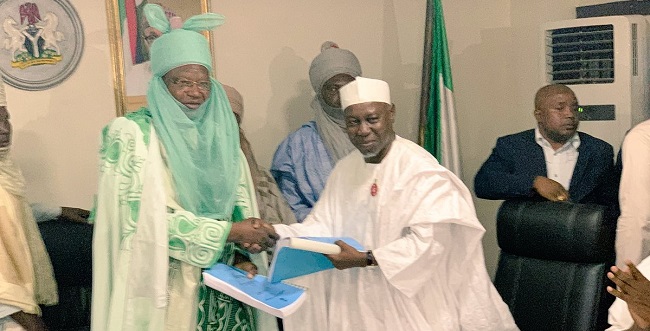
Erstwhile Environment Minister of State now the 12th Emir of Nasarawa, Ibrahim Usman Jibril (left), hands over to new Environment Minister, Suleiman Hassan, who was Minister of State for Power, Works & Housing
JIbril, who was recently turbaned as new Émir of Nasarawa Emirate Council, Nasarawa State, gave the advice at the handover ceremony in Abuja on Tuesday, December 18, 2018.
“It is important to say that anyone who wants to lead this ministry must put his thinking cap to find means of addressing numerous environmental challenges,” he said.
The outgoing minister, who led the ministry for over three years, urged the management and staff of the ministry to give Hassan maximum support and cooperation to deliver the ministry’s mandate.
According to him, the incoming minister should complement the ministry’s efforts to implement climate change actions, Ogoni clean-up and other numerous environmental challenges.
Jibril said that he would hand over the sum $170 million with projects detail in an extra account.
According to him, $5 million are in the ministry’s domicile account and there is additional N200 millions in another account.
He added that all these were contained in the handover document.
The outgoing minister thanked the management and staff of the ministry for giving him support and cooperation to transform the nation’s environment sector.
The new emir, who described himself as environmentalist, promised to continue to discharge environmental duties in his domain.
Responding, Hassan, who solicited for support and cooperation from the management and staff of the ministry, said that he would build on the ministry’s achievements to ensure their sustainability.
Companies and factories in England will have a legal obligation to foot the bill for the disposal or recycling of waste packaging they produce under new plans by Britain’s environment minister.
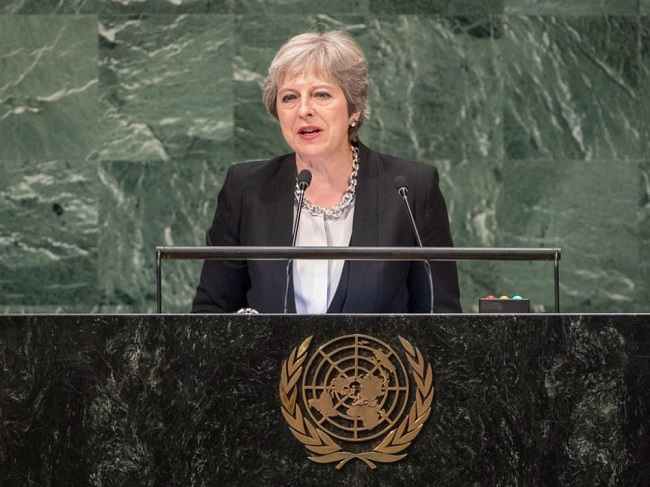
Prime Minister of the United Kingdom, Theresa May. Photo credit: United Nations
Prime Minister Theresa May has pledged to eradicate avoidable plastic waste by 2042 as a growing flood of plastic endangers life in the world’s oceans.
“We can move away from being a ‘throw-away’ society, to one that looks at waste as a valuable resource,” Michael Gove, minister for the Department of the Environment, Farming and Rural Affairs, said in a statement on the proposed overhaul to England’s waste system.
“We will cut our reliance on single-use plastics, end confusion over household recycling, tackle the problem of packaging by making polluters pay, and end the economic, environmental and moral scandal that is food waste.”
Producers of items that are harder to recycle, such as cars and batteries, will have to take more responsibility for what they produce,while a byzantine system for household recycling will be simplified in a bid to boost recycling rates.
The proposals only affect England as environmental policy is devolved to regional assemblies in Wales, Scotland and Northern Ireland.
The issue of single-use plastics has become more salient this year after China cracked down on imports of plastic trash, leading the UN Environment chief to call on developed nations to re-think their use of plastics.
In October, finance minister Philip Hammond announced a taxon plastic packaging which does not meet a threshold of at least 30 per centre cycled content from April 2022.
Britain also wants to tackle food waste.
Supermarkets and other food businesses will have to report annual food surplus and government may consult on mandatory targets to prevent food waste if no more progress is made.
“Our priority is to stop surplus food from becoming waste …Ideally, surplus food should be redistributed for people to eat,” Gove’s strategy paper said.
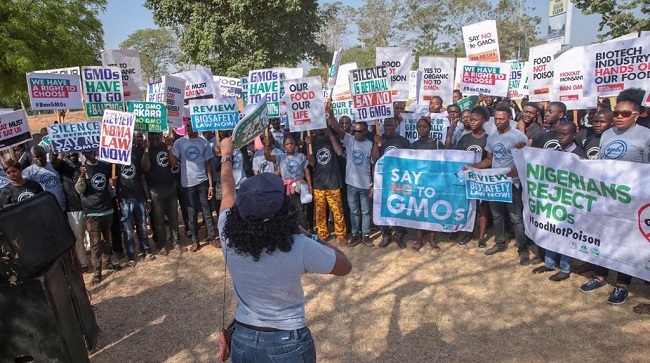
Representatives of farmers, consumers, civil society organisations, scientists, youth and women groups on Monday, December 17, 2018 denounced the admission into Nigeria of genetically modified (GM) crops and products.
The anti-GMO public rally in Abuja
The condemnation was made at a public rally in Abuja, where the campaigners claimed that the products pose a threat to the nation’s food system, biosafety and overall well being.
The demonstration, according to them, was aimed at increasing public awareness on the implications of agricultural biotechnology and to call for a ban on genetically modified crops and food products in Nigeria.
GMOs have found and are still finding their way into the country either as illegally imported products or with approval of the National Biosafety Management Agency (NBMA), the activists allege, saying that a recent market survey carried out in 10 Nigerian cities by Health of Mother Earth Foundation (HOMEF) “confirms the presence of over 30 imported products (most of which were cereals and vegetable oils) of genetic engineering in our market shelves”.
“The NBMA approves nearly every application brought to it without proper safety assessments, without due consideration of public opinion or the impact of proposed activities or of the concerns raised by the public. A notorious case of concern is the approval of importation of genetically modified (GM) maize by WACOT Ltd in December 2018 just a few weeks after the company had tried to smuggle the grains in. The law was blatantly disregarded in this case as it requires that a minimum of 270 days be given before any application is approved to allow for proper impact assessments,” said the activists at the rally, which was organised by was organised by HOMEF in collaboration with the GMO-Free Nigeria Alliance, Women Environmental Programme, Bio-Integrity and Natural Food Awareness Initiative, U-Red, CISLAC and CLIMATTERS, as well as several other CSOs.
The coalition stressed that, besides the possibility that there are no proper risks assessments conducted, the Nigerian public is largely unaware of the type of food that is on their plates. They noted that while other nations are taking steps to ban the use of GMOs and review their biosafety laws, the Nigerian government appears to be bent on introducing more GM crops into the environment as, according to the coalition, it prepares to release a variety of cowpea which is acclaimed to be resistant to the Maruca insect pest.
They lamented that while the battle against use of GMOs rages on, other technologies such as synthetic biology (Synbio) and gene drives organisms (GDOs) that have dire socio-economic and ecological consequences are finding their way to Africa.
“Yet, shockingly, most African countries have become advocates for gene drives probably with the hope of attracting grants and other pecuniary benefits. This was evident at the recently concluded Conference of Parties (COP24) of the Convention on Biological Diversity (CBD) which held in Egypt where Nigeria and South Africa were the spokespersons for Africa,” the coalition stated, even as it lists its demands to include:
A nullification of the permits already granted for dealings with GM products in Nigeria
A close surveillance of our borders, markets and farms to halt illegal entry of GMOs into Nigeria
A ban of all toxic agro chemicals, especially those composing of glyphosate which has been identified as a probable carcinogen.
A halt to the assault on our agriculture through genetic modification of staple crops and a halt on negotiations towards adoption of Gene Drives.
An urgent review of the National Biosafety Management Agency Act 2015
The coalition submitted: “We urge that Nigeria should be circumspect about technologies that aim to contaminate our natural varieties and environment, destroy our agricultural systems, rupture our socio-economic fabric and assert unbridled control over our food system. Our government should focus on supporting local farmers with needed infrastructure-storage and processing facilities, access to land and loans and provision of accessible markets.
“We reject agricultural biotechnology as solution for food challenges and demand that Nigeria should instead invest in innovative systems such as Agroecology which in addition to ensuring productivity, protect/enhance ecosystems and promotes economic well being of farmers.”