The Lagos State Government has urged Victoria Island and
Ikoyi residents to prioritise clean environment by being observant and
protective of their immediate environment.
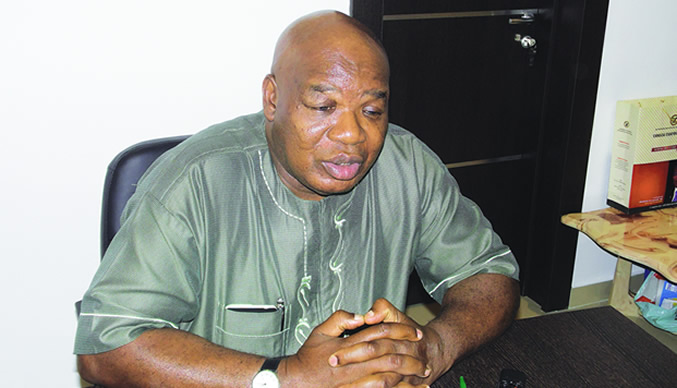
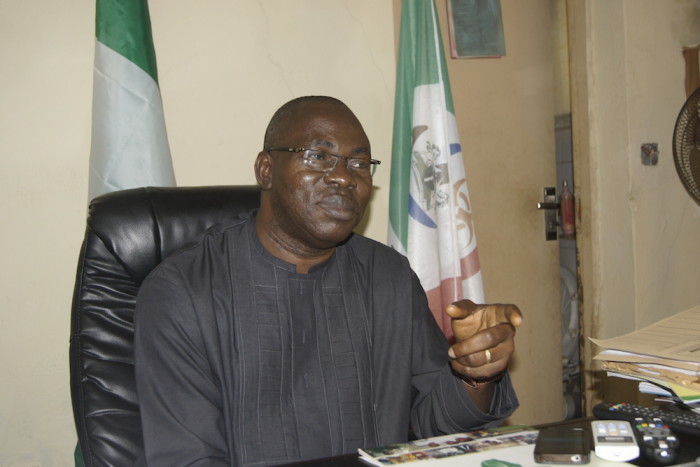
The Lagos State Commissioner for Environment, Mr Babatunde Durosimi-Etti
Commissioner for the Environment, Mr Babatunde
Durosinmi-Etti, said on Friday, December 21, 2018 in Lagos that the rate at
which the highbrow areas were being defaced was alarming.
Durosinmi-Etti said the ugly development was illegal and
capable of causing grave danger to the community.
He, therefore, urged strict adherence to Lagos State laws
regarding waste management, noise pollution and the approved master plan of
government for the area.
The commissioner said that the situation in which property owners
in the area allowed indiscriminate conversion of the residential areas to
commercial use was not acceptable.
He said that it had seriously contributed to increase in
refuse generation in the area, as well as the attendant illegal dumping of
refuse in unauthorised places.
Durosinmi-Etti said that government was commited to attain a
clean, healthy and sustainable environment.
He frowned at the ugly development whereby some residents
continued to patronise cart pushers and dump waste indiscriminately on the
roads in spite several warnings on the environmental and health implications of
such acts.
Durosinmi-Etti said that government had repeatedly warned
against any abuse of its laws and all acts capable of compounding the challenge
of waste management in the state.
He said that there had been proliferation of religious
worship centres and Nite clubs in various residential areas in Victoria Island
and Ikoyi metropolis and called for caution on the noise level to avoid rancour
in the society.
“Any noise above the approved levels contravened the
provisions of the National Environmental Noise Standard and Controls
Regulations 2009, as well as the Lagos State Environmental Laws 2017,”
Durosinmi-Etti said in a statement.
He called for the cooperation of religious centres and club
owners on the maintenance of the acceptable noise levels for residential areas,
which was 55 decibels during the day and 45 decibels at night.
The commissioner said that they were expected to operate in
an enclosed and soundproof environment with regulated use of speakers.
He added that government would not rest on its oars in
ensuring that Lagosians inculcate the habit of regular maintenance of their
immediate environment, as doing so was a collective responsibility.
President, Nigerian Meteorological Society, Prof.
Clement Akosile, on Friday, December 21, 2018 called on the Federal Government
to allow an independent body to manage the Ecological Fund for greater
efficiency.
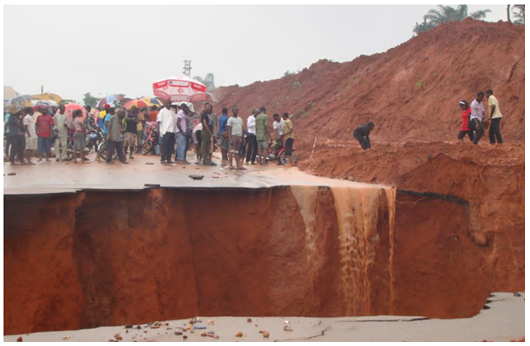
Gully erosion in southeast Nigeria. The Ecological Fund is meant to be channeled to address such ecological challenges
Akosile said that professional management of the fund by an
independent body would enable a more effective application of the fund in
tackling ecological problems nationwide.
The professor made the call in an interview with the News
Agency of Nigeria (NAN) in Lagos.
According to him, Ecological Fund given to some states was
being used to solve problems not related to the environment.
He said that the independent body should work with states
and local governments to identify their ecological needs and solve them.
Akosile noted that the country still suffered much environmental
problems and, thus, required more effective utilisation of the fund.
He advised that the fund should not be used to solve
problems not related to the environment.
“Proper management of the fund is good for the country now
and in the future.
“Desert is fast encroaching on land areas in the north,
deforestation is going on daily, erosions in some parts of the country are
rapidly turning to gullies.
“Our sea shores are disappearing because of coastal
erosion,’’ he said.
Akosile added that floods ravaged communities in rainy
season and sometimes destroyed human lives and property.
He said that these environmental challenges would be tackled
with effective utilisation of the Ecological Fund.
He called for more tree planting to check drought and its
attendant drying of lakes, rivers and streams.
The Ecological Fund was established in 1984 for tackling
ecological problems in any part of the federation.
Allocation to the fund has been reviewed from one per cent
to three per cent of revenues accruing to the federation account.
The effort to control the fall armyworm (FAW), a lethal pest
that is ravaging food crops, through the application of insecticides is becoming
complicated, a scientist warned on Friday, December 21, 2018.
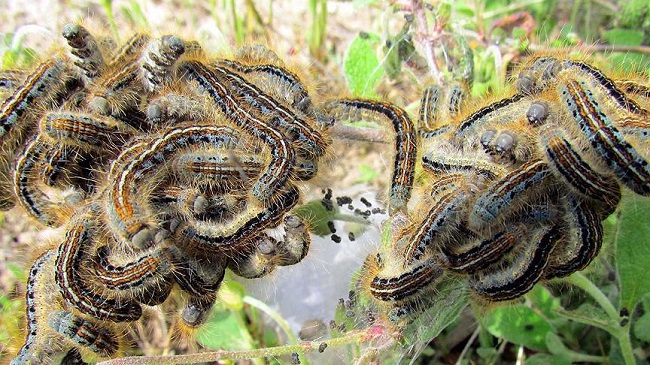
Armyworm invasion
Sunday Ekesi, Director of Research and Partnership at the
International Centre of Insect Physiology and Ecology (ICIPE), said the adult
pest’s habit of being active at night complicates its management.
“It is strange that the pest’s infestation is only detected
after damage has been caused to the crop,” Ekesi said.
Ekesi noted that, unlike other pests, FAW has a diverse
range of alternative host plants that enables its populations to persist and
spread.
He said that the larval stage of the FAW feeds on more than
80 plant species, including maize, sorghum, rice, wheat, sugarcane, as well as
a variety of horticultural crops.
The worm had threatening food and nutritional security,
trade, household incomes and overall economy.
The scientist noted that ongoing studies at the global
insect research body indicate that FAW develops resistance to some
insecticides.
“The performance of such chemicals is also hindered by
limited knowledge and purchasing power of farmers, resulting into use of
low-quality and often harmful products,” he added.
The Nigerian Institution of Estate Surveyors and Valuers
(NIESV) says Nigeria should adopt the urban-regeneration scheme to boost its
housing delivery and overcome its housing deficit.
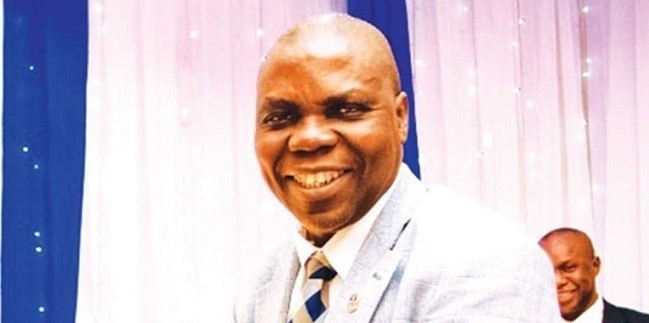
Dr Bolarinde Patunola-Ajayi
Its immediate past president, Dr Bolarinde Patunola-Ajayi,
made the observation on Friday, December 21, 2018 while speaking with the News
Agency of Nigeria (NAN) in Lagos.
Patunola-Ajayi said that urban regeneration would entail the
removal and demolition of the small apartments, shanties, and bungalows that
were scattered across the country.
They would have to be replaced with modern structures that
would accommodate more people.
He said that this would also entail the complete upgrading
of slums which he said formed 70 per cent of the environment.
“Urban regeneration can be in the form of demolishing the shanties
to construct modern and high-rise structures that will accommodate more people.
“With urban regeneration scheme, the Public-Private
Partnership (PPP) programme will be encouraged.
“The scheme will not completely be a government scheme, it
will involve the private sector business ventures.
“All that government needs do is to acquire very large
hectares of land and give it to the private sector to develop.
“The government will also be expected to provide the
enabling environment and facilities for the private operators to have a smooth
operation,” he said.
Patunola-Ajayi said that countries such as China and
Singapore embraced the scheme to develop their countries and grow their housing
sector.
He, however, said that the scarcity of land had been a major
factor hindering the growth of housing development in the country.
According to him, urban regeneration will pave the way for
maximum/optimal ultilisation of the limited land to construct the needed number
of houses.
“With urban regeneration, land will be optimally ultilised
to construct buildings that will accommodate more people because the shanties
occupying spaces will be demolished,” he said.
EU environment ministers agreed on Thursday, December 20,
2018 to cut emissions from lorries and buses for the first time ever, by 15 per
cent in 2025 and 30 per cent in 2030.
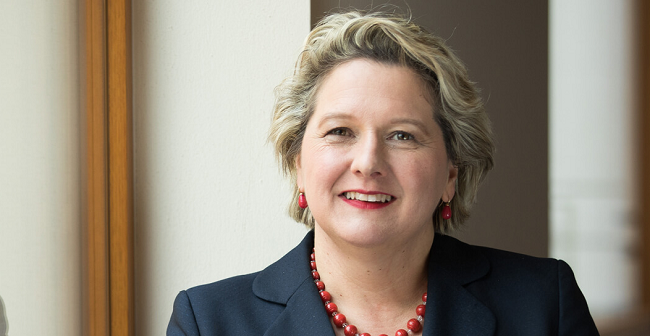
German Environment Minister, Svenja Schulze
However, one wrinkle came from Germany, the only member
state that opted to abstain from the otherwise unanimous vote.
Germany – an important automotive manufacturer – has been
among the more reluctant member states to back deep emissions cuts.
German Environment Minister, Svenja Schulze, a Social
Democrat, said after the vote that she “would have liked to sign on” to the
deal, “but I could not make the case to the Chancellery.”
“Isolating yourself on such an important environmental issue
is more than embarrassing,’’ she added.
EU member states must now negotiate these standards with the
European Parliament before they take effect.
They are in line with a European Commission proposal made in
May, but they are less ambitious than those of the European Parliament, which
seeks a 35 per cent cut in 2030.
Whatever the outcome, the plan would mark the first time
that the EU would place such restrictions on lorries and buses.
“This is part of our efforts to decarbonise the road
transport sector and an important step towards achieving the goals we have
agreed under the Paris Agreement,” said Austrian Environment Minister,
Elisabeth Koestinger, whose country holds the rotating EU presidency.
The 2015 Paris Agreement calls for global warming to be kept
to well below 2 degrees Celsius above pre-industrial levels and preferably to
less than 1.5 degrees.
The bloc has also taken action on other types of vehicles.
Earlier this week, EU negotiators struck a deal to cut car
emissions by 37.5 per cent by 2030, compared to a 2021 ceiling of 95 grams of
CO2 per kilometre.
The targets are part of EU efforts to reduce CO2 emissions
and limit global warming.
Vehicle exhaust fumes make up a large share of the emissions
linked to climate change.
Still, resistance among manufacturers remains strong.
That is a mistake for market reasons, Schulze argued ahead
of the talks on Thursday, adding that the incentives to sign on to emissions
cuts are compelling.
“The market for heavy goods vehicles (HGVs) is completely
different from that for cars,” she said.
“An HGV can only be sold if it is as efficient as possible
and uses as little fuel as possible.”
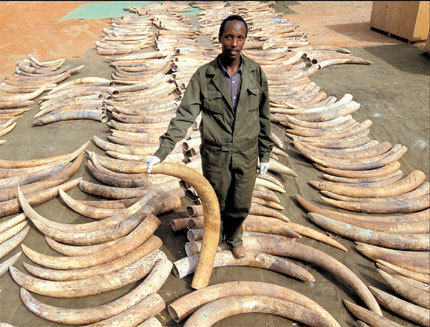
What is widely considered one of the world’s toughest bans
on ivory sales became law in the UK on Thursday, December 20 as the Ivory Bill
gained Royal Assent to become the Ivory Act 2018.
African countries on the frontline of the elephant poaching
crisis have welcomed the new Ivory Bill passed by the UK Parliament, which
introduces tough new rules on the commercial trade of ivory in, from and to the
UK, as “a significant moment for elephant conservation”.
In a signed declaration, senior representatives from 13
countries belonging to the Elephant Protection Initiative (EPI), an alliance of
African states with common policies on elephant conservation, said: “We believe
the UK’s new law will have an impact not only within its borders but will also
support and encourage enforcement efforts and initiatives to reduce ivory
trafficking in Africa, and around the world.”
The EPI includes Botswana, Gabon, Kenya and Tanzania, which
have some of the largest remaining elephant populations in Africa. Other EPI
countries which signed the declaration are Angola, Chad, the Republic of Congo,
Ethiopia, Liberia, Malawi, Nigeria, Sierra Leone and South Sudan.
EPI countries, it was gathered, have already shut down their
own domestic ivory markets, or are in the process of doing so, arguing that any
legal ivory trade provides a cover for the illegal trade and sustains demand for
poaching. Some 20,000 elephants are reportedly killed in Africa each year,
mostly for ivory which is ultimately destined for Asia.
In their declaration, the EPI countries said, “Poaching is
big business, run by ruthless networks that thrive on, and create, lawlessness.
It is linked to the trafficking of weapons, drugs and the spread of terror.
Hundreds of our wildlife rangers have been killed trying to defend elephants
from well-armed poachers.”
The EPI countries hope others will now follow the UK’s
example.
“We need global action to end the ivory trade for good,” the
countries said in a statement made available to EnviroNews, “and we strongly
urge other governments which have yet to adopt similarly tough measures to
follow suit, particularly the EU and Japan, two of the principals remaining
legal markets for ivory.”
Signatories
Angola: Paula Coelho, Minister for the
Environment
Botswana: Tshekedi Khama, Minister of the
Environment
Chad: Sidick Abdelkerim Haggar, Minister of the
Environment
Republic of Congo: Rosalie Matondo, Minister of
Forest Economy
Ethiopia: Prof. Fekadu Beyene, Commissioner of
Environment, Forestry and Climate Change
Gabon: Prof Lee White, Director, Gabonese
National Parks Service (ANPN)
Kenya: Najib Balala, Cabinet Secretary of the
Ministry of Tourism and Wildlife
Liberia: Hon C. Mike Doryen, Managing Director
of the Forestry Development Authority (FDA)
Malawi: Brighton Kumchedwa, Director, Malawi’s
Department of National Parks and Wildlife (DWNP)
Nigeria: Ibrahim Usman Jibril, Minister of the
Environment
Sierra Leone: Fatima Jabbie Maada Bio, First
Lady
South Sudan: Jemma Nunu Kumba, Minister for
Wildlife
Tanzania: Dr. Hamisi Kigwangalla, Minister for
Natural Resources and Tourism.
The EPI is a coalition of 19 African Elephant Range States,
with common policies on elephant conservation. Most of Africa’s surviving
elephants are said to be in EPI countries.
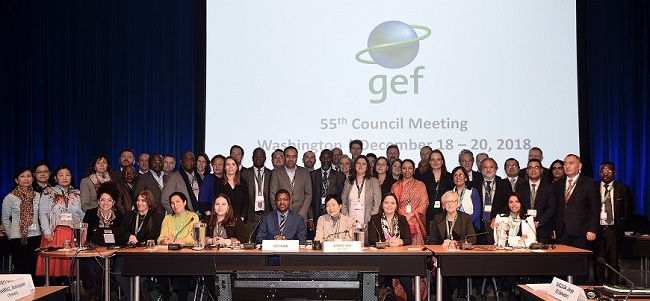
The 55th Global Environment Facility (GEF) Council meeting wrapped
up on Thursday, December 20 2018 following the approval of its first work
programme under its new, four-year investment cycle, known as GEF-7, and a
series of decisions that will firm up its implementation policies and
procedures.
Delegates at the 55th Global Environment Facility (GEF) Council meeting
The work programme, made up of 18 different projects
benefiting 25 countries around the world, will require $157.8 million, and is
expected to attract an indicative $819.7 million in financing from other
sources.
Closing the meeting, Naoko Ishii, GEF CEO and Chairperson,
thanked council members for the “extensive, rich and fruitful three days.” Repeating
her call at the Council opening for “urgent action to get back on track”, she
said much progress has been made, and “now GEF-7 can start!”
“We have reviewed different policies and modified them to
provide a framework that will make the GEF work better,” said Abdul Bakarr
Salim, Deputy Director of the Environment Protection Agency, Sierra Leone,
and co-chairperson of the 55th GEF Council.
The three-day Council meeting, the first to be held since
governments endorsed the new GEF-7 strategy and the accompanying $4.1 billion replenishment of its trust fund, approved
various measures to further improve the GEF’s efficiency, accountability and
transparency.
This includes new policy procedures to speed up the preparation,
endorsement, implementation, and closure of projects, and, among other things,
new policies to improve access to information, and an updated policy on
environmental and social safeguards throughout the GEF project and programme
cycle.
The Council received reports from the GEF’s Scientific and Technical Advisory Panel, Independent Evaluation Office, and held discussions on
GEF’s relations with multilateral environmental agreements, the GEF-7 Non-Grant
Instrument Programme, and options for responsible investment of funds in the
GEF Trust Fund.
Following the well-received special session on gender at this year’s Civil Society
(CSO) Forum, the Council decided that plastics management to avoid pollution
would be the topic for the CSO consultation at the 56th GEF Council
meeting in June 2019.
In a demonstration of growing support for adaptation efforts
by some of the most vulnerable countries to the impacts of climate change, the
following pledges were announced by council members on behalf of their
governments.
For LDCF: Belgium, Walloon Region (€2.9 million), Denmark (Kr.150 million), Finland (€2 million), France (€20 million), and The Netherlands ($9.1 million). Switzerland announced a commitment of $13.25 million over four years to the LDCF and SCCF, with 75% going to the LDCF. Sweden highlighted its contribution of kr135 million to LDCF in 2018. Germany will finalise its contribution payments of €25 million before the end of the year.
Work Programme
Specific projects include: the long-term conservation and
management of critical and threatened sites and species along the globally
important East Asia-Australasian Flyway, by establishing a robust, resilient,
and well-managed network of protected wetlands for endangered migratory water
birds in China; transforming Sharm El Sheikh in Egypt into a sustainable
tourism city by a whole host of measures including promoting low-carbon urban
development, renewable energy generation, better waste management and
recycling, and protecting the sea and coastal areas; and tackling substantial
and alarming environmental degradation from pollution and overfishing in Africa’s
Lake Victoria.
Two projects in Chile will support decarbonisation by
fostering deployment of district energy systems which can cut emissions by 90
per cent and improve catching and management practices in fisheries over 1.7
million hectares of sea. Another two, in Turkey, will promote replacing
persistent organic pollutants with environmentally sound alternatives in its
extruded and expanded polystyrene foam industries and increasing the use of
wood in buildings, thus reducing the embedded carbon content of construction
materials.
Two more will tackle mercury pollution in Mexico and
Argentina, while a regional project in Central Asia will assess and address the
impact of climate change on glaciers in Kazakhstan, Turkmenistan and
Tajikistan.
The last project represents the first half of an
allocation of $128 million under GEF-7 for the Small Grants Programme to
provide grants to civil society and community-based organisations tackling
global environmental issues in 107 countries.
The leadership of the National Biosafety Management Agency
(NBMA) says the agency was established to ensure the safety of Genetically
Modified Organisms (GMOs), not to stop the product’s dissemination and use.
Dr Rufus Ebegba, Director-General and CEO of the the National Biosafety Management Agency (NBMA). Photo credit: climatereporters.com
Dr Rufus Ebegba, the Director-General of the agency, who
made this known to the News Agency of Nigeria (NAN) on Thursday, December 20,
2018 in Abuja, said: “NBMA is a government agency established by law as a
regulatory agency to ensure the safe handling and use of modern biotechnology
and its products, which include GMOs.
“So, the establishment of the agency is not to stop the use
of GMOs but to ensure their safety that they have no adverse effect on human
health, plants, animals and the environment.’’
On the recent public presentation of the application for the
commercialisation of genetically modified Pod Borer Resistant (PBR) Cowpea,
Ebegba said that the agency was mindful of the implications of wrong decisions
and the failure to act with courage and efficiency.
“The Institute for Agricultural Research (IAR), and Ahmadu
Bello University, Zaria, following the approvals from the Federal Ministry of
Environment and NBMA conducted confined field trials at selected sites in
Nigeria on the PBR Cowpea for nine years.
“Over the years, the ministry’s Biosafety Unit and NBMA
closely supervised the trials’ process during which all the requirements
pertaining to biosafety compliance were fully met.
“Accordingly, IAR submitted to the NBMA a formal
application, seeking permit for the general release of the PBR Cowpea in
Nigeria, pursuant to the provisions of the NBMA Acts, 2015 and the National
Biosafety Regulations.
“The application for commercial release of GM food crop, is
the first of its kind and in line with the NBMA Acts.
“It requires the agency to build on the past efforts to make
certain that stakeholders are aware of the basic science of PBR Cowpea and the
biosafety measures put in place by NBMA.
“We organised public presentations to afford the agency the
opportunity to sustain momentum in its various efforts to ensure information
sharing and dissemination among stakeholders.
“We enhance public participation in our decision-making
process by inviting representatives of agencies that we have signed MoUs with
for synergy and for effective biosafety regulation in the country.
“Representatives from relevant ministries, departments and
agencies, experts, scientists, the media, professional bodies including NBA,
Civil Society Groups (including environmental activists opposed to the
technology) partners and faith-based organisations for obvious reasons.”
Ebegba said that the objective was for the applicant to take
stakeholders through the basic science of the genetically modified cowpea and
other relevant issues related to the safety of the gene of insert and the
processes of the development of the GM Cowpea.
“At the end of the presentation, there would be a 21day
public notice in three national dallies and on the agency’s website on the
application, indicating the locations where the application/dossier would be
deposited.
“This will enable members of the public to review the
application and present their views to the NBMA.
“NBMA will also constitute a National Biosafety Committee
and National Biosafety Technical Subcommittee of Eminent Experts and Scientists
to carry out detailed review of the risk assessment and risk management and
make recommendations to guide the NBMA’s final decision.
“I wish to assure the public that the NBMA would carry out a
thorough risk assessment review of the application and make the best decision
in the interest of Nigerians and the nation.
He said that NBMA as a competent national authority on
biosafety in Nigeria had since inception faced various criticisms by some
environmental activists.
“Some of these activists have released some publications and
held public fora aimed at discrediting the agency and continually fed Nigerians
with contradictory and false information about the agency.
“While the agency believes that citizens are free to
criticize government agencies’ decisions, it is expected that such criticism
should not be without relevant knowledge.
“And should not be intended to damage the integrity of
officers who are carrying out their legitimate duties in the implementation of
the mandate of the officers.’’
Ebegba said that those who constantly criticise NBMA never
at any time visited the agency to find out why the agency took whatever
decisions it took.
“Even when they are invited to our programmes, they refuse
to attend.
“We must remember that the world’s development is dynamic,
and the world will not wait for Nigeria.”
He noted that every new technology was bound to face suspicion,
but Nigeria should not fail to move on and develop the technology.
“In spite of the various enlightenment programmes of the
agency and its engagement with the public on the mandates and workings of the
agency, the agency is still confronted with controversies.
“Despite the odds, the NBMA has continued to discharge its
duties to the people of Nigeria while meeting the mandate of government with
knowledge and courage.
“Be rest assured that the agency will not fail in the
discharge of its responsibility in the regulation of the application of modern
biotechnology, handling and use of genetically modified organism.”
NAN reports that the agency draws its mandate from the NBMA
Act 2015.
The act states that the agency is charged with the
responsibility of providing regulatory framework, institutional and
administrative mechanism for safety measures in the application of modern
biotechnology in Nigeria;
This is with the view to preventing any adverse effect on
human health, animals, plants and the environment.’’
To the media, reporting on issues is usually
the normal drill. But when media professionals decide to stick out their necks
on an issue by taking a stand that borders on advocacy, then they are damn
serious and mean business.
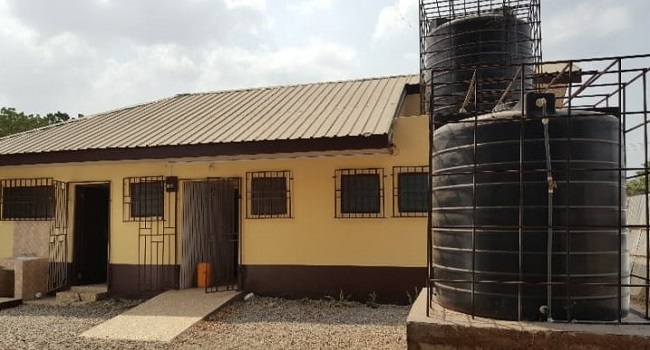
Toilet facility provided under the Ghana Water and Sanitation Project (GAMA) at the Madina Cluster of Schools in the La Nkwantanang Madina Municipal Area
Therefore, to warrant such media attention,
the issue must be wrong to a very large extent, obnoxious, injurious to the
welfare of the general populace and environment, abnormal and contrary to
social norm practices or must just be a menace, period.
Additionally, the issue must have been
attracting attention from concerned institutions and organisations including
public entities, civil society and development partners. Somehow, they are
gurus in prompting, if not directly setting and influencing the agenda for national
development. So, when the Environmental Health and Sanitation Directorate, then
under the Ministry of Local Government and Rural Development with support from
UNICEF started tackling open defecation as a major issue, the Ghanaian media
noted it.
Again, when the World Bank, SNV and World
Vision International Ghana, among other development partners, got involved in
the fight against open defecation by initiating and supporting diverse
projects, their move got media attention.
In line with this, and with the support of
World Vision International Ghana and the Coalition of NGOS in Water and
Sanitation (CONIWAS), the Media Coalition against Open Defecation (M-CODe) was
formed and launched in September 2018.
The Coalition aims to mainly intensify
public sensitisation on the menace of open defecation. It is a practice whereby
people defecate free range in any available space, bush, uncompleted buildings,
gutters and drains, along river banks and beaches or indiscriminately throw
away wrapped-up faeces and leaving the faeces in the open, exposed to the
elements.
Against this background, members of the
Coalition were acting based on an appreciation that open defecation “is the
riskiest of all sanitation practices, posing the greatest danger to human health
and is the biggest sanitation challenge in Ghana,” evidenced by statistics that
paints a gloomy picture of the nation’s open defecation status.
One out of every five Ghanaians defecates
outside a toilet each day. This represents close to six million people who
defecate without using a toilet. Open defecation is the cause of many
preventable illnesses including diarrhea and Cholera, which is killing about
19,000 Ghanaians annually. Other health related problems perpetuated by open
defecation are typhoid fever, Intestinal worms, malnutrition and stunting among
children.
Besides, open defecation costs Ghana more
than $79 million annually and this excludes the cost of funerals, tourism
losses, single parenthood, widows, orphans, and water pollution among a host of
other open defecation associated costs elements. What is more, open defecation
shames Ghana to the outside world and affects tourism potentials. Meanwhile,
financial analysts have estimated that the amount required to eliminate the
practice is far less than what it is costing the nation.
Again, M-CODe members understand the
underlying factors that appear to be reinforcing the practice of open
defecation in Ghana. Statistics indicate that about 35% of public and 18% of
private basic schools do not have toilets and pupils are compelled to resort to
unorthodox places to defecate. Many healthcare facilities lack access to clean
toilets, while, many public institutions including some Metropolitan Municipal
and District Assemblies (MMDAs) lack clean toilet facilities. Also, many public
places such as markets and lorry parks lack access to clean and hygienic
toilets.
The situation of peri-urban, rural and
local communities is even more disturbing as majority of houses do not have
toilet facilities. People still use communal latrines, an olden days’ practice
that is being held unto in a technologically modernized age. Therefore, many
communities still demand communal toilets from government instead of
constructing household toilets.
And the bottom-line of the matter is that Government
has no publicised national roadmap for eradication of open defecation. M-CODe
members recognized government’s effort in tackling open defecation as part of
the general sanitation agenda under the country’s socio-economic development
plan and in line of Sustainable Development Goal 6 on clean water and
sanitation for all by 2030.
But they have not lost sight of the fact
that there is currently no agenda in place that binds the government towards attaining
an open defecation free Ghana by a nationally determined set date.
So, what do members of M-CODe want to see? Firstly,
they want the President to declare a target date to end open defecation in
Ghana. In addition to that, they want President Akufo-Addo to direct all Regional
Coordinating Councils (RCCs) and MMDAs to develop and publicise a roadmap for
eradication of open defecation to meet the national deadline.
M-CODe also wants the President to direct
RCCs and MMDAs to ensure that every school and health centre in Ghana, whether
public and private, has access to clean and hygienic toilets by the end of
2020. In line with this particular demand, members of M-CODe are happy with the
work of the World Bank funded Ghana Sanitation Water Project (GSWP) for the
Greater Accra Metropolitan Area.
As part of its mandate, GSWP is providing toilet
facilities for some schools and health institutions in the current 11 Metropolitan
and Municipal Assemblies that the project works in. The project has so far
completed toilet facilities for 19 schools and the Kekele Polyclinic in the La
Nkwantanang Madina Municipal Assembly. While, in the Ashaiman Municipal
Assembly area, 18 schools have been provided with improved toilet facilities.
The Project has a target of building 406
toilet facilities for schools and selected institutions within the area. This
was made known to members of M-CODe, when they interacted with the GSWP team on
Tuesday, December 11, 2018. The purpose was to introduce the Coalition to the
Project and ascertain its status.
The Project Coordinator of GSWP, George Asiedu,
noted that the need for improved school toilet facilities is huge in the Accra
Metropolitan area as well as nationwide. He said the situation has become
complicated because of other factors including community encroachment on schools’
facilities, water access and maintenance issues.
Asiedu, an engineer, proposed that management
of schools toilet facilities should be privatised to ensure they are properly
cleaned, maintained and sustained. He commended the media for the initiative
and said the Project sees members as partners in the fight to end open
defecation in Ghana.
The Patron of the Coalition, Dr. Doris
Yartey, said since M-CODe and the Project have the same objective of fighting
open defecation, the two could form a strong alliance that will result in the
project becoming stronger, bigger and more impactful.
She stressed: “M-CODe considers open
defecation as a major national disgrace and that is why we have come together
to champion the advocacy cause to bring about change in the way Ghana handles
toilet, which is against our image. When we succeed, the disgrace of Ghana will
be taken away for the country to focus on more important things like education
and industry.”
In a related developed, the group, on Wednesday,
November 28, 2018, called on the Minister for Sanitation and Water Resources,
Madam Cecilia Dapaah, to formerly welcome her to the ministry and update their
knowledge on developments within the sector.
The UN General Assembly on Wednesday, December 19, 2018 in New York endorsed the adoption of the Global Compact for Safe, Orderly and Regular Migration (GCM), the UN Network on Migration said in a statement.
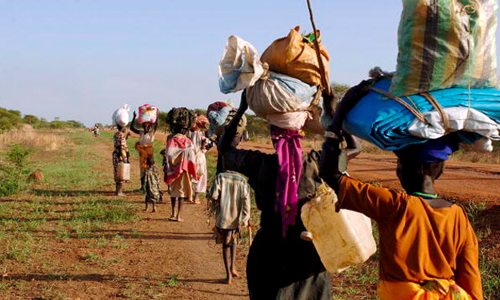
Internal migration
According to the statement, the GCM was formally adopted
with 152 votes in favour and five against while 12 abstained.
Welcoming the formal endorsement of the Compact by the
General Assembly, the Network said the adoption of the GCM represented a
landmark moment in the pursuit of international cooperation on migration for
the benefit of all.
The statement said that Compact’s significance also lay in
its recognition that effective migration policies, and greater protection of
the vulnerable, required the support of many actors.
To that end, the Compact was strengthened by the engagement
of a broad alliance of partners, including civil society, the private sector,
trade unions, Diaspora and migrant communities, national human rights
institutions, local authorities, youth networks and other actors, it noted.
The Compact was adopted on Dec. 10, during at the two-day
Intergovernmental Conference on Migration in Marrakech, Morocco.
The GCM is the first-ever negotiated global framework on a
common approach to international migration in all its dimensions.
Though non-legally binding, the Compact is the product of an
intensive process of negotiations.
It provides a strong platform for cooperation on migration
now and into the future, drawing on best practice and international law, to
make migration safe and positive for all.
In her reaction, Ms. Louise Arbour, the Special
Representative of the Secretary-General for International Migration, said in
the statement that the formal endorsement of the Compact represented “a
resounding commitment to an international migration framework based on fact,
not myth.
“It is also based on an understanding that national
migration policies are best implemented through cooperation not in isolation.
“As the many initiatives proposed by the Compact start to
take root, we will see lives saved, living conditions improve, and communities
integrate and flourish through increased development and prosperity.
“Looking to the future, we will be better equipped to rely
on a spirit of solidarity, rather than on indifference or – worse – selfishness
that could otherwise tear us apart.”
Similarly, Mr António Vitorino, the Director-General,
International Organisation for Migration, said: “The Global Compact comes at an
important moment.
“It contains within it the promise of an evidence-based less
politically charged discourse on migration, a plan for developing more
comprehensive policies to improve the lives of migrants and the communities in
which they live, and the possibility to reduce dangerous, chaotic and irregular
migration flows.”
Vitorino, speaking as the Network Coordinator on behalf of
its Executive Committee and wider membership, described migration as a
phenomenon with many dimensions.
“It touches on profound and urgent questions of sustainable
development, climate change, humanitarian crisis, border control, security,
fighting trafficking in human beings as well as smuggling, fostering means of
legal migration, including for work, and greater protection of our universal
human rights.
“No single part of the UN community can effectively address
all dimensions of migration but together, we have the chance to make a real
difference. That is what the Network is about,” he said.
The United Nations system expressed its commitment to
supporting the implementation of the Global Compact through the creation of the
UN Network on Migration.
It is a collaborative community of UN entities coming
together to provide effective and coordinated support to member-states and
other partners in carrying forward the objectives agreed to in Marrakech.
This Network will leverage the impact of the UN considerable
expertise and capacity in helping to strengthen the benefits of migration and
to address its many challenges.
It was established at the request of the secretary-general
and is welcomed in the GCM.
It currently comprises 38 entities from within the UN system
with an executive committee of eight which provides strategic oversight and is
the principal decision-making body of the network.
Members of the Executieve Committee are the United Nations
Department of Economic and Social Affairs (DESA), the International Labour
Organisation (ILO), the International Organisation for Migration (IOM) and the
Office of the High Commissioner for Human Rights (OHCHR)
Others are UN Development Programme (UNDP), UN High
Commissioner for Refugees (UNHCR), UN Children’s Fund (UNICEF), and the UN
Office on Drugs and Crime (UNODC).