Home Blog Page 172

Epe 2025: How Nigerian youths are redefining Africa’s climate story

0

Twenty young Nigerian changemakers from over five states across Nigeria have come together to set a bold agenda on how Africa narrates its current impact and climate future.

Their gathering, which was at the instance of an event organised by the Human and Environmental Development Agenda (HEDA Resource Centre), in Lagos, was superintendent by seven facilitators spanning television, online media, food and waste advocacy, all aimed at equipping participants with tools to connect climate science with storytelling that resonates across communities.
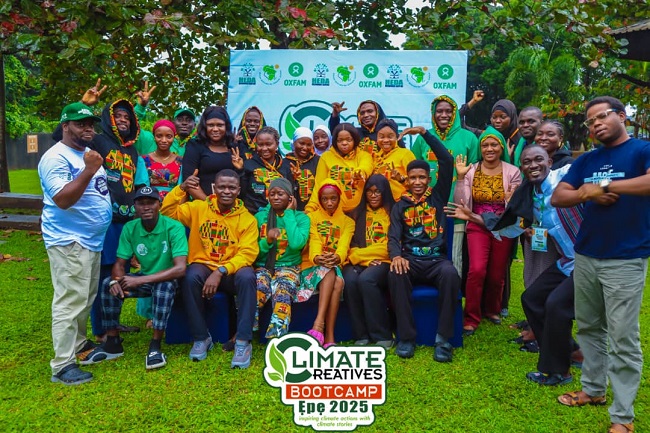
Epe 2025 Creative Climate Bootcamp
Participants in the Epe 2025 Creative Climate Bootcamp, organised by the Human and Environmental Development Agenda (HEDA Resource Centre) in Lagos

Its theme, “Creatives Climate Bootcamp, Epe 2025,” focuses on how to address some of Africa’s most pressing environmental challenges such as climate security, food waste and production, and the role of geo-spatial technology in advancing climate adaptation and mitigation.

“We are not just training young leaders, we are empowering the next generation of climate communicators who will change the way Africa sees and responds to climate change” said Mr. Sulaimon Arigbabu, HEDA executive secretary.

The bootcamp blended technical knowledge with creative practice, linking science with art to amplify urgent messages. Food and waste champions demonstrated sustainable alternatives to reduce losses in agricultural value chains, while media professionals such as Mayowa Adebote mentored participants on how to frame narratives that can influence policy and shift public perception.

The programme also featured a pitch session with award-winning film director, Tigerfire Rose, award-winning photographer Mayowa Adebote, and Dr. Olaide, who served as judges, with the air quality group coming first and food waste to compost group being the runner-up.

For many of the participants, the experience was transformative. “I came here thinking climate change was about distant policies. Now, I see how data, media, and creativity can bring it closer to home for Nigerians,” one attendee stated.

While speaking to EnviroNews, Rachel Ramson, a journalist with Silverbird said that through the HEDA climate creatives bootcamp, she has learned how to report on climate change in a way that respects scientific consensus while also exploring economic, cultural, and political complexities.

“Rather than pushing a single narrative, I now focus on elevating underreported voices, presenting competing perspectives clearly, and highlighting solutions alongside challenges. Ultimately, the training reinforced that journalism plays a key role in climate action – not by taking sides, but by shining light on facts, context, and consequences, allowing the public and policymakers to make more informed decisions,” she said.

On winning the pitch, one of the team members, Kikelomo Lawal, said in a community of 100 people, air quality is spoken rarely and according to World Health Organisation (WHO), globally 99% people are affected by unhealthy air. For her and her team, this triggered the need to design a solution that can combat air pollution, mitigate emissions in cities, and enhance quality air flow for young people.

“We are excited to win because we are passionate about air quality; it’s our field, we live and breathe in it. We integrated mobile sensor in our project when compared to fixed sensors that covers about 2 kilometres,” Lawal hinted.

As Africa battles the twin pressures of climate insecurity and external emissions, initiatives like this underscore the role of youth in driving climate discourse. With Nigeria’s vast population of under-30s, the potential for grassroots-led storytelling to influence adaptation and resilience strategies is enormous.

The HEDA Resource Centre says this bootcamp is only the beginning. Plans are underway to expand the pitch innovations of young climate narrators across more states by equipping them with the tools not only to tell Africa’s climate stories but to shape the solutions for continental impact.

By Nsikak Emmanuel Ekere
Town planners call for Abuja master plan restoration

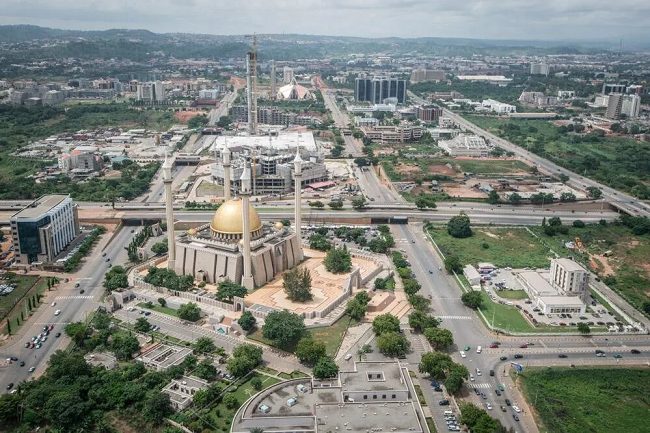
The Nigerian Institute of Town Planners (NITP) has called on government agencies, developers, and urban stakeholders to return to Abuja’s original Master Plan to address rising urban challenges.

FCT NITP Chairperson, Mrs. Queen Philips, in her message marking the World Habitat Day and World Cities Day in Abuja on Monday, October 13, 2025, said restoring the plan would help eliminate irregularities in the Federal Capital Territory.

Abuja
Abuja

Philips attributed Abuja’s worsening urban crisis to illegal constructions, blocked drainages, and land allocations done without professional input, stressing the need for expert-guided urban management and planning decisions.

She explained that Abuja faced growing pressure from population increase, poor infrastructure, informal settlements, climate-related threats, and land-use conflicts, which continued to erode the capital’s planned urban structure.

Philips identified flood-prone zones like parts of Asokoro, Guzape, and Trademore as examples where disregard for professional planning layouts had led to increased vulnerability and environmental hazards.

According to her, professional planning bodies are often sidelined by elite interests in Abuja, which contributes to chaotic development and increasing environmental and social risk across the FCT.

She revealed that the institute was currently seeking an audience with FCT Minister Nyesom Wike to offer expert guidance on restoring the Abuja Master Plan and preventing further urban decline.

Philips commended Wike’s infrastructure and road development efforts, adding that professional planning input would complement those achievements and reduced risks like flooding and forced displacement.

She emphasised that truly smart cities must serve the people.

“Technology should serve people, not drive exclusion,” Philips said, urging inclusive, sustainable planning approaches across all sectors of development.

She confirmed that the NITP had sent a formal letter to Wike requesting a meeting, expressing hope that both parties shared a common vision to restore the original Master Plan.

Immediate past NITP National President, Nathaniel Atebije, warned that continued neglect of urban planning would cripple national growth.

Atebije stressed that Nigeria must urgently address its urban planning failures to create livable, sustainable cities, saying the current crisis could be reversed with proper planning and stakeholder cooperation.

By Angela Atabo

NiMet predicts three-day sunshine, cloudiness from Monday

0

The Nigerian Meteorological Agency (NiMet) has predicted sunshine and cloudiness from Monday, October 13 to Wednesday, October 15, 2025, across the nation.

NiMet’s weather outlook released in Abuja envisaged sunny skies on Monday with patches of clouds over the northern region.

It anticipated prospects of isolated thunderstorms with light rains over parts of Taraba and southern Kebbi states during the morning hours.

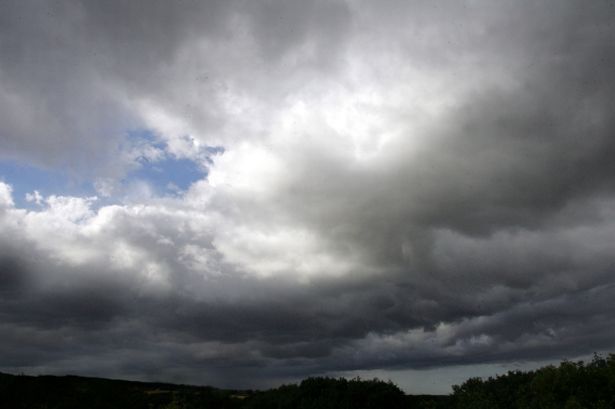
cloudy weather
Cloudy weather

“Later in the day, isolated thunderstorms with moderate rains are expected over parts of Taraba, Adamawa, Kaduna, Borno, Bauchi, Gombe, Kebbi and southern Sokoto states.

“For central region, cloudy skies with spells of sunshine are expected with prospects of morning thunderstorms with moderate rains over parts of Niger, Benue, Plateau and Kogi states.

“Later in the day, isolated thunderstorms with moderate rains are anticipated over parts of the Federal Capital Territory, Niger, Kogi, Kwara and Nasarawa states,“ it said.

According to NiMet, cloudy atmosphere is anticipated over the southern region with prospects of morning thunderstorms and light rains over parts of Ogun, Ondo, Ekiti, Imo, Ebonyi and Abia states.

It forecast isolated thunderstorms with moderate rains over most parts of the region later in the day.

NiMet predicted sunny skies on Tuesday with patches of clouds over the northern region during the morning period.

It envisaged isolated thunderstorms with moderate rains over parts of Kaduna, Taraba, Bauchi, Southern Kano, Southern Jigawa and Adamawa states later in the day.

The agency anticipated sunny skies with patches of clouds over the central region.

NiMet forecast morning thunderstorms with light rains over parts of Nasarawa, Kwara, Kogi, the Federal Capital Territory, Niger and Benue states.

According to it, isolated thunderstorms with moderate rains are anticipated over part of Nasarawa, the Federal Capital Territory, Niger and Kogi states later in the day.

“For southern region, cloudy atmosphere is anticipated over the southern region with prospects of morning rains over parts of Ogun, Ondo, Ebonyi, Lagos, Cross River, Rivers, Bayelsa and Akwa Ibom Sstates during the morning hours.

“Later during the day, isolated thunderstorms with moderate rains are anticipated over parts of Imo, Ebonyi, Abia, Oyo, Ekiti, Osun, Cross River, Rivers and Akwa Ibom states,” it said.

NiMet predicted sunny skies on Wednesday with patches of clouds over the northern region and thunderstorms with light rain over parts of Taraba State during the morning hours.

The agency envisaged isolated thunderstorms with light rains over parts of Kaduna, Adamawa and Taraba states later in the day.

According to the forecast, cloudy atmosphere with intervals of sunshine is anticipated over the central region with chances of thunderstorms and light rains over parts of Niger, Kwara and Benue states during the morning period.

The agency predicted isolated thunderstorms with moderate rains over parts of Kogi, Benue, Niger, Nasarawa and the FCT later in the day.

“Cloudy atmosphere is anticipated over the southern region with prospects of thunderstorms with light rains over parts of Cross River, Akwa Ibom, Rivers and Bayelsa during the morning hours.

“Later in the day, thunderstorms with moderate rains are anticipated over most places in the region,” it said.

NiMet urged the public to drive under rain with caution, ensure that loose objects are fastened to avoid collision and disconnect electrical appliances from electrical sockets.

It further urged the public to stay away from tall trees to avoid impact from falling branches and broken trees.

“Farmers should avoid leaching of nutrients by refraining from applying fertiliser and pesticides right before the rains.

“Airline operators are advised to get airport-specific weather reports (flight documentation) from NiMet for effective planning in their operations.

“Residents are advised to stay informed through weather updates from NiMet by visiting www.nimet.gov.ng’’ Nimet said.

By Gabriel Agbeja

Cooking gas: Consumers, retailers clamour for availability, price stability

0

Some consumers and retailers of Liquefied Petroleum Gas (LPG), popularly known as cooking gas, have called on the Federal Government to ensure steady availability and price stability of the product.

They spoke on Monday, October 13, 2025, in Abuja and Ibadan in reaction to the recent surge in LPG prices, following the face-off between the Dangote Refinery and petroleum workers’ unions.

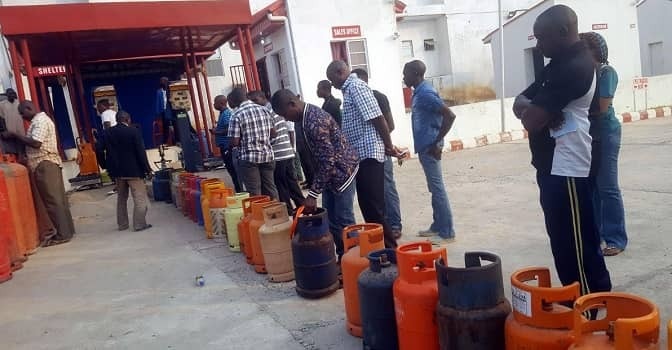
Cooking gas
A queue of aspiring cooking gas buyers in Ibadan

The respondents said though the queues and scarcity were gradually easing, government’s intervention was needed to restore full product circulation and regulate pricing.

The Nigerian National Petroleum Company Limited (NNPC Ltd.) had linked the price hike to a temporary disruption in gas loading and distribution during the Petroleum and Natural Gas Senior Staff Association of Nigeria (PENGASSAN) strike.

The strike, prompted by the dismissal of Nigerian workers at the Dangote Refinery, led to several days of halted operations, jetty delays, and what NNPC described as an “artificial” price surge.

The strike was suspended on Oct. 1, following government’s intervention.

Before the crisis, LPG sold for between N1,100 and N1,200 per kg in the FCT, but prices spiked to between N1,400 and N1,800 per kg in some locations, amid worsening scarcity attributed to supply shortfalls.

According to checks, there are no queues at the private outlets in Gwagwalada, Kubwa, Lugbe and Nyanya-Karshi axis, while short queues are seen at NIPCO refilling outlets at Nyanya-Karshi axis, which has maintained N1,080 per kg.

Mrs. Rose Peters, a consumer, expressed displeasure after queuing for few hours at NIPCO along Nyanya-Karshi axis before refilling, adding that it was so due its low price.

Another consumer, John Okoro, who decried the high prices being witnessed, urged the government to ensure its affordability in view of its push for penetration and utilisation of clean energy in the country.

“I live in Gwagwalada; though there are no queues or scarcity but currently, the product sells at N1,400 per kg against N1, 200 per kg sold before the crisis; I expect normalcy,” she said.

Mr. Emmanuel Ekesi, a consumer who called for proper regulation of the prices, decried the fact that Nigerians seized the opportunity created by the strike to hike prices.

Ekesi said he bought gas at Shafa station at Lugbe at N1,500 per kg.

On his part, Mr. Promise Ajujumbu, Chief Executive Officer, Promise of God Gas, said its scarcity and price hike began when the unions embarked on strike, leading to supply disruptions across outlets, in spite of fragile supply chain.

Ajujumbu, who is the Public Relations Officer of the Liquefied Petroleum Gas Retailers Association of Nigeria (LPGAR), Nyanya Unit, said though the strike caused a supply gap and getting the product had been difficult as tankers queue for days.

According to him, the situation is easing gradually, while full product circulation is being expected.

He appealed to the government to collaborate with the Dangote Refinery to enable affordable price of the product since the refinery sells at N780 per litre to marketers.

A gas plant operator in Ibadan who pleaded anonymity explained that the issue started with LPG scarcity, which later resulted in increase of the price. According to him, the scarcity and hike in price of cooking gas was caused by disruption in supply as a result of an industrial action by PENGASSAN which has since been called off. While the strike was resolved, the distributions in supply chain has caused long queues at LPG filling stations with inconsistent prices across the nation.

Embattled buyers on a long queue in the Oyo State capital have also expressed how deeply they’ve been affected by the scarcity and increase, stressing that the currently unstable price is now between N1,700 – N1,800 per kg whereas it used to be N1,100 per kg, and with that, buying the cooking gas after a long queue is not certain. They urged the government to find a lasting solution to the problem.

Reacting to the altercation between PENGASSAN and management of the refinery, Vice President Kashim Shettima has blamed the members of PENGASSAN for holding the nation to ransom over what he described as a minor labour dispute, stressing that it was totally unnecessary. 

He had however declared that the 650,000-barrel-per-day Dangote Refinery is of critical importance to Nigeria and must be supported at all costs.

By Emmanuella Anokam and Omowunmi Abraham

French Embassy supports ‘Safe Space’ session in Benue IDP camps

0

In an apparent testament to resilience, women from Daudu Camp II in Benue State have come together to share their experiences of financial abuse and gender-based violence (GBV) in a safe space session organised by the Centre for Redefining Alternative Civic Engagement for Africa (RACE Centre) in collaboration with the Gender and Environmental Risk Reduction Initiative (GERI), with support from the French Embassy in Nigeria. The initiative aims to empower survivors and equip them with essential tools for recovery and economic stability.

One participant candidly revealed, “I have been a victim of financial abuse; my spouse collects all the money I earn and leaves my children and me stranded.” However, she expressed newfound hope, stating, “Through this safe space session, I am now equipped with valuable information to identify signs of financial abuse and report cases to FIDA.”

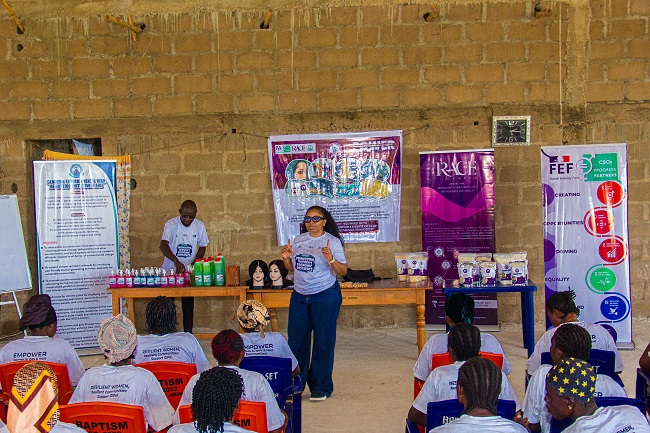
Safe space session
The safe space session

During the session, discussions centred on financial abuse and how to report incidents of gender-based violence (GBV). Barrister Blessing Ityohuun of the International Federation of Women Lawyers (FIDA) provided guidance on state legal provisions protecting women against financial abuse and urged participants to seek support and report any violations.

Evelyn Ugbe, the Executive Director of RACE Centre, led an engaging discussion on effective business management. She emphasised the importance of customer relations, marketing, and product visibility.

“A safe space is a confidential environment where women can share experiences freely without fear of judgment or gossip,” she explained, urging participants to take advantage of available support systems and promptly report incidents of Gender Based Violence.

During the interactive session, women from different training cohorts shared insights on managing and marketing their small businesses. The atmosphere was both practical and inspiring, as participants exchanged ideas on product sales, reinvestment, and collaboration, fostering a sense of community and support.

Ityohuun led a discussion on women’s rights. She explained FIDA’s mission to promote, protect, and defend the rights of women and children. She encouraged participants to reach out for legal support whenever needed and reminded them that mutual respect is crucial in relationships. She also shared valuable advice on financial discipline and management, providing FIDA fliers and a hotline number to facilitate access to legal assistance.

Ugbe highlighted the need for a local response mechanism within the camp. She noted that survivors in rural or displaced communities often face delays in accessing services, which are typically centralised at the state level.

“Having a local response point would make it easier for survivors to access immediate help,” she asserted.

Shortly after the safe space session, representatives from Terres des Hommes (TDH) and the Foundation for Justice, Development and Peace (FJDP) visited the camp as a show of solidarity. They introduced a new project in collaboration with the Crisis and Support Centre (CDCS) of the French government, aimed at further supporting vulnerable communities.

A representative for TDH Nigeria, Iniobong Benjamin Idem, Deputy Coordinator for Operations, praised the women for their resilience and creativity, stating, “It shows that the project is working. We believe there is more to come, and we will continue to work together to support vulnerable women and communities.”

Briefly after the representatives spoke, Stephanie Temang, Deputy Executive Director and Gender Focal Point for GERI, thanked the delegation on behalf of the implementing partners. She appreciated their camaraderie and support for women’s empowerment initiatives and highlighted GERI and RACE Africa’s commitment to working closely with the participants to achieve the project’s objectives, strengthen livelihoods, and continue fostering safe spaces for women in conflict-affected communities.

The session concluded on a joyful note as participants celebrated their achievements through songs and dance, expressing gratitude for the support received. Visitors joined in the festivities, purchasing items from the women’s businesses as a demonstration of solidarity.

The Promoting Women Economic Resilience in Conflict Affected communities (POWER) project continues to provide essential skills training, psychosocial support, and economic empowerment for women in the Daudu host community and the Daudu II Internally Displaced Persons (IDP) Camp. Through initiatives like these safe space sessions, the project promotes healing, resilience, and inclusion among women affected by conflict.

In a world where many women face significant challenges, the safe space in Daudu Camp stands as a beacon of hope, fostering empowerment and community support.

We need pragmatic reforms, sustained policy consistency to drive Nigeria’s energy transition – Ogah

0

President of Masters Energy Group and former Minister of State for Mines and Steel Development, Dr. Uchechukwu Ogah, has asserted that Nigeria’s energy future is contingent upon effectively balancing significant reforms with practical national realities, urging stakeholders to harmonise policy, investment, and innovation to achieve sustainable growth.

Speaking at the NAEC Energy Conference 2025, on the theme “Nigeria’s Energy Future: Optimising Opportunities and Addressing Risks for Sustainable Growth”, Dr. Ogah called for pragmatic reforms and sustained policy consistency to drive Nigeria’s energy transition.

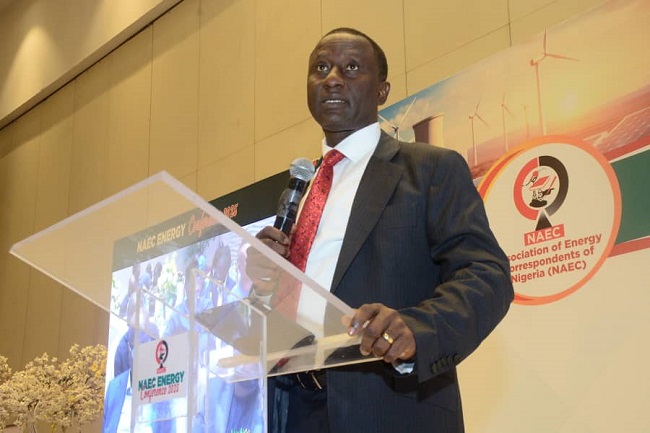
Uchechukwu Oga
President of Masters Energy Group and former Minister of State for Mines and Steel Development, Dr. Uchechukwu Ogah

Ogah acknowledged the transformative potential of the Petroleum Industry Act (PIA) of 2021 and the Electricity Act of 2023, noting that successful implementation would require deliberate coordination across government and industry.

“Nigeria’s energy future is not a choice between opportunity and risk; it is a challenge to navigate both dynamics together,” he said. “Success demands a multi-pronged strategy that leverages our strengths while confronting our vulnerabilities head-on.”

Dr. Ogah framed Nigeria’s energy path as one of managing both opportunity and risk with discipline. He referenced a Nigerian Society of Engineers (NSE) report indicating that national power generation remains below 50 percent of installed capacity due to gas constraints and transmission bottlenecks.

He identified three paramount challenges: ensuring reforms yield measurable results, maximising the value of hydrocarbon assets before the global decline accelerates, and providing affordable power to all citizens.

The Masters Energy boss emphasised that oil and gas remain the economy’s backbone, accounting for nearly 70 percent of export earnings and sustaining millions of jobs.

He stressed that gas commercialisation, through projects like the Utorogu Gas Processing Facility, is vital, describing gas as Nigeria’s strategic bridge fuel that powers industries, enables clean cooking, and can position the nation as an LNG export leader.

However, he warned that underinvestment, oil theft, and insecurity pose serious threats to the full implementation of the PIA.

Dr. Ogah stated that the global energy transition offers Nigeria the greatest economic opportunity of the 21st century, highlighting the nation’s significant potential in solar, wind, and youthful human capital.

He urged the country to exceed its 30 percent renewable capacity target by 2030, arguing that inaction would risk turning Nigeria into a consumer or dumping ground for imported technologies.

He passionately declared, “We must not be consumers of the green economy; we must be creators within it.”

Dr. Ogah commended the Association of Energy Correspondents of Nigeria (NAEC) for maintaining vital dialogue across government, industry, and the media regarding the nation’s energy transformation.

He pinpointed three major growth frontiers: gas, renewables, and innovation.

He advocated for the development of utility-scale solar farms, mini-grids, and local solar manufacturing under the proposed Nigerian Solar Manufacturing Initiative. Furthermore, he identified blue hydrogen, biofuels, and critical mineral exploration as crucial pathways for industrial diversification, underscoring that every solution, “from solar in Olorunsogo to blue hydrogen in the Delta,” must serve both growth and sustainability.

The business leader outlined the main risks undermining energy development as policy inconsistency, infrastructure gaps, security concerns, and skills shortages.

He called for practical solutions, including establishing a single-window licensing system, modernising the national grid, and implementing benefit-sharing models to enhance investor confidence and community trust, observing that policy certainty attracts capital; community trust protects it.

On human capital, he proposed the creation of a National Energy Transition Academy and issued a strong caution against industrial unrest, referencing the recent PENGASSAN and Dangote Refinery dispute.

Dr. Ogah concluded that energy reform is a national, joint project, urging industry players to align with ESG principles, the government to deepen reform consistency, and journalists to sustain solution-driven energy reporting.

He rallied stakeholders toward a unified vision: “By optimising today’s hydrocarbon assets and building tomorrow’s clean-energy ecosystem, we can fuel sustainable growth for every Nigerian.”

How Ogun bridge construction has turned residents’, pedestrians’ daily lives into a nightmare

0

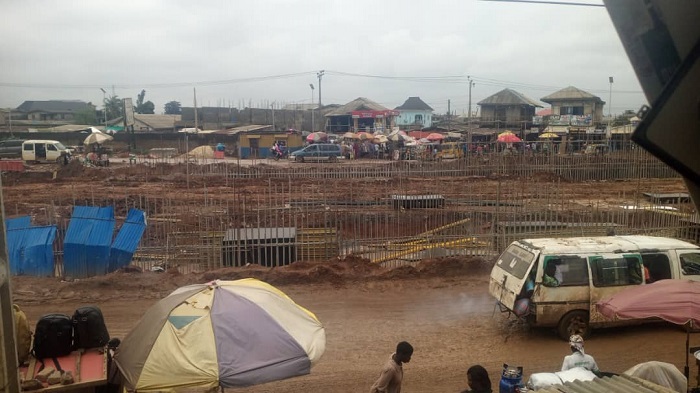
Since late 2023, the ongoing bridge construction on Idiroko Road, the only route linking Sango-Ota, Oju-Ore, and Atan in Ogun State has forced trailers, buses, kekes, and pedestrians to squeeze through a single narrow lane, risking their lives every day just to move. The project has turned the road into a constant scene of struggle, where traffic, mud, and fear now define daily life.

Whenever it rains, the untarred, rough road, worsened by the bridge construction, turns muddy and flooded with stagnant water trapped in deep potholes. The congestion becomes unbearable as vehicles and pedestrians compete for limited space, turning movement into a slow, chaotic ordeal especially during rush hours.

During the harmattan season, dust fills the air and settles in people’s lungs. What was meant to make life easier has instead become a daily struggle for residents and traders.

Idiroko Road
Scene of the ongoing bridge construction on Idiroko Road

‘This Road Has Been Very Problematic’

“This road has been very problematic. People are facing a lot of hell plying it every day,” said Prince Adefolarin Adeniyi Ojugbele, President of the Ota Youth Assembly.

He explained that more than five shop owners he knows have closed down because customers can no longer reach them.

“The road is adding difficulty to people’s survival. Transportation isn’t easy either. Even those walking on foot are not finding it funny. The road sucks,” he added.

A Project That Feels Endless

According to Prince Ojugbele, the bridge construction, handled by Lafaneo Construction Company, is a federal project expected to last from 2024 to December 2026.

Although the work has recently picked up, he said it started slowly and without proper planning, which caused serious hardship.

“We’ve written several letters to the construction company and the government to help us find an alternative road, but we got no response,” he said.

Ojugbele explained that, since assuming office as youth assembly president, he and his team have personally visited the construction site several times and written multiple letters to both the company and government officials, appealing for the inclusion of community youths in the process and for an alternative route to ease movement.

“We’ve tried our best to help out, but we’re not getting any response,” he said. “We’re not trying to fight them; we just want to be carried along so that we can all make progress together.”

He also said the youths have deliberately chosen not to protest, despite the hardship, for fear that it could be hijacked and turn violent. “You know how protests in Nigeria can easily get out of hand,” he said. “I just want a peaceful tenure, and I believe dialogue will bring results if they listen to us.”

He added that the company and government should have worked on flood control before starting the bridge. “Flood and erosion are worsening the situation, but nobody is doing anything,” he explained.

Businesses on the Brink

For Tajudeen, a meat seller, business has dropped badly. “Since our spaces were turned into parks because of this bridge construction and filled with vehicles, our tables are now behind the motors. You won’t see us unless you search well, and not all customers have that patience to start searching for you,” he said.

What used to sell out in a day now takes two. “If the road continues like this next rainy season, we’ll suffer more,” he added.

Traders in Fear

For Madam Stella, a pregnant cloth seller, passing the road daily feels like a risk. “Trailers, okadas, kekes and everyone passes the same road. When I’m on a bike and a trailer comes behind, I just keep praying. It’s scary knowing that an accident can happen anytime,” she said.

She now stays home most days. “My belly aches because of the road stress. One day, I saw another pregnant woman fall into the gutter. It’s scary, and it’s adding to my mental health stress,” she added.

Transport Operators Struggling To Survive

Agunbiade, a former trader, said he became an okada rider after his kiosk was demolished to make way for the bridge.

“The construction workers don’t wear helmets; they are slow and don’t have proper tools. It doesn’t look like they’ll finish this year. If another rainy season meets us like this, it will be disastrous,” he said.

He added that transport fares have increased and that during harmattan, the dust makes it hard to breathe. “We thank the government for the bridge project, but if it harms us before it helps us, how will we enjoy it?” he asked.

It’s Easier When You Include the Community

Ojugbele said the community is ready to support the project but has been left out. “They didn’t involve us the youths who know the road. They brought outsiders who only want to benefit personally,” he said.

He also believes part of the problem comes from residents’ behavior. “Drivers drive carelessly, traders sell on the road, and people dump waste in gutters all these make things worse,” he said.

He noted that market women often display their goods right beside the road, making it harder for vehicles to pass, while commercial drivers compete impatiently for space on the narrow lane.

“Some people even pour dirt directly on the road, blocking drainages and increasing the risk of flooding,” he said. “Everyone needs to be disciplined, the government, the company, and the people because the carelessness of one group affects us all.”

“And when you try to enforce orderliness in this people so they can do what is right, they will say you’re not having mercy on them and that government is already making their lives hard, you as their rep should pity them and not make it harder.”

He added that the youths have reached out to the Minister of Works and other leaders from the Ado-Odo Ota Federal Constituency, calling for an alternative road and quicker progress.

Hope amid Pain

For now, residents just want the suffering to end, and for Lafaneo Construction Company and the government to speed up the work and provide temporary solutions before the next rainy season.

“You pass that road and your body starts aching,” Ojugbele said. “We’ll keep pushing until something changes. We can’t keep suffering like this till 2026.”

Related Data

According to a 2021 study by environmental scientists, the Sango-Ota intersection records one of the highest air-pollution levels in Southwest Nigeria, with PM₂.₅ concentrations reaching up to 370 µg/m³ – far above the World Health Organisation’s safe limit.

By Oyeyemi Abolade

IUCN 2025 to vote on whether or not to halt genetic interventions in conservation

0

The 2025 IUCN World Conservation Congress is underway in Abu Dhabi, United Arab Emirates, and promises to deliver one of its most consequential debates in recent years that the global conservation community has been preparing for.

At the heart of the debate are two critical motions: Motion 087, outlining IUCN’s Policy on Synthetic Biology in conservation following two years of inclusive consultation, and Motion 133, which advocates caution by seeking a halt or moratorium on genetic interventions in natural ecosystems.

IUCN
Grethel Aguilar, IUCN Director General. Photo Credit: IISD / Anastasia Rodopoulou

The Congress, which opened on Thursday, October 9, has brought together leaders from government, business, science, and civil society to determine whether synthetic biology is embraced as a tool to address biodiversity loss or restricted through a moratorium.

Setting the Stage: Global Debates on Synthetic Biology

Synthetic biology, which uses advanced genetic techniques to solve ecologically related challenges, presents both opportunities and dilemmas. Over the past two years, IUCN has facilitated an inclusive consultation process on Motion 087 and Motion 133. The two-year consultation process was for the development of motion 087, whilst motion 133 was proposed by a select group of proponents this year.

To inform discussions on the issue at the Congress, a team of eight global experts were assembled to examine examine governance frameworks, risk assessment practices, and the ethical and societal implications of synthetic biology in conservation at two separate webinars.  

The webinars were held on September 8 and 15, 2025, and organised by IUCN’s Conservation Genetics Specialist Group, Island Conservation, IUCN’s Invasive Alien Species Specialist Group, Rewild, IUCN’s Amphibians Specialist Group and European Bureau for Conservation and Development.

Some Excerpts of the Deliberations

A Lecturer at the Department of Biological and Life Sciences at the Technical University of Kenya, Prof. Dorington Ogoyi emphasized the fragmented nature of global governance, saying no single treaty fully regulates the entirety of synthetic biology.

He highlighted the Convention on Biological Diversity (CBD) as a key forum for integrating the existing multiple treaties, to ensure that innovations are accessible, while safeguarding ecosystems. Prof. Ogoyi stressed the need for “international organisations to collaborate holistically to balance risks and potential benefits of synthetic biology products.”

An adjunct Prof. at the National University of Kiln School of Biotechnology in Argentina, Dr. Martin Lehmer, detailed how national regulatory systems, already managing genetically modified organisms (GMOs), can handle synthetic biology applications. He explained that by using case-by-case risk assessments, regulators evaluate environmental, biodiversity, and human health risks, while considering socioeconomic impacts.

Dr. Lehmer noted that regulators can adapt to new technologies through collaboration, guidance from international protocols, and targeted experiments. “Even with novel applications, existing regulatory frameworks are equipped to assess and manage risks effectively,” he said, stressing that moratoriums may unnecessarily delay beneficial innovations.

A Senior Scientist at the University of Hawaii, Tim Harvey Samuel, shared examples of how genetic interventions can directly support conservation. He cited the ongoing laboratory work in Hawaii, on gene drive technologies for the control of avian malaria threatening endangered native birds.

“Such approaches,” Samuel stated, “demonstrate that synthetic biology can complement existing conservation strategies, especially in challenging or remote ecosystems, where traditional approaches may be insufficient.”

A general partner at Perseus 3BV, a company focused on biosafety, biosecurity and biotech, Dr. Patrick Rudelsheim, highlighted the importance of clear objectives in monitoring synthetic biology applications. “Monitoring can reduce uncertainty in risk assessments or act as an early warning system for unforeseen consequences,” he stated, and explained that “biological systems cross political boundaries, making regional collaboration essential.”

Dr. Rudelsheim concluded that ongoing oversight and regional collaboration can ensure responsible use, whether for wild or domesticated species.

Chairman and Executive Director of the African Genetic Biocontrol Consortium, Dr. Willy Tonui, highlighted the promise and complexity of synthetic biology across Africa, saying several countries, including South Africa, Kenya, and Nigeria, have begun developing regulations based on the Cartagena Protocol and the Convention on Biological Diversity.

He observed that despite these moves gaps still remain in public engagement, regulatory capacity, and harmonization with international standards. Dr. Tonui stressed that “cooperation among governments, researchers, and industry is essential to ensure safety, ethics, and equitable benefits while fostering responsible innovation.”

An official of Australia’s Commonwealth Scientific and Industrial Research Organisation (CSIRO), Dr. Aditi Mankad, explored the ethical dimensions of synthetic biology, including moral boundaries, dual-use dilemmas, and potential ecosystem impacts. She said public engagement research conducted by her team across Australia indicates that, when benefits are clearly communicated, communities are open to synthetic biology as a tool for conservation.

She noted that 15,000 participants in the research highlighted improvements in biodiversity, reduced reliance on chemical pest control, and scalable interventions in remote regions. She emphasized that “ethical reasoning is context-dependent, and responsible deployment must weigh potential risks against the pressing biodiversity crisis.”

A Unified Message: Balance, Caution, and Opportunity

Across both webinars, there was a strong convergence among experts that while the global biodiversity crisis demands bold, transformative actions, synthetic biology should not be seen as a replacement for existing conservation efforts. It should rather be seen as a complementary tool that can enhance and accelerate biodiversity protection.

The experts emphasise the need for responsible, well-governed deployment of these technologies: guided by robust risk assessment, continuous monitoring, regional and international coordination, ethical frameworks, transparent public engagement and policies that are adaptive and informed by science.

There was unanimous agreement that integrating scientific innovation with social, ethical, and ecological considerations offers the most promising pathway to halt or reverse.

Meanwhile, over 230 experts and 28 organisations have already signed an open letter urging IUCN members not to close the door on innovation, while opinion pieces such as that by Piero Genovesi of the Italian Institute for Environmental Protection and Research (ISPRA) also advocates for a science-based, case-by-case approach.

Looking Ahead: Congress Decisions to Shape the Future

As the IUCN 2025 Congress continues, the dialogue around synthetic biology is likely to shape global approaches to biodiversity protection for years to come. By Wednesday, October 15, the last day of the Congress, the world would know the outcome of the crucial vote on the motions, determining whether or not synthetic biology can be responsibly deployed in nature conservation.

The outcome will influence global conservation strategies, and shape humanity’s relationship with nature for decades.

By Ama Kudom-Agyemang

SEEPCO recognised for sustainability as NAEC celebrates 2025 Annual Conference

0

The Association of Energy Correspondents of Nigeria (NAEC), a professional body of journalists dedicated to promoting accurate reporting and informed discourse on Nigeria’s energy and extractive industries, has successfully hosted the 2025 edition of its Annual Conference at the Eko Hotels and Suites, Lagos. 

With the theme “Nigeria’s Energy Future: Exploring Opportunities and Addressing Risks for Sustainable Growth,” the event brought together key stakeholders, policymakers, and industry leaders to discuss pathways toward a sustainable and resilient energy sector for Nigeria.

Tony ChukwuekeTony Chukwueke
Tony Chukwueke, GMD, SEEPCO

This year’s awards featured multiple categories and celebrated leading industry players including Nigeria LNG Limited (NLNG), Seplat Energy, Pinnacle Oil & Gas Limited, Falcon Corporation, Niger Delta Power Holding Company (NDPHC), Oando Plc, and the Nigerian Content Development and Monitoring Board (NCDMB), among others. 

These organisations were honoured for their outstanding contributions to advancing Nigeria’s energy sector through innovation, sustainability, and responsible operations. 

Their continued commitment to excellence and industry leadership is helping to shape a more resilient and sustainable energy future for the nation.

In recognition of its continued commitment to recent sustainability initiatives, Sterling Oil Exploration and Energy Production Company Ltd (SEEPCO), was recognised as one of the awardees at the 2025 NAEC Awards. 

SEEPCO
L-R: Operations Staff, Sterling Oil Exploration and Energy Production Company Limited (SEEPCO), Adebayo Rauf; Head, HR Shared Services, SEEPCO, Sagar Singh; Former Permanent Secretary of the Ministry of Petroleum Resources, Nicholas Agbo Ella; Media and PR Specialist, SEEPCO, Edith Afieroho, Operations Staff, SEEPCO, Omokhafe Adelemoni; Head, Corporate Communications, SEEPCO, Aveek Biswas; and Chairman, Association of Energy Correspondents of Nigeria (NAEC), Ugo Amadi, during the presentation of the NAEC Sustainability Company of the Year Award to SEEPCO, at the Association’s annual conference 2025, in Lagos… recently.

Sterling Oil, one of Africa’s fastest-growing exploration and production firms, received the Sustainability Company of the Year award. Known for its impactful environmental sustainability programmes, the company advances ESG excellence in the energy sector by aligning operational performance with environmental responsibility. 

Among its initiatives is a clear emphasis on Green Energy Transition, with over 90 per cent of its heavy and light vehicle fleet now running on compressed natural gas (CNG).

 In its Eco-Friendly Marine Operations, the major fleet of operational barges have been upgraded to double-hull structures, significantly enhancing protection for rivers and aquatic ecosystems. 

Additionally, the company has achieved a significant reduction in routine gas flaring by converting more waste gas into usable energy.

Sterling Oil’s broader sustainability initiatives include the deployment of state-of-the-art recycling machines across its sites, each capable of processing 100 kg of waste per hour.

Its afforestation programme targets the planting of 10,000 trees targeted annually, supported by an integrated network of green infrastructure of over1,000 sqm of green nets nurturing above 25,000 seedlings, with additional greenhouses under construction. 

These efforts are reinforced by round-the-clock teams and the use of native species, achieving an impressive 60- 80 per cent tree survival rate – a rare feat in large-scale tree planting 

Speaking during the event, Dr. Chris Offokansi, General Manager, Human Resources and Industrial Relations at Sterling Oil, expressed appreciation to the organisers. 

He stated, “At Sterling Oil, we believe true success is measured by the positive impact we have on the world around us. Our commitment goes beyond compliance – it is about shaping a better, safer future. We align our progress with sustainability at every level and take pride in the steps we’ve taken to reduce our environmental footprint.”

Sterling Oil’s story is one of transformation, from a fast-growing oil and gas leader to a symbol of sustainable progress. 

With a focus on measurable impact, innovation, and accountability, the company is proving that Africa’s energy future can be clean, inclusive, and resilient. As the company celebrates its recognition at the NAEC 2025 Awards, one thing is clear: Sterling Oil is not just powering Africa; it’s preserving it.

Mr. Ugo Amadi, Chairman of NAEC, noted during his opening remarks: “The introduction of this awards segment marks a new chapter in the history of our annual conference. It is designed to celebrate excellence and recognize organisations driving positive change within Nigeria’s energy landscape. By highlighting these achievements, NAEC aims to inspire greater commitment to innovation, sustainability, and industry leadership across the sector.”

The event featured thought-provoking insights from leading experts who explored the evolving energy landscape in Nigeria and the urgent need for climate-resilient, collaboration and data-driven strategies across industries.

The NAEC Industry Excellence Awards is a new initiative introduced as part of the Association’s Annual Conference to recognise outstanding contributions within Nigeria’s energy sector. The maiden edition celebrates organisations and institutions demonstrating exceptional performance, innovation, and leadership in advancing sustainable growth and responsible industry practices.

A major highlight of this year’s conference was the launch of a sustainability partnership between SEEPCO and NAEC, dedicated to promoting sustainability awareness, responsible energy practices, and capacity building within the media and energy industry.

Through this collaboration, both organisations reaffirm their shared commitment to putting lasting smiles on faces and transforming lives across communities where they operate.

This award serves as a reminder that our journey is ongoing. Together with our stakeholders, colleagues, industry and with guidance from State and Federal government, we will continue to drive for innovation and sustainability, ensuring a better and greener future for generations to come.

GOCOP 2025: RMRDC targets 30% value addition policy on export of local raw materials

0

The Raw Materials Research and Development Council (RMRDC) has unveiled a new policy framework aimed at achieving a minimum of 30% value addition on all exports of local raw materials. The initiative is designed to boost the competitiveness of Nigeria’s Small and Medium Enterprises (SMEs) and enhance the nation’s industrial base.

Deputy Director, Process Equipment Maintenance Division of RMRDC, Obassi Ettu, disclosed this at the Business Session of the pre-9th Annual Conference of the Guild of Corporate Online Publishers (GOCOP) held in Lagos, on Wednesday, October 8, 2025.

Obassi Ettu
Deputy Director, Process Equipment Maintenance Division of RMRDC, Obassi Ettu

According to him, the policy became necessary because many of Nigeria’s raw materials have the potential to yield multiple products, yet are often exported in their unprocessed form, depriving the country of significant economic value.

“Some of these materials can produce three or four end-products, but importers only pay for one. This is why we are insisting that at least 30% of value must be added locally before export,” Ettu explained.

He further revealed that the Council is deepening international collaboration through an ongoing partnership with China focused on capacity building and seedling development.

“We send our staff to China annually for training. It has been impactful. For instance, we have developed 13 varieties of sweet sorghum and are currently conducting toxicological tests to ensure their safety for human consumption,” he said.

Ettu expressed concern over Nigeria’s continued importation of raw materials despite its vast natural endowments, stressing that RMRDC now advises the Federal Government on which materials to restrict or substitute for local alternatives.

“We have adopted a policy of applied, commercialised research and development (R&D). Through reverse engineering, we’ve developed technologies for processing various raw materials locally,” he stated.

Describing RMRDC as a “child of circumstance” born out of Nigeria’s past economic downturns, Ettu said the Council’s present mission is to harness and transform the country’s abundant raw materials into viable industrial inputs.

Looking ahead, he noted that RMRDC’s focus is on wealth creation through practical innovation.

“We are experimenting with tomato seeds that households can grow and sell to nearby restaurants. But for these initiatives to succeed, we need a system that ensures policy continuity to consolidate the gains we’ve made,” Ettu concluded.